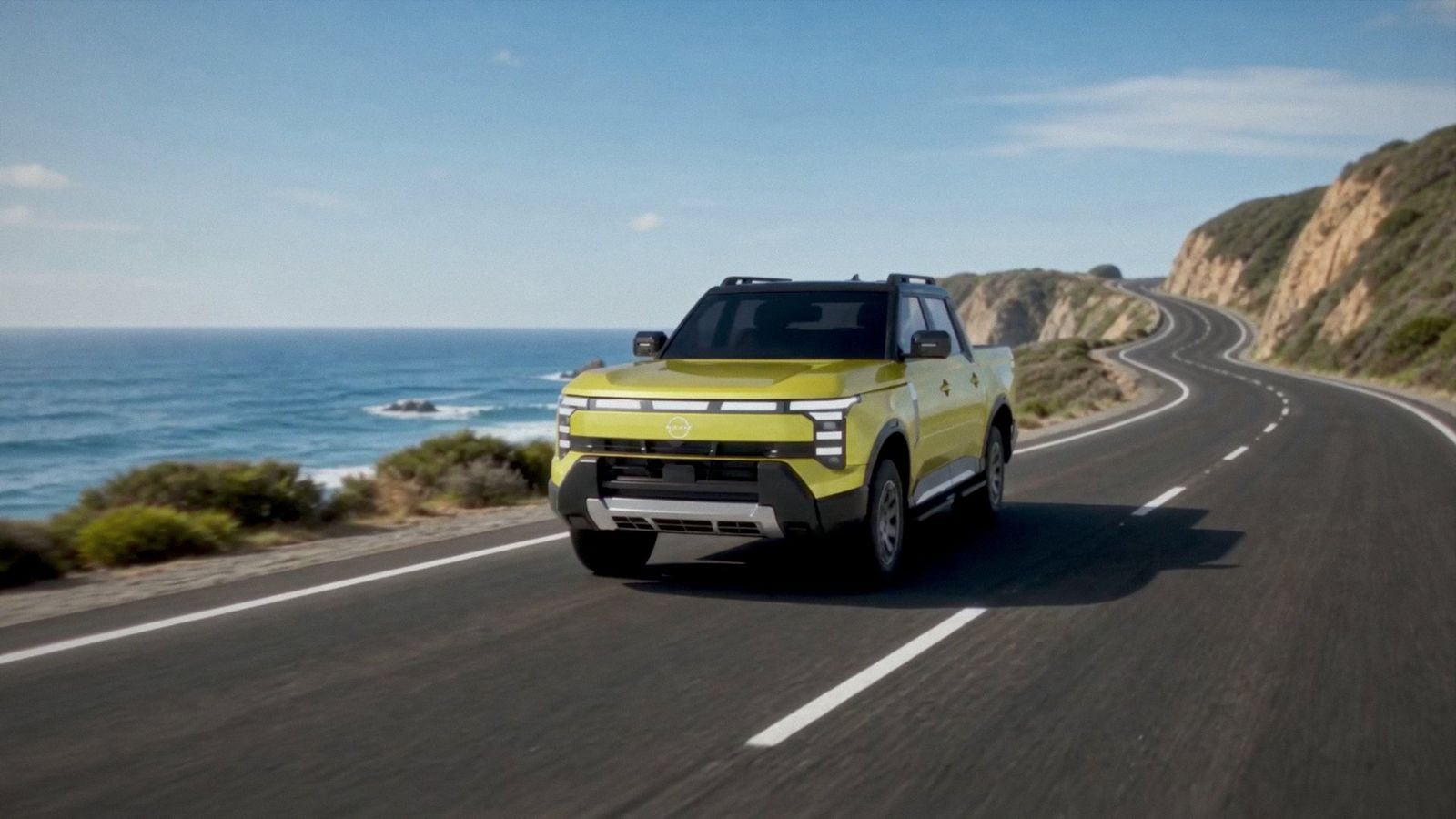
Watch: Nissan’s plug-in ute, up close
Words: Richard Edwards
Nissan’s Navara Pro PHEV is due in New Zealand in 2027, and at its Melbourne reveal we got to spend time with the Australian test mule, still covered in red dirt from a testing programme Nissan says has passed 20,000km. Parked alongside it was a left-hand-drive version built for the Chinese market.
Where it comes from
The Navara Pro is built by Zhengzhou Nissan, Nissan’s joint venture with Dongfeng, and shares its underpinnings with Dongfeng’s own plug-in ute. In China it has a 1.5-litre turbo petrol engine. Nissan Australia tested that version first, decided it didn’t have enough for the way utes are towed and loaded here, and asked for a bigger engine. Australia and New Zealand get a 2.0-litre turbo petrol with an electric motor built into an eight-speed automatic, a combination Nissan says didn’t exist before its Australian team requested it. Preliminary outputs are 300kW and 800Nm.
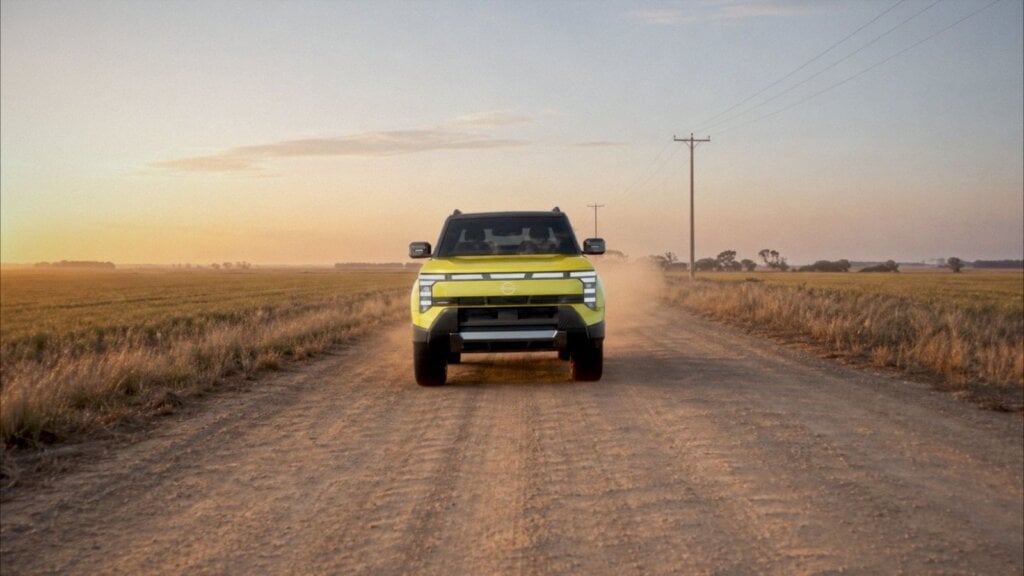
That layout is different from the BYD Shark 6, which uses front and rear electric motors with no mechanical link between the axles. The Navara Pro has a conventional transfer case, low range and mechanical diff locks, and Nissan says all eight gears can be used in low range. It will also run on electric power alone. We don’t yet know how the motor-in-gearbox arrangement delivers its power under hard acceleration, and we’ll find out when we drive it next year.
Nissan Oceania managing director Steve Milette has told us the diesel Navara stays in the range alongside it, and that Nissan sees the PHEV as a mass-market model rather than a niche one.
The look
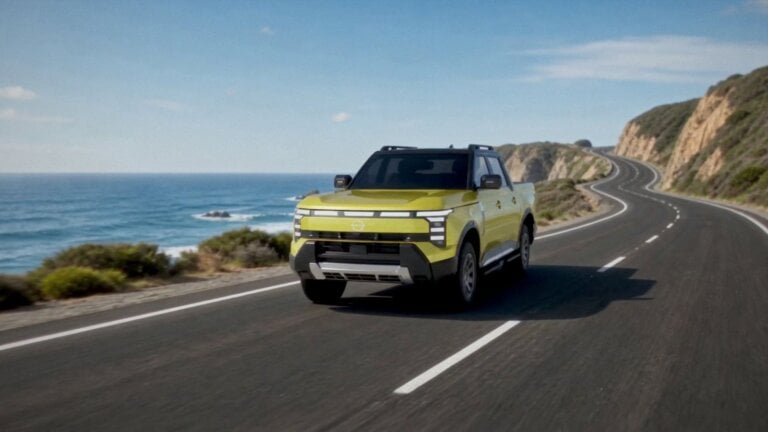
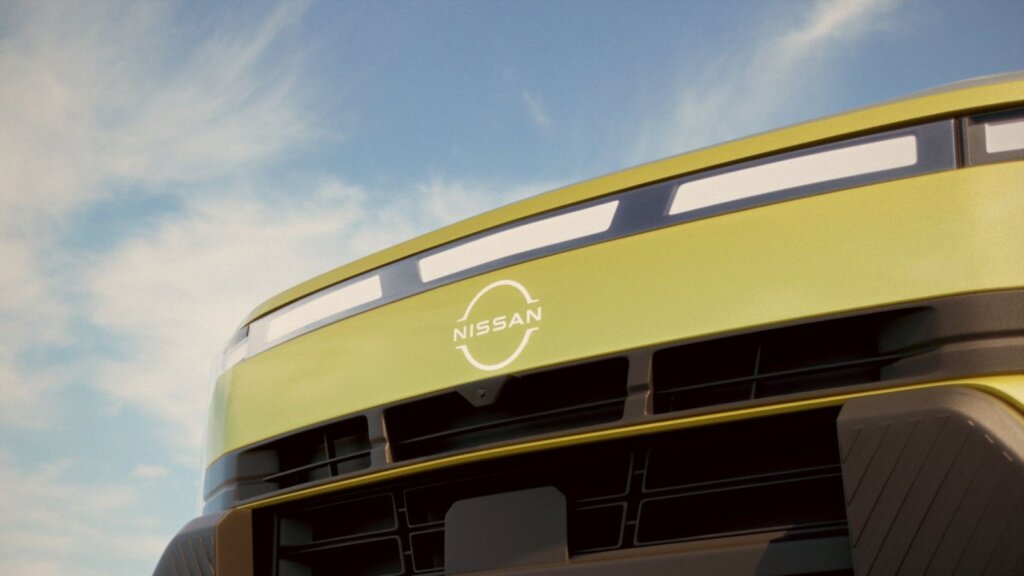
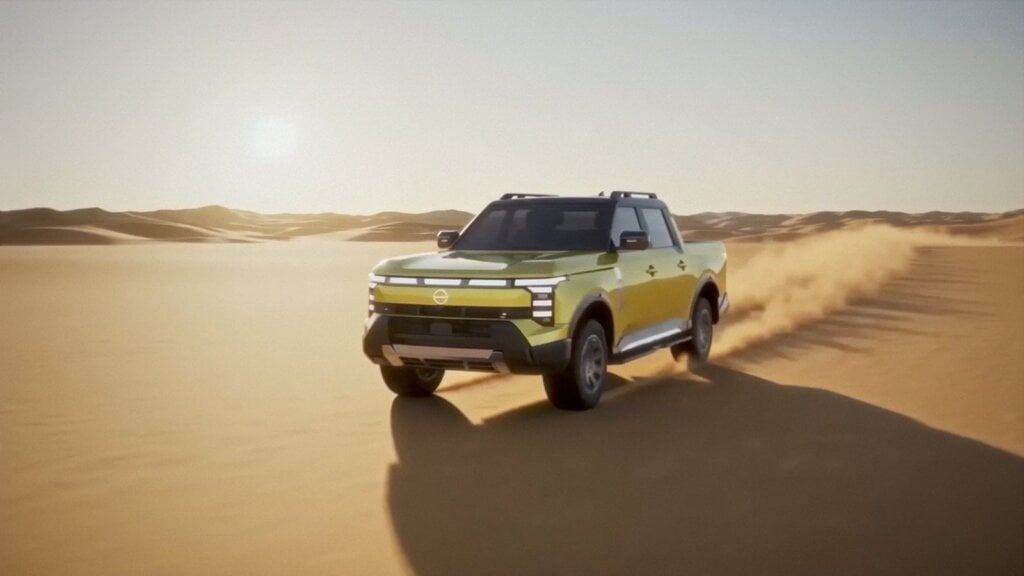
It’s a big, square ute with a high bonnet. The front has a wide LED light bar, a stacked grille and vertical daytime running lights, and the squared-off wheel arches and flat sides are a nod to the D21 Hardbody of the 1980s. The cladding on the lower doors is decorative, the mirrors are large and there are cameras all round. The door handles are the normal pull type rather than flush, which is easier with gloves on. The charging port sits on the rear quarter and is CCS, although Nissan hasn’t given a charging speed.
The tray
Nissan hasn’t published tray dimensions, so we measured it ourselves: 1660mm from the lip to the cab, 1708mm wide and 623mm deep. Nissan is targeting a one-tonne payload, still to be confirmed, and 3500kg braked towing.
The tray has a spray-in liner, tie-down hooks, a hard tonneau, two mains power outlets and a 12-volt socket in the side wall. The tailgate is electric and damped. Side steps extend to help you climb in, and there are grab handles on the pillars.
Inside
You sit high, with a big centre console and a sunroof overhead. A row of chunky toggle switches runs across the dash, so even switching on the air conditioning means flicking a switch. The seats are electric, and there’s a large central screen alongside a digital instrument cluster.
The back seat has good legroom and about three inches of headroom above a six-foot occupant. There are two USB ports, storage under the seat and a 60/40 split, and the bases flip up to clear the floor for taller loads.
What we still don’t know
Price, battery capacity, electric-only range, charging speed, kerb weight and whether the rear suspension will be leaf or coil. Nissan says all of that comes closer to launch. There’s no Warrior version planned and no cheaper 1.5-litre model for Australia or New Zealand.
Diesel still takes about two-thirds of new ute registrations in New Zealand. Across the whole new vehicle market, plug-in vehicles outsold diesel in September.
Nissan Navara Pro PHEV, what we know so far
Engine: 2.0-litre turbo petrol, electric motor integrated in eight-speed automatic
Outputs: 300kW / 800Nm (preliminary)
Drive: mechanical 4×4, transfer case, low range, diff locks
Towing: 3500kg braked
Payload: 1000kg (target)
Tray (our measurement): 1660mm x 1708mm x 623mm
Charging: CCS, speed not stated
Battery and EV range: not stated
Price: not stated
On sale: 2027