Black Ice: The Winter Hazard You Can’t Always See 🧊
Words: AutoTrader NZ
Winter driving in New Zealand brings unique challenges, and one of the most dangerous is black ice.
Unlike snow or visible ice, black ice blends into the road surface, making it almost impossible to detect before you reach it.
Understanding where it forms and how to respond can help keep you safe.
What is black ice?
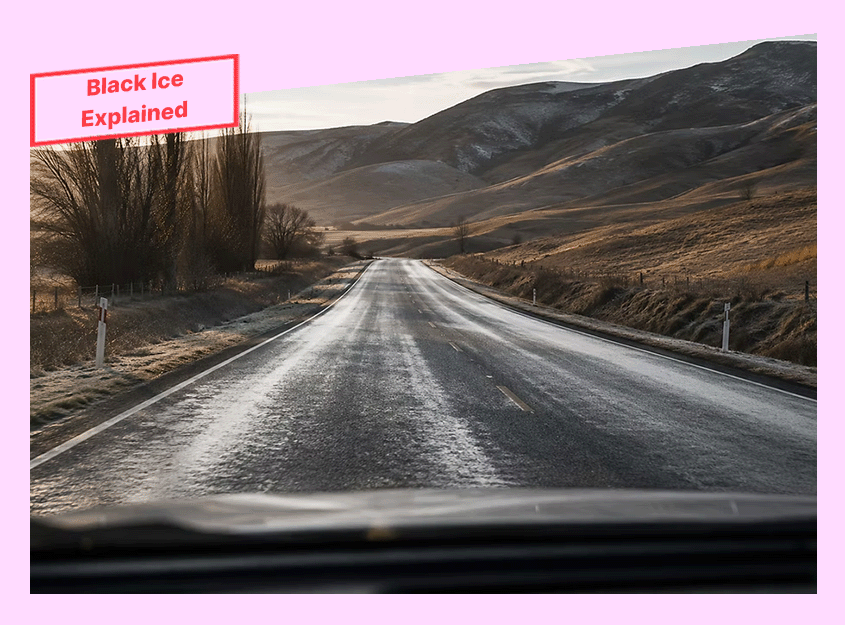
Black ice is a thin, transparent layer of ice that forms on the road.
Because it’s clear, the dark road surface shows through, making it appear wet rather than frozen.
This makes it extremely difficult to spot.
Where does it form?
Black ice is most common:
🌉 On bridges and overpasses
🌳 In shaded areas
🏔️ Mountain roads
🌅 Early in the morning
🌙 Late at night
These areas cool faster than surrounding roads.
Why is it dangerous?
When your tyres hit black ice, grip can disappear almost instantly.
You may notice:
- Steering feels lighter
- The vehicle begins sliding
- Braking becomes less effective
What should you do?
If you encounter black ice:
✅ Stay calm.
✅ Ease off the accelerator.
✅ Keep both hands on the wheel.
✅ Look where you want the car to go.
🚫 Avoid sudden braking.
🚫 Avoid sharp steering movements.
Modern vehicles with ABS and stability control will help, but smooth inputs remain essential.
How to reduce your risk
- Slow down in cold conditions.
- Increase your following distance.
- Leave earlier so you’re not rushed.
- Ensure your tyres have good tread.
- Watch roadside temperature signs in alpine regions.
Can all-wheel drive prevent black ice?
No.
All-wheel drive helps with acceleration but doesn’t improve braking or steering grip on ice.
Regardless of the vehicle you drive, black ice requires caution.
Bottom Line
Black ice is difficult to see, but it’s predictable.
Knowing where it forms and adjusting your driving accordingly can significantly reduce your risk during winter.
Slow down, stay alert, and drive smoothly – you’ll give yourself the best chance of staying in control.