How Often Should You Rotate Your Tyres?
Words: AutoTrader NZ
Tyres aren’t cheap, so naturally you want to get as much safe use out of them as possible.
One relatively simple maintenance task that can help is tyre rotation.
But what does rotating your tyres actually mean? Why do tyres wear differently? And how often should you do it?
What Is Tyre Rotation?
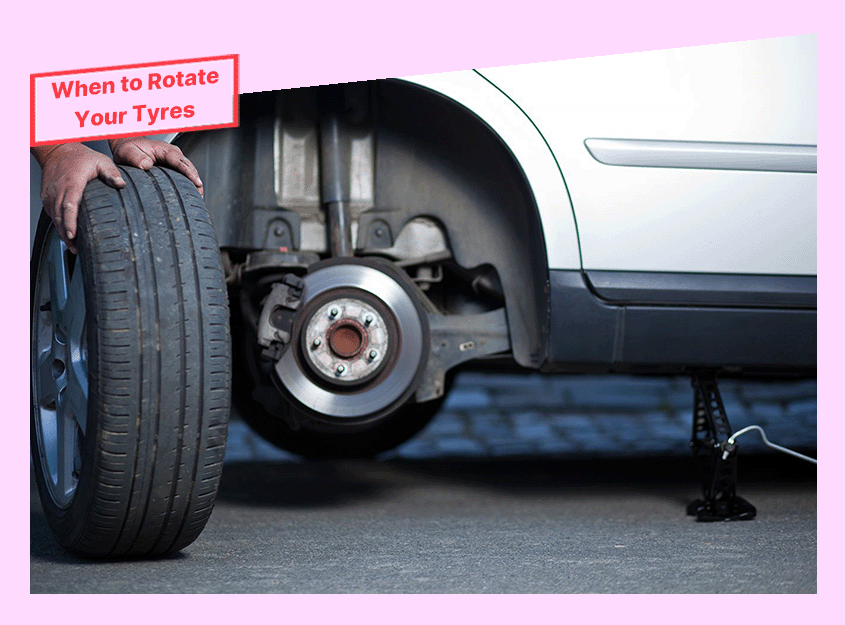
Tyre rotation involves periodically moving tyres from one position on the vehicle to another.
For example, depending on the vehicle and tyre type, the front tyres may be moved to the rear and vice versa.
The purpose is to help distribute tyre wear more evenly across all four tyres.
Why Don’t All Four Tyres Wear Equally?
Each tyre doesn’t necessarily do the same amount of work.
On many vehicles, the front tyres handle a large proportion of the steering and braking forces.
If your vehicle is front-wheel drive, those tyres also transfer the engine’s power to the road.
As a result, the front tyres can sometimes wear faster than the rear tyres.
Rear-wheel-drive and all-wheel-drive vehicles can produce different wear patterns.
Your driving style also matters. Frequent cornering, hard acceleration, heavy braking and incorrect tyre pressures can all influence wear.
How Often Should You Rotate Them?
A general guide is around 8,000–10,000 km, but the correct interval depends on your particular vehicle and tyres.
Your owner’s manual should be your first reference.
You can also ask your tyre retailer or service centre to recommend an appropriate schedule.
An easy way to remember can be to have the tyres inspected for rotation when your vehicle is serviced.
Not Every Tyre Can Be Rotated the Same Way
This is important.
Some vehicles use:
- Directional tyres
- Different-sized front and rear tyres
- Staggered wheel setups
- Specialised tyre configurations
Directional tyres, for example, are designed to rotate in a particular direction and can’t simply be moved to any position.
Some staggered setups may not allow conventional front-to-rear rotation at all.
Always follow the tyre and vehicle manufacturer’s requirements.
What About AWD Vehicles?
Tyre condition can be particularly important on all-wheel-drive vehicles.
Depending on the AWD system, significant differences in tyre circumference or tread depth can potentially affect how the drivetrain operates.
That’s another reason to follow the manufacturer’s tyre rotation and replacement recommendations rather than relying on a universal rule.
Rotation Doesn’t Fix Other Problems
If a tyre is wearing unevenly because your wheel alignment is incorrect, rotating it won’t fix the underlying issue.
Likewise, rotation won’t solve:
- Incorrect tyre pressure
- Damaged suspension components
- Wheel balancing problems
- A damaged tyre
If you notice unusual wear, have the cause investigated.
What Should You Check While Rotating Tyres?
A tyre rotation is a great opportunity to inspect all four tyres.
Look for:
- Cuts
- Cracks
- Bulges
- Uneven tread wear
- Embedded objects
- Low tread
- Incorrect pressures
Also remember that the legal minimum tread depth isn’t necessarily the point at which a tyre will provide its best wet-weather performance.
Don’t Forget the Wheel Alignment
Rotation and wheel alignment are different services.
Rotation changes the position of the tyres.
Alignment adjusts the angles of the wheels.
If your vehicle pulls to one side, your steering wheel isn’t centred or your tyres are wearing unevenly, an alignment check may be worthwhile.
Can Tyre Rotation Really Save Money?
Potentially, yes.
If two tyres wear considerably faster than the other two, you may find yourself replacing tyres sooner than expected.
By promoting more even wear, regular rotation can help you make better use of the available tread across the set.
The actual lifespan will still depend on your tyres, vehicle, roads and driving habits.
Bottom Line
Think of tyre rotation as preventative maintenance.
It’s a relatively small job that can help promote even wear, provide an opportunity to identify tyre problems early and potentially help you get more useful life from your tyres.
Check your manufacturer’s recommendations and make tyre inspections part of your regular maintenance routine.