How Rain Changes Your Braking Distance 🌧️
Words: AutoTrader NZ
Winter often means more rain, slippery roads, and reduced visibility. While many drivers know they should slow down, fewer realise just how much wet roads can affect stopping distances.
Understanding what happens when the road is wet can help you avoid collisions and stay safer during winter driving.
Why do wet roads increase braking distance?
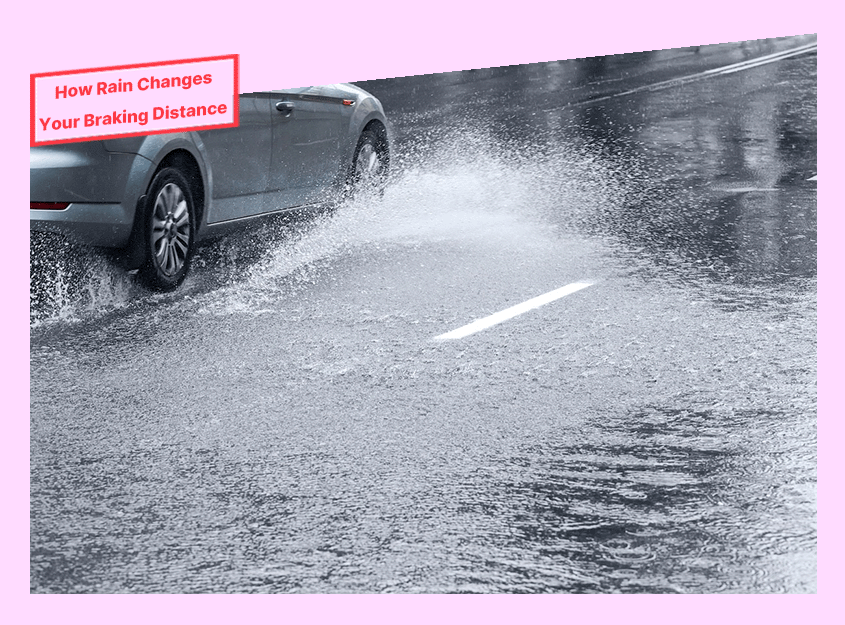
When rain falls, a thin layer of water sits between your tyres and the road surface.
This reduces grip, making it harder for your tyres to generate the friction needed to stop quickly.
The result is a longer stopping distance compared to dry conditions.
Your reaction time stays the same
Many people think it’s only the braking distance that changes.
In reality, stopping distance is made up of:
- Thinking distance – the distance travelled while reacting.
- Braking distance – the distance travelled after applying the brakes.
Rain mainly increases the braking distance, meaning you’ll need more road to stop safely.
Increase your following distance
In dry conditions, a two-second gap is generally recommended.
In heavy rain, increase this to at least four seconds to allow more time to react.
Watch for aquaplaning
Aquaplaning happens when your tyres can’t clear water quickly enough, causing them to ride on top of the water instead of gripping the road.
If this happens:
- Stay calm.
- Ease off the accelerator.
- Keep the steering wheel steady.
- Avoid sudden braking.
Grip should return once the tyres reconnect with the road.
Check your tyres
Good tyres are one of the most important safety features on your vehicle.
Regularly check:
- Tyre pressure
- Tread depth
- Uneven wear
- Signs of damage
Worn tyres are far more likely to lose grip in wet conditions.
Drive smoothly
Avoid:
- Hard acceleration
- Sudden steering inputs
- Heavy braking
Smooth driving helps maintain traction and keeps the vehicle stable.
Bottom Line
Rain changes the way your vehicle behaves, especially when braking.
By slowing down, increasing your following distance, keeping your tyres in good condition, and driving smoothly, you’ll be much better prepared for New Zealand’s winter roads.