How Regenerative Braking Works (And Why It Matters)
Words: AutoTrader NZ
Regenerative braking is one of the most innovative features found in modern electric vehicles (EVs) and many hybrid vehicles.
While traditional braking systems simply convert a vehicle’s movement into heat and waste that energy, regenerative braking allows EVs to recover some of that energy and reuse it.
It’s one of the reasons EVs are so efficient and why many drivers notice they drive differently after making the switch.
What Is Regenerative Braking?
In a conventional petrol or diesel vehicle, pressing the brake pedal creates friction between the brake pads and brake discs, slowing the vehicle down.
This process works well, but it wastes energy in the form of heat.
EVs and hybrids work differently.
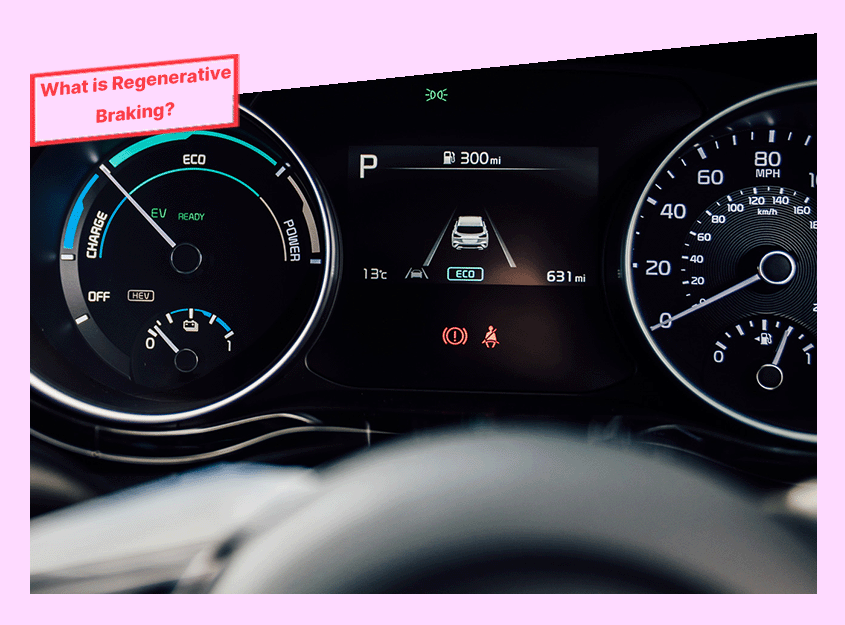
When you lift off the accelerator or begin braking, the electric motor can reverse its function and act as a generator.
Instead of simply slowing the vehicle, the motor captures some of the vehicle’s kinetic energy (movement) and converts it into electricity.
That electricity is then sent back to the battery for later use.
This process is known as regenerative braking.
How Does It Work in Everyday Driving?
You don’t need to do anything special to use regenerative braking.
In most EVs, it happens automatically whenever you:
- Lift off the accelerator
- Slow down gradually
- Apply the brakes
The amount of regeneration varies between vehicles, with some allowing drivers to adjust the strength of regenerative braking.
In city driving, where you’re frequently slowing down and stopping, regenerative braking can recover a surprising amount of energy.
What Are the Benefits?
⚡ Improved Efficiency
The biggest benefit is efficiency.
Instead of wasting energy every time you slow down, regenerative braking allows the vehicle to recover and reuse some of it.
This helps EVs travel further on a charge compared to a vehicle that relied solely on traditional braking.
🔋 Increased Driving Range
While regenerative braking won’t fully recharge your battery, it can help extend driving range.
The effect is most noticeable during:
- Urban driving
- Stop-start traffic
- Descending hills
- Long downhill stretches
Many EV drivers notice their estimated range increasing slightly during downhill driving thanks to energy recovery.
🛑 Reduced Brake Wear
Because regenerative braking helps slow the vehicle, traditional brakes are used less often.
This can significantly reduce wear on:
- Brake pads
- Brake discs
- Brake components
As a result, many EV owners find brake components last longer than they would in a conventional vehicle.
💰 Lower Maintenance Costs
Less brake wear often means fewer brake replacements over the life of the vehicle.
Combined with the reduced servicing requirements of EVs, regenerative braking can contribute to lower overall maintenance costs.
What Is One-Pedal Driving?
Some EVs offer strong regenerative braking systems that can slow the vehicle dramatically when you lift off the accelerator.
This is known as one-pedal driving.
In some situations, drivers can:
- Accelerate using the accelerator pedal
- Lift off to slow down
- Rarely touch the brake pedal during normal driving
Many EV owners quickly adapt to this style of driving and find it more comfortable and efficient once they become familiar with it.
Does Regenerative Braking Replace Normal Brakes?
No.
Traditional brakes are still fitted to all EVs and hybrids.
Regenerative braking works alongside the standard braking system.
When stronger braking is required, such as emergency stops or sudden braking situations, the conventional brakes automatically assist.
This means you still have the same braking performance and safety while gaining the efficiency benefits of regeneration.
When Is Regenerative Braking Most Effective?
Regenerative braking works best when:
✅ Driving in urban areas
✅ Anticipating traffic conditions
✅ Gradually slowing down
✅ Driving on downhill roads
Drivers who learn to read traffic ahead and brake smoothly often recover more energy than drivers who brake heavily at the last moment.
Does Every EV Have Regenerative Braking?
Almost all modern EVs and many hybrid vehicles use regenerative braking.
However, the strength and settings can vary between manufacturers.
Some vehicles offer:
- Multiple regeneration levels
- Adjustable settings
- Full one-pedal driving modes
Others operate more subtly in the background.
Bottom Line
Regenerative braking is one of the key technologies that makes EVs so efficient.
By recovering energy that would otherwise be lost during braking, it helps extend driving range, reduce brake wear, and lower running costs.
For many drivers, it’s also one of the most enjoyable parts of EV ownership, creating a smoother driving experience and introducing the convenience of one-pedal driving.
Once you’ve experienced regenerative braking, it’s easy to see why so many EV owners don’t want to go back.