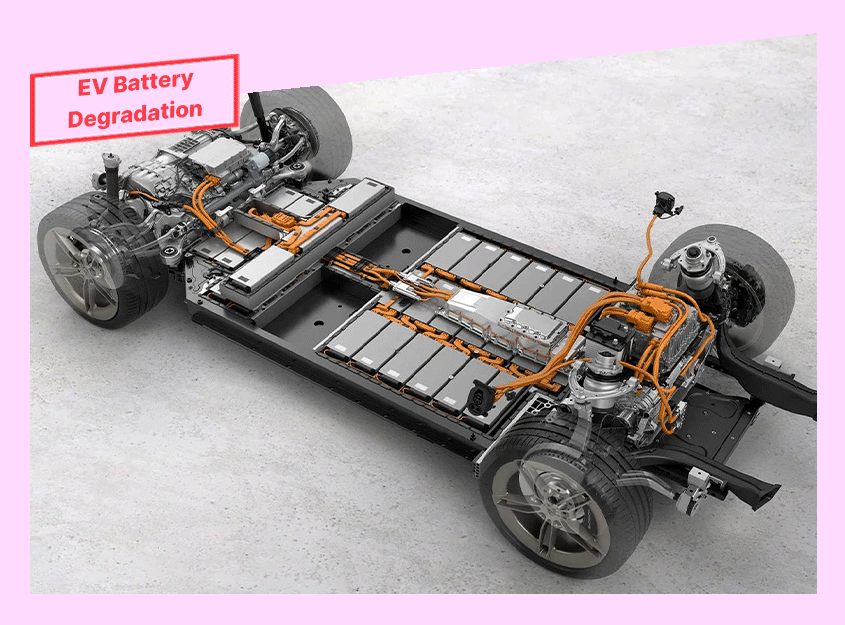
What Happens When an EV Battery Degrades? 🔋
Words: AutoTrader NZ
Battery degradation is one of the most common concerns for EV buyers.
Many people worry that after a few years the battery will suddenly stop working or need an expensive replacement. In reality, EV batteries typically degrade gradually over time, much like the battery in a smartphone or laptop – just much more slowly.
Here’s what battery degradation actually means and how it affects an EV.
What Is Battery Degradation?
Battery degradation is the gradual loss of a battery’s ability to store energy.
When an EV is new, its battery can hold 100% of its original capacity. As the battery ages, that capacity slowly decreases.
For example:
- A new EV with a 60kWh battery may have 100% capacity
- After several years, it may retain 90-95%
- After longer periods, it may reduce further depending on usage and conditions
Importantly, the battery still works – it simply can’t store quite as much energy as when it was new.
What Does Battery Degradation Actually Feel Like?
The biggest impact is usually a reduction in driving range.
For example:
- New EV range: 400km
- Battery health at 90%: approximately 360km range
- Battery health at 80%: approximately 320km range
The vehicle still drives normally, accelerates normally, and charges normally.
The main difference is that you’ll need to recharge slightly more often than when the vehicle was new.
For many drivers, this change is barely noticeable during everyday commuting.
What Causes Battery Degradation?
All lithium-ion batteries naturally degrade over time, but several factors can influence how quickly it happens.
🌡️ Heat
High temperatures are one of the biggest contributors to battery ageing.
This is why many modern EVs include sophisticated cooling systems to regulate battery temperature.
⚡ Frequent Fast Charging
DC fast charging is convenient, but relying on it constantly can increase battery wear compared with slower home charging.
Occasional fast charging is generally not a concern.
🔋 Regularly Charging to 100%
Some manufacturers recommend charging to 80-90% for daily use and reserving 100% charges for longer trips.
Keeping a battery at full charge for extended periods can increase wear over time.
🚗 High Mileage
Like any vehicle component, batteries experience wear as they are used.
However, many EV batteries continue performing well after hundreds of thousands of kilometres.
Do EV Batteries Suddenly Fail?
In most cases, no.
Battery degradation is typically slow and predictable.
Rather than suddenly stopping, batteries gradually lose capacity over many years.
Complete battery failure is relatively uncommon compared with normal degradation.
What About Battery Warranties?
Most EV manufacturers provide battery warranties that cover the battery for a specific period or distance.
Many warranties guarantee the battery will maintain a minimum level of capacity during the warranty period.
Always check the warranty terms for the specific vehicle you’re considering.
How Can You Reduce Battery Degradation?
While some degradation is unavoidable, you can help maximise battery life by:
✅ Charging at home when possible
✅ Avoiding unnecessary fast charging
✅ Following manufacturer charging recommendations
✅ Keeping the battery within recommended charge levels
✅ Parking in shaded areas during extreme heat where possible
Bottom Line
Battery degradation is a normal part of EV ownership, but it’s usually far less dramatic than many people expect.
Rather than suddenly failing, EV batteries gradually lose some capacity over time, which mainly affects driving range. Most modern EV batteries are designed to last for many years, and many continue to retain a high percentage of their original capacity well beyond the warranty period.
👉🏼 For most drivers, battery degradation simply means charging a little more often – not replacing the battery.