View all
7 more images
2026 Toyota bZ4x touring AWD vs Toyota RAV4 GR Sport Review
Words: Kyle Cassidy | Photos: Alex Schultz
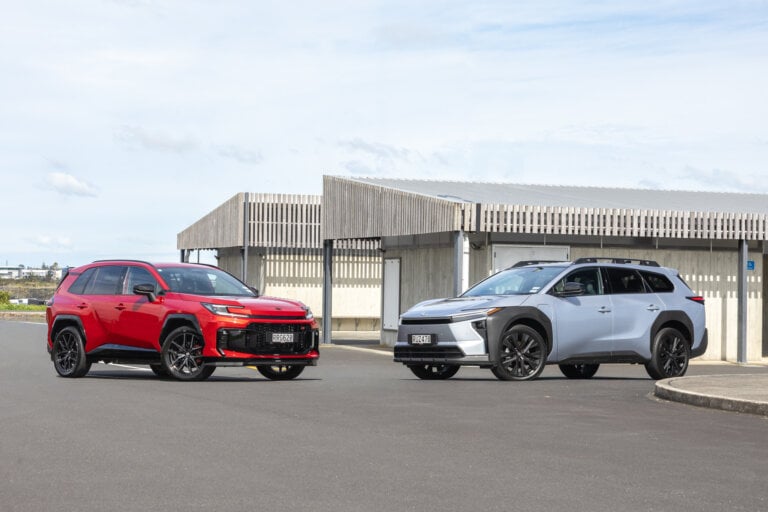
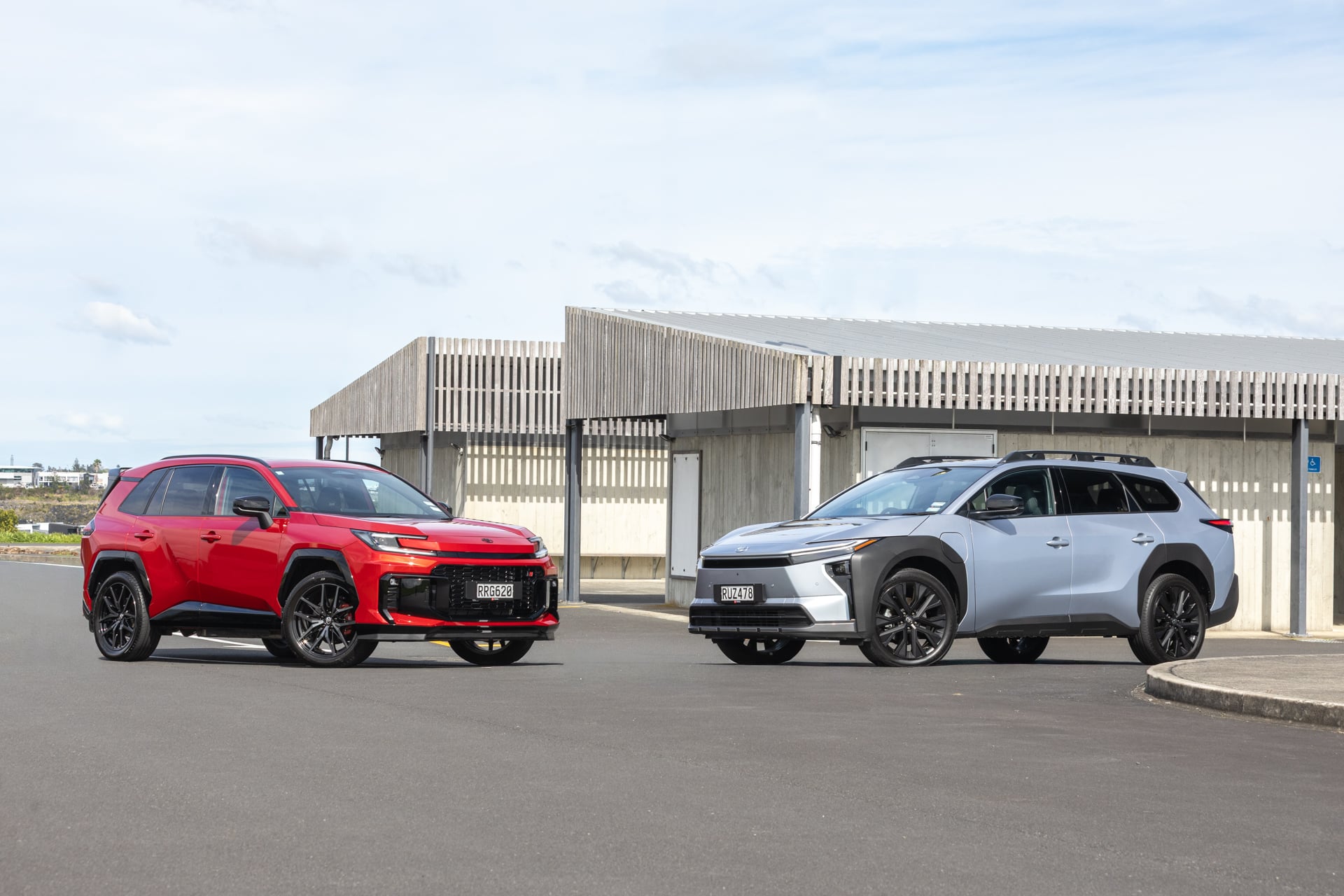
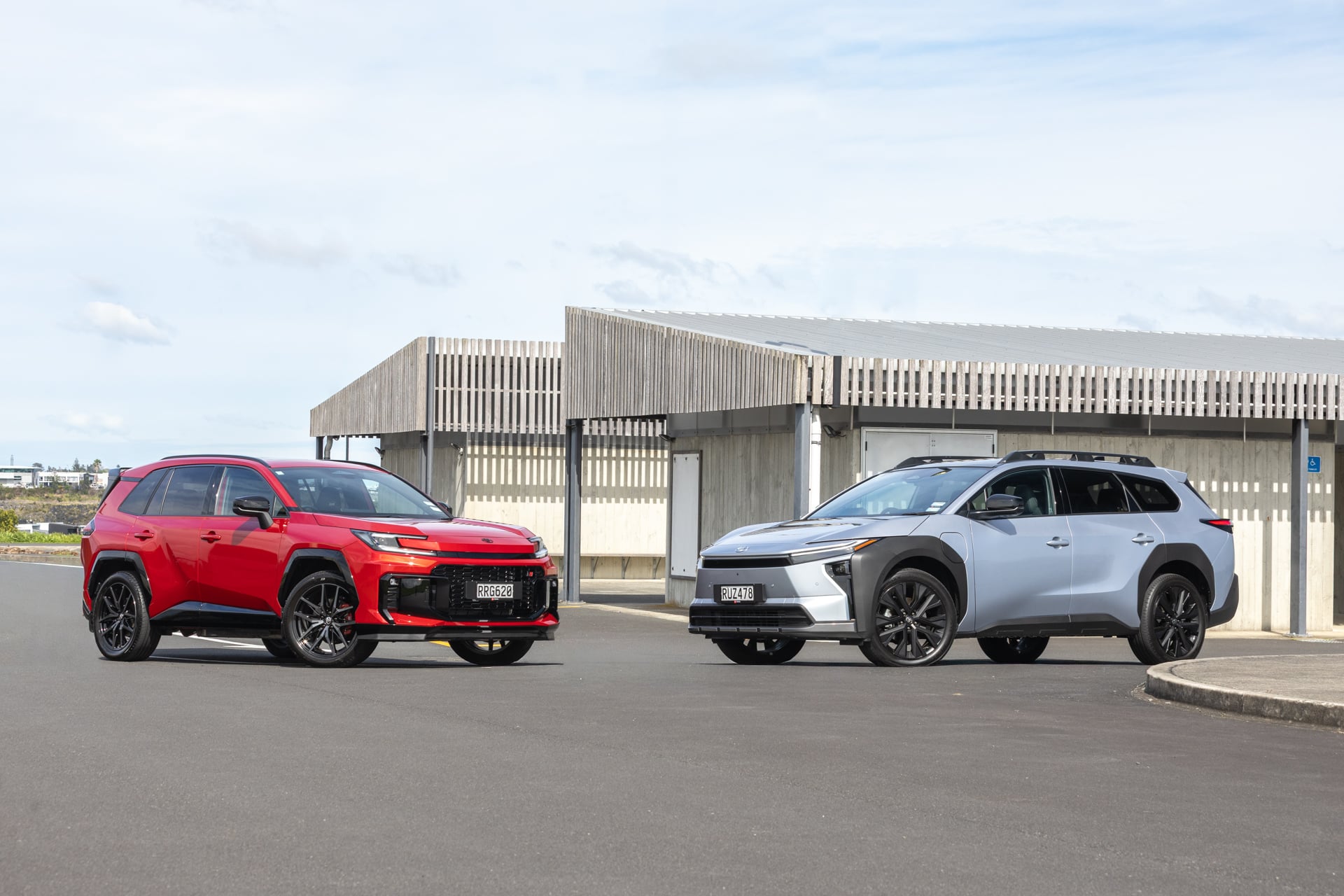
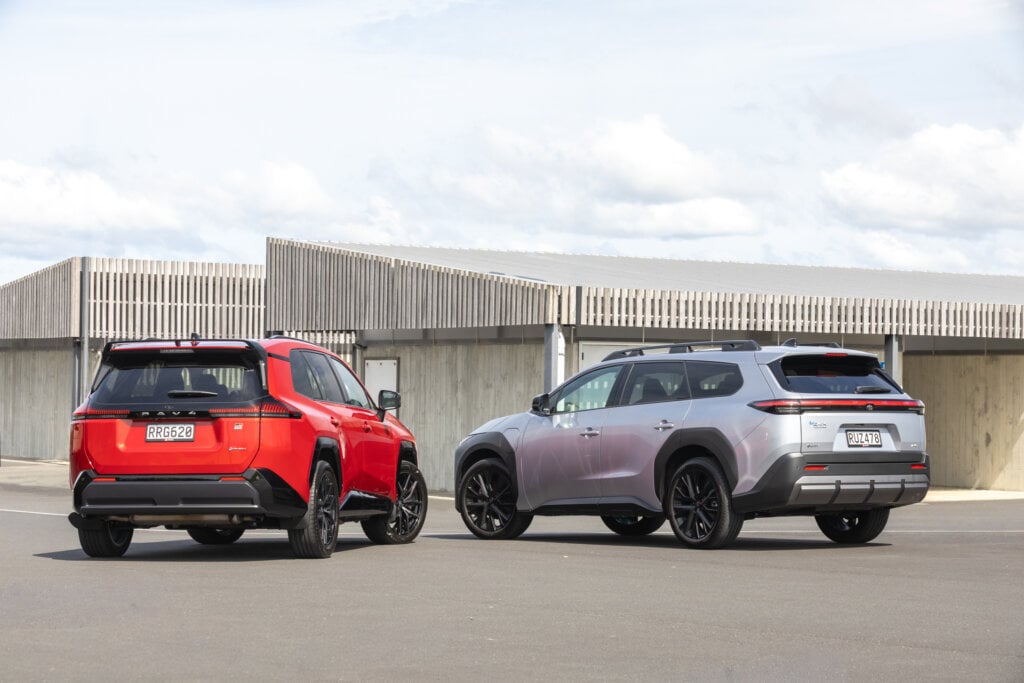
Two Toyotas with a plug, that is. One is a full BEV, the bZ4X Touring; the other is a PHEV, the RAV4 GR Sport. They are not far apart in price and tempt the same sort of buyer. Which one is best for you?
While Toyota has led the way with ‘self-charging’ hybrids, its electric options have been limited. But now it has options to get buyers thinking. With the RAV4 GR Sport PHEV and bZ4X Touring, it has two slightly different ways to plug in. They are close in price, so choosing between them comes down to how willing you are to ditch petrol.
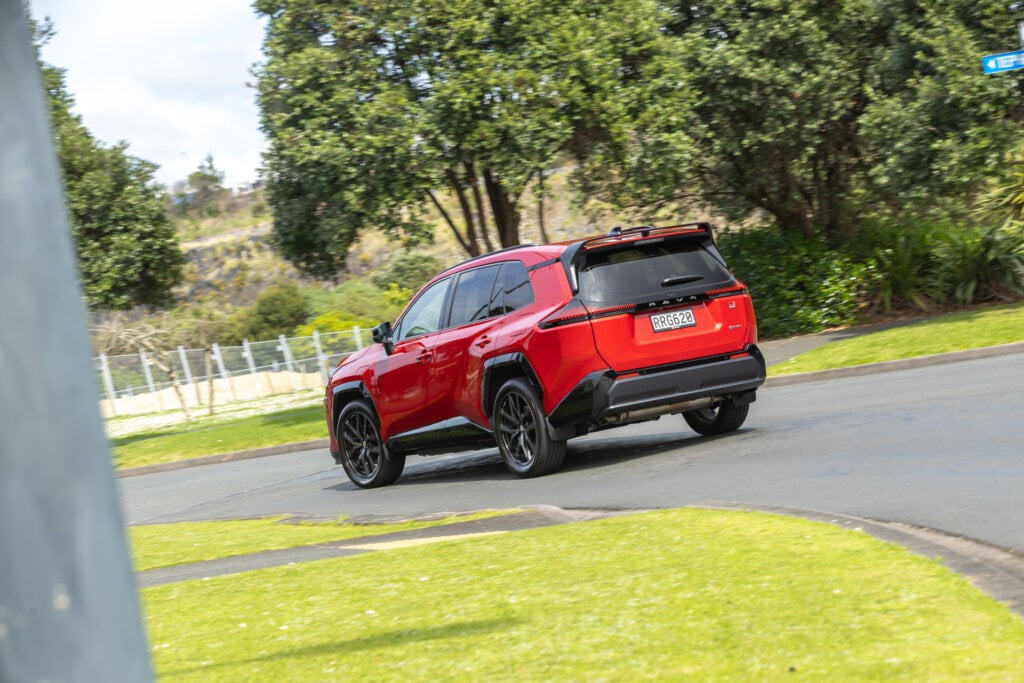
At $67,990 (the full driveaway, no-haggle price), the RAV4 GR Sport is a new plug-in hybrid option. There’s 227kW of combined output, AWD and a GR-tuned chassis. It has a big enough battery to ensure your urban duties can be tackled without using petrol (provided you charge up a couple of times a week), while the gas side pushes total range to around 800km.
The $71,990 bZ4X Touring is a new fully electric option. Its dual motors deliver 280kW, there’s a claimed 488km of range, and the extended roofline delivers extra luggage space over the bZ4X hatch.
Does the RAV4 strike the better balance between electric convenience and touring flexibility? Or does the bigger, more powerful bZ4X make the case for finally giving up the fuel pump?
What’s on offer?
The GR Sport tops the RAV4 plug-in range. Its hybrid system pairs a 2.5-litre petrol engine with front and rear electric motors, which draw electricity from a 22.7kWh lithium-ion battery. Toyota only lists the combined power output (227kW), but there’s an estimated 150kW of electric power in EV mode.
Toyota NZ quotes an electric-only range of 144km, though that’s an NEDC figure. Count on 100–110km. Charging capability reaches 11kW on AC and 50kW on DC. If there’s enough charge, the default drive mode is EV. Once the battery gets low, it switches to hybrid mode.
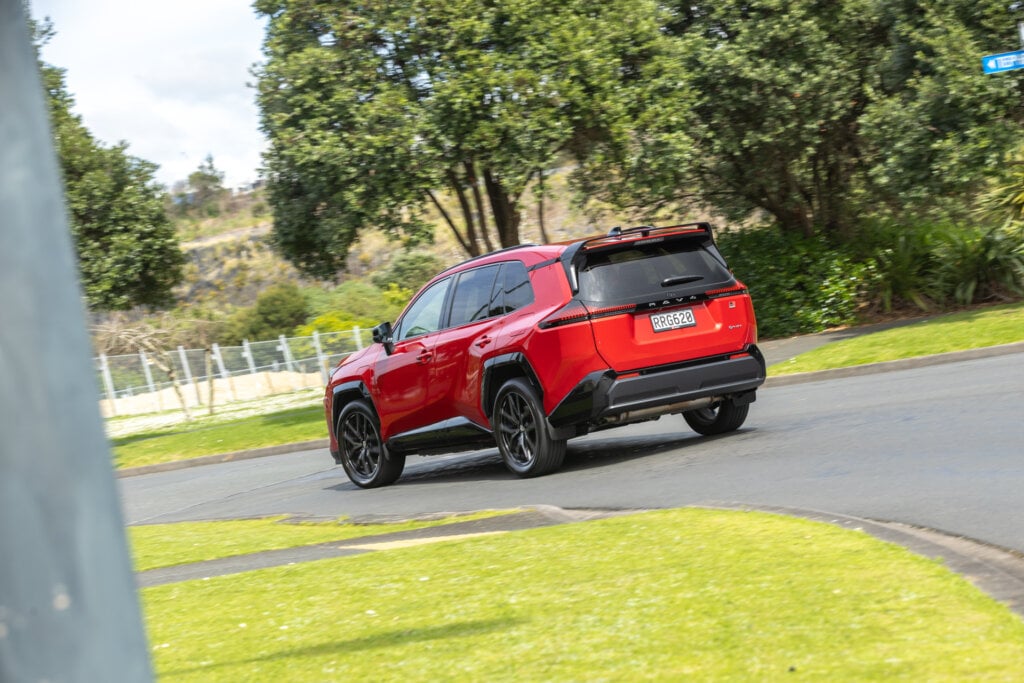
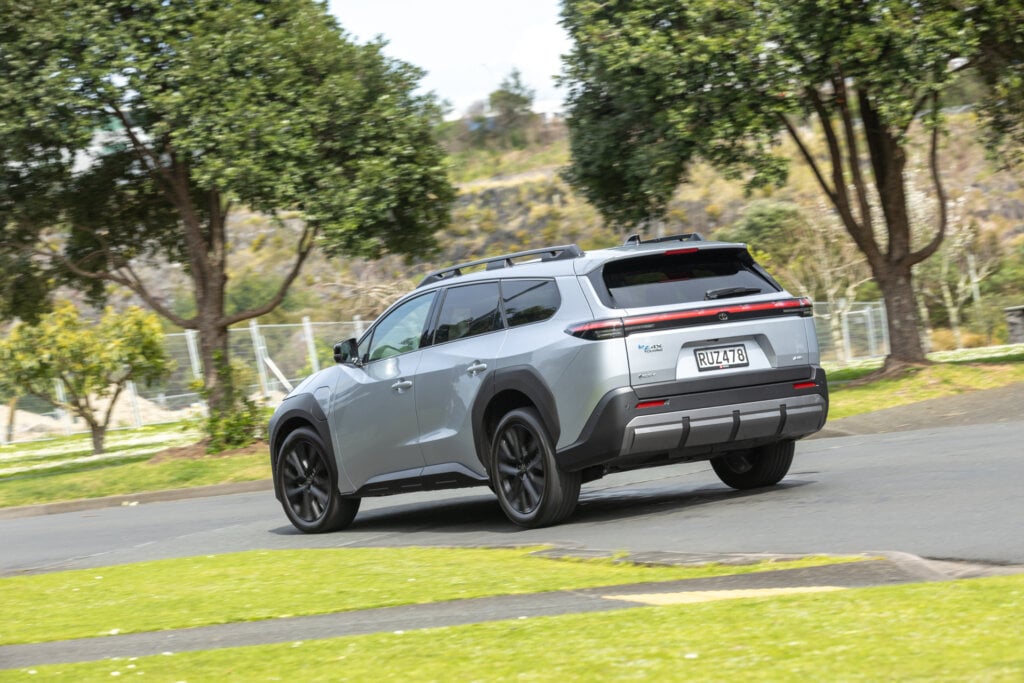
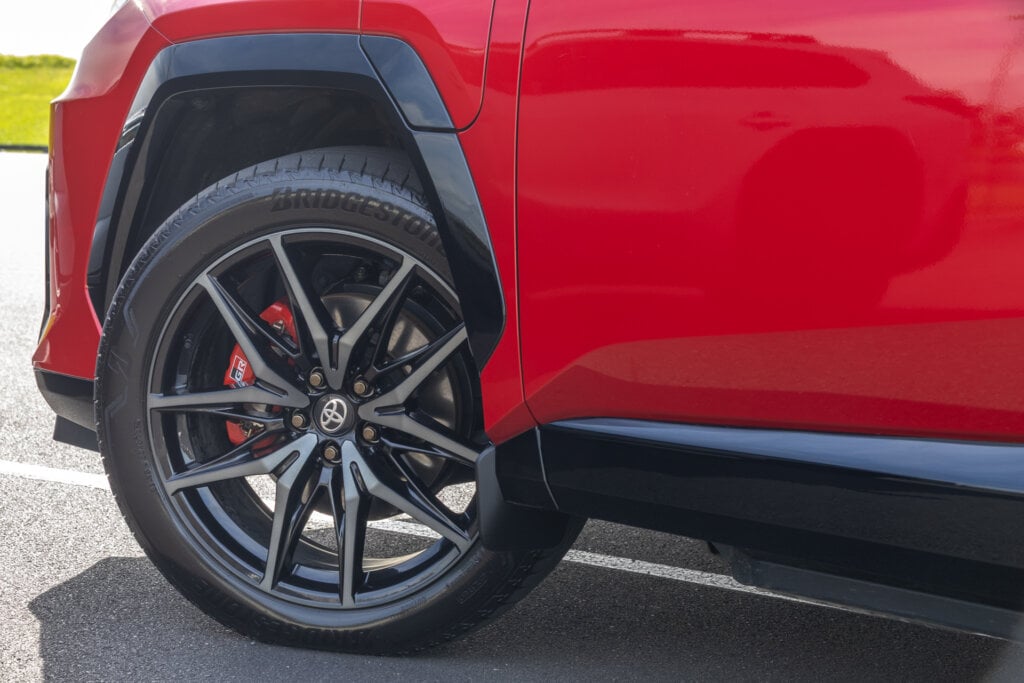
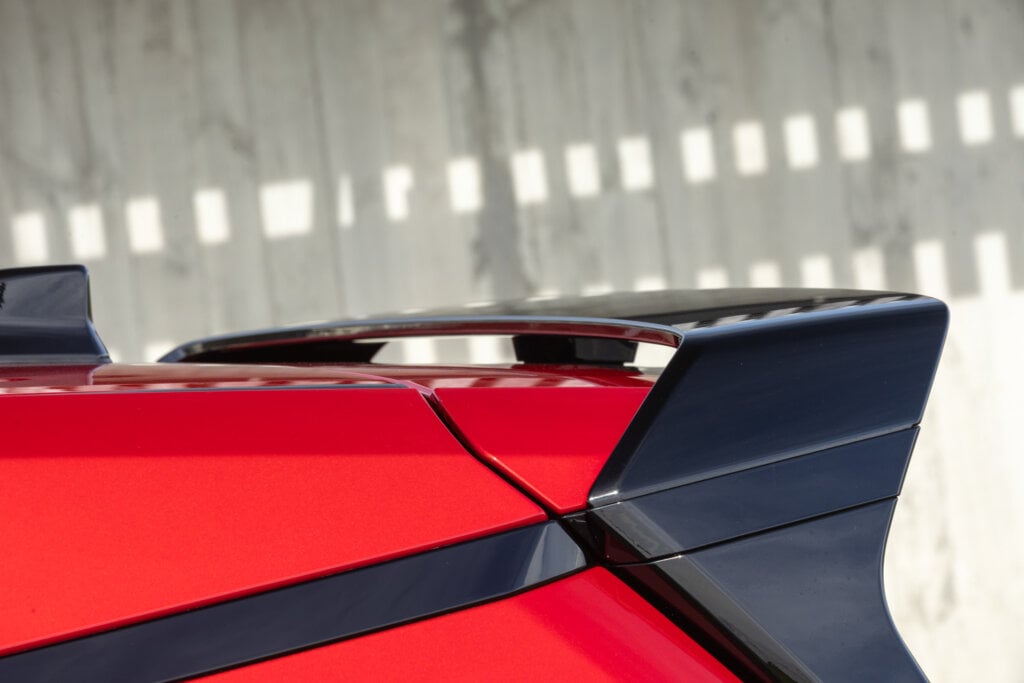
The GR treatment includes dedicated springs and dampers, a 15mm lower ride height and a 20mm wider track. Revised steering calibration, a front performance damper and additional rear suspension bracing are also part of the package. Its 20-inch alloys are said to be 2.2kg lighter at each corner than the XSE’s wheels. A distinctive front bumper, rear spoiler and red brake calipers complete the exterior changes.
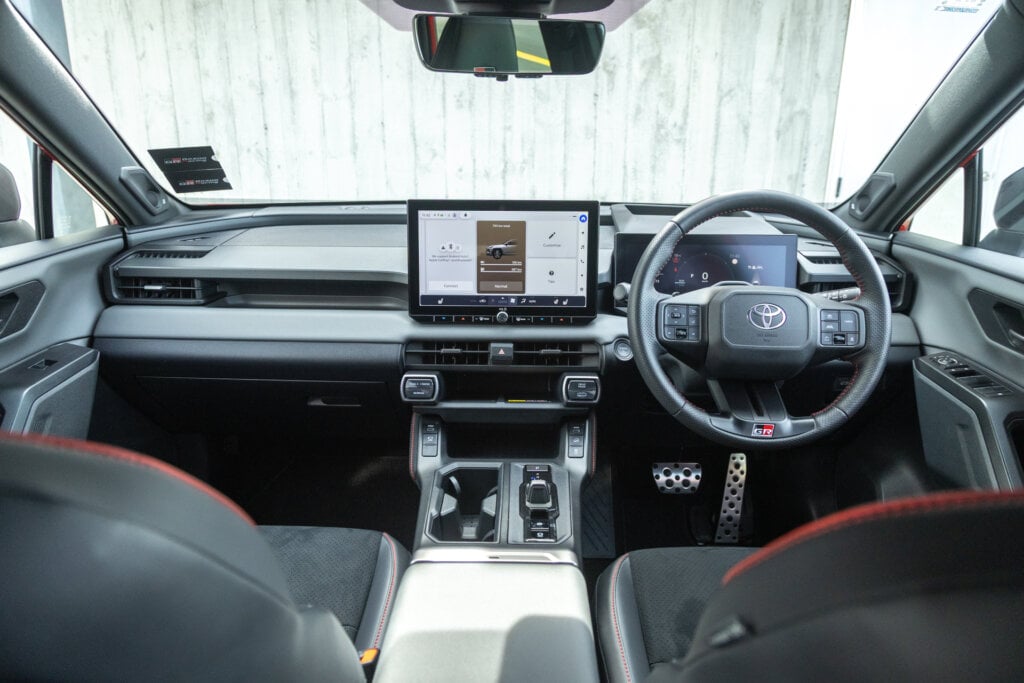
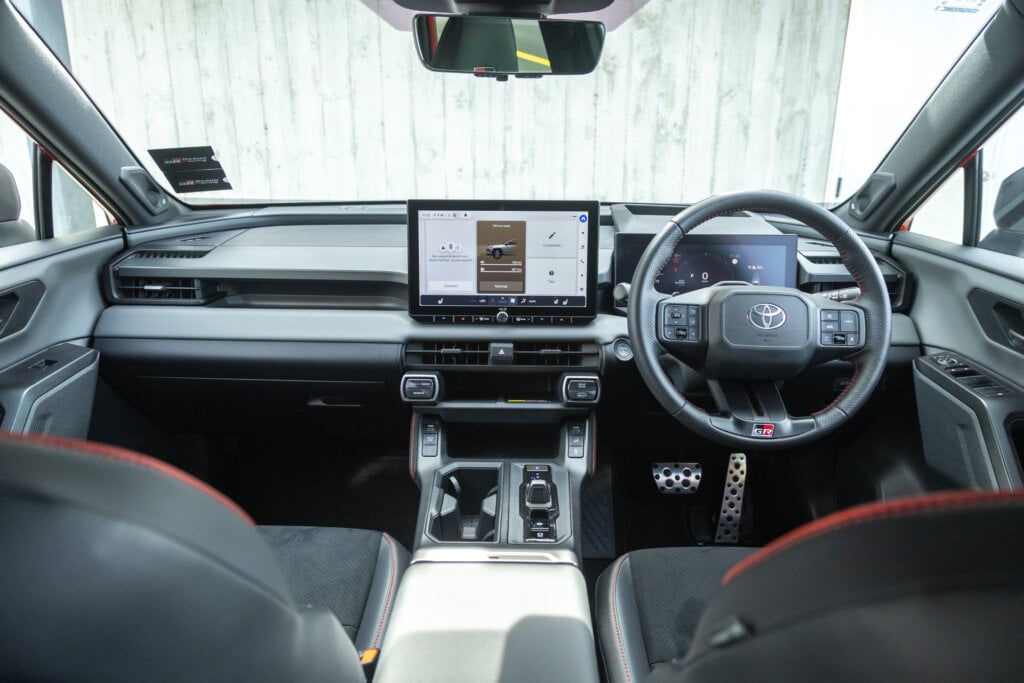
Inside, heated synthetic-leather and microsuede front seats feature red stitching, accompanied by a heated steering wheel, aluminium pedals and GR detailing. Equipment includes a 10-way power driver’s seat, head-up display, digital rear-view mirror, panoramic view monitor, nine-speaker JBL audio, dual wireless phone chargers and a hands-free power tailgate.
Toyota Safety Sense adds a driver monitor, enhanced pre-collision assistance, front cross-traffic alert and lane-tracing assistance. Blind-spot monitoring with safe-exit assistance and parking support braking also feature.
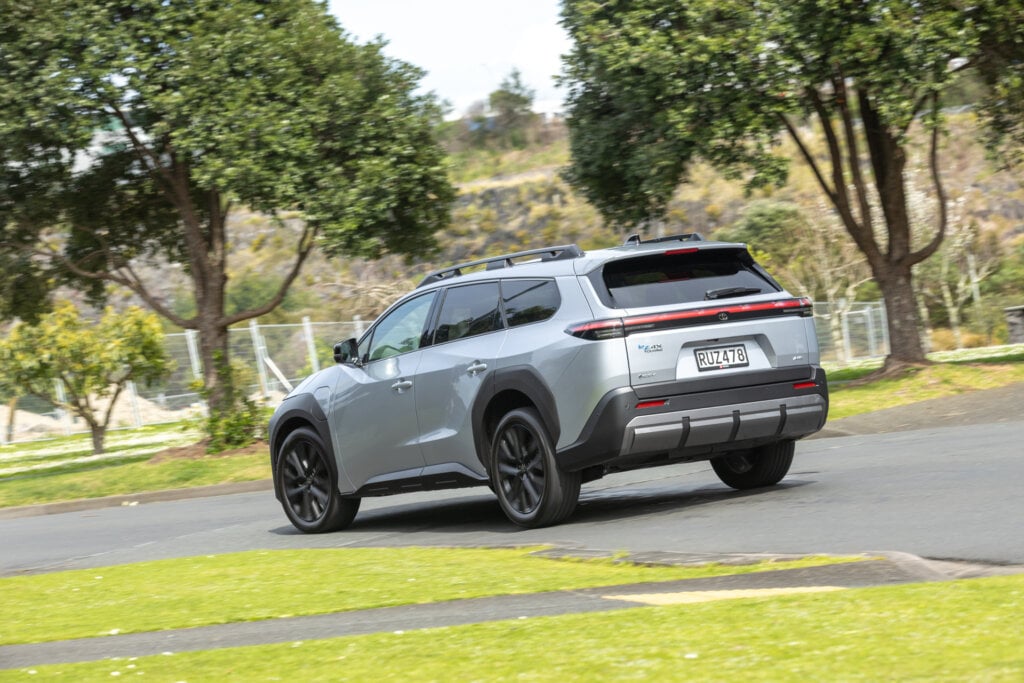
The all-electric option, the bZ4X Touring, is a larger, more practical alternative to the standard bZ4X. With dual motors, total output is 280kW, while Toyota quotes a WLTP driving range of 488km. Its 74.7kWh NMC battery and 400V architecture support 150kW DC fast charging, while AC charging peaks at 22kW. Toyota claims a 10–80 per cent DC charge can take 28 minutes under ideal conditions, thanks to preconditioning.
The Touring is 140mm longer than the regular bZ4X, with boot capacity rising from 410 to 550 litres. Like the RAV4 PHEV, it can tow up to 1500kg braked, and both have a 1500W/220V power outlet in the boot.
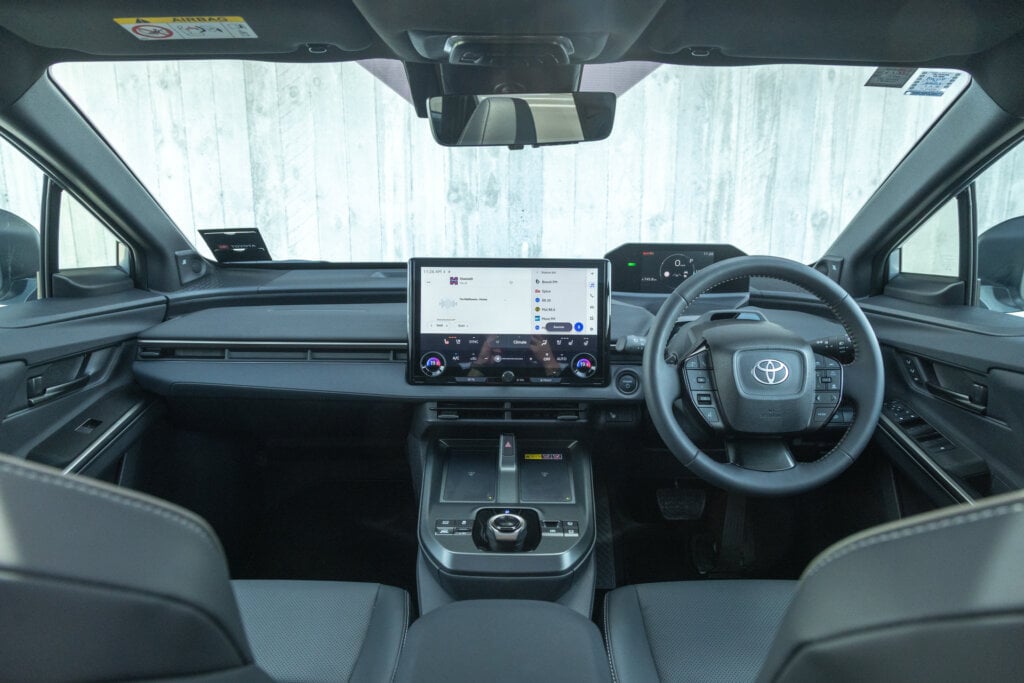
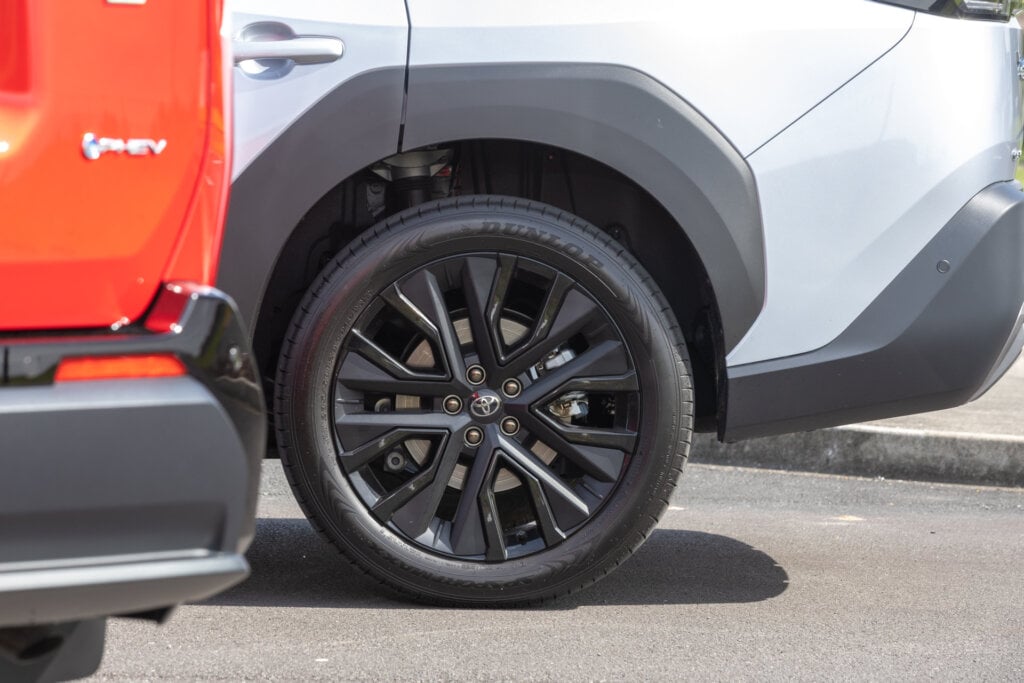
Standard equipment includes 20-inch black alloy wheels, a fixed panoramic roof, a heated steering wheel and eight-way power front seats with heating and ventilation.
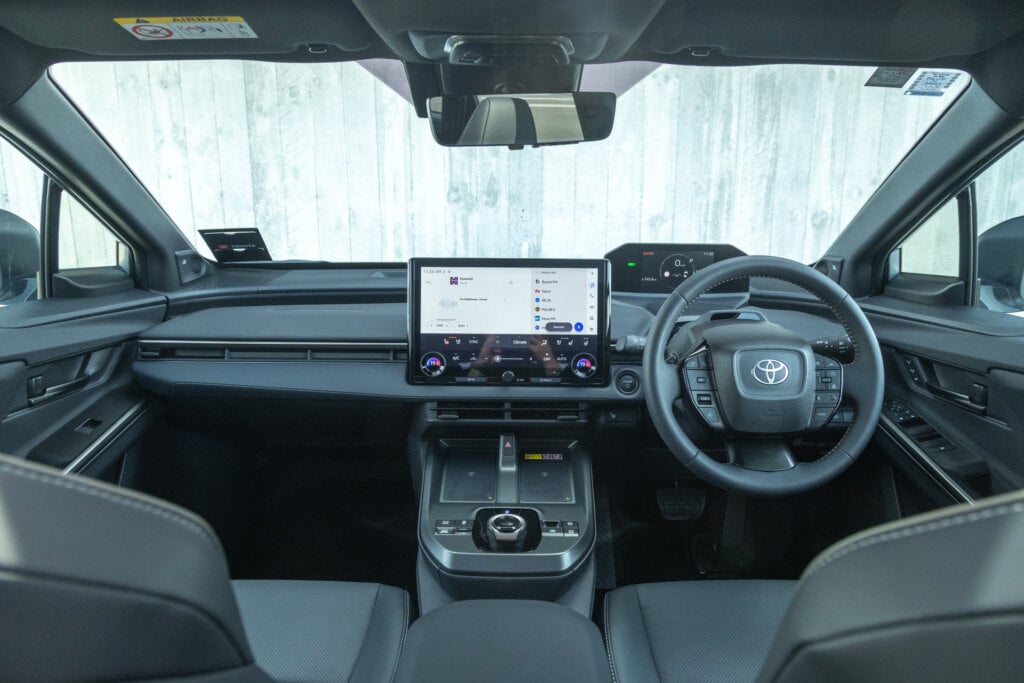
A 14-inch touchscreen incorporates navigation and wireless Apple CarPlay and Android Auto, paired with a nine-speaker JBL audio system. There are also two wireless phone chargers, a digital rear-view mirror and dual-zone climate control. You also get Toyota TeamMate advanced parking, which is a little slow but ensures you fit into tight spaces without scratching anything.
How’s the drive?
Both are consummate commuters. The Touring has that immediate electric torque that makes it so easy and refined to drive. The RAV4 in EV mode doesn’t offer the same kind of punch. It’s smooth and quiet but is simply down on power. In EV mode, the RAV4 won’t introduce the petrol engine to boost power when you accelerate, even if you’re flat to the floor. You have to be in HV Auto mode for it to switch between power sources. And as Toyota has been doing hybrids forever, the mixing and matching of the electric and petrol units is seamless and well programmed. They play together well. Hybrid mode is where you get the full complement of power. And while it’s not quite as effortless as the Touring, it does feel a whole heap punchier than the regular hybrid RAV4.
Both have sorted steering with a sense of connection and decent assistance. And they both ride well in town, the suspenders controlling the motion and absorbing the bumps, while the Touring glides over those pesky speed humps. There’s a touch of sportiness to the GR’s ride, but given the engineering brief, it is quite civil.
The Touring is less anxious in traffic. The RAV4’s safety features are more active: the driver monitor is stricter, the forward collision warning is more sensitive, and the lane-keeping system keeps telling you to keep your hands on the wheel.
On the open road, they’re both quick enough. The GR needs to be in hybrid mode, of course. It gets along okay in EV mode, but it’s palpably better in the HV setting.
They both ride well on the highway, and neither is too noisy. The Touring is very competent. It’s not overly engaging, but it doesn’t really put a foot wrong. It rides the bumps while sorting the roll. And if you go into a bend too hot or the conditions are a bit iffy, the stability control keeps it all tidy in a non-invasive fashion. It’s comfortable and easy.
If you’re thinking this GR RAV4 might be a more family-friendly alternative to a GR Corolla, it’s not. Go full GR on it and the front pushes wider sooner than expected, while the rear end can get a little twitchy under power out of a bend. The two-tonne kerb weight is telling. It rounds up the bends better than a regular RAV4, but it’s not the ultimate sporting mid-size SUV. The power delivery is okay for a hybrid, as long as you’re in Sport mode (with the transmission in its sport setting too), while the brakes are solid with no dodgy regen effect.
The Touring averaged 18.5kWh/100km for us, so you’ll get 400km to a charge, or more if you keep to the city and maximise the regen. It’s adjusted via the paddles and works well.
The GR Sport will give you between 90km and 110km of EV roaming. It all depends, really. In HV mode, you get a summary of your consumption when you power down, and this can range from 4.5L/100km to 7L/100km.
Practical, of course
The RAV4 has a handy-sized boot for a medium SUV, and under the floor is a temporary spare, unusual for a PHEV. While there are no levers to help drop the rear seat (split 60/40), it flops down easily enough to present a reasonably flat load area. Both have Toyota’s slow and beepy powered tailgates. The Touring has some underfloor storage but no spare tyre, while its hold is a bit wider and longer, though the two are similar in boot capacity. Remote levers help drop the back seat, giving the Touring a longer overall load length than the RAV4.
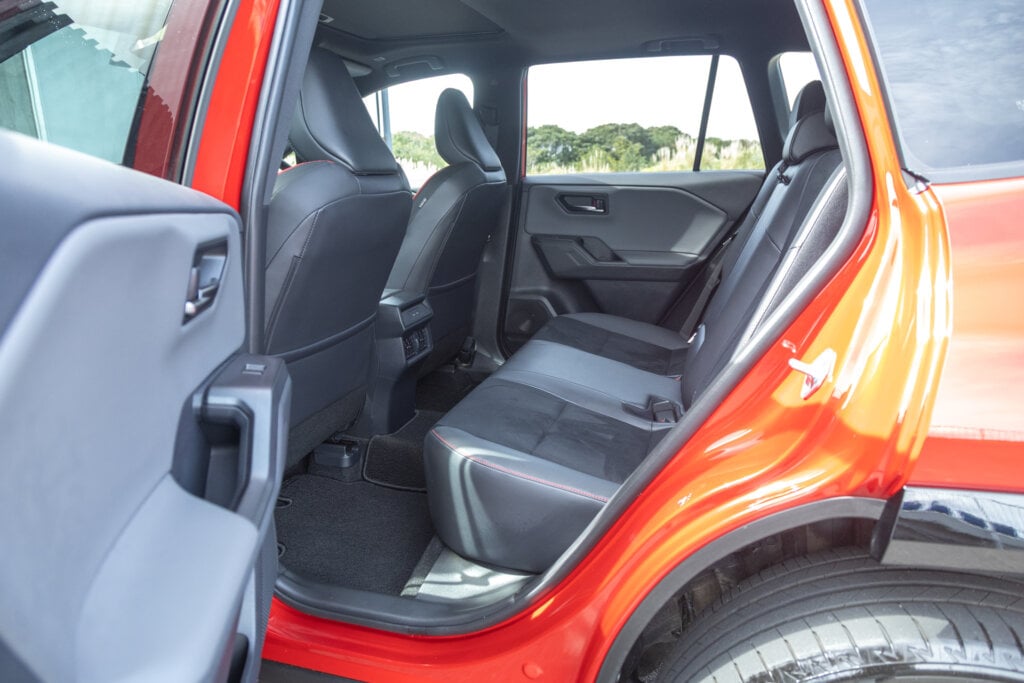
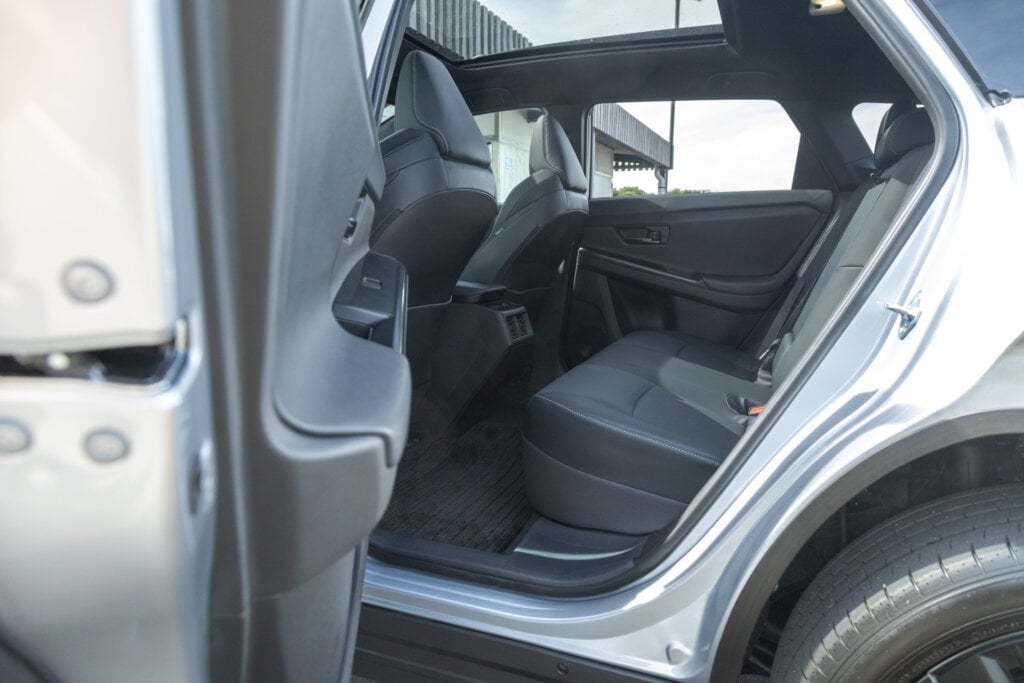
The Touring is marginally wider and, with its flat floor, a better fit for three across the back seat, though more foot clearance under the front seats would be welcome. The RAV4 has higher-set seats, putting your hips higher so your knees aren’t quite as bent up.
Up front, the Touring’s seats are supportive and well stocked with foam. All your touch points are soft, and it’s a typically well-constructed Toyota. While the design won’t wow, it has a solid, quality feel to it.
There’s some storage underneath the high-set console. On top, you’ve got two wireless charging pads (although they don’t secure your device well) and a rotary dial to select the gears. There are a few buttons too, including one to summon the handy surround-view camera.
The driving position is a little different, with the steering wheel set lower than the norm and a driver’s display sitting proud of the dash, making it easy to see. The touchscreen isn’t too overwhelming, with a few buttons to help out. There’s not as much tech here as in the RAV4. It lacks Toyota’s Connected Services, for instance, but you might find that a good thing.
People might like that it’s a little bit easier to slide into the RAV4, its seats set higher to deliver the driving position they crave. The Touring is a tad classier inside, but the RAV4’s plastics and construction are quality too. There’s more storage, including an actual glovebox (absent in the Touring), and charging pads that hold your device more securely. This too has a good surround-view camera, something we can’t park without these days.
The RAV4 has a more traditionally positioned driver’s display in an instrument binnacle, but it’s all digital and configurable. It’s also supplemented by a head-up display. The touchscreen has more functionality, with a newer, faster system behind it and a few more menus to delve into. The voice controller can therefore be quite handy. And you can connect to the car via Toyota’s new Connected Services widget, if that’s your thing.
Which one? It depends
Both these models we’d deem as highly recommended, though each will suit a different buyer.
The bZ4X Touring is the one if you’re missing that big-car feel and are ready to ditch the fossil juice. It’s refined, effortless and spacious. It has everything you need but isn’t too techy. You’ll have to plan your charging when touring, but it’s really not that hard.
If you’re contemplating any sort of plug-in, it pays to have easy access to home charging so you can zap it overnight on cheap rates. You don’t want to rely on public charging, which is expensive in comparison.
The plug-in hybrid has twice the touring range and is cheaper (even more so if you opt for the XSE). We also like that it’s got a genuinely useful EV range, which means you don’t need to plug in every single day, though regular charging is the key with any PHEV.
With the RAV4 PHEV, you can do your urban running on the battery while enjoying cheaper RUCs, though it’s not quite as refined and effortless as the proper EV. And when you’re in hybrid mode, you’re paying RUCs and petrol tax. The RAV4 also needs 95, and while a refill is much quicker than a recharge, it’s expensive these days at $3.40 a litre.
If you’re thinking about cheaper Chinese plug-ins, none drive as well. And the RAV4’s price won’t suddenly drop by $2000 a month after you buy it, while depreciation will be a lot less too.
Toyota RAV4 GR SPORT Plug-in Hybrid
$67,990 / 1.0L/100km / 18g/km
0-100 km/h 5.81s
80-120 km/h 4.40s (122m)
100-0 km/h 36.89m
Speedo error 97 at an indicated 100km/h
Ambient cabin noise 73.1dB@100km/h
Engine 2487cc / IL4 / DI
Max power 105kW@4800rpm
Max torque 227Nm@3200rpm
Battery 22.7kWh
Hybrid System Output 227kW
Drivetrain e-CVT / e-AWD
Front suspension Mac strut / swaybar
Rear suspension Wishbones / swaybar
Turning circle 11.4m (2.6 turns)
Front brakes Ventilated discs
Rear brakes Ventilated discs
Stability systems ABS, ESP, TV
Safety AEB, ACC, BSM, LDW, RCTA, ALK, AHB
Tyre size f/r-235/50R20
Wheelbase 2690mm
L/W/H 4645 / 1880 / 1685mm
Trackf-1620mm r-1635mm
Fuel capacity 55L
Luggage capacity 421L
Tow rating 750kg (1500kg Braked)
Service intervals 12 months / 15,000km
Scheduled servicing Capped price service $365
Warranty 3yrs / 100,000km
ANCAP rating Unrated
Weight (claimed) 2025kg
Toyota bZ4X Touring BEV AWD
$71,990 / 16.8kWh/100km / 0g/km
0-100 km/h 4.90s
80-120 km/h 3.31s (92m)
100-0 km/h 37.65m
Speedo error 98 at an indicated 100km/h
Ambient cabin noise 70.9dB@100km/h
Motor output 280kW
Max torque 536Nm
Battery 74.7kWh
Range 488km
Drivetrain Single-speed auto / e-AWD
Front suspension Mac strut / swaybar
Rear suspension Wishbones / swaybar
Turning circle 11.2m (2.8 turns)
Front brakes Ventilated discs
Rear brakes Ventilated discs
Stability systems ABS, ESP, TV
Safety AEB, ACC, BSM, LDW, RCTA, ALK, AHB
Tyre size f/r-235/50R20
Wheelbase 2850mm
L/W/H 4830 / 1860 / 1675mm
Trackf-1600mm r-1610mm
Luggage capacity 550L
Tow rating 750kg (1500kg Braked)
Service intervals 12 months / 15,000km
Scheduled servicing Capped price service $260
Warranty 3yrs / 100,000km
ANCAP rating ★★★★★ (2025)
Weight (claimed) 2065kg