View all
Lexus NX first drive: small changes, bigger battery
Words: Richard Edwards
The NX is Lexus New Zealand’s bread and butter, admittedly a fancy bread and butter. It’s a mid-size electrified SUV, the kind of car New Zealand buyers keep choosing, so an update to it matters more here than the size of the changes would suggest. The revised NX arrives in New Zealand early in 2027, with pricing and line-up still to be confirmed.
Lexus had the car at its Australian media event in Melbourne, along with time on its proving ground, where we also got up close with the LFA Concept. That was enough for first impressions, and we’ll give a full verdict once local cars are here.
Hybrid only
Lexus has dropped the petrol-only NX worldwide, leaving the NX 350h hybrid and the NX 450h+ plug-in hybrid. That changes nothing for New Zealand, where Lexus has sold only hybrid NXs for some time.
Both use a new-generation 2.5-litre four-cylinder petrol engine. In overseas markets the 350h makes 146kW combined and the 450h+ makes 226kW, and both come with either front-wheel drive or E-Four all-wheel drive. New Zealand outputs and specification are yet to be confirmed.
The biggest change is in the plug-in, whose battery grows from 18kWh to 23kWh. Lexus quotes a provisional European WLTP figure of more than 100km of electric range. The 450h+ also gets DC fast charging for the first time, and a 10 to 80% charge takes about 30 minutes.
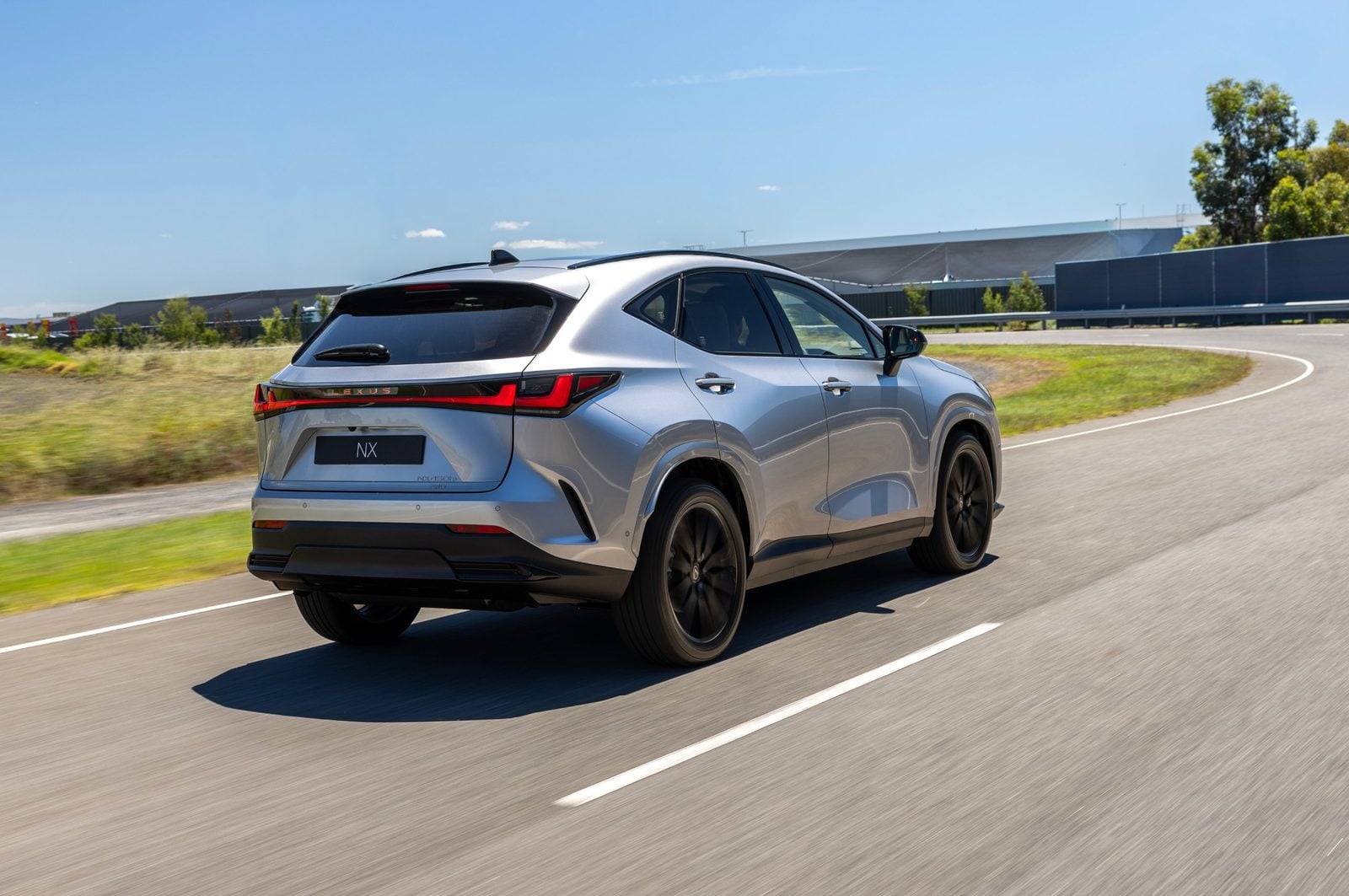
On E-Four models the rear electric motor now drives the car continuously in a straight line, where before it mainly engaged at launch, on slippery surfaces and through corners. We’ll find out what that does to fuel use when we have the car on New Zealand roads.
Outside
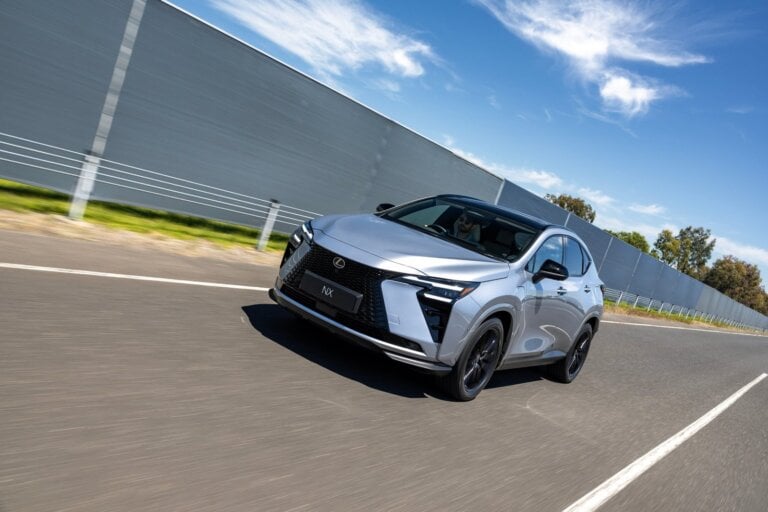
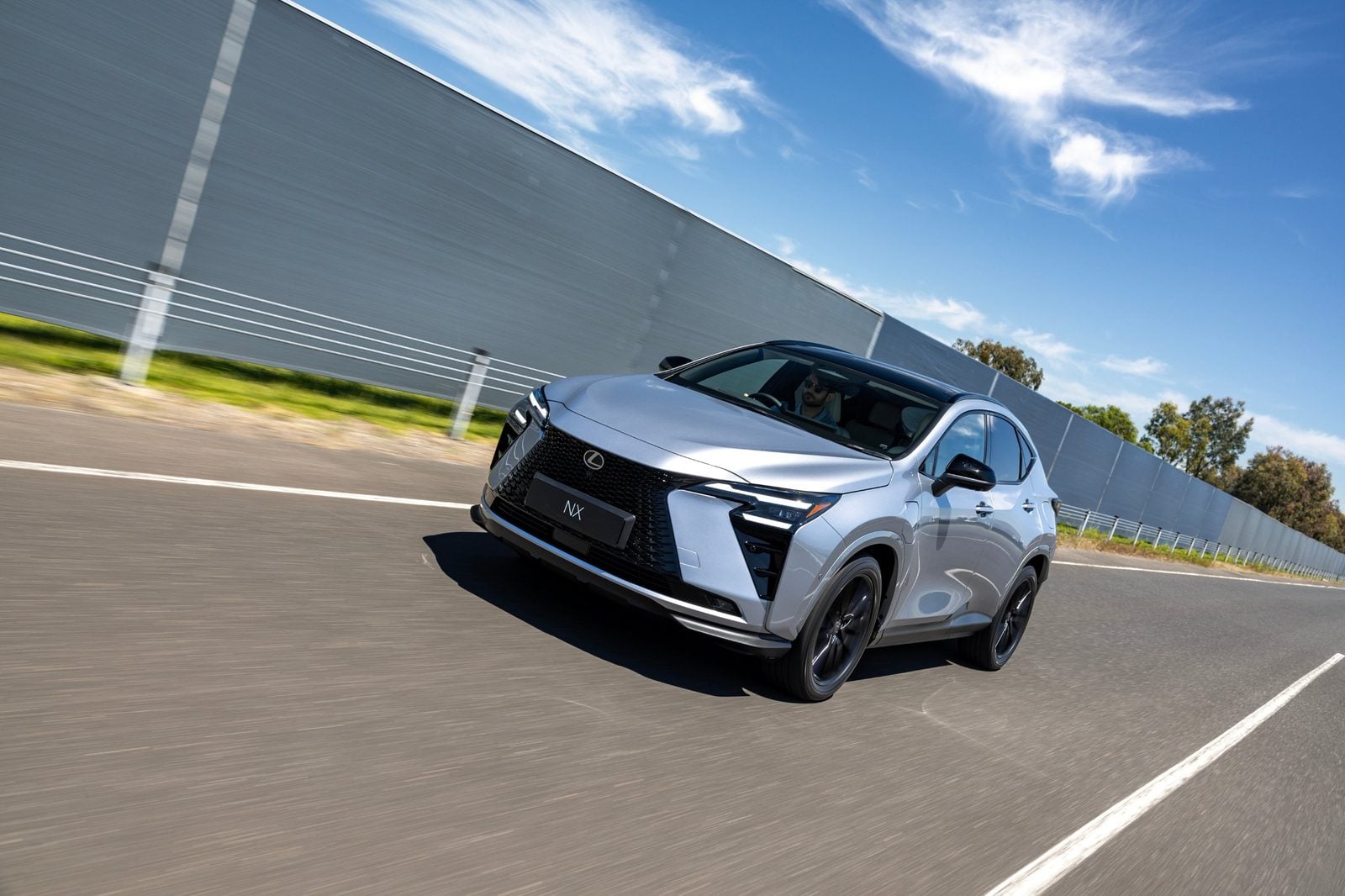
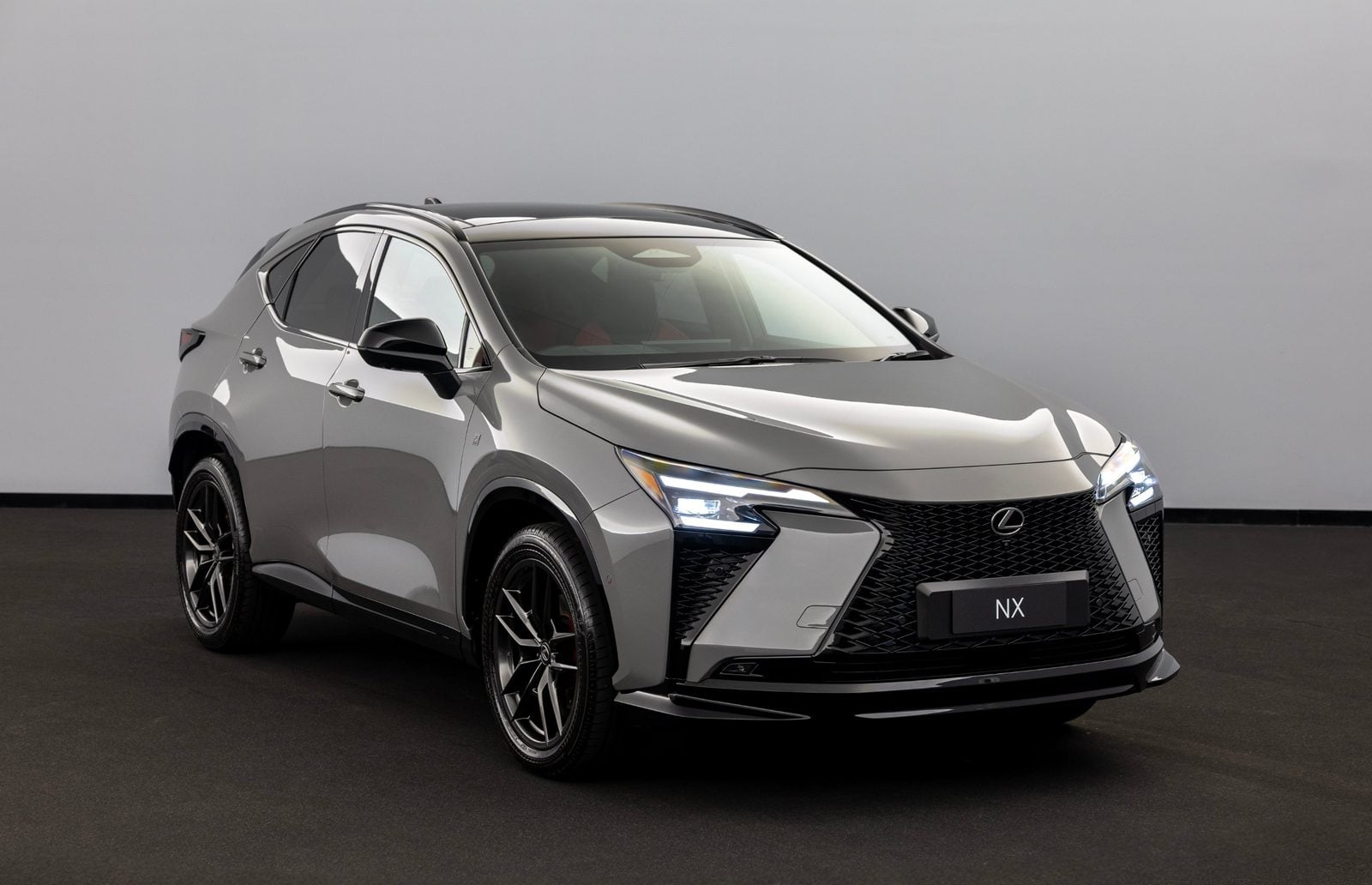
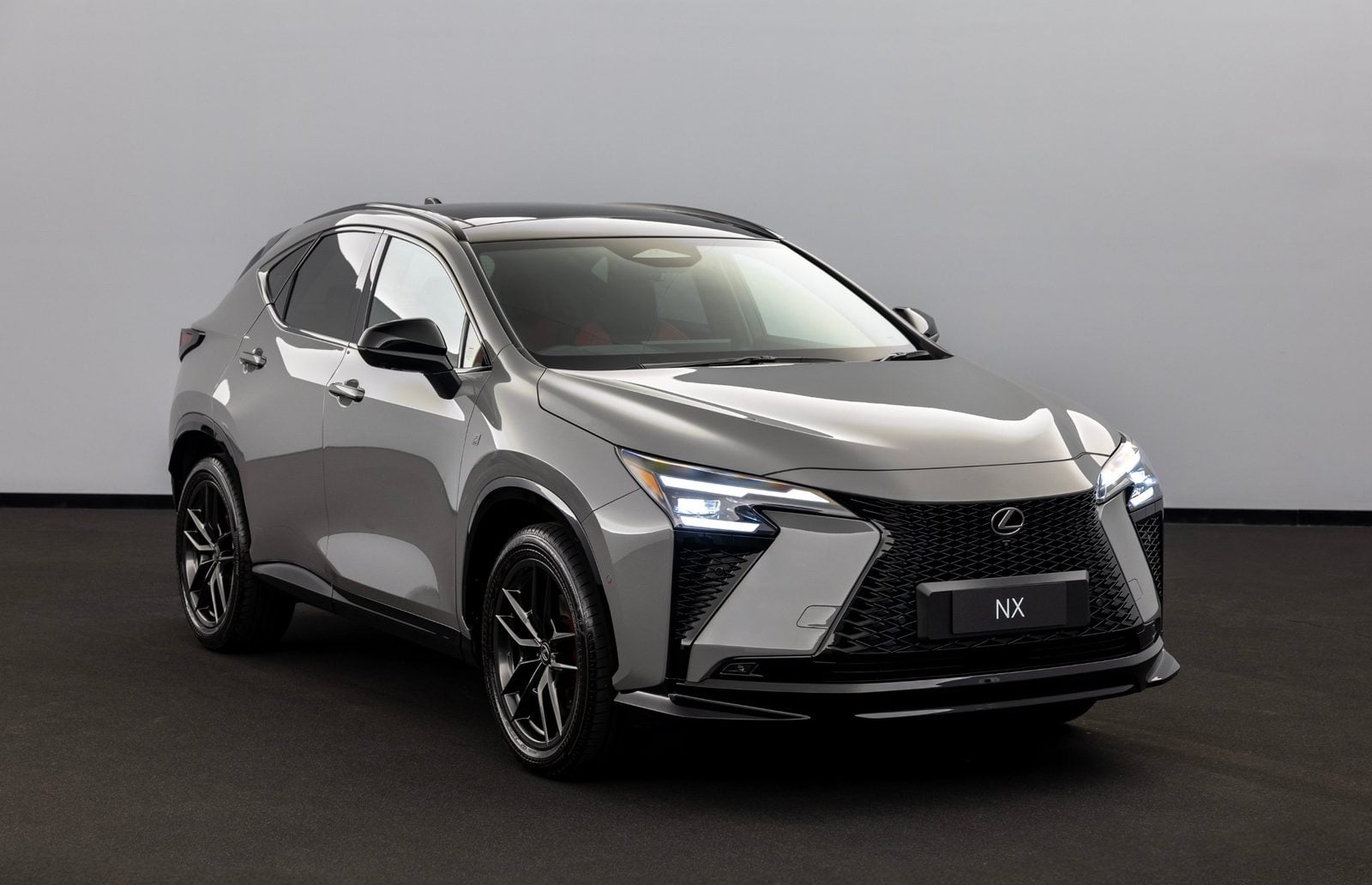
The exterior changes are subtle. The headlights and grille have been tweaked, though the spindle grille is still the main feature, and the new wheel designs look a little harder-edged and sportier than before. The car we saw had contrast-coloured mirrors, which house the cameras for the 360-degree system.
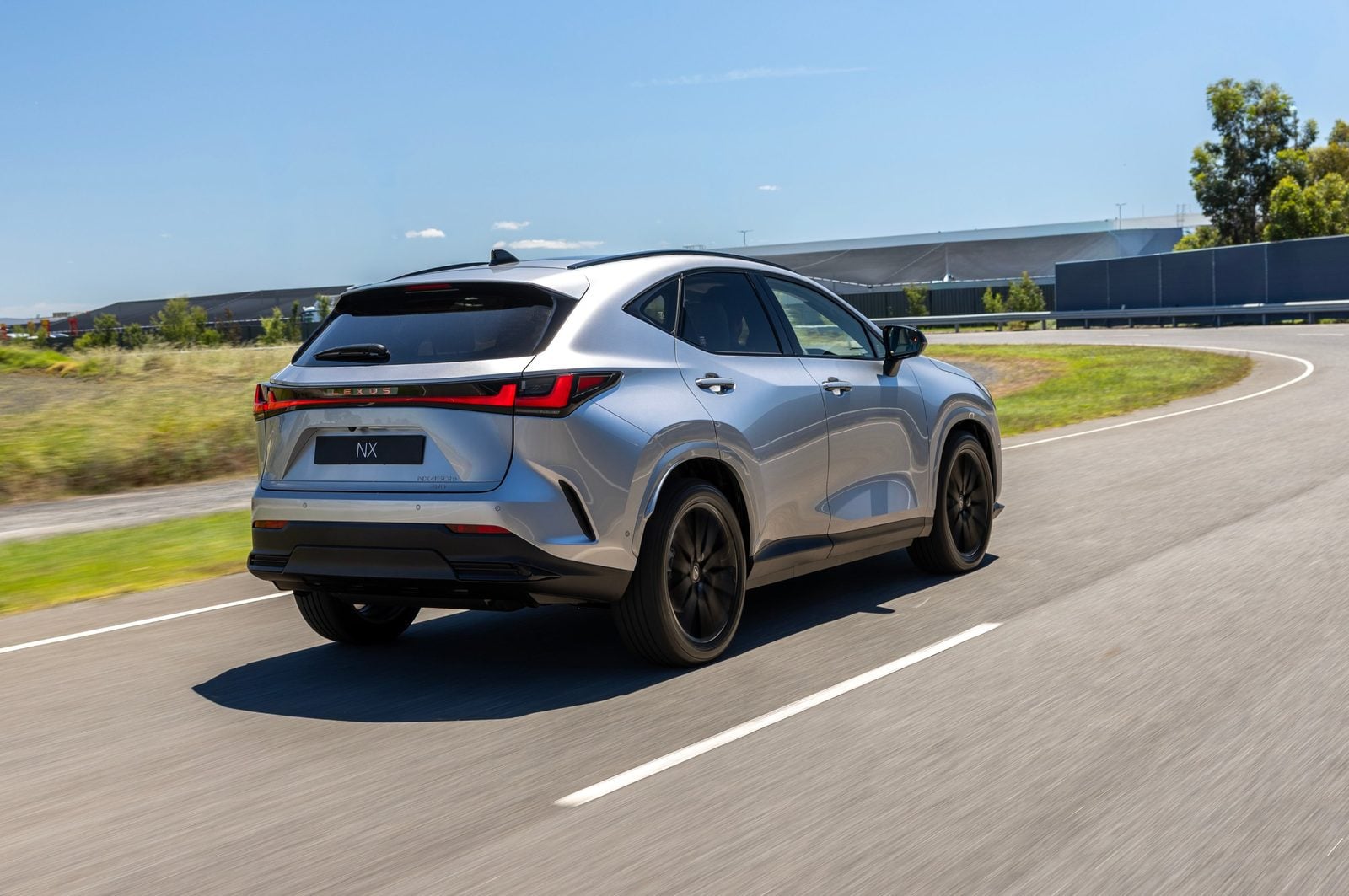
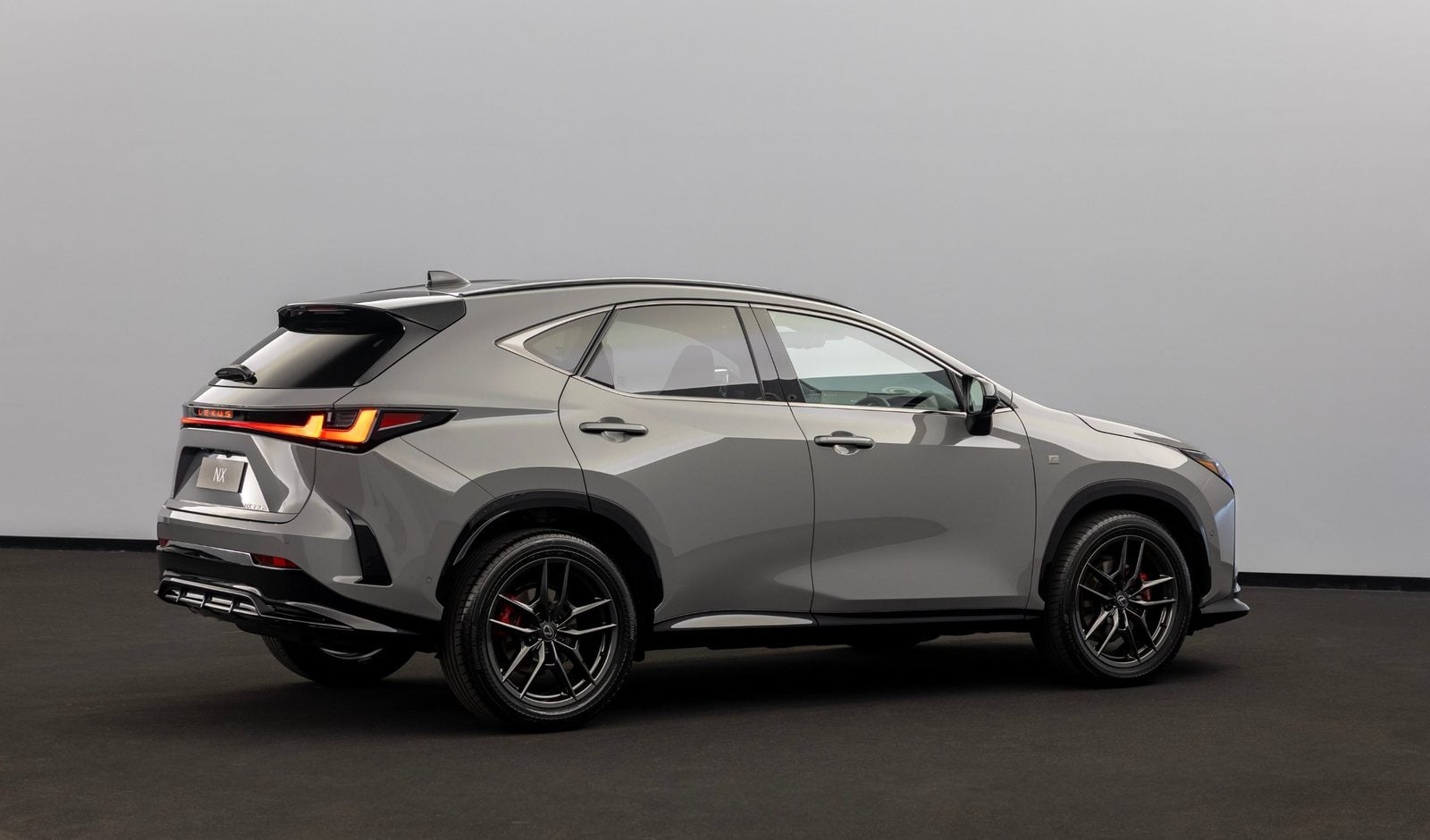
At the back, a full-width light bar replaces the separate corner lights and the Lexus badge now lights up. There’s also a revised spoiler, the shadow silver garnishes around the rear look classy, and tinted rear glass is standard, as you’d expect on a luxury car.
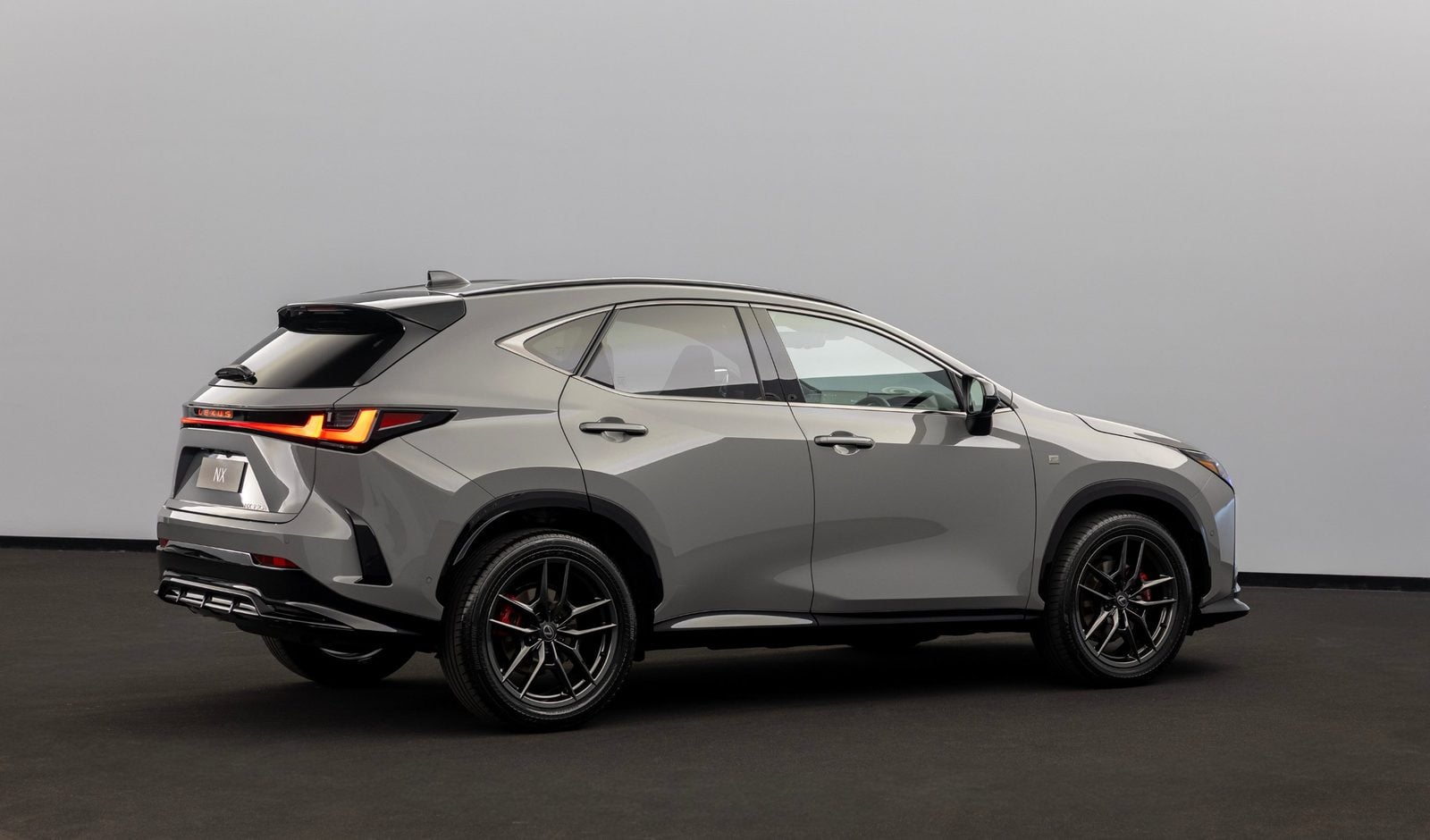
The NX keeps proper door handles. There’s still a button inside the handle that does the work, but at least there’s something to grab hold of, which Lexus buyers will appreciate. My one gripe is the gloss black lower cladding. Piano black scratches easily on the outside of a car, and a matte finish would wear much better.
The boot holds 545 litres with the rear seats up and 1,436 litres with them folded. There’s a deep tub under the floor but no spare tyre.
Inside
There’s plenty of legroom in the back seat, with room under the front seats for your feet even with a slight hump in the floor. The F Sport’s rear seat is a little bulkier than the standard one, and its bolsters nudge you toward the middle of the car, which feels a bit odd until you fold down the centre armrest. It’s comfortable for two adults on a long trip, or two adults and a child, but it isn’t wide enough for three adults. Rear passengers get air vents, heated outboard seats and USB-C charging. The glass roof takes some headroom, but it has a cover you can close when the sun is out.
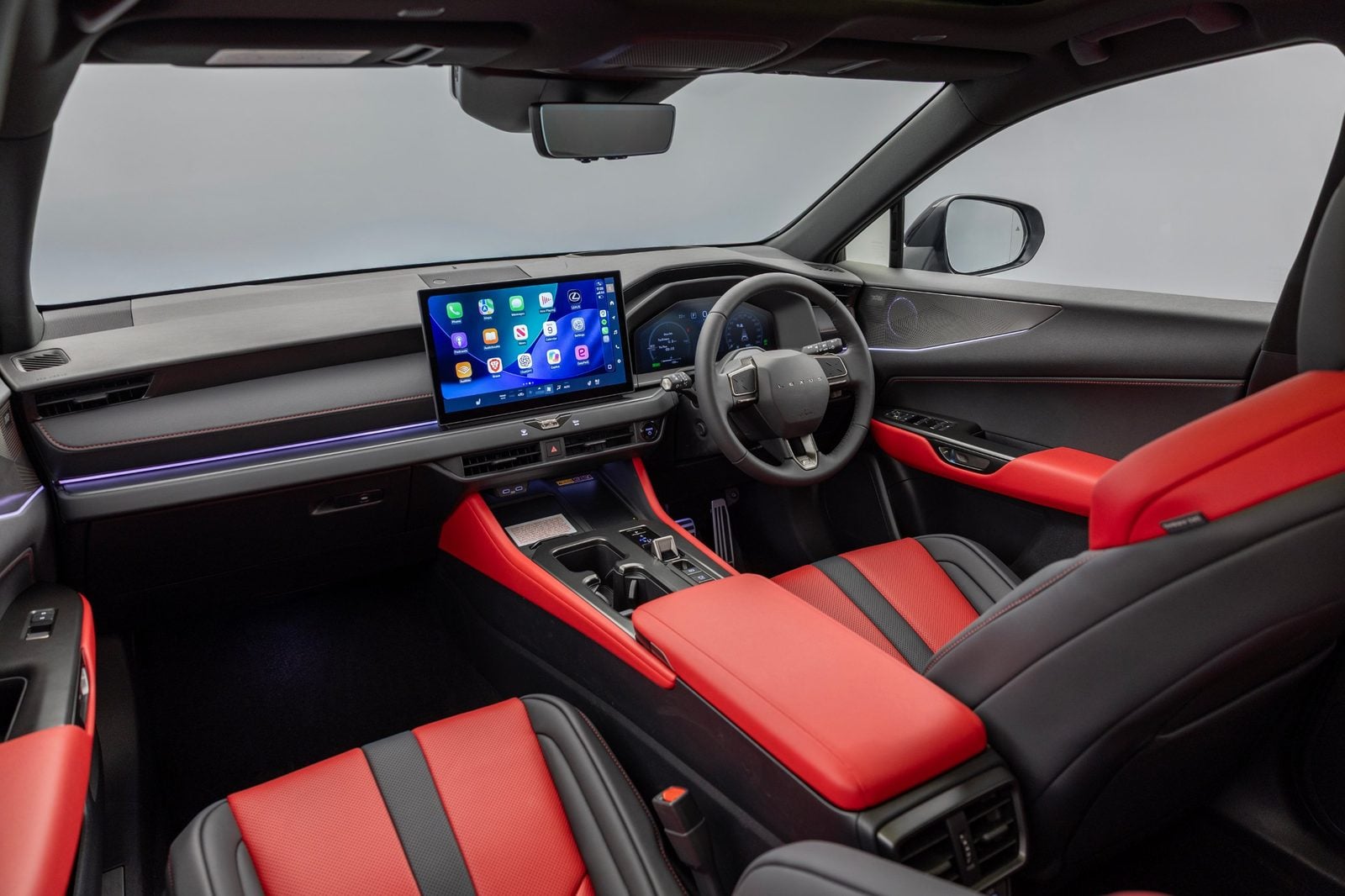
The F Sport’s bucket-style front seats hold you firmly, which is unusual in a mid-size SUV. The analogue gauges have gone, replaced by a 12.3-inch digital meter, and there’s a 14-inch touchscreen. The new steering wheel is shared with the ES, and its buttons stay hidden until your hand gets close, then light up so you can see what you’re pressing. Lexus has kept plenty of physical buttons elsewhere too, and they’re properly lit at night.
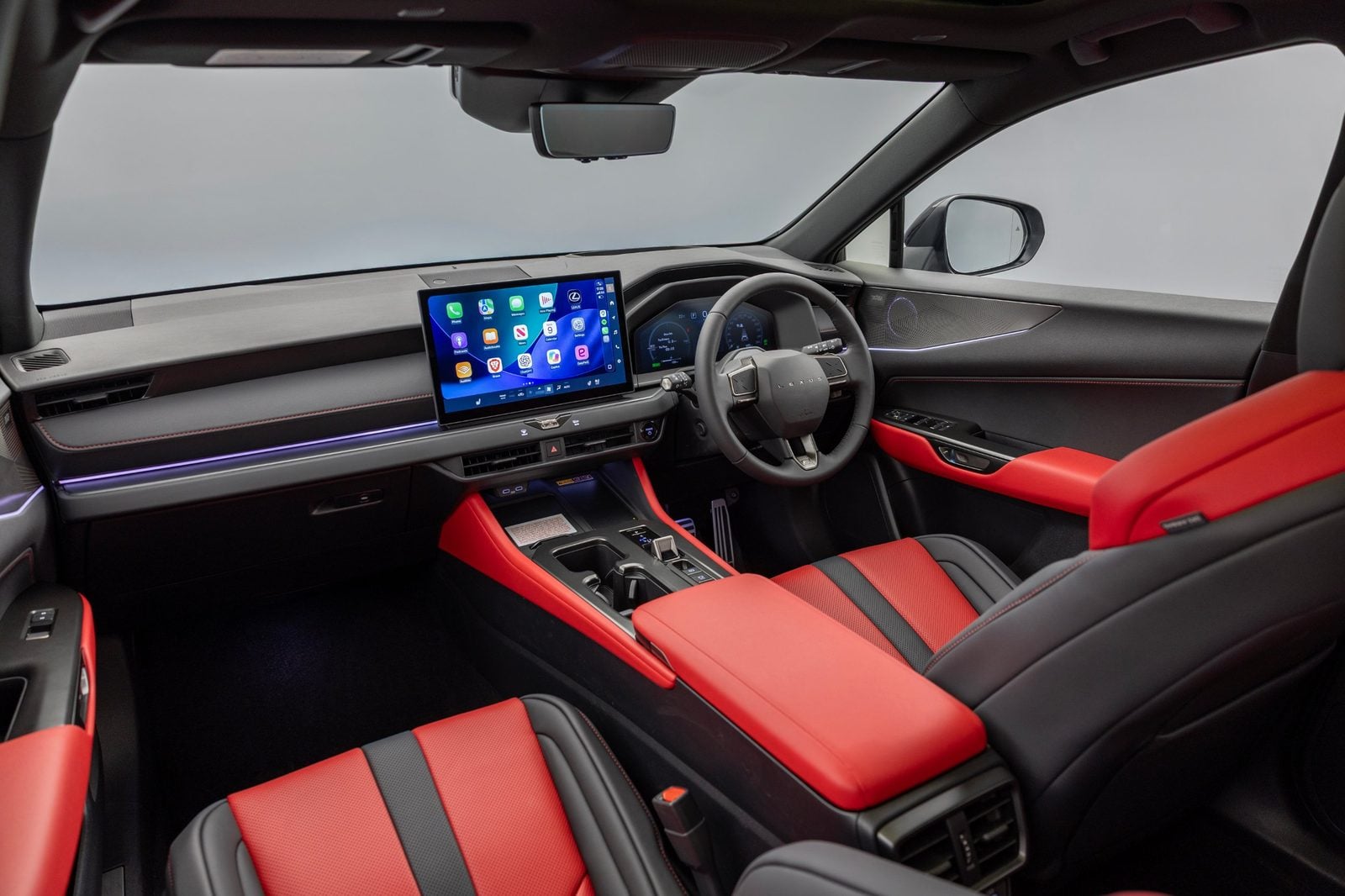
The infotainment is one of the better systems around. It responds quickly, has big touch targets and smartphone mirroring, and manages to do a lot while staying simple to use. Upper models get a 17-speaker Mark Levinson audio system. The wireless charger shifts to line itself up with your phone, and the knurled volume knob is lovely to use.
The centre console has a lever-style shifter that will be familiar from recent Lexus and Toyota models, along with an EV mode button, cupholders and a phone tray, and the lid on the storage bin opens from either side. The front seats are electrically adjustable, and so is the steering column for both rake and reach.
Nearly everything you touch is soft or nicely finished, and you have to reach low on the dash before you find any hard plastic, and even that isn’t especially scratchy. Red stitching runs through the cabin, and the textured trim doesn’t pretend to be carbon fibre.
Driving
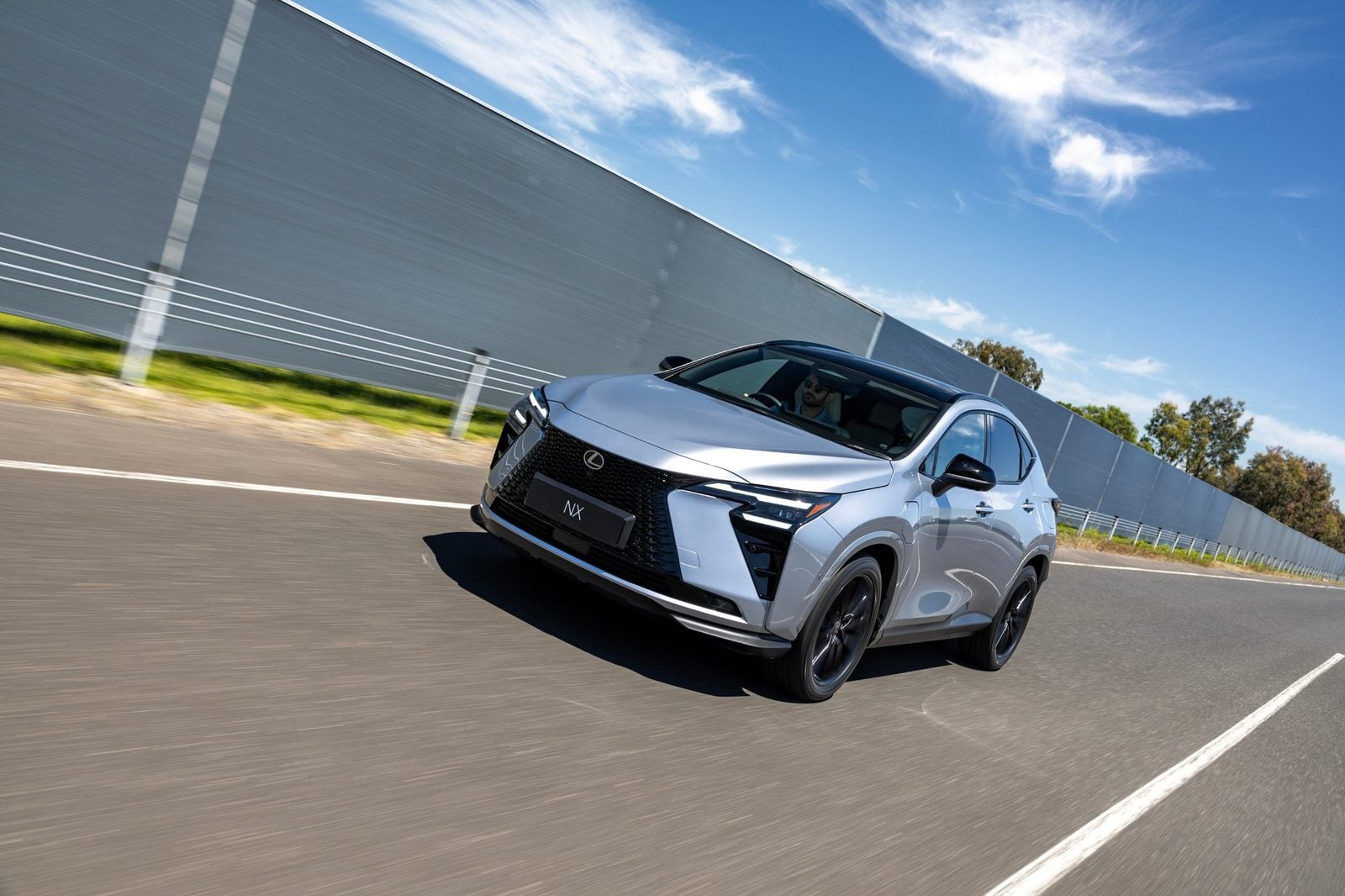
We only drove on the proving ground, so these are early impressions. There’s a decent amount of push for a hybrid from a standing start. The NX feels light through corners, handled the bumpier sections of the track well, and rides the way you’d expect a Lexus to.
Even in Sport mode the steering could use a little more weight. Most NX buyers won’t notice, though keen drivers might. The engine is more audible under load than I’d like, but its tone is deeper than the high-pitched whine some hybrids make. Perhaps someone at Lexus has the job of tuning hybrid exhaust notes, a role I’d never have expected to exist. In a braking test from 100km/h it stopped hard and straight.
The driving position is good, with plenty of thigh support and electric adjustment, though I’d like the seat to drop a little lower at the back. Overall it’s very comfortable, and it won’t shock any current Lexus owners.
First impressions
The changes are small, but they’re the kind you notice every day. The lit steering wheel buttons, the self-aligning charger and the bigger plug-in battery all make the NX nicer to live with.
Lexus needed to make them. The Toyota RAV4 sells strongly and offers good value, and in its upper grades it’s getting close to the NX on luxury features. This update gives the NX a clearer edge over its cheaper cousin, and we’ll see how it stacks up when it lands here early next year.
Lexus NX specifications
Price: To be confirmed
NZ arrival: Early 2027
Models (overseas): NX 350h hybrid, NX 450h+ plug-in hybrid
Engine: New-generation 2.5-litre four-cylinder petrol, hybrid or plug-in hybrid
Power (combined): 146kW (350h), 226kW (450h+)
Drive: Front-wheel drive or E-Four all-wheel drive
Battery (450h+): 23kWh
EV range (450h+): 100km+ (provisional European WLTP)
DC charging (450h+): 10–80% in about 30 minutes
Boot: 545L seats up, 1,436L seats folded
Screens: 12.3-inch digital meter, 14-inch touchscreen
Audio: 17-speaker Mark Levinson (upper models)
Spare: None
NZ outputs and specification to be confirmed. Source: Lexus