View all
8 more images
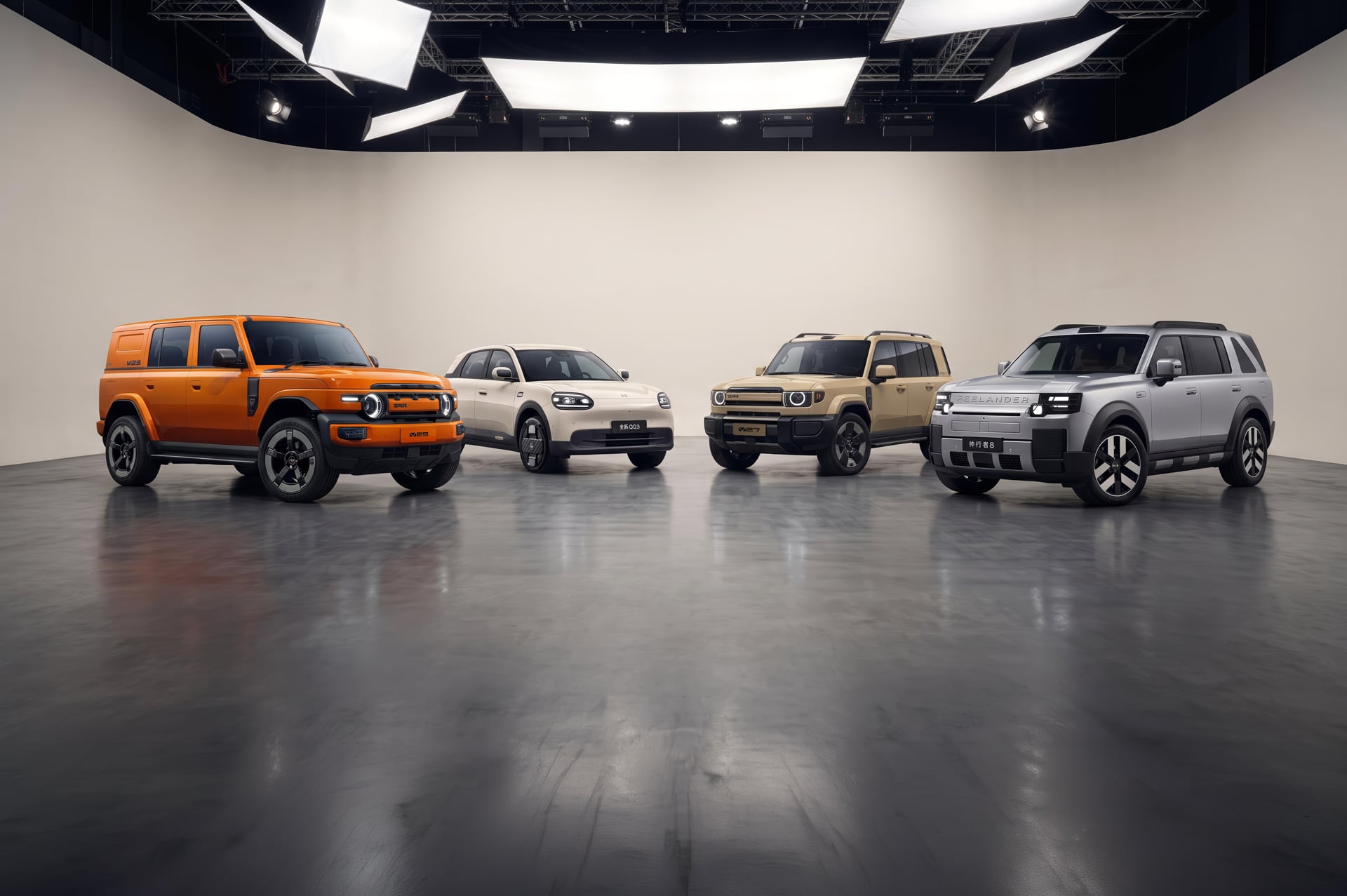
Chery future models
Words: Richard Edwards
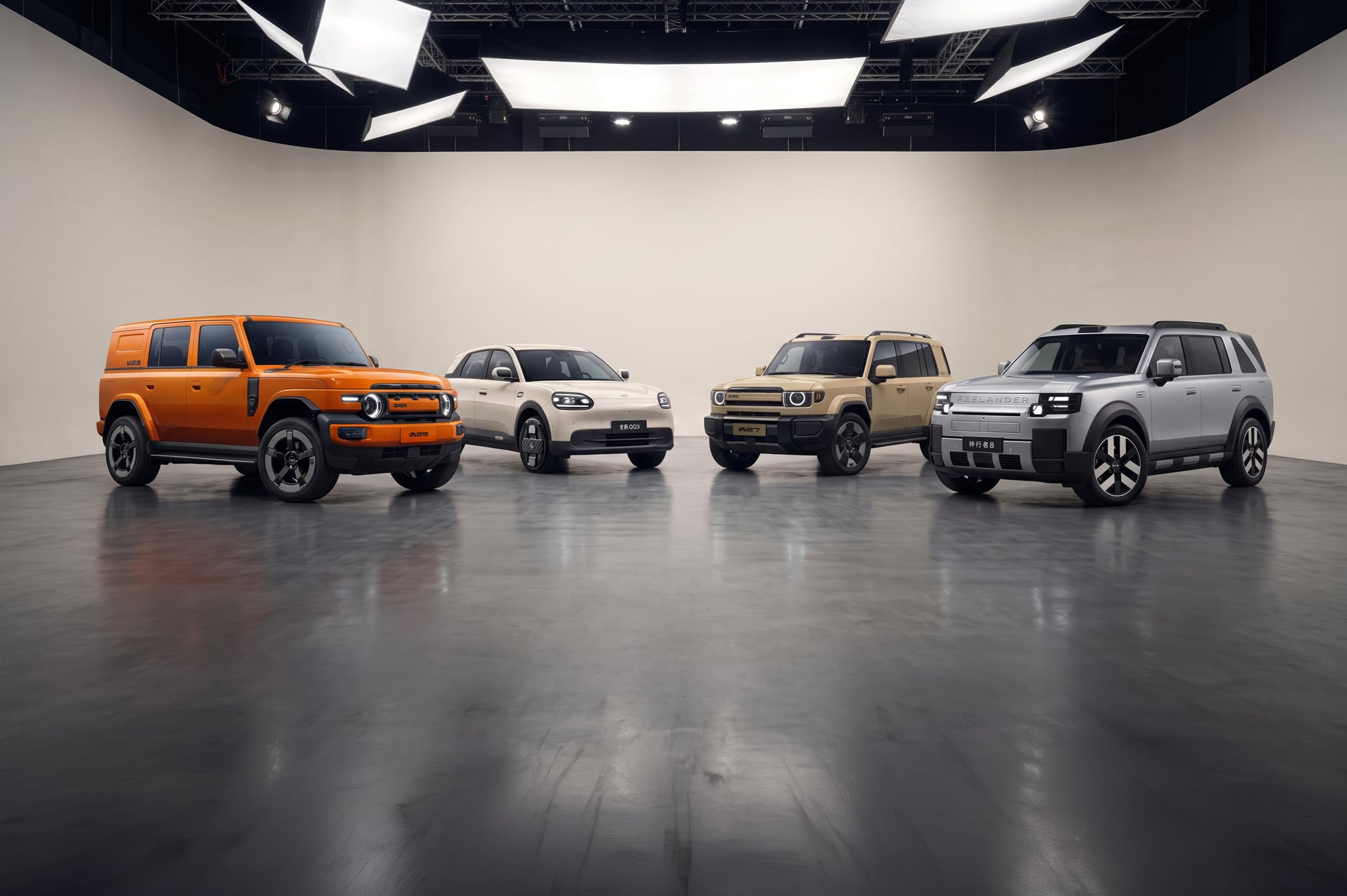
We drive four of Chery’s latest on their home turf before they arrive here in the Land of the Long White Cloud.
Chery has been based in Wuhu since the city government set it up in 1997, and its head office, main R&D centre and biggest factories are still there. In October the company flew in customers, dealers and journalists from around the world for its international user summit, and between the speeches we got behind the wheel of four cars due in New Zealand next year.
They come from three different brands, and Zhang Guibing, executive vice president of Chery Auto and president of Chery International, told us why the group now works that way.
“Most products in the market are now very similar, whether they come from Chery, BYD or another brand. The big difference in the future is the brand image, the emotion. We hope people buy our products not just because of the product, but because they feel close to the brand.”
Chery Q
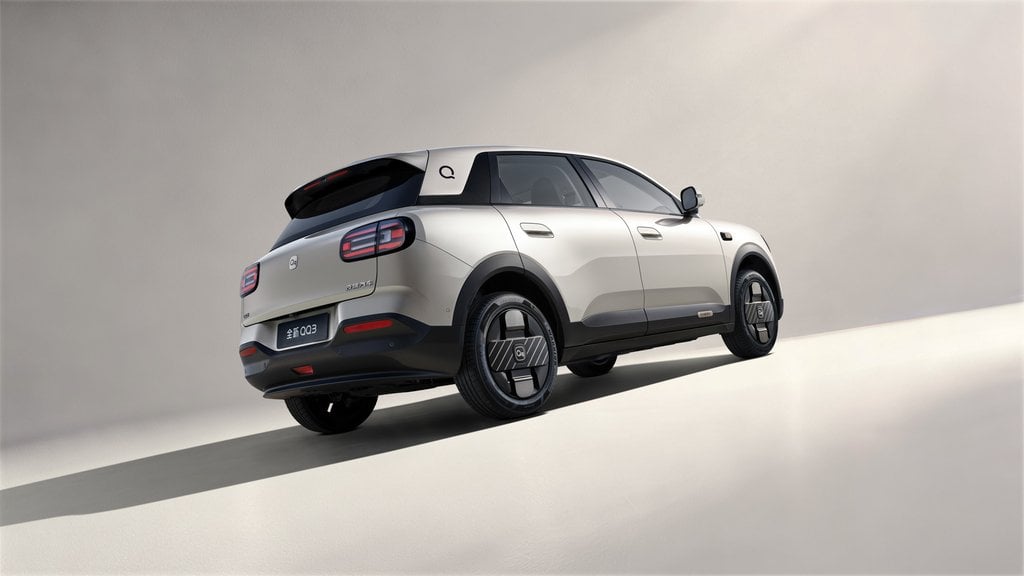
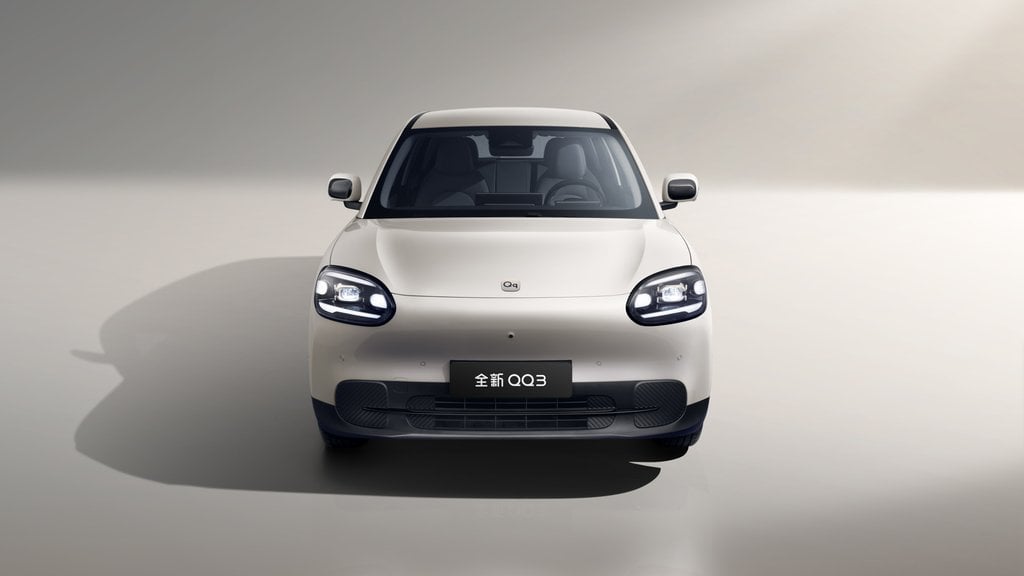
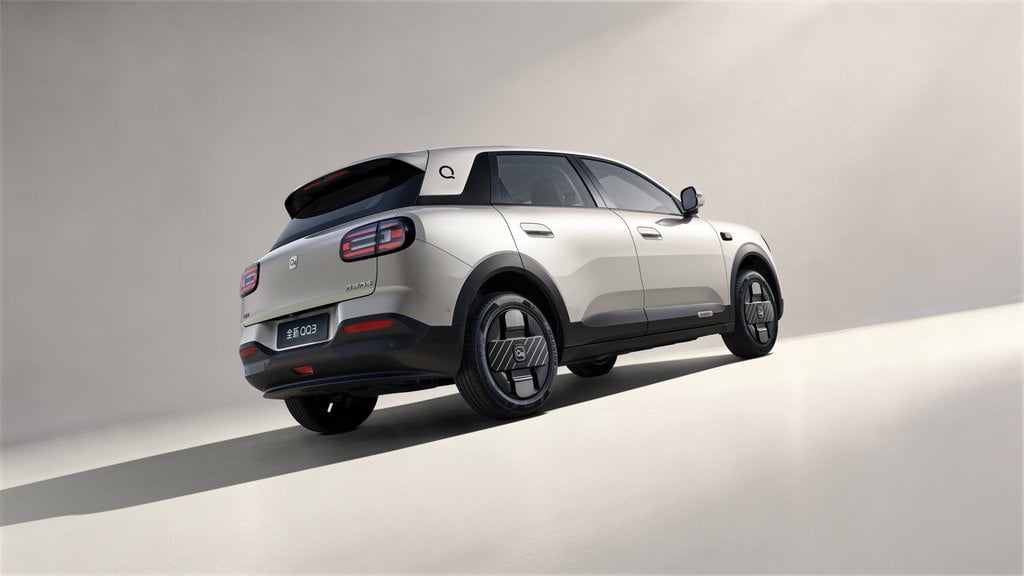
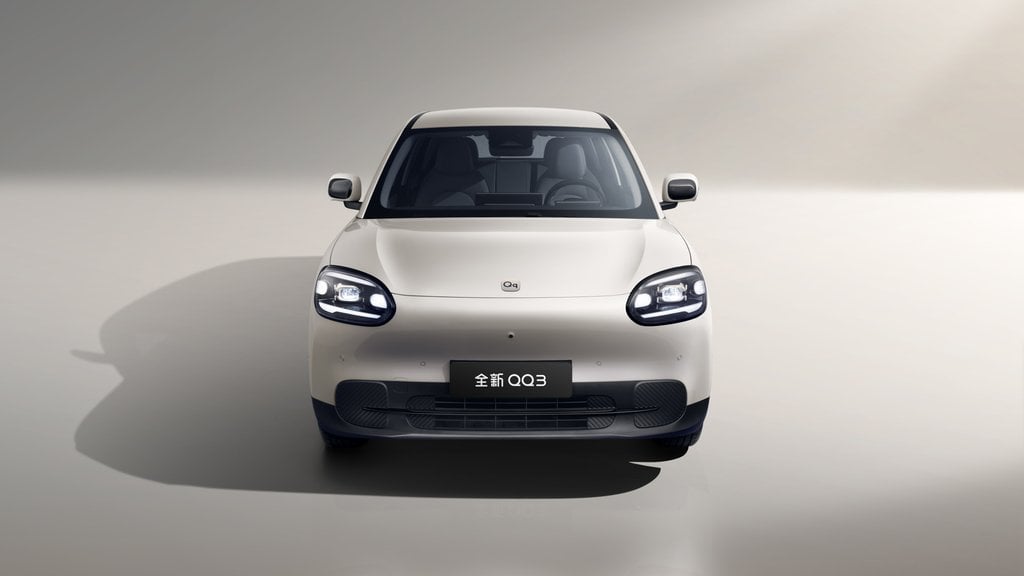
The original QQ was a tiny, cheap hatch that went on sale in 2003, and it was the car that made Chery. Well over a million QQs helped turn the company into China’s biggest passenger car exporter. The name is back on an electric hatch, called the QQ3 in China and simply the Q in export markets.
We spent a few hours in a Chinese-market car, mostly on the expressways around Wuhu, taking turns to drive and to sit in the back. Export markets have so far only taken the top drivetrain, a 90kW/115Nm motor driving the rear wheels from a 41.3kWh LFP battery. Chery claims 400km on the NEDC cycle, and we’d expect something like 330 to 340km in normal use. DC charging peaks at 85kW, which Chery says is enough for 30 to 80 per cent in 16.5 minutes.
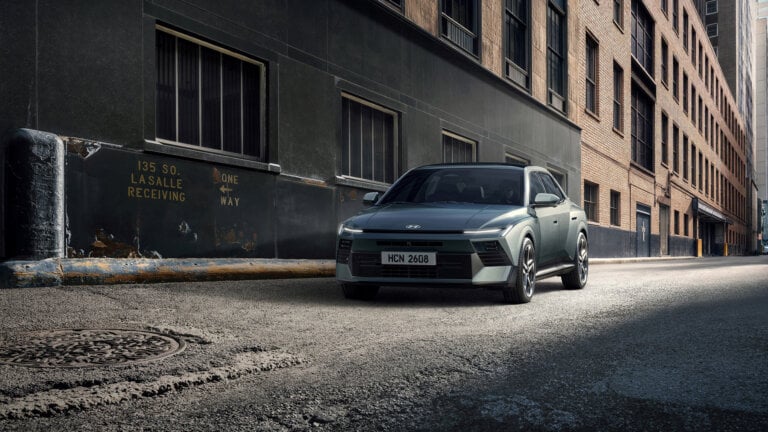
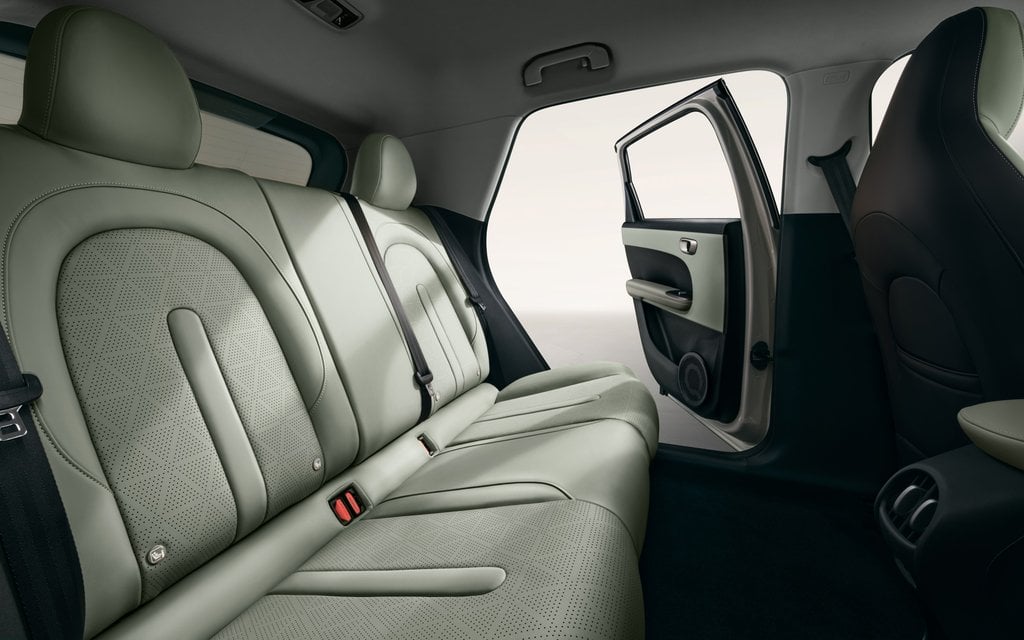
Don’t let the cute face fool you into thinking it’s just a city car. At 4195mm long on a 2700mm wheelbase it’s longer than a BYD Atto 1 or Geely EX2, and you feel the difference most in the back, where there’s a flat floor, good knee room and air vents of your own. Two adults will be comfortable back there, three less so. The boot is 375 litres, and there’s a small front boot under the bonnet as well.
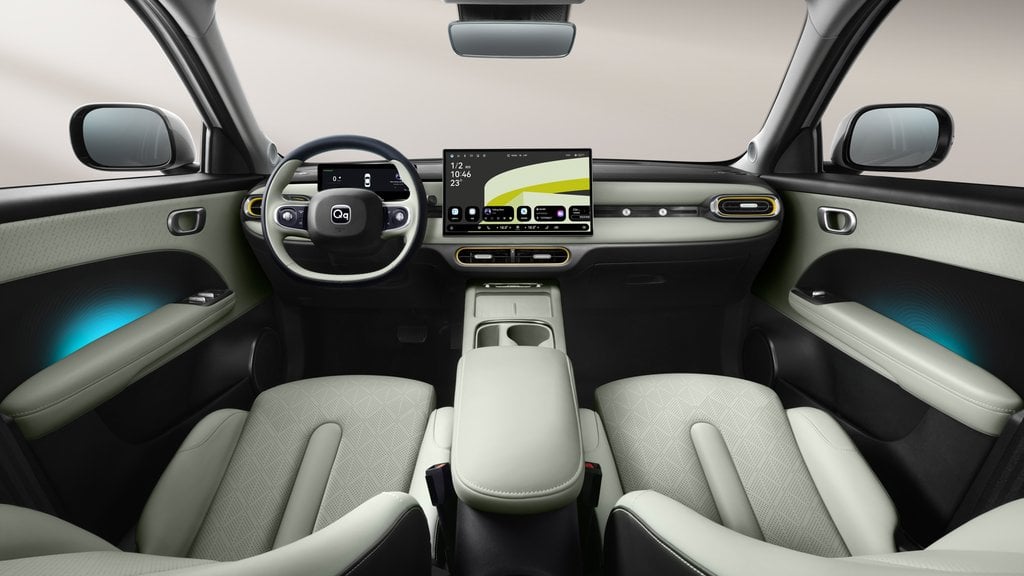
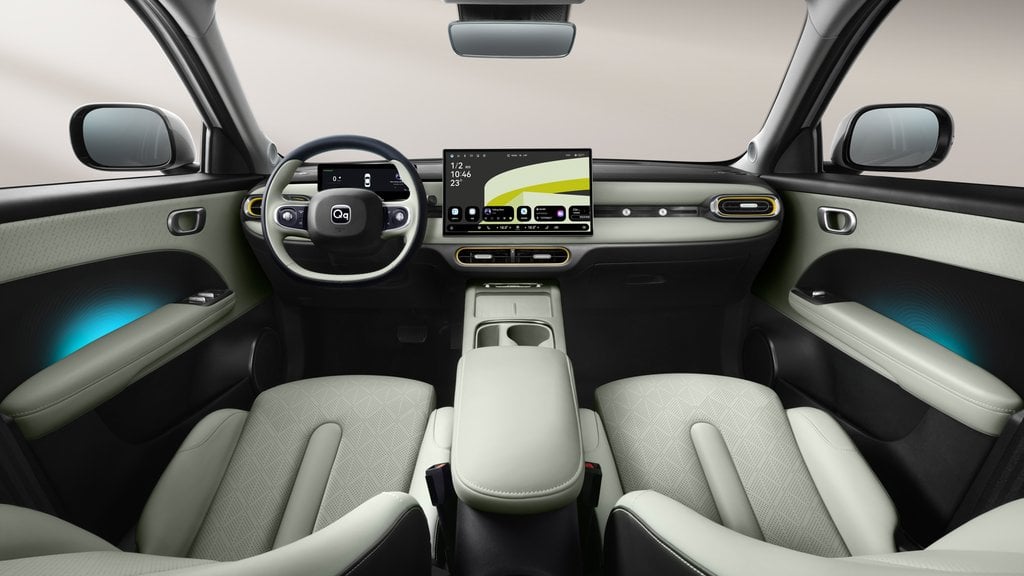
The cabin is better than you’d expect at this money. The steering wheel and the top of the dash are soft to the touch, the hard plastics feel solid, and Chery has kept physical buttons for the climate control. The dash also has small mounting points that screw out to take hooks and holders. It’s a neat idea, though we’d be surprised if crash-test regulators are as keen on hard objects hanging off the dash. The 15.6-inch screen was quick to respond, though export cars may end up with different software.
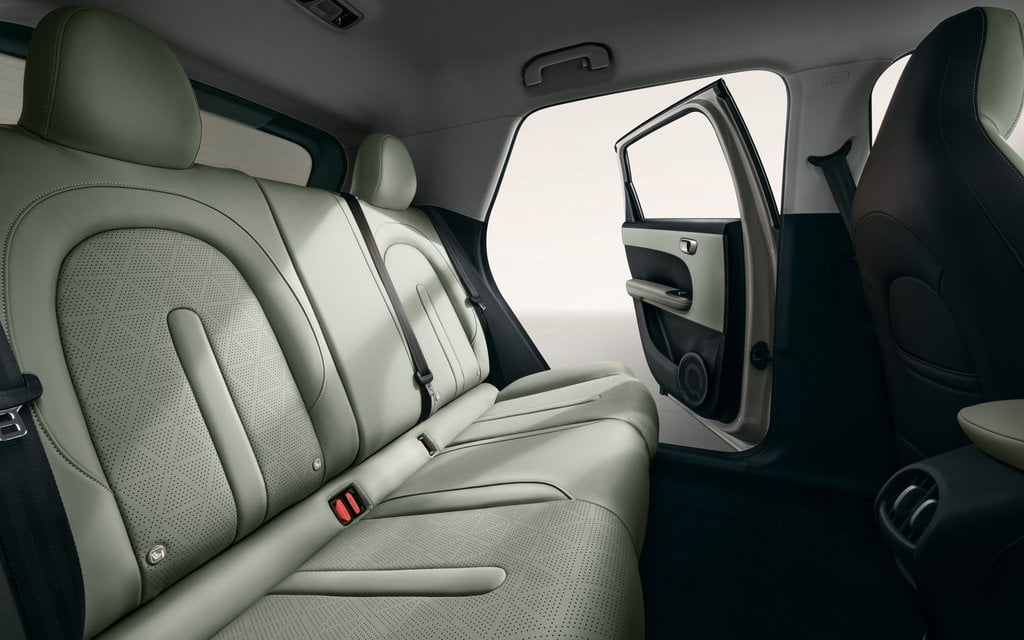
Chery claims 0-100km/h takes 13.5 seconds, but it feels quicker than that, getting up to 70km/h briskly and with enough in reserve to pass trucks on the expressway. The ride is soft, the way Chinese buyers like it, and we spent a long stretch in the back without being thrown about. A quick swerve showed just how soft it is, though, so we’ll hold off judging the handling until we’ve driven one here. Across the day, with four people aboard and plenty of 110 to 120km/h running, it averaged 14.7kWh/100km.
That suspension may well change before it arrives. Chery is setting up an R&D centre in Australia to tune its cars for local roads, and Zhang says head office is too far away to get that right on its own.
“We are creating an R&D centre in Australia, and we will use more local people to teach Chery, because we are a long way from Australia,” he says. “The driving habits and the road conditions are very different there, so we need local people to really understand them.”
There’s no New Zealand pricing yet. Going by what the Q costs in South Africa and Thailand, we’d guess around $30,000 for a base model and $35,000 for a better-equipped one. That puts it up against the Atto 1, EX2 and Dongfeng Box, with more power and a bigger battery than the entry Atto 1. It doesn’t have an ANCAP rating yet, but export models are expected to have six airbags and autonomous emergency braking.
iCAUR V25 and V27
iCAUR is sold as iCar in China, but Apple owns that name in most other places, so export cars get an extra U. You still say it eye-car. The brand will sit above Chery here with its own dealers, and Ronna Luo, CEO of iCAUR International, says recruiting has already started.
“iCAUR will definitely be a premium brand, positioned differently from Chery, and its sales and service network will be separate. We have already started recruiting dealers,” she says. “The landscape fits iCAUR because of the driving range, and because people are already used to big SUVs.”
Dr Su Jun, the Chery vice president in charge of iCAUR, says the brand began with the two cars in his own garage, a Ford Bronco and an older Tesla Model S.
“The Model S was amazing, very smooth, very quiet and very comfortable, but the seating position is very low,” he says. “I love the view from the Bronco, but I also love the power of the Tesla, so our dream was to combine those two things. We made the first car for ourselves, and then found that lots of people wanted the same thing. That’s why the V23 has been so successful. In only one year it sold 100,000.”
Three models are coming, the small V23, the mid-size V25 and the big V27. We drove the last two, but only around a short and very muddy course, so treat what follows as first impressions.
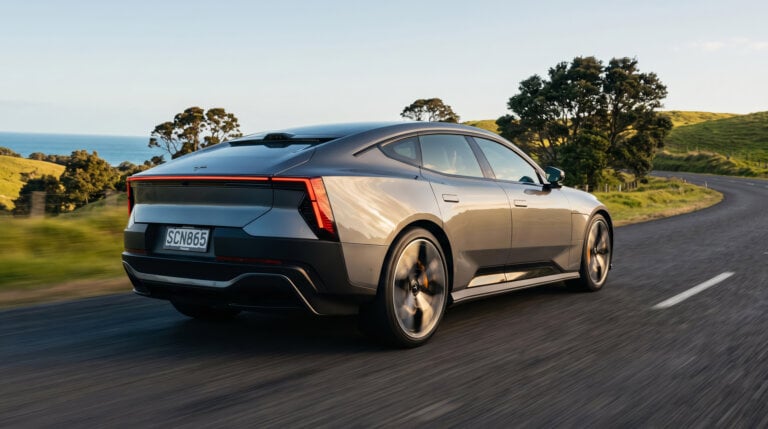
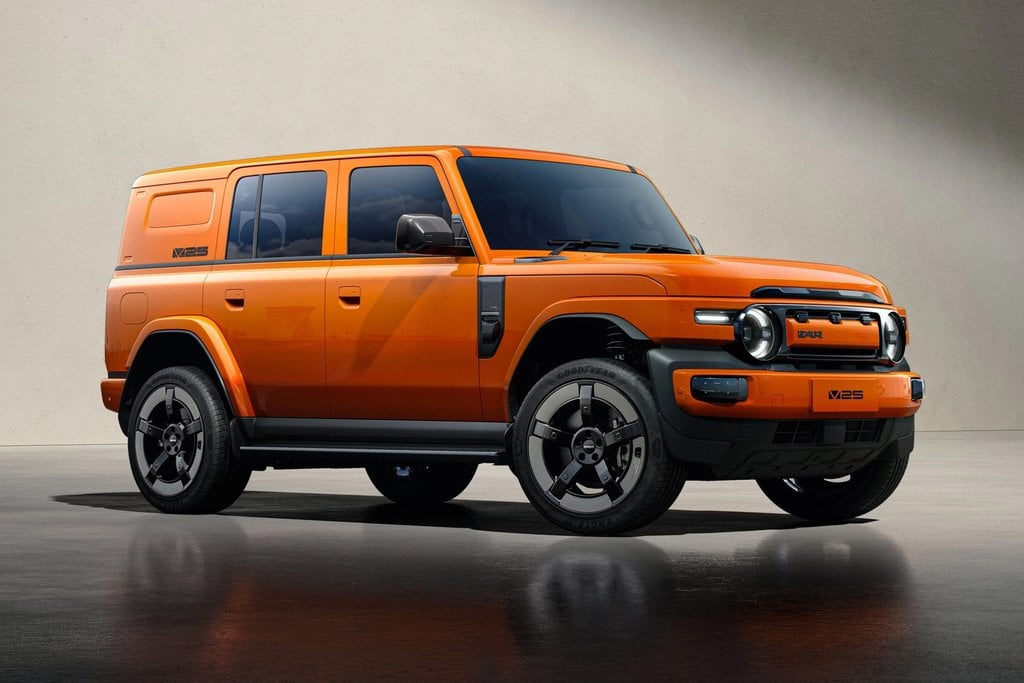
The V25 was the one we were keenest to try. It’s 4636mm long, a little longer than a RAV4 and quite a lot taller, and the styling borrows from old Soviet and Chinese jeeps, though it’s a monocoque underneath. There’s a battery EV with an 80.16kWh pack, rated at 445km on the NEDC cycle with rear drive or 400km as a 335kW dual-motor AWD, and a range extender that uses a 1.5-litre turbo purely as a generator. We understand the EV will come here first. Braked towing is 1800kg in Australia.
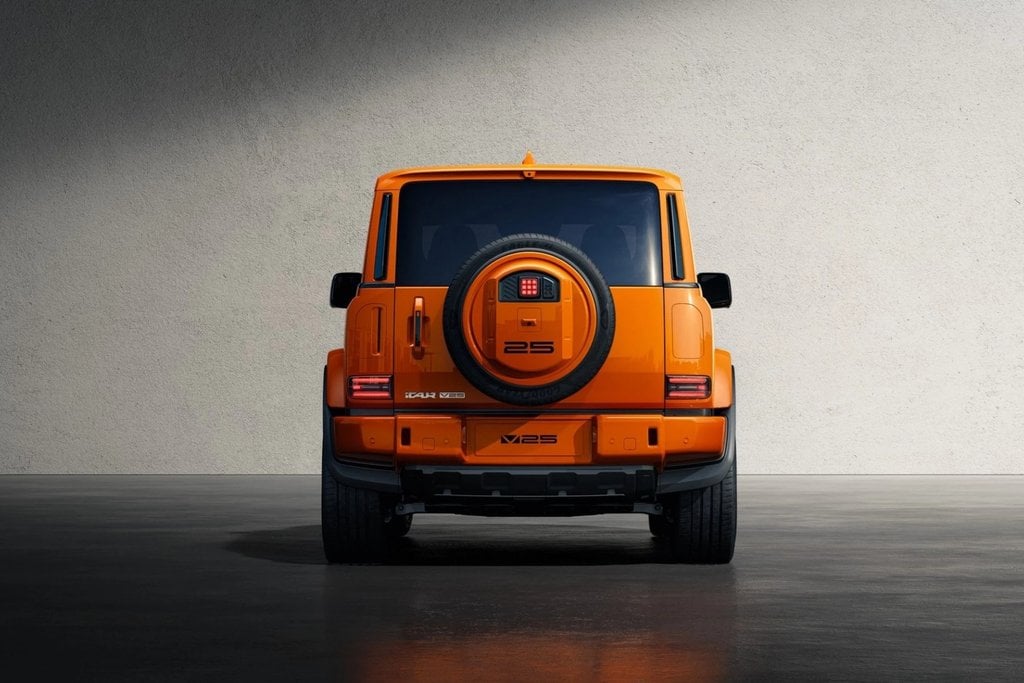
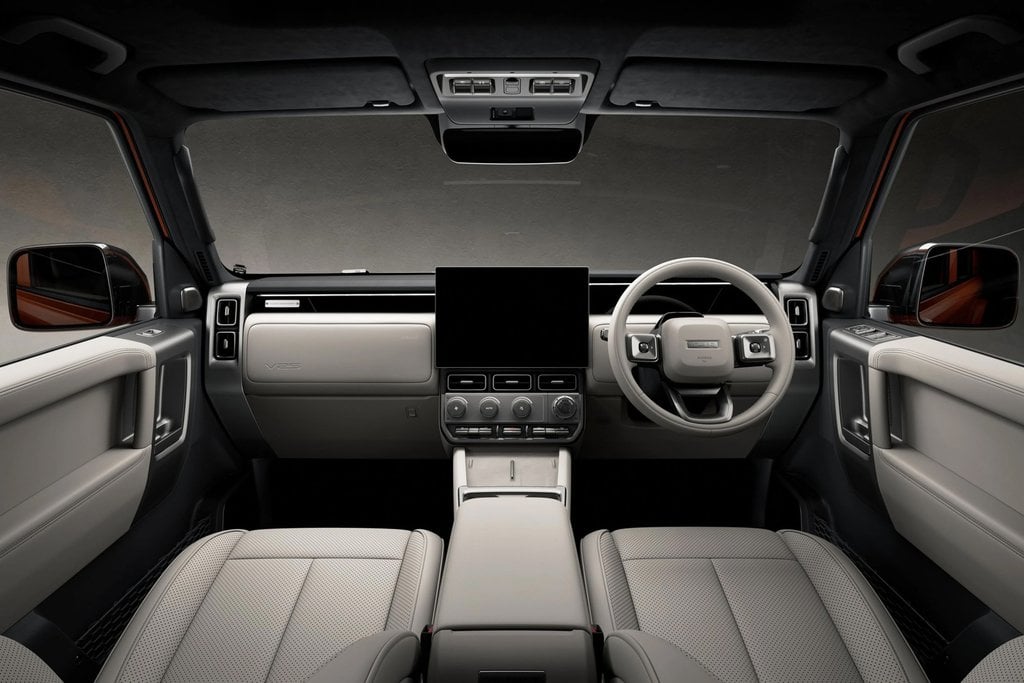
The panel behind the rear doors has no window, which gives the V25 a van-like look, and it can be swapped for glass if you’d rather see out. The side-hinged tailgate opens towards the kerb on right-hand-drive cars, and ours will carry a full-size spare where Chinese cars have a storage box. The boot is small for an adventure-themed SUV at 378 litres, although the EV has a front boot too. There’s plenty of legroom in the back, but six-footers will brush the roof lining. Up front, chunky knobs run the climate control and the 15.4-inch screen is quick. The knurled dials look like metal and feel like plastic, and there’s no glovebox, so small things have nowhere much to go. The wireless charger is on the correct side of the console in right-hand-drive cars, something plenty of Chinese brands don’t bother to change.
The course was a soaked field with a 30km/h limit. In mud mode the V25 slid about happily, and a dab of throttle pulled it straight back into line, so you end up steering with your right foot as much as your hands. It rode the ruts better than we expected and got over a slippery hump without touching. It isn’t built for serious off-roading, but a muddy ski field road would be well within its reach.
Luo says the team studied the Toyota Prado when working out how to build its cars, and came away wanting to keep things simple.
“The Prado has been very popular in China, and it’s famous for being easy to use, easy to repair and tough,” she says. “One of the big things we learned is not to make the cars too complicated, and not to add things customers don’t need. We use range-extender technology, which is much easier to repair than a plug-in hybrid because the systems are separate, so it’s more economical for owners to repair and maintain. And when you drive our cars you’ll use physical buttons, not buttons on a screen.”
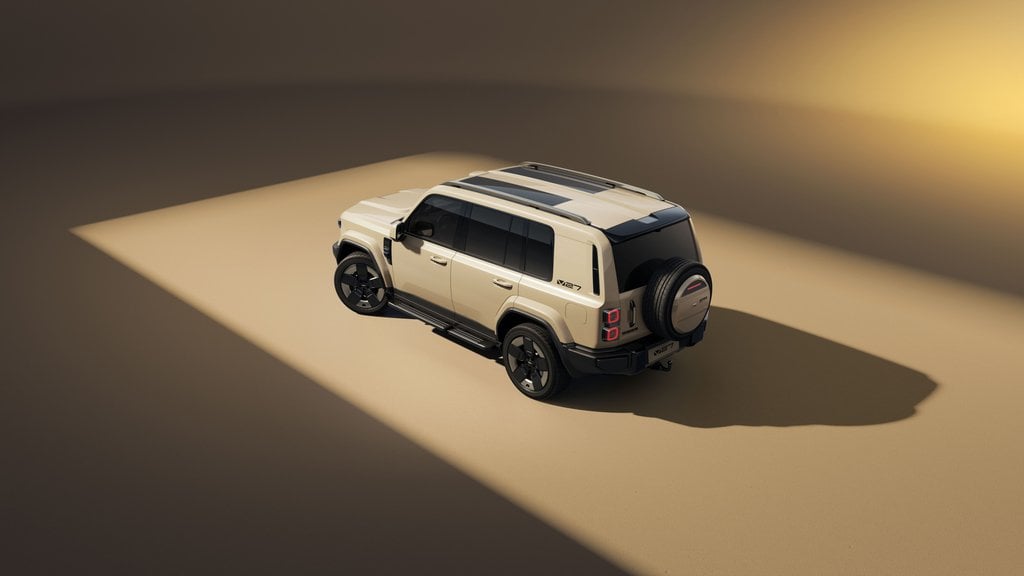
The V27 only comes as a range extender. It’s 5055mm long including the box on its tail, with 335kW in AWD form and a 34.3kWh or 51.2kWh battery good for 210km or 300km on China’s CLTC cycle. Oddly, it’s rated to tow less than the V25, at 1600kg. It’s much roomier, with a huge rear seat and a 715-litre boot.
On the same course it felt looser, pushing wide and sliding more readily, and its longer wheelbase grounded on humps the V25 cleared. Set diagonally across an obstacle, though, it walked over neatly. We preferred the V25, but a family would probably end up in the V27.
Freelander 8
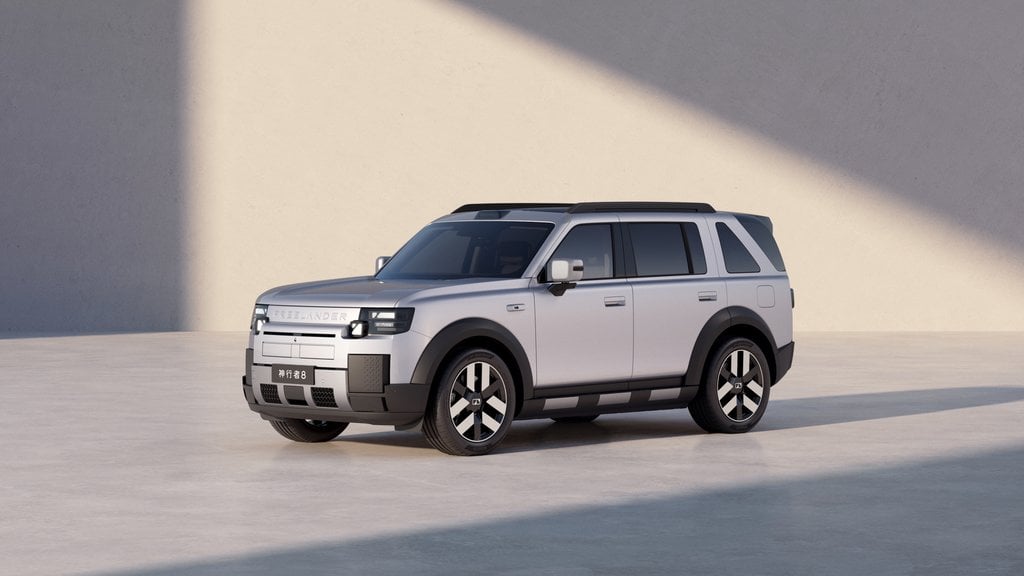
The first Freelander was Land Rover’s smallest and cheapest 4×4. This one is 5118mm long, has three rows of seats and is closer to a Discovery in size. It isn’t a Land Rover at all. Freelander is now a separate brand, with JLR owning the name and running design, while Chery supplies the technology and builds it in Changshu. We’d already poked around a China-market car in a Shanghai shopping mall before driving the international model on a closed course in Wuhu.
New Zealand should get the international plug-in hybrid rather than China’s range extender. A 2.0-litre turbo works with a motor on each axle for 460kW and 662Nm, and the 34.12kWh LFP battery is rated at 110km on the WLTC cycle. Expect nearer 80km in practice. Freelander quotes 20 minutes or less for 20 to 80 per cent on a DC charger, which is slow for a battery this size.
Chief engineer Antonio Maresca, who worked on the original Freelander during his time at Land Rover, says more than 1000 test cars have been run across Northern Europe, Southeast Asia and the Middle East.
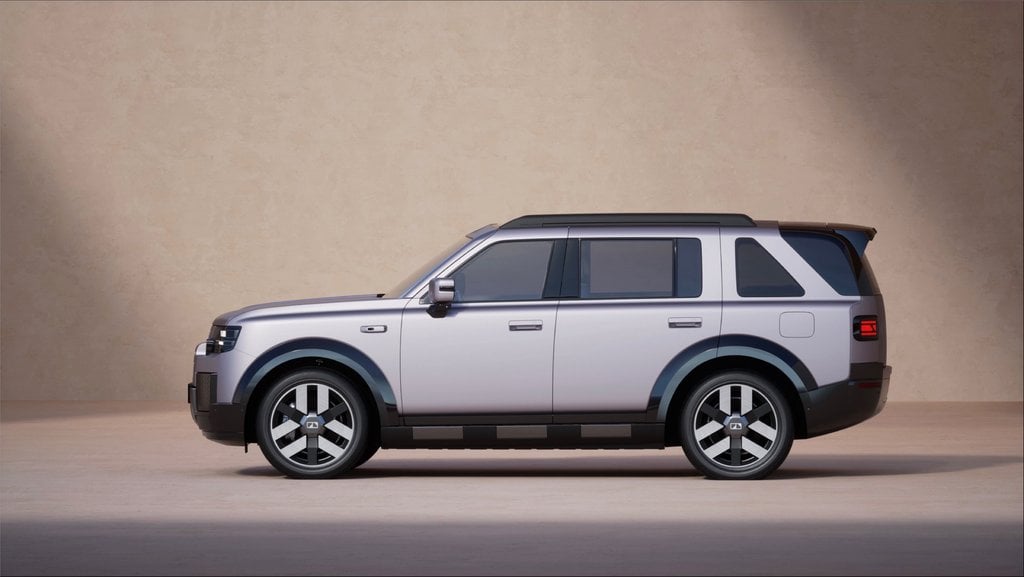
A coned car park doesn’t reveal much about a 5m SUV, but it pulled hard, it was quiet, and the rear-wheel steering made it surprisingly easy to thread through tight turns. We rode along as passengers on the off-road course, so we’ll hold off on that side of it, but the hardware is there. Air suspension can raise the body 70mm for up to 266mm of ground clearance, Freelander quotes a 900mm wading depth, and the i-ATS system offers seven terrain programmes alongside a virtual centre diff lock, a rear electronic limited-slip diff, crawl control and hill descent control.
Freelander’s people told us the 8 is rated to tow two tonnes. That won’t do for New Zealand buyers with boats and horse floats, and we told them so.
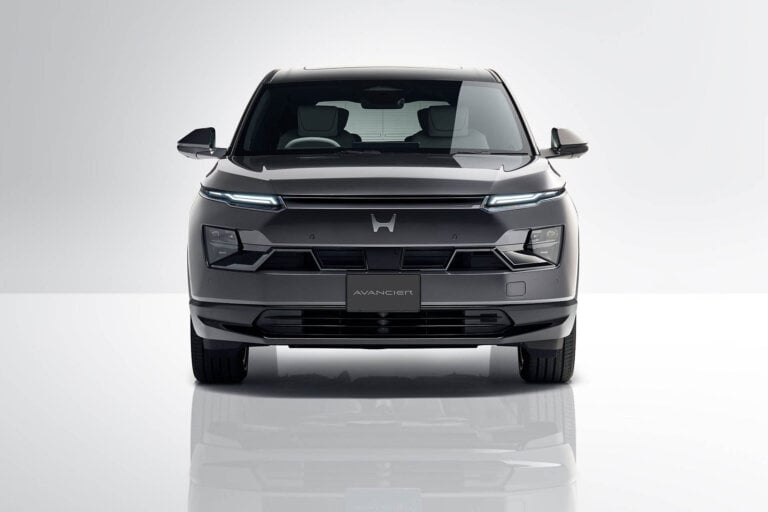
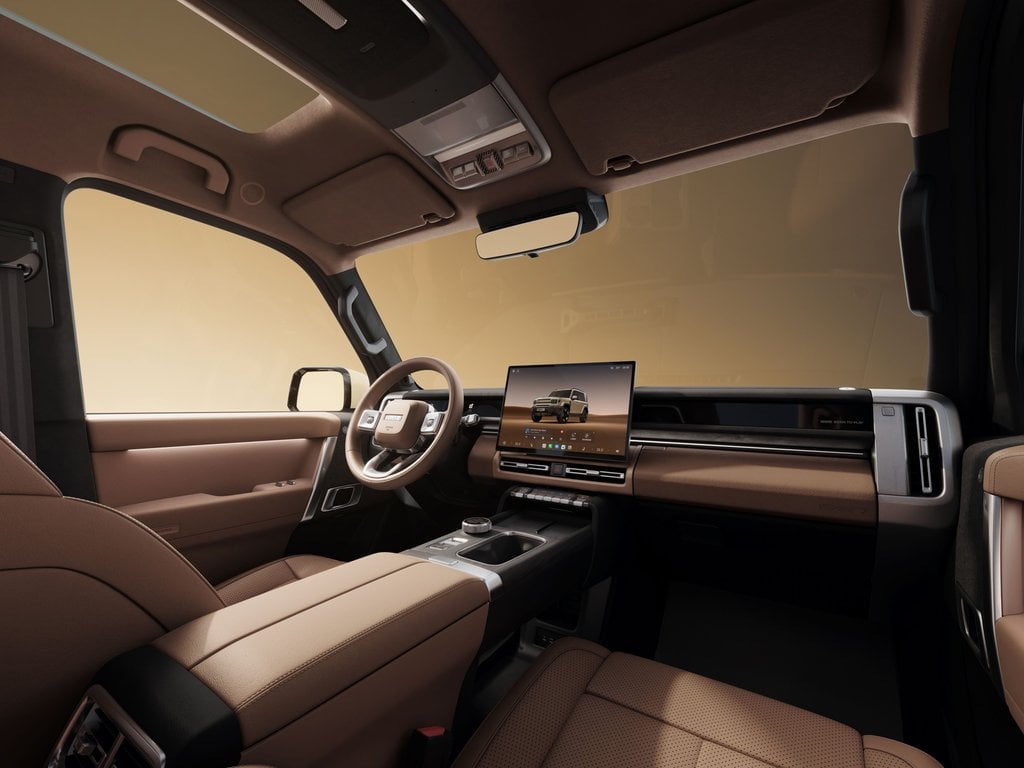
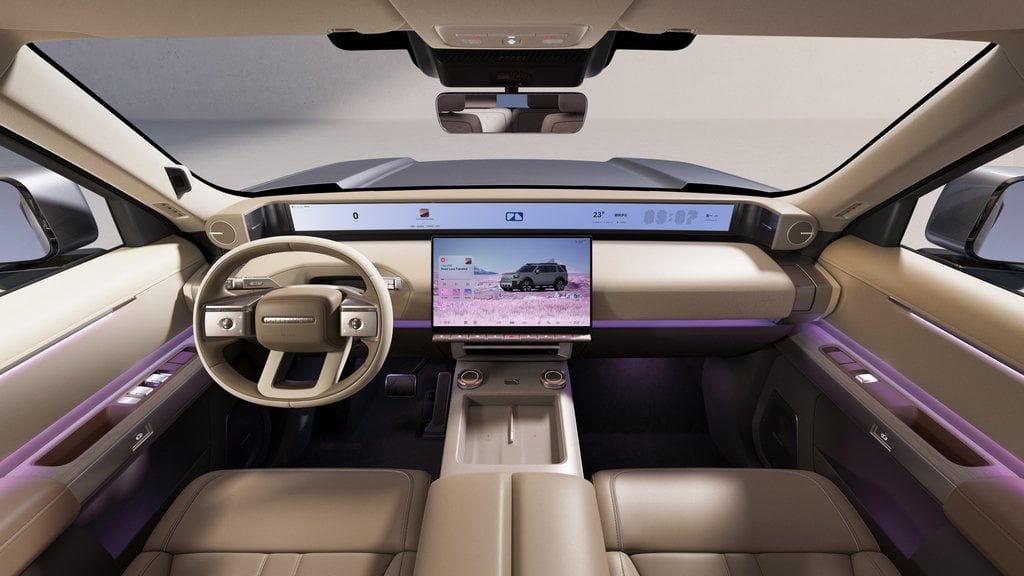
The third row is one of the best we’ve tried outside a van, with 960mm of headroom and ventilated seats on six-seat models. Our car had the optional zero-gravity seats in the middle row with a fridge between them, and the nappa leather comes from New Zealand farms. There’s no instrument panel ahead of the driver. Instead a 46.3-inch screen runs about 1.2m across the dash, with a 15.6-inch touchscreen below it. Both were quick, even if our car’s software was mostly in Chinese, and Freelander has kept physical buttons for the things you use most. The doors soft-close, but the pop-out handles need a firm pull. With all three rows up the boot isn’t especially big, but you can drop the rear suspension from inside to make loading easier, and with the seats folded there’s room for a couple of mountain bikes once their front wheels are off.
Verdict
All four are due in 2027 and none has a New Zealand price yet. The Q impressed us most, because it feels more grown-up than the small EVs already on sale here. The V25 has the most personality and the V27 the most room. The Freelander 8 is roomier and better equipped than its name suggests, but we’ll want answers on towing, real-world electric range and charging before it arrives.