View all
5 more images
2026 Toyota Land Cruiser FJ First Drive: Does the Little Land Cruiser Live up to its Legacy?
Words: Andrew Sluys
Toyota’s iconic Land Cruiser has taken a number of different forms since the badge was first introduced back in 1951. What started as a small off-roader for predominantly military use has morphed into 19 different models over seven decades, all with a common goal; to go anywhere.
And while the “bigger is better” mantra has been applied to the Land Cruiser for as long as I can remember, Toyota decided to take things in a different direction with the latest iteration.
FJ – An Iconic Pair of Letters
Despite the fact there have been almost 20 different Land Cruisers over this time, it’s the iconic FJ40 that Toyota keeps going back to. We saw this first in 2003, when the original concept for the FJ Cruiser was unveiled, and then the production version followed in 2005. Fast forward two decades, and Toyota has put FJ on another Land Cruiser, although this one is different again.
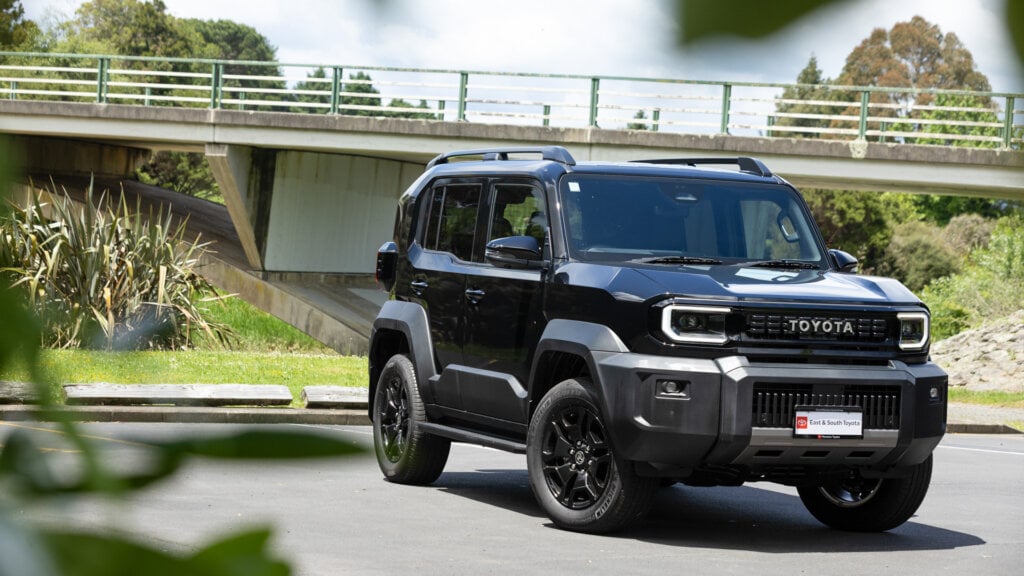
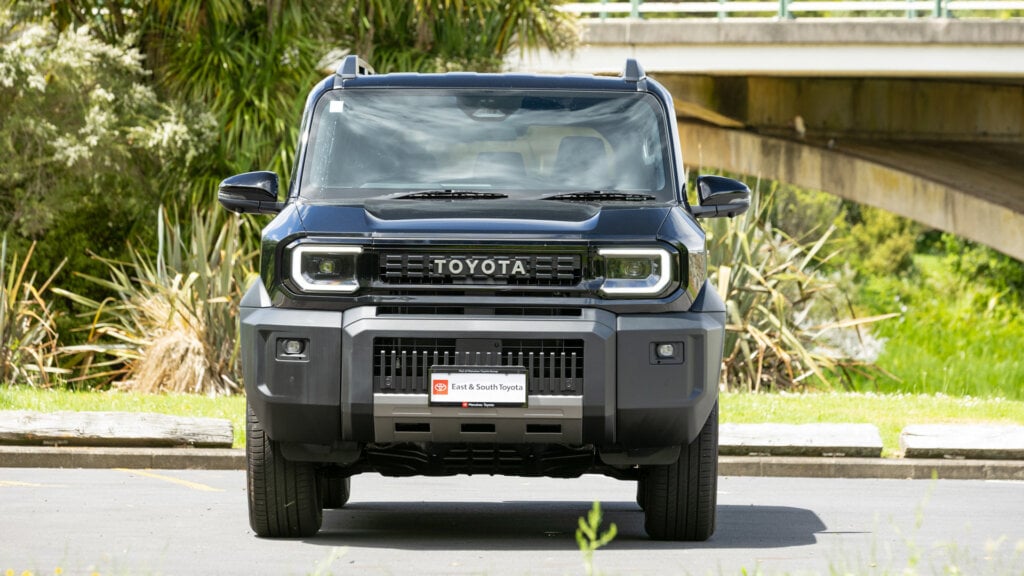
The new Land Cruiser FJ carries the FJ40’s legacy in a different, more quirky way. While it can be argued that the styling isn’t as unique as the FJ Cruiser, its proportions are more in line with the original FJ40, as is its overall character.
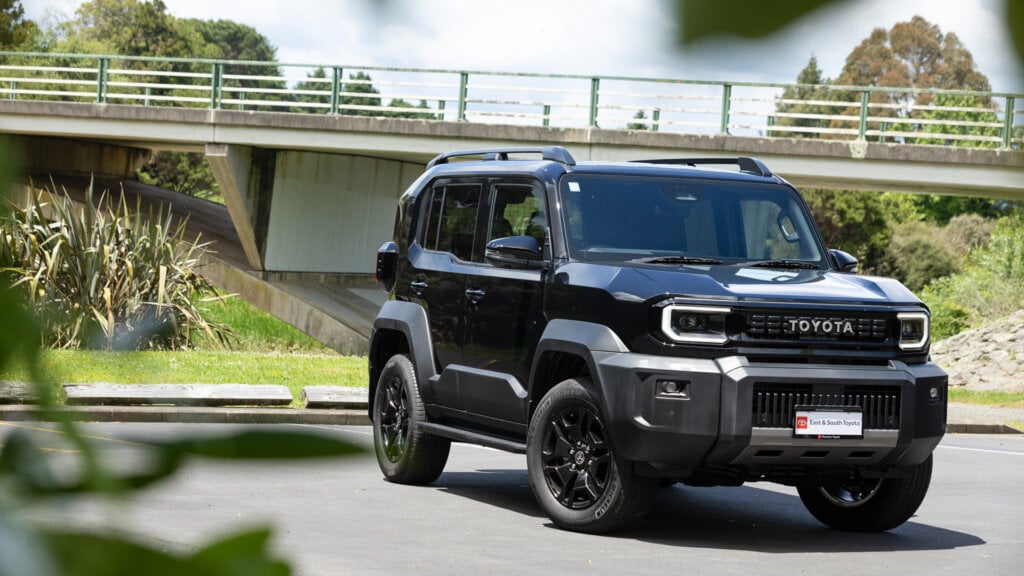
While this new Land Cruiser FJ isn’t being offered officially by Toyota New Zealand, Japanese import versions have started to crop up at dealerships. This example is currently offered at East and South Toyota in Auckland, and is priced at $84,990.
A Big Little Land Cruiser
When this Land Cruiser FJ was first unveiled, it was touted as some sort of rival to the Suzuki Jimny. While there’s no denying it is the smallest of the modern Land Cruisers, it is still significantly bigger than its Japanese counterpart.
It is underpinned by Toyota’s IMV platform, which is also used by the Hilux. It has been shortened for the FJ, but it’s still a very tall vehicle. It measures 4,610mm long, 1,855mm wide, 1,890mm tall, and sits on a 2,580 mm wheelbase. This gives it those very upright, almost cartoon-like proportions.
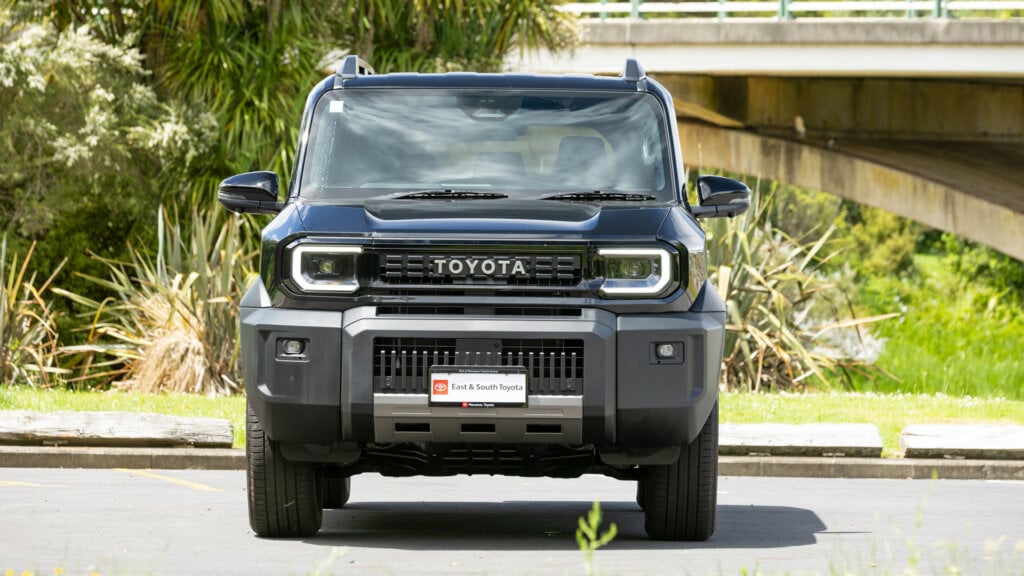
Even though the sub-2.6m wheelbase is short by Land Cruiser standards, the wheels are pushed out to the corners for a reason. This not only adds to the somewhat comical aesthetic, but when paired with the bumpers, means it gets an approach angle of 29 degrees and a departure angle of 38 degrees.
Further adding to its off-road chops, it sits on a set of 18-inch wheels, and features 245mm of ground clearance.
A Petrol Oddity
The unique charm of this Land Cruiser FJ continues beneath the bonnet, where it gets a four-cylinder naturally aspirated petrol engine. This stands out among its peers as a petrol-powered Land Cruiser hasn’t been sold new in New Zealand for almost a decade.
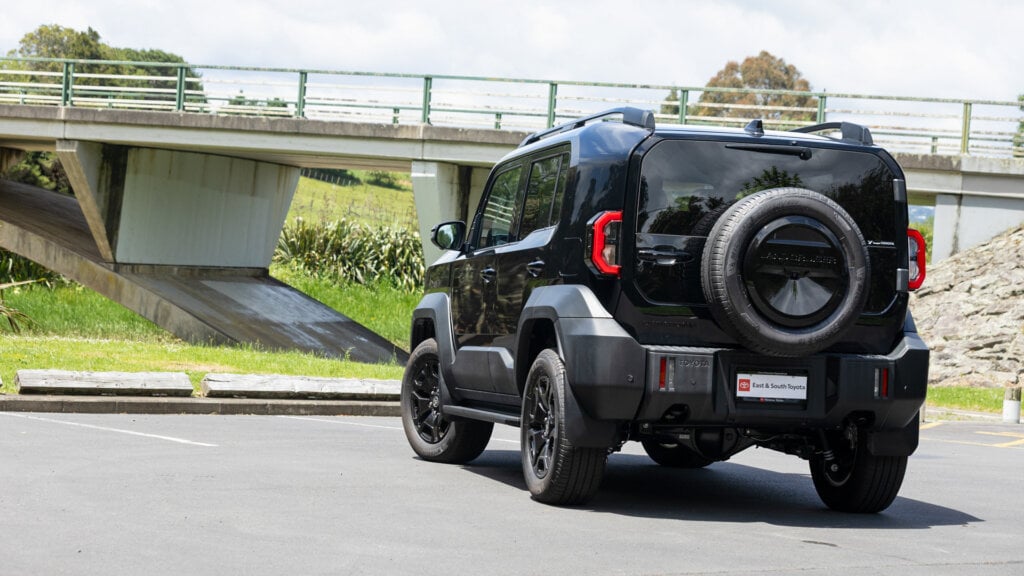
This 2.7-litre mill pumps out a modest 120kW and 246Nm. It’s paired with a six-speed automatic transmission and a part-time four-wheel drive system. It gets a locking differential on the rear axle, and a low-range transfer case.
A Familiar Cabin
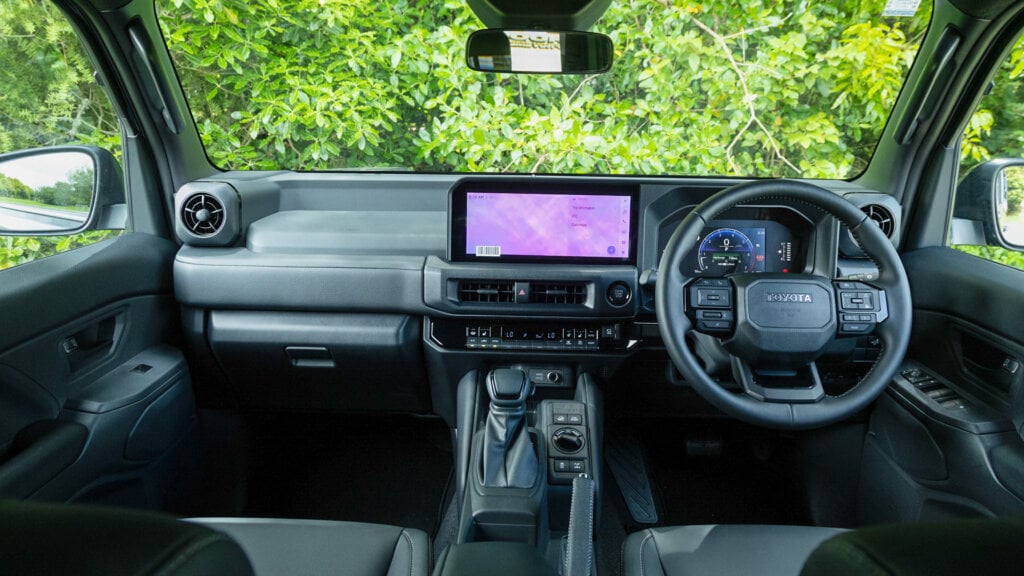
On the inside, the FJ looks to have borrowed a lot of its equipment from the current Hilux.
The overall layout is very similar, and it carries the same rugged feel with tough plastics, and a distinct lack of piano black.
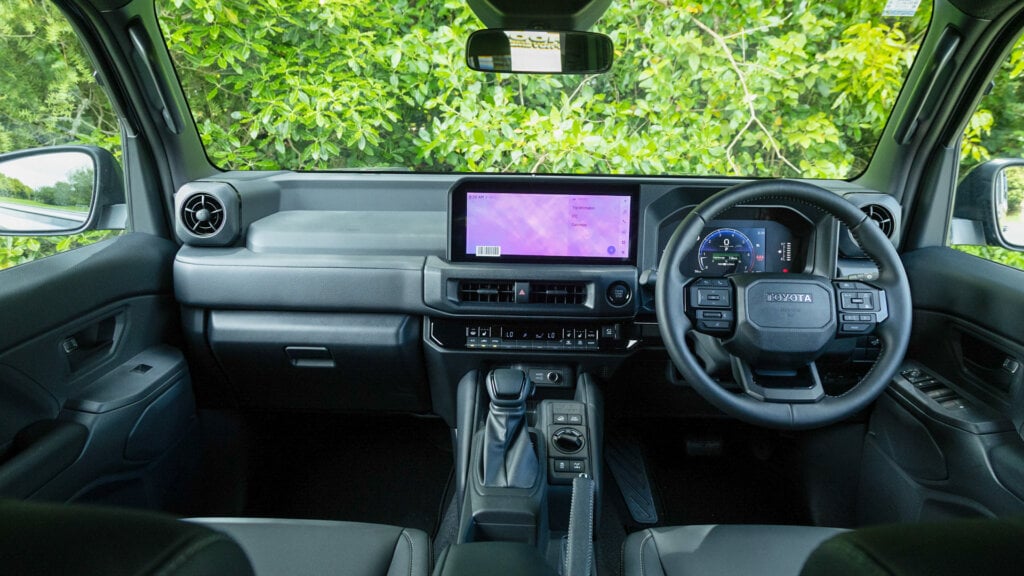
As for tech, it gets a 12.3-inch infotainment screen with Apple Carplay and Android Auto connectivity. This display looks to use exactly the same operating system as what is currently in the Hilux. Behind the steering wheel (which is also shared with the Hilux), it gets a 7-inch digital cluster.
Due to the sheer height of this FJ, the amount of headroom offered in the front is almost comical. Even the tallest of drivers will have no trouble fitting, but it’s a different story in the second row.
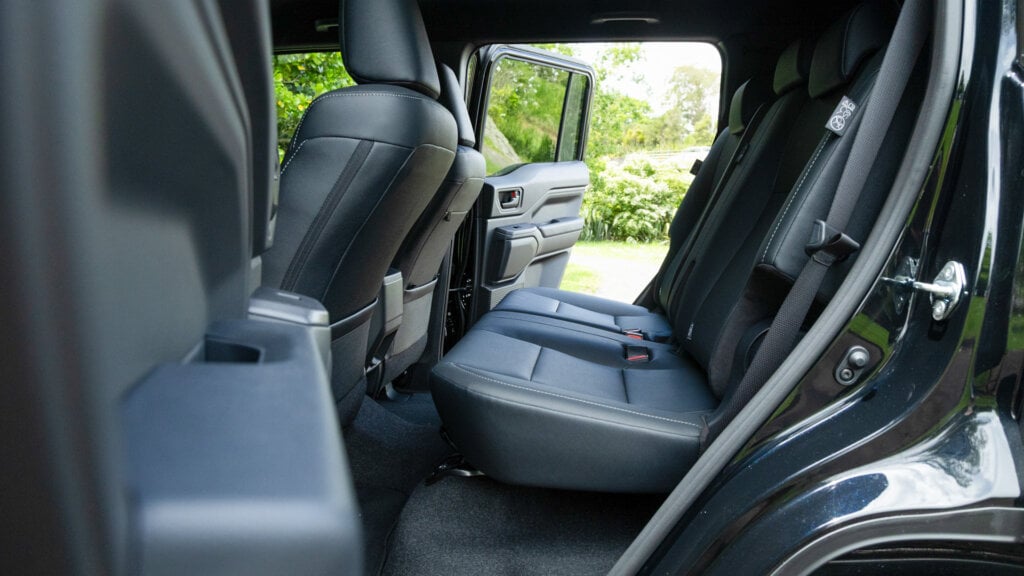
Back here, things are very different due to how high the rear bench seat has been mounted. The abundance of head room is almost swallowed up completely, and there isn’t much in the way of leg room, either. I was surprised by how small the transmission tunnel is back there, but the raised floor sits above the majority of it.
There also isn’t really a middle seat. Toyota has installed a seatbelt for a middle occupant, but the seat itself doesn’t really exist, and what is there is very narrow.
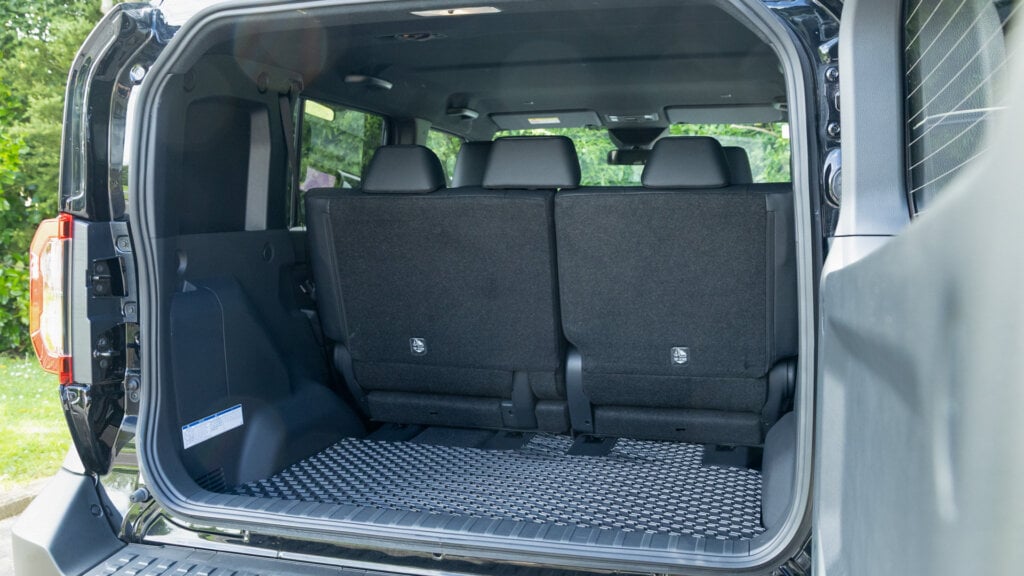
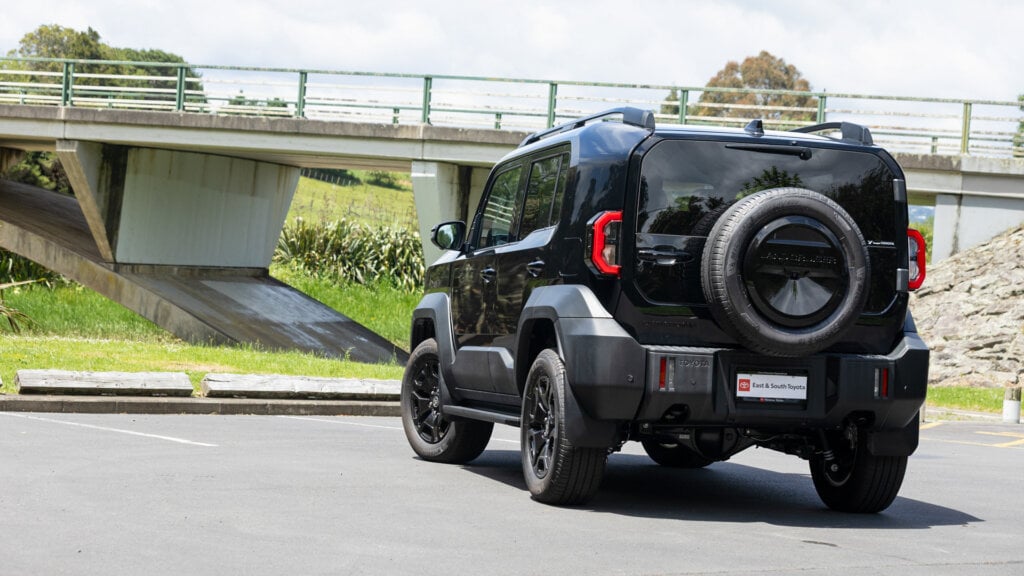
The boot is reasonably sized, measuring 795 litres with the seats up, and 1,607 litres when they are folded. There’s also a full-sized spare wheel mounted on the side-hinged tailgate.
A Nostalgic Drive
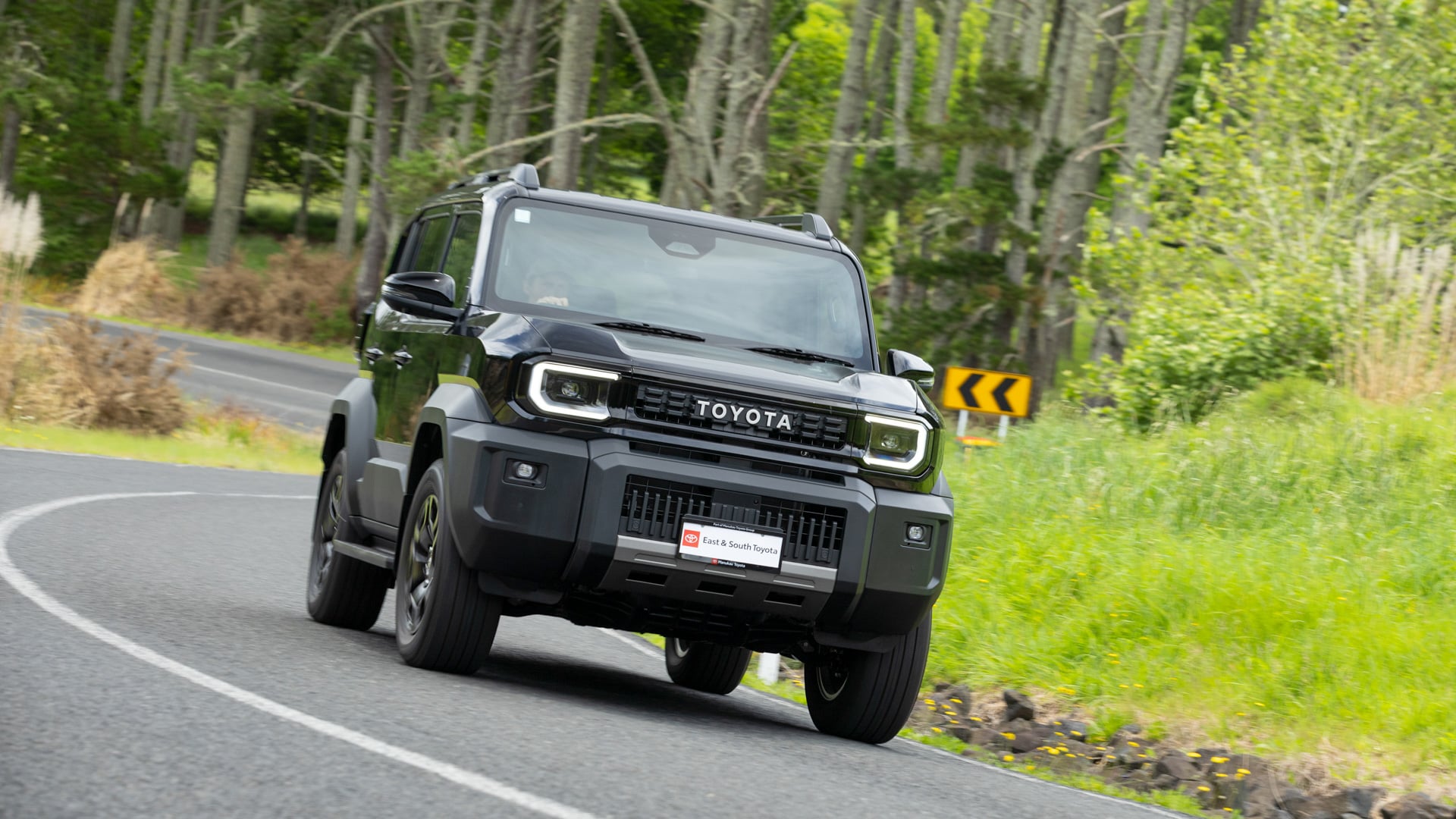
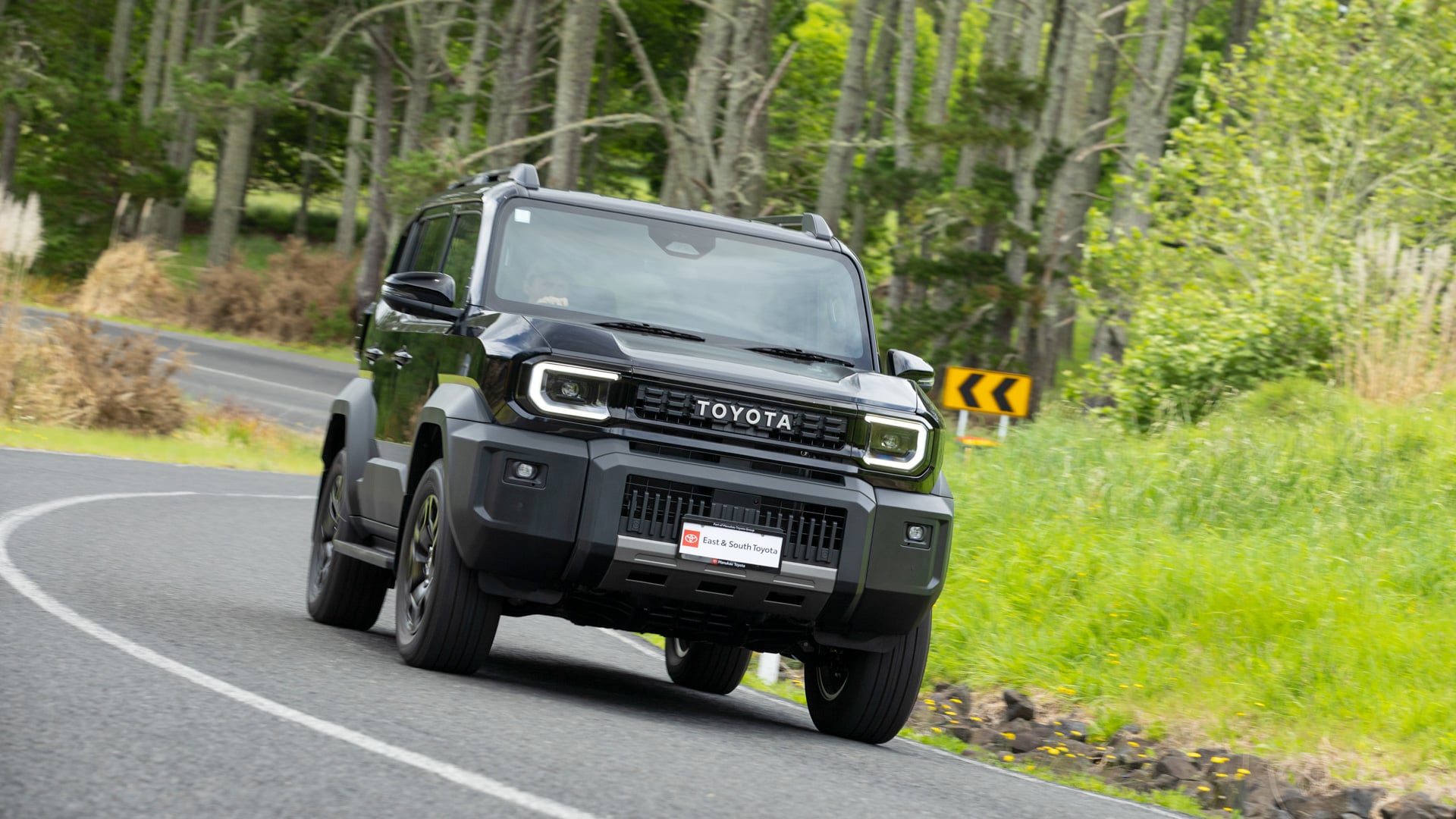
On the road, the Land Cruiser FJ continues with its unique charm, and leans into its off-road heritage.
It becomes clear quite quickly why modern Land Cruisers are powered by diesel engines, as the naturally aspirated petrol runs out of grunt pretty quickly. Toyota claims a 0-100km/h time of around 13 seconds for this SUV, and that feels about right, if not a bit too quick. It makes the 150kW diesel Hilux feel fast — and that’s saying something.
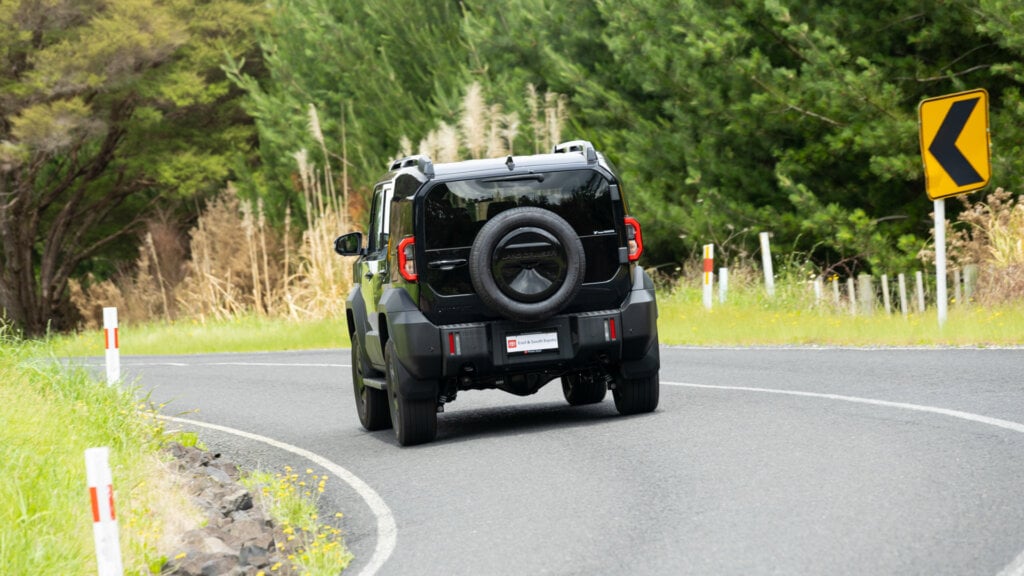
But then again, the FJ’s whole thing is about charming nostalgia, and the petrol engine does sound quite good, and harks back to Landys of old.
It’s a similar story for the suspension system, as it’s clear off-road handling was the priority. With its Hilux underpinnings, you can feel all of the imperfections across New Zealand roads, and it can be quite fussy at times.
The upright proportions play a part in the FJ’s handling, as it felt quite top heavy at times. The Suzuki Jimny suffers from the same sort of body roll in the corners, and just means you need to be more careful about judging speed.
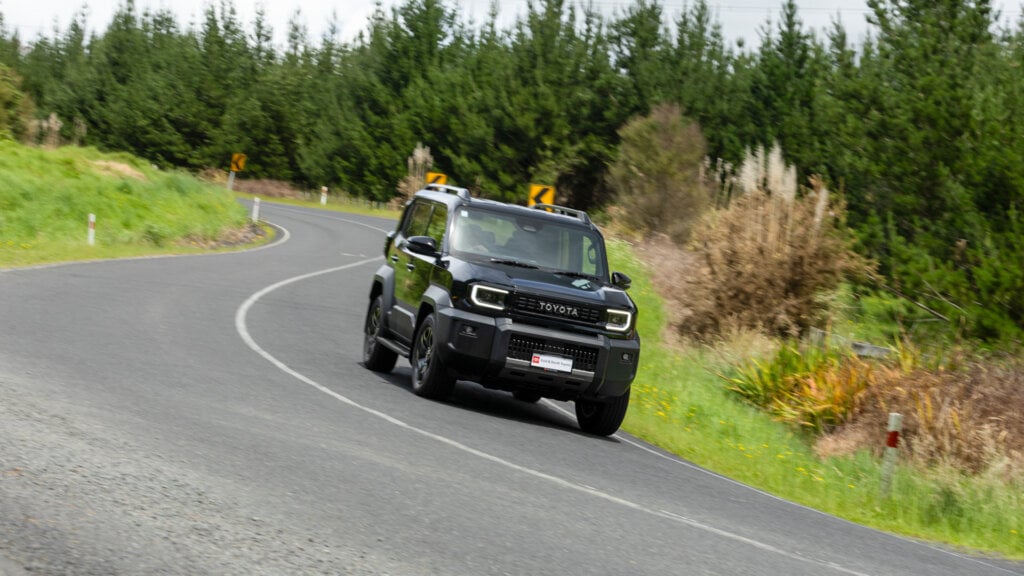
It’s a shame I wasn’t able to test the FJ off-road, as a lot of international reviews point to its impressive capabilities off the beaten track. It seems a lot of its shortcomings on the road are made up with its ability to traverse serious terrain off-road, so hopefully we get to test that at some point.
As a Japanese import, this FJ was fitted with the same advanced safety systems as what we get on our New Zealand new Toyota models. I used the adaptive cruise system and lane keep assist for a lot of my time on the motorway. The lane-keep system is more overactive than the New Zealand-tuned systems, but this is something drivers would get used to.
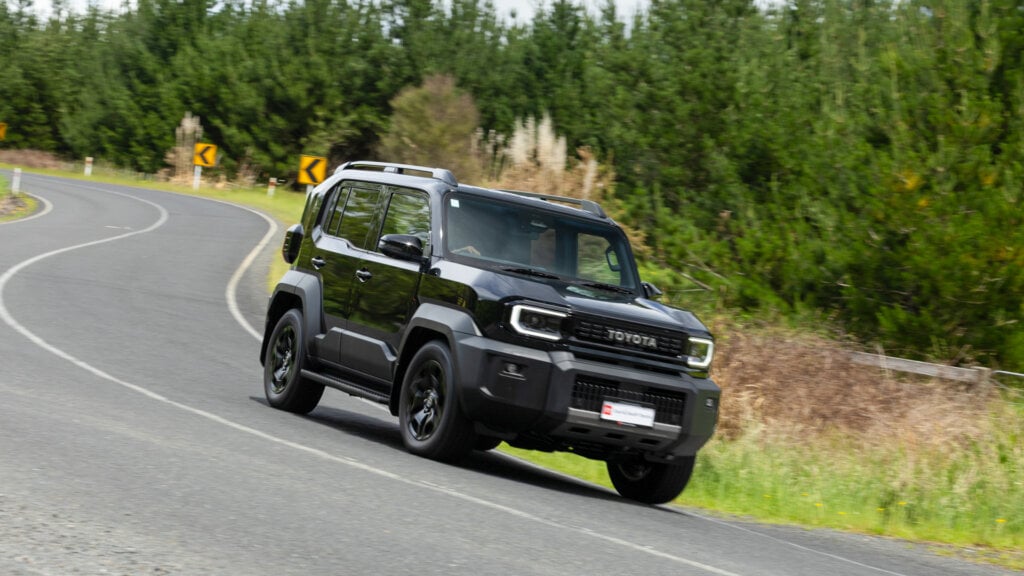
To sum it up, this new Land Cruiser FJ feels like an appropriate successor to Toyota’s iconic FJ Cruiser in the fact it doesn’t take itself too seriously. While it might be much bigger (and more expensive) than the Suzuki Jimny, it embodies a similar mantra of being a boxy off-roader built for fun.
Sure the suspension system might be a bit fussy, and the engine lacking grunt, but there’s no question that it is a proper off-roader. And while it might have its sceptics, I firmly believe it’s deserving of the Land Cruiser badge it wears.