View all
2 more images
Kia Seltos HEV first drive: fit for purpose
Words: Richard Edwards
Words: Richard Edwards | Photos: Alex Schultz
Kia’s best-selling model in New Zealand has gone hybrid. The second-generation Seltos is only offered here with petrol-electric power, which is why it now wears an HEV badge, and prices start at $39,990 plus on-road costs.
The outgoing Seltos found 3189 buyers in 2025, which made it the country’s fifth most popular passenger model and the only Kia in the top 10.
“Kia is confident all-new Seltos will build on the strong reputation of this familiar nameplate, while meeting the evolving needs of new-car buyers, many of whom are now seriously considering the move to a hybrid vehicle for the first time,” says Todd McDonald, managing director of Kia New Zealand.
Dropping the old 2.0-litre petrol engine will also do Kia’s Clean Car Standard account a lot of good. That model was rated at 175g/km of CO2 and, at those volumes, it was a significant drag on the brand’s balance. The hybrids come in at 103g/km to 117g/km.
There are five grades, running from the Light up to the X-Line eAWD at $55,490. The first four are front-wheel drive, while the eAWD adds an electric motor on the rear axle with no driveshaft running back to it.
The new car is 45mm longer and 30mm wider than before, with a wheelbase that’s grown by 60mm. We spent our time at the local launch in the Earth, the second grade up at $44,050.
Range and spec
| Variant | Drive | Price (+ORC) | Fuel (L/100km) |
|---|---|---|---|
| HEV Light | FWD | $39,990 | 4.5 |
| HEV Earth | FWD | $44,050 | 4.5 |
| HEV Water | FWD | $47,990 | 4.8 |
| HEV X-Line | FWD | $51,990 | 4.8 |
| HEV X-Line eAWD | AWD | $55,490 | 5.2 |
Every Seltos gets twin 12.3-inch screens, wireless Apple CarPlay and Android Auto, adaptive cruise with stop and go, dual-zone climate control and a seven-airbag safety package. The Light rides on 16-inch alloys with cloth trim.
The Earth adds a surround-view camera, a blind-spot view monitor, remote smart park assist, side parking sensors and roof rails. You have to step up to the Water for 18-inch wheels, a power driver’s seat and heated front seats.
The X-Line brings 19-inch wheels, ventilated front seats, a head-up display, Harman Kardon audio, wireless phone charging, built-in navigation and a power tailgate. The X-Line eAWD adds the rear motor and a Snow drive mode.
Design and cabin
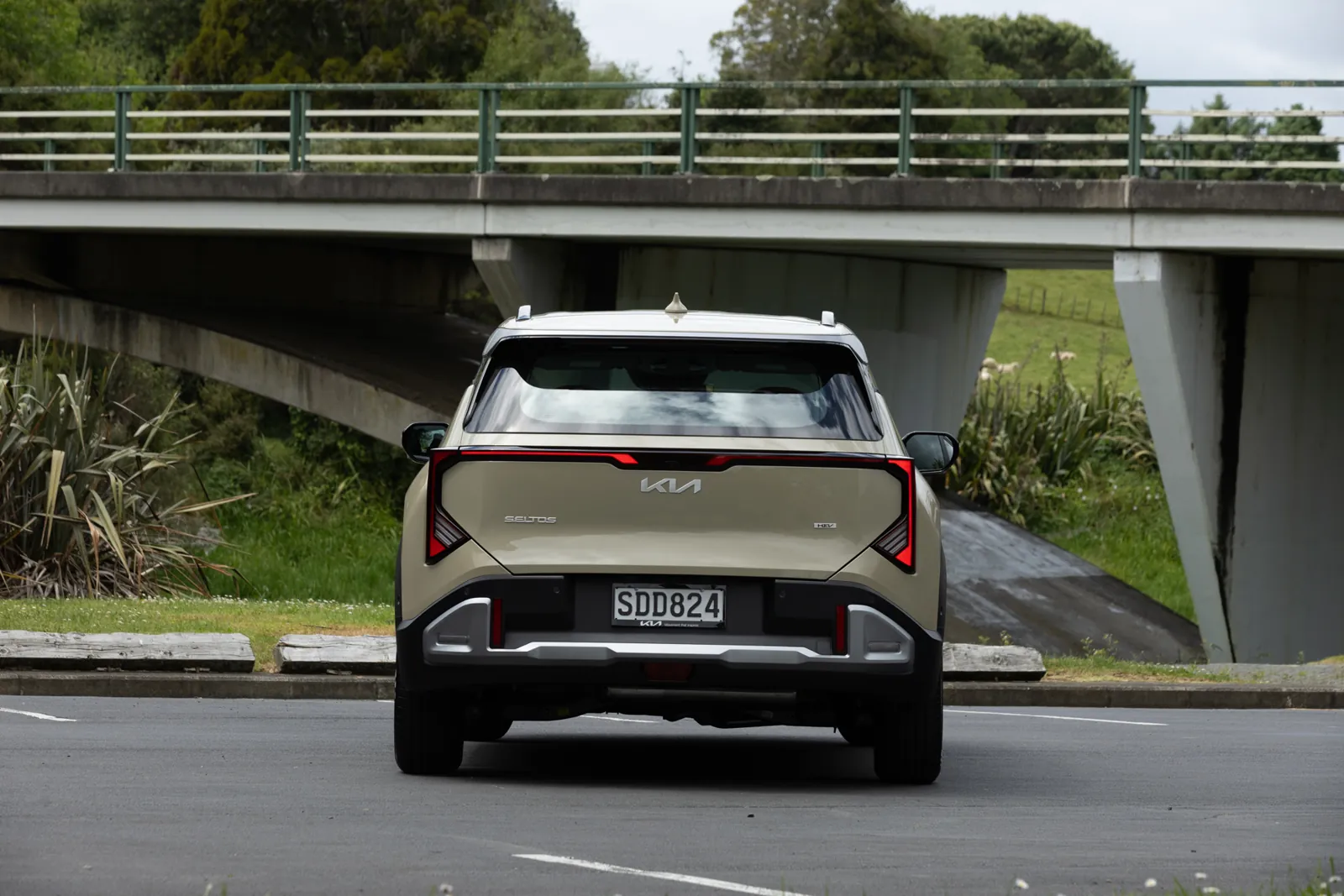
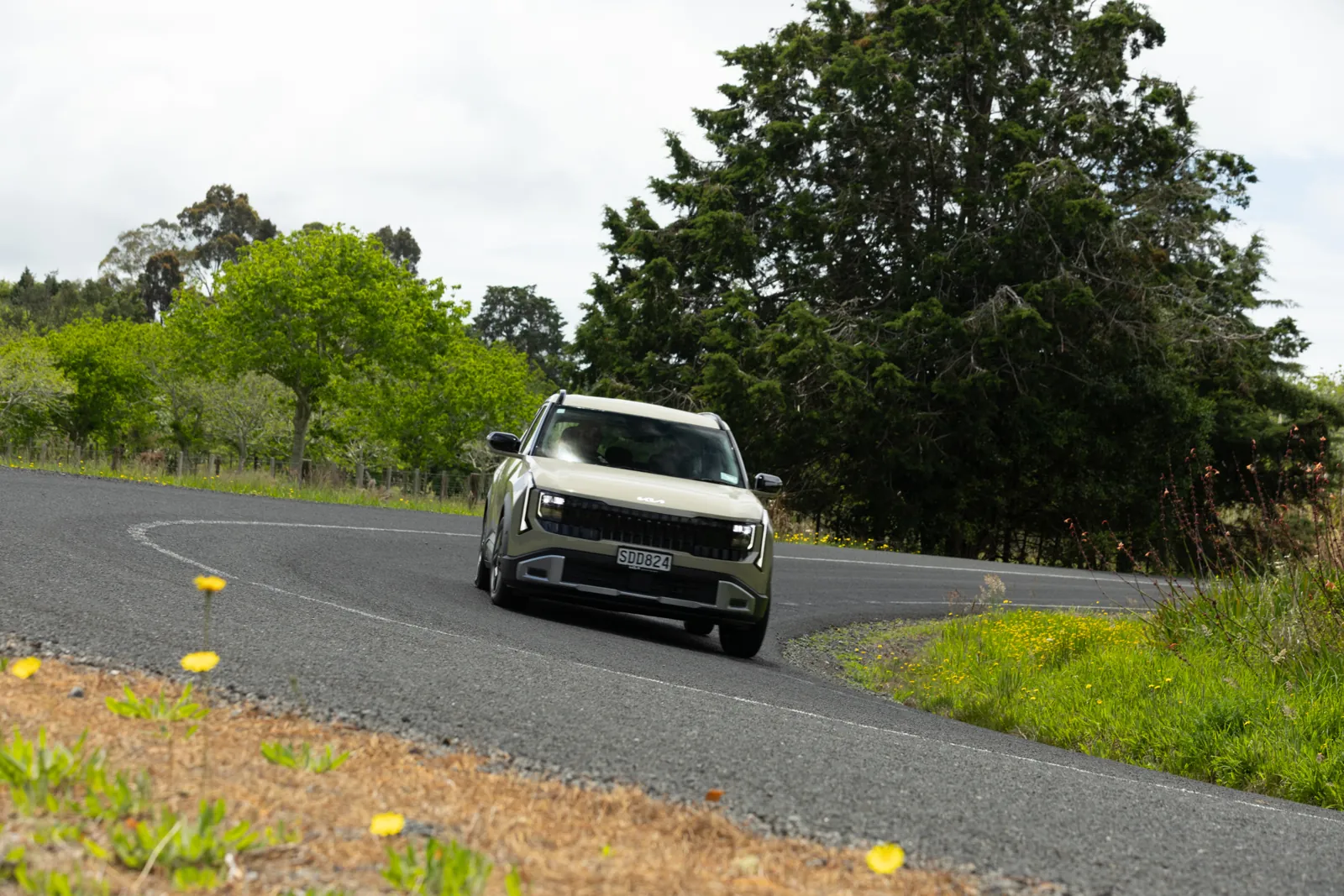
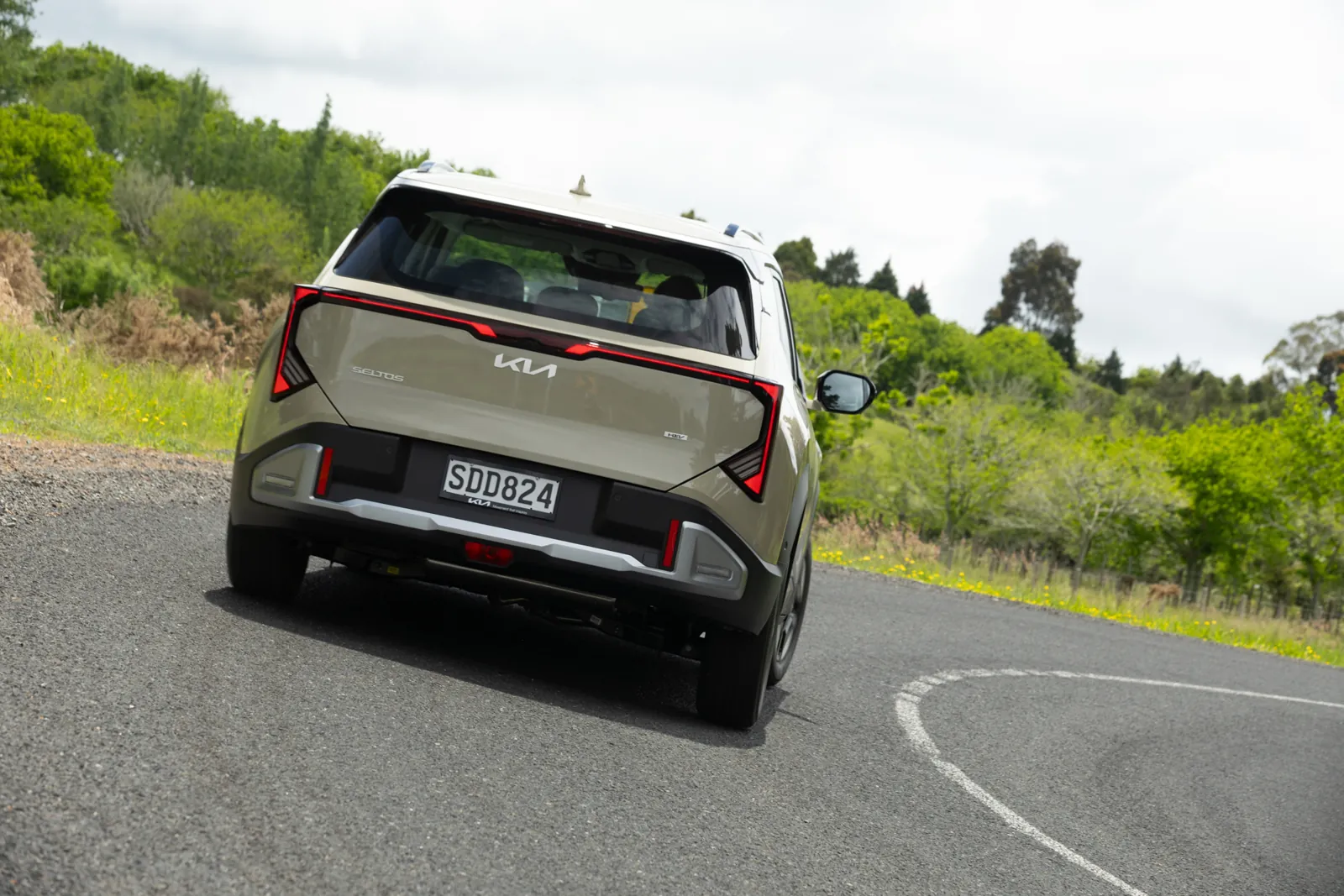
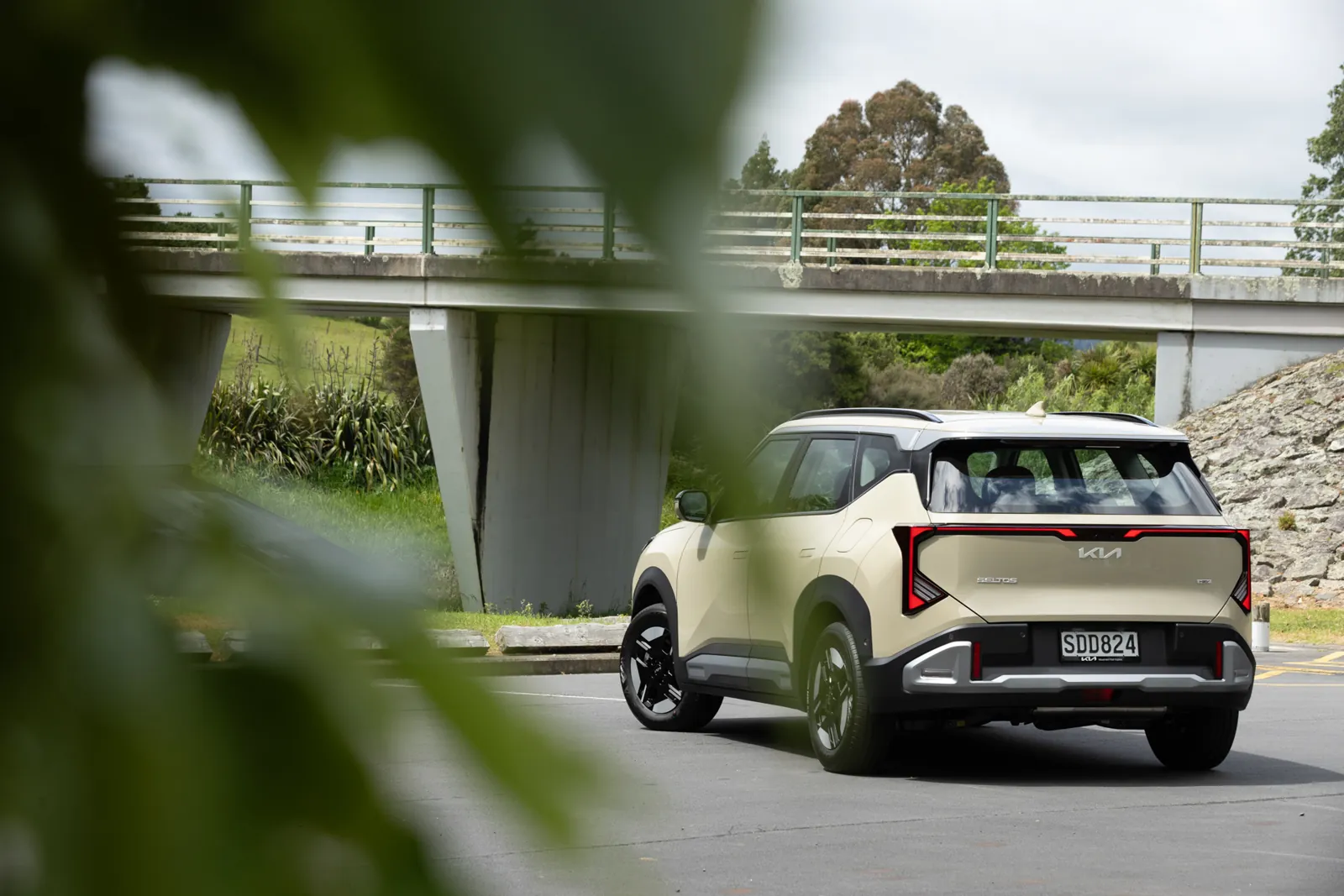
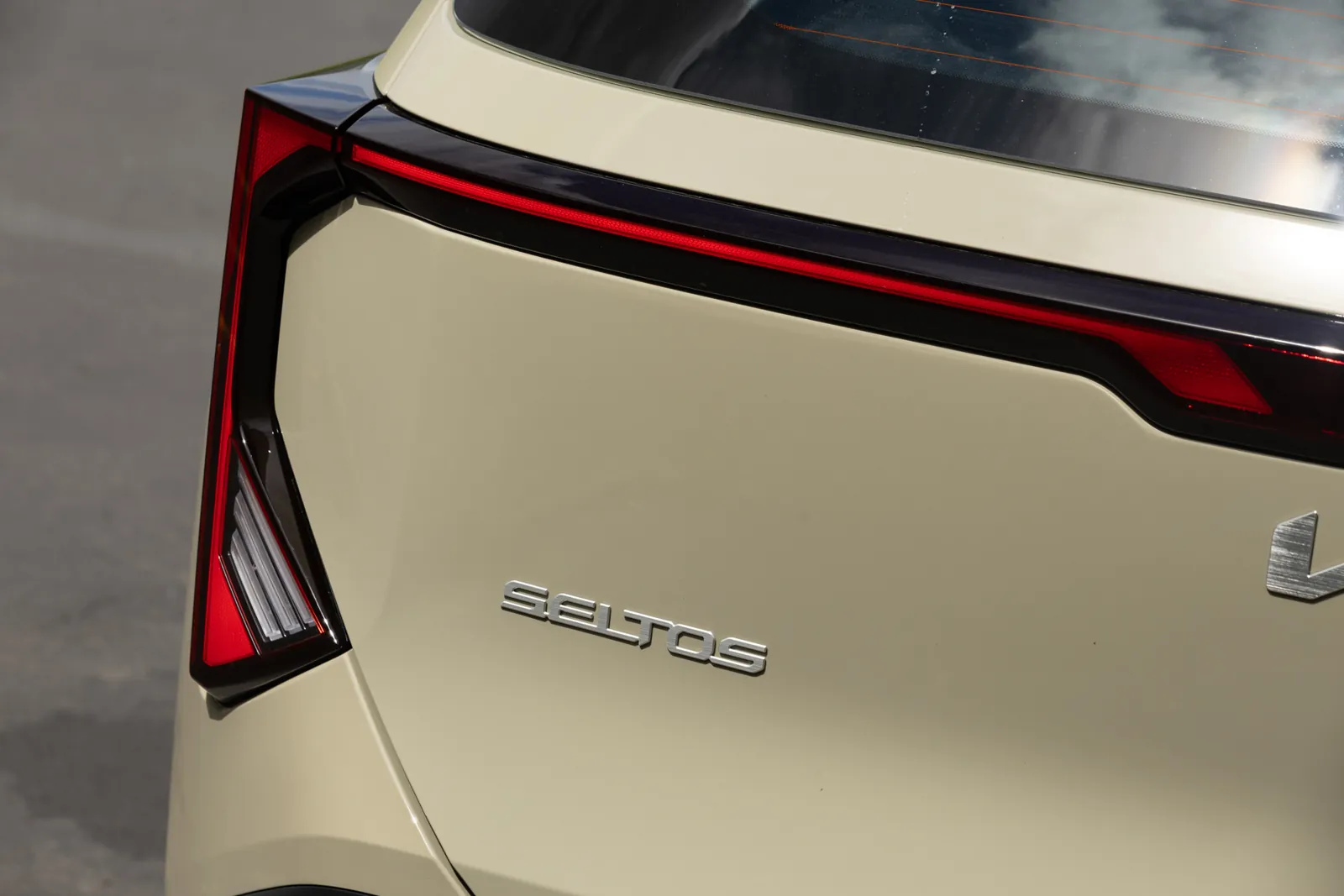
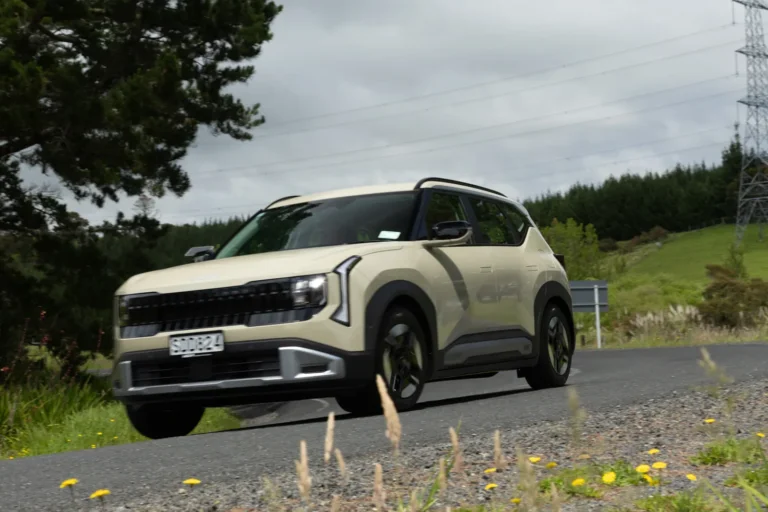
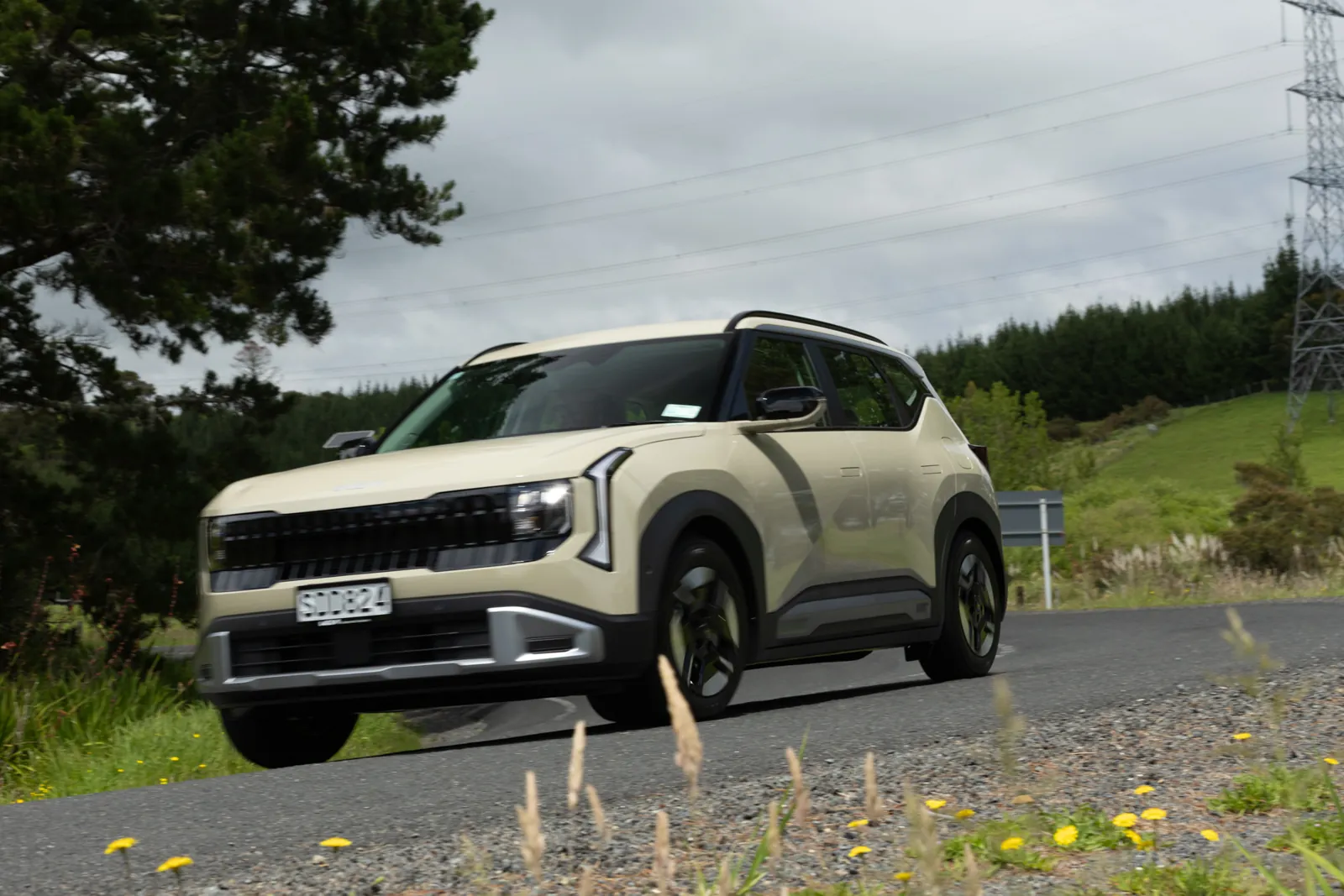
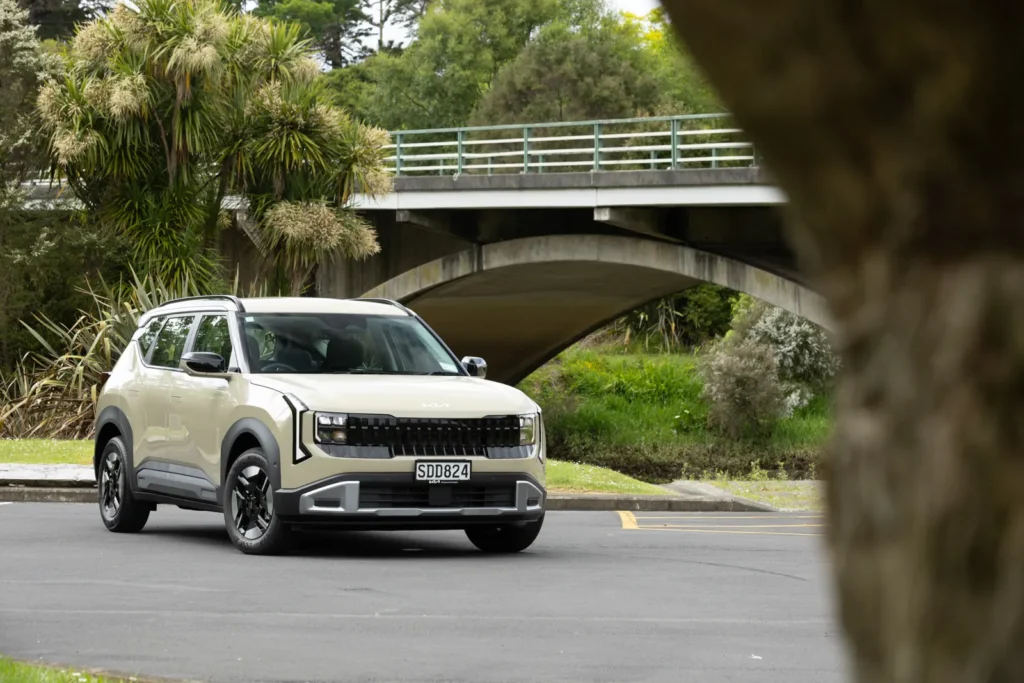
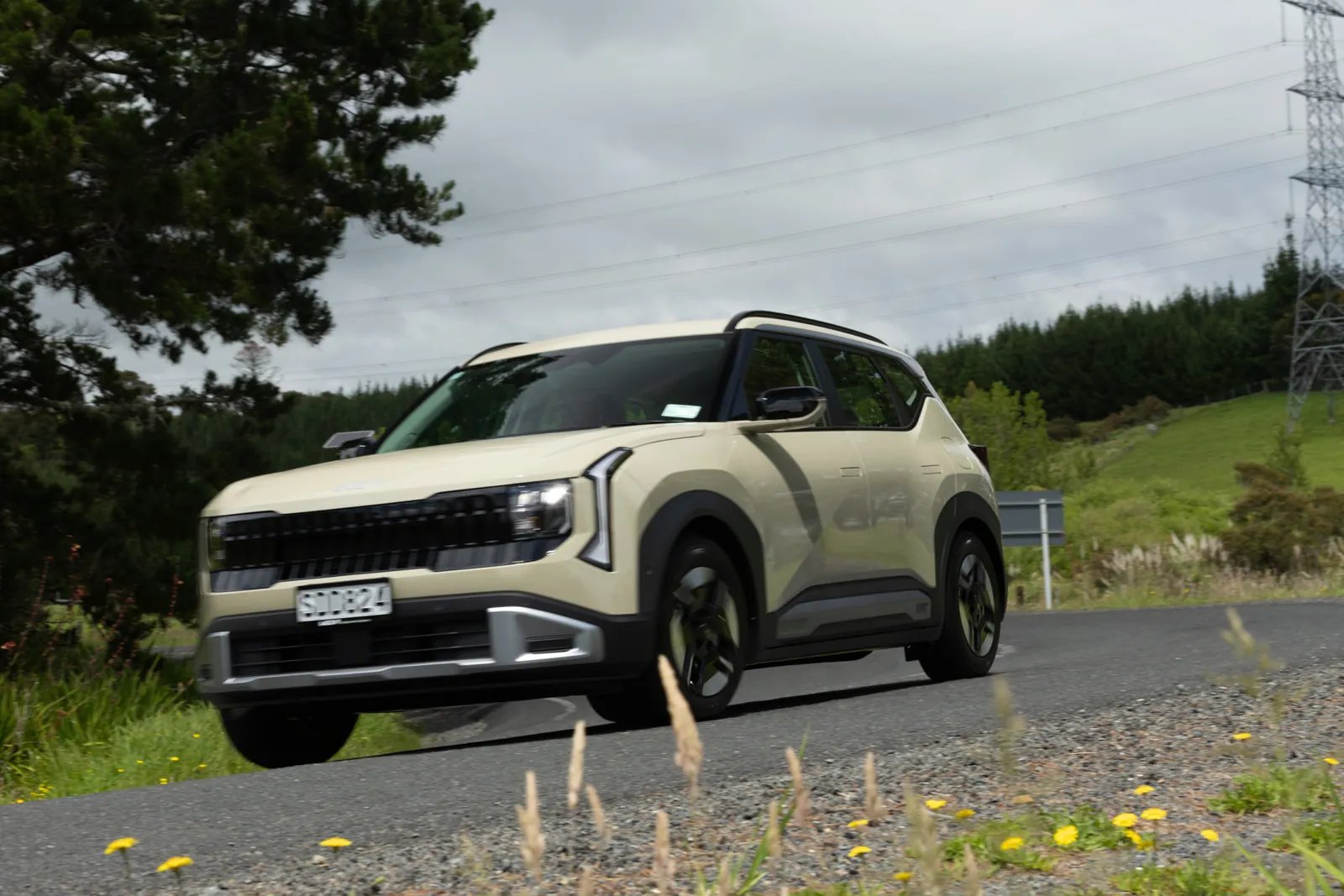
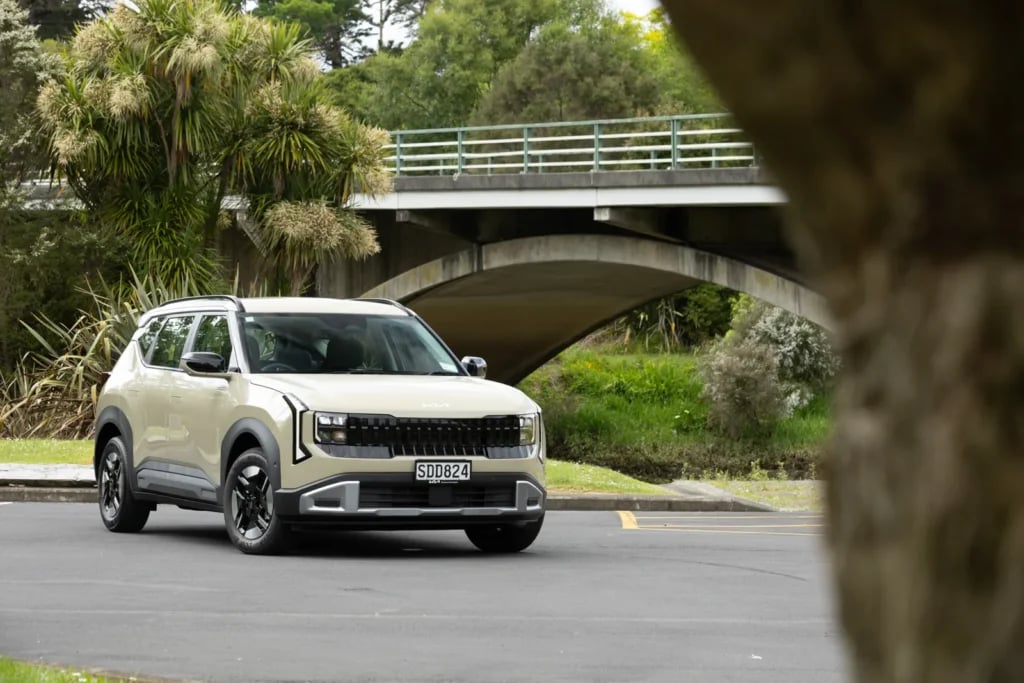
The styling borrows from the Telluride, Kia’s big American SUV, with a chunky grille, technical-looking lights and tall indicators up front. The body is essentially a box, which is the point, but the angular tail lights, blacked-out window line and floating roof give it some character. The cladding is tough textured plastic, not piano black, so it should wear well. We’re less keen on the pop-out flush door handles.
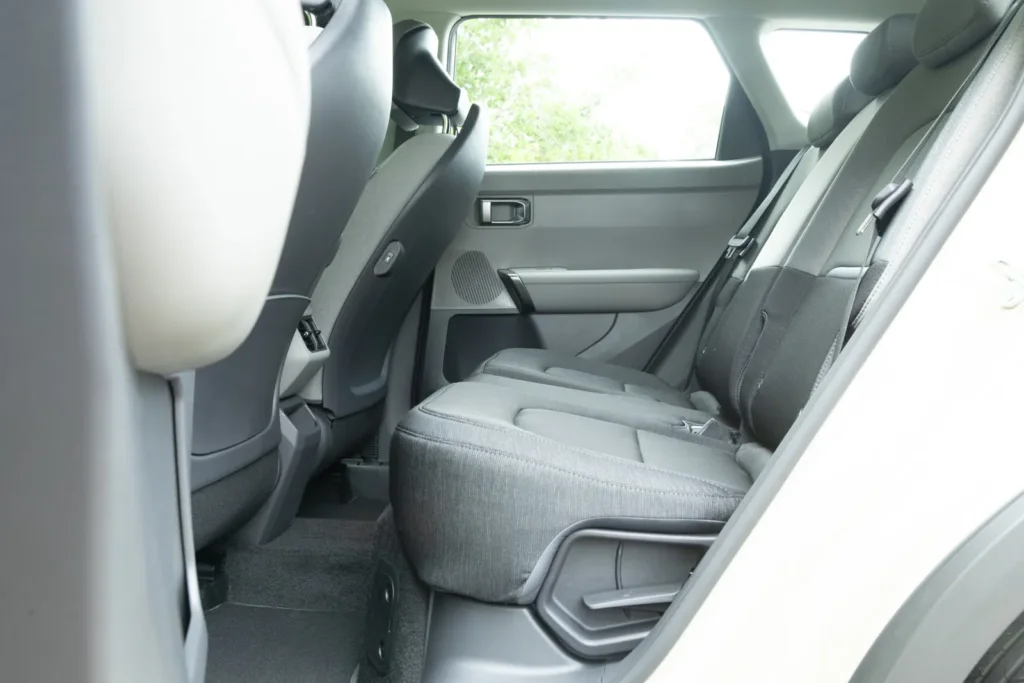
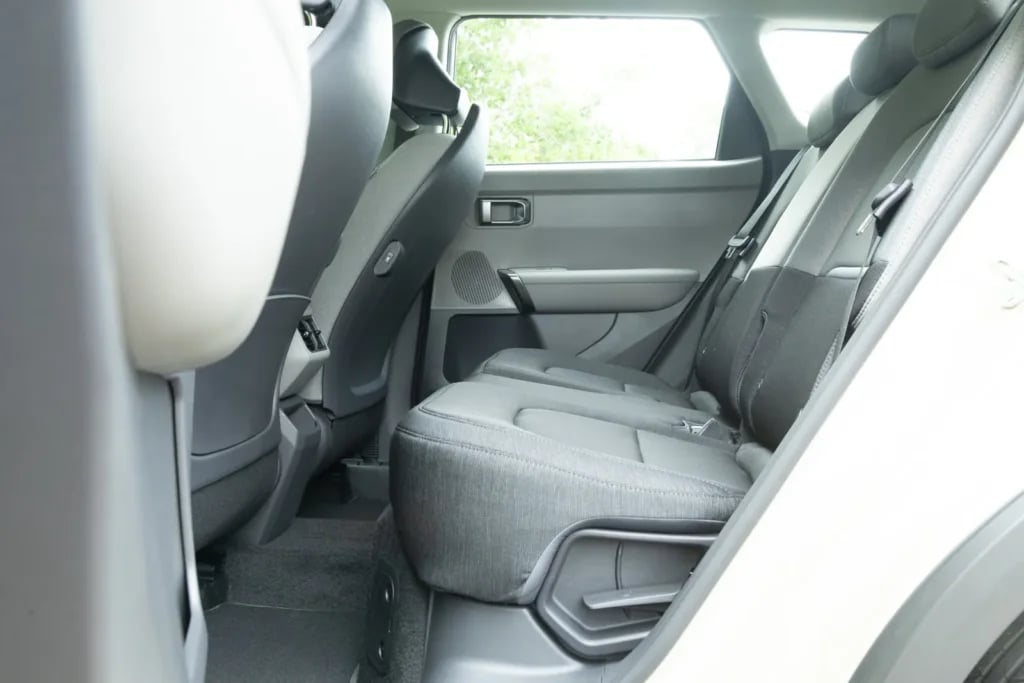
The back seat benefits from the longer wheelbase and an upright roofline, so headroom is decent. There are two USB-C ports and small adjustable vents for rear passengers, and the backrest reclines. The Earth has no centre armrest, and the floor isn’t flat even though the drivetrain would allow it, which points to a platform shared with combustion models.
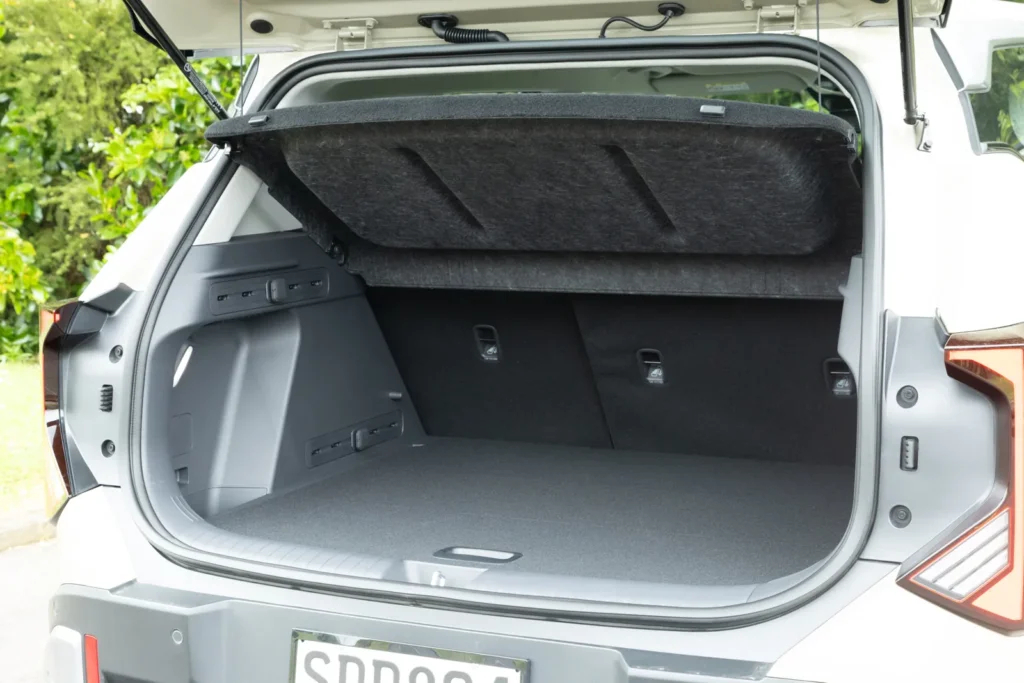
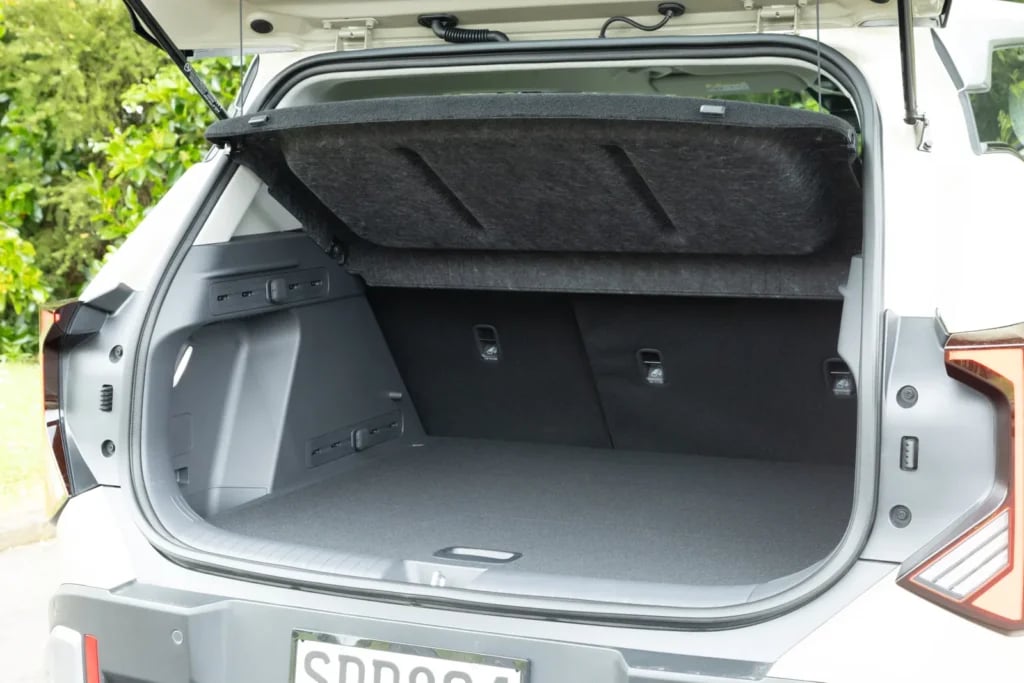
The boot is a strong point at 483L, rising to 1441L with the seats folded. Movable tie-down points and side cubbies help, and there’s a spacesaver spare under the floor on 2WD models. The eAWD gets a tyre repair kit instead. Towing is rated at 910kg braked (810kg for the eAWD) and 750kg unbraked.
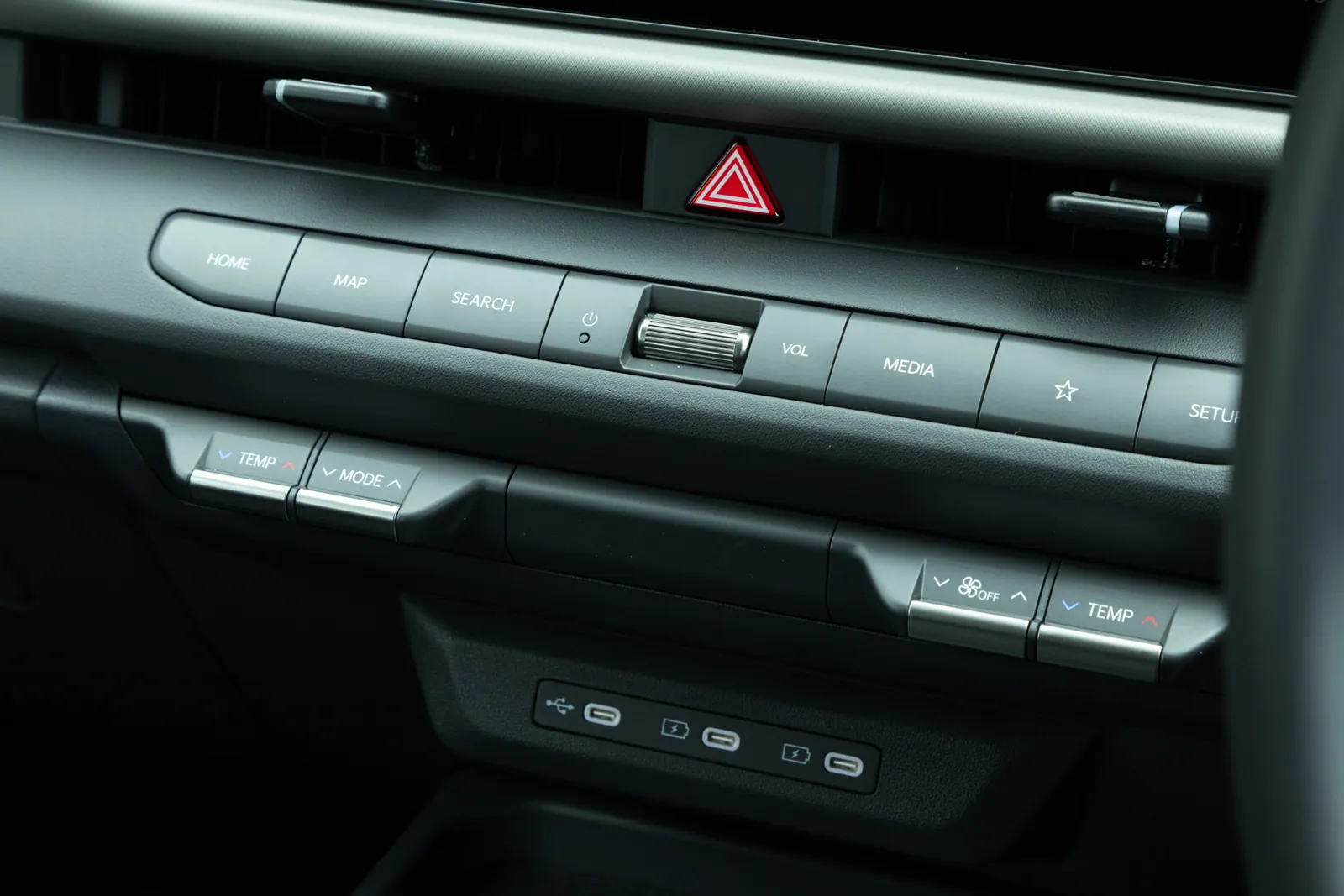
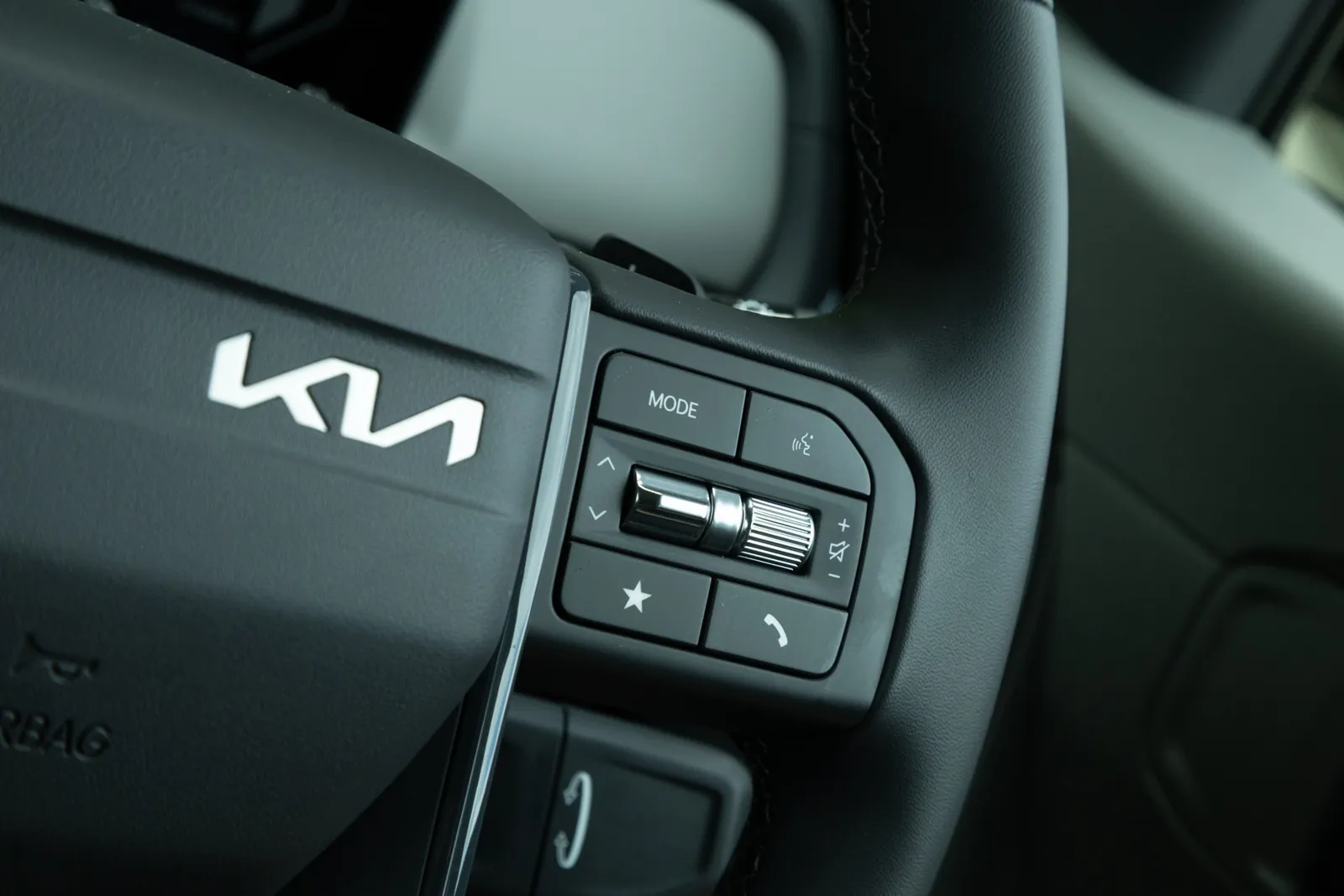
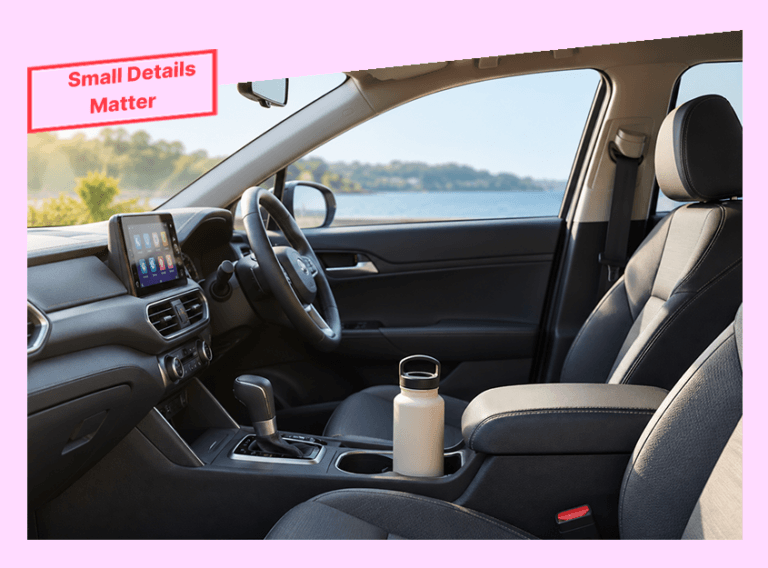
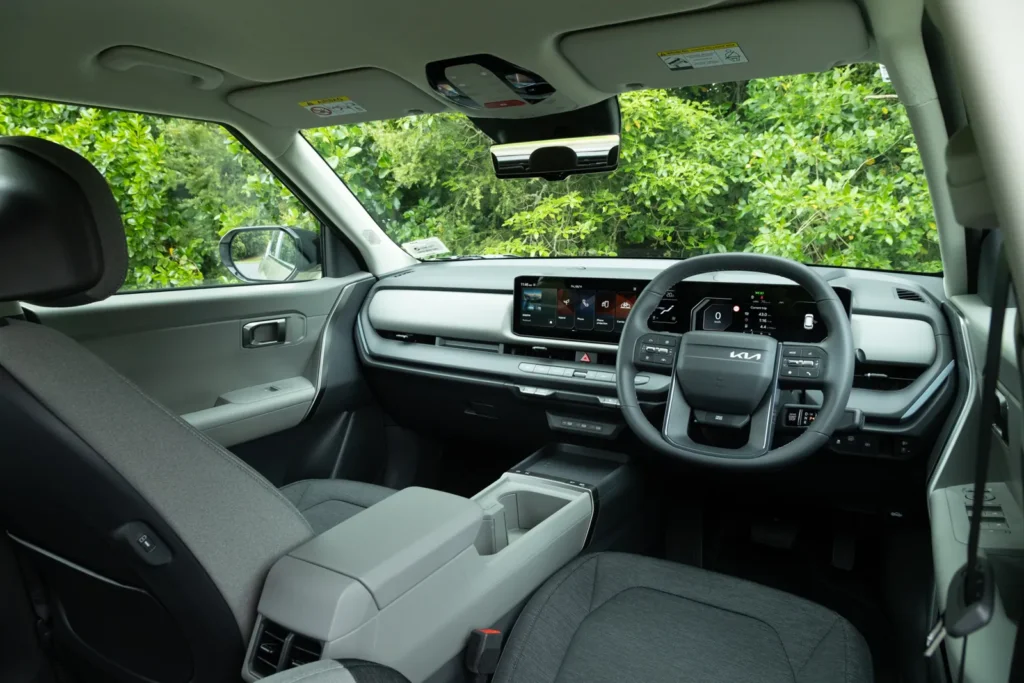
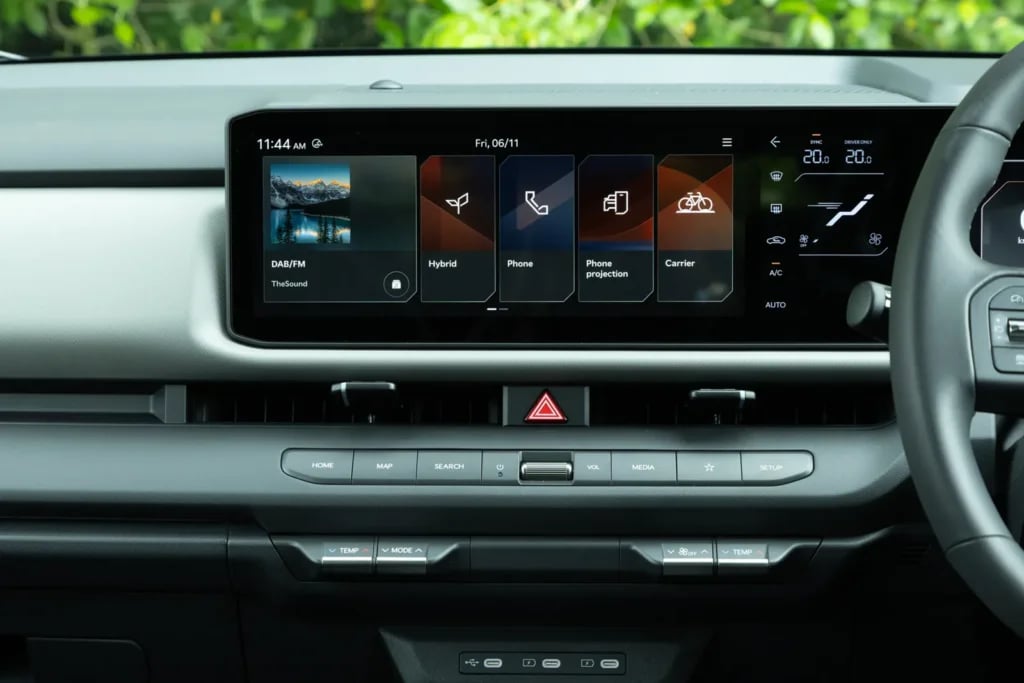
Up front, Kia has kept the buttons. The steering wheel is covered in proper clicky switches, there’s a dedicated drive mode button, and the infotainment and climate controls below the screens include a chunky volume knob. Kia’s software is quick and easy to find your way around, with useful touches such as a carrier mode that switches off rear sensors when a bike rack is fitted.
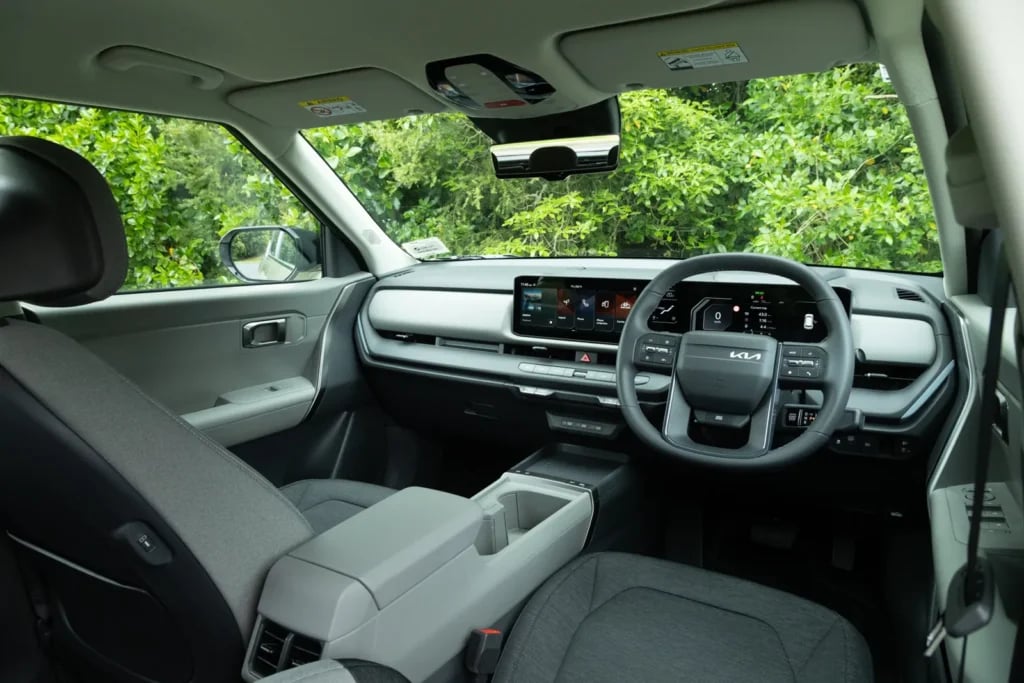
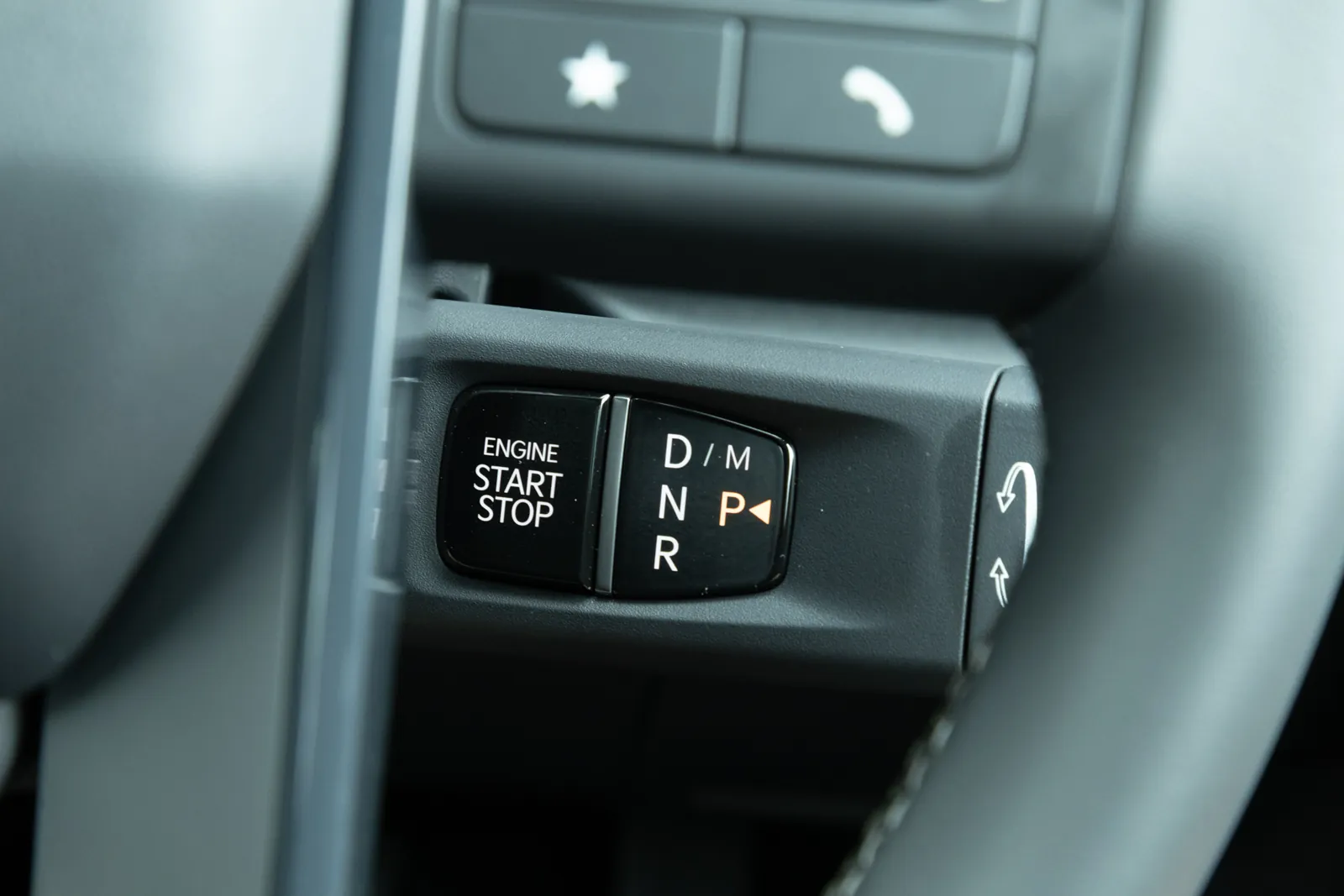
The 5-inch climate display sits between the two big screens and is partly hidden by the steering wheel in right-hand drive, though its settings also pop up on the main screen. The start button lives on the column shifter, where it takes some finding. The Earth’s driver’s seat is manual and there’s no wireless charger, just a blanked panel where it sits on higher grades. Three USB-C ports and a 12V socket handle charging, and the Kia Connect app with SOS calling is included for six years.
On the road
The hybrid pairs a 1.6-litre direct-injection petrol engine (74kW, 139Nm) with a 45kW, 203Nm electric motor and a 1.49kWh lithium-ion battery. Combined output in front-drive models is 112kW and 265Nm, sent through a six-speed dual-clutch automatic with paddles on every grade. The eAWD’s rear induction motor adds 50kW, lifting total output to 126kW.
The outputs are modest on paper, but the Seltos feels brisk on the road. It gets off the line well, there’s a useful shove when you put your foot down, and the dual-clutch shifts smoothly. Kia has also brought its adaptive regeneration across from its EVs. Hold the right paddle and the car manages its own regen, slowing for traffic ahead and on downhill runs and leaning on the motor more than the brakes. We’ve liked the system in Kia and Hyundai EVs, and it works just as well here.
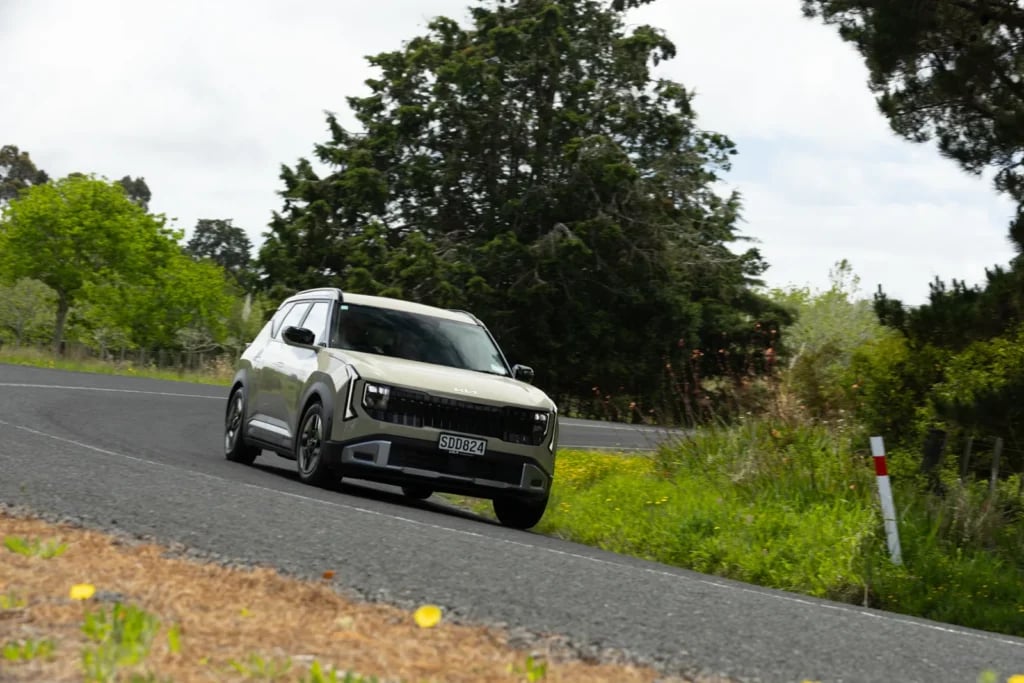
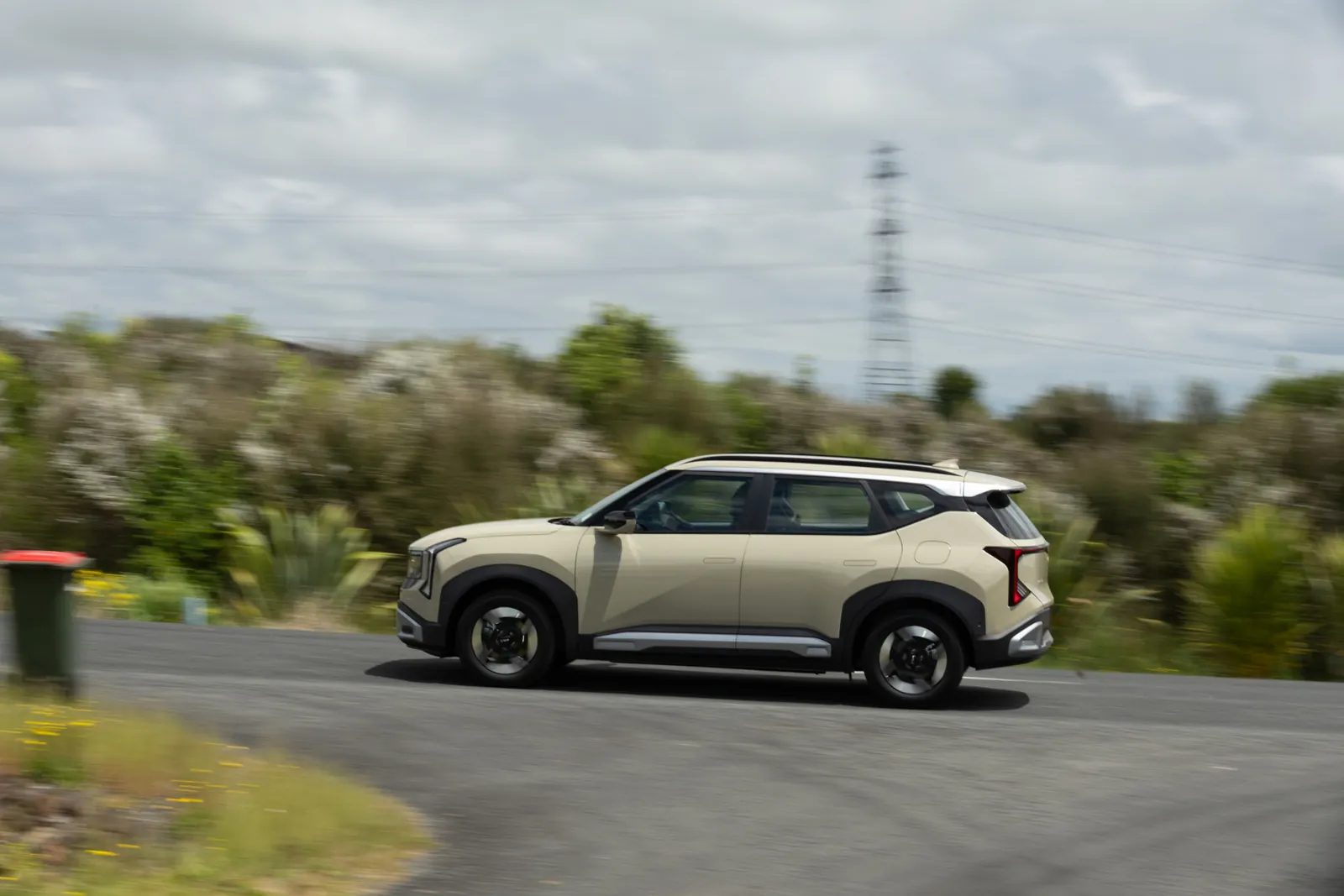
The ride is compliant without being soft, and there’s some body roll in corners but nothing untidy. The steering is light and short on feel, and switching to Sport only adds a little weight, so it’s the part of the drive we’d change.
It does have a very tight turning circle. Kia quotes a 5.36m minimum turning radius, and repeated U-turns for photography showed how tight it is, so town driving and tight car parks will be easy. If you’d rather not bother, remote smart park assist will move the car in and out of a space for you.
The driver assistance is well tuned. Lane Follow Assist 2 holds the car steadily in its lane and is one of the better systems we’ve used on a mainstream car lately. You’ll hear the speed limit system chime from time to time.
No ANCAP rating has been published yet, and Kia NZ says it is targeting five stars.
We saw about 4.1L/100km over a mix of urban and open-road driving before the photography started. That’s under Kia’s 4.5L/100km claim for this grade and matches the 4.1L/100km Toyota claims for the Corolla Cross hybrid.
The competition
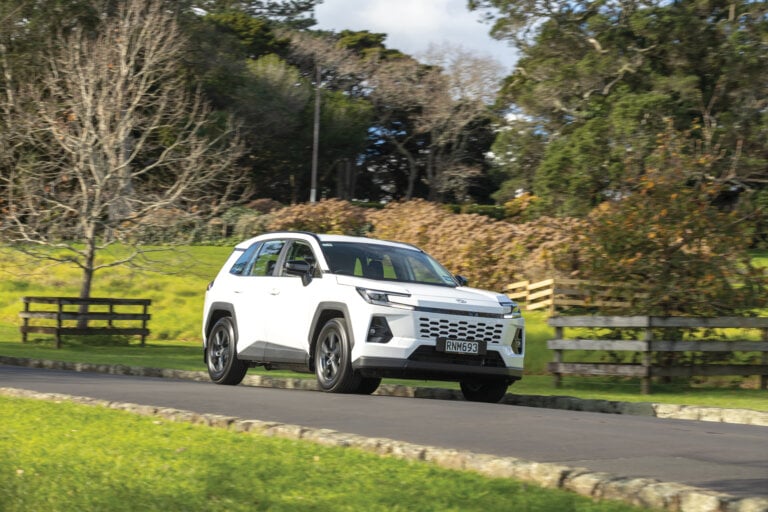
The Seltos goes up against some of the country’s best-selling small SUVs, and the Toyotas are the obvious benchmark. The Corolla Cross hybrid starts at $44,990 for the GX, and its E-Four AWD hybrid costs $50,990, which undercuts the Seltos eAWD by $4500. The smaller Yaris Cross hybrid runs from $39,690 to $46,190.
Hyundai’s Kona hybrid uses a 1.6-litre hybrid drivetrain like the Seltos but costs more, at $47,990 to $59,990. At the budget end, the MG ZS Hybrid+ is $34,990 to $38,990 and the GWM Jolion HEV starts at $34,990 before promotional pricing. Kia’s own Niro hybrid starts at $43,990.
| Model | Price range (+ORC) | Fuel (L/100km) |
|---|---|---|
| Kia Seltos HEV | $39,990 to $55,490 | 4.5 to 5.2 |
| Toyota Corolla Cross hybrid | $44,990 to $54,990 | 4.1 to 4.6 |
| Toyota Yaris Cross hybrid | $39,690 to $46,190 | 3.6 |
| Hyundai Kona hybrid | $47,990 to $59,990 | 4.3 |
| MG ZS Hybrid+ | $34,990 to $38,990 | 4.7 |
| GWM Jolion HEV | $34,990 to $40,990 | 5.1 |
Prices are recommended retail, from the NZ Autocar new car price list.
Verdict
Fit for purpose is the best way to sum up the new Seltos, and we don’t mean that as faint praise. For buyers who want a small-to-medium SUV that’s frugal, roomy and easy to live with, it covers just about every base.
The steering is light, there’s some body roll and a little road noise, but most buyers won’t mind given the space, the fuel use and the price. The lower grades could do with more equipment, though that’s how Kia hits a $39,990 starting price.
Kia Seltos HEV Earth
- Price: $44,050 + ORC (range $39,990 to $55,490)
- Drivetrain: 1.6-litre petrol hybrid, 1.49kWh lithium-ion battery
- Engine: 74kW, 139Nm
- Electric motor: 45kW, 203Nm
- Combined output: 112kW, 265Nm
- Transmission: 6-speed dual-clutch automatic, front-wheel drive
- Fuel use (claimed): 4.5L/100km
- CO2: 103g/km
- Tank: 38L
- Length/width/height: 4430/1830/1605mm
- Wheelbase: 2690mm
- Turning radius: 5.36m
- Tare weight: 1632kg
- Boot: 483/1441L
- Towing: 910kg braked, 750kg unbraked
- Spare: Spacesaver
- Warranty: 7 years/150,000km; hybrid battery 8 years/160,000km
- ANCAP: Not yet rated