View all
10 more images
2026 BYD Shark 6 Performance vs Toyota Hilux Adventure Review
Words: Kyle Cassidy | Photos: Alex Schultz
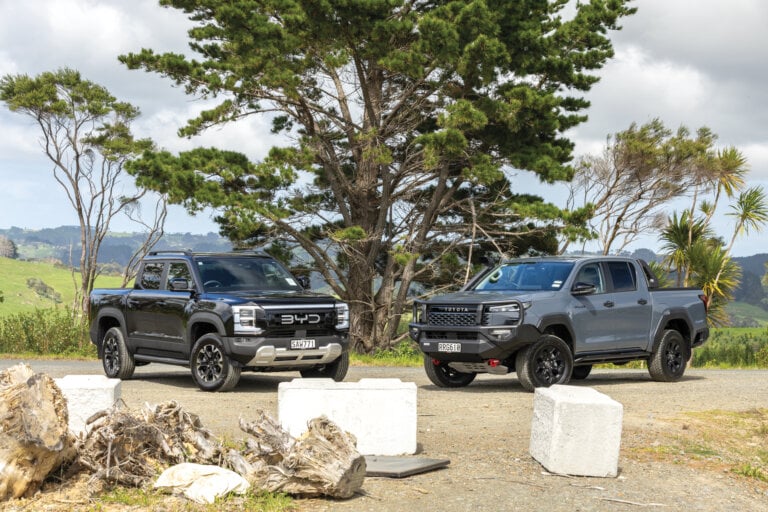
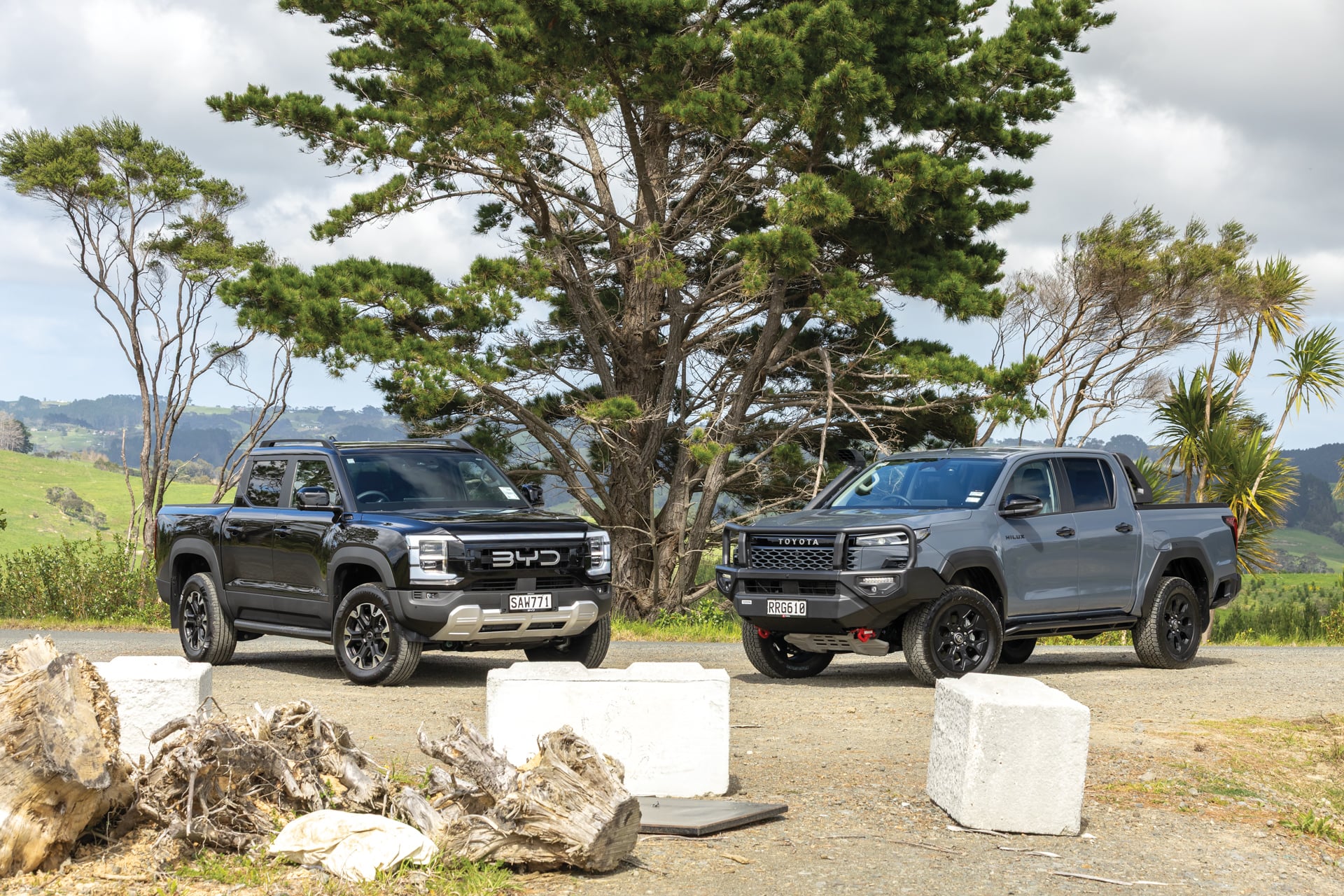
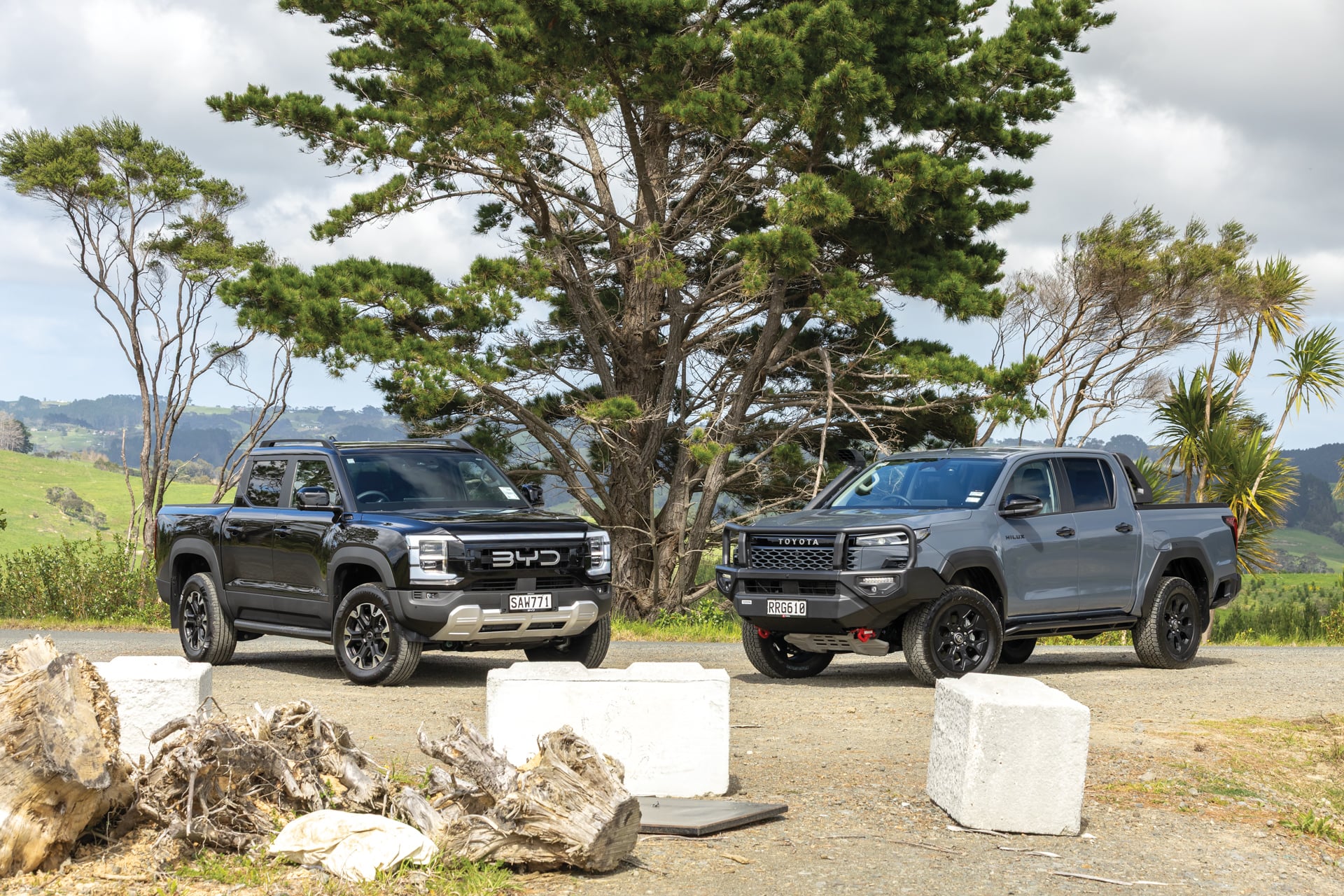
There are now more utes than ever to choose from, and genuine alternatives to the traditional diesel. Is the new BYD Shark 6 Performance good enough to beat the range-topping Hilux Adventure?
Ah, the double-cab ute. For decades it rumbled along without changing a heck of a lot: diesel engine, ladder chassis, a solid rear axle. Automatics gradually replaced manuals and buyers flirted with RWD before drifting back towards 4x4s, but the familiar nameplates kept collecting the sales.
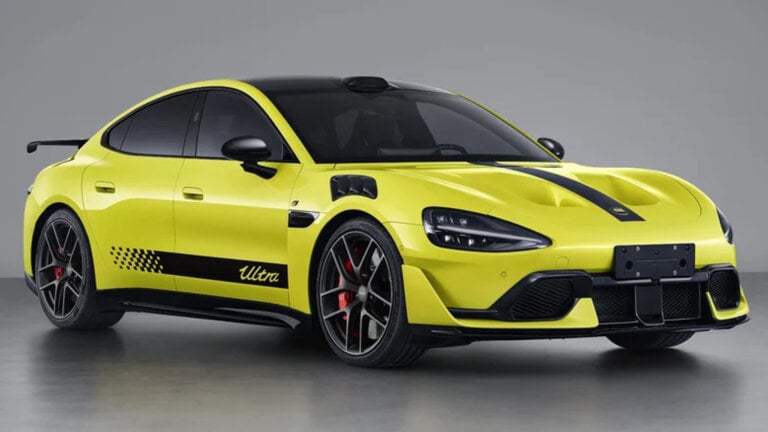
Then the Chinese brands started to arrive, some of them sporting a plug. The BYD Shark 6 was a bit different when it landed, introducing new tech that helped it become our Car of the Year. It was quieter, more refined and capable of doing the daily grind on electricity. Its 2500kg tow rating gave traditionalists something to criticise, though.
The new Performance model addresses that, lifting braked towing to 3500kg and adding power, torque and improved traction management. Its $78,990 list price might raise eyebrows, although a conditional $4000 promotion currently softens the blow.
Opposite it here sits the Hilux Adventure, priced at $63,990 driveaway. Toyota’s latest ute has fresh panels and a much-improved interior, but its working bits remain familiar. Ranger and Hilux still dominate this market, with Triton usually chasing, though the Shark has quickly become a serious contender as well.
So which suits you better? That can depend more on where you live and what you do than whose badge you prefer.
A meaner Shark
The Shark 6 Performance adds the muscle some buyers thought BYD’s original plug-in ute lacked. Its 2.0-litre turbo petrol engine replaces the Premium’s 1.5-litre unit, working with two electric motors to deliver AWD and help deploy the combined 350kW and 700Nm. Claimed acceleration to 100km/h takes 5.5 seconds.
More relevant for working buyers, braked towing rises from 2500kg to 3500kg. The 725kg payload trails the usual one-tonne norm, however.
A 29.6kWh Blade traction battery provides a claimed 80km WLTP electric range, though you are more likely to get 60–70km before the engine starts working. Charging peaks at 7kW AC or 55kW DC. BYD quotes weighted consumption of 1.3L/100km, rising to 10.5L/100km with a low battery charge, i.e. when running in hybrid mode. On test, this figure climbed towards the 12s. This underlines why regular plug-ins are a must to realise lower fuel bills. Its RUC is $38 per 1000km against $76 for the diesel, before purchase fees, but petrol also includes fuel excise. Regular charging is critical to making it worthwhile.
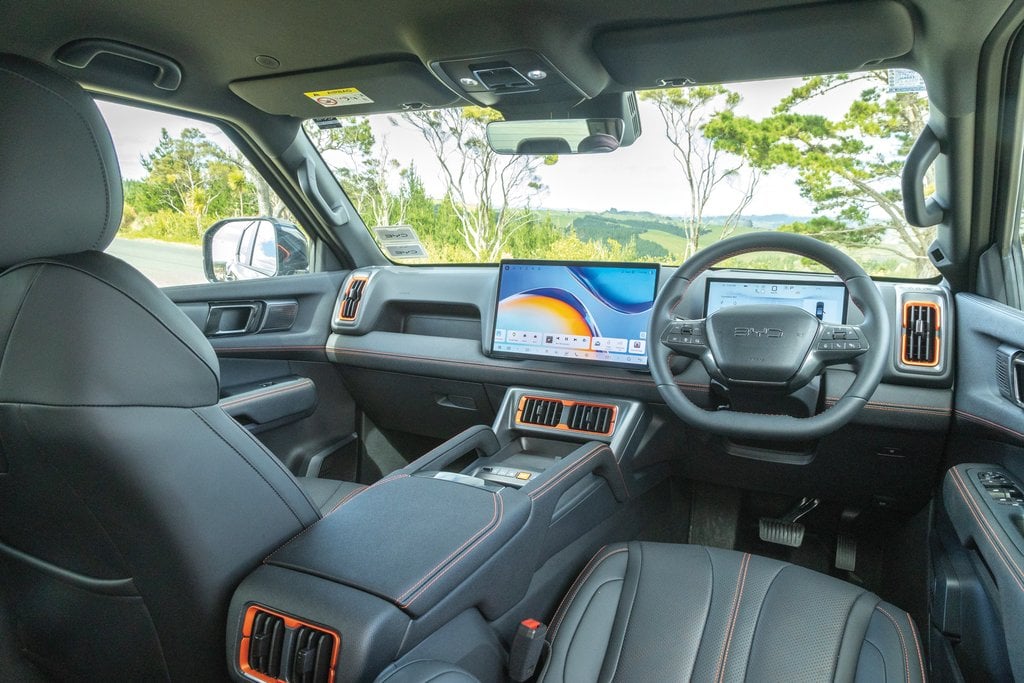
At 5457mm long and 1971mm wide, it is a substantial truck with a roomy cabin. Equipment includes heated and ventilated electric front seats, a 15.6-inch touchscreen, surround-view cameras and power outlets for running equipment.
Independent double-wishbone suspension at both ends is unusual on a ute, while revised traction management improves off-road progress. There is no conventional low-range transfer case or mechanical diff lock, however. There are no gear changes either, as the Shark 6 runs primarily like an EV. The electric motors power the truck while the engine turns the generator to keep the battery topped up, extending your overall range to 650–700km.
Out on Adventure
The Adventure tops Toyota’s diesel Hilux range at $63,990 driveaway, meaning there’s no more to pay, but there’s no room for a discount either.
Under the new bodywork sits the familiar 2.8-litre four-cylinder turbodiesel, producing 150kW and 500Nm through a six-speed automatic. Its 48-volt mild-hybrid system assists the diesel and recovers braking energy. The system cannot drive the ute on electricity alone, so it remains a diesel pick-up in everyday operation.
The hardware for the rough stuff includes selectable four-wheel drive, low range and a locking rear differential. The ladder chassis and leaf-sprung live rear axle also retain the traditional ute arrangement. Braked towing is 3500kg, matching the upgraded Shark.
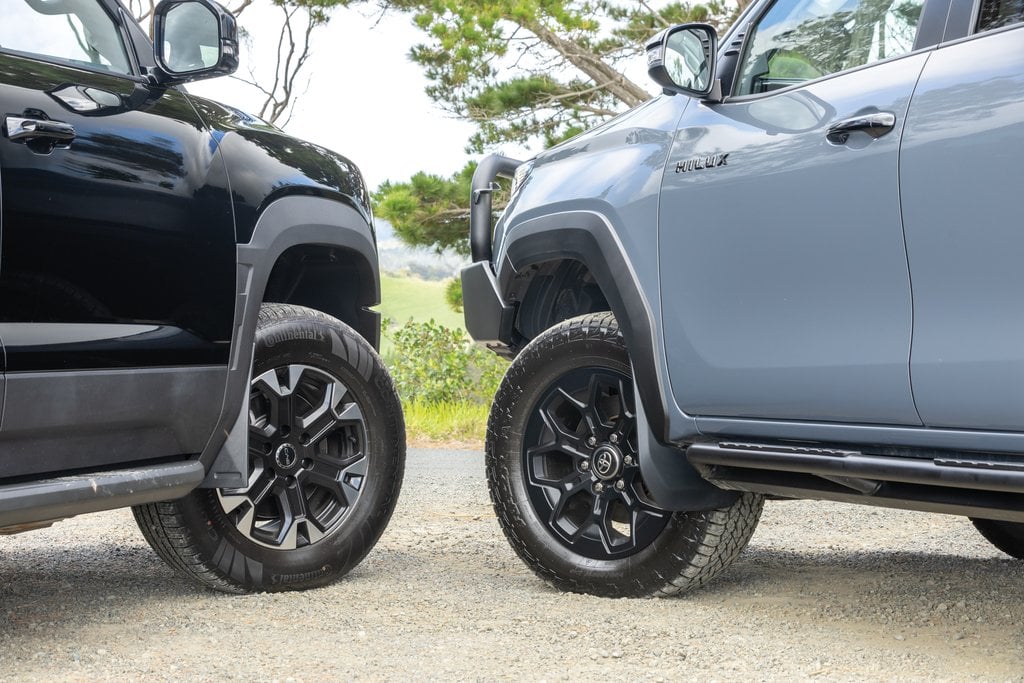
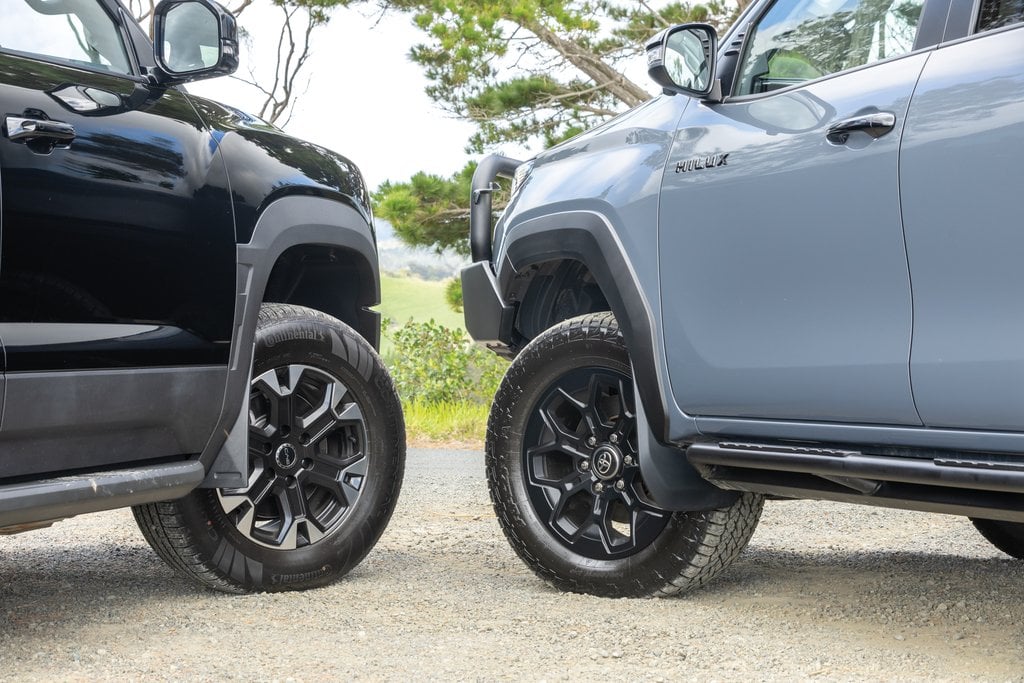
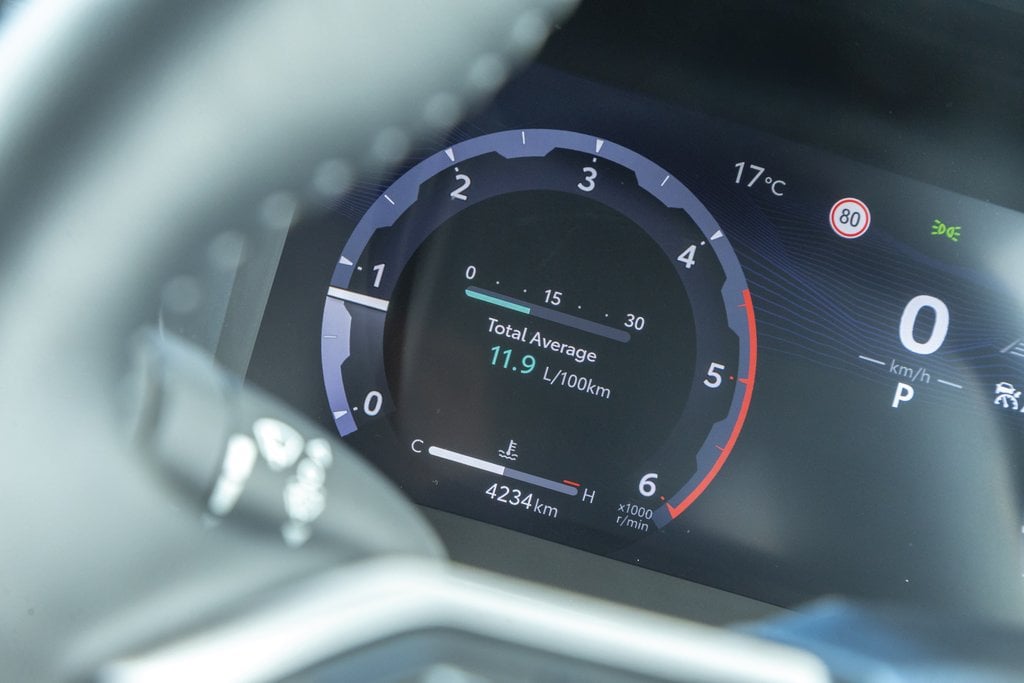
Adventure specification brings matte-black 18-inch alloy wheels, a distinctive front bumper and mineral-coloured leather-accented trim. Heated front seats, a powered driver’s seat, dual-zone climate control and JBL audio add comfort, while 12.3-inch instrument and infotainment displays modernise the dashboard. Wireless Apple CarPlay and Android Auto are included.
Electric power steering is another update, easing manoeuvring and enabling lane assistance. Claimed combined fuel consumption is 8.3L/100km, though a more likely figure is somewhere between 10 and 11L/100km.
Cabin and carrying
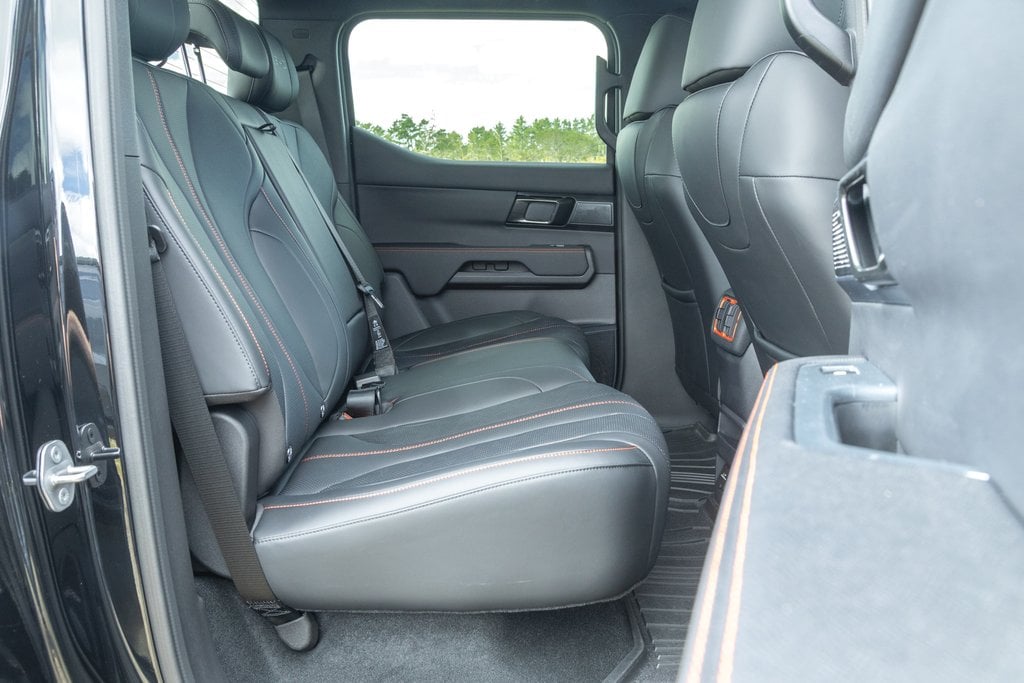
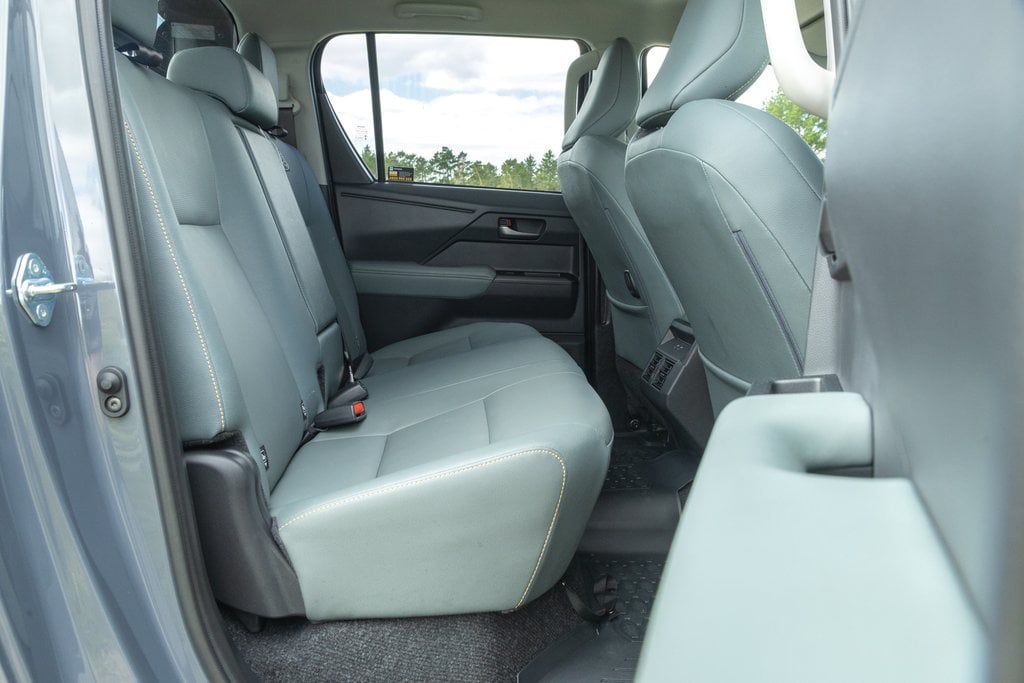
The Shark’s extra size pays off inside. There is more legroom and headroom in the rear, a comfortable bench and enough width to make carrying three across less of a squeeze. The Hilux is distinctly tighter.
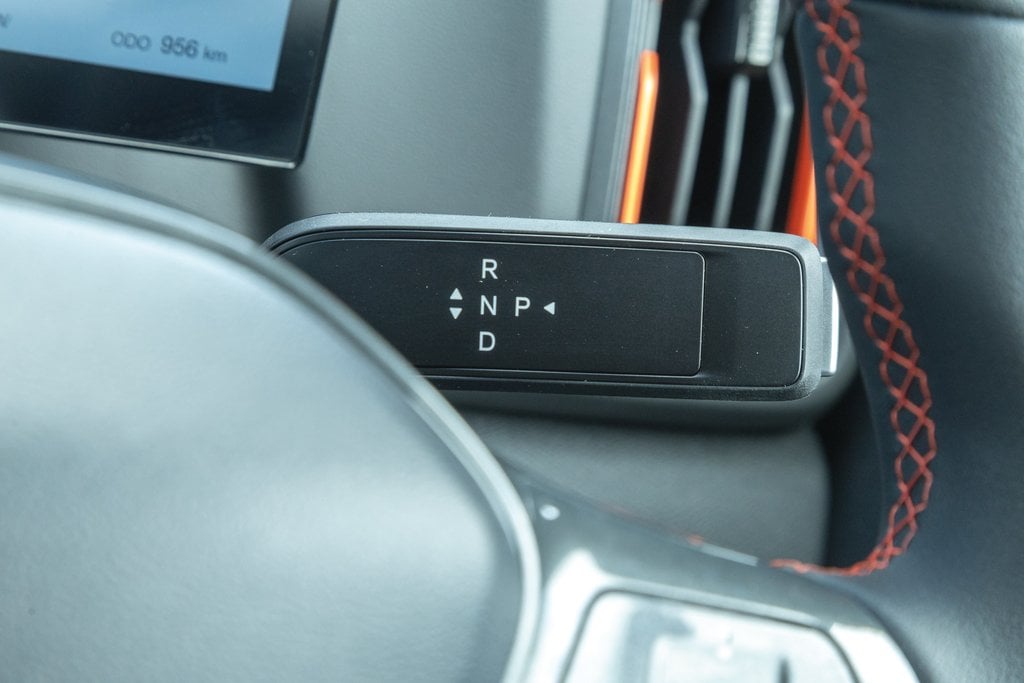
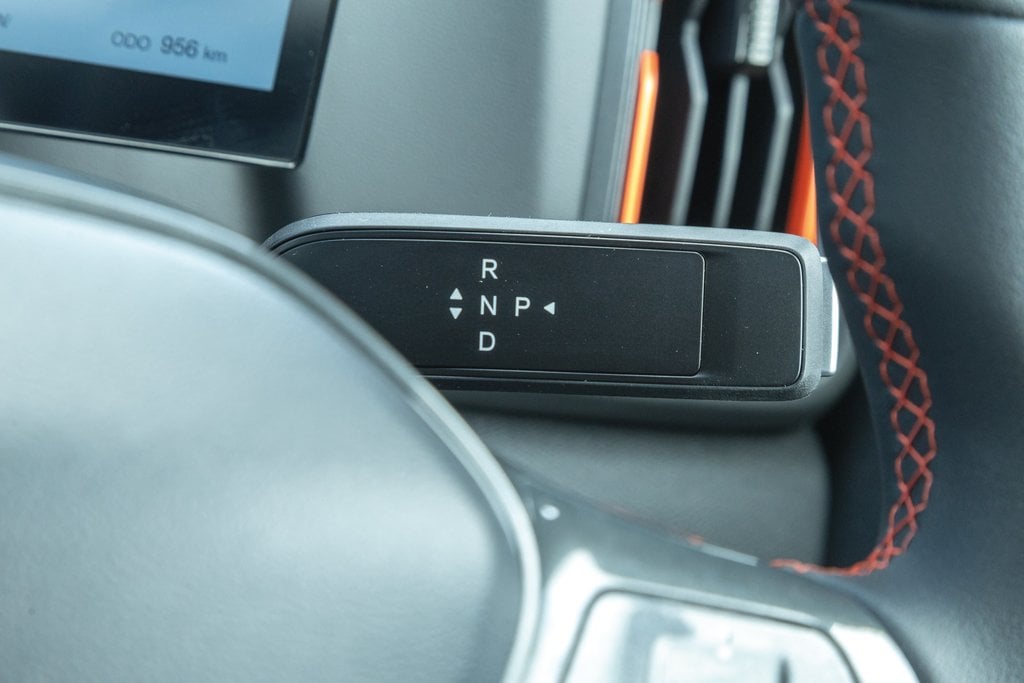
Up front, the BYD is more SUV than work truck, with sculpted seats, softer surfaces and extra storage. It’s actually a pleasant place to spend the day. The enormous, comical shifter of the original Shark has gone from the console, replaced by a discreet column selector that helps free up space.
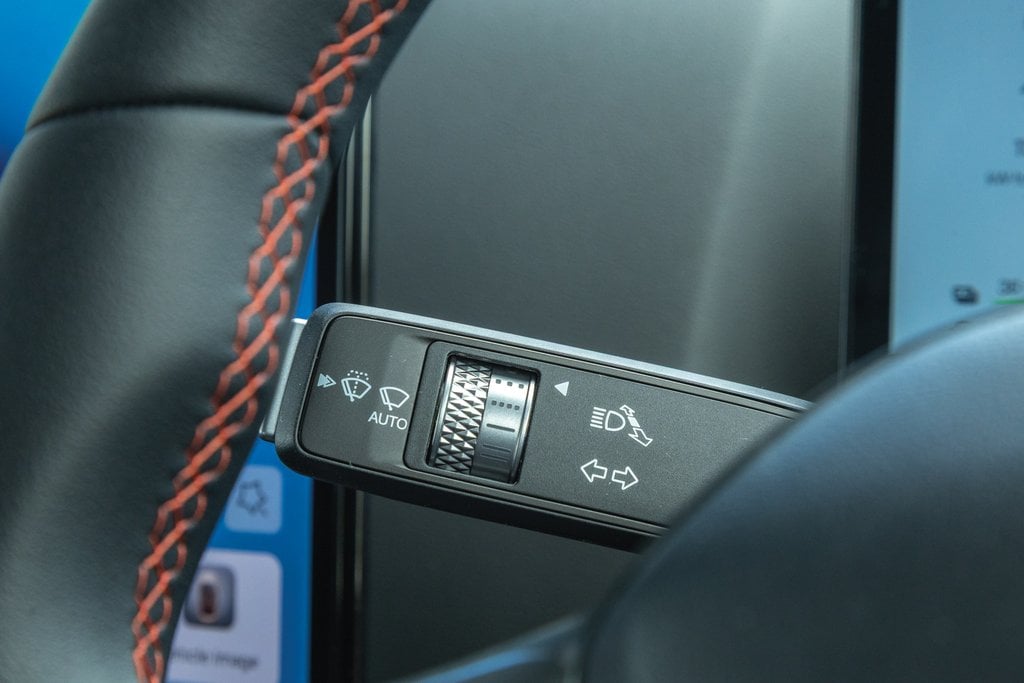
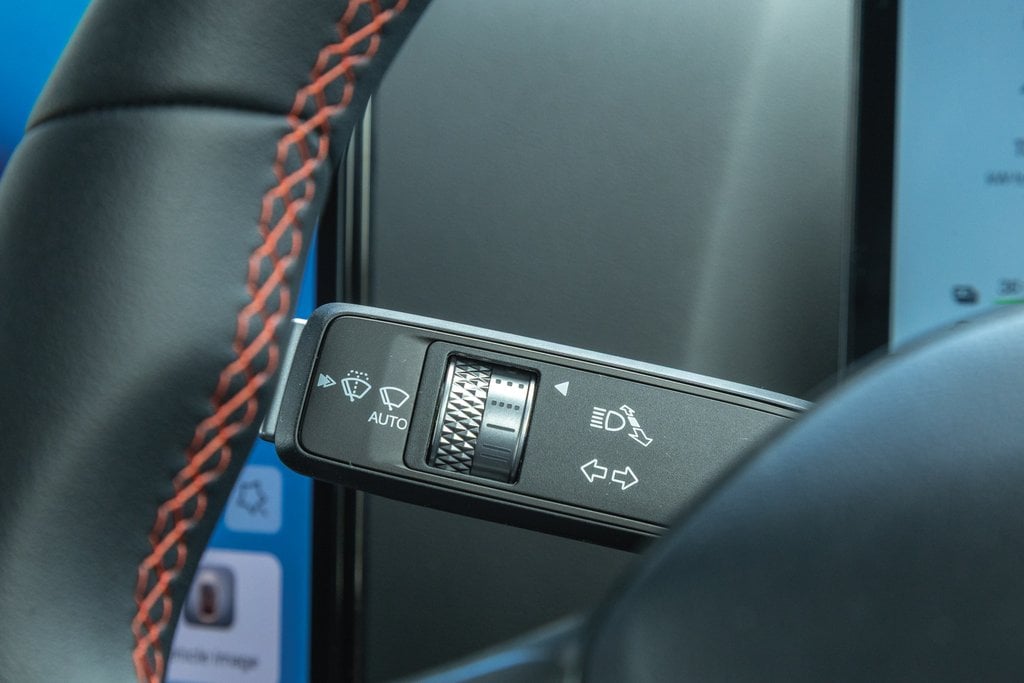
The 15.6-inch touchscreen handles nearly everything, with connected navigation and more functionality and connectivity than Toyota offers. Its camera views are superior too. But bigger touch targets are needed, especially in something that jiggles over bumps. There’s more than enough space on the screen. And while we’re at it, we’d like more ventilation controls along the bottom and more shortcuts to lessen the amount of tapping. Oh, and better radio reception too.
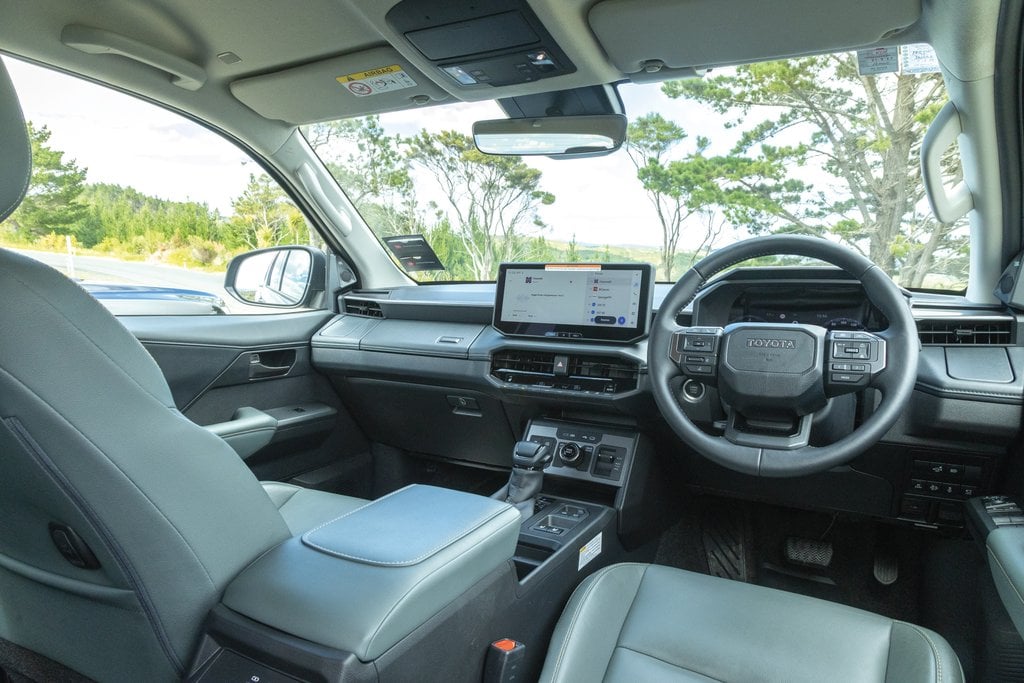
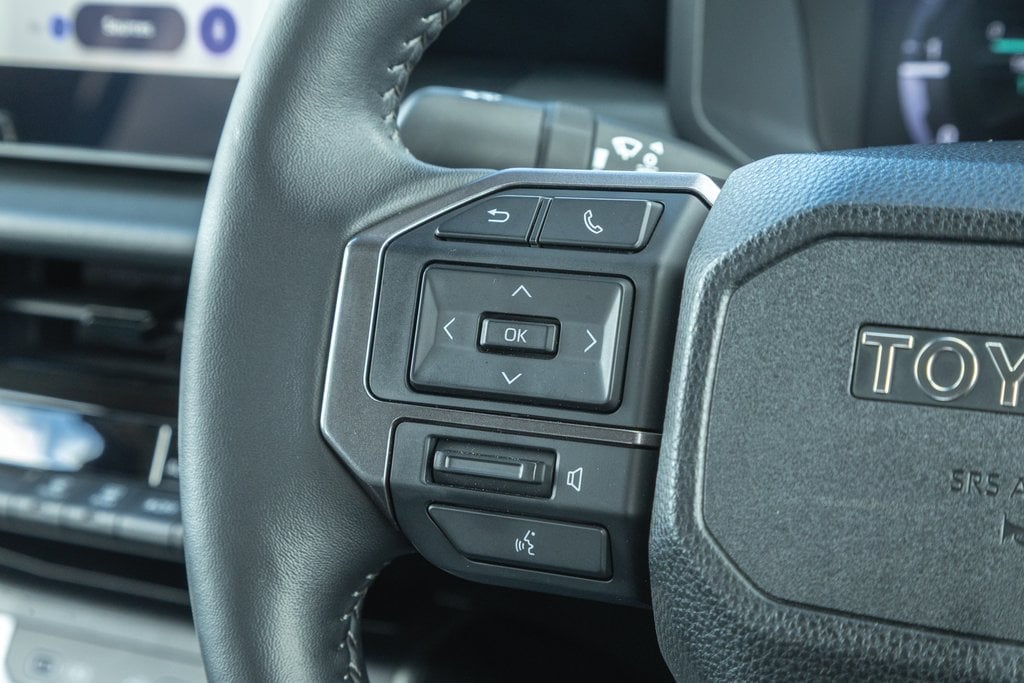
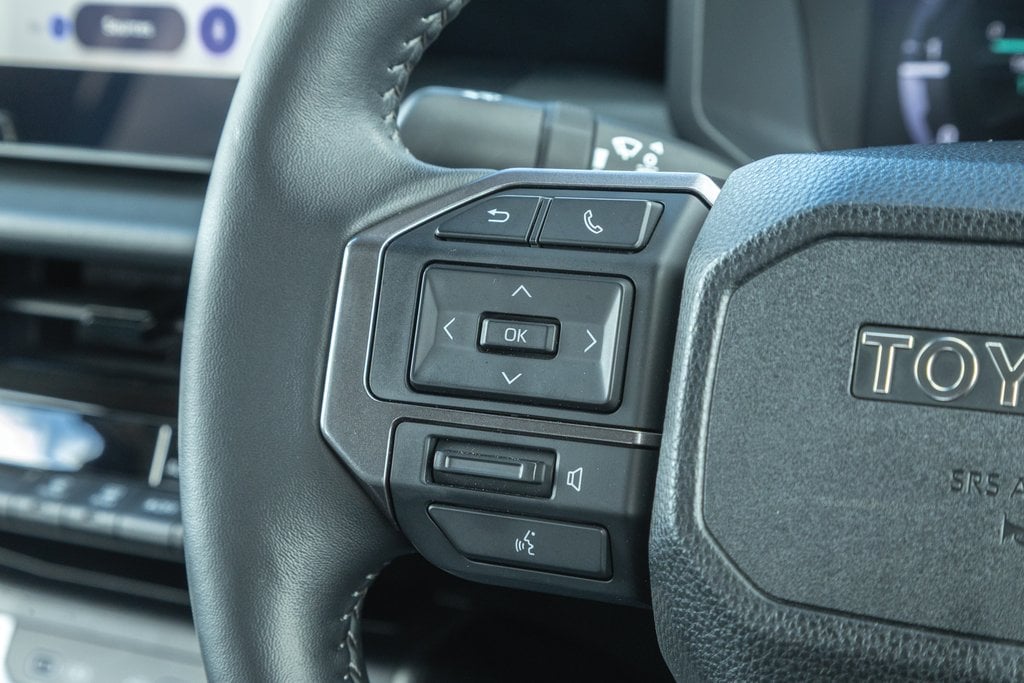
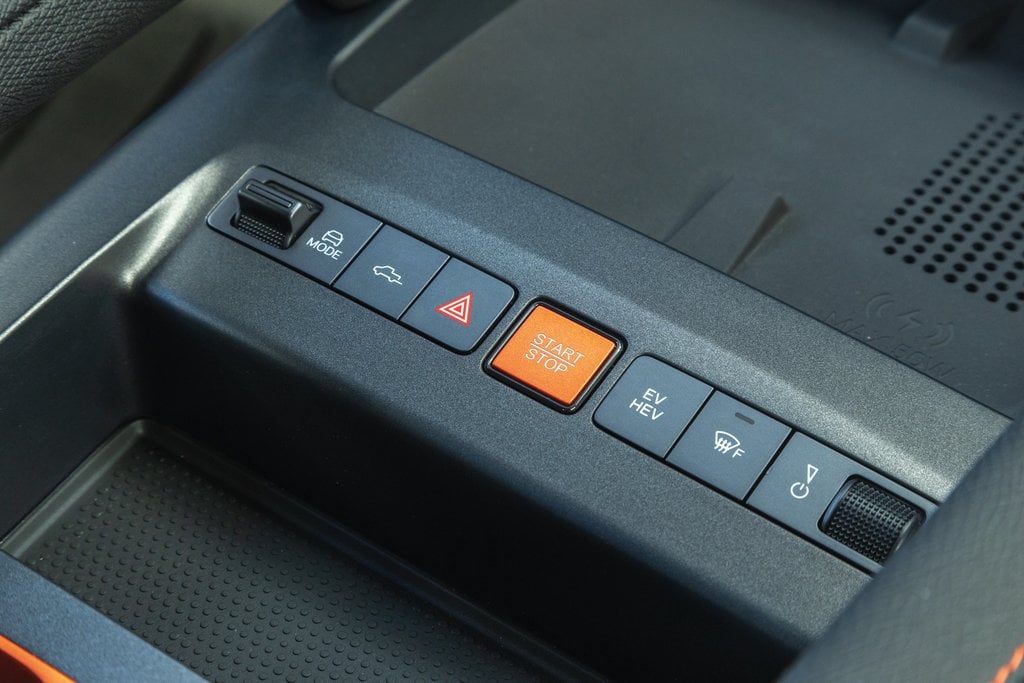
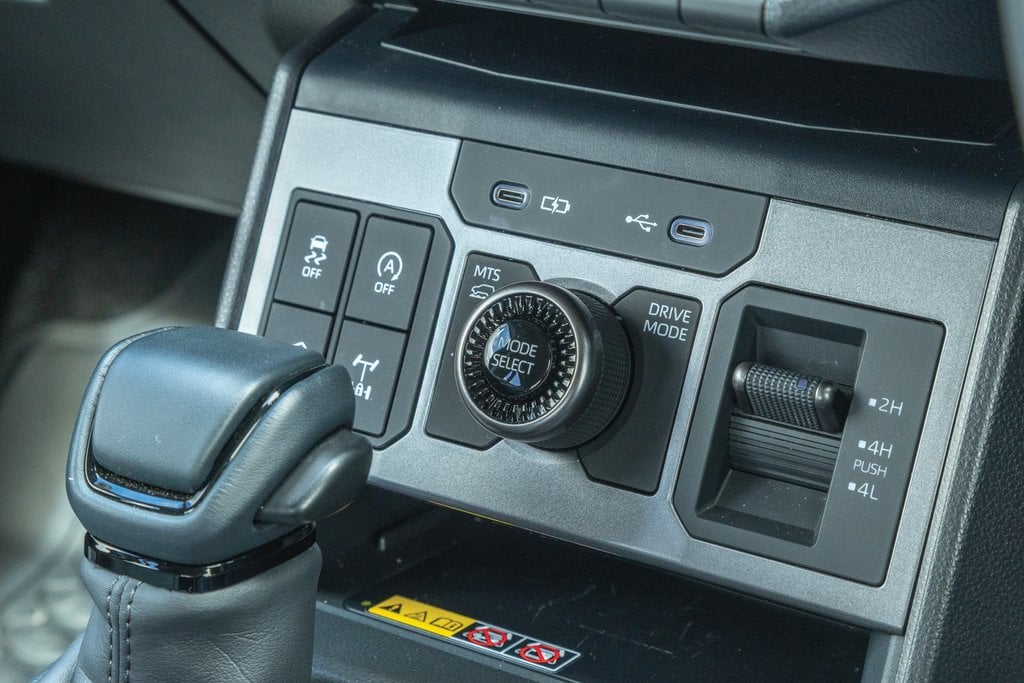
Toyota has retained actual buttons for the cabin with ventilation, low range, drive modes and the rear diff lock all being easily accessed, while its smaller touchscreen does the essentials. Harder plastics and durable seat trim maintain the working-ute feel. Rear-seat space aside, it remains functional rather than flash.
Our tape measure gives the Shark a 1530mm tray length, 1360mm across the tailgate opening and 1200mm between the wheelarches. The Hilux measures 1500mm along the floor, a little under 1300mm at the tailgate and just under 1100mm between the arches.
The BYD’s tub is noticeably deeper too. It has a liner, six fixed tie-down points, useful lighting and three proper power outlets. Remember though, sustained power use will eventually start the petrol engine to maintain charge.
Both tailgates have assistance, but only the Hilux provides a handy tray-access step. It’s sorely missing on the BYD, where you face quite a climb. Toyota’s tailgate doesn’t lock with the central locking either, which seems rather old-fashioned. Our Hilux had an accessory roller cover and additional adjustable load anchors.
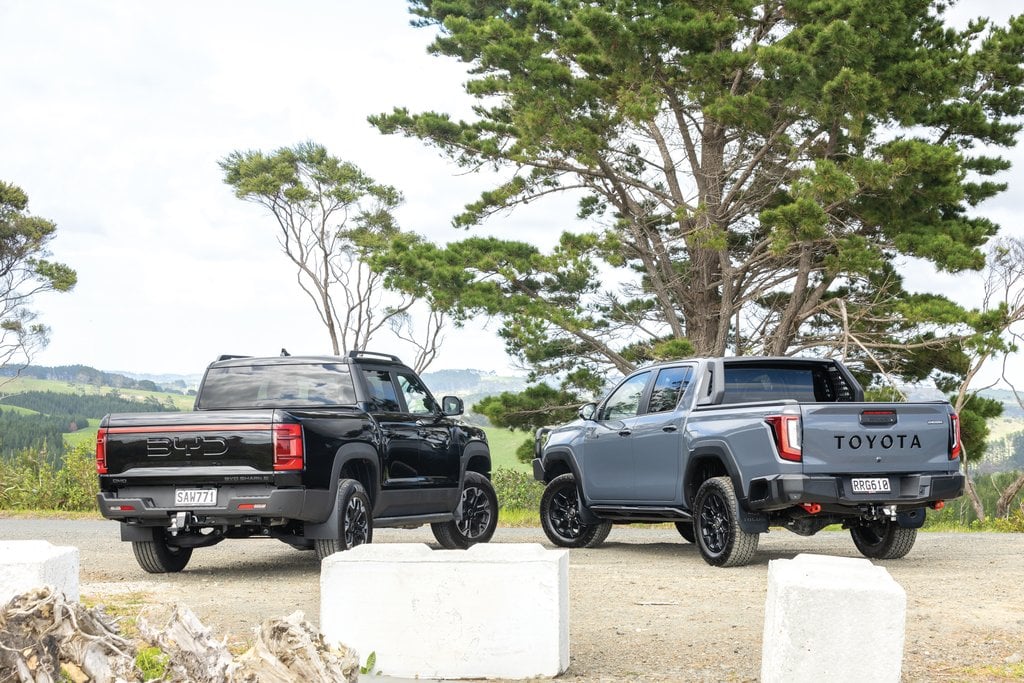
The BYD’s larger dimensions bring a corresponding parking penalty. It is wider and takes more room to turn when negotiating all the wayward trolleys in the Bunnings car park. And it’s not something its superior cameras can magic away. The Toyota is easier to place in a tight car park, and that is also an advantage on narrow off-road tracks.
On road and off it
The Shark makes its biggest impression as soon as you move. With 350kW and 700Nm combined, it is seriously quick, hitting 100km/h in 5.4 seconds when we measured it. The everyday benefit, though, is the electric powertrain’s immediate response. There is no waiting for a turbo to spool or the auto to decide which gear it wants. It delivers a smooth, uninterrupted flow of torque from a standstill. And it’s so quiet.
The Hilux’s 2.8-litre diesel produces 150kW and 500Nm and runs through a six-speed automatic. There is 48-volt assistance, but this remains a thoroughly diesel experience. You hear it clatter into life and feel the auto working it over. It’s not a bad unit however, with turbolag kept at bay, and it has a strong mid-range pull. The shifts are quicker than in the old model and the protocols are smarter, although it still lets revs fall away when you lift off the gas. You have to be in the transmission’s Sport mode for it to hold gears. And against the clock, the Shark is almost twice as rapid.
Both still have some jiggle at low speeds, and both settle with a few hundred kilograms aboard. Neither delivers a plush SUV ride, but neither thumps along like older workhorses either.
The Shark is the tidier machine on road. Its steering has a consistent weight, the front hangs on well and the rear follows without fuss. There is little feedback, but it goes where you point it and holds on surprisingly well. There’s a Sport driving mode that adds even more throttle urgency, which you really don’t need.
The Adventure rolls more and its all-terrain tyres surrender grip earlier than the Shark’s road-oriented Continentals. It is still reasonably composed, with a stable rear end. While Toyota’s new electric steering makes manoeuvring at low speeds easier, some of the feedback in the turns has been lost as a result.
Both utes handle gravel and corrugations confidently, with the Shark’s permanent AWD helping, while you’ll want to flick the Hilux into its 4H setting when the gravel gets deep. Otherwise, the traction control does a decent job of keeping you pointing the right way.
Toyota’s driver assistance systems are better at leaving you alone, with the adaptive cruise and lane systems working largely unobtrusively. The Shark’s adaptive cruise is fine, but the lane centring function can fight you for the steering through bends.
While we didn’t tow with these two, our earlier experience hauling with the Shark suggests the smooth, immediate torque is useful. However, the payload and combined weight figures need your attention if you intend to tow regularly.
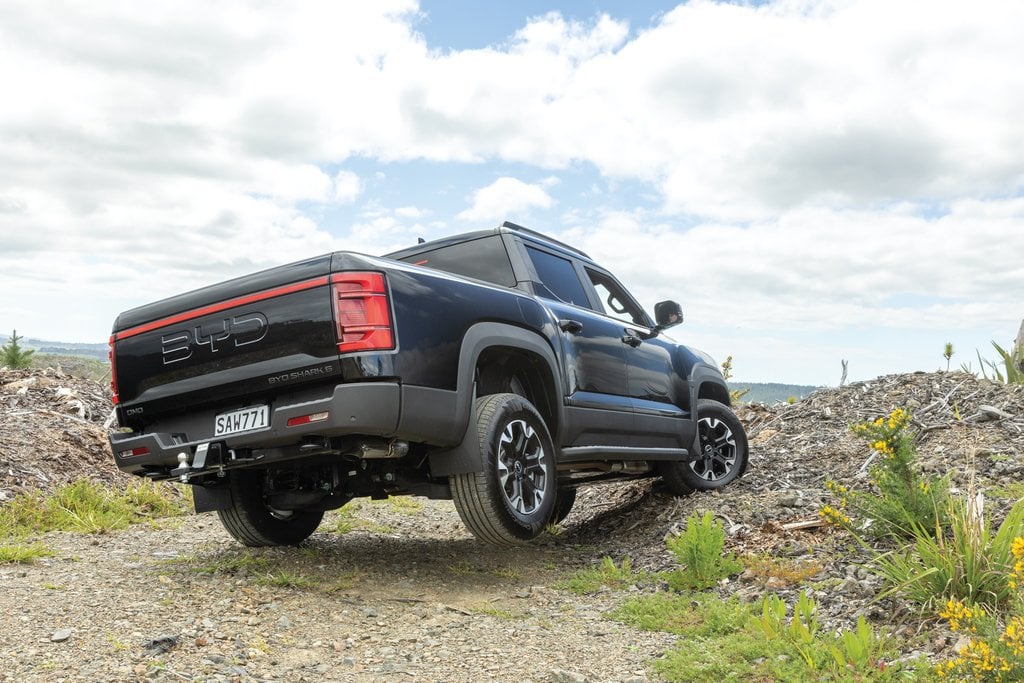
We did some ‘soft’ off-road exercises to test articulation and traction while ensuring we returned both borrowed trucks scratch-free. The revised traction management helps the Shark make better progress, with less wasted wheelspin. Select its off-road settings and simulated locking function and it limits wheelspin well.
However, the long wheelbase limits ramp-over clearance, and its independent suspension eventually runs out of articulation. So it lifts a wheel earlier than the Hilux, and then you’re not going anywhere.
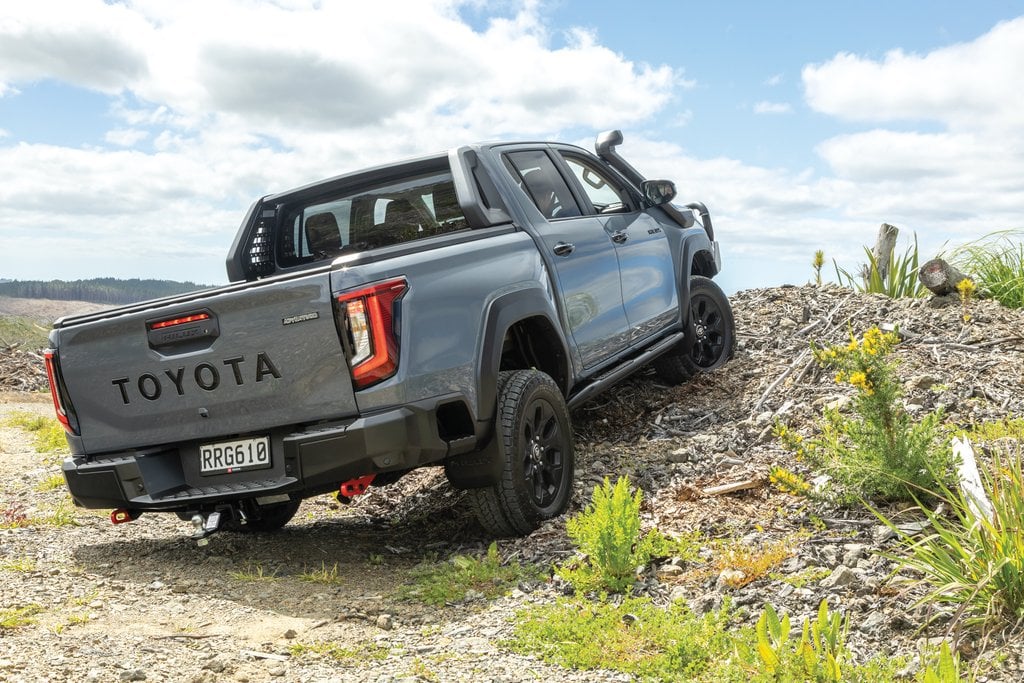
The Hilux went about as far as the Shark in its high-range four-wheel-drive setting. But once we selected low range and locked the rear differential, the Toyota calmly kept rumbling along. Its rear axle maintains contact with the ground more effectively, while the approach, departure and ramp-over clearances are better suited to awkward obstacles. It’s a win for the traditional approach off road.
Toyota’s smaller footprint helps on tight trails too. The Shark is capable of farm-track duties, but for rougher country the Hilux is the one to pick.
Which one, then?
The Shark is perhaps the better fit for an urban tradie, carrying family during the week and wanting more towing capacity than the standard Shark for weekend getaways. Its cabin is roomier and more inviting, and its performance is effortlessly stronger. Its overall operation does make the Hilux seem a bit old-fashioned. More EV range would make this even better. If most workdays fall within its useful electric range and you can plug in at home, it makes sense. The premium it commands over the Hilux can’t be ignored, however; it’s a decent chunk of money.
The Adventure is probably better suited to rural buyers covering longer distances and tackling rougher ground more often. Its drivetrain is familiar and its controls are straightforward. It’s a known quantity too, with solid resale values and an unmatched service network throughout the country. Toyota also offers capped-price servicing.
Where you live isn’t the absolute arbiter, though. Buy for the work you actually do. Both are solid picks in the ute market, and it’s good to have more choices than we once did.
BYD Shark 6 Performance
$78,990 / 1.3L/100km / 23g/km
0-100 km/h 5.41s
80-120 km/h 3.43s (98m)
100-0 km/h 38.90m
Speedo error 97 at an indicated 100km/h
Ambient cabin noise 71.2dB@100km/h
Engine 1997cc / IL4 / T / DI
Max power 180kW@5000rpm
Max torque 380Nm@1600-4000rpm
Battery 29.6kWh
Range 80km
Hybrid System Output 350kW / 700Nm
Drivetrain single-speed auto / e-AWD
Front suspension Wishbones / swaybar
Rear suspension Wishbones / swaybar
Turning circle 13.5m (3.2 turns)
Front brakes Ventilated discs
Rear brakes Ventilated discs
Stability systems ABS, ESP, TV
Safety AEB, ACC, BSM, LDW, RCTA, ALK, AHB
Tyre size f/r-265/65R18
Wheelbase 3260mm
L/W/H 5457 / 1971 / 1925mm
Trackf-1660mm r-1660mm
Fuel capacity 60L
Payload 725kg
Tow rating 750kg (3500kg braked)
Service intervals 12 months / 20,000km
Warranty 6yrs / 150,000km
ANCAP rating ★★★★★ (2025)
Weight (claimed) 2775kg
Toyota Hilux Adventure
$63,990 / 8.3L/100km / 220g/km
0-100 km/h 9.90s
80-120 km/h 7.65s (212m)
100-0 km/h 37.80m
Speedo error 97 at an indicated 100km/h
Ambient cabin noise 71.0dB@100km/h
Engine 2755cc / IL4 / TDI
Max power 150kW@3000-3400rpm
Max torque 500Nm@1600-2800rpm
Drivetrain 6-speed auto / switchable 4×4
Front suspension Wishbones / sway bar
Rear suspension Solid axle / leaf springs
Turning circle 12.6m (3.5 turns)
Front brakes Ventilated discs
Rear brakes Ventilated discs
Stability systems ABS, ESP
Safety AEB, ACC, BSM, LDW, RCTA, ALK, AHB
Tyre size f/r-265/60R18
Wheelbase 3085mm
L/W/H 5325 / 1885 / 1815mm
Fuel capacity 80L
Payload 940kg
Tow rating 750kg (3500kg braked)
Service intervals 12 months / 15,000km
Fixed price service – $465
Warranty 5yrs / 150,000km
ANCAP rating ★★★★★ (2025)
Weight (claimed) 2180kg