BYD files design for a tiny two-door city car
Words: Richard Edwards
BYD has been granted a design patent in China for a small two-door car, but the company hasn’t released dimensions, specifications or any plans to build it.
China’s National Intellectual Property Administration published the patent on 10 November. BYD filed the application in December 2025.
Five designers are named on the filing, including BYD global design director Wolfgang Egger, who joined the company in 2017 after running design at Audi, Lamborghini and Alfa Romeo. Zhao Binggen, head of BYD’s Dynasty Research Institute, is also listed, along with Xu Ziyan, Huang Xi and Zhang Xi.
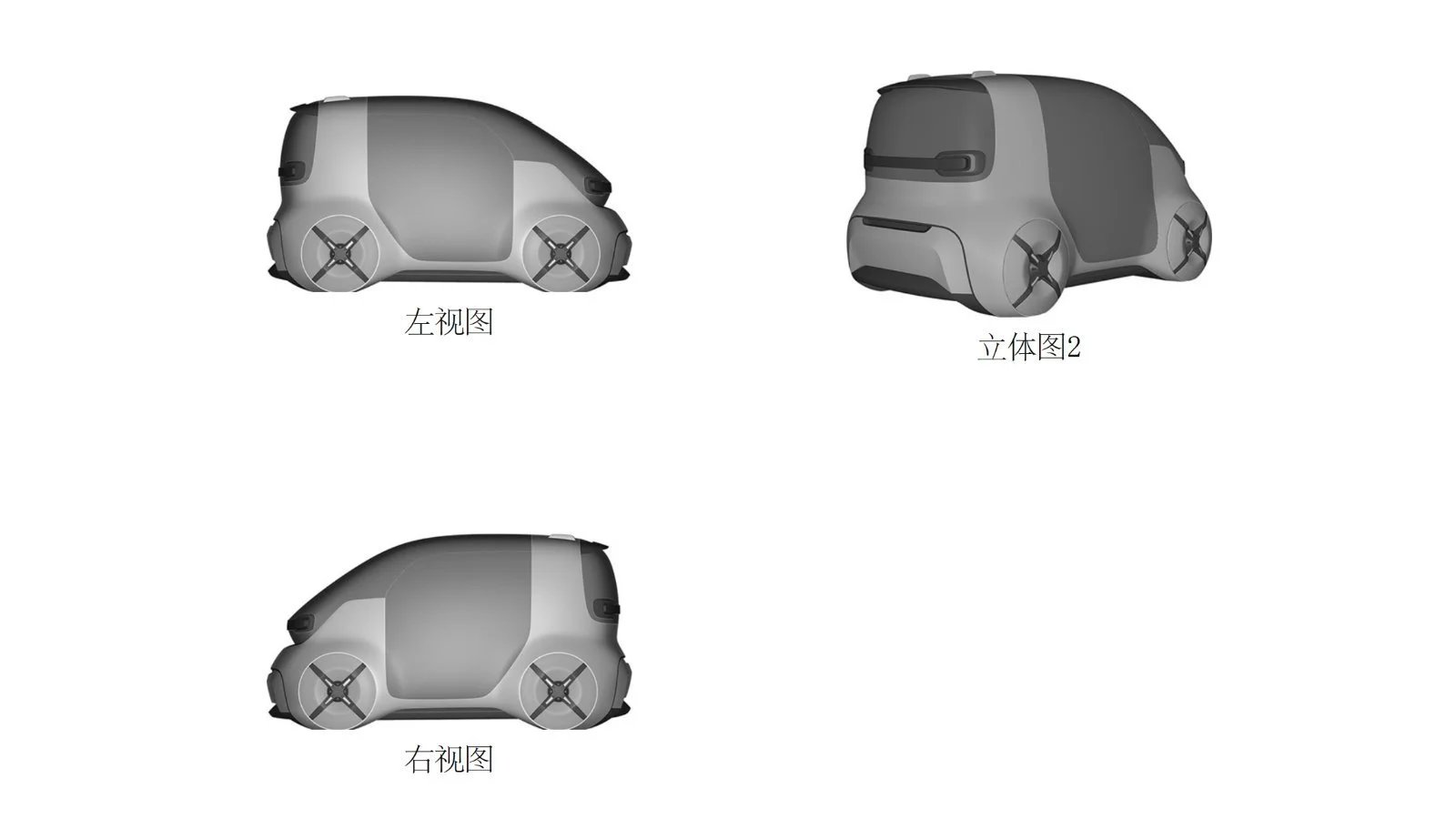
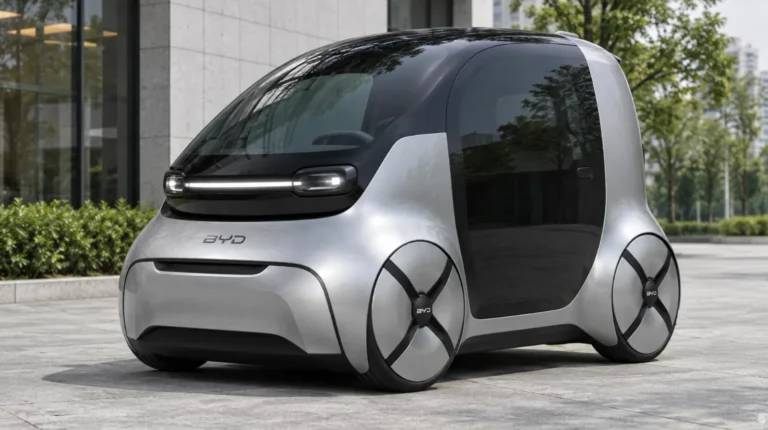
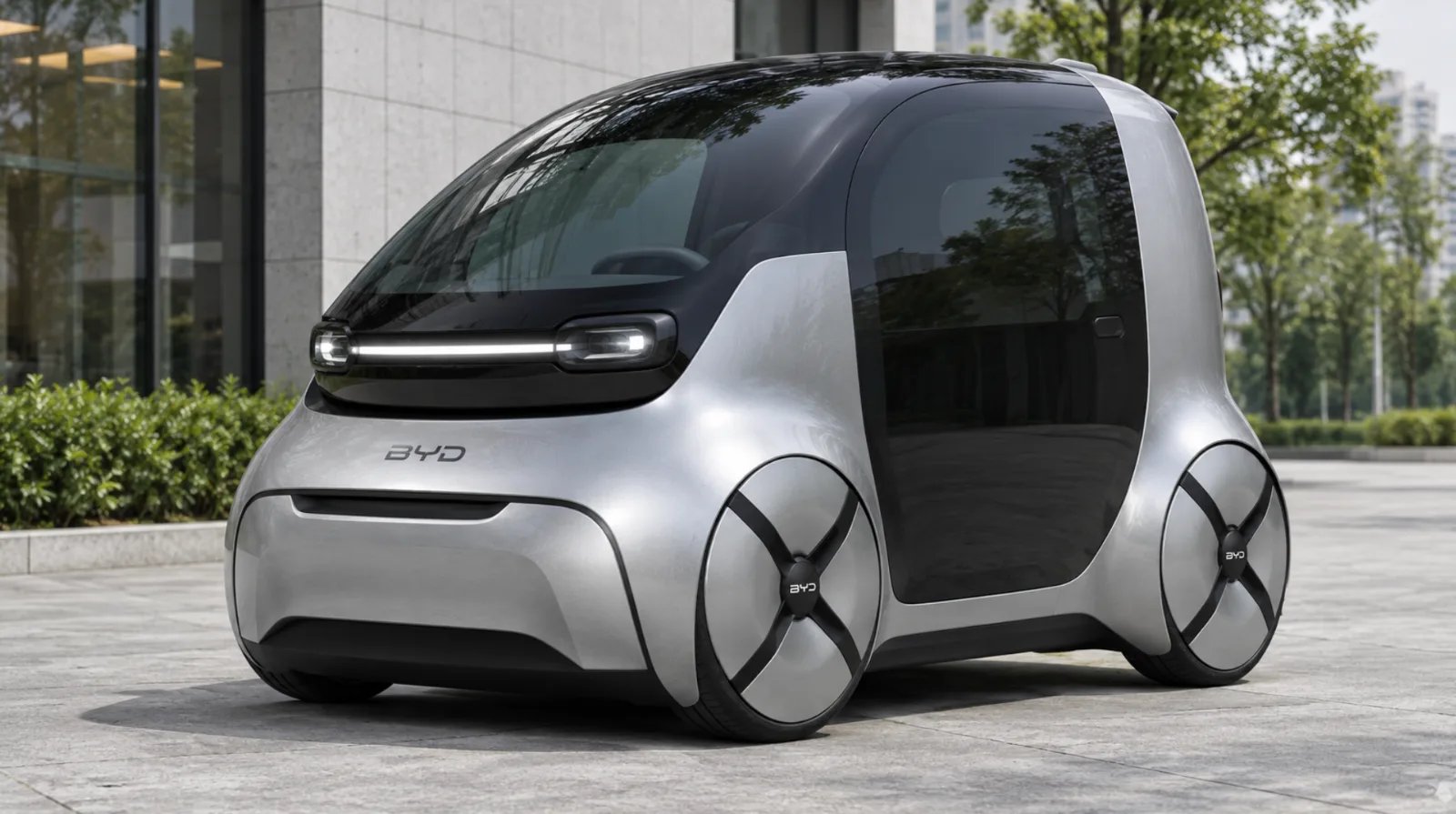
The drawings show a compact, rounded body with a single large door on each side, a closed-off front end and very short overhangs. Full-width light bars run across the nose and tail, and curved lower panels give both ends a friendly look.
The filing describes the car only as a vehicle for carrying passengers or providing transport. It doesn’t say how many people it seats, what powers it, or whether it will reach production. The images in this story are our own renderings based on the patent drawings.
In shape it’s closest to the Smart #2, the two-seat electric replacement for the ForTwo, which went on sale in China earlier this month.
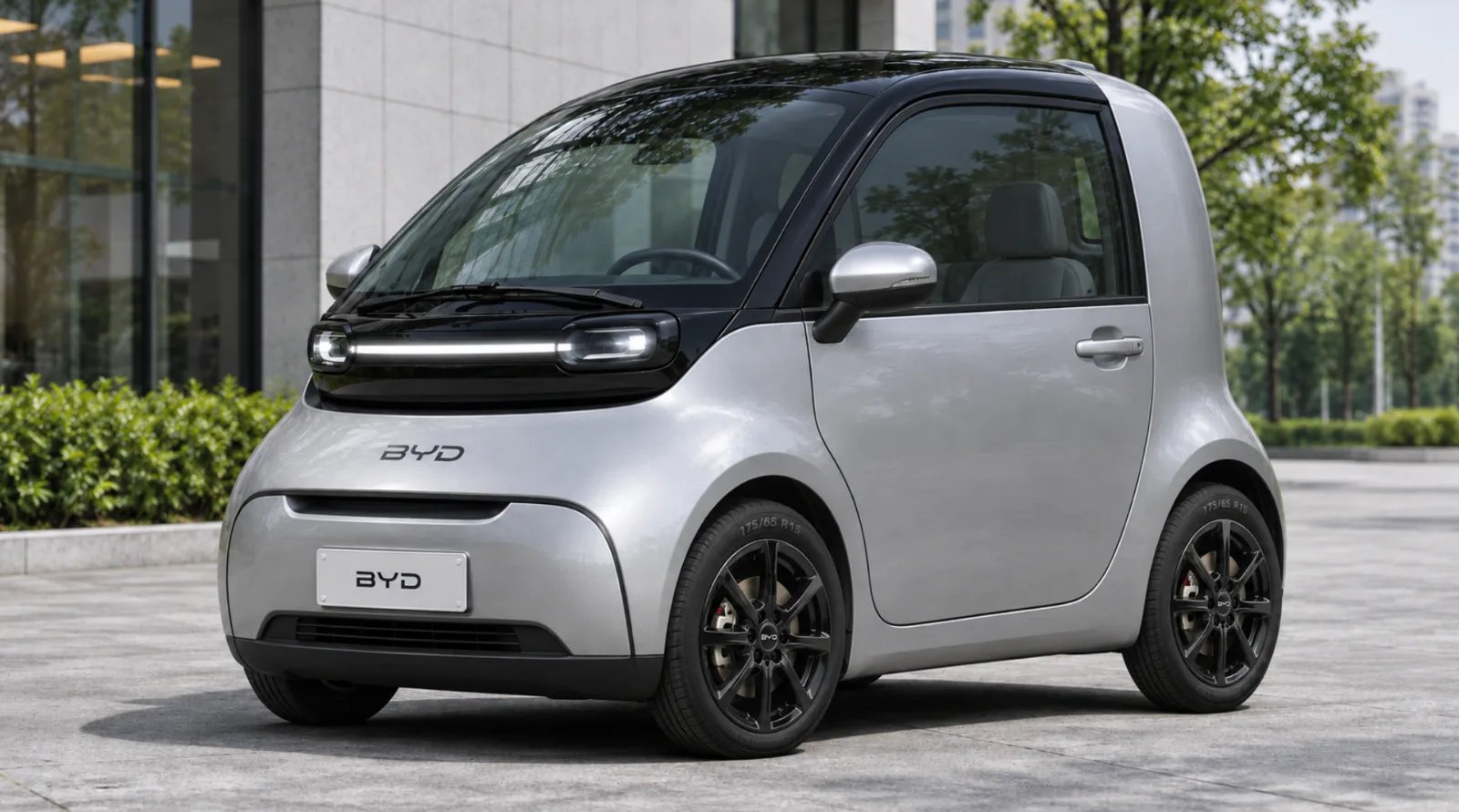
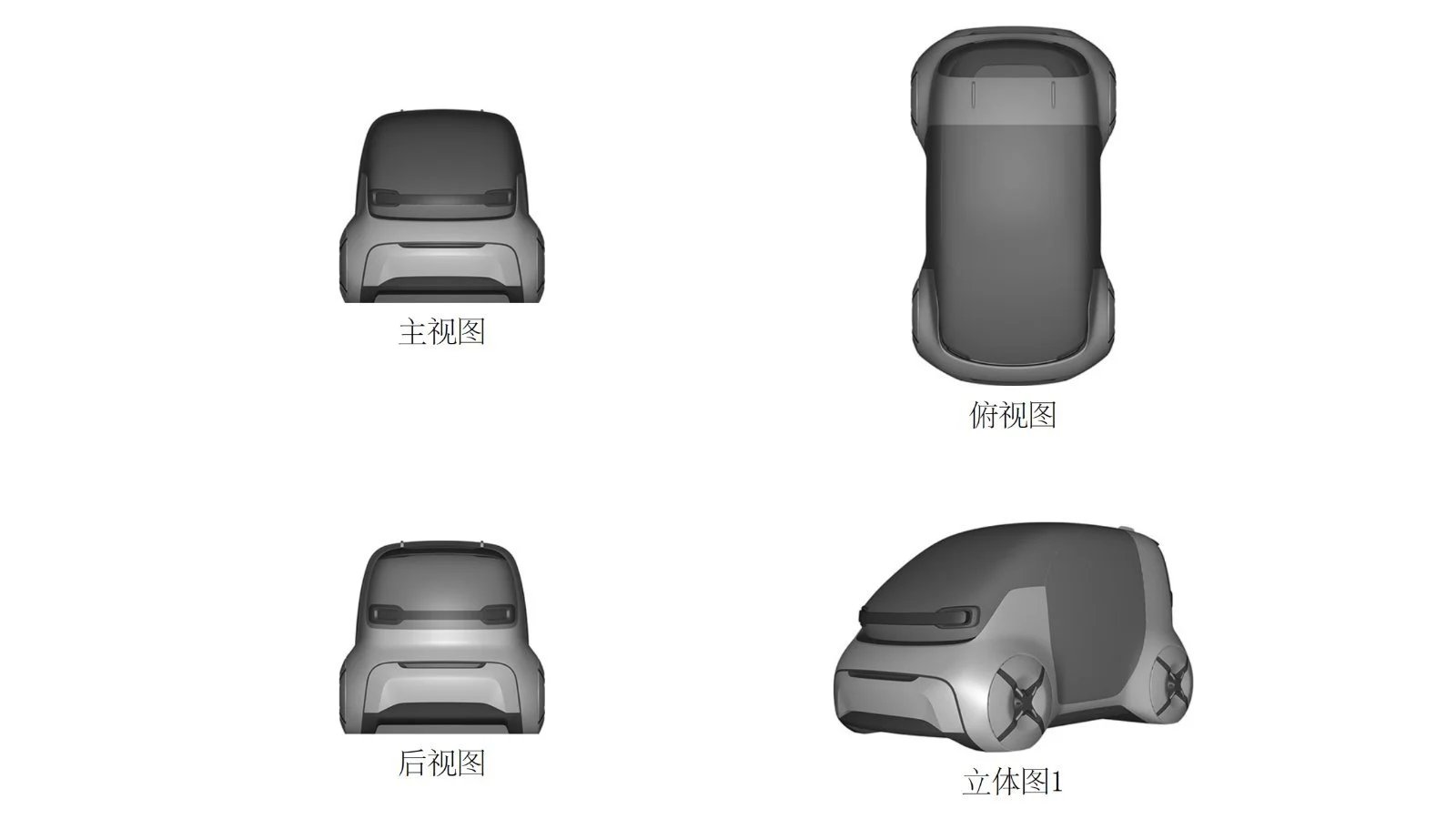
The design is much smaller than BYD’s current entry model in China. The second-generation Seagull, launched there on 20 October, has grown 425mm to 4205mm long and now seats five.
BYD’s smallest car is the Racco, an electric kei car built for Japan, where it went on sale on 28 July. It’s 3395mm long and 1475mm wide, has a 47kW front motor, and offers 22.4kWh or 35.84kWh LFP batteries with up to 320km of WLTC range.
Nikkei reported in August that BYD plans to use the Racco’s X-PACK technology in other small EVs. The system moves the inverter and other components into the battery pack to free up cabin space.
When BYD revealed the Racco, it wasn’t on the cards for New Zealand, and this design is smaller again. If it does go into production, we can’t see it making its way to our end of the world.