View all
7 more images
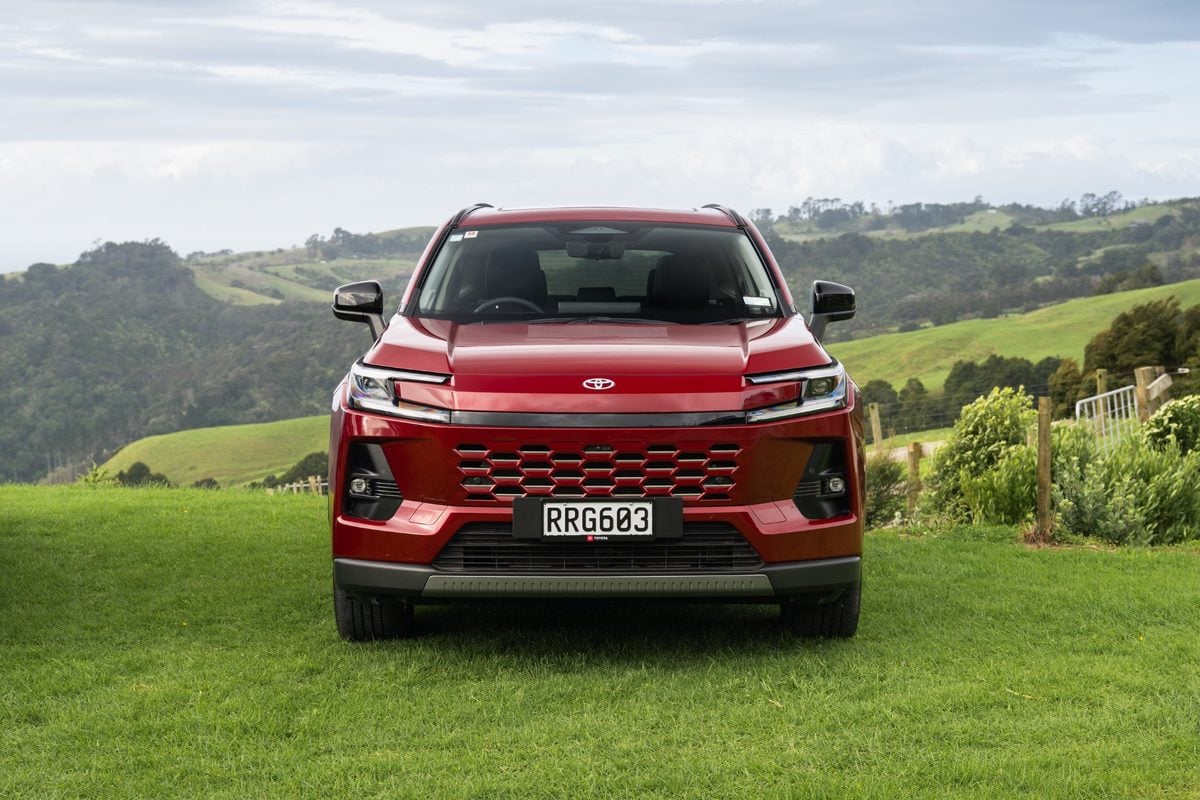
Toyota RAV4 Hybrid first drive: still the one to beat
Words: Richard Edwards
Toyota’s sixth-generation RAV4 has landed, and it builds on the bestseller formula in nearly every way that matters.
There’s a reason RAV4 sat at the top of the new vehicle sales charts in 2025, finally pipping the utes that have dominated for the best part of a decade. Kiwis love this thing. Over a thousand a month go to families, fleets, rentals and rural operators alike. So when Toyota launched the new sixth-gen north of Auckland recently, with a drive from Muriwai out to the Matakana Coast, the message was clear enough. Don’t break what works.
They haven’t.
Same suit, sharper tailoring
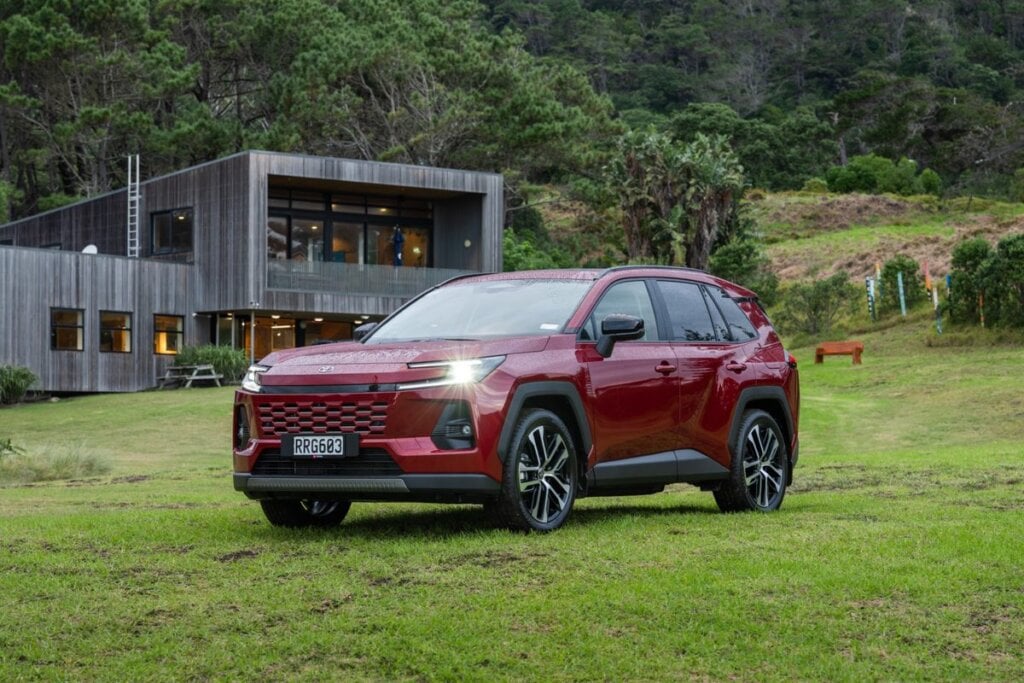
Park the new one next to the outgoing model and you’d swear it’s bigger. It isn’t. The wheelbase is unchanged at 2,690mm, and overall length sits between 4,600mm and 4,645mm depending on grade, with Adventure and GR SPORT a touch longer thanks to their bumper treatments. Width runs 1,855mm to 1,880mm, height 1,680mm to 1,685mm. Same footprint as the car it replaces.
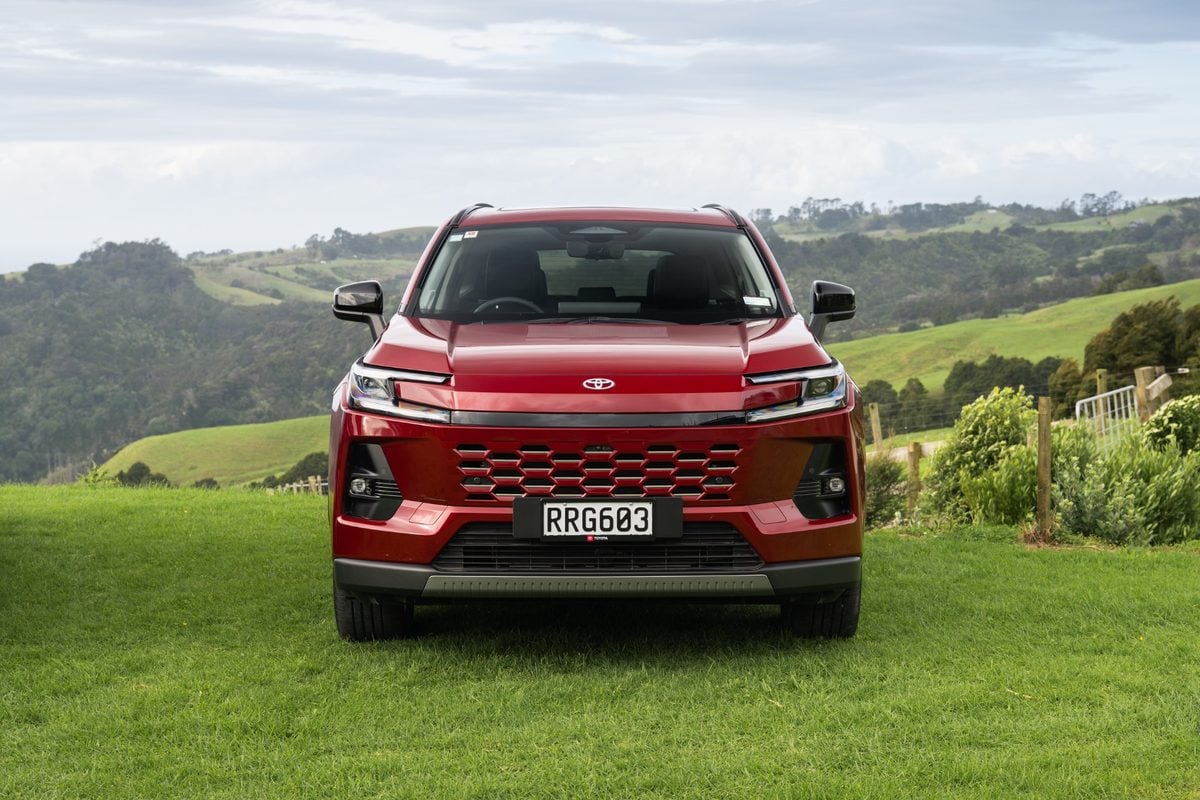
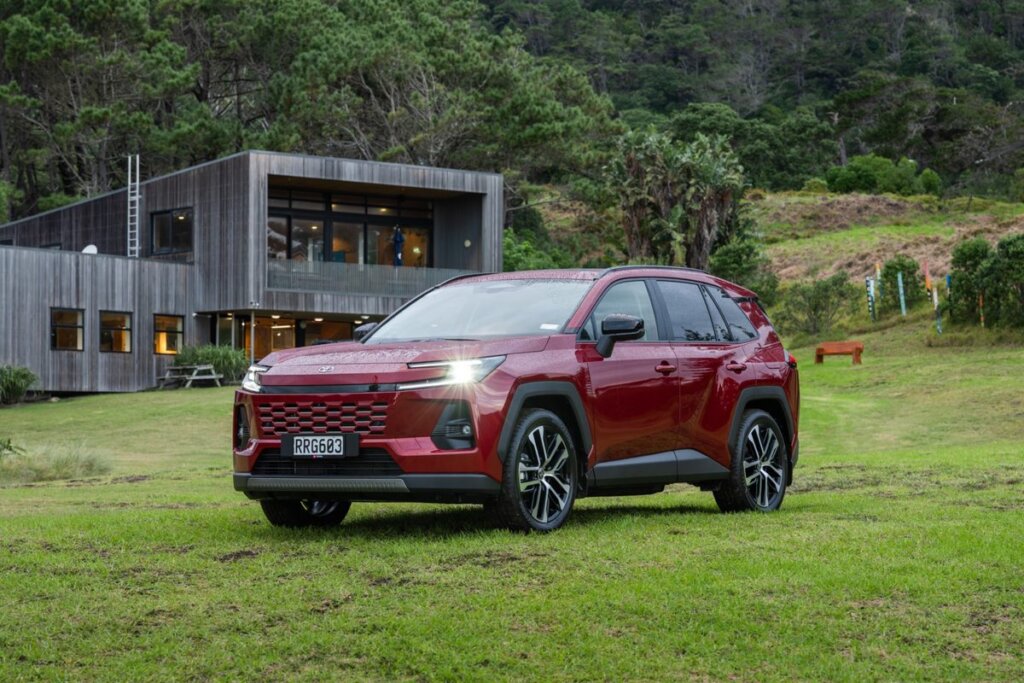
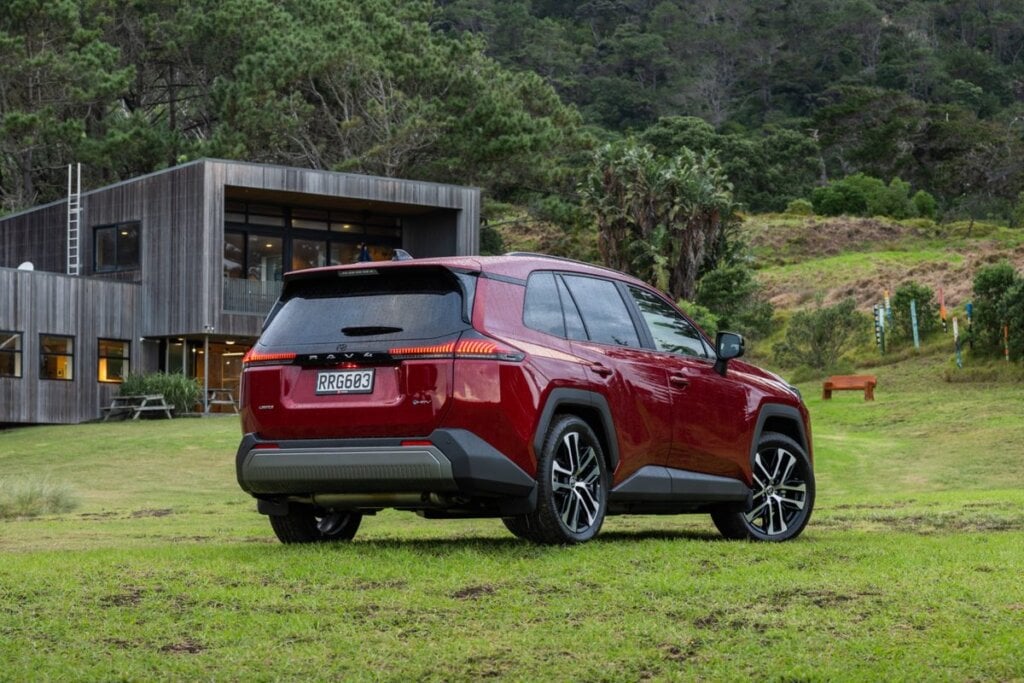
What’s changed is the way it wears those dimensions. Squarer front end, more pronounced wheel arches, body cladding angled upwards to suggest extra ride height. It’s design trickery, but it works. The car looks chunkier, more planted, more SUV.
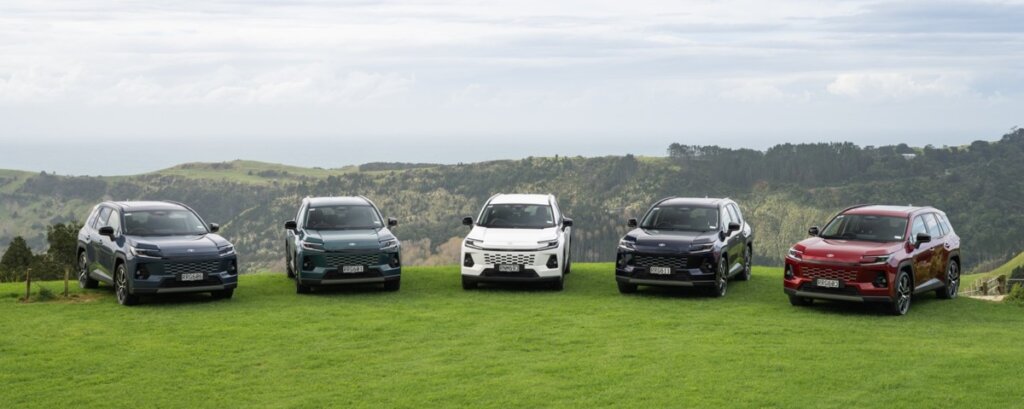
The line-up splits into three styles. The standard models cover the everyday Kiwi family and fleet buyer, available across the widest range of grades, GX, GXL, Limited and XSE, in front or all-wheel drive, hybrid or plug-in hybrid. Adventureis hybrid AWD only, with wider over-fenders, roof rails (without cross bars), 18-inch matte grey alloys and a tougher front-end treatment for those who actually use their RAV4 for the things it’s named after. And at the top sits GR SPORT, plug-in hybrid AWD only, with 70,000 extra engineering hours baked in, a 20mm wider track, lighter 20-inch alloys and motorsport-derived suspension. More on that one when we get to drive it.
At the time of writing only the hybrid models are in showrooms. The PHEV grades, GXL FWD, XSE AWD and GR SPORT AWD, are due in the next month or so, with the first units already arriving at Toyota’s Palmerston North headquarters.
The full range
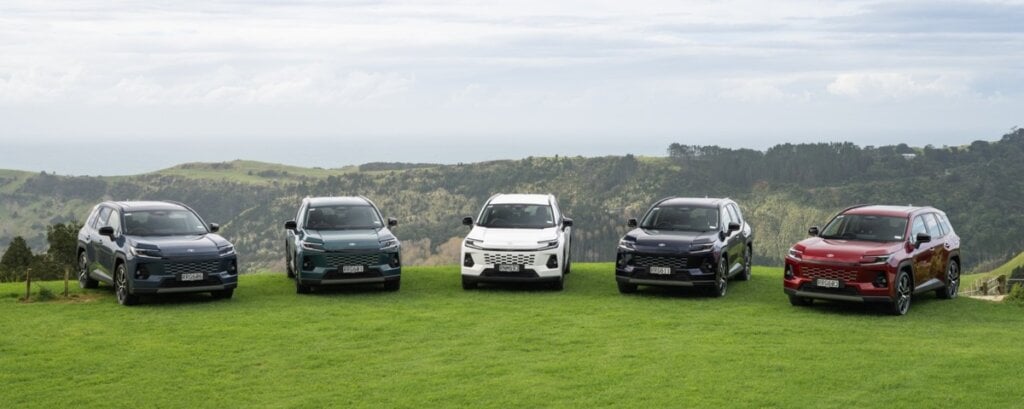
Here’s how the nine-grade line-up sits, all prices Toyota Drive Away (TDP):
| Grade | Style | Drivetrain | Output | Price |
|---|---|---|---|---|
| GX HEV FWD | Standard | FWD Hybrid | 143kW | $49,990 |
| GX HEV AWD | Standard | AWD Hybrid | 143kW | $52,990 |
| GXL HEV FWD | Standard | FWD Hybrid | 143kW | $52,990 |
| GXL HEV AWD | Standard | AWD Hybrid | 143kW | $55,990 |
| GXL PHEV FWD | Standard | FWD PHEV | 201kW | $57,990 |
| Adventure HEV AWD | Adventure | AWD Hybrid | 143kW | $60,990 |
| XSE PHEV AWD | Standard | AWD PHEV | 227kW | $61,990 |
| Limited HEV AWD | Standard | AWD Hybrid | 143kW | $63,990 |
| GR SPORT PHEV AWD | GR SPORT | AWD PHEV | 227kW | $66,990 |
Toyota Drive Away Pricing means the window sticker is what you pay, no on-road costs added, and the same figure at every dealer. For fleet operators in particular, that makes budgeting straightforward.
On the outside
We drove the entire hybrid range across the launch programme, but for the video walkaround on our YouTube channel, out shortly, we focused on the Limited. A sweet-looking thing. The big alloys sit nicely inside the wheel-arch cladding, and down the flanks, that body cladding is durable black plastic rather than the shiny piano-black finish creeping into other manufacturers’ SUVs lately, which means it’ll shrug off the gravel-rash you’ll inevitably collect on a metal road rather than collecting swirl marks.
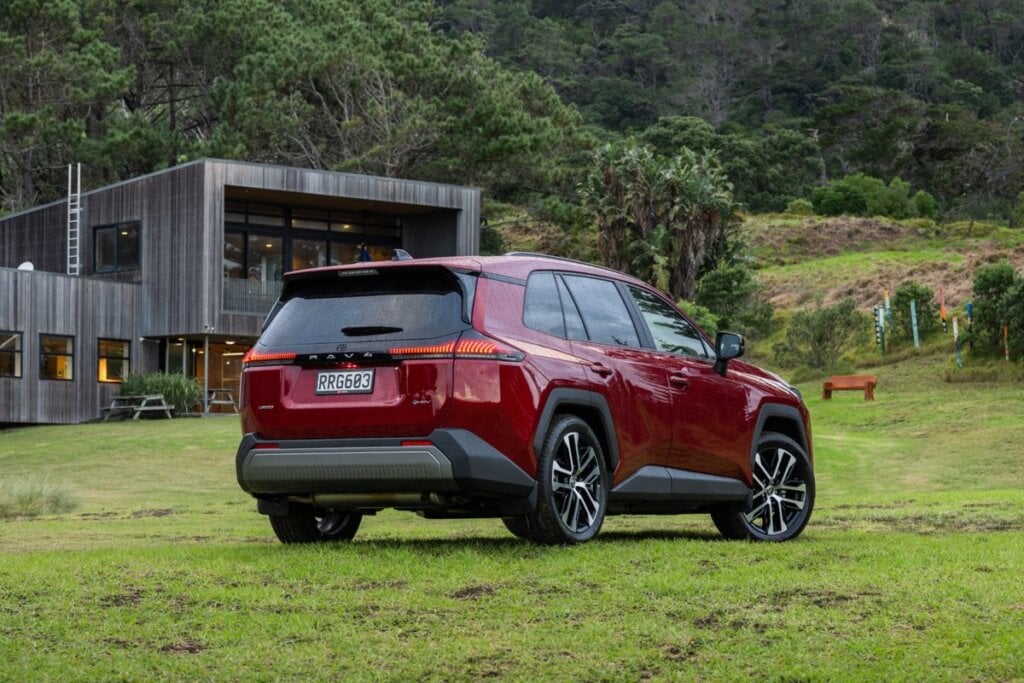
Around the back, the rear haunches push outwards in a way that nods to the Highlander, with a chunky RAV4 badge stretched across the tailgate and faux underbody cladding tying into the soft-roader look. There’s parking sensors all the way along, plus a 360-degree camera setup with a translucent-car view that’s handy in tight Auckland car parks.
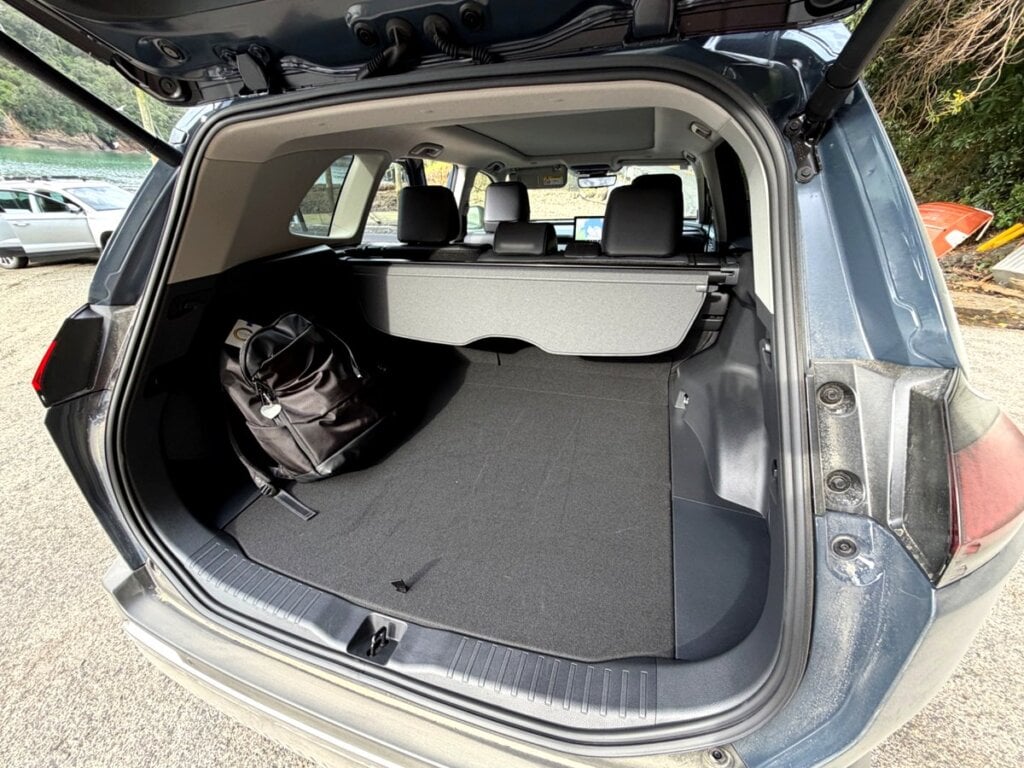
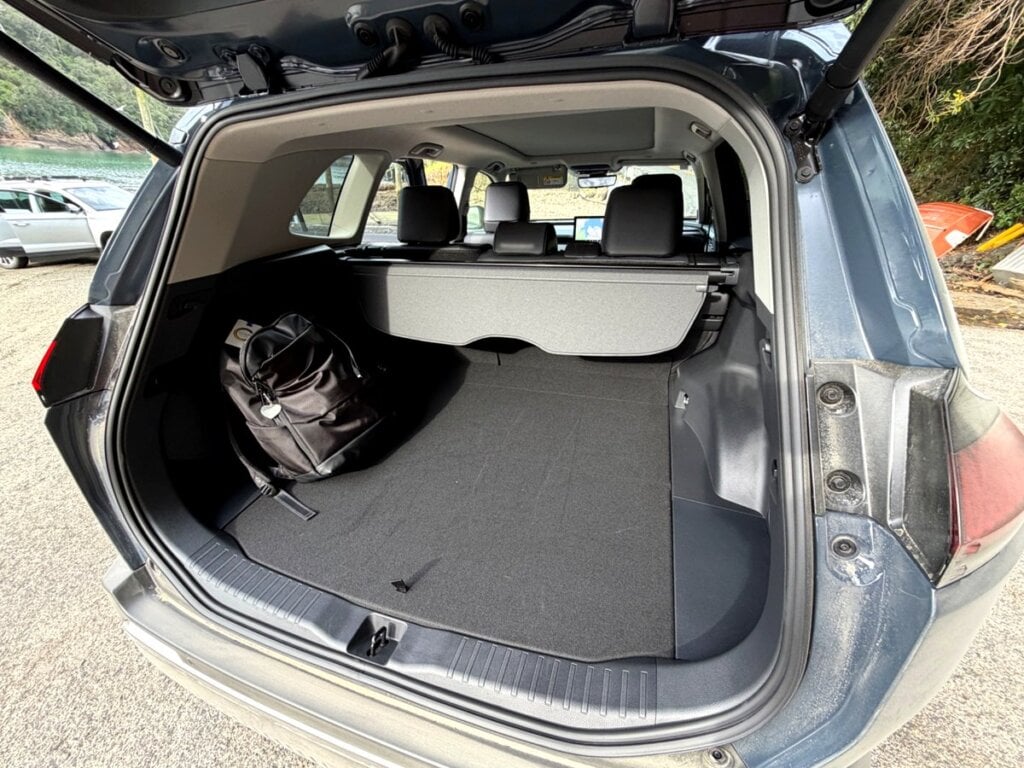
Open the electric tailgate and the boot comes in at 481 litres with the rear seats up, plenty more once you fold them. There’s a load cover that pulls all the way back, a 12V outlet, JBL speaker, split-fold seat, and, bless them, a spare tyre under the floor. A rarity these days. The plug-in hybrid grades add a 1500W vehicle-to-load outlet in the boot, enough to run small appliances at a campsite or worksite. The big metal tie-down points in the boot floor show Toyota knows where these are going.
Stepping through the grades
The good news for anyone choosing across the hybrid range is that most grades give a similar interior experience. The GX is the exception, and you can feel its lower price point. The urethane steering wheel and fabric seats are perfectly comfortable, but they don’t have the lift-you-into-the-seat feel of the leather-trimmed grades above it. It’s a clean, honest cabin, and for the rental and base-fleet buyer it’s exactly what’s needed. Just don’t expect it to feel like the brochure shots, those are all upper-grade cars.
Step up to GXL and you get the leather-wrapped wheel, the bigger central infotainment screen (the GX runs a smaller display), upgraded seat trim and a more generous spec across cabin materials. Limited brings perforated synthetic leather, electrically adjusted front seats with heating and ventilation, the larger digital instrument cluster, head-up display, dual wireless charging pads, 360-degree camera and the full Toyota Connected Services suite at its most comprehensive. XSE, available as PHEV AWD only, sits alongside Limited in spec terms but with a sportier visual treatment.
Adventure does its own thing. A single-grade proposition built around HEV AWD, with synthetic leather seats (in either black or an exclusive Mineral colourway), heated and more bolstered front seats tuned for support on rougher ground, and a rear seat re-tuned for long-distance comfort. The 18-inch matte grey alloys, large over-fenders unique to the grade, and Adventure-specific front bumper and grille mark it out from the rest of the line-up.
GR SPORT, when it lands, takes the PHEV powertrain and goes performance-focused. GR synthetic leather and Brin Naub microsuede on the seats, GR-logo heated steering wheel with paddle shifters, aluminium sports pedals, shift-by-wire selector in metallic and gloss black, GR scuff plates, padded knee pads, GR stitching and red accents. Outside, it’s a wider stance, lighter 20-inch alloys (2.2kg per wheel lighter than the XSE), red brake calipers with GR logo and the chassis upgrades to match.
Inside the cabin
For our video walkaround I hopped in the back seat first. The door trims are nicely soft along the top, though the GX gets a slightly firmer plastic. Up in the Limited there’s perforated leather, heated seat switches, dedicated air vents, and a glass roof that extends back to about the second-row hip line.
Legroom is good even for someone my size, though I’d take a touch more clearance under the front seat for my feet. Headroom’s a non-issue. Two adults are comfortable, two adults and a kid in the middle, no problem. I could happily do a five or six-hour run back here with the right rest stops. Not a limo, but family-sized in the best sense.
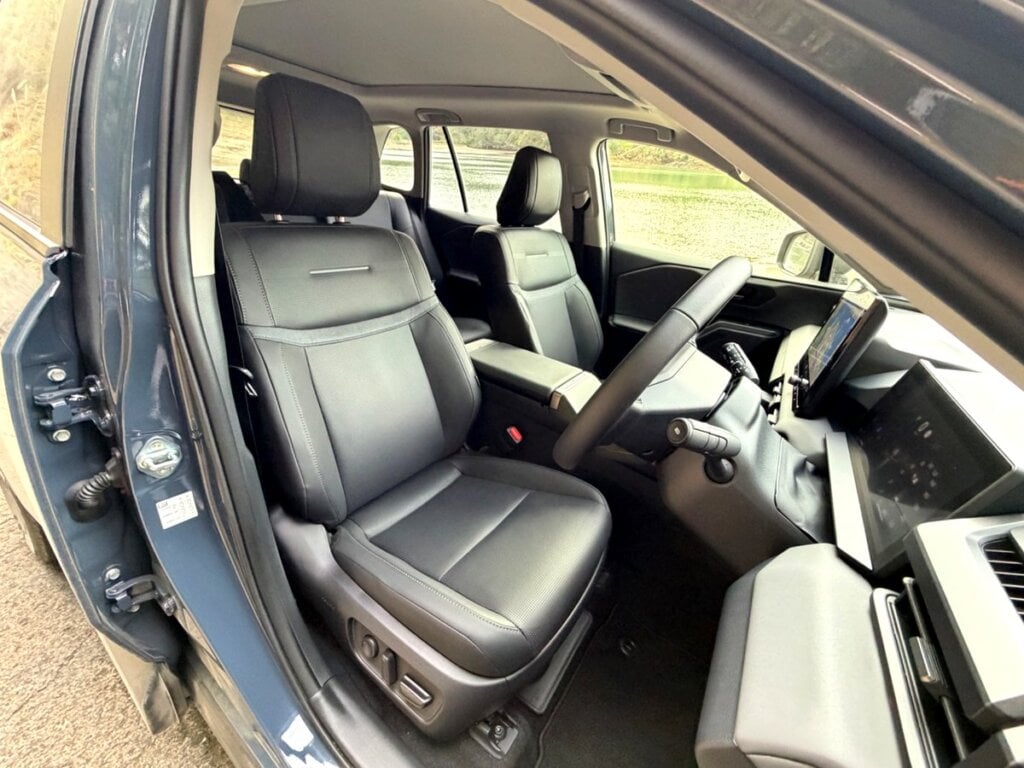
Up front, the driver gets one of the biggest digital instrument displays I’ve seen outside premium machinery, plus a substantial head-up display, the latter being something you don’t often see in a mainstream mid-size SUV.
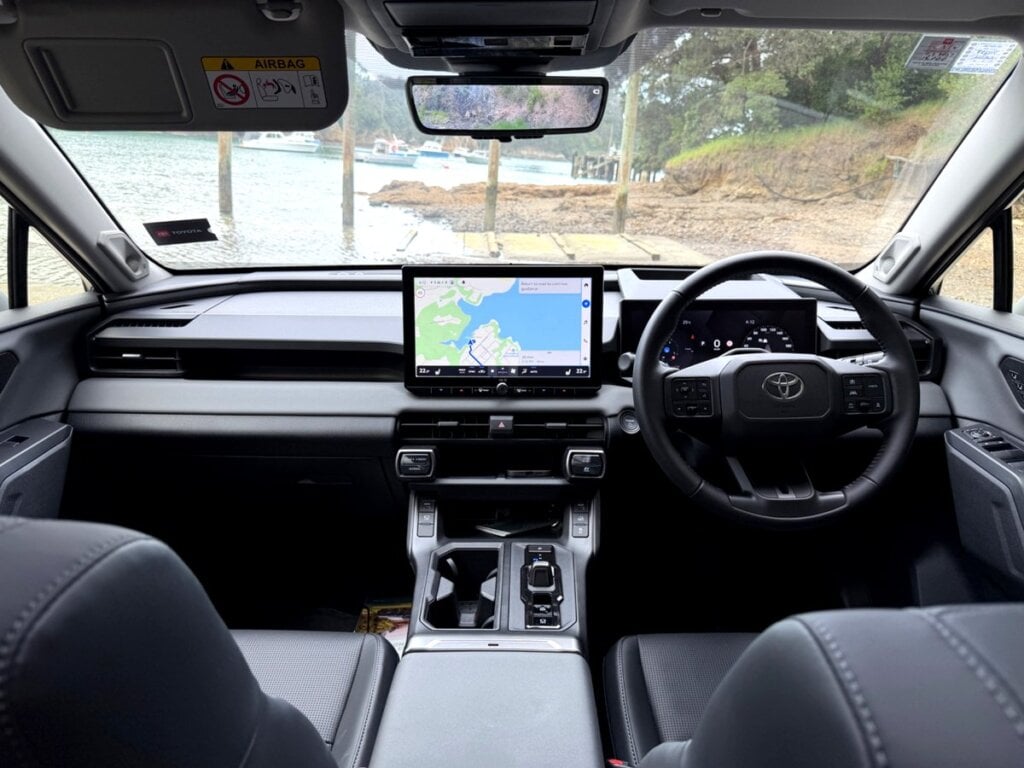
The central infotainment screen is big and clear on everything bar the GX, which gets a smaller version. Software-wise it’s not as sprawling as some of the Chinese stuff coming through right now, but it stays put, you know where everything is, and Toyota has kept a proper physical volume knob and quick-access buttons for demist, climate temp and drive modes. Buttons. Imagine that.
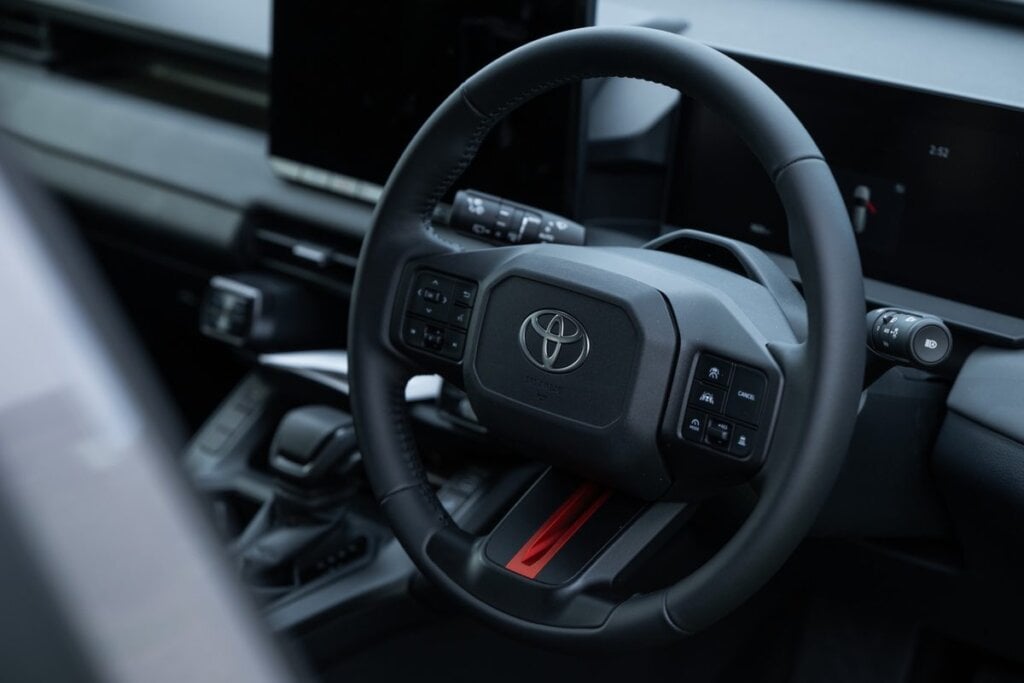
Wireless Apple CarPlay and Android Auto are standard, and the upper grades get dual wireless charging pads. USB-C ports are 45W up front and 15W in the rear on the upper grades, with lower-spec models stepping back to 15W ports throughout. Storage is everywhere, including a centre console with a party trick. It opens to either side, you can lift the lid clean off, and underneath there’s a removable wipeable tray. Useful.
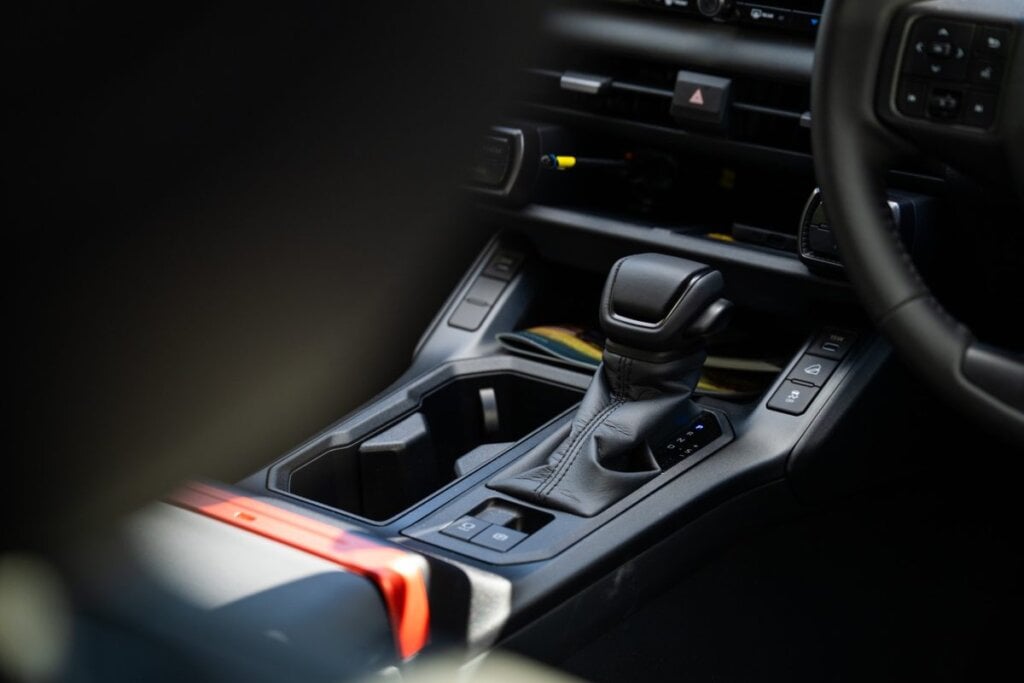
One gripe: the surface on top of the centre console armrest is unexpectedly rough and abrasive for a car that otherwise feels well finished. Small thing, but the sort of detail you notice every time you rest your elbow on it.
How it drives
The hybrid is now Toyota’s fifth-generation system, paired with a 2.5-litre petrol four and lithium-ion battery, totalling 143kW. That’s 20kW down on the previous generation, a consequence of the move from Euro 5 to a step beyond Euro 6, which has also nudged the requirement from 91 to 95-octane fuel. On paper that’s a decent hit. In practice, you’d be hard pressed to feel it. The new RAV4 hybrid does the 0 to 100 sprint in 7.7 seconds, a touch quicker than the model it replaces despite the lower headline output.
Toyota has done substantial work on how the hybrid system delivers that power. Gone is the older RAV4 hybrid trait of the engine spinning up loudly the moment you asked anything of it. The new one feels far more modulated. The petrol engine joins in more progressively, and the whole drivetrain feels noticeably more refined as a result.

Speaking at the launch, RAV4 Chief Engineer Yoshinori Futonagane explained that the new generation was developed around the concept of “Life is an Adventure,” with three core areas of development. “We wanted to enhance what customers already value, electrification, diversification and intelligence, so these were the three core areas of development for the new-generation RAV4,” he said. On the eight to ten percent efficiency gain, he was candid about where it came from. The hybrid powertrain itself couldn’t carry that improvement on its own. Aerodynamics and tyre development had to do real work alongside the drivetrain.
The PHEV variants step things up significantly, with 201kW in the GXL FWD and 227kW in the XSE AWD and GR SPORT, and Toyota quotes a 0 to 100 time of around 5.8 seconds for the PHEV. Half a second adrift of a GR Yaris auto. Wild for a family SUV.
Towing on the hybrid is 1500kg braked, 750kg unbraked. Not class-leading but enough for a small camper, a tip run, or a Bunnings haul.
On the road, the new RAV4 is sorted. It’s not pretending to be a sports car, but the ride strikes a nicely judged balance between firm and composed without ever feeling punishing. Steering is responsive, body control is tidy, and there’s none of the floatiness that can creep into hybrid SUVs trying too hard to feel plush.
Worth noting that this is a global tune. Futonagane confirmed at the launch that, unlike particularly the Korean brands, who run a specific Australasian chassis tune for our market, the RAV4 wears the same setup it does in Europe, Japan and the rest of the world. That’s not a criticism. The tune is solid for our roads, and there’s no detriment I can pick up from a day across both metal and seal.
The bigger surprise was on gravel. We had a decent stretch of metal road in the drive route, and the RAV4 felt planted, stable, predictable. Some of that’s the tyres, but a lot of it is the new e-axle setup at the rear. There’s no mechanical driveshaft from front to back. The rear motor is electric, which means torque can be shifted between axles instantly rather than waiting for any mechanical handover.
The brakes have also taken a step forward, with significantly more electronic control than the previous model. That allows for smoother regenerative braking transitions, and gives Toyota the ability to deliver a kind of limited-slip effect through individual wheel braking. For rural reps, snow-trip regulars, or anyone whose driveway turns into a creek every winter, this is a meaningful upgrade. If that’s you, ask your dealer to take it down a gravel road on test.
A quick word on PHEV charging. All three plug-in grades come standard with an 11kW three-phase AC charger and 50kW Type 2 DC fast-charging capability. That’s a strong spec at this price. Plenty of mainstream PHEVs are still capped at single-phase AC with little or no DC capability, so Toyota’s done well to fit serious charging hardware as standard.
The headline is automatic collision notification. Have a serious accident and the car will automatically contact the Toyota emergency call centre, which can then coordinate emergency services, with your location, occupant count, seatbelt status and impact direction shared. Toyota has put serious mileage into testing how this works across New Zealand’s patchy mobile coverage, partnering with Intellimatics for the back-end. They were confident enough on the launch drive to hand us a phone and let us trial the system live, which tells you something.
Beyond that, you get connected navigation, voice search, remote climate pre-conditioning, vehicle finder, stolen vehicle tracking, and the ability to lock, unlock and start the car from your phone. Good to see this kit at this price.
A nice extra is the built-in Multimedia-Linked Drive Recorder, effectively a factory dashcam using the exterior cameras, with automatic incident saving and review on the central screen. We’ve seen it on one or two Chinese options, but it’s still rare on conventional models, and a useful inclusion for fleet operators in particular.
The voice recognition is good. Previous Toyota voice systems weren’t perfect with the Kiwi twang, but the new version is being programmed with both correct and incorrect pronunciations of Te Reo place names. With my daughter now learning the language, that’s a rather cool, and practical, Kiwi touch.
Now connected
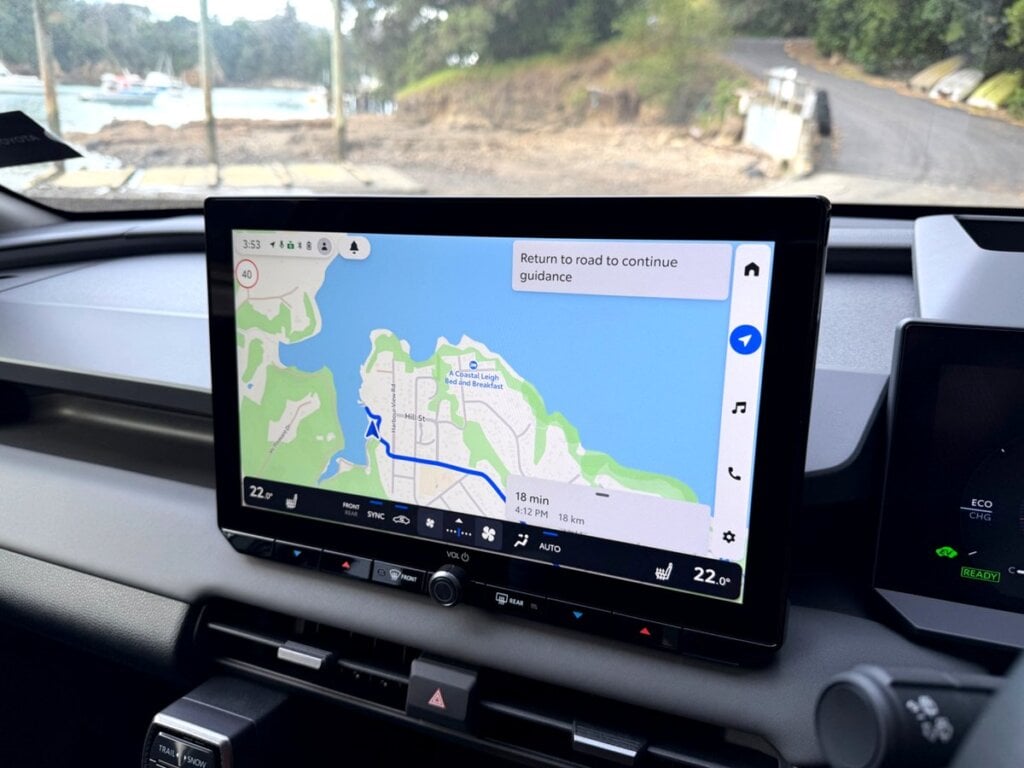
This is the first Toyota in New Zealand to launch with Toyota Connected Services, structured across tiers. The basics, including remote vehicle status, locator, odometer and trip data, plus the Toyota Essentials Emergency package covering SOS calls and Automatic Collision Notification, are complimentary for the life of the vehicle. The Connected Multimedia package, with cloud navigation, voice assistant, send-to-car destinations and driver profiles, runs free for six years. And the top-tier Connect+ package, which adds stolen vehicle tracking, remote start, remote lock and unlock, remote climate, guest driver settings and remote horn, hazards and headlights, is complimentary for four years. After those terms, those features move to a paid subscription.
The ANCAP question
Here’s the bit that needs flagging. The new RAV4 launches without an ANCAP rating.
It’s not that anything is wrong. The car was originally engineered to meet the 2025 five-star protocols, and would have hit them comfortably. Production delays pushed the launch into 2026, where ANCAP’s stricter new protocols apply. Toyota is updating various electronic safety systems on the car to meet the 2026 requirements, with testing expected later this year. The previous-gen RAV4 held its five-star rating throughout its model life, and Toyota New Zealand is confident this one will too.
The catch, and fleet buyers in particular need to be aware of this, is that vehicles sold before that testing happens will remain unrated permanently. There’s no retrospective rating. For a private buyer this almost certainly won’t matter. The safety kit on board is an upgrade on the previous model in every measurable way, with eight airbags, the latest Toyota Safety Sense suite, an emergency driving stop system, driver monitor camera, proactive driving assist, front cross-traffic alert and safe-exit assist on the blind-spot monitor. For some fleet buyers with policy requirements that lock them to currently rated vehicles, Toyota management told us they’ve kept a stock of the outgoing model for those who simply can’t wait.
The verdict
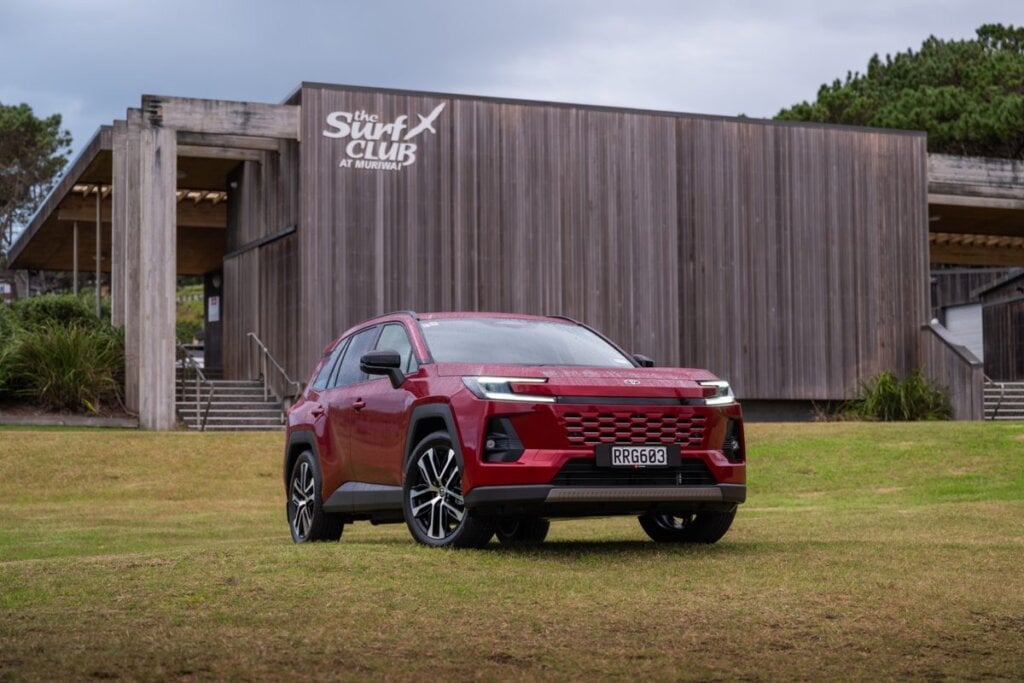
Cars like the RAV4 are often called good at everything and great at nothing, popular because they offend nobody. This one is different.
The new RAV4 is excellent in a remarkable number of areas. The drivetrain is more refined than expected. The ride and handling balance is properly resolved. The cabin is spacious, well-finished, and packed with sensible technology rather than gimmicks. The connected services are class-leading at the price. And it still looks, feels, and behaves like a Toyota, which, to most Kiwi buyers, is a feature, not a bug.
Pricing at the top end can look steep on paper, but factor in Toyota’s drive-away promise, the standard kit, the new connected suite and the residuals this nameplate commands, and the value stacks up.
Unless something dramatic happens with fuel prices, and that obviously couldn’t possibly happen, the RAV4 looks set to stay at the top of New Zealand’s sales charts for the foreseeable future. We’ll bring you a full PHEV drive and a GR SPORT review as soon as we get our hands on them. On this evidence, both should be worth waiting for.
Specifications
2026 Toyota RAV4
| Price range | $49,990 to $66,990 (Toyota Drive Away) |
| Styles | Standard (GX, GXL, Limited, XSE), Adventure, GR SPORT |
| Powertrains | 2.5-litre petrol hybrid (HEV) or plug-in hybrid (PHEV) |
| Drive options | Front-wheel drive or E-Four all-wheel drive |
| Total system output | 143kW (HEV) / 201kW (PHEV FWD) / 227kW (PHEV AWD) |
| Transmission | E-CVT |
| 0-100km/h | 7.7 seconds (HEV) / circa 5.8 seconds (PHEV) |
| Fuel | 95 octane |
| Fuel consumption (HEV) | 5.0-5.1 L/100km (3P-WLTP) |
| Towing | 1500kg braked (HEV) |
| PHEV battery | 22.7kWh lithium-ion |
| PHEV charging | 11kW three-phase AC, 50kW DC |
| Length | 4600-4645mm |
| Wheelbase | 2690mm |
| Boot | 481 litres (Adventure HEV AWD) |
| Airbags | 8 |
| ANCAP | Unrated (testing later in 2026) |