Dodge revives Super Bee badge with 447kW Charger, and a fix for turbo lag
Words: Richard Edwards
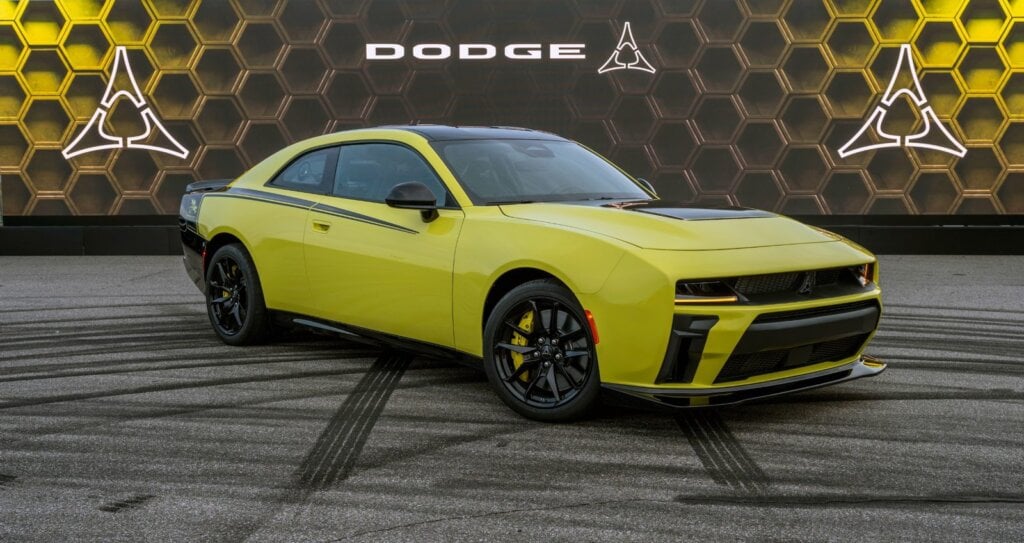
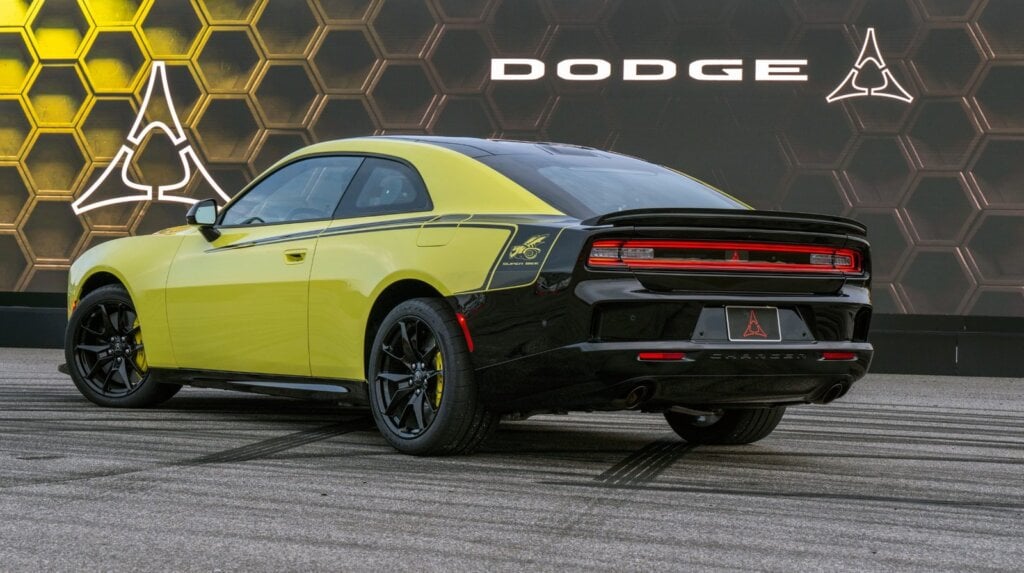
Dodge is marking 60 years of the Charger by reviving the Super Bee nameplate. The 2027 Charger Super Bee Launch Edition is the quickest, fastest and most powerful Super Bee since the badge first appeared in 1968.
The Super Bee produces an SAE-certified 447kW and 720Nm from an uprated version of the twin-turbo 3.0-litre SIXPACK inline six. Dodge claims 200 horsepower per litre, making it the most power-dense muscle car yet built. It quotes 0-97km/h in 3.6 seconds and an 11.8-second quarter mile. Both figures better the 527kW supercharged Hellcat V8 of 2015 to 97km/h, and improve on the 362kW HEMI-powered 2023 Super Bee that ended the previous generation as a “Last Call” special.
“The Super Bee name has always stood for maximum Dodge attitude: bold, accessible performance with the hardware to back it up,” says Dodge CEO Matt McAlear. “We’re not just bringing back a legendary badge, we’re honoring that legacy by outperforming every vehicle that’s adorned the Super Bee badge since 1968.”
Bigger turbos, bigger numbers
The gain over the 410kW Charger Scat Pack comes from larger 56mm Garrett turbochargers running more than 2.0 bar of boost, pushing 7.5% more air through the engine. Peak torque arrives at 3,000rpm, nearly 12% earlier than in the Scat Pack, and holds through to 5,900rpm. A bespoke engine calibration sharpens throttle response and boost build-up, while revised turbo and exhaust tuning changes the soundtrack, with more overrun on deceleration.
Rear half-shafts are nearly 10% stronger to cope with repeated hard launches. Torque Reserve, carried over in concept from the old supercharged cars, builds boost against the brake before launch by opening the throttle and retarding ignition, sending high-energy exhaust to the turbos so full torque is available the moment the brake is released.
Cooling for repeated runs
Cooling capacity in the high-temperature radiator circuit grows by more than 50%, while the low-temperature circuit more than doubles, helped by auxiliary radiators in the outboard corners of a new high-flow front fascia. The fascia lifts airflow to the main cooling stack by 30% and adds more than 45kg of downforce at 240km/h. A front splitter one-third longer than the Scat Pack item and a larger rear spoiler complete the aerodynamic changes.
The brakes are upgraded too. 406mm Brembo vented rotors feature at both ends for the first time on a SIXPACK Charger, clamped by six-piston front and four-piston rear fixed calipers. A 27% larger pad area gives three times the fade resistance of any other SIXPACK Charger, according to Dodge, and double that of the previous-generation SRT models. Forged 20×11-inch wheels carry 305/35ZR20 Goodyear Eagle F1 Supercar 3 rubber at all four corners, with a tread pattern developed specifically for the car.
New dual-valve Continuous Damping Control adaptive dampers sample and adjust every 10 milliseconds. Front spring rates rise 12% and rears 6%, the rear stabiliser bar is 20% stiffer, and front handling-link bushings are 50% firmer to reduce understeer.
Track Mode, Drag Mode and a drift button
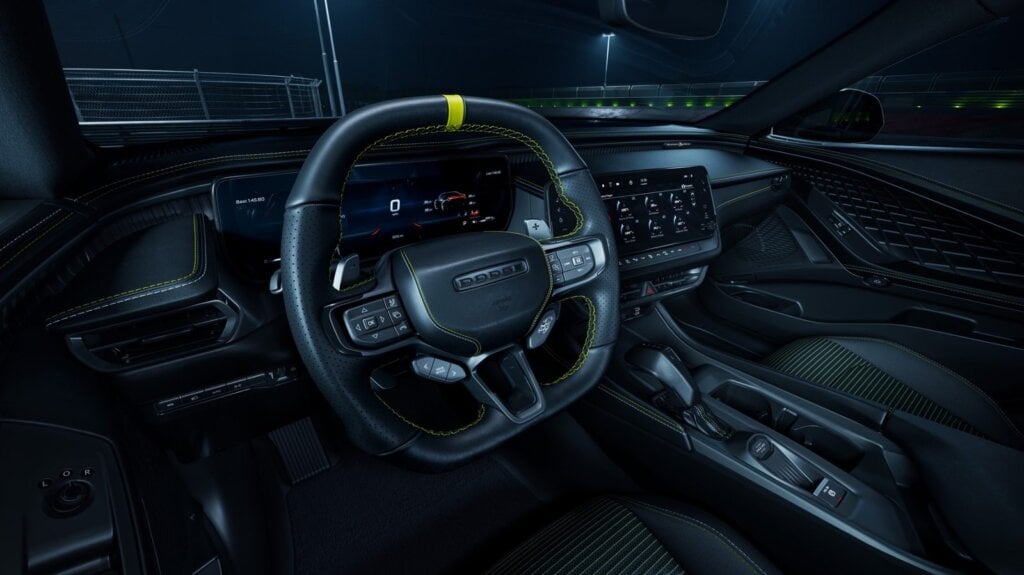
The Super Bee brings Track and Drag modes to the SIXPACK Charger for the first time. Track Mode delivers full-firm damping, tighter steering, elevated shift points and dedicated stability tuning. Drag Mode softens front rebound and firms rear compression to maximise weight transfer off the line. All-wheel drive is standard, but a button on the new performance steering wheel switches the car to rear drive at any speed, on the fly, for what Dodge describes as “drifting, donuts and old-school muscle car fun”.
A Race Prep function keeps the cooling fan running after shutdown to purge heat between runs. The Cosworth-developed Drive Experience Recorder also makes its SIXPACK debut, combining 1080p video, audio and telemetry for post-session analysis through the AliveDrive app.
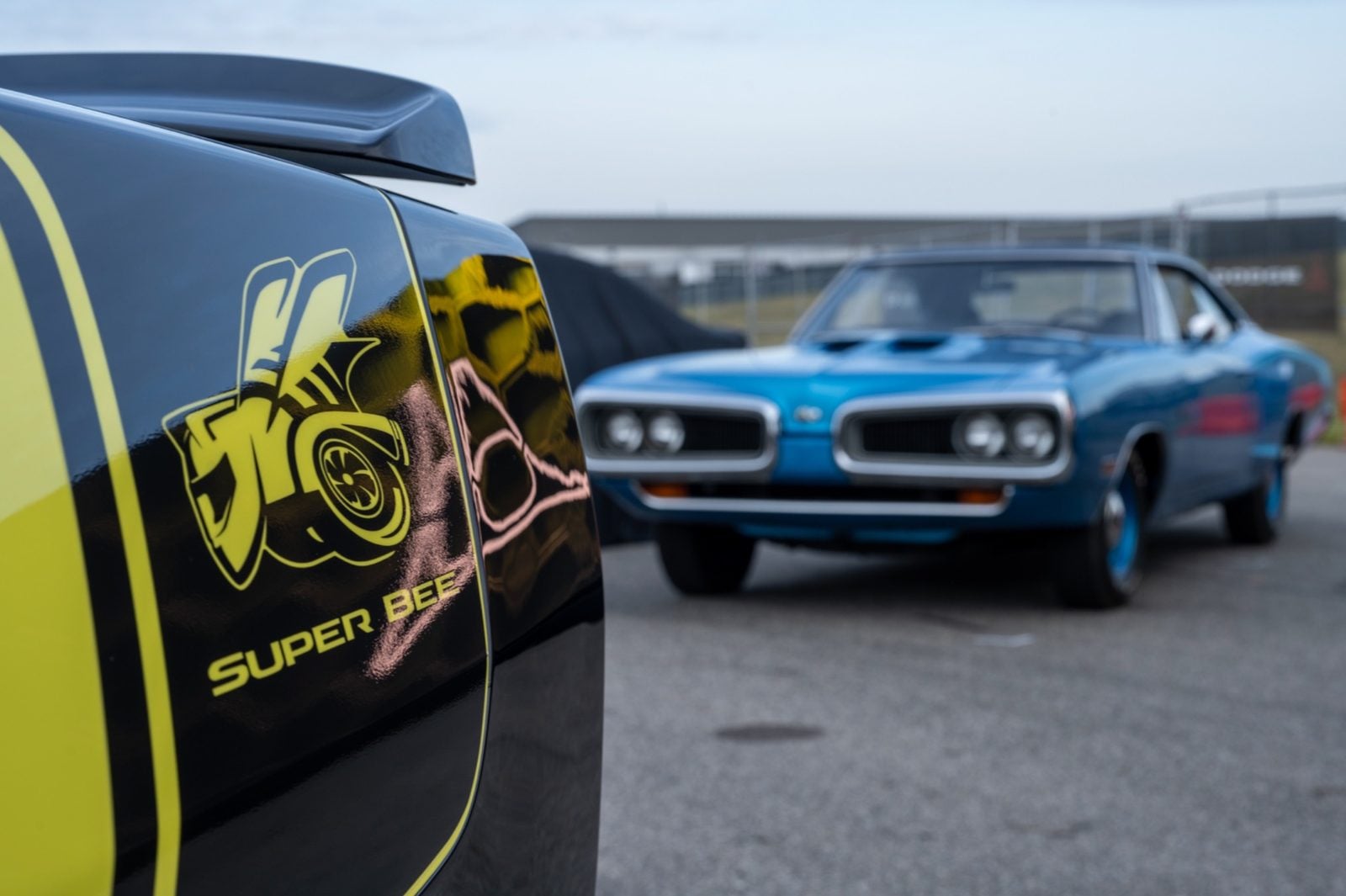
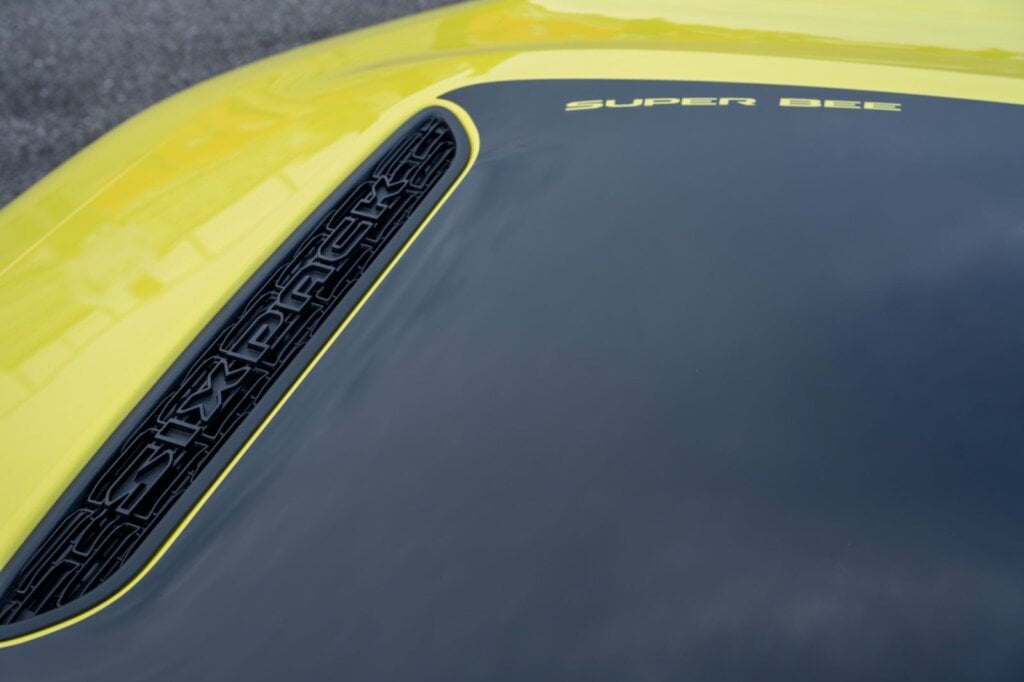
Launch Edition cars come in three colours, headlined by a new yellow-green called Sucker Punch, alongside Diamond Black and a grey called Shady. All wear gloss-black “stinger” bodyside graphics and a redesigned Super Bee logo based on a spooling turbocharger. Inside, cloth high-back performance seats appear on the modern Charger for the first time, with embroidered Super Bee headrests and Sour Lemon contrast stitching.
SRT’s answer to turbo lag
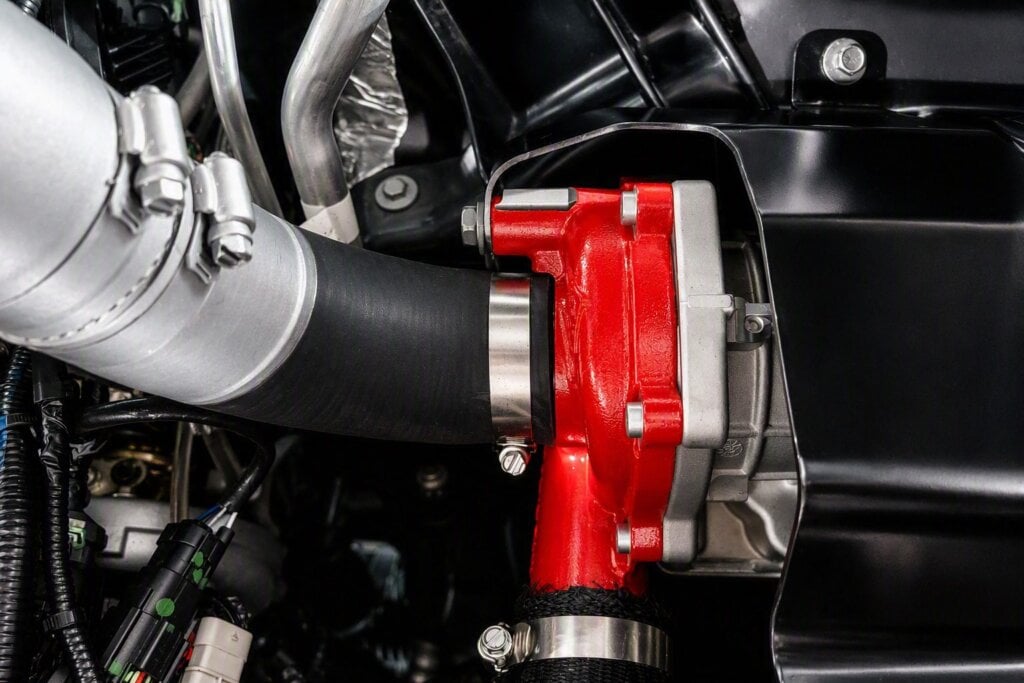
A day before the Super Bee reveal, Stellantis’ revived SRT performance division announced a powertrain concept called eBoost Air. It pairs an electrically driven compressor with the same 3.0-litre engine, spooling the turbochargers from idle before exhaust energy takes over higher in the rev range. SRT says the system virtually eliminates turbo lag, delivering big-turbo peak power with the immediate response of a supercharged V8.
“Enthusiasts aren’t interested in technology for the sake of technology. But when technology improves performance with no downside, they’re all in,” says Tim Kuniskis, Stellantis’ head of American brands. SRT says it took the idea from paper to running prototype in a matter of weeks.
The concept has precedent. Audi launched a similar system a decade ago in the SQ7 TDI, the first production car with an electrically powered compressor. Its 7kW unit spun to 70,000rpm on a 48-volt subsystem, filling in for the diesel V8’s twin turbos at low revs. Mercedes-AMG has since put electric exhaust-gas turbochargers into series production on its four-cylinder hybrids. SRT’s system differs in packaging. Audi’s compressor sat downstream of the intercooler and added boost of its own, while the eBoost Air unit sits upstream of the turbochargers with an electronically controlled bypass, pre-spooling the turbos before handing back to the normal induction path.
New Zealand misses out
Dodge has been gone from New Zealand for a while, with Ram trucks no longer technically part of the brand, and the Super Bee, a limited-run model built at Windsor Assembly in Ontario, will only reach local roads through the grey market, if at all.
Europe is a different story. Dodge confirmed earlier this year that the new Charger will be sold officially in Europe through importer KW Automotive, with a multi-energy lineup spanning the 313kW petrol R/T through to the 500kW electric Daytona Scat Pack. Orders opened in June from €66,000, with first deliveries expected from September. Whether the Super Bee joins the European range is yet to be confirmed.
Pricing, ordering and production numbers for the Super Bee will be announced later this year.