Honda prepares road trials for EV charging on the move
Words: Kyle Cassidy
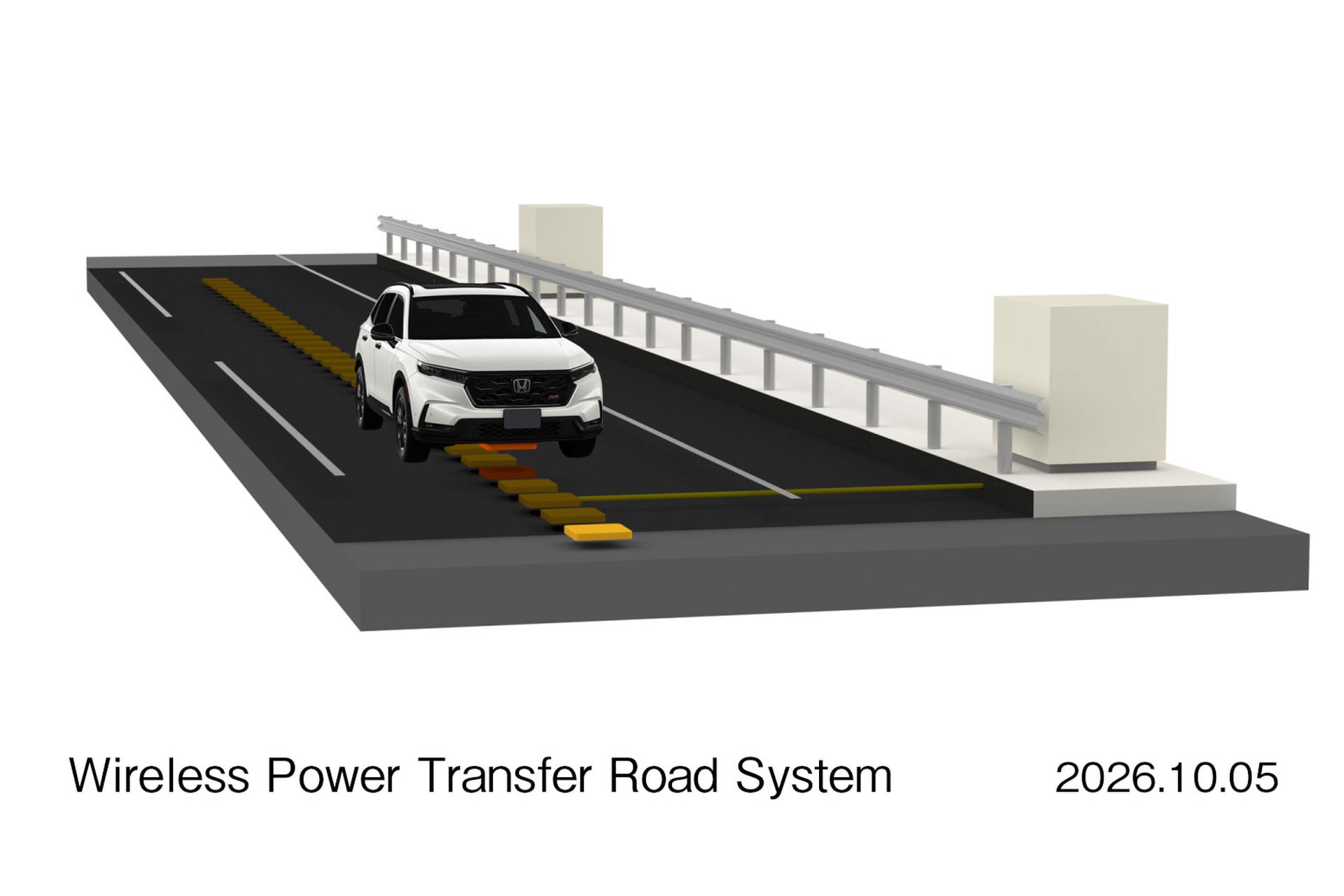
Honda is developing a road that can wirelessly supply electricity to electric vehicles while they’re moving, with Japanese motorway trials planned from the 2027 financial year.
Working with construction firms Taisei and Taisei Rotec, Honda has developed the underlying technology for the system. Logistics and commercial transport are its first practical targets.
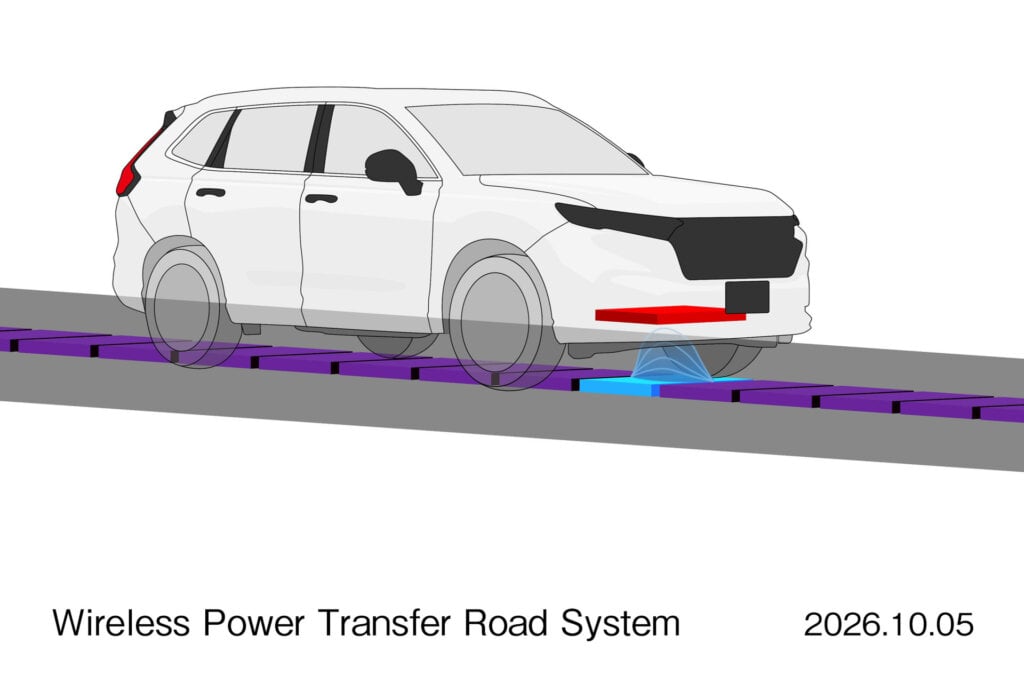
The idea is to pick up energy while driving, reducing the need to stop and plug in.
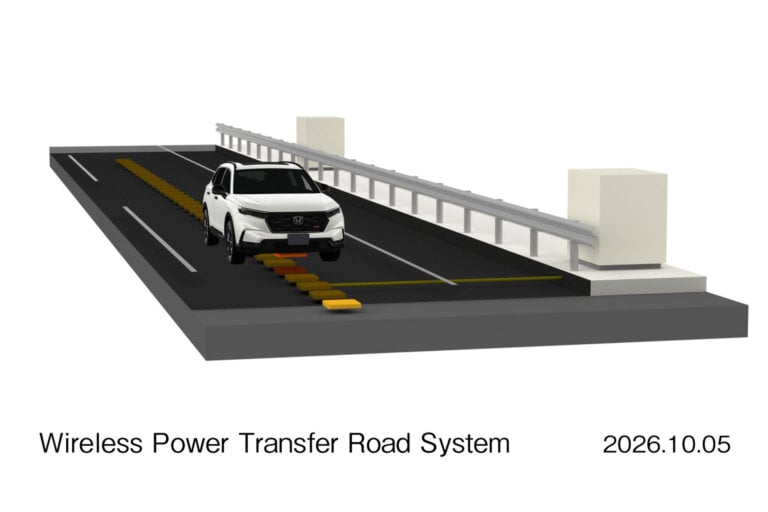
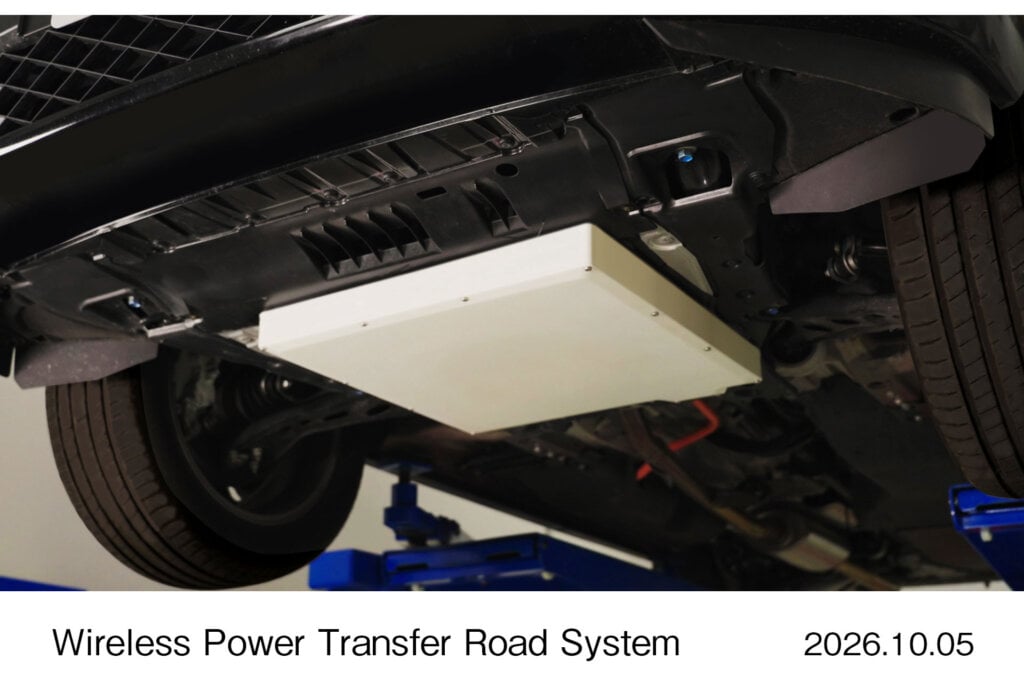
Transmitter coils embedded in the road transfer electricity through a magnetic field to a receiver fitted to the vehicle. There’s no physical connection between the two, but vehicles need the appropriate receiving hardware.
According to motorway operator NEXCO East, the road equipment will detect compatible vehicles and transmit power as they pass. Ordinary vehicles without the equipment won’t activate it.
The planned public-road demonstration forms part of NEXCO East’s Tateyama Project. It will use approximately 300 metres of the E14 Tateyama Expressway near the Kimitsu parking area in Chiba, with experiments scheduled from Japan’s 2027 financial year, which begins on 1 April.
Honda and Taisei form one participating team. Toyota, Denso and Obayashi will also take part with their own vehicles and charging equipment.
NEXCO East says supplying electricity during a journey could extend driving range while allowing smaller batteries. That makes the concept attractive for vehicles covering regular motorway routes, although the trials still need to establish how well it works in traffic.
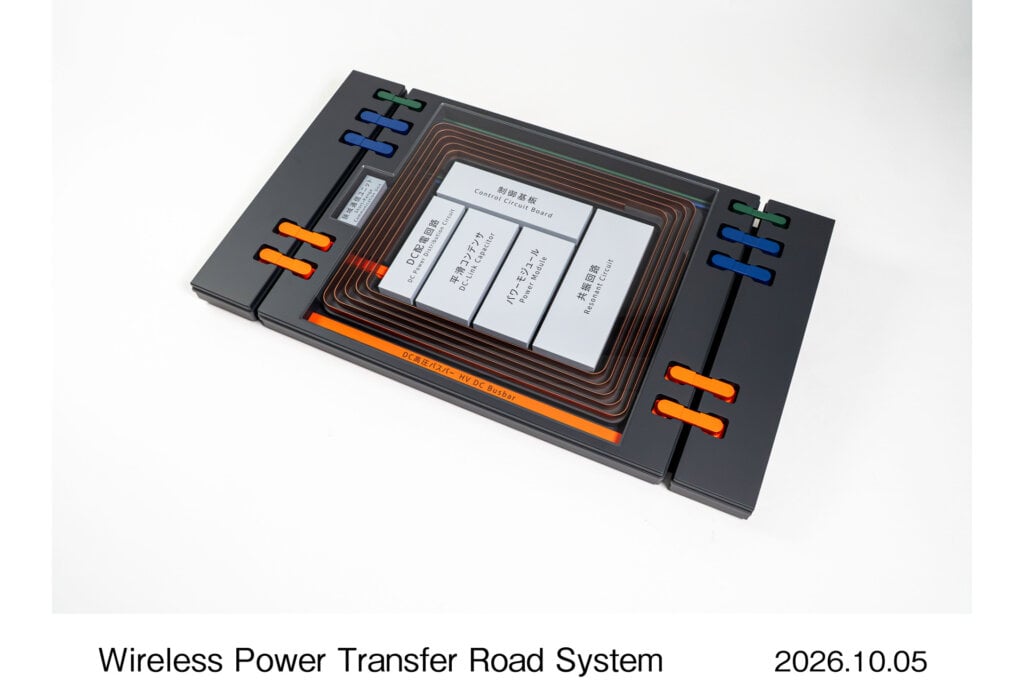
Honda’s system combines the inverter and coil within each road unit, with DC electricity distributed between units. It’s designed for installation in existing pavement and future resurfacing work.
Further testing is planned on a dedicated roadway from late 2026, including a durability assessment equivalent to one million wheel loads and checks for electromagnetic-field leakage.
Later development will investigate power transfer at up to 150kW for large commercial vehicles, alongside reliability at high speeds. That output is a testing target, rather than a confirmed charging rate available to motorists.