Renault E-Space concept brings back the people mover
Words: Kyle Cassidy
Renault is revisiting the idea that made the original Espace famous, previewing an electric people mover that puts cabin space and family practicality back at the centre of its design.
The E-Space Concept will debut at the Paris motor show on 12 October. Renault says there are currently no plans for production.
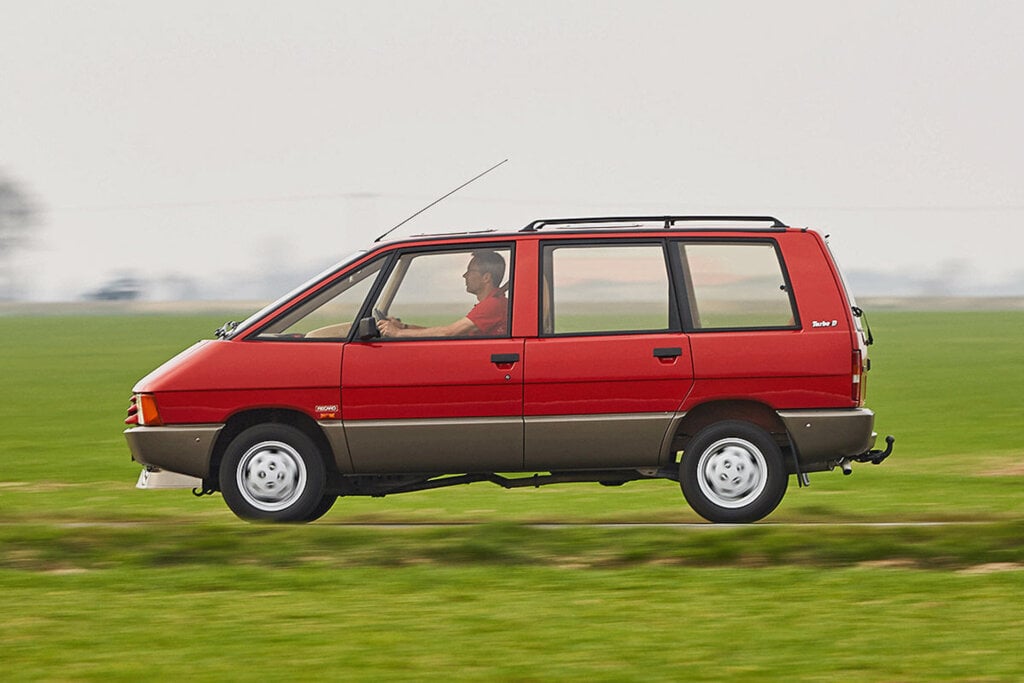
The original Espace arrived in 1984 and helped establish the MPV as a family-car alternative. Its successors gradually adopted more crossover styling, with the current sixth-generation model becoming a large SUV.
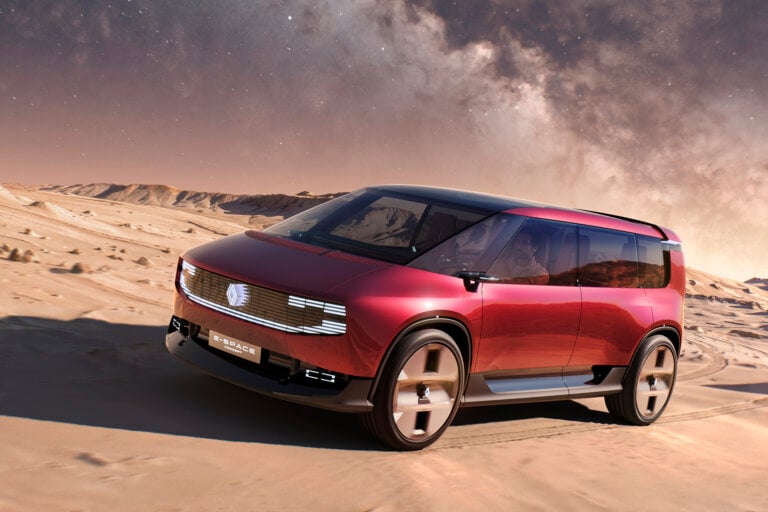
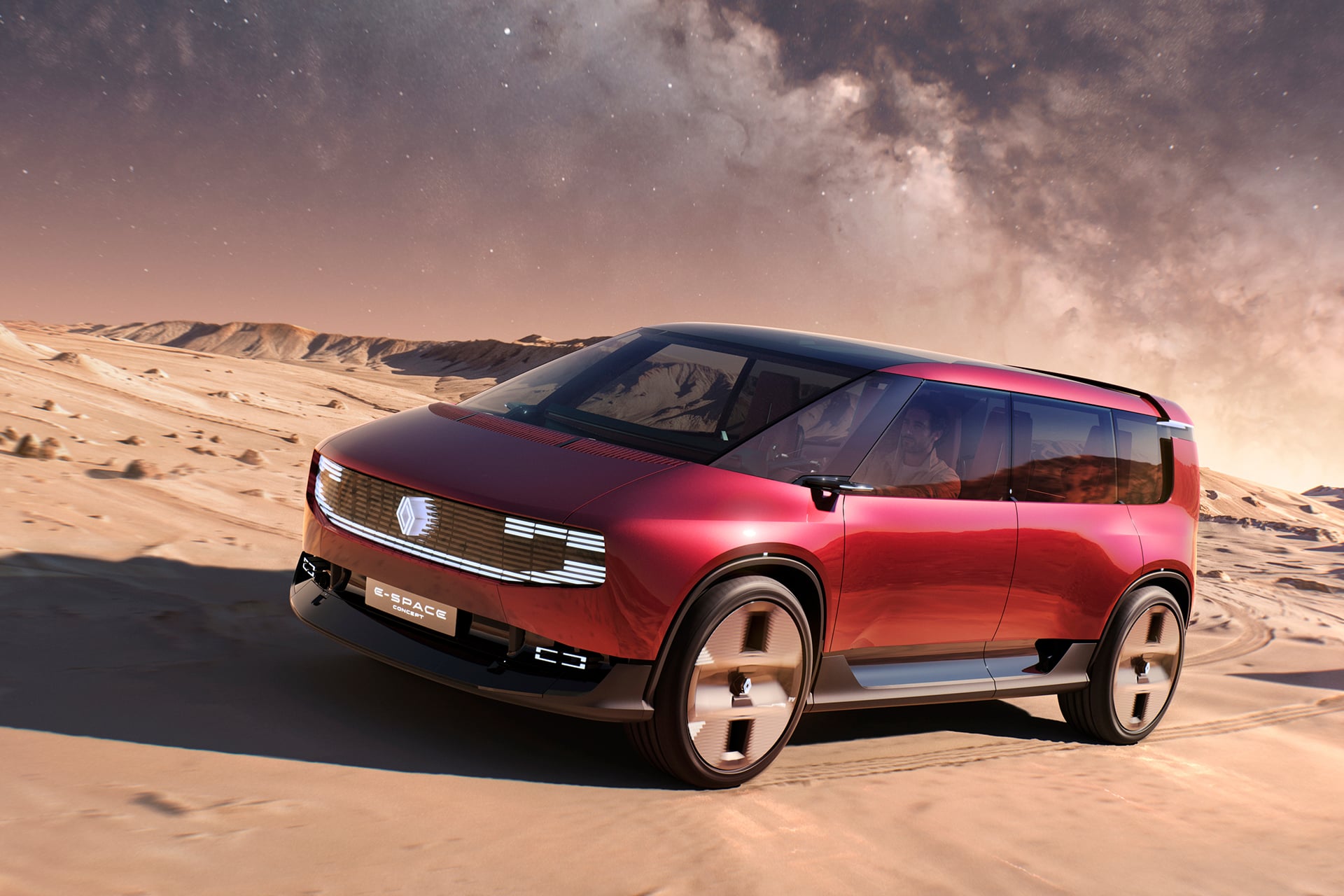
This concept heads back towards the earlier formula. The exterior preview shows a sharply sloping front and a squared-off rear, creating a shape intended to make the most of the space available inside.
Measuring 4700mm long, 2020mm wide and 1670mm high, the concept rides on 23-inch wheels. Its low beltline and relatively low ground clearance give it proportions closer to a traditional people mover.
The lighting provides a more futuristic touch. Wide U-shaped light strips trace the front and rear, while an illuminated Renault diamond sits within a pixel-style arrangement at the nose.
Renault describes six identical individual seats arranged over three rows on a completely flat floor. The seats can rotate slightly to improve access, while different layouts allow occupants to gather around a large table. The company has only issued one image of its new concept thus far.
That puts flexibility at the heart of the cabin. It also recalls the original Espace’s emphasis on giving families room to travel and spend time together.
The cabin’s curved OpenR Panorama display measures 1130mm wide and 110mm high, visually replacing a conventional dashboard. Renault says it will feature in future models at the upper end of its electric range.
Battery capacity, motor output, driving range and charging performance haven’t been detailed in the preview.
The name combines the E from Renault’s E-Tech electric branding with a reference to interior space. Renault presents the concept as an exploration of how its longstanding “cars for living” approach could evolve for electric family transport.