Toyota targets better fuel economy with new 1.5-litre hybrid
Words: Kyle Cassidy
Toyota is developing a new generation of hybrid powertrains targeting more than 15 per cent better fuel economy, with a smaller engine and electrical components designed to fit into platforms developed primarily for battery-electric vehicles.
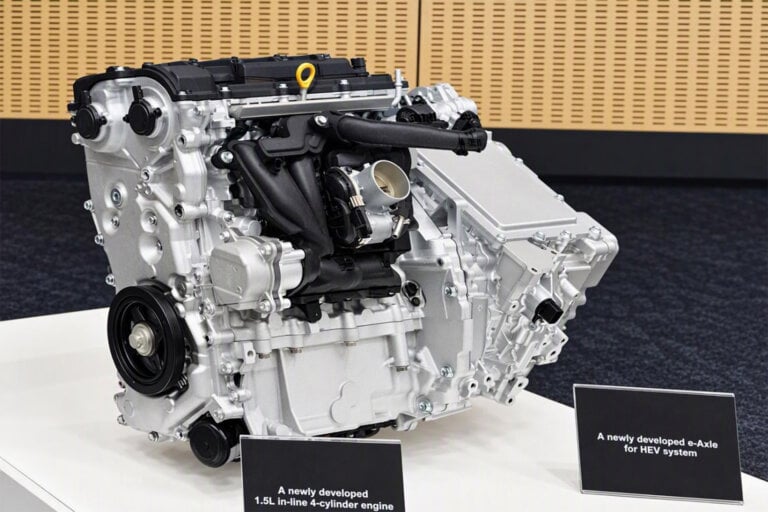
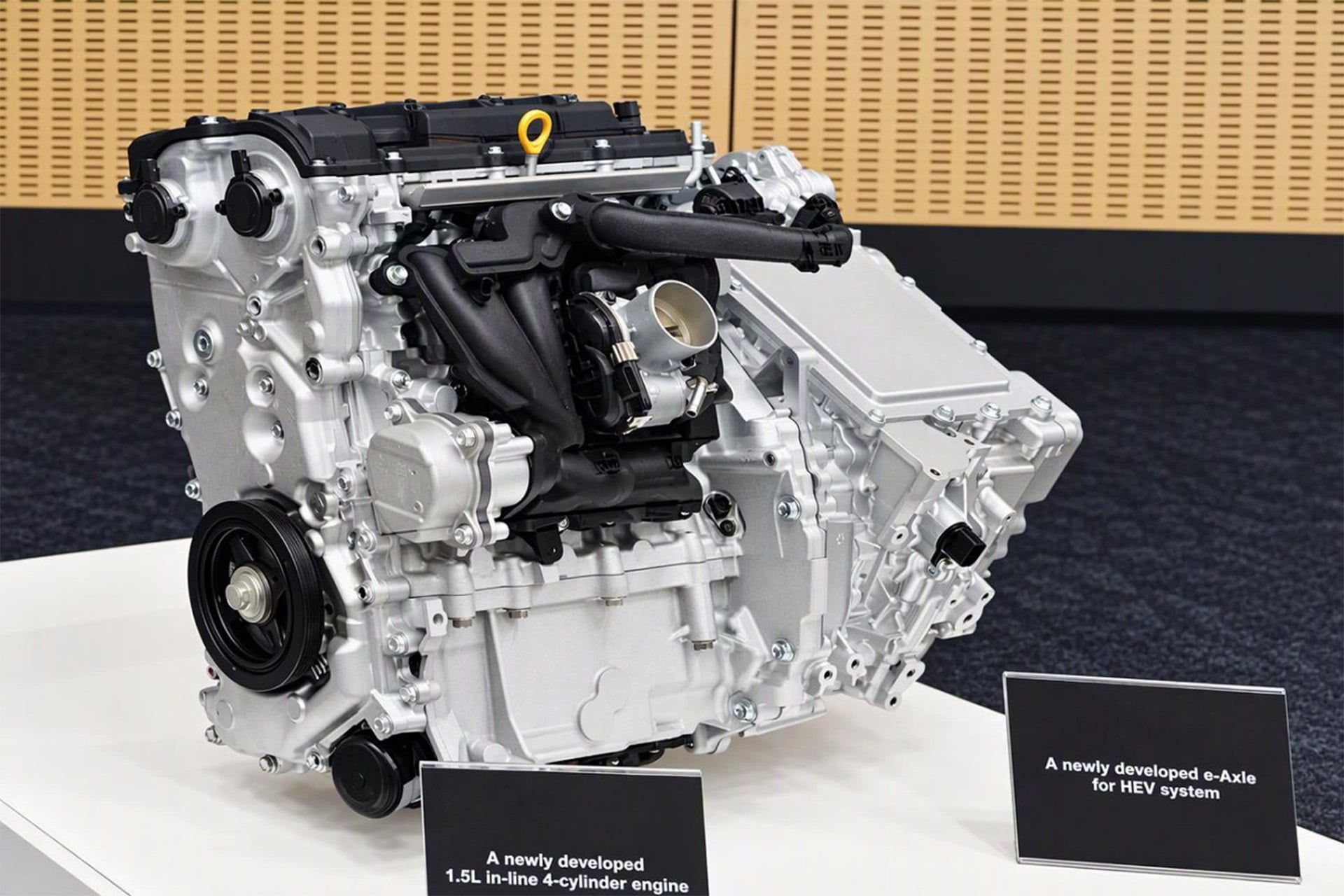
At the centre of the system is an entirely new family of 1.5-litre four-cylinder engines, offered in naturally aspirated and turbocharged forms. These have been developed alongside the electric motors and power electronics as an integrated package.
The naturally aspirated engine is intended to cover the performance requirements currently met by Toyota’s 1.8-litre engine and its existing 1.5-litre three-cylinder.
Toyota says the efficiency gains will come from several areas: reduced mechanical friction, better thermal management and lower electrical losses. Lower aerodynamic drag of the vehicles the new hybrid system powers will also contribute, with the more compact powertrain allowing designers to reduce bonnet heights.
The electrical side gets lighter, smaller motors, power control units and inverters, including silicon carbide power electronics developed by Toyota. Bringing these components together more closely is intended to reduce energy losses across the system.
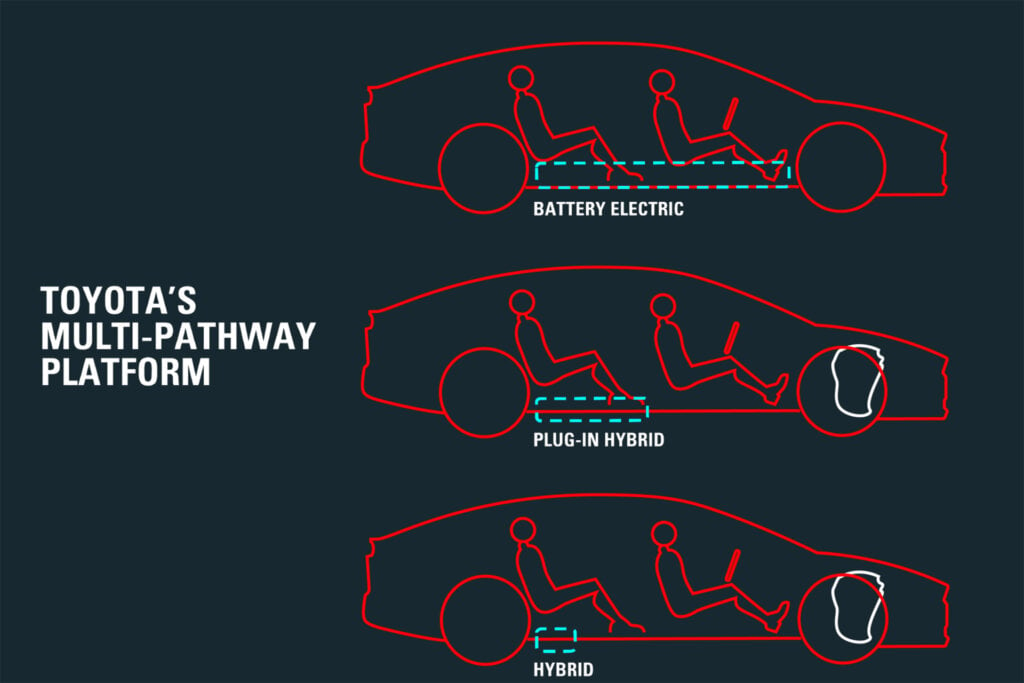
The system is intended to fit with Toyota’s future vehicle range. Its proposed “multi-pathway” architecture will accommodate battery-electric, plug-in hybrid and conventional hybrid powertrains within the same basic platform.
Toyota says the architecture is being designed to deliver uncompromised battery-electric performance, while the smaller combustion engine and hybrid hardware will allow other powertrains to fit without affecting the vehicle’s silhouette, interior space or capability.
It means consumers will have a wider choice of powertrains within a common vehicle design, while Toyota will be able to spread engineering and production costs across the combined sales volumes of several powertrain types.
The company also expects the shared architecture to make manufacturing more flexible, allowing factories to adjust the mix of hybrids, plug-in hybrids and battery-electric vehicles as demand changes between markets.
Flexibility remains central to Toyota’s strategy. The company argues that differences in energy supply, infrastructure and customer requirements mean there will continue to be demand for several forms of electrification.
The new engine family is also being developed to run on renewable and carbon-neutral fuels. Toyota plans to increase external sales of its engine and hybrid technologies in the coming years, potentially extending their use beyond its own vehicles.