25 years of the modern Mini
-
The original Mini is a good example of enduring design. And so when it came time to pen a ‘new’ Mini 25 years ago, the challenge was immense.
The design of the original Mini changed only minimally over its 40 years of production. A successor needed to satisfy modern safety and refinement standards without losing the proportions, charm and ingenuity that made Alec Issigonis’s 1959 design famous.
That was the challenge facing BMW after it acquired Rover Group in 1994. Rover owned Mini, but the two companies soon discovered they had very different ideas about its future.
Rover’s designers wanted to repeat Issigonis’s thinking rather than imitate his bodywork. Their replacement would be tiny, spacious and mechanically unconventional. BMW saw greater potential in transforming Mini into a sporty premium product, combining familiar styling cues with a more substantial and desirable car. The tension between these two viewpoints produced a fascinating design competition to find a successor.
Starting with the original idea
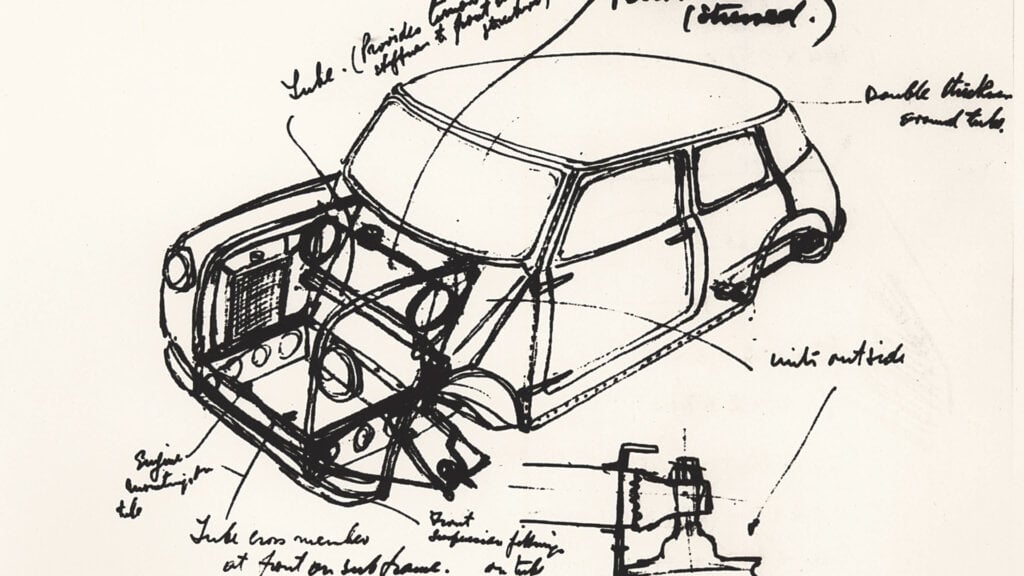
The original Mini was shaped by necessity. Britain needed an economical car that could carry four people while occupying very little road space, so Issigonis turned the engine sideways, pushed the wheels to the corners and drove the front ones. Its short overhangs, upright cabin and minimal mechanical footprint maximised passenger room. They also gave the Mini its famously agile handling.
The body remained fundamentally unchanged from 1959 until production ended in 2000. That continuity made the Mini instantly recognisable, but it also made replacing it particularly risky.
“The Mini remained virtually unchanged for 40 years. It was our task as designers to preserve its soul, while leading it into a new era, not as a copy, but as the new Mini with all the signature Mini characteristics,” says BMW Group design boss Adrian van Hooydonk.
BMW and Rover began work on a replacement in 1995. Rather than combining their designers into one group, both sides developed competing proposals. They presented their work at Gaydon in October that year, with Rover favouring simplicity and BMW leaning towards a sportier, premium interpretation. Frank Stephenson’s proposal was selected supposedly because it fitted BMW’s intended market positioning.
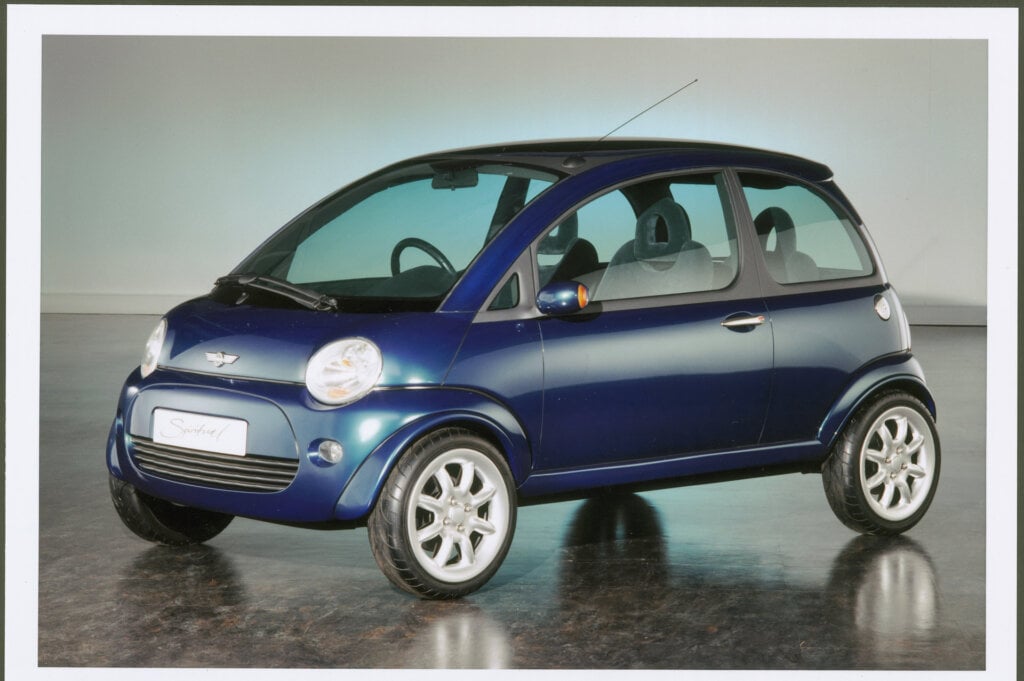
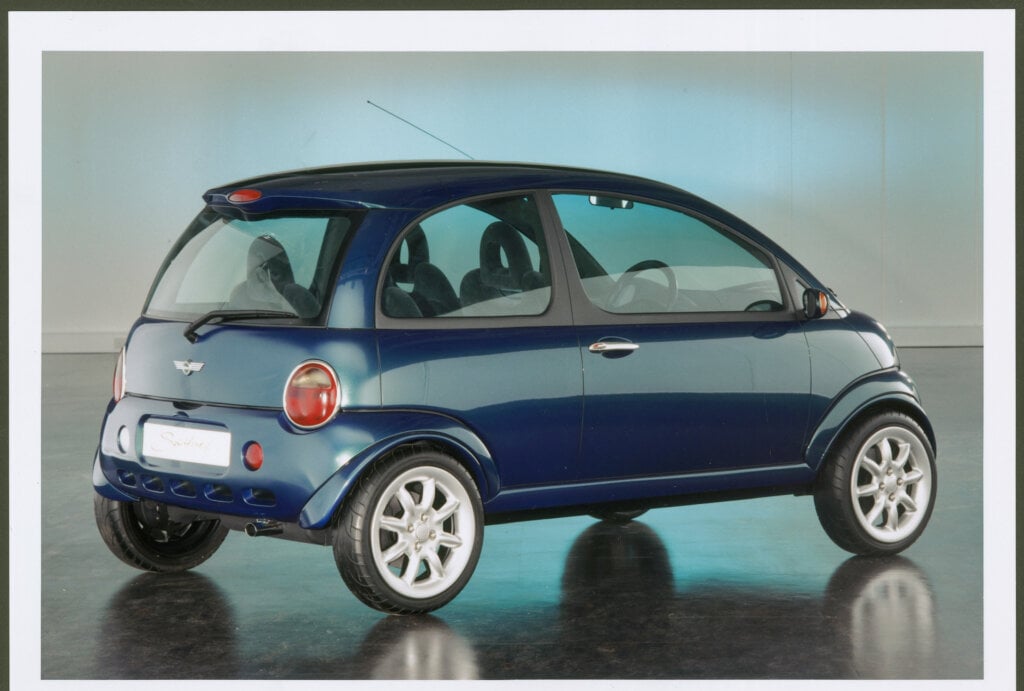
Rover’s answer came in the form of the Spiritual and the longer Spiritual Too concepts at the 1997 Geneva motor show. Designed by a team led by Oliver Le Grice, the Spiritual wasn’t an obvious retro exercise. It was a clean-sheet attempt to create the sort of clever small car Issigonis might have designed using 1990s technology.
The concept was close to the original Mini’s 3.05-metre length, with its engine positioned beneath the rear seats and driving the rear wheels. This freed up more cabin room, while the Spiritual Too demonstrated how the same thinking could produce a larger four-door family car.
There were few obvious references to the classic Mini. The concepts were tall, smooth and almost monolithic, with small wheels and an emphasis on packaging rather than nostalgia. That made them intellectually faithful to Issigonis, but visually far removed from the car buyers knew. Rover was trying to create another revolutionary small car; BMW wanted something that could carry Mini’s identity into the premium market.
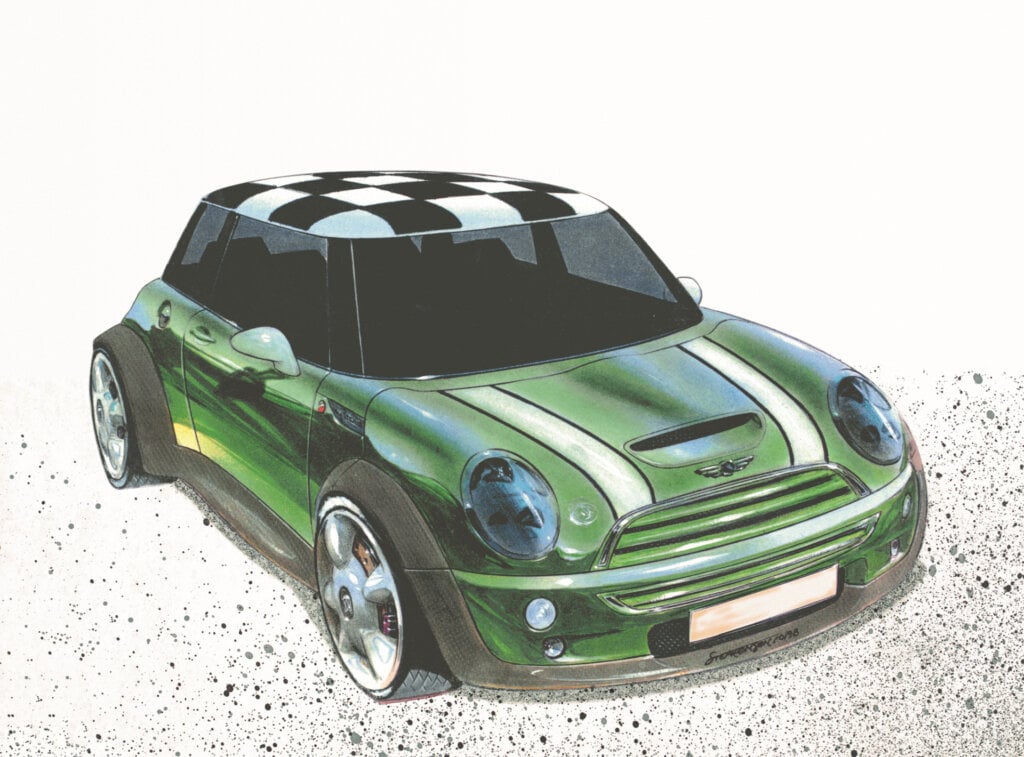
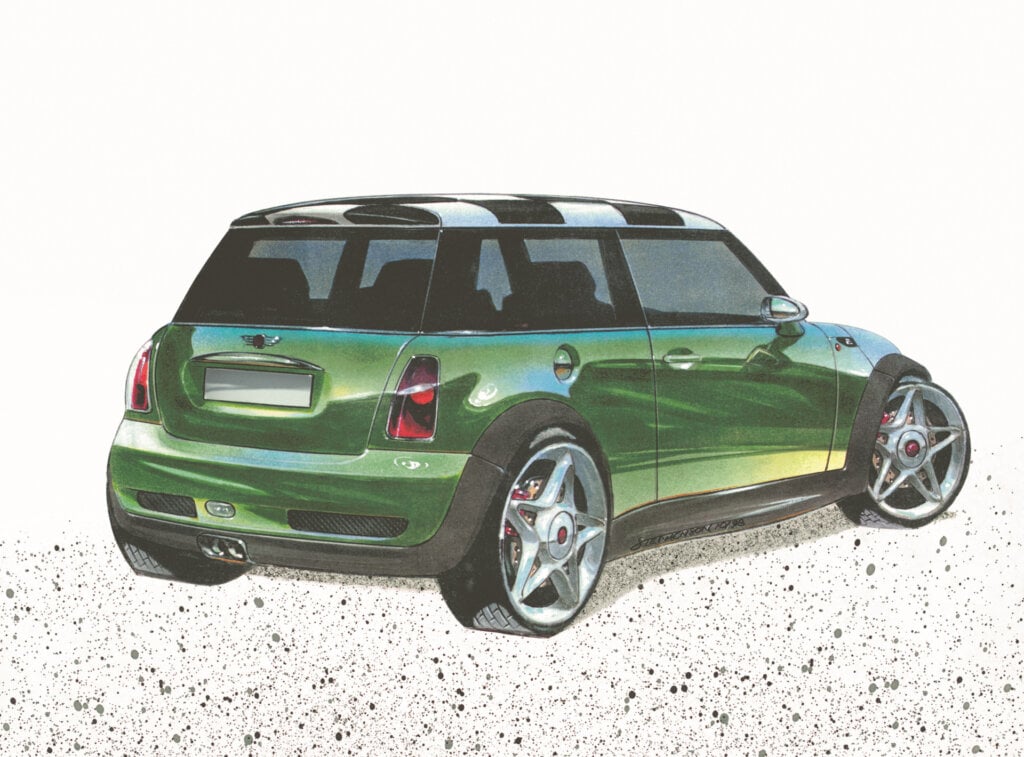
Stephenson took a more disciplined approach to his winning design. He imagined how the Mini might have evolved through successive generations instead of remaining almost frozen for 40 years. His proposal represented the hypothetical modern stage of that development.
As Stephenson later explained, his design was evolutionary rather than revolutionary. It needed to reconnect the Mini with contemporary buyers, not repeat the engineering shock delivered in 1959. The production proposal was previewed at Frankfurt in 1997, before the finished car appeared at the 2000 Paris motor show.
The R50 establishes a new template
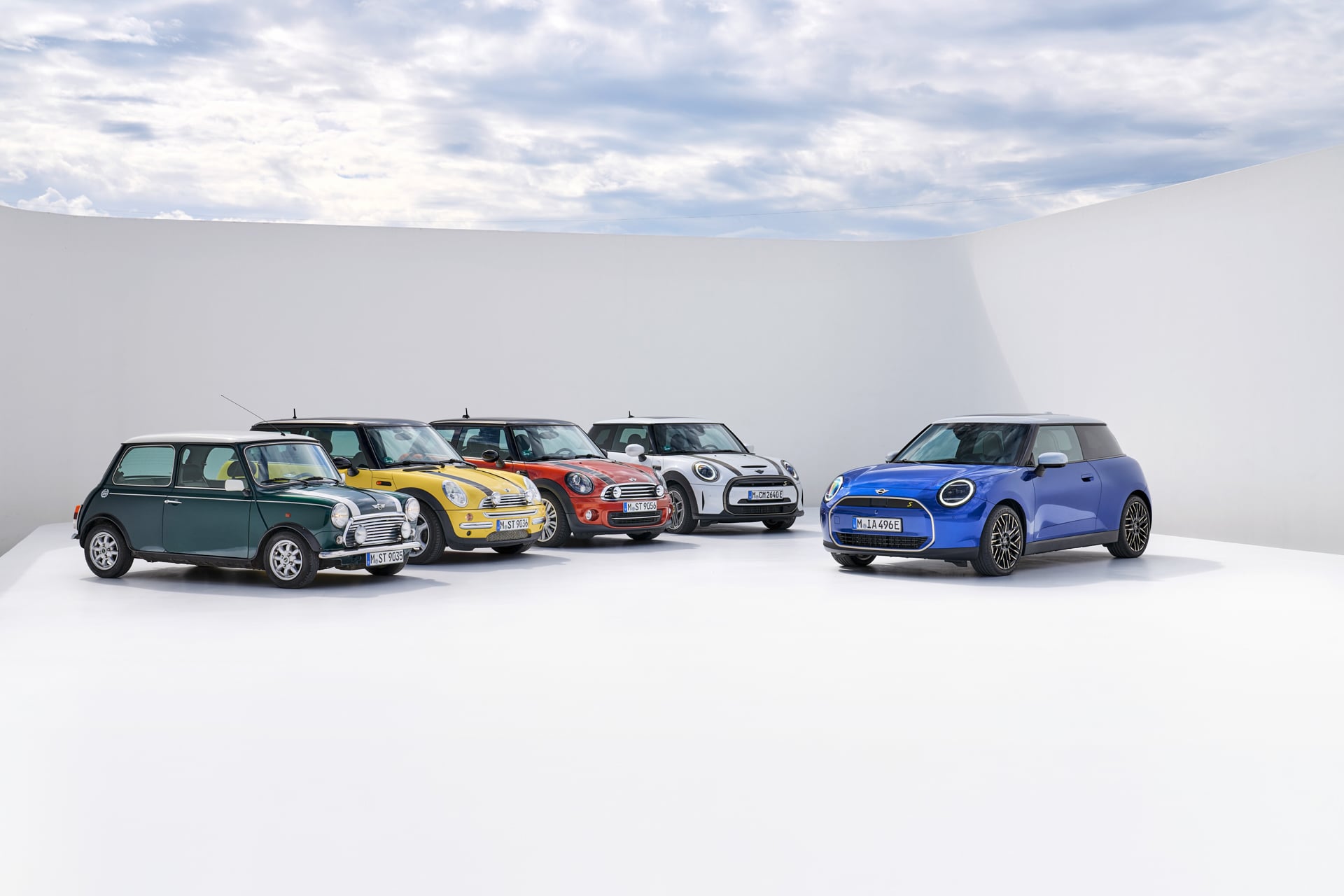
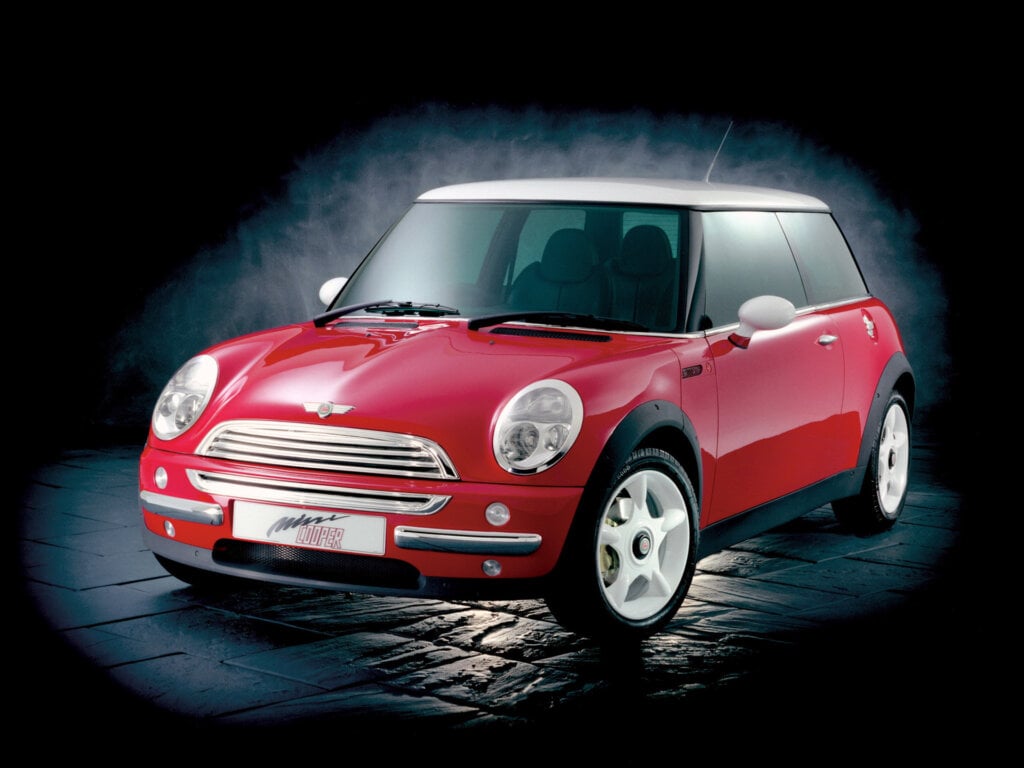
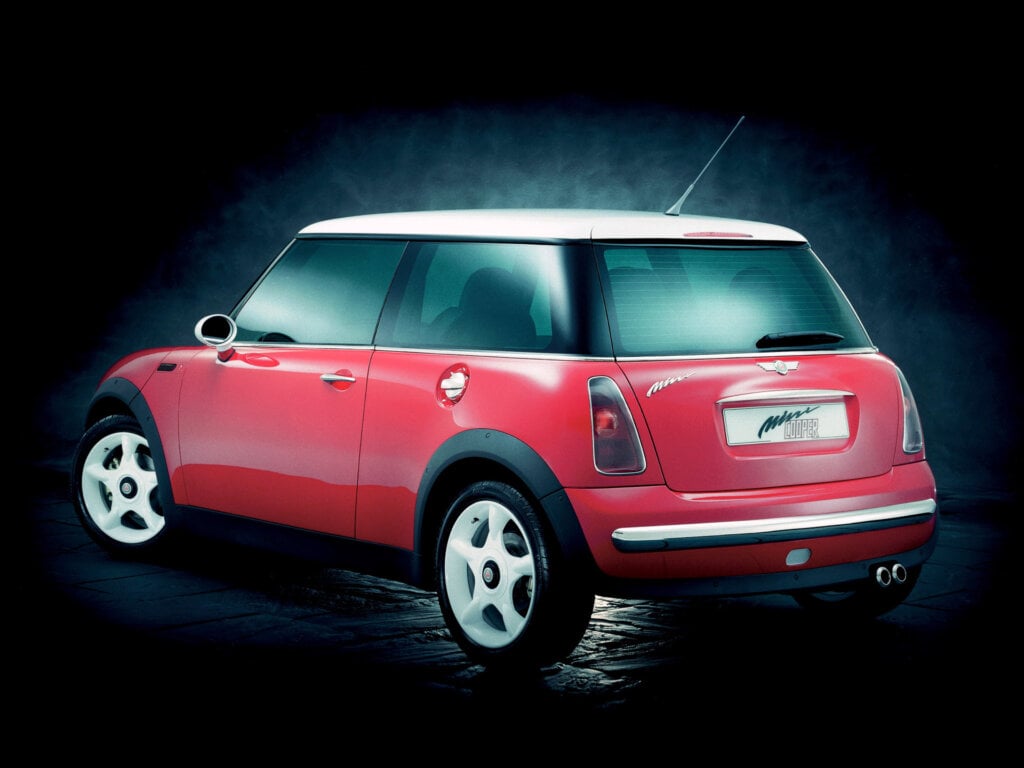
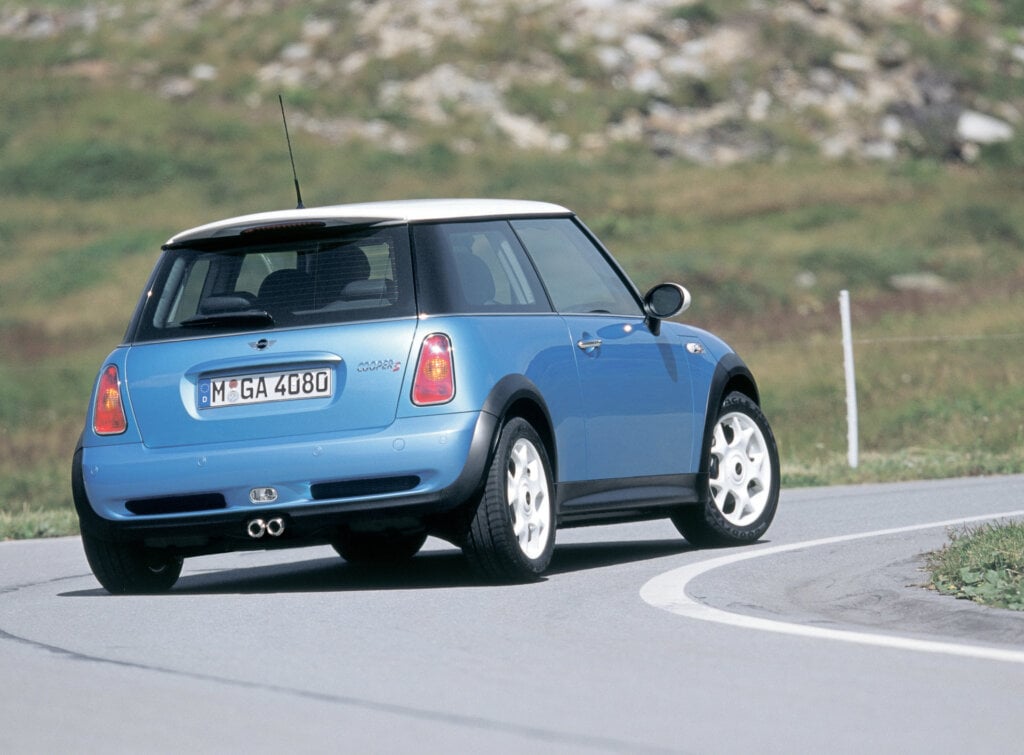
Production began at Oxford on April 26, 2001. The new R50 Mini was substantially larger and more sophisticated than the classic, but Stephenson’s design disguised that growth effectively.
It retained the three-door hatchback body, short overhangs, broad stance and wheels-at-the-corners posture. Its body was visually divided into three layers: the lower metal section, a continuous band of glass and a roof that appeared to float above blacked-out pillars.
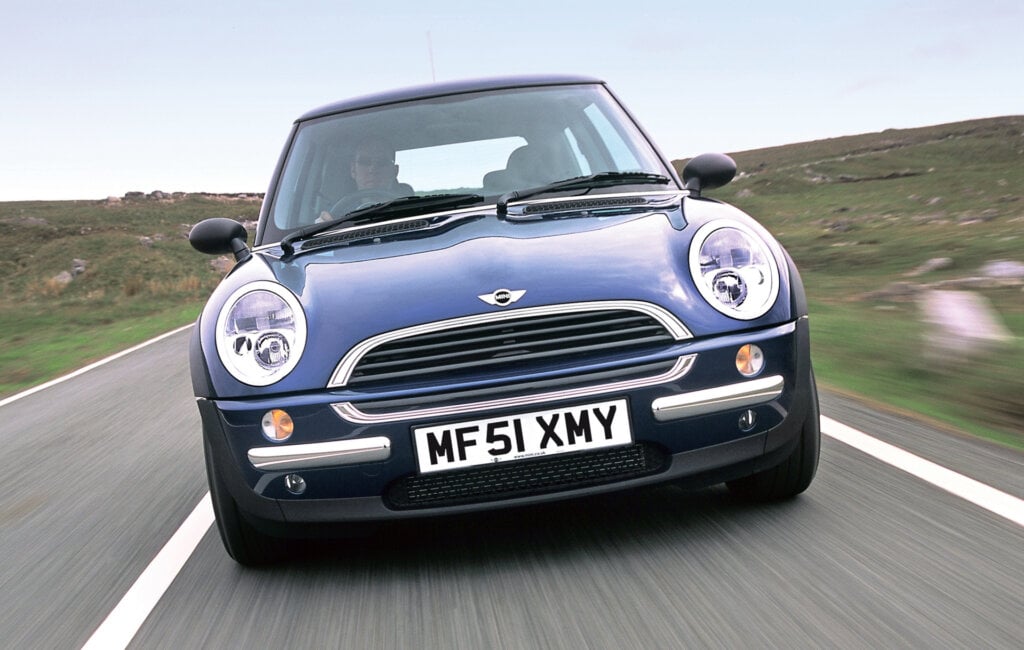
The face used round headlights and a modern interpretation of the hexagonal grille. A clamshell bonnet wrapped over the front guards, while upright tail-lights and chrome detailing referred to the original without copying it exactly.
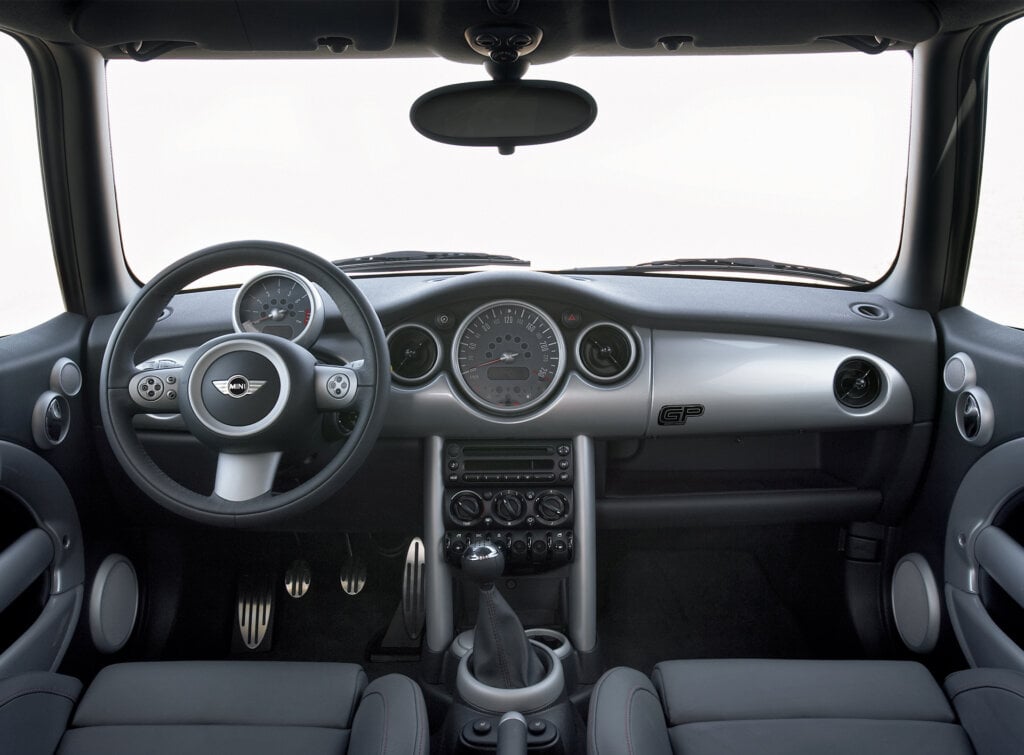
Inside, the huge central speedometer recreated one of the classic Mini’s most memorable features. Toggle switches, circular air vents and elliptical door trim turned simple controls into pieces of theatre.
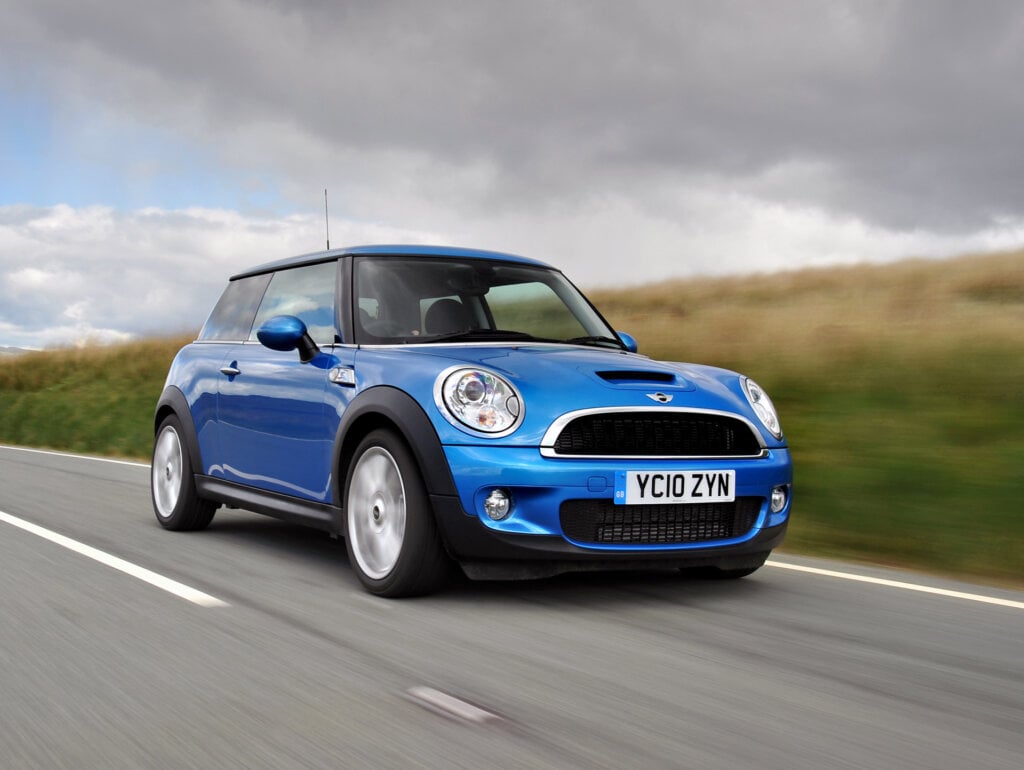
Evolution rather than revolution
The second BMW-era generation, known as the R56, arrived in 2006. Its appearance changed cautiously, with larger dimensions, a more upright nose and additional body height required partly by safety and pedestrian-protection demands.
The headlights were separated from the bonnet, meaning they no longer lifted with it, but the essential graphic remained. The floating roof, wraparound glass, round lamps and broad shoulder line all carried over.
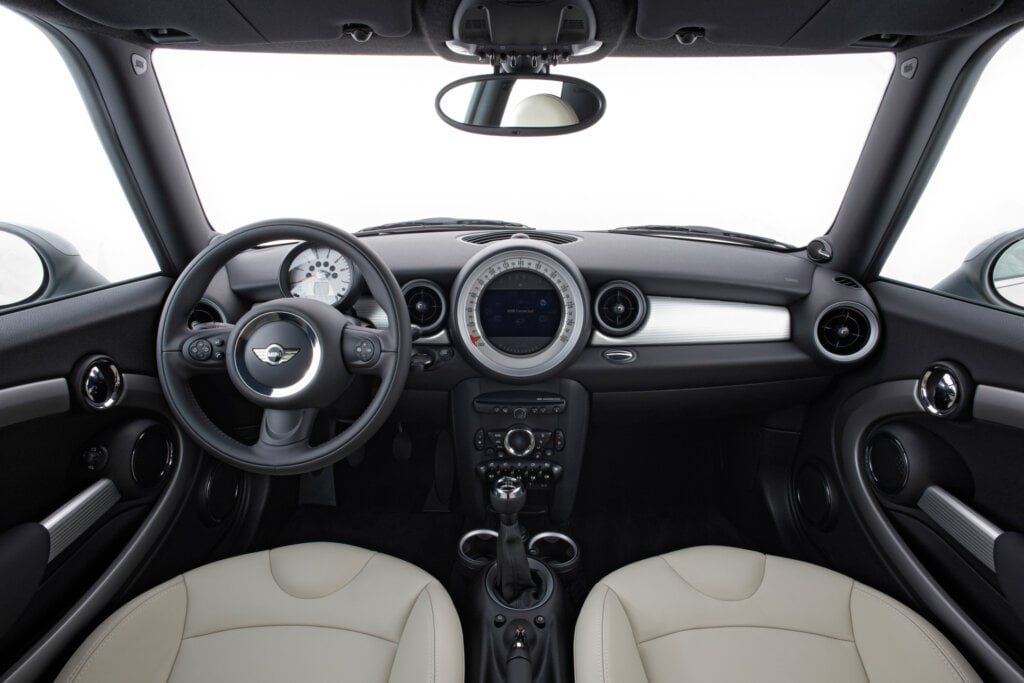
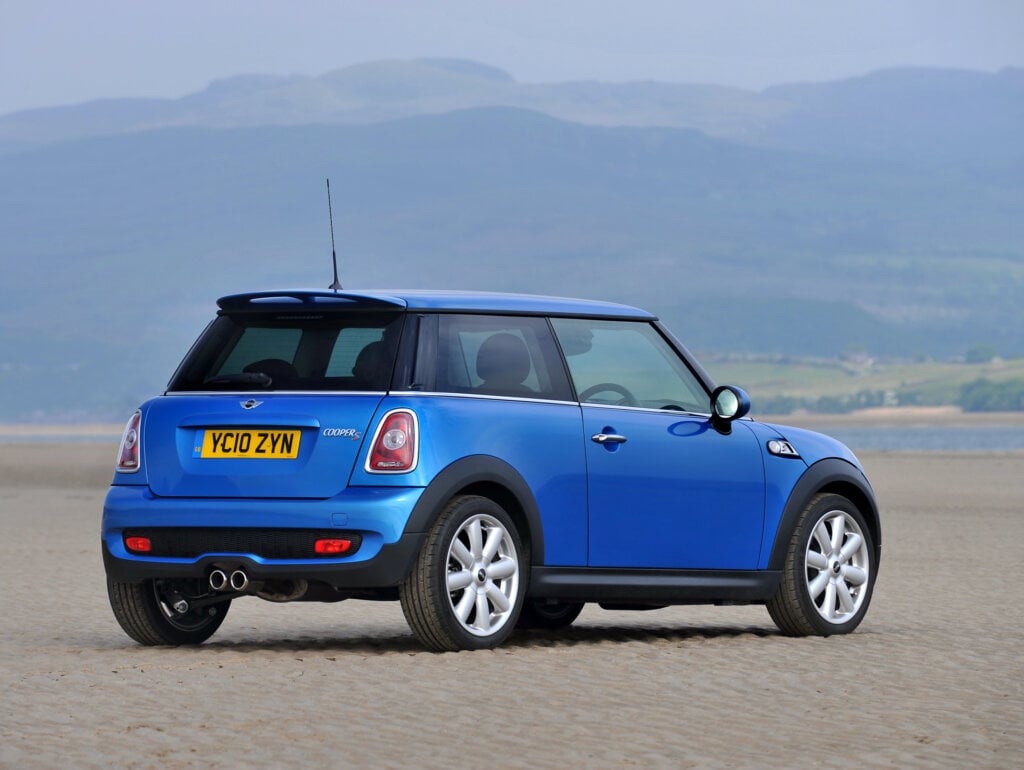
This conservative approach strengthened recognition, although Stephenson later suggested Mini had missed an opportunity to move the design forward more decisively. The brand was beginning to face the same challenge as the Porsche 911: customers wanted something new, provided it looked very much like the old one.
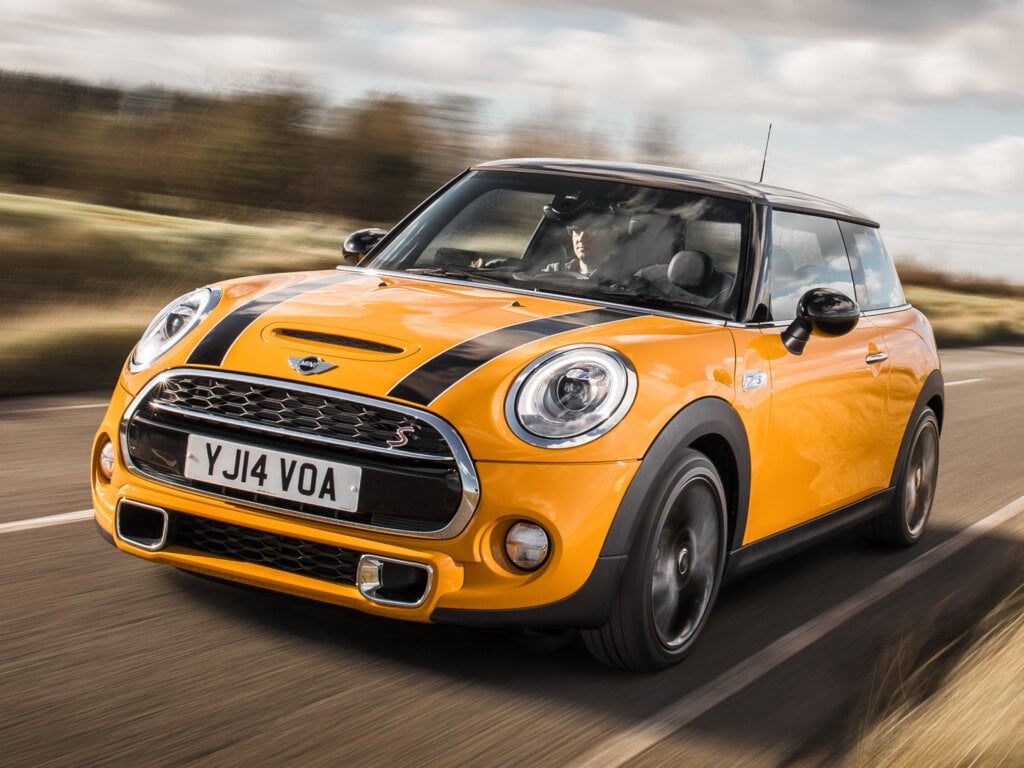
The third modern generation, the F56, arrived in 2014. It was longer, wider and more technically mature, with a more sculpted body and an increasingly prominent grille.
Its headlights gained large surrounding rings, the tail-lights grew and the side details became busier. Inside, the speedometer moved in front of the driver, leaving the large central circle to house the infotainment system.
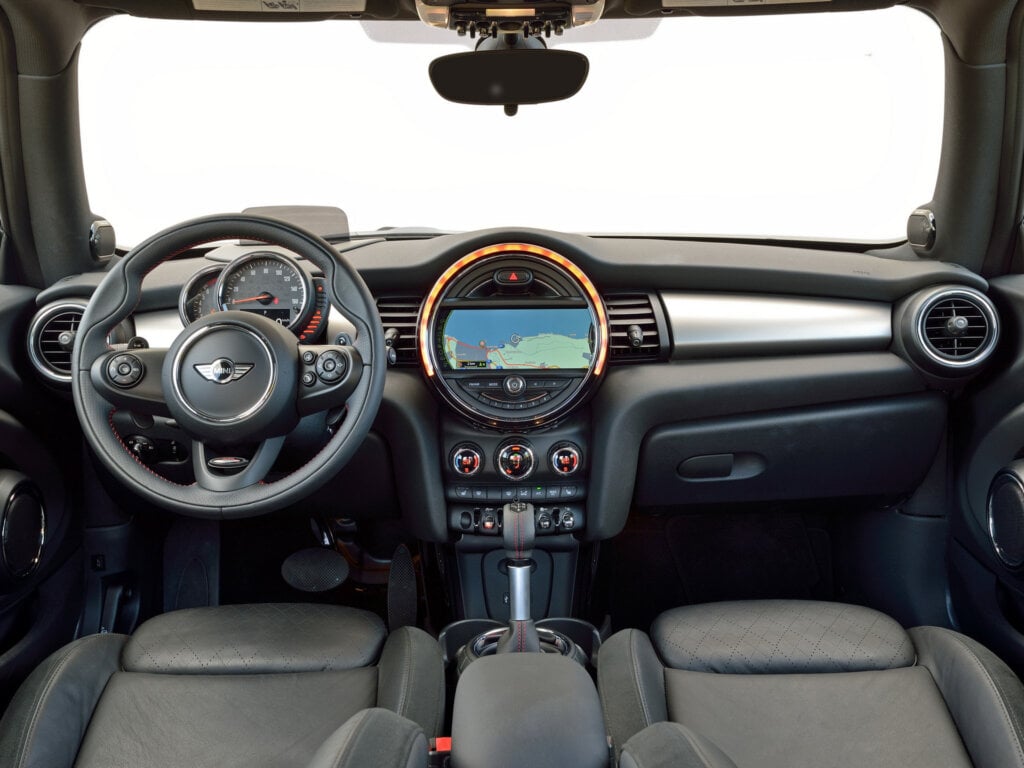
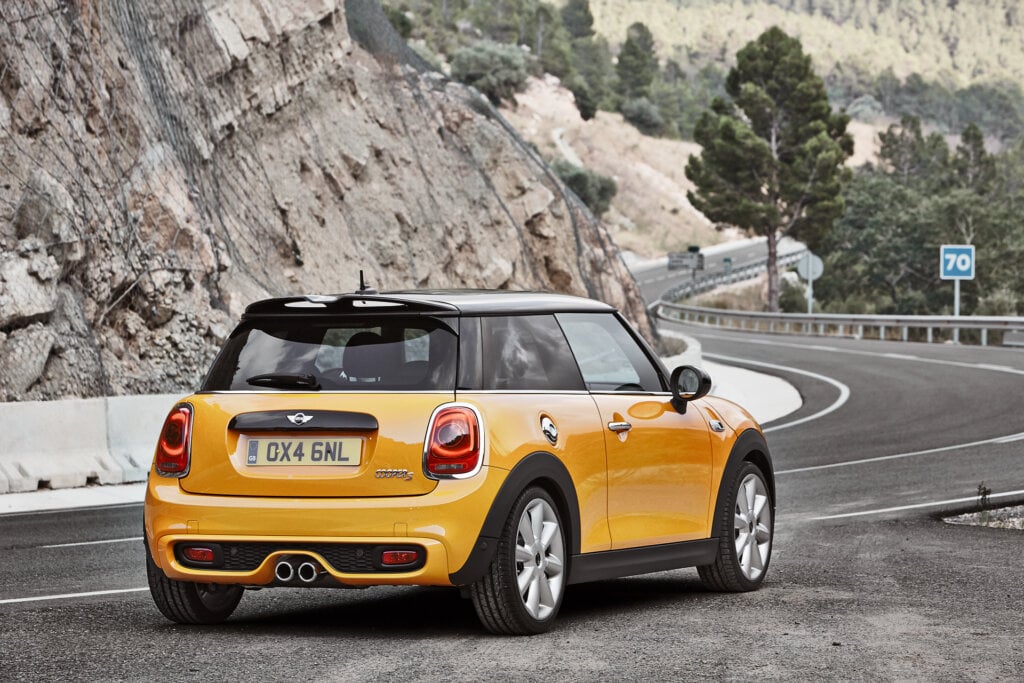
The F56 remained unmistakably Mini, but its extra decoration moved it farther from the visual economy of Issigonis’s car.
While the three-door hatch remained the visual heart of Mini, BMW expanded its design language into new segments.
The Clubman reinterpreted the classic estate, while the Countryman turned Mini into an SUV brand. The range also grew to include a five-door hatch, Convertible, Coupe, Roadster and Paceman, though not all were successful.
Returning to simplicity
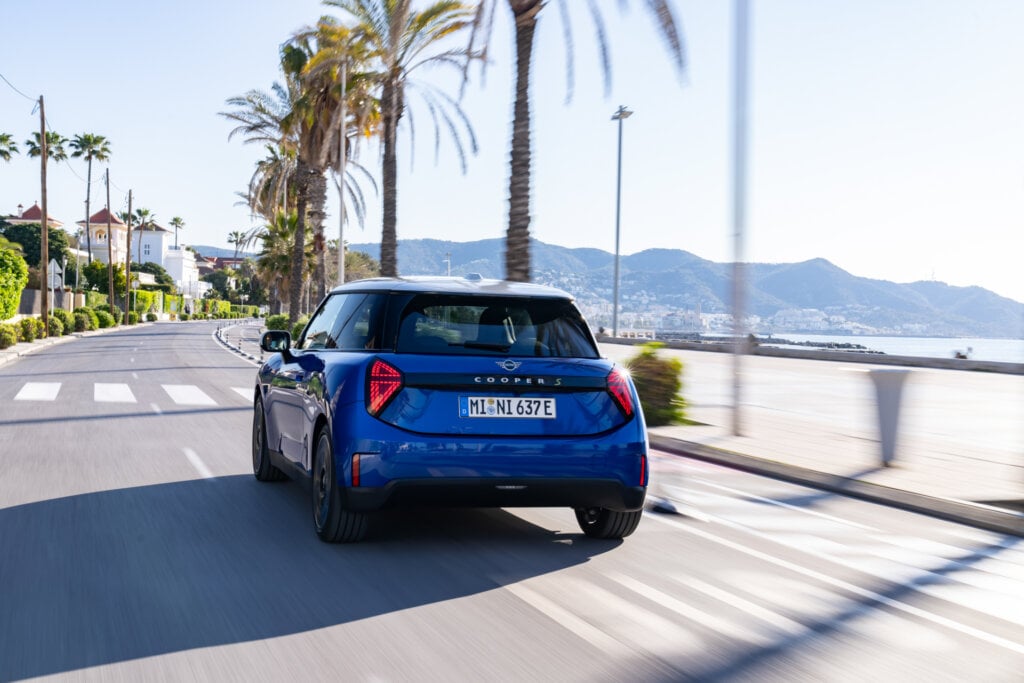
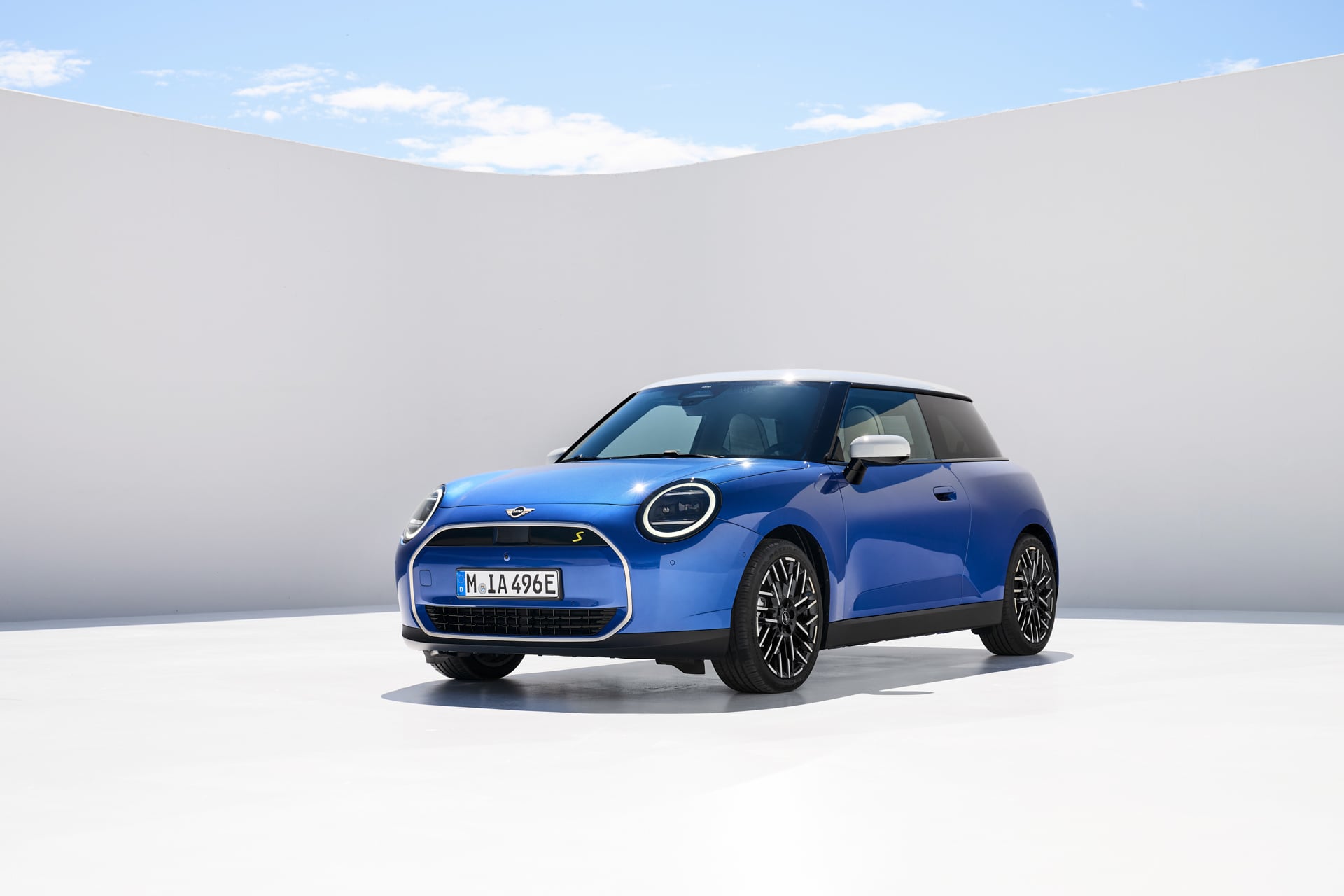
The latest three-door Cooper brings the story back towards the original. Its “Charismatic Simplicity” philosophy removes many of the details accumulated over previous generations.
There are now two closely related three-door models: the petrol F66, developed from the previous platform, and the electric J01. They share a deliberately clean appearance, although the electric car goes further with flush door handles and the removal of traditional wheelarch flares and side scuttles. Round headlights remain, but the grille is simpler and more geometric. At the rear, triangular light units can display different signatures.
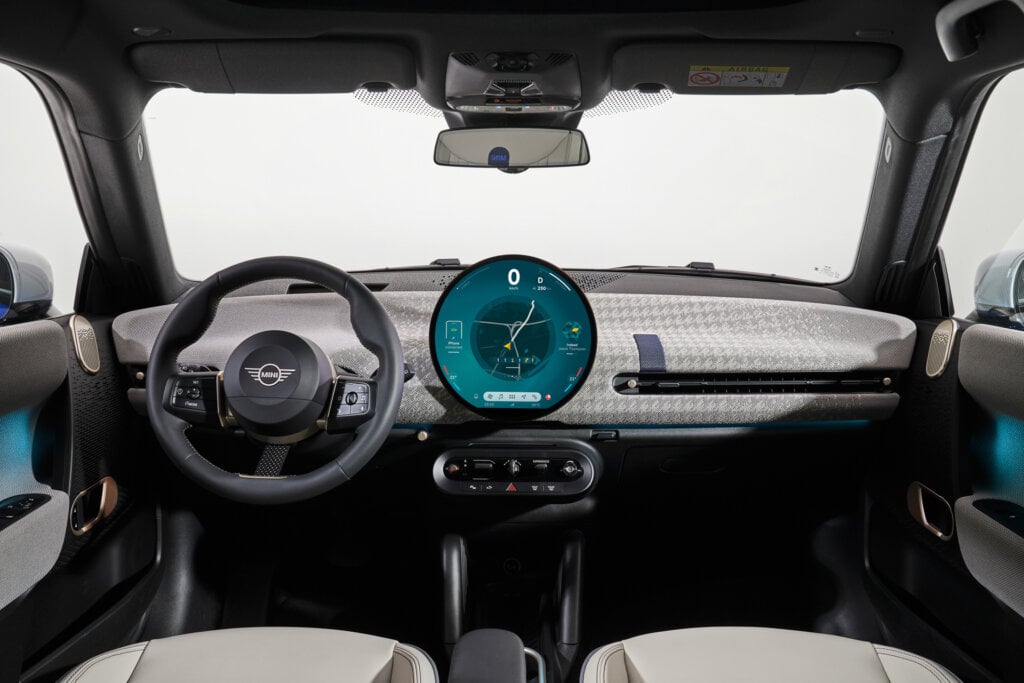
Inside, a slim dashboard and round central OLED display return to Issigonis’s minimalist layout through digital technology. Physical toggle switches survive below the screen, maintaining a tactile link with the 2001 Mini and the 1959 original.
Twenty-five years ago, BMW and Rover debated whether the new Mini should repeat the original’s engineering philosophy or reinterpret its appearance. The production car succeeded because it did some of both.