Police fleet boss answers the internet: why the Superb, and no, you can’t have a Skyline
Words: Richard Edwards
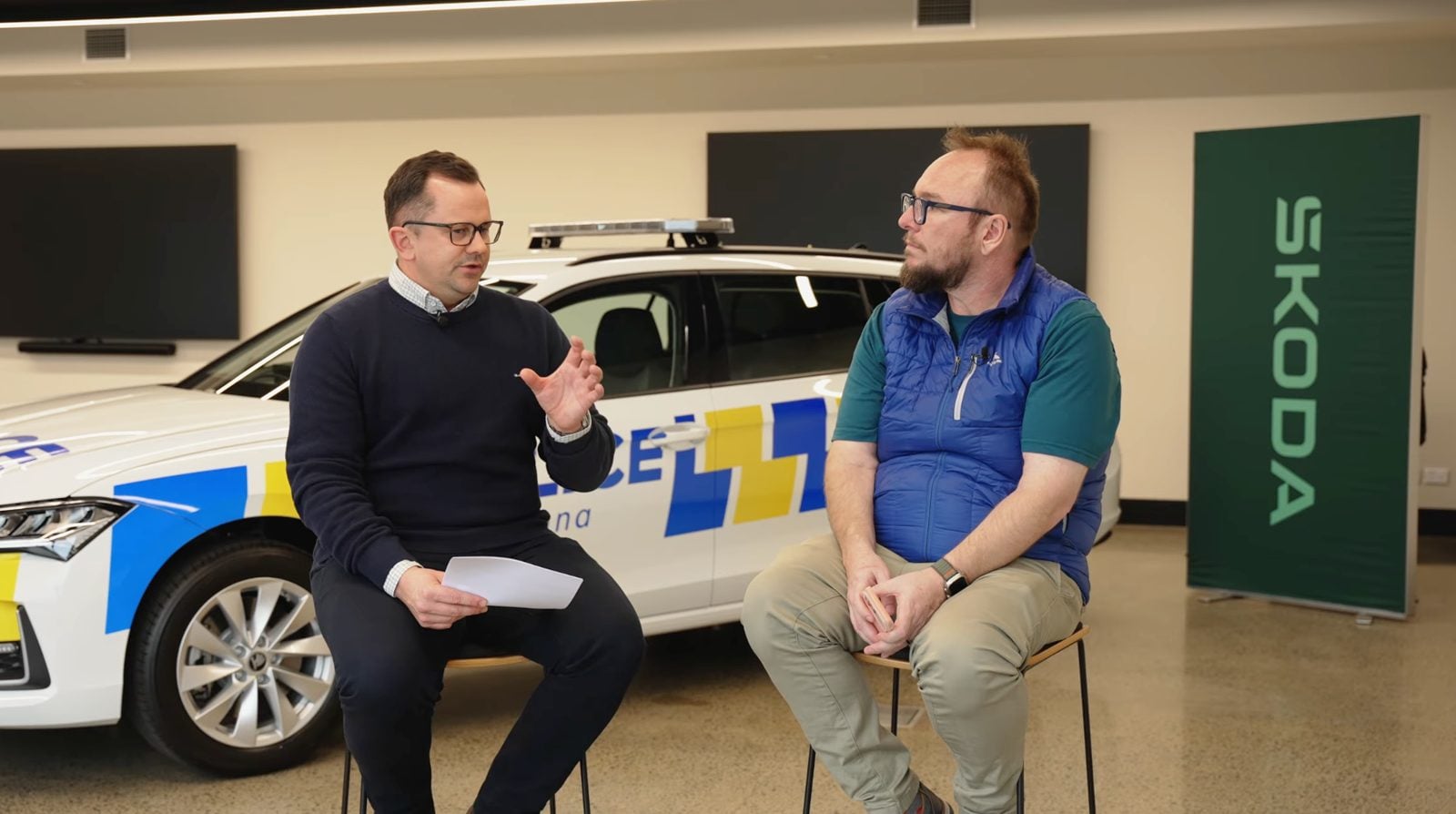
The new Skoda Superb police car has generated plenty of online debate, with nearly two million people viewing recent social posts on the car and thousands weighing in with comments. So we sat down with Police acting national fleet manager Leighton Hamlin to find out exactly how New Zealand’s frontline patrol car gets chosen, and to run a few of your alternative suggestions past him.
The new-generation Superb was unveiled publicly recently at EROAD Fleet Day alongside Skoda New Zealand and fit-out partner Wade Group, as police move on from the previous generation of cars.
Hamlin says the selection process goes well beyond picking something that looks the part.
“There’s quite a lot that goes into it, from making sure first and foremost that the vehicle’s safe for us, reliable, maintainable,” he says. “We don’t want to get a vehicle that comes into the fleet and then we’ve got obsolescence, or we’ve got parts that we can no longer replace.”
Steering, handling and braking all have to stack up for frontline work, along with range. “We have a planning range of about 500 kilometres per shift, so we need to make sure that we have the range.”
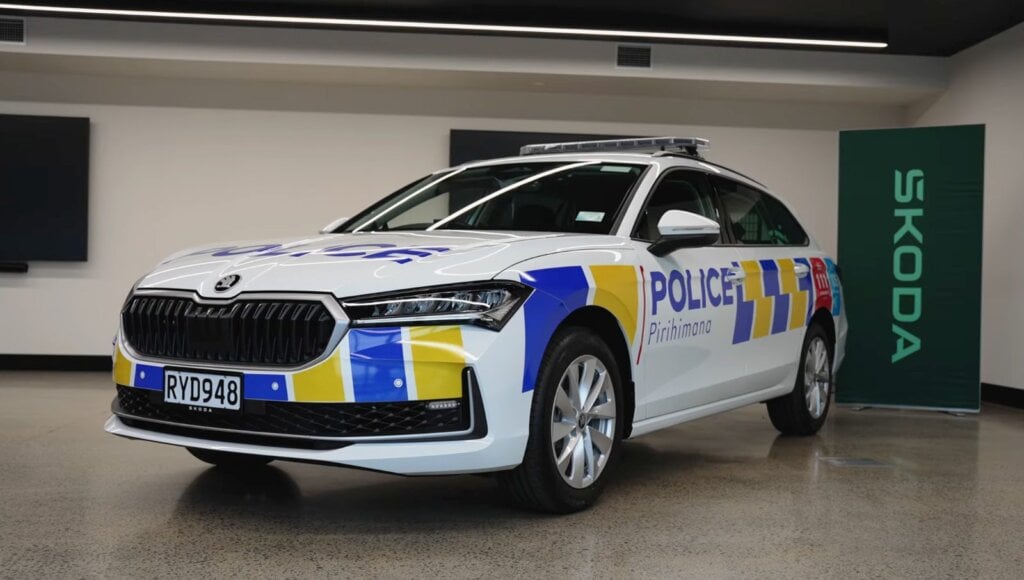
The Superb wasn’t the only contender. With the previous contract running around five years, police went back to market. “We had a few vehicles that came forward. There was Toyota in the mix, we had BMW in there, BYD did come forward as well,” Hamlin says. Candidates are assessed against tabletop requirements covering basics like approach and departure angles, with purchasing running through the all-of-government catalogue and its specialist vehicle category.
One of the first physical tests is one the public never sees: radio frequency interference testing. “We check the vehicle to make sure that there’s no radio frequency noise coming from things like, it could be just a USB point, something in the vehicle that’s emitting on the same frequency that our radios operate on.”
Other considerations include training burden on staff, warranty, parts availability and even seat durability, with holsters chewing through trim quickly.

“I guess we say we want a high-spec drivetrain but a low-spec interior,” Hamlin says. The Superb’s wide rear door aperture also rates a mention. “It’s easy to get some of our customers in the back seat without too much stress, or trying to squeeze them into the back of the vehicle.”
Cost, inevitably, is a major factor. “If a vehicle’s costing 20 per cent more, that means we can’t deliver as many,” Hamlin says. “We average about 500 vehicles a year to maintain the fleet, and we’ve got about 4000 vehicles in the fleet. So we do need to make sure that every dollar counts.”
He also confirms the sticker price the public sees is not what police pay. “Just because of the scale and volume that we have with police, we can negotiate really good rates. And not only that, but things like parts as well.”
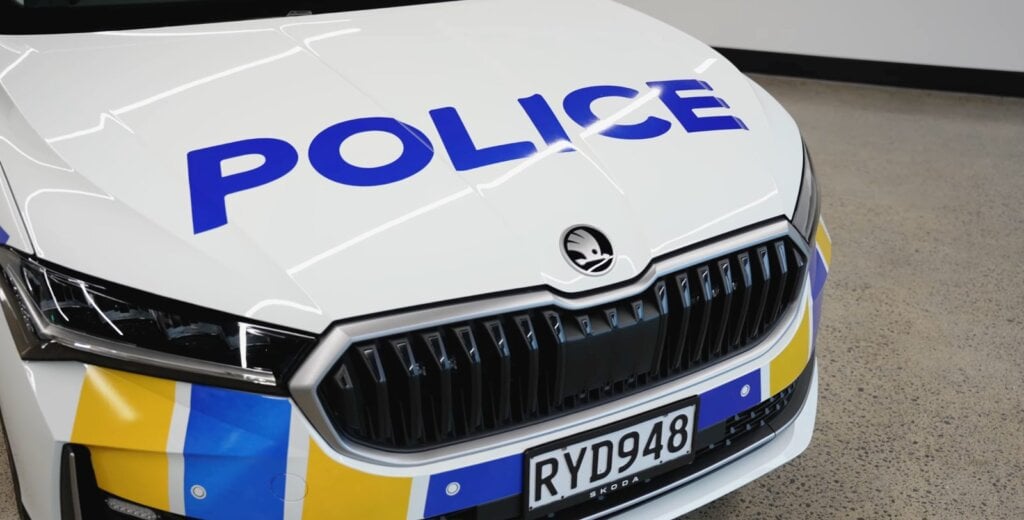
Frontline staff do get input. The new Superb went through extensive road testing, including high-speed runs on a hired section of runway at Ōhakea and simulated pursuit work at Manfeild. The first 19 examples are now heading to the frontline for a two-to-three-month evaluation before the wider rollout, with refinements made if needed.
Testing also covers how modern driver assistance systems behave under urgent duty driving. “When you’re urgent duty driving and you’re going between lanes and you’ve got lane assists trying to fight you, that can be pretty difficult and sometimes less safe than it is more,” Hamlin says. Police even tested how pre-collision braking reacts when driving off road through long grass. The biggest day-to-day change for officers, he says, will be the gear selector moving to the column stalk.
Once cars land in New Zealand they head to Wade Group in Hamilton, where a full production line strips each vehicle and installs the wiring, lights and sirens that turn a Superb into a patrol car. Radios and hardware are then swapped from outgoing vehicles at district level.
Asked why police have stuck with a wagon while overseas forces move to large SUVs and utes, Hamlin says the Superb simply suits the job. “You’ve got plenty of room, plenty of volume to store things, and they’re still a very efficient vehicle.” The Kodiaq SUV covers rural areas where ground clearance and all-wheel drive earn their keep.
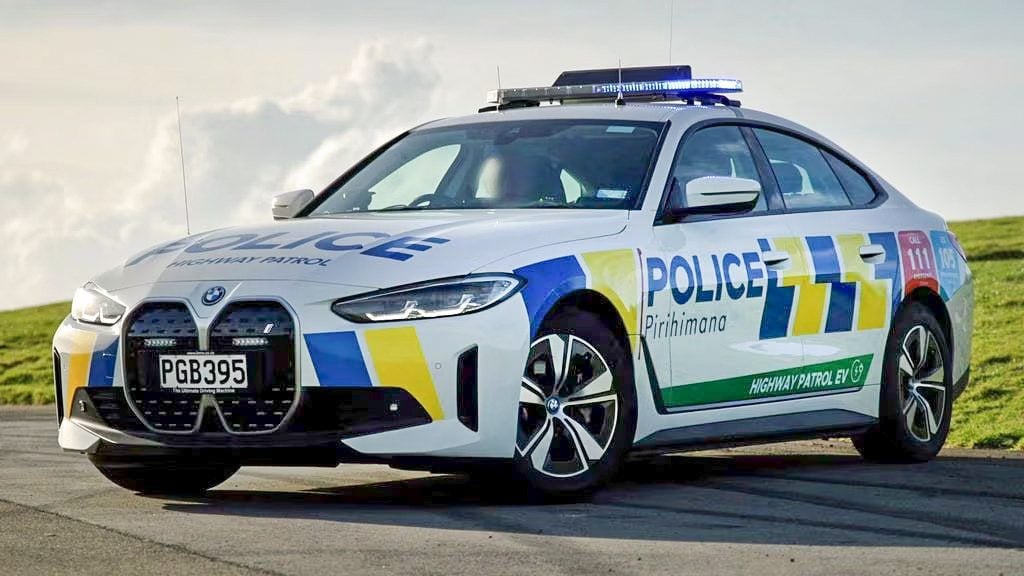
On electrification, hybrids, PHEVs and EVs are all in the fleet, but the 500km shift requirement remains the sticking point for frontline use. “We need to make sure that we can do that and we’re not spending two hours juicing up,” Hamlin says. “People probably want us out there doing policing.” BMW’s electric i4 has found a home with highway patrol, where structured shifts allow charging between duties. “They’re just a great high-performance vehicle. They seem to pull people over with relative ease.”
Then came the quick-fire round, where we put the internet’s suggestions to him. The Kia Stinger was genuinely considered originally. The Tesla Model Y? “Super fast car. Glass roof though, bit hard for antennas.” The Toyota Aqua got shorter shift: “I think they’d get stolen. We would end up with none of them.”
The Nissan Skyline clearly struck a chord. “That would be cool, I’m a bit of an RB fan myself. I wish we actually had some Skylines. Maybe that’s something I need to work on.”
Around 800 Holden Commodores still soldier on alongside roughly 2000 Skodas, and police do already run a Ram 1500, towing a maritime vessel in Auckland.
As for seized vehicles, police can’t simply put proceeds of crime into the fleet, though Hamlin notes Czech police famously ran a seized Ferrari in full livery. And a horse? “I guess it’d be efficient. Feeding it could be a bit of an issue, and maybe the time it takes to actually pursue someone.”
Watch the full interview above.