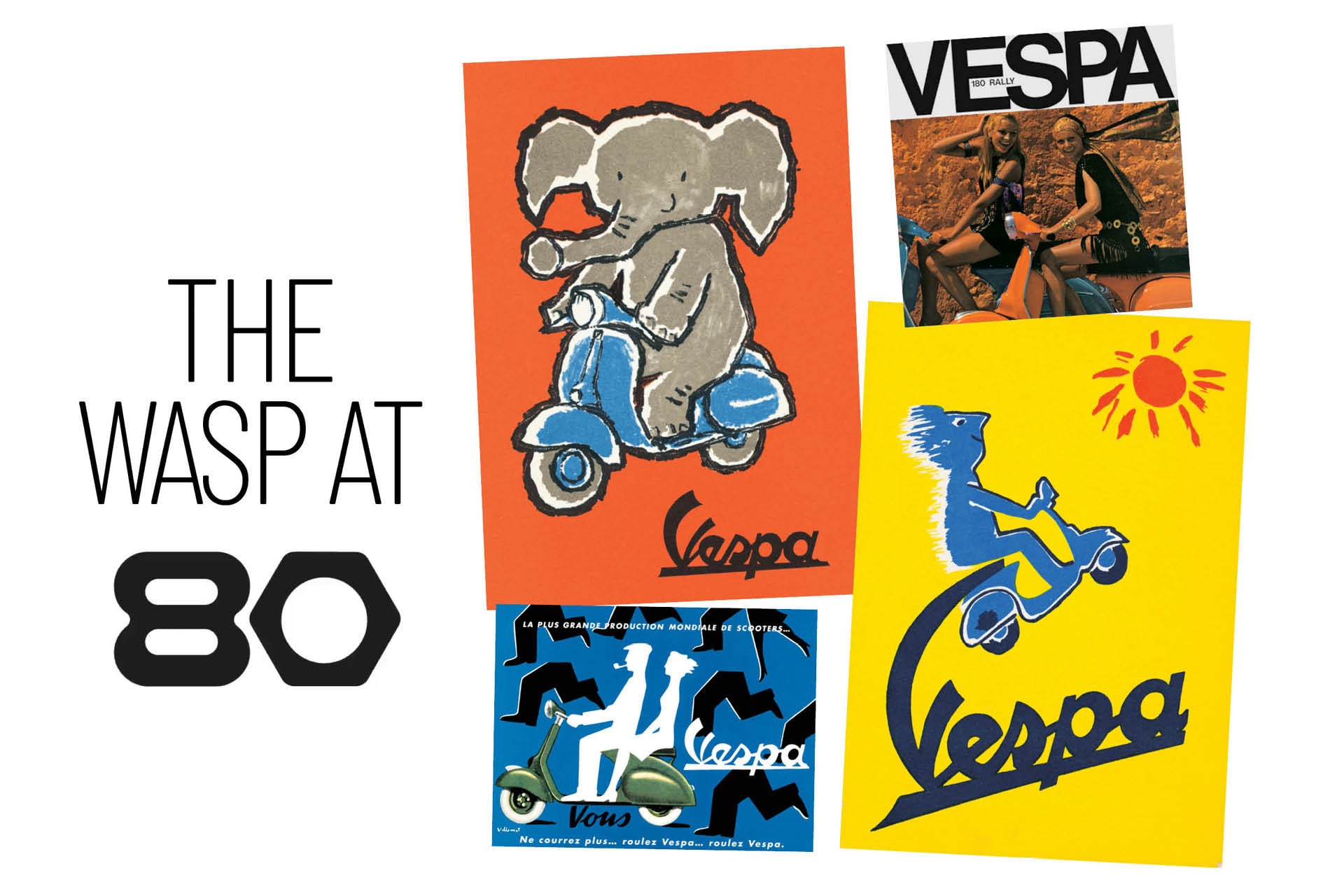
Vespa at 80 years
Words: Kyle Cassidy
One of the most recognisable two wheelers turns 80 this year. Here we give you a brief run down of some of Vespa’s more significant models.
On April 23, 1946, a simple idea rolled out of post-war Italy and into history. What began as an affordable two-wheeled solution for a country rebuilding itself would become one of the most recognisable vehicles ever created. Eight decades later, the name Vespa remains synonymous with scooters, style and a distinctly Italian sense of freedom.
Few shapes in the automotive world are as instantly identifiable as the Vespa’s curved steel body, step-through frame and delicate handlebar silhouette. It is more than just a mode of transport; it is a cultural icon that has transcended generations, continents and trends. As Vespa celebrates its 80th anniversary in 2026, the milestone offers a chance to reflect on how a humble scooter became one of the world’s great design success stories.
The story began in Pontedera, Italy, where Piaggio sought to create an affordable and practical machine capable of getting the nation moving again after World War II. The company filed a patent in 1946 for what it described as a “practical” motorcycle that offered comfort, cleanliness and elegance. Drawing heavily from Piaggio’s aviation background, the original Vespa 98 featured streamlined bodywork designed to shield riders from mud and grease while delivering an entirely new riding experience.
Legend has it the scooter earned its name when Piaggio executive Enrico Piaggio saw the prototype and remarked that it resembled a “vespa”, Italian for wasp, thanks to its narrow waist, rounded rear and buzzing engine note. The name stuck, and so did the concept.
Powered by a modest 98cc engine, the first Vespa was hardly fast, but it was revolutionary. Easy to ride, affordable to own and accessible to both men and women, it opened up personal mobility to an entirely new audience. At a time when motorcycles were often intimidating, dirty and mechanically demanding, the Vespa represented freedom without complication.
Sales quickly accelerated. Production climbed from just over 2,400 units in 1946 to more than 18,000 the following year, but Vespa’s true breakthrough came in 1952 when Hollywood embraced the scooter. Audrey Hepburn’s unforgettable ride through Rome alongside Gregory Peck in Roman Holiday transformed the Vespa into a global symbol of romance, adventure and youthful optimism.
By the 1960s, Vespa had become inseparable from youth culture. Bright colours, fashionable riders and carefree Mediterranean imagery defined its advertising, while compact models such as the Vespa 50 introduced affordable mobility to an even wider audience. Later, the rugged PX series cemented Vespa’s reputation for reliability, remaining in production for nearly four decades.
Though competition and changing tastes challenged the brand through the 1980s and 1990s, Vespa never disappeared. Instead, it evolved. Modern Vespas retain the unmistakable DNA of the original while incorporating contemporary technology, safety and performance.
Today, more than 19 million Vespas have been sold worldwide, and the scooter remains as much a statement of lifestyle as transport. To mark its 80th anniversary, Vespa has introduced special-edition Primavera and GTS models finished in a heritage-inspired “Verde Pastello” green, a nod to the original 1946 Vespa 98.
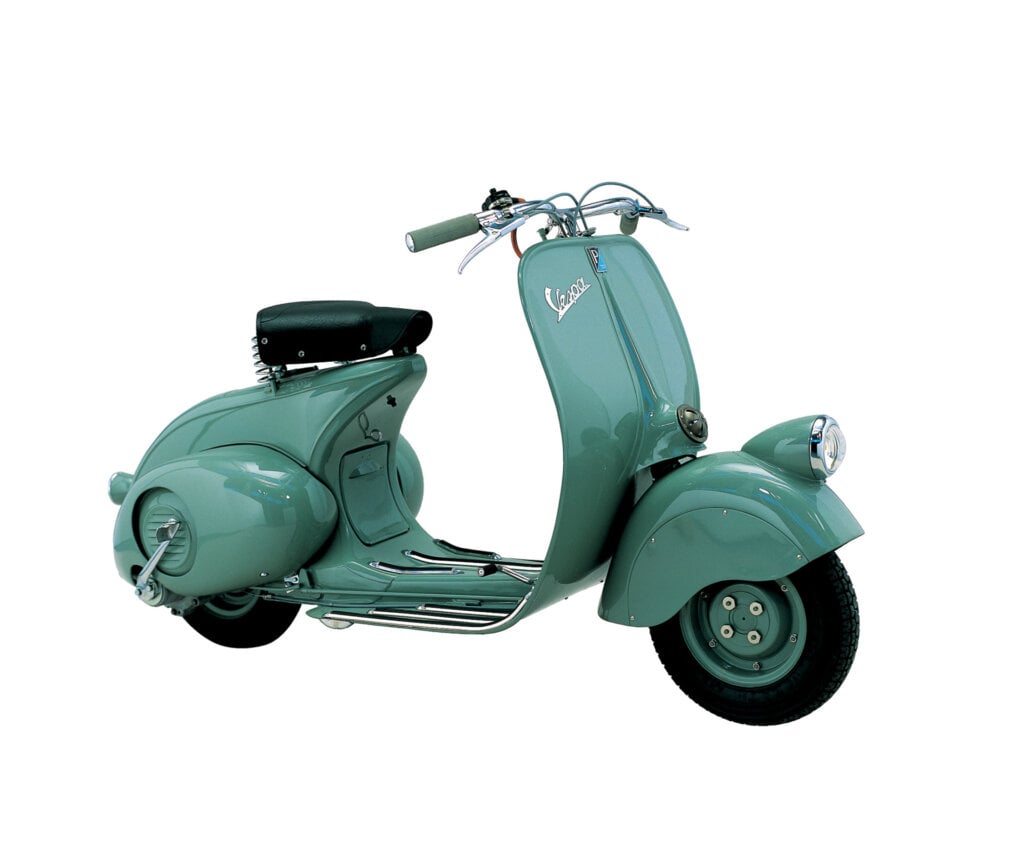
1946 98
The motoleggera utilitaria Vespa, or light motorised runabout, was presented to the public for the first time in April 1946 at the Rome golf club. Featuring a 98cc two-stroke single, it pumped out 3.2 horses for a top speed of 70km/h thanks to a three speed gearbox. This original model was designed for function rather than fashion, focusing on mobility and fuel efficiency (3 litres/100 km) during Italy’s reconstruction. A total of 2,484 were produced in its first year of life with roughly 35,000 units sold by 1948.
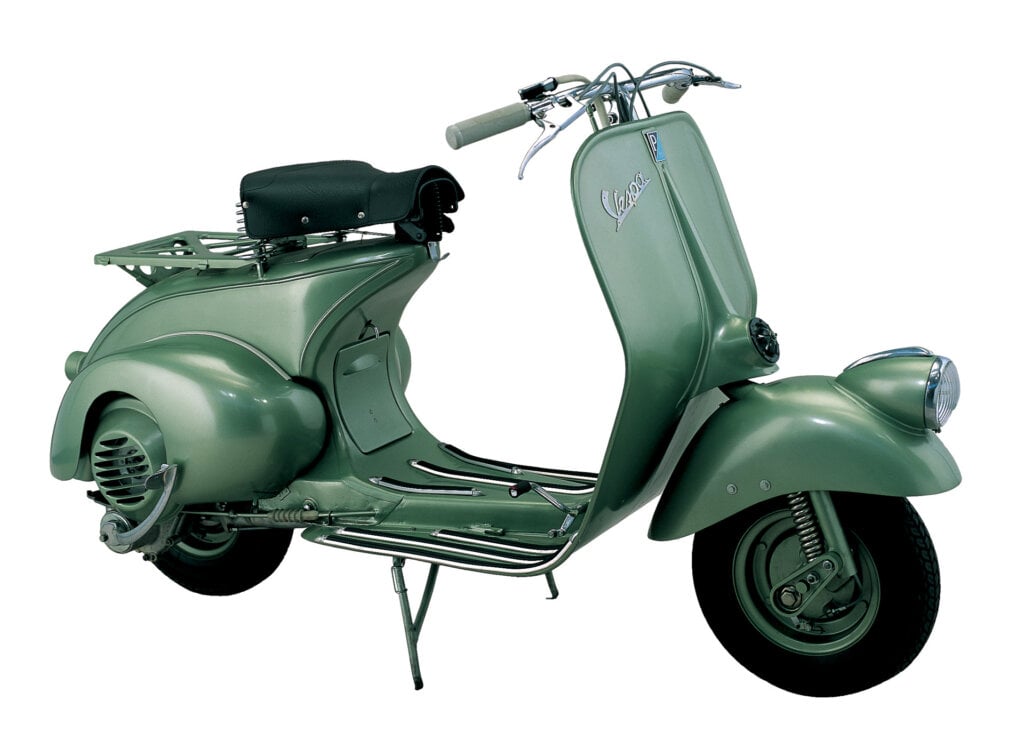
1948 125
The 1948 Vespa 125 evolved Piaggio’s design with a larger 125cc two-stroke engine. It used a “Bacchetta” system with solid mechanical rod linkages instead of cables to change gears from the handlebar. It introduced an improved front suspension and a rear shock absorber to handle rough roads. Featuring a pressed steel monocoque frame, 8-inch wheels, and an upward-opening engine door, it combined innovative aviation-inspired engineering with practical everyday utility, cementing Vespa’s global cultural legacy.
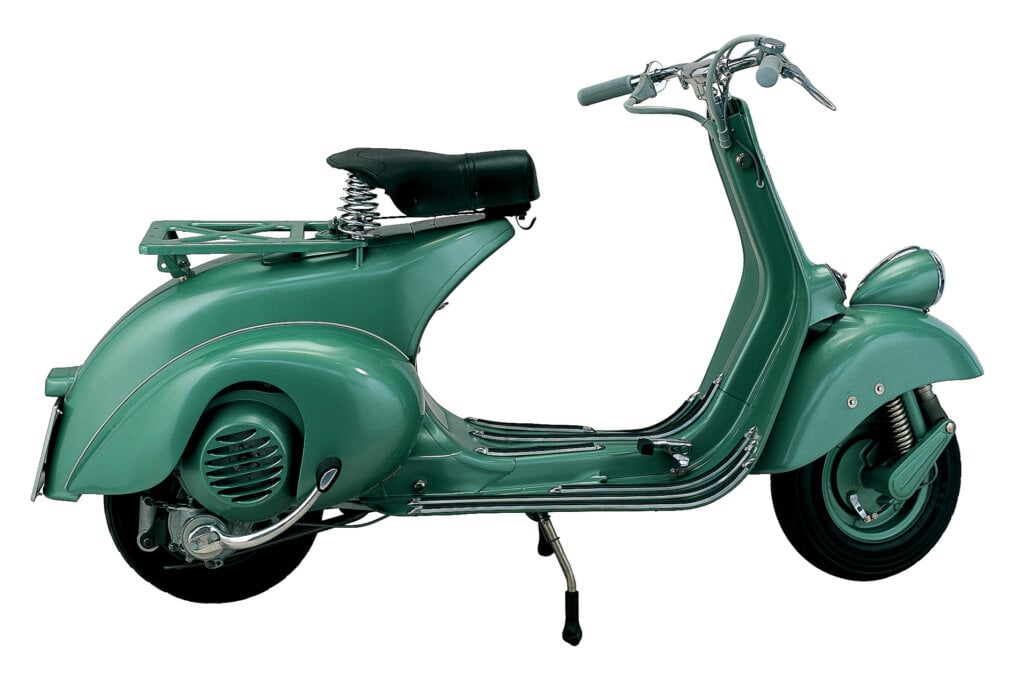
1951 125 mod. 51 (V30T)
The 1951 Vespa 125 Mod. 51 (V30T) marked a major technical milestone, replacing the rigid “Bacchetta” mechanical rods with flexible Bowden control cables for smoother, more precise gear shifting. This iconic faro basso (low headlight) model gained widespread global fame after starring alongside Audrey Hepburn in the classic film Roman Holiday. Engineered for greater comfort, it featured a front hydraulic shock absorber and vibration-damping silent blocks on the handlebar. Visually, it introduced a distinct rectangular rear light and a redesigned green saddle that cleverly concealed the front suspension spring
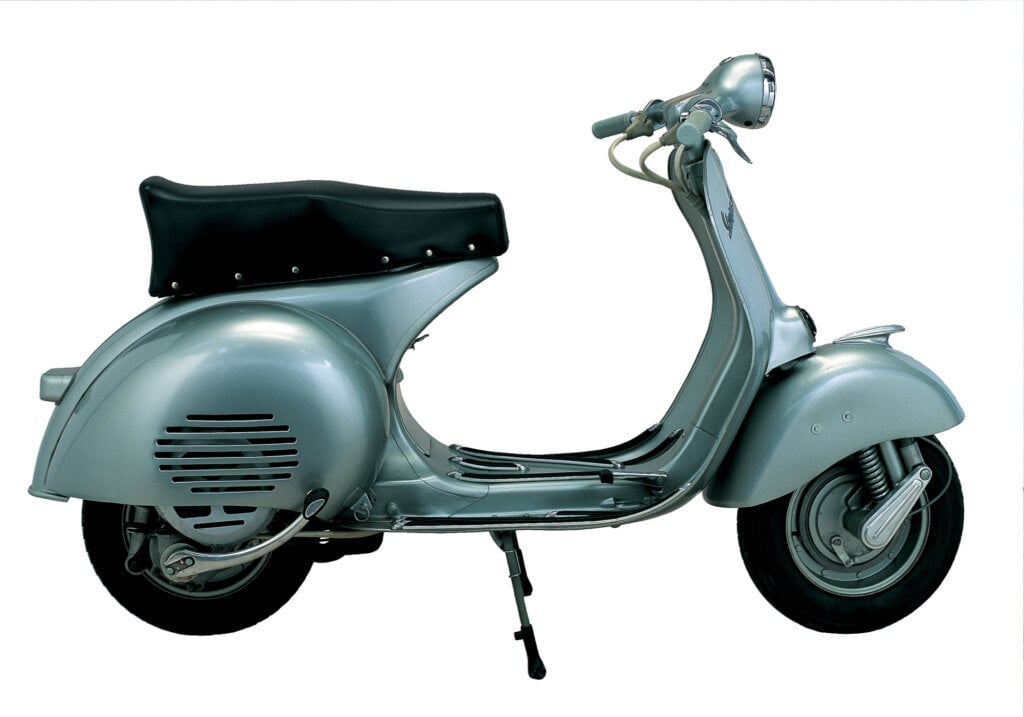
1955 150 GS
The 150 GS (Gran Sport) was Piaggio’s first mass-produced sport model. Engineered to compete with conventional motorcycles, it featured a high-performance 150cc, eight horsepower engine, and was capable of 100km/h. The GS introduced critical innovations: a four-speed gearbox, 10-inch wheels for high-speed stability, and an aerodynamic, rounded body with an integrated handlebar casting. It became an instant icon of post-war Italian design and the global “Mod” subculture. Today, the 150 GS remains one of the most collectible, aerodynamically elegant, and historically significant vintage Vespas ever built.
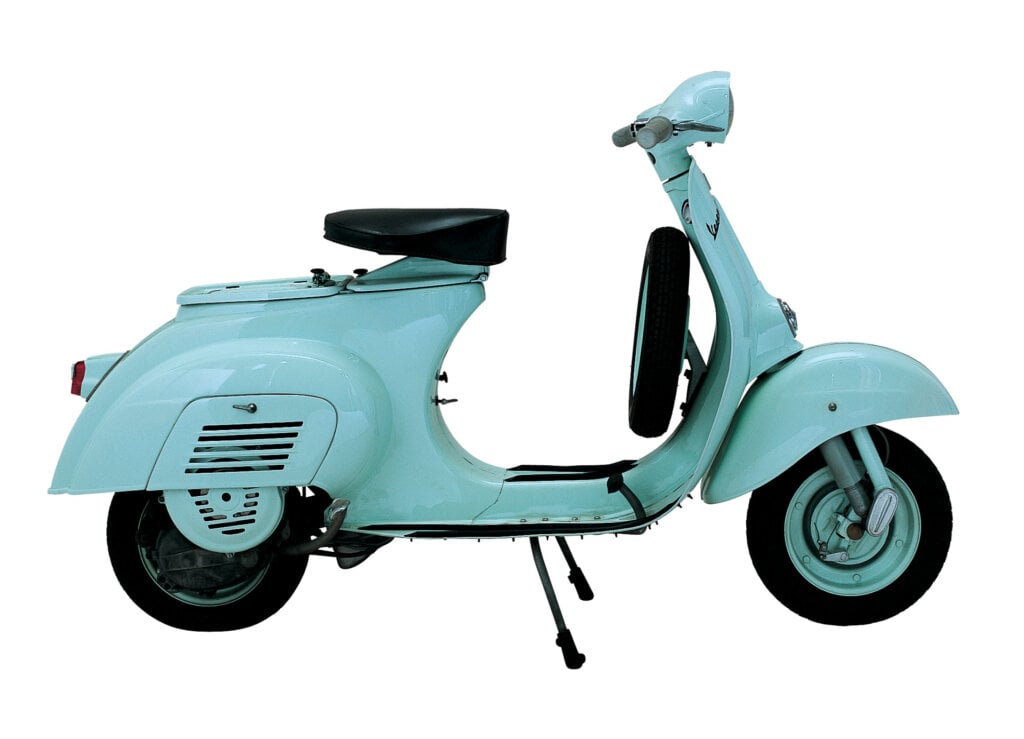
1963 50
The original 50 was a revolutionary creation, designed to exploit a loophole in the Italian highway code that meant it could be ridden by people as young as 14, without the requirement for a licence or number plates. Powered by an efficient 50cc two-stroke engine, running via a three speed box, it achieved immense popularity among teenagers and urban commuters. It debuted the sleek “smallframe” chassis, characterised by a compact, lightweight monocoque steel body and distinctive 9-inch wheels. As the final scooter design personally overseen by D’Ascanio, this iconic model became a global symbol of youthful freedom and effortless mid-century European mobility.
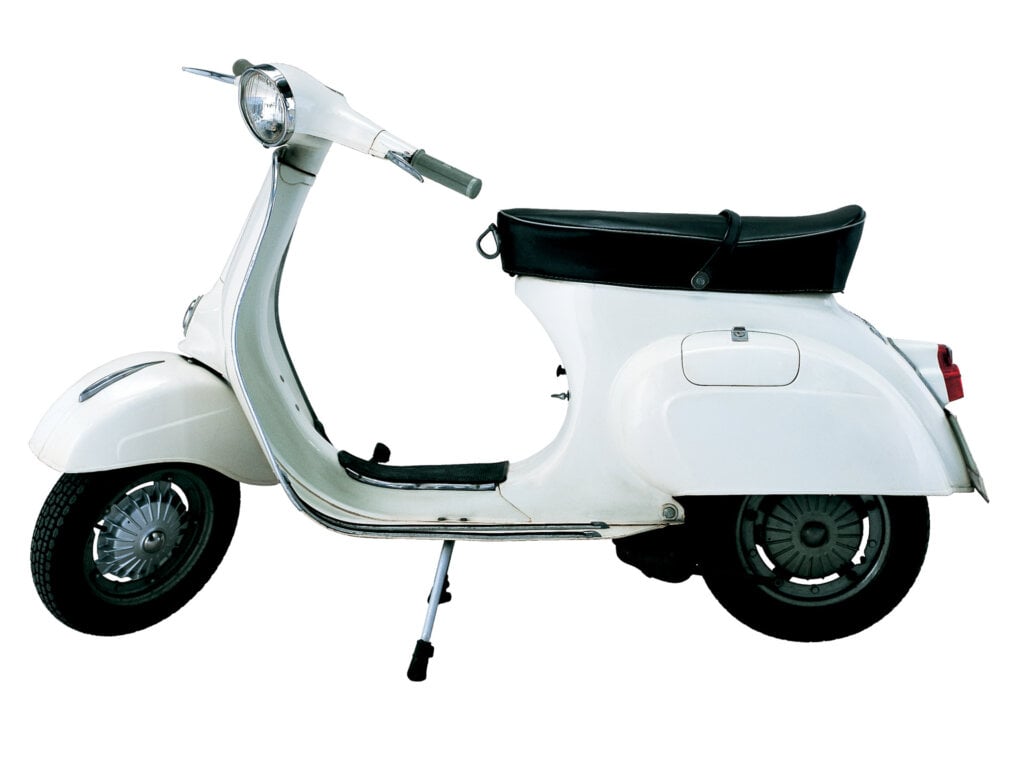
1967 125 Primavera
Debuting as an evolution of the Nuova 125, it utilized a lightweight, agile chassis paired with a spirited 121cc engine. This combination delivered exceptional power-to-weight performance, making it a favorite among youth and urban commuters. Instantly recognizable by its elongated chassis and dual seat that made it easier to carry a pillion, and its integrated storage glovebox, the Primavera came to define the freedom of the late-1960s generation.
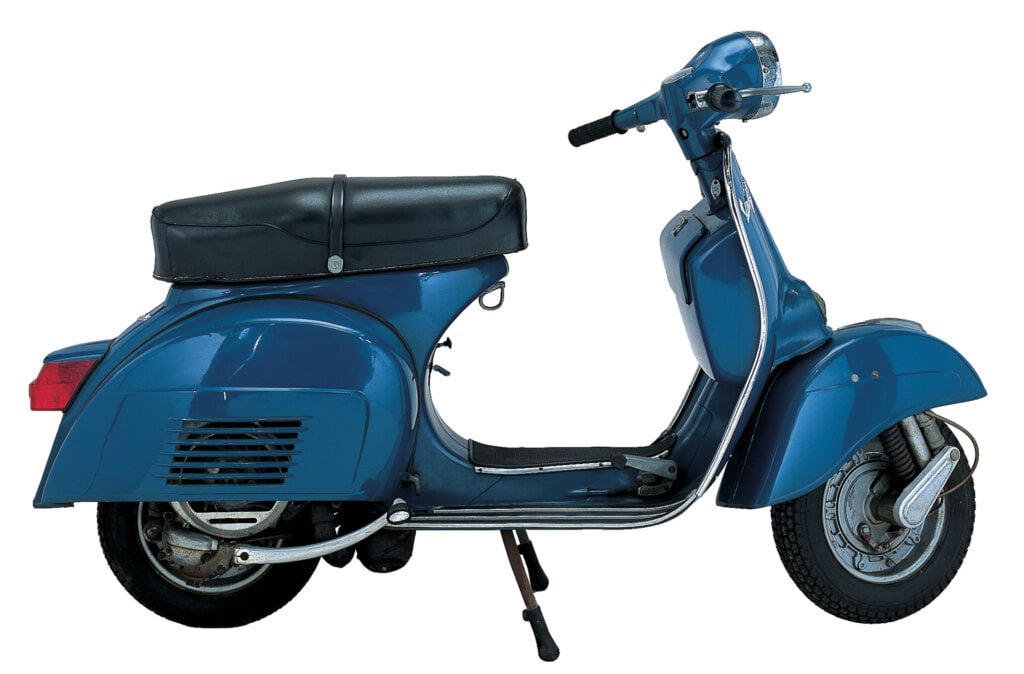
1968 180 Rally
The 180 Rally was Vespa’s high-performance, long-distance flagship touring model. It introduced a 180cc rotary-valve engine, departing from direct piston-port induction to deliver smoother, more reliable power and a 105 km/h top speed. Built on a robust, comfortable “largeframe” chassis, it featured a distinctive matte black glovebox and a sleekly tapered mudguard. It remains one of the most successful models and was produced from 1968 to 1973 with a total of over 26,000 vehicles built.
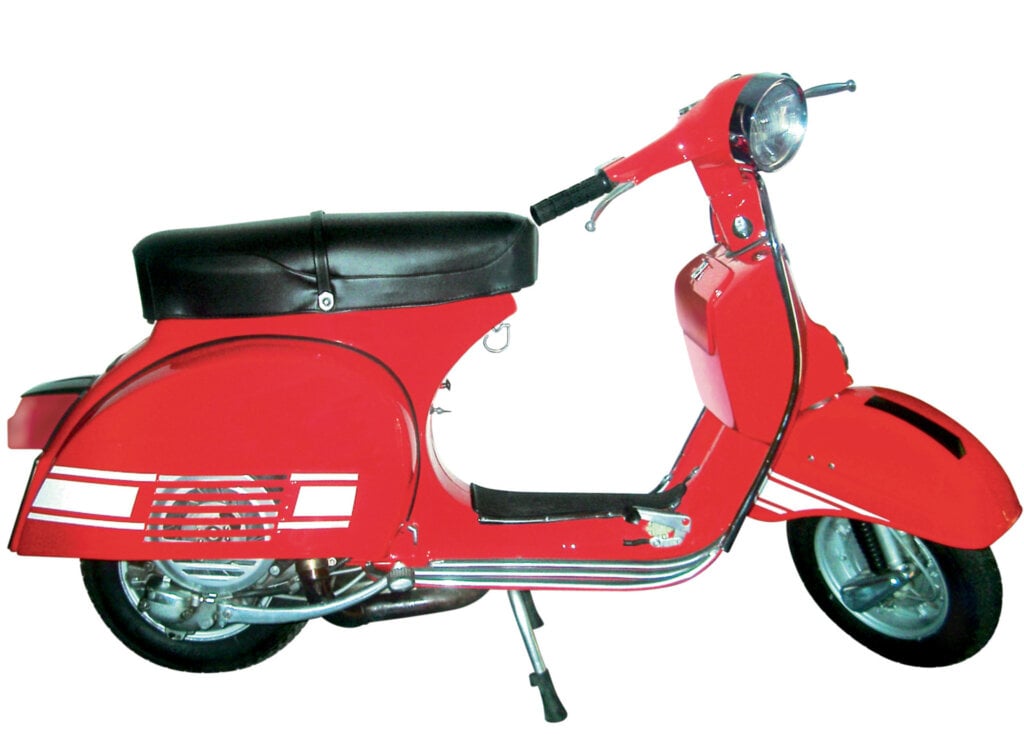
1976 Rally 200
Vespa’s first 200cc machine, the Rally 200 was the brand’s high-performance, large-frame touring flagship. The new 12hp engine featured electronic ignition for improved performance and reliability while enabling a top speed of 110km/h. Visually striking, the 1976 model featured bold racing stripes, a spacious glovebox, and a comfortable dual seat built for long-distance travel. Over 41,700 Vespa Rally 200 models were produced from 1972 to 1979.
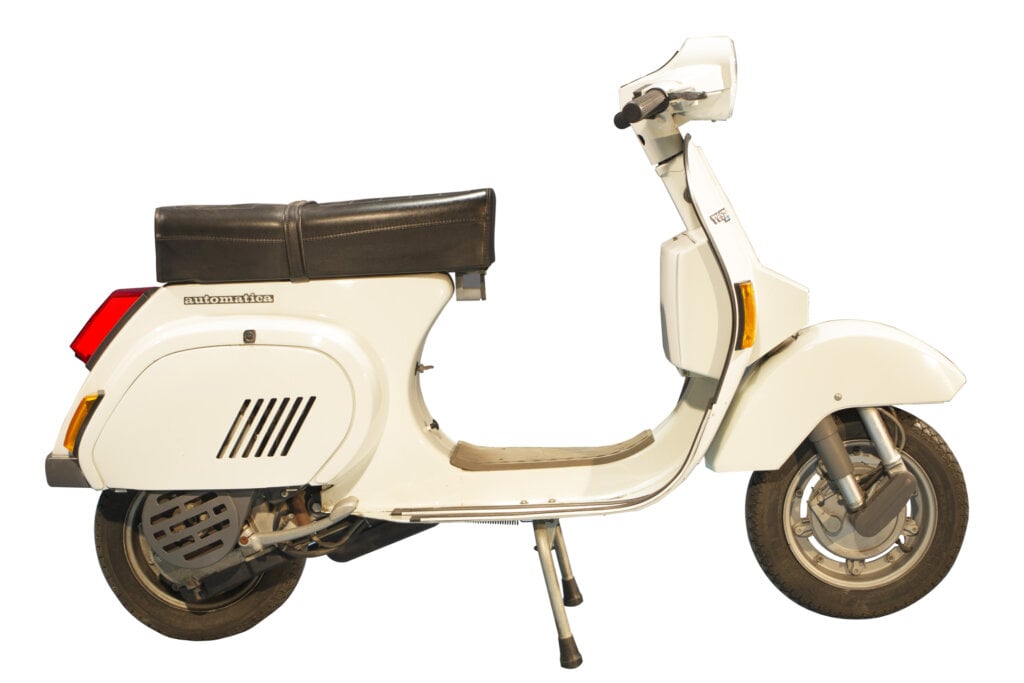
1985 PK 125 S automatica elestart
The PK 125 was a major technological pivot for Piaggio, blending classic smallframe styling with modern convenience. It featured an innovative automatic transmission with a hydraulic torque converter, eliminating the traditional twist-grip manual gear shifting. The “Elestart” designation brought push-button electronic ignition, powered by a 12-volt electrical system. Housed in the angular, updated PK-series chassis, this rare 125cc model targeted urban commuters seeking effortless operation.
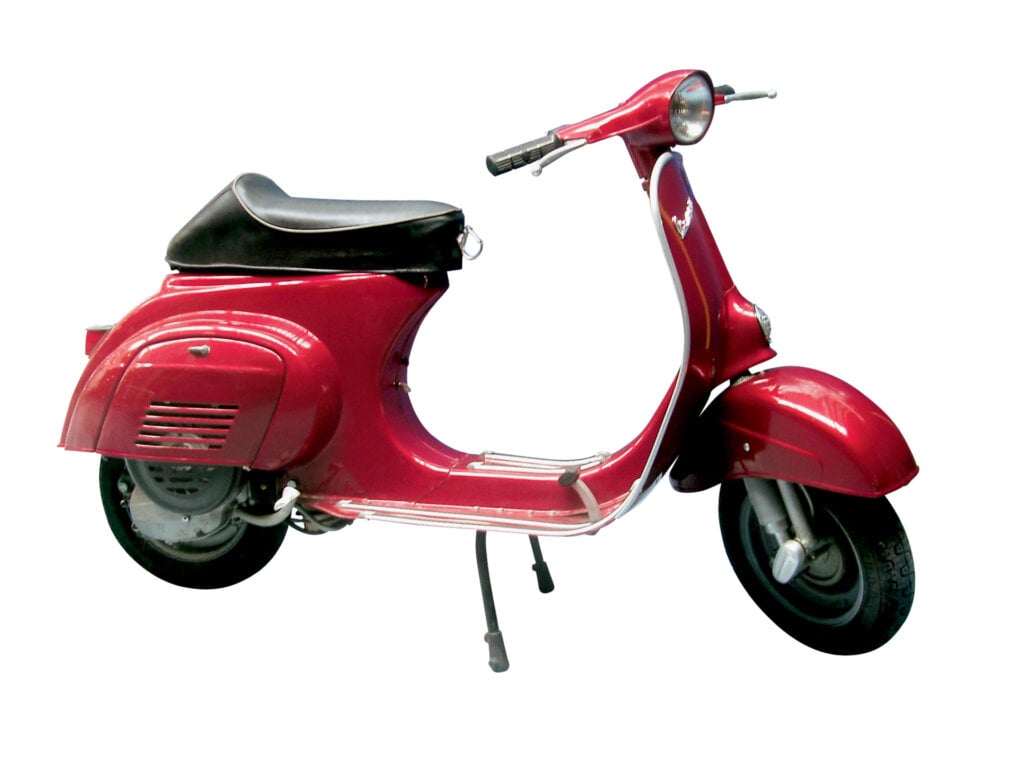
1991 50 Special Revival
The Revival was a limited-edition tribute to Piaggio’s past. Limited to a production run of just 3000 individually numbered units, it revived the classic “smallframe” sheet-metal body. It retained the historic 3-speed manual gearbox and 50cc two-stroke engine, but introduced modern updates including a 12-volt electrical system, improved suspension, and enhanced braking. Adorned with nostalgic retro details, this rare model beautifully bridged vintage aesthetics with nineties reliability.
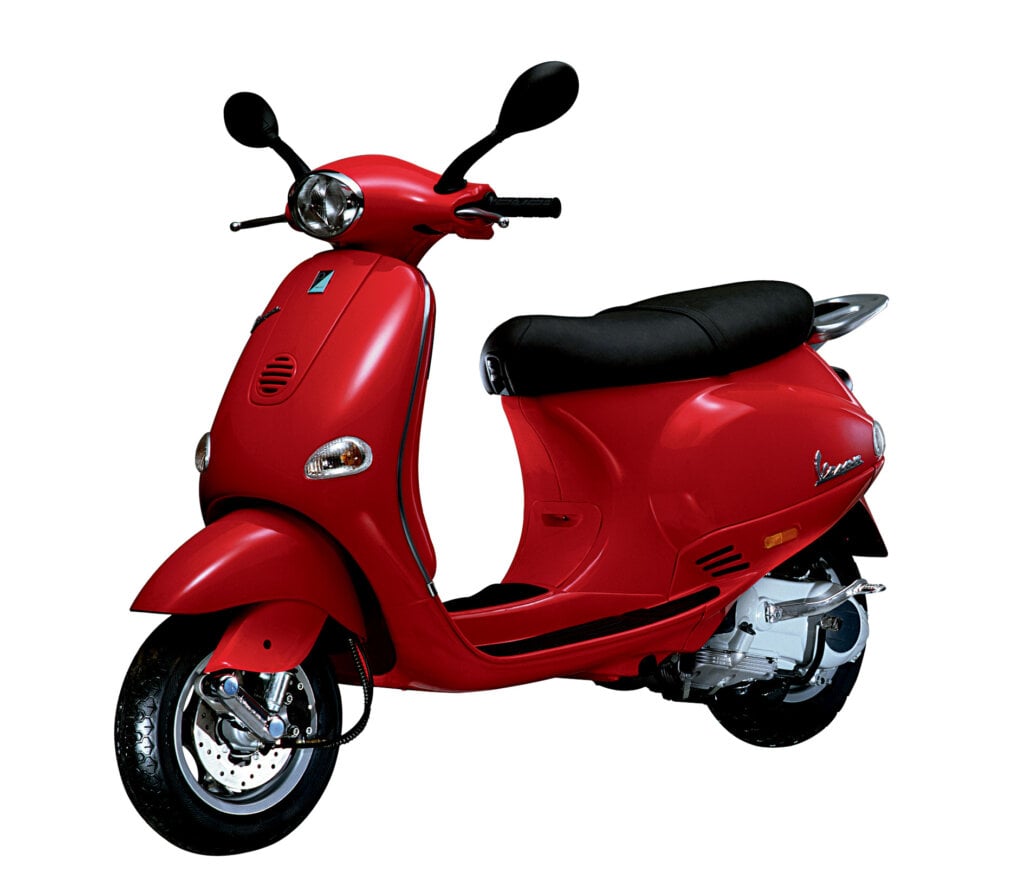
1996 ET2/ET4
The ET series (ET2 and ET4) marked Piaggio’s 50th-anniversary rebirth, introducing the first completely new steel-bodied Vespa design in decades. Moving away from manual shifting, the ET2 featured an efficient 50cc two-stroke engine, while the ET4 debuted an innovative, environmentally friendly 125cc four-stroke LEADER engine. Both models featured Continuously Variable Transmissions, modern 10-inch wheels, and a front disc brake. The fusion of Italian curves and twist-and-go convenience proved a winner.
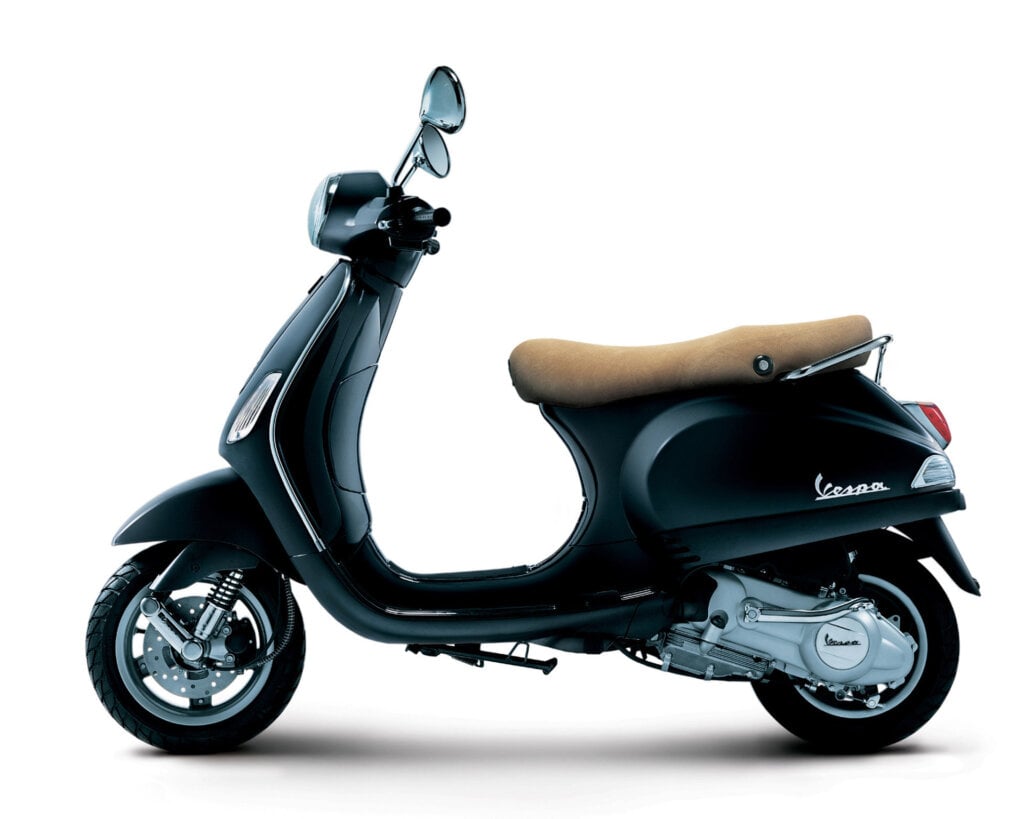
2005 LX
The LX launched as the direct successor to the ET series, arriving for Piaggio’s 60th anniversary. LX (the Roman numeral for 60) debuted a redesigned, rigid steel monocoque chassis featuring sharper, modern-retro styling. Equipped with an upgraded 11-inch front wheel for enhanced handling stability, a front disc brake, and CVT automatic transmissions, it was offered in 50cc, 125cc, and 150cc engine variants.
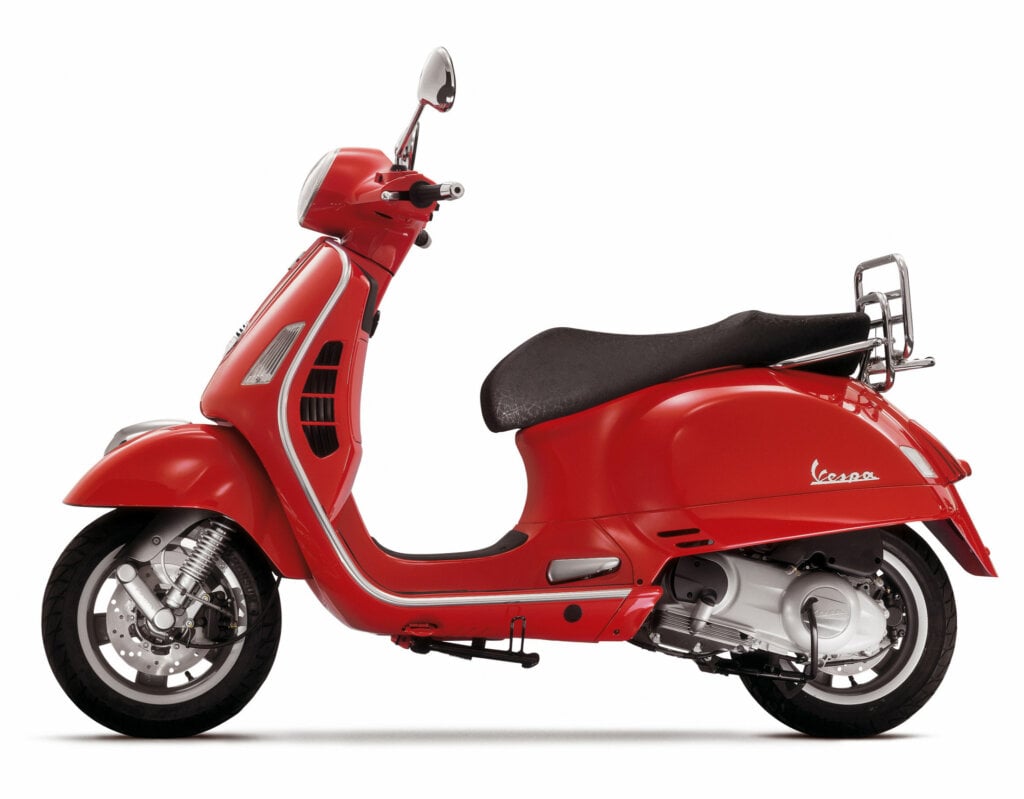
2005 GTS 250 IE
The GTS 250 ie debuted fifty years after the first Vespa Gran Sport, as the brand’s flagship maxi-scooter. It debuted a liquid-cooled 244cc Quasar engine, featuring electronic fuel injection (ie) to achieve a top speed of 122 km/h. Built on a larger, rigid steel chassis, it introduced digital instrumentation, an upgraded 12-inch wheel setup, and optional ABS braking. In 2011, it evolved into the GTS 300 with a four-valve engine.
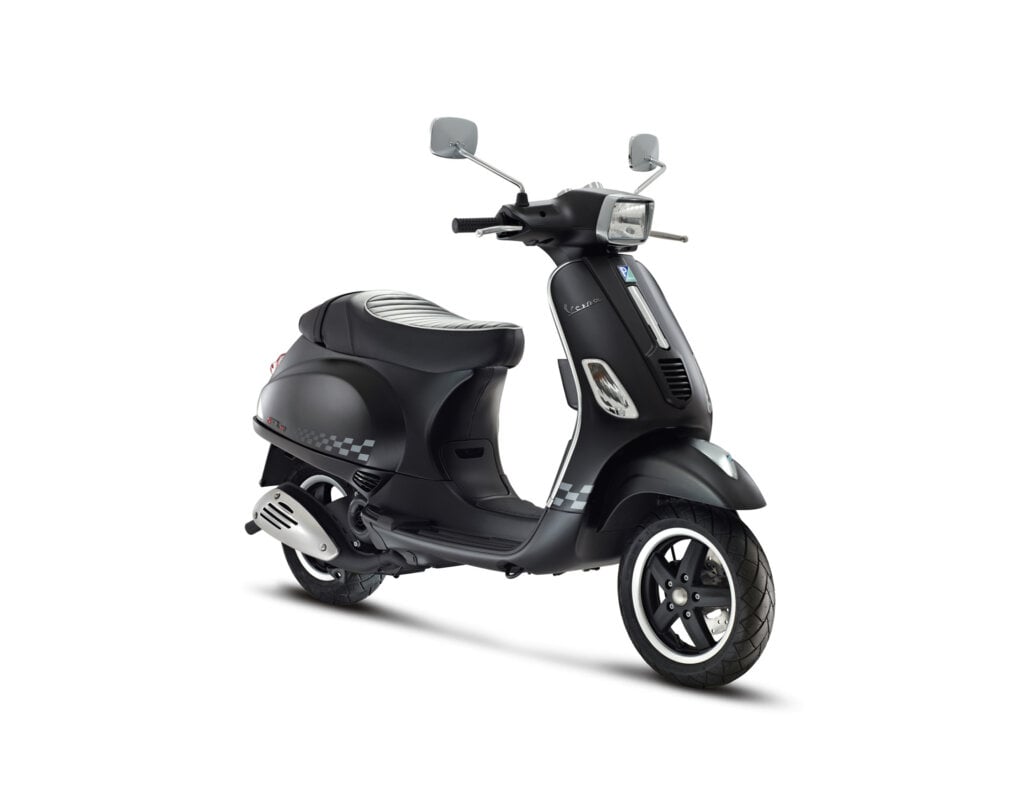
2009 S50 – LX50 4V
The S 50 and LX 50 4V introduced Piaggio’s innovative four-valve four-stroke engine, delivering enhanced power and fuel efficiency to the 50cc segment. The 4.3hp engine provided brisk urban acceleration while meeting strict emissions standards. While both shared the same agile chassis, mechanical underpinnings, and smooth CVT automatic transmission, they targeted distinct aesthetics. The LX 50 embodied elegant, rounded retro-modern styling, whereas the sporty S 50 featured a minimalist design with a rectangular headlight, open handlebars, and contrasting red suspension springs, celebrating vintage racing heritage
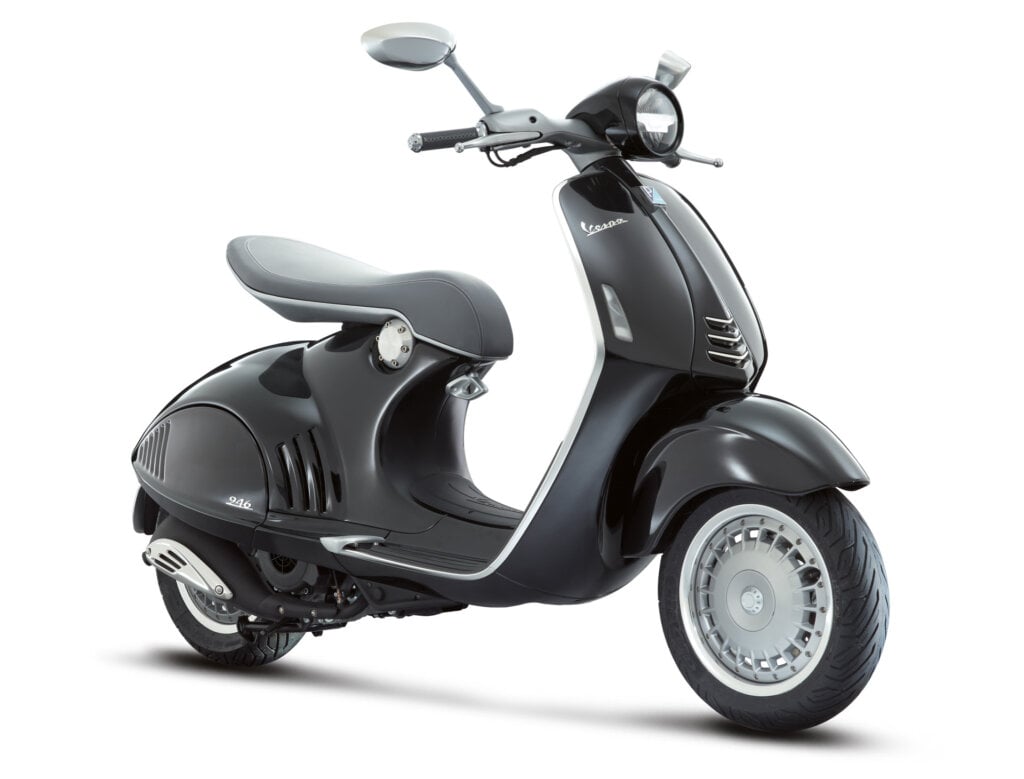
2013 946
The 946 arrived as a ‘ultra-premium masterpiece’, paying homage to the original 1946 MP6 prototype. Hand-assembled on a unique monocoque frame, it fused a steel body with aluminium components, including its signature floating single-seat saddle. Driven by a 125cc three-valve engine with electronic injection, it pioneered safety for scooters with integrated ABS braking and ASR traction control. Positioned as an exclusive luxury art piece rather than a daily commuter, this striking design icon redefined modern two-wheeled elegance and high-tech craftsmanship.
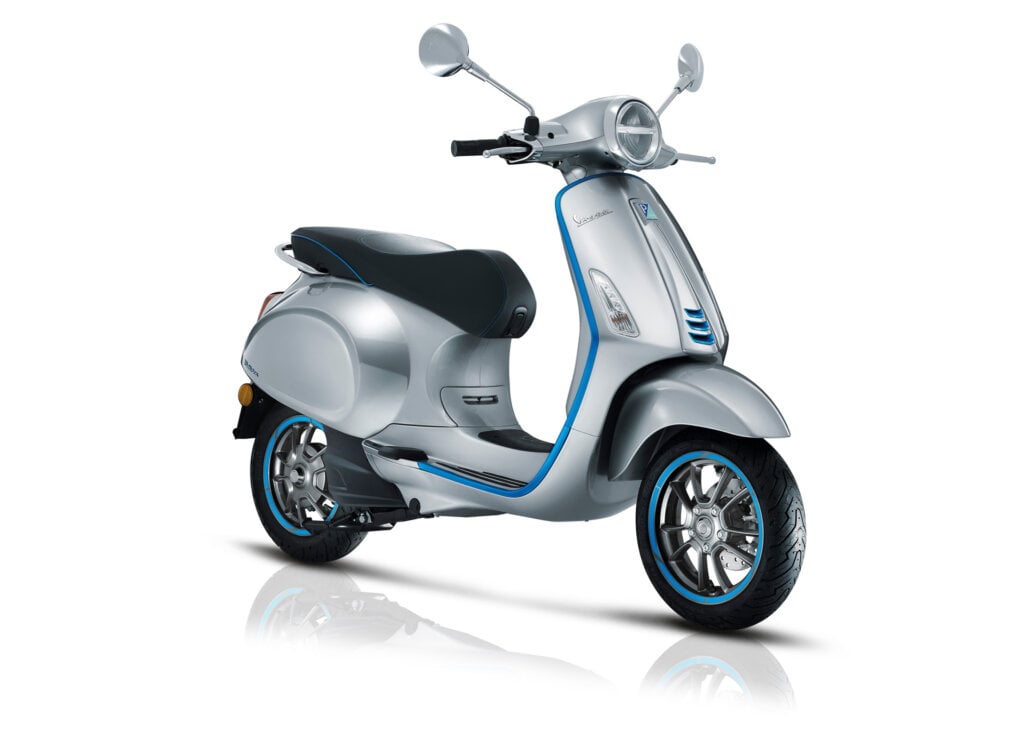
2018 Vespa Elettrica
The Elettrica marked Piaggio’s transition into zero-emission mobility, delivering the brand’s first fully electric production scooter. Powered by a brushless electric motor generating 4kW of peak power and instant torque for crisp urban acceleration. It featured two riding modes, Eco and Power, delivering a range of up to 100km and is paired with a modern kinetic energy recovery system (KERS). Styled in a sleek, futuristic silver finish with vibrant blue trim, it debuted a 4.3-inch TFT digital display with full smartphone connectivity.
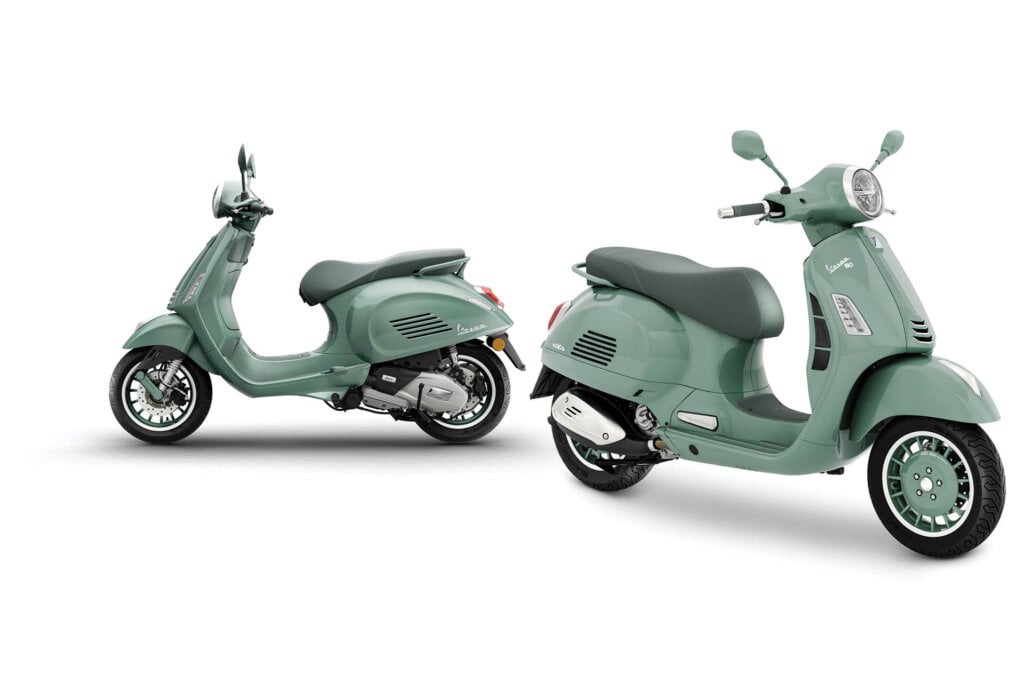
2026 Primavera 80TH and GTS 80TH
Marking the 80th anniversary of Vespa is the 80TH, available in both Primavera and GTS grades. These models revive the Pastel Green of the first 1946 Vespas, drawn from the Piaggio historical archives. The hue also flows through details such as the shield trim, passenger grab handle, rearview mirrors, control blocks, and front suspension linkage.
The saddle, floorboard inserts, rear-shield cover and the grips feature a deeper green colour, creating ‘a coherent and tactile ensemble’. The rims are said to evoke the closed geometries of historical models, drawing inspiration from the 1946 Vespa 98, and feature the “Est. 1946” inscription with a diamond finish on the rim well. The Primavera 80th also features a side grille that recalls the technical solutions of the early days.
https://www.instagram.com/p/DZLmL0Xk2ZN/?img_index=1