View all
11 more images
1986 Volkswagen Golf GTI 16v
Words: Kyle Cassidy | Photos: Alex Schultz
Volkswagen knew it was on to a good thing with the Golf GTI. When the Mk2 Golf came along, it didn’t waste any time introducing a follow-up to the original. Does it still live up to the hype?
Following up on a hit is never easy. Volkswagen’s original Golf GTI might not have been the first hot hatch, but it proved hugely popular and forced other manufacturers to follow suit. The formula turned the sensible Golf hatchback into an enthusiast favourite, delivering accessible performance without abandoning everyday practicality. The replacement was therefore tasked with refining the recipe without eroding the model’s core nature.
In the late 1970s, Volkswagen decided to evolve the original Golf’s appearance rather than start afresh. Under design chief Herbert Schäfer, the familiar shape grew but retained visual continuity with Giugiaro’s original design.
Launched in 1983, the regular Mk2 was larger and roomier. Volkswagen also improved the aerodynamics, quoting a reduction in drag coefficient from 0.42 to 0.34. Development extended beyond the car itself, as the new generation was designed around highly automated production in Wolfsburg’s Hall 54. Behind the familiar silhouette was a substantial manufacturing and engineering investment.
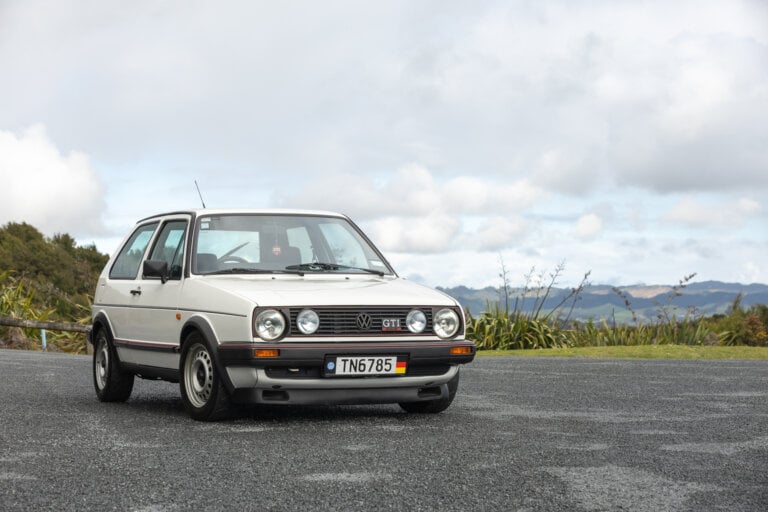
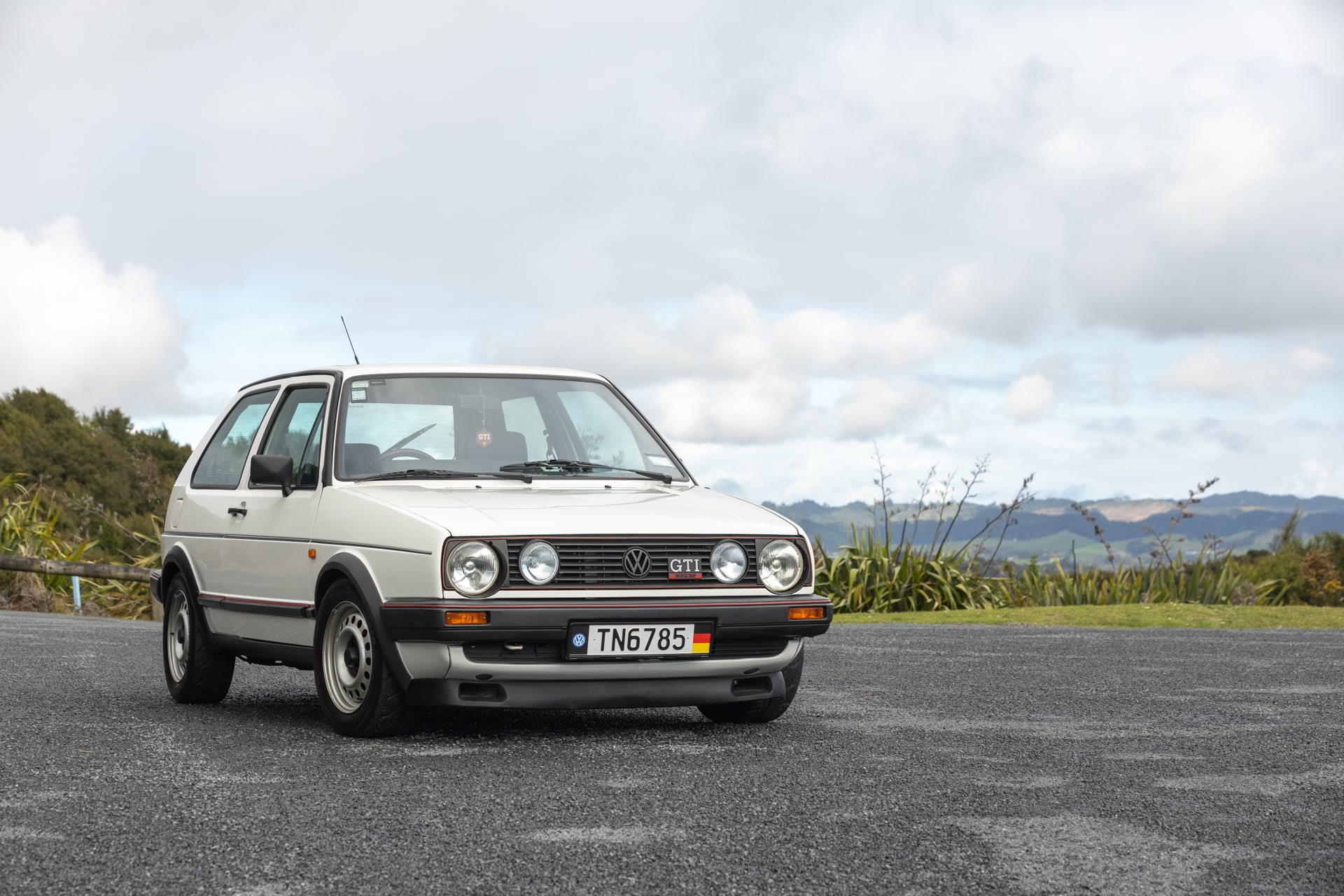
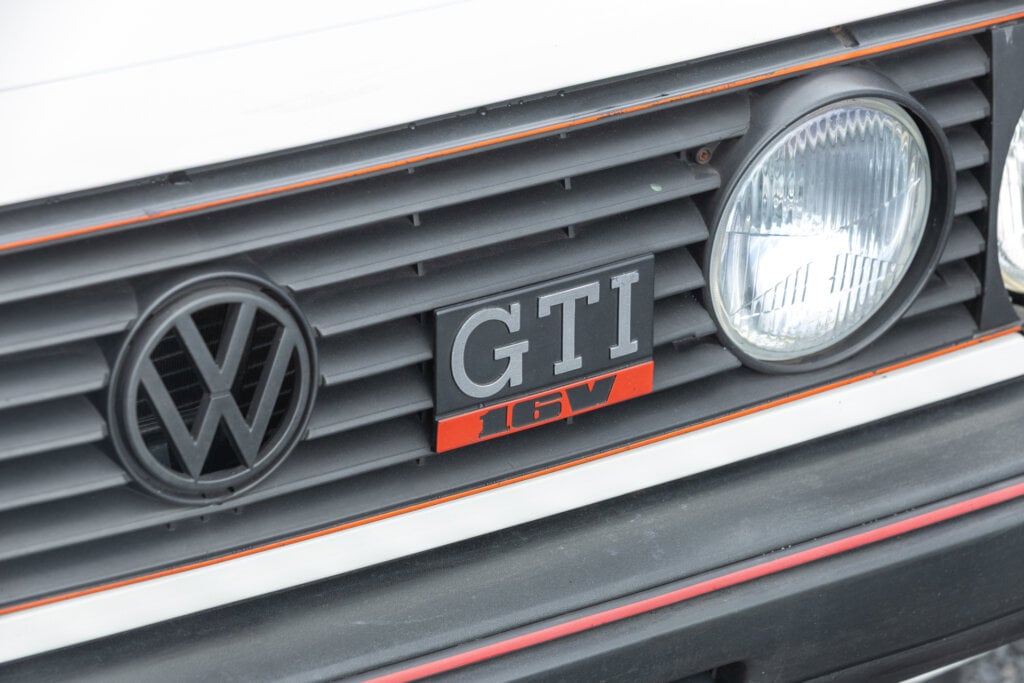
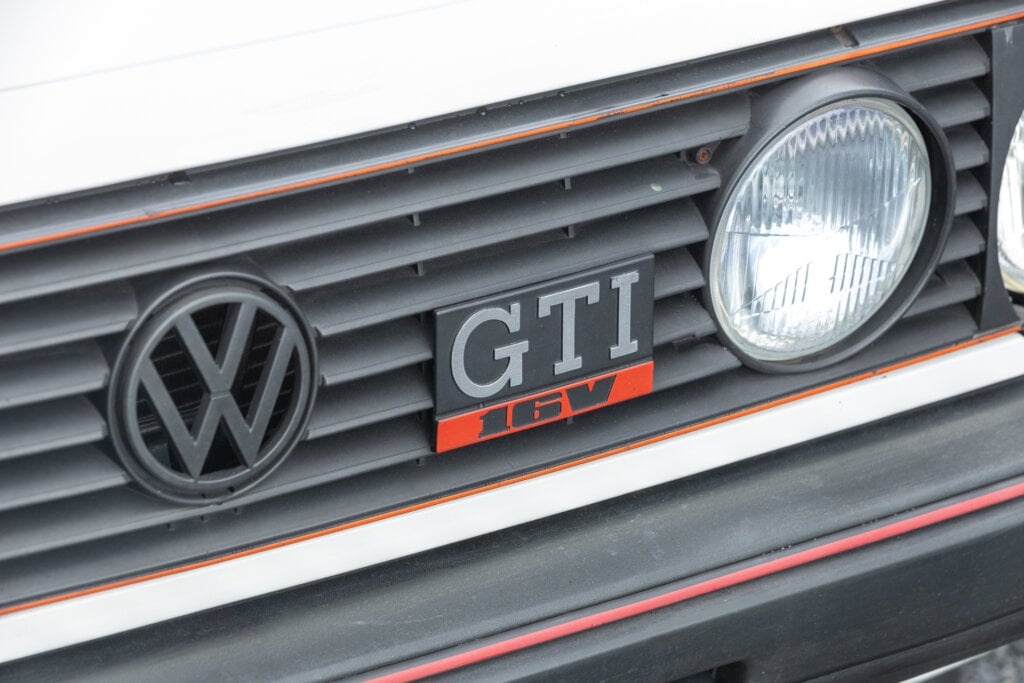
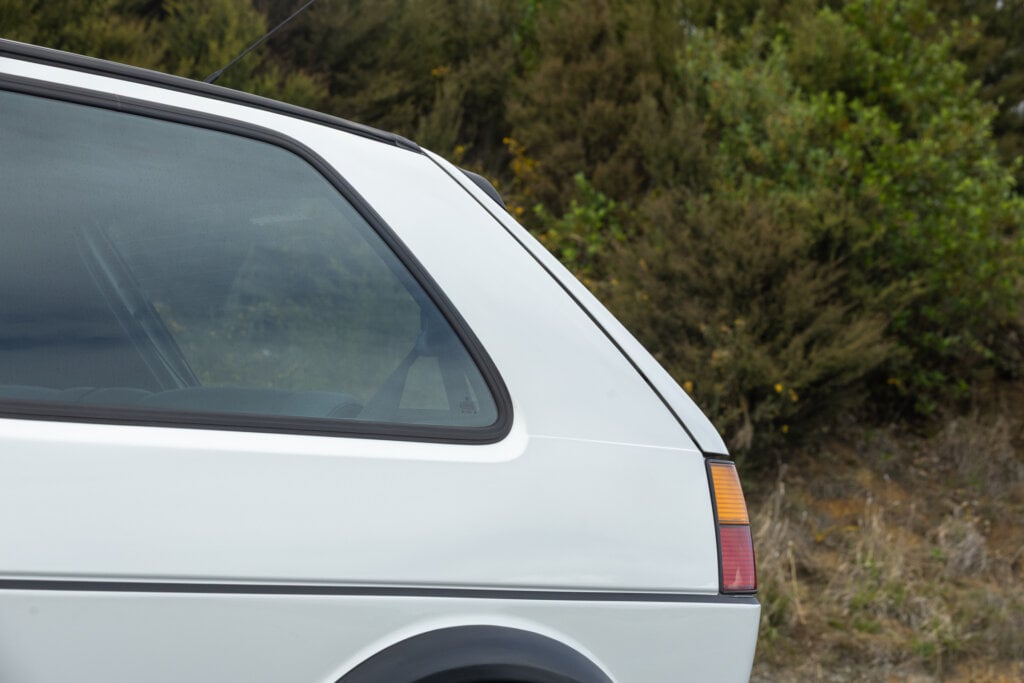
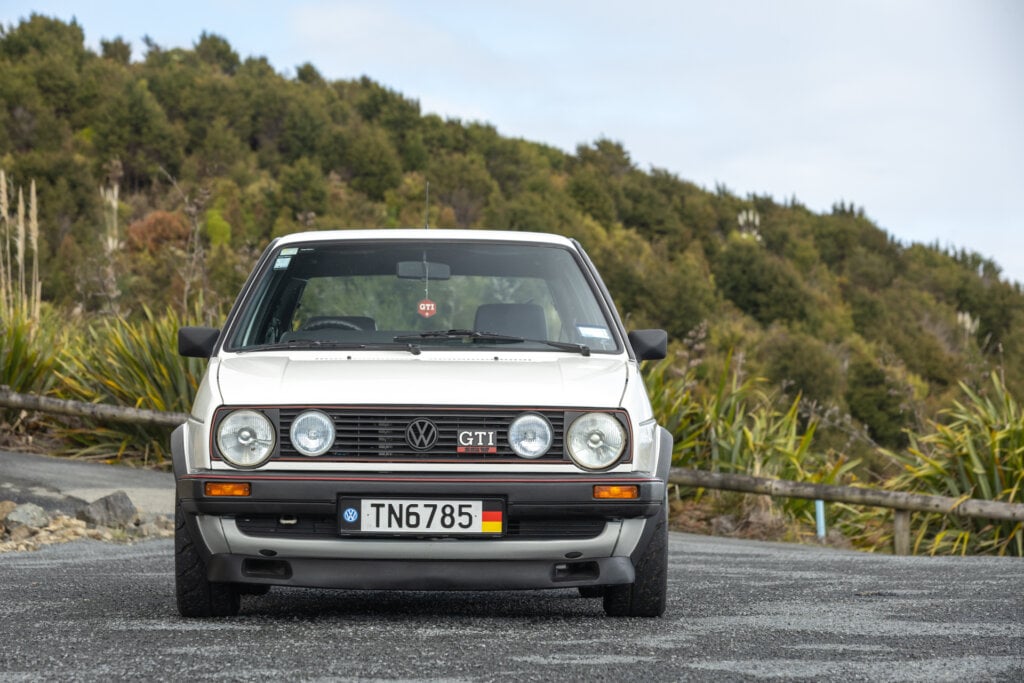
The GTI followed in 1984, initially retaining the outgoing model’s fuel-injected 1.8-litre, eight-valve four-cylinder engine. Visually, it remained true to the Mk1, with a red grille surround, black wheelarch extensions and a black-framed rear window. Inside were supportive sports seats and a black headlining.
The 8V engine still produced 82kW, but there was more Golf to move thanks to a bigger body. Compared with the Mk1, the second GTI was 175mm longer and 35mm wider, while the wheelbase was up 75mm. Improved accommodation and comfort inevitably carried a penalty, and the early Mk2 lacked some of the original’s urgency, given it was around 100kg heavier. So while Volkswagen had improved the everyday Golf, it needed to restore the performance balance of the GTI.
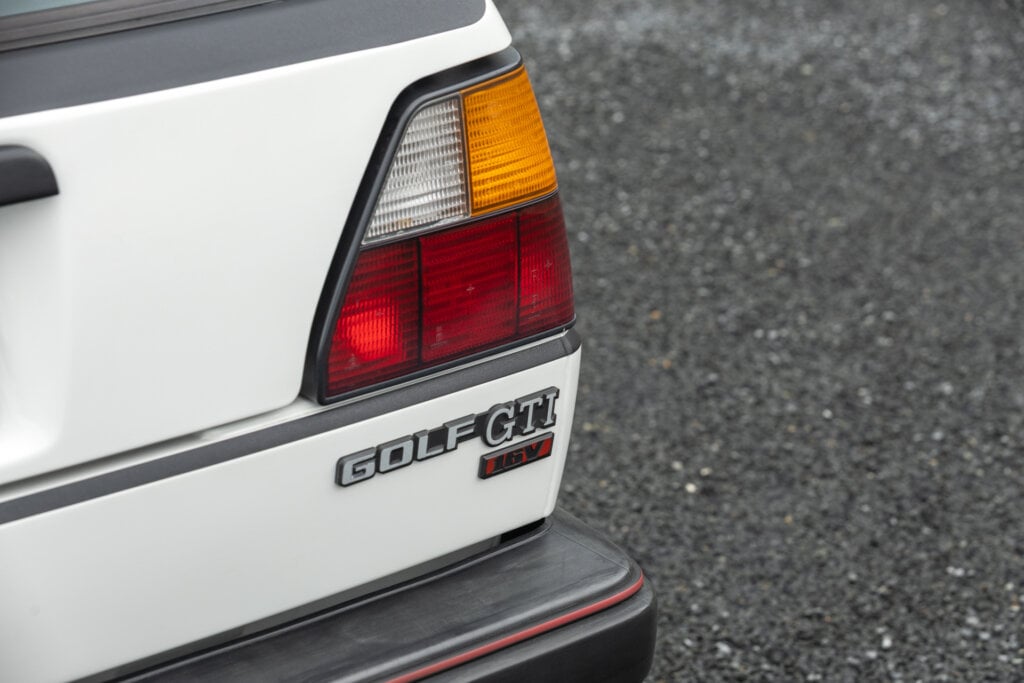
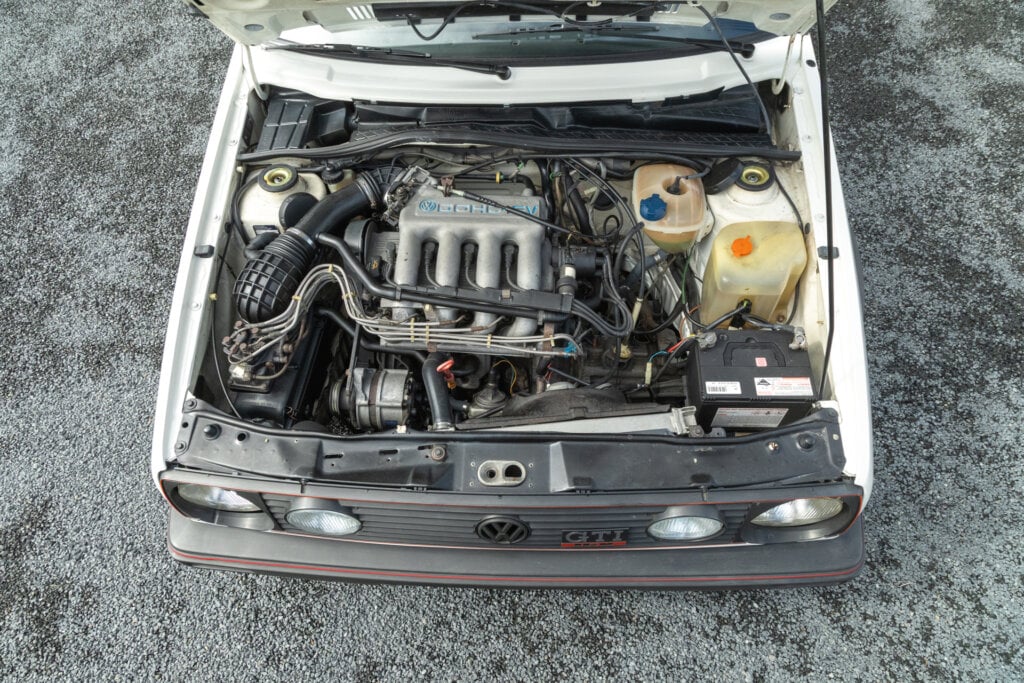
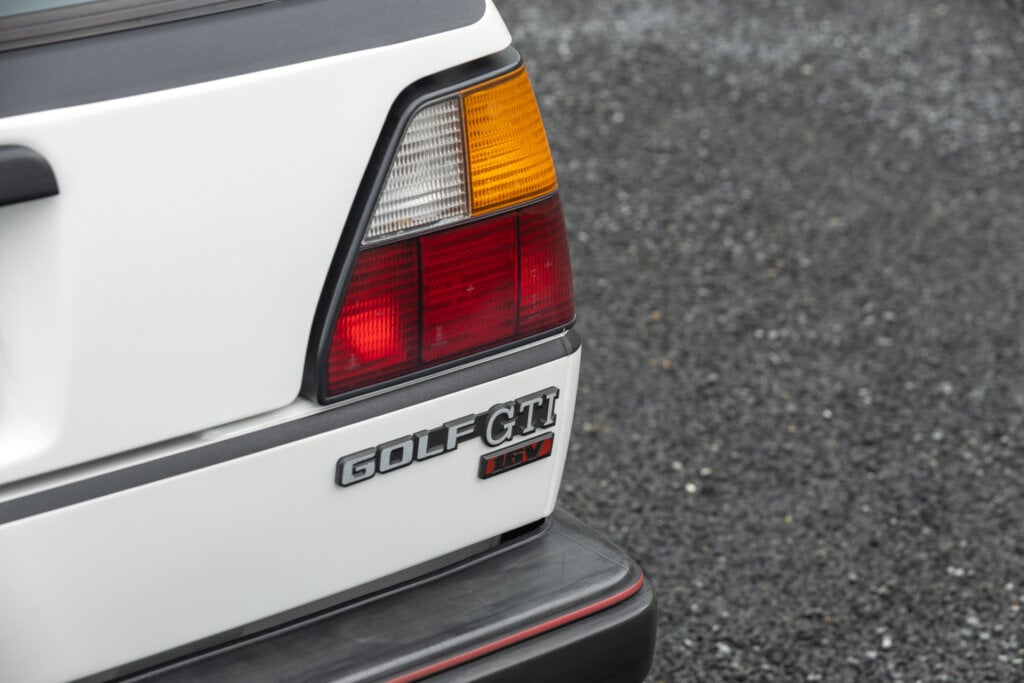
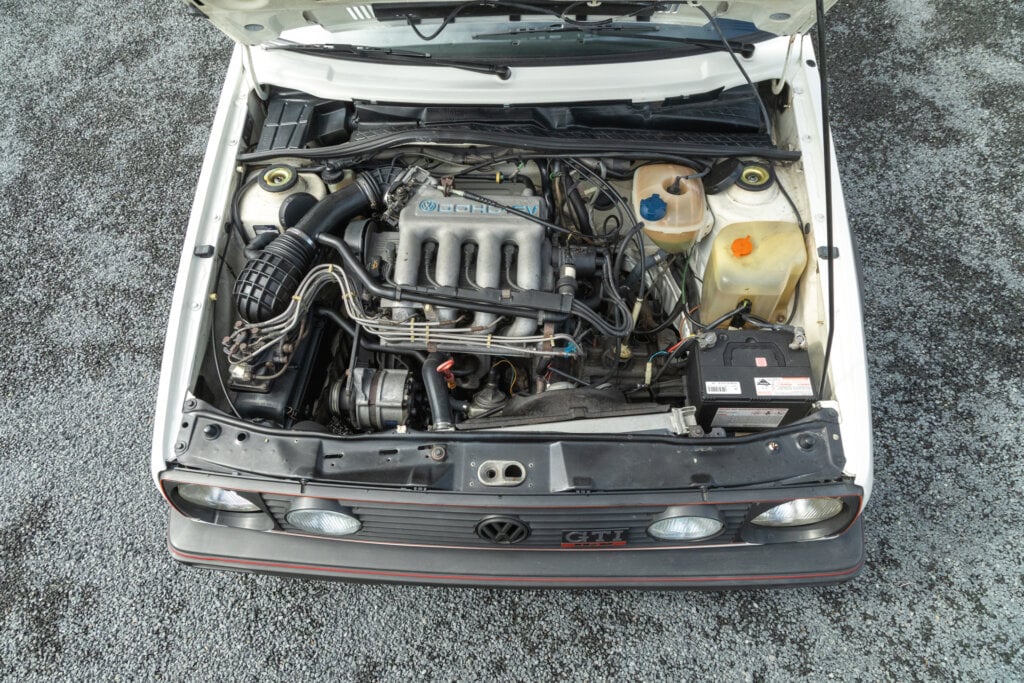
The significant mechanical advance arrived in 1986 with the GTI 16V. Volkswagen had approved a higher-output engine project in December 1982, so this was a planned development rather than a hurried response. Two overhead camshafts and four valves per cylinder helped the 1.8 breathe more freely, raising output to 102kW in versions without a catalytic converter.
Production began in March 1986. Volkswagen quoted 0–100km/h in 8.5 seconds and a 208km/h maximum, giving the larger GTI the performance its appearance promised. The 16V also received firmer suspension, sat another 10mm lower than the eight-valve car and gained slightly larger front discs. Emissions equipment had a slight effect on performance, with the catalyst-equipped 16V producing 95kW.
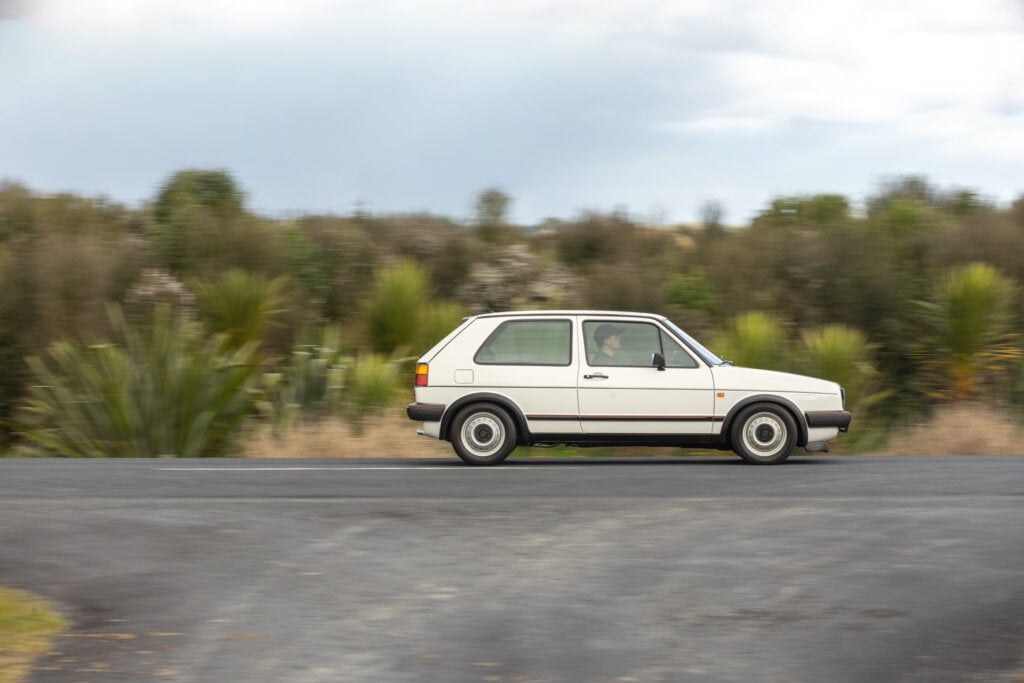
The Golf GTI received regular updates throughout its production run. In 1985, a five-door 8V model was added to the line-up, along with a deep front spoiler and indicator lights in the front wings. The engine also gained hydraulic tappets. In 1986, it gained height-adjustable seats and new alloys, and the 16V engine was launched. In 1987, a five-slot grille arrived, the quarterlights were dropped and a digital instrument pack became optional. The largest visual change came with the addition of big bumpers in late 1989. A five-door 16V model came along in 1990, when power steering became standard. In 1991, 15-inch BBS alloys made the grade, while 8V models gained the sportier suspenders of the 16V. Production of the Mk2 GTI ended in early 1992.
Some of the more interesting models from the Mk2 GTI run include the 1990 G60. This used Volkswagen’s G-Lader supercharger to produce 118kW, with a claimed maximum speed of 216km/h. Another was the wide-bodied Rallye Golf, which paired supercharging with Syncro all-wheel drive for motorsport homologation. More discreet was the 1989 Golf Limited, which combined a 16-valve head, supercharging and all-wheel drive to deliver 154kW. Volkswagen Motorsport built just 71. These were specialist branches of the Mk2 family, showing how far its engineering could stretch beyond the regular GTI.
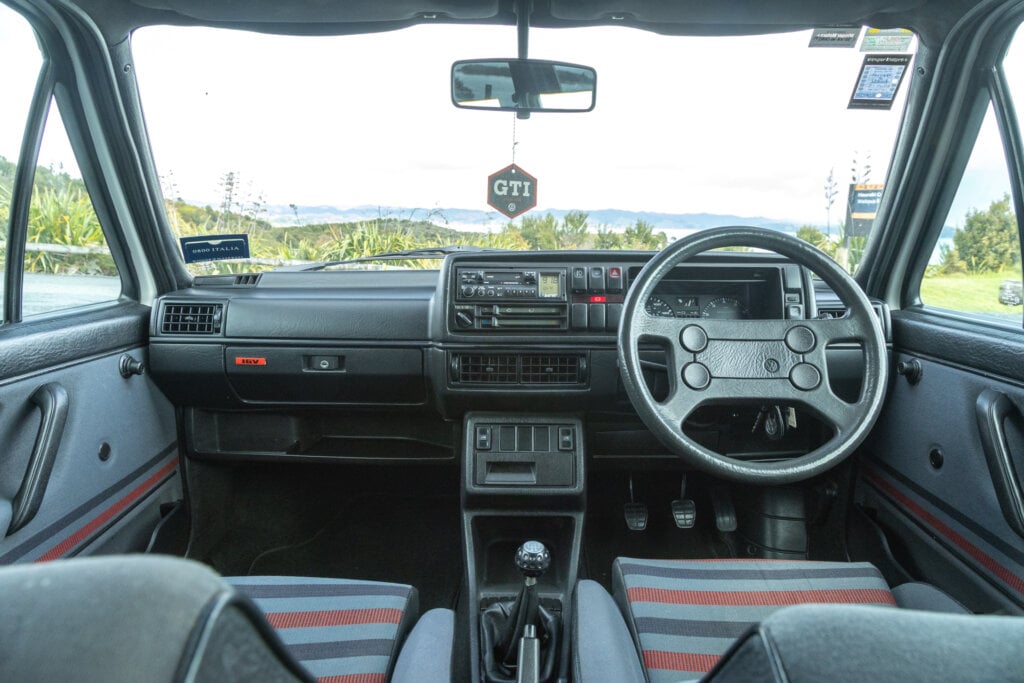
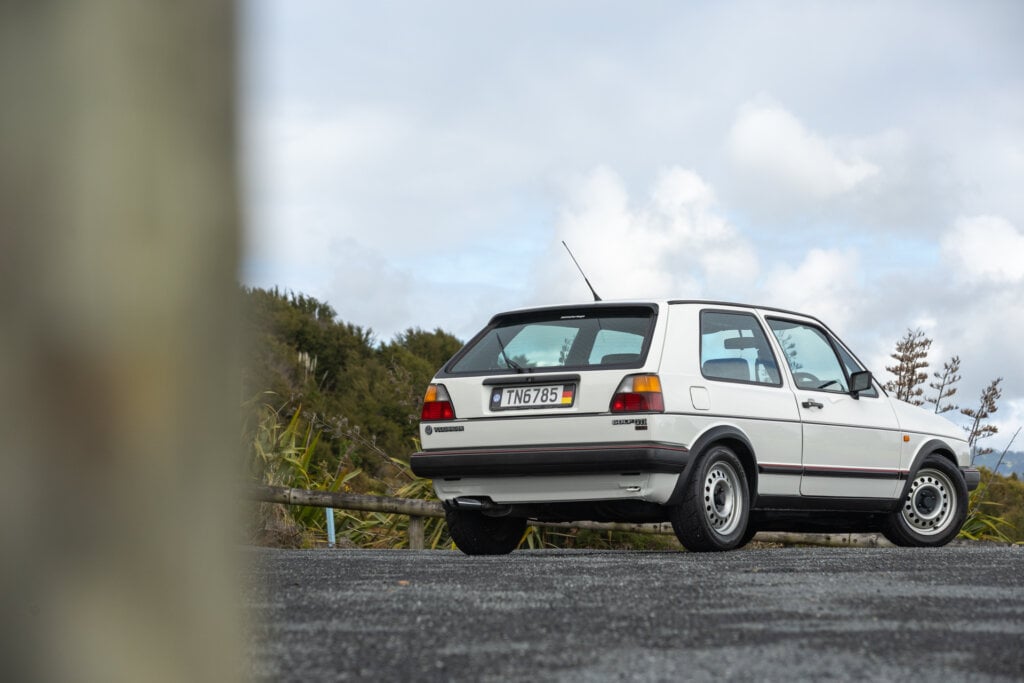
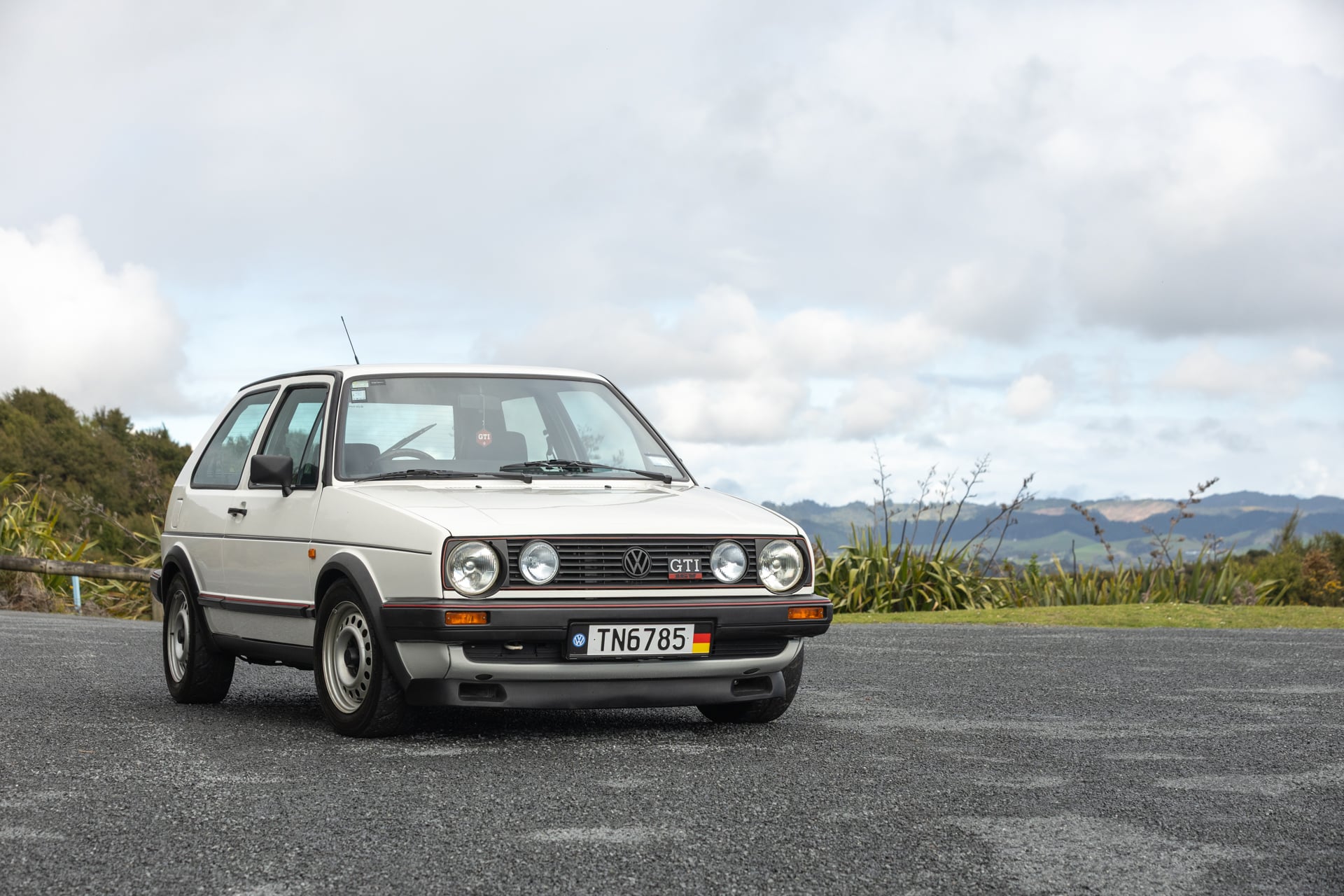
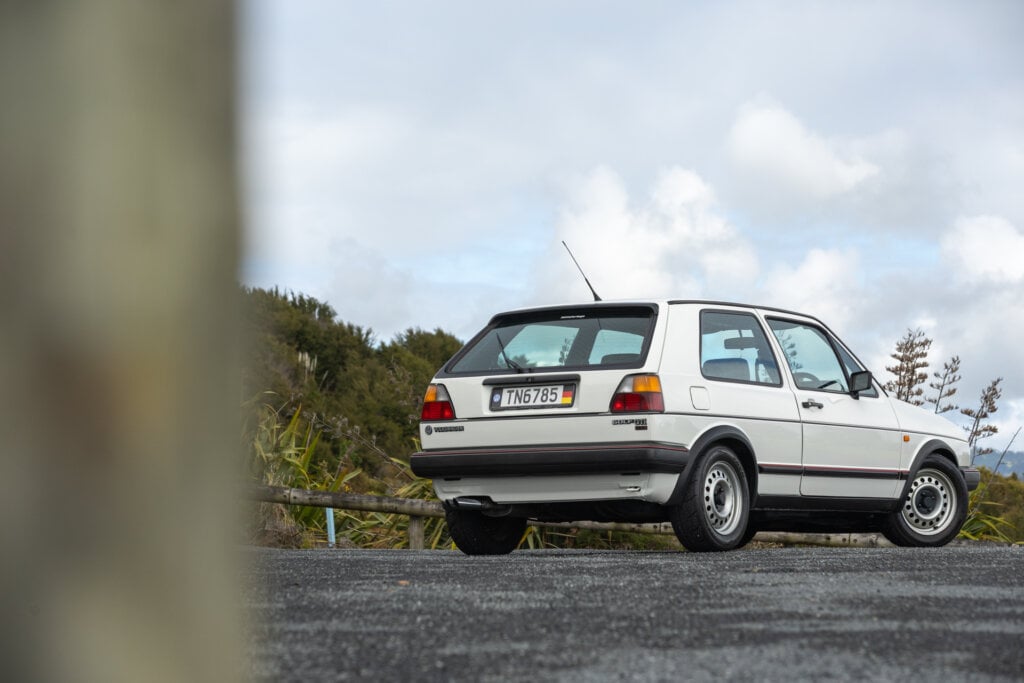
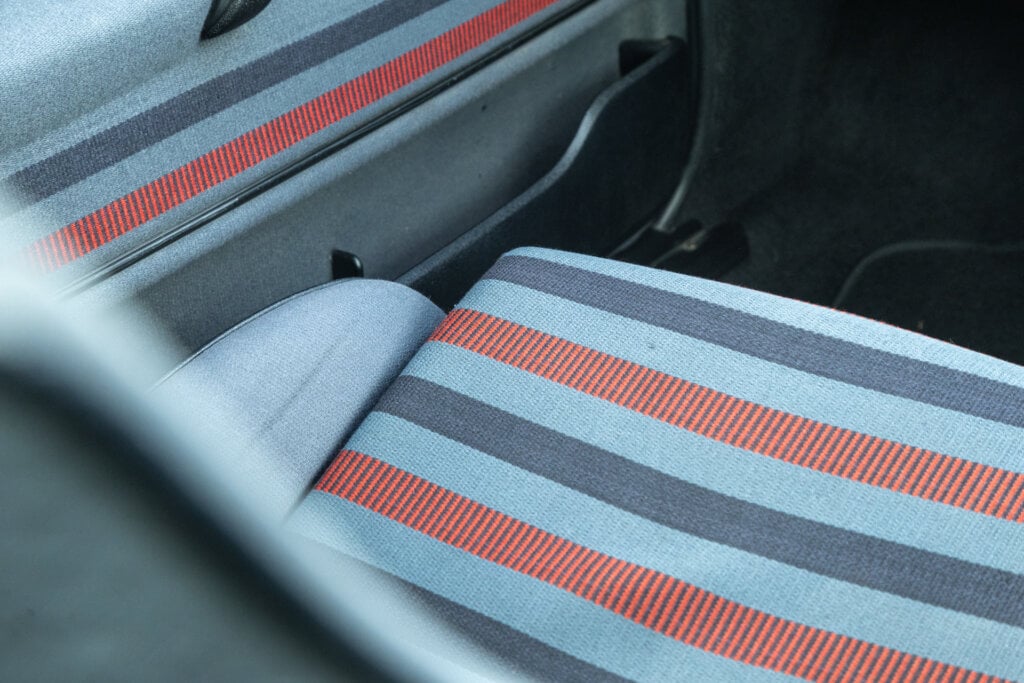
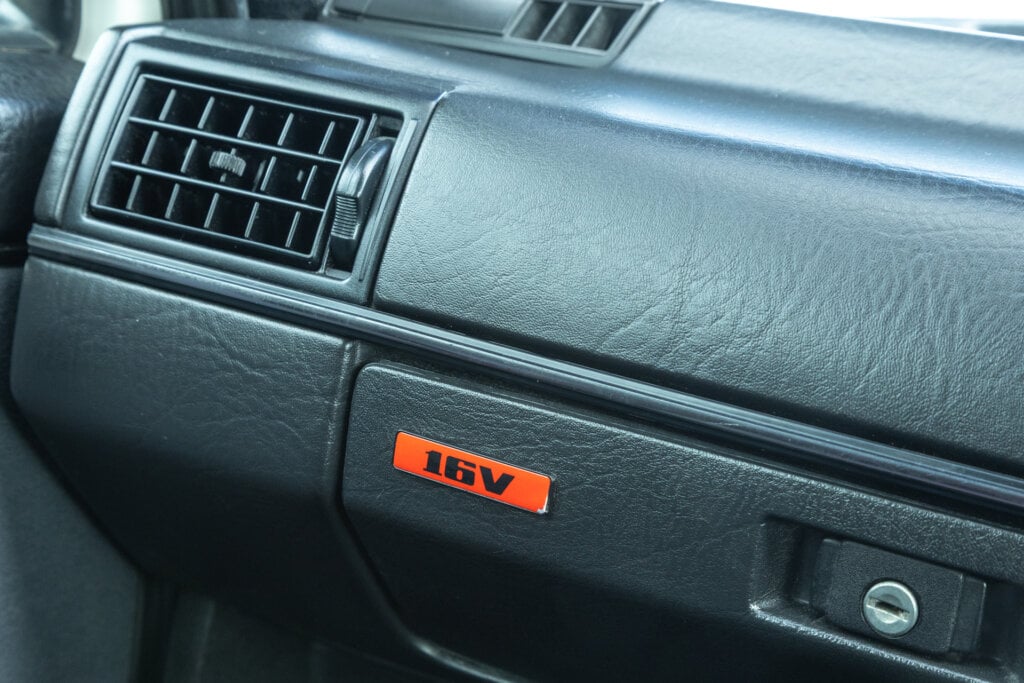
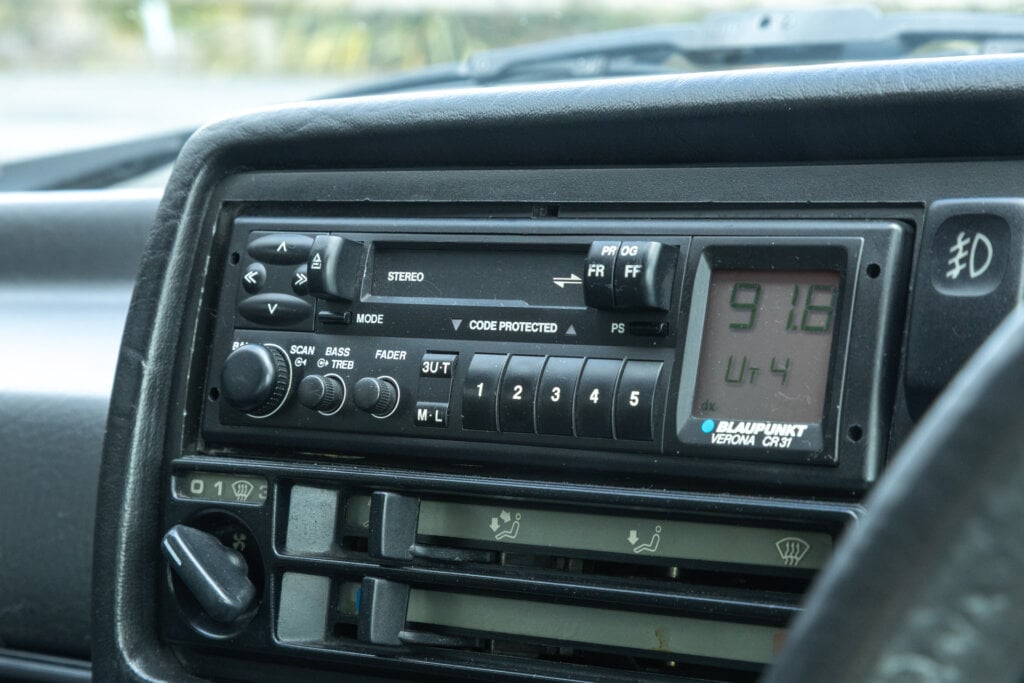
This 1986 16V model was originally sold in the UK before arriving here in 1995. Its odo might read 186,000 miles, but that belies its condition. It’s clearly been looked after and given some attention over the years. The body is straight and rust-free, the paint great. Inside is clean too, with near-mint carpets, while the upholstery is holding up nicely considering its age. Even the seat bolsters are still in good shape. The Golf’s dash is dominated by black plastic, but it’s all in good nick too, without brittleness or cracks. And this one is currently for sale, listed for $39,990 at Winger Motors in Greenlane, Auckland.
It’s easy to get into, of course. It’s a Golf, after all, with an upright and comfortable driving position. The seat has some height adjustment, but it’s always better being a bit lower in such a car. The big steering wheel, with its four well-sited spokes, helps you crank it around when parking, this having the unassisted rack with 3.7 turns lock-to-lock. It requires a bit more muscle, but it’s not overly heavy.
Before everything warms up, the close-ratio five-speed manual is a bit reluctant to slip through its gate, but the 16V engine is playing nicely, idling without coughing in traffic. Though the Mk2 wore more sound deadening to enhance cabin ambience, it’s rowdy by modern standards. Not that we are complaining. It’s better than some nannying safety system beeping at you every three seconds.
Although it’s said the 8V has more pull from low revs, this 16V is quite tractable low down and fuels cleanly, with no lumps or hesitation.
On the motorway at 100km/h, the engine is spinning at 3000rpm in fifth, which is barely overdriven in the 16V. In fact, the GTI is churning at similar revs in fourth gear too.
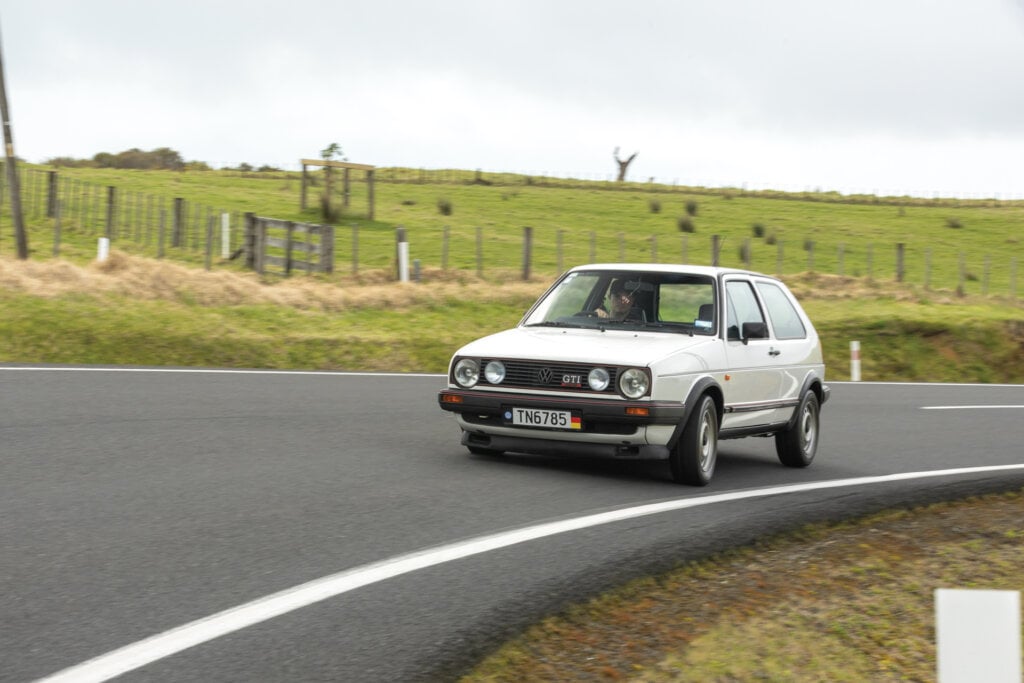
The main advantage of the twin-cam set-up is its ability to breathe better as revs build. And this likes to be above 4000rpm. From here, it gets going, spinning more quickly as it heads to its peak power zone at 6100rpm. Yet it doesn’t trail off even as it touches 7000rpm. The best bit is the noise: the bark of the induction is great, getting all raspy as the revs climb. You get a sense of all the mechanical bits working hard. Yeah, it’s not quick, but it doesn’t struggle to put down what it has, with no torque steer to deal with.
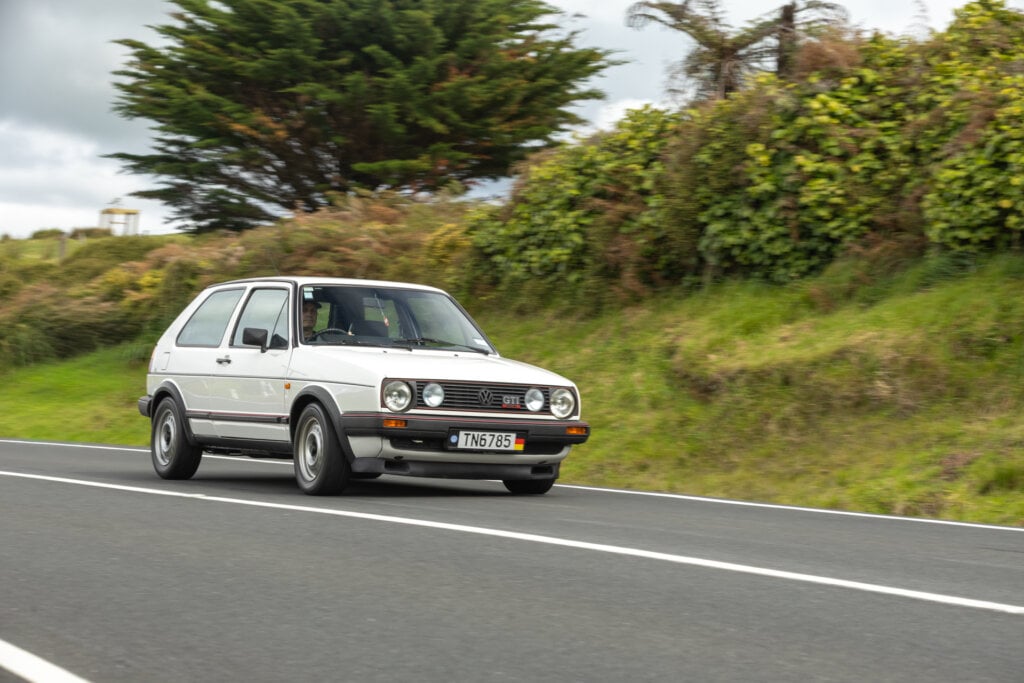
The closely stacked ratios help to keep it singing, although the actual throw of the lever, topped with that golf-ball knob, is a little long and loose. Given its age, though, a dose of restorative love might help.
While the steering ratio is slow, it tips into bends okay; you just have to give it more lock. Once in the curve, the helm loads up, relaying the stress level of the rubber. You feel a good deal of the action, and the bumps too, which send rattles up the rack.
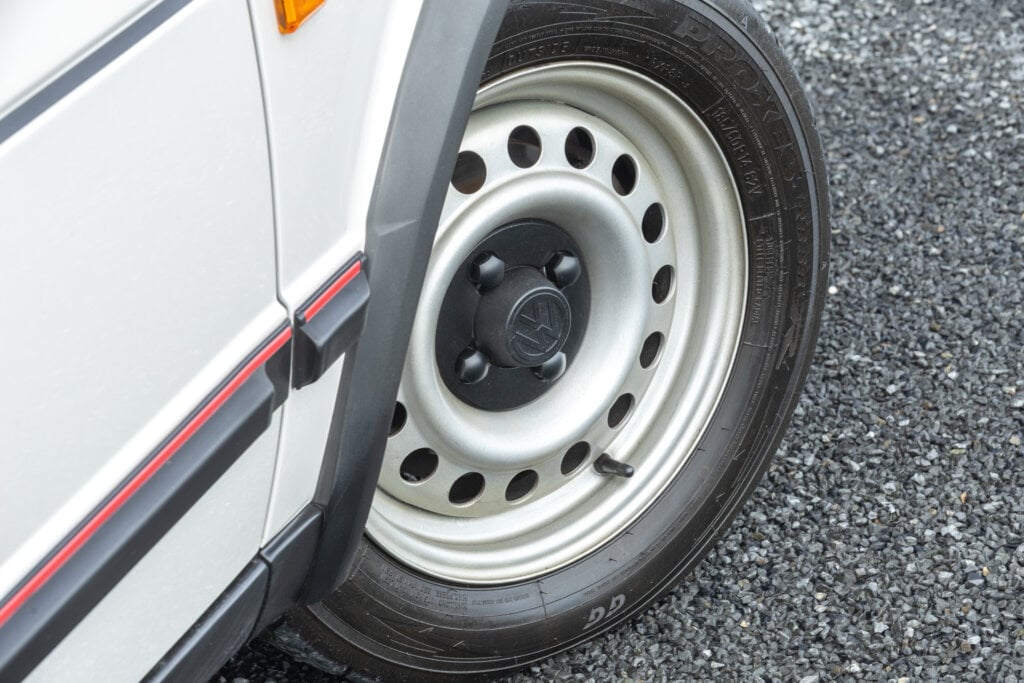
Running on these Proxes, this has more grip than it ever had when new. Even though they are the same 185/60 R14 size as the originals, the GTI would perhaps be more playful on more period-correct tyres. But there’s still a sense of rear-end adjustability mid-bend, depending on your throttle inputs. It’s not the sort that will suddenly swap ends on you, though.
The sub-1000kg kerb weight means the relatively simple suspension keeps everything together, and it feels well balanced for a front-driver. This is riding a bit lower than standard, so you know about the bumps, with bigger ones sending a shiver through the cabin. But they remind you that you are driving one of the true originals.
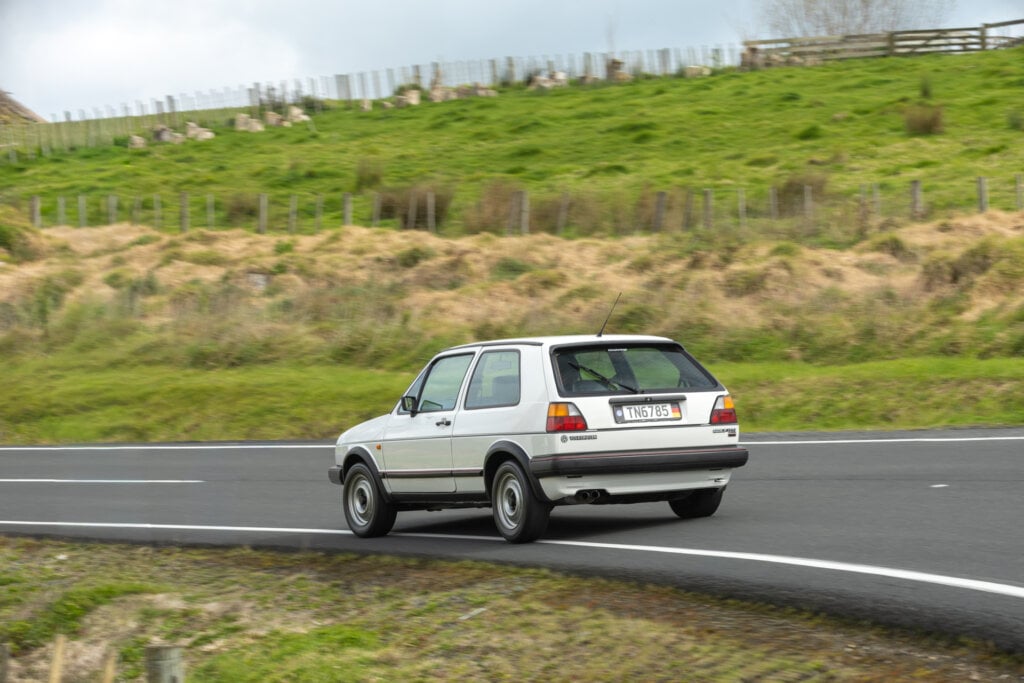
The second-generation model helped turn an unexpectedly successful sporting derivative into an established part of Volkswagen’s business, one that has now been running for 50 years and counting.
Thanks to Winger Motors Greenlane for the use of this Golf GTI.
Find more of their cars at winger.co.nz
This article first appeared in the November 2026 issue of NZ Autocar magazine.