View all
13 more images
2026 BYD Sealion 8 Premium AWD vs Hyundai Santa Fe Elite Hybrid Review
Words: Kyle Cassidy | Photos: Alex Schultz
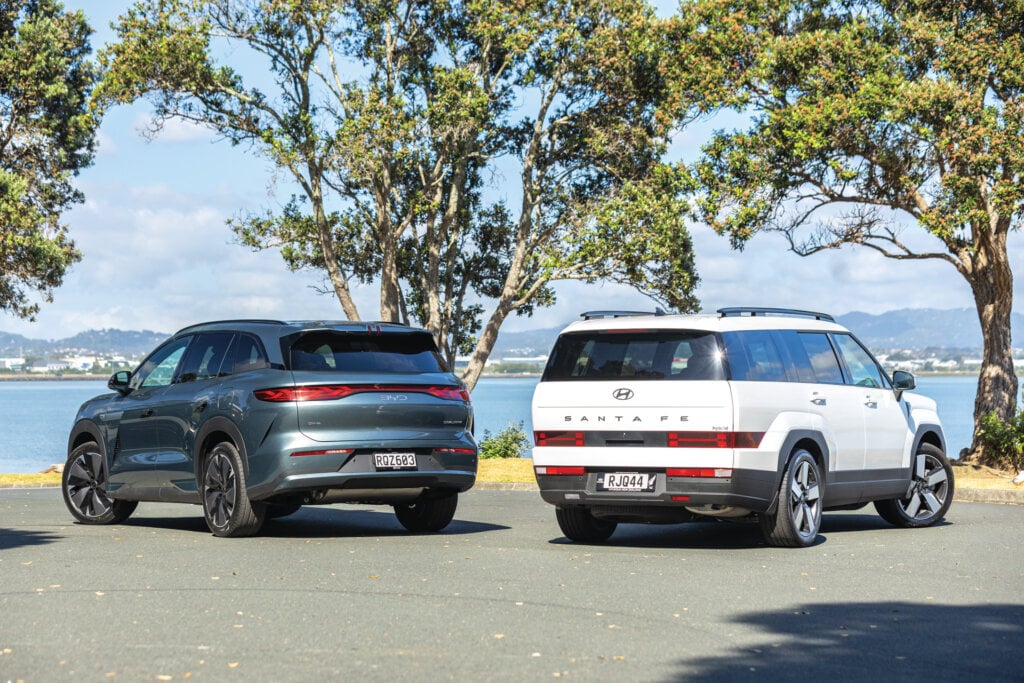
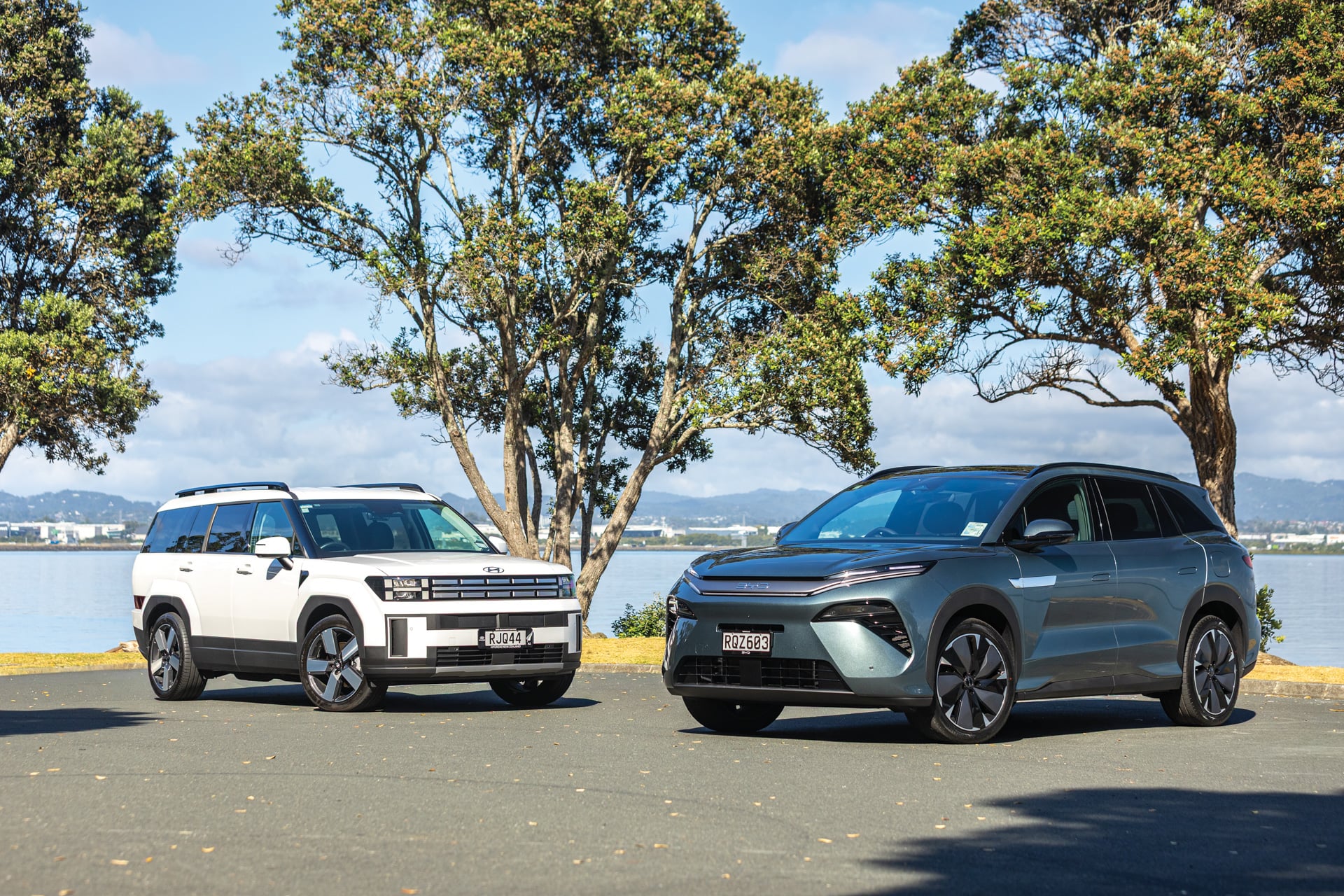
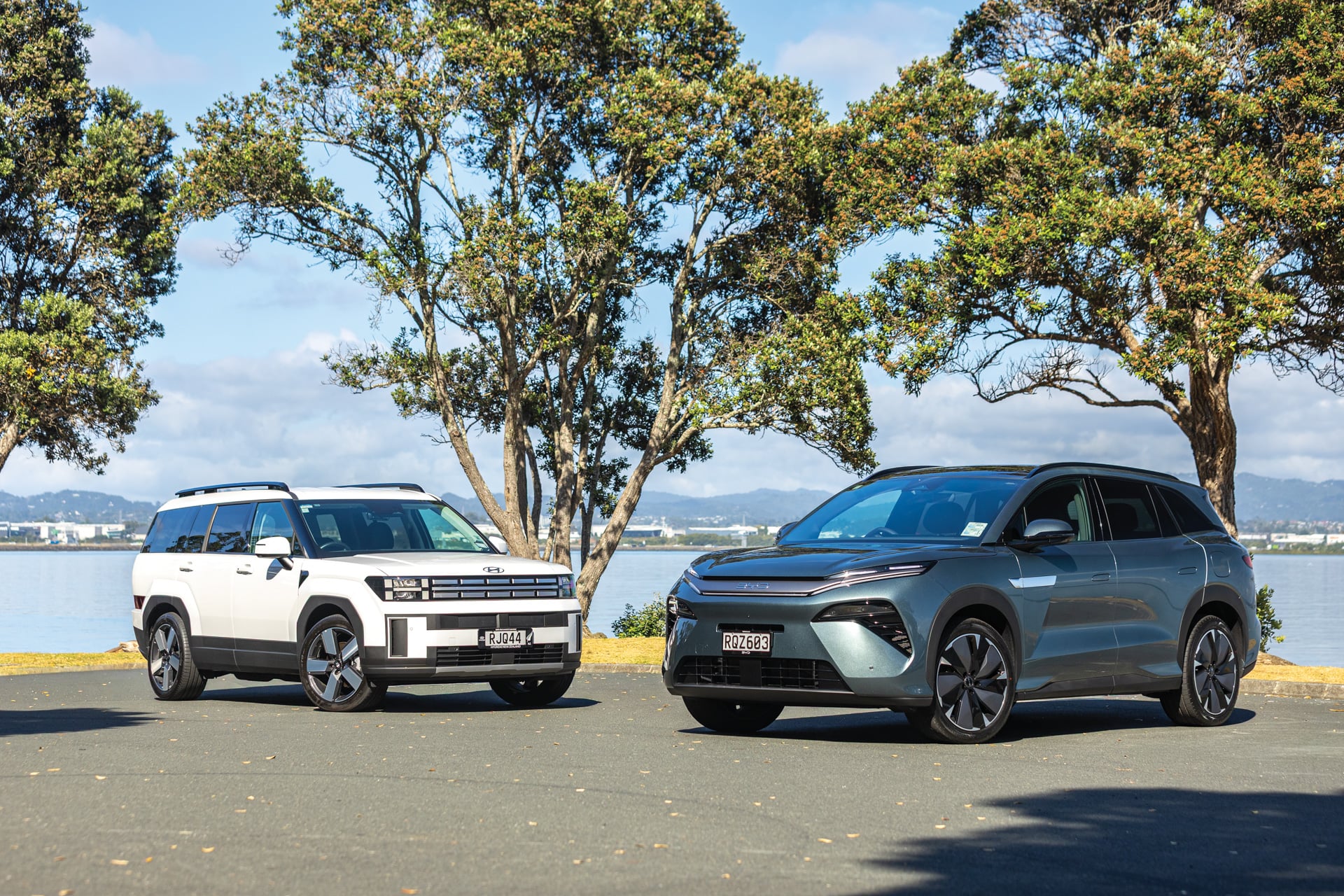
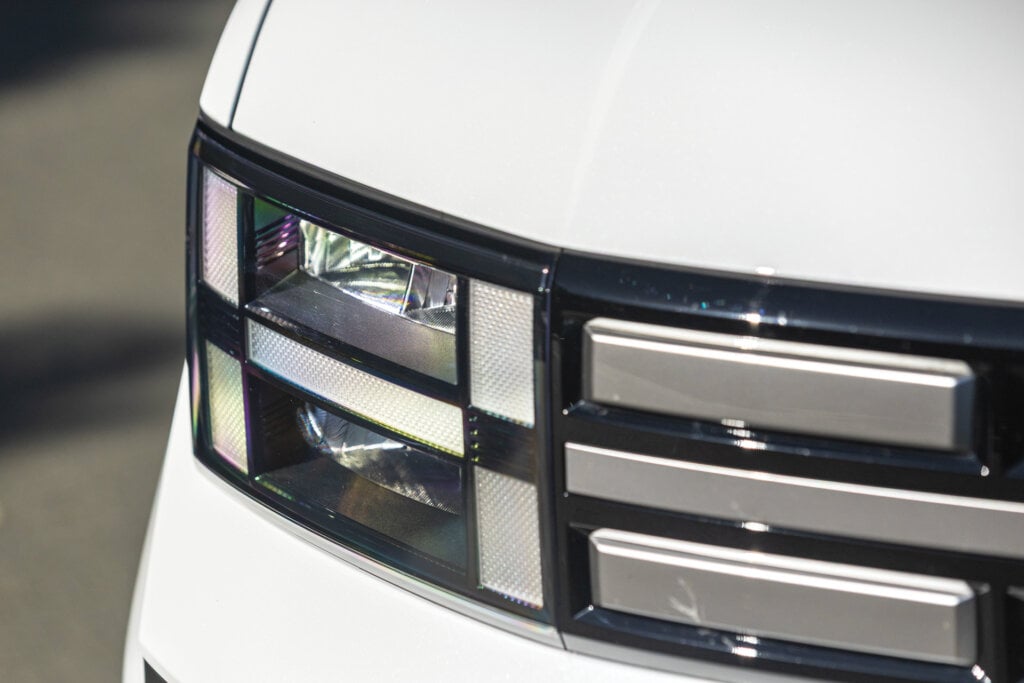
Those in the market for a big seven seater have plenty of choice. And you can now add the BYD Sealion 8 to the list of candidates. We see how it measures up against the Hyundai Santa Fe.
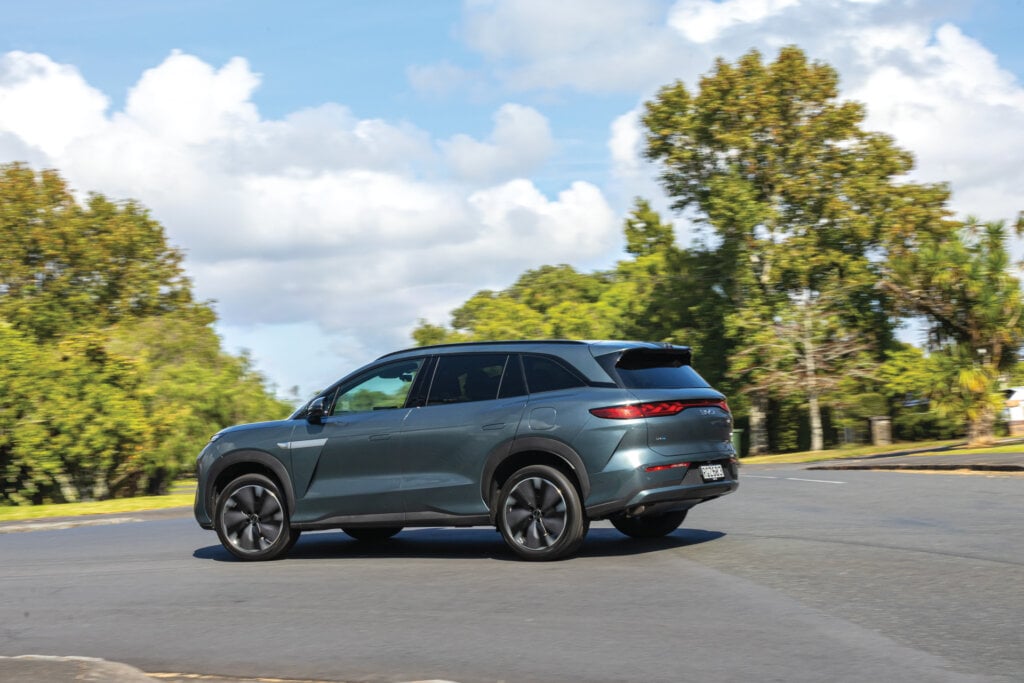
It doesn’t seem that long ago that BYD’s range consisted of just the Atto 3. Now you’d call its line up replete with small hatches, a ute, a sedan even and with the arrival of the Sealion 5 and 8, a sorted range of SUVs too. The Sealion 8, with seats for seven, is the firm’s new flagship. It’s a plug-in hybrid too. Like the Shark, it’s of the series variety, the motors providing the drive, while the petrol engine works the generator to keep the show rolling when the battery gets low.
There are three 8s offered, starting at $75k for the Dynamic FWD with 205kW/315Nm, and a 19kWh battery. There’s a twin motor Dynamic AWD option at $84k with an impressive 359kW/675Nm output. And with a larger 35kWh battery, it has a stated EV range of 152km, 50 more than the FWD. For those wanting the extras, the Premium sits at the top for $92k with the same powertrain. While the outputs are impressive, it’s the promise of minimal fuel consumption that will be appealing to many, along with the reduced rate of RUCs for PHEVs.
A Busy Segment
It lobs into a congested large SUV market against the likes of the Toyota Highlander HEV ranging in price from $73k – $90k, the Kia Sorento (also now a HEV-only line up) from $66k to $88k and Mazda’s CX-80 which offers a plug-in variant at $81k. There’s also the Skoda Kodiaq ($57k-$95) and VW Tayron ($79k-$97) but neither offers a hybrid. Nissan recently dropped the Pathfinder here due to its lack of a petrol-electric offering. Then there are the more off-road orientated 4x4s like Everest ($75-$92k) and Tank 500 ($82k) vying for seven seater custom, the GWM also with plug-in tech. So there is much choice, including the hybrid Hyundai Santa Fe. And we thought it would be good to compare the BYD newcomer with our previous Family Car of the Year class winner.
The Santa Fe hybrid starts at $74k topping out at $99k while the mid-spec $79,990 Elite, featured, is the pick of the range. It’s up against the top Sealion 8 here. So there’s a pricing premium, although opting for the Dynamic AWD closes that gap, while still giving BYD a specification advantage.
Hybrids but different
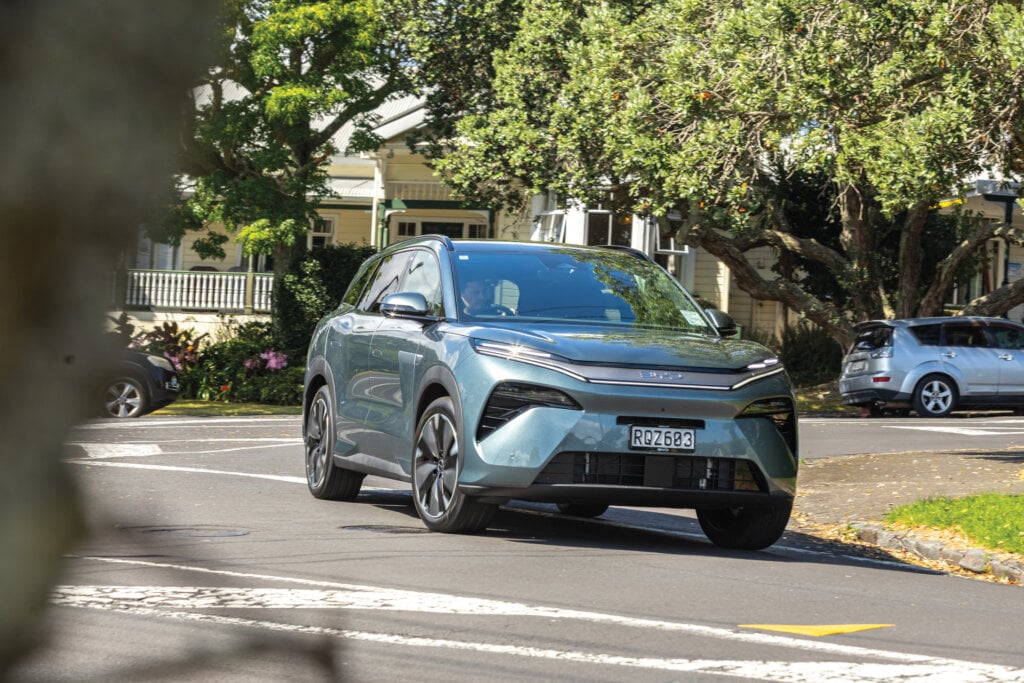
The Sealion 8 drives like an EV thanks to its series set up. It might be big, weighing 2580kg, yet it’s quickly away; that easy torque being always there and ready to go. BYD claims a 0-100km/h of 4.9sec, though we couldn’t manage to better 5.5sec. Still that’s darn quick for a school bus.
We managed to get 110km of engine off roaming out of the Sealion 8 before it then reverted to hybrid mode. The engine is fairly muted, vibrations minimal, although it does get rowdy when asked to accelerate with more vigour, such as ascending a hill.
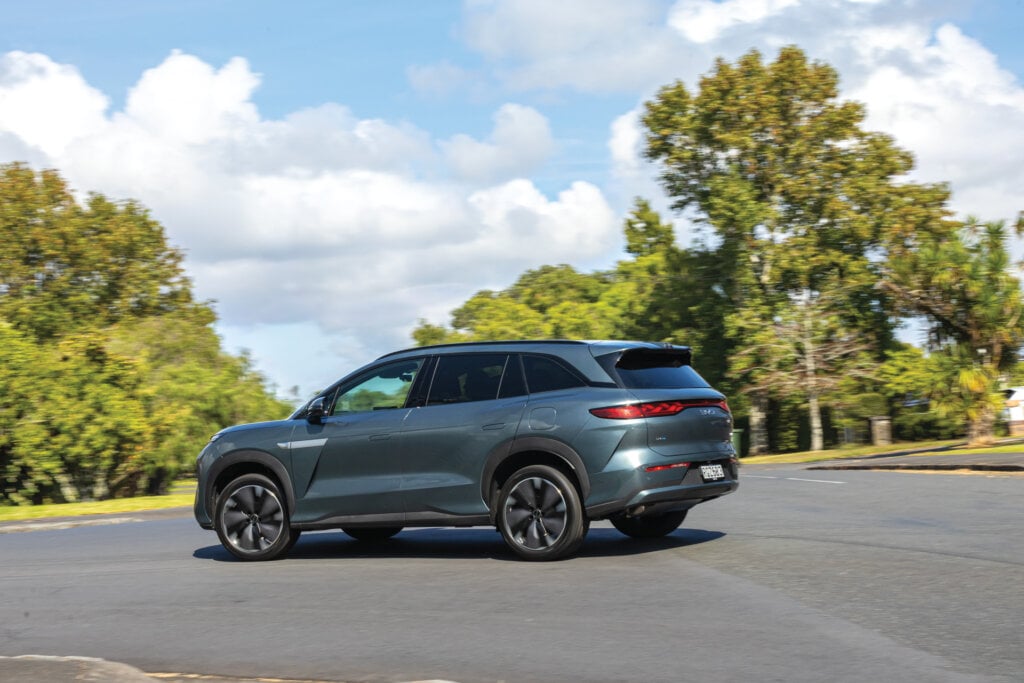
While the overall consumption figure is stated at a scarcely believable 1.0L/100km, yours will vary. BYD also lists a hybrid mode figure of 6.3L/100km, although we saw 9.8L/100km. So you’ll need that plug handy to keep gas use in check. Given the size of the battery, a wallbox might be necessary to ensure an overnight top up as well. It can be DC charged at rates up to 74kW.
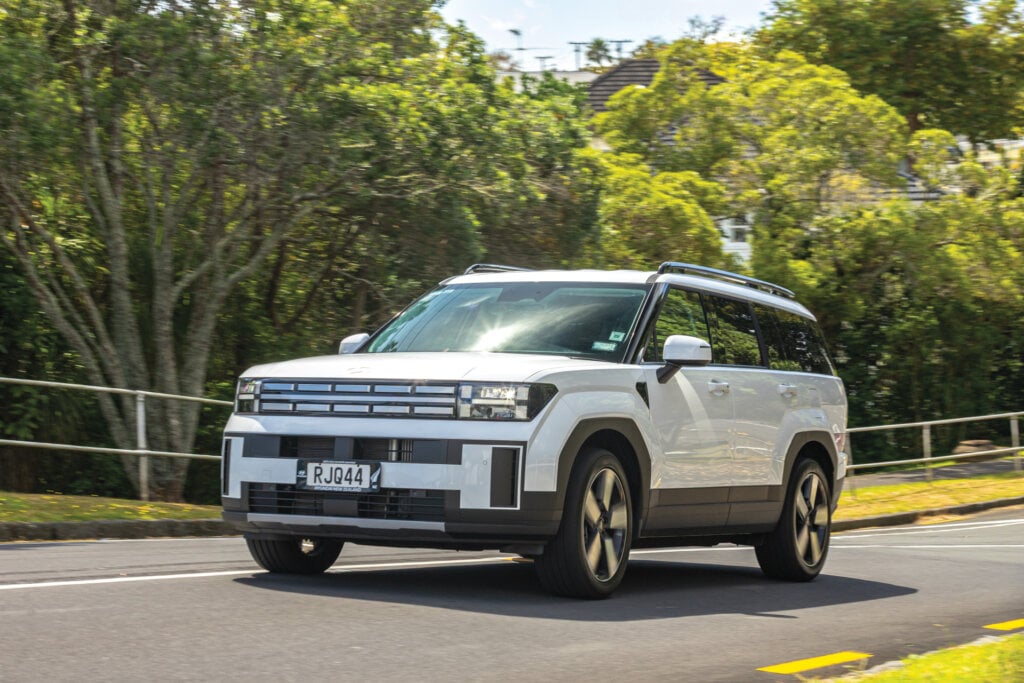
The Hyundai is a ‘self-charging’ hybrid of the parallel kind, the electric motor there to help boost output although the Santa Fe can mooch along on volts alone under a light throttle over short distances. The combined output is rated at 172kW/367Nm and flows via the six-speed auto, with an on-demand AWD system making it all count. With the electric torque helping out, the 1.6 turbo moves the Santa Fe easily, smoothly too, though it’s just not as effortless or silky as the electric drive of the BYD. Nor is it quite as rapid.
It’s not bad on gas use though, 6.2L/100km being the official figure, while on test it averaged 6.7. And it’s not unusual for the trip computer to register round-town trips in the low 5L zone.
Refined drives
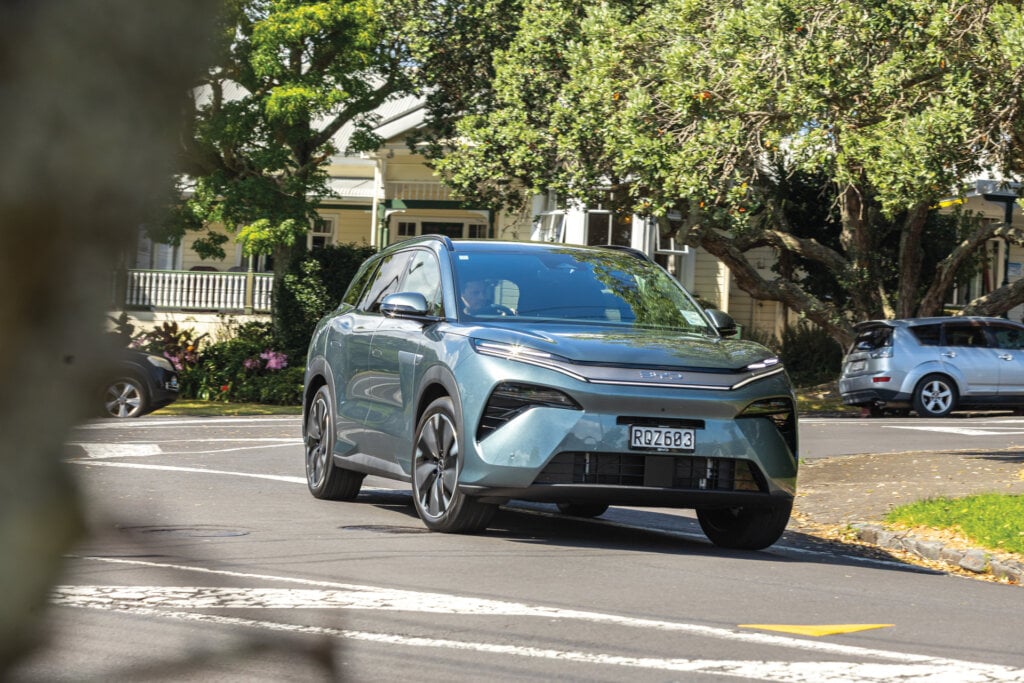
These two drive well, yet have quite different appeal. The 8 rides better than other Sealions. It’s settled, controlled even, not all spongy. And yet the ride is absorbent too. This is largely due to the fitment of adaptive damping for the AWD models. The Santa Fe rides fairly well in the city yet the BYD adds a bit more cushioning to your travel.
While the BYD’s steering has a sense of connection at the wheel, it feels a tad aloof compared with the Santa Fe, the Hyundai steering having a bit more life and a better assistance to its action.
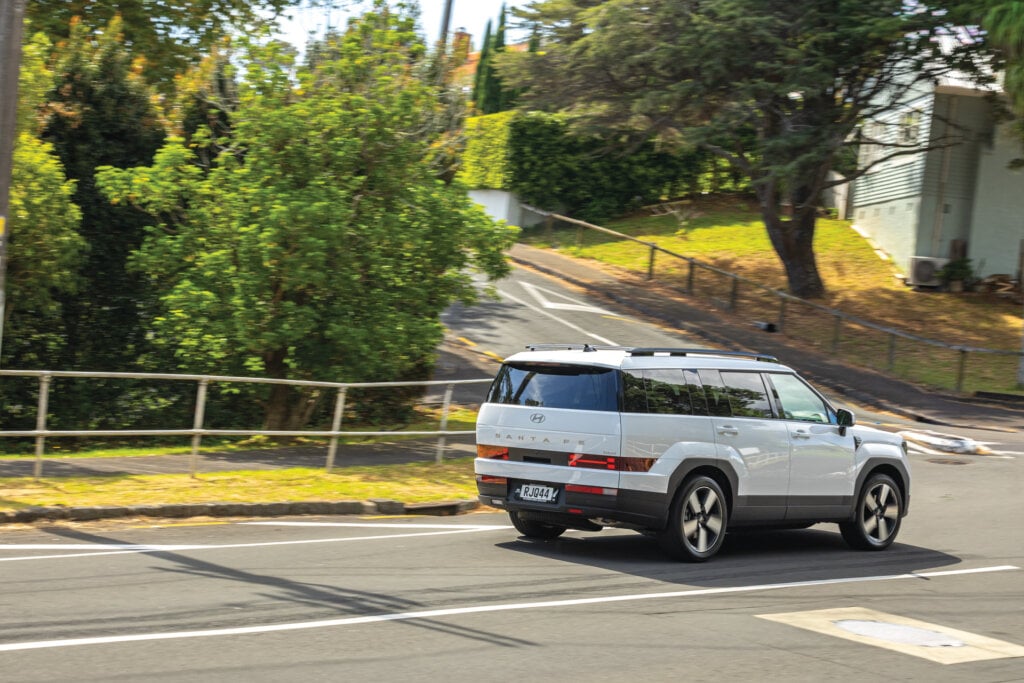
The Sealion 8 is a big vehicle at over five metres, but we didn’t find it too hard to park thanks in part to the excellent parking camera while the turning circle isn’t awful. It’s much the same with the Hyundai, just without the camera assistance.
Clicking the BYD into Sport mode, the dampers firm a touch to add a bit more control to the 8’s dynamic envelope without throwing the ride into disarray. A few bumps get through, but it’s otherwise well mannered. Up to a point however. There’s no hiding its size, and weight. So the Sealion 8 is not something you’d describe as overtly dynamic. The power is good, rolling on strongly, the torque constant. The brakes are okay too, though the pedal pressure can be inconsistent with the regenerative nature of the set up.
Though the Santa Fe is a big wagon too, it manages to feel smaller on the road. It doesn’t feel cumbersome, turning with more conviction, remaining calm under pressure.
Most of the active safety systems are tolerable in the BYD, although the lane keeping likes to remind you of its purpose in life, while the driver monitor only sounds off when you are spending too much time looking elsewhere. And while the active cruise is a handy operator, the intelligent cruise, with the lane keeping function, might induce motion sickness. While the lane keeping is better behaved in the Santa Fe, its driver monitor is more proactive, as is the audible alert for the speed limit recognition.
Big inside
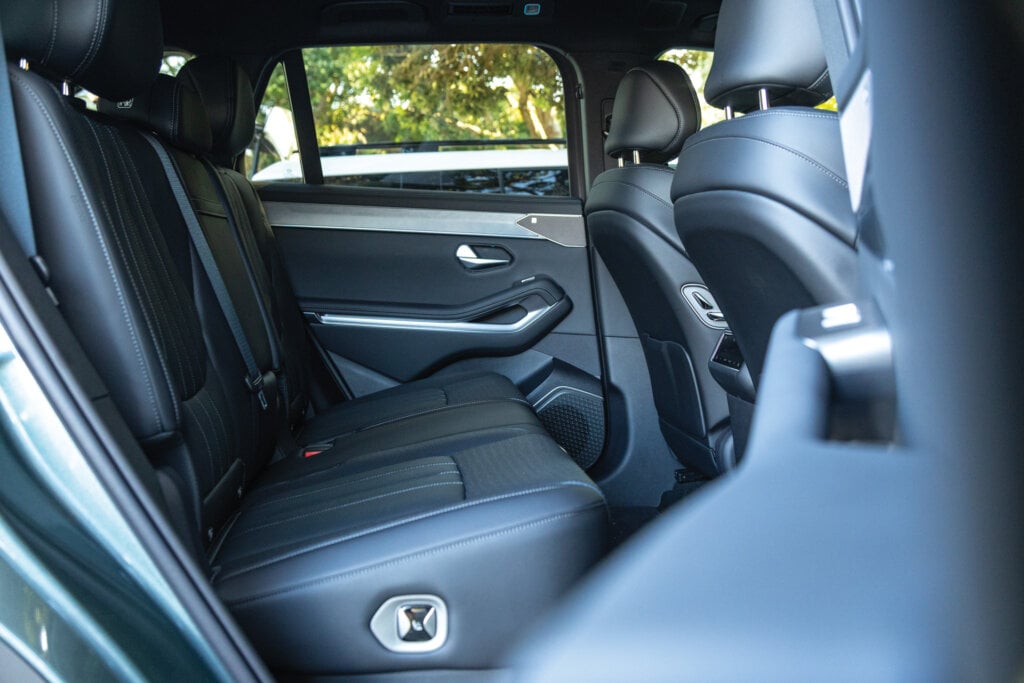
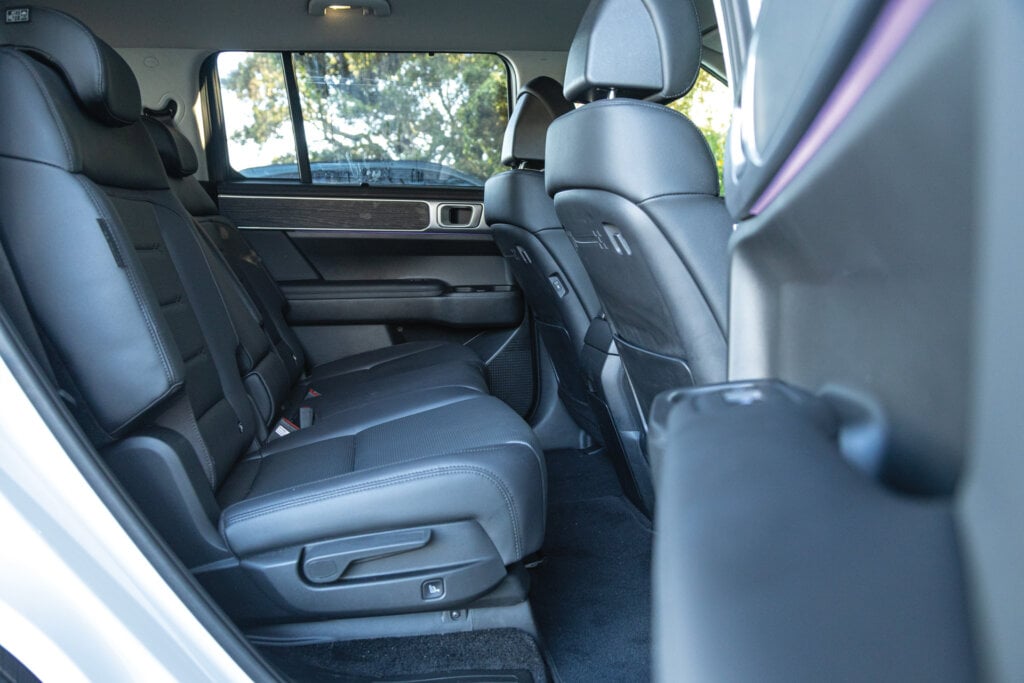
Both rigs have big doors for easy entry (if you manage to work out those disappearing handles on the Sealion, which can cause frustration), and there’s good sprawl space in the BYD’s second row. The flat floor makes it a proper three-across bench, and it’s right comfy, complete with heating, ventilation and even a massager.
You’re not short on space in the Santa Fe either, and while not quite as wide as the BYD, passengers are not going to be worried much about space or comfort in either machine.
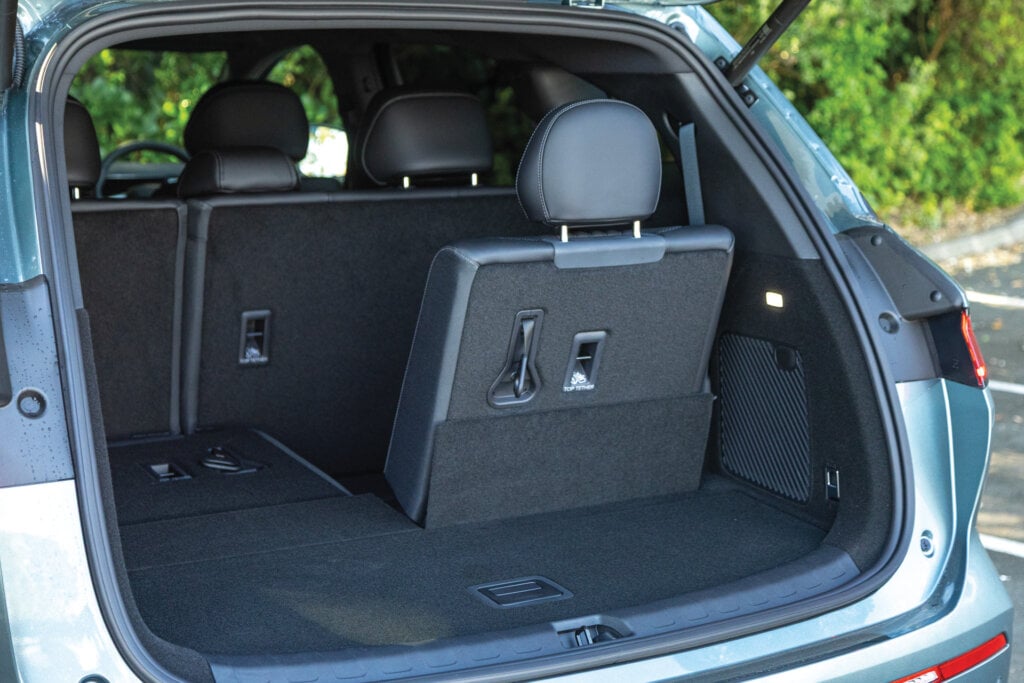
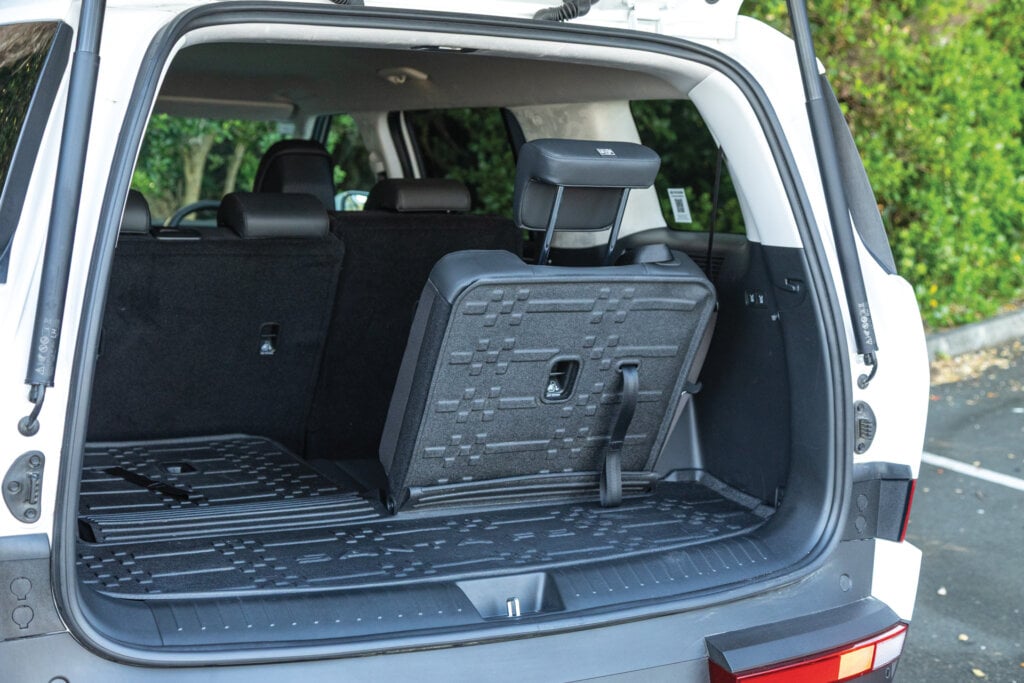
There is good access to the third row in each SUV, seats tilting and sliding out of the way with ease. You’ll find more room in the rear of the Santa Fe with better head and legroom, and a more comfy seat. You’ve got rear aircon, USB-C ports, and plenty of cup holders. It’s a better bet if you use the third row more often. While the BYD doesn’t offer its sixth and seventh passengers USB ports and A/C controllers, the Sealion 8 has the vehicle to load outlet, so you can power your contraptions on the road.
In the boot they’re similar in width and length but there’s more height in the Hyundai. There is a spare underneath the Santa Fe, which is lacking in the BYD. Both third rows are easily deployed and stowed (although the Hyundai’s headrests need to be manually retracted) but neither has much useful space in behind the third row for luggage. The BYD can tow up to 2000kg, 350 more than Santa Fe.
Lavish upfront
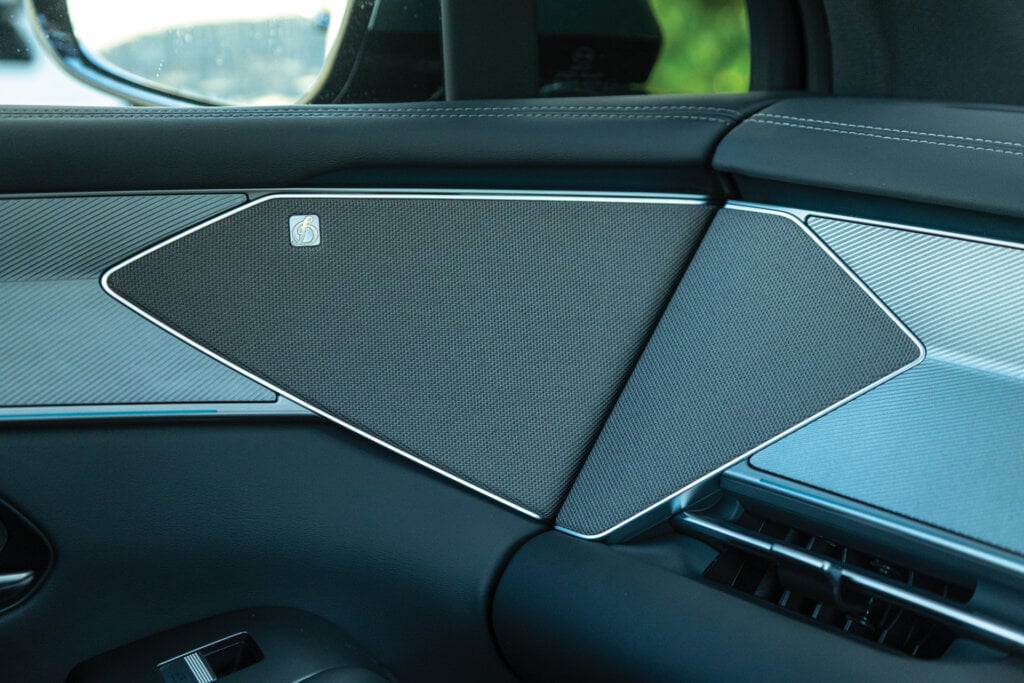
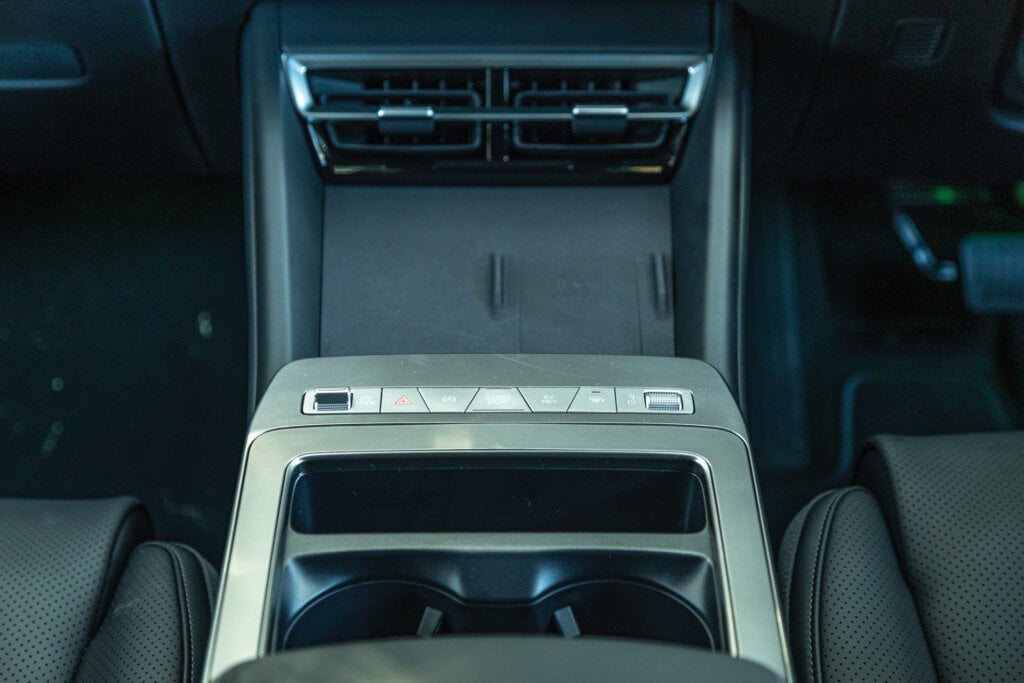
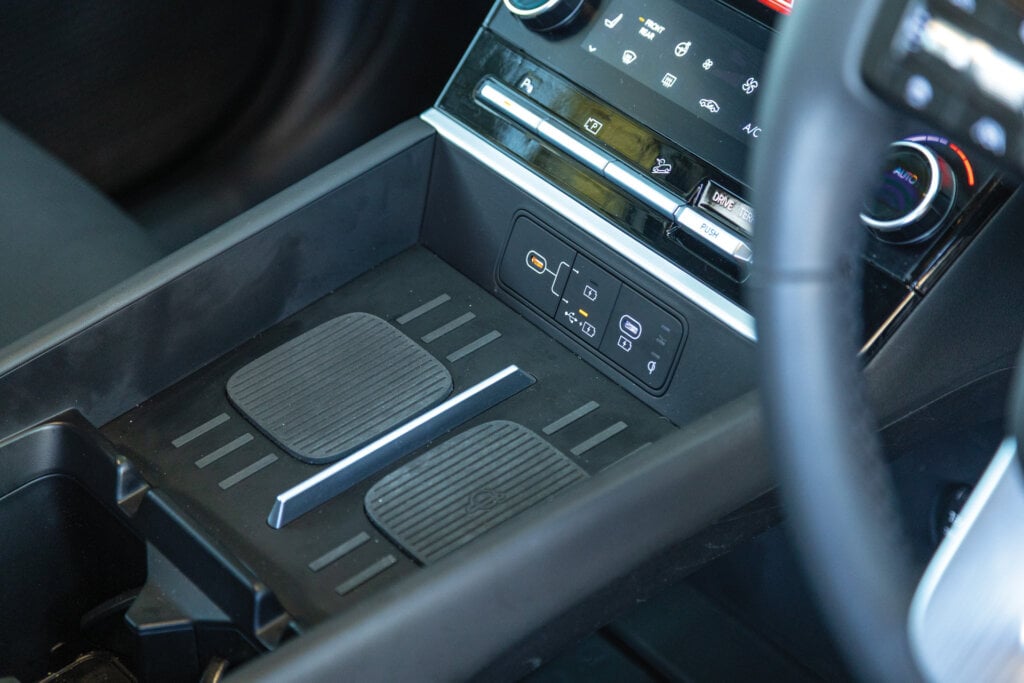
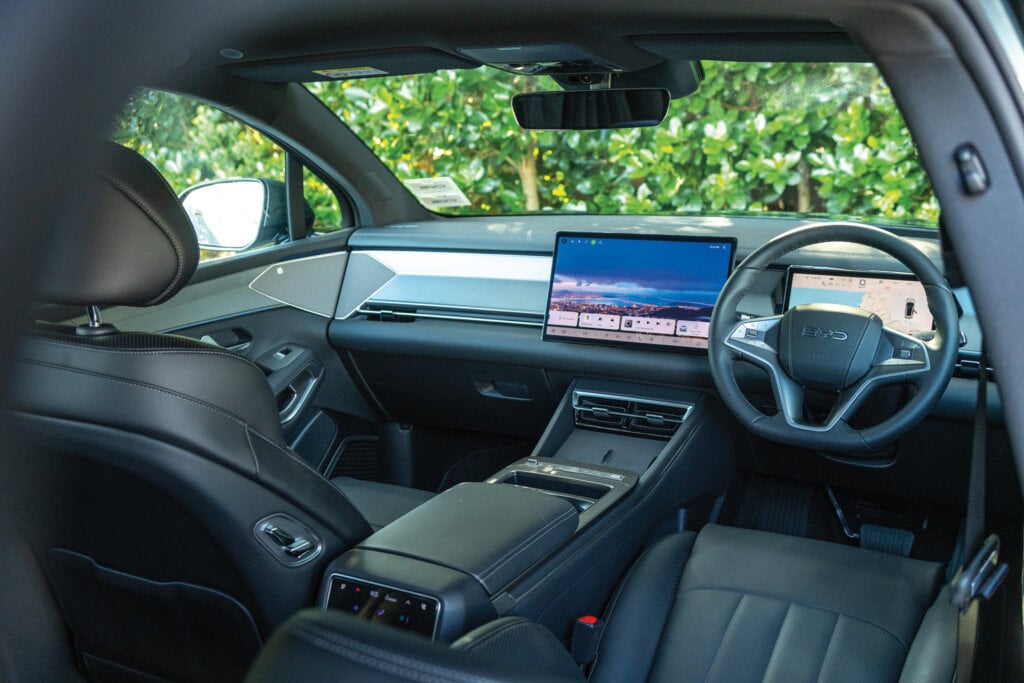
The overall quality of the BYD should impress, it’s a well made cabin with a premium vibe. It’s practical too with good storage, a conveniently located charge pad and a cohesive, modern design that’s not as generic as other Chinese manufacturers.
There are even a few buttons about the console, though it could do with a few more. And so everything is controlled via the screen. While it’s quick and crisp looking, it would be good if the touch points were bigger and that the air conditioning had its own set of buttons down below. There are a few frustrating things; your audio is always muted on start up (two taps to rectify) and the ventilation system resets itself requiring more taps to sort. Or else use the voice help, as she’s quite proficient in task execution.
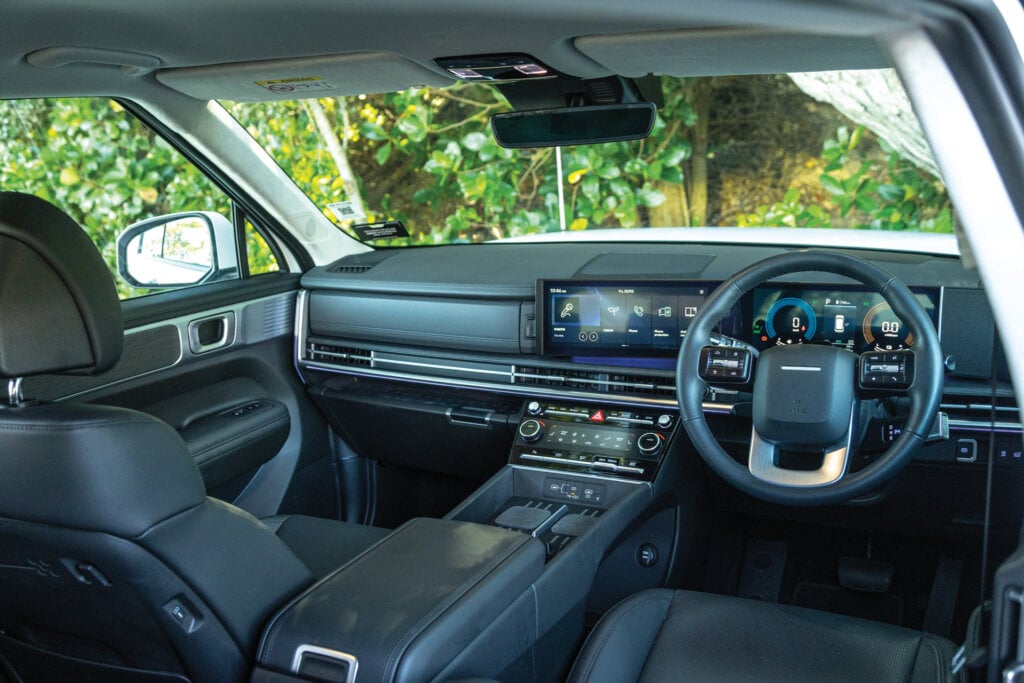
The Santa Fe also has a quality cabin, though some surfaces aren’t as well lined as the BYD’s. You’ll have to spend up on the Calligraphy mode for that. You immediately note its smaller screen, but also the extra buttons that help operations. While there’s a charge pad and warmers for the seats and wheel, the Hyundai is lacking in spec here, with only a plain old reversing camera and no inbuilt nav, voice control and connected widgets. It’s practical with more drink holders and good storage solutions. As for the seats we’ll take the BYD’s for overall comfort, enhanced by the massage function and ventilators.
What’s our pick?
With the current state of the world, the BYD. But in mid-spec Dynamic AWD guise. It looks good, is well made, loaded and practical. It’s a refined drive, and that 100km of EV range will make trips to the gas station rare (at least for urbanites). The Santa Fe is still a solid choice, but it still uses gas, albeit sparingly.
BYD Sealion 8 Premium AWD
$91,990 / 1.0L/100km / 24g/km
0-100 km/h 5.51s
80-120 km/h 3.55s (99m)
100-0 km/h 38.03m
Speedo error 97 at an indicated 100km/h
Ambient cabin noise 70.1dB@100km/h
Engine 1498cc / IL5 / T / DI
Max power 110kW
Max torque 220Nm
Battery 35.6kWh
Range 152km
Hybrid System Output 359kW / 675Nm
Drivetrain Single speed auto / on-demand e-AWD
Front suspension Wishbones / sway bar
Rear suspension Multilink / sway bar
Turning circle 11.8m (2.4 turns)
Front brakes Ventilated discs
Rear brakes Discs
Stability systems ABS, ESP, TV
Safety AEB, ACC, BSM, LDW, RCTA, ALK, AHB
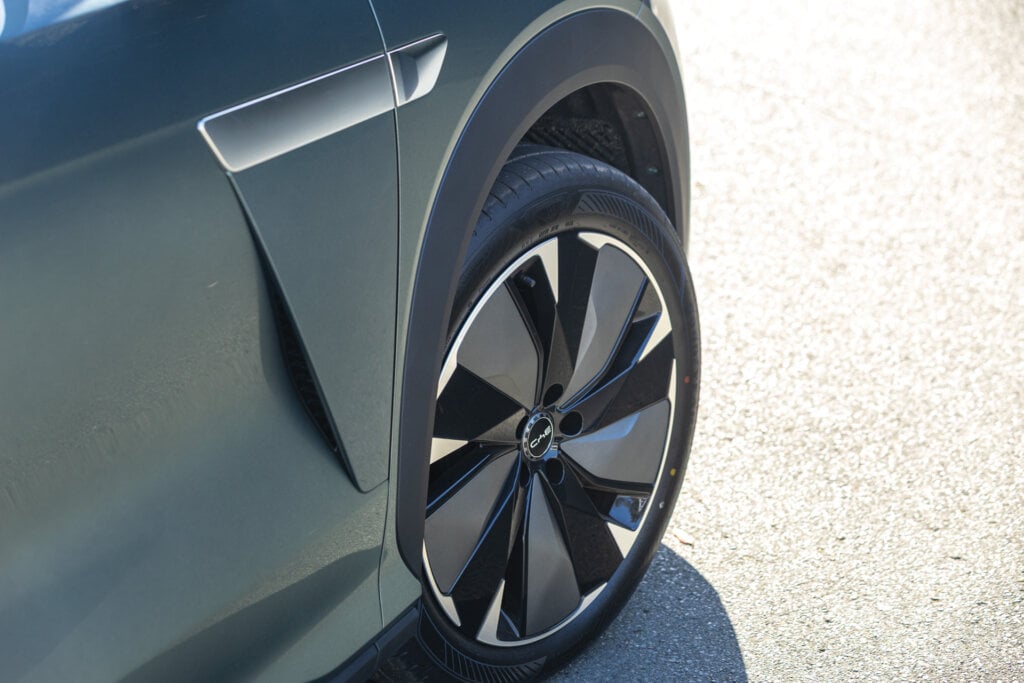
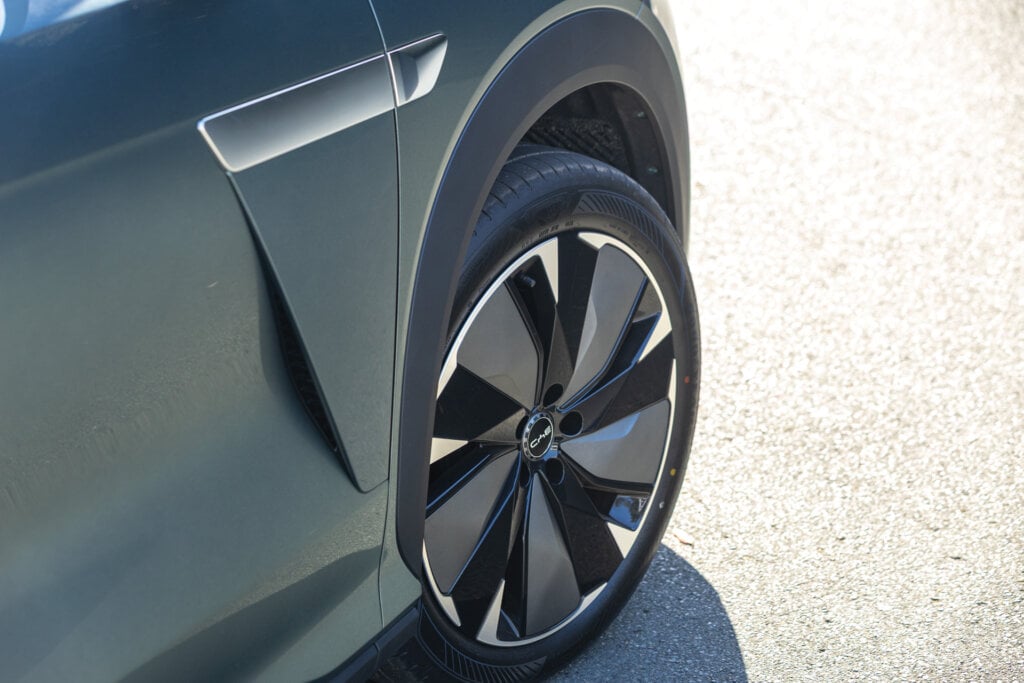
Tyre size f/r-265/45R21
Wheelbase 2950mm
L/W/H 5040 / 1996 / 1760mm
Track f-1716mm r-1720mm
Fuel capacity 60L
Luggage capacity 270 / 960 / 1960L
Tow rating 750kg (2000 braked)
Service intervals 12 months / 15,000km
Warranty 6yrs / 150,000km
ANCAP rating Not yet rated
Weight (claimed) 2580kg
Hyundai Santa Fe Elite Hybrid
$79,990 / 6.2L/100km / 142g/km
0-100 km/h 9.49s
80-120 km/h 5.95s (166m)
100-0 km/h 37.09m
Speedo error 98 at an indicated 100km/h
Ambient cabin noise 69.8dB@100km/h
Engine 1598cc / IL4 / T / DI
Max power 132kW@5500rpm
Max torque 265Nm@1500-4000rpm
Motor output 44kW / 264Nm
Battery 1.49kWh
Hybrid System Output 172kW / 367Nm
Drivetrain 6-speed auto / on-demand AWD
Front suspension Wishbones / air springs
Rear suspension Multilink / sway bar
Turning circle 12.4m (2.5 turns)
Front brakes Ventilated discs
Rear brakes Discs
Stability systems ABS, ESP, TV
Safety AEB, ACC, BSM, LDW, RCTA, ALK, AHB
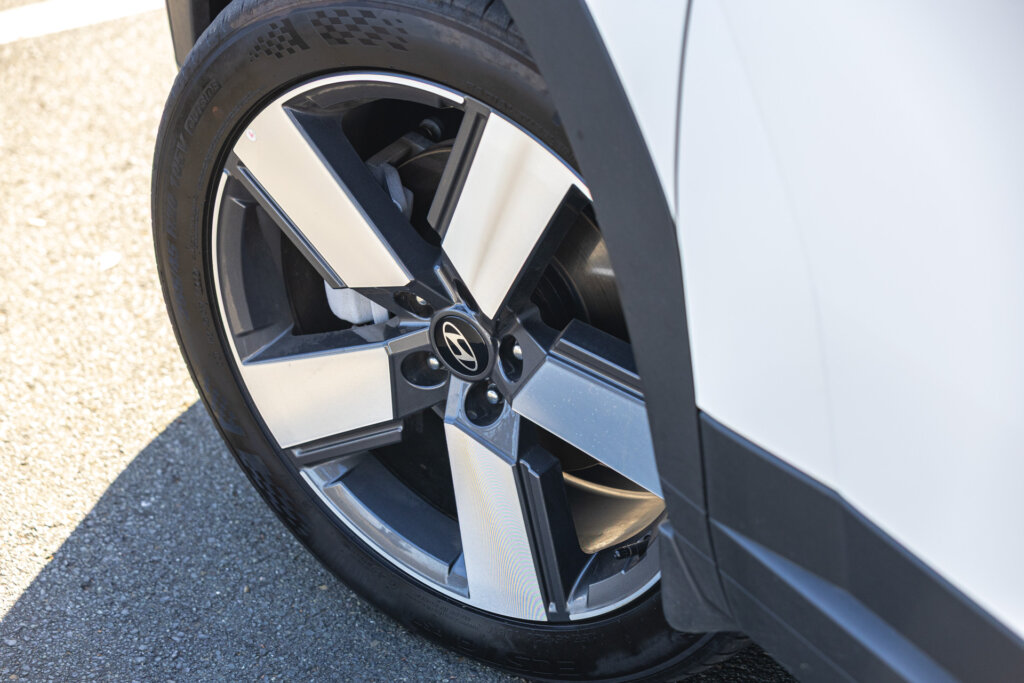
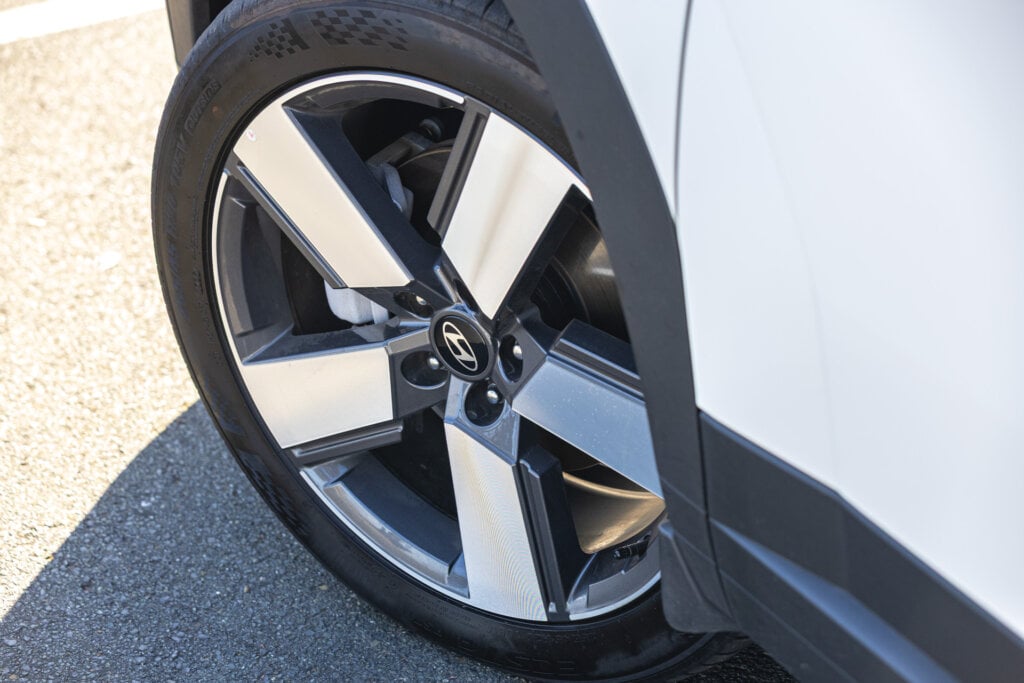
Tyre size f/r-255/45R20
Wheelbase 2815mm
L/W/H 4830 / 1900 / 1770mm
Track f-1637mm r-1647mm
Fuel capacity 67L
Luggage capacity 628-992L
Tow rating 750kg (1650 braked)
Service intervals 12 months / 10,000km
Warranty 3yrs / 100,000km
ANCAP rating ★★★★★ (2024)
Weight (claimed) 1980kg