View all
12 more images
2026 Forthing Taikon Hybrid Exclusive Review
Words: Kyle Cassidy | Photos: Alex Schultz
The latest car brand to NZ is Forthing. It’s part of the huge Dongfeng Group, and is distributed by Ateco Group, the same people responsible for BYD’s success here. Its first model is the Taikon, which we test in super hybrid form.
Just when you thought the stream of new arrivals to the New Zealand car market was slowing, yet another lands. Forthing drops from China, owned by Dongfeng Liuzhou Motor Co (which in turn is part of the Dongfeng Motor Group) and has been handling joint venture operations, producing cars for Honda, Nissan and Renault among others. It has also been producing its own range of cars since the mid-2010s while this machine here is its first foray into right-hand drive markets.
The Taikon lands with both EV and HEV powertrains, the latter a super hybrid series plug-in. It’s said to be the second generation model, only recently released in China before coming here.
The Taikon
First up is the Taikon, arriving in the busy mid-size SUV market. The hybrid starts at a competitive $39,990 while the EV is at $42,990. Each has two variants, the Luxury and the Exclusive, which asks $5k more for its extras. Taikon comes with a seven-year, 200,000km warranty.
There will be four Forthing dealers in the main metro centres with more planned, while parts are stored at Ateco’s warehouse in Auckland, already stocked with close to a $1million of inventory.
Under the skin, the 4.6m long Taikon’s flexible platform allows for two different electrified approaches. The fully electric model is expected to deliver a driving range of more than 400km (WLTP). It has a 150kW 240Nm rear-mounted motor, which draws from a 64.4kWh LFP battery. Fast charging from 30 to 80 per cent is stated to take 30 minutes.
The hybrid variant combines a 1.5 petrol engine (used chiefly as a range extender, turning the generator to charge the battery) with electric drive capability. It uses a 120kW/240Nm motor and a 31.9kWh LFP battery. The EV range is stated at 183km, while its combined driving range is claimed to exceed 1000km.
How’s the quality?
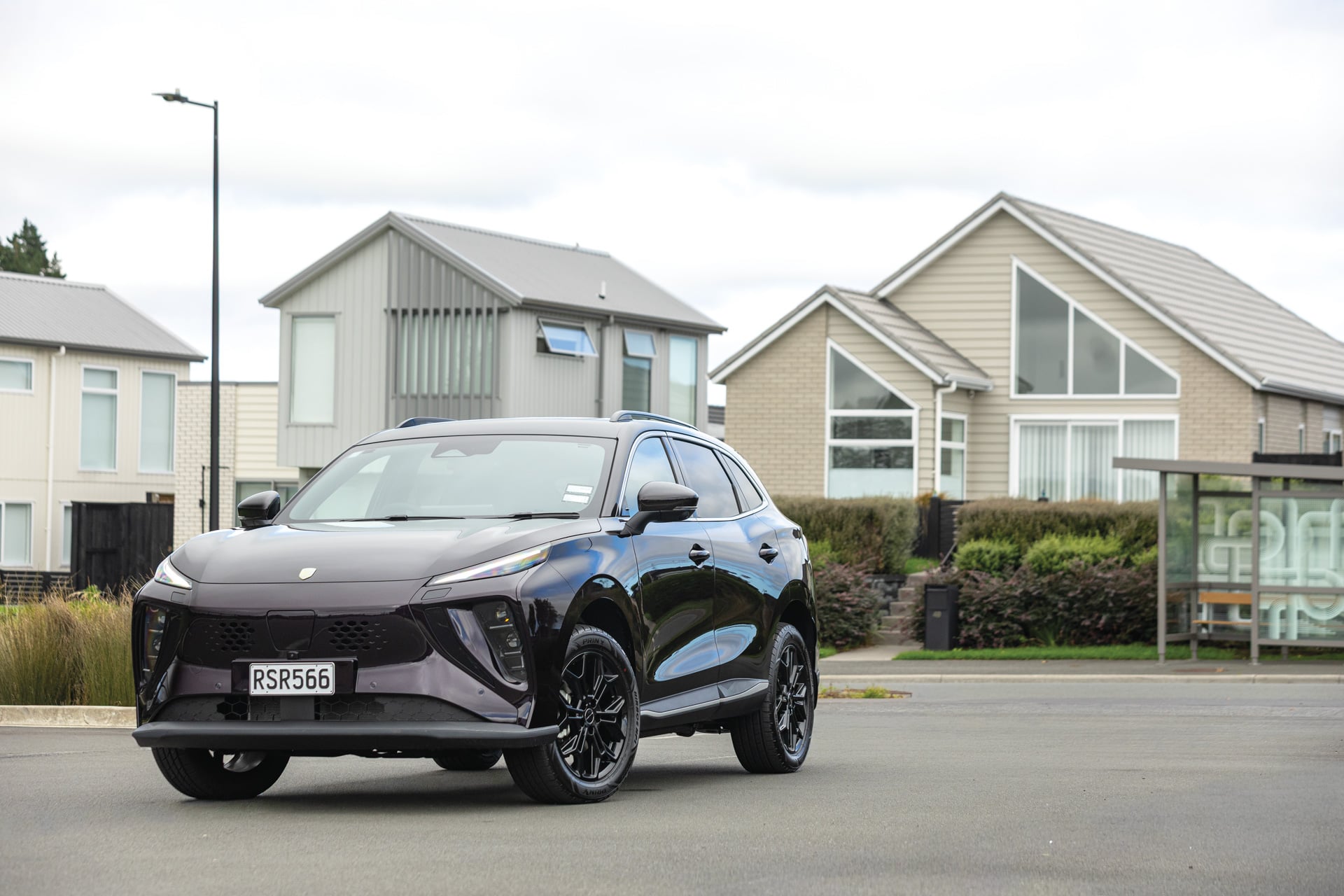
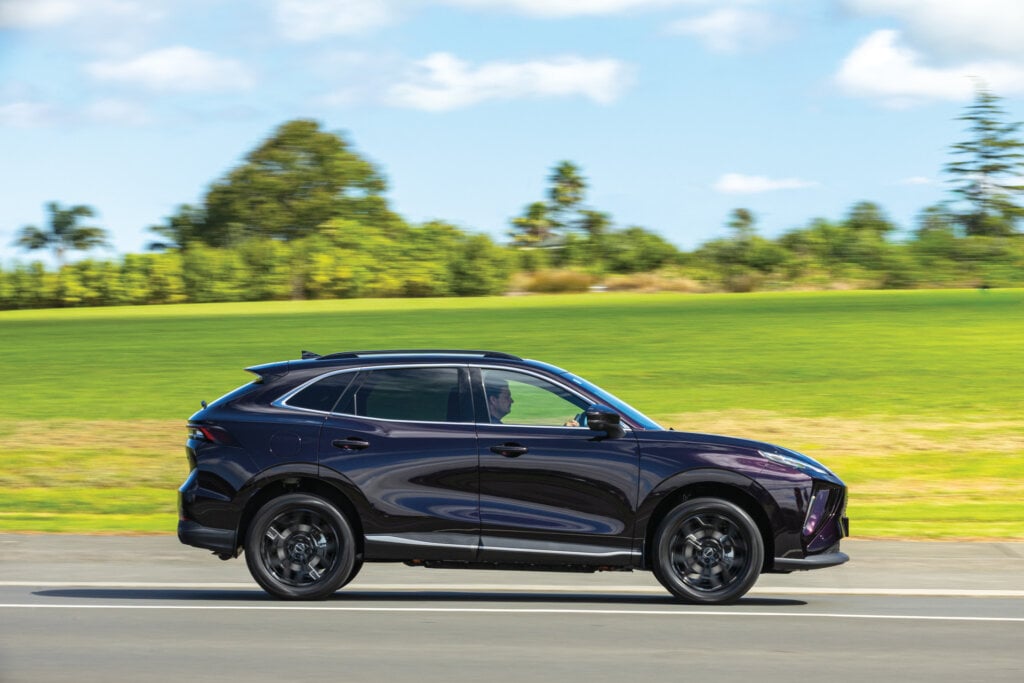
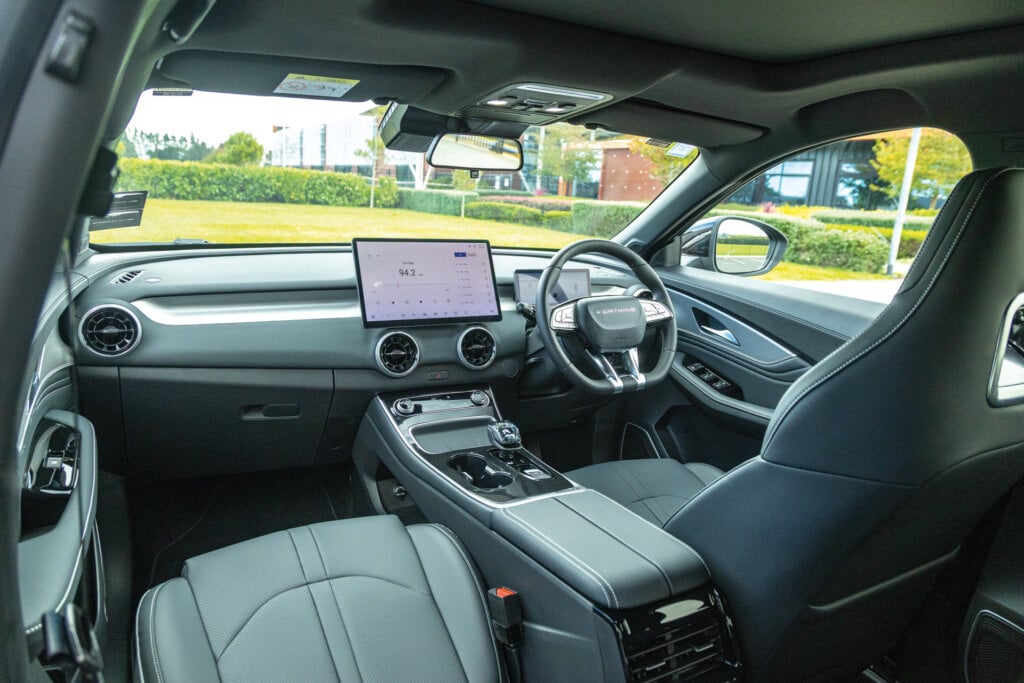
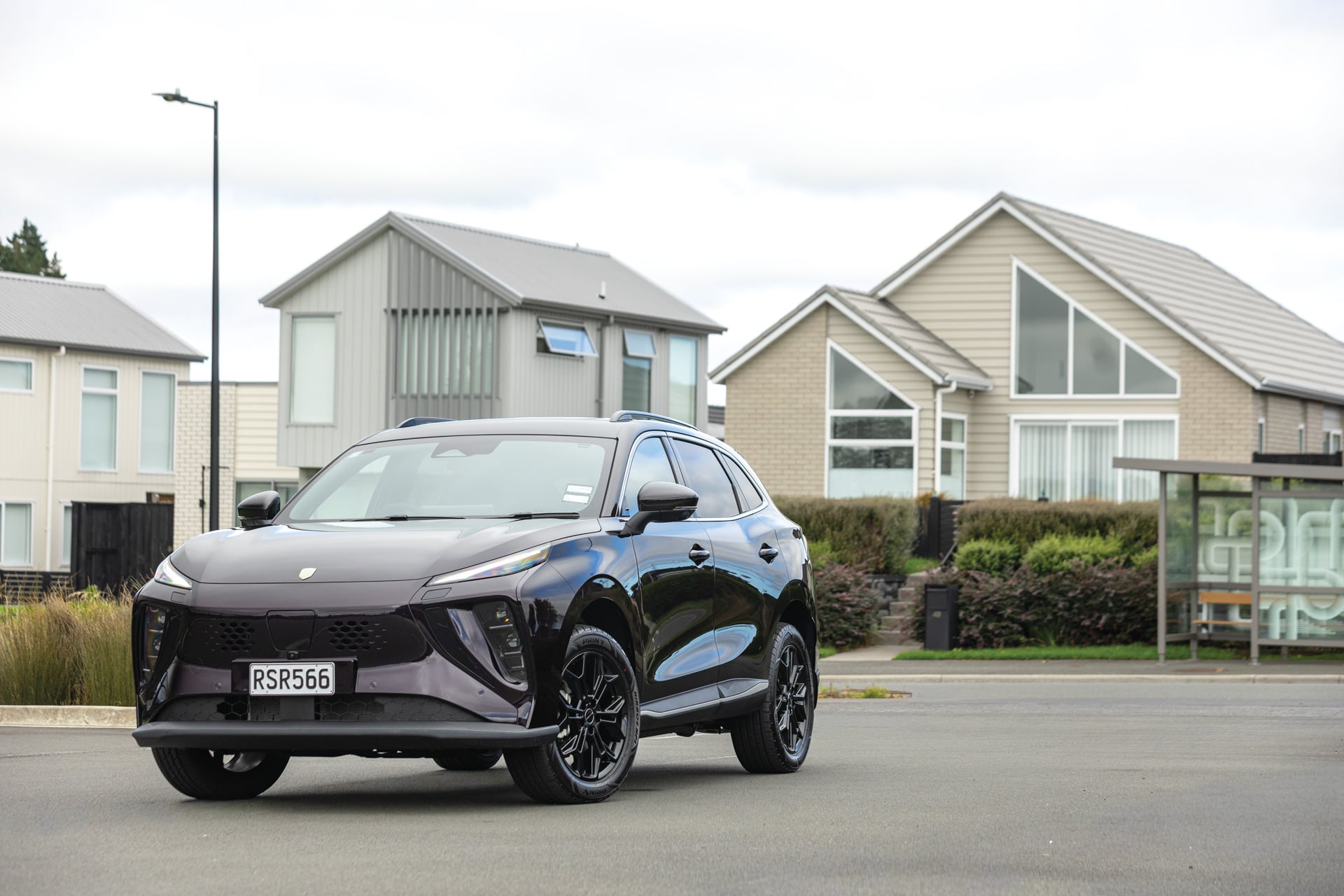
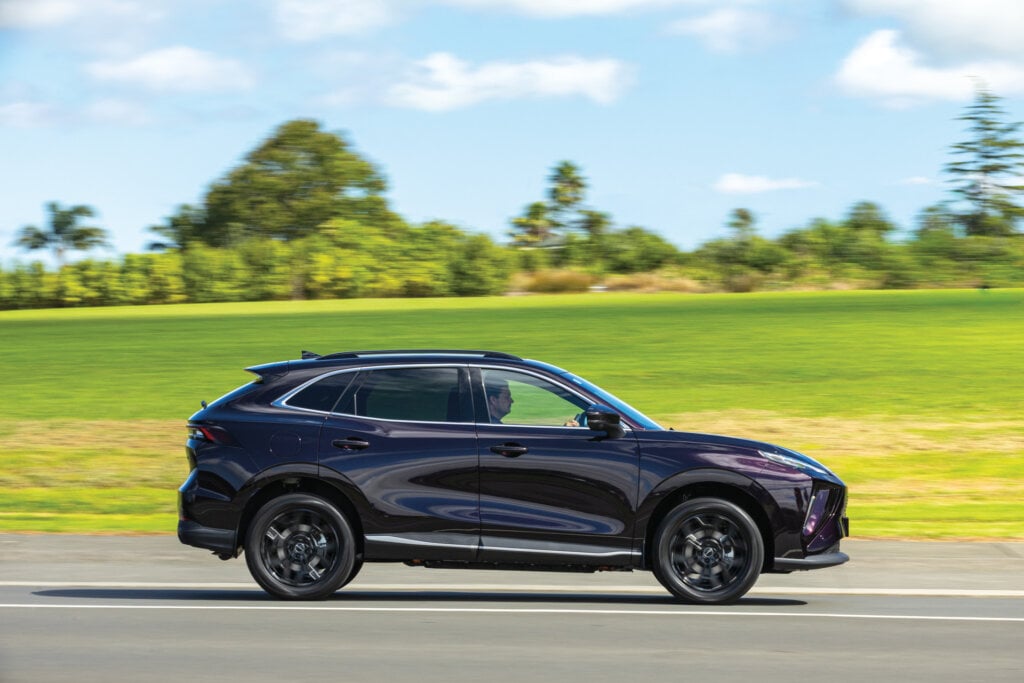
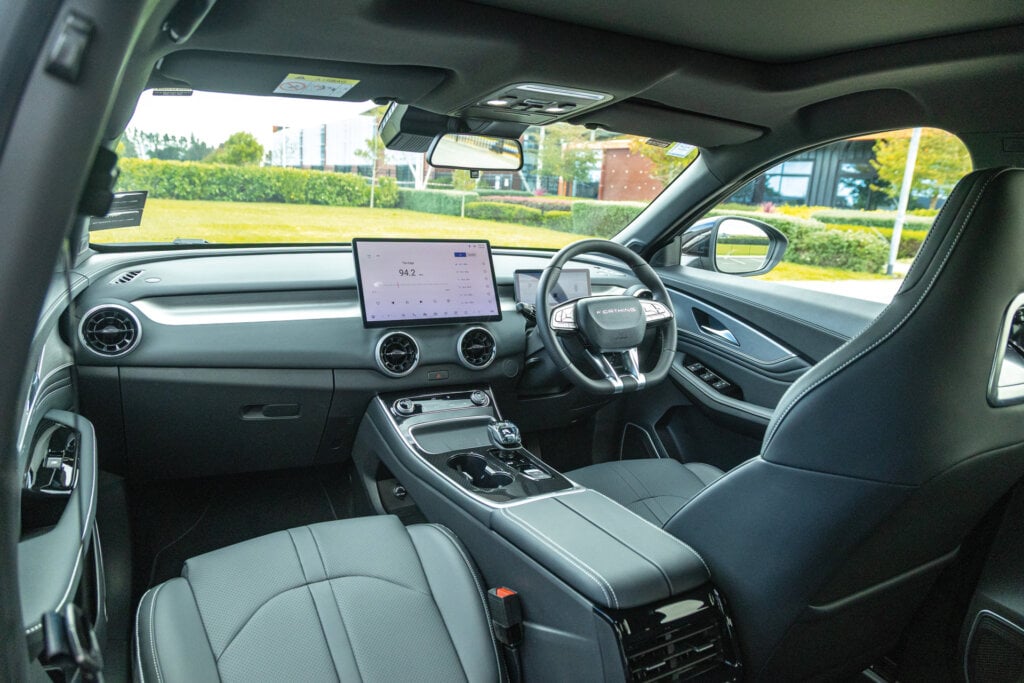
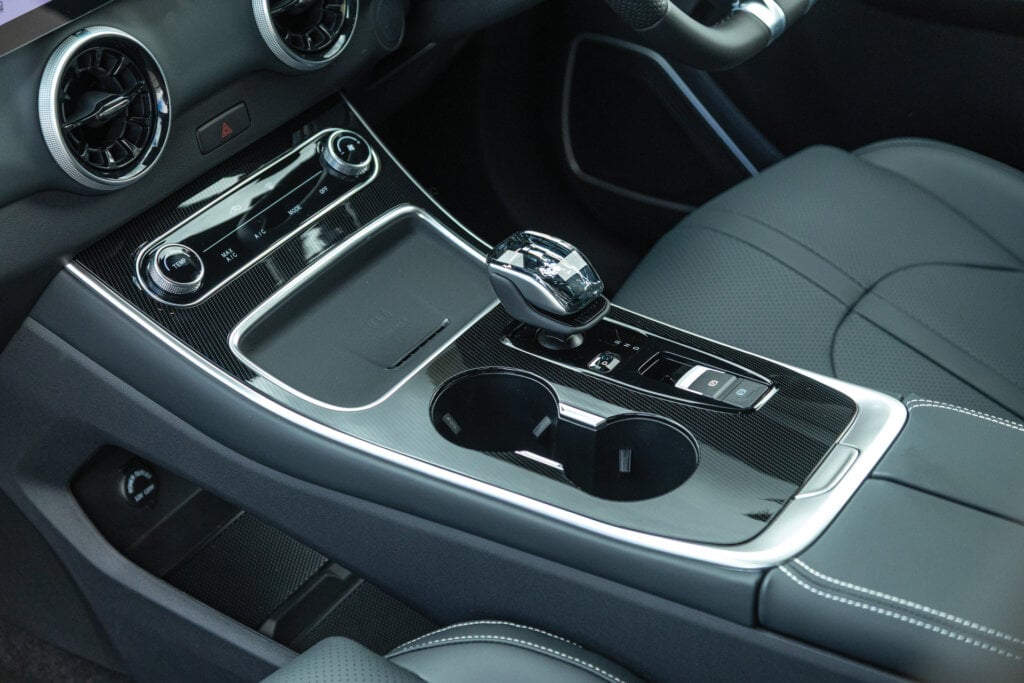
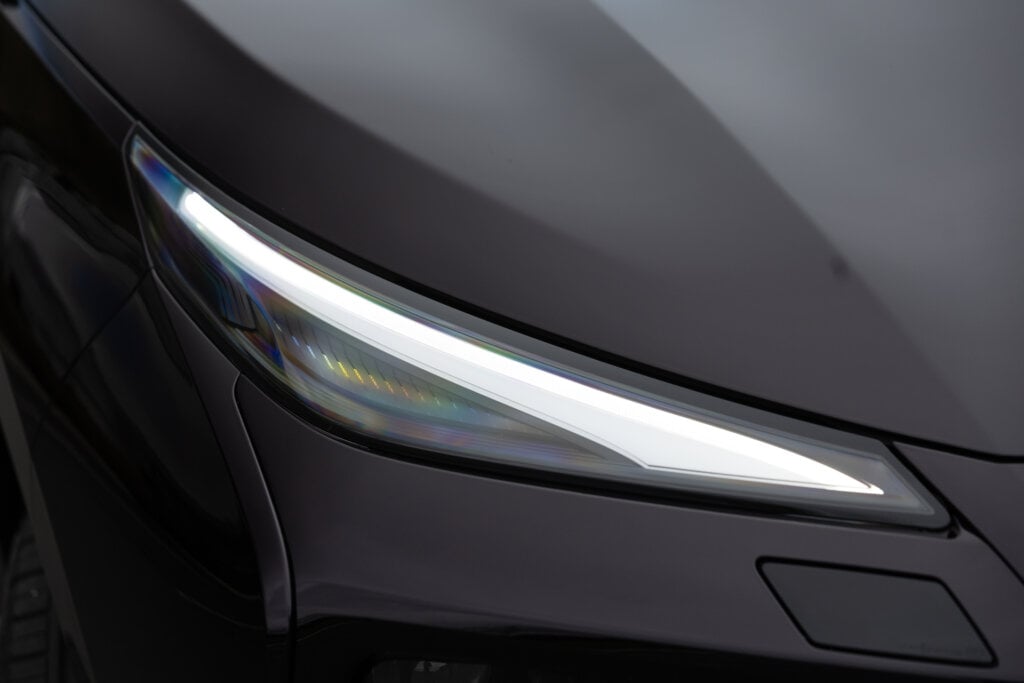
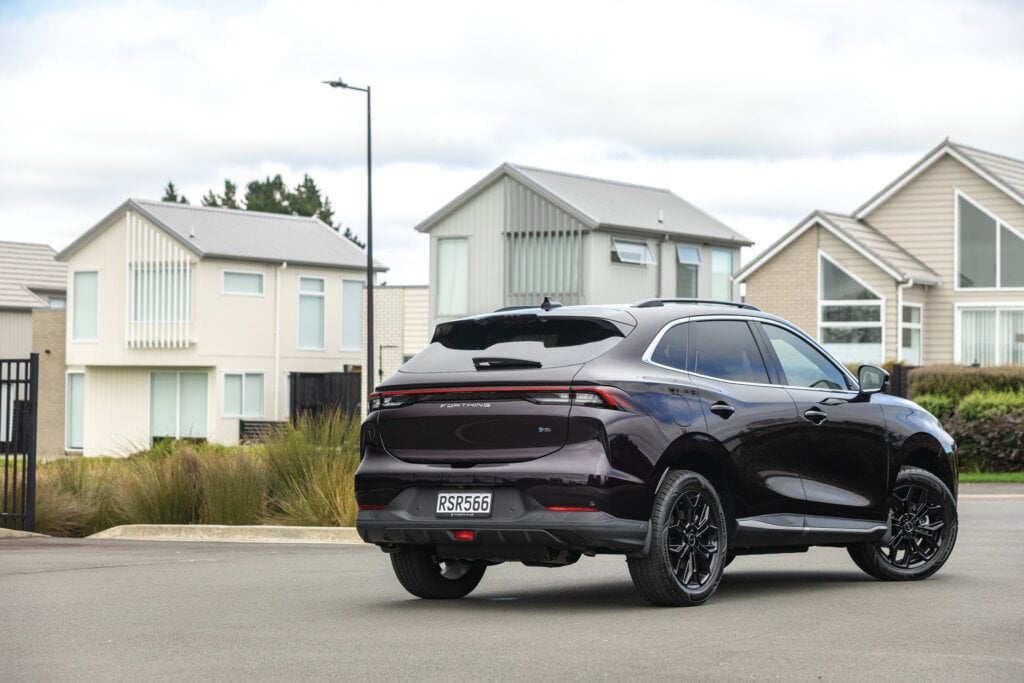
We like the look, less generic and formless than some originating from China. The interior too has some nice bits, the general quality passing muster for the money. There’s a mix of soft and hard plastics and while the jewel-like gear lever wouldn’t look out of place in a European machine, some of the switch gear, particularly the wands, look rather dated.
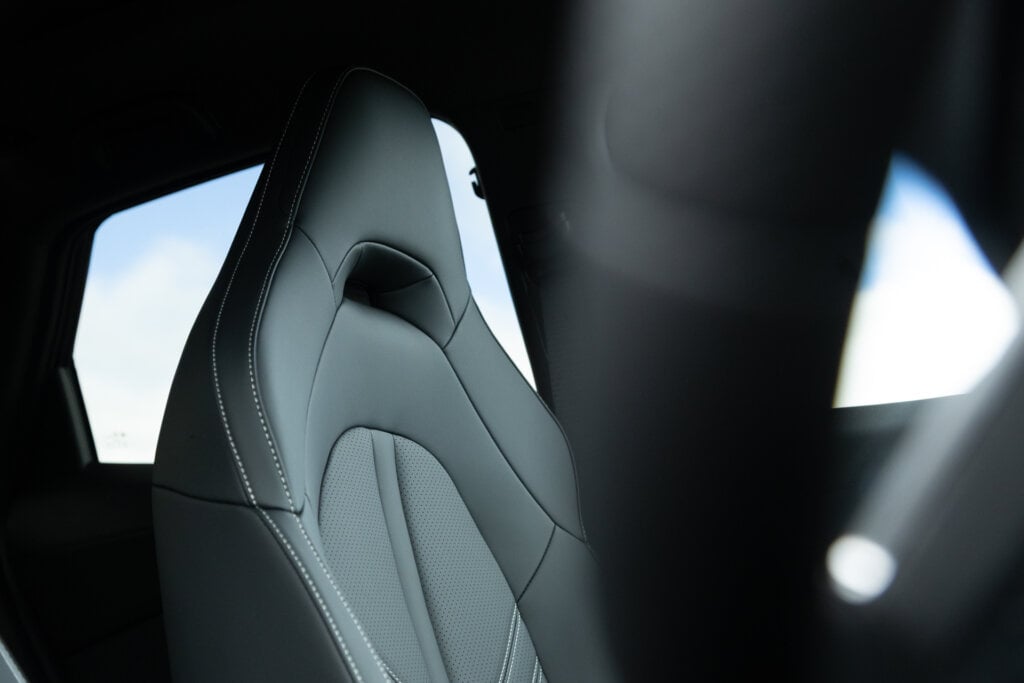
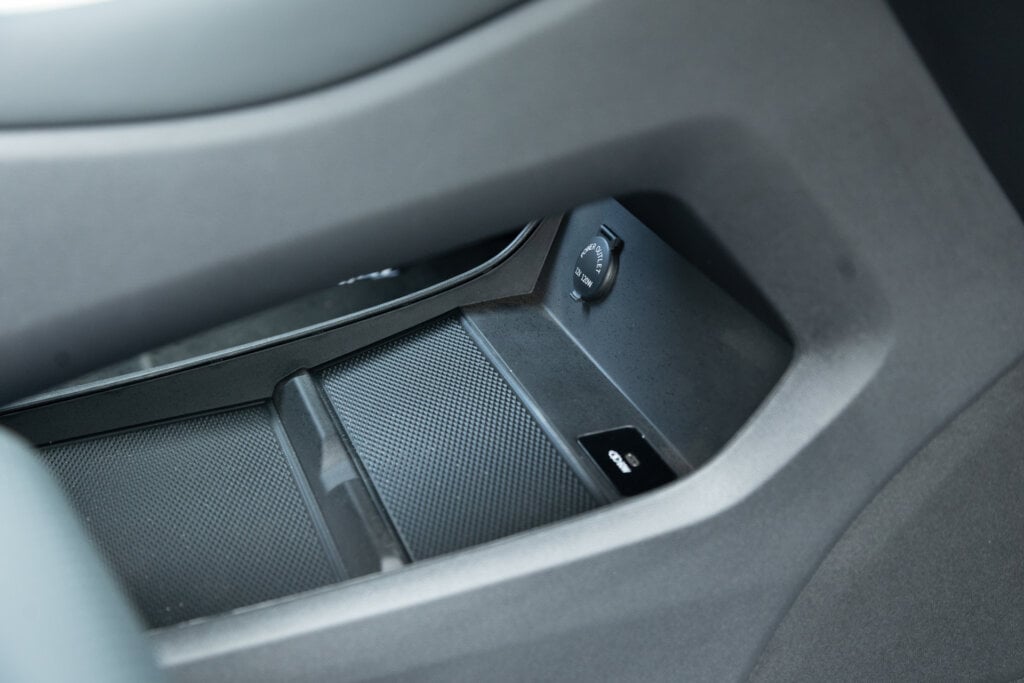
The seats are well formed, with heating, ventilation and a massager. However, the driving position lacks adjustment; it’s set quite high and though the steering wheel moves four ways, it needs more range for taller drivers. Storage is sorted, as are your connectivity needs with Wifi and wireless CarPlay and Android Auto.
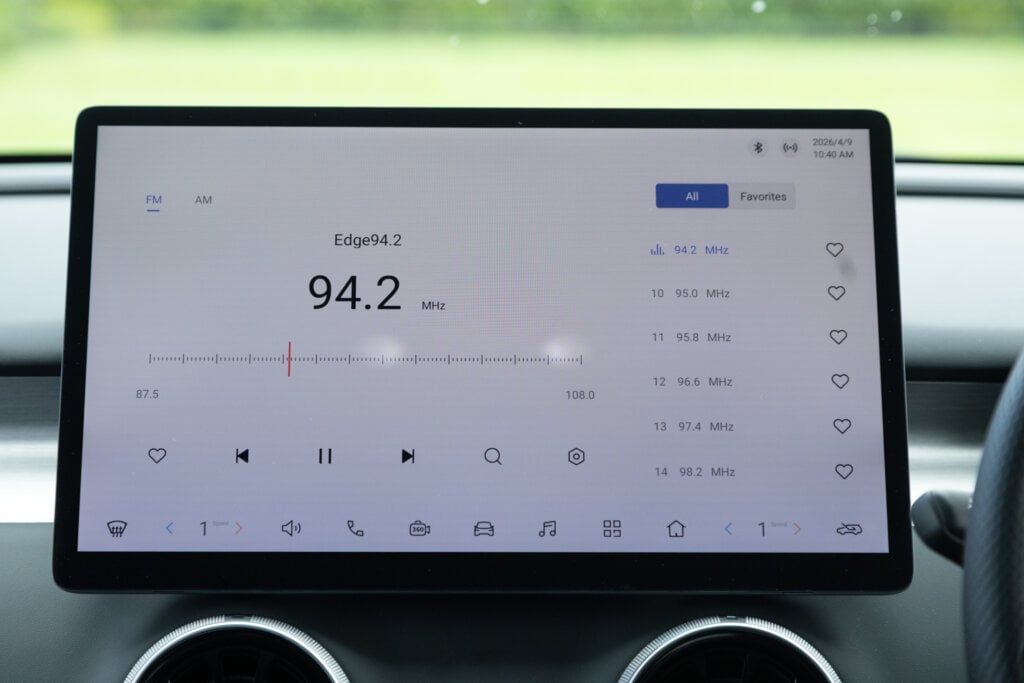
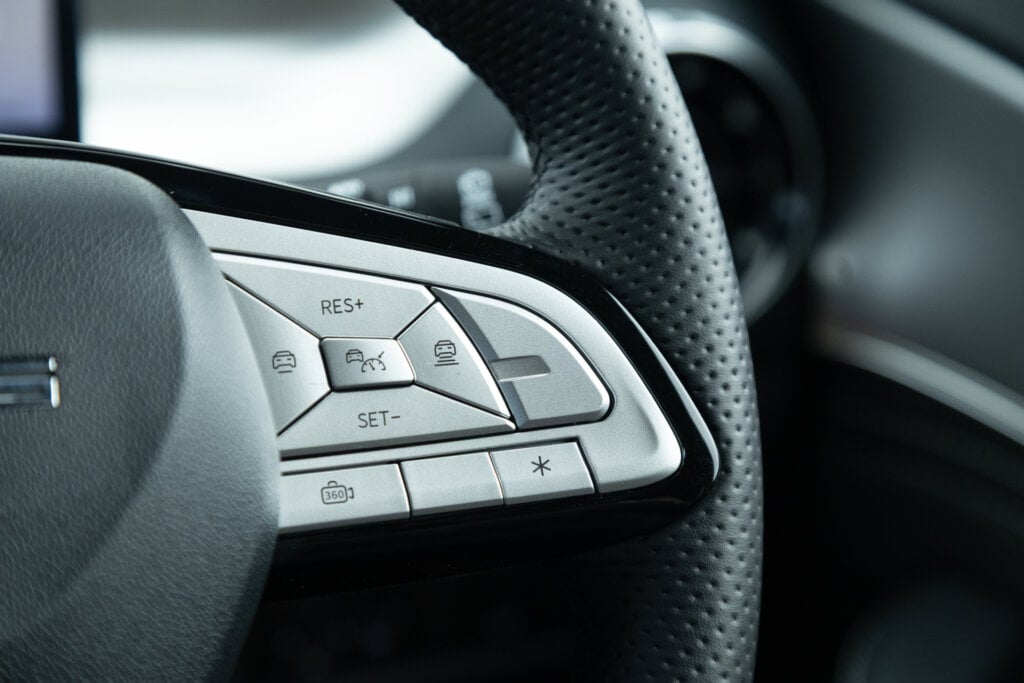
You’re not completely reliant on the 14.6-inch screen with a few buttons on the wheel and real ventilation controls too (but no dual zone air con). Operations are reasonably intuitive, responses quick. It lacks voice control and there’s no inbuilt nav. The screen relays a good image from the cameras however. Some of the alerts the Forthing relays are a little lost in translation, English clearly the car’s second language.
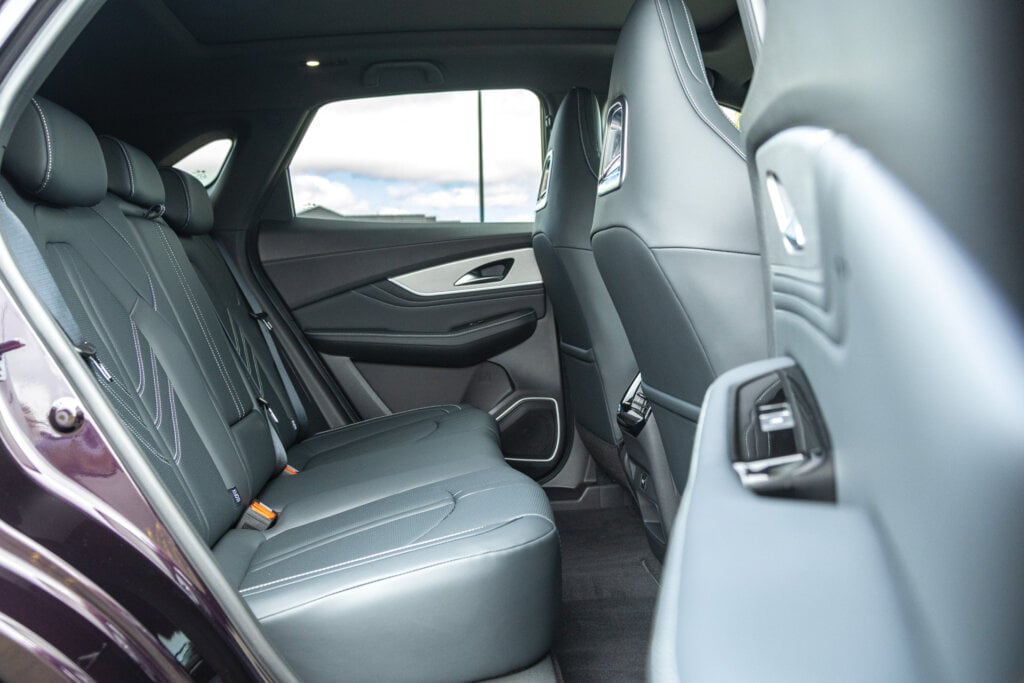
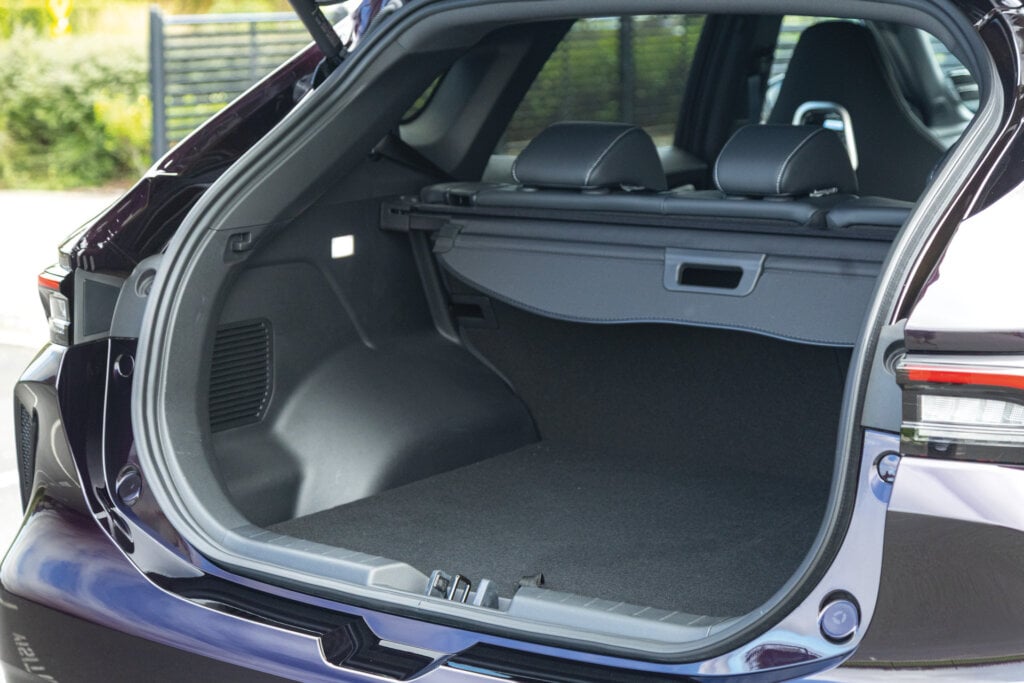
The family will do well in the back, with genuinely good rear seat space, an easy entry and a flat floor. There are the usual ISOFIX fittings and the panoramic roof doesn’t rob headroom. The powered boot is a little slow to raise, revealing a well shaped hold ready for 510L. The bench has a 60-40 split, and once you roll the seat squab over, you can fold the back down completely flat to realise 1480L.
There’s no spare but there is some under floor storage for cables (including the standard V2L adapter) while it’s rated to tow up to 1500kg.
What’s the drive like?
While not exactly punchy off the mark, it’s quick enough to get up speed in the traffic, with easy torque flowing in urban running. With a full battery, the DTE indicated 176km, while we managed 160km with efficiency indicated at 16.6kWh. Pretty good going given more than half of those kilometres were covered at motorway speeds.
When in hybrid mode, the engine is audible but not rowdy. And you can expect consumption to sit around the 7L/100km mark. So best plug in often to keep fuel bills low.
The urban ride is settled and doesn’t crash over the bumps, the steering light. The outward vision is good, and when you indicate, the panoramic camera brings up an image on screen to show what’s happening around you. There are various regen settings but even ‘high’ is quite mild. The brake pedal itself is okay, perhaps a little squishy but not snatchy.
The steering has the usual overly assisted, lifeless character the Chinese like, although accessing the ‘reinforce’ mode (one of three steering settings) gives it a faint pulse.
Despite being driven from the rear, the turn-in isn’t overly enthusiastic. And while there’s a semblance of roll control, it can still become unsettled in the bends, the rear not tied down as well as it could be. And that then erodes the grip upfront. Try a tad harder and the ESP will call time on you.
Of more relevance to the target market, it rides well. While it’s not A-grade quality, it’s at least settled and it’s reasonably quiet on road, although you’ll hear the engine churn away a little louder when in hybrid mode at highway speeds.
While the power delivery is good in urban running, the urge drops off around the 80km/h mark. It takes its time to get to 100, and requires a fair amount of road for the 80 to 120km/h overtake.
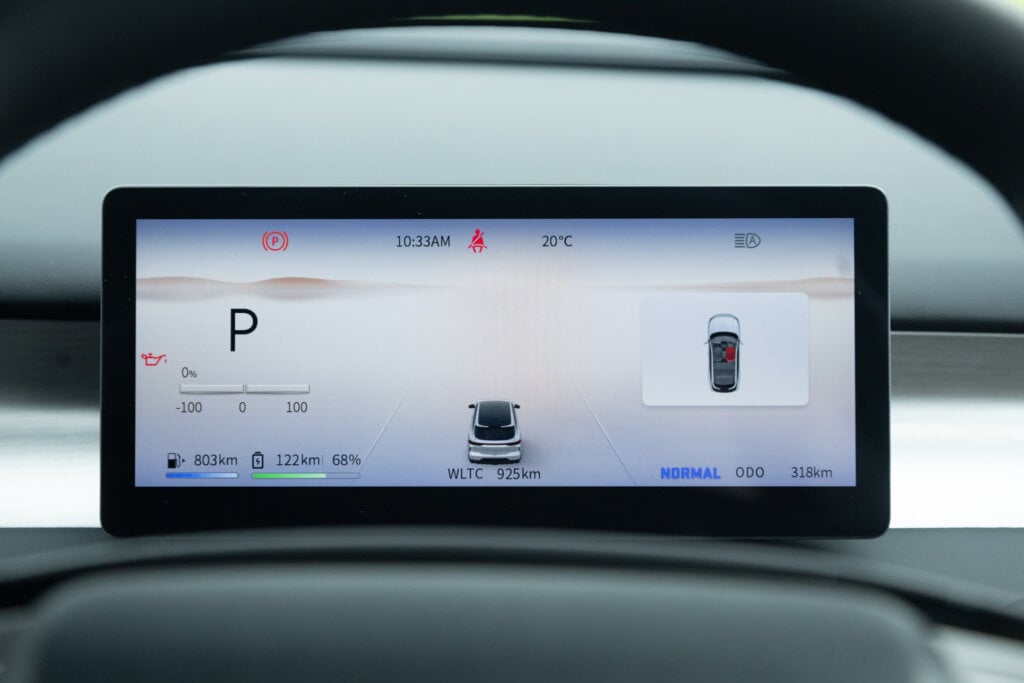
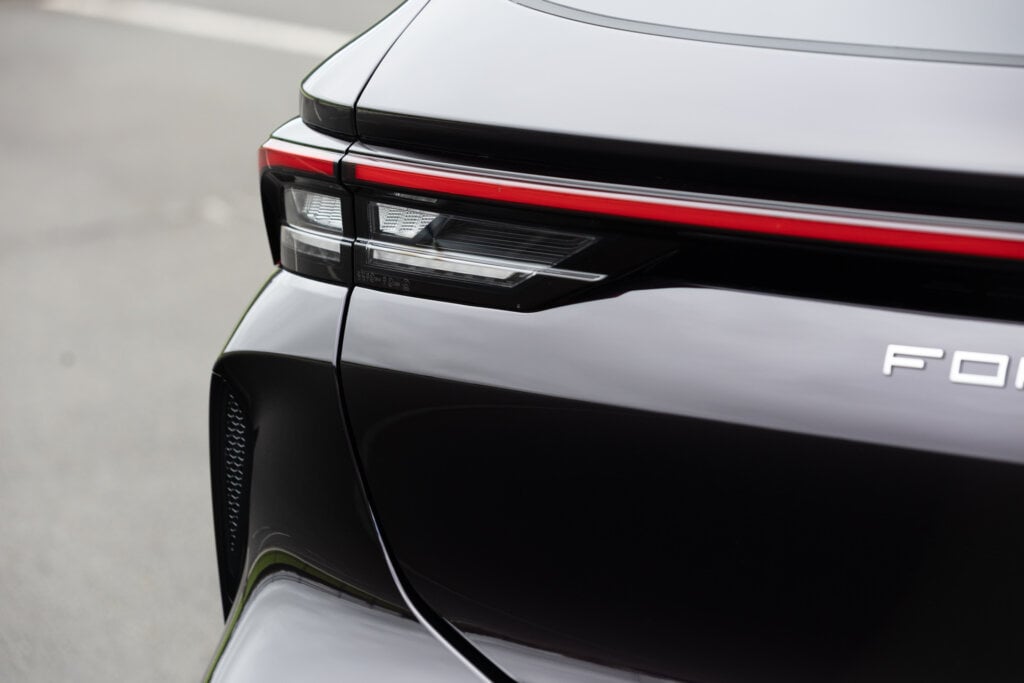
This has a range of safety monitors but none are overbearing once you curb their sensitivity. And when they do ding, it’s all very subtle. It was surprisingly frustration free, primarily because the worst culprits, active lane keeping and driver monitoring, are not part of the spec. The Taikon comes with eight airbags though it arrives without an ANCAP rating, Ateco saying it’s scheduled for testing next year.
While active cruise control is present, it leaves too big of a gap to the traffic in front on the motorway, while on highways, it will brake rather drastically when it encounters a corner.
Worthy then?
This super hybrid is certainly worth putting on your list for consideration as the price is right (in Luxury spec at least), it drives okay and there’s plenty of usable battery range to help kill fuel bills. We prefer this to the Chery Tiggo 7 and MG HS PHEVs we’ve experienced recently, and feels better composed than the BYD Sealion 5 on road too. We feel it is better suited to urban drivers however, ones with easy access to a plug for frequent recharges. Expect two more Forthing models towards the end of the year, and a further three in 2027.
Forthing Taikon Hybrid Exclusive
$44,990 / 4.5L/100km / 106g/km
0-100 km/h 12.5s
80-120 km/h 10.4s (285m)
100-0 km/h 38.90m
Speedo error 97 at an indicated 100km/h
Ambient cabin noise 71.8dB@100km/h
Engine 1498cc / IL4
Max power 155kW@6000rpm
Max torque 130Nm@4000rpm
Battery 31.94kWh
Range 183km
Hybrid System Output 155kW / 240Nm
Drivetrain single speed auto / RWD
Front suspension Mac strut / sway bar
Rear suspension Multilink / sway bar
Front brakes Ventilated discs
Rear brakes Discs
Stability systems ABS, ESP
Safety AEB, ACC, BSM, LDW, RCTA, AHB
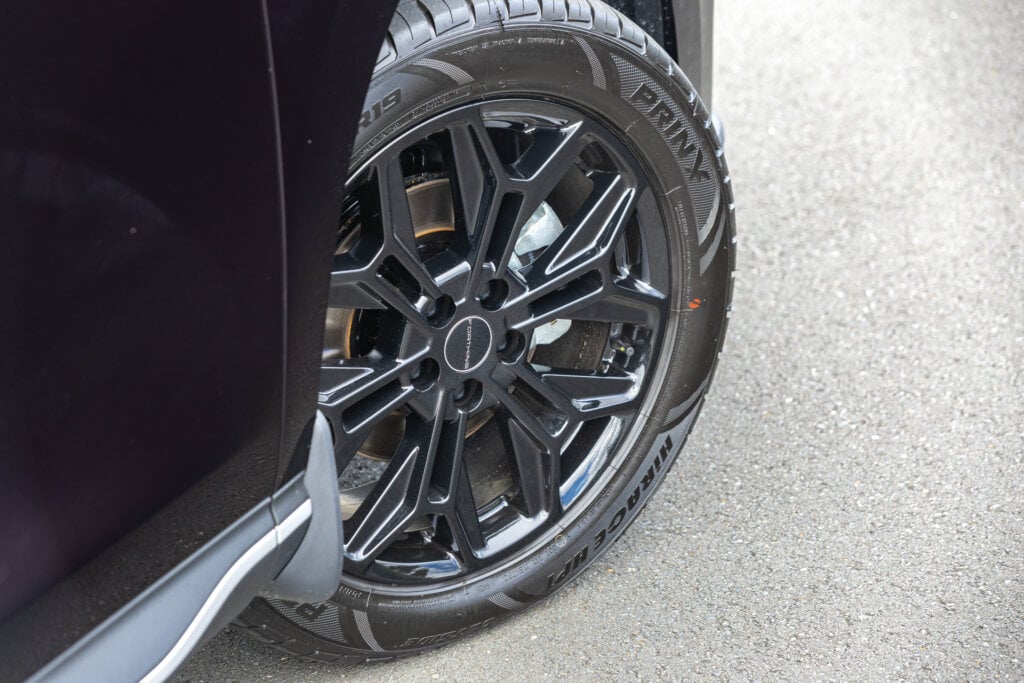
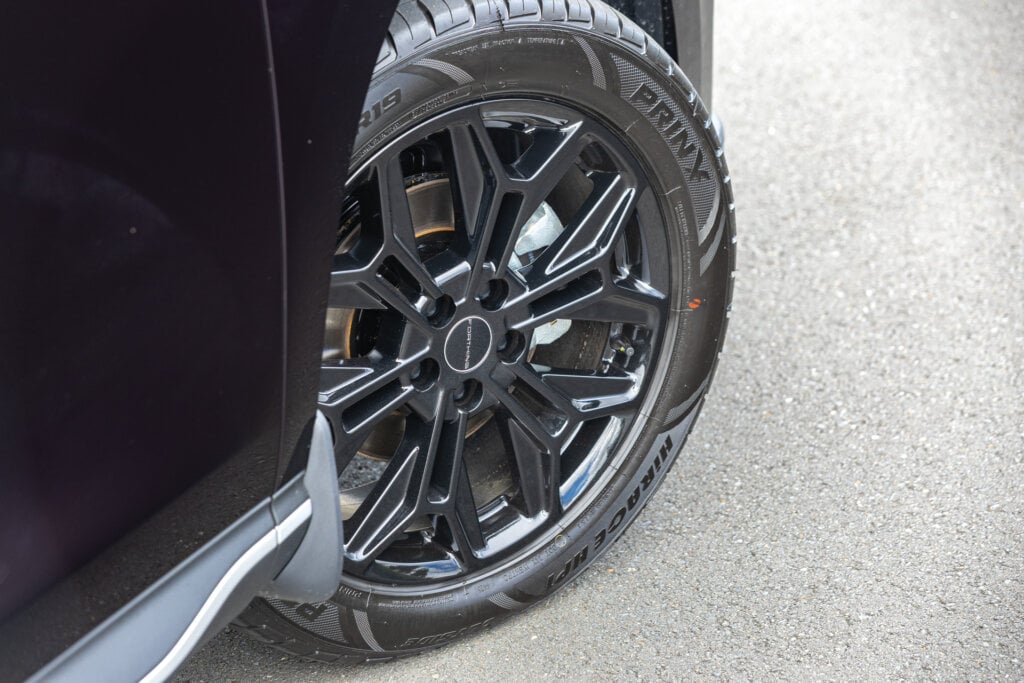
Tyre size f/r-235/55R19
Wheelbase 2715mm
L/W/H 4600 / 1860 / 1680mm
Fuel capacity 43L
Luggage capacity 510-1480L
Tow rating 1500kg braked
Service intervals 12 months / 15,000km
Warranty 7yrs / 200,000km
ANCAP rating Not yet rated
Weight (claimed) 1820kg