View all
11 more images
2026 Porsche 911 turbo S Review
Words: Kyle Cassidy | Photos: Alex Schultz
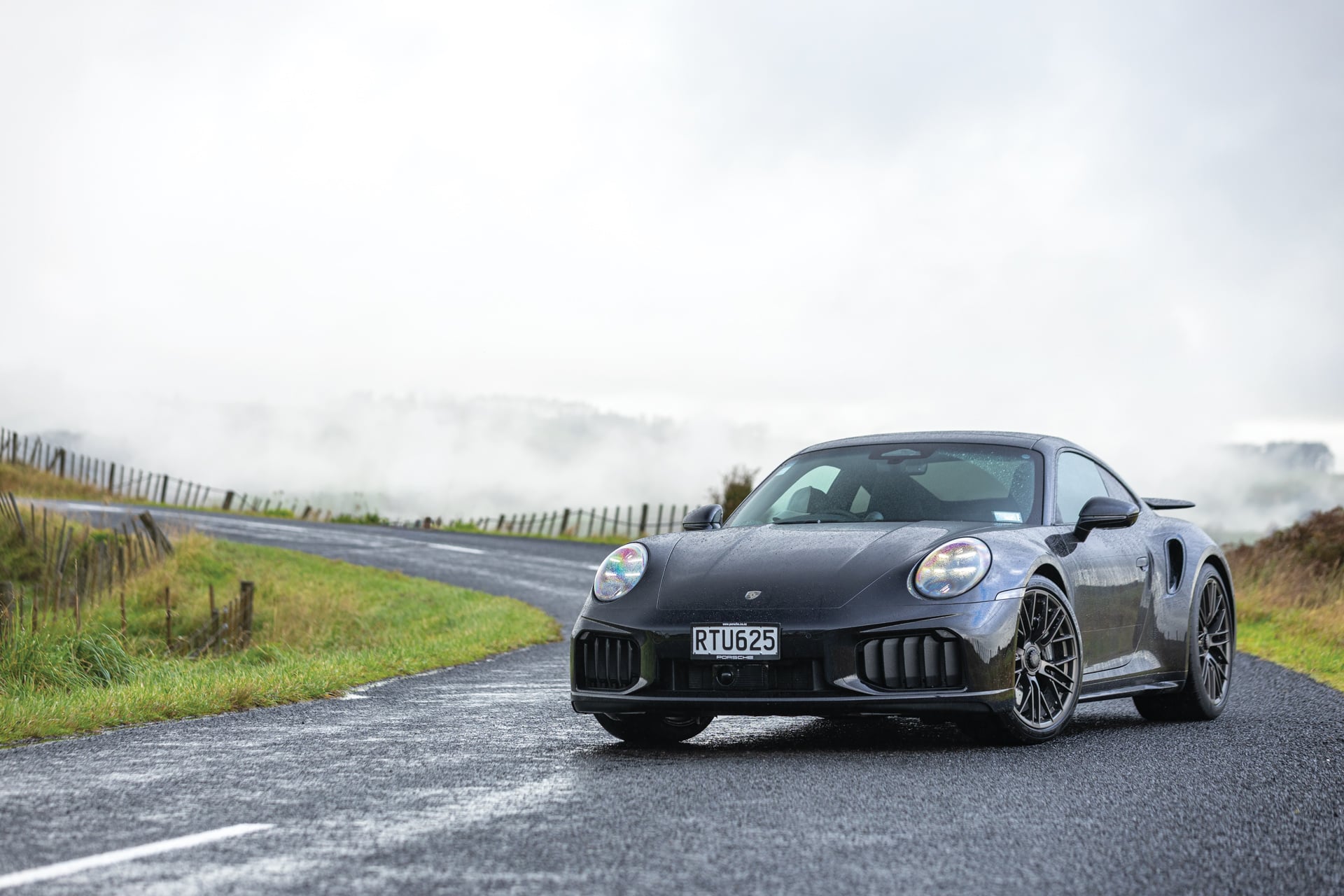
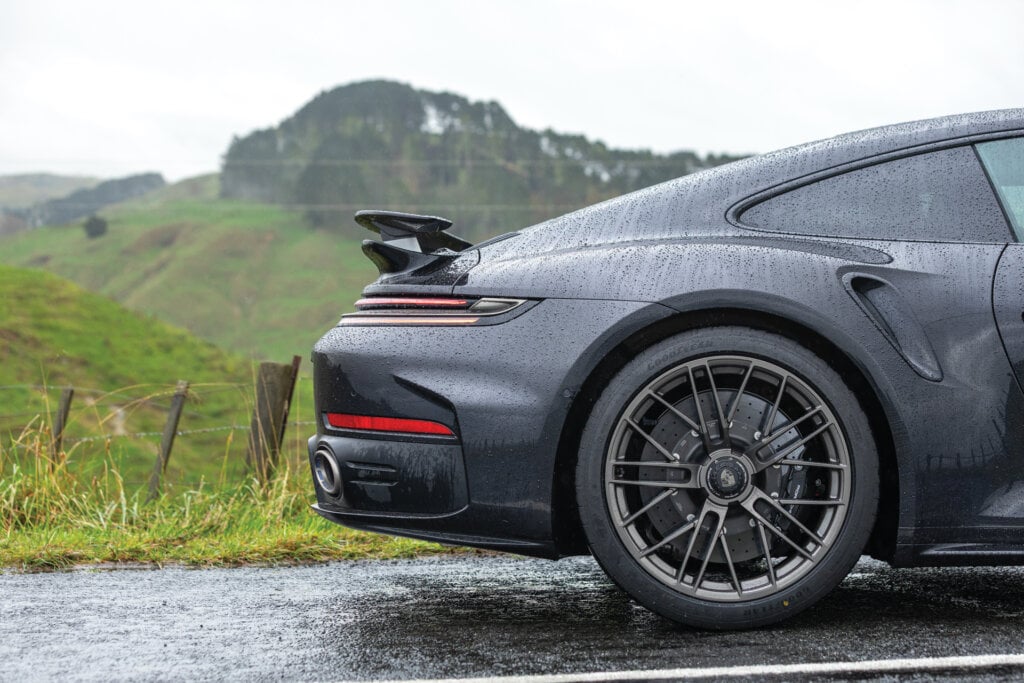
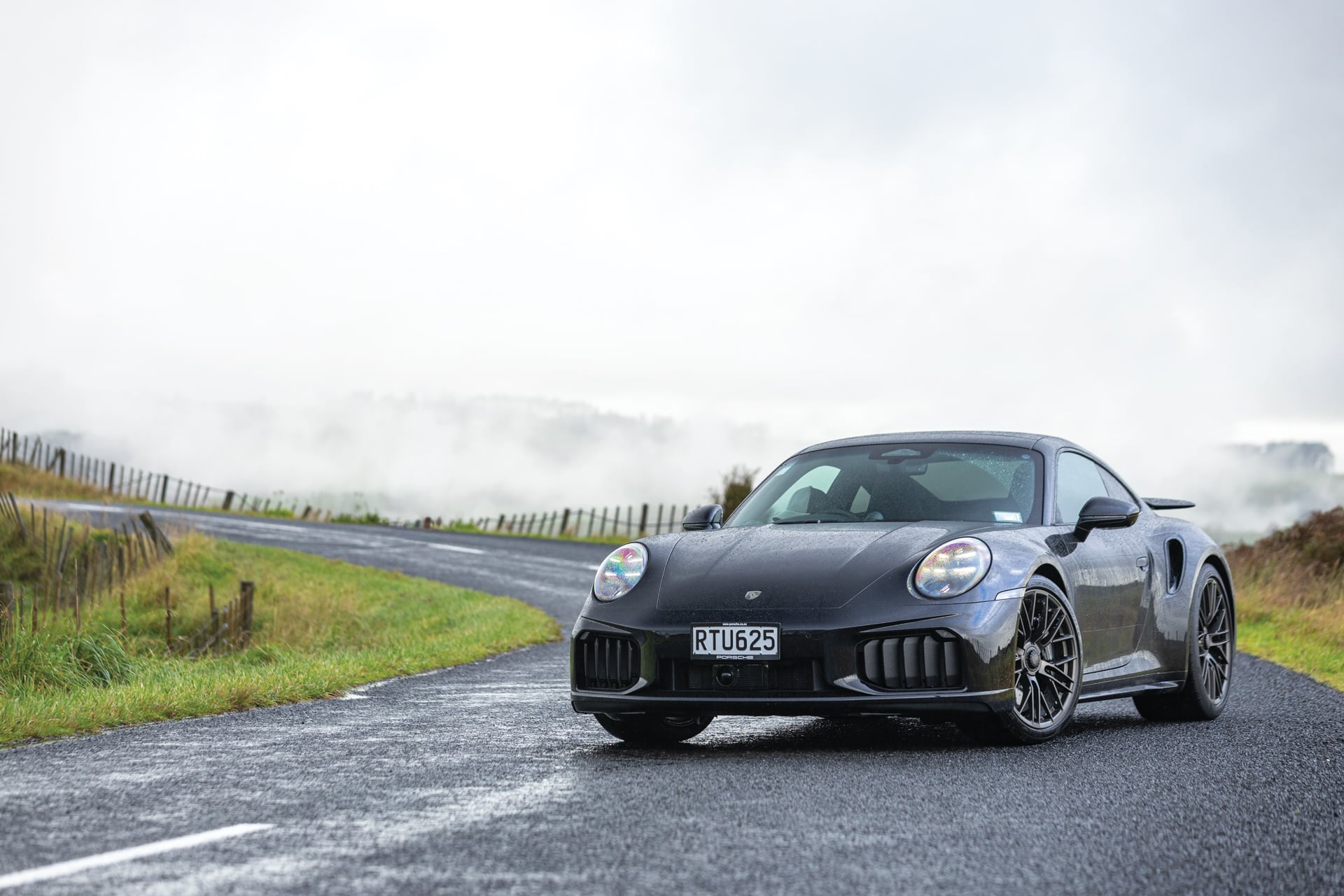
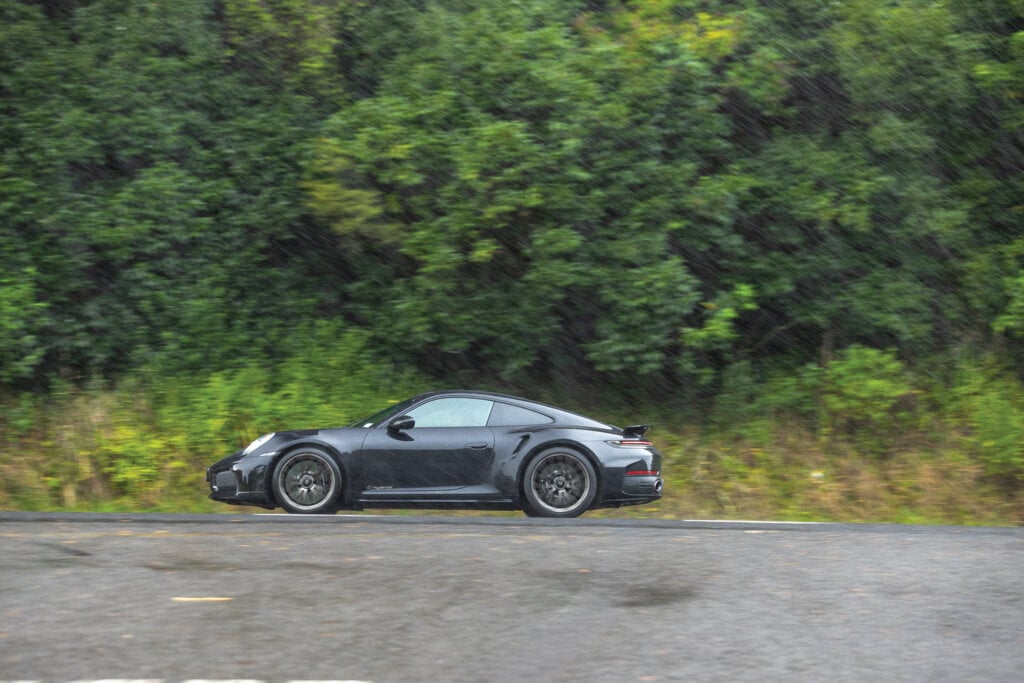
The sun doesn’t always shine when you have a special car to check out. As was the case when we had the latest Porsche 911 Turbo S. And yet the inclement weather highlighted how usable this sportster is.
The 911 Turbo S is the headline act of the 992.2 range, so far at least. Like the rest of the facelifted ‘dot two’ range, the styling updates are subtle, the good stuff happening under the skin. For the Turbo model, it’s the adoption of the hybrid system and its e-turbos that has helped boost power further, while staying on the right side of emissions legislation.
First introduced on the Carrera GTS, the hybrid system uses a 400-volt electric architecture with a 1.9kWh lithium-ion battery and an electric motor in the dual-clutch transmission. The Turbo S uses the same 3.6-litre engine as the GTS, but gains a twin-turbo setup. And it has the little motors in the turbos too. These reside on the shaft between the turbine and the compressor, their job being to spool the turbo instantly, eliminating lag and aiding response.
Unique for the Turbo S engine are new intake and exhaust systems and revised engine internals. As to the turbos, while they have the same motor inside, they have smaller compressors and turbines compared with the GTS, which allows them to spin faster and make more boost. The engine alone makes 471kW and 760Nm, while overall combined power has improved to a total of 523kW. Torque registers at 800Nm, the same as the old Turbo S, but the spread of peak pull is now much wider, developed from 2300 to 6000rpm.
A neat trick of the e-turbo is the motor’s ability to limit boost by capping the speed of the turbine, doing away with the need for a wastegate. And so then the motor can become a generator of electricity, feeding back into the battery or directly into the motor in the transmission. Because there are two e-turbos, the Turbo S set up generates more electric power than the GTS, so they are able to boost the peak output of the e-motor in the trans too.
So the Turbo S has a mammoth amount of power and torque. Lucky then that Porsche was an early adopter of all-wheel drive, knowing that traction is necessary to harness the power. And so since the 993 Turbo debuted back in 1995, all-wheel drive has been a Turbo staple. And it’s evolved to make this latest 911 Turbo S a true all-weather sports machine.
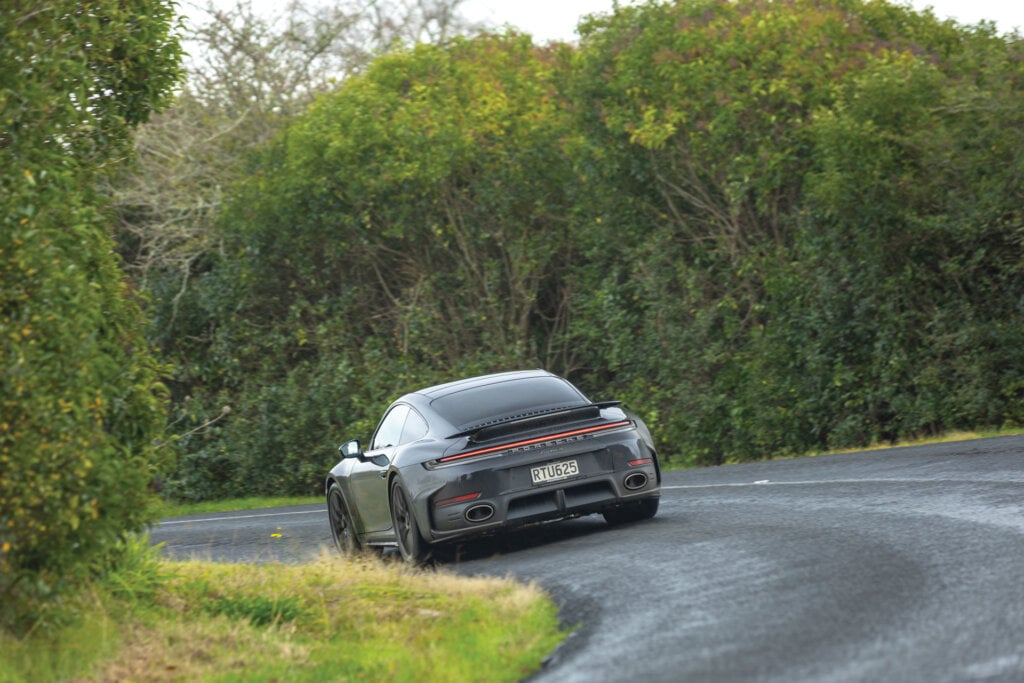
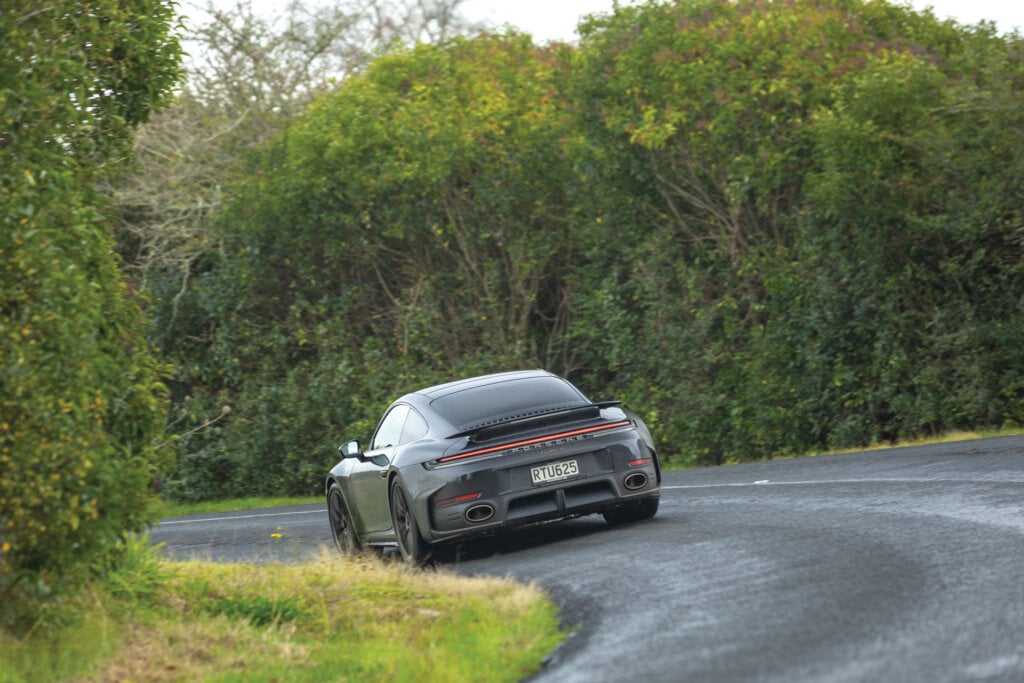
Which proved handy during our time with the car, when the winter weather was at its worst. It rained wherever we went looking for interesting roads. And the state of them was atrocious thanks to farmers driving straight out of their paddocks and spreading mud everywhere. So while we didn’t have the ideal opportunity to test the ultimate character of the Turbo S, the weather did give us a chance to appreciate its all-wheel drive ability.
Porsche Traction Management has also been evolving over the years with its combination of electromechanical clutches and brake interventions to make sure the power is distributed to the right corner for maximum thrust. And the Turbo S also has the benefit of the active torque vectoring rear diff. This hardly put a tread out of place, despite the iffy grip levels and all those Newtons forcing their way out.
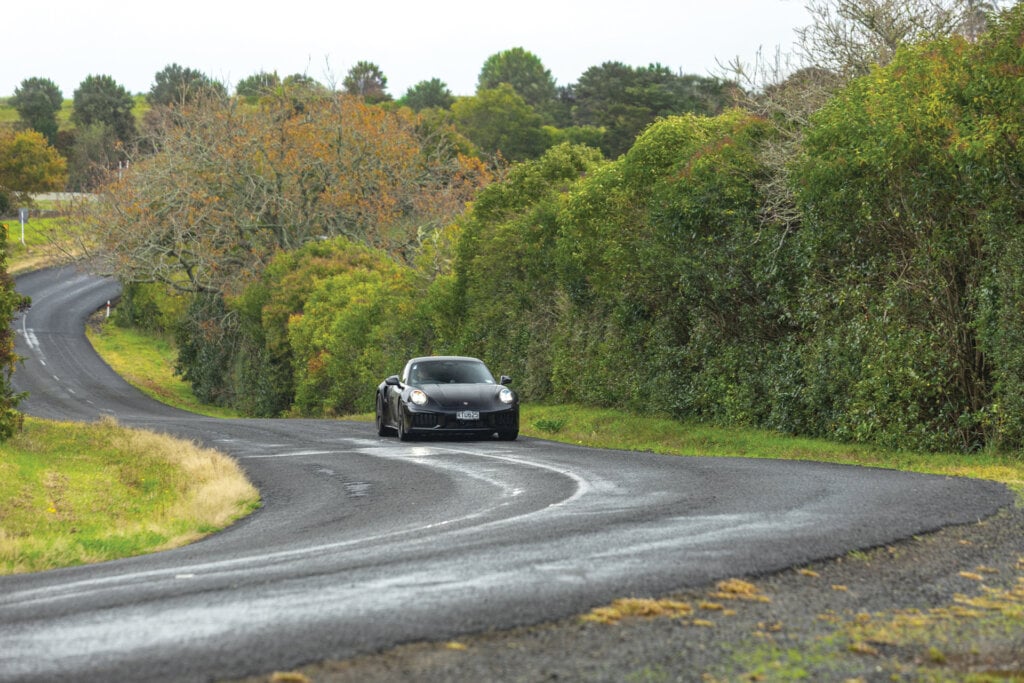
Case in point; despite the wet, greasy coarse chip surface, this still managed to hit 100km/h from stopped in 2.75sec. That’s as fast as the 992 Turbo we tested in the dry. The latest S is supposed to clock it in 2.5sec, and we have no doubt it would in better conditions. Even with 4000rpm dialled up under launch control, it managed to claw its way to illegal speed in no time. And the wet surface didn’t stymie its 80-120km/h time, clicking over in 1.5sec, just as Porsche says it should.
So you know traction is not such an issue. And neither is the mass. This weighs in at a claimed 1725kg, which is a bit porky, and 85kg heavier than the 992.1. But the 400v hybrid system has allowed for an improved roll control set up. The new electro-hydraulically controlled Porsche Dynamic Chassis Control (ehPDCC) has ‘cross-connected, active coupling rods’ with the oil pressure in the system varying to keep roll in check. They are said to make the car more predictable in the handling stakes. And that certainly helps in poor conditions. It was easy to pilot along challenging roads at a decent clip, it was just cruising really, despite the rain.
The new system also allows for retuned spring rates, damper hydraulics and damping maps for the Porsche Active Suspension Management (PASM) to deliver a more compliant ride while still having the strictest roll control available. And this rides with genuine compliance. It’s a sports car, so you still feel the road. Buy the Bentley Conti if you want the GT experience, but harshness and bump steer aren’t part of the experience, even at speed. At least in the Normal suspension mode; leave Sport for those track days.
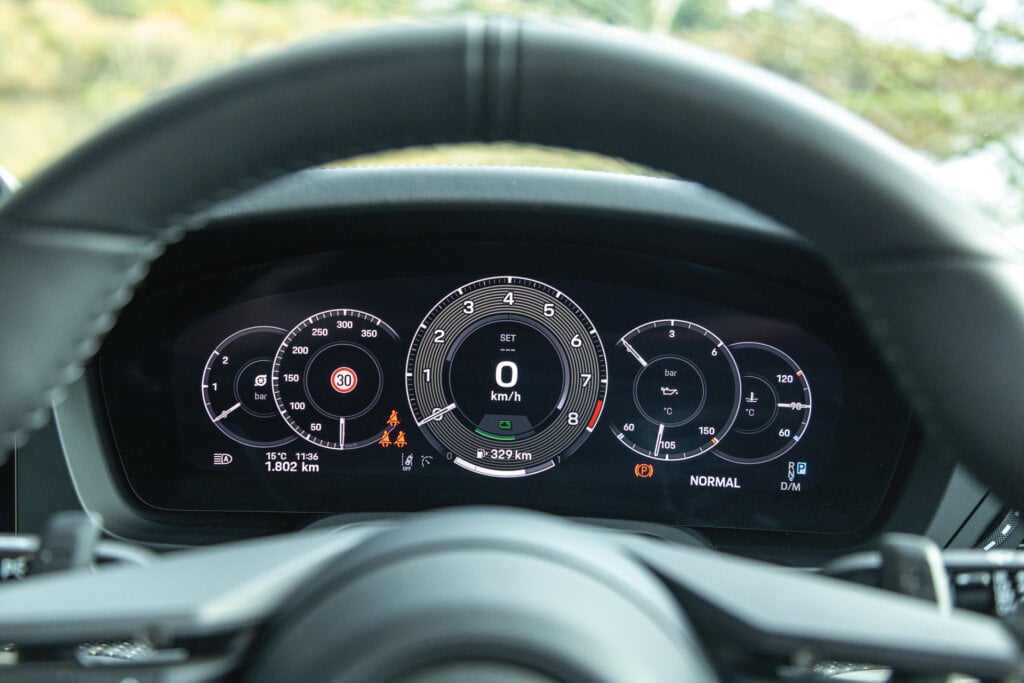
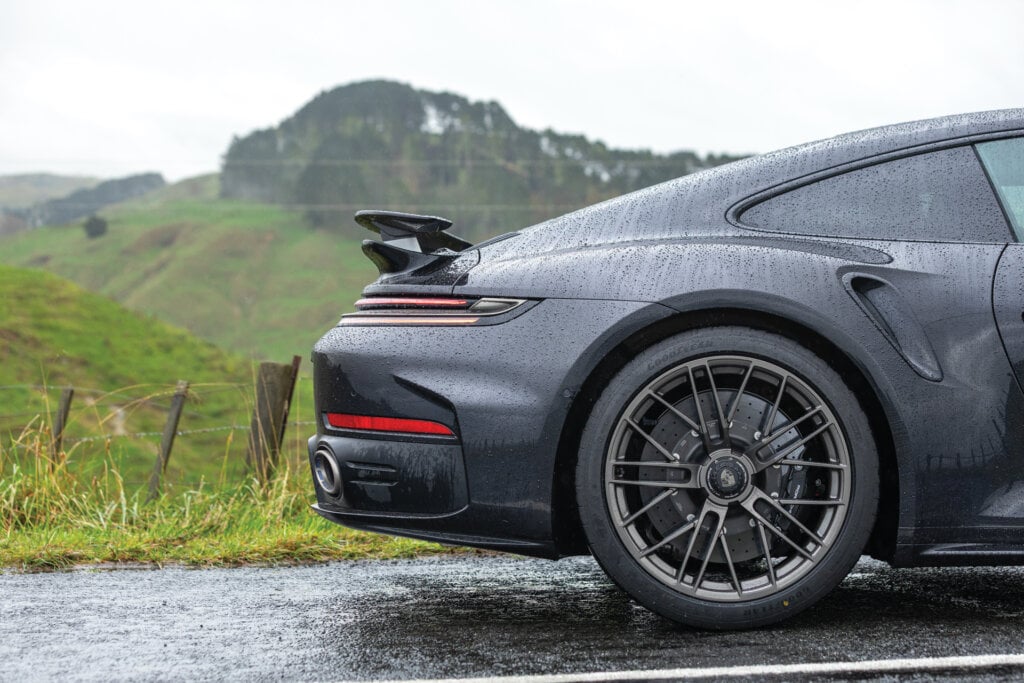
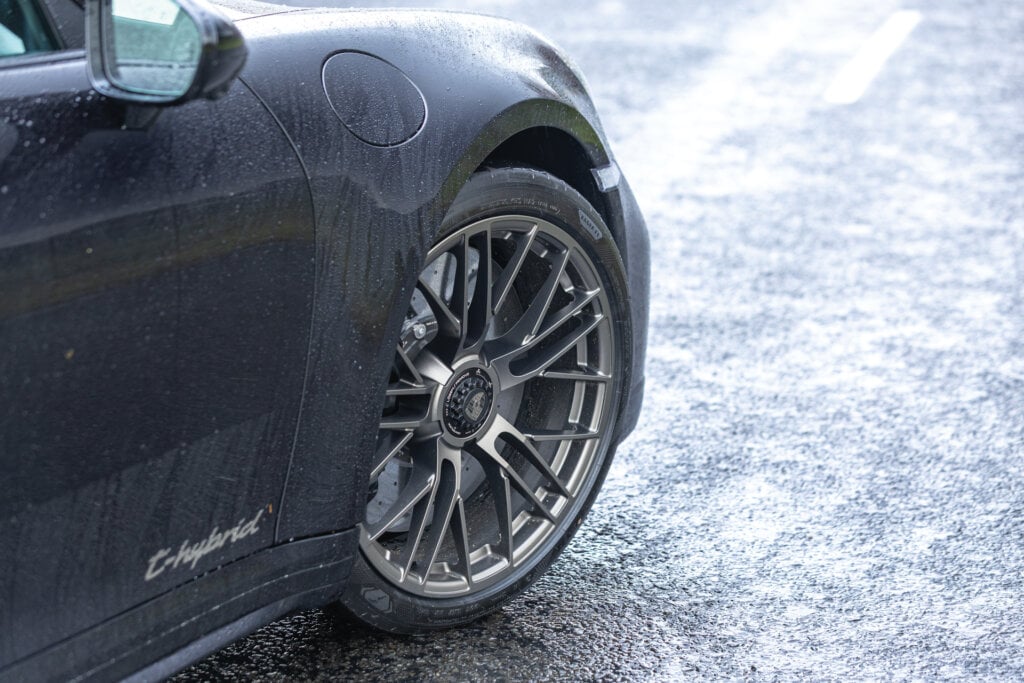
The steering is quick, turn-in aided by that body control and a little help from the RWS. So it darts in and out of the bends. With an extra helping of Goodyear rubber (the rears now measuring 325/30 ZR 21 with 255/35 ZR 20 upfront) there’s grip aplenty, and it has quite phenomenal stick in the wet. It helps that there’s genuine communication at the wheel, and a general feel for the grip levels.
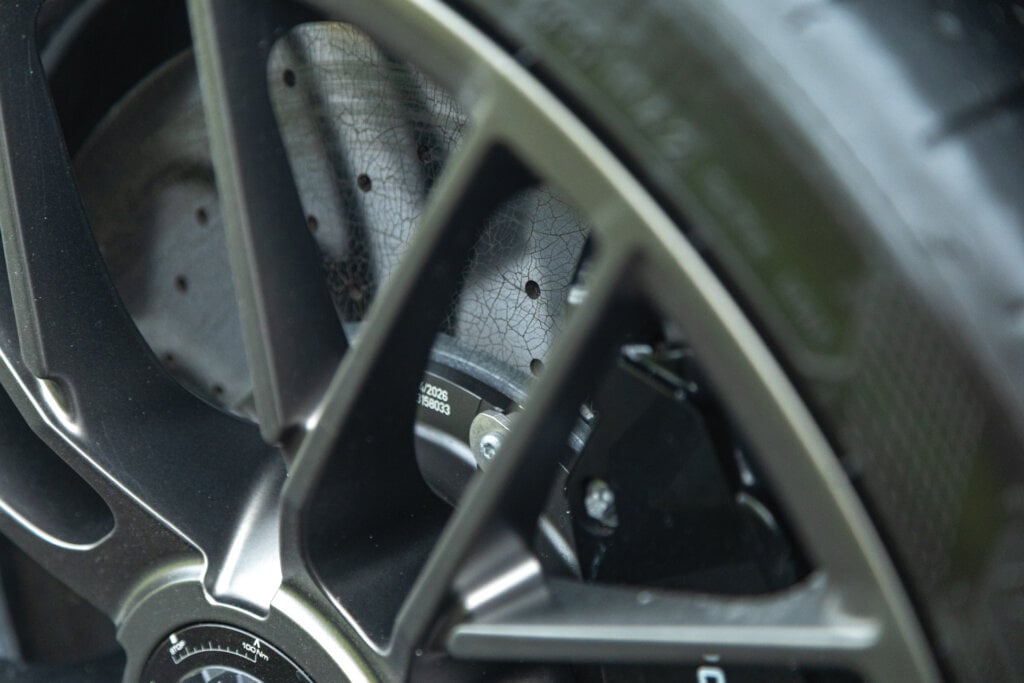
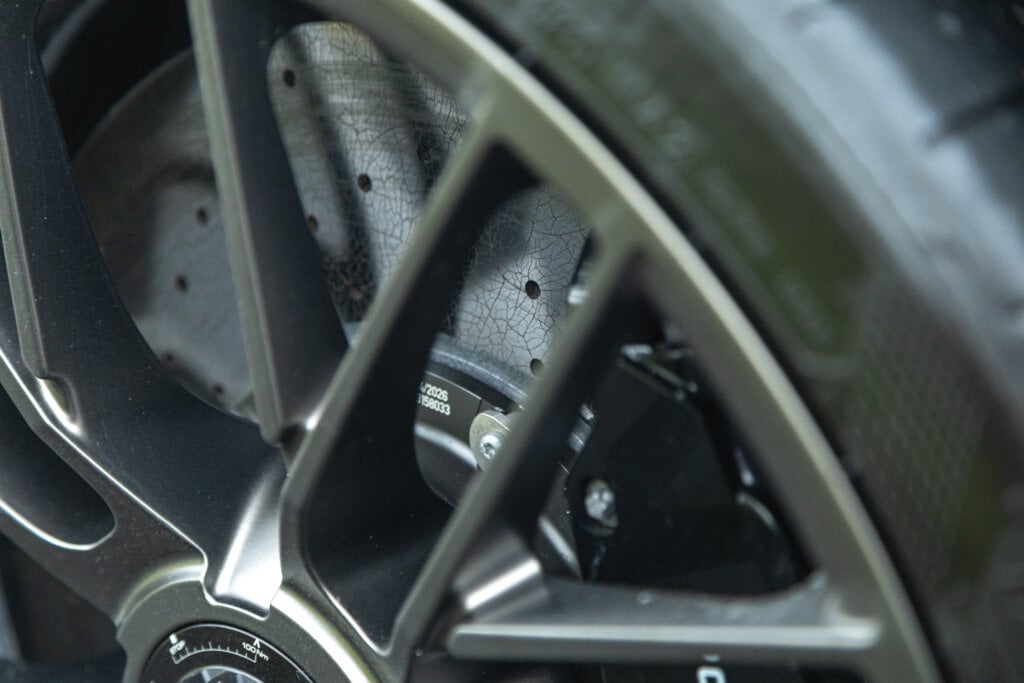
The brakes are super solid. The ceramic composite set up is standard, with 420mm rotors at the front and 410s on the rear. They bite quickly and the pedal is meaty. You out brake yourself for the corners initially before learning to leave it a bit later while they seem to like it better when you really lean on them.
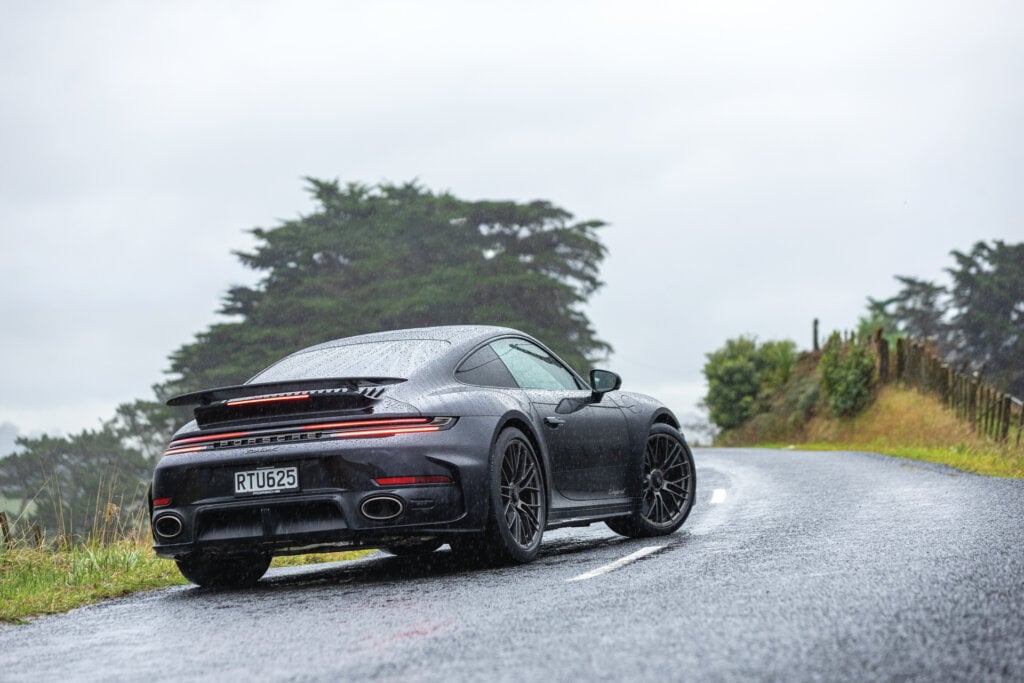
But the star is the twin turbo engine. The electric blowers see the torque spread throughout the rev range, so you always have a heaving amount on call. The response is quick, almost crisp, and it pulls from just about any number on the tacho. And from 5000rpm onwards, the hefty stream of power fair sends it, and you’re rocketing down the straight bits.
But the star is the twin turbo engine. The electric blowers see the torque spread throughout the rev range, so you always have a heaving amount on call.
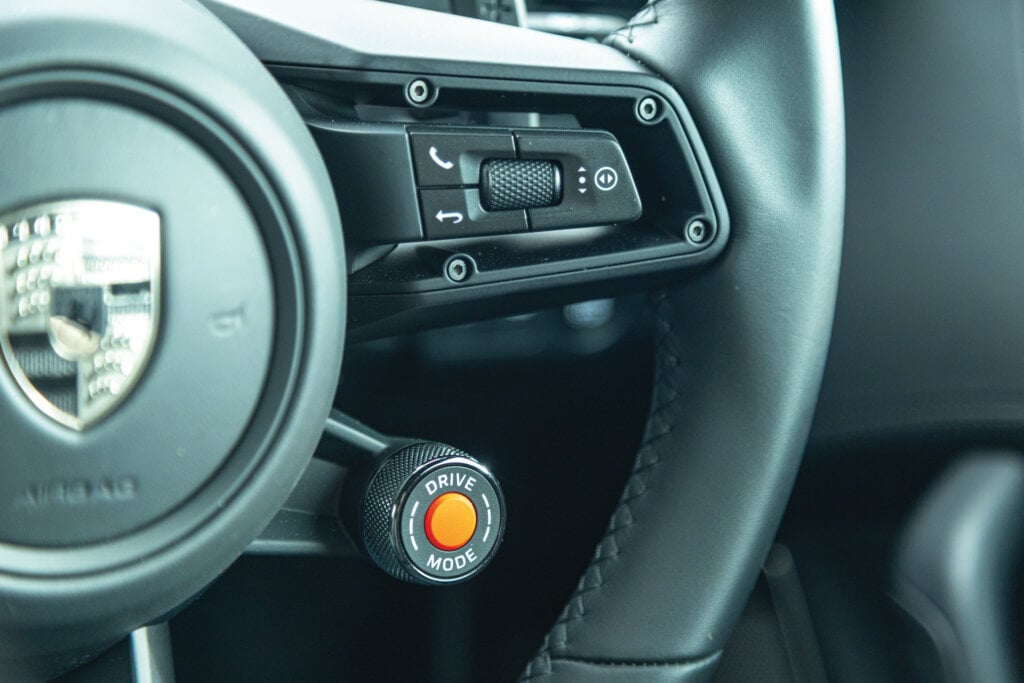
And then there’s the eight-speed twin-clutch stirring it along with impeccably-timed shifts. You don’t bother with the paddles, your concentration consumed by making sure you’re pointing it in the right direction. The six makes a decent noise too. It’s a bit gruff in the low range, but it grows to a more purposeful rumble as the revs rise. It would sound better if it wasn’t competing with the elevated road roar, which is a constant. The lane keeping assist is another annoyance on highways, but one that can be turned off.
As to fuel use, the hybrid system is not about saving gas, but more about keeping emissions in check, while raising output. When tickled along, consumption rose towards 17L/100km, but we’re sure that figure was more in the 20s with the last Turbo we had. When highway cruising, it can ‘sip’ in the nines. Overall, Porsche quotes 11.8L/100km.
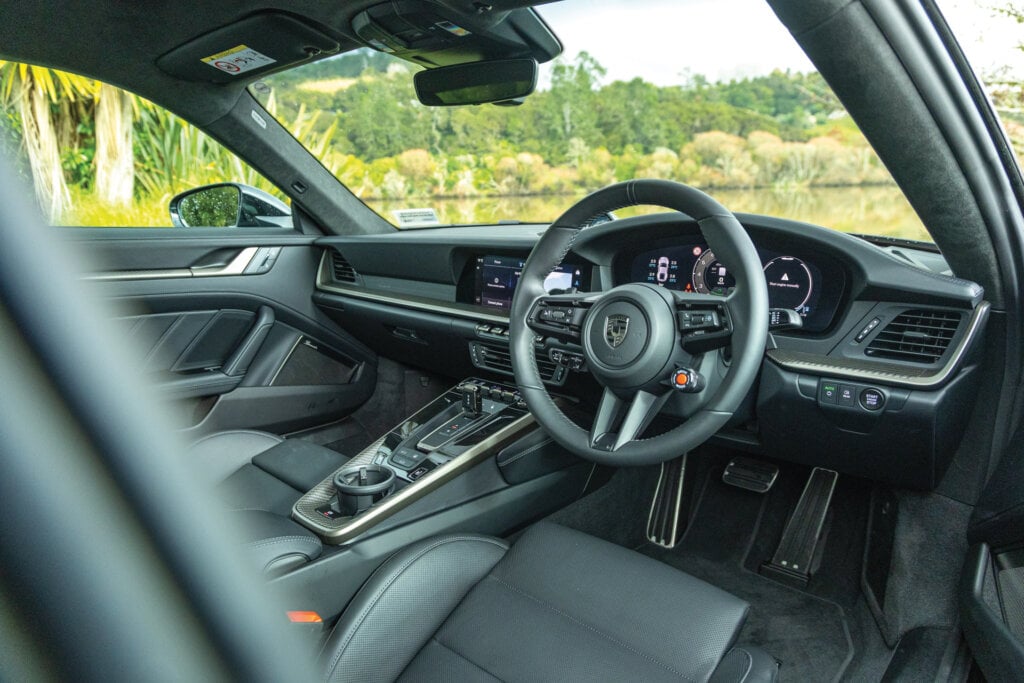
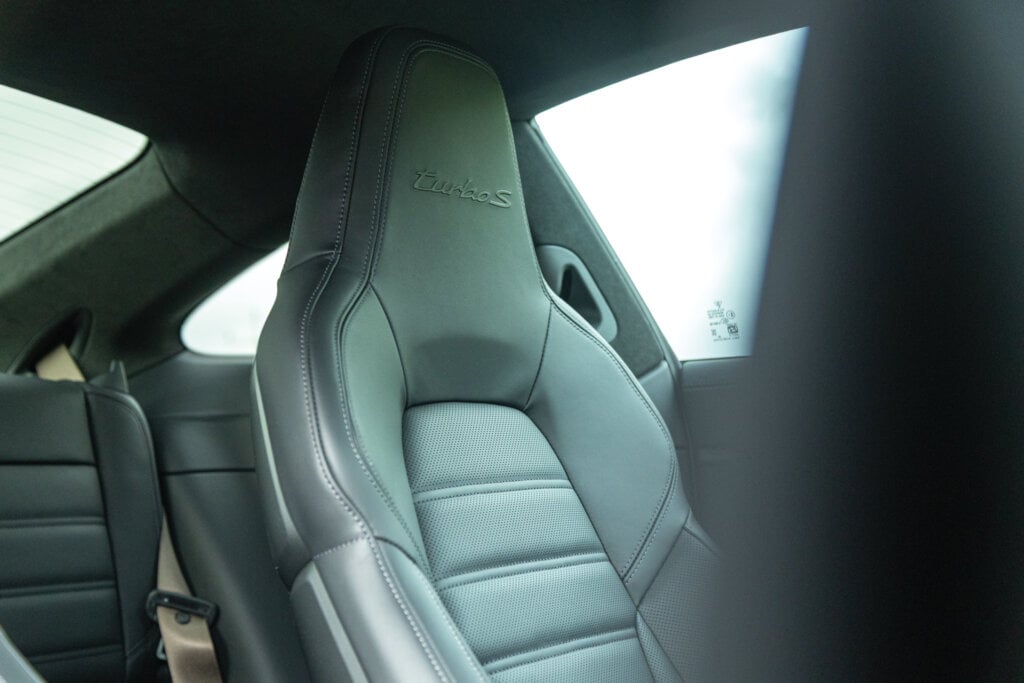
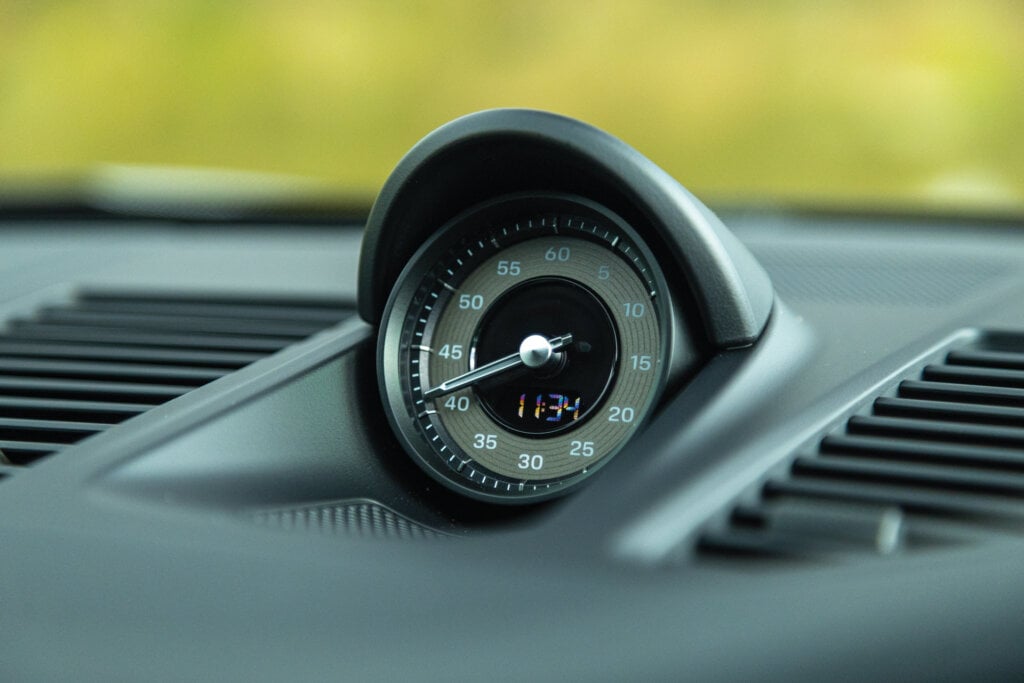
And there’s the usual 911 traits that make the Turbo S at least semi-practical, as far as 500kW coupes are concerned. You can squeeze a couple of (small) kids in the back, just, but it’s better to fold those seats for the extra luggage space. While the black-on-black trim of this car is a tad boring (we’d go for the two-tone Black and Bordeaux Red leather option), it’s a quality interior with everything finished to the usual Porsche level of attention. While you get a fair amount of standard kit, it’s not loaded. For instance, active cruise is included, but the assisted mode with lane centring is an extra $2k, as is seat ventilation. Those sports seats have a wide range of adjustment though, while the bolstering can be pumped up when the action heats up.
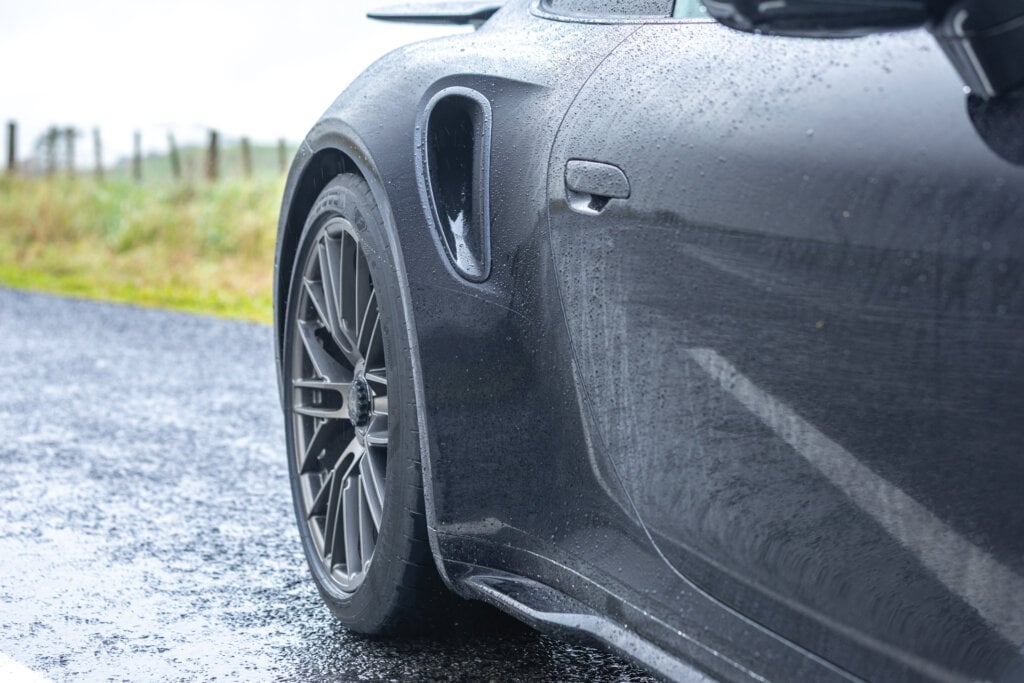
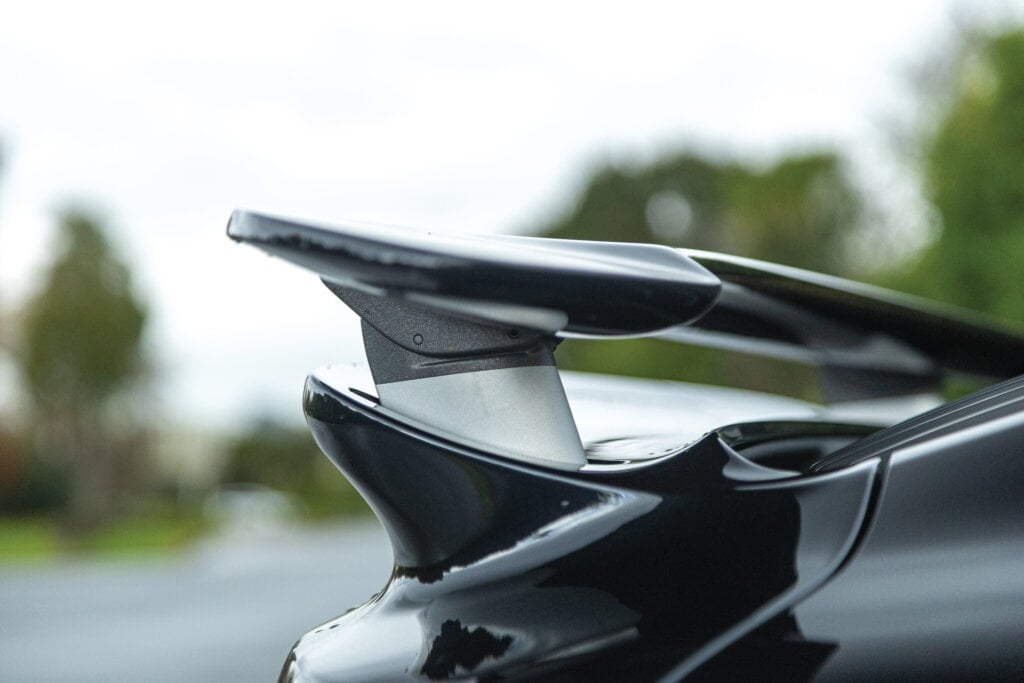
The engine is super tractable when commuting, grunting around with just 1100rpm on the dial. There’s the odd vibration, but it’s a marvel how civil a 500kW engine can be. While we praised the ride at speed, it can feel lumpy in town, and the tyres rumble too. Countering that, there’s genuine outward vision (aided by a good surround view camera), rear wheel steer also makes it easier to park and manoeuvre around and the twin-clutch is behaved in traffic and on inclines too. The new 400v anti-roll system also makes the front axle lift raise more quickly too. While it’s a $4730 option, it ensures the front stays intact when negotiating driveways. And that means the active aero elements, including the new cooling slats, will remain unscathed also.
While it’s a resounding package, it’s also an expensive one as Porsches become ever more pricey. The 992 gen Turbo S was $407k when it landed in 2021. And now this 992.2 Turbo S is $545k. When the price for NZ was first announced in September last year it was $525k, so well done those that got in early. And with options, this one is at $570k. It’s a phenomenal machine, but then so is the GTS, at a mere $378k. Your spend will depend on how fast you want to go, and who you need to outdo.
But the 911 Turbo S remains an every day supercar, fit even for those wintry, cold, rainy ones.
Porsche 911 Turbo S
$545,500 / 11.8L/100km / 270g/km
0-100 km/h 2.75s
80-120 km/h 1.51s (45m)
Speedo error 98 at an indicated 100km/h
Ambient cabin noise 78.9dB@100km/h
Engine 3591cc / Flat 6 / T / DI
Max power 471kW@6500rpm
Max torque 760Nm@2750-5000rpm
Motor output 60kW / 188Nm
Battery 1.9kWh
Hybrid System Output 523kW@6500
Hybrid System Output 800Nm@2300-6000
Drivetrain 8-speed twin-clutch / AWD
Front suspension Mac strut / sway bar
Rear suspension Multilink / sway bar
Turning circle 10.9m (2.1 turns)
Front brakes Carbon discs (420mm)
Rear brakes Carbon discs (410mm)
Stability systems ABS, ESP, TV
Safety AEB, ACC, BSM, LDW, RCTA, ALK, AHB
Tyre size f-255/35R20 r-325/30R21
Wheelbase 2450mm
L/W/H 4551 / 1900 / 1305mm
Track f-1583mm r-1588mm
Fuel capacity 63L
Luggage capacity 128L
Tow rating Not rated to tow
Service intervals 12 months / 15,000km
Warranty 3yrs / unlimited km
ANCAP rating Not rated
Weight (claimed) 1725kg