View all
11 more images
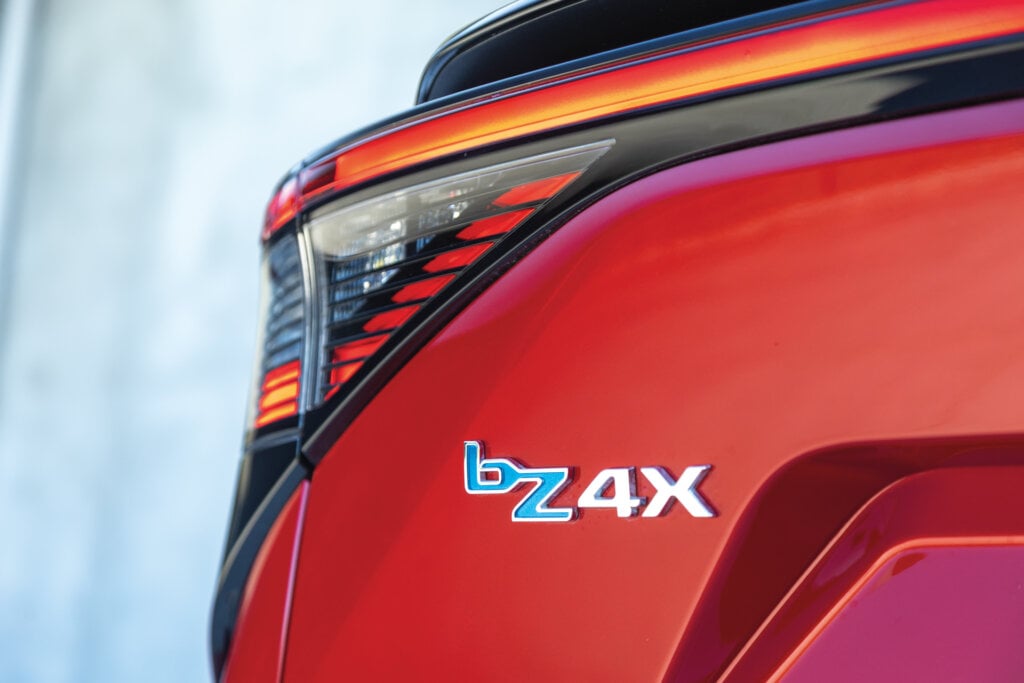
2026 Toyota bZ4x Motion Review
Words: Kyle Cassidy | Photos: Alex Schultz
Toyota has reworked its bZ4X, giving it more than the usual once-over-lightly treatment. It’s now a thoroughly good electric option.
Back in the day, when a model went through a facelift, well, it really was just that: a visual spruce-up with a bit more kit thrown in. Now, in the electric-car era, makeovers are more than superficial, and they come around quickly.
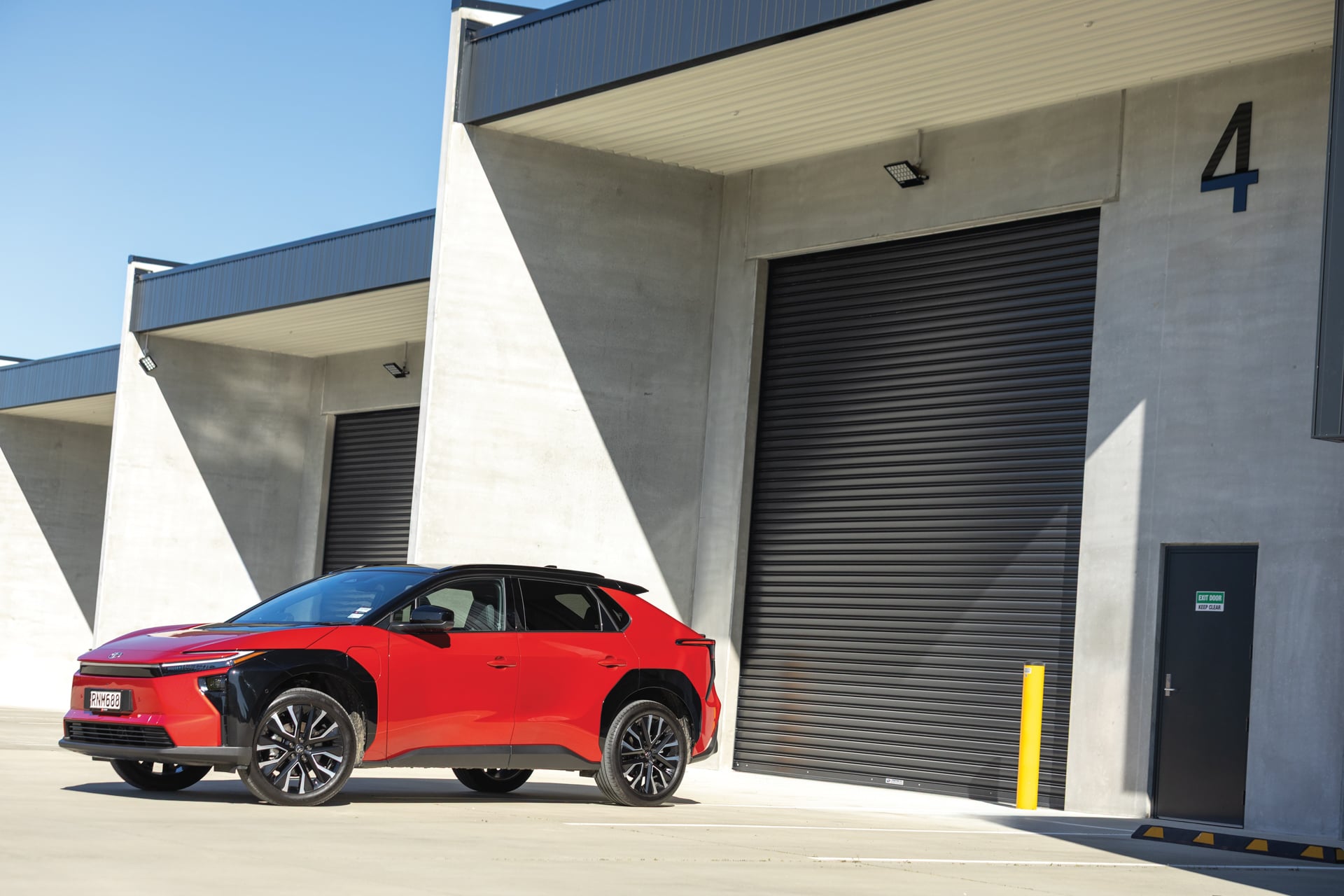
The bZ4X launched in 2022, yet Toyota has already done it over, updating the visuals, adding some kit and upgrading most of the hardware. It makes for an SUV that is a whole heap better than it was originally. And Toyota has kept the pricing competitive, with the FWD Pure at $58,990 and this AWD Motion at $68,990.
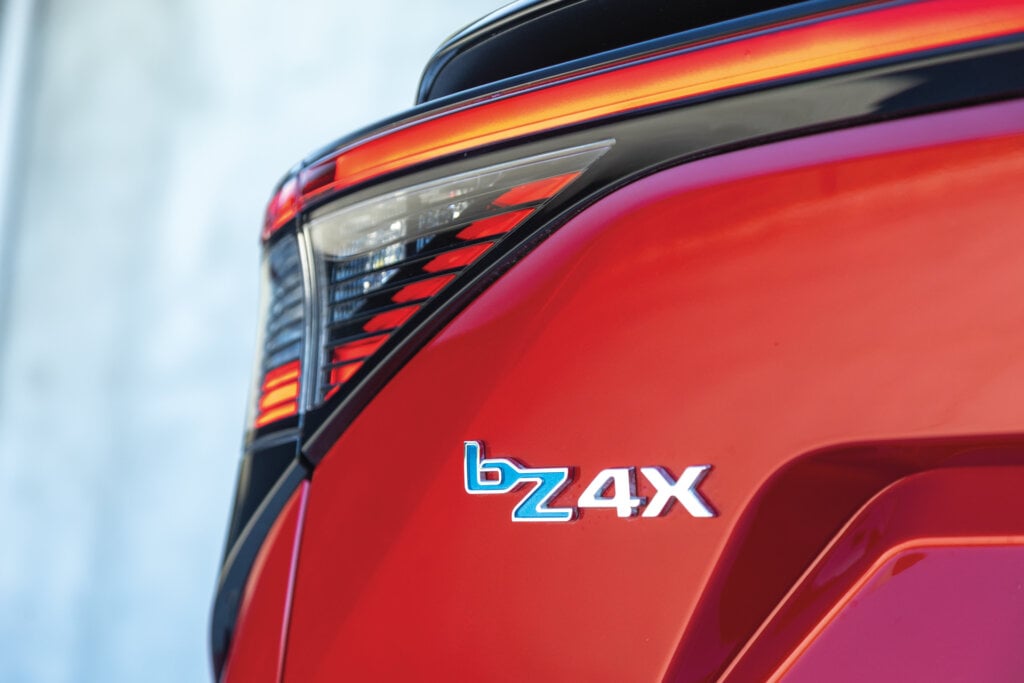
Tell me about the updates
The updates are substantial, with more power, a bigger battery and improved charging. There is now a 74.7kWh battery, giving a range of more than 500km. Toyota has also improved charging performance, efficiency, power and practicality.
A new battery pre-conditioning system brings the battery to its optimum temperature before charging. It can be activated manually through the multimedia system, scheduled for a specific time or engaged automatically when a fast charger is entered as a destination in the navigation system. There’s also a new 22kW AC onboard charger.
Updates to the eAxles see output from the front motor increase by 11 per cent, rising from 150kW to 167kW, while the rear motor climbs from 80kW to 87kW. The all-wheel-drive Motion now produces 255kW, up from 160kW in the previous model.
New silicon carbide semiconductors are said to allow the inverter to handle high voltages, temperatures and outputs more efficiently. Toyota has also reduced energy losses by ‘super-polishing’ the transaxle gear teeth and replacing the mechanical oil pump with a more efficient electric unit.
The all-wheel-drive model gains a new turning control system that adjusts front and rear torque distribution according to vehicle speed, steering angle and road conditions. It sends more torque to the front wheels when entering a corner, then progressively increases rear torque through the bend and on exit.
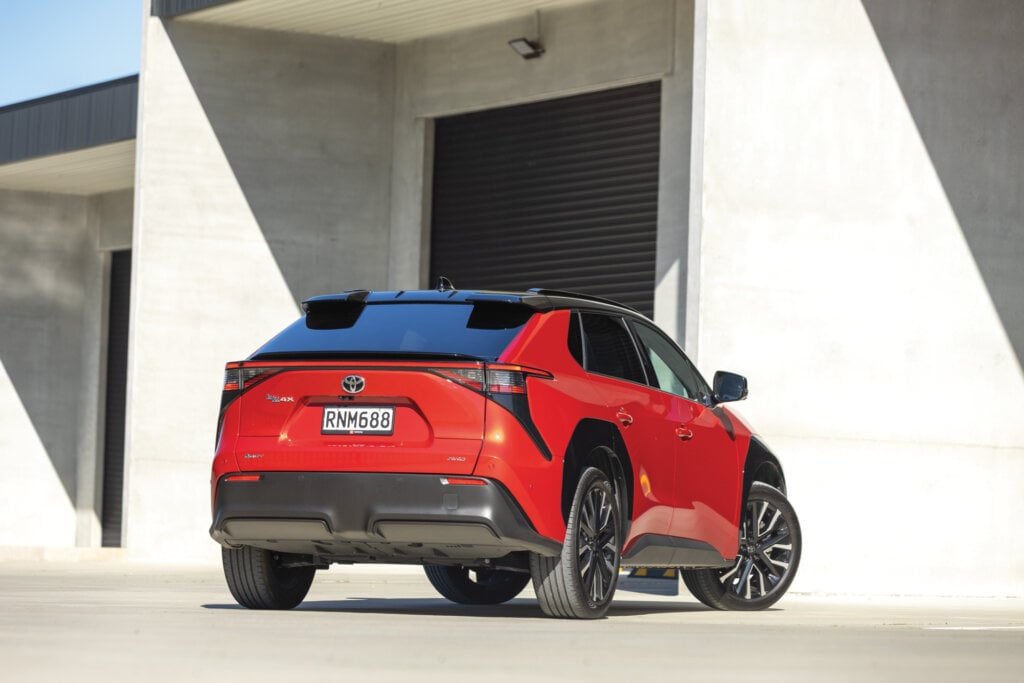
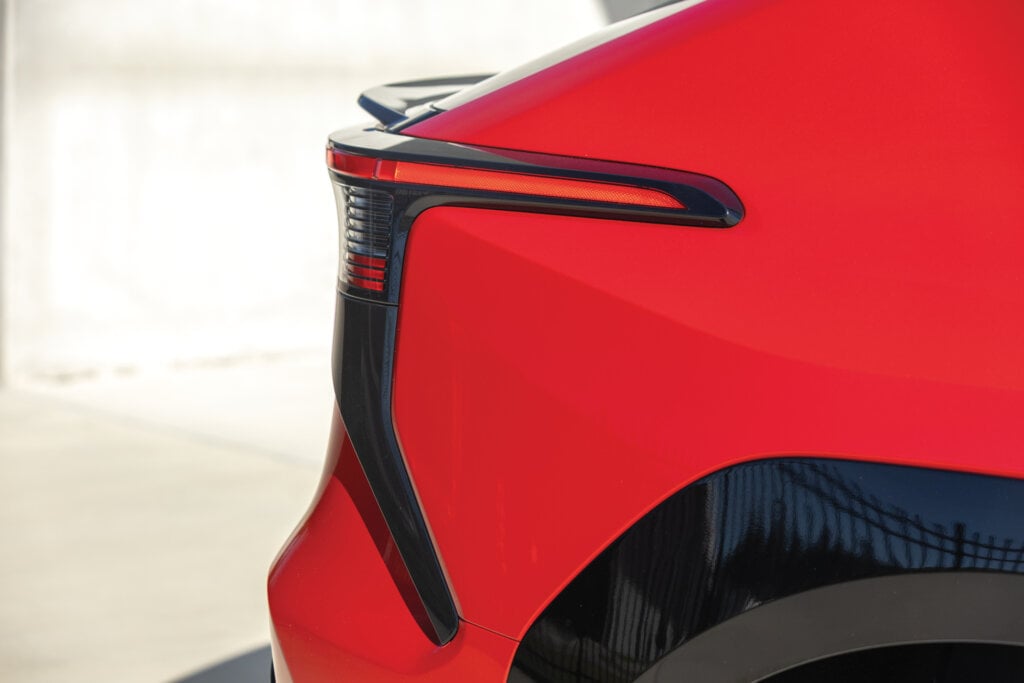
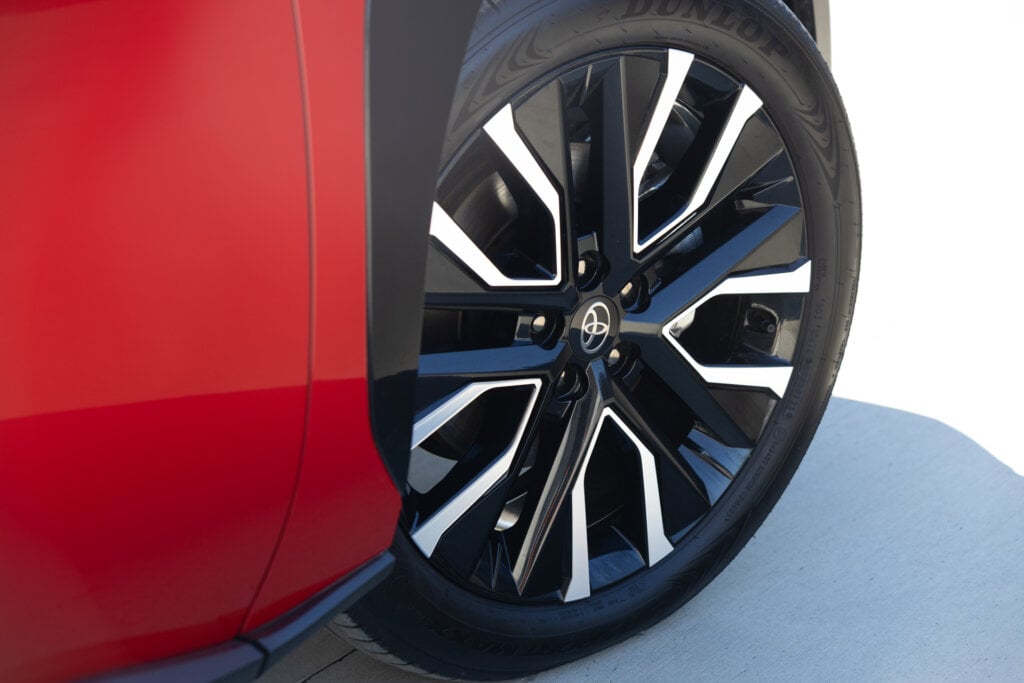
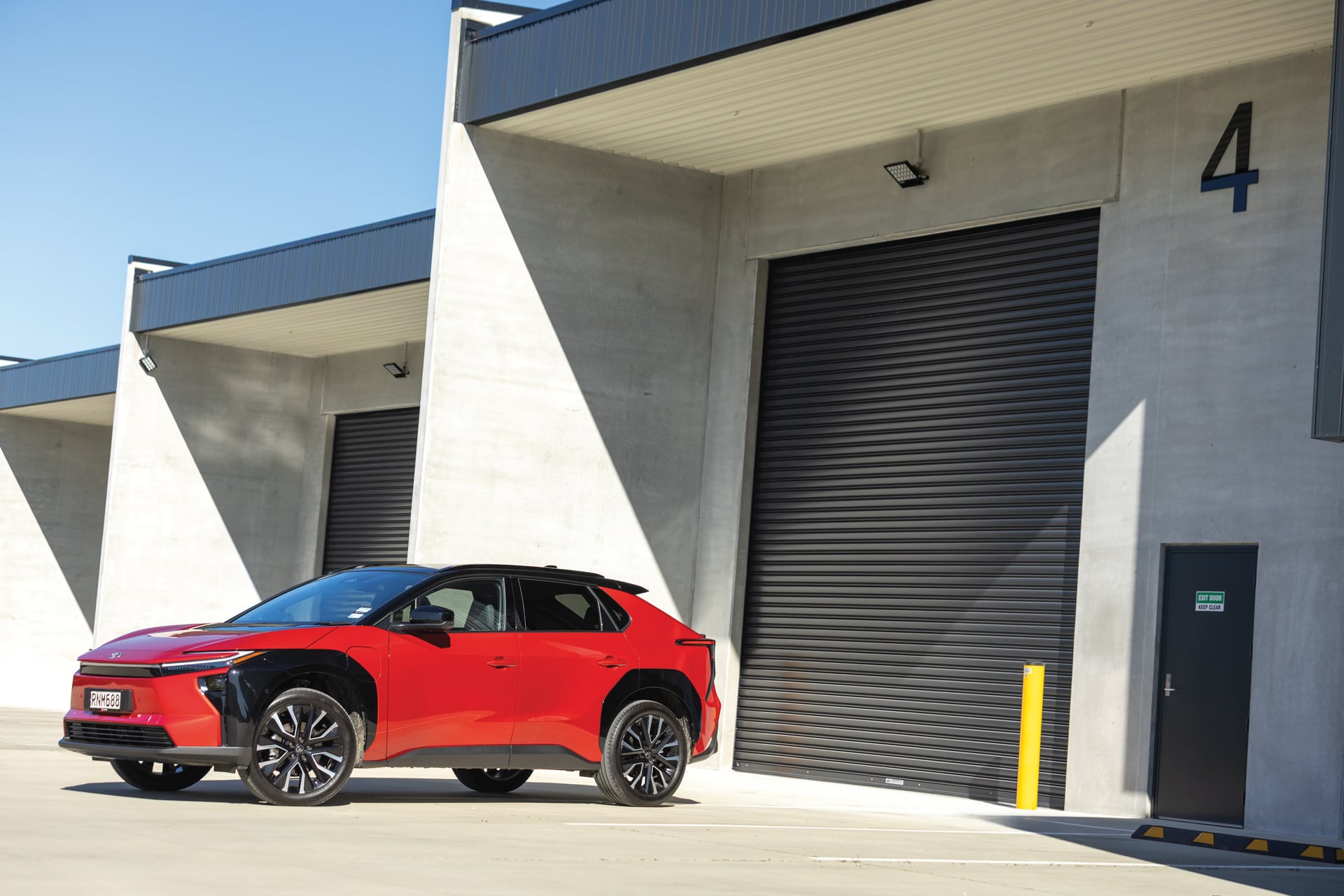
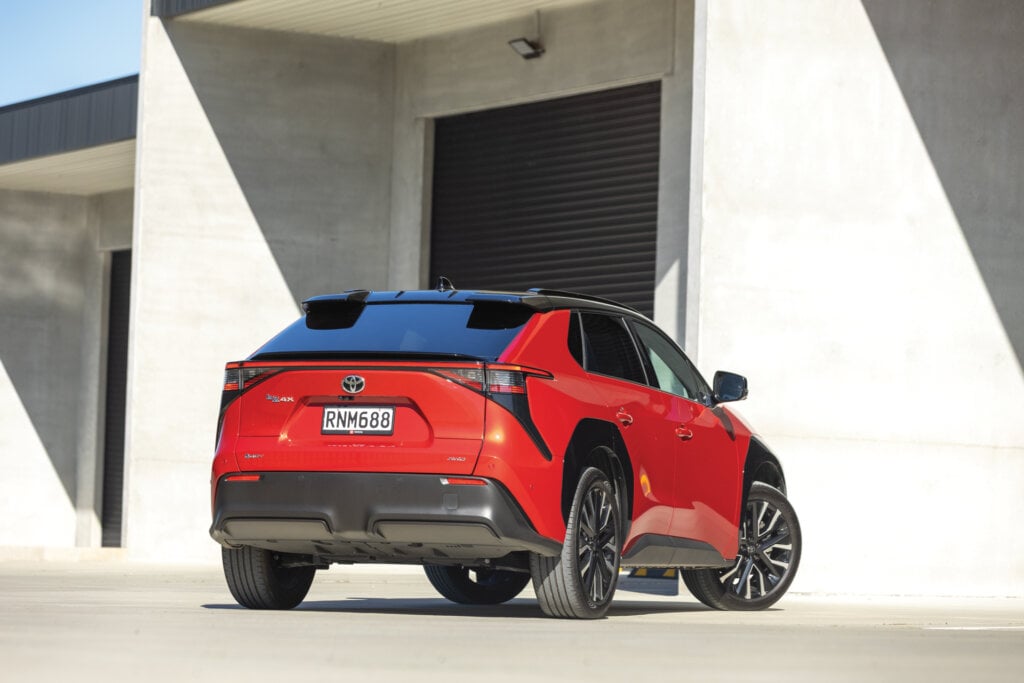
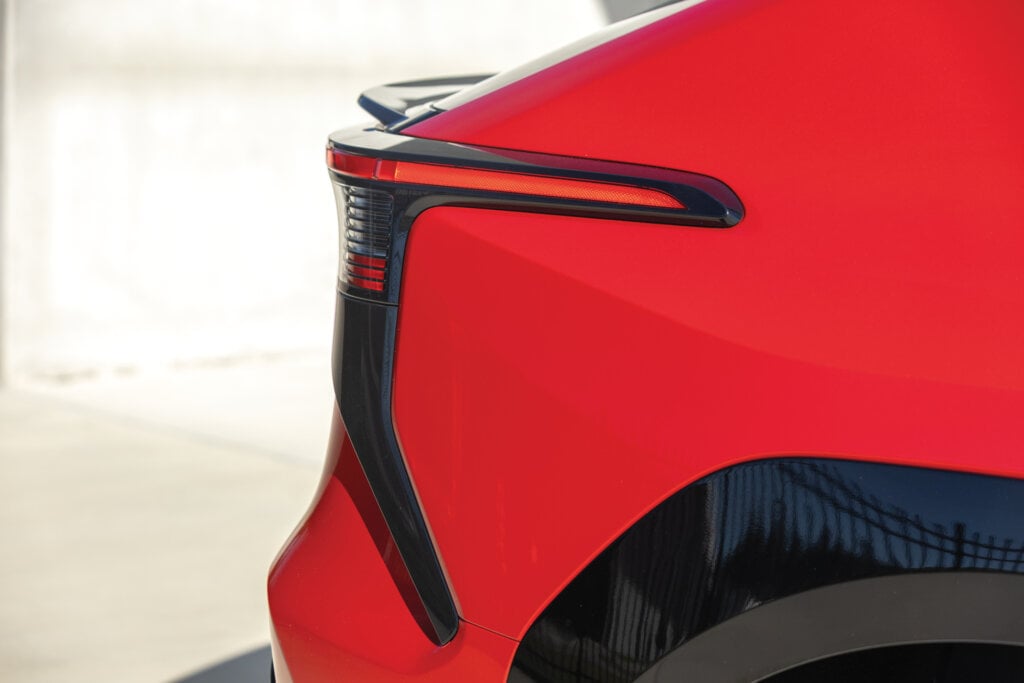
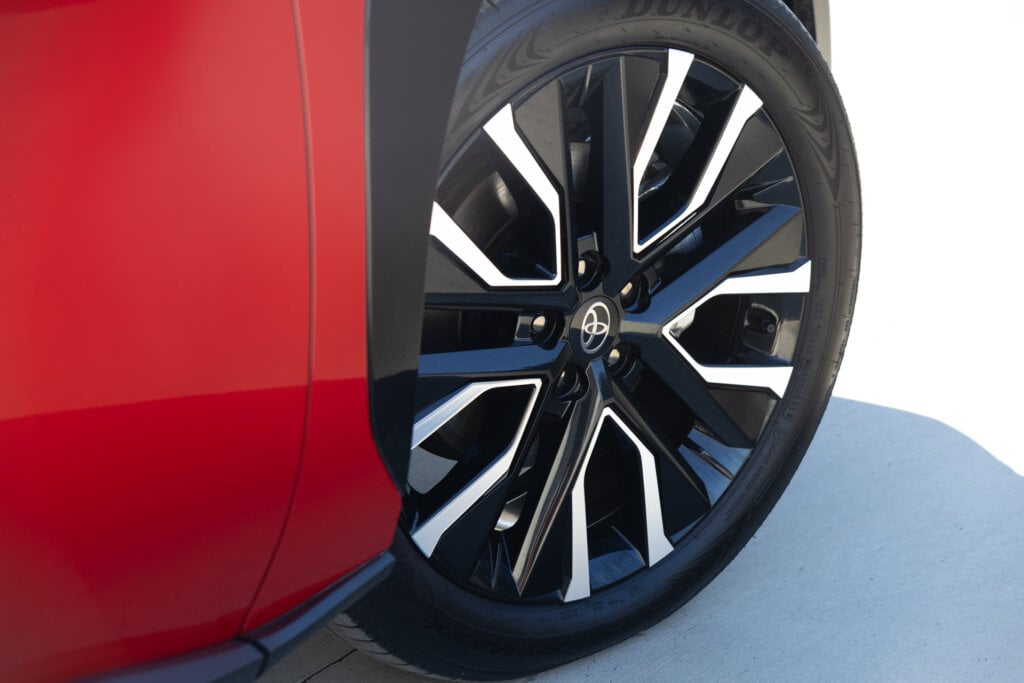
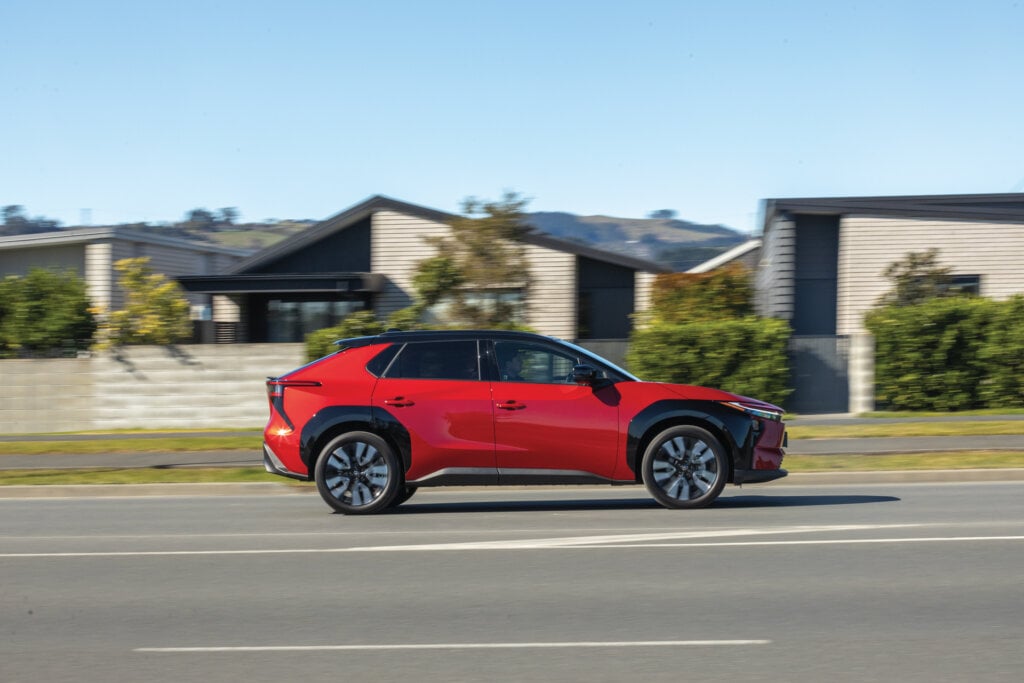
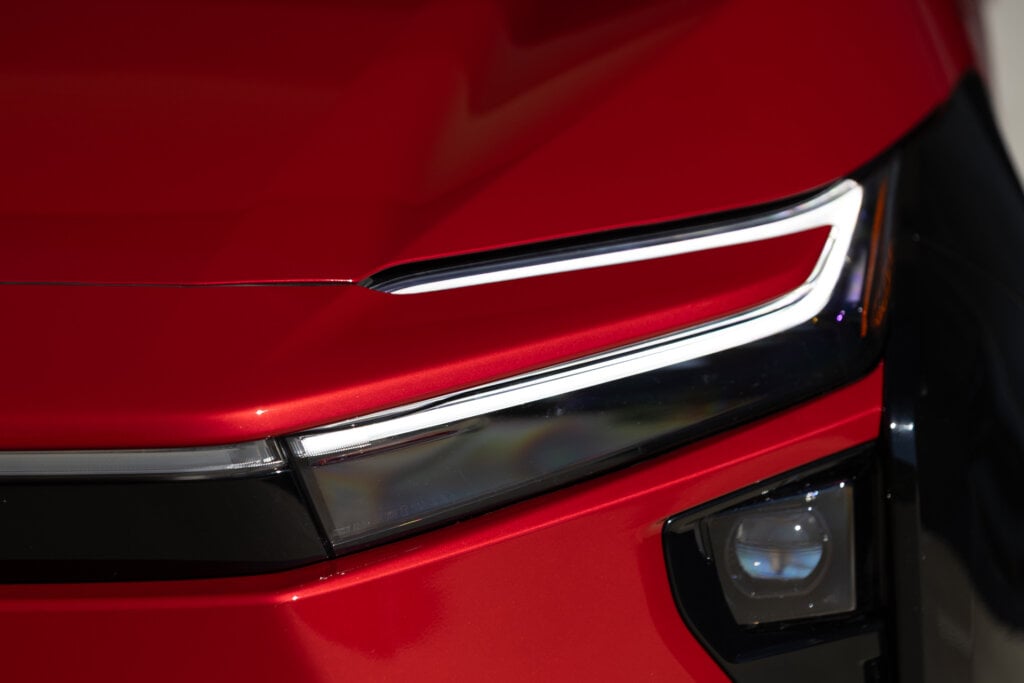
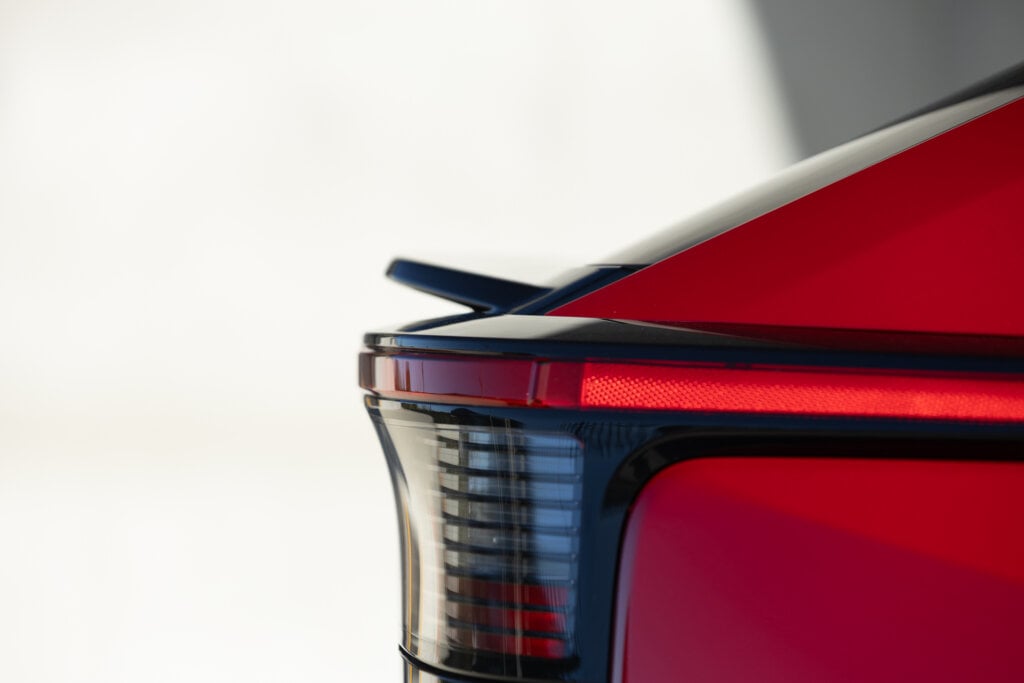
Exterior changes include a sleeker version of Toyota’s Hammerhead front design, gloss-black wheelarch trim and new alloy wheels. Inside, there is a new 14-inch multimedia display and a 1500W power outlet in the cargo area. The more powerful Motion also doubles its braked towing capacity from 750kg to 1500kg. Phew, quite the makeover, then.
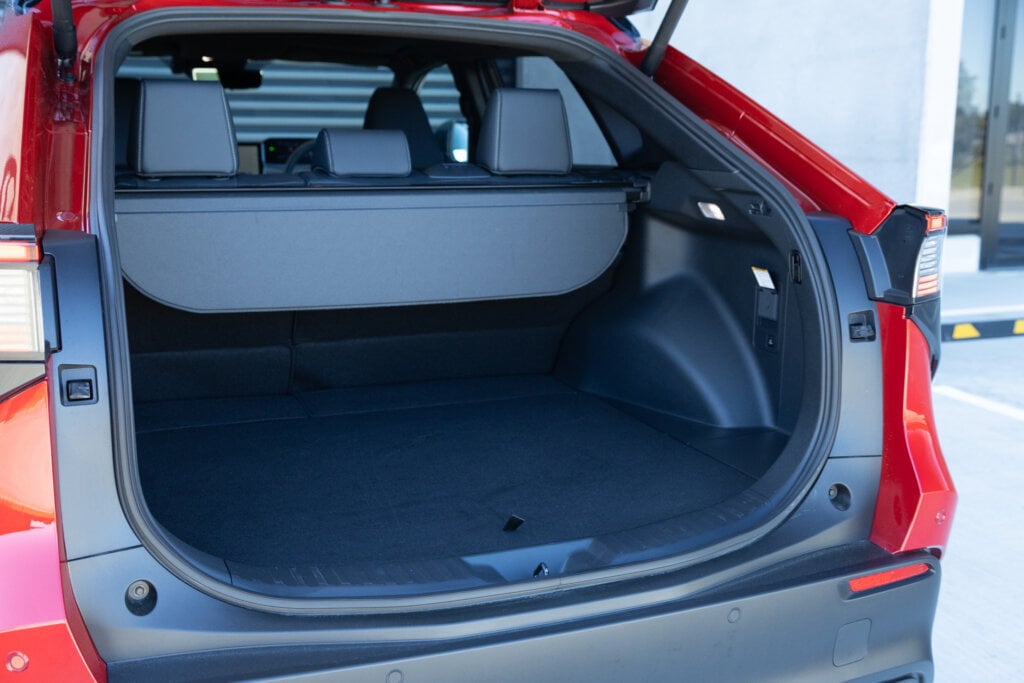
Still practical
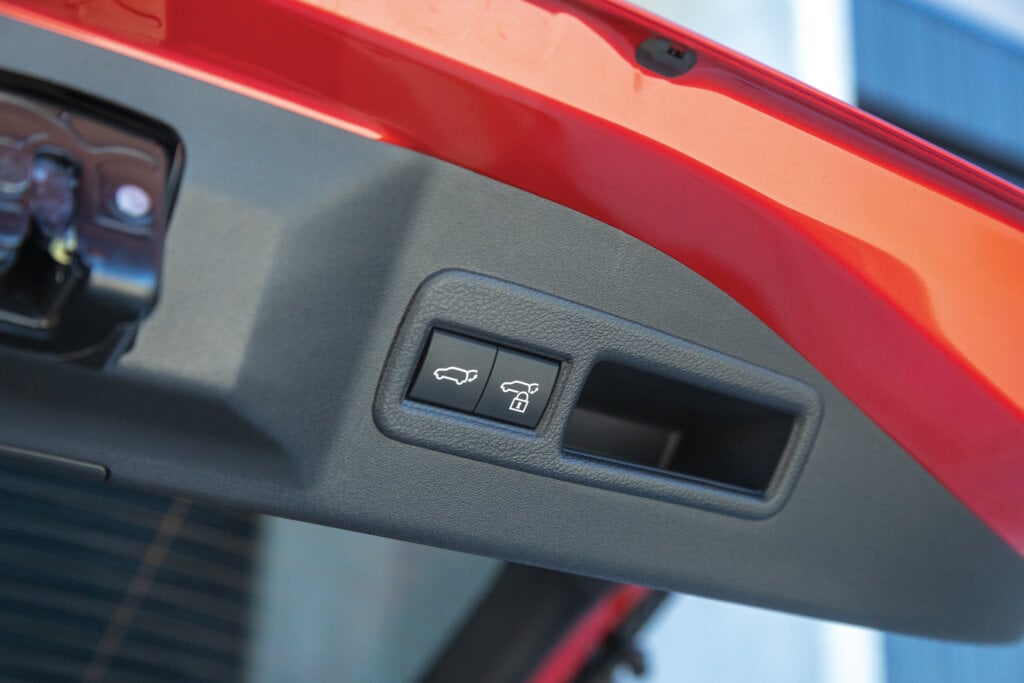
You can think of the bZ4X as a big, high-riding hatchback. Underneath that sloping tailgate, one without a rear wiper, you’ve got a well-formed load area. There’s some underfloor storage too, along with a 220V/1500W three-pin power outlet, but no spare wheel. If you need more cargo volume, there’s the new $71,990 Touring model, a genuine station wagon.
The rear quarters are a good fit for a growing family. The bench is comfy for two adults or three smaller folk, and these aren’t cheap seats: there are heaters, dual charging points and plenty of legroom. That said, there’s a lack of space for feet beneath the front seats because the floor is set quite high.
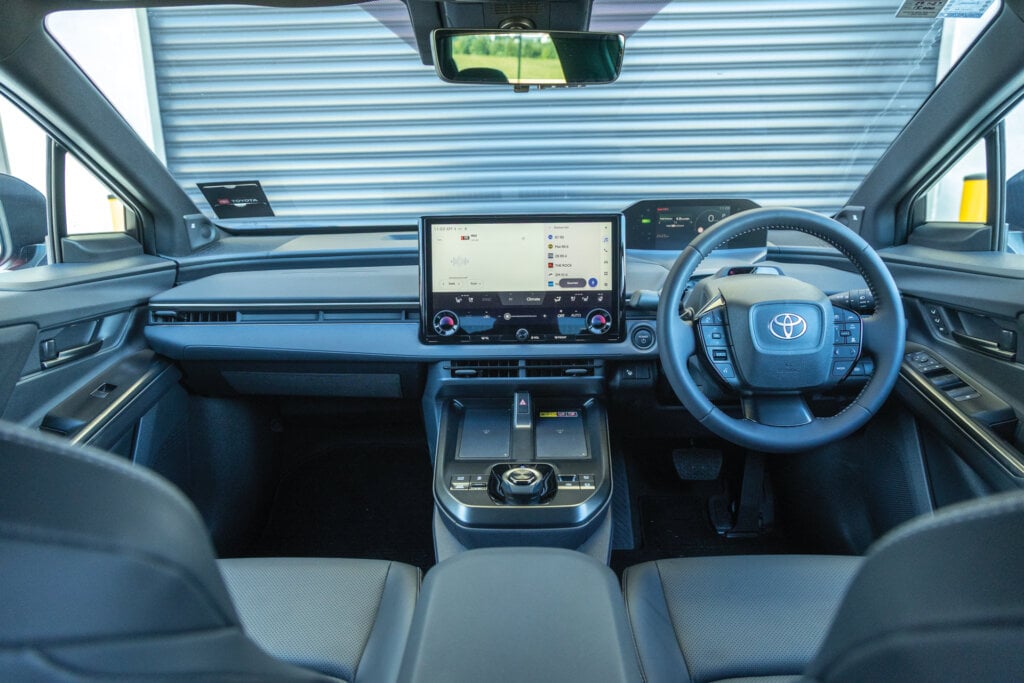
Up front, there’s oodles of room, as the interior feels rather American-centric. The seats aren’t too encompassing if you’re big-boned, while the fake leather had us fooled.
For an electric car, the layout is refreshingly conventional. There is a larger touchscreen, with the climate controls always present along the bottom, so you don’t have to tap, tap, tap all the time. The rest is fairly straightforward, as it’s light on connectivity features. Oddly, Toyota’s new Connected Services suite didn’t make the cut.
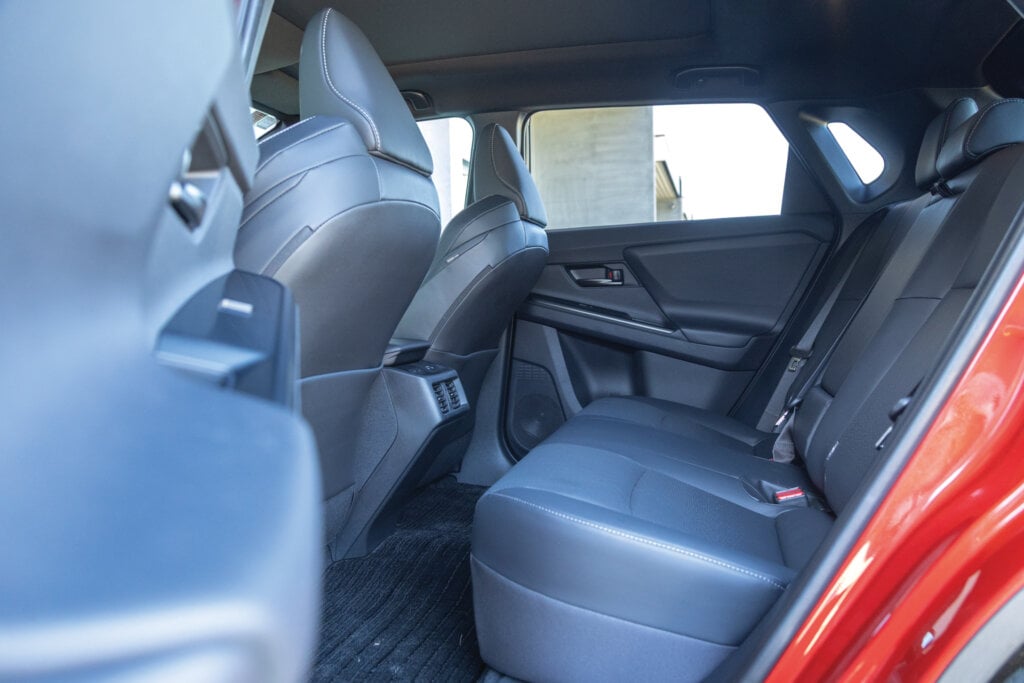
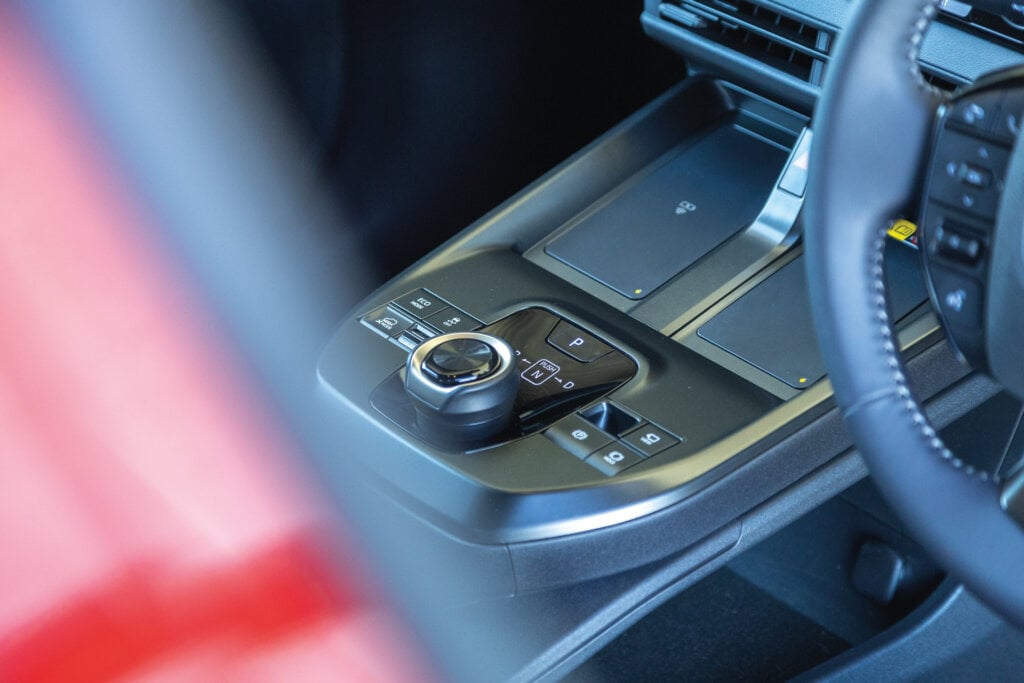
Apple CarPlay and Android Auto work wirelessly, there are two charging pads and the voice controller is a reasonably sharp operator. Although it lacks a glovebox, there’s a reasonable centre bin and well-placed cupholders. There’s also the usual robust Toyota build quality, with sensible, hard-wearing plastics and restrained use of piano black. Niceties include a heated steering wheel, heated and ventilated seats and a surround-view camera.
The driving position feels a little odd at first, with the steering wheel set slightly lower than normal and the driver display floating above it. But there’s enough adjustment to get comfy.
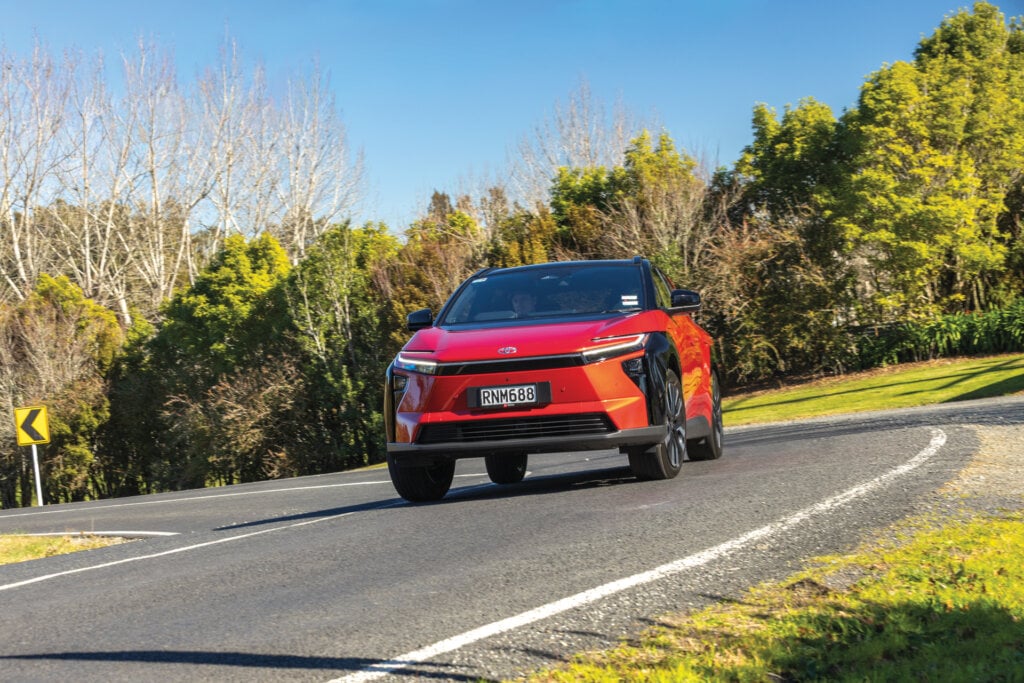
Goes just swell
With its newfound urge, this gets along in truly effortless style. It’s big and relaxed, and with all-wheel drive, none of the 255kW goes to waste. All EVs are smooth operators, but this is particularly refined.
The ride is a match, with a harmonious mix of control and cush over all surfaces and at a variety of speeds. The brakes are perfectly behaved as well, with no sponginess or snatch to their action, particularly at parking speeds. The blending of motor regeneration and the friction brakes is good too. Regen can be adjusted on the fly via the paddles, which is something we always appreciate. The only minor issue is the turning circle, which is a little larger than desired in a parking building.
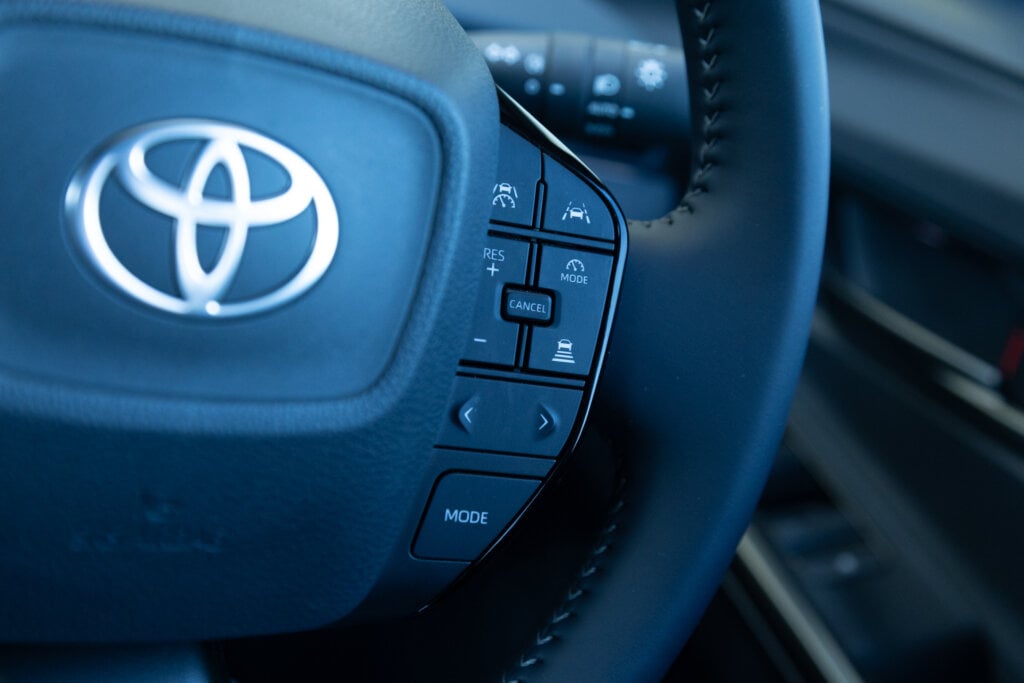
With abundant urge, it can be easy to find yourself over the speed limit. While this has speed-limit recognition, thankfully there’s no alert. The driver monitor is proactive but not tyrannical. With straightforward buttons on the wheel, the cruise control is easy to use, while its lane-centring function is well tuned.
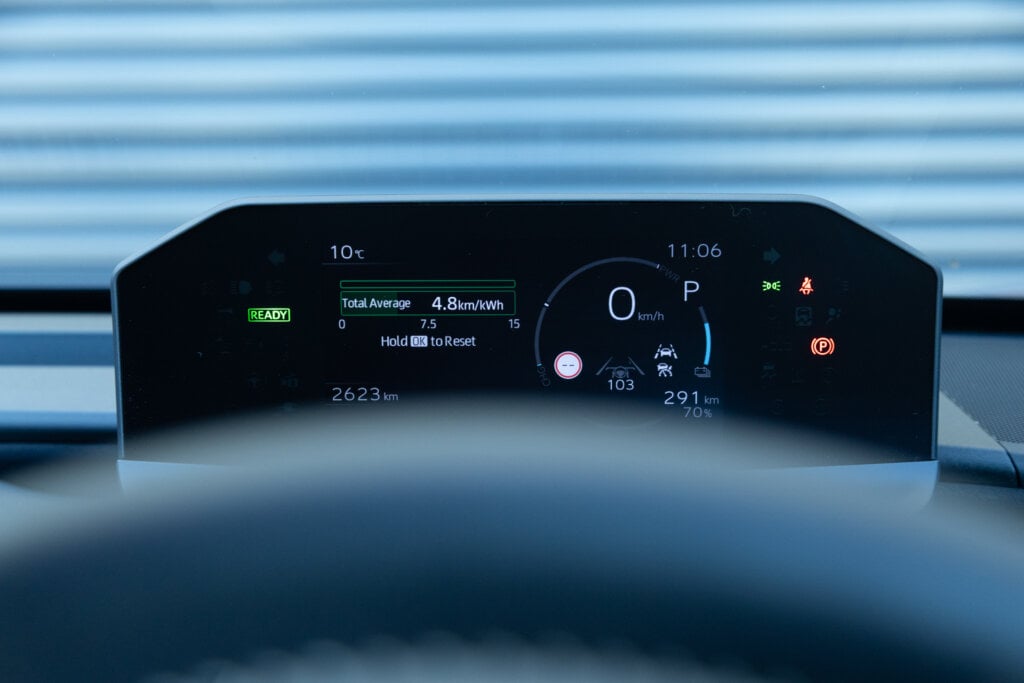
The distance-to-empty display read 420km when fully charged, and it averaged 5km/kWh in our hands. That equates to 20kWh/100km, which isn’t as good as the quoted 16kWh/100km figure. Fourteen hours on a slow charger overnight added 26kWh.
With a 0–100km/h time of 5.2 seconds, this is quicker than a GR Corolla. And while it’s not intended to be genuinely sporty, it is superbly competent.
The pleasing ride quality doesn’t disappear at speed, soaking up highway bumps, although there is a little road roar accompanying your progress.
The steering has a positive character, with the right amount of feel and keenness. Overall chassis control and poise get a solid pass too; lean is well managed, while stability and grip impress. And when you push beyond, the stability controls help keep the front and rear tracking true in a non-invasive manner. As we said, it’s all very competent.
What else is there?
There are plenty of alternatives in this space, with the $70,000 EV market becoming very crowded. Everyone defaults to the Model Y, which has superior interior space, is tech-laden and is more efficient. Others to check out include the Zeekr 7X, although it’s only available with rear-wheel drive at this price, and the BYD Sealion 7, which matches the Toyota for quality and fit-out but isn’t as accomplished to drive. The Toyota’s price is drive-away and, with the brand’s nationwide support, competitive warranty cover and servicing costs, this bZ4X seems to stack up rather well.
Toyota bZ4X Motion
$68,990 / 16kWh/100km / 0g/km
0-100 km/h 5.20s
80-120 km/h 3.59s (103m)
100-0 km/h 37.89m
Speedo error 98 at an indicated 100km/h
Ambient cabin noise 70.9dB@100km/h
Motor output 255kW
Max torque 437Nm
Battery 74.7kWh
Range 517km
Drivetrain Single-speed auto / e-AWD
Front suspension Mac strut / swaybar
Rear suspension Wishbones / swaybar
Turning circle 11.2m (2.6 turns)
Front brakes Ventilated discs
Rear brakes Discs
Stability systems ABS, ESP, TV
Safety AEB, ACC, BSM, LDW, RCTA, ALK, AHB
Tyre size f/r-235/50R20
Wheelbase 2850mm
L/W/H 4690 / 1860 / 1650mm
Track f-1600mm r-1610mm
Luggage capacity 441L
Tow rating 750kg (1500kg braked)
Service intervals 12 months / 15,000km
Fixed price servicing $260
Warranty 5yrs / 150,000 km
ANCAP rating ★★★★★ (2022)
Weight (claimed) 2035kg