1980 Ford Escort 1600 Sport Review
Words: Kyle Cassidy | Photos: Alex Schultz
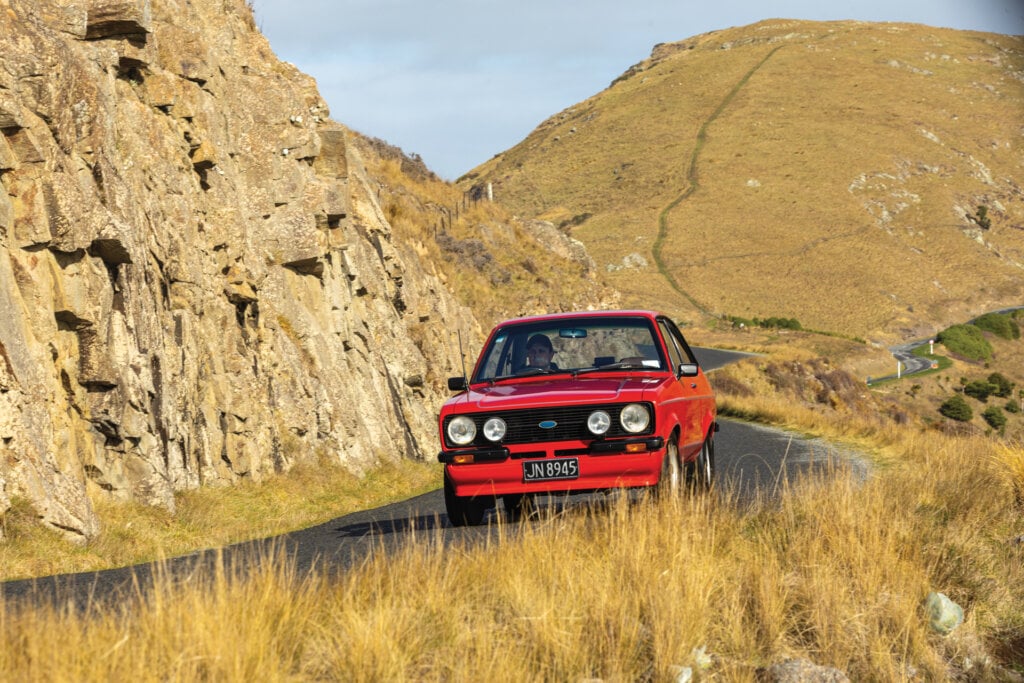
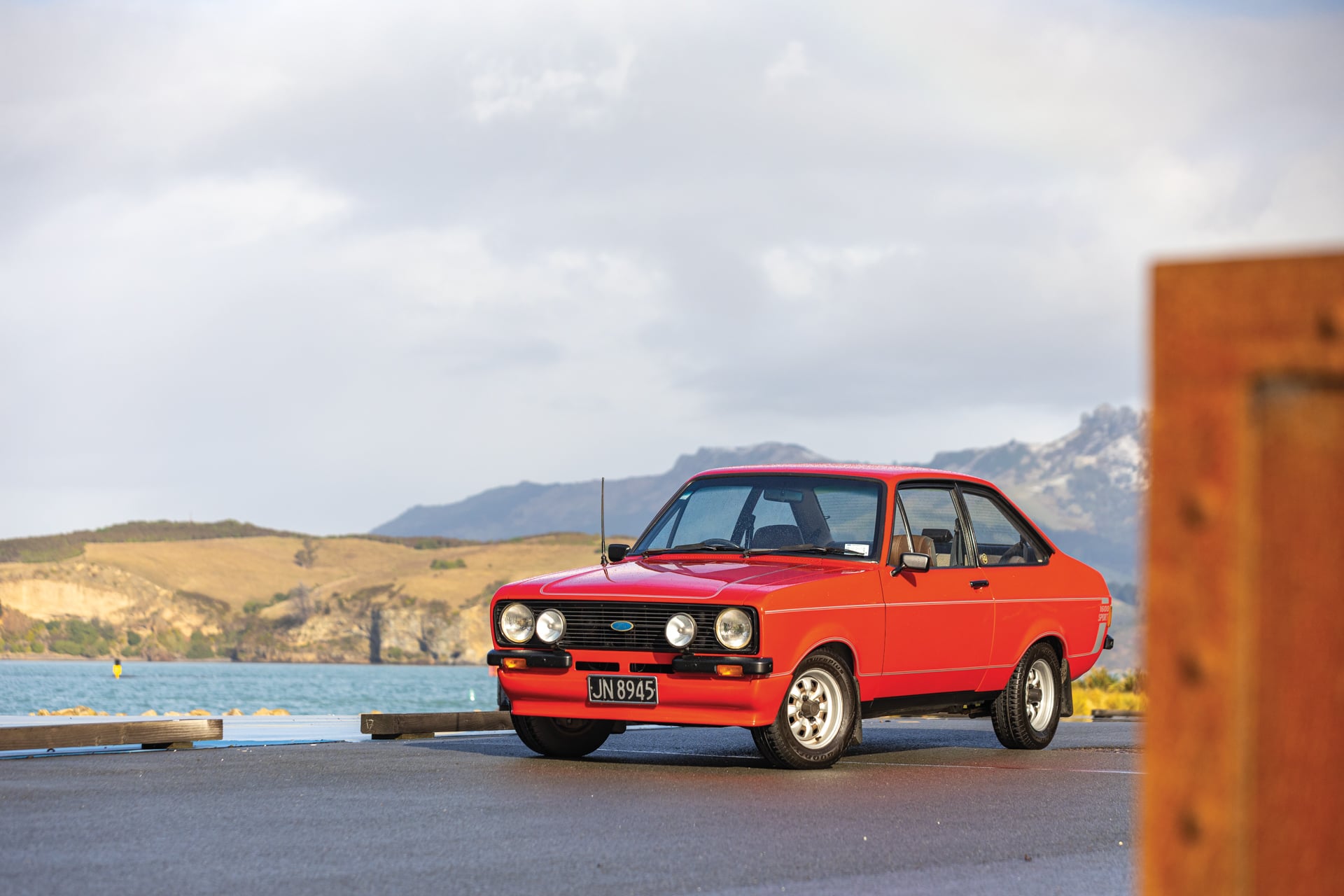
Ford’s Escort was a popular sight on New Zealand roads during the 1970s. Most have long since disappeared, which makes this 1980 Sport, a genuine survivor, all the more endearing.
The original Escort arrived in 1968 as Ford’s replacement for the Anglia. Its mechanical layout was thoroughly conventional for the time: the engine sat longitudinally up front, power went to the rear wheels and the axle dangled around on leaf springs.
That made the Escort inexpensive to manufacture and straightforward to maintain. It looked good and was offered in a range of body styles with various engines. The fact that it could be easily modified for competition also helped its cause. Ford exploited those qualities with a series of homologation specials such as the Mexico, RS1600 and RS2000, all of which helped establish the Escort’s formidable motorsport reputation.
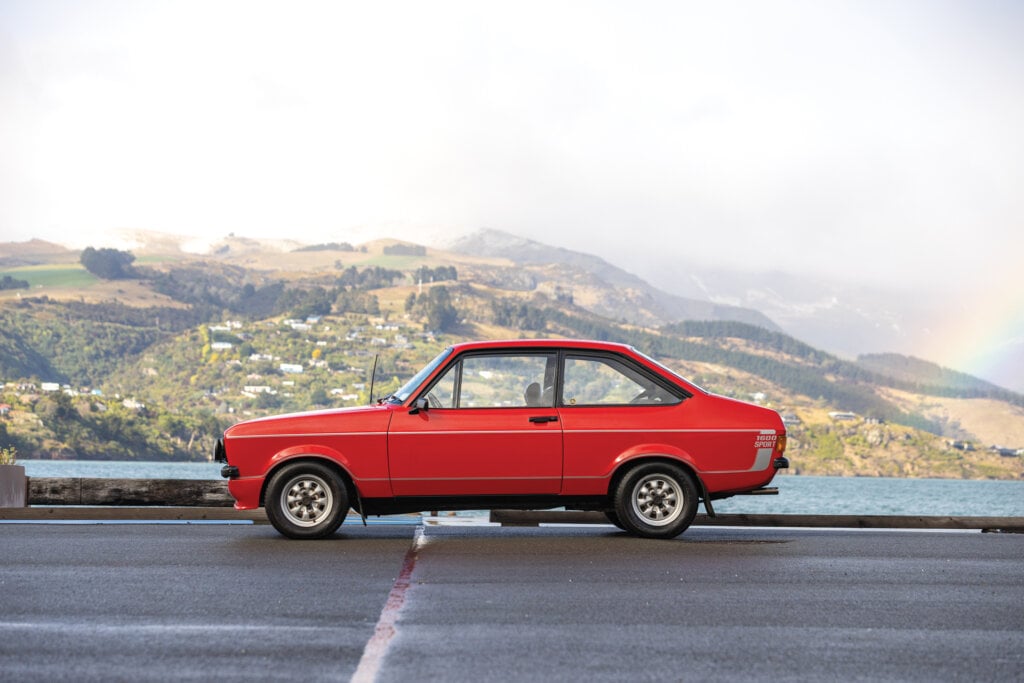
When it came time for a follow-up, the Mk2 Escort was developed jointly by Ford’s British and German operations under the codename Brenda. Introduced in 1975, it wasn’t a clean-sheet replacement. Ford retained much of the Mk1’s platform and mechanical package but clothed it in a squarer, more modern body with a larger glass area and a revised cabin.
Underneath, the familiar formula remained: MacPherson struts at the front, a live rear axle on semi-elliptic leaf springs and rack-and-pinion steering. It was hardly revolutionary, even then, but it was light, well balanced and entertaining to drive.
The Escort had a big presence in New Zealand as it was assembled locally from knocked-down kits, making it part of the country’s once-substantial vehicle manufacturing industry.
Ford introduced the Mk2 Escort to New Zealand in 1975 with a broad range of options, including 1.1- and 1.3-litre engines across various body styles and trim levels. The 1.6-litre engine joined local production in 1976 and was reserved principally for the more luxurious Ghia, which could also be had with a three-speed automatic. It was also used in the Sport, which proved particularly popular.
At the time, RS1800s were dominating rallying both at home and on the global stage. Escort drivers won the national championship six years in succession from 1978 to 1983, further cementing the Mk2’s status as the car to have.
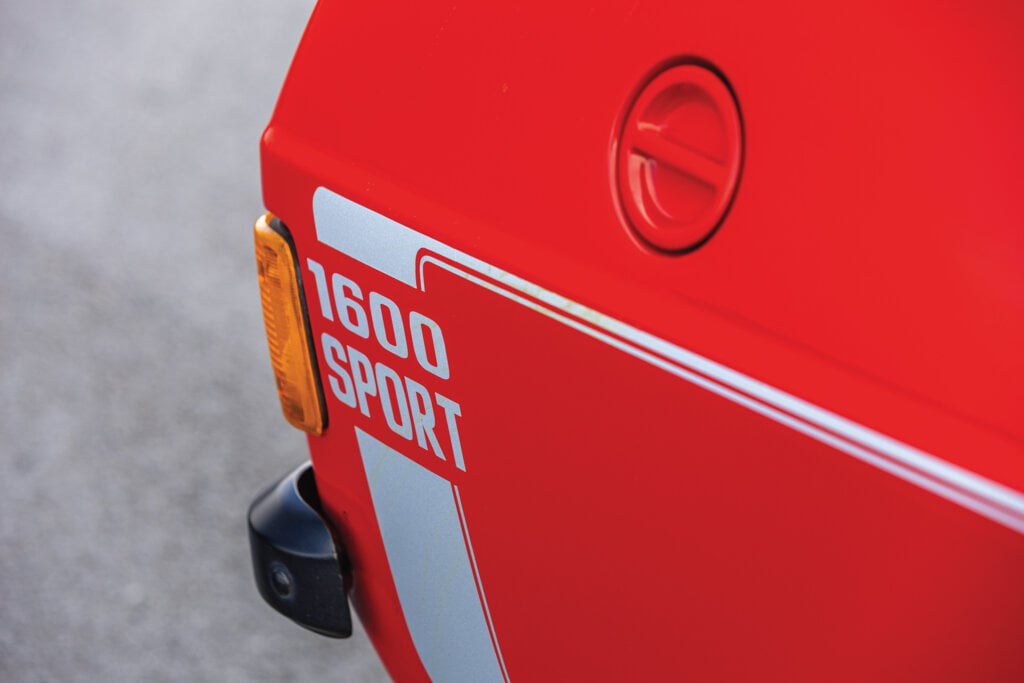
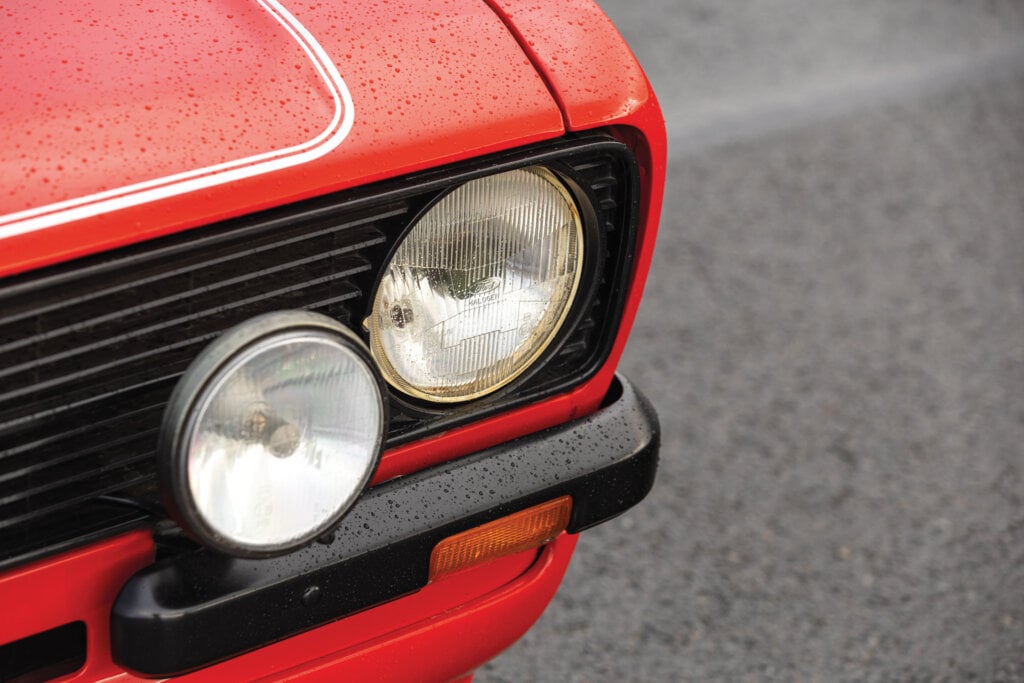
But hardly anyone had the money to buy an RS Escort, and its Cosworth engine wouldn’t have been particularly agreeable on the daily commute. The market wanted something with the look and character of Ford’s competition cars in a relatively affordable package that ordinary New Zealanders could buy and drive to work. The 1600 Sport occupied a sweet spot between the everyday Escort range and the expensive RS machinery.
The 1600 Sport took those basic ingredients and added enough performance and visual attitude to create an attainable sporting Escort. It shouldn’t be confused with some kind of detuned RS, however. Its extra power came simply from having a larger engine, and the 1600 was otherwise utterly mundane.
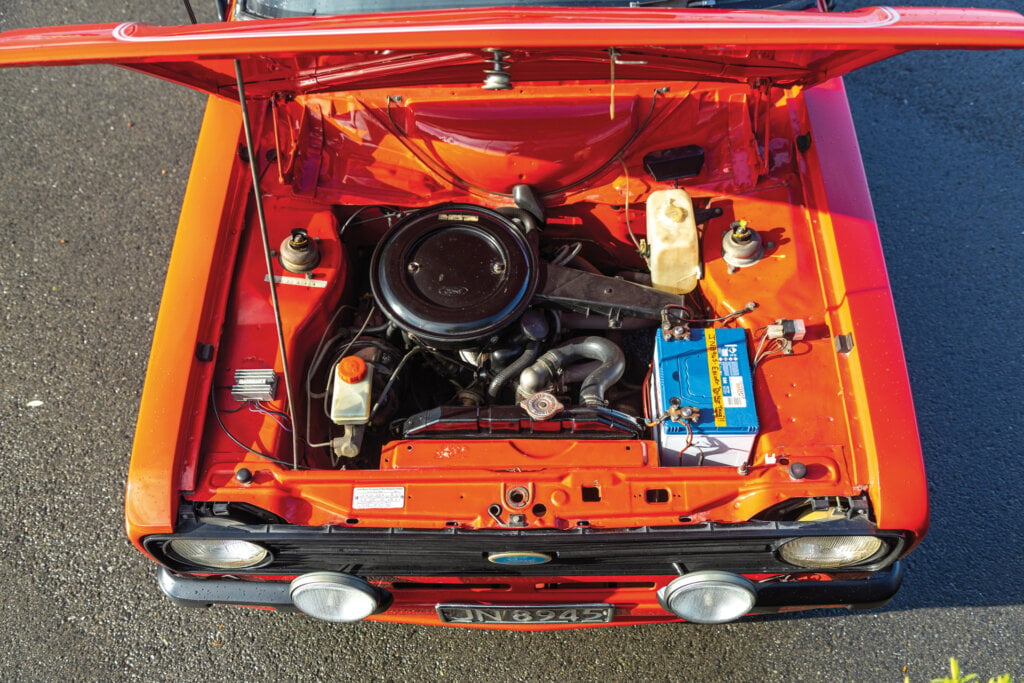
The Sport used Ford’s 1598cc Kent Crossflow four-cylinder engine. With an iron block, overhead valves and a twin-choke carburettor, it was simple rather than sophisticated, but it was durable in everyday use and easy to keep running.
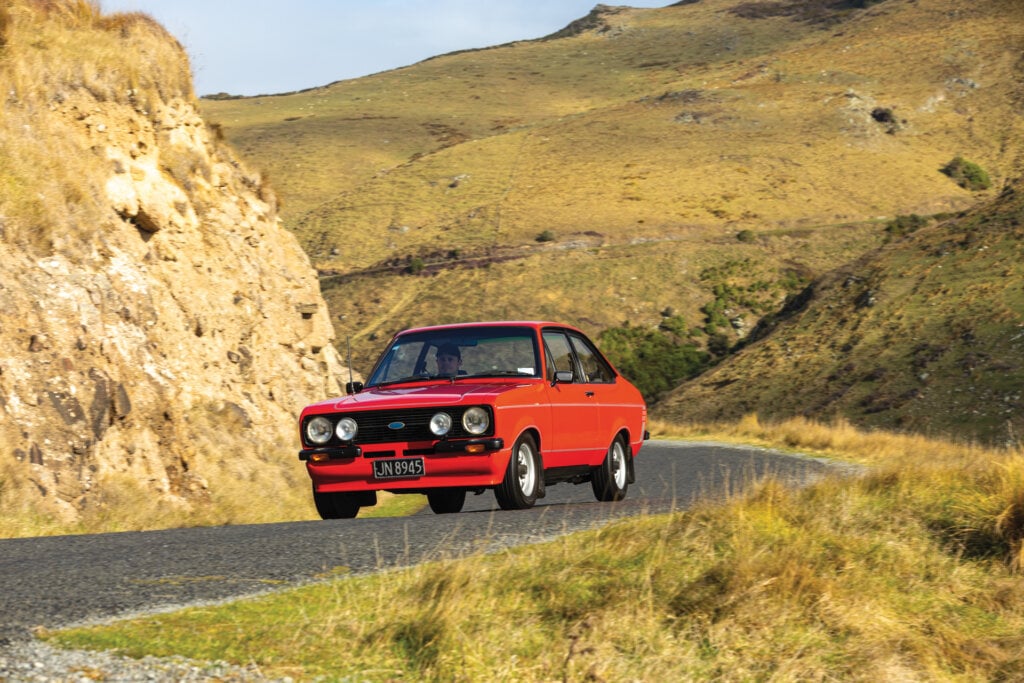
Contemporary specifications put output at 62kW, with around 125Nm of torque. The Escort weighed well under a tonne, so that output was sufficient. A four-speed manual gearbox sent power to the rear wheels, while front disc and rear drum brakes dealt with stopping duties.
Period figures suggest the 1600 Sport could reach 100km/h in around 11 seconds with a good breeze behind it and might even crack the ton downhill.
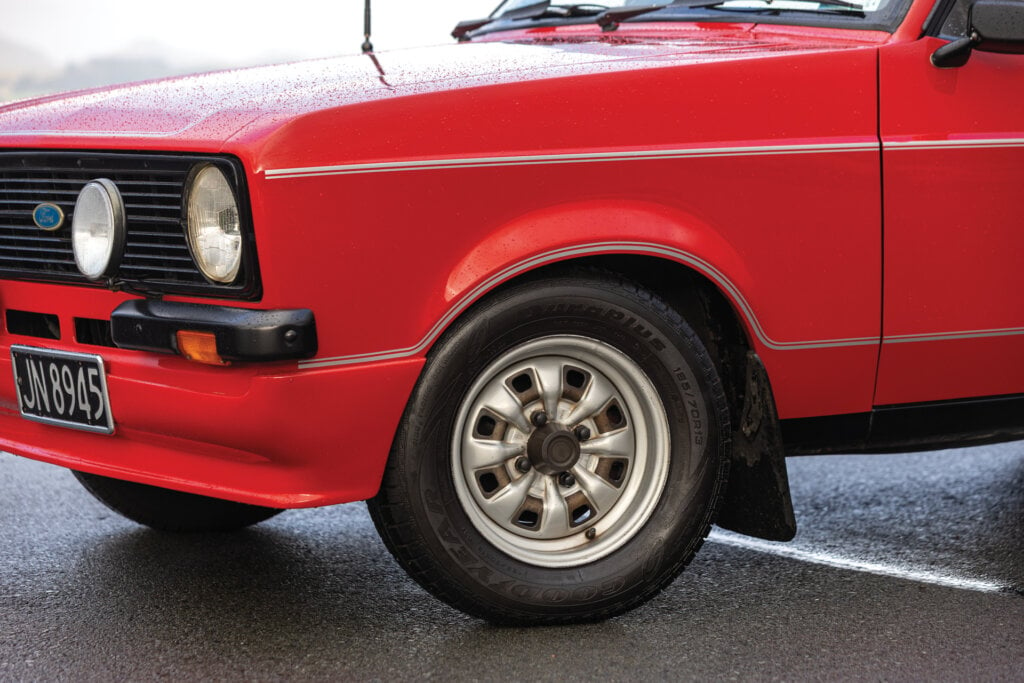
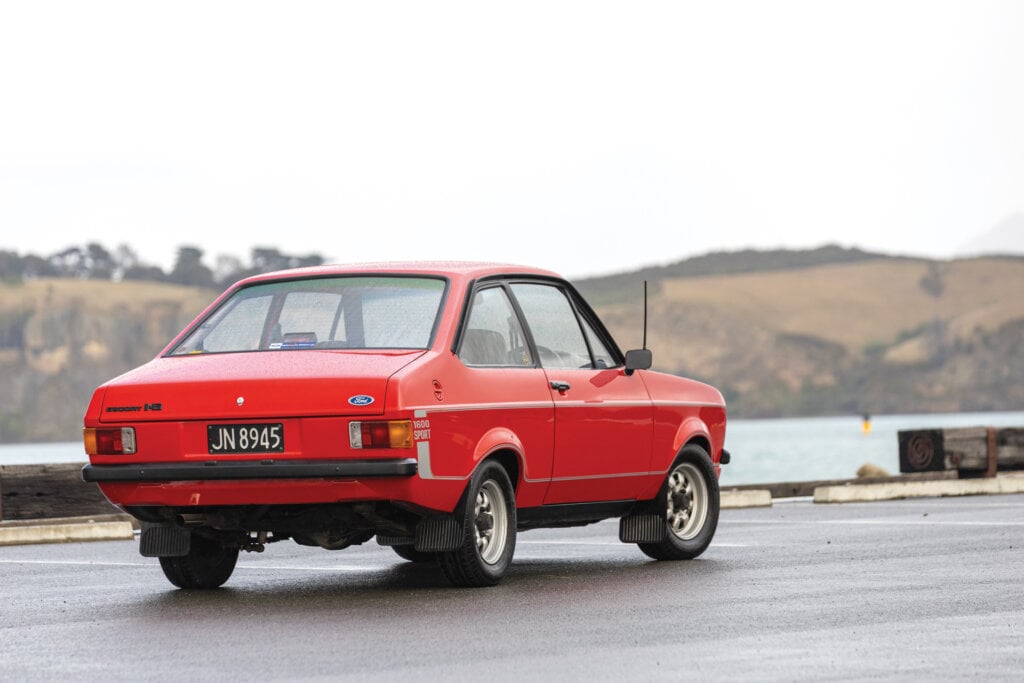
The Sport’s styling package was subtle, with blacked-out bumpers and a stripe kit doing most of the work, while pressed-steel 13-inch wheels completed the look. It looked good then and still does now, as this mint example attests.
This is a true survivor, too. It was originally purchased from Hutchinson Motors in June 1980, and its owner took great care of it over the following decades. It has covered just 77,000km and remains in simply exceptional condition.
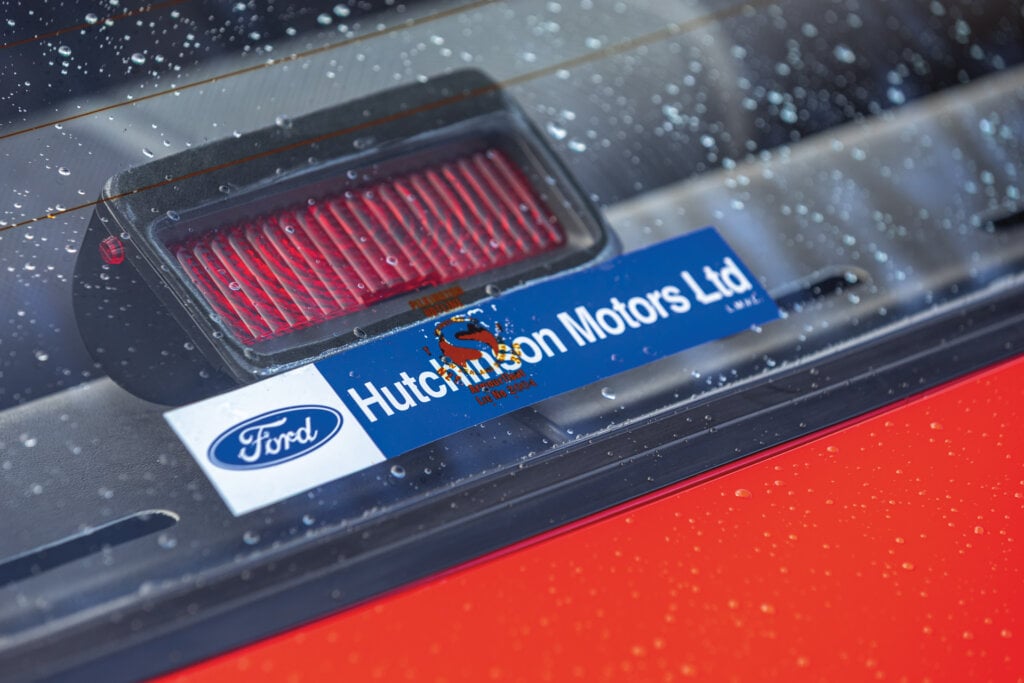
Having resided in Christchurch all those years, it regularly returned to the Hutchinson dealership for WoFs and servicing work. Dealer principal John Hutchinson told the owner that, if he ever sold it, the dealership had a buyer for it. He finally traded it on a new Puma a couple of years ago.
“We have such a history with it. We aren’t meant to collect cars, but this was special and it was worth more to us than anybody else. It’s one of those ones we just had to have.”
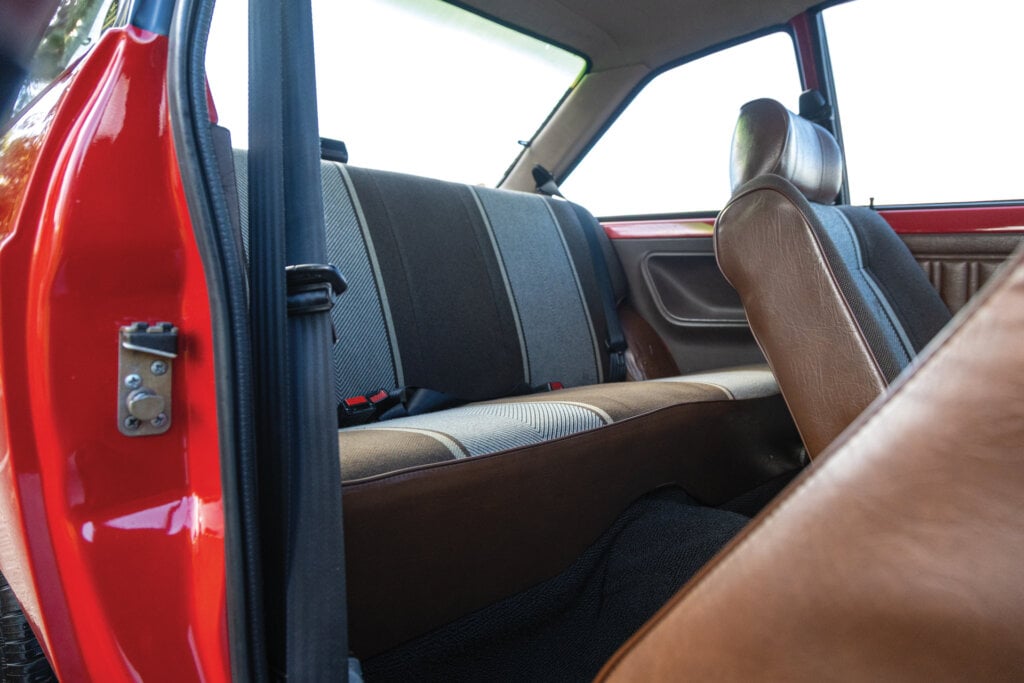
This is a stunning example that has never been repaired or restored. The interior is immaculate and the carpets look like new. It proves that if you look after these cars, they can last.
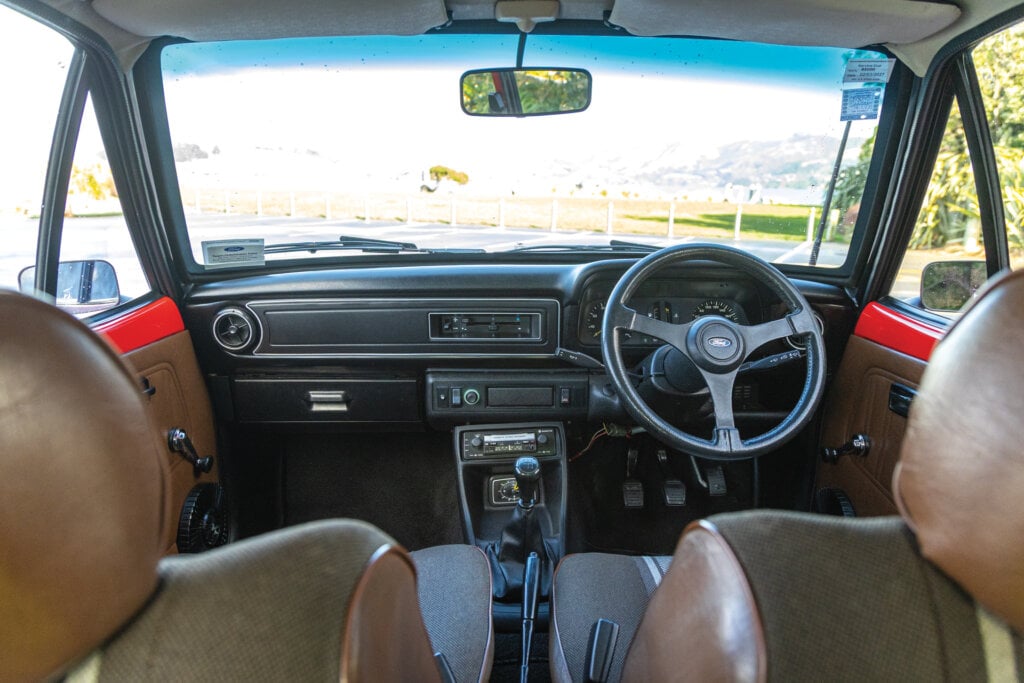
Climbing aboard, you immediately notice how narrow the Escort is, with you and your passenger touching elbows. You realise just how small these cars are. There is barely any room in the rear, but back in the day that would have been considered perfectly adequate.
There are no modern conveniences. It has manual steering and windows, while air conditioning was a genuine luxury in this part of the market. A rear demister and stereo appear to have been added after delivery.
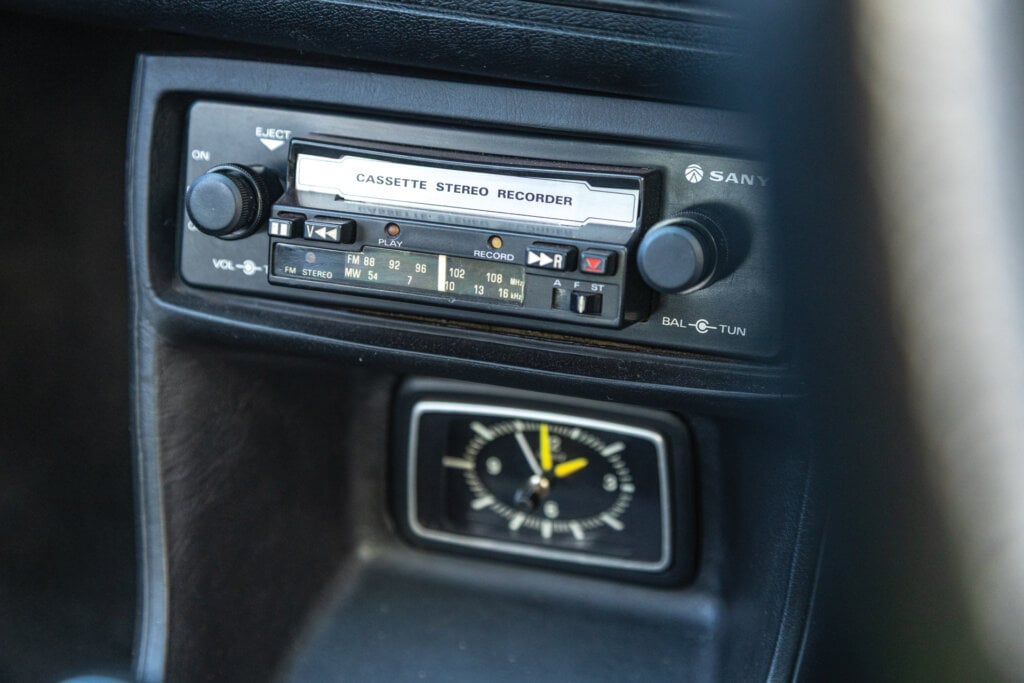
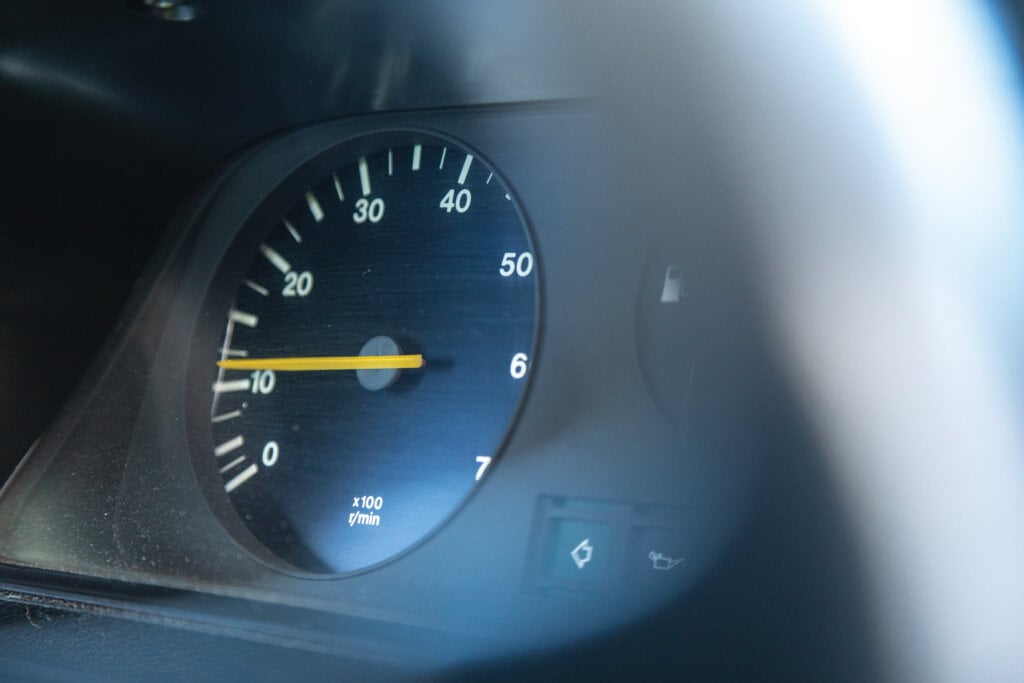
The 1600 has a typically raucous and lumpy idle by modern standards, yet its mechanical simplicity means everything still works perfectly well. Thanks to its low gearing and lack of mass, the Sport is sprightly in traffic and rides reasonably well over Christchurch’s broken street surfaces.
Once one of the country’s best-selling cars, Mk2 Escorts are now seldom seen out and about, especially the two-door models. Rust was a killer, while others perished at the hands of would-be Ari Vatanens. Given their rarity these days, this one attracts a few looks from those in the know.
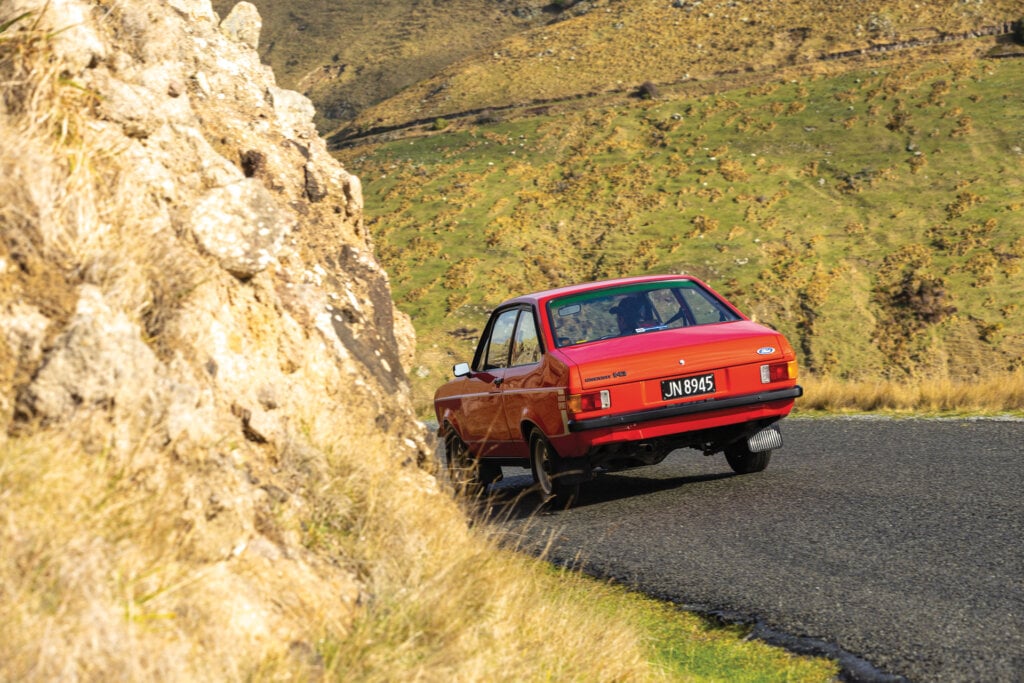
The Sport is one of those cars that feels lively even though you’re going slow. The steering, marvellously unassisted, has the usual sloppiness just off-centre, but it otherwise turns faithfully and lets you feel every bit of the road. Thanks to its mechanical layout, there’s a good sense of balance.
The Crossflow has plenty of period character, complete with flat spots and a wheezy top end, but it pulls well through the mid-range when given the beans. The four-speed has an honest shift action, although we wouldn’t put too much faith in the stoppers.
This Escort was among the last of them. By 1980, the model’s run had come to an end. Front-wheel drive had become the preferred layout for small cars because of its space efficiency. Hatchbacks were replacing traditional two- and four-door saloons, while Japanese manufacturers were setting new standards for equipment, efficiency and reliability.
The final locally assembled Escorts were built in 1980, before the Mazda-derived, front-wheel-drive Laser arrived in 1981.
That was also what made the final 1600 Sports special. They represented the last year of New Zealand’s traditional Escort: compact, mechanically straightforward and driven through the rear wheels.
Escort Sport Cup – NZ’s first one-make series
The Ford Escort Sport Cup is regarded as New Zealand’s first official manufacturer-backed one-make championship. It was contested over three seasons from 1979 to 1981.
The Ford-backed series was pitched to the Motorsport Association of New Zealand, which supported the concept. It fitted neatly alongside the Formula Ford championship during the summer season.
The cars featured very few modifications over the showroom Sport, with no suspension modifications, brake upgrades or even racing harnesses.
Though relatively slow, they were evenly matched, encouraging close and physical competition. Rounds were held nationwide at Pukekohe, Bay Park, Taupō, Manfeild, Teretonga, Timaru and Ruapuna.
Notable names from the series included Kevin McNamara, Kent Baigent, John Armstrong, Steve Emson, Graeme Bowkett, Phillip Myhre, Kirk Stoneman, Mark Rutherford and rally champion Jim Donald.
‘Racing’ Ray Williams won the inaugural championship, John Armstrong claimed the second title in 1980, and Alan Milligan followed in 1981. Once Escort production ceased, Ford continued the one-make racing concept with the Laser Sport.