View all
5 more images
1931 Ford Model A Review
Words: Kyle Cassidy | Photos: Alex Schultz
The Model A helped bring the Ford Motor Company up to date, replacing the Model T as its main offering. Despite being close to 100 years old, many are still going strong.
Arriving at the end of 1927 as the replacement for the Model T, the Model A dragged Ford into a more modern motoring age and became a familiar sight in New Zealand.
This was the second Ford model to wear the Model A badge; the first was the company’s original car from 1903. The version everybody remembers was developed after Model T sales began falling during the mid-1920s. Henry Ford had resisted replacing the car that put the world on wheels, but changing tastes and stronger competition eventually forced his hand.
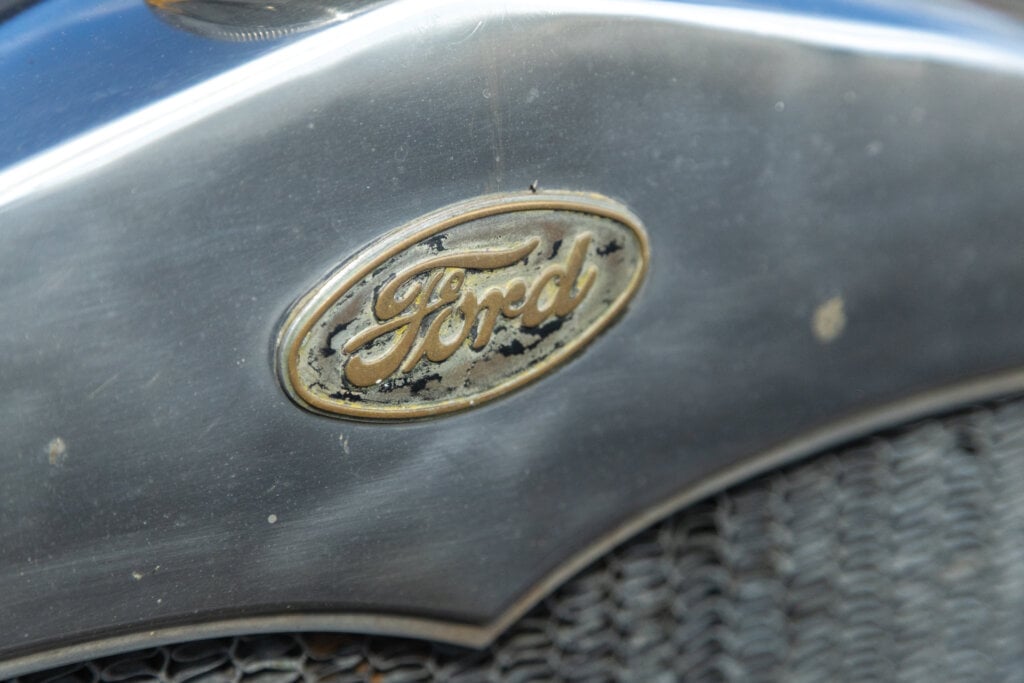
Ford stopped Model T production in 1927 and spent about six months retooling its factories. The new Model A was unveiled that December, with graceful proportions, a nickel-plated radiator shell and styling influenced by Ford’s upmarket Lincoln marque. Compared with the spindly Model T, it looked lower, smarter and more sophisticated.
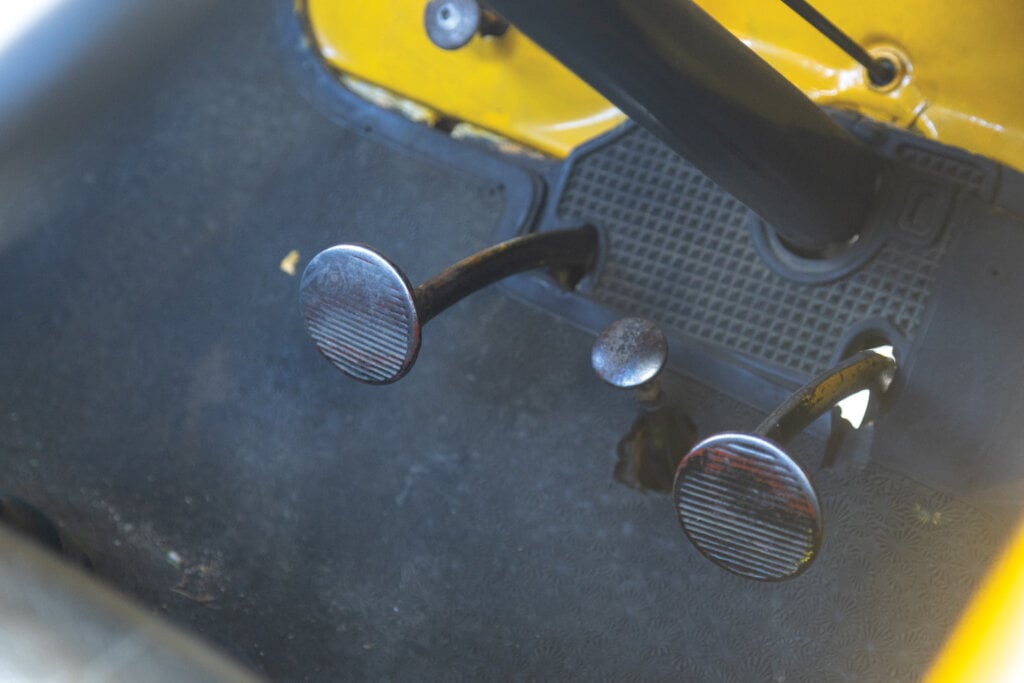
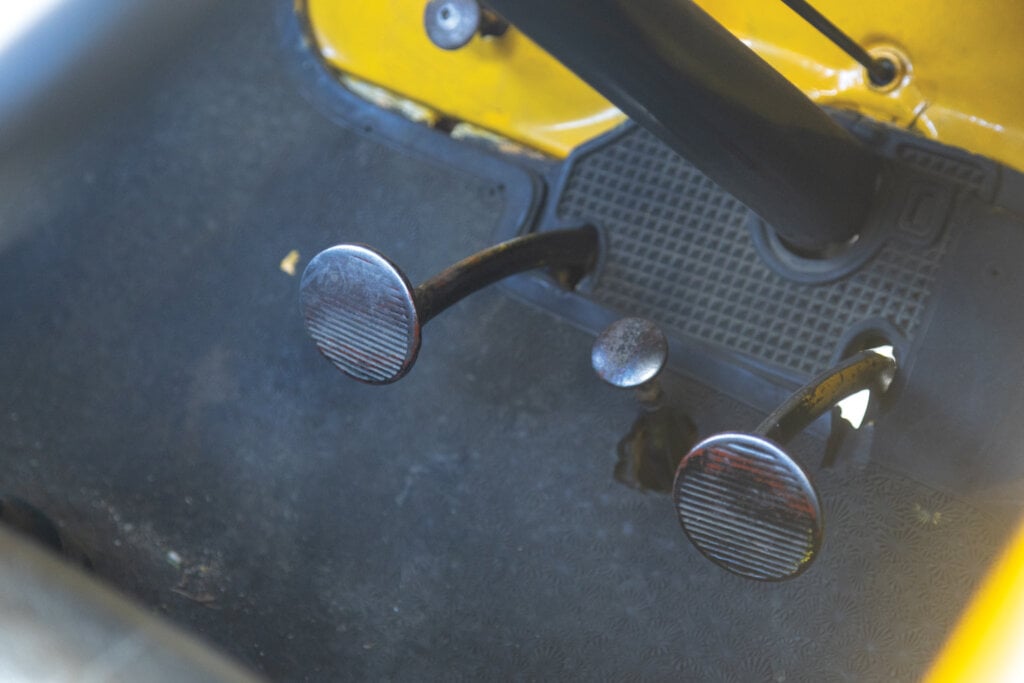
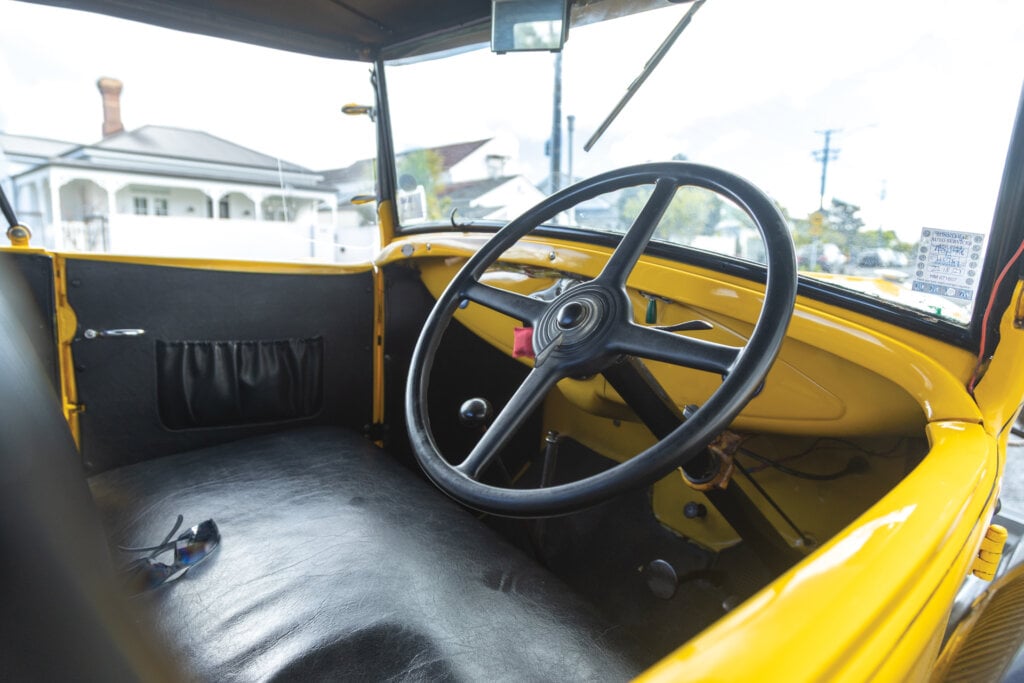
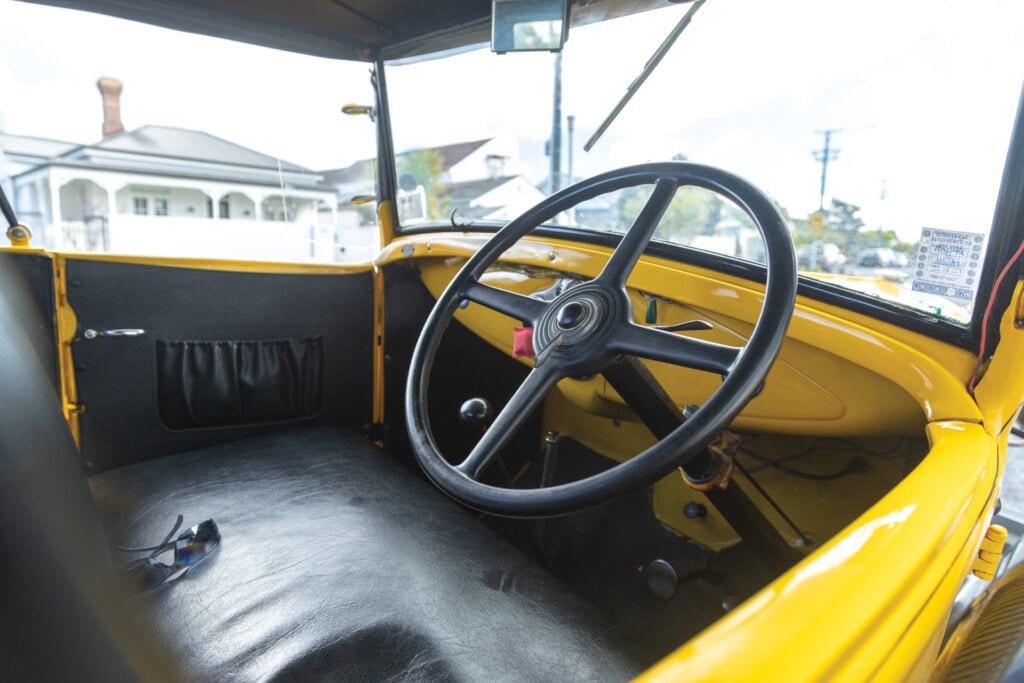
It was easier to drive, too. The Model A used the now-familiar arrangement of clutch, brake and accelerator pedals, together with a conventional gear lever. Well, at least the left-hand-drive versions did. That was an advance over the Model T’s unusual control layout, although the three-speed manual gearbox lacked synchromesh and demanded some skill.
Power came from a 3.3-litre side-valve four-cylinder engine developing 30kW at 2200rpm. Its useful low-speed pull suited the roads of the period. Top speed was around 100km/h, while four-wheel mechanical drum brakes provided some stopping power. A transverse leaf spring supported each solid axle, so ride and roadholding were very much products of their time.
Ford offered the Model A in an enormous variety of forms. Buyers could choose from roadsters, phaetons, coupes, Tudor and Fordor sedans, cabriolets, station wagons, pickups and commercial bodies. The related Model AA truck used stronger running gear for heavier work.
The Model A proved popular in New Zealand, too. Ford was already established here through the Colonial Motor Company, which held the local franchise from Ford of Canada. CMC had opened New Zealand’s first purpose-built vehicle assembly plant in Wellington in 1922, supported by smaller plants in Parnell and Timaru.
The nine-storey Wellington building operated vertically. Imported component packs entered near the top, then bodies and chassis moved down through the floors as engines, wheels, trim and locally sourced fittings were added. Completed vehicles emerged at ground level. It was an ingenious solution for a tight inner-city site.
Model A assembly began locally in 1928. Because the new car was more complex than its predecessor, much of the work involved final or minor assembly rather than manufacturing in the modern sense. Nevertheless, Model As sold in New Zealand were completed in Auckland, Wellington and Timaru, making them part of our early industrial history rather than simply imported cars.
They arrived at exactly the right moment. By 1929, New Zealand had more than 150,000 cars on its roads, equivalent to one for every 10 people. That ownership rate was second only to the United States and far ahead of Britain. Ford also had 82 agents around the country, giving the Model A a formidable sales and service network.
Its popularity is clear in the registration figures. Of the 15,067 new cars registered in New Zealand during 1930, 5,328 were Model A Fords. In other words, more than one in every three new cars entering the fleet was a Model A, an extraordinary share by modern standards.
The car’s price, durability and ability to cope with rough roads all worked in its favour. Much of New Zealand’s network remained unsealed, while rural owners needed vehicles that could tolerate mud, corrugations and limited servicing. Simple mechanicals and plentiful dealer support mattered more than refinement.
Globally, nearly five million Model As were sold over four model years before production ended. Its replacement arrived for 1932, when Ford introduced the four-cylinder Model B and V8-powered Model 18.
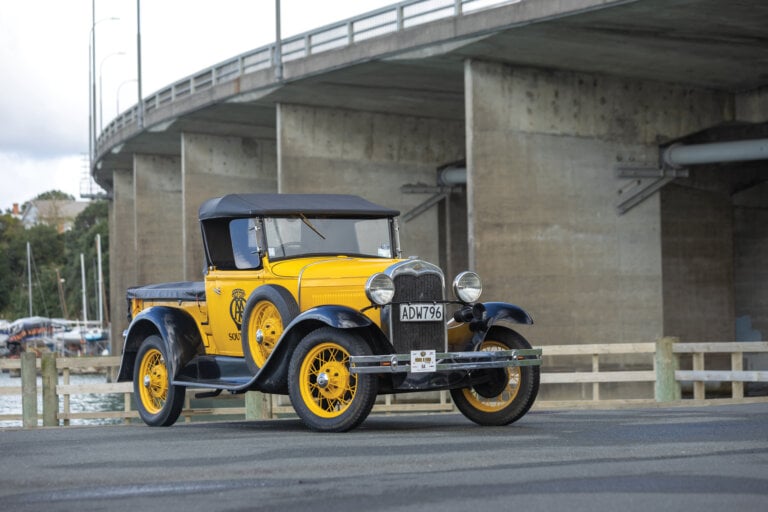
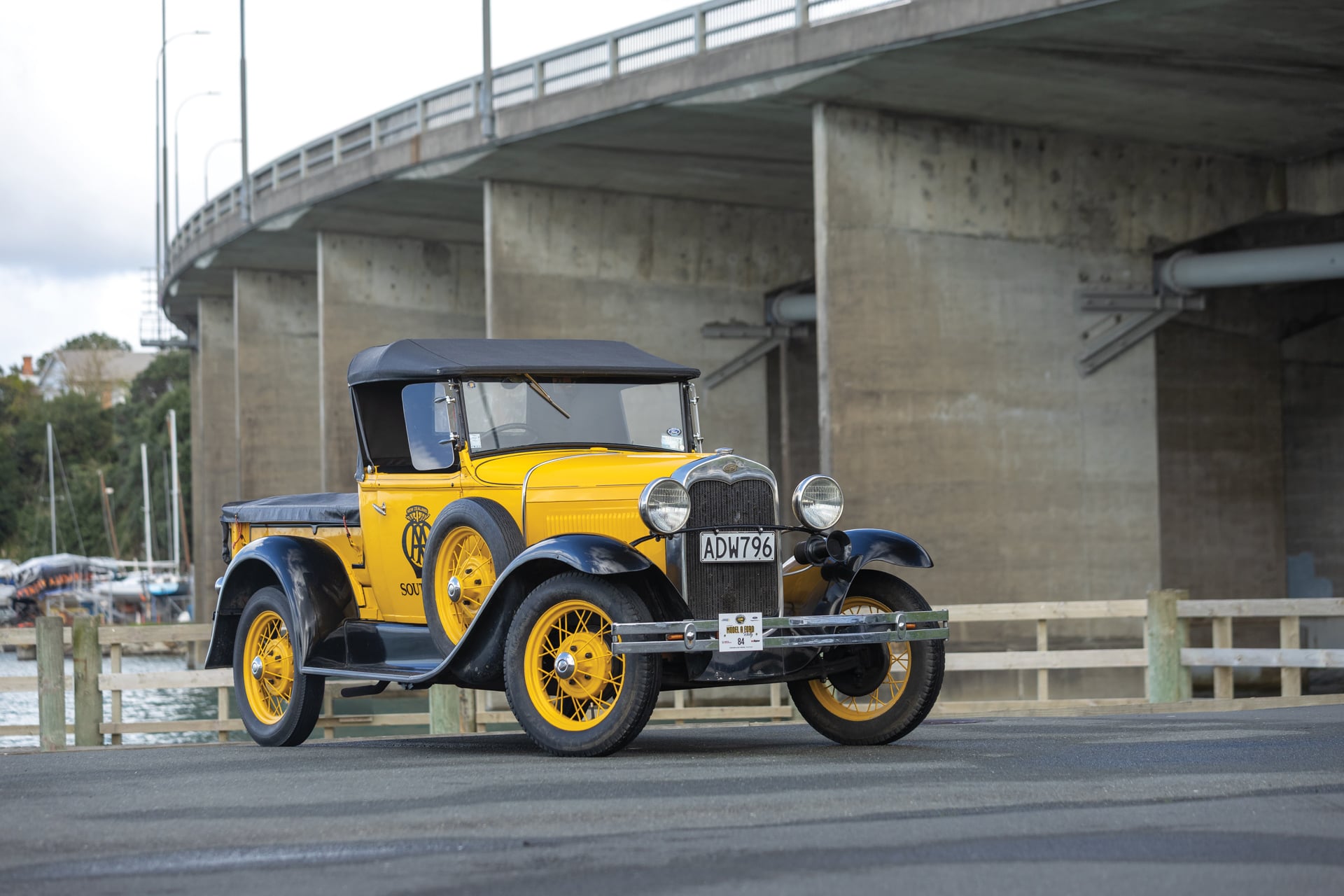
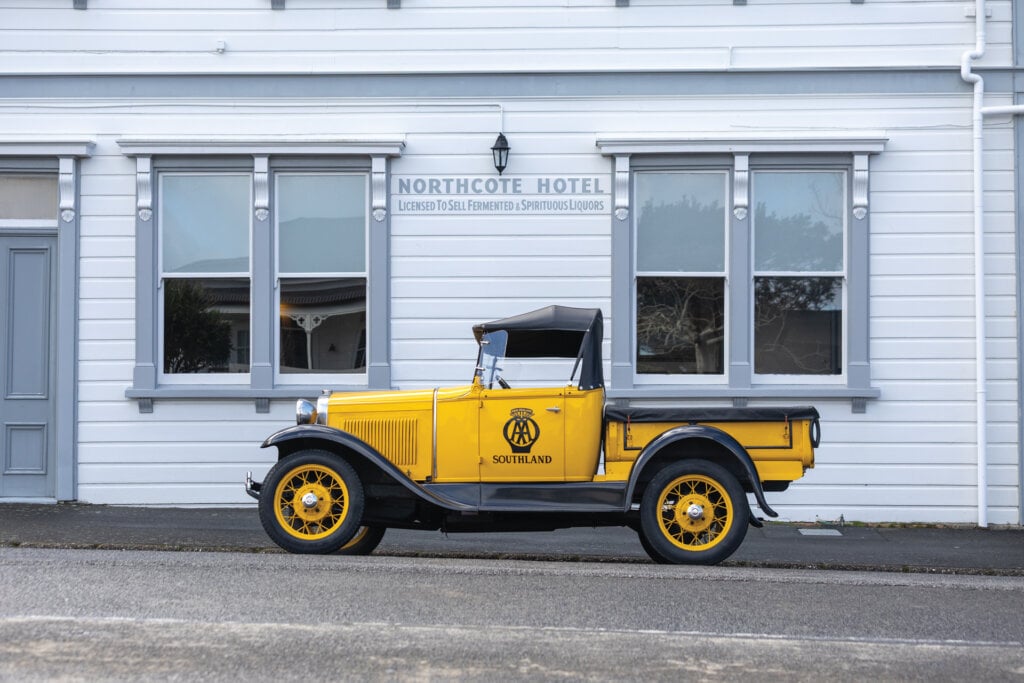
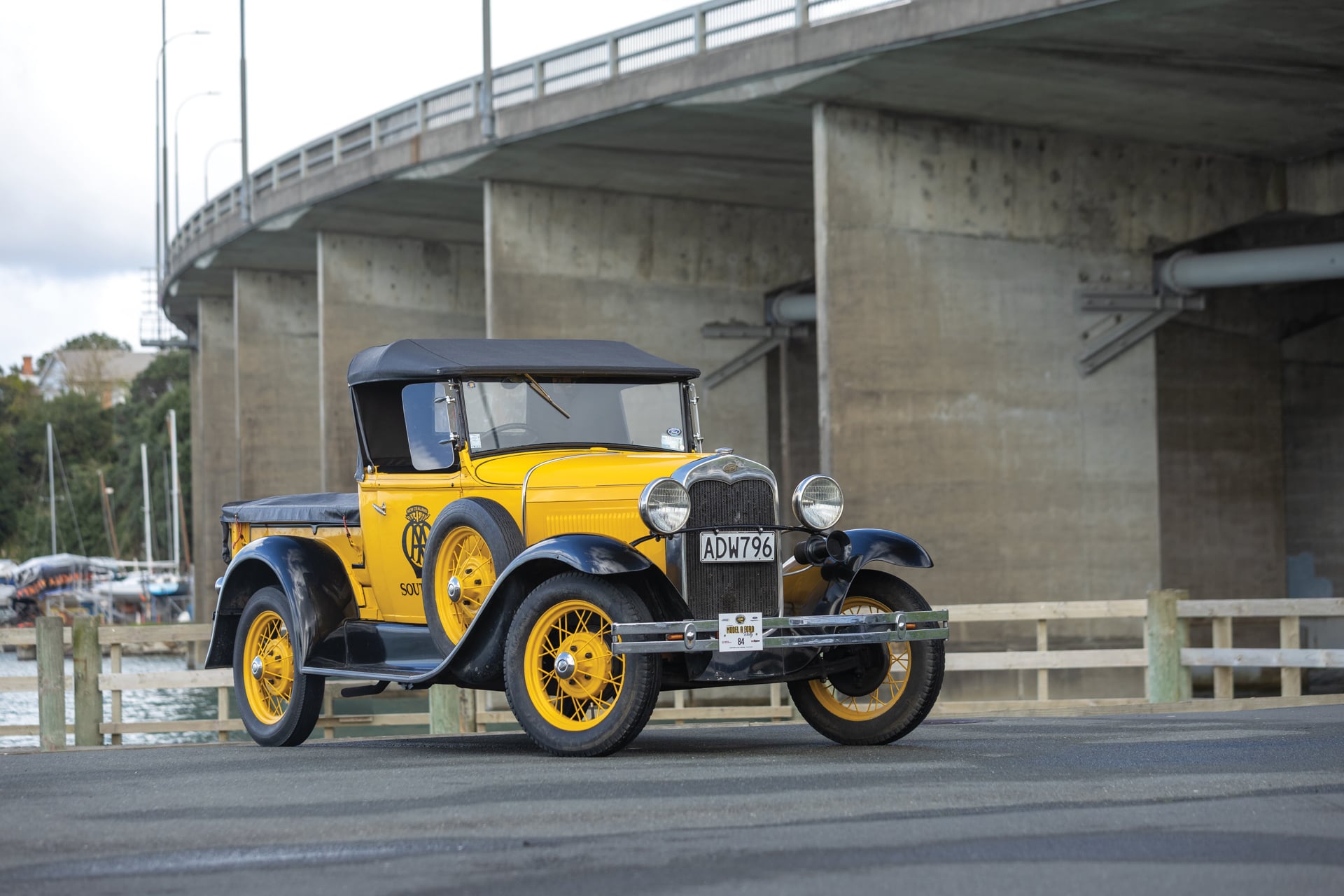
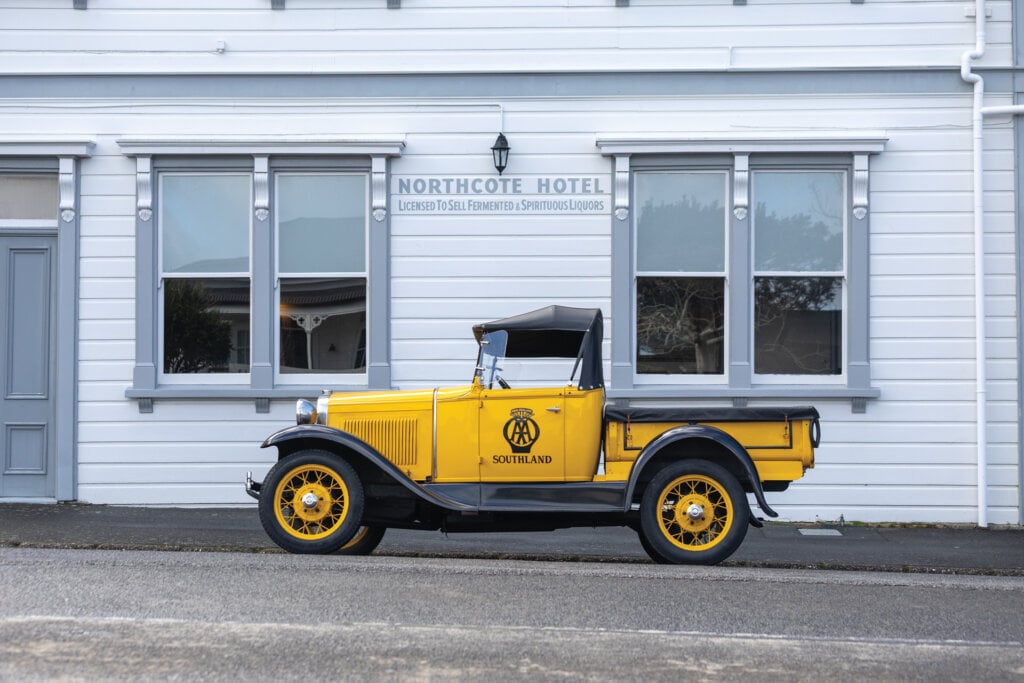
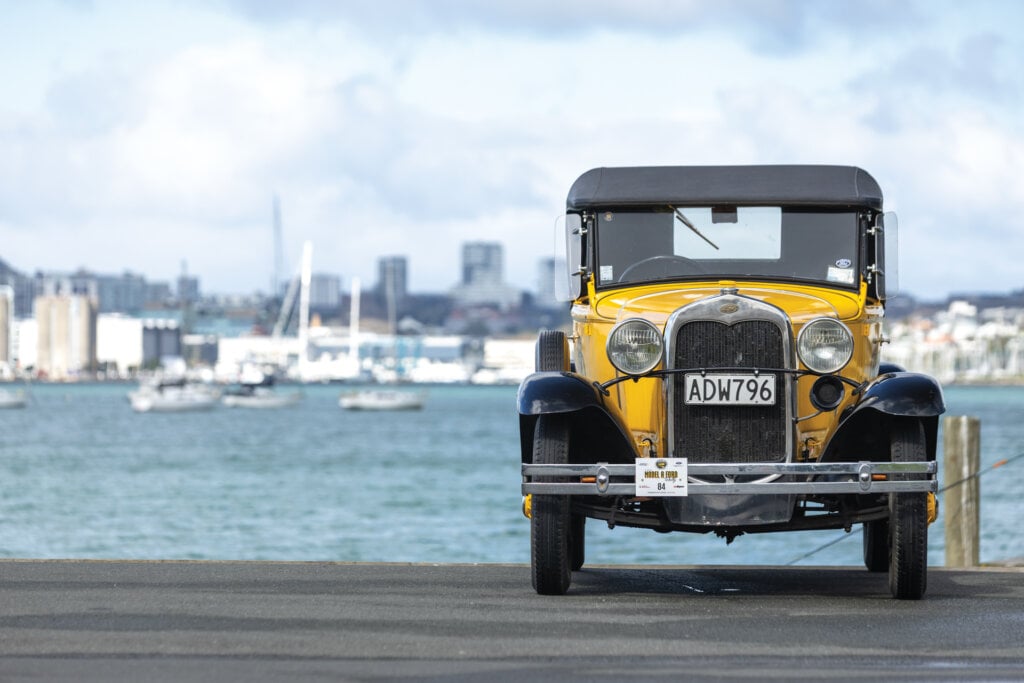
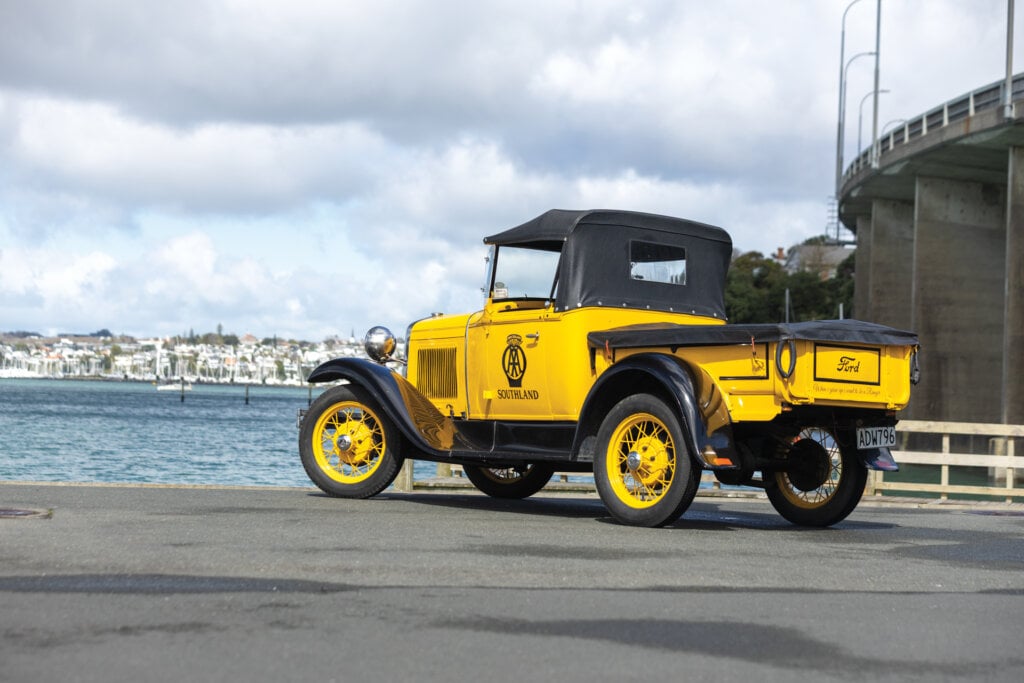
Stephen Upson’s bright yellow 1931 Ford Model A pickup has a history almost as distinctive as its colour. Upson has owned the Ford since 2022, but its previous owner was responsible for restoring it. The pickup was originally refinished in a traditional Ford green before a promotional opportunity prompted a change.
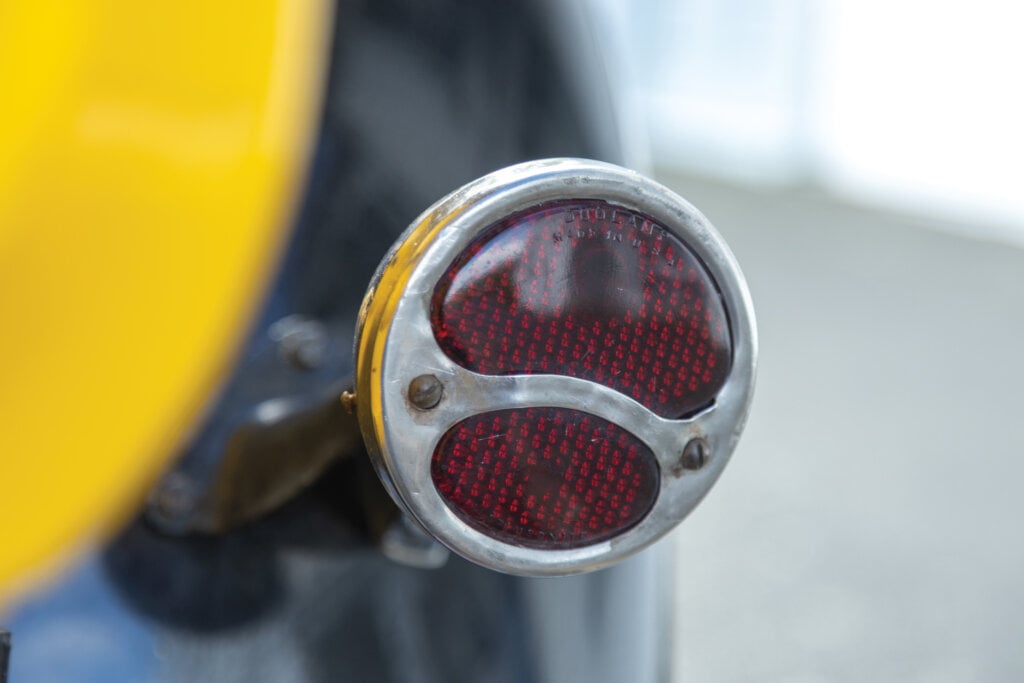
“The AA was looking for a vehicle for its 100-year promotion. They approached the owner of this one and said, look, we’ll paint it yellow and do our promotion and then paint it back green. But then, when the owner saw it, he said no, we’ll leave it like that.”
The decision certainly makes the Ford difficult to miss. The right-hand-drive pickup was built in Canada and sold new in New Zealand.
The yellow pickup is not the only Model A in Stephen’s garage. In fact, he has assembled an example from each of the four years the model was sold in New Zealand.
“I’ve got four of them. Three that go, and one under restoration. That’s a 1928 four-door leatherback. It’s the oldest of its body style in New Zealand.
“The others include a 1929 Phaeton, which is a four-door soft top, and a 1930 four-door sedan, which I completely rebuilt. And that’s been on the road since 2000.
“So I’ve got a 28, a 29, a 30, and a 31, the four years that they were sold in New Zealand.”
His interest in the Model A began through a combination of his mechanical background and a visit to one of the country’s best-known classic-car events.
“As a mechanic, I always had an interest in old cars. Dad and I went to the Ellerslie car show, and he met an old work colleague of his there who had a Model A. And next thing you know, we’re out looking for vintage cars.”
The pair considered several alternatives before settling on Ford’s replacement for the Model T. One of the Model A’s biggest attractions was the availability of replacement components.
“We looked at a few different types of cars, and then we came up with a Model A. You can buy anything you want for Model A Ford,” he says, which helps when completing a restoration.
Everything was a bit slower back in the thirties. No one was in a rush to get anywhere, but the Model A was faster than a horse.
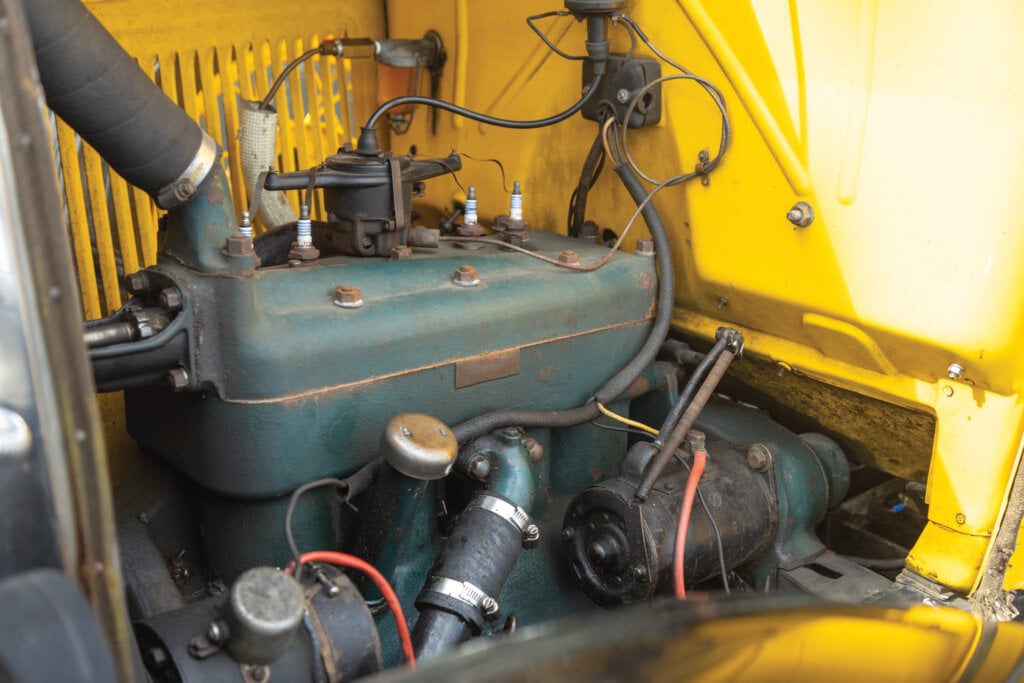
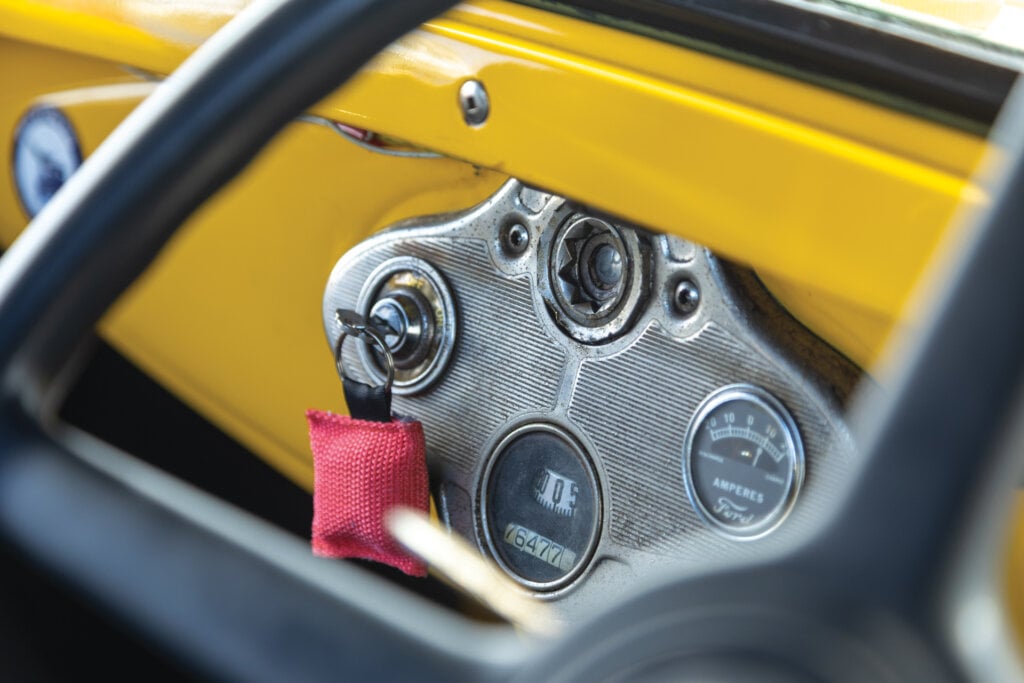
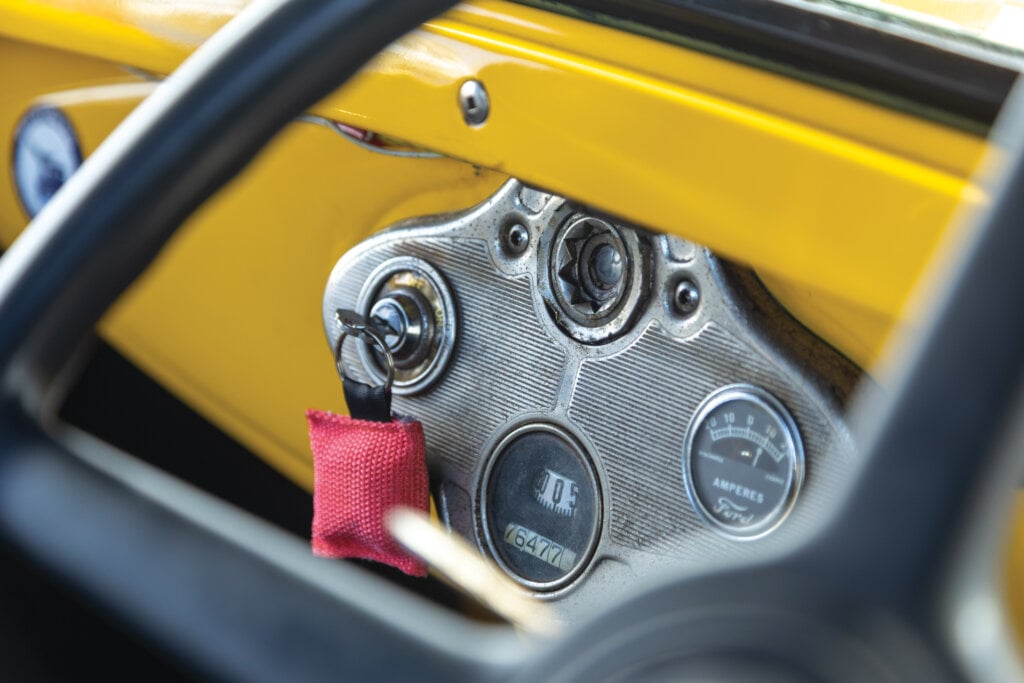
Under the bonnet, the pickup is still powered by its original engine. It is a straightforward mechanical package, although some of its controls may seem unusual to anyone raised on modern vehicles.
“It’s a side valve four-cylinder with a three-speed gearbox. The accelerator pedal’s between the clutch and the brake pedal. That’s because of the design of where the pedals pitch off the gearbox for the right hand drive models.”
Stephen says the engines are robust and will happily chug away. Driving one, however, requires an entirely different mindset.
Asked whether the Model A is easy to drive, his answer is immediate.
“No, no, no. You’ve got to watch and anticipate everybody else on the road. I don’t stop as quick as they do and the car doesn’t react like a modern car. Everything was a bit slower back in the thirties. No one was in a rush to get anywhere, but the Model A was faster than a horse.”
Although the Model A is approaching its centenary, it continues to enjoy a substantial following in New Zealand.
Stephen estimates there’s probably over a thousand Model As around New Zealand. “There might be twice that in bits in the shed.
“When we have a national rally, we get about 150 cars turn out.”
Keeping these cars on the road takes commitment, particularly when a restoration involves a body containing substantial amounts of timber.
“It’s a bit of a process. It’s costing a lot of money as there is a lot of wood involved in the body. I’ve got a specialist that’s helping me do that; he’s a pattern maker. So he’s extremely skilled in doing that. And the things he comes up with.
“Once it’s back, I’ll be putting all the mechanicals together. But it’s still another couple of years away from being on the road. Time is not on my side on that one.”
Putting a price on a Model A is not easy. Condition, body style and the quality of any restoration can make a substantial difference.
“It’s what someone’s prepared to pay for it. Around the $30,000, the $35,000 is what Model As are going for now. There is a very nice truck asking $75,000 at the moment. But it’s what someone’s prepared to pay for at the end of the day.”
The larger concern for Model A clubs is attracting younger enthusiasts.
“It’s harder for clubs like ours to get young members. You’ve got to have a bit of money to have a car. You need to know how to maintain them. They are quite simple, yet it’s beyond some of the modern mechanics around because it’s so old.
“You’ve got to garage them. If you don’t, they’ll deteriorate quickly.”
Financially, a thorough restoration rarely makes sense when compared with the vehicle’s finished value. But for Stephen, that misses the point.
“But I think the one I’m building is going to cost me a lot more than $30,000. That’s probably three times that, to be quite honest. It’s a passion. You’ve got to spend your time and money on something, right? We’ll get a lot of enjoyment out of that car.”