
View all
3 more images
Watch: Dongfeng 007 first drive: Licence to thrill?
Richard Edwards
The name’s 007. Dongfeng 007. And while there’s been no cease-and-desist from the Bond franchise just yet, this Chinese electric sedan does share at least one trait with its fictional namesake: it arrives with an arsenal that seems wildly disproportionate to what you’re paying for it.
A large electric sedan with 540km of WLTP range for $54,990, or a 400kW all-wheel-drive performance version that cracks 100km/h in 3.9 seconds for $59,990. Those numbers put it in the same conversation as the Tesla Model 3 and BYD Seal, but for meaningfully less money. “How are they doing this?” was the question rattling around the cabin on our first drive. We still don’t have a good answer. Perhaps the only car on the New Zealand market that comes close on the bang-for-buck equation is the Leapmotor C10 AWD at $64,990, which offers 440kW and a 4.0 second sprint in an SUV body. That’s also an Armstrong’s product, incidentally, which says something about where the distributor is positioning itself in the market.
The 007 is Dongfeng’s hero car in New Zealand, the one Armstrong’s Distribution is counting on to shift perceptions of the brand beyond budget motoring. It’s known as the eπ 007 in China, where it holds a five-star C-NCAP crash test rating with a 93.78 percent occupant protection score. In New Zealand it carries a five-star VSRR, though it hasn’t been tested by ANCAP or Euro NCAP.
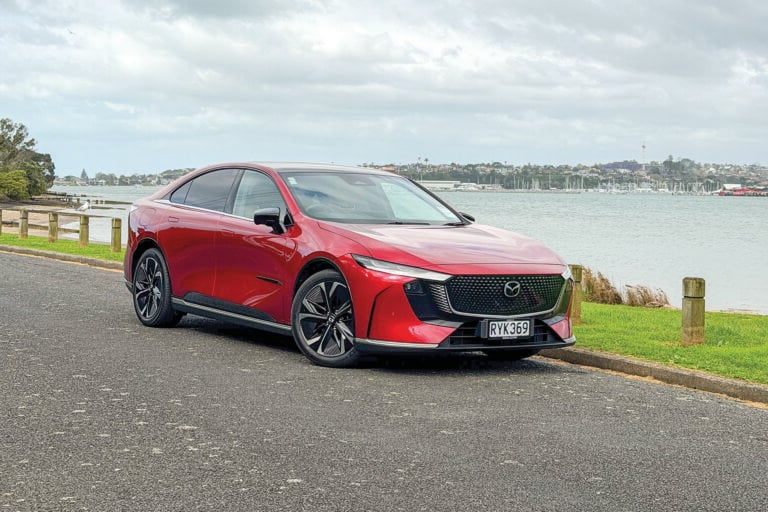
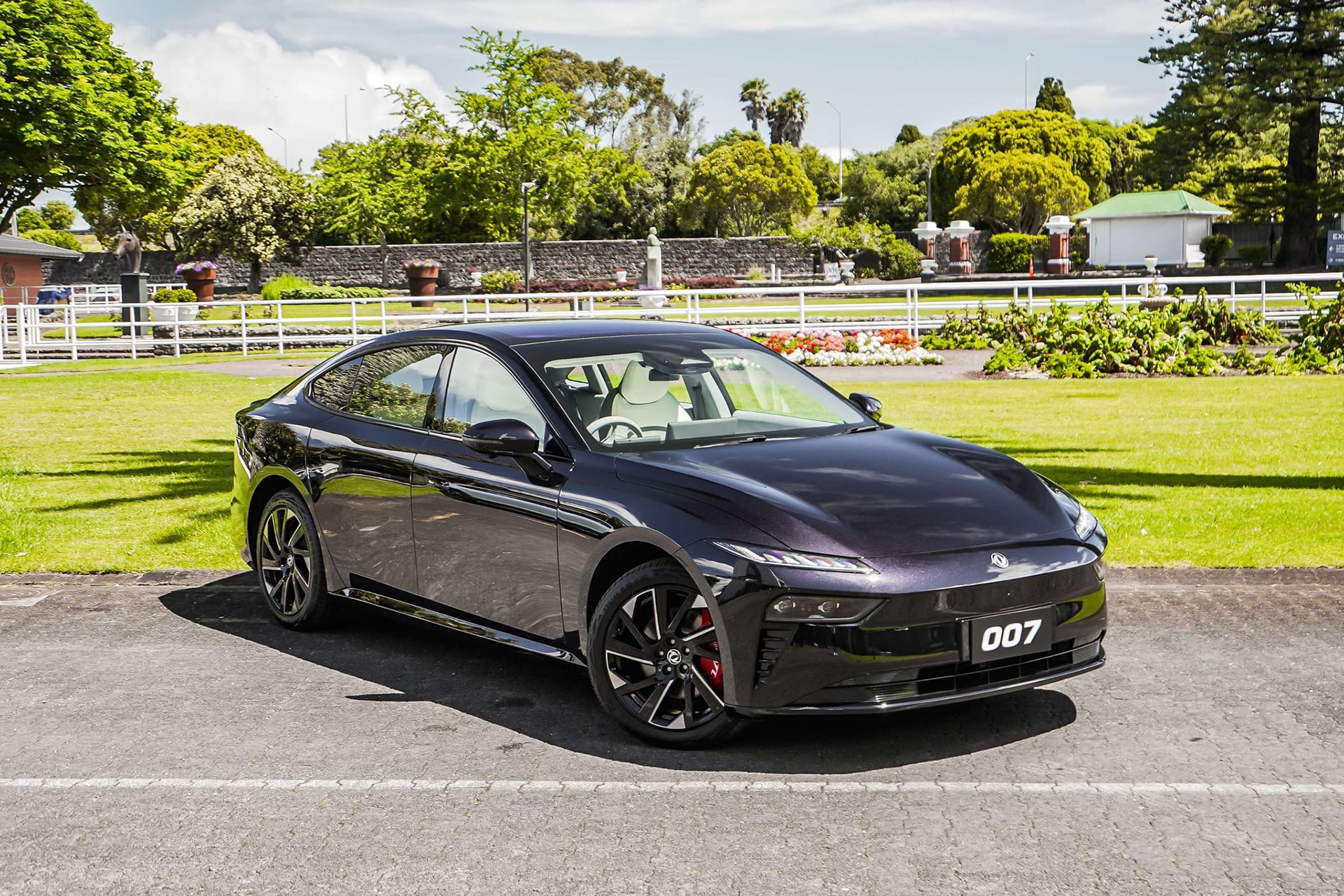
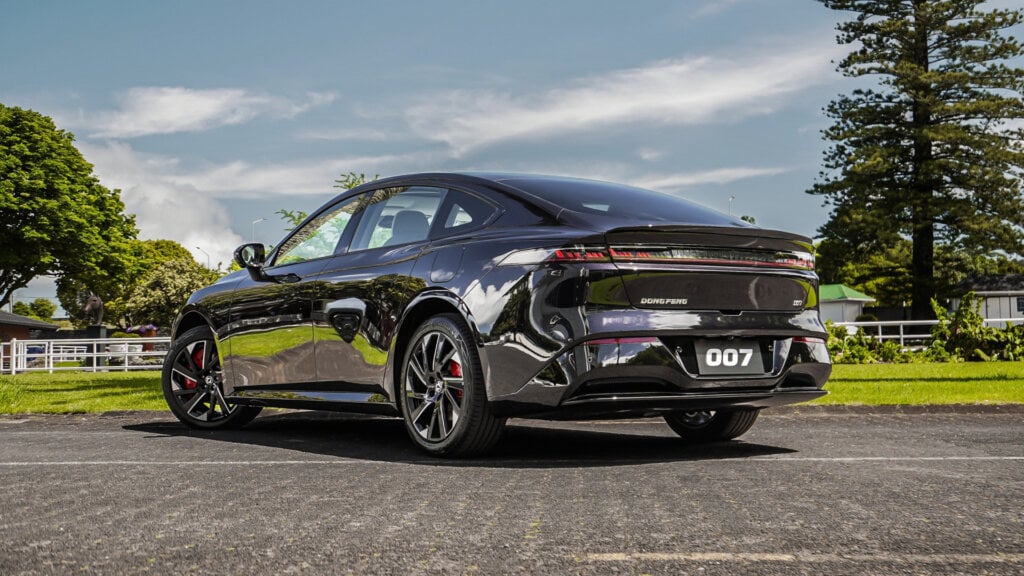
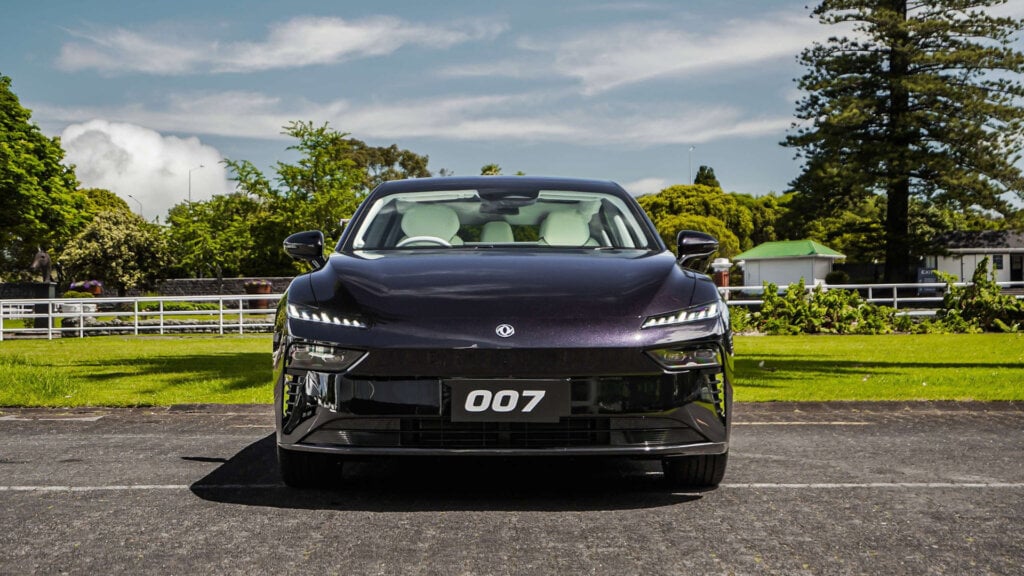
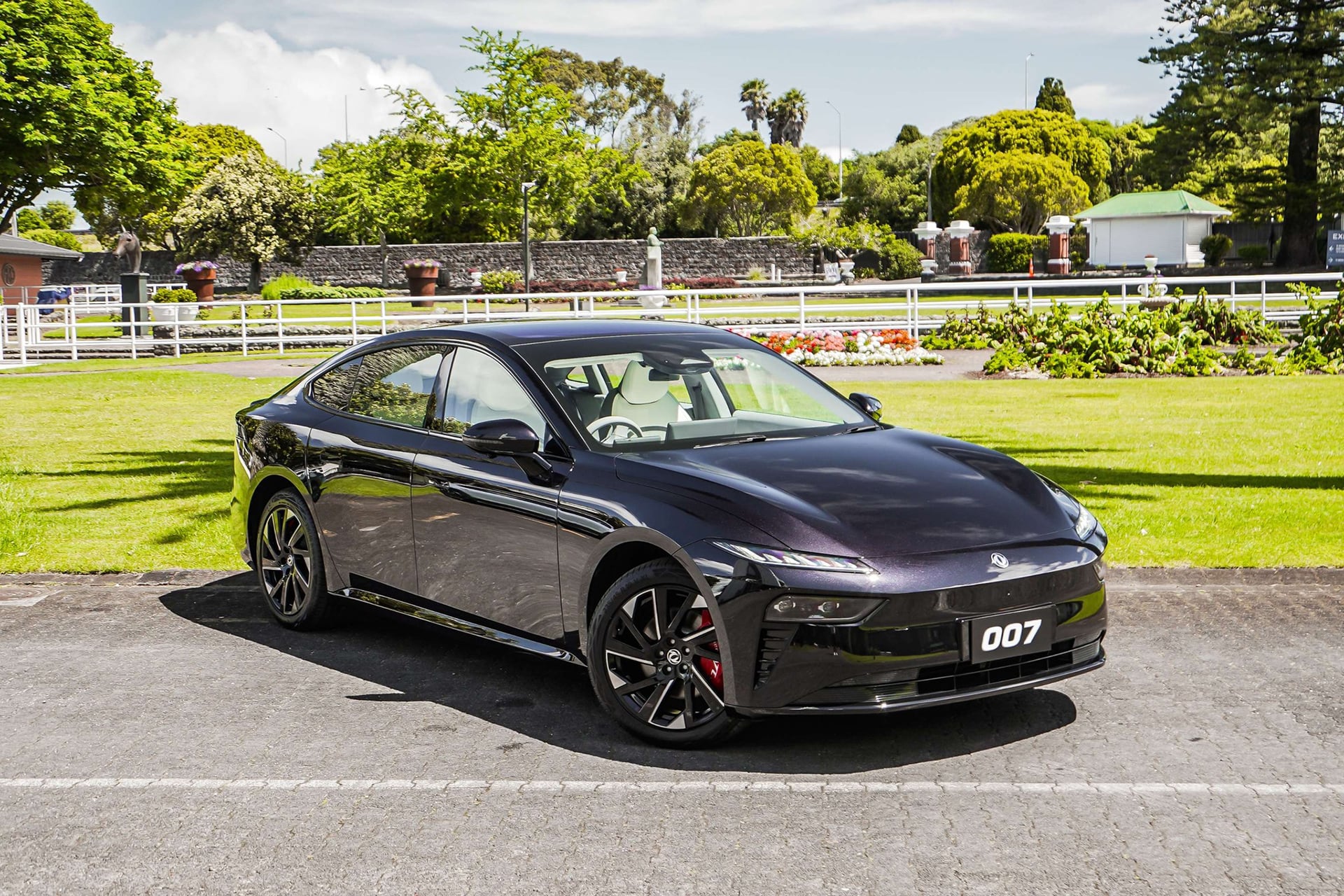
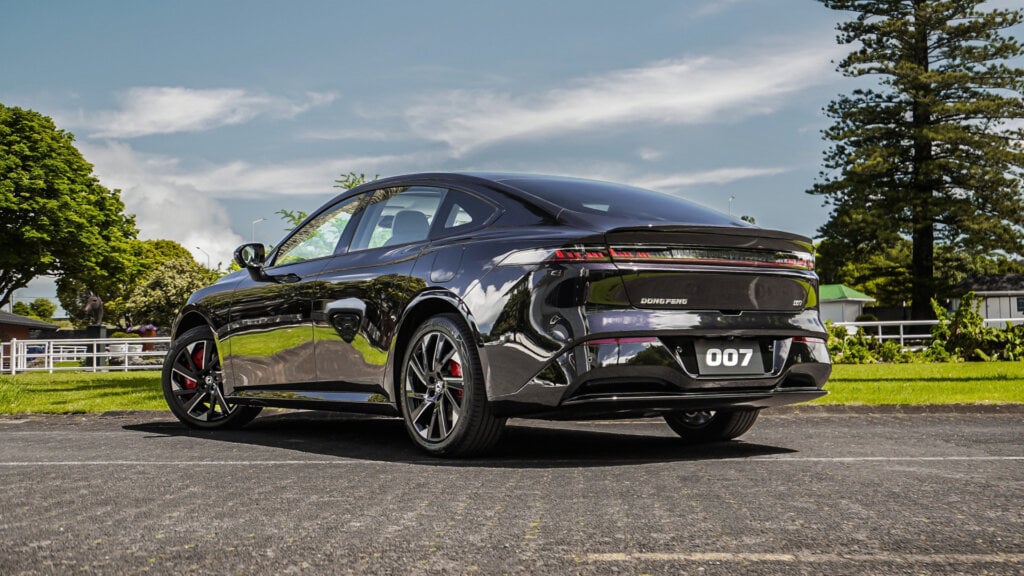
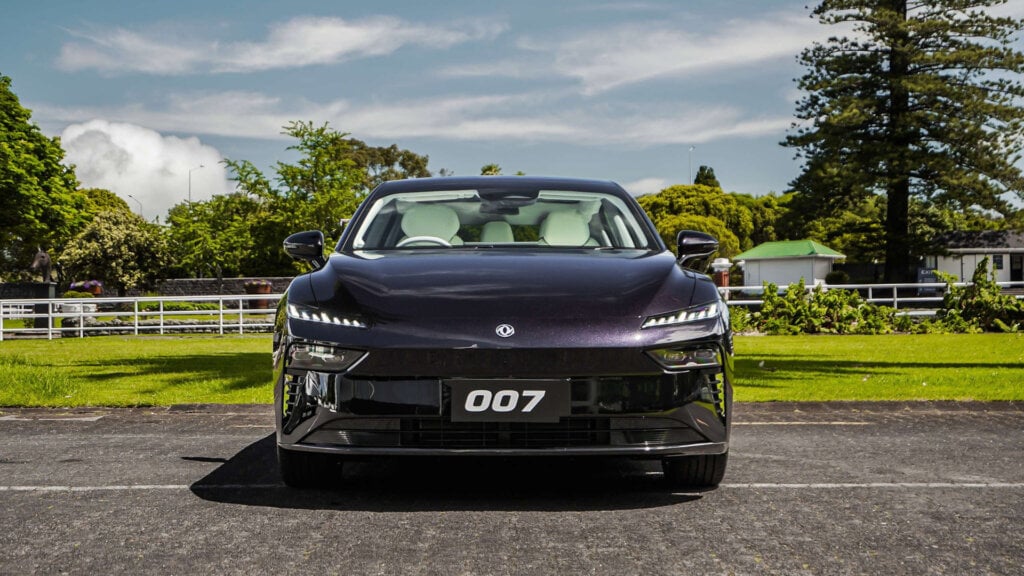
Built on Dongfeng’s Quantum Architecture 3, the 007 measures 4880mm long, 1895mm wide and 1460mm tall on a 2915mm wheelbase. It’s a big car, roughly Toyota Camry territory in footprint, though the low, fastback silhouette disguises the size well. Dongfeng claims a drag coefficient of just 0.209, which it says makes the 007 the most aerodynamic car on the New Zealand market. Active aero shutters in the grille, frameless doors, mechanically hidden door handles and a carefully shaped underbody all contribute.
Both variants share a 70.26kWh lithium iron phosphate battery. The Long Range rear-wheel-drive model produces 200kW and 320Nm, with a claimed 0-100km/h of 5.8 seconds and 540km WLTP range. The Performance all-wheel-drive doubles the output to 400kW and 640Nm, dropping the sprint to 3.9 seconds but reducing range to 395km. Both charge from 30 to 80 percent in 26 minutes.
On the road
Our drive time was limited, a handful of laps around Hampton Downs and a short blast on surrounding roads, but the 007 made an immediate impression.
We drove the Long Range rear-wheel-drive model first, and the chassis is the standout. It’s firm without being punishing, flat through corners, and more composed than you’d expect from a car at this price. The MacPherson front and multi-link rear suspension does a genuinely impressive job of keeping the body controlled over uneven surfaces without crashing into bumps. For a large sedan on a relatively short test loop, it felt mature and well sorted.
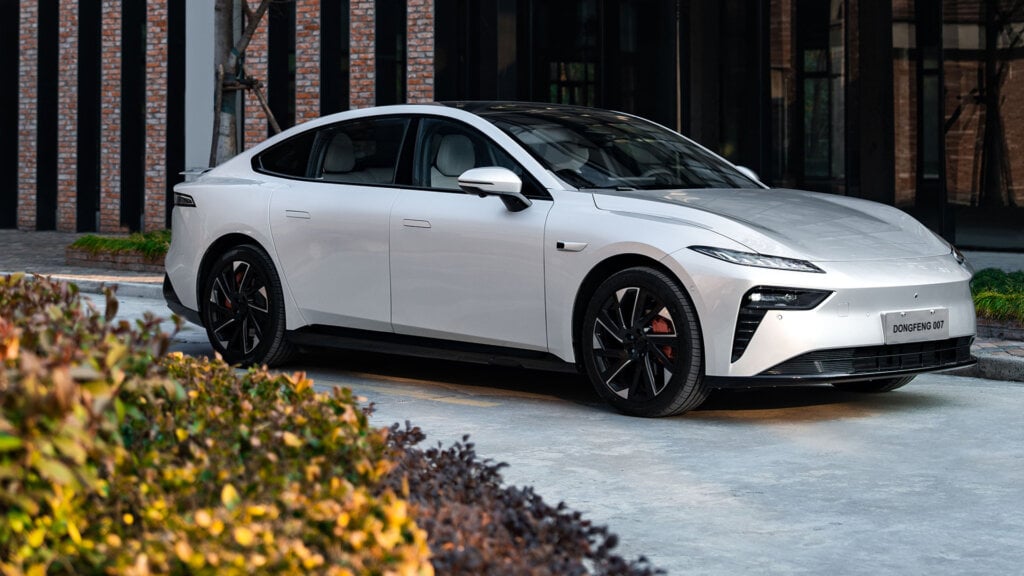
The steering is nicely weighted, though there’s a sense that the heft is artificially dialled in rather than coming from genuine feedback through the front wheels. It’s a common trait in electric sedans at this level, and it’s not a deal-breaker, but keen drivers will notice the difference between this and something like an MG4 that communicates more naturally.
We didn’t get extended time in the Performance. With 400kW and all-wheel drive, the straight-line performance is genuinely startling for the price. Sub-four seconds to 100km/h puts it in territory that would have cost six figures from any established brand just a few years ago.
Inside the 007
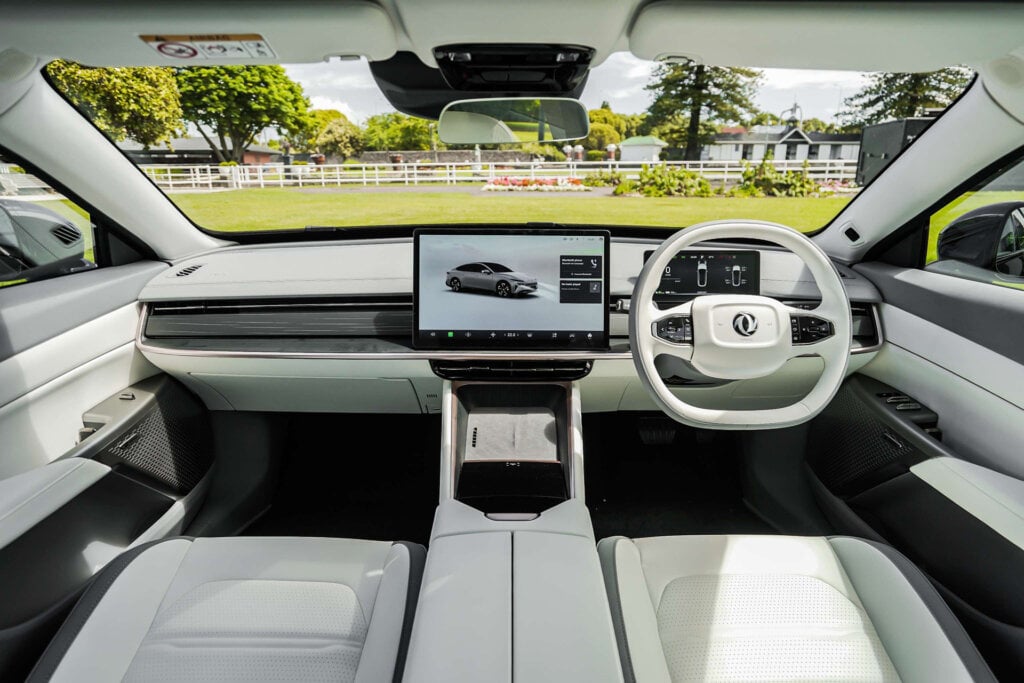
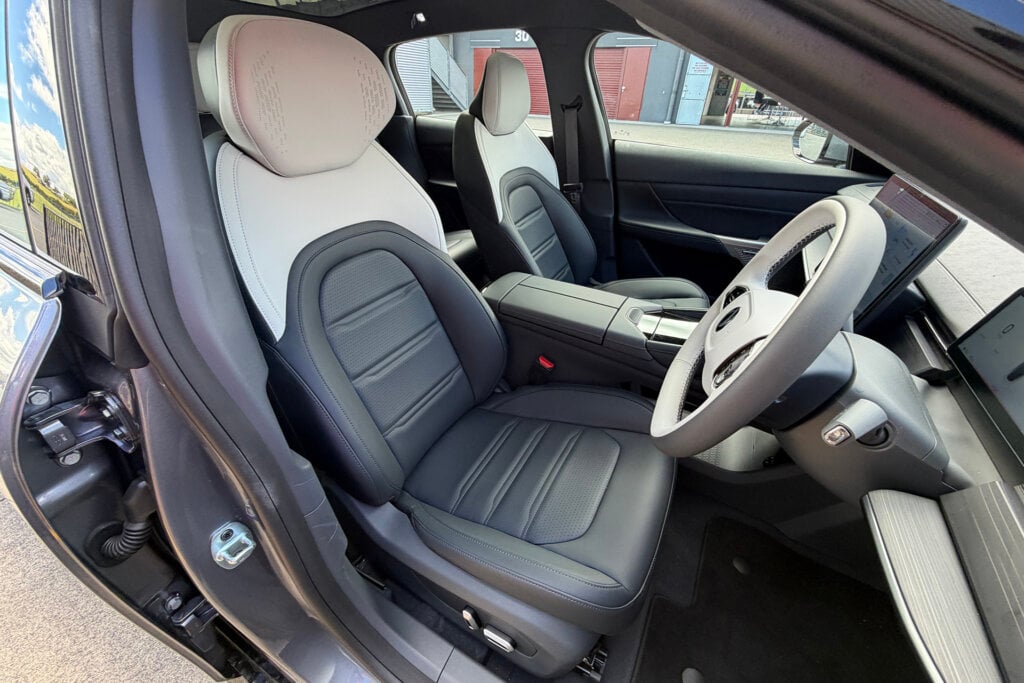
The 007’s interior pitches at premium. A 15.6-inch central touchscreen dominates the dash, paired with an 8.8-inch driver display and a squared-off steering wheel with touch-sensitive buttons. The graphics aren’t the sharpest we’ve seen, feeling a touch low-resolution and slightly dull compared to the best in class, but the system moves quickly enough and the layout is intuitive.
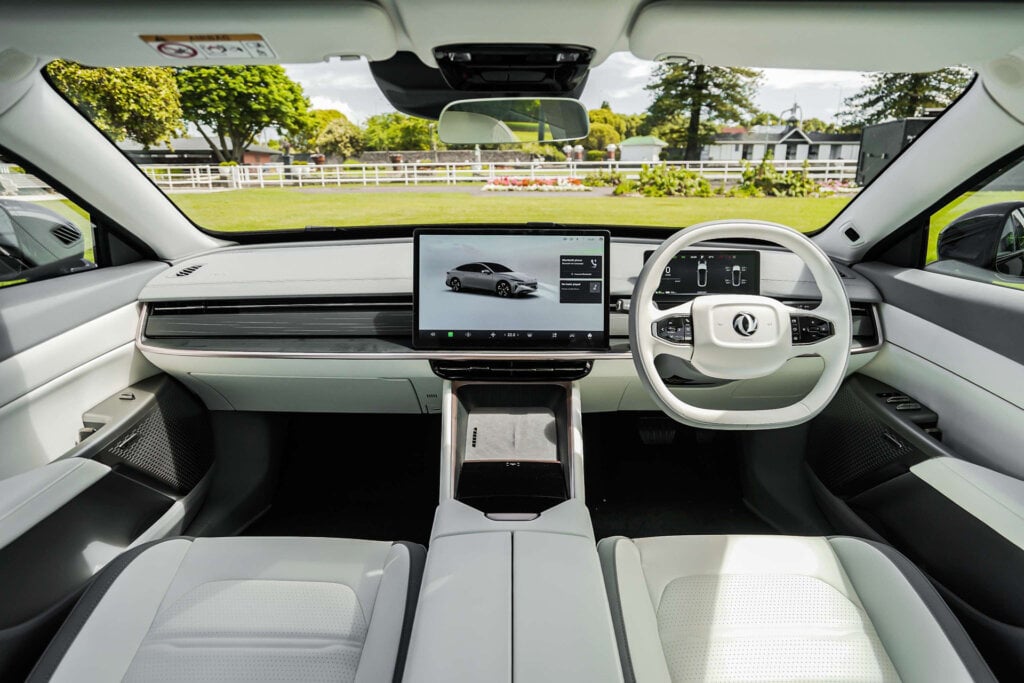
The driving position is a highlight. The seat is comfortable with good back support, though it could do with a bit more under-thigh extension. Both cars get heated and ventilated front seats as standard, which is a nice touch.
Standard equipment across both models includes a 1.84 square metre panoramic glass roof, 19-inch alloy wheels with Continental tyres (a welcome step up from the Vigo’s Wanlis), frameless doors, an electric tailgate, wireless Apple CarPlay, wireless charging and a 19-speaker WANOS panoramic sound system.
As with the Vigo, Android Auto requires an additional purchase. The same criticism applies: it should be standard in 2026.
Power delivery in the rear-drive car is smooth and progressive. It’s not the kind of car that pins you to the seat, but 200kW through the rear wheels provides brisk, confident acceleration. In sport mode there’s a noticeable sharpening of the throttle response.
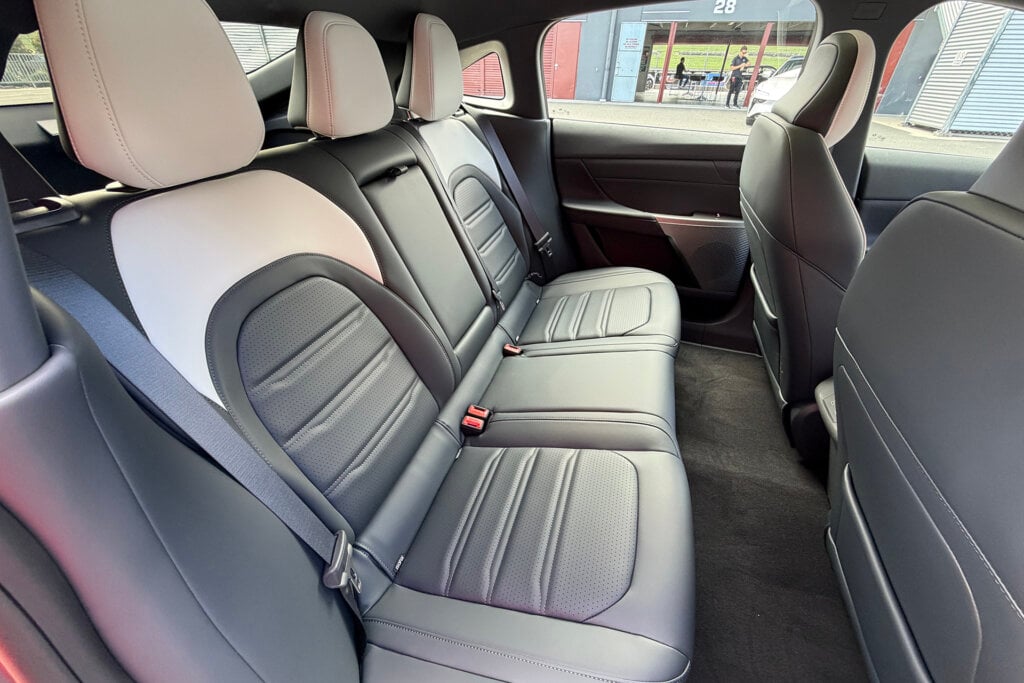
The rear seat offers decent legroom for a sedan of this size, though headroom is tighter thanks to the sloping roofline. There are no rear grab handles, which seems like an odd omission, and there are no rear climate controls, just a single vent. You do get USB-C and USB-A ports and a centre armrest with cup holders. The interior comes in dark grey and black for the Long Range, or white and grey for the Performance, the latter also being the only variant available in the exclusive Orchid Purple exterior.
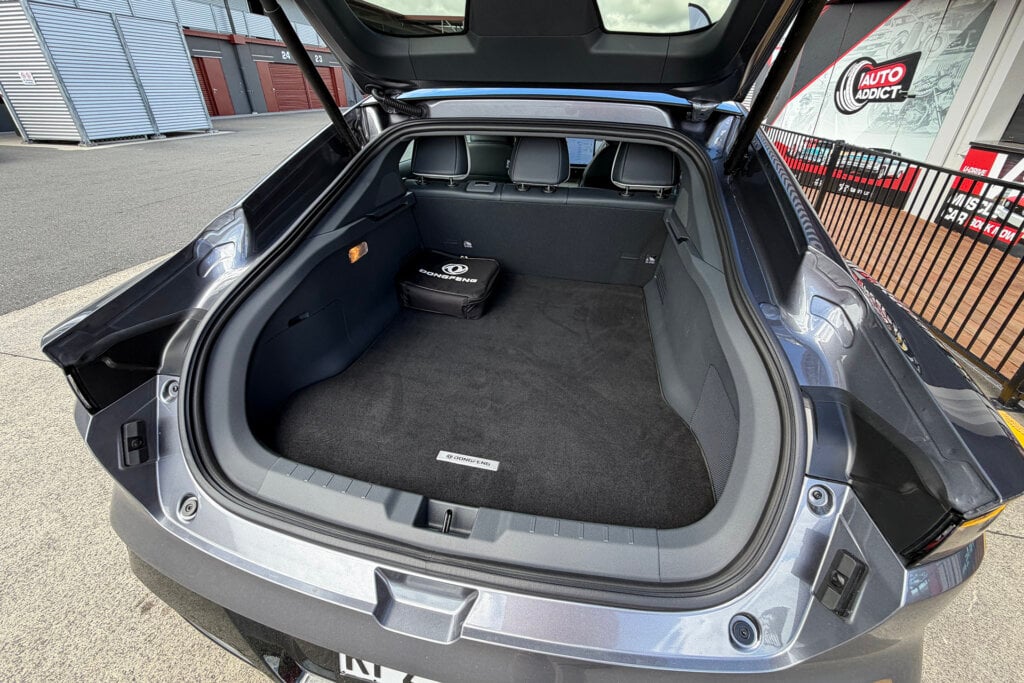
Boot space is generous for a fastback, with over 450 litres and a large underfloor tub. There’s also a small frunk under the bonnet, though its usefulness is limited by the release being on the passenger side and inboard.
One notable difference between the two models: the Performance gets a distraction and fatigue monitoring camera as standard. The Long Range does not. In our drive of the rear-wheel-drive car, we couldn’t spot a driver-facing camera anywhere, which, like the Vigo, will be either a relief or a concern depending on your perspective.
Safety equipment across both includes six airbags (two front, two side, two curtain), AEB covering pedestrians, cyclists and vehicles, adaptive cruise control with intelligent switching between traffic jam and highway driving modes, blind spot monitoring, rear cross-traffic alert with braking, intelligent door opening warning, a 540-degree surround-view camera and a built-in dash cam. For context, the BYD Seal offers nine airbags including rear side bags, while the Tesla Model 3 and the 007 share a similar rear airbag layout.
Value and verdict
The 007 Long Range at $54,990 offers 540km of WLTP range, 200kW, a comprehensive safety suite and a level of standard equipment that would look generous on cars costing $20,000 more. The Performance at $59,990 doubles the power and adds all-wheel drive and a sub-four-second sprint for just $5,000 more, making it arguably the performance EV bargain of 2026.
Direct rivals include the Tesla Model 3 (from $63,900 for the base rear-drive) and the BYD Seal (from $58,990 for the Dynamic). The 007 Long Range matches or exceeds both on range and undercuts the Tesla on price while offering a substantially richer standard specification. The Performance model, meanwhile, sits thousands below anything else offering comparable straight-line speed.
Armstrong’s says it sees potential in buyers who are simply tired of SUVs and want a sedan again. Armstrong’s Distribution’s Simon Rutherford mentioned a customer who currently drove a Holden Commodore and had nothing to replace it with. The 007 might not be the spiritual successor to a Commodore, but at this price, in this segment, there’s very little else to choose from.
This is a first impression, not a verdict. We need more time on real roads, in real traffic, over real distances to know whether the 007 delivers on its extraordinary value promise day to day. But on this short acquaintance, the 007 might just have a licence to thrill after all.
Dongfeng 007 Long Range NZ Specification
Price: $54,990 +ORC
Powertrain: Single electric motor, RWD, 200kW/320Nm
Battery: 70.26kWh
Range: 540km (WLTP)
DC charging: 30–80% in 26 minutes
0-100km/h: 5.8 seconds
Cd: 0.209
Warranty: 6-year/200,000km vehicle; 8-year/200,000km battery
Service interval: 1 year/10,000km
Dongfeng 007 Performance specification
Price: $59,990 +ORC
Powertrain: Dual electric motor, AWD, 400kW/640Nm
Battery: 70.26kWh
Range: 395km (WLTP)
DC charging: 30–80% in 26 minutes
0-100km/h: 3.9 seconds
Cd: 0.209
Warranty: 6-year/200,000km vehicle; 8-year/200,000km battery
Service interval: 1 year/10,000km