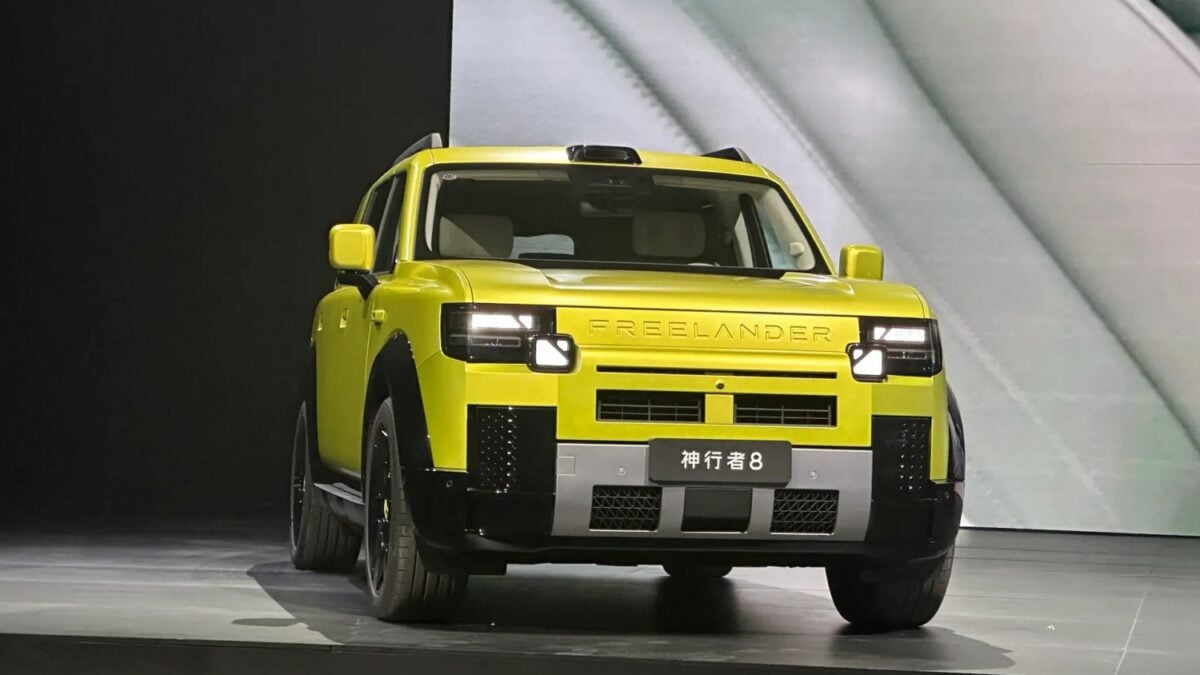
Freelander returns as a 610kW Chinese SUV, and order books are open
Words: Richard Edwards
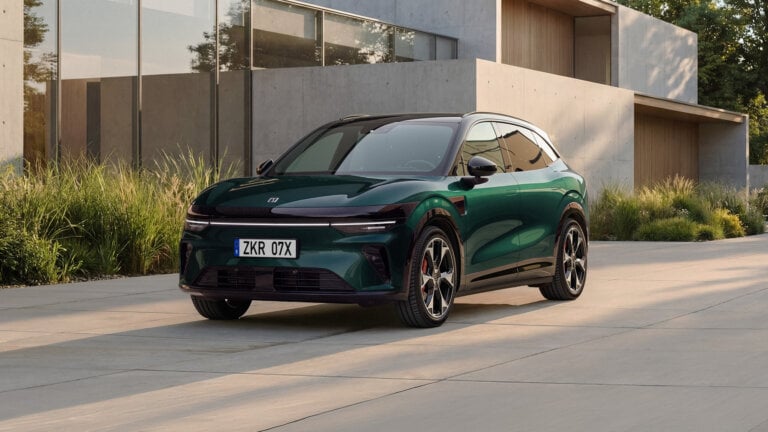
Two decades after the original Land Rover Freelander bowed out, the name is back on a new SUV. This time there is no Land Rover badge, the maker is Chery, and the headline output is 610kW.
The Freelander 8 has opened pre-orders in China from 339,900 yuan, around NZ$85,000, for the five-seat entry model. The range tops out with a First Edition limited to 1,000 units at 449,900 yuan (about NZ$112,500).
It is the first model from the standalone Freelander brand established by Chery and Jaguar Land Rover, revealed in production form in April. The venture has taken on new significance since JLR stopped supplying its own China-built models to local dealers, with the factory that produced them now switched over to Freelander.
Between the entry car and the First Edition sit three further variants: Pro at 349,900 yuan (NZ$87,500), Max at 379,900 yuan (NZ$95,000) and Max+ at 429,900 yuan (NZ$107,500).
Range-extender running gear
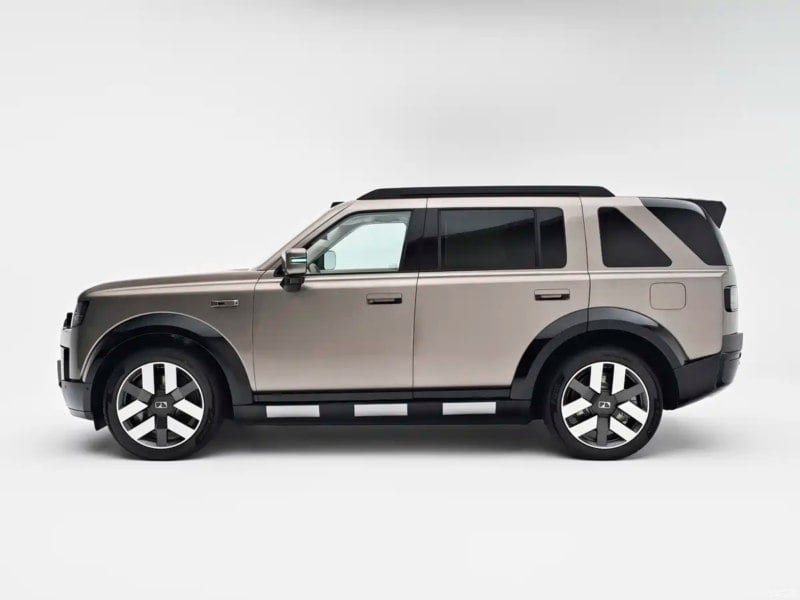
Rather than a pure EV, the Freelander 8 is a range-extended electric, with a 1.5-litre turbocharged four-cylinder acting solely as a generator. A 60.3kWh CATL battery delivers a claimed 310km of electric running on China’s CLTC cycle, and the 800-volt architecture supports a 6C charging rate, taking the battery from 20 to 80 per cent in a claimed 12 minutes.
Dual motors produce a combined 610kW and 813Nm, good for 0-100km/h in 4.6 seconds. That is serious pace for a three-row SUV measuring 5118mm long on a 3040mm wheelbase, nearly twice the weight of the original Freelander and closer in size to a full-size Range Rover.
The specification suggests genuine off-road intent too. There are three differential locks, an all-terrain system co-developed with Huawei, and rear-wheel steering with 10 degrees of articulation that enables a crab-walk function. Braking is by 404mm discs with six-piston callipers, pulling the big SUV up from 100km/h in a claimed 35.7 metres.
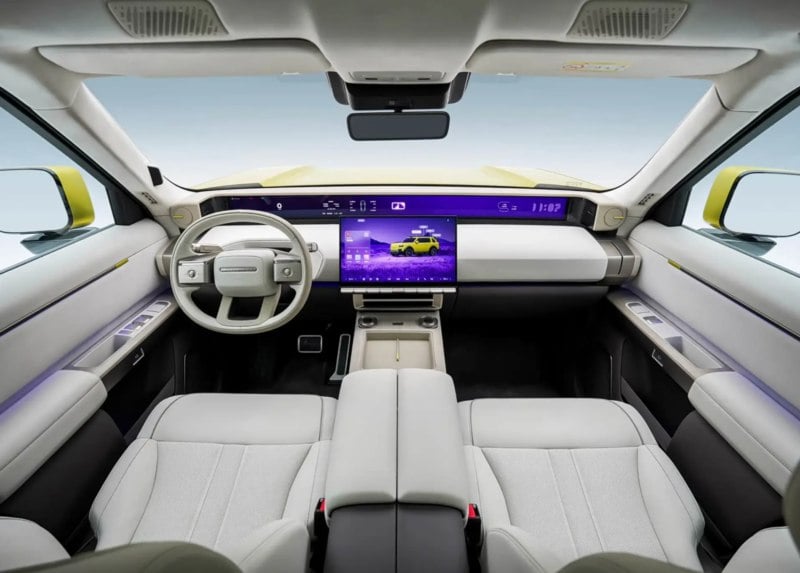
Inside, a 46.3-inch panoramic display spans the dash above a 15.6-inch central screen, running one of the first applications of Qualcomm’s Snapdragon 8397 chip. Huawei’s Qiankun ADS 5 driver assistance is standard across the range. Second-row occupants get zero-gravity seats with heating, ventilation, massage and leg rests, along with a fridge and a ceiling-mounted screen.
Early impressions
Our friend Elliot Richards of Everything Electric APAC has driven the Freelander 8 in China and came away impressed, describing a commanding, Defender-like driving position and a cabin that feels distinctly JLR in its details, including physical climate controls. He rated the Huawei software suite as an advantage over Western rivals, though he criticised a boot that is surprisingly small for the vehicle’s size, and remains unconvinced by range extenders as a long-term solution.
New Zealand prospects
Freelander has confirmed plans for China, the Middle East and Europe, with six models due over five years. The brand is locked in for Australia, though pricing there is yet to be announced. New Zealand has not been mentioned officially, but with Australian distribution confirmed, an arrival here seems likely.
The Freelander badge carries recognition in this market after more than a decade on sale under Land Rover. Whether that history helps or hinders a 610kW, three-row Chinese range-extender is another question entirely. It is a very different machine from the compact soft-roader Kiwis remember.