Why iCAUR’s boss wanted a Bronco and a Tesla in one car
Words: Richard Edwards
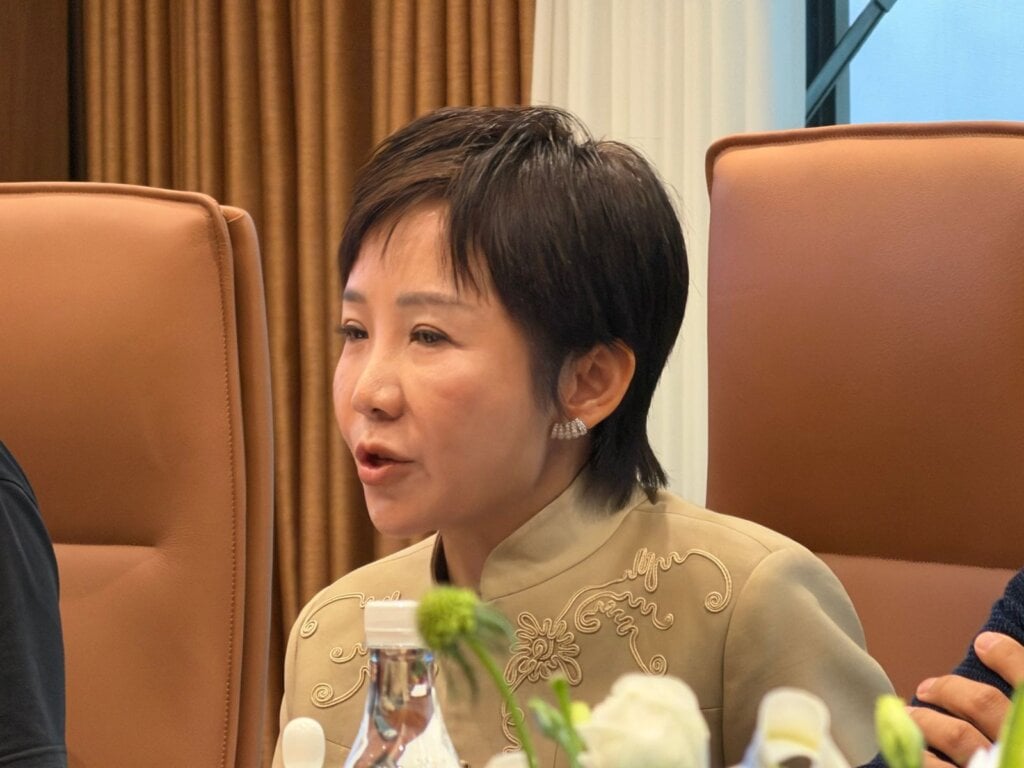
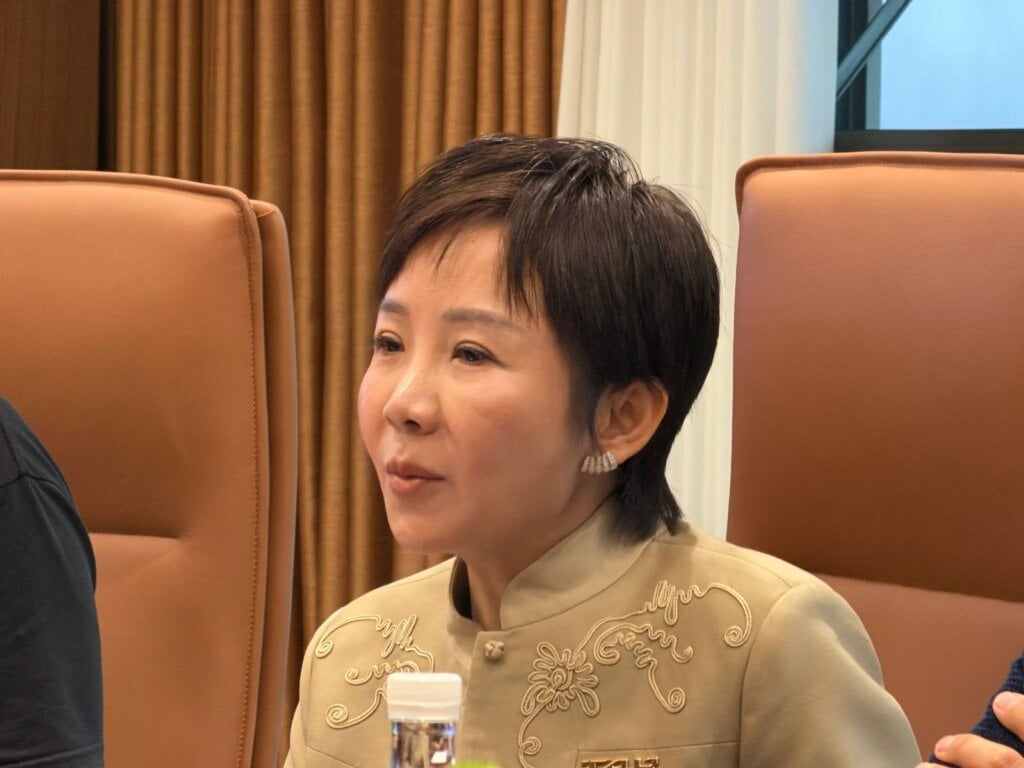
Dr Su Jun owns two very different cars, a Ford Bronco and an older Tesla Model S, and he says iCAUR (yes, you pronounce it eye-car) started out as his team’s attempt to build something that combined the best of both.
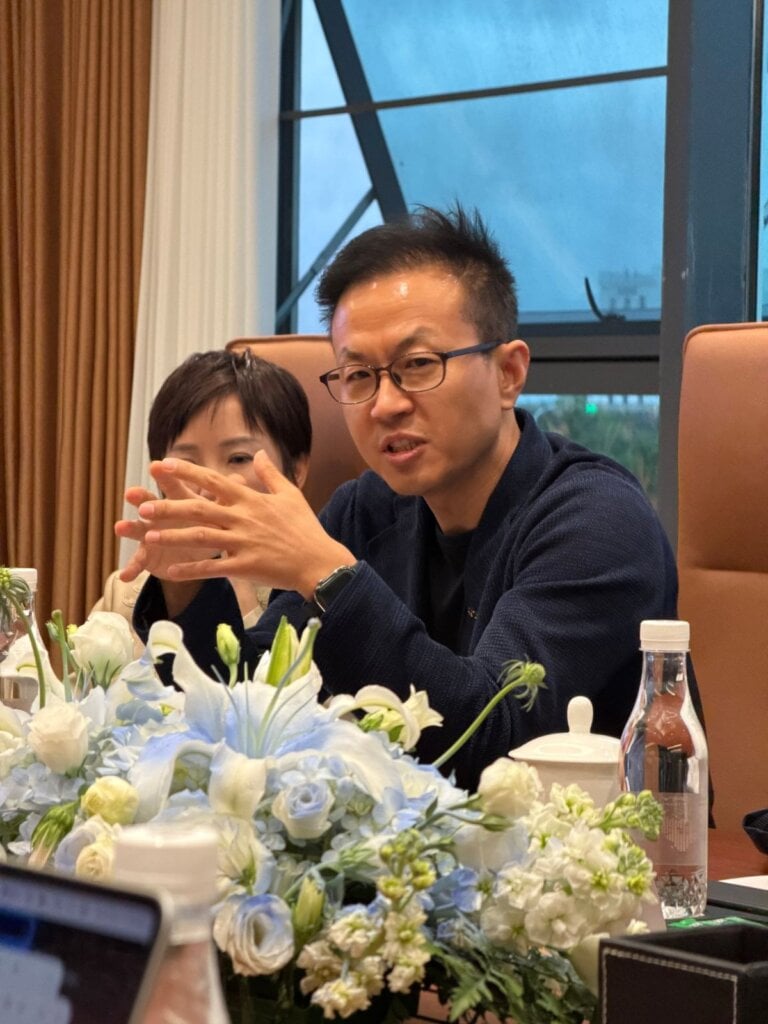
Su is a vice president of Chery Automobile, where he oversees design, brand and business operations for iCAUR. He came to cars from industrial design. He holds a design PhD from Tsinghua University, taught the subject for some years, and in 2014 founded Smartmi Technology, a design-led electronics company. He joined Chery with his automotive R&D team in early 2024.
Speaking to media at Chery’s headquarters in Wuhu, China, he explained where the idea came from.
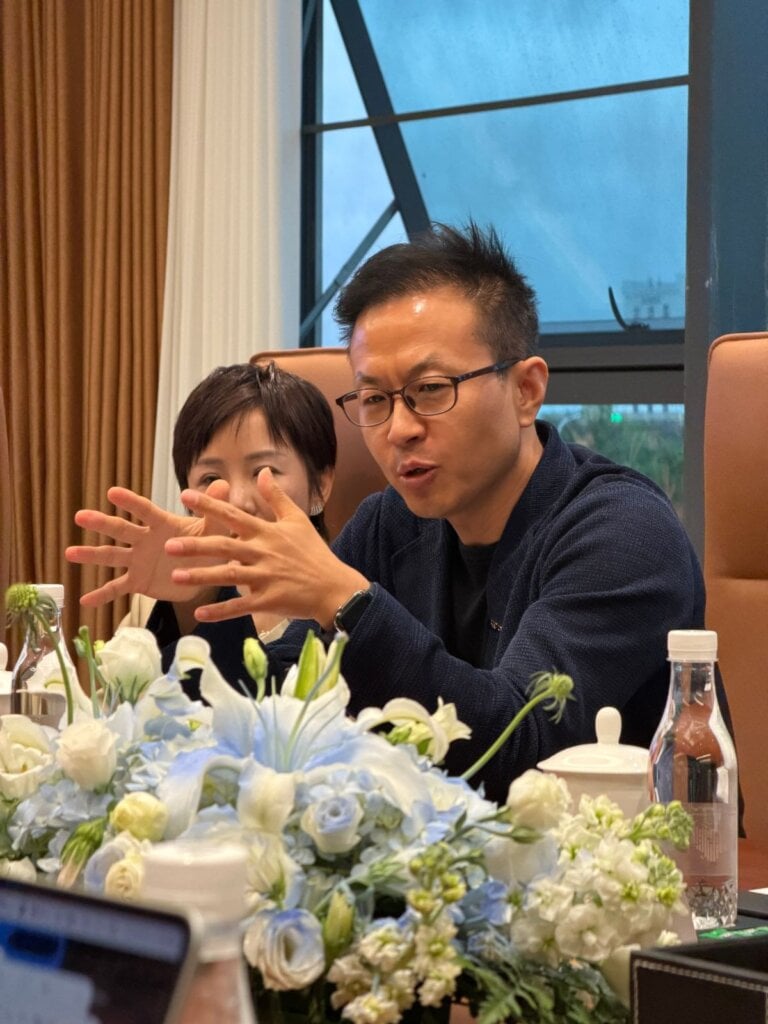
“The Model S was amazing, very smooth, very quiet and very comfortable, but the seating position is very low,” he says. “When you’re driving and there’s something beautiful to see, the position of your eyes is totally different. I love the view from the Bronco, but I also love the power of the Tesla, so our dream was to combine those two things. We made the first car for ourselves, and then found that lots of people wanted the same thing. That’s why the V23 has been so successful. In only one year it sold 100,000.”
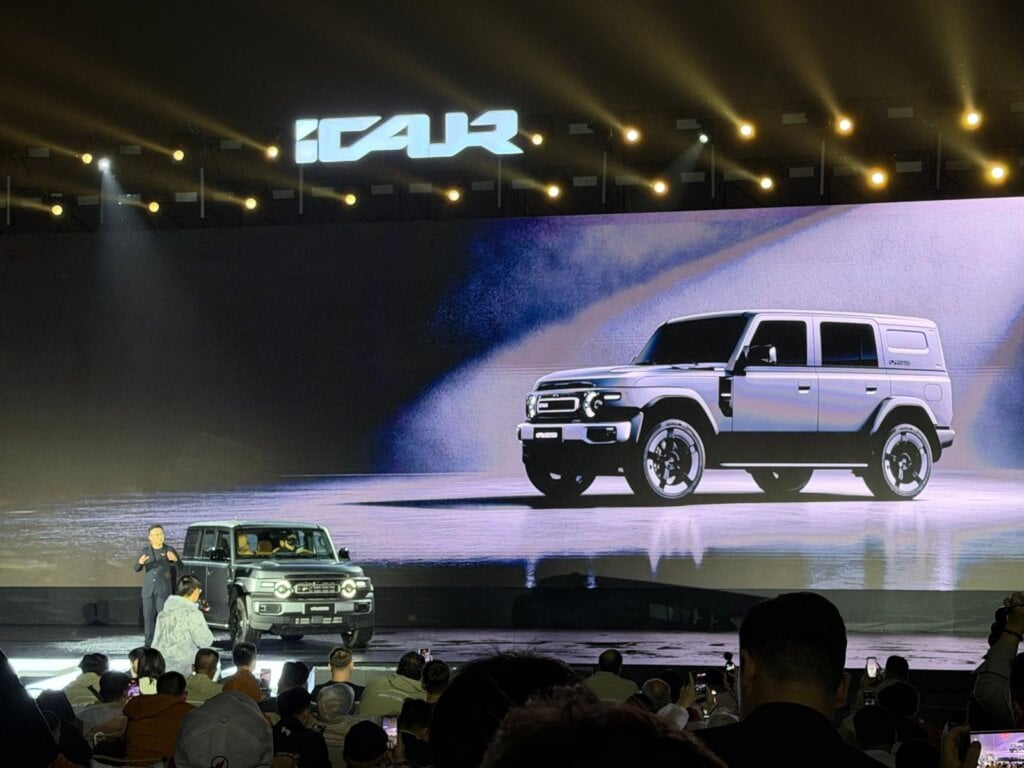
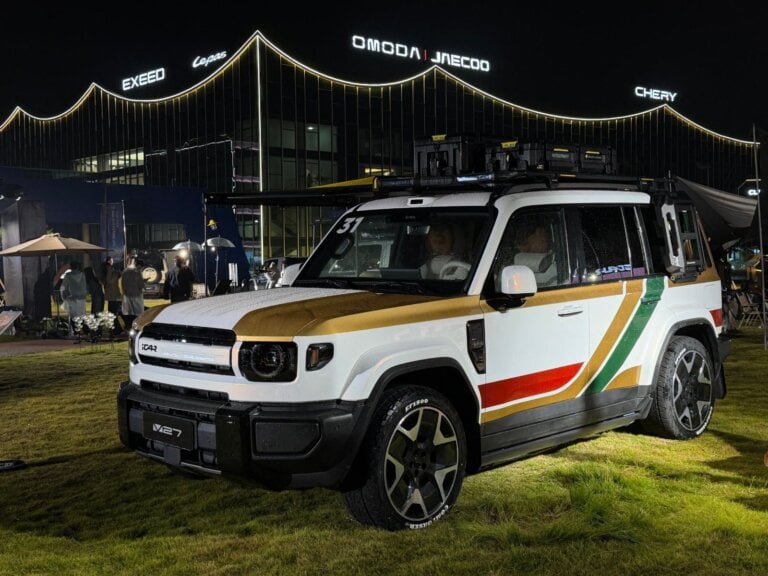
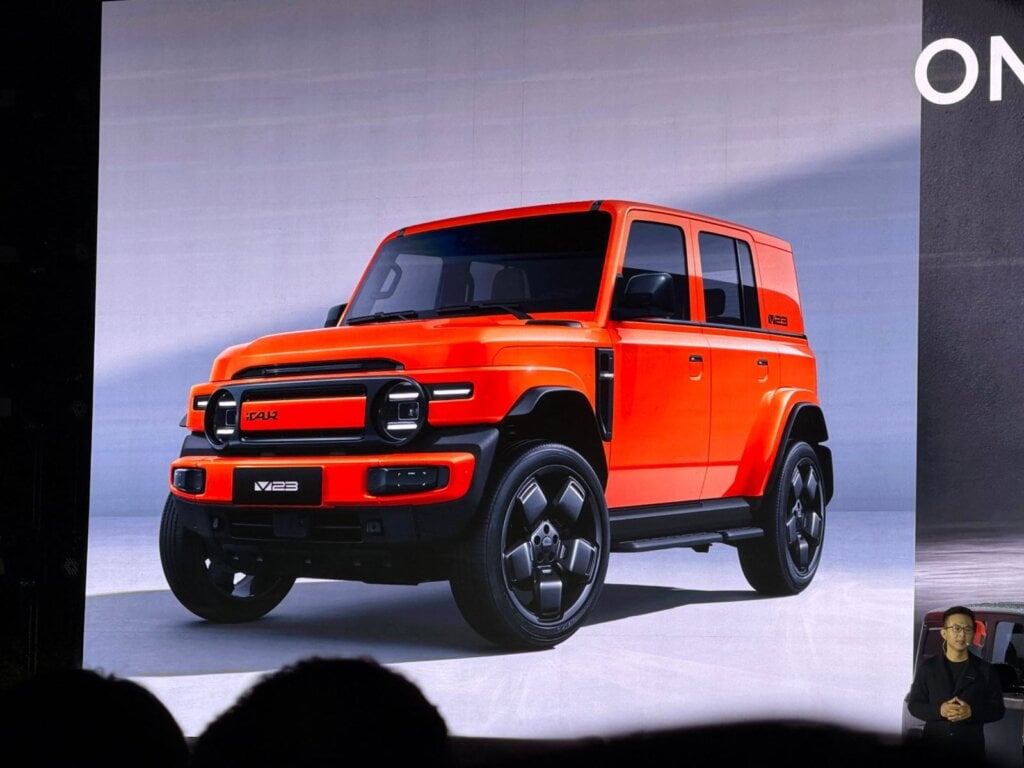
The V23 has since picked up a Red Dot design award. Su says its upright, squared-off shape draws on military vehicles, which have always been valued for their practicality and space.
iCAUR has become known for that look, but it plans to expand beyond boxy SUVs. Asked what will tie the range together when it does, Su says the family resemblance has to come from more than the shape.
“If products belong to one family, it’s not only about the shape. With Mercedes, you can see the G-Class and the S-Class and know they belong to the same family, so I don’t think boxy is the only gene of the family,” he says. “We’re influenced by brands like Apple and Muji, which are very simple. Apple’s products are all different, but they share a minimalist design and you can tell they’re from the same family. That’s the job for our designers: making different things that still belong to the family, so you could take the logo off and still know what it is.”
Ronna Luo, CEO of iCAUR International, says she now leaves the word boxy out when she talks about the brand. She joined iCAUR after senior roles at General Motors, Ford and Lincoln.
“When I communicate, I actually remove the word boxy, because I prefer not to limit ourselves,” she says. “We’re a new-energy SUV brand with classic design and new technology, and we’ll definitely have our own family DNA.”
Coming to New Zealand
iCAUR will be sold here as a premium brand positioned above Chery.
“iCAUR will definitely be a premium brand, positioned differently from Chery, and its sales and service network will be separate. We have already started recruiting dealers,” says Luo. “The landscape fits iCAUR because of the driving range, and because people are already used to big SUVs.”
Pricing and details of the network will be announced closer to launch.
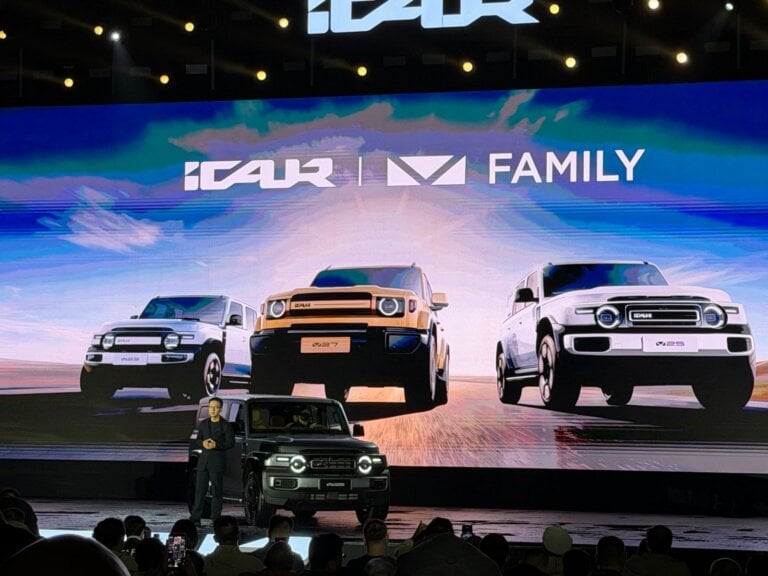
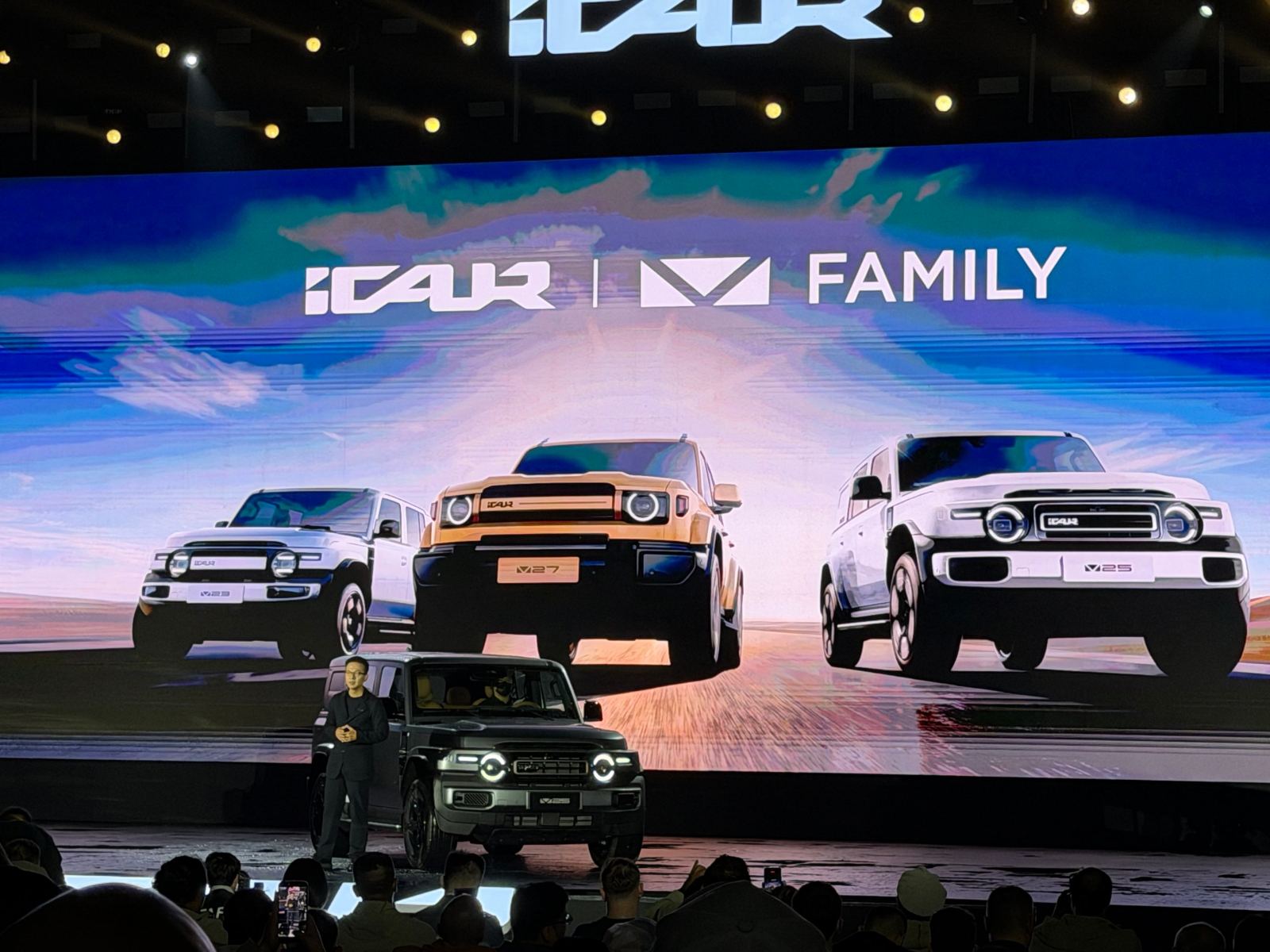
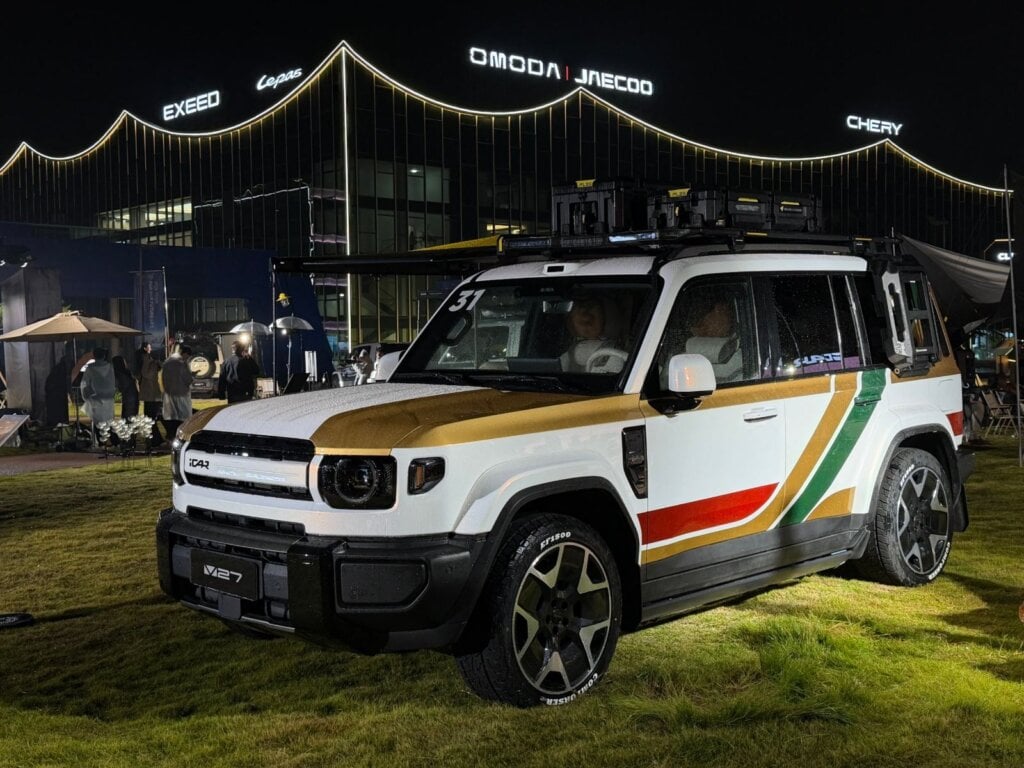
The first three models are the V23, V25 and V27. The V23 is a small electric SUV and is expected to arrive in an updated form.
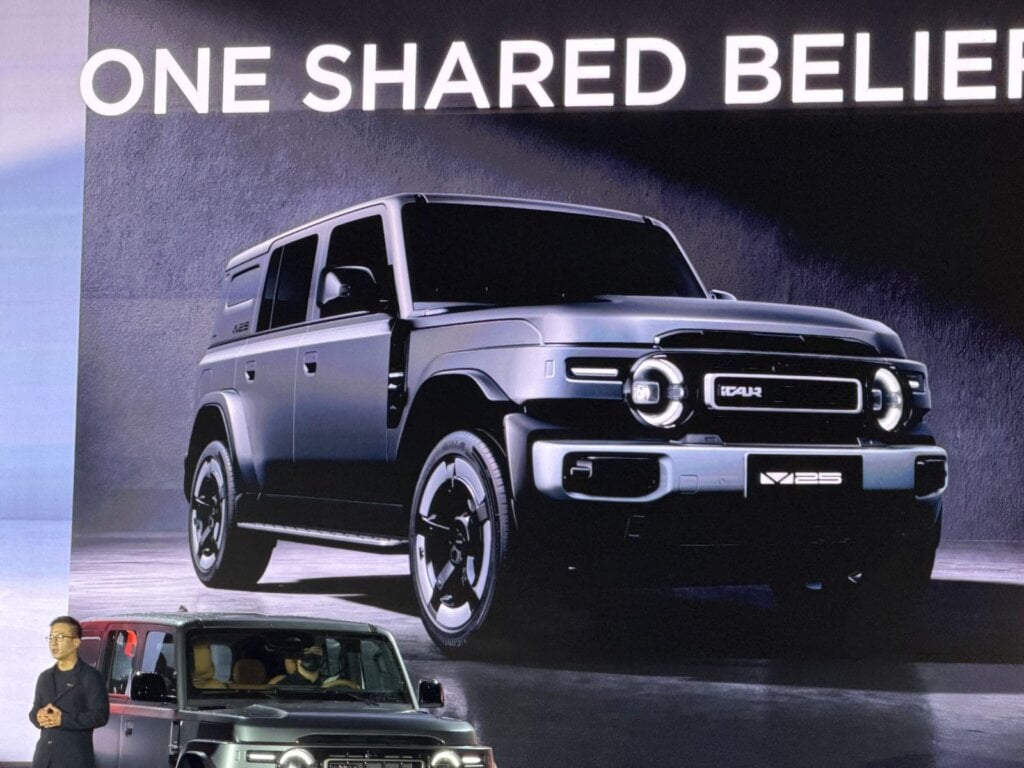
The V25 sits between the other two in size and measures 4636mm long. It was shown to international media at iCAUR’s user summit in Wuhu in both range-extender and battery-electric forms, each with electric all-wheel drive. The range-extender version uses a 1.5-litre turbo petrol engine making 115kW to charge a 33.68kWh battery, which gives it around 150km of electric range. With an optional towing kit it can tow 1800kg.
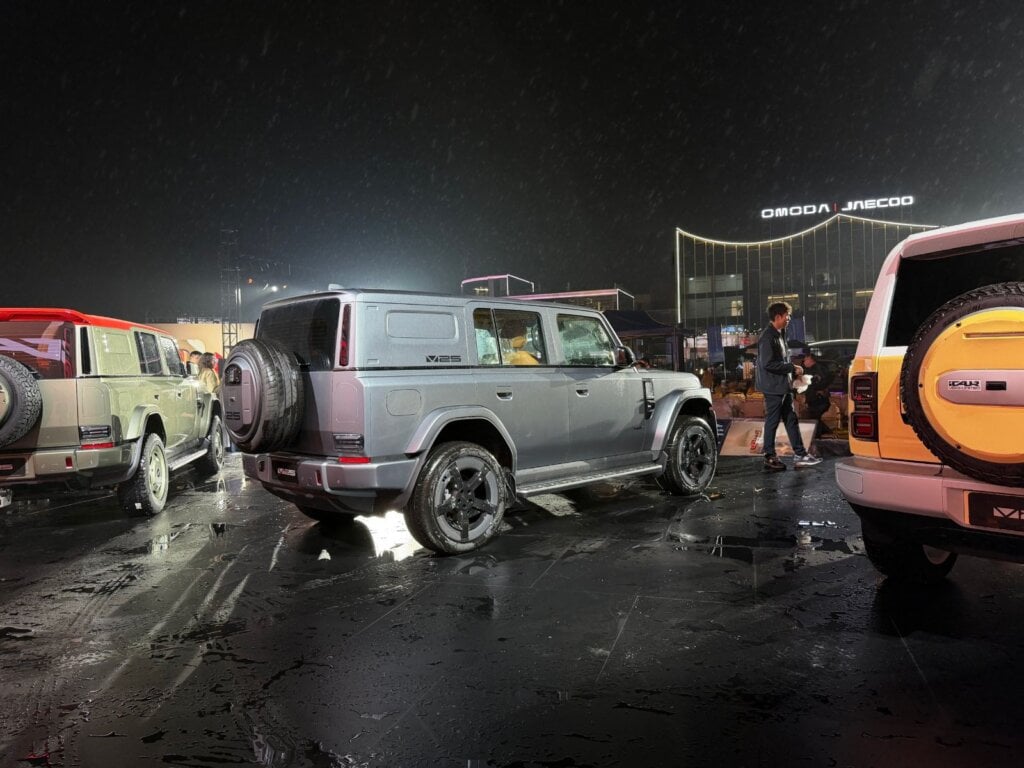
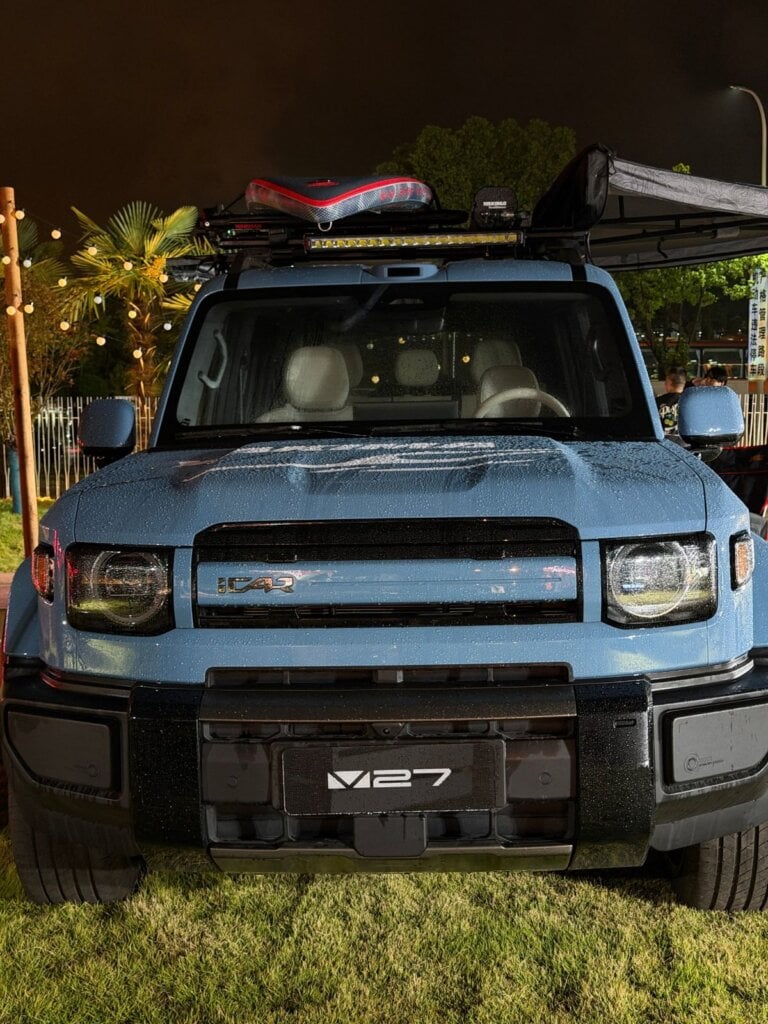
The V27 tops the range and is the brand’s largest model at 5055mm long.
What comes next
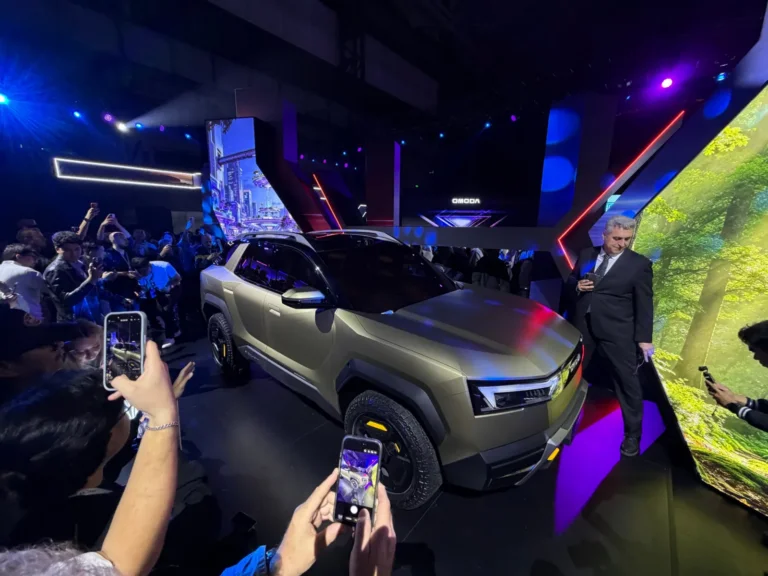
Su says the line-up won’t stop at three, and that the brand is aimed at buyers who are young at heart rather than young in years.
“A boxy car is only one kind of car, and we have plans to develop more products,” he says. “Our spirit is young, and our users want to try new things. In a few years you’ll see a whole family of iCAUR products.”
Beyond that, the company is working on concepts such as the X25, which rethink the shape of a car altogether.
“We don’t think the car will always stay the way it is today,” says Su. “We have advanced projects researching future transport, taking apart the functions of the car and combining them in a totally new layout. Before I started this brand, some people invited me to work on robots, and I said no. Robots are not my dream. My dream is to make beautiful transportation vehicles.”