New Mitsubishi Pajero revealed – Kiwis already ordering ‘huge volumes’
Words: Kyle Cassidy
Mitsubishi has revealed the first all-new Pajero in 20 years, bringing back its flagship off-roader with a ladder-frame chassis, seven seats and a new 2.4-litre diesel engine. The fifth-generation Pajero has been confirmed for NZ too!
Reece Congdon, Head of Marketing & Corporate Affairs for Mitsubishi NZ told us; “We’re hugely excited by today’s release of this flagship vehicle. Our dealers have already taken huge volumes of pre orders in the lead-up to the release, so we expect those numbers to rise dramatically now Kiwis have seen how truly magnificent this vehicle is. We expect first units to be in dealerships at the start of December.”
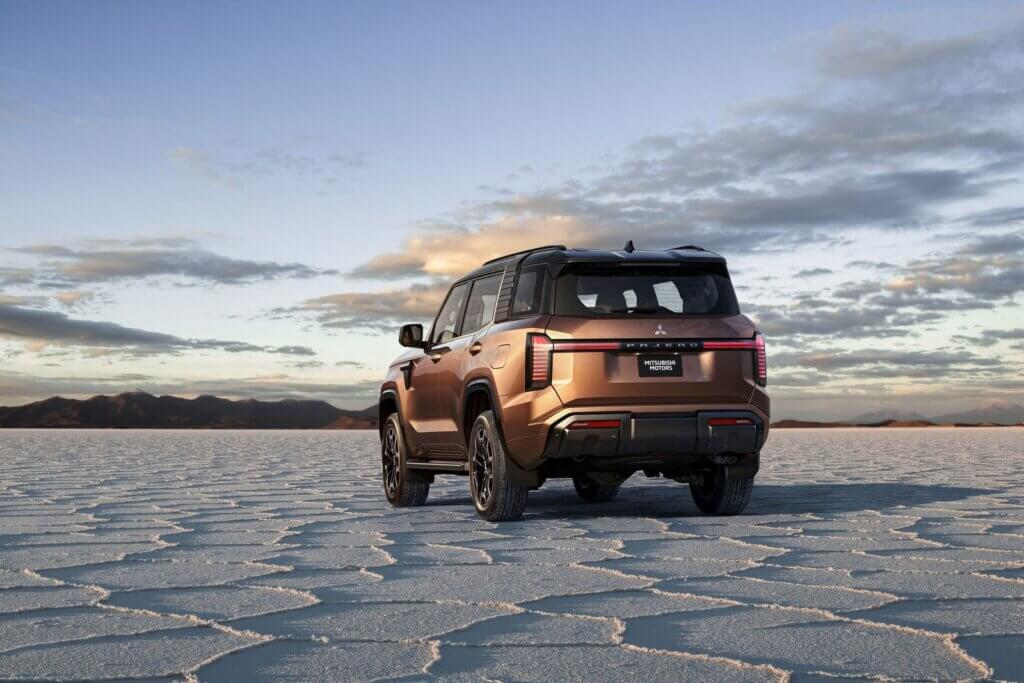
The Pajero first appeared in 1982 and more than 3.29 million examples were produced across four generations, with the SUV sold in over 170 countries and regions.
For the new model, Mitsubishi has retained the Pajero’s traditional focus on off-road ability but added a greater emphasis on refinement and premium presentation. It will sit at the top of the company’s SUV range.
“The all-new Pajero is the first model to bring this vision to life. As our flagship model, it will lead not only the Pajero series to follow, but the entire Mitsubishi Motors lineup,” said Mitsubishi Motors president and chief operating officer Keisuke Kishiura.
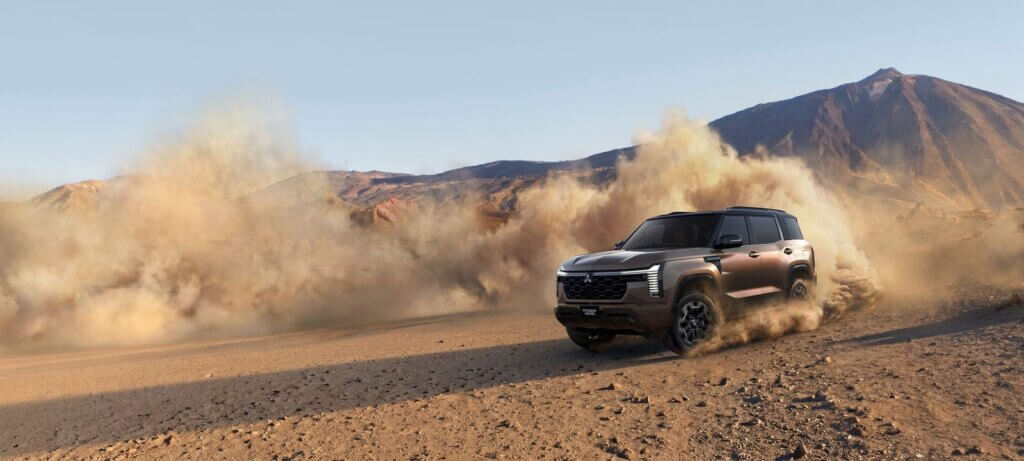
“Evolved with a new level of refinement, the all-new Pajero is a premium cross-country SUV that drivers can rely on in any situation. We will introduce the model to markets around the world in phases, and we hope customers will look forward to its arrival.”
Diesel engine and proper low-range 4WD
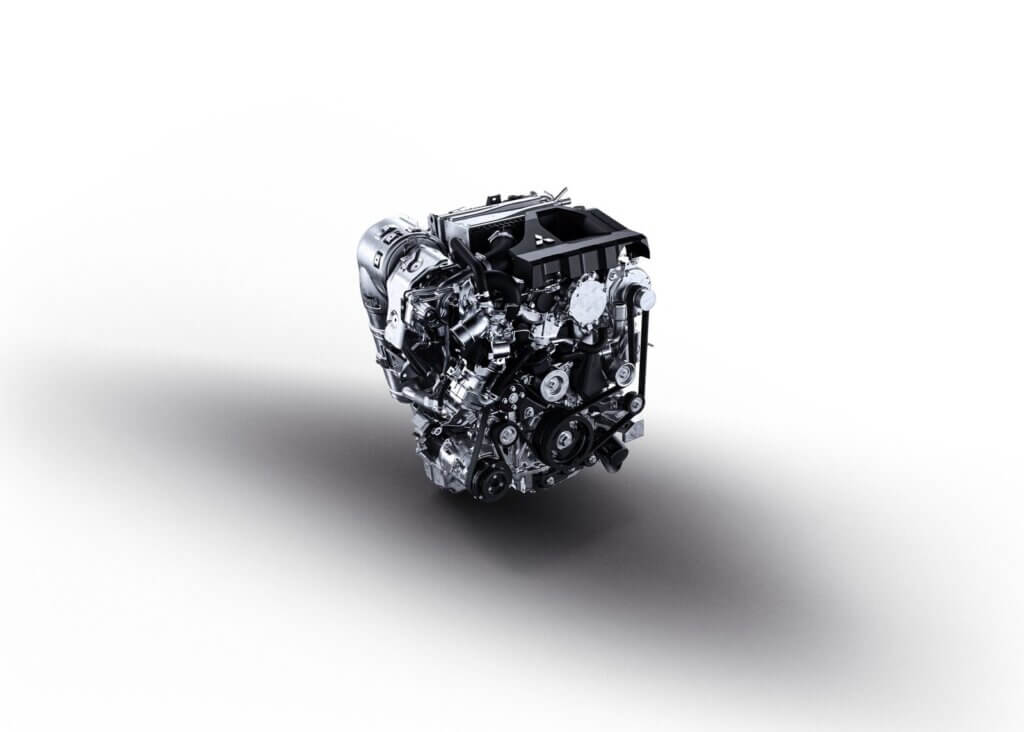
Power comes from a ‘specially developed’ 2.4-litre turbo-diesel engine producing 480Nm. Mitsubishi hasn’t announced its maximum power output.
The diesel uses a single variable-geometry turbocharger and is paired with a newly developed eight-speed automatic transmission featuring a Sport mode.
More importantly for buyers wanting to venture beyond the school run, the Pajero retains a proper four-wheel-drive system.
Mitsubishi’s Super Select 4WD-II offers four settings: rear-wheel drive, full-time four-wheel drive, locked-centre-differential 4WD and locked-centre-differential 4WD with low-range gearing.
It’s supported by Mitsubishi’s Super-All Wheel Control system, which coordinates torque delivery, braking and stability control. Active Yaw Control can also use the front brakes to adjust the vehicle’s behaviour through corners.
Seven driving modes are provided, covering Normal, Eco, Gravel, Snow, Mud, Sand and Rock.
Underneath is a strengthened ladder frame using more high-tensile steel. Mitsubishi says increasing the frame’s cross-sectional area has improved torsional and bending rigidity while reducing weight.
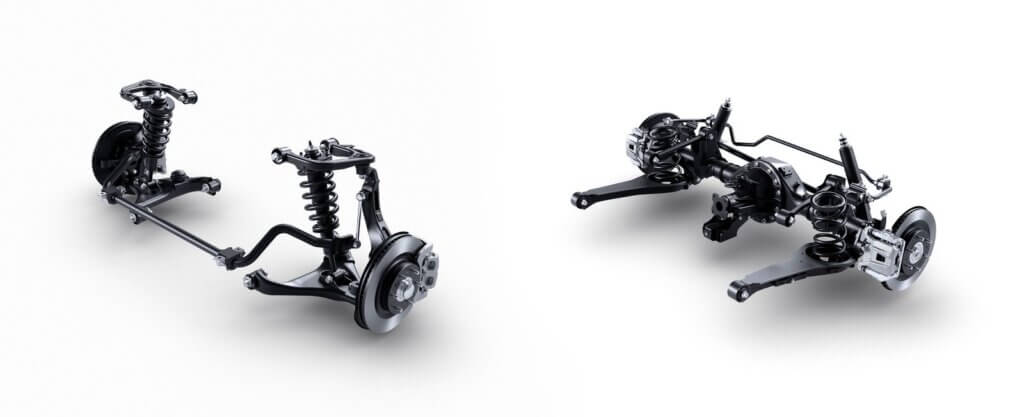
The suspension combines independent double wishbones at the front with a newly developed five-link rigid rear axle. Strengthened body mounts are intended to reduce vibration when travelling over rough surfaces.
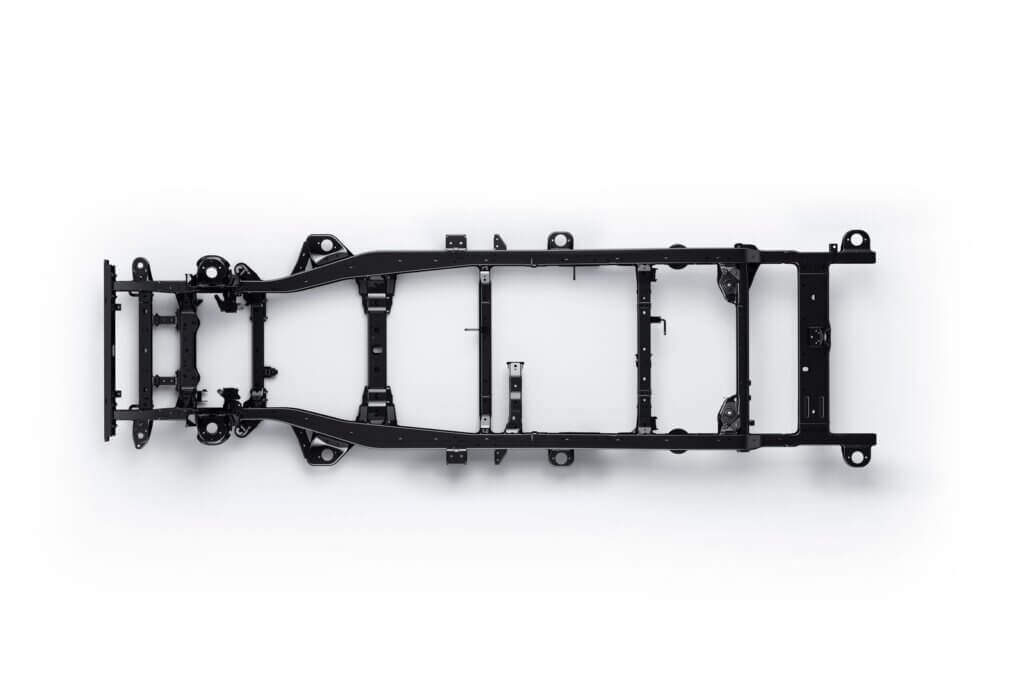
Mitsubishi describes “off-road comfort” as one of the Pajero’s major development targets, with the company aiming to retain serious ability away from the tarmac without sacrificing ride quality during everyday driving.
Large body with seven seats
The new Pajero measures 4920mm long, 1925mm wide and 1910mm tall, sitting on a 2870mm wheelbase.
Ground clearance is rated at 230mm, while the approach, breakover and departure angles are 30.4, 22.6 and 25.8 degrees respectively. Weight distribution is listed at 52:48 from front to rear.
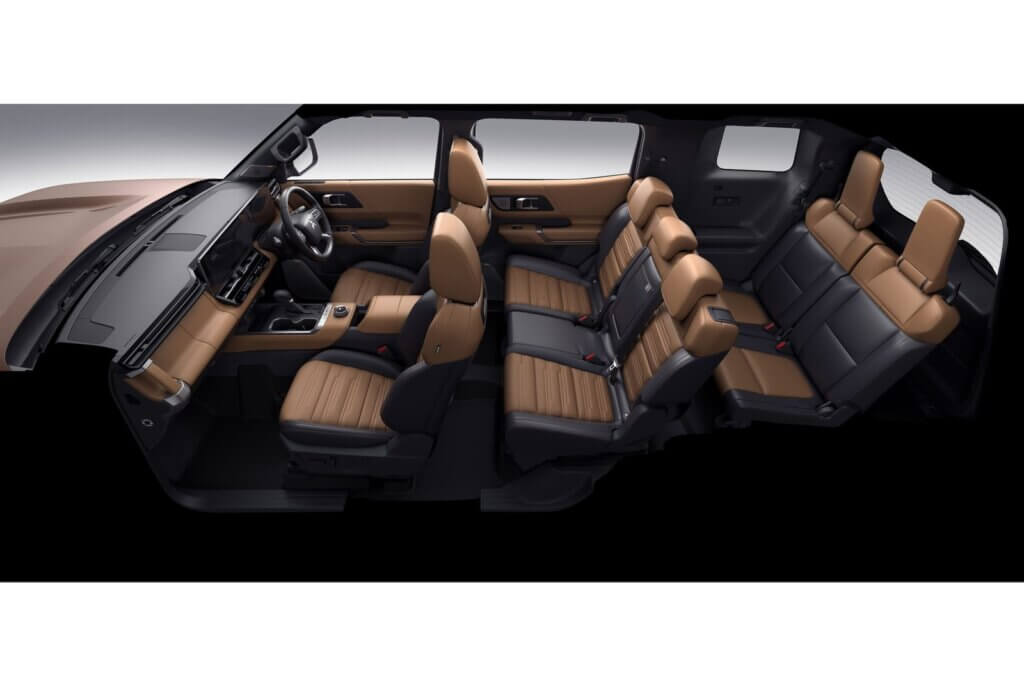
Inside is a three-row layout with seating for seven. The second row has 150mm of sliding adjustment and a tumble function to improve access to the rear.
Mitsubishi says the third row has sufficient headroom for adults, with space beneath the second-row seats providing additional foot room. Three-zone climate control and seat ventilation will also be available.
The dashboard’s horizontal design is inspired by the original Pajero, although the technology has moved on somewhat since 1982.
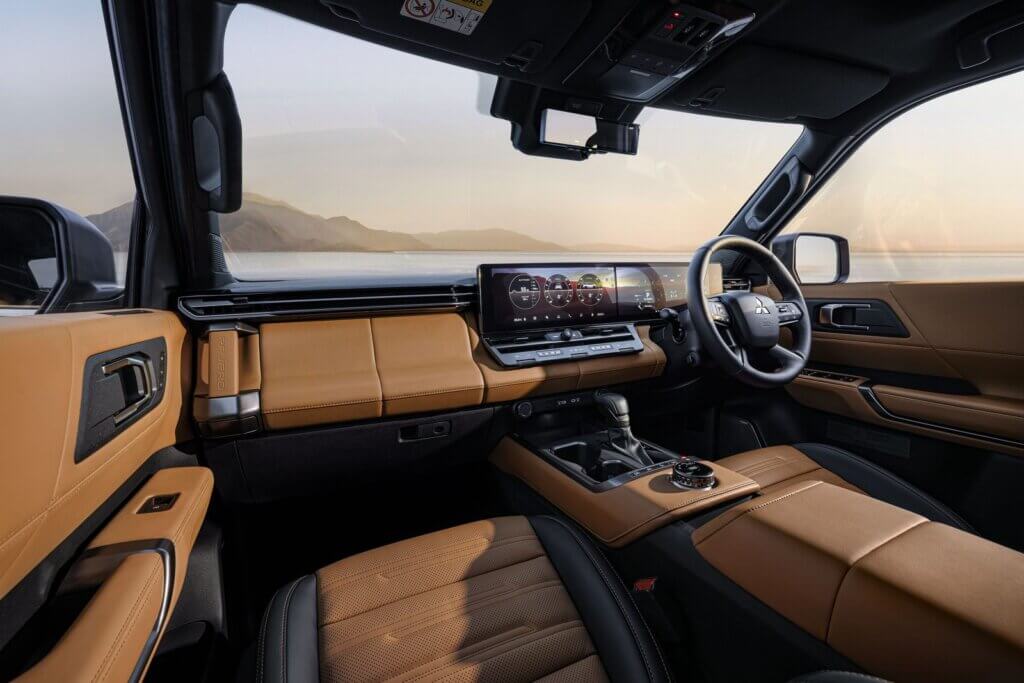
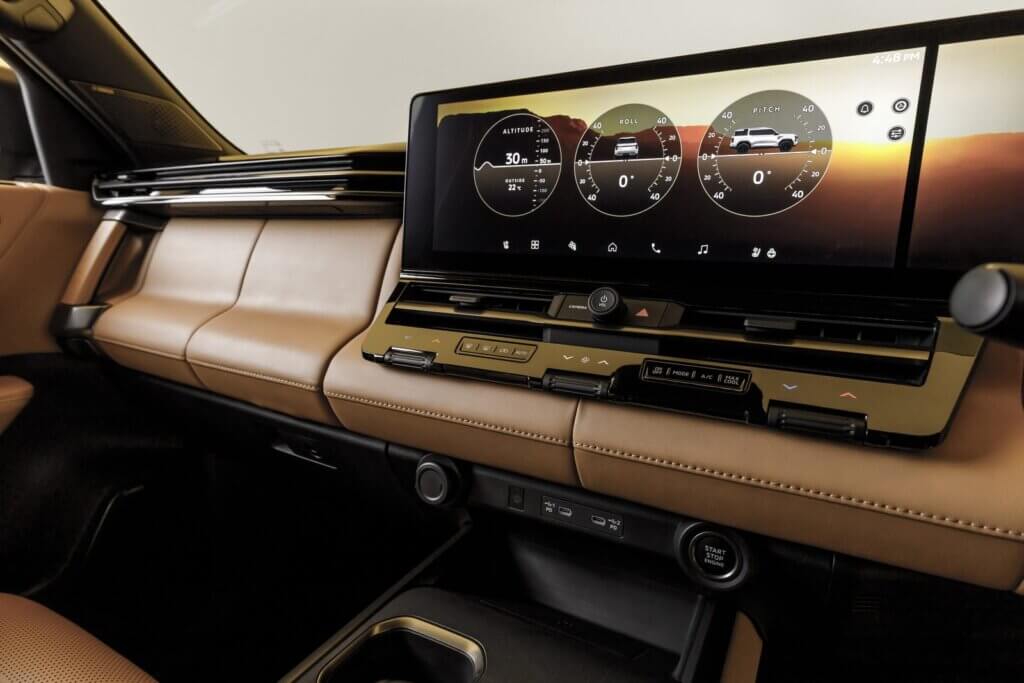
Two 14.3-inch screens are housed within a single display panel. The digital instrument cluster can show a modern interpretation of the Pajero’s familiar triple-meter display, including altitude, compass direction, temperature, pitch and roll angles, and the status of the Active Yaw Control system.
Wireless smartphone connectivity is included, while the cabin uses soft-touch materials and stitching inspired by the traditional Japanese Kimekomi craft.
Acoustic glass is fitted to the windscreen and front and rear door windows, with additional insulation intended to reduce wind and engine noise.
Pajero heritage influences new design
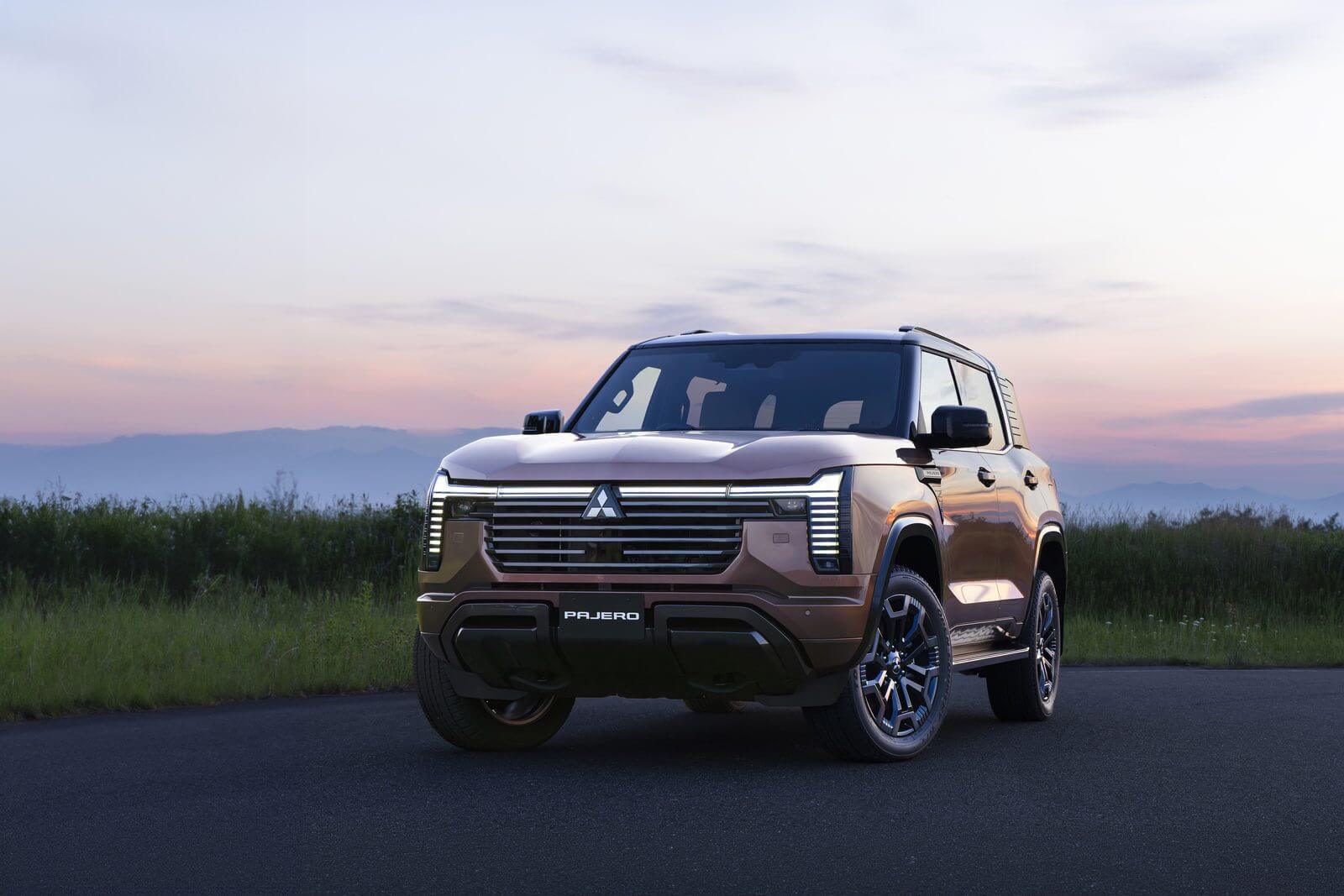
The exterior retains the upright proportions and strong horizontal lines associated with earlier Pajeros, adding wider-looking guards and heavily sculpted bodywork.
Two grille designs will be offered. One uses horizontal bars, while the other features a honeycomb pattern. Both are paired with distinctive T-shaped headlights.
The C-pillar is said to reference the external roll bar of the original Pajero, while a hexagonal design at the rear recalls the tailgate-mounted spare wheels used by earlier generations.
Safety equipment includes autonomous emergency braking with pedestrian, cyclist and motorcyclist detection, junction assistance, front cross-traffic alert and emergency steering assistance.
Mitsubishi’s MI-PILOT system combines adaptive cruise control with lane-centring assistance for motorway driving. Eight airbags are fitted, including the first centre airbag used by Mitsubishi.
A 3D surround-view camera can also display the terrain beneath and immediately ahead of the vehicle. This view activates automatically when either of the locked-centre 4WD modes is selected, helping the driver place the Pajero over rocks, steep slopes and other obstacles.
Pricing and complete market specifications will be announced closer to the Pajero’s local launch.