View all
2 more images
2026 BMW iX3 50 xDrive First Drive
Words: Autocar
BMW’s first Neue Klasse model is the most convincing electric SUV the brand has built. We drive it in New South Wales ahead of local deliveries.
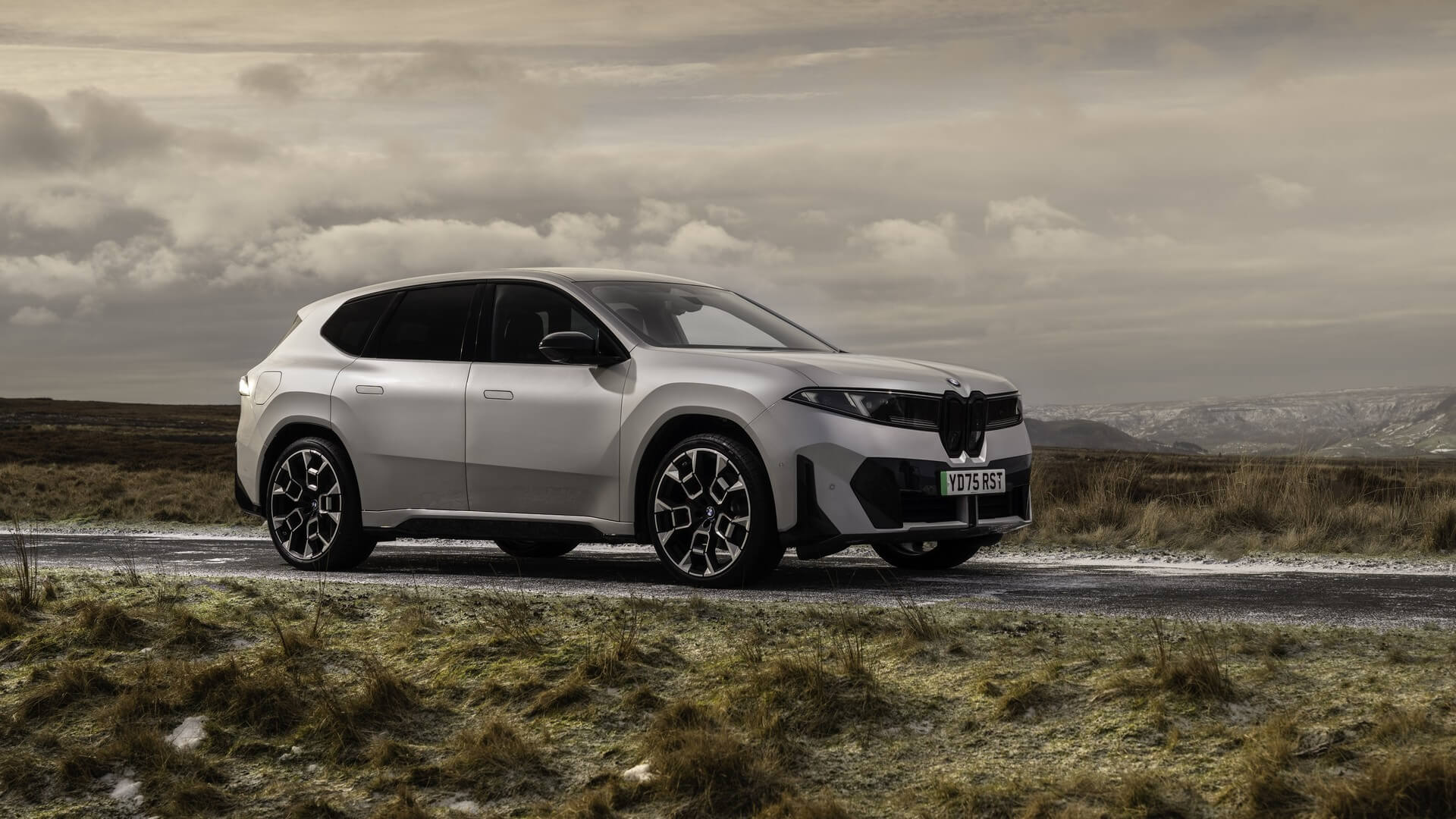
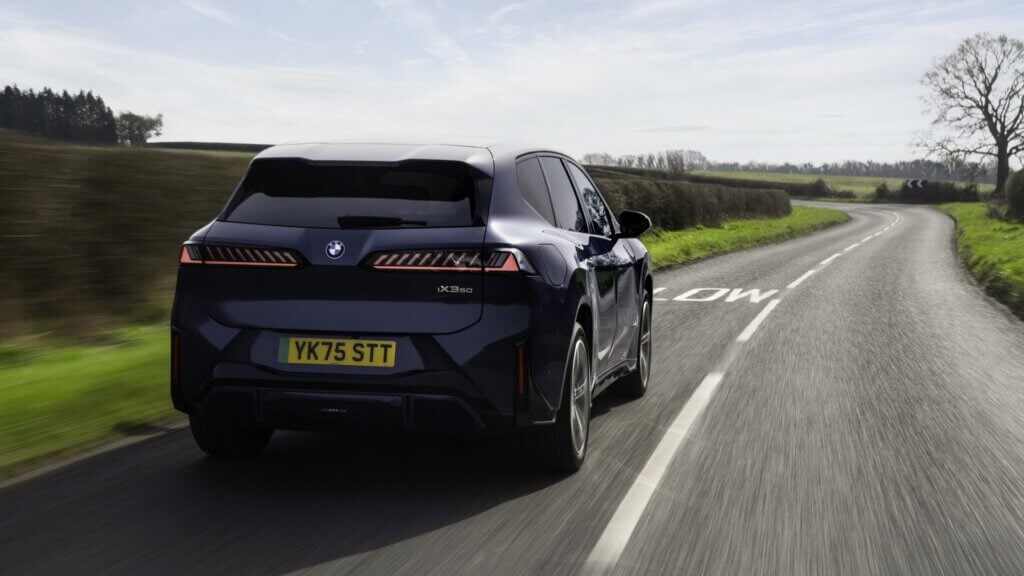
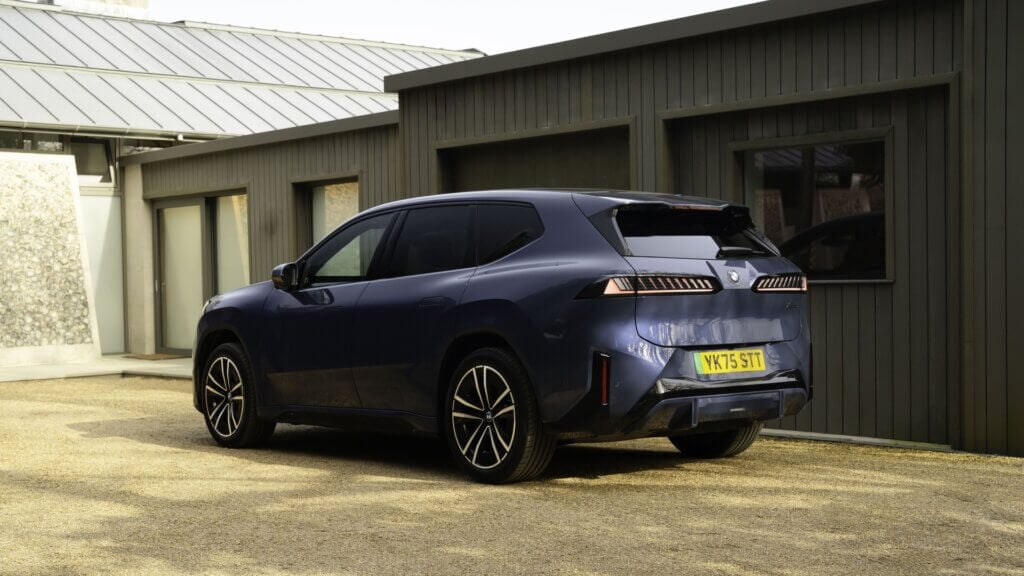
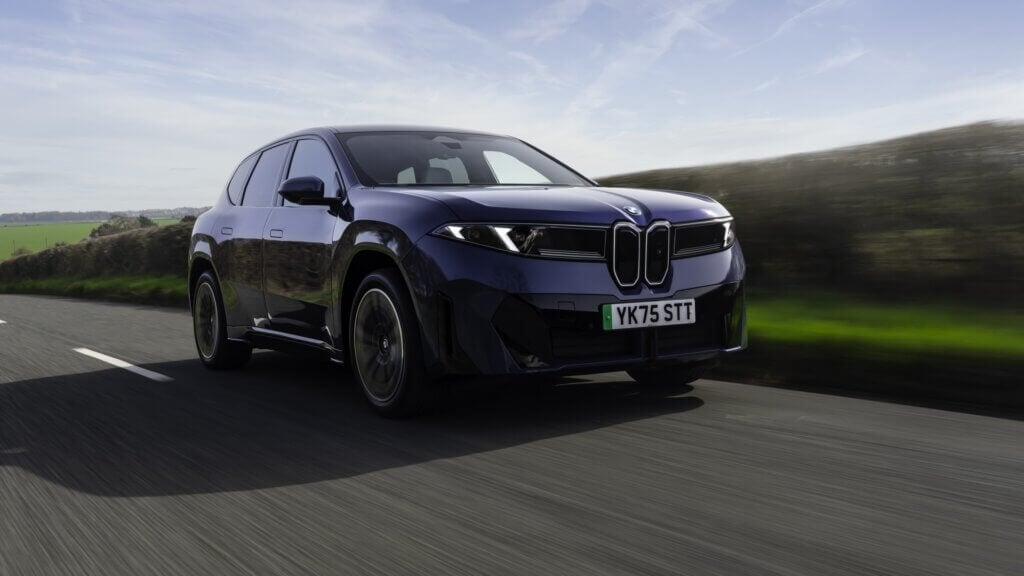
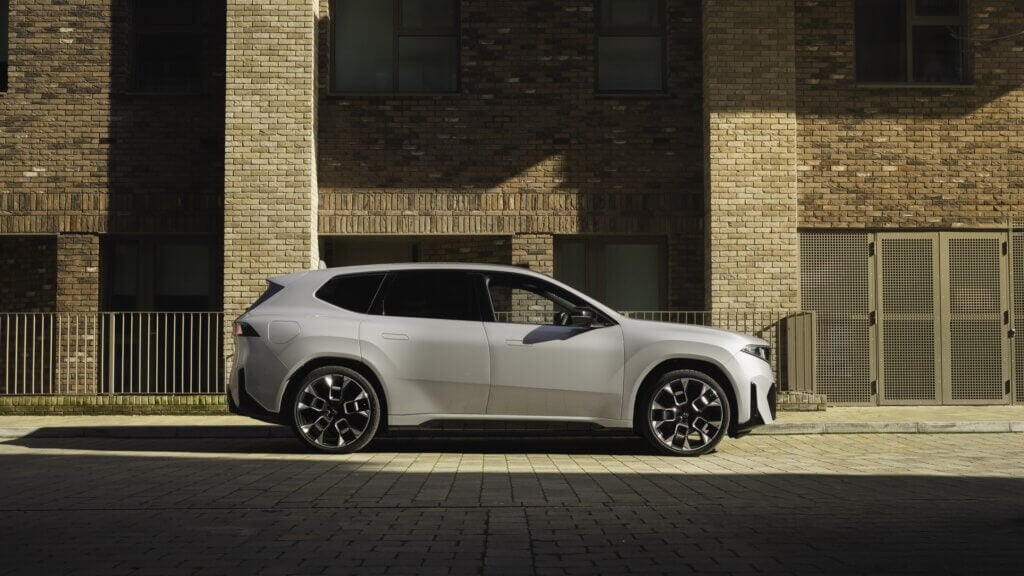
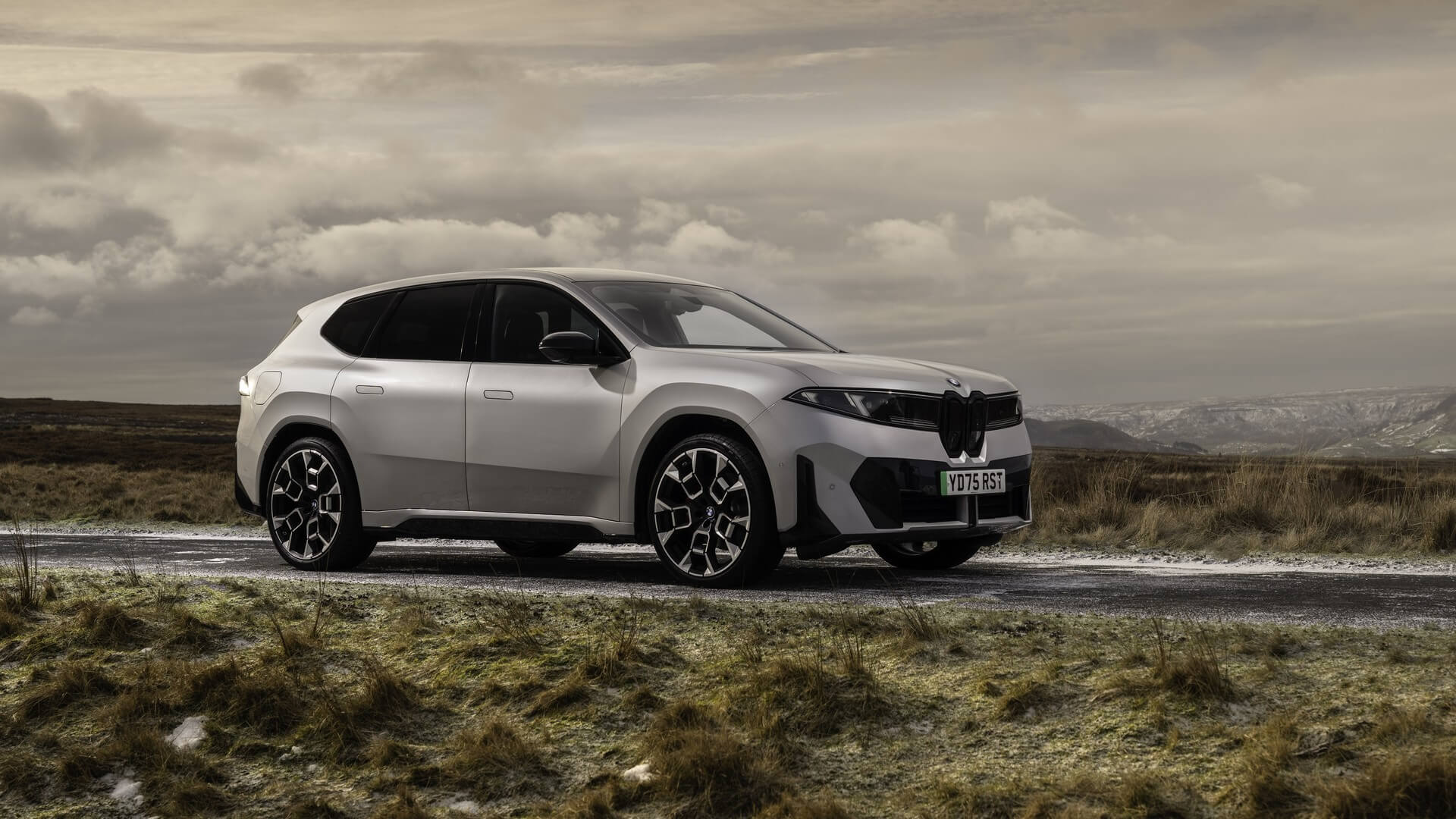
BMW called the iX3 a game changer at the launch briefing, which is a phrase most of us have learned to let wash over us. In this case there is something behind it. The iX3 is the first production car built on the Neue Klasse architecture, and the significance is hard to overstate. The platform, battery, electrical architecture, operating system and design language are all new, and everything BMW launches from here builds on what this car introduces.
New Zealand pricing for the launch variant, the iX3 50 xDrive, is $125,900, with M Sport specification standard. We drove it on roads around Ballina in New South Wales at the regional launch.
Powertrain and range
The 50 xDrive uses two motors, a 123kW unit on the front axle and a larger 240kW motor at the rear, for a combined 345kW and 645Nm. That is good for 0-100km/h in 4.9 seconds and a limited 210km/h. The rear motor does most of the work, with the front axle engaging when traction or performance demands it, and weight distribution sits close to 50:50.
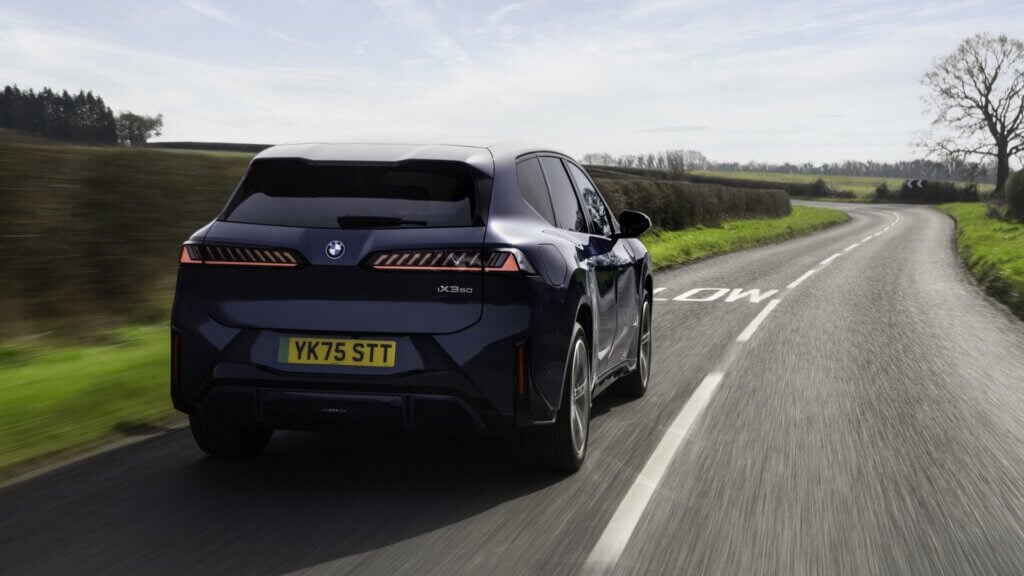
The battery holds 108.7kWh usable from a gross capacity of 113.4kWh, using sixth-generation cylindrical cells and an 800-volt architecture. BMW New Zealand quotes WLTP range of 678 to 805km and consumption of 15.1 to 17.9kWh/100km, with the higher range figure requiring the aerodynamic version of the standard 20-inch wheel. That wheel is a no-cost choice, and moving to 21 or 22-inch rims reduces range.
Take the usual New Zealand discount of around 15 percent off a WLTP figure and roughly 670km looks realistic, which puts Auckland to Wellington within reach on a single charge. Having done that trip once in a Polestar 3 with the air conditioning switched off and a Prius going past me, the prospect of doing it without the sacrifices has some appeal.
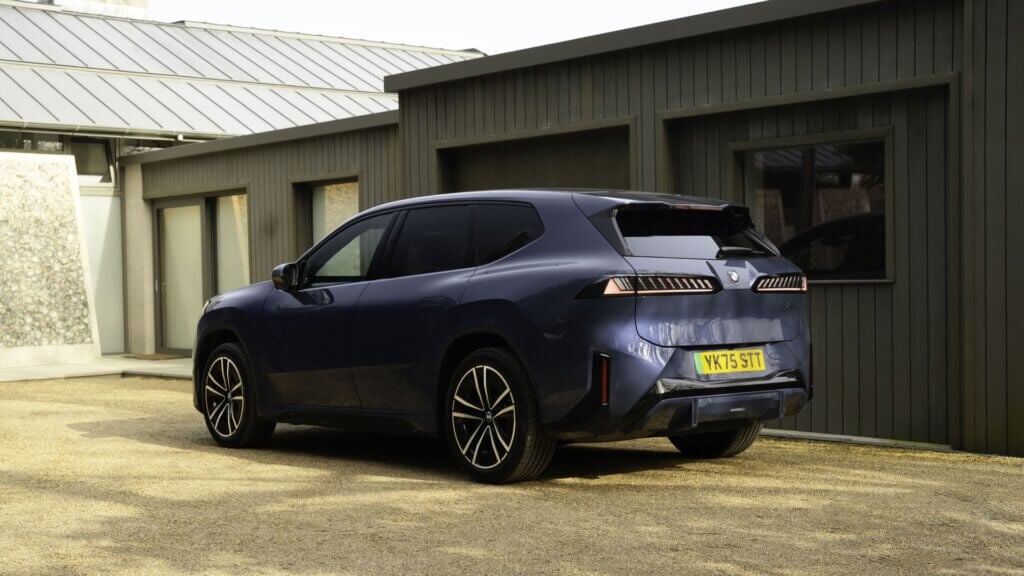
DC charging peaks at 400kW, giving 10 to 80 percent in 21 minutes and up to 372km of range in ten minutes, though no public charger in New Zealand can currently deliver that rate. BMW says local cars get AC Charging Professional as standard, which lifts three-phase AC charging from 11kW to 22kW and cuts a full charge from 11 hours to 5 hours 45 minutes.
Ride and handling
At 2285kg by the DIN measure, or 2360kg the way BMW New Zealand quotes it, the iX3 is a heavy vehicle, and the suspension has been engineered specifically for the Neue Klasse platform. There is no adaptive damping and no air suspension anywhere in the range.
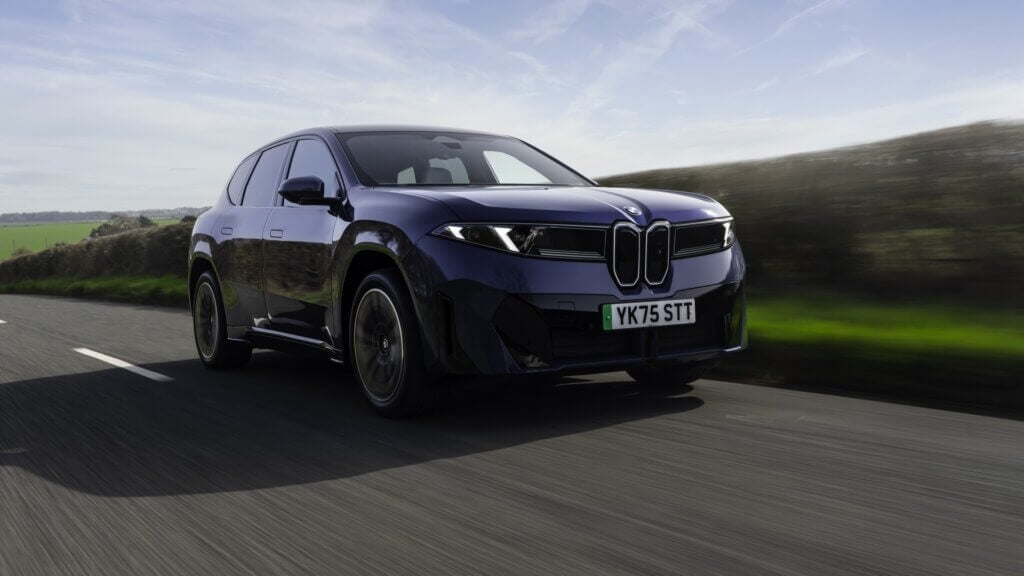
The setup is firm, and broken surfaces register clearly in the cabin. New Zealand’s rougher secondary roads are likely to be less forgiving than the launch route. What the car does exceptionally well is disguise its mass. Body control is tight, the car stays flat through quick direction changes, and there was only one point across the drive where the weight made itself obvious.
Much of that comes down to the Heart of Joy, a single control unit that manages drivetrain, braking, steering and energy recuperation together rather than through separate systems. BMW says it processes around ten times faster than the previous arrangement, and the practical results appear under the umbrella of what the company calls symbiotic drive. Soft Stop uses the rear motor to take up the final part of the braking phase, eliminating the usual nod as the car comes to rest. The same principle settles the rear axle coming off speed humps.
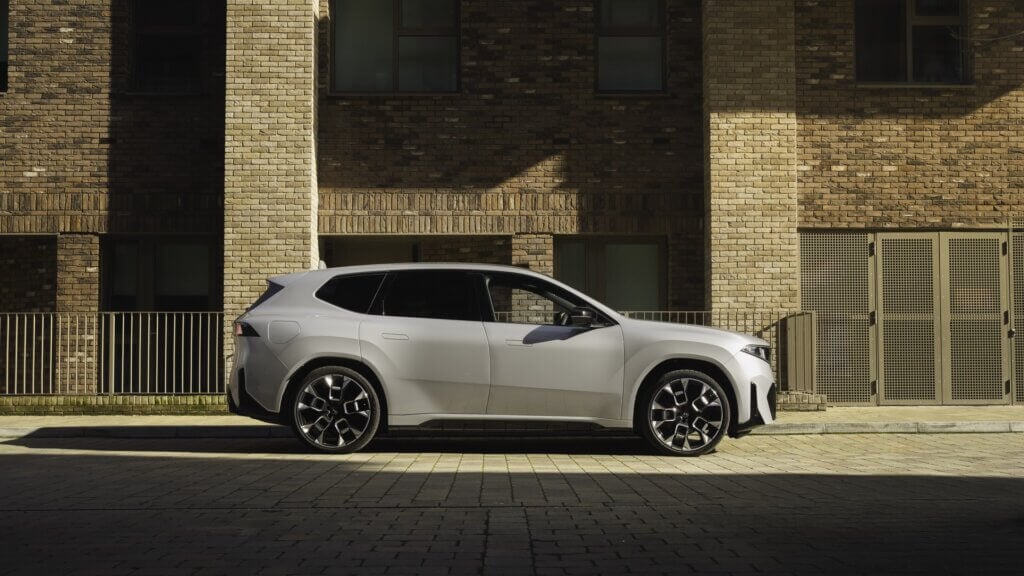
The transition between regenerative and friction braking is imperceptible, which anyone who has lived with a first-generation Leaf will recognise as a significant achievement, and B mode adds adaptive regeneration that varies with conditions. Sport mode sharpens throttle response and inflates the seat bolsters, and launch control is available through both pedals.
Interior and equipment
The cabin marks the clearest break with previous BMWs. Panoramic Vision spans almost the full width of the windscreen, projected from three panels concealed beneath the dashboard rather than displayed on a screen, and it will feature on every Neue Klasse model to follow. A 17.9-inch central touchscreen angled towards the driver runs the tenth generation of iDrive on Operating System X.
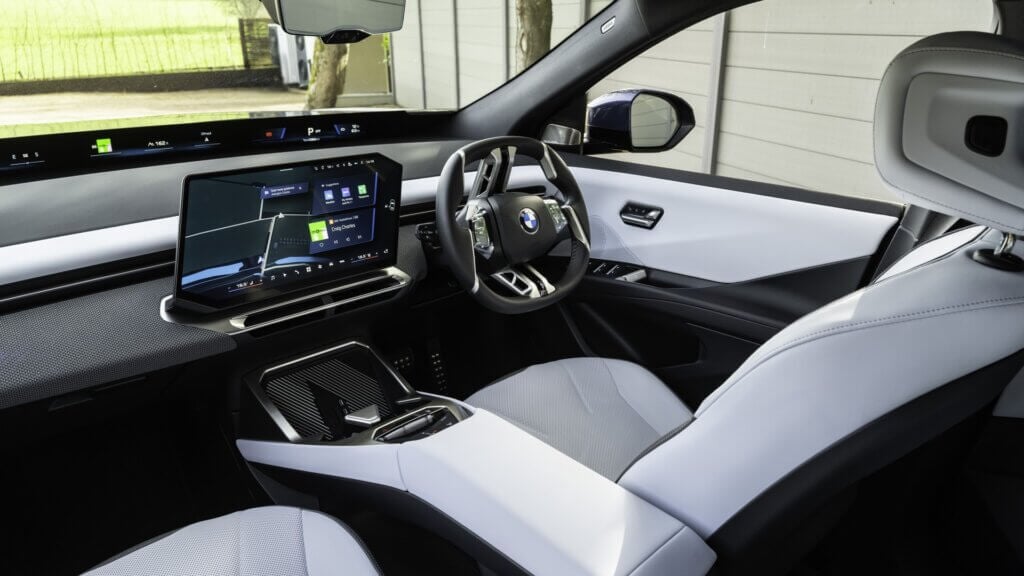
Configurability is extensive, including programmable start-up sequences that set climate, seat and driver assistance preferences each time the car is entered. That includes silencing the overspeed alert permanently, which for anyone who learned to drive in cars that had the decency to stay quiet is worth a good deal on its own. Shy Tech controls on the steering wheel illuminate only the functions the car expects the driver to want.
The panoramic glass roof is standard and blocks all UVA and UVB along with up to 90 percent of heat. Multifunction front seats are standard with heating and a seven-programme massage. Rear backrests adjust between 23 and 31 degrees, which is roughly Jetstar territory, and fold 40/20/40, with air vents, USB charging and a flat floor, though no seat heating. Boot space runs from 520 to 1750 litres, with a further 58 litres under the bonnet for cables. A swing-away electric tow bar is offered here, where the Australian market receives a mechanical unit, and towing is rated at 2000kg braked.
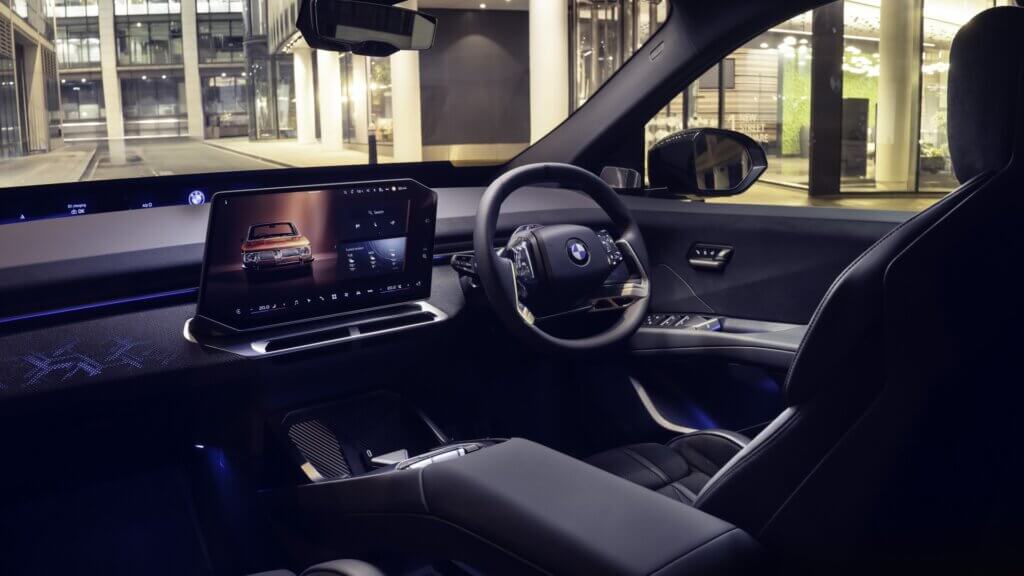
Not everything convinces. Ventilation is adjusted through the touchscreen rather than physical controls, and reaching down to use it earned a driver attention warning, which is a curious reward for operating the interface BMW designed. The steering wheel is heavily populated and its flat upper and lower sections will divide opinion. Larger drivers may find the centre console close to the left knee.
Verdict
The iX3 carries a five-star ANCAP rating awarded under the tougher 2026 protocols, and it is currently the only vehicle to hold one. It is expensive, and the ride will not suit buyers after a soft-riding family SUV. It is also the most convincing electric car BMW has built, and it does very nearly everything better than I expected going in.