View all
4 more images
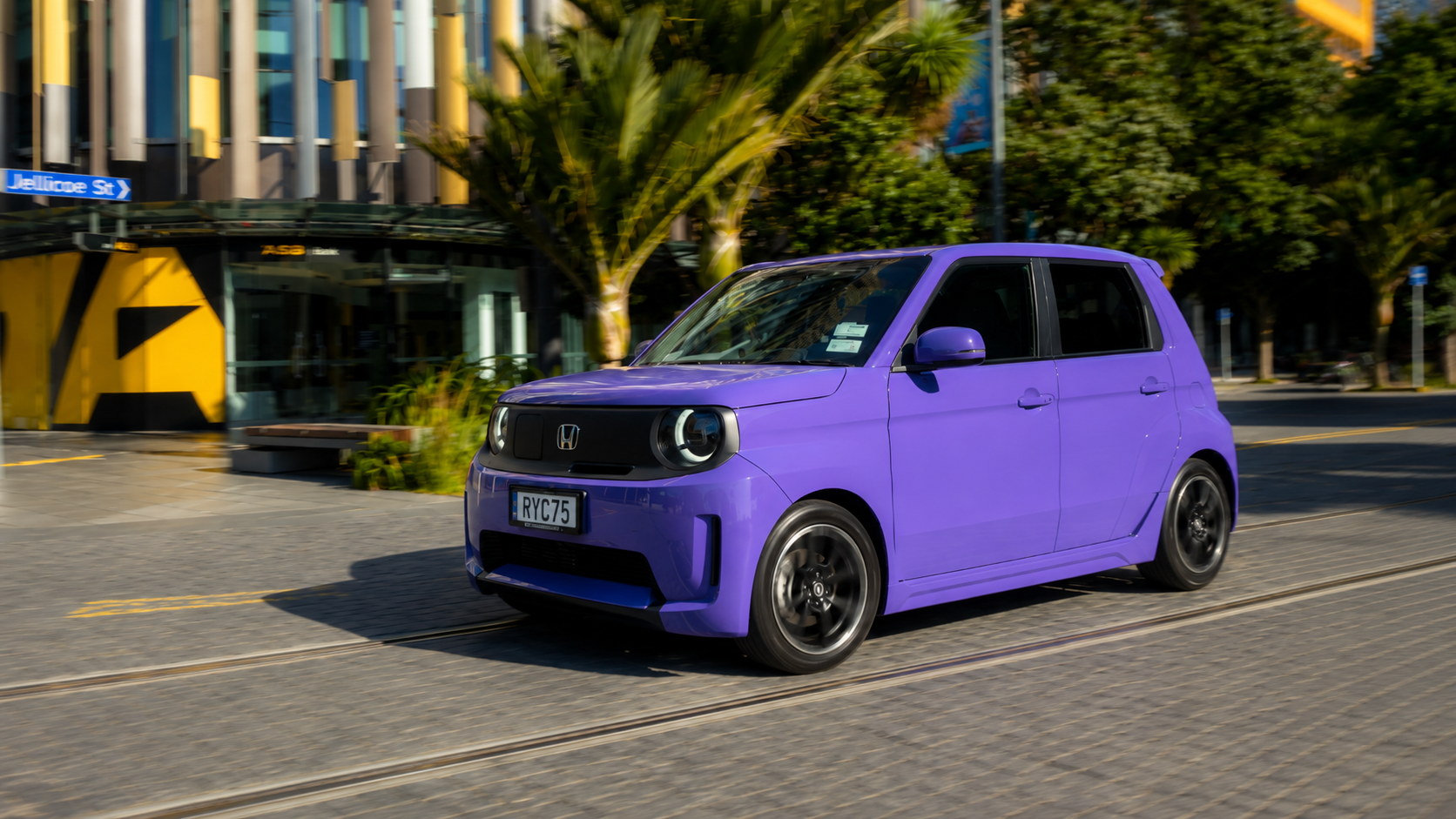
Honda Super-ONE first drive: sensible need not apply
Words: Richard Edwards
Honda’s cheekiest car in decades has landed in New Zealand, and if you want one, you’ll need to be quick.
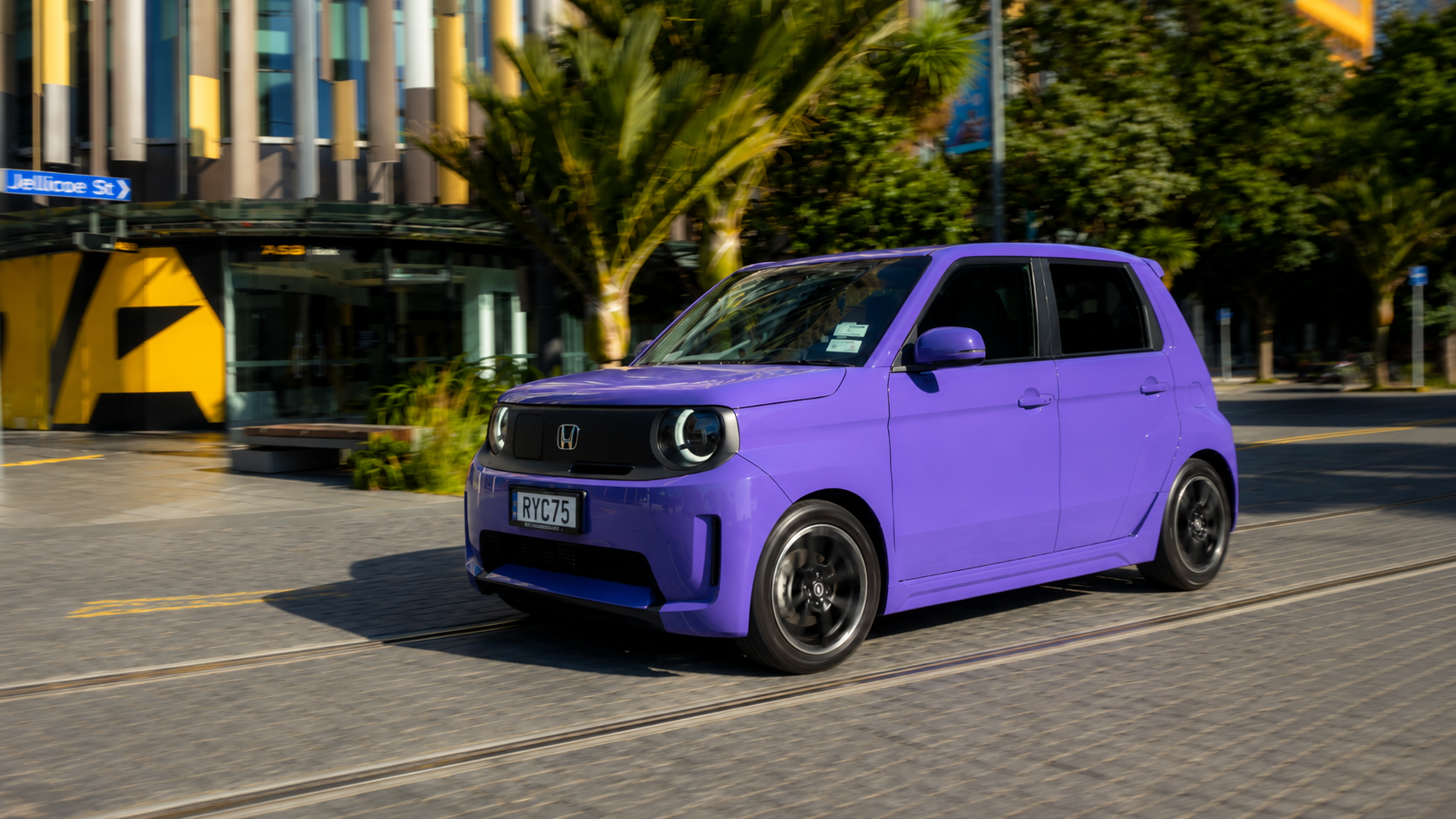
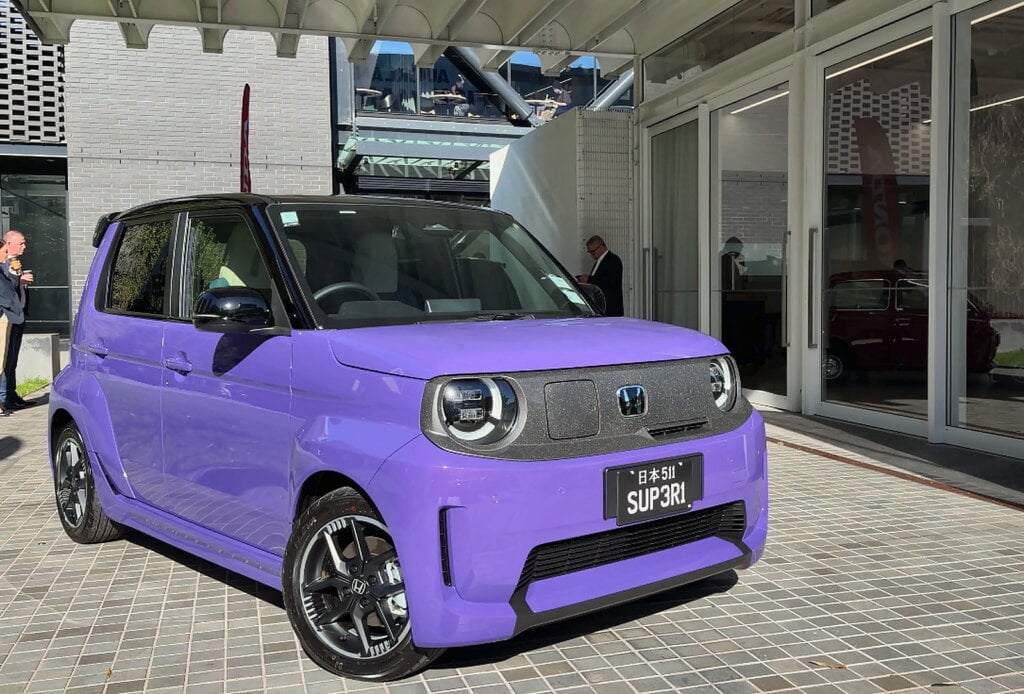
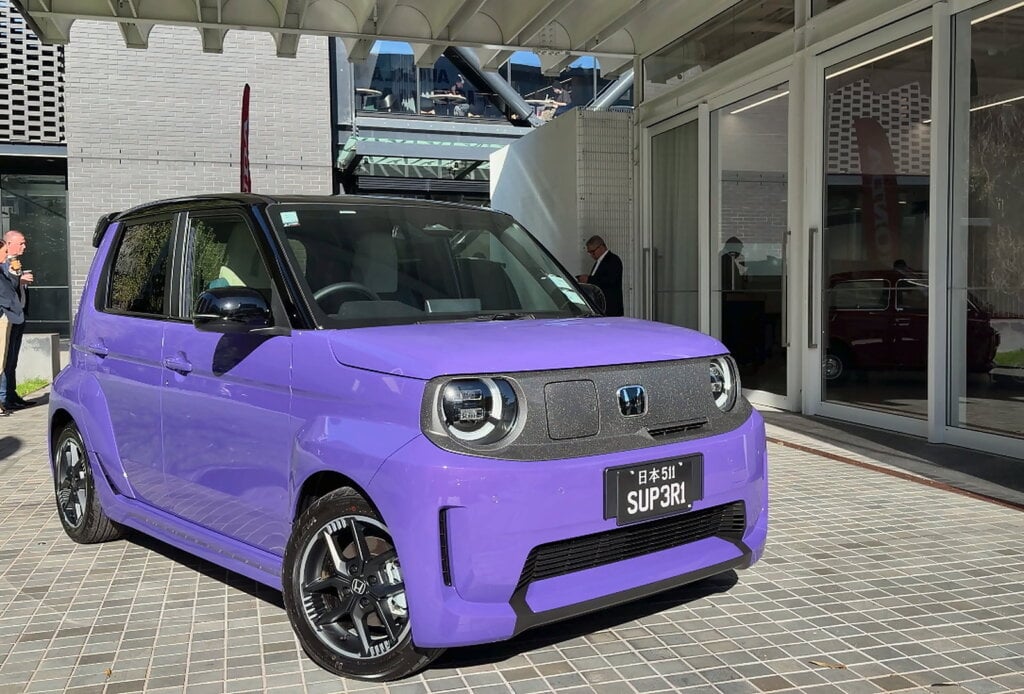
The Super-ONE, the brand’s first kei-derived model sold here and its second electric car after the short-lived e:N1, goes on sale on 1 August in two versions. The standard car is $41,900 and the Kuro Edition is $44,900, both plus $1,395 on-road costs. The Kuro is a trim exercise, adding a Crystal Black roof, a bigger piano black spoiler and black mirror caps and antenna. Mechanically the two are identical.
Honda New Zealand has secured around 50 units through to March next year, with a decent chunk already spoken for before the on-sale date, and is negotiating for more into 2027 and 2028. A national roadshow kicks off in Auckland on launch day before heading to Hamilton, Palmerston North and Wellington.
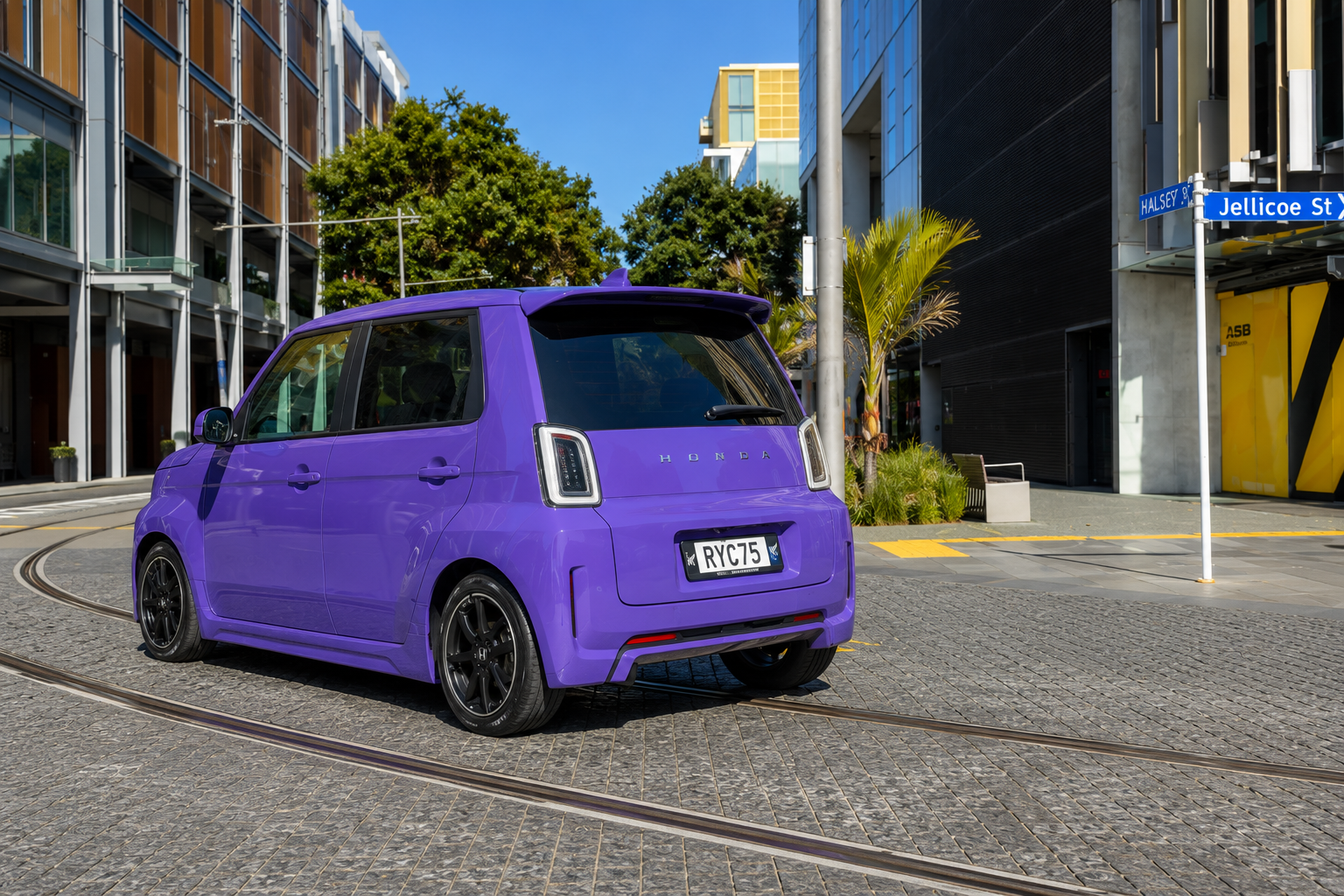
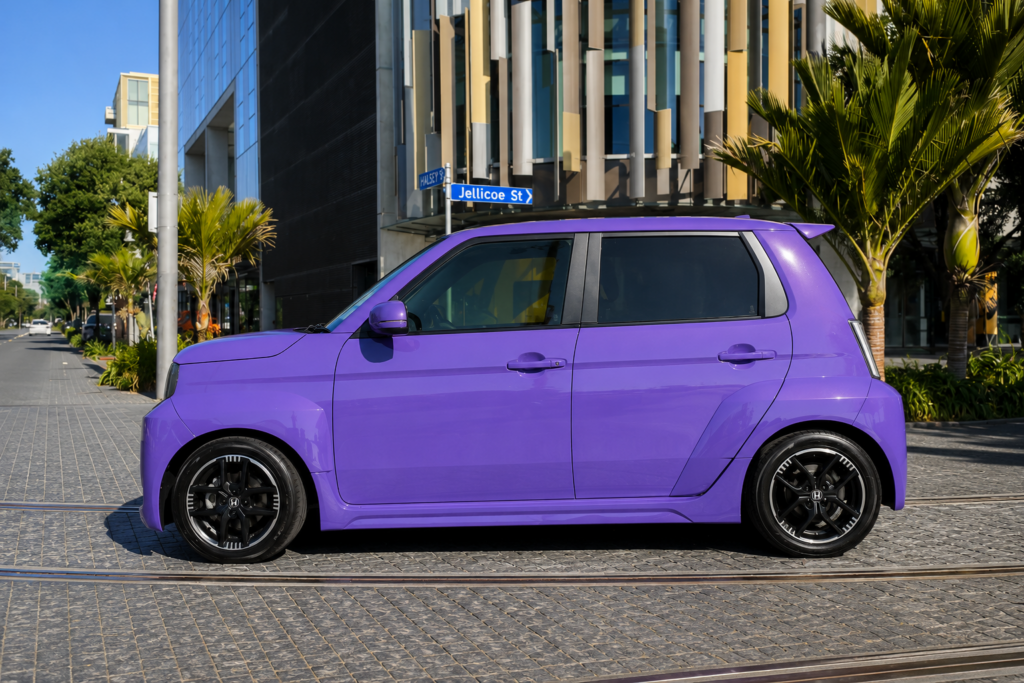
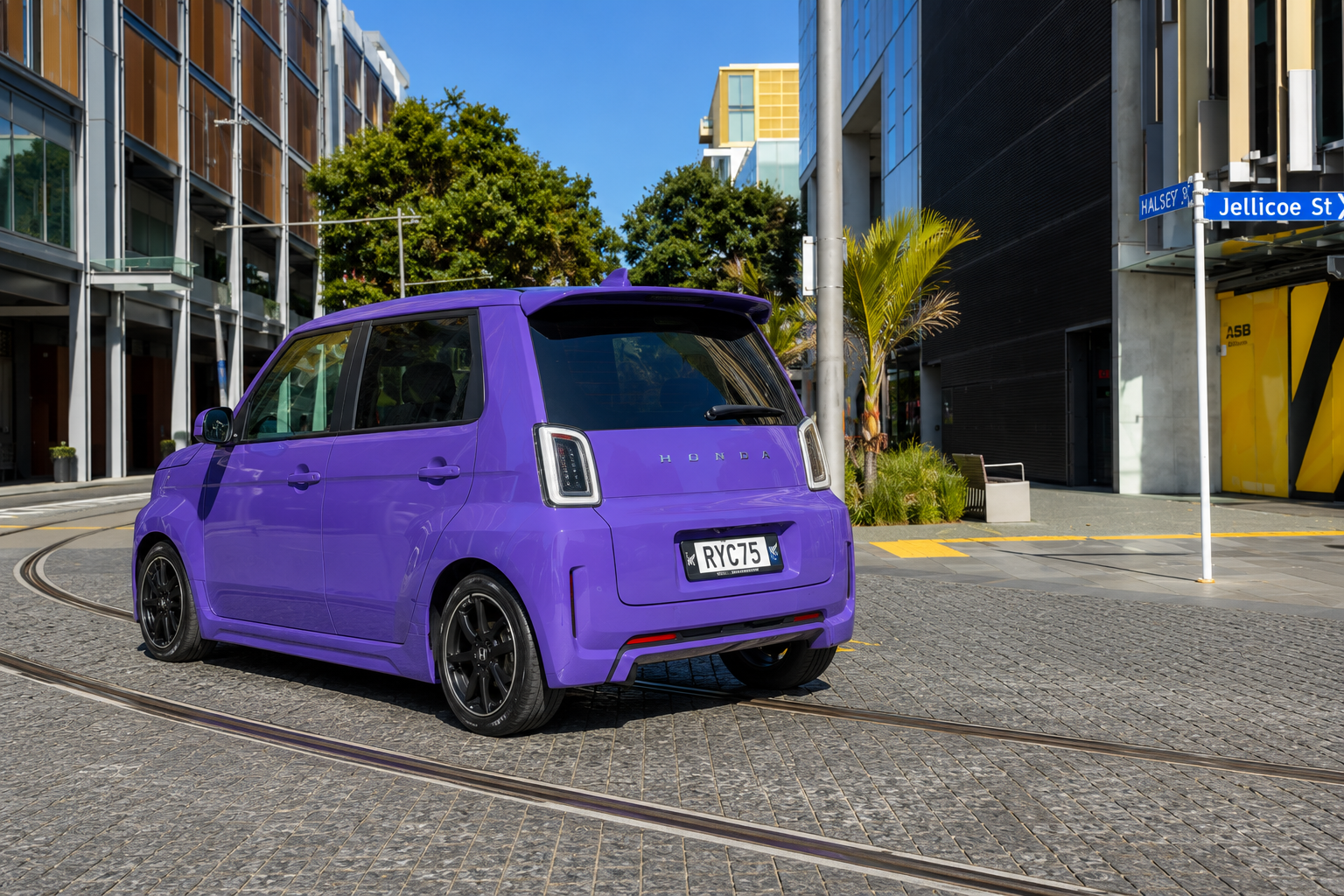
The car itself is based on the N-ONE e:, a proper Japanese kei car, but Honda has widened the body for export markets, which pushes it outside Japan’s kei tax rules. The widening gives it a better stance and track, and gives the stylist somewhere to put functional vents that channel air through the flared guards. Honda doesn’t publish a drag figure and, looking at the thing, you can see why it might prefer not to.
Both versions run a 29.6kWh battery feeding a single front motor. The pack comes from AESC’s Ibaraki plant in Japan, the same fifth-generation pouch cells going into the new Nissan Leaf, and is understood to use a nickel-based chemistry rather than the LFP found in most small EVs at this price, though Honda doesn’t officially confirm the formulation. Honda claims 253km of range, but that is an NEDC figure, the old optimistic European standard almost nobody quotes anymore. Overseas WLTP listings for the same car say around 206km. That is not a lot. Then again, we recently spent nearly eight hours running the range out of a similar-sized city EV around Auckland, so for the urban duty this car is built for, it should be enough for most owners.
So will anyone spend north of $40,000 on a car this small, with range like that? After a day darting around Auckland in the Kuro, I don’t think sensible is the point.
Small outside, clever inside
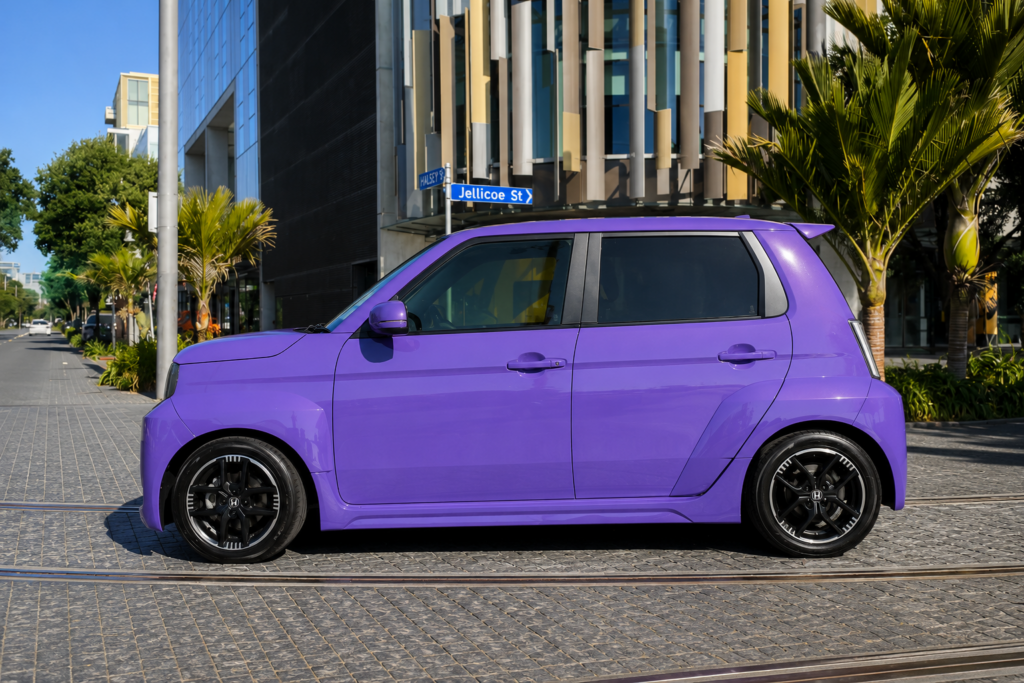
At 3582mm long and 1093kg, the Super-ONE is smaller than the small hatchbacks you’re thinking of. The last time Honda sold something this compact here, it was the original City, one of my favourite cars of all time, and the Super-ONE leans hard on that heritage. The grille, in a nice touch, is made from the shredded bumpers of old Honda cars.
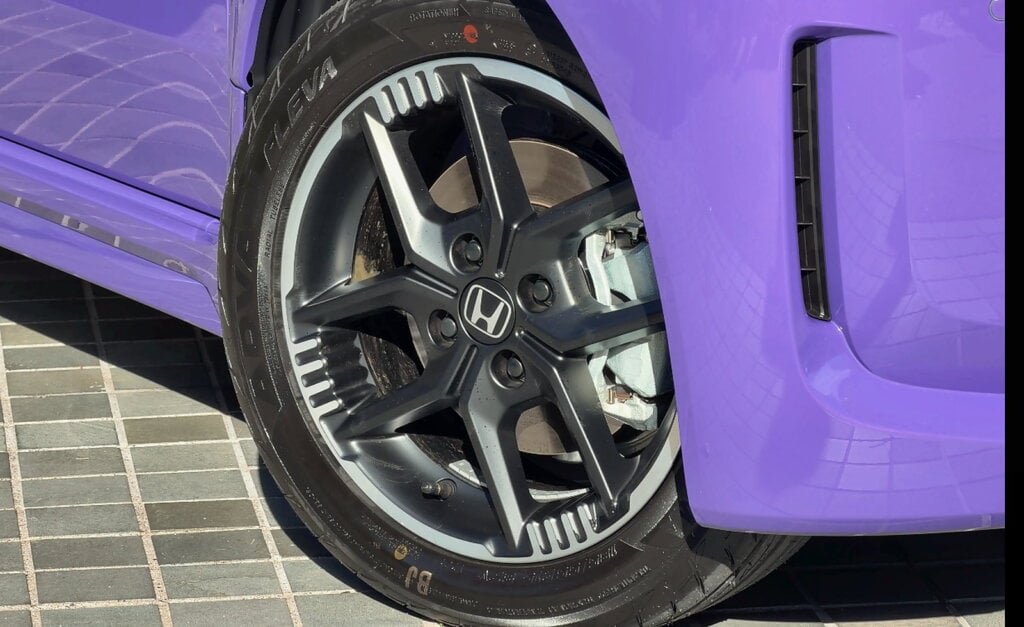
The wheels are 15-inch machine-faced alloys wearing 185/55 rubber, and when was the last time you saw 15s on anything bigger than a shopping trolley? On this car they somehow look big.
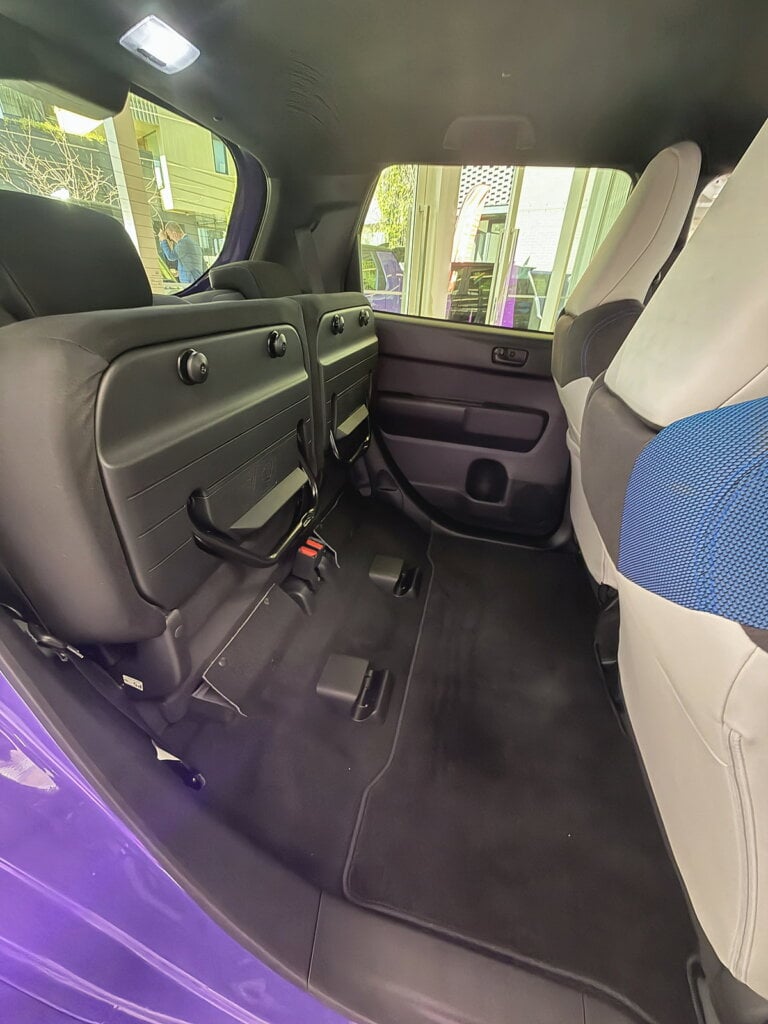
The boot is where the packaging gets tight. There is no frunk, just motor gubbins, and the boot itself is 162 litres. That is tight, two carry-ons at best, although the load floor sits usefully low and the shape is more useful than the number makes it sound. Fold the 50:50 rear seats, though, and you have around 900 litres to the roof, which is a lot of space for a car with this footprint. Better still are Honda’s Magic Seats, which tip up cinema-style to open a tall load space behind the front seats for plants, boxes and the general clutter of life. As a two-seater with luggage, this thing is sorted.
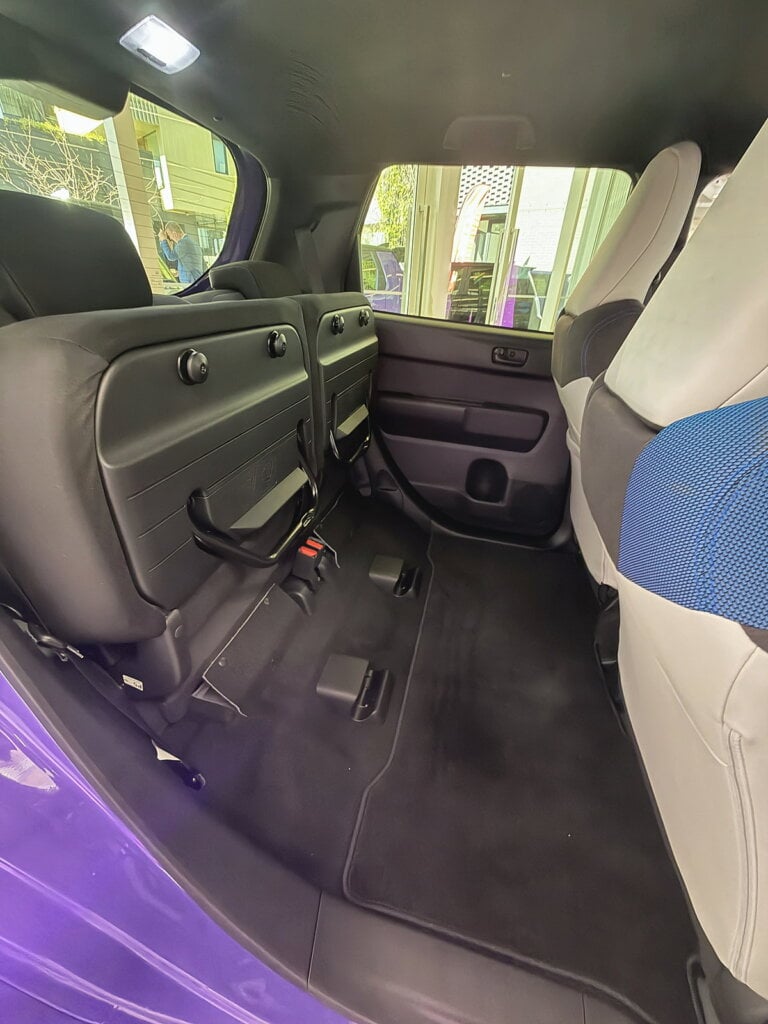
The back seat itself passes the tall-adult test for around-town duty, with decent footroom and space that surprises given the exterior. Kids will be perfectly happy. There are only two rear seats, and the seat comfort is honest rather than plush.
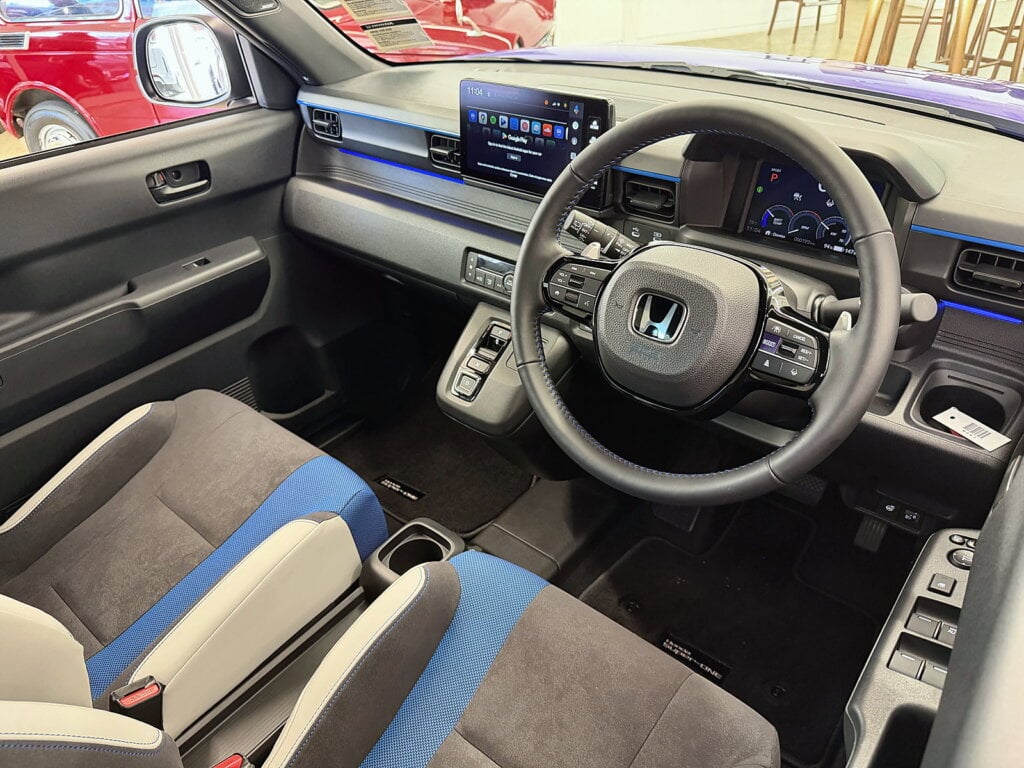
Up front it feels like a proper car. The driver’s seat has real under-thigh support and side bolstering, rare at this size, though adjustment is manual and the steering column tilts but doesn’t reach. A nine-inch screen runs built-in Google with Play Store apps, backed by a seven-inch driver display. Honda Connect brings an app with a digital key, remote locking, charging control and pre-conditioning, free for the first three years. What it costs after that, Honda hasn’t yet said, and it is worth asking before you sign, because subscription renewals on connected services have a habit of surprising people at year four. The eight-speaker Bose system with a subwoofer means you can bass-bounce your way around the city like Ali G in his Renault 5, in a car not a great deal bigger. Storage is the trade-off: the glovebox is mostly full of the manual, there’s no centre console, and no wireless phone charging despite a shelf that looks shaped for it.
Build quality feels properly high. The dash plastics are hard but not hard-hard, if that makes sense, and everything clicks and thunks the way Hondas traditionally do.
The boost button is the whole car
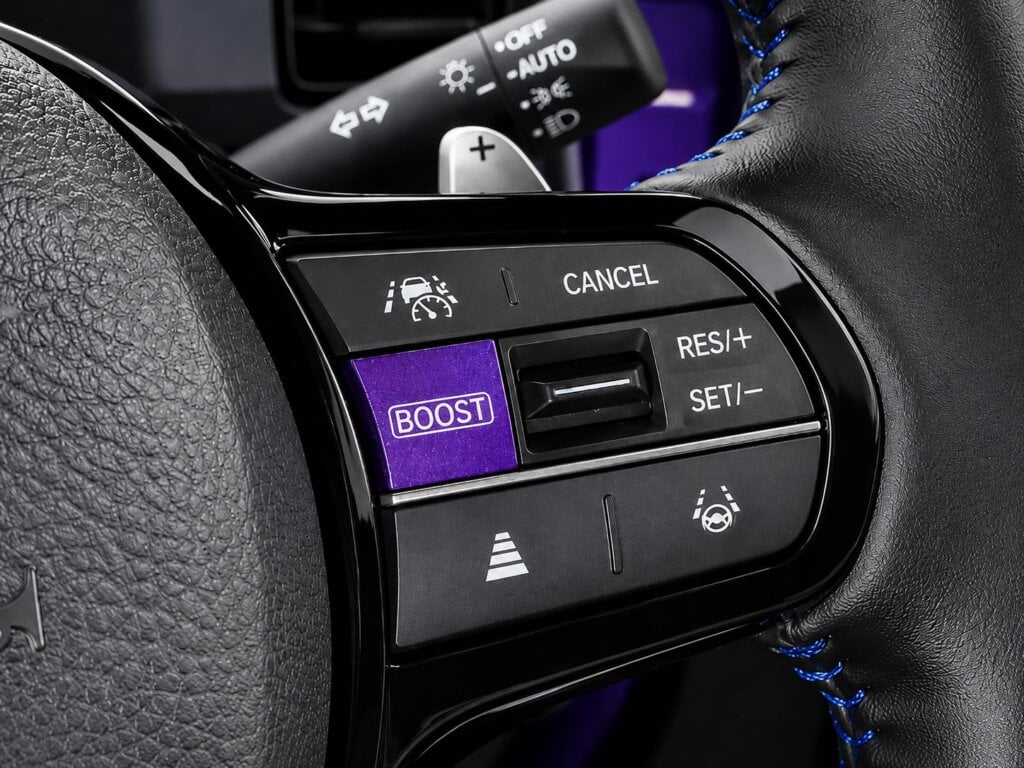
In normal driving you get 47kW, which is fine around town and pretty sluggish at motorway speeds. Push the BOOST button and the full 70kW and 162Nm arrives, along with the party tricks: a synthesised engine note that sounds like the buzzy little three-cylinder weapon a kei car should have, and a simulated seven-speed gearbox worked through paddles. It even refuses upshifts when the revs aren’t right, like a proper transmission. It is a gimmick, and it serves no purpose at all, and I loved it anyway. Snap a downshift and the fake revs flare while the front tyres scrabble for grip. Most EVs at this price are silent appliances. This one is putting on a show.
The catch is that 70kW through the front wheels of a short-wheelbase car produces real torque steer, and the Super-ONE doesn’t manage it especially well. Honda’s engineers could polish that. In fairness, we haven’t ruled out some exuberant application of tyre silicone by the groomers before the launch, because these were box-fresh cars gleaming from every angle, rubber included. We’ll reserve final judgement for a longer test on honest tyres. And you will want BOOST engaged more or less permanently on New Zealand motorways, because normal mode runs out of ideas at open-road speeds.
Otherwise, it is a surprisingly grown-up drive. The steering is quick, it corners tidily, and the visibility is superb, which takes the intimidation out of sitting beside trucks and towering SUVs. There’s some wind noise around the rear arches at 100km/h, but road manners overall are far more mature than the footprint suggests. Drive modes run from ECON through CITY, which enables one-pedal driving, to NORMAL, SPORT and BOOST, with regen adjusted on the paddles.
Charging is 6kW AC via Type 2 and 50kW DC via CCS2, with Honda quoting 15 to 80 percent in about 30 minutes. Not fast, but on a battery this small, fast enough. The cable in the boot is a portable 10-amp lead for a standard household socket, good for a full charge in around 12 hours in perfect conditions, so anyone wanting the full 6kW at home will need a wallbox. The full Honda SENSING suite is standard, and on the motorway its lane keeping and adaptive cruise did their job without a single unnecessary beep or bong, which counts for a lot in my book.
Ownership is covered by a warranty of up to five years with unlimited kilometres, an eight-year, 160,000km battery capacity guarantee, and roadside assistance for the warranty period. Servicing falls due every 12 months or 15,000km, and Honda’s prepaid plans price a BEV from $1,299 over three years or $2,199 over five, cheaper than its hybrid and petrol equivalents. That leaves the connected services renewal as the one running cost still to be pinned down.
Verdict
Nobody is going to cross-shop the Super-ONE on a spec sheet, and the spec sheet would lose. What this car has is cool factor, in quantities the price-comparable Chinese competition simply doesn’t offer, from the way it looks to the ridiculous noises it makes. And with the numbers landing this year as small as they are, being sensible about timing matters more than being sensible about the purchase.
You would struggle to make a rational case for the Super-ONE, but rational cases have never sold a car like this. You buy it because you want it, and having spent a day with one, I can see why people already are.
Honda Super-ONE Kuro Edition
Price: $44,900 plus ORC ($41,900 for standard Super-ONE)
Motor: Single front motor, 70kW/162Nm (47kW outside BOOST)
Battery: 29.6kWh Range: 253km (NEDC)
Charging: 6kW AC, 50kW DC, 15-80% in approx. 30 min (10A portable lead included)
Weight: 1093kg
Boot: 162L (approx. 900L seats down)
Seats: 4