View all
22 more images
1988 BMW M3 Review
Words: Kyle Cassidy | Photos: Alex Schultz
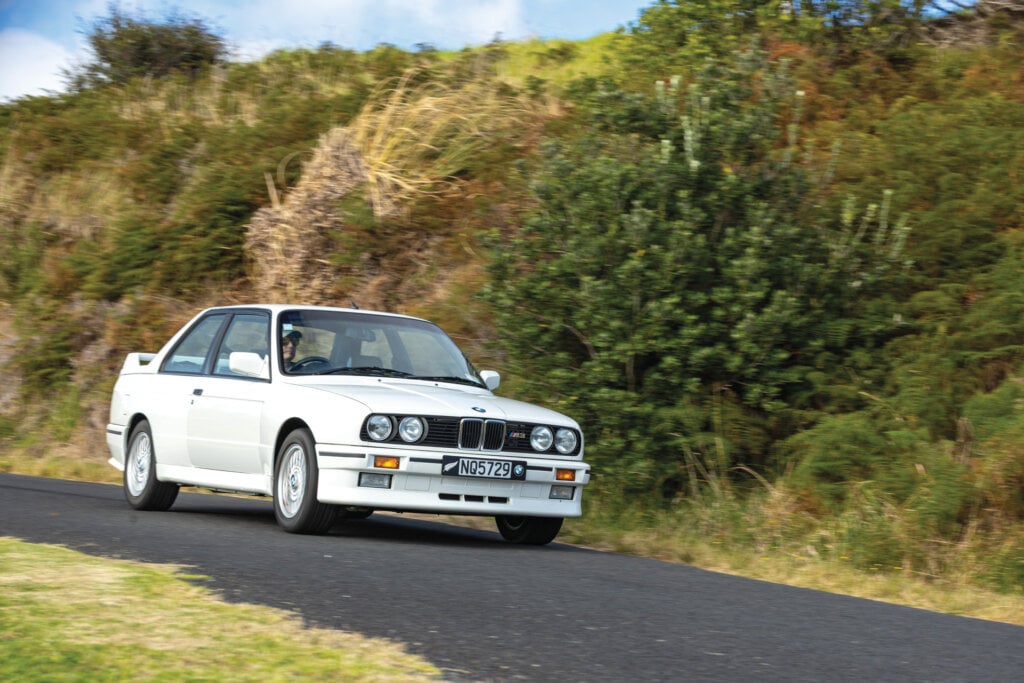
The M3 has been with us now for forty years, and so we take the opportunity to get behind the wheel of a well sorted, and rare, right hand drive version.
This year marks the 40th anniversary of what BMW likes to call the most successful touring car of all time. But before there was the race car, they had to make a road car, that being the E30 M3.
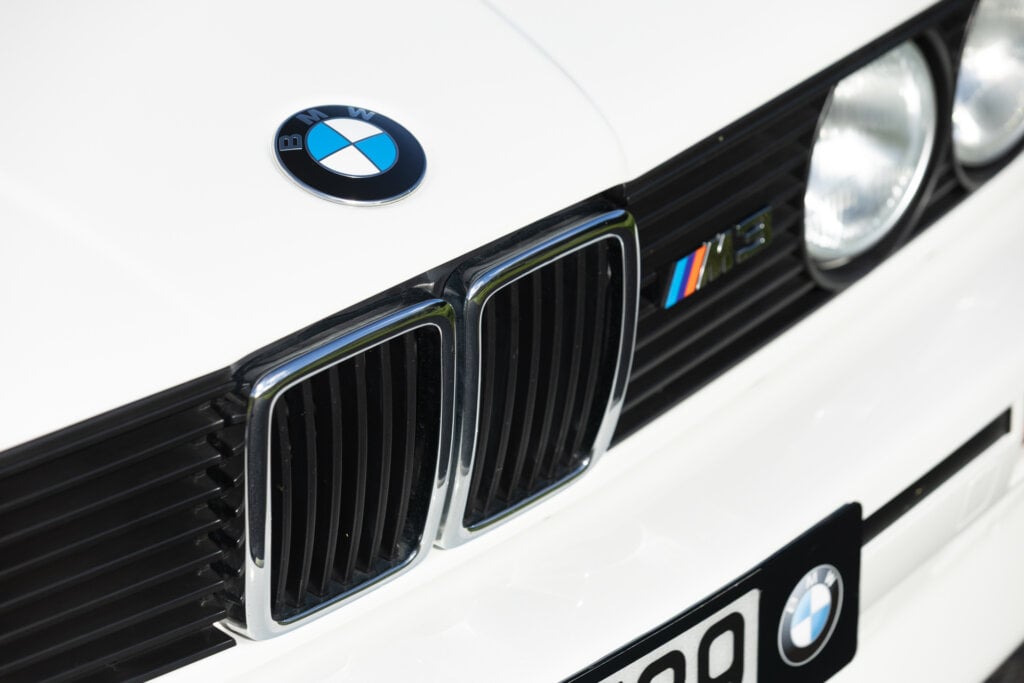
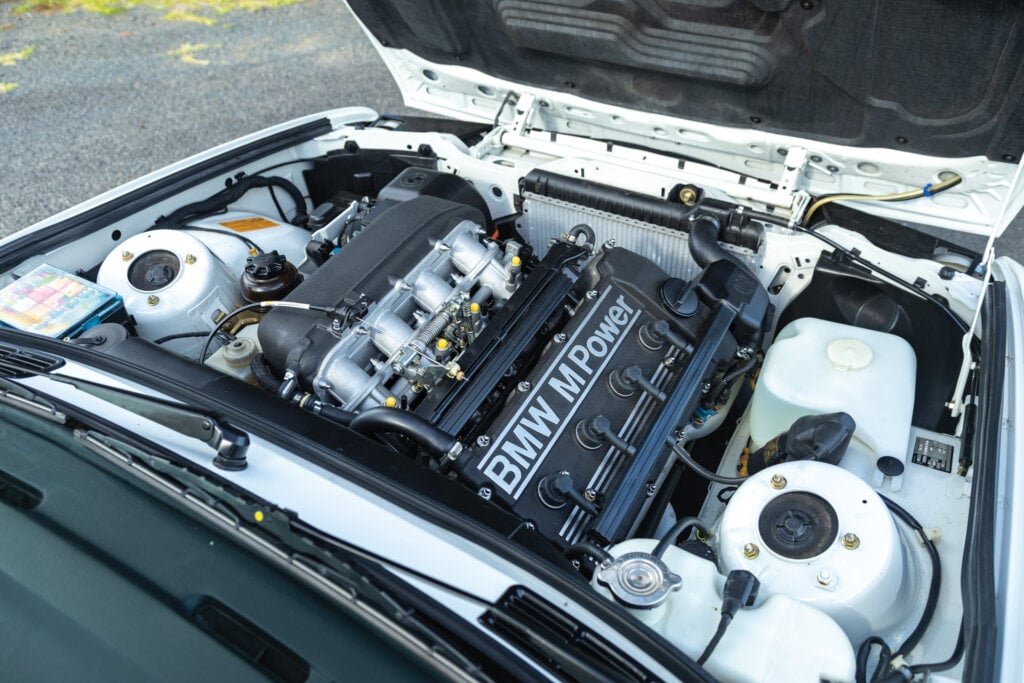
The M3 project started in 1985 when the chairman of the board, Eberhard von Kuenheim, gave the go-ahead for BMW Motorsport to develop a sporty 3 Series. It was M’s technical director, Paul Roche, that led the project, a man with some knowledge of engine development. He’d been responsible for BMW’s turbocharged Formula One engine from the early 80s that could develop some 1500 horsepower with the boost turned up. The M3’s engine would be based on the crankcase of BMW’s two-litre, four pot production engine. Roche opted for a four pot format for its weight advantage, but also for the fact that the six-cylinder’s longer crankshaft would vibrate too much as engine speeds increased above 7000rpm. It’s said they made the crank of the M3 so stiff that it was able to run at 10,000rpm without problem.
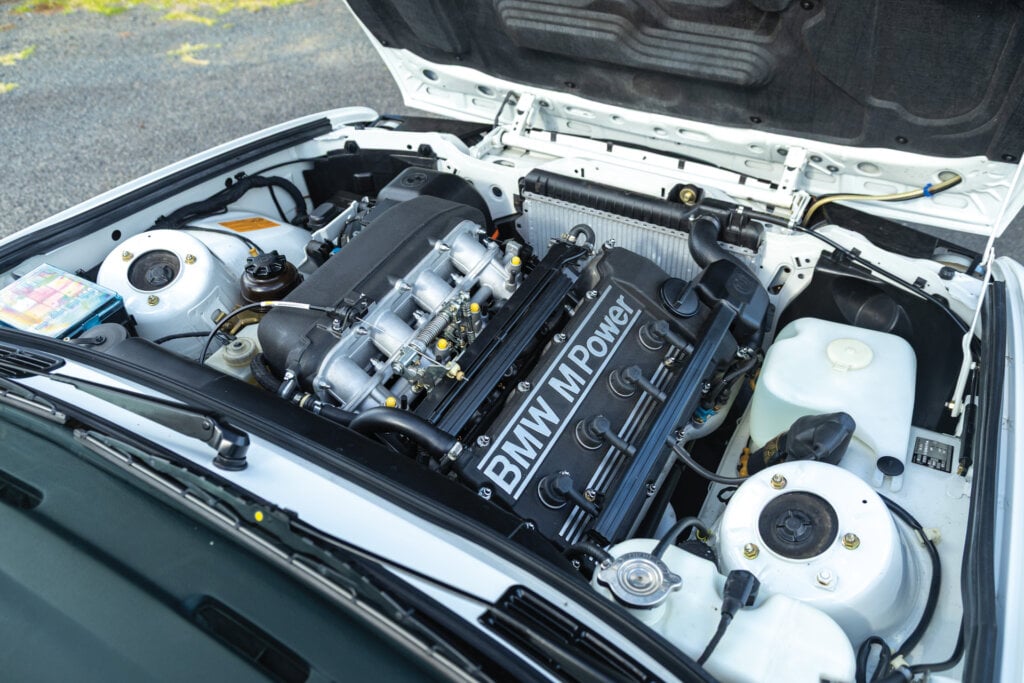
The four-valve cylinder-head came from the six-cylinder model. Once shortened, it was an easy match as the distance between the cylinders was the same for the four and the six-cylinder car. Then they set about increasing the capacity to 2.3-litres.
While other Group A homologation specials went the turbo route, the M3 was to remain naturally aspirated. The people in charge wanted the M3 to be a road-going car ‘suitable for everyday use’, which they said made it harder to give the car a ‘demanding and sophisticated turbocharged power unit’ within the given development time frame. We suspect funding may have also been a limiting factor.
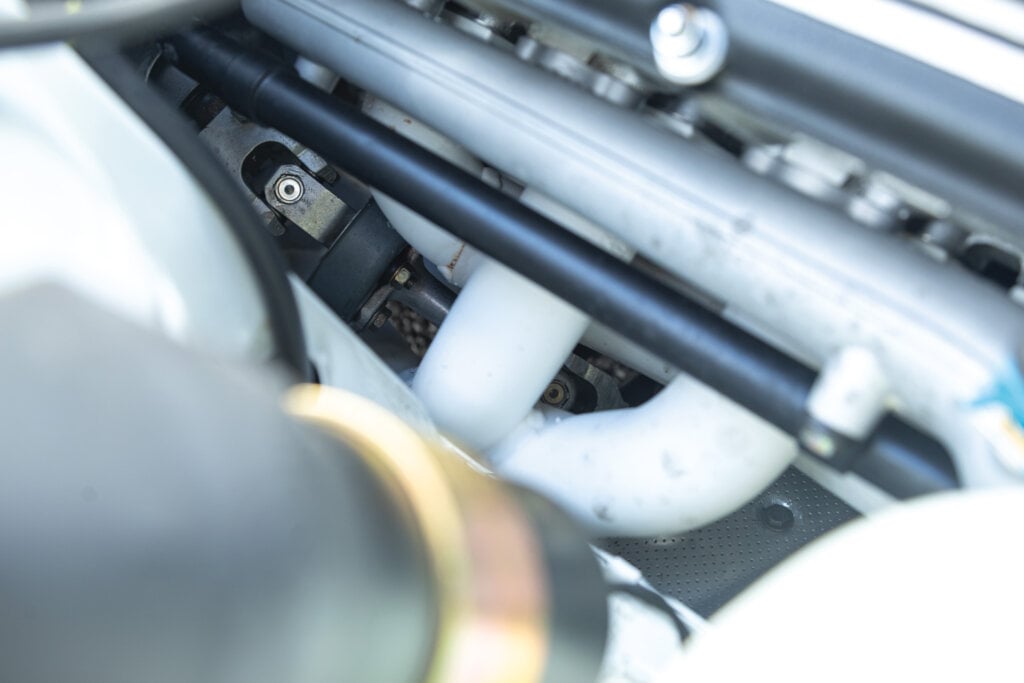
However, they did manage to make the M3 emissions compliant, giving it a catalytic converter and making it perform to the required specifications on unleaded fuel. This did require a reduction in compression ratio to 9.6, which helped control knock.
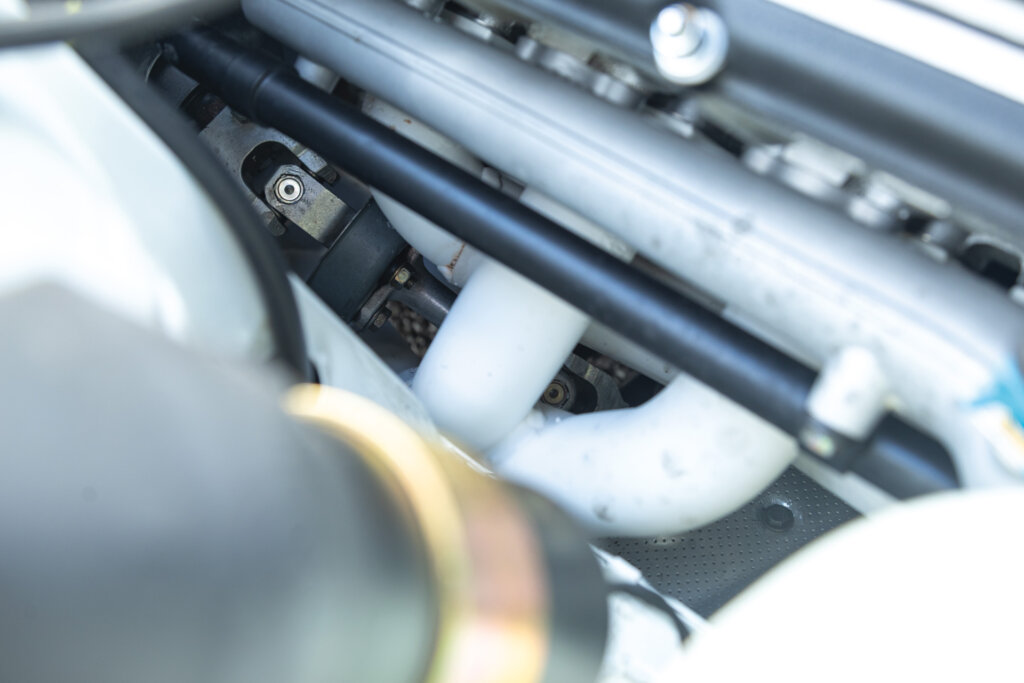
Development didn’t go without issue. When they first ran the M3 prototype at the Nürburgring, the heat caused the exhaust pipe to expand some 25mm in diameter. It then fouled with parts of the suspension, causing the pipe to crack. But instead of changing the exhaust, they altered the rubber bushings of the suspension, giving the exhaust pipe more clearance to avoid it making contact. Always thinking those Germans.
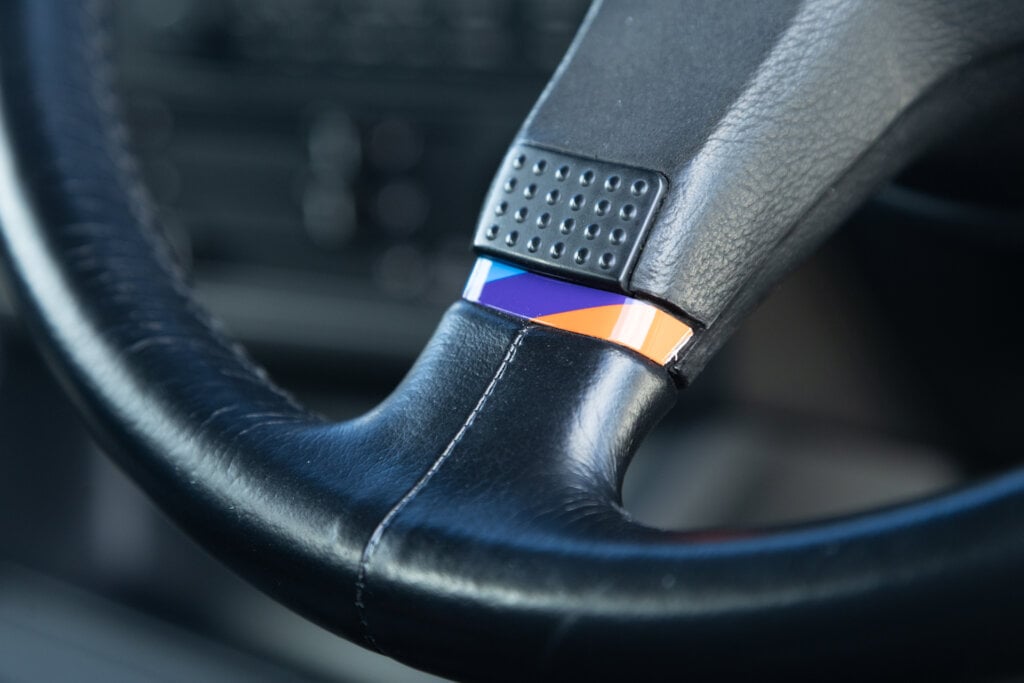
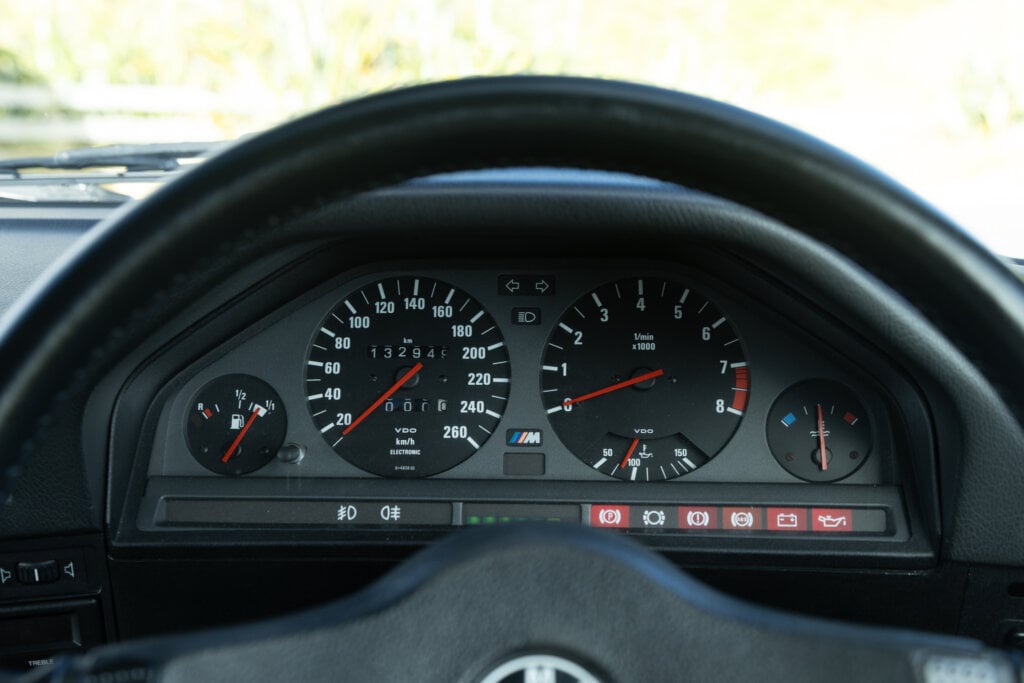
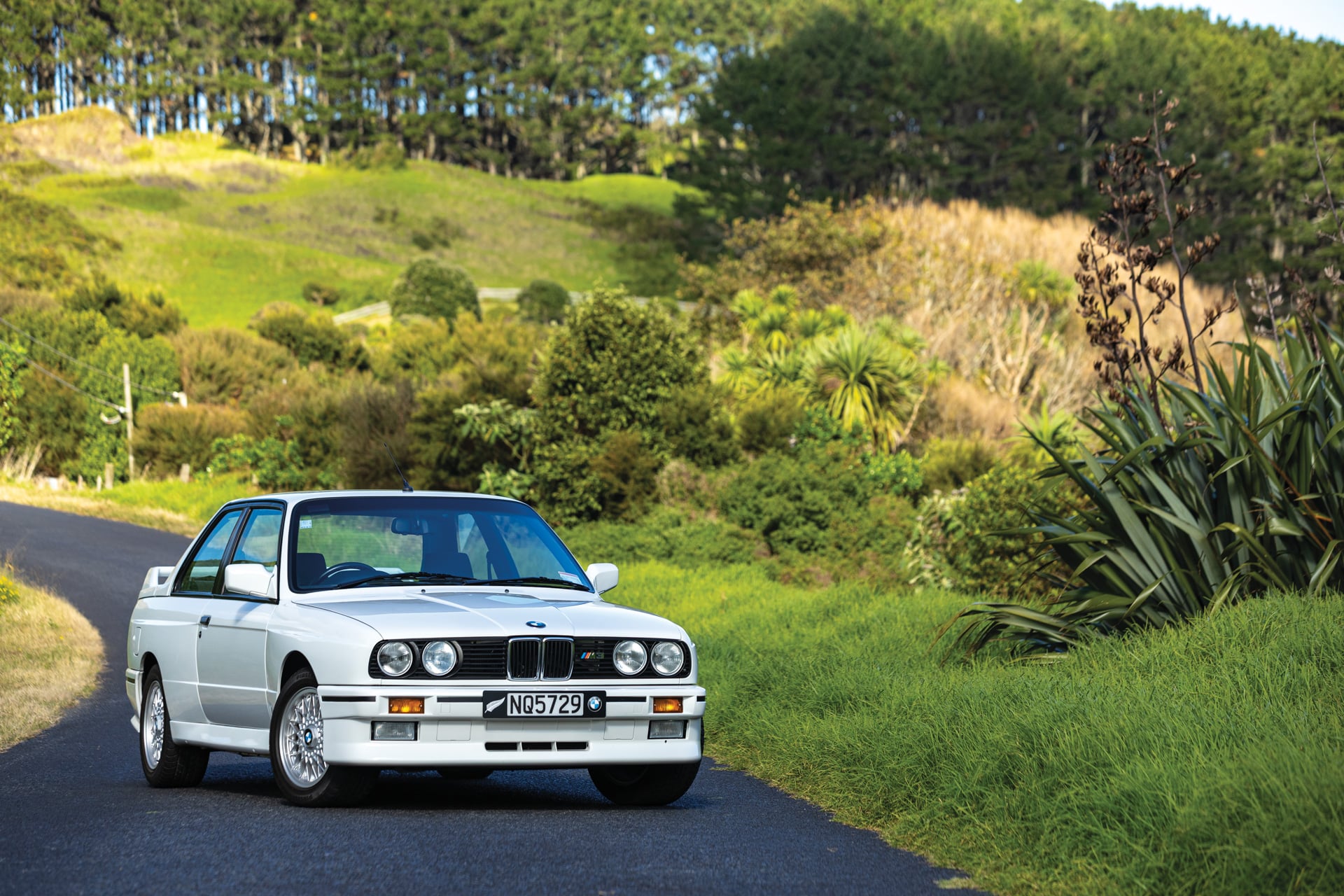
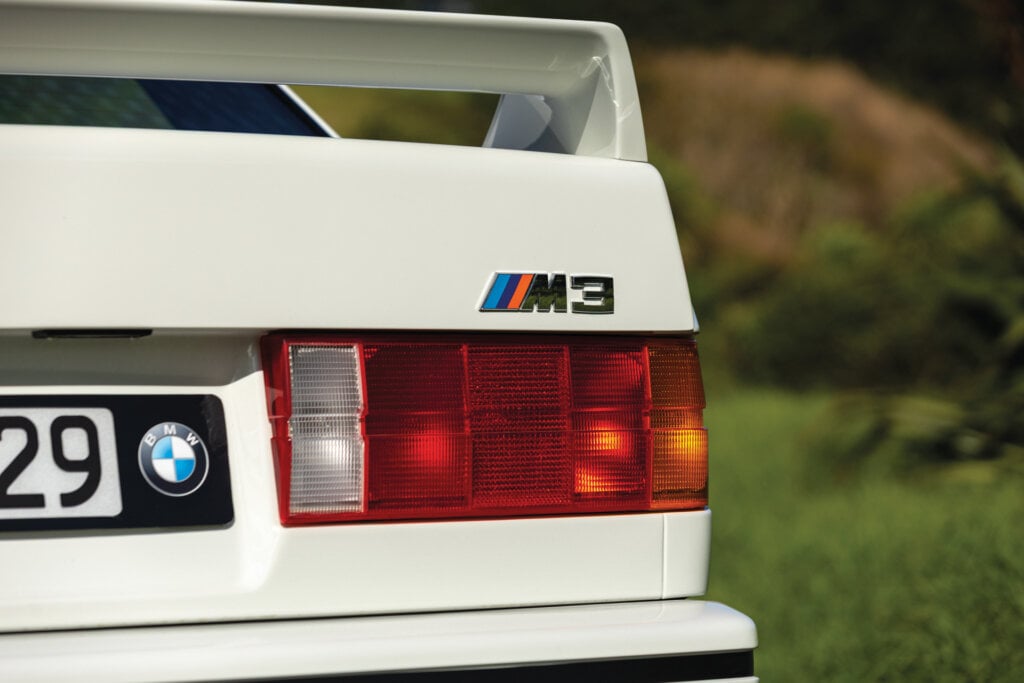
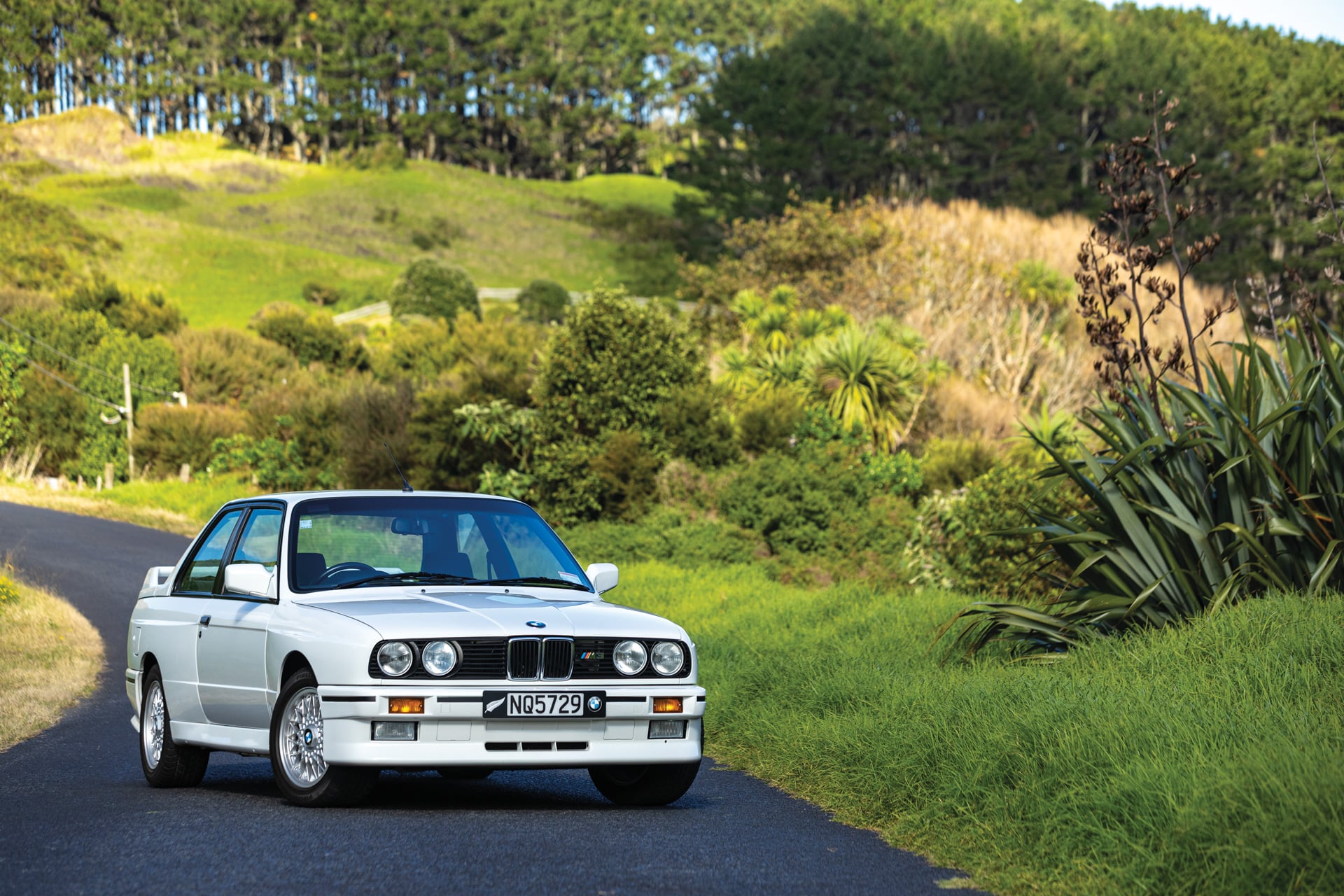
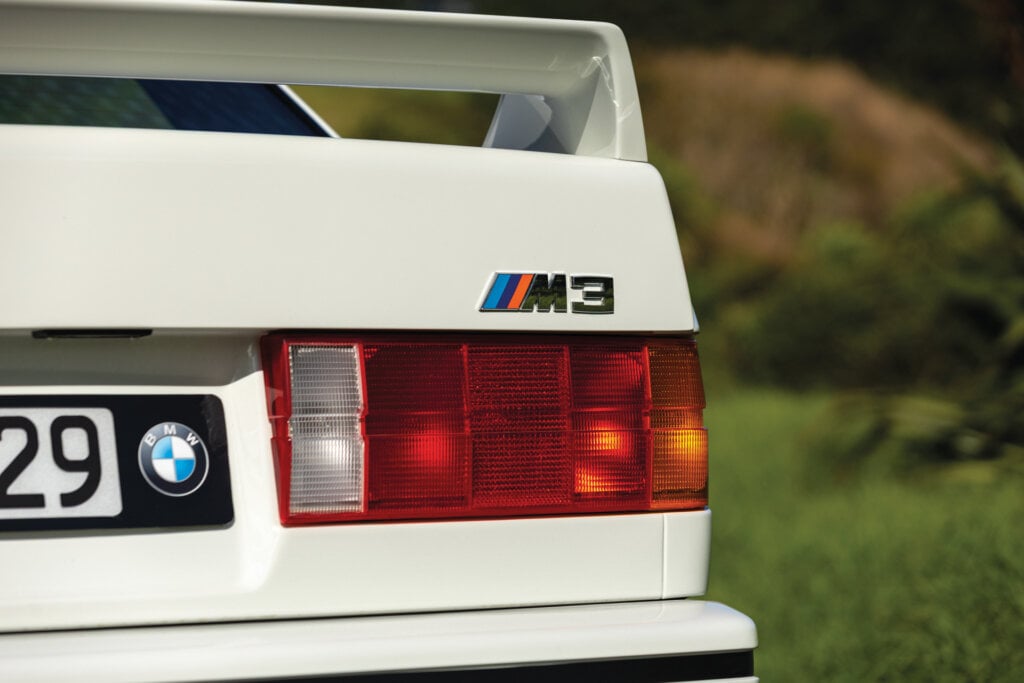
The M3 made its debut at the Frankfurt Motor Show in 1985. The car was striking thanks to its aerodynamic features including a deep front spoiler, side skirts and the big rear wing. The C-pillar was enlarged to accommodate a shallower raked rear screen than the regular production model too. This was to ensure a smoother flow of air off the roof, directing it toward the rear wing. The aero kit helped it achieve a drag coefficient of 0.33 while reducing axle lift by half at the front and two thirds on the rear. And of course, there were those flared arches.
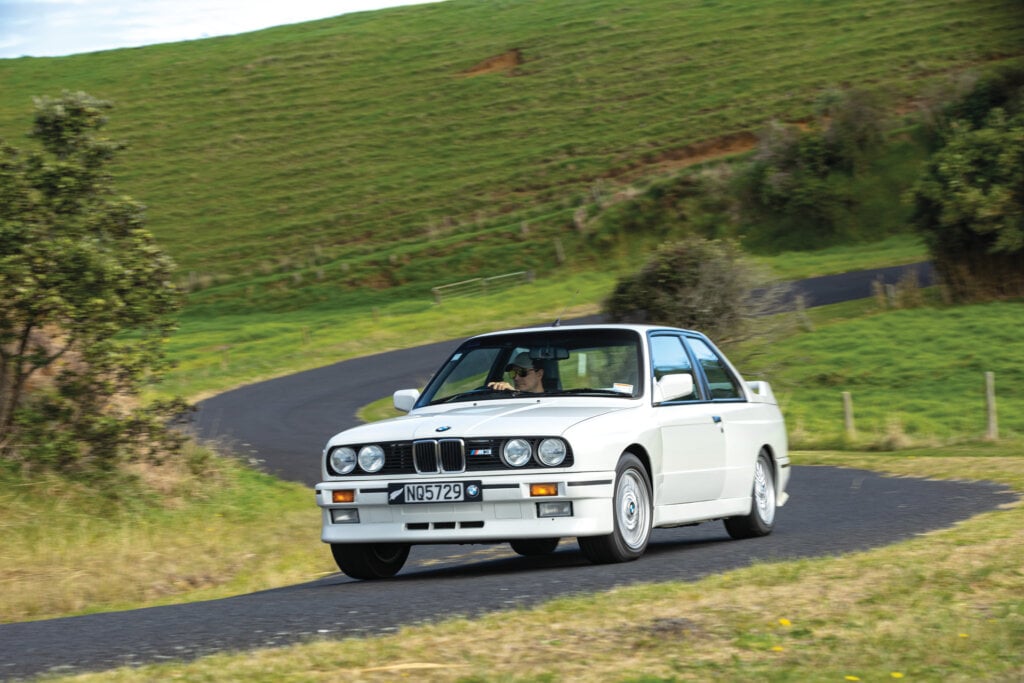
The M3 weighed just 1200 kilos, giving each of the 200 horses six kilos to haul. Helping keep mass in check were bumpers, side sills, a boot lid and spoilers all made of plastic. The springs, dampers and all the bushings were M3 specific. The brakes featured ABS as standard, with vented rotors up front. Official consumption figures pegged the M3 at 9L/100km.
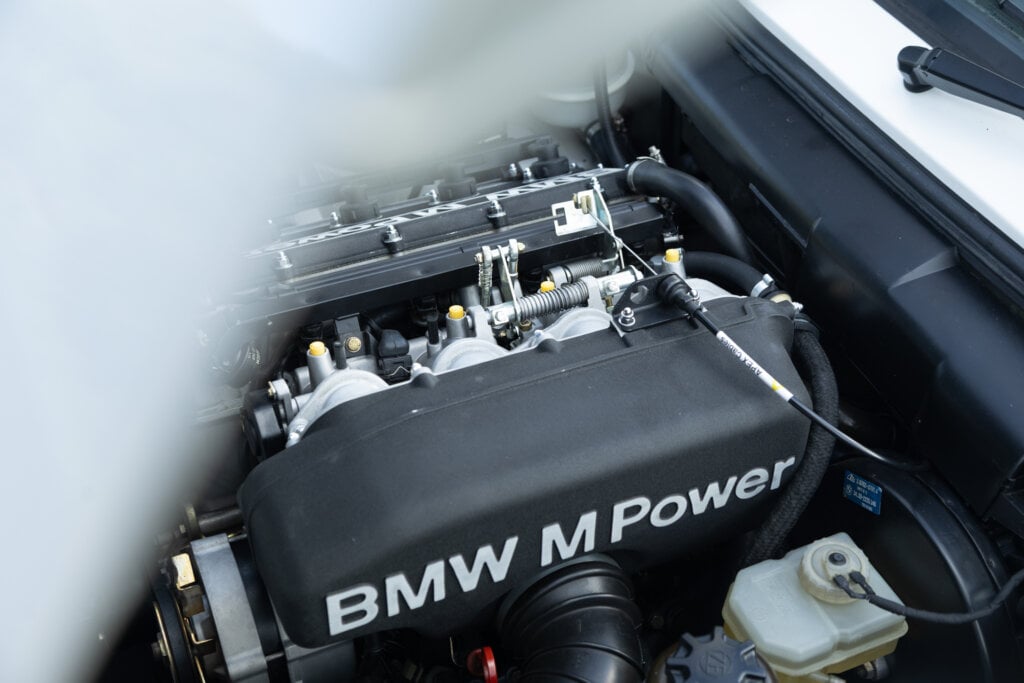
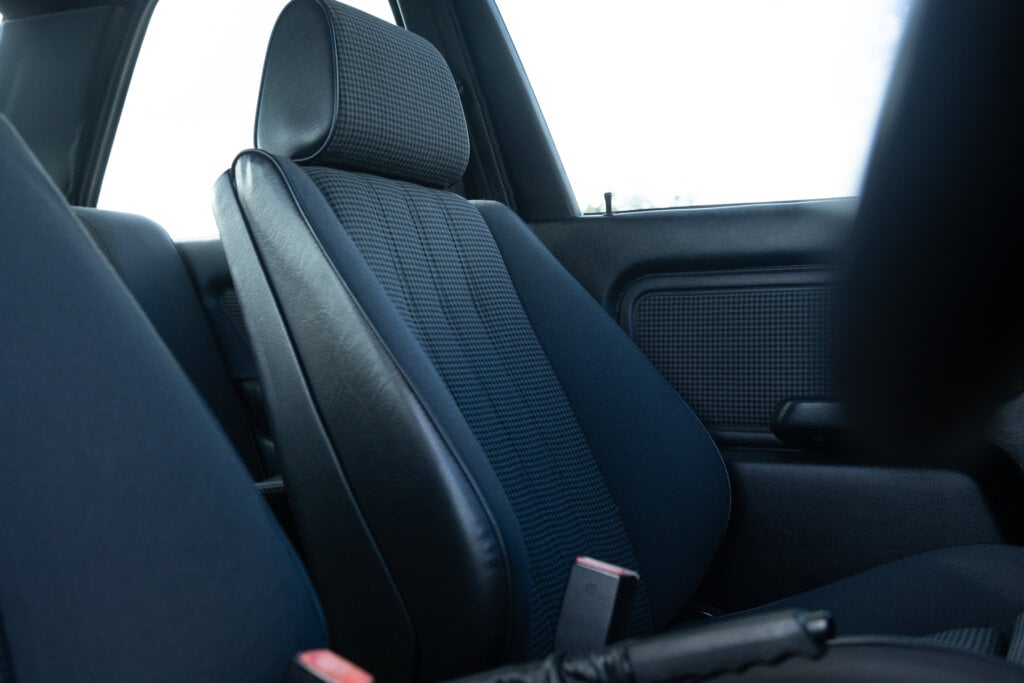
It was fairly expensive, asking some 30 per cent more than the 325i convertible at the time, but they sold the 5000 units required for homologation. However, first customer deliveries didn’t happen until 1987.
When the M3 debuted on the racetrack for the World Touring Car Championship, BMW had managed to squeeze 300hp at 8200rpm from the engine. It was a racing success, winning numerous championships throughout Europe, and the rest of the world, over its Group A career.
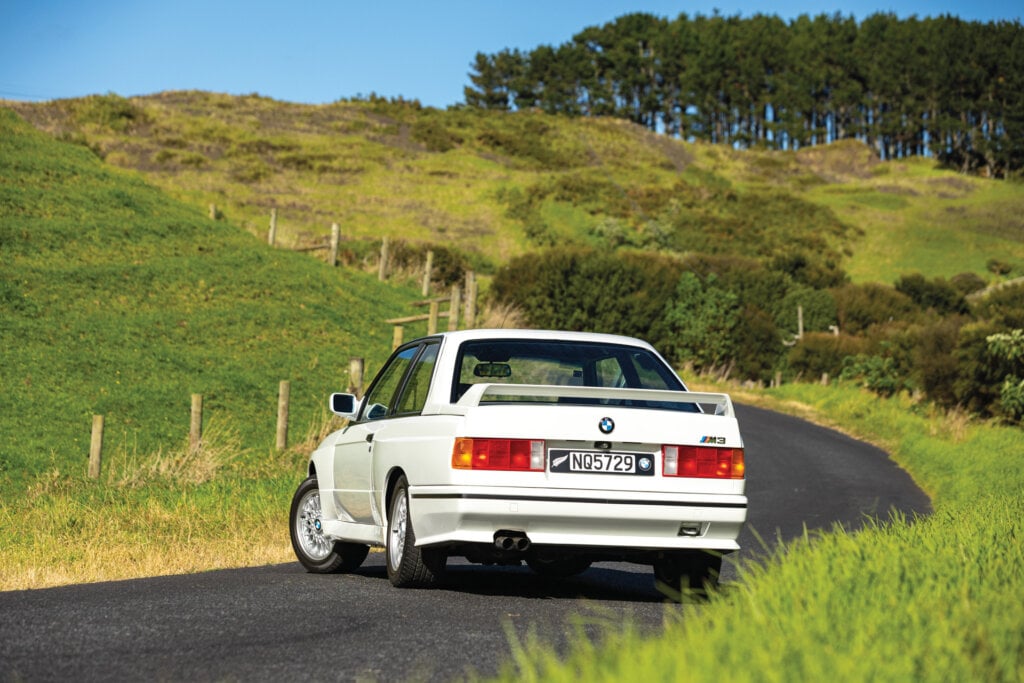
The road car continued to be developed, being the first BMW to offer electrically adjustable dampers with sports, normal, and comfort settings. In 1988 the first Evo model came out with bigger spoilers and a more powerful engine, now up to 220 horsepower. BMW also introduced a convertible model, made in small numbers. The four pot would eventually be stretched out to 2.5 litres, producing 240hp for the Sport Evolution. Production came to an end in 1991 with 17,970 units sold, including the 786 convertibles.
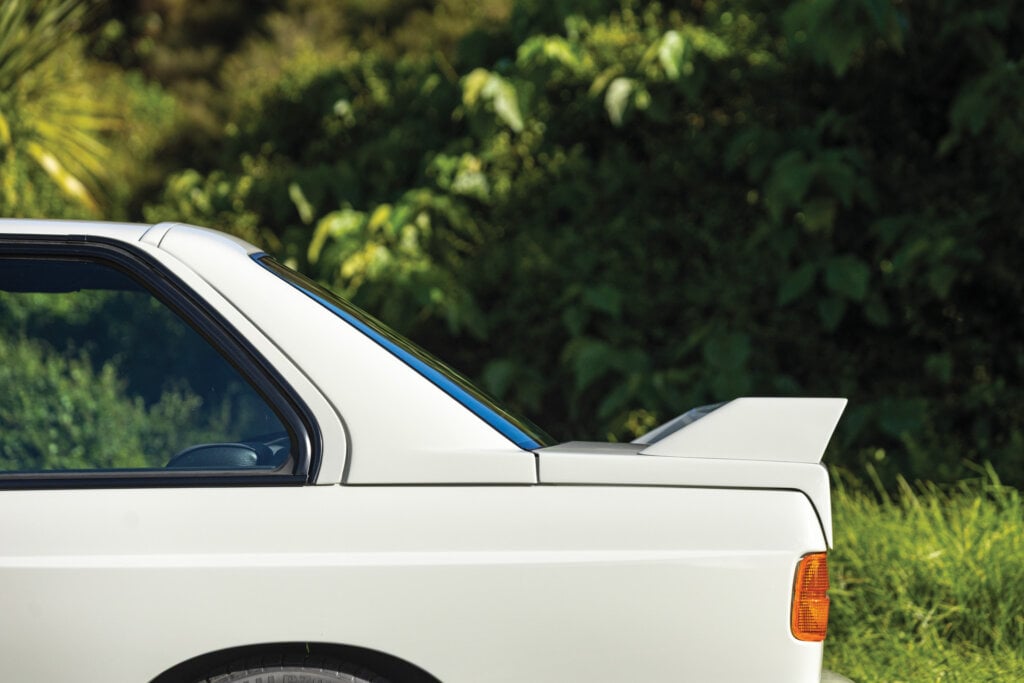
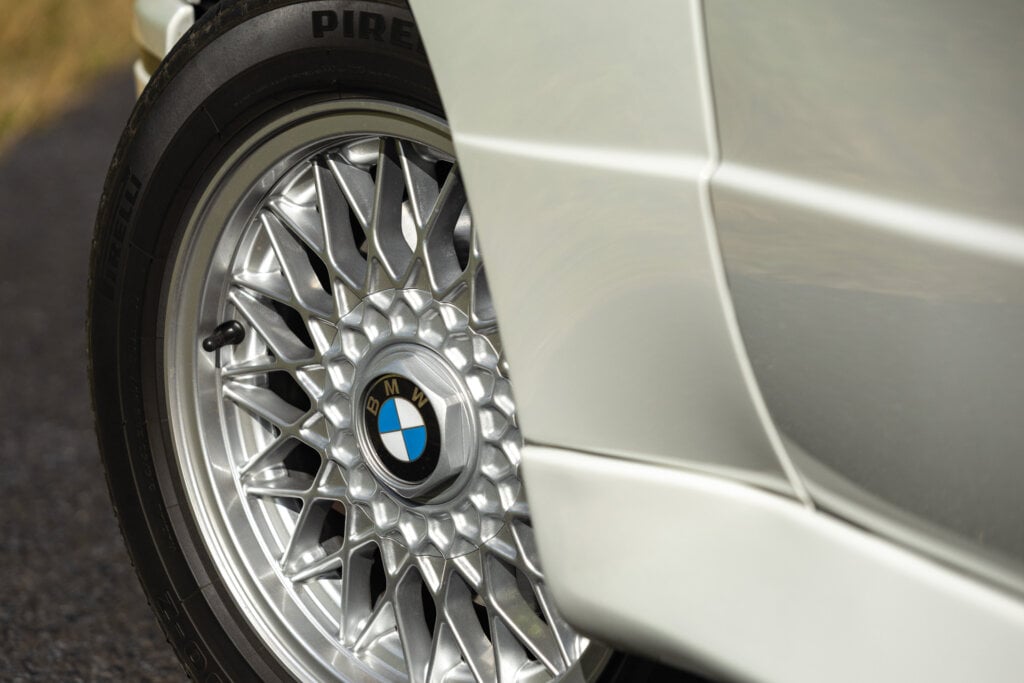
This immaculate example is interesting, having been converted to RHD in the UK shortly after leaving the factory and then being sent to the other side of the world. The current owner believes it was one of four cars imported by the Giltraps, one ending up as a race car, the others sold off. It’s had a few owners over the years, but the previous custodian set about giving it a thorough restoration during the Covid lock down period. And it’s simply pristine everywhere you look, despite its 130,000km. Our owner regretted selling his old 323i, and always liked the M3. So when this one came up for sale a couple of years ago, he jumped at it. Being right hand drive also appealed, as they only ever made them with the wheel on the left in the factory. The conversions, the majority of which were carried out by Birds, were renowned for the time, using all genuine BMW parts, at great expense. The two problematic components for the conversion happened to be the steering rack and the exhaust manifold, RHD M3’s having to use a slower-geared rack from the 325i.
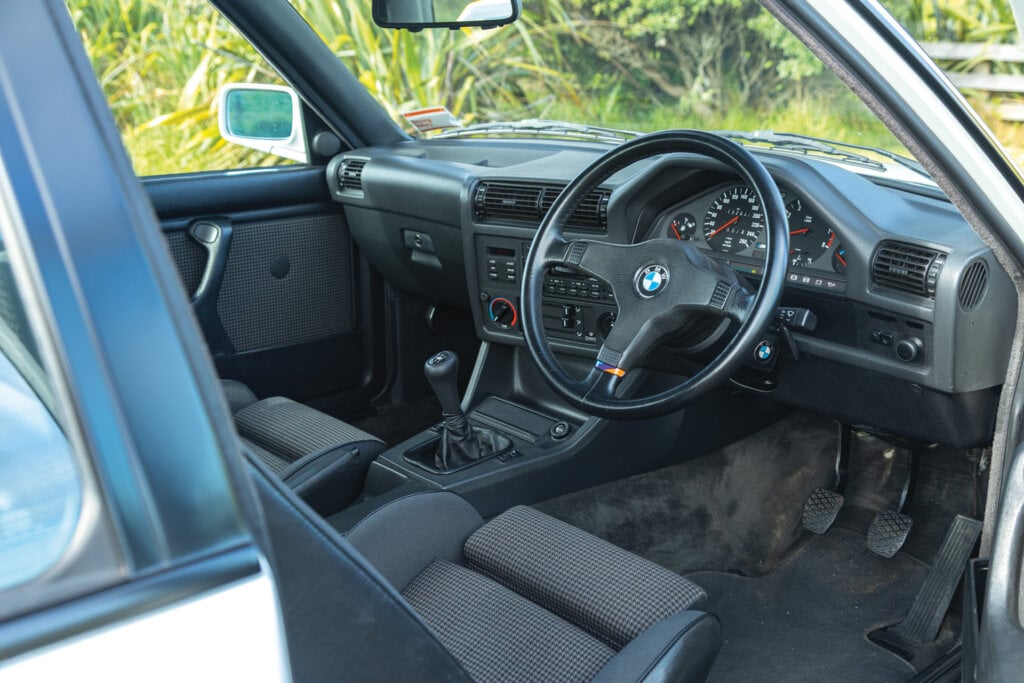
Standing next to this 1988 time capsule, it has a noisy idle, but one you wouldn’t describe as melodic. There’s no rumble, no purr, rather it’s a bit clanky. Being 3 Series based, it’s easy to get on board. The sport seats aren’t overly bolstered while the driving position is quite upright, the wheel set high too, while the pedals are a marginally offset.
Six of the best M3’s over the past 40 years
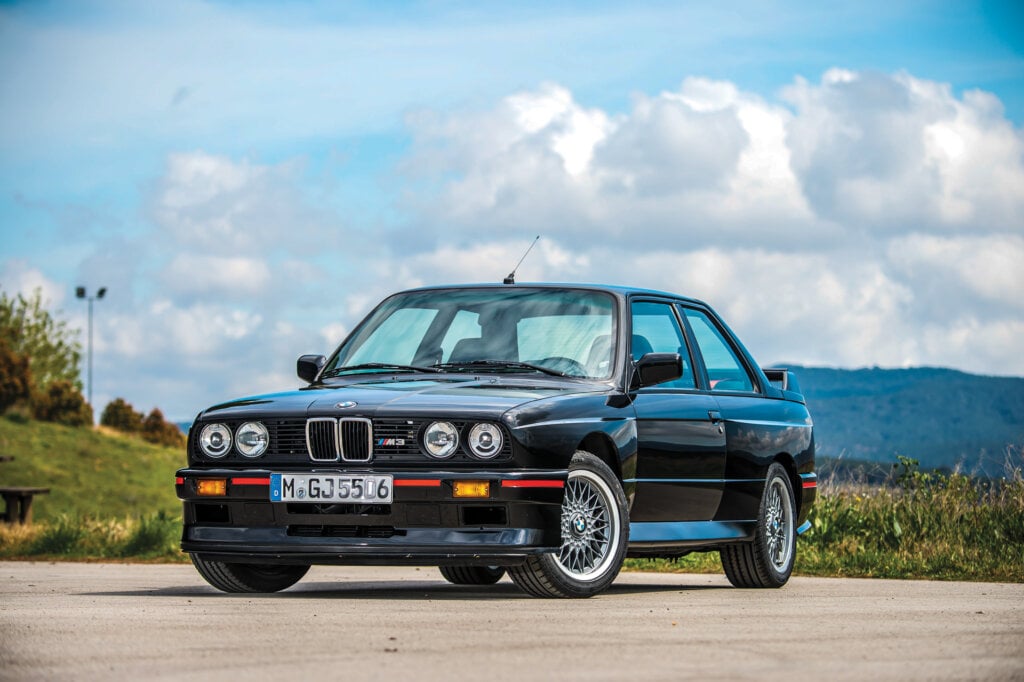
M3 Sport Evolution
The BMW M3 Sport Evolution, or Evo III, was the ultimate homologation version of the E30 M3, built for DTM racing in 1989–1990. Powered by a 175kW 2.5-litre four-cylinder engine, it featured adjustable aerodynamics, lightweight construction and track-focused upgrades. Limited to just 600 examples, it remains one of BMW’s rarest M cars.
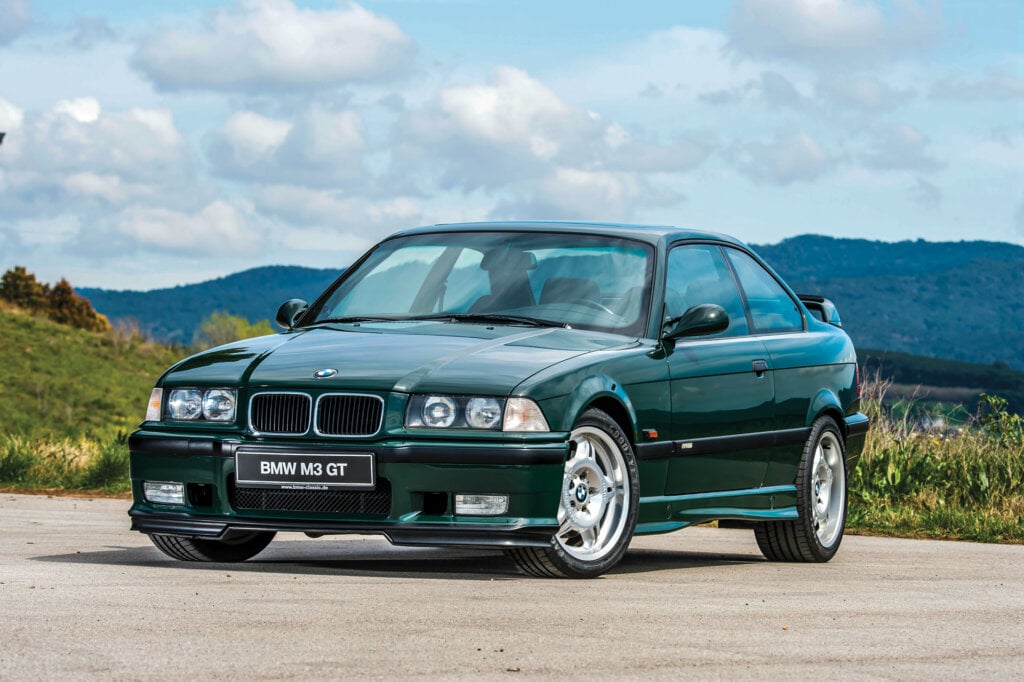
M3 GT
From 1995, the M3 GT was a rare homologation special created for FIA GT and IMSA racing. Limited to 356 units, it featured a 217kW 3.0-litre inline-six, lightweight aluminium doors, revised aerodynamics and unique British Racing Green paint. Motorsport-focused upgrades made it one of the most collectible
E36 M3 variants
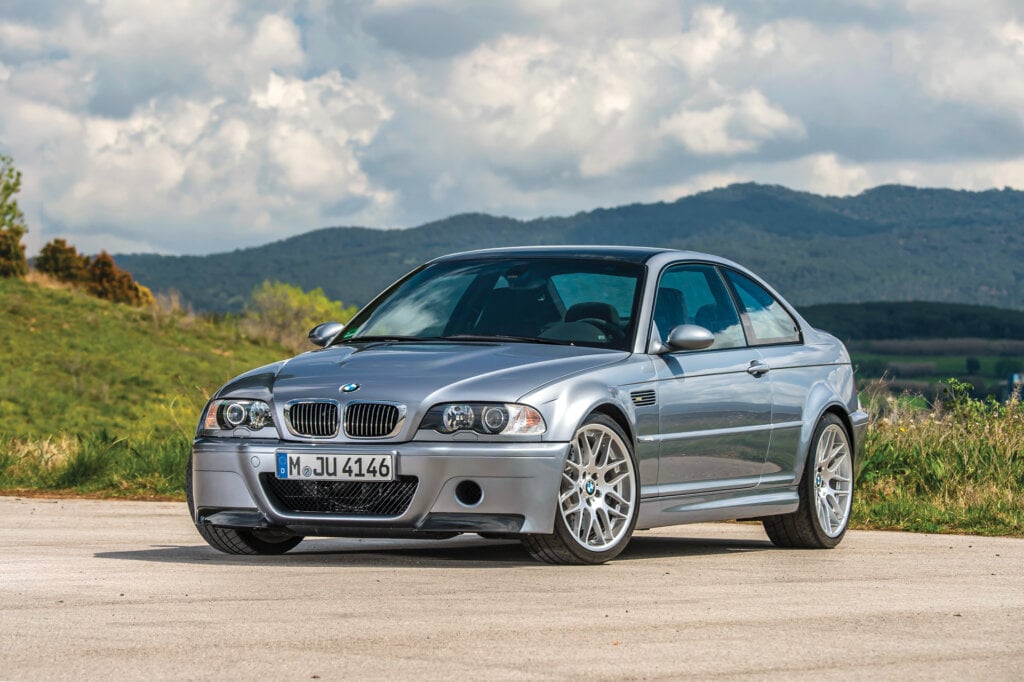
M3 CSL
A more driver-focused lightweight version of the E46 M3, the CSL was, launched in 2003 and limited to 1,383 units. Using carbon fibre, thinner glass and stripped-back trim, it cut 110kg from the overall mass while boosting performance. Its iconic carbon airbox, sharper chassis and raw driving character cemented
legendary status.
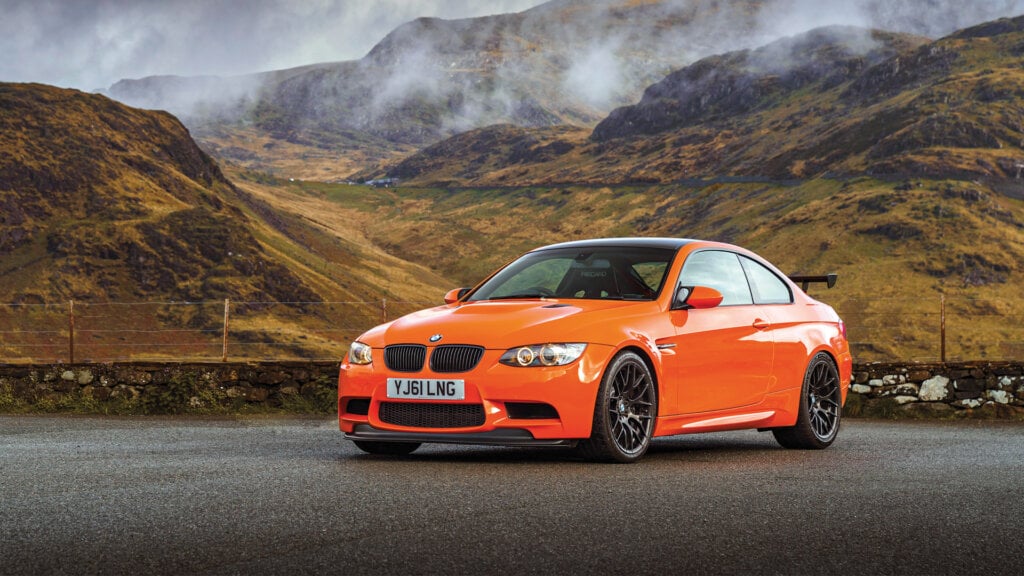
M3 GTS
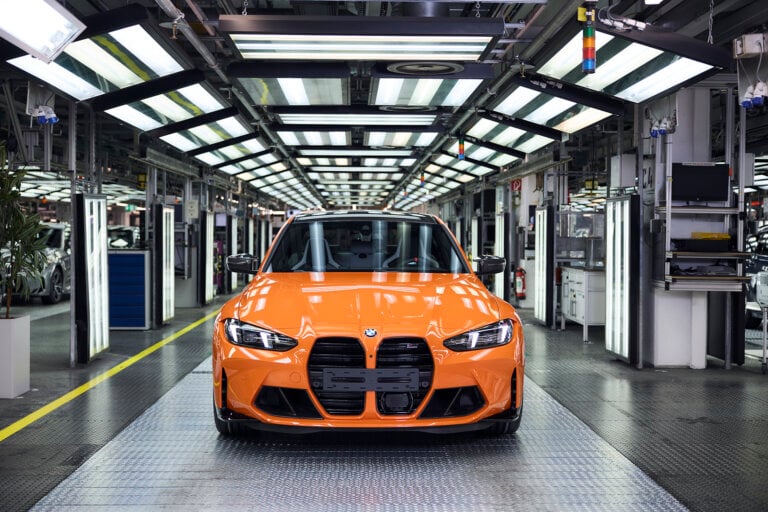
The BMW M3 GTS was a hardcore, track-focused evolution of the E92 M3, launched in 2010. Powered by a 331kW naturally-aspirated 4.4-litre V8, it featured extensive weight reduction, race-inspired aerodynamics and a stripped interior with roll cage. Limited to 150 Fire Orange examples, it’s one rare M car.
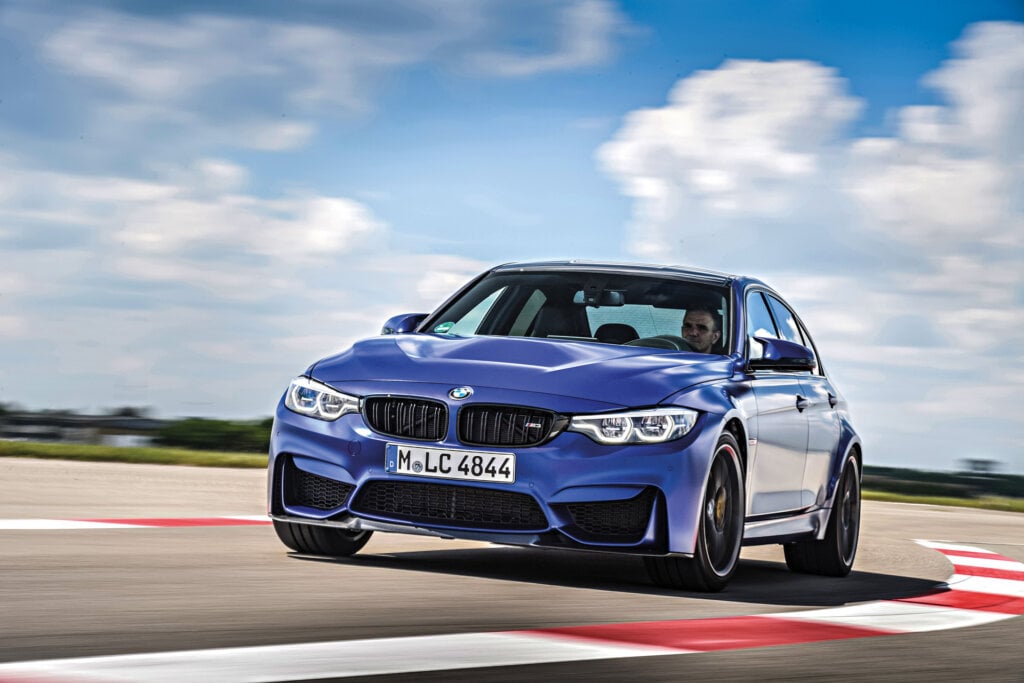
M3 CS
In 2020, BMW signed off the G80 M3 with the CS version. The Competition Sport was limited to 1200 units, and featured a 337kW twin-turbo inline-six, a seven-speed dual-clutch transmission, and extensive use of carbon fibre reinforced plastics for additional weight savings. .
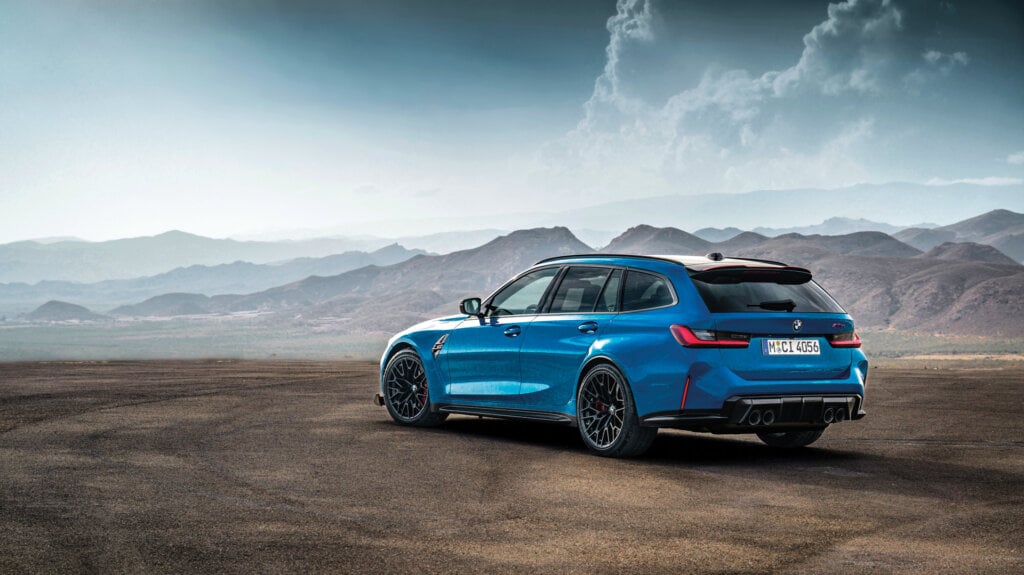
M3 CS Touring
The CS Touring is the ultimate version of the M3 wagon. With 405kW and 650Nm from its twin-turbo six, it hits 100km/h in 3.5 seconds. Featuring carbon-fibre weight savings, track-tuned dynamics, and aggressive styling, it blends supercar-level performance with a practical 500-litre boot.
The clutch, gearbox and steering action are everyday friendly, a bonus of not having to deal with a hefty amount of torque or excess weight over the front axle. And while the 2.3 is built to scream, it behaves at lower engine speeds, with just the odd hesitation when first asked to accelerate from down low.
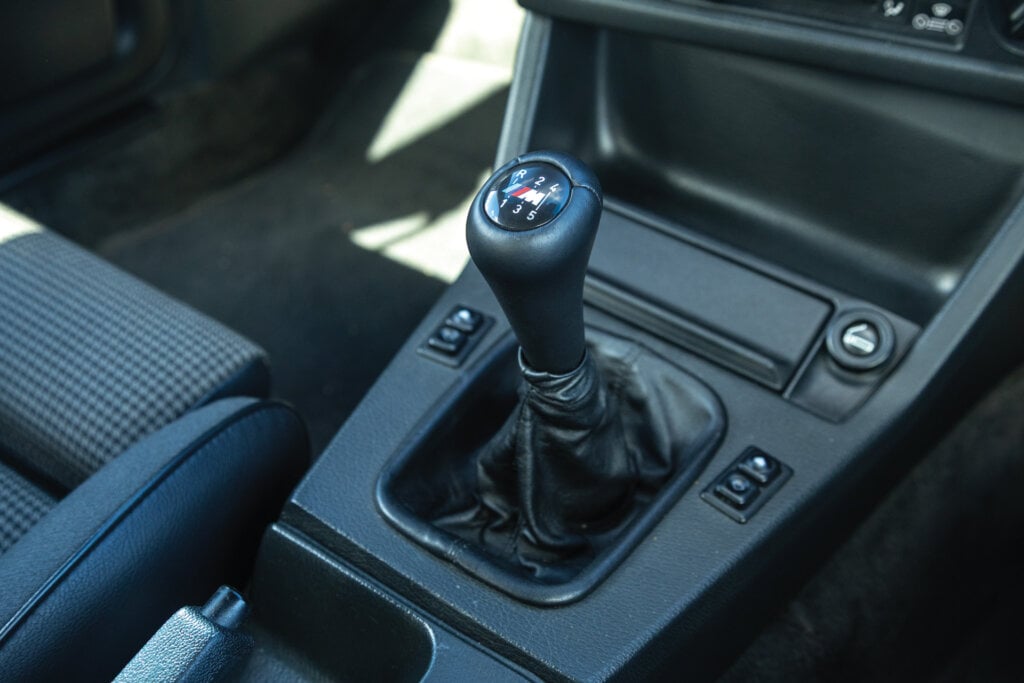
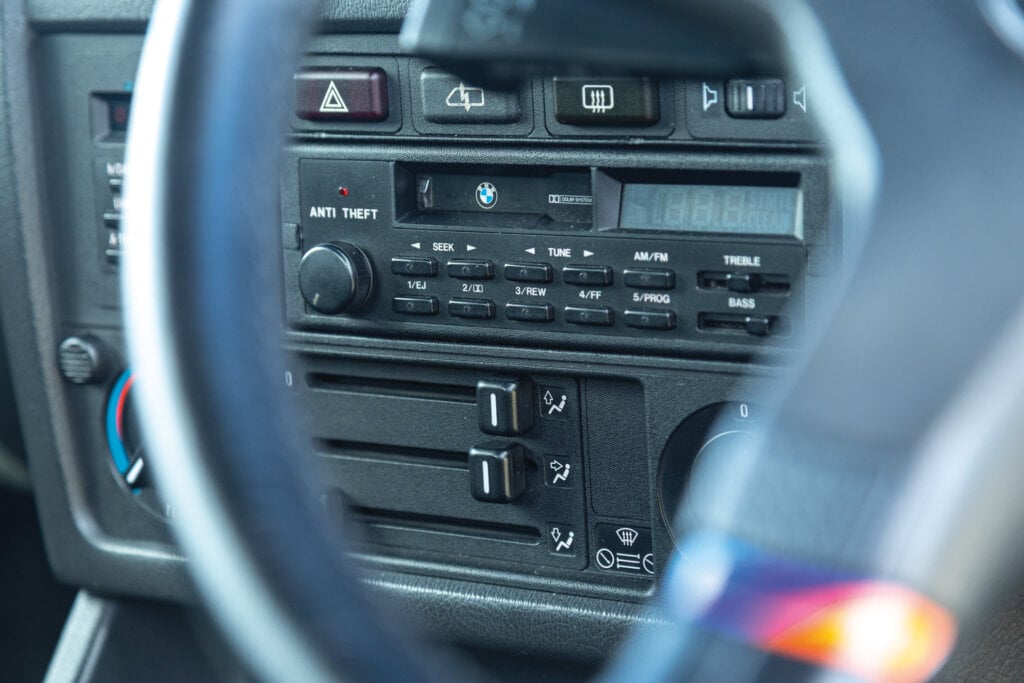
It’s noisy, with the road roar and the engine clamor, the gearing sees fifth pull 2500pm at 100km/h. While it’s easier driving while sitting on the right side of the cabin, one must remember where the gears are. The dogleg box has first over and down to the left with second, across and up. But the layout helps keep things on the boil when dealing to the corners.
This car, being so well restored, feels like new again. With new bushings and Bilstein dampers underneath, this M3 genuinely rides well. But it’s not a car you’d enjoy just cruising in, it begs for action.
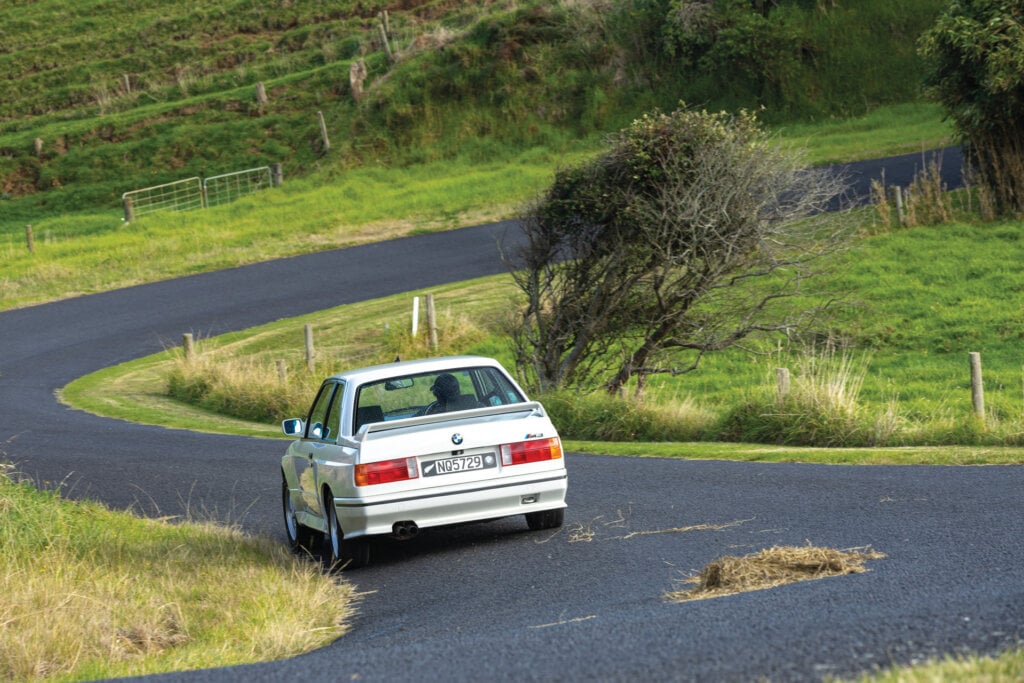
Turning it into the bends, you quickly discover its innate character. There’s some slack just off center in the steering, and the slow ratio caught us unaware. While it takes more effort at the wheel to get it turned in (there’s almost four turns between the stops) it points easily. While the wheel is not buzzing with energy, there’s feeling there, tapping you into the balance of the chassis. The front end is so faithful, while the rear is well behaved, you can dive into the bend without much worry. It’s nimble, lithe, deftly darting from corner to bend, changing direction on a whim. And you can be quick on the gas, with little threat of it stepping out.
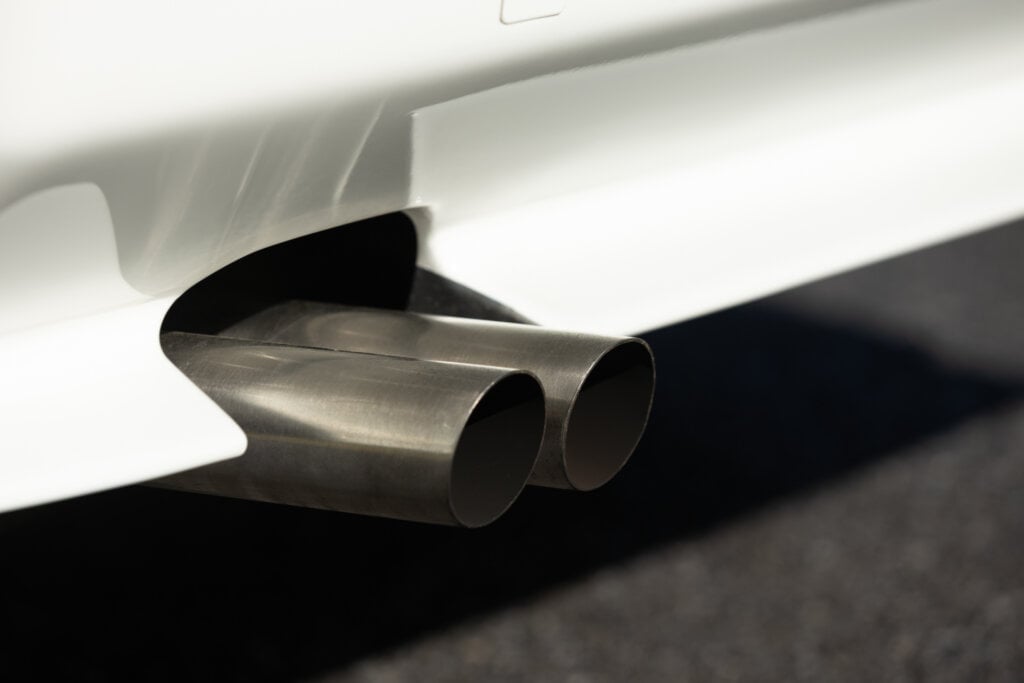
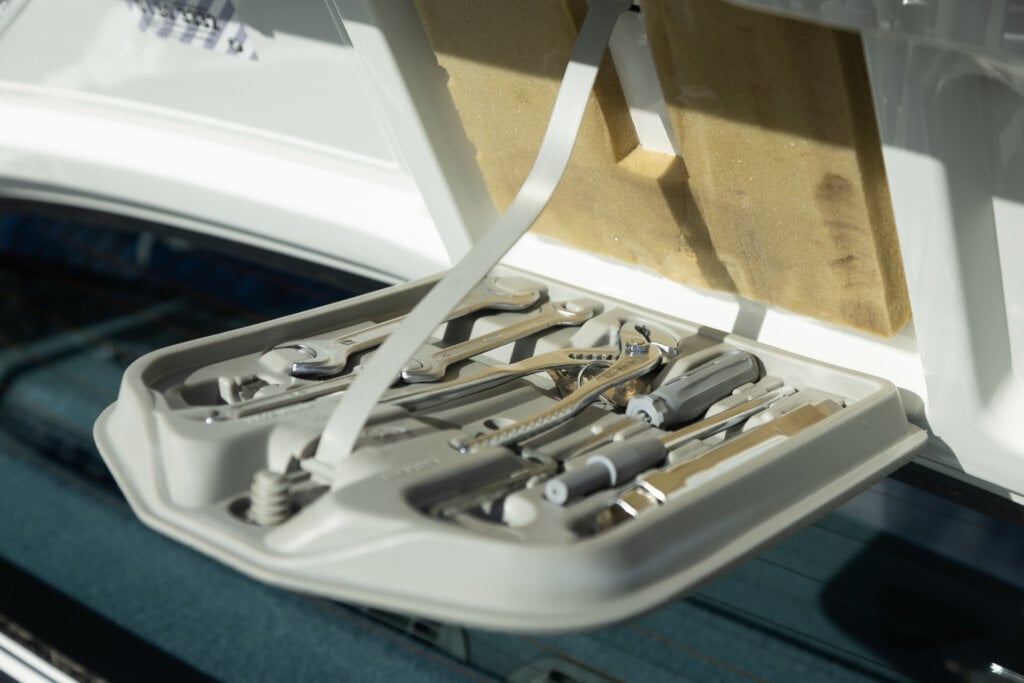
You need to be quick on the gears, the 2.3 not offering much unless there is at least 4000rpm showing. And it’s better if it’s up around five. But the unorthodox pattern helps, the down shift into second made easier. While a little long of throw, it’s hard to fluff. The brakes could be stronger, but the discs aren’t very big afterall. While it takes a bit of effort at the pedal, the low weight sees it reined in tidily. And given the balance, the suspenders have an easier job of keeping the roll in check. It never feels unwieldy.
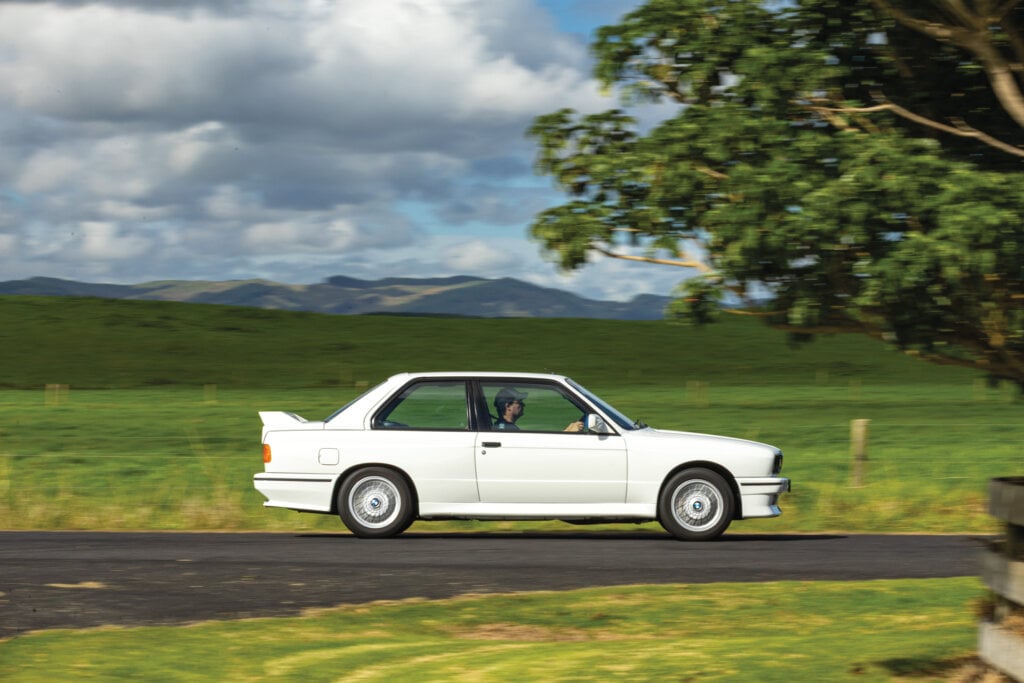
You quickly become more enamored with the 2.3 when it’s given a chance to really rev. It gets better the closer it spins toward 7000rpm, as does the sound, with a hard edged, twin cam rasp. It’s a unique tune, as is the experience of the original M3, one that the latest version can’t replicate with its added size, weight and gadgets. Sure it’s faster and more capable, but it’s simply not as charismatic.