View all
10 more images
2025 Subaru WRX tS Spec B Review
Words: Andrew Sluys | Photos: Alex Schultz
It’s something most of us like to do this time of the year. And it’s especially fun getting there taking roads less travelled in a driver’s car like the Subaru WRX Spec B.
While circuit racing might be what New Zealand’s motorsport heritage is best known for, little old Aotearoa has punched above its weight on the rally scene for decades. Back in 1969, Grady Thompson and Rick Rimmer slid their way to victory (ironically driving a Holden Monaro) in the inaugural Rally of New Zealand. It wasn’t long before our picturesque gravel roads caught the attention of the World Rally Championship.
The WRC first hit New Zealand in 1977, with the event based out of Auckland. Here, the world’s best battled it out across more than 2200km of tarmac and gravel roads across the North Island. When the event wrapped up on May 7, Fulvio Bacchelli and Francesco Rossetti claimed victory in their Fiat 131 Abarth. Since then, the WRC has returned to our shores 32 times, without any local drivers claiming victory against their international competitors. Aside from Grady Thompson’s maiden victory, Paul Adams, Bruce Hodgson, Mike Marshall, and Hayden Paddon have all won their local rally, but did so on years where the event wasn’t part of the WRC calendar.
Back to the WRC, it’s an understatement to say that Subaru has been successful in New Zealand, notching six wins over the years. Equally as impressive are the names that steered these cars to victory; Colin McRae, Richard Burns and Petter Solberg. But there’s one name absent from the record books that created a far more significant link between New Zealand and Subaru; Peter Raymond George Bourne, better known as ‘Possum’.
Possum Bourne first entered the WRC in 1983, driving a Subaru RX, the turbocharged version of the Leone. Competing with the world’s best, Bourne never managed a podium at this level though he did win the NZ Rally Championship in 1991. By this point, he had switched into a Subaru Legacy RS, which he would also use in the WRC the next year. In 1995, Possum raced the Impreza WRX in WRC for the first time, a car that would go on to become iconic in the international rally world. And this wasn’t any coincidence, Subaru and rally tragics alike will be aware of the car’s official “World Rally eXperimental” moniker.
Jumping forward to present day, the WRC’s New Zealand schedule is far more sporadic, but Subaru’s WRX is still going, and our iconic rally stages are still as beautiful as ever. Subaru introduced the second-generation (according to official Subaru lore, the Impreza-based models don’t count) ‘VB’ WRX in 2021. Controversially, this was the first iteration of the WRX to lack a high-performance STI variant accompanying it. The Japanese brand put this decision down to tightening emission regulations; an excuse that didn’t do much in the way of consoling enthusiasts. In saying this, the idea of an STI didn’t die completely, but it was more-or-less confirmed that any future model wearing the badge would either be a hybrid or fully electric; a revelation that went down about as well as you’d expect.
Since this model’s introduction, Subaru’s local arm has released numerous special edition versions (see AKA, Tatsu, and Todoroki) in the hopes of sating WRX performance fans, but I think it’s fair to say that these dressed up sedans fell short of the mark. So when Subaru New Zealand announced the arrival of the new WRX tS Spec B, we had our hopes managed, but couldn’t help being a little excited.
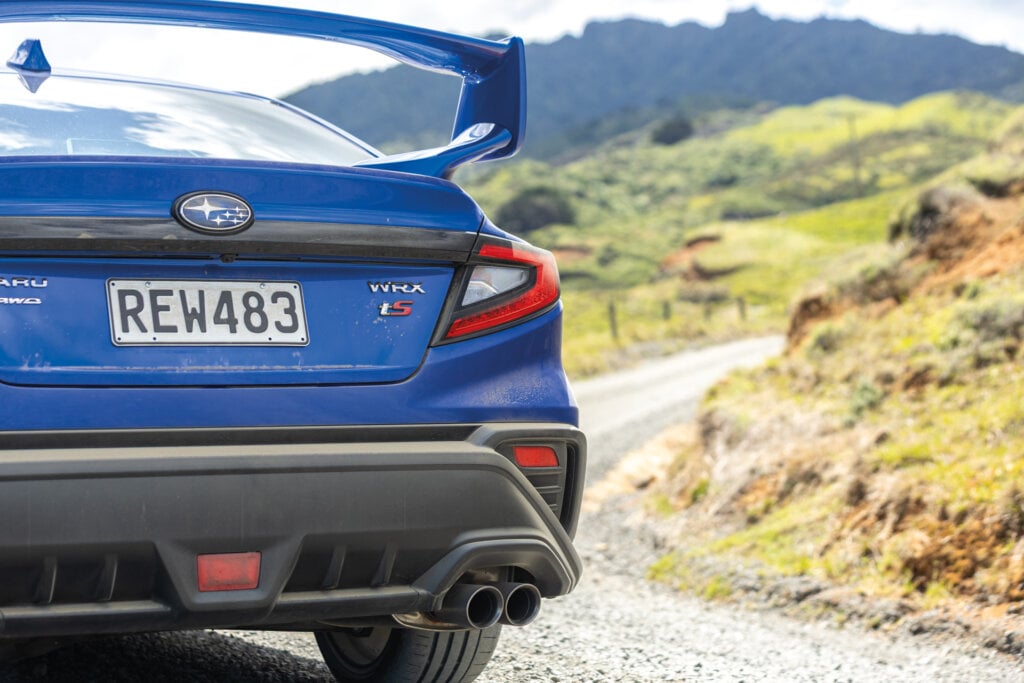
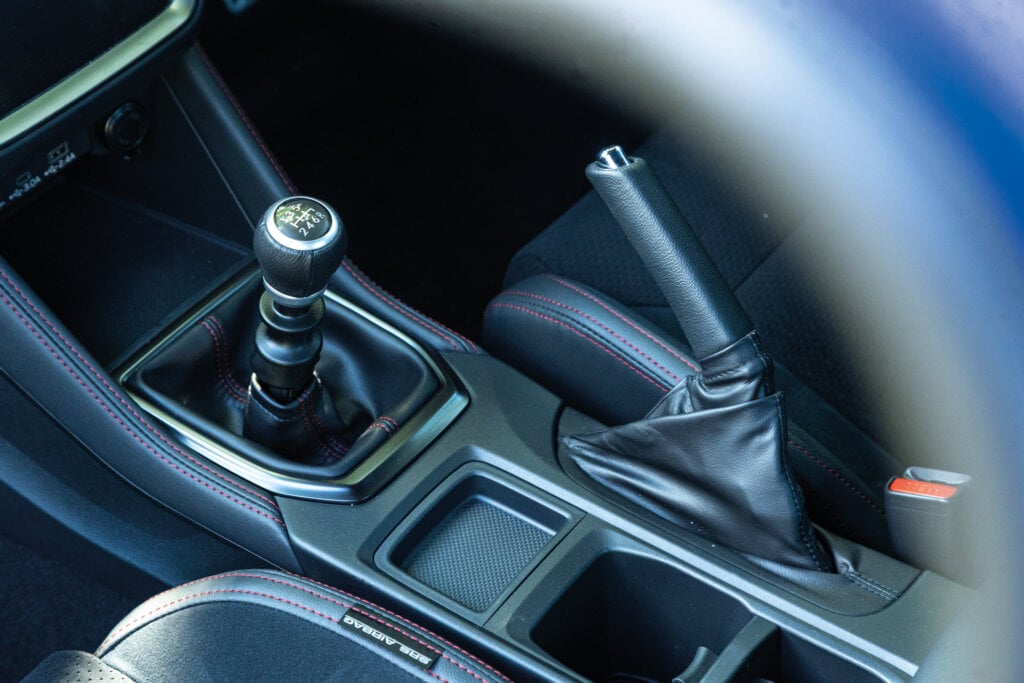
The Spec B is an interesting proposition; it is the only WRX offering a six-speed manual transmission, and it is adorned with a bunch of STI parts both inside and out. The turbocharged 2.4-litre boxer engine retains the same peak outputs of 202kW and 350Nm, and it gets Subaru’s signature symmetrical all-wheel drive system featuring a centre differential with an LSD. It also benefits from electronic dampers, something not offered on the other WRX variants sold locally. With this in mind, the team figured that a car with such a rich rally pedigree deserved to be tested on a road fit for its purpose.
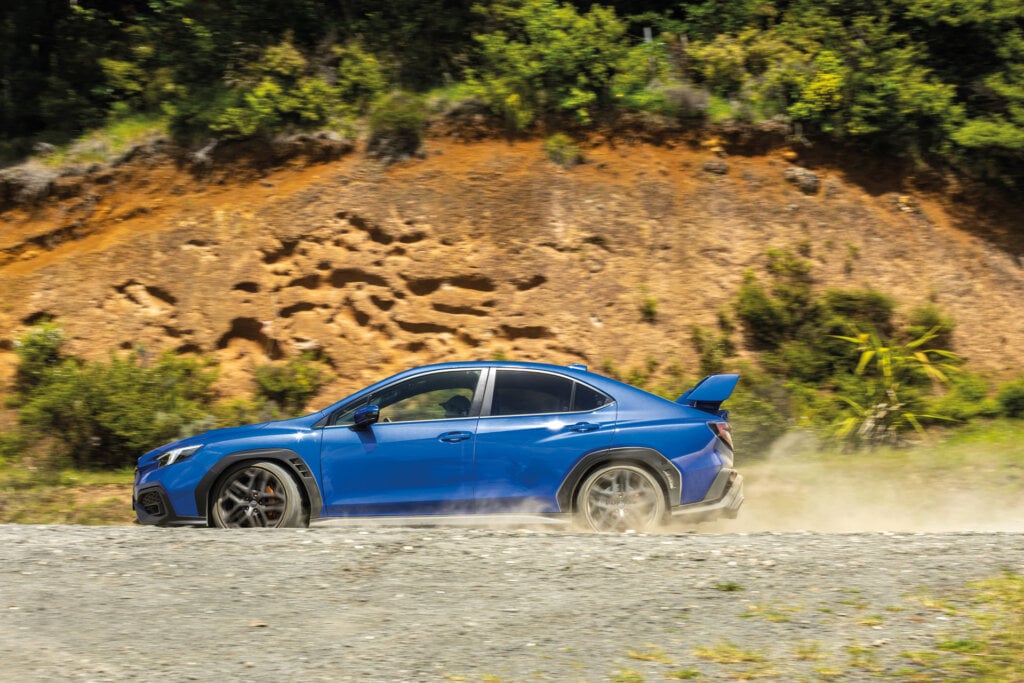
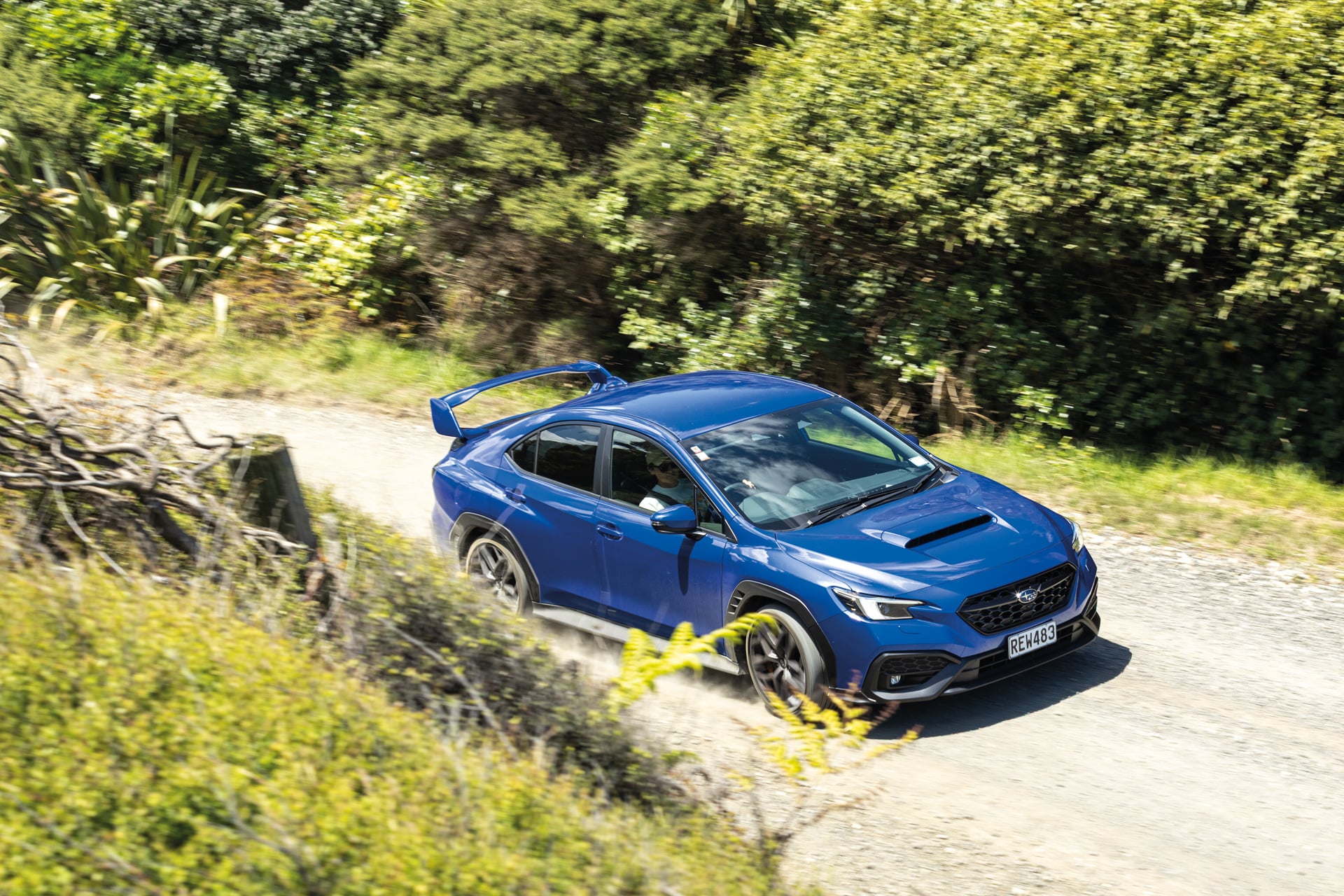
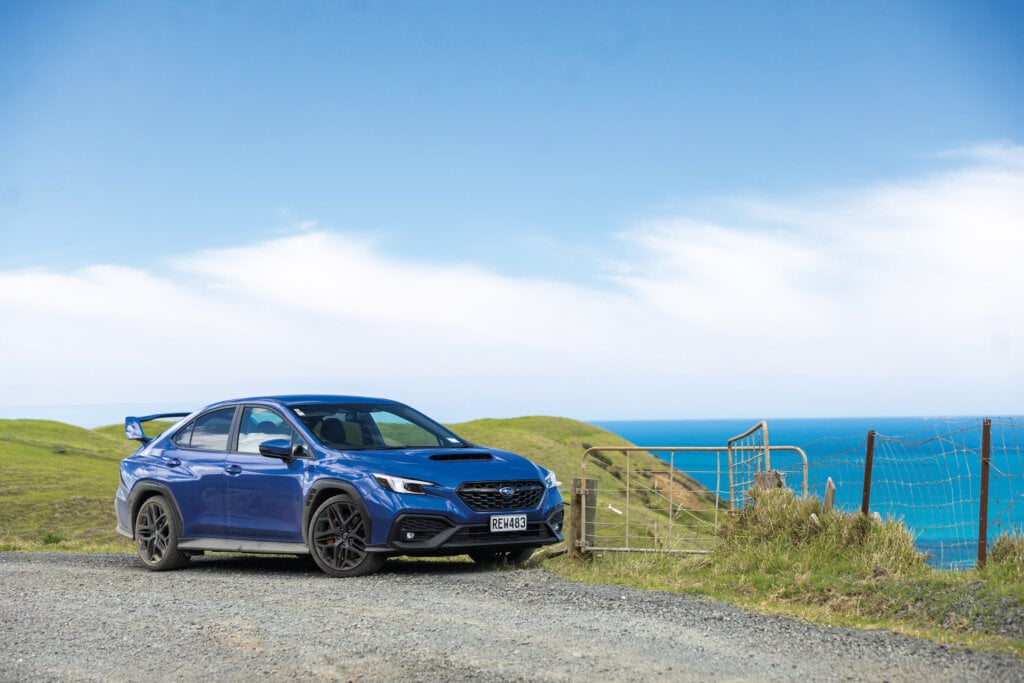
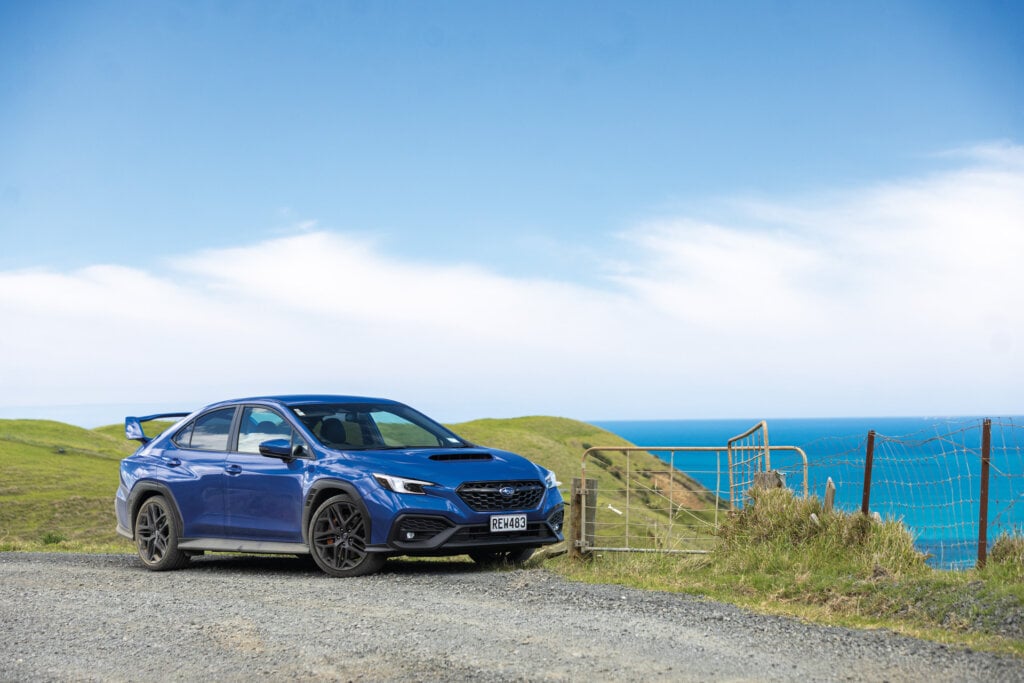
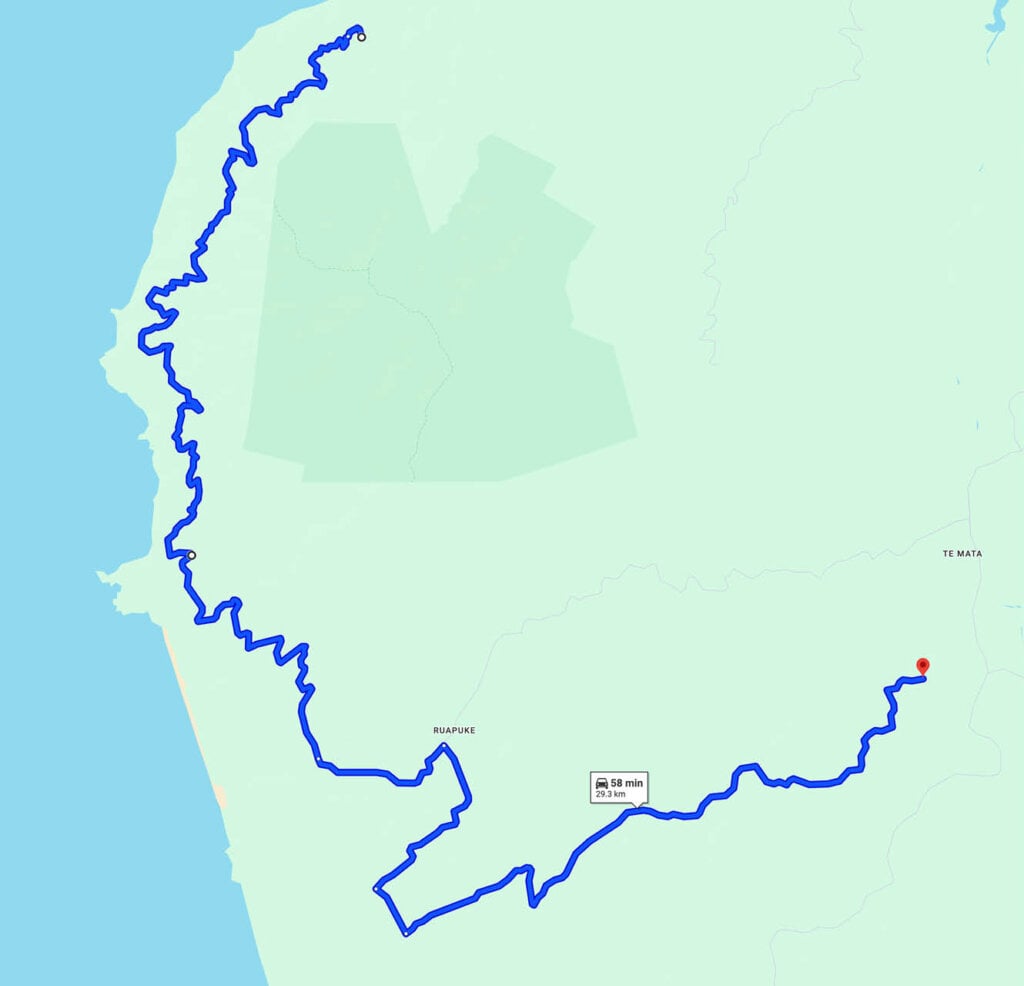
The Whaanga Coast road is widely regarded as New Zealand’s premiere rally stage. With such a variety on offer across our picturesque country, this isn’t a title handed out lightly, but once you have visited, it makes perfect sense. Hugging the spectacular coastline south of Raglan, this road features open corners with great spectator visibility, tight cambered bends sheltered by manuka forest, and the most incredible view of the Tasman Sea. But before we dove head first into the gravel action, we figured stretching the Spec B’s legs on the winding State Highway 22 from Auckland would be a fitting warm-up.
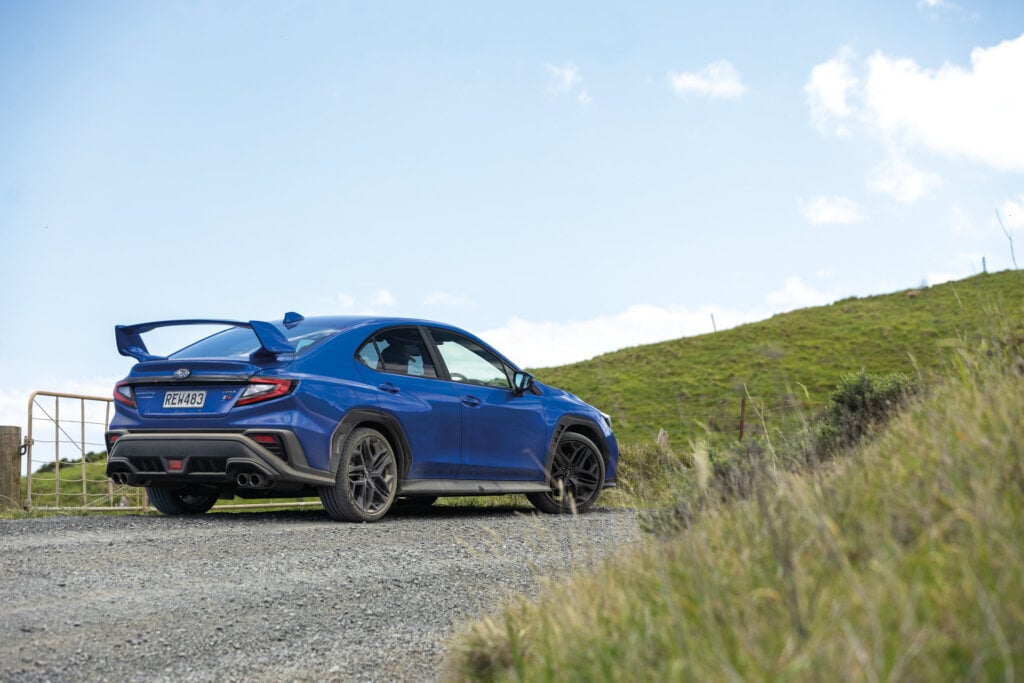
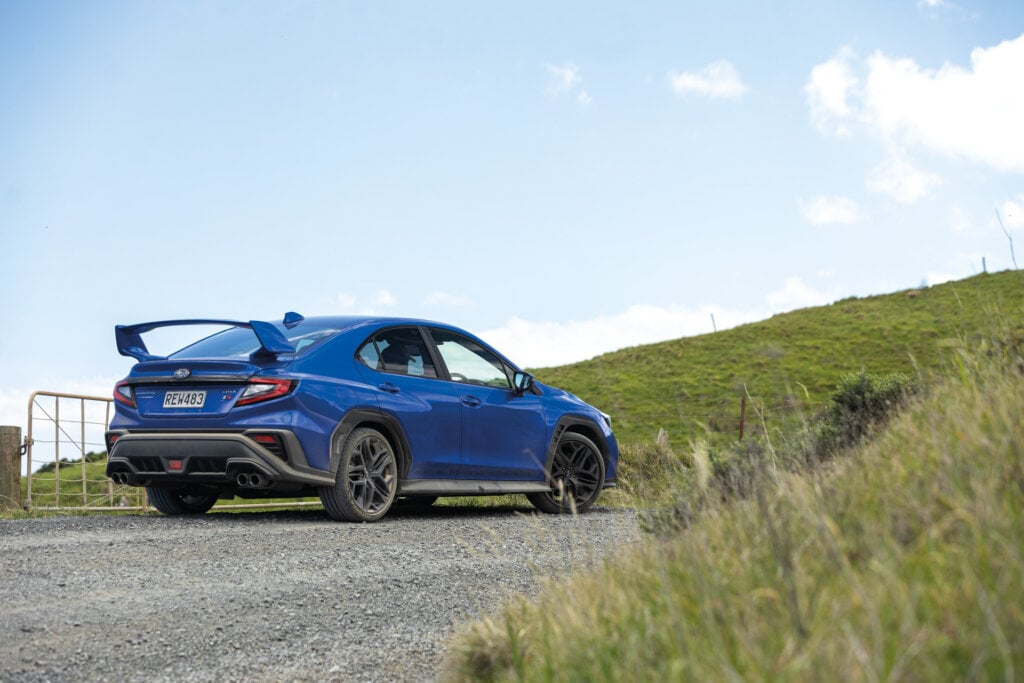
Despite its racy exterior with that enormous STI wing, the Spec B is very tame on the road. The quad-exit exhaust system looks like it should be shouty and project that iconic Suby rumble, but it does no such thing. Even inside the cabin, the engine noise is significantly muffled. Even though it feels blasphemous to ask, I was wondering how much better it would sound with a bit of fake engine noise pumped in.
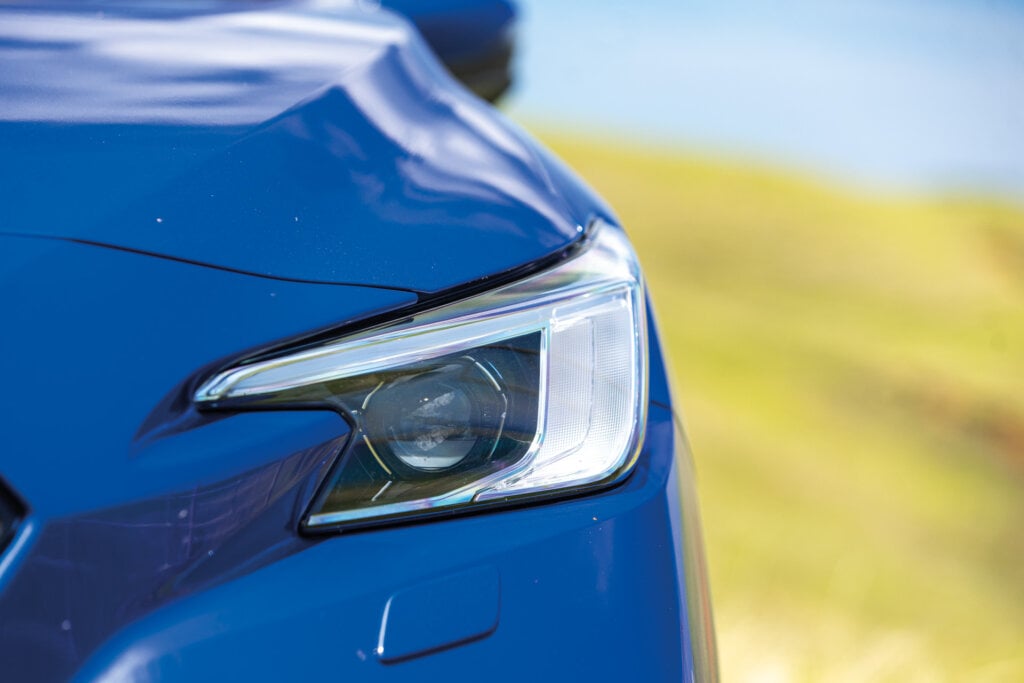
While 202kW was more than enough back in the Impreza WRX’s day, it feels a bit lacklustre in modern times. At this power level, it’s down on contemporary competitors like the Honda Civic Type R or the Volkswagen Golf R, and more akin to the front-driven Volkswagen Golf GTI. And further to the point about the old Impreza WRXs, I think the sheer size of this modern WRX has a lot to answer for. At 1562kg, this Spec B is around 300kg heavier than the first generation Impreza WRX, despite packing a similar amount of power to its STI iteration. It’s also 300mm longer, and 200mm wider, all contributing to it feeling like a far bigger car on the road than its predecessors. In Subaru’s defence, I understand that modern cars have to be bigger due to consumer expectations for wanting more, and the safety equipment needed to meet strict standards also adds to the weight. But surely they could have given it a few more ponies to even this out.
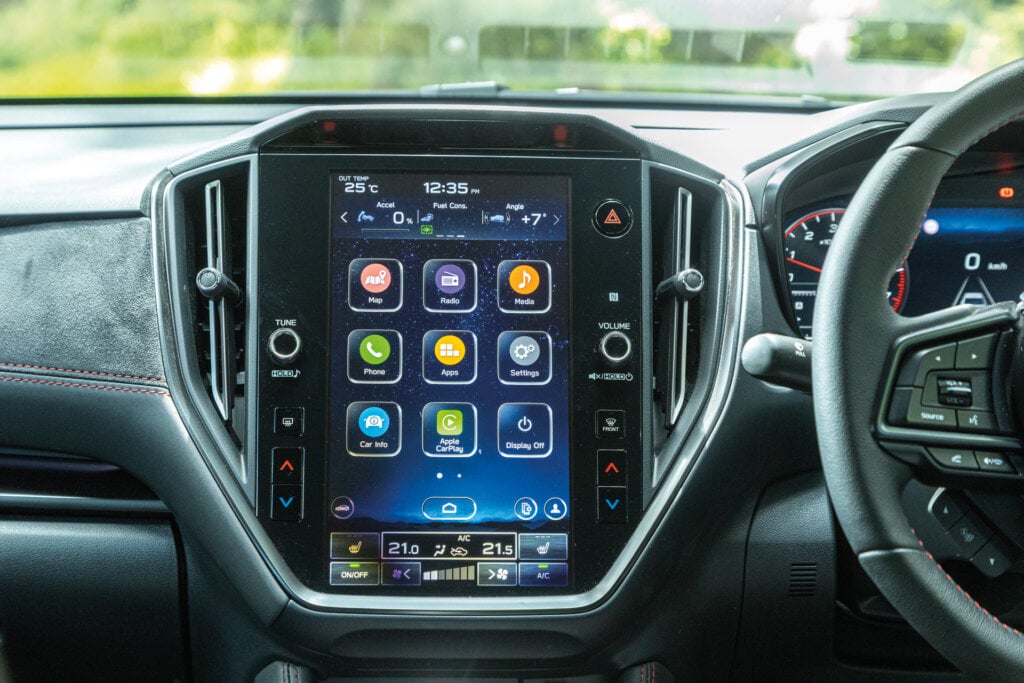
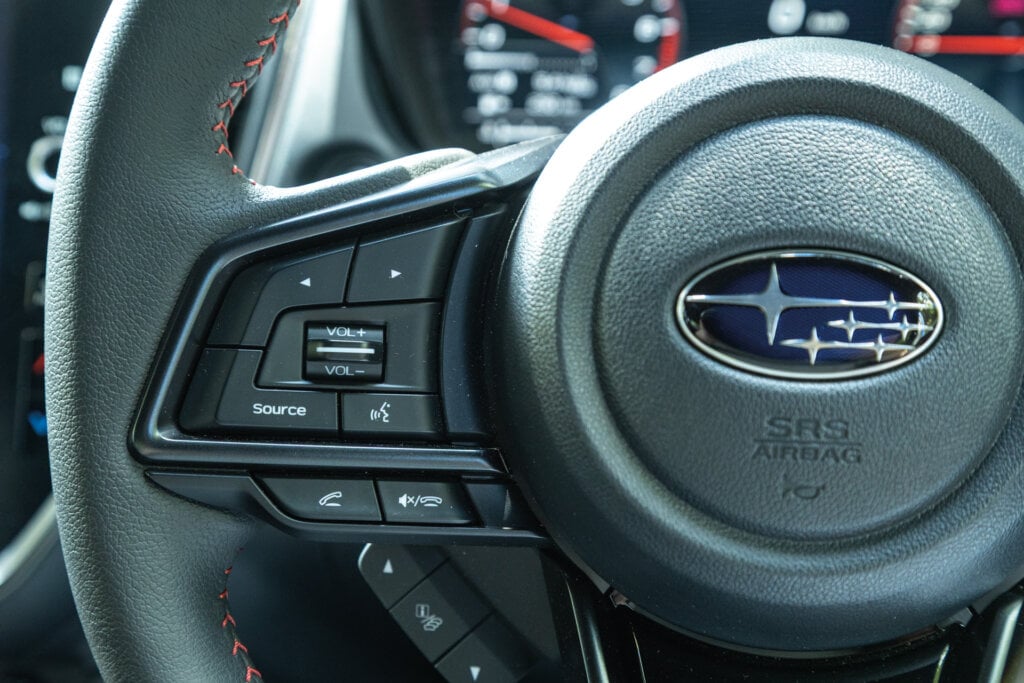
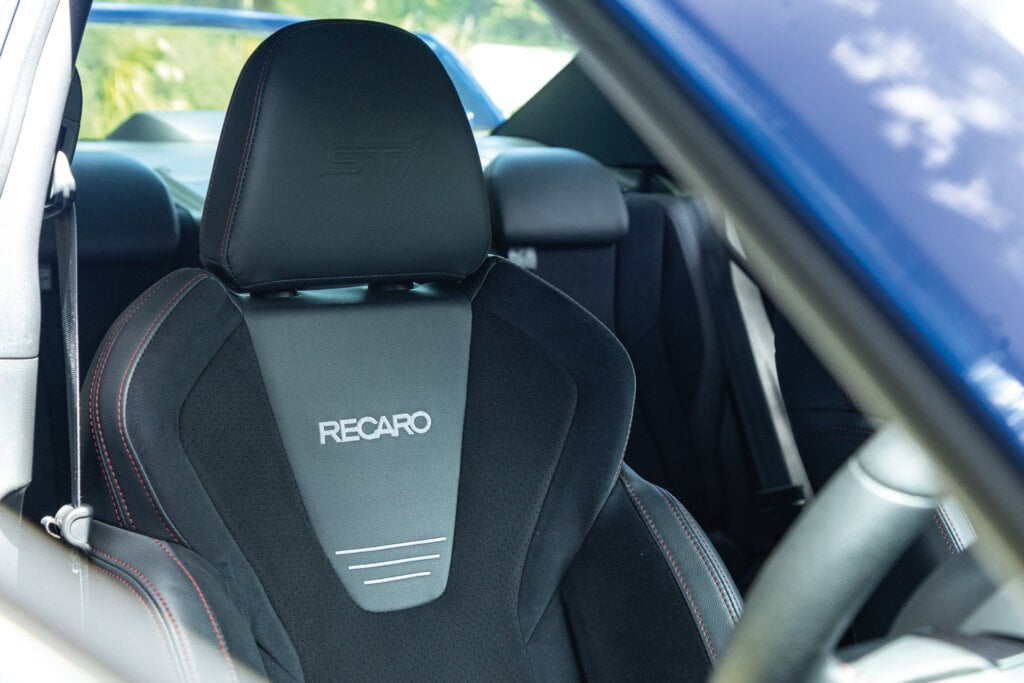
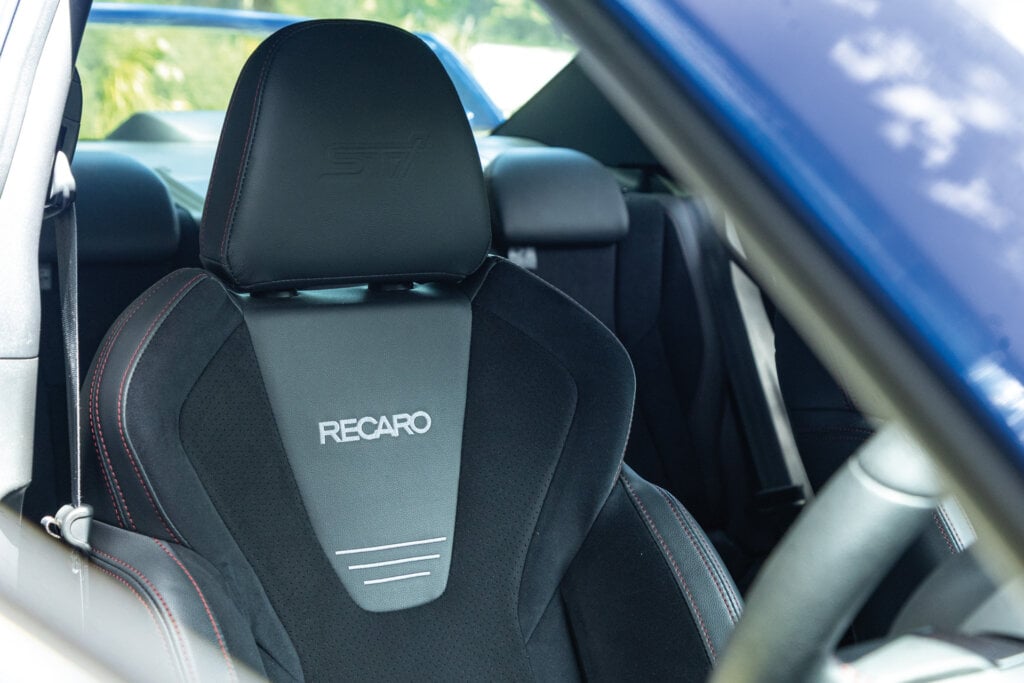
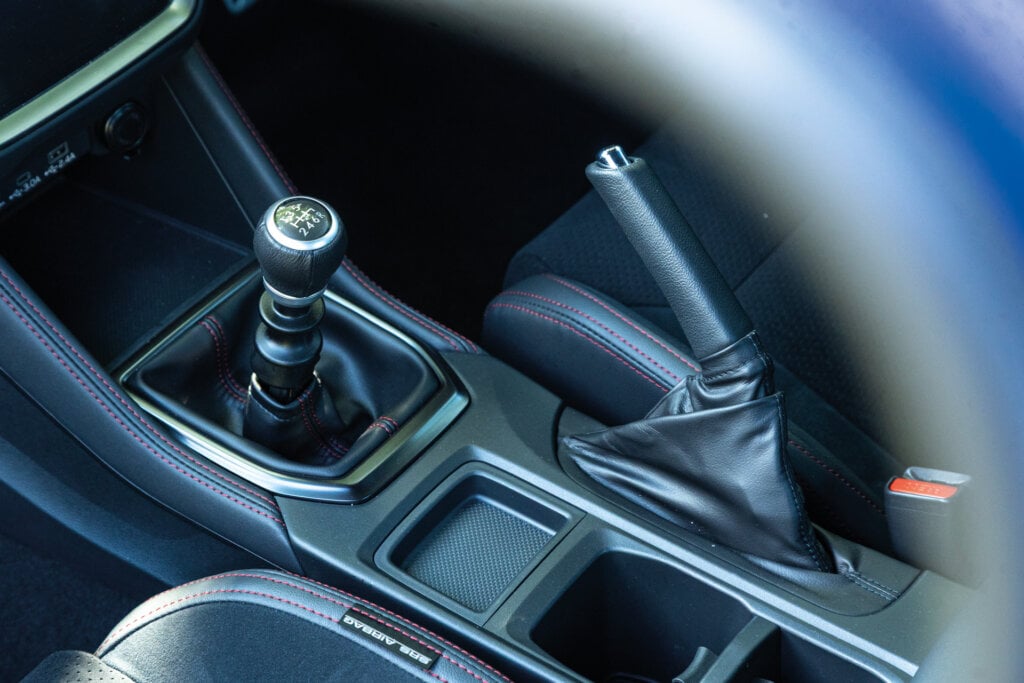
So I wasn’t amazed by the Spec B’s on-road performance, though the interior is impressive. It gets a pair of Recaro bucket seats that are embossed with the STI logo, and a flat-bottom steering wheel. The digital cluster is ‘90s-themed in red, also with the STI logo, and a boost gauge can be overlaid for the air pressure enthusiasts among us. There’s a manual handbrake, and the all-important six-speed shifter. I will say that the throw is long, and the shifts don’t feel fantastic, but who am I to complain about a car that’s still offered with three pedals in 2025. The 11.6-inch infotainment screen runs Subaru’s Starlink system, and offers wireless Apple Carplay and Android Auto connectivity.
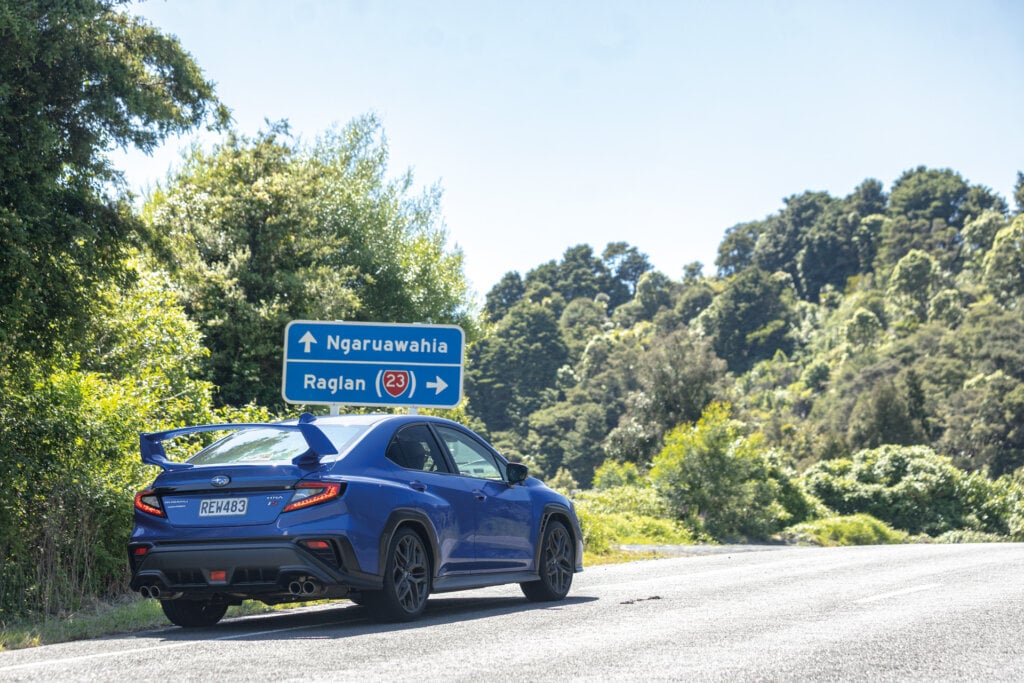
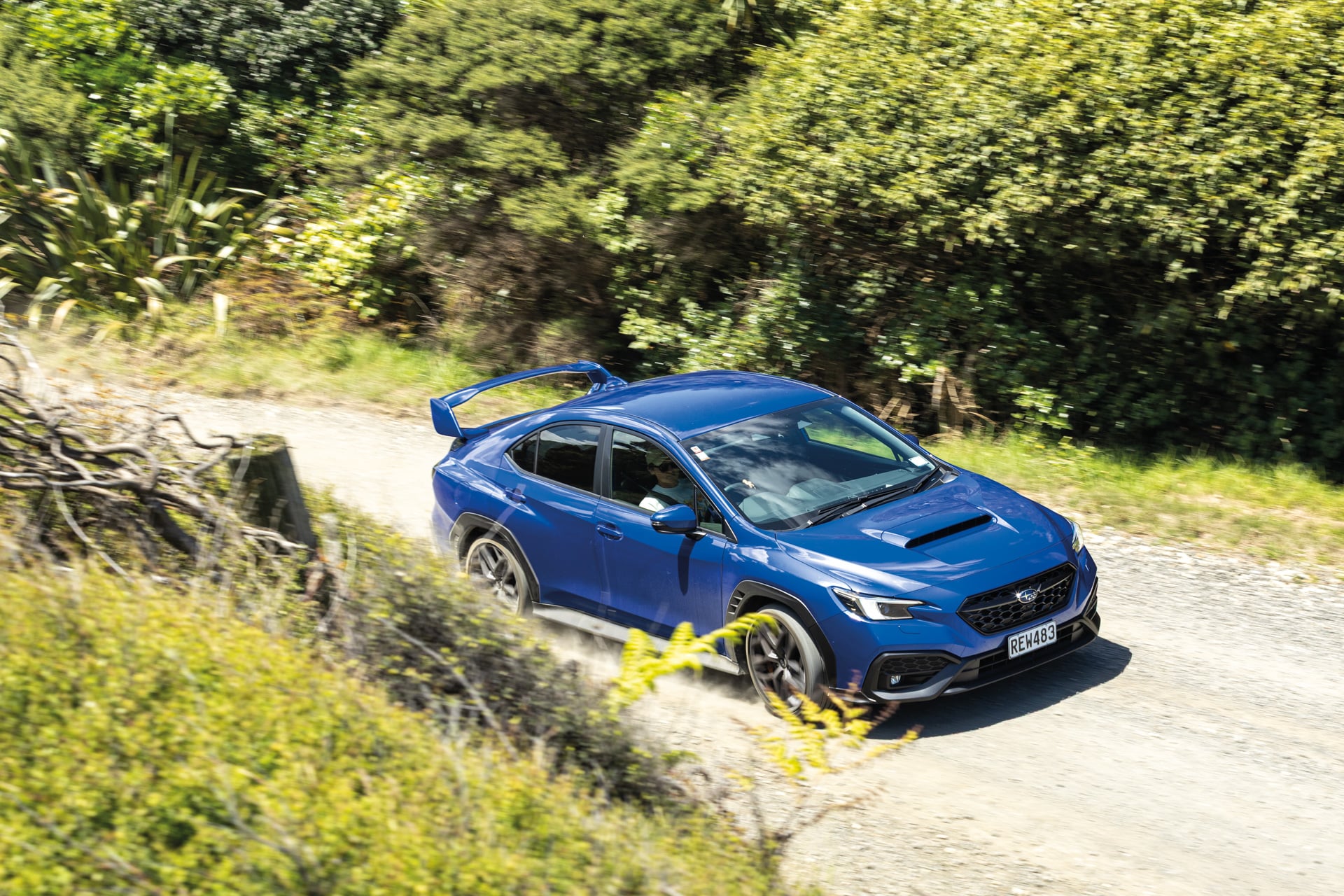
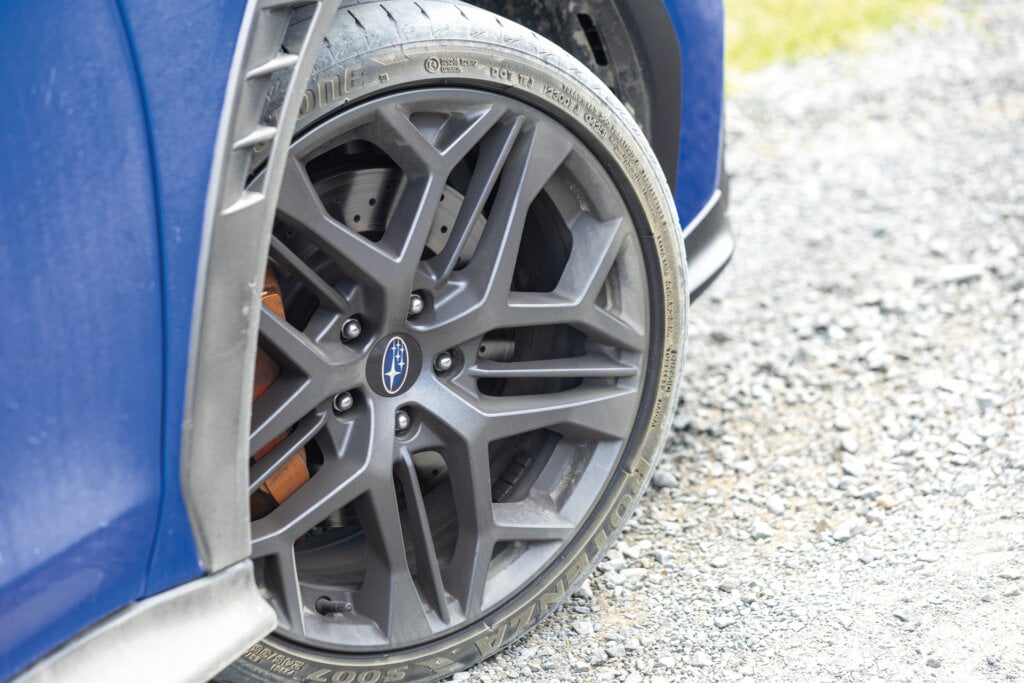
After a couple of hours of tarmac turns, we finally arrived at the beginning of the famous Whaanga Coast road, and it was time to unleash the Spec B(east). Right off the bat, I realised that this WRX was more of a tarmac car than a gravel basher. The low profile Bridgestone rubber wrapped around the 19-inch wheels do little in the way of dampening the rough, corrugated surface. Sports mode (which the car defaults to each start-up), didn’t help either, so Comfort was selected. As well as providing a more composed ride, it also lightens up the steering, making the car a lot easier to steer, considering how stiff it is in Sport and Sport + modes.
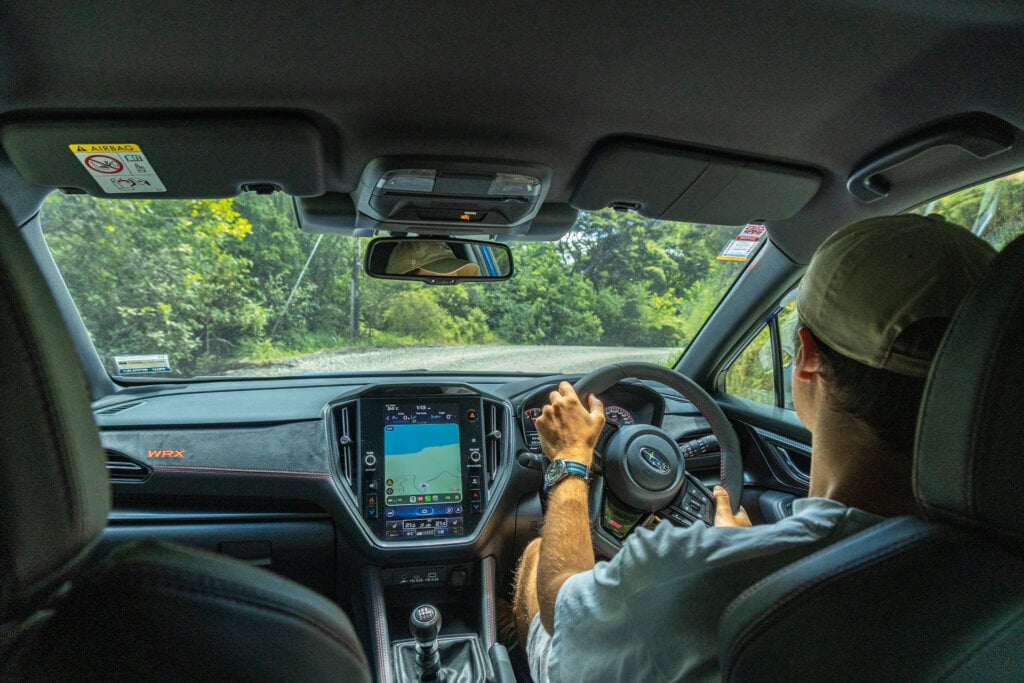
So while the ride wasn’t great, the power and torque levels proved to be more than enough on gravel with the lack of grip. The relatively short gears do well to keep the engine on boost between second and third, and flooring it out of corners, with a dab of oversteer, felt great. I found the sweet spot in the rev range to be between 3000 and 4000rpm, where the boost felt like it did the most.
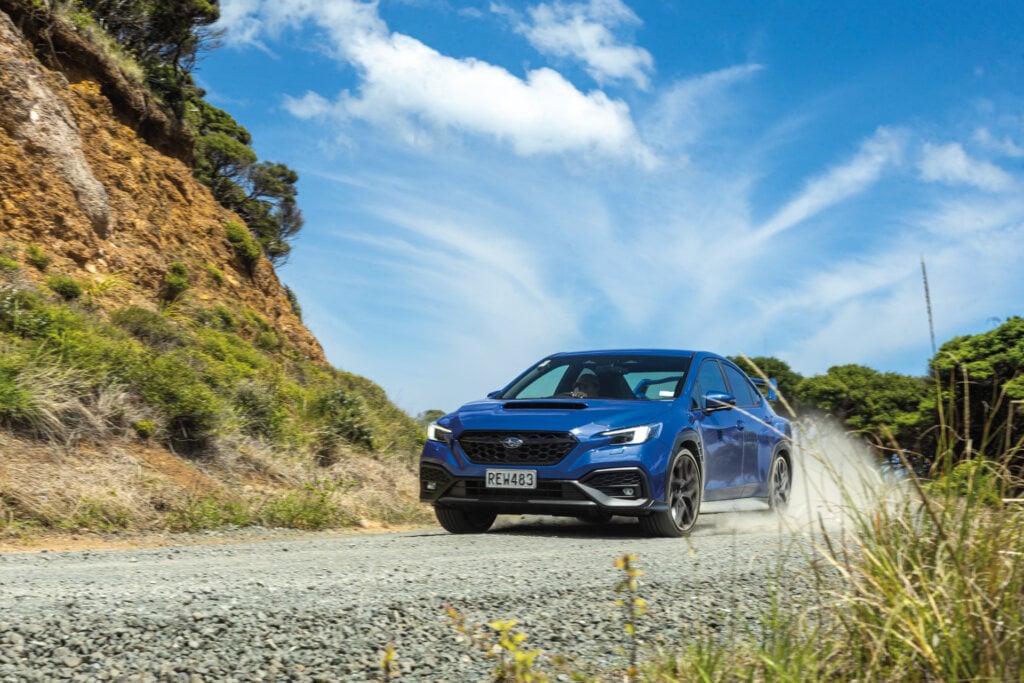
Before I knew it, the gravel road turned back into tarmac, and the legend that is the Whaanga Coast road was done. During the motorway drive back to Auckland, I had time to reflect on what Subaru was trying to do with this Spec B.
It’s easy to write it off as a miss, based on its performance short-comings, but that feels unfair, as they are giving it a go. That’s contrary to Mitsubishi who once brought the fight to the WRX with its own Lancer Evolution, but that car has been dead for almost a decade.
Though it has been more than 20 years since a Subaru driver won the WRC, the brand is obviously still interested in motorsport, visible through its recent work with Travis Pastrana. So while I doubt they’ll bring back anything as potent as the STIs of old, I think this Spec B is a sign that there’s still more in the tank.
Whaanga coast
The Whaanga Coast stage near Raglan is a stretch of twisting gravel that captures everything special about New Zealand’s rallying heritage. It’s a stage that blends beauty, danger and pure driving satisfaction in a way few others can match. The road clings to steep cliffs above the Tasman Sea, offering rugged coastal views that are as distracting as they are unforgettable. The surface is smooth, fast and incredibly flowing when conditions are dry, yet treacherously slippery when damp. The camber constantly switches, punishing even slight misjudgements. Blind crests, tightening corners and long, sweeping sections demand inch-perfect precision. Rhythm is everything; get into the groove and the stage feels magical, but lose focus for a moment and time evaporates.
Subaru WRX tS Spec B
$69,990 / 10.4L/100km / 236g/km
0-100 km/h 6.0s
Engine 2387cc B4 / T / DI
Max power 202kW@5600rpm
Max torque 350Nm@2000-5000rpm
Drivetrain 6-speed auto, AWD
Weight (claimed) 1562kg