View all
24 more images
2026 Audi RS 3 Sedan Review
Words: Kyle Cassidy | Photos: Alex Schultz
Audi’s five pot is a unique engine which can trace its roots back over fifty years. We enjoy its charms once again in the RS 3 sedan.
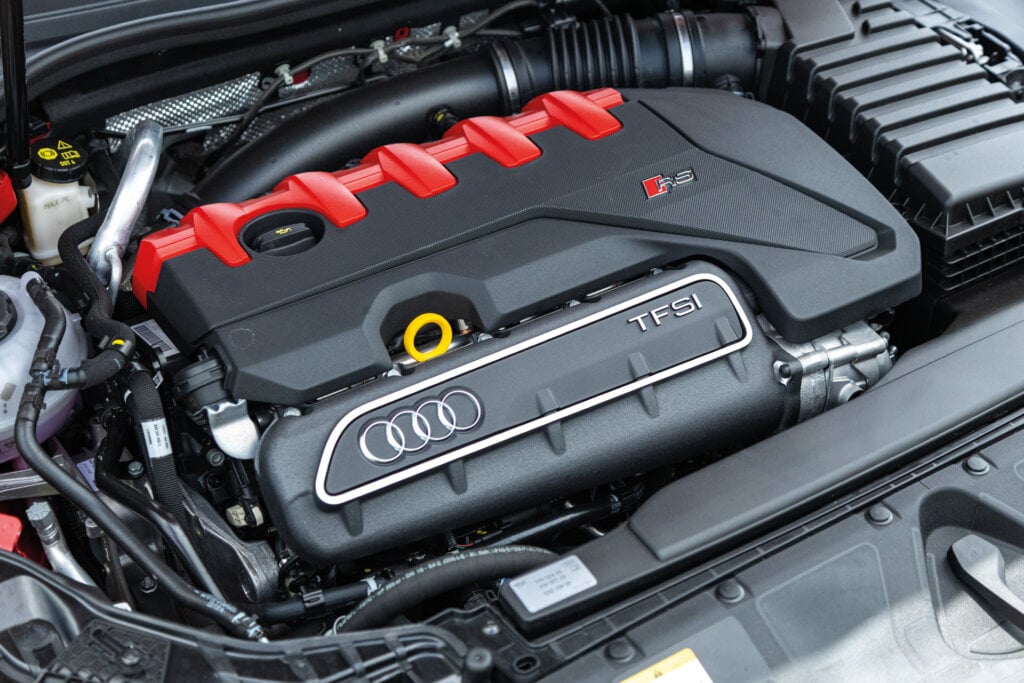
Electric vehicles have been around for a while and yet I’ll admit to not knowing a Permanent Magnet Synchronous Motor from an Asynchronous Induction unit. But everyone has their favourite engine format. The cylinder count and their arrangement is a large contributor to a car’s character. Sound has a lot to do with picking a favourite, but there’s also throttle response and power delivery, how hard and high it revs and how it produces torque. There are many different configurations while one of the more unique layouts is Audi’s inline five. This donk has a long history, now in its fifth decade, and now exclusively packaged under the bonnet of the RS 3.
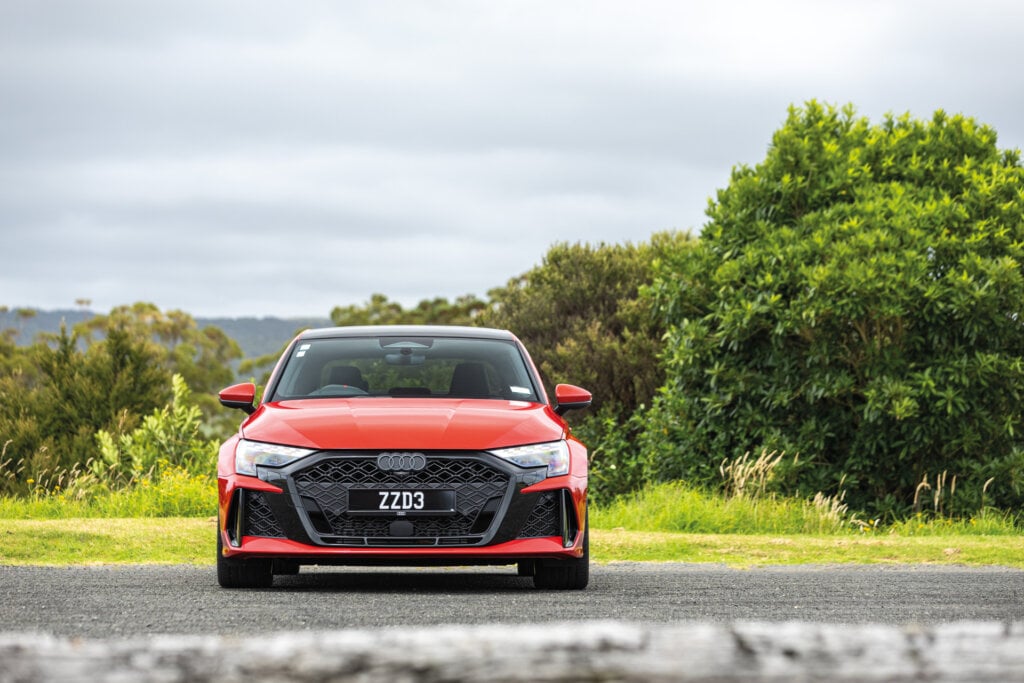
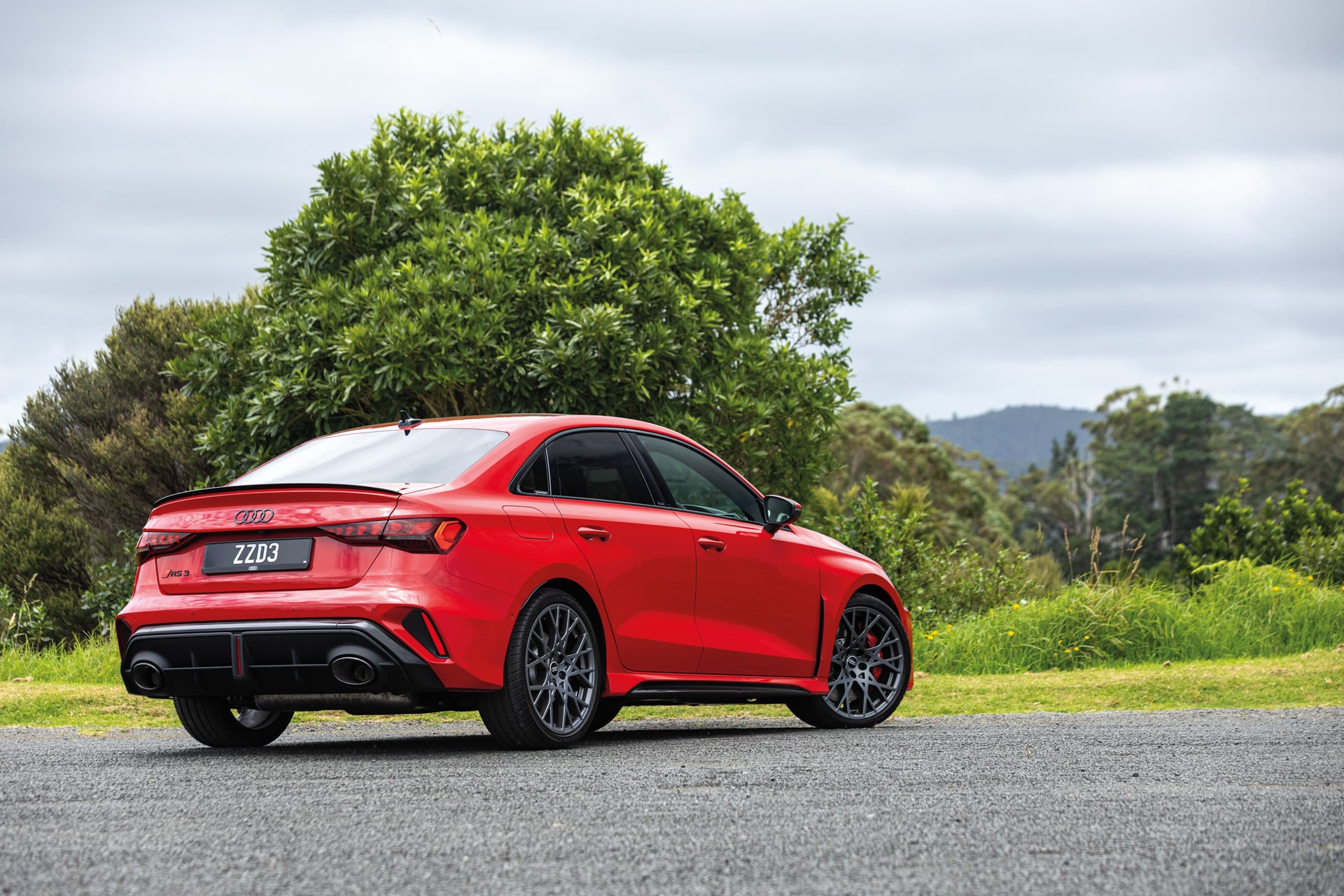
This little cracker has been offered here as a hatch for the past few years, and now you can get it in the four-door sedan format, at least for a limited time. Everything is the same for each, they even weigh the same, though the four door has a $2K premium at $133,990.
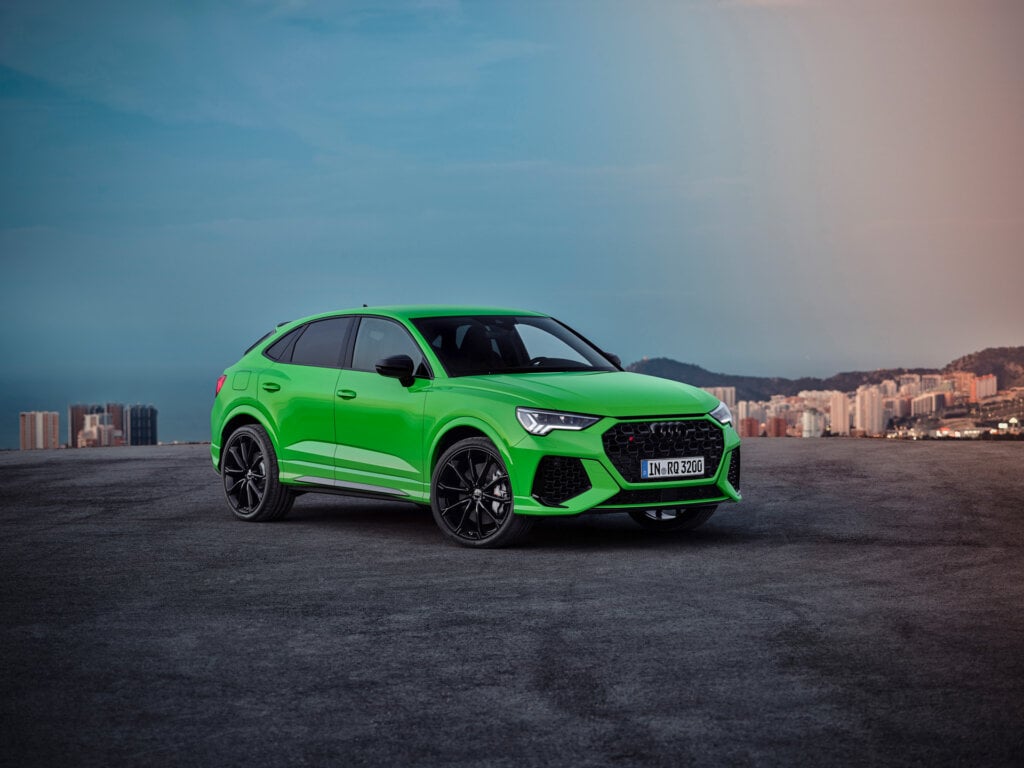
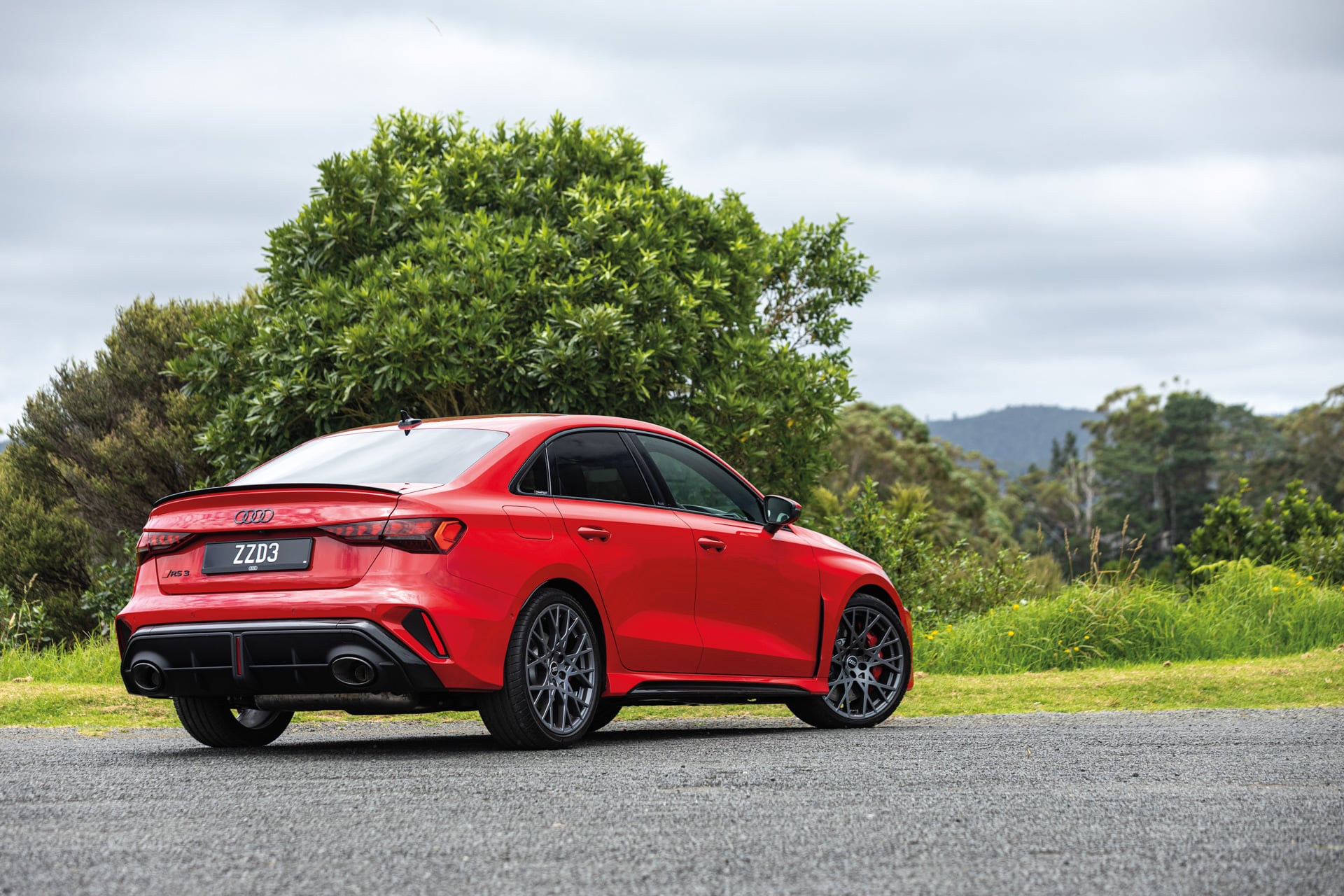
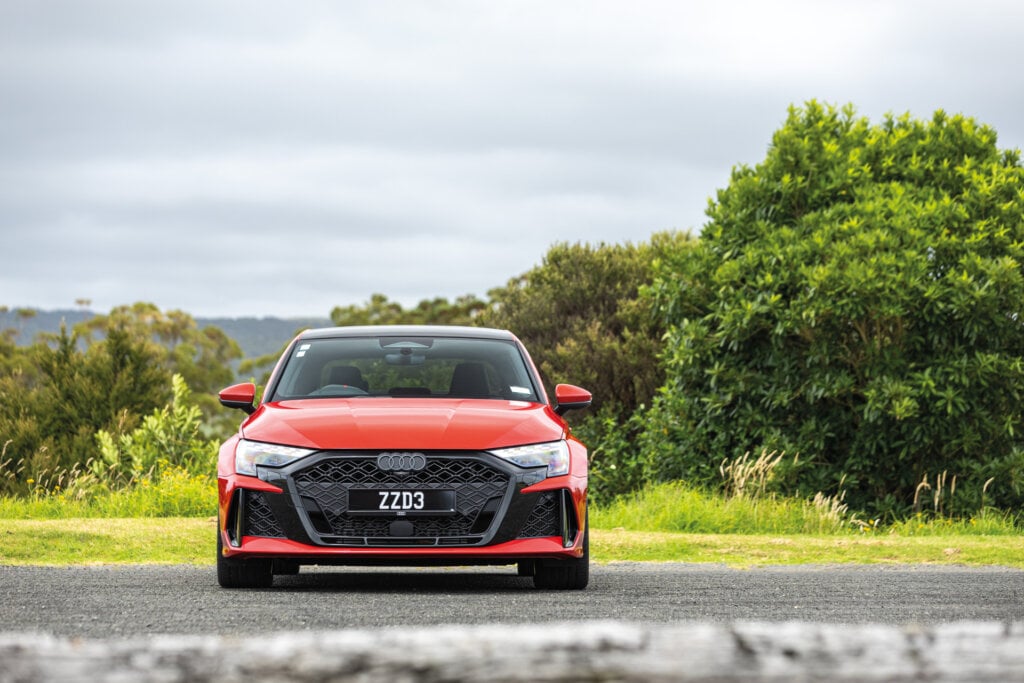
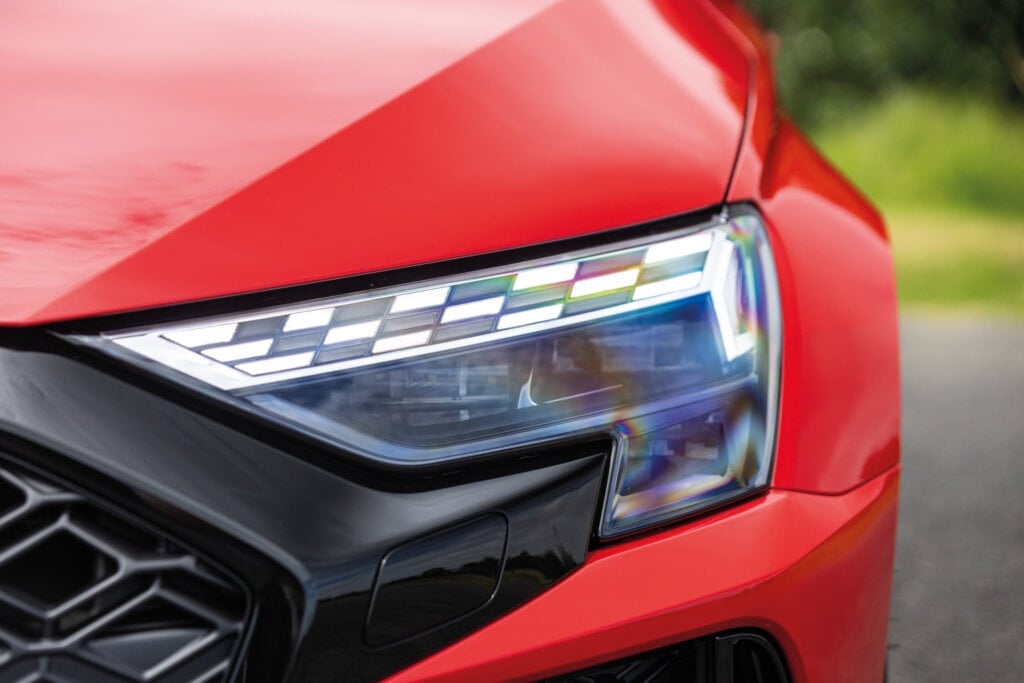
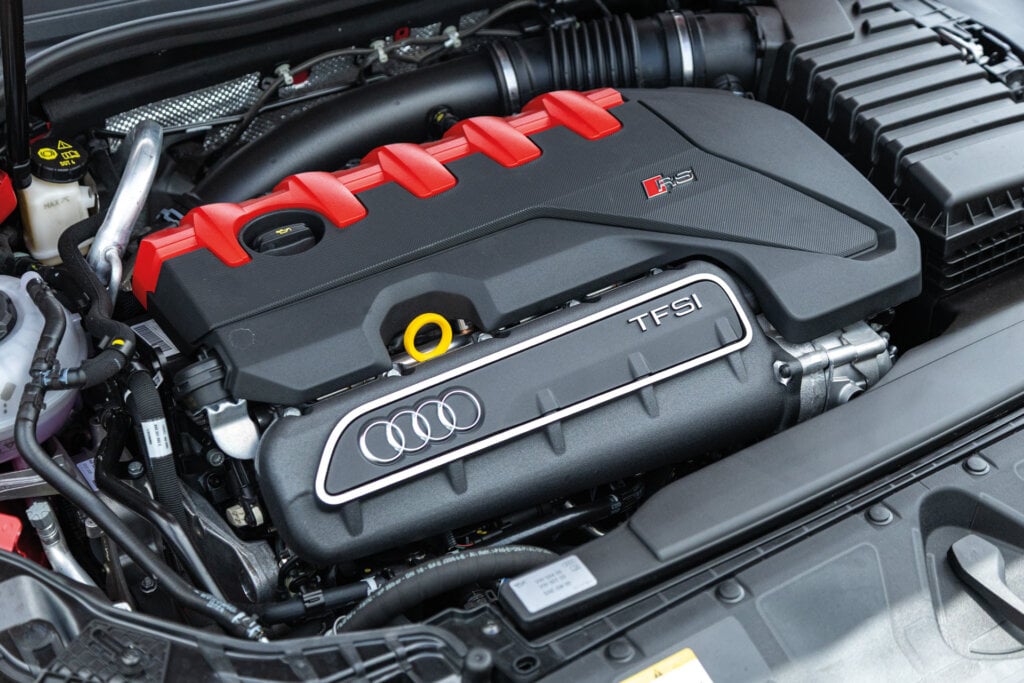
Does it look a little more premium for having a boot? Maybe, though it still possesses a hint of menace via its flared body work and subtle appendages while that prominent grille, smeared over the entire front, addresses the need for air flow into the engine bay. Firepower wise, it has the same 2.5-litre five-cylinder sending 294kW and 500Nm via a seven-speed twin-clutch out to all four wheels.
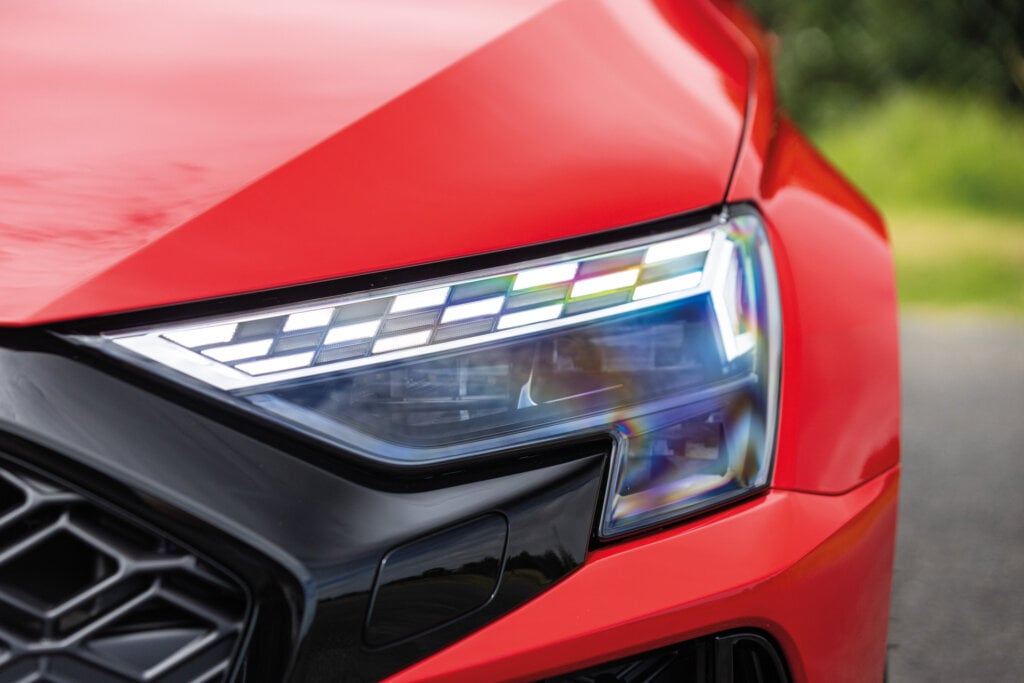
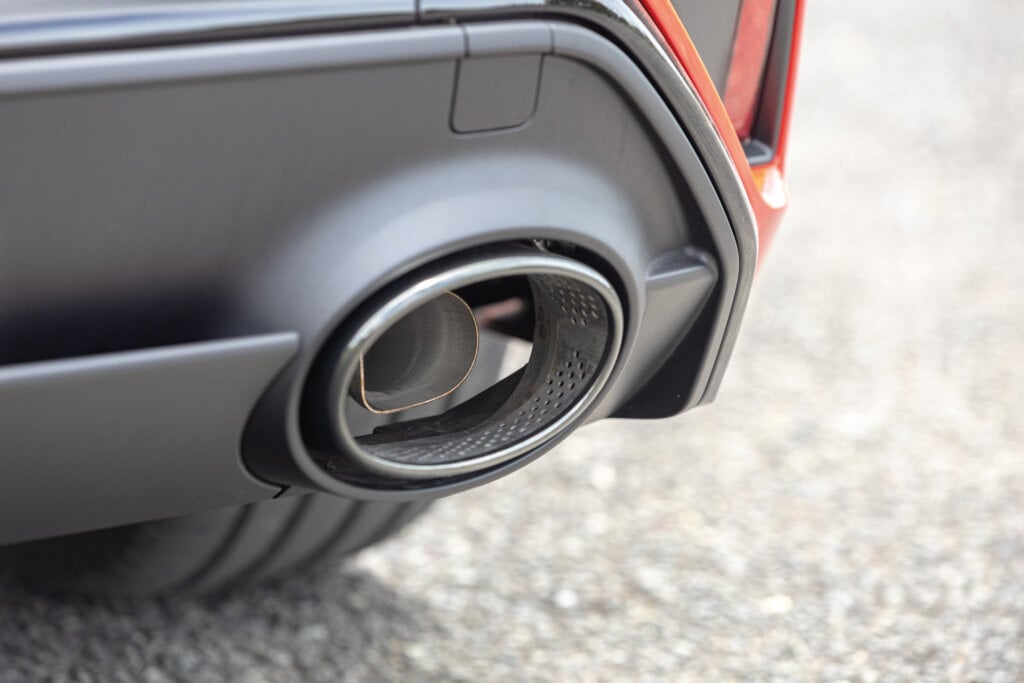
Helping ground that power more effectively, the AWD is variable via the clutch pack on the rear axle, while a further divvying of the torque can occur from left to right outback too. Also assisting is ‘wheel-selective torque control’ (torque vectoring via individual brake nipping), and RS tuned suspension with adaptive dampers.
A proper sports sedan?
Open the bonnet and you’ll find the five-cylinder sitting up high, and in front of the axle line, which isn’t particularly conducive to engaging dynamics. And sure enough, the first real bend taken with enthusiasm elicits a howl of horror from the rubber. This despite Audi fitting wider hoops upfront to help reduce this tendency to understeer.
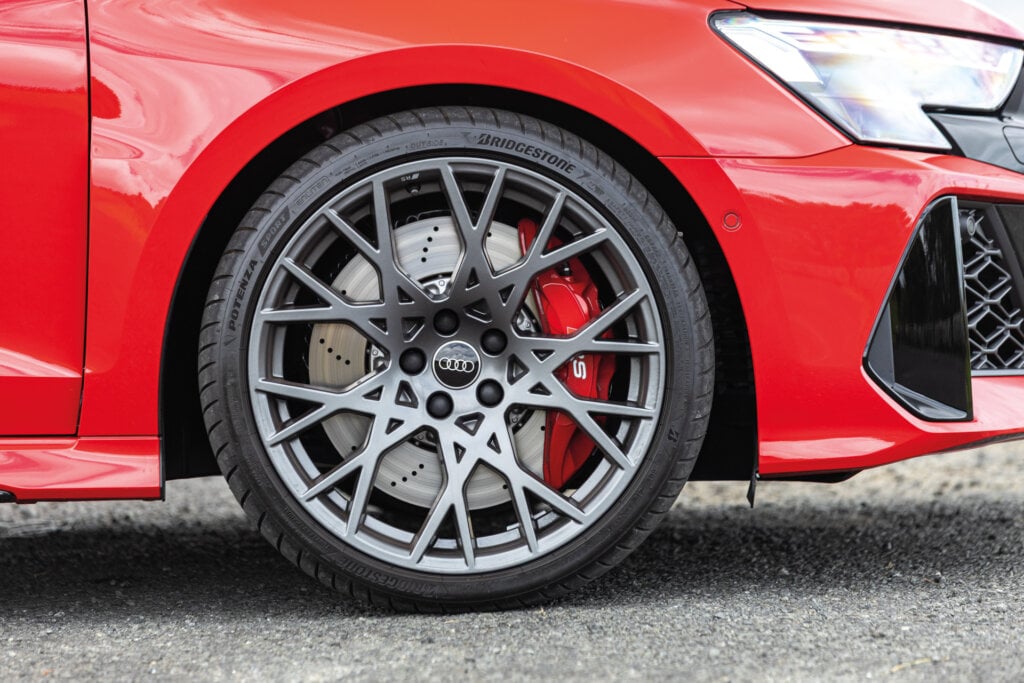
But you do have the tools to help negate that inherent character while adapting your driving technique helps too. Set up the ‘RS Individual’ mode to select Dynamic for the Drive (max response), Steering (a tad more resistance in bends), the Torque Splitter (to maximise your chance of rotating that rear end) and set the Engine Sound to Pronounced (so you can hear it over the road roar). The suspension performs well in Balanced, aptly named as this delivers suitable control, but you don’t hit the bumps as hard, while the ESP is set to Sport for added leniency.
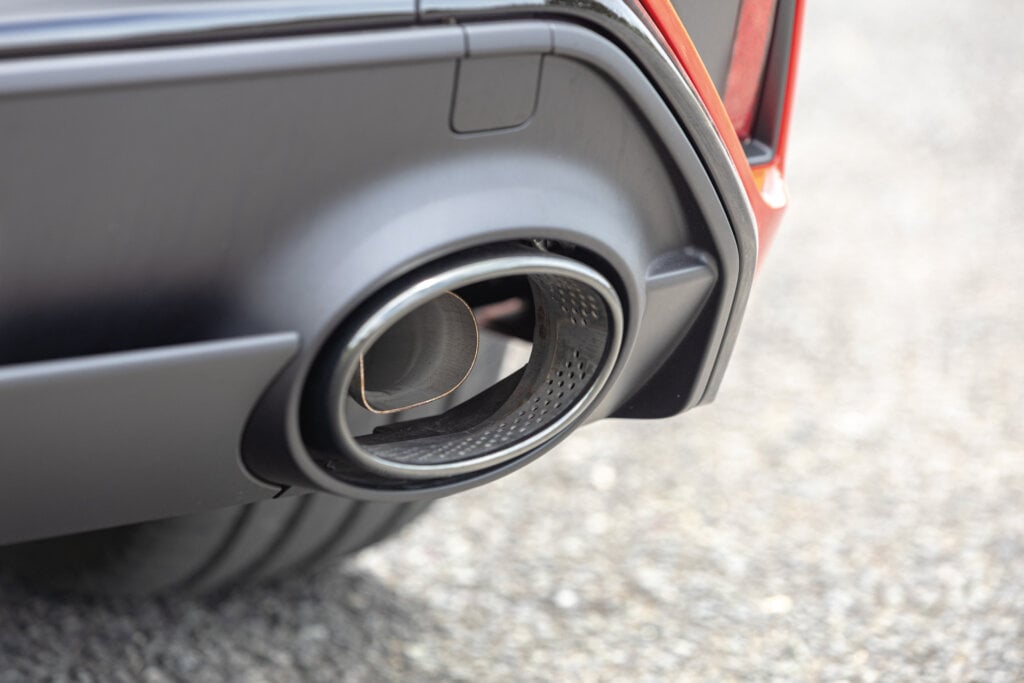
Entry speed is important. The brake pedal is solid yet feelsome under foot, allowing you to balance the car, the weight transition managed soundly by the suspension. Despite the lump saddled atop the axle, the RS 3 turns well, being quick just off centre. And you’ll know if you’ve overcooked the entry, the steering wheel relaying messages of looming understeer. Get it right and the front bites nicely to get it turning. Then you can make time up by mashing the gas early. With that torque splitter in action, it drives the rear around, tucking the front in and the RS 3 rounds off the bend. You can even provoke the rear into a few degrees of slip on occasion too.
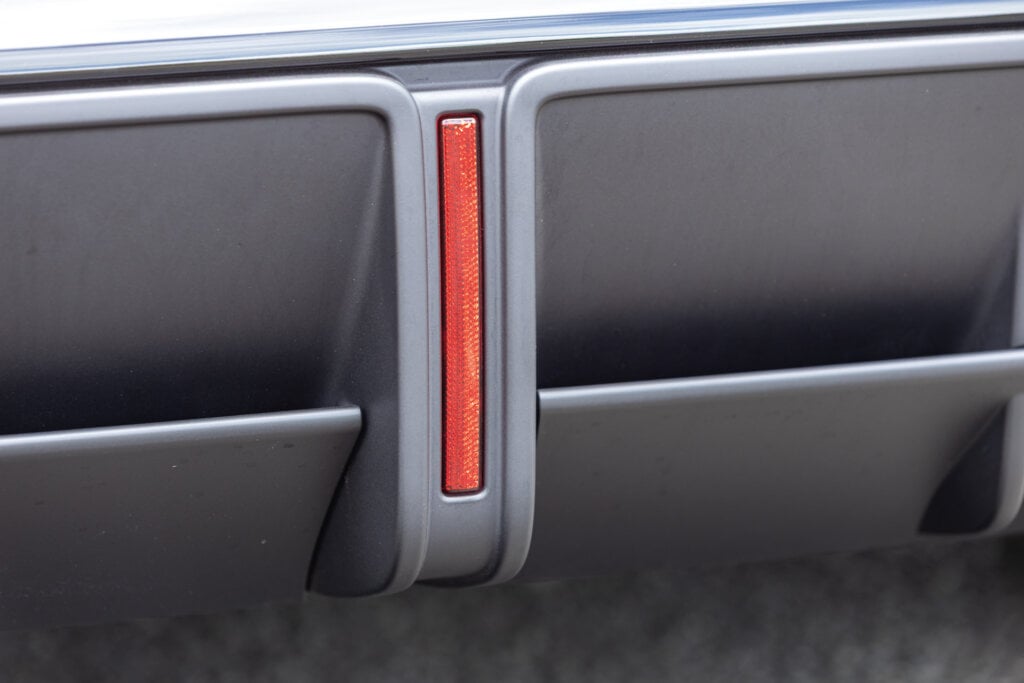
The five cylinder pulls with real intent from 3000rpm, the flow of torque strong. While it spins to seven, it feels better ploughing through its mid-range from three to six. The response is crisp and that rumbling, raspy growl is unique. And the RS 3 is quick enough, inhaling short straights. The twin-clutch has decent enough shifting protocols, with paddles to help it along if you must. The 2.5 is not too savage on gas reserves either, given its performance. While it can spike into the high teens during open throttle running, the average settled back down to 12L/100km.
While we wouldn’t go as far to call it a class leading drive, the RS 3 sedan has character, with practical traits too.
Practical performer
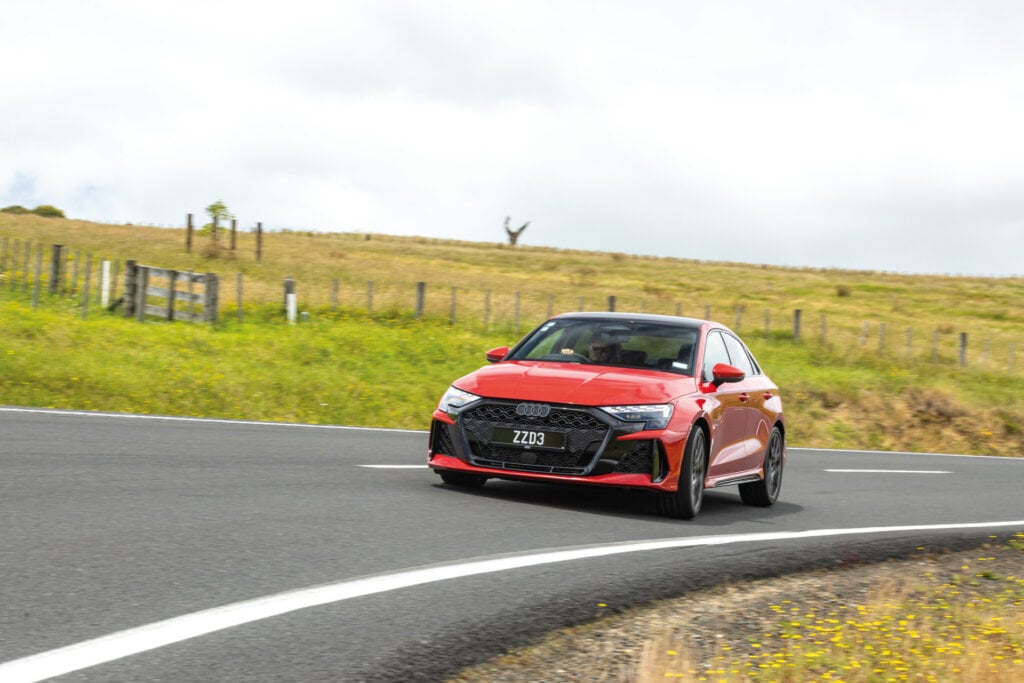
For everyday use, leave the drive mode in Auto and it’s perfectly civil. While it’s a racy machine, the ride is compliant and there’s decent ground clearance. The one blight is a larger than desired turning circle. Save for the occasional slurring at slower-speeds, the twin-clutch is otherwise refined and sorted.
Rear leg room is on the tight side, and three across would be an uncomfortable squeeze. The boot is not bad space wise but there are the usual sedan restrictions on the size of the opening.
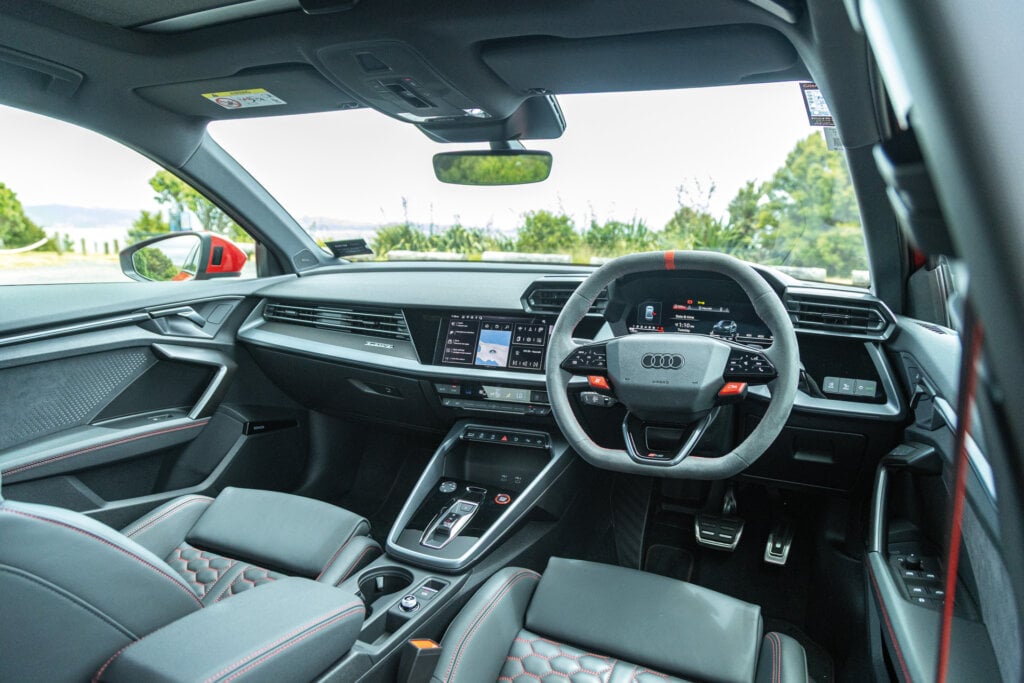
While low riding, entry is no chore, the leather-clad RS seats easy to slip into yet are comfortable and supportive on the go. It’s generally well equipped, we couldn’t think of anything we really wanted for (maybe seat ventilation). And maybe a round wheel bound in leather. This suede stuff will be looking tatty in a couple of years. And those touchy-feely haptic buttons don’t work quite as well as they should.
Being an older architecture, the central screen doesn’t dominate proceedings, and you’ve got buttons for simple HVAC operations. There are enough device chargers, and soft surfaces to raise the interior ambience, though a bit more internal storage would be nice. No qualms with the safety systems however, which are all well behaved.
Is the end near?
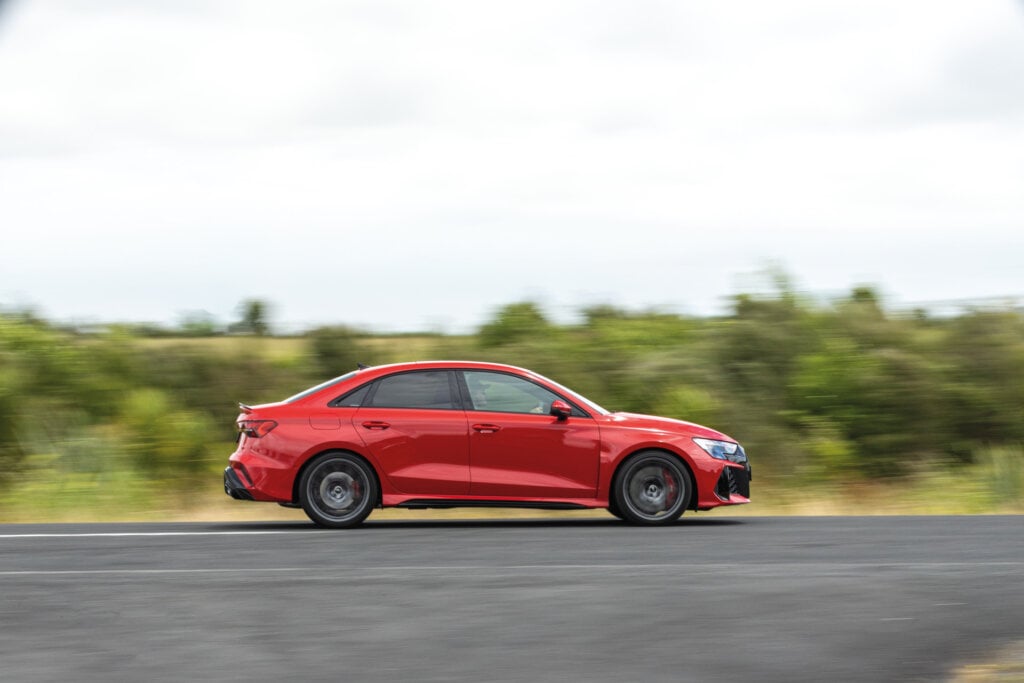
As emissions targets in Europe get tighter, it’s rumoured that this generation of the RS 3 will likely be the last powered by the inline five. Perhaps some form of electrification might help prolong its life, though that will add weight and cost. That makes this sedan more tempting, especially as numbers are limited. It is pricey for sure, though the performance, practicality and that unique soundtrack help bring some balance to the ledger.
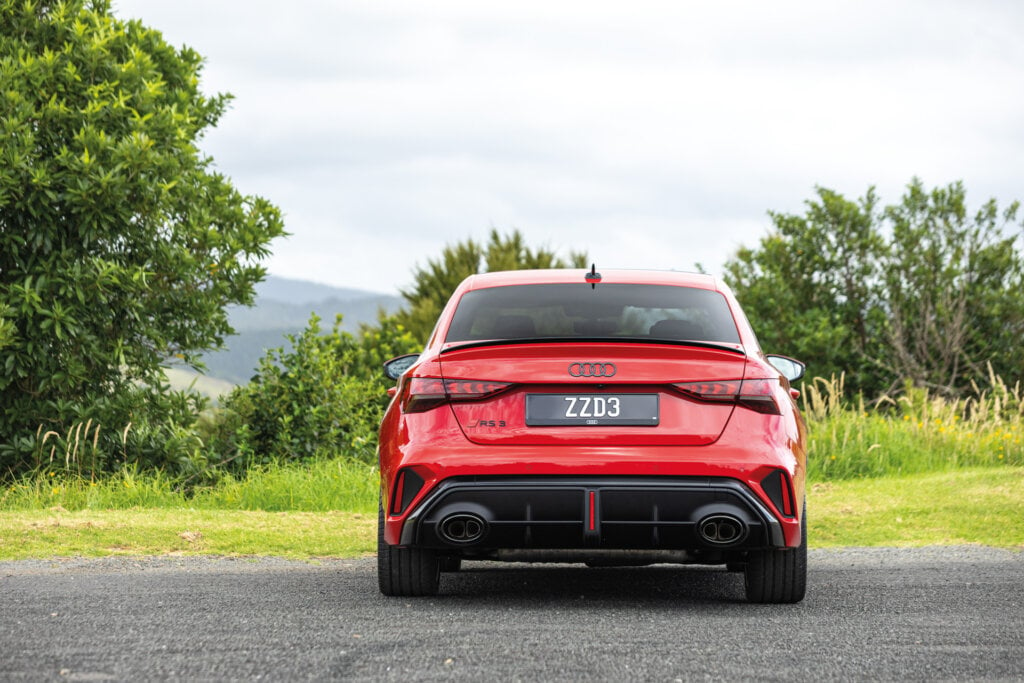
Audi RS 3 sedan
$133,990 / 9.4L/100km / 213g/km
0-100 km/h 3.8s
Engine 2,480cc / IL5 / T / DI
Max power 294kW@5,600-7,000rpm
Max torque 500Nm@2,250-5,600rpm
Drivetrain 7-speed twin-clutch / AWD
Front suspension Mac strut / swaybar
Rear suspension Multilink / swaybar
Turning circle 12m (2.2 turns)
Front brakes Ventilated discs (375mm)
Rear brakes Ventilated discs (310mm)
Stability systems ABS, ESP, TV
Safety AEB, ACC, BSM, LDW, RCTA, ALK, AHB
Tyre size f-265/30R19 r-245/35R19
Wheelbase 2629mm
L/W/H 4533 / 1851 / 1393mm
Track f-1592mm r-1524mm
Fuel capacity 55L
Luggage capacity 321L
Tow rating Not rated to tow
Service intervals 24 months / 30,000km
Scheduled servicing 3yrs / 150,000km
Warranty 5yrs / 150,000km
ANCAP rating Not rated
Weight (claimed) 1565kg
50 years of five
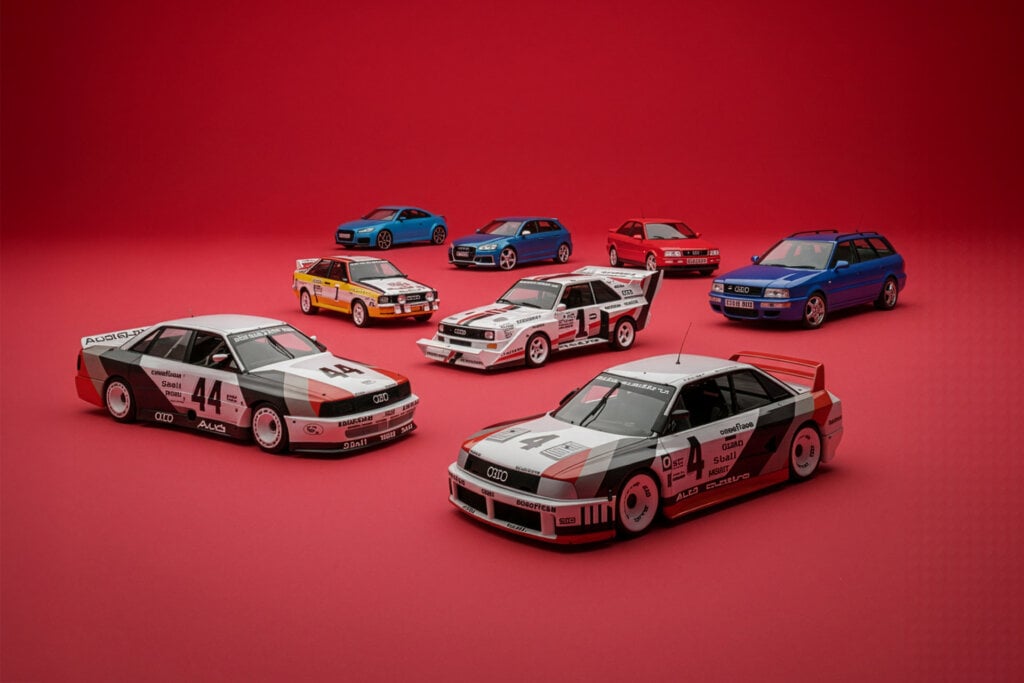
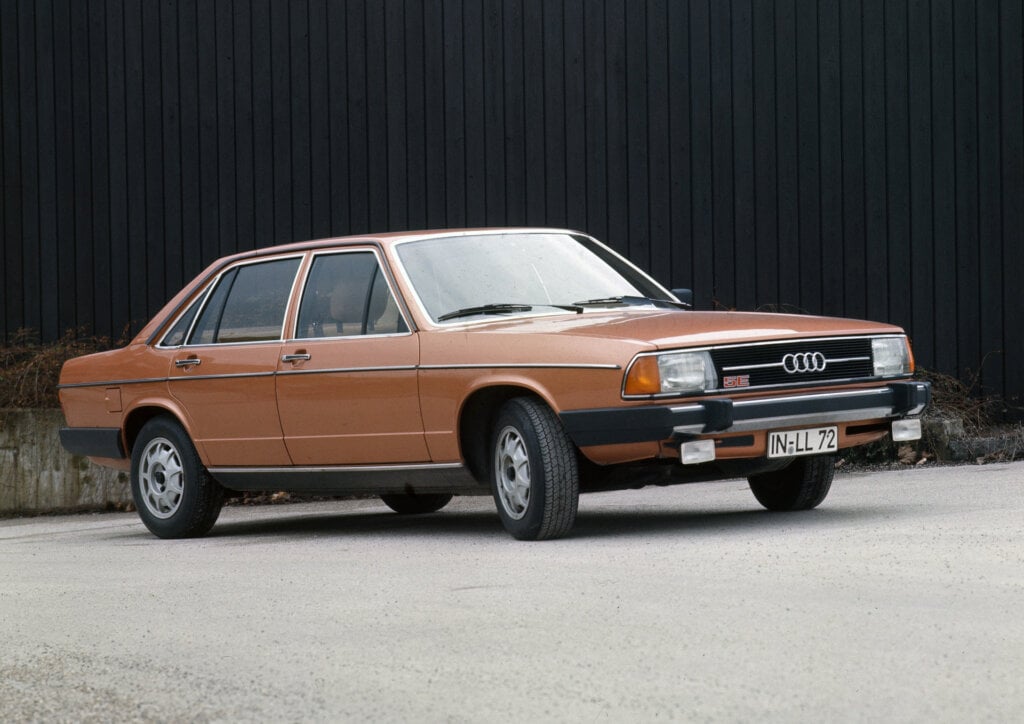
Audi’s five pot began life back in 1976, first used to power the new Audi 100. The five was a development of the firm’s EA827 four pot, another cylinder added to ramp output, giving the new 100 a bit more muscle to boost its appeal. Displacing 2144cc and blessed with fuel injection, it made a stout 100kW. It wasn’t long before Audi strapped a turbo to its five potter, the Audi 200 T of 1979 able to call on 125kW and 265Nm.
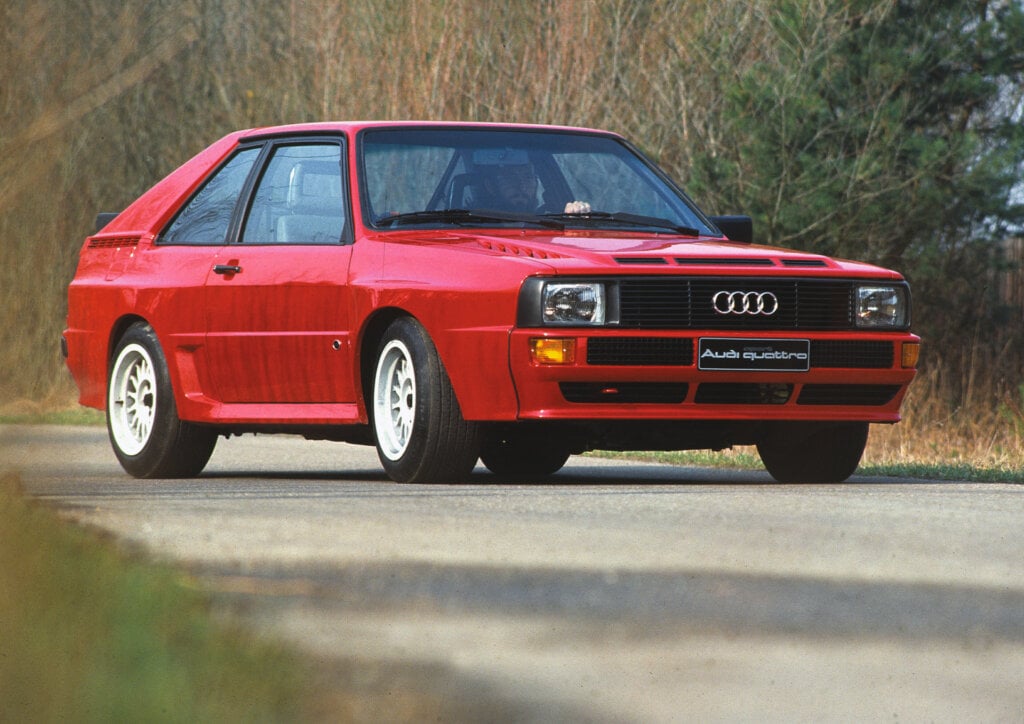
Then a year later, the five cylinder would bless the new Audi quattro. The new coupe’s engine was given a larger turbo and a fancy new intercooler to up power to 147kW with 285Nm. Lucky it had AWD to ground all that mumbo, which also made it a rallying success. WRC titles soon followed, and as we entered the Group B era, Audi produced the wild Sport quattro in 1983, it being wider and shorter than the regular quattro. Meanwhile, the engine grew slightly to 2.2-litres. It gained a four-valve head and with an alloy block, power was out to 225kW, making it the most powerful German car of the day. In full Group B trim, the five cylinder could make as much as 331kW, bringing another championship in 1984. The quattro evolved further in the next two years, the fearsome S1 equipped with a 353kW five cylinder, complete with an early form of anti-lag. The turbo featured a recirculating air system aimed at keeping the turbine spooling when the driver was off the gas to improve the response when they got back on it. While Audi would exit rallying as Group B got out of hand, it wasn’t done on gravel completely. Walter Rohrl would use the Audi quattro S1 to conquer Pikes Peak, the five cylinder delivering 440kW, not bad considering the air gets a bit thin at altitude.
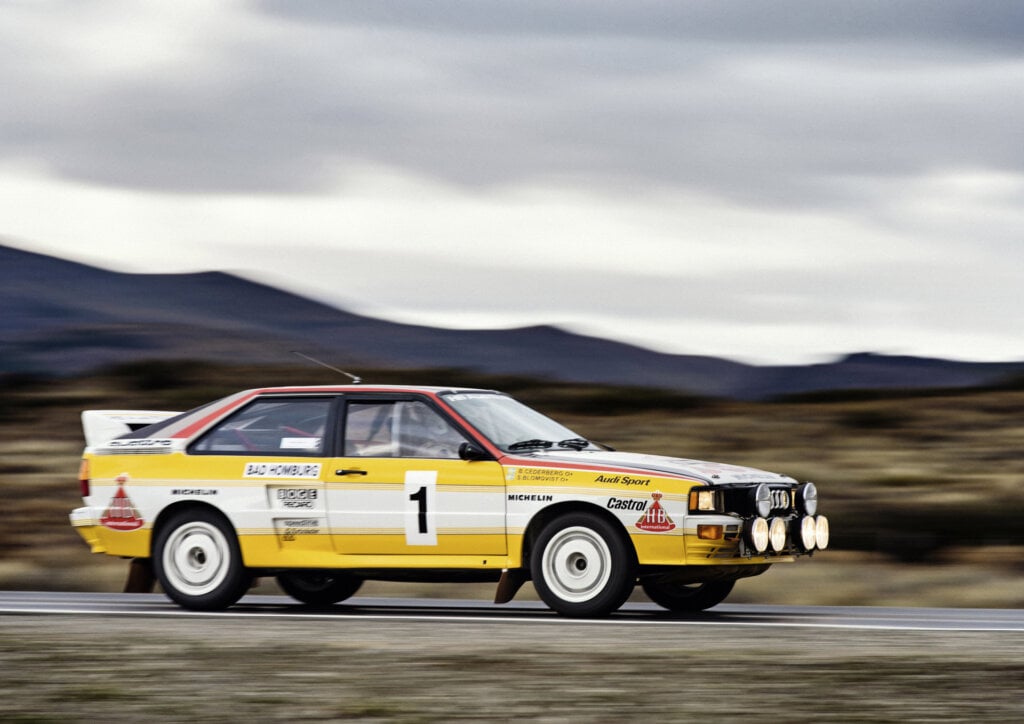
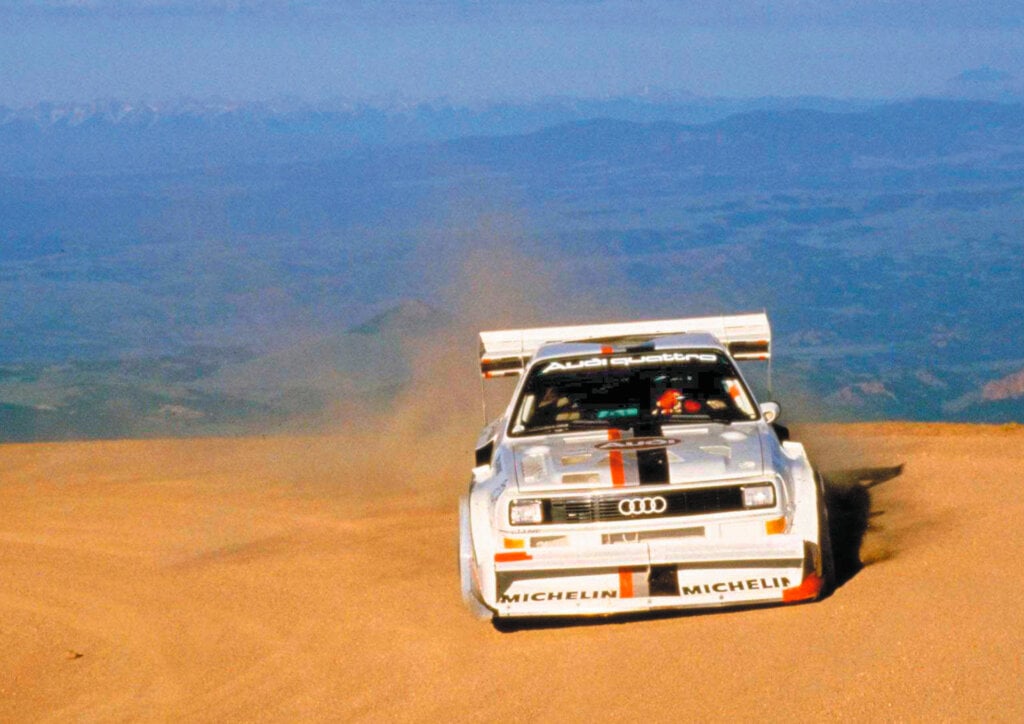
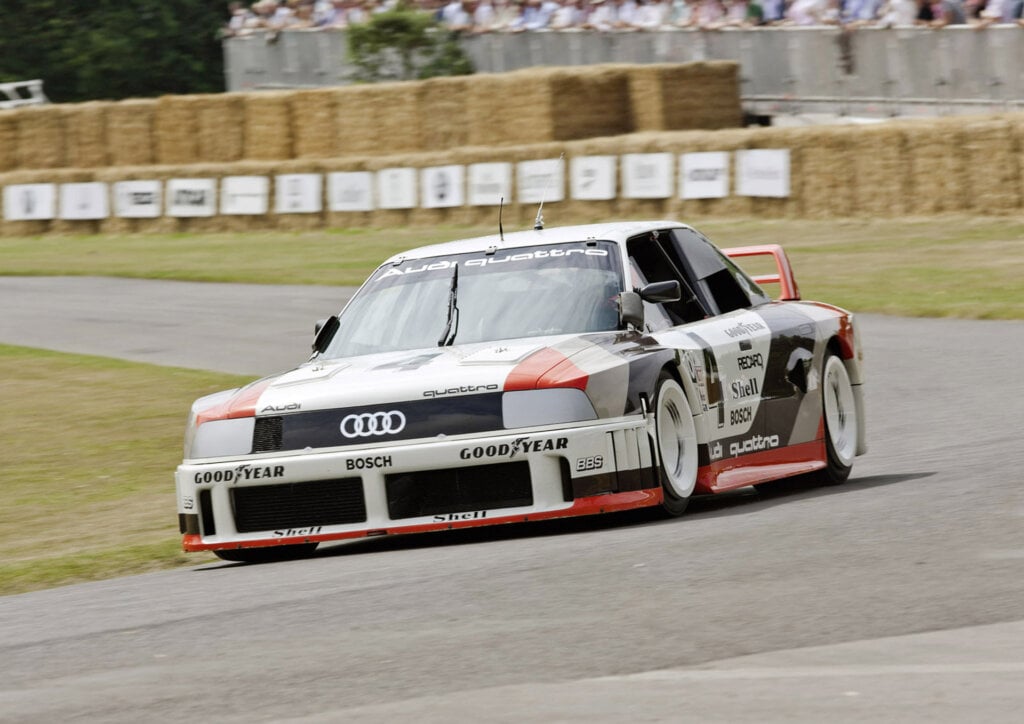
Audi also used the five pot to deliver track glory in the IMSA series in the US. Utilising a 2.1-litre engine with a two-valve head, it could be coaxed to make 375kW. And ultimately in 1989, the GTO version, with a 2.2-litre 20v, topped 530kW.
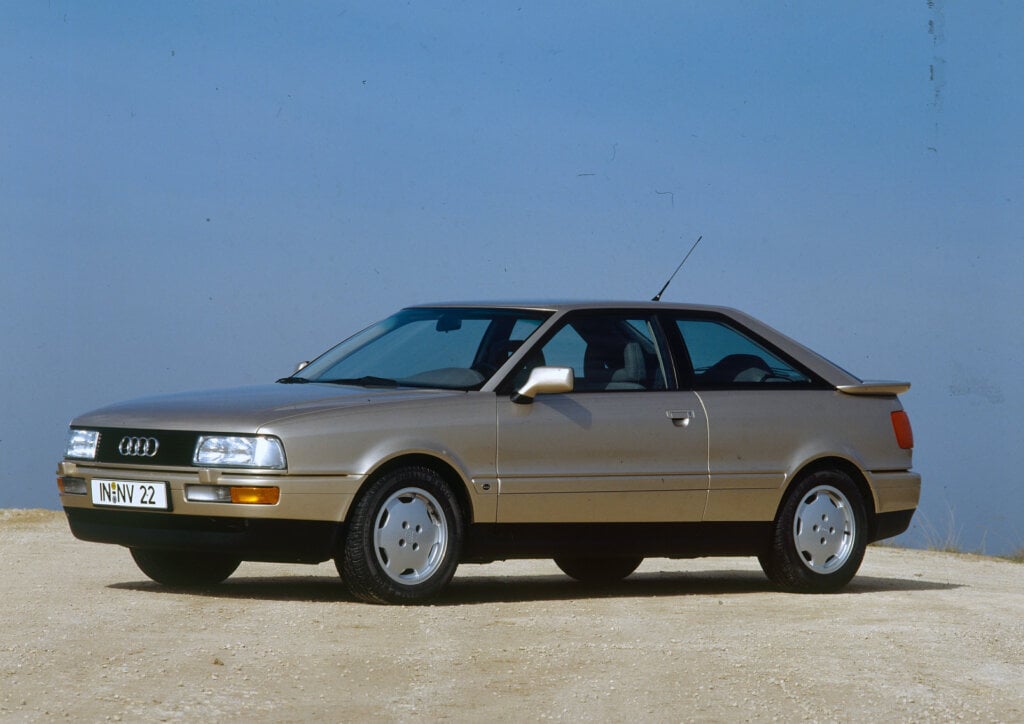
Back in the showroom, the original quattro was still available up until 1991, having moved to a 20V unit in 1989, making 164kW. Its successor the Audi S2, used the same engine but it was a fizzer, deemed to be too heavy. It only lasted four years.
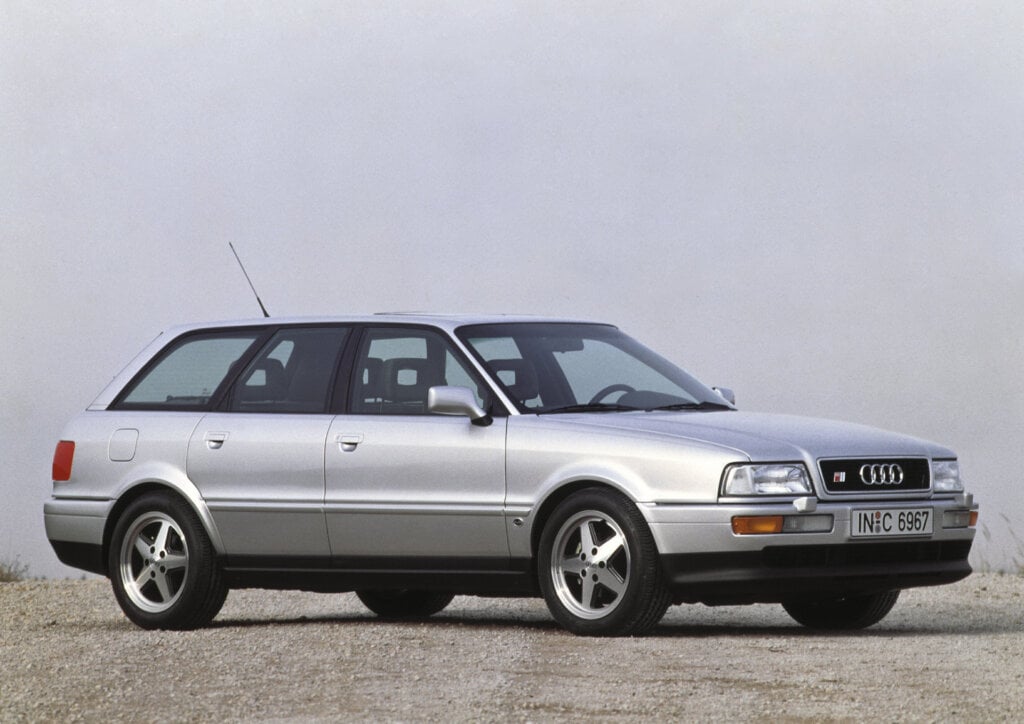
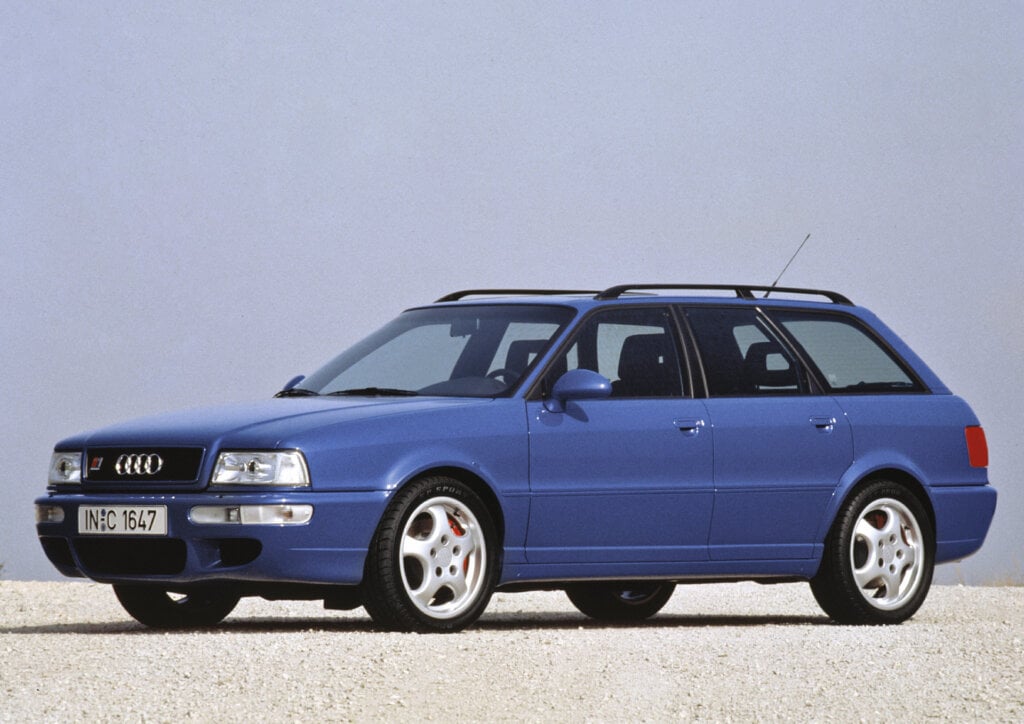
The ultimate road going version of the original five cylinder would bless the engine bay of the Avant RS2 in 1994. It was co-developed with Porsche, who set about modifying the five cylinder with a new turbo, intercooler, injectors, camshafts, induction and exhaust while also fitting it with a more sophisticated ECU. The result was 232kW and 410Nm. Porsche’s own 3.6-litre 911 Turbo was making 265kW at the time, so it was a good effort from 2.2-litres.
As the 80 and 90 were replaced by the A4, and the 100 became the A6, the five cylinder was eventually retired in 1997.
From 1976 through to 1997, it powered a range of Audi models including the 80, 90, 200, Coupe as well as the aforementioned models. It ranged in displacement from 1.9-litres to 2.3-litres. Some breathed through carbs, others drank via fuel injection while some compressed diesel.
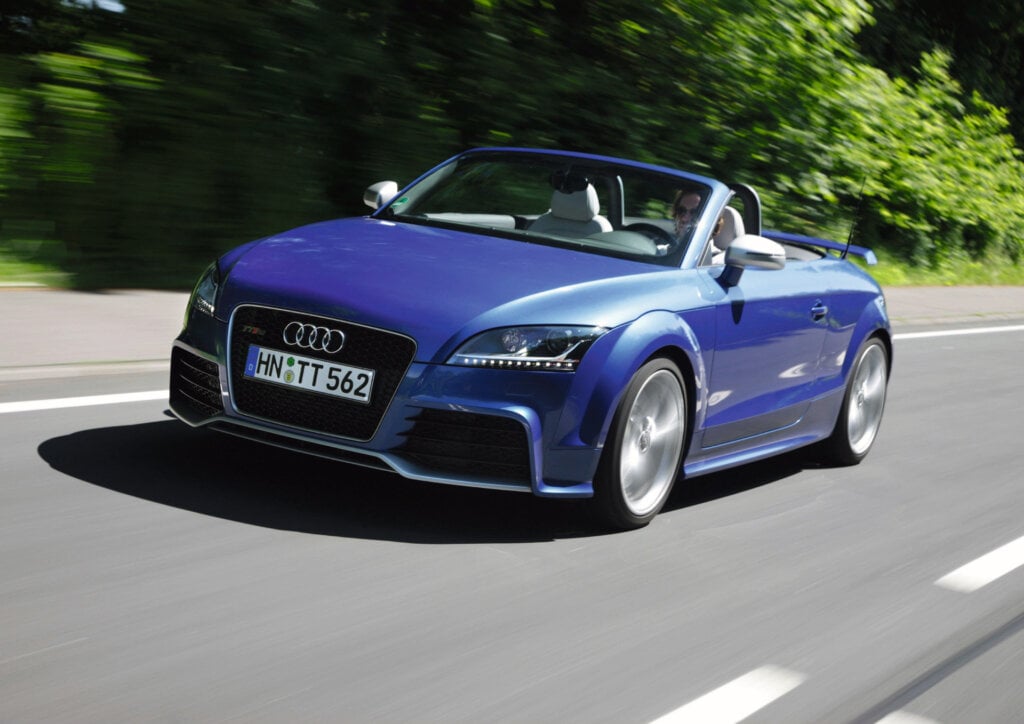
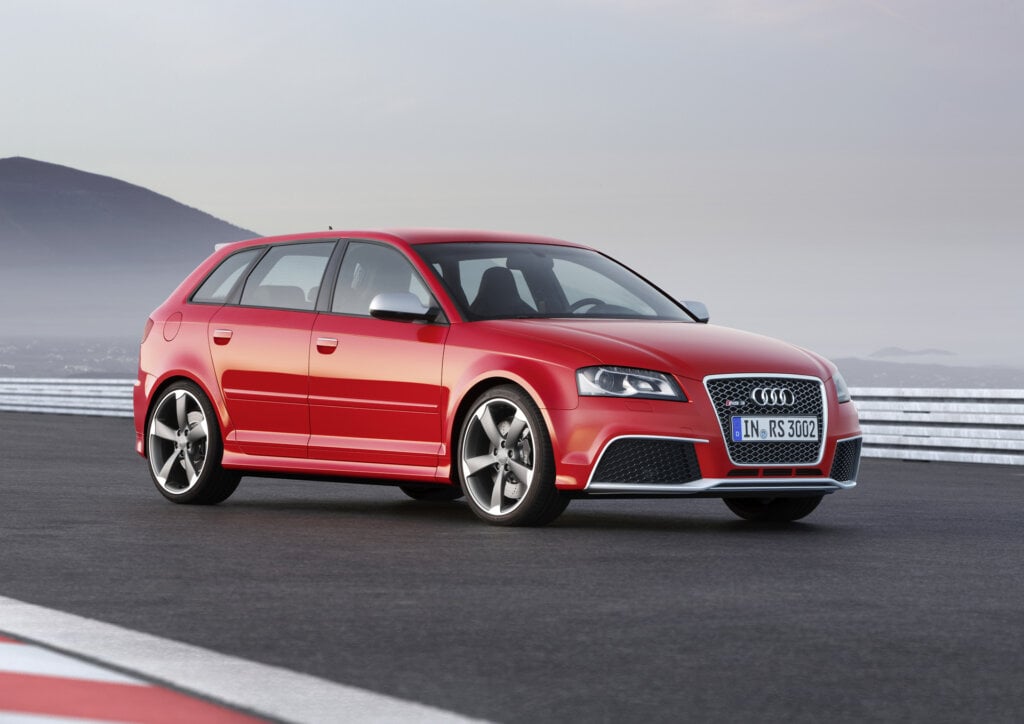
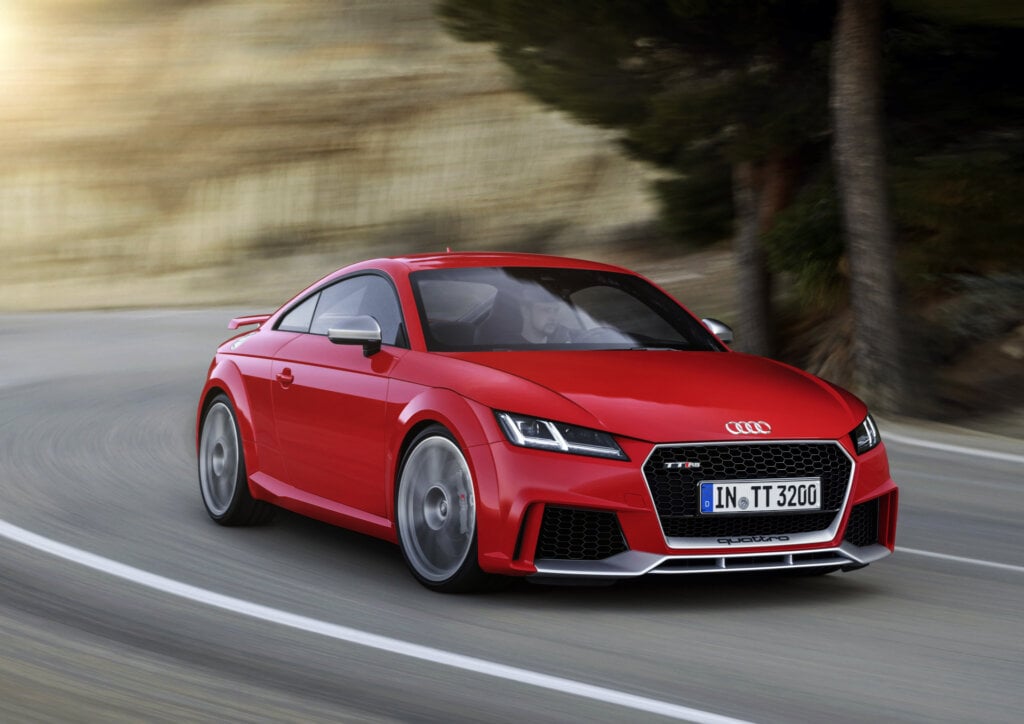
It would make a comeback in 2009 in the Audi TT RS and then the first RS 3. The 2.5 initially made 250kW before bumping up to 265kW in the TT RS plus and was also used in the RS Q3. It was renewed in 2016 with lighter alloy block and improved internals to realise 294kW and 480Nm, which was again tweaked in 2021 to improve response and torque. With its long stroke design and with five pistons giving the crank a push, torque production is a strong point. The turbo running 1.5 bar boost helps too, as does high pressure direct injection.
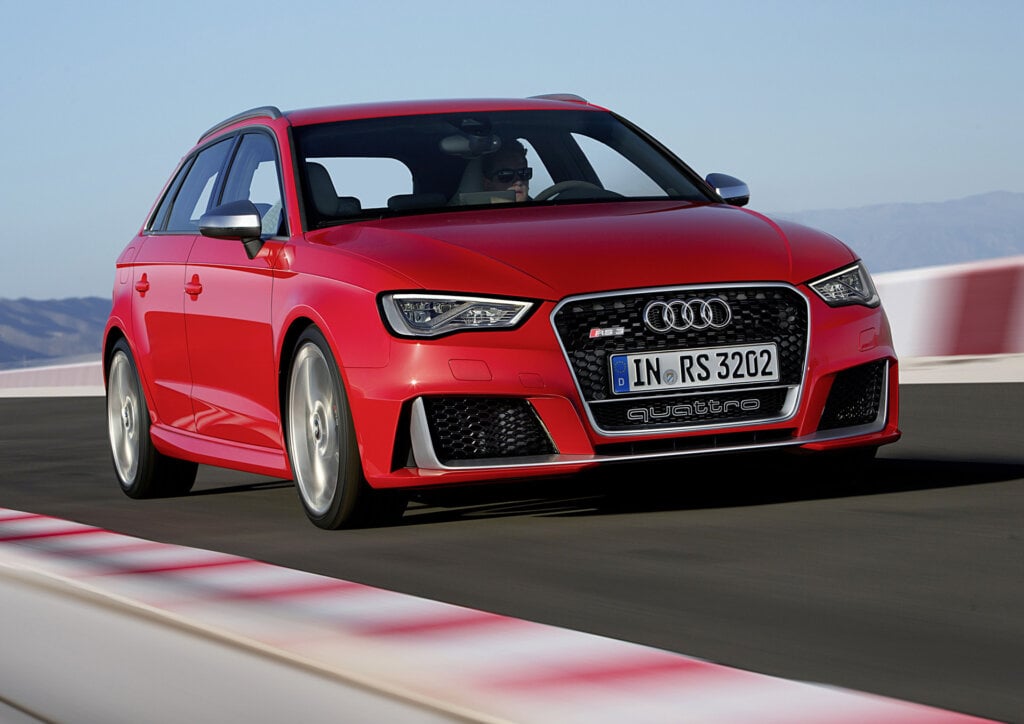
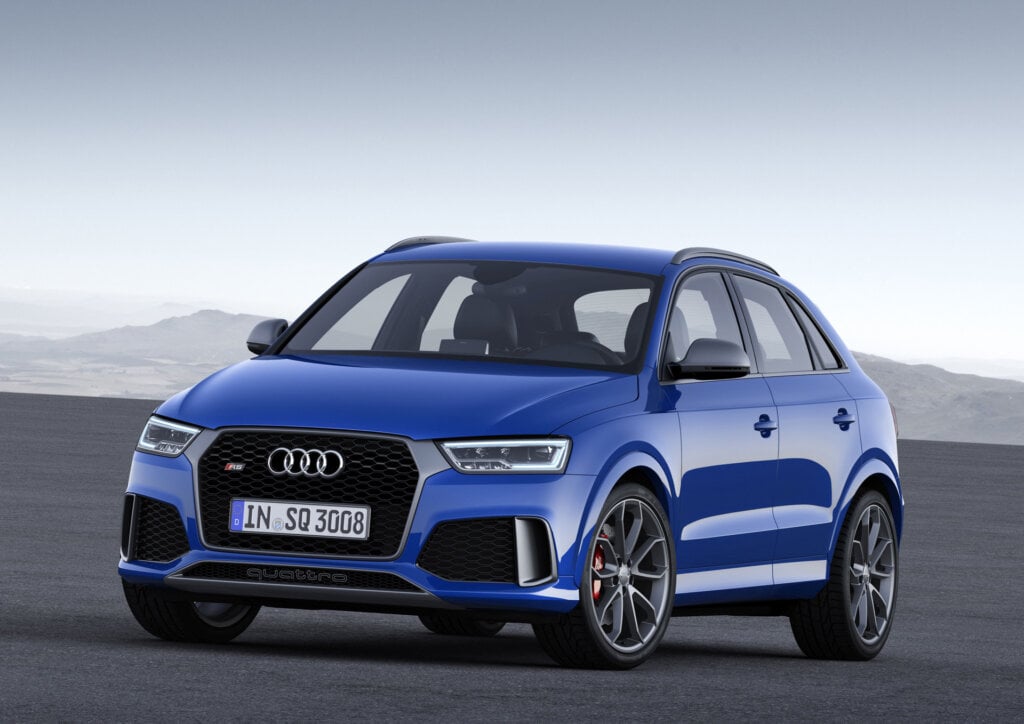
It’s rumoured that Audi is planning to send off the current RS 3 with a track-focused special and you can imagine they’ll be wanting to squeeze some more power from the 2.5 as a fitting send off.