View all
19 more images
2026 Audi RS 5 Avant Review
Words: Kyle Cassidy | Photos: Alex Schultz
The Audi RS 4 returns as the RS 5, and it’s a plug-in hybrid. Does this formula work for one of Audi’s greatest hits?
Performance cars are increasingly turning to electrification to balance the go buyers demand with more palatable emissions figures. There have been hits and misses. BMW has made a decent fist of the M5, whereas Mercedes went a step further with the C 63, replacing its V8 with a four-cylinder. What were they thinking?
Audi had already downsized the RS 4 engine to a twin-turbo V6 a generation ago, so there’s less cultural upheaval here. The six remains, now with a collection of electrical hardware providing assistance. At just under $200,000, the new RS 5 is getting towards RS 6 money, so there’s plenty riding on how well it all combines.
But the electrics bring weight. Audi’s new RS 5 Avant tips in at 2370kg. The plug-in hybrid powertrain has made this fast wagon more powerful and potentially easier on fuel, but it has also given it a sizeable load to carry.
The V6 alone produces 375kW, up 44kW, despite adopting the more efficient Miller cycle. Variable-geometry turbochargers, optimised piping and a short, free-flowing intake help sharpen its response, while torque registers at 600Nm. It works with a 130kW/460Nm electric motor housed within the eight-speed automatic, the pair delivering a combined 470kW and 825Nm.
A 400-volt electrical system and 25.9kWh battery (22kWh usable) complete the ingredients. They account for some of that weight, but they also ensure it’s no slouch. Audi claims 3.6 seconds to 100km/h, which is exactly what we recorded. The 80–120km/h sprint takes just 2.1 seconds. Quick enough, then.
It doesn’t launch with quite the gusto you might expect. Instead, the torque keeps it surging while the gearbox snaps through its closely spaced ratios. Audi says it has reduced friction in the rotating components to improve shift speed and quality. And in max attack mode, this rips through the gears.
The battery offers a claimed electric range of 84km. We collected the car fully charged, although its display forecast 54km. As always, your mileage will vary.
With sufficient charge it defaults to EV mode, the electric motor driving through the transmission for commuting without tailpipe emissions. It’s refined, although the initial torque hit isn’t quite what you get from a dedicated EV. There’s still enough go for motorway merging, and it travels happily at highway speeds without calling on the V6. Lift off and it will coast along, or you can select regeneration with the paddles.
Floor the gas pedal and it’ll introduce the V6, but you’ll seldom need to; it manages in traffic just fine, where the electric running suits the car’s more relaxed side. It’s a convincing enough way to get about without firing up the petrol V6.
Fuel consumption all depends on your charging habits. Audi quotes a weighted figure of 3.9L/100km, alongside 10.2L/100km with a discharged battery. How often you charge, where your journey takes you and how enthusiastically you get there will have an influence on your gas bill.
The car accepts up to 11kW on AC, with a full charge taking around two and a half hours in the best circumstances. Overnight charging with the provided portable charger is also doable.
In hybrid mode, across urban and motorway driving, the RS 5 averaged 14L/100km. The power sources generally blend smoothly, with an occasional surge when requests for more urgent acceleration bring in the V6 more abruptly.
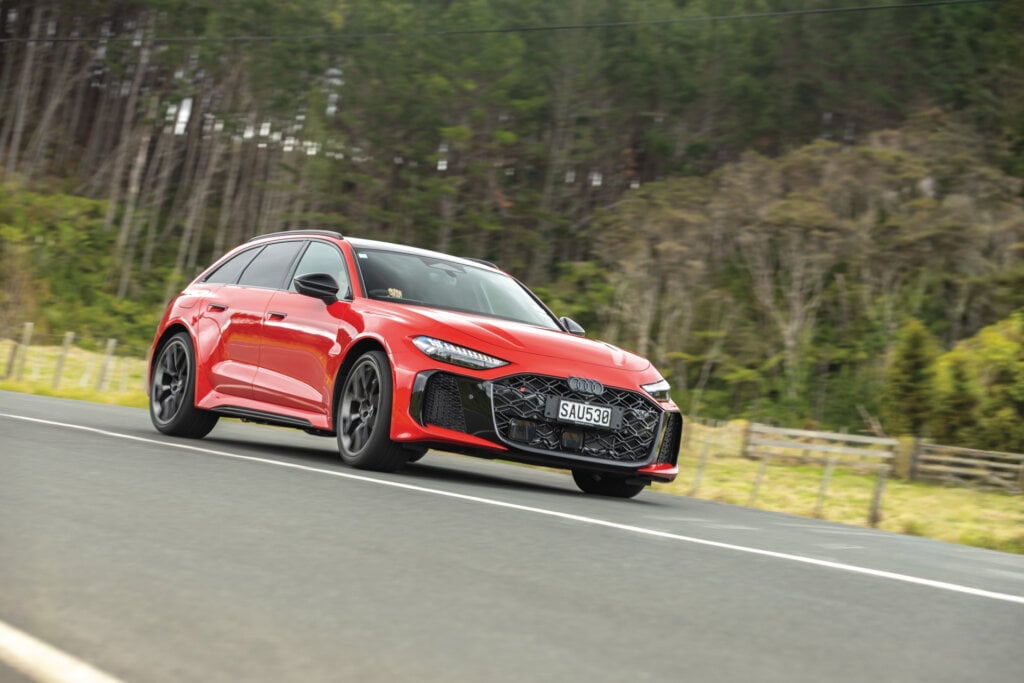
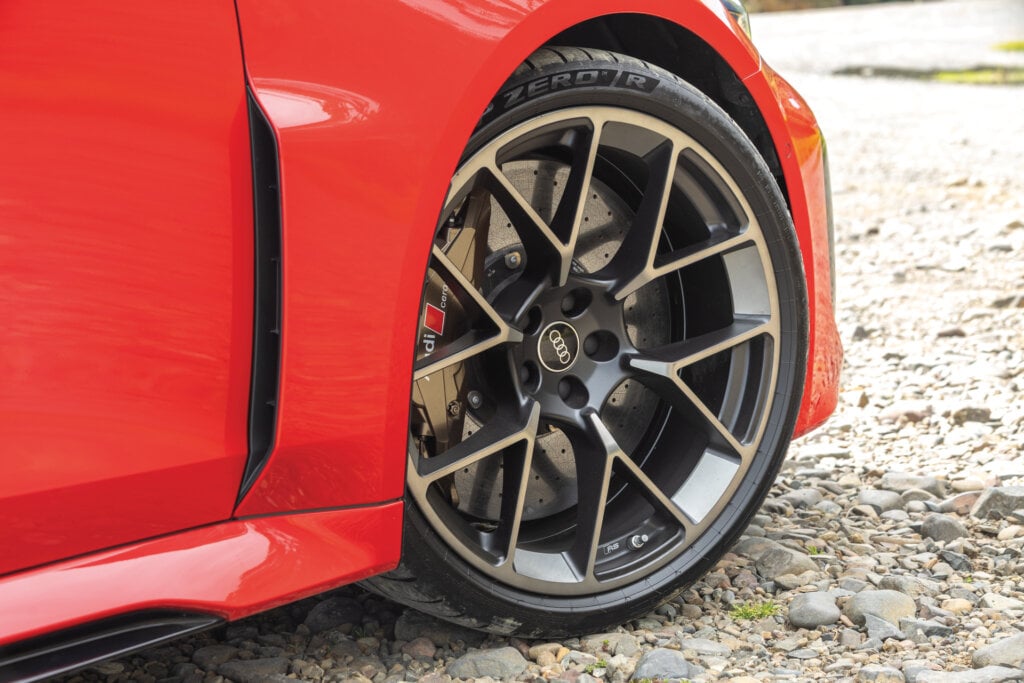
While the RS 5 looks racy, it does the everyday duties commendably. The urban ride is well sorted, with harshness largely banished despite the 21-inch wheels. It sits low, however, so awkward driveways require care. There are no particularly annoying warning bongers, either. Lane keeping can get nudgy, but holding the button on the indicator stalk turns it off.
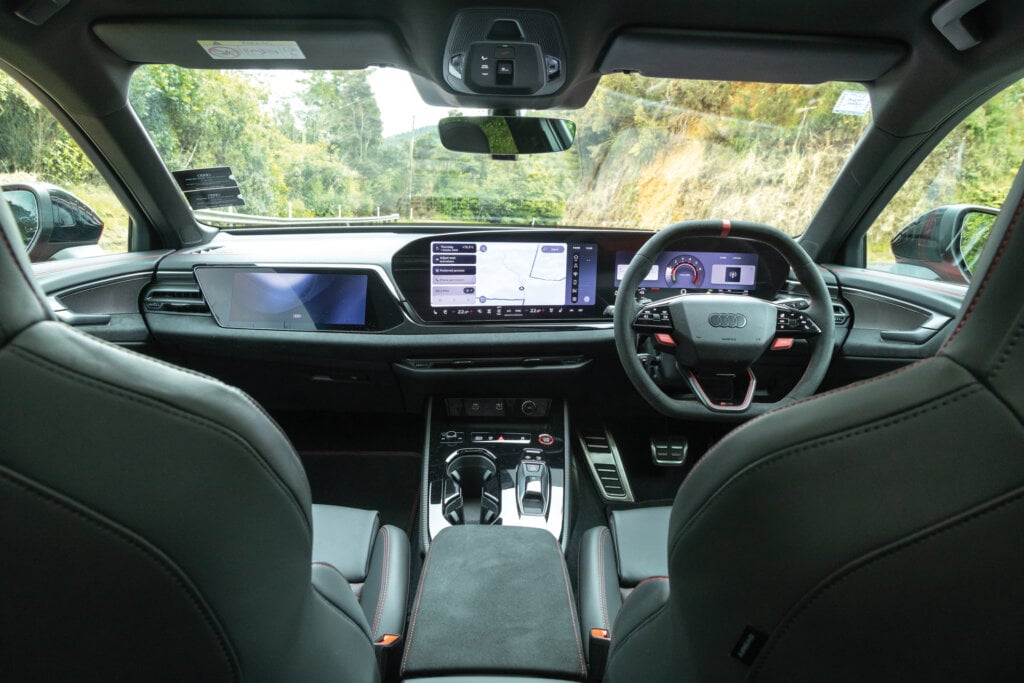
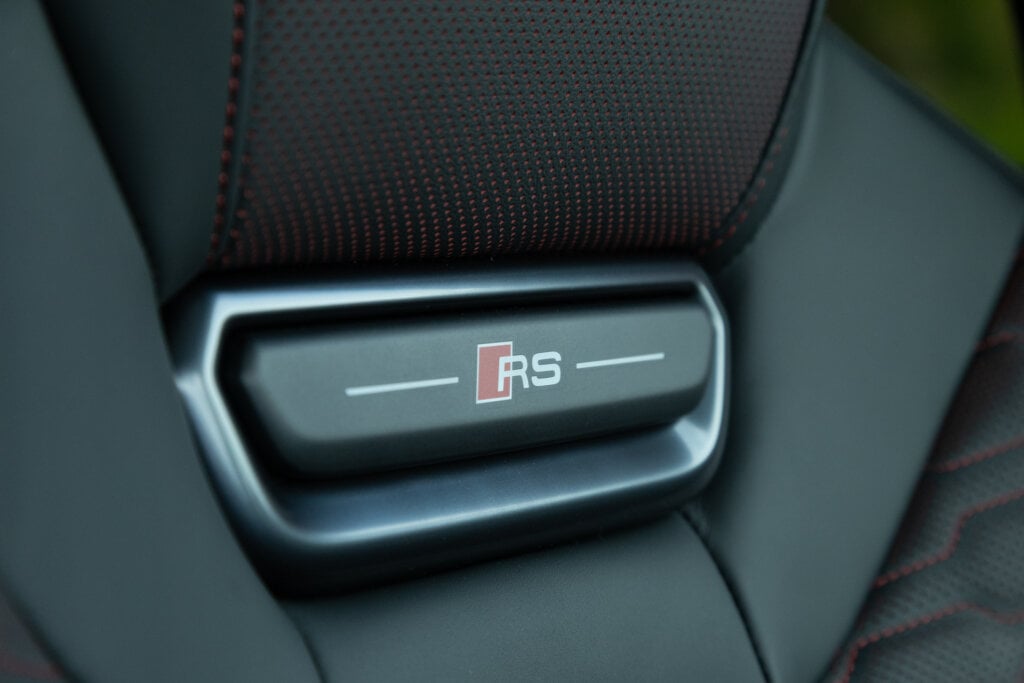
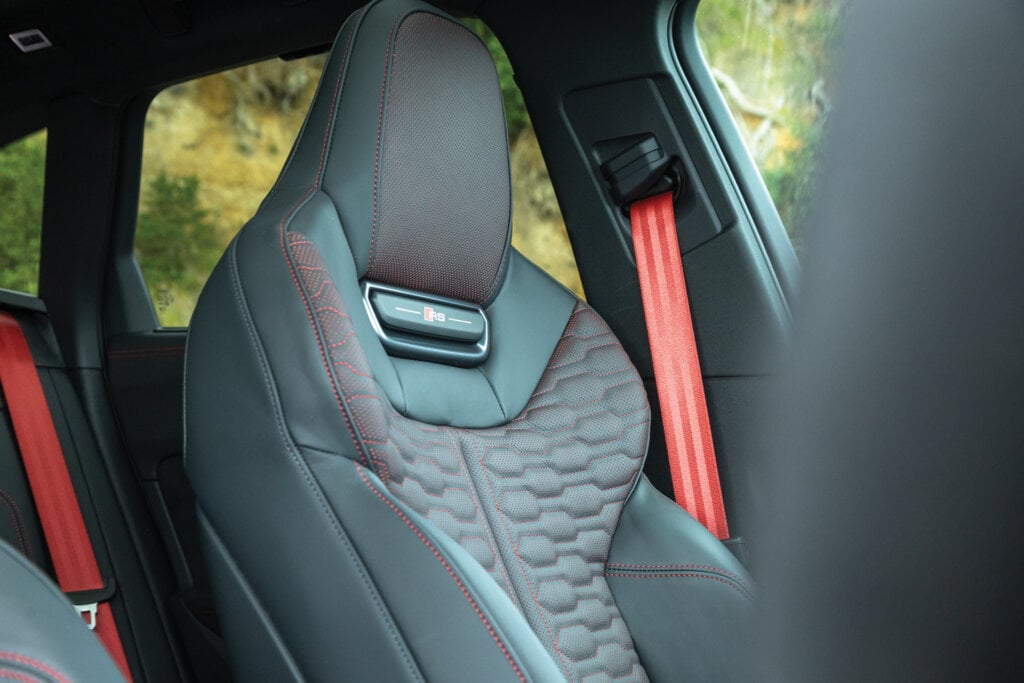
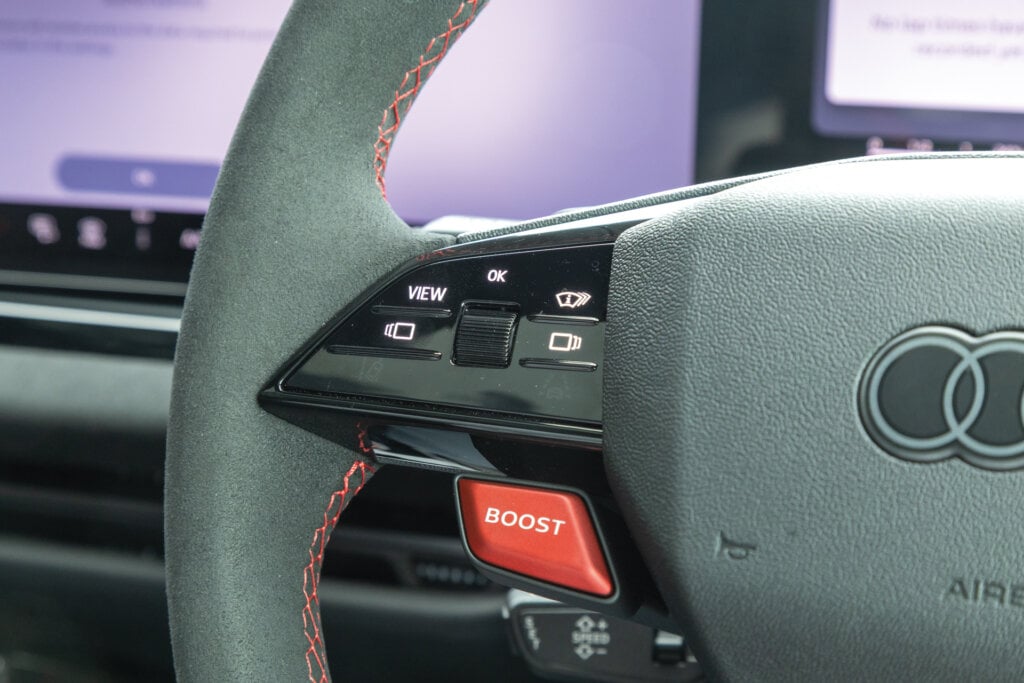
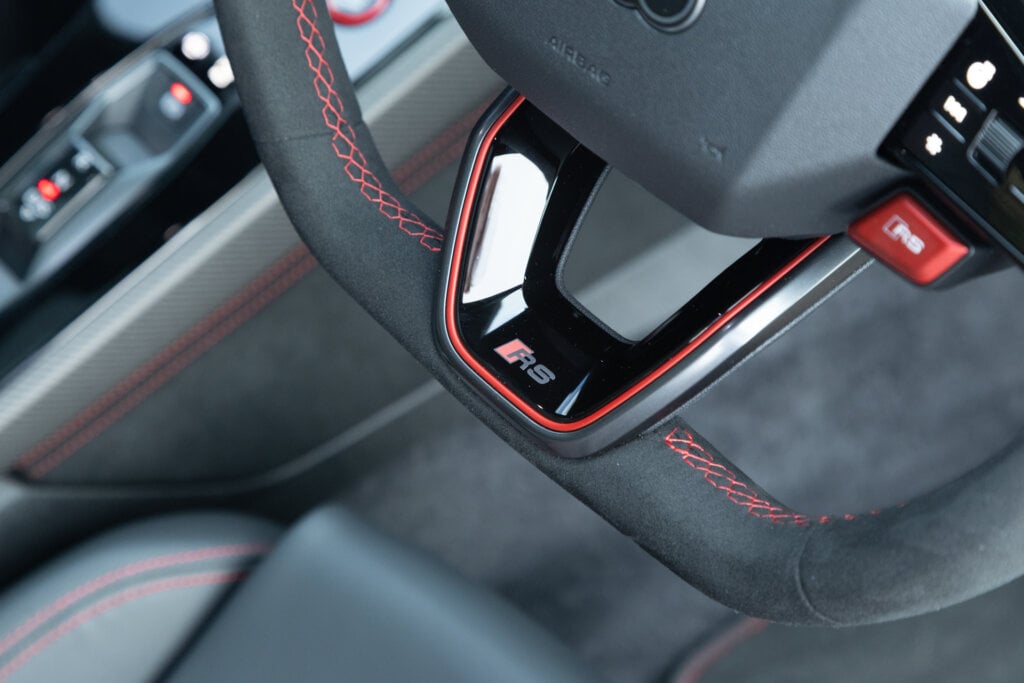
The RS seats aren’t too punishing thanks to adjustable bolsters and a semblance of padding in the right places. Powered movement of both seat and steering wheel makes finding the right driving position straightforward. The Dinamica microfibre steering-wheel covering feels slippery, though, and we wonder how fresh it will look after a year’s use.
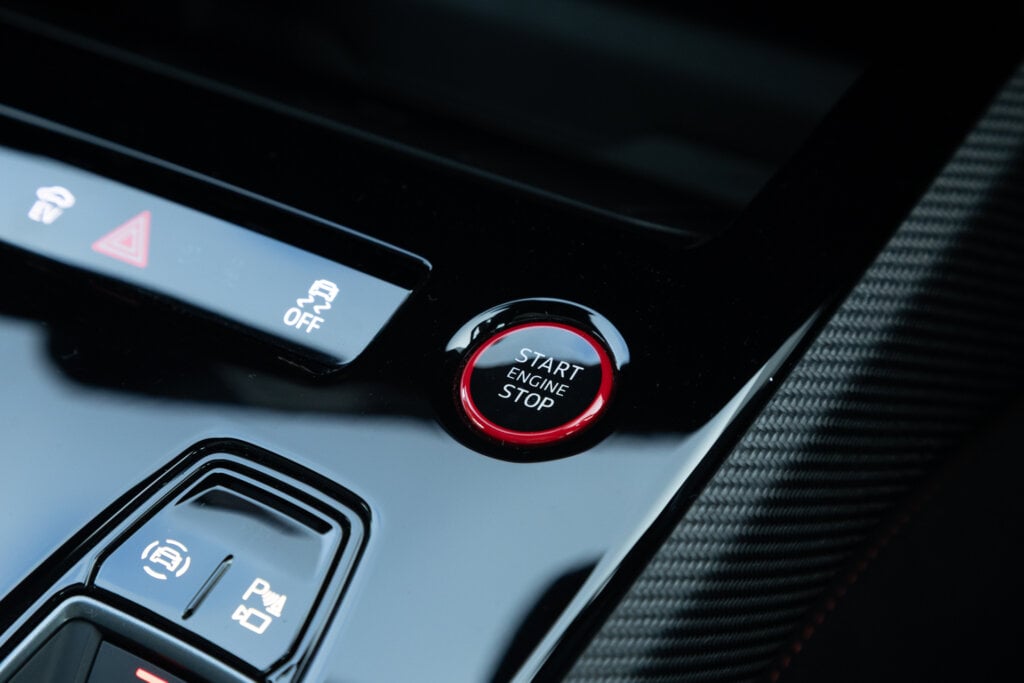
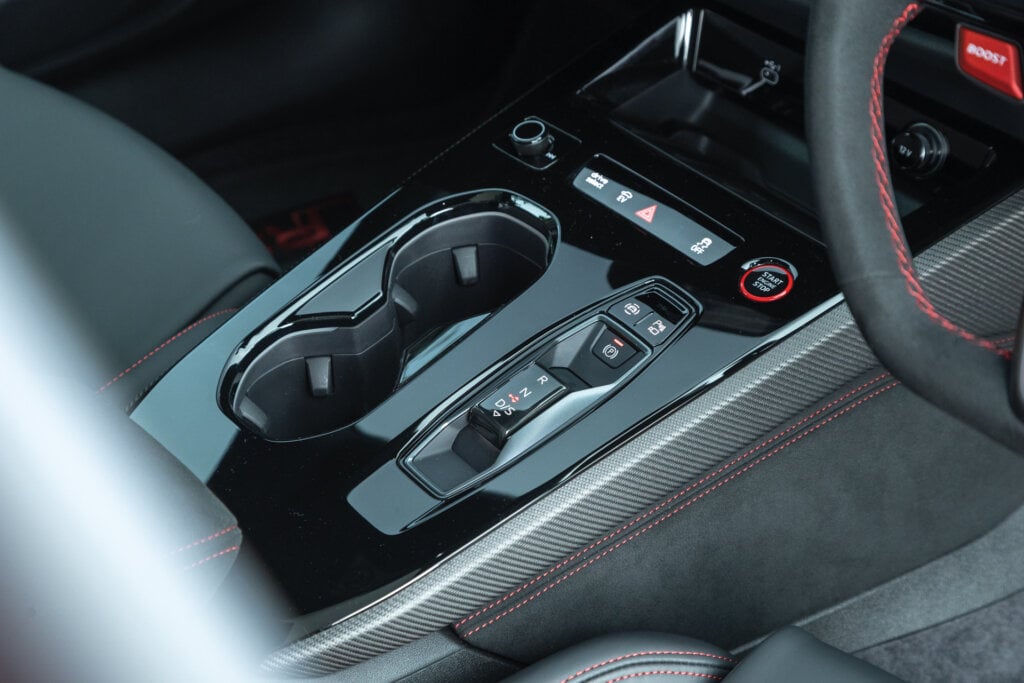
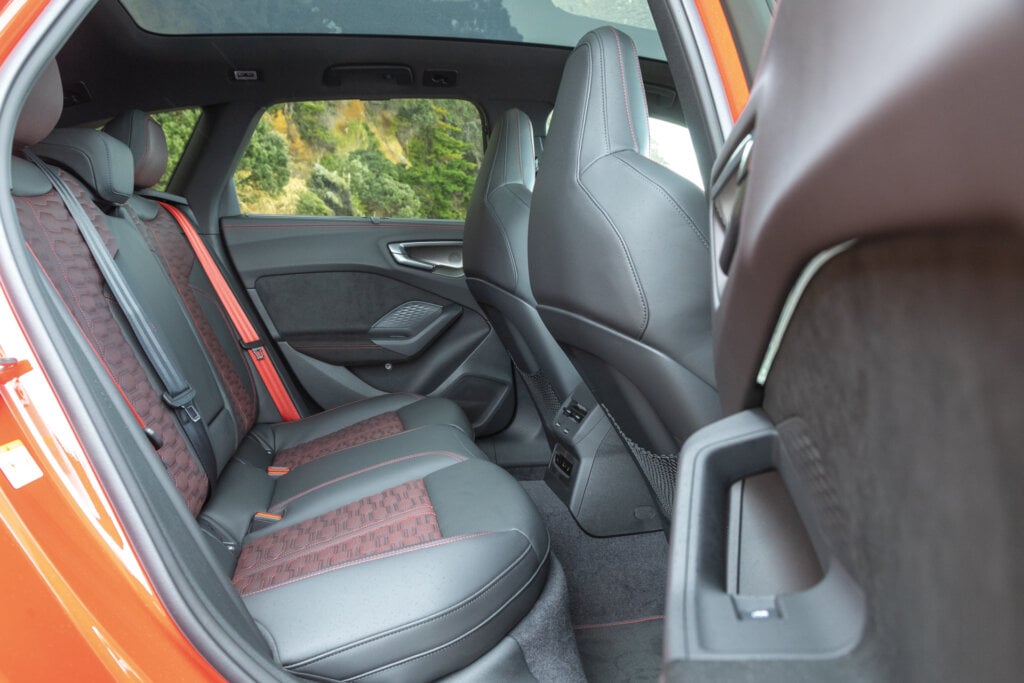
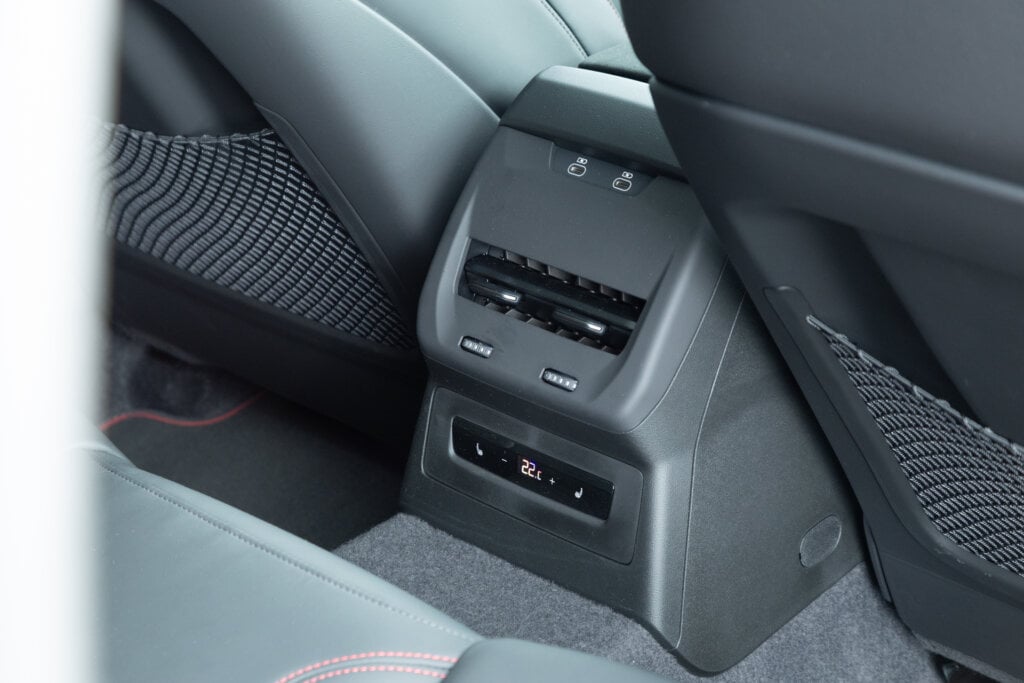
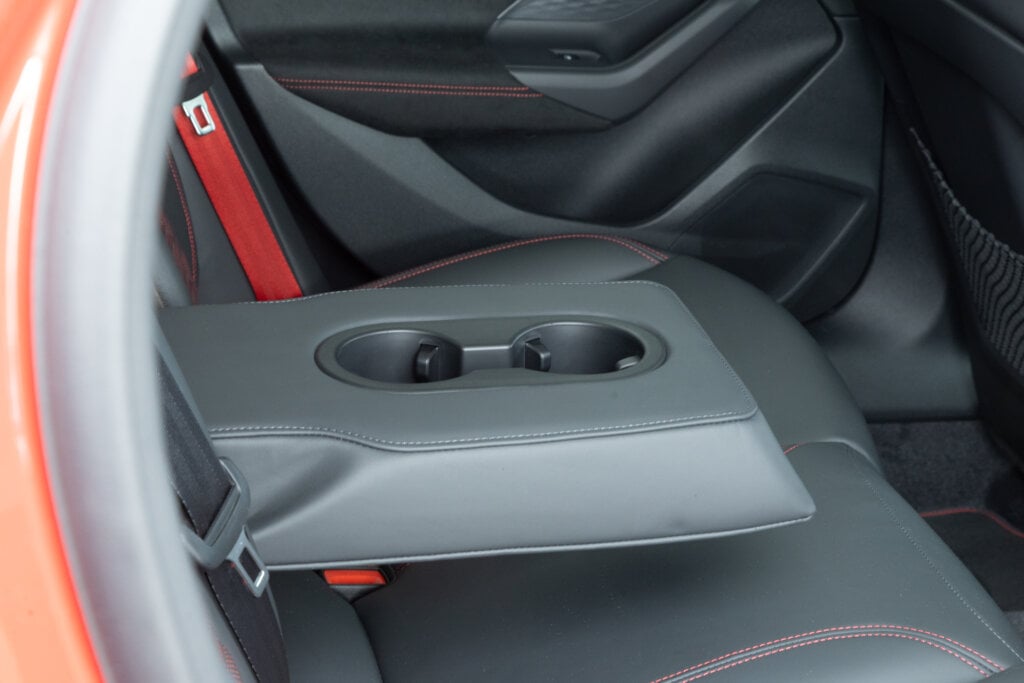
Likewise, the piano black console trim is sure to highlight every mark. Otherwise, the cabin is nicely finished. It’s not a huge wagon, and rear legroom isn’t especially generous. The substantial transmission tunnel makes carrying a third person across the back less appealing, although the kids won’t mind.
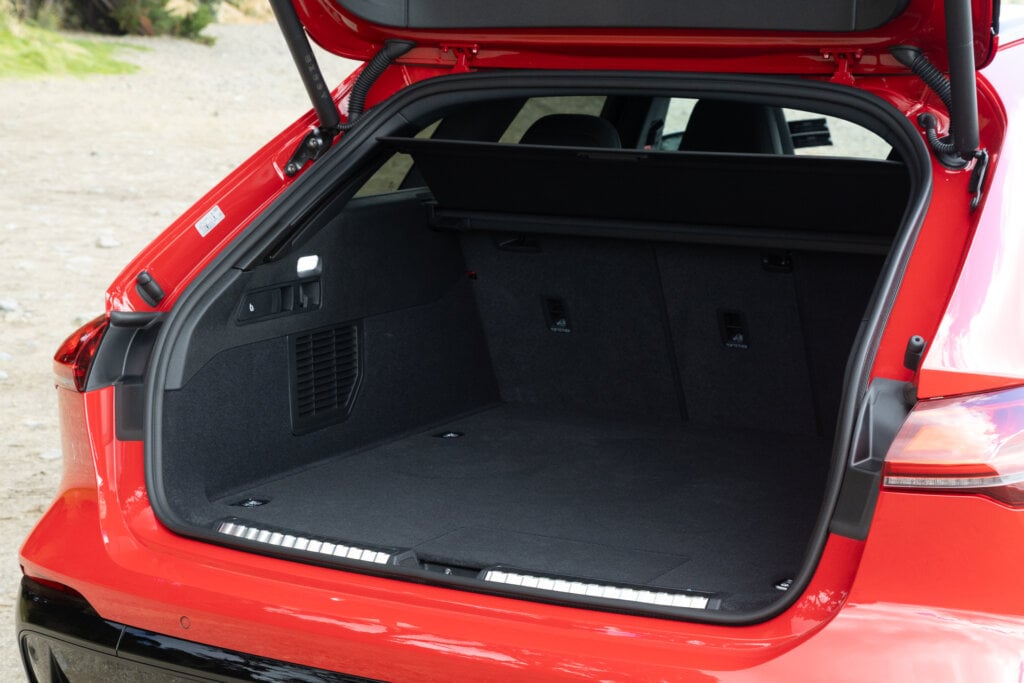
The boot gives it more everyday usefulness too, especially with the seats folded flat. As the battery lives above the rear axle, there’s no handy underfloor space for the charging cables or even the tyre repair kit. You can choose an RS 5 sedan this time, too, but we’d still take the wagon.
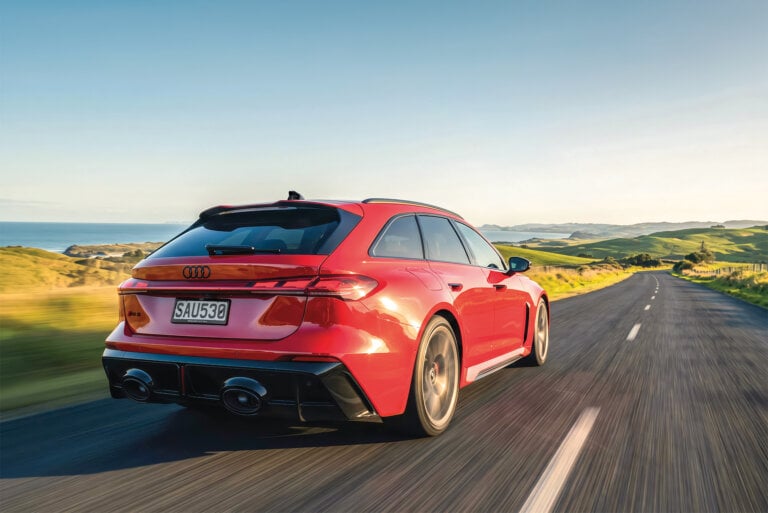
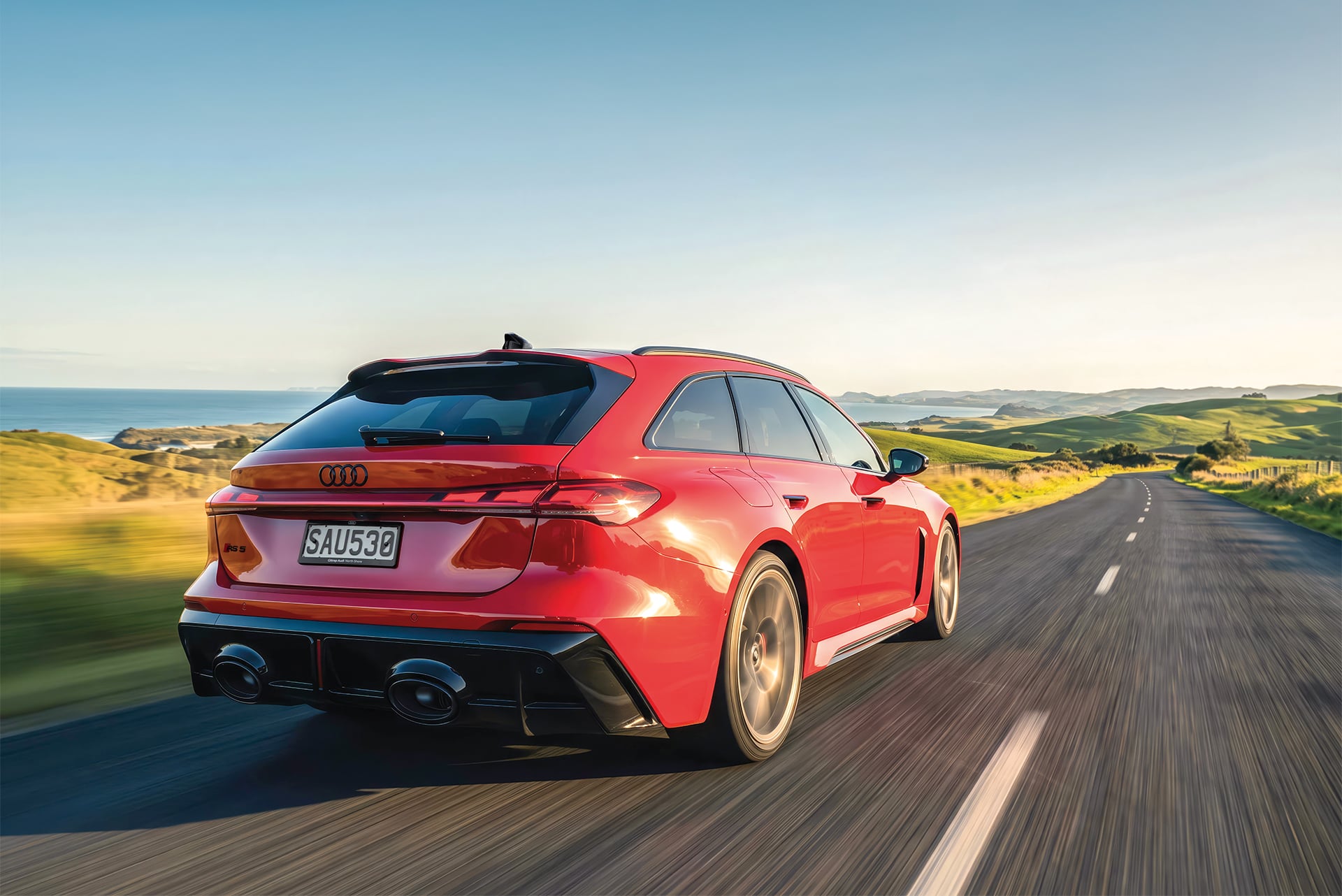
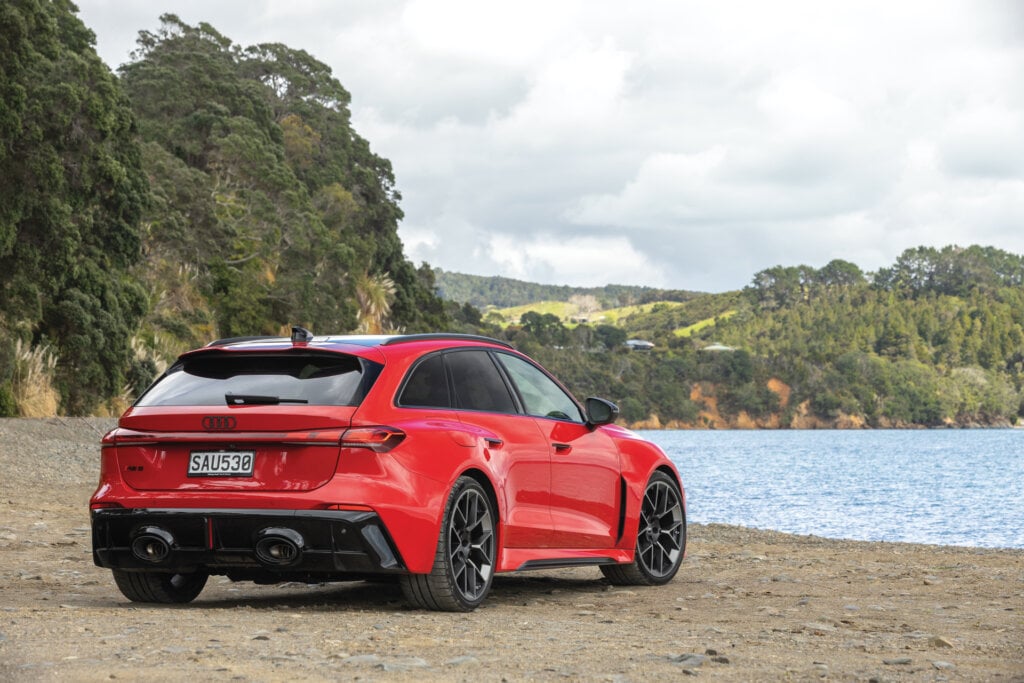
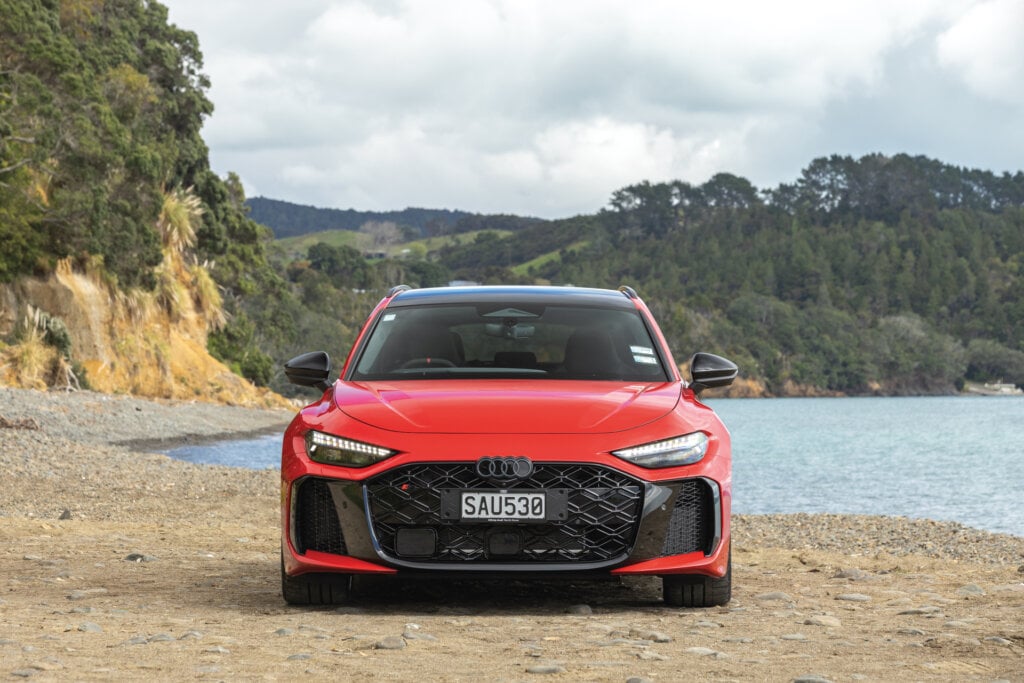
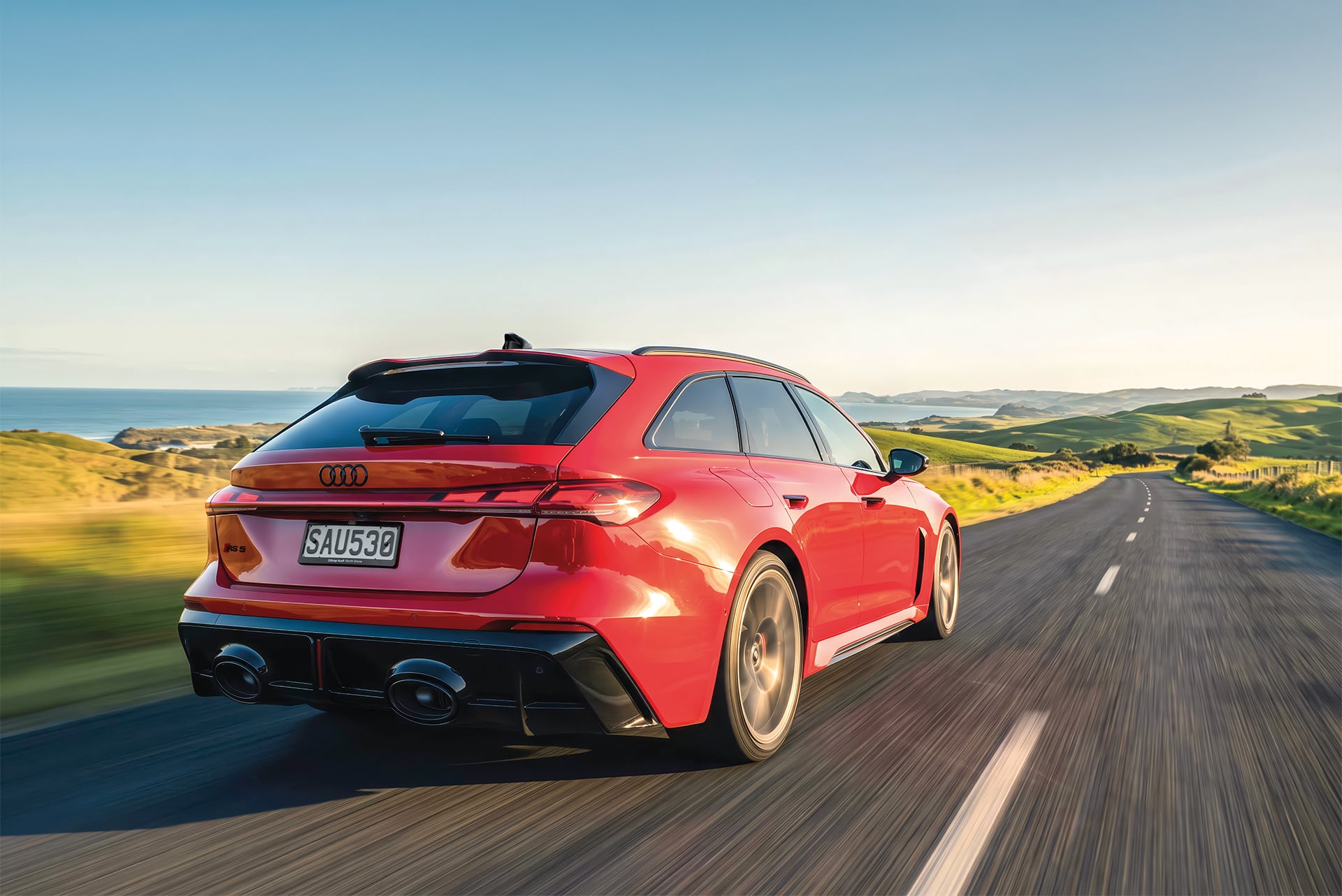
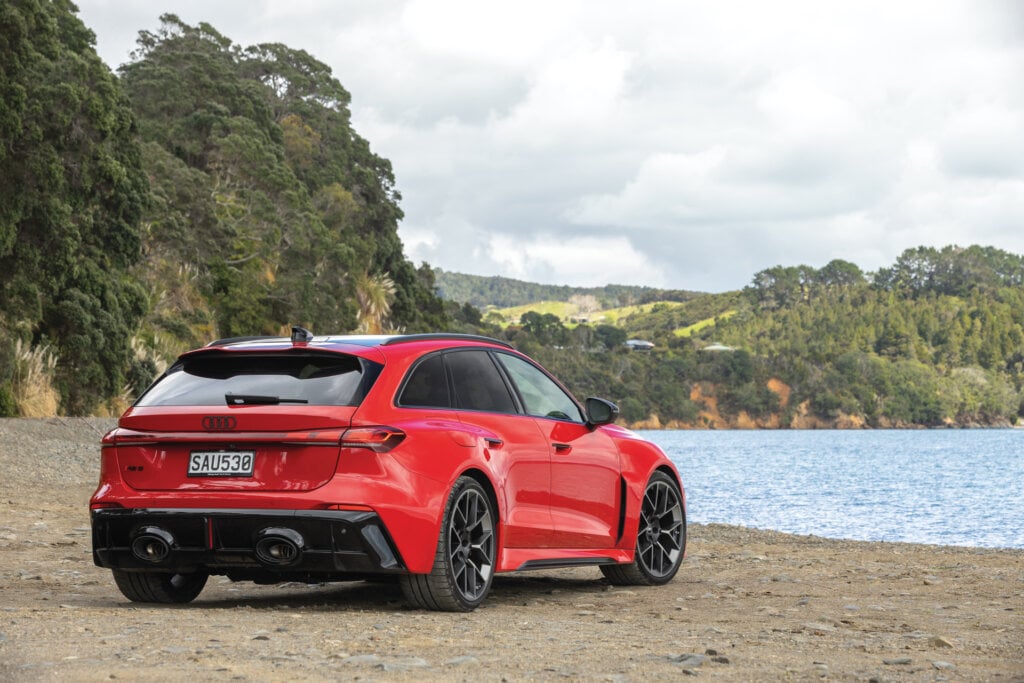
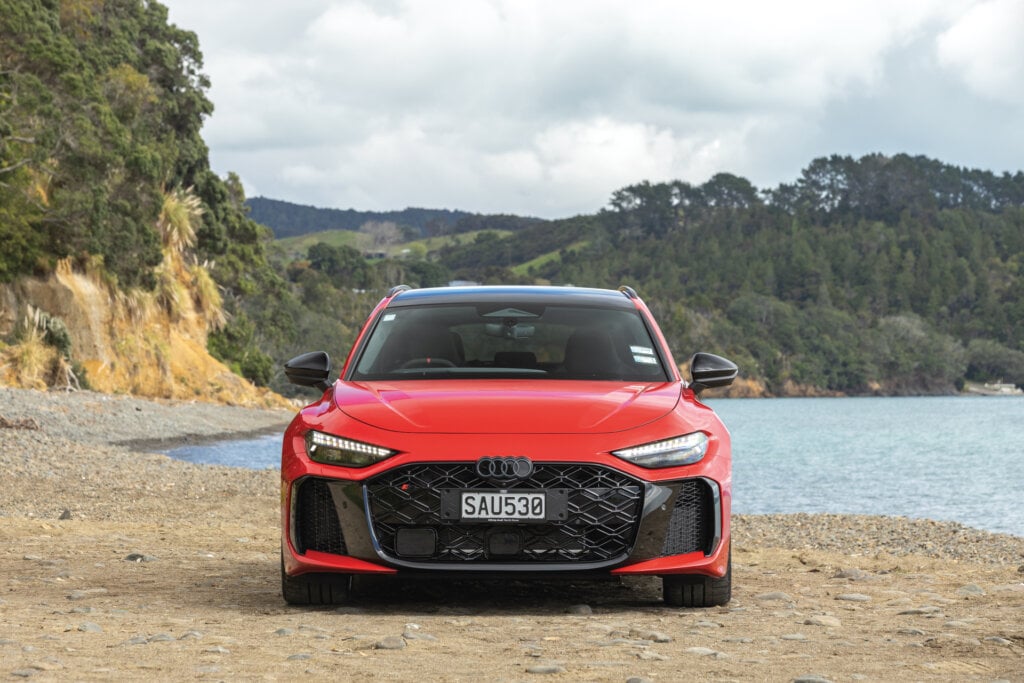
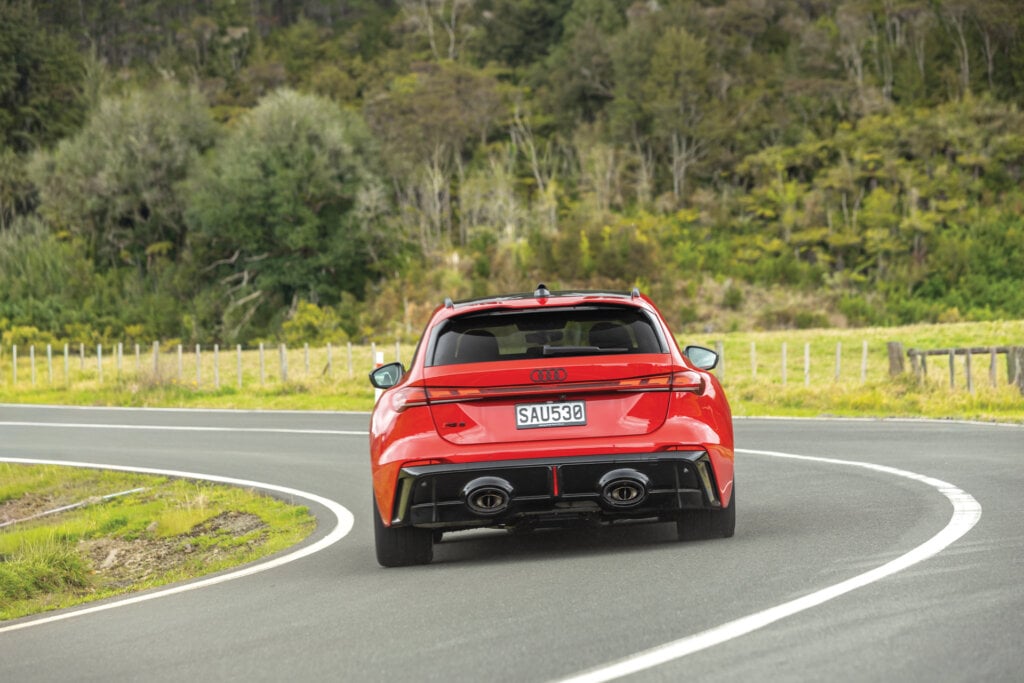
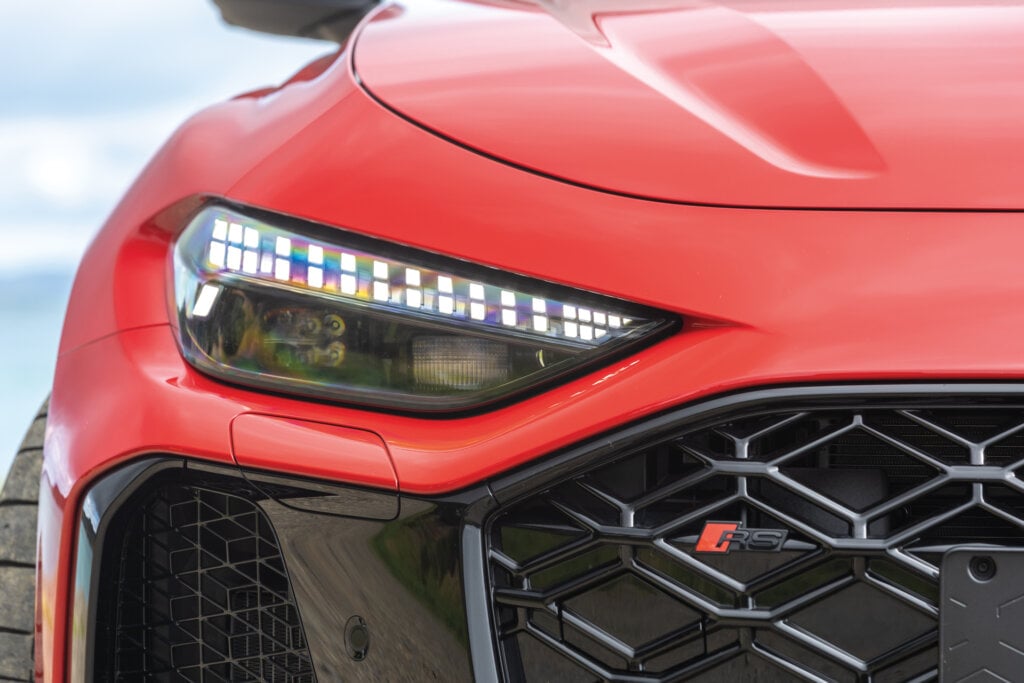
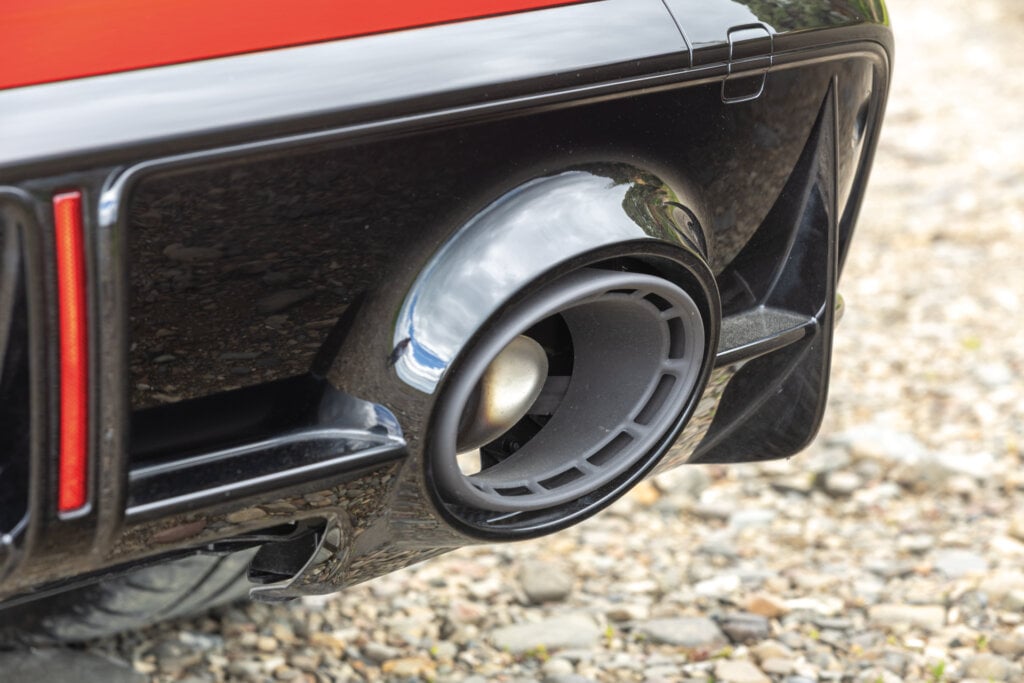
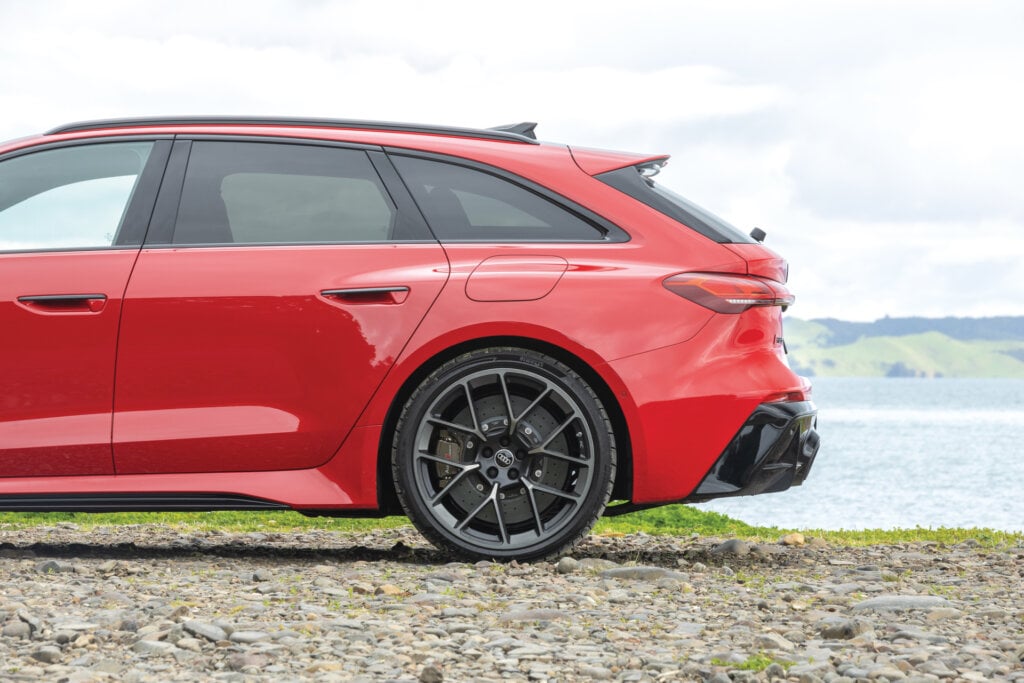
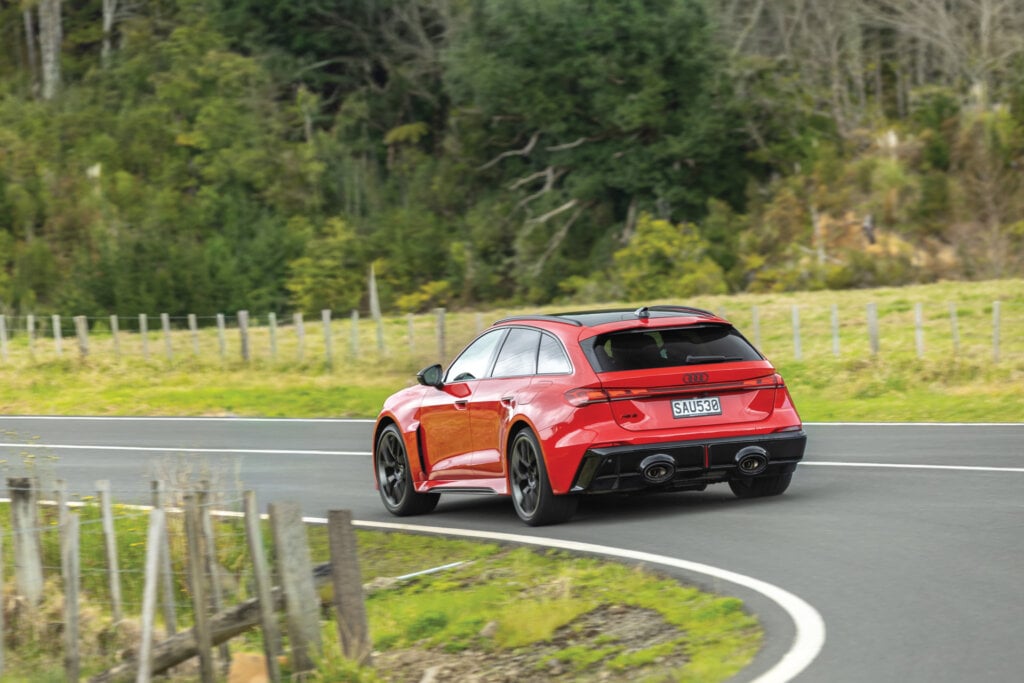
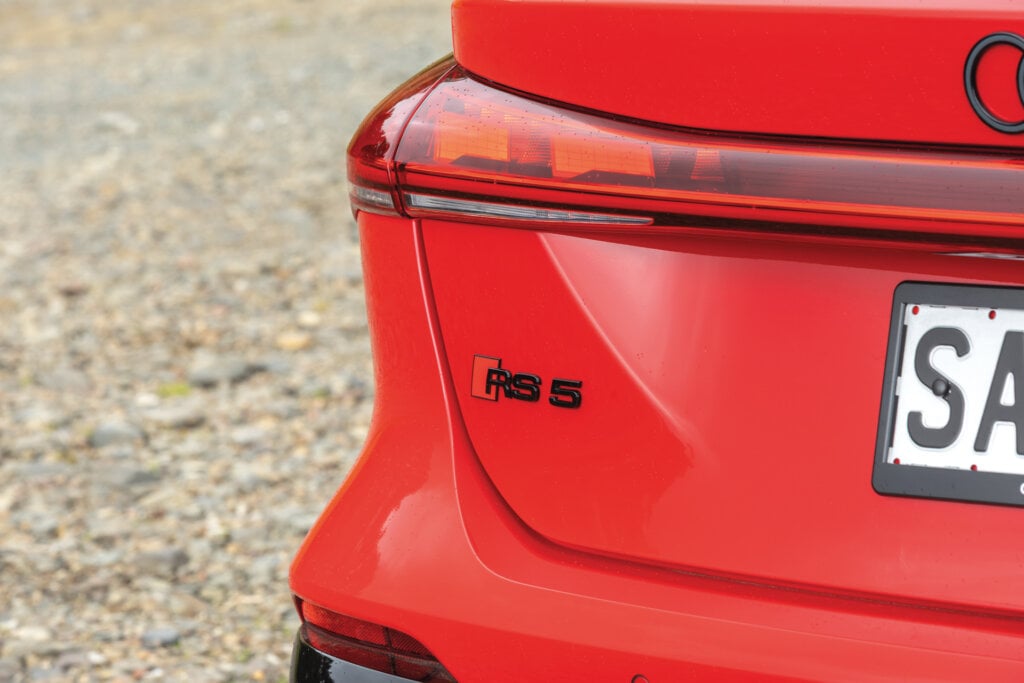
It certainly looks the part. The RS 5 is 90mm wider than an A5, its oversized arch flares giving it a suitably muscular stance. The grille is sprawled across the entire front end, with air curtains at the edges. Audi has taken the oval tailpipes to new extremes as well, while the diffuser occupies much of the rear bumper.
All this theatre would be a bit much if the driving didn’t deliver. Happily, Audi has done a good job of making the mechanical hardware and electronic wizardry work harmoniously. There’s still a V6 over the front axle, yet the familiar prospect of a heavy quattro pushing wide through every bend never really materialises. To be fair, that hasn’t really been a trait of Audi dynamics for a decade now.
A limited-slip centre differential varies the front-to-rear torque split from 70:30 to 15:85. This one is always partially locked, with the preload intended to improve response as you move on and off the throttle. Audi also says it helps turn-in and reduces understeer. From the driver’s seat, the front end certainly seems willing to follow your instructions dutifully.
Dynamic mode wakes the V6 and makes the engine the main contributor, with the electrics assisting. The first impression is how quickly this wagon changes direction. The rear is clearly lending a hand, giving the car a more adjustable, cooperative character than that 2370kg weight figure had suggested.
There’s quite a bit happening back there. Audi’s new Dynamic Torque Control uses electromechanical torque vectoring within the rear differential. A water-cooled 8kW/40Nm electric motor helps shift torque across the axle, acting in as little as 15 milliseconds. It can transfer torque in either direction, working under acceleration, on a trailing throttle and during braking.
The Driving Dynamics Controller monitors steering angle, throttle position and brake pressure, along with acceleration, yaw, slip angle and speed. It also estimates available tyre grip, calculating the required response every five milliseconds. That’s a lot of activity beneath you, yet it all works seamlessly.
In a straight line, the system can direct torque towards the rear wheel with more traction. Entering a bend, it helps stabilise the car. At the exit, sending torque towards the outside rear wheel helps rotate it. And it really encourages you to lay into the power without fear of the front pushing wide.
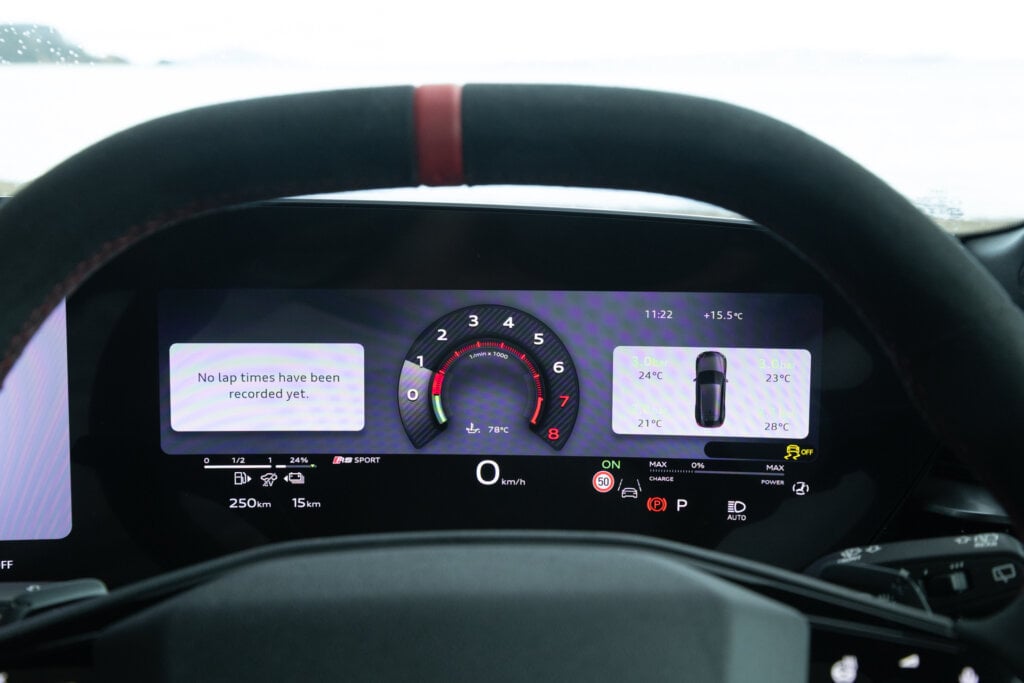
Stepping into RS Sport sharpens things further. Throttle response is impressively crisp, and the engine reacts without delay. Audi has paid particular attention to maintaining battery performance, using cooling pumps, fans and heat exchangers, while managing the state of charge to keep electrical assistance available.
The V6 pulls to just shy of 7000rpm, accompanied by a reasonable amount of engine tone. It’s a little muted, with overrun crackles only just audible, but at least they aren’t buried beneath deafening tyre roar. There’s some road noise, certainly, yet it doesn’t dominate the experience.
RS Sport adds steering weight and damper resistance, while relaxing the stability control. With just over two turns between steering locks, it doesn’t take much input to point the nose. The response initially feels quite darty, helped by that rear end response, and you need a moment to adjust to how quickly it reacts.
There’s plenty of grip, particularly on the stickier Pirelli rubber fitted to this car. Exploring the outer limits would require a circuit. On the road, the front sticks to its chosen line while the rear helps it rotate as you apply power. It fires out of bends and sends you down the next straight quick smart.
The suspension uses five-link arrangements at both ends, with RS-specific joints, links and bushes. Twin-valve dampers allow compression and rebound to be controlled independently, which helps explain the breadth between its friendly urban ride and the tighter body control available when you’re pressing on. You notice a few of the gnarlier bumps, but the ride remains impressively well balanced, all things considered.
RS Sport makes the car feel more alert, but Dynamic is enough for most driving. You can enjoy the response and cornering balance without constantly calling for the firmest settings.
The gearbox is similarly well judged. Its shifts become more forceful in RS Sport, yet you rarely need to reach for the paddles. Brake for a corner and the auto finds a lower ratio promptly, then holds the gear when you lift.
The steering is less satisfying. It’s an accurate helm but we could do with better communications. You just learn to trust that the front tyres will hold rather than receiving any quality intel about their workload.
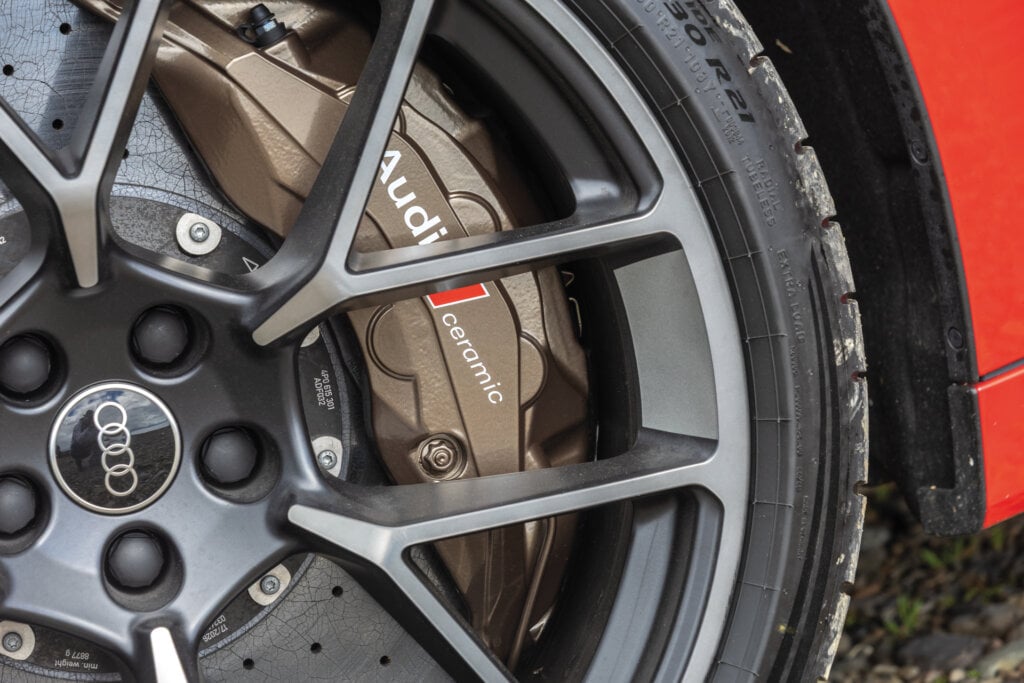
Our car also had carbon-ceramic brakes. As such, the pedal response can feel slightly inconsistent when you’re slowing all that mass from speed, but once they get properly warm, they deliver a more dependable reaction. And plenty of stopping power too. The by-wire system blends the regenerative and friction braking efforts nicely too. Regeneration does the initial slowing, with the friction brakes joining in as the demand rises.
The standard front steel discs measure 420mm; the optional ceramics are 440mm. The ceramic system also saves around 30kg against the steel brakes, but costs $22k.
Perhaps the most surprising aspect of the drive was how quickly the system managed to ram energy back into the battery when driven in anger in the RS mode. While the fuel use headed into 16L/100km territory during play time, we noticed the battery was back up to around 20 per cent (from being down to four) as we slipped back into the calmer everyday Balanced drive mode. That allowed some EV running to help bring the consumption back down to the 12s for the drive home. This plug-in tech isn’t all that bad, when done right.
Audi RS 5 Avant
$196,990 / 3.9L/100km / 88g/km
0-100 km/h 3.60s
80-120 km/h 2.10s (65m)
100-0 km/h 33.70m
Speedo error 98 at an indicated 100km/h
Ambient cabin noise 74.7dB@100km/h
Engine 2894cc / V6 / T / DI
Max power 375kW@6300-6800rpm
Max torque 600Nm@2000-5000rpm
Motor output 130kW / 460Nm
Battery 25.9kWh
Range 84km
Hybrid System Output 470kW / 825Nm
Drivetrain 8-speed auto / AWD
Front suspension Multilink / swaybar
Rear suspension Multilink / swaybar
Turning circle 12.9m (2.2 turns)
Front brakes Carbon discs (440mm)
Rear brakes Carbon discs (420mm)
Stability systems ABS, ESP, TV
Safety AEB, ACC, BSM, LDW, RCTA, ALK, AHB
Tyre size f/r-285/30R21
Wheelbase 2903mm
L/W/H 4896 / 1952 / 1446mm
Track f-1673mm r-1659mm
Fuel capacity 48L
Luggage capacity 361-1302L
Tow rating 750kg (1900kg braked)
Service intervals 12 months / 15,000km
Scheduled servicing 3yrs / 150,000km
Warranty 5yrs / 150,000km
ANCAP rating ★★★★★ (2024)
Weight (claimed) 2370kg
This review first appeared in the November 2026 issue of NZ Autocar magazine.