View all
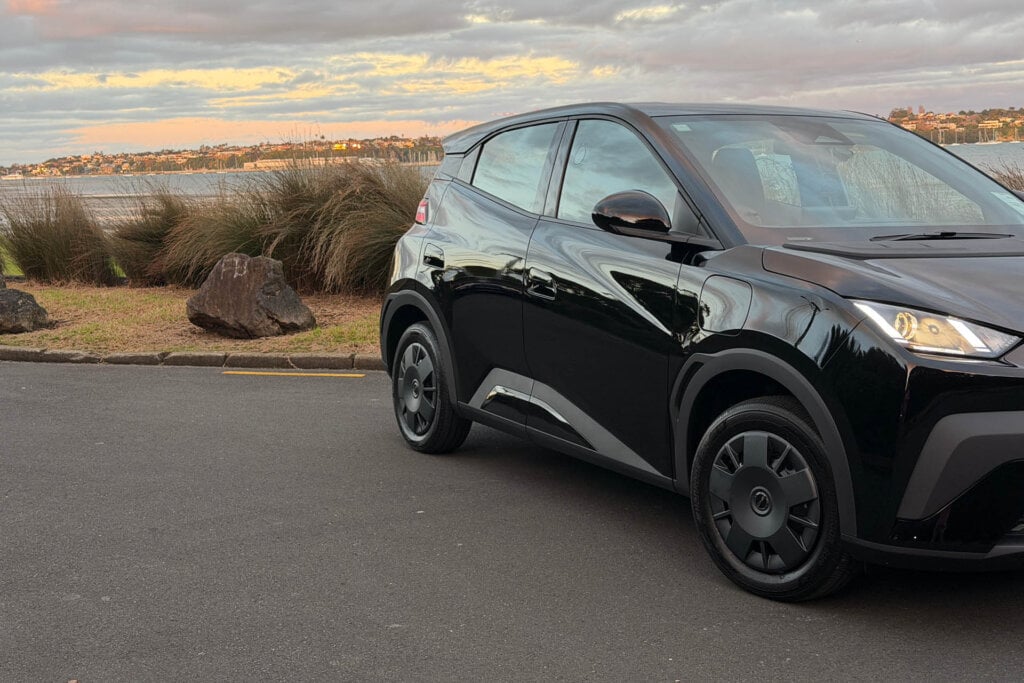
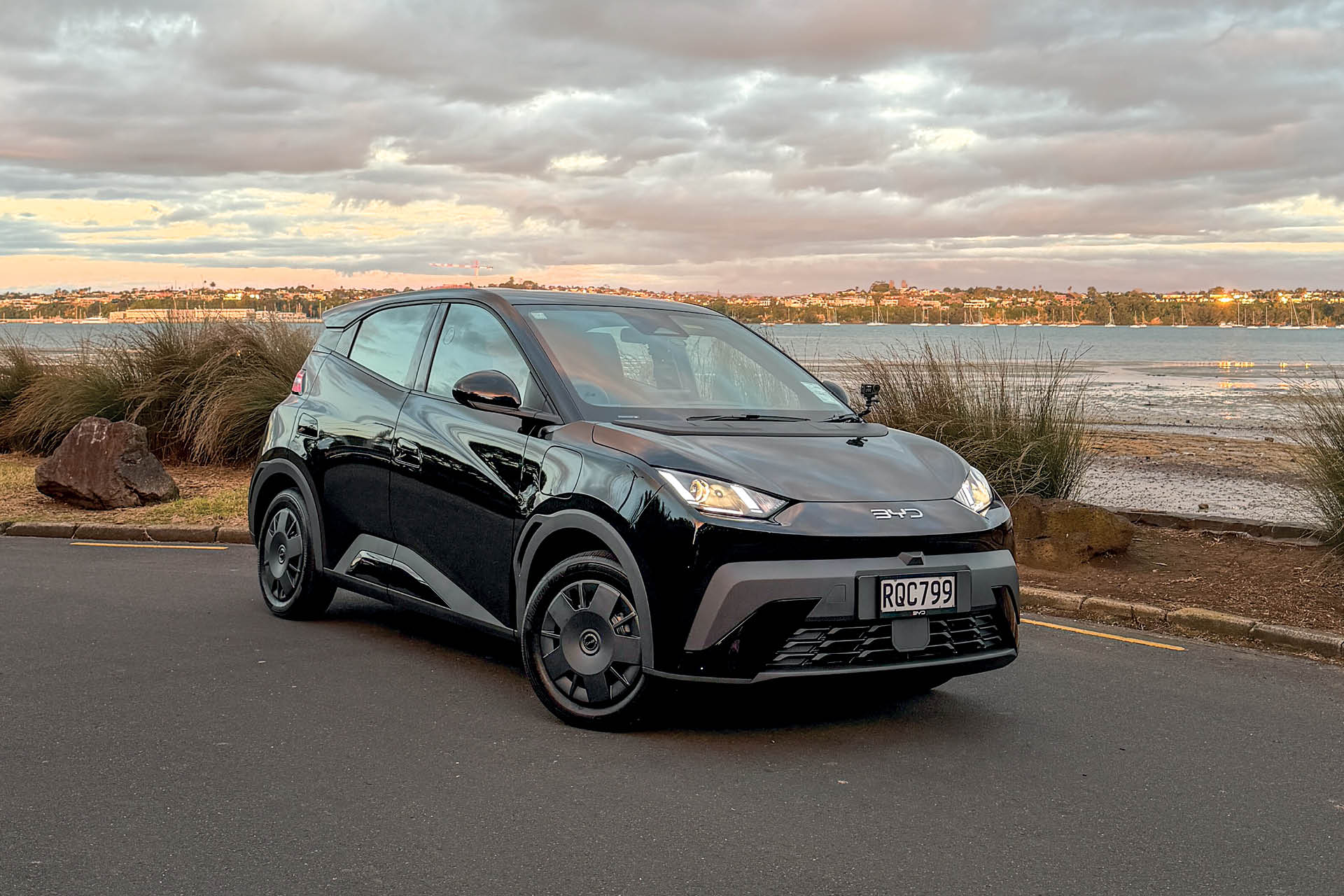
2026 BYD ATTO 1 Essential Review
Words: Richard Edwards
It is coming up 8pm on Auckland’s North Shore and the battery readout in the BYD Atto 1 Essential has been showing zero for a while now. Gavin Shoebridge, our new group EV editor, has his foot hard to the floor, pointing the thing up the same hill for the third time, trying to make it die. The energy screen says the motor is still pulling 19kW from a battery that officially contains nothing. We have been driving since midday.
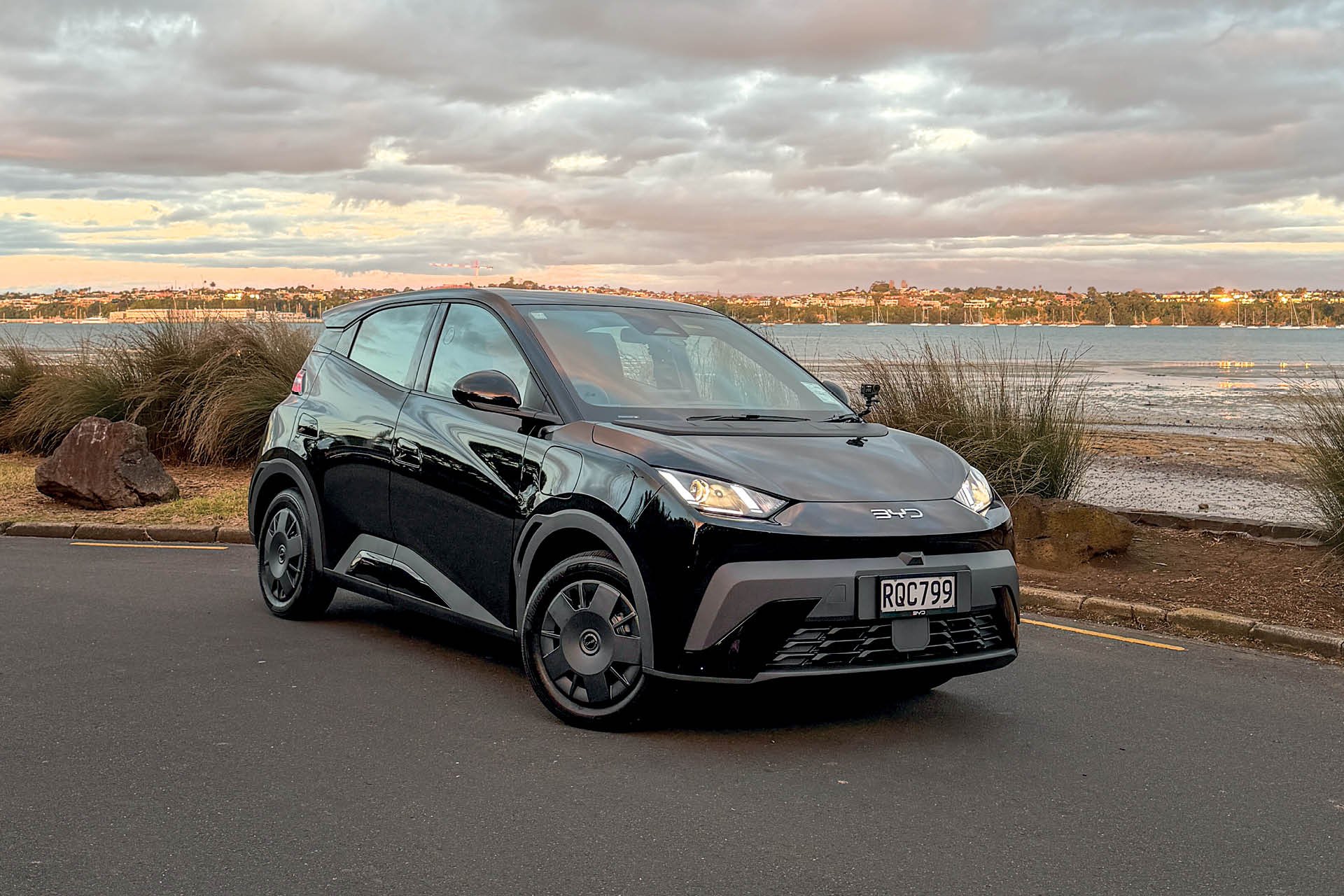
Blame Facebook. A commenter recently informed us that any car unable to do 500km on a charge is useless. The Atto 1 Essential can officially do 220km, which presumably makes it less than half a car. It is also, at $30,990 plus on-road costs, the cheapest new EV in the country, with a 30kWh Blade battery, a 65kW motor, 175Nm and an 11.1-second run to 100km/h. The $36,990 Premium brings 43.2kWh, 115kW and 310km of range. Both wear five ANCAP stars.
So the test wrote itself. Take the smallest battery BYD sells here and empty it in a single day. Not by lapping the motorway until it surrenders, which proves nothing, but by doing the driving this car will actually be bought for. Auckland errands. PB Tech, Bunnings, Costco, an airport run, a Facebook Marketplace pickup, a set of keys collected from the distributor, and a frankly indefensible number of drive-through visits. Gavin shares the driving.
The average Auckland commute is about 22km, which means the Essential holds ten commuting days in its little battery. We planned to get through all of them before bedtime.
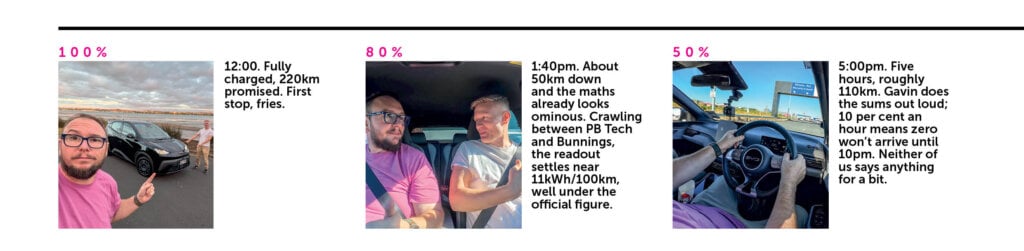
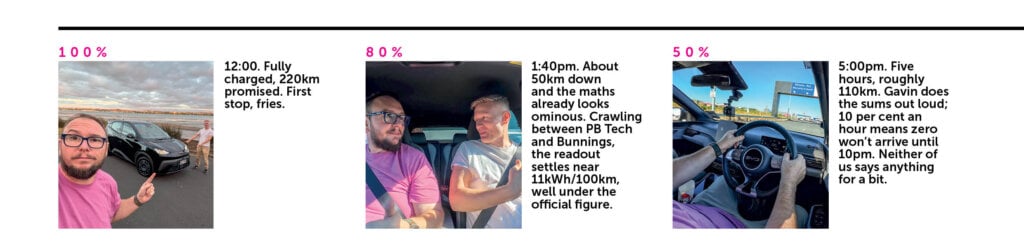
Two hours in, we have used a quarter of the charge. Crossing the city in traffic barely moves the needle; the consumption readout settles around 11kWh/100km, comfortably under the official figure, because every one of Auckland’s endless stops feeds a little energy back through the regen. At 5pm exactly, five hours after starting, we tick past 50 per cent and Gavin does the maths out loud. Roughly 10 per cent an hour. We will not see zero until 10pm. I live two hours north of Auckland and he lives three hours away, and neither of us says anything for a bit.
On paper, 65kW is the weak point of the package. In town you’d never pick it. Around the suburbs the Essential is light, instantly responsive off the line and narrow enough to slot into the half-blocked parks and tight drive-through lanes that fill our day. It will even hold its own on a motorway on-ramp, albeit without the Premium’s shove. Between errands, we tally everything the Essential does without. Heated seats. Electric adjustment. Wireless phone charging. LED headlights. Rain-sensing wipers. Privacy glass. Alloys, too; you get steelies with hubcaps on 175/65R15 rubber. It is a long list, and little of it would put me off. What stays matters more. The full safety package carries over unchanged, and the adaptive cruise with lane centring is honest Level 2 gear that we lean on in motorway traffic without drama. Wireless Apple CarPlay and Android Auto are standard. The tyres are Hankooks rather than something unpronounceable, a detail worth checking on any budget arrival from China. And the two-way manual seats, which sound like punishment, leave neither of us with a sore back across what ends up being nearly eight hours aboard.
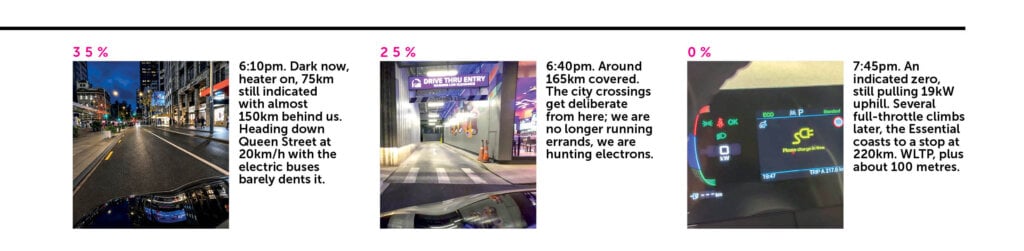
After dark, the heater goes on and consumption creeps up, though not by much. At 6:10pm we are at 35 per cent with 75km indicated. We do Queen Street at 20km/h with the electric buses, cross town twice more, and arrive at 3 per cent with 208km on the trip. Time to find a hill.
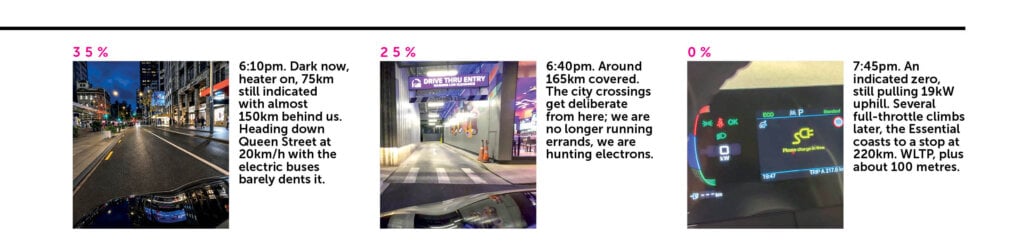
The last few percent bring the day’s surprise. BYD’s bigger cars drop into a turtle mode at around two per cent, capping power to nurse you to a charger. We waited for the turtle. It never came. Down through two, then one per cent, then an indicated zero, the car keeps accepting full throttle. Output softens, but a flat battery is still handing over 19kW on the climb. We shuttle up and down the same stretch near Constellation Drive, a McDonald’s charger at the bottom as insurance, and it takes several full-throttle ascents on an officially empty battery before the accelerator finally goes soft and we coast to a stop.
The numbers: 220km and about a hundred metres, a whisker past the WLTP claim, on a day of real traffic with the climate control running and not a moment of economy driving. Seven hours and 45 minutes of it, with only short breaks for shops and food.
Which brings us back to that Facebook comment. If your calendar includes regular Auckland-to-Wellington runs, buy something else, or at least start with the Premium. But we spent a full working day actively trying to kill this battery in the city and it fought us to the end. The Essential will cover a week or more of normal urban life between overnight charges, with a proper safety suite, for just over thirty grand. The 500km argument assumes everyone drives like a courier. Most of us drive 22km at a time, and for that, the smallest number on the spec sheet goes an awfully long way.