View all
4 more images
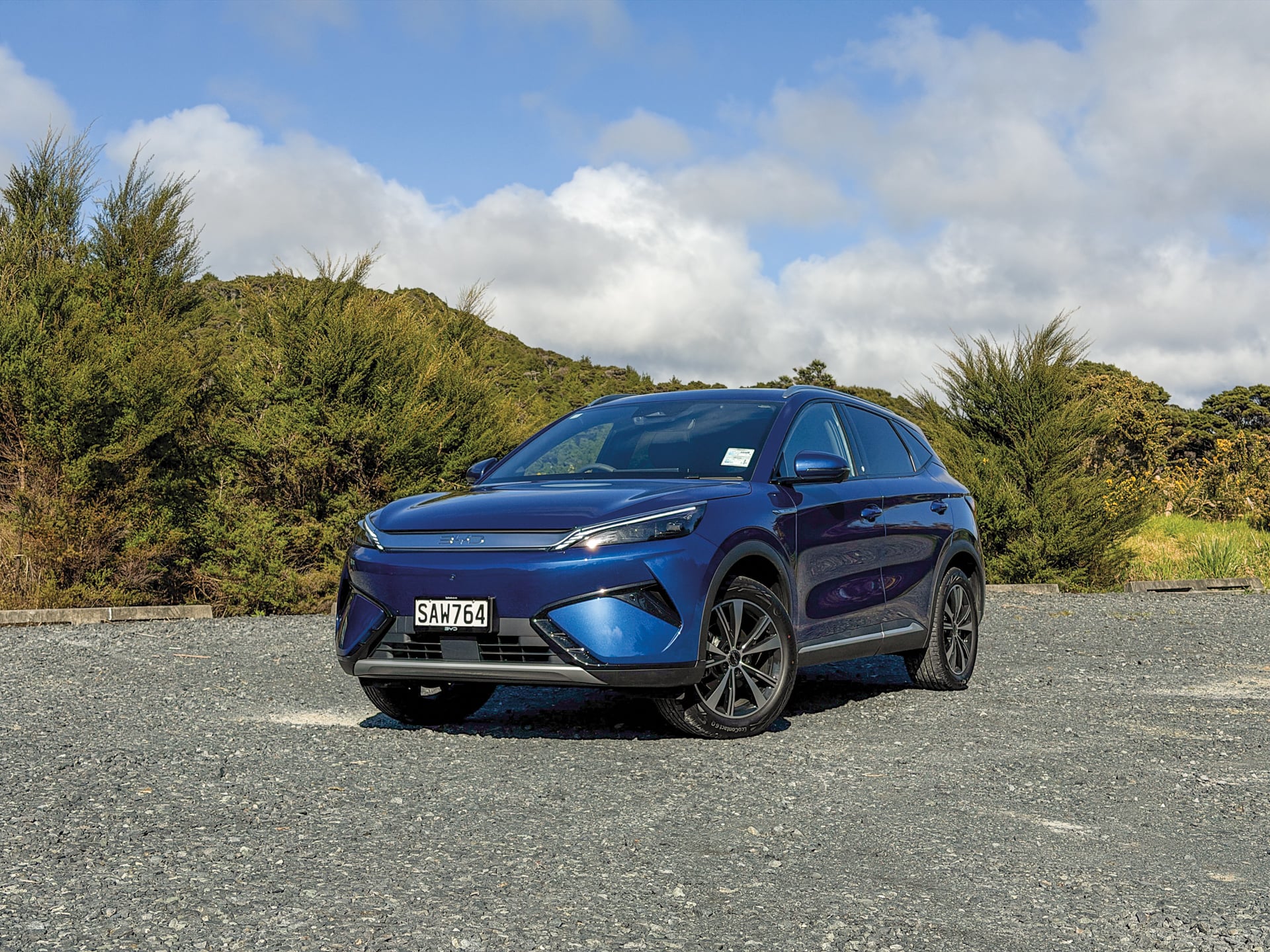
2026 BYD ATTO 3 Evo Dynamic Review
Words: Richard Edwards | Photos: Richard Edwards
The BYD Atto 3 has evolved, a new three variant line-up now turning up in local showrooms. How has it changed, and is it still relevant in a constantly evolving EV market?
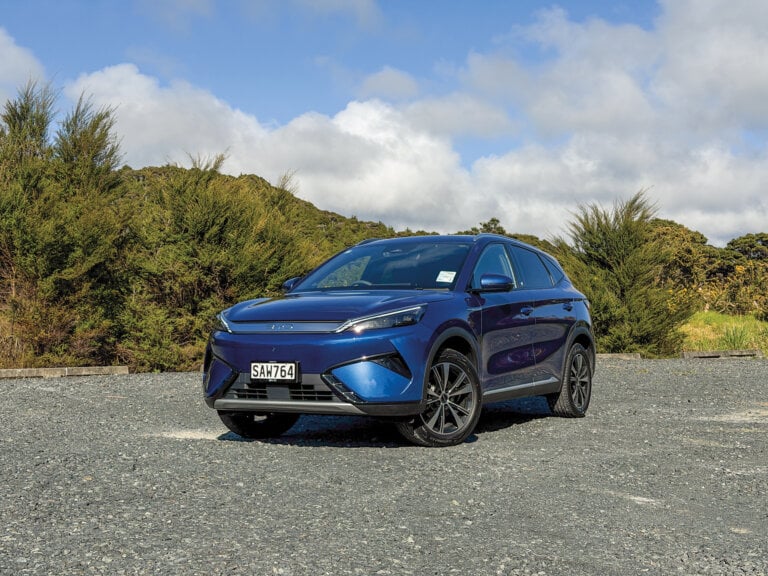
The BYD Atto 3 was the car that launched the brand in New Zealand in 2022, and it went on to become the country’s best-selling EV for a stretch. Four years on it has been updated rather than replaced, and the EVO range arrives with three grades where there was effectively one. We have started where most buyers will, with the entry-level Dynamic.
It is a better Atto 3. It is also $59,990, and the market has shifted a long way since 2022. That puts the Dynamic in a crowded and very competitive part of it.
What’s changed
The Dynamic is front-wheel drive with the familiar 150kW/310Nm motor and 60.48kWh Blade battery, the same combination as the outgoing Superior. The Premium ($65,990) moves to rear-wheel drive with 230kW and a 74.88kWh battery, and the Performance ($75,990) adds a front motor for 330kW and all-wheel drive. Those two we will cover separately.
So the Dynamic keeps the old car’s powertrain. Claimed range is still 420km WLTP, 0-100km/h is still 7.3 seconds and kerb weight is unchanged at 1750kg. Despite some early reporting, this grade stays on a 400-volt system; the 800-volt architecture belongs to the two bigger-battery models.
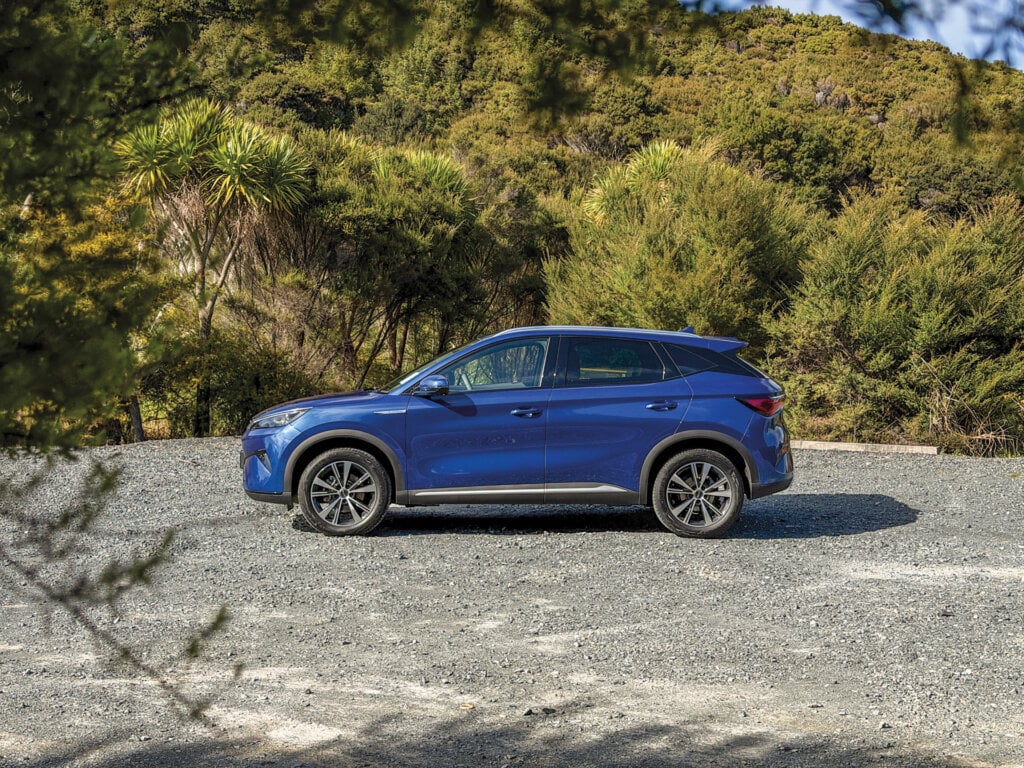
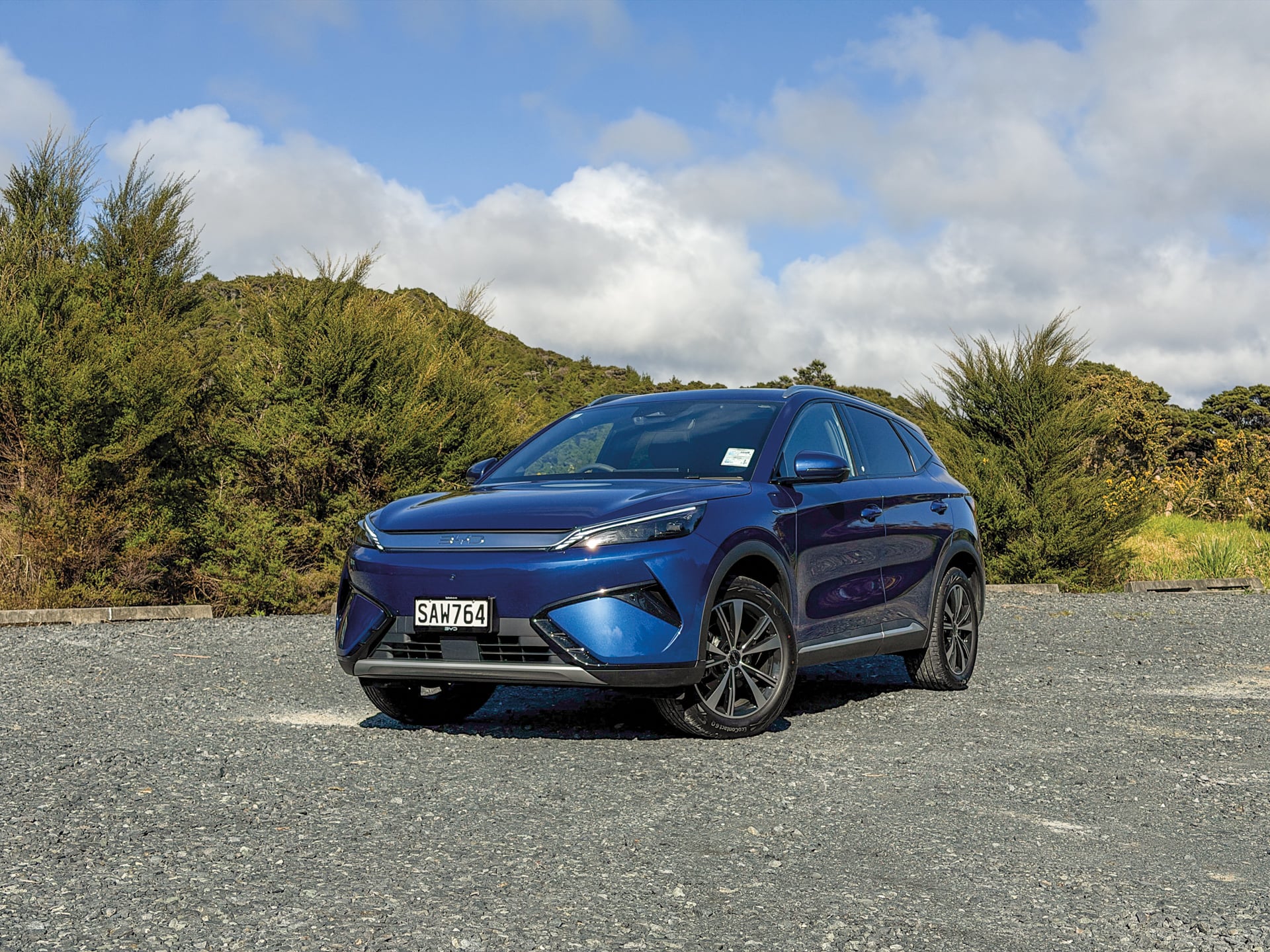
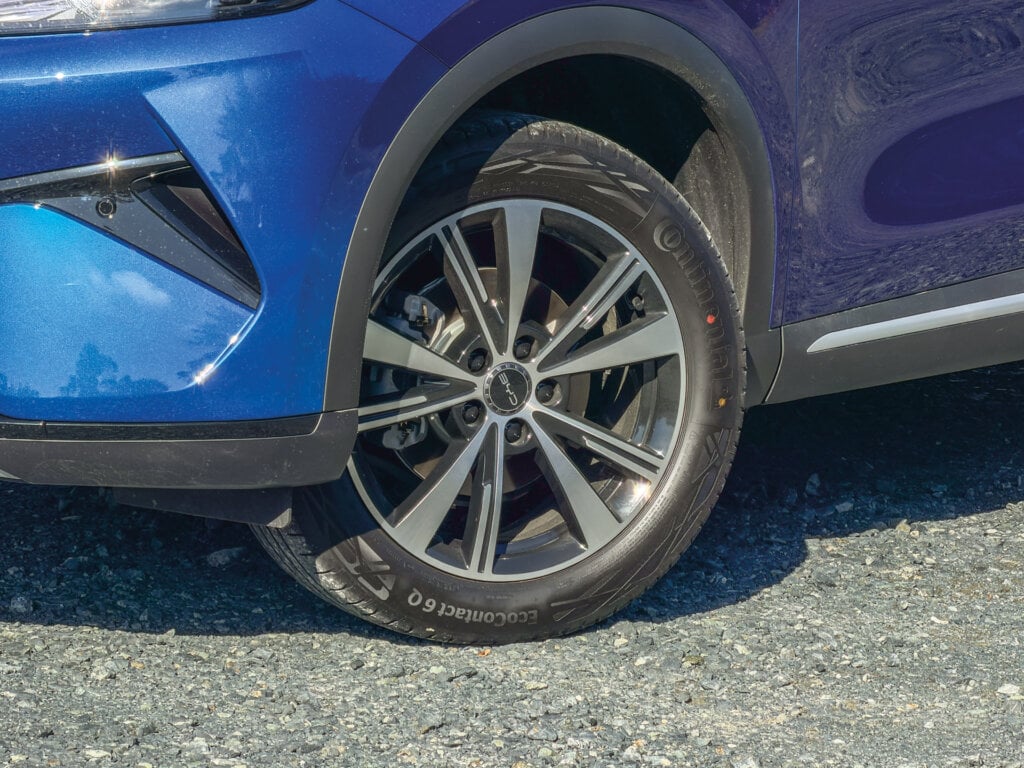
What has changed is around the edges. The suspension has been retuned, the Linglong tyres of the launch cars are long gone and the Continentals on the new 18-inch wheels are a clear improvement. The rear brakes are now ventilated discs where they used to be solid. DC charging rises from the original 80kW (later around 90kW) to 110kW, which BYD says brings a 10 to 80 per cent charge down to 41 minutes. AC charging stays at roughly 7kW, so an overnight top-up is about nine hours, and V2L with the adapter is still included.
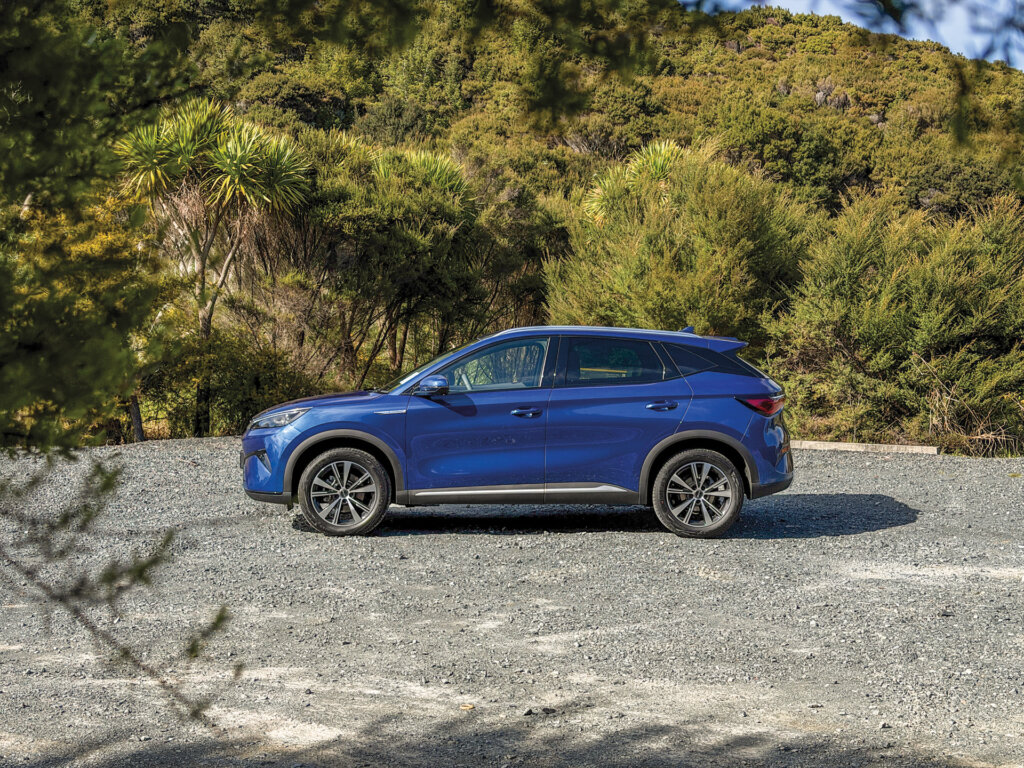
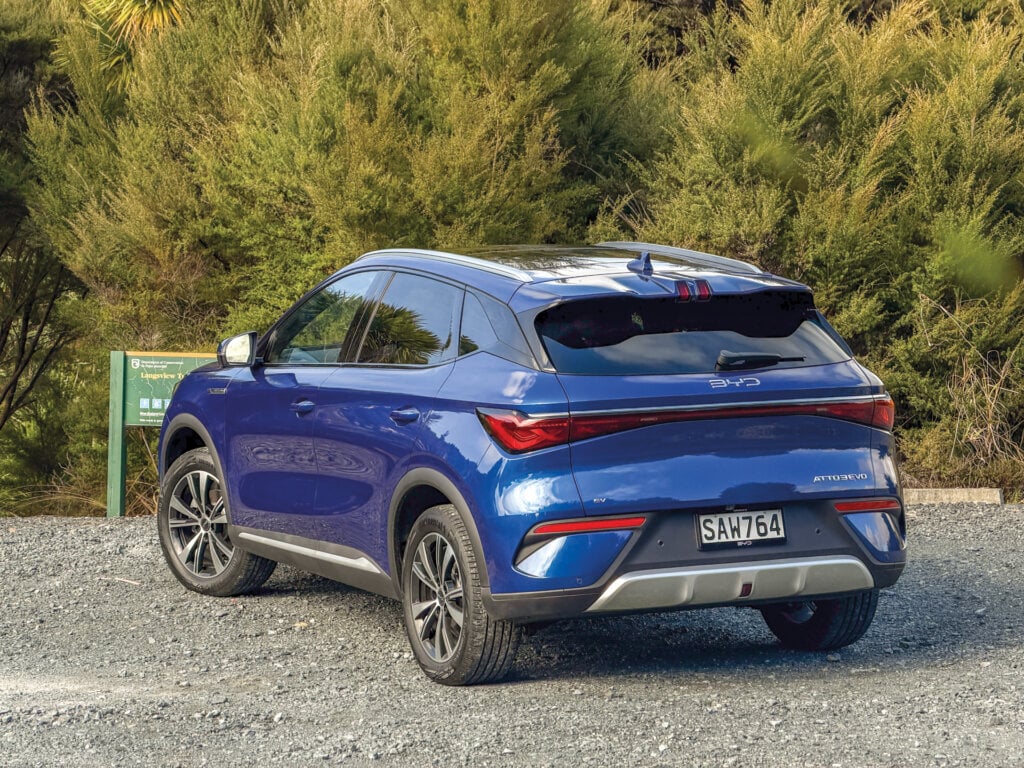
Outside, the styling has been freshened. The front keeps the broad chrome strip and full-width light bar. There are new tail lights, an integrated spoiler with the reversing camera tucked into it, and the metal side trim has been replaced with piano black. We prefer the metal. The windows are now factory tinted. Towing is unchanged at 750kg braked for the Dynamic; the upper models go to 1500kg.
Cabin
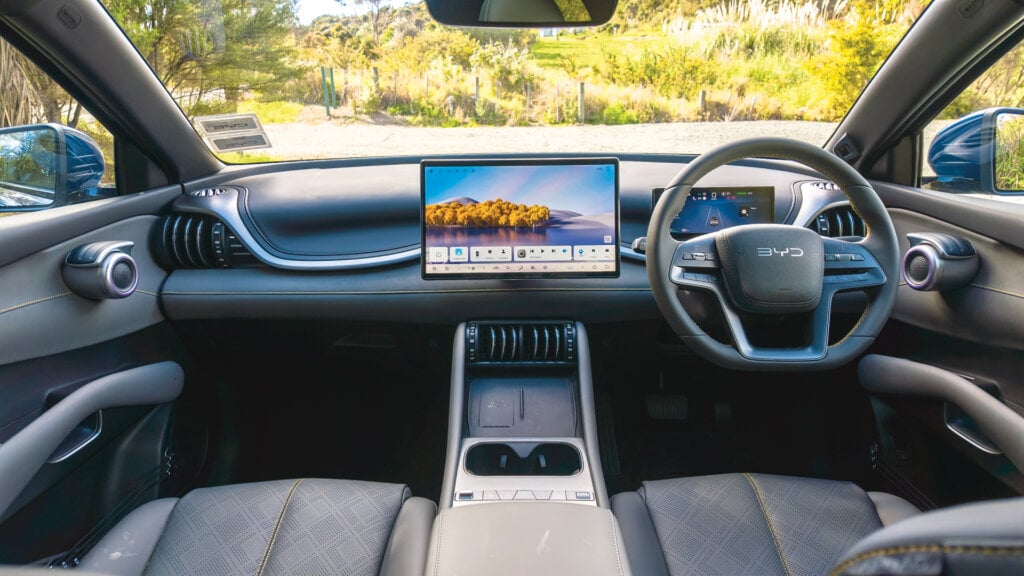
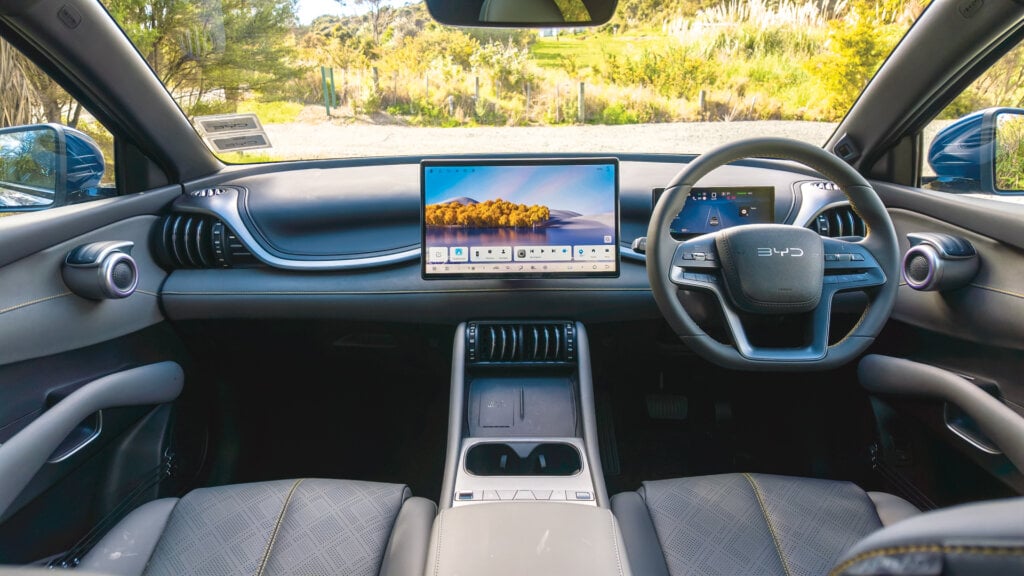
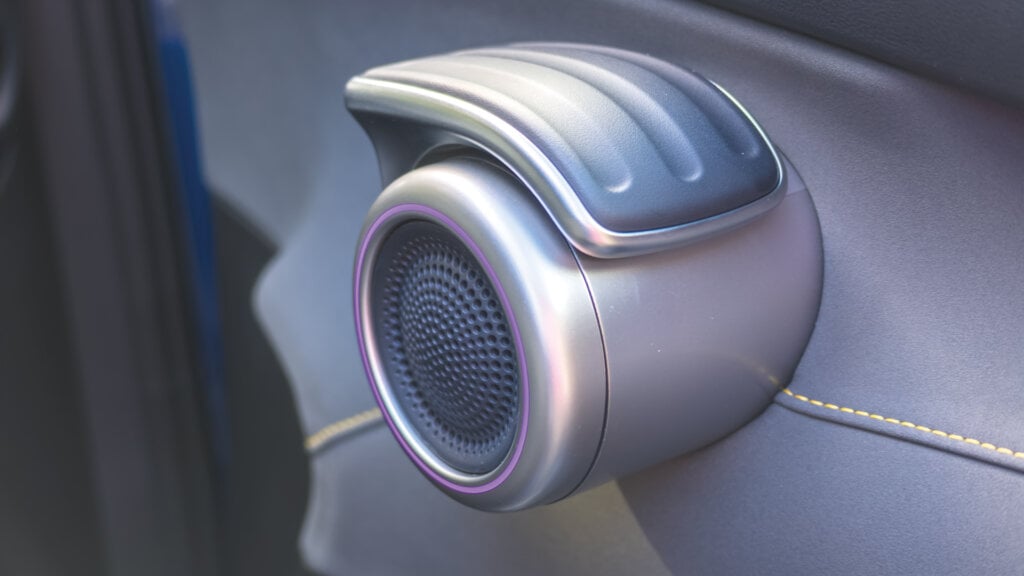
The biggest visual change is inside, and it is mostly a change of colour. The white and blue two-tone of the original is gone, replaced by grey, more grey and a hint of yellow in the stitching. The guitar-string door pockets remain but are now black. It has lost some character, though fleets and more conservative buyers, who BYD is clearly chasing, will probably prefer it this way.
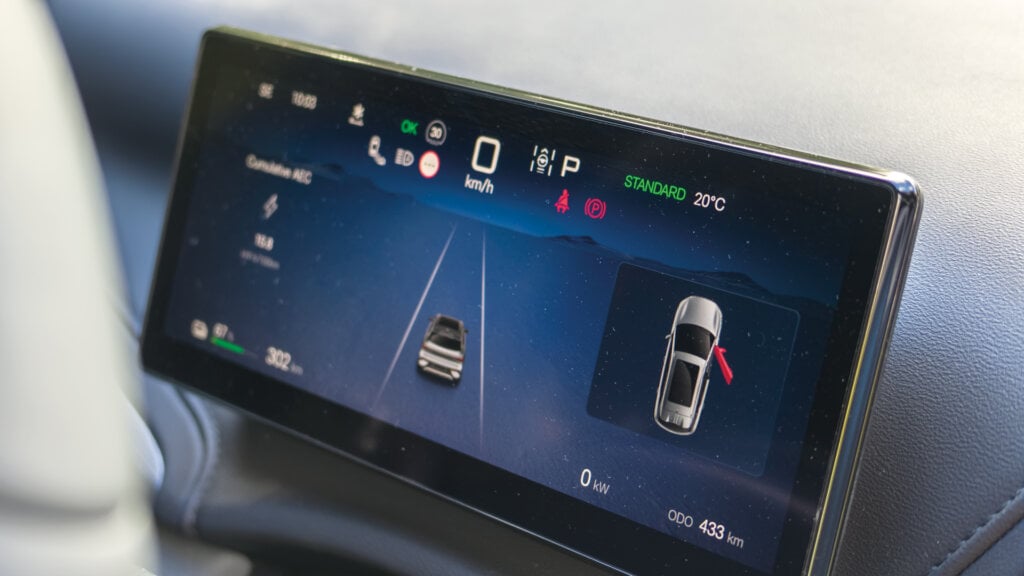
In front of the driver there is now an 8.8-inch display in place of the old five-inch unit, and it is a worthwhile upgrade. Consumption data and audio information can live there permanently instead of being buried in the centre screen. That screen is the same 15.6-inch unit as the late outgoing cars but is now fixed rather than rotating, and it runs the updated software that has rolled out across the range, so the layout looks a lot like the Shark 6. Wireless Apple CarPlay and Android Auto are standard, and the spec sheet now lists a wired connection as well. BYD promised a lot from this system at launch and took its time delivering, but it is now one of the more stable and complete setups from a Chinese maker.
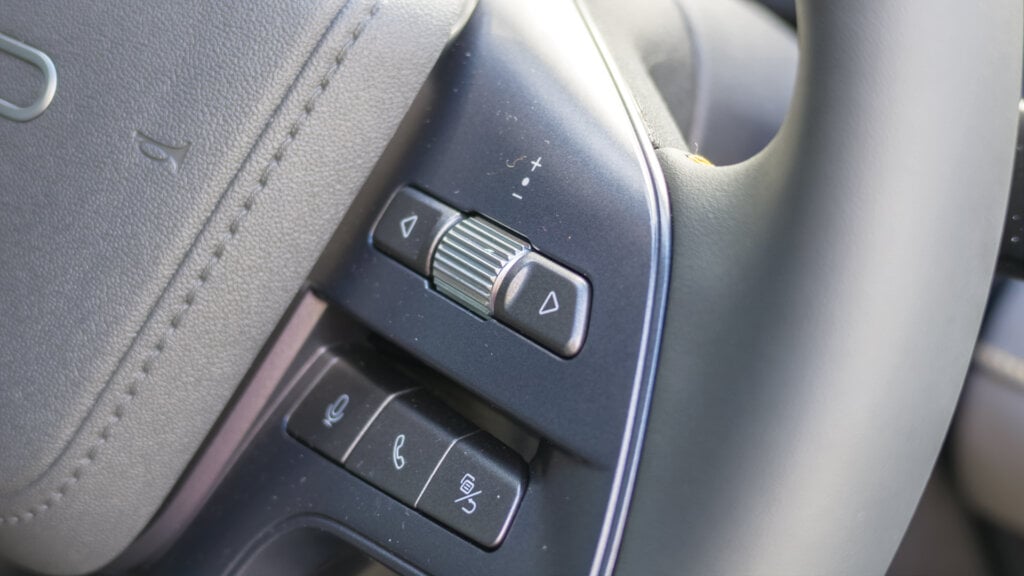
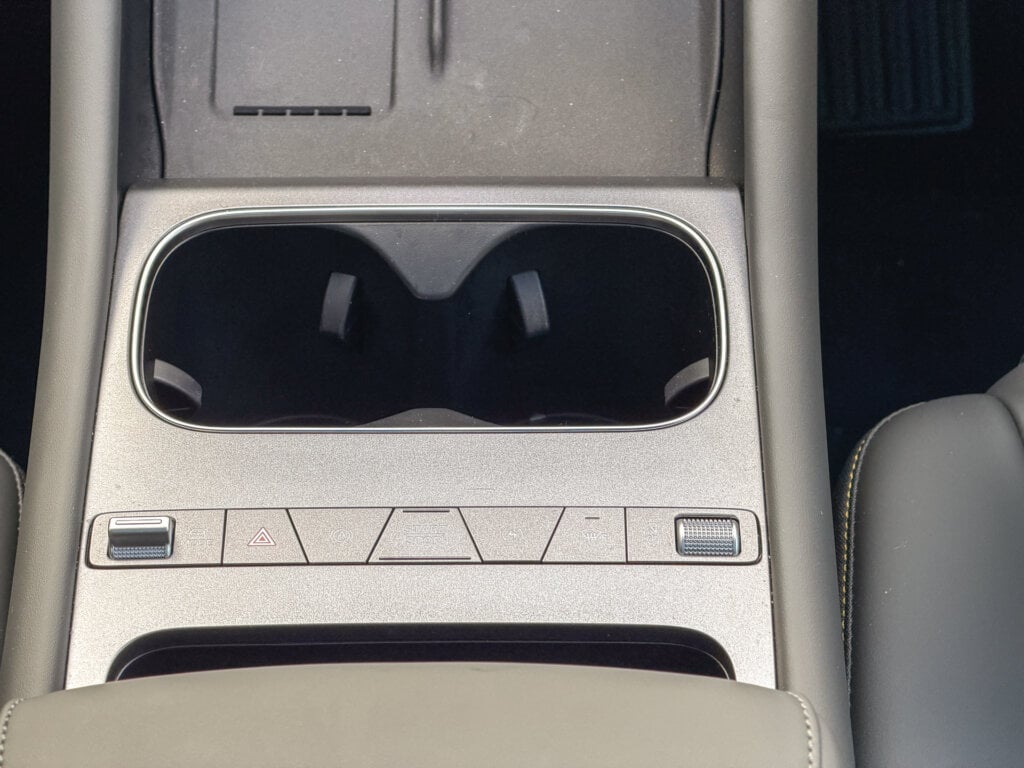
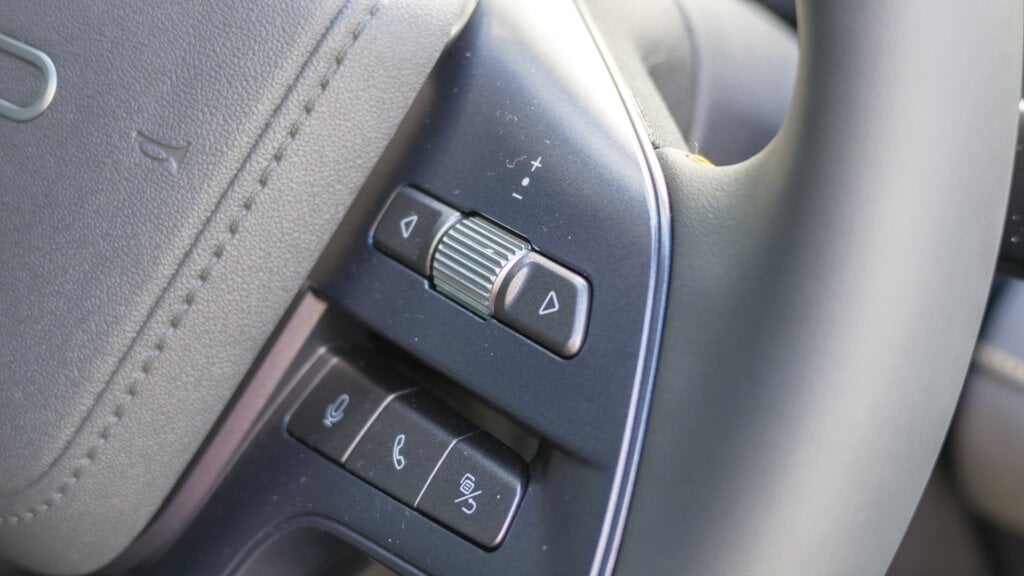
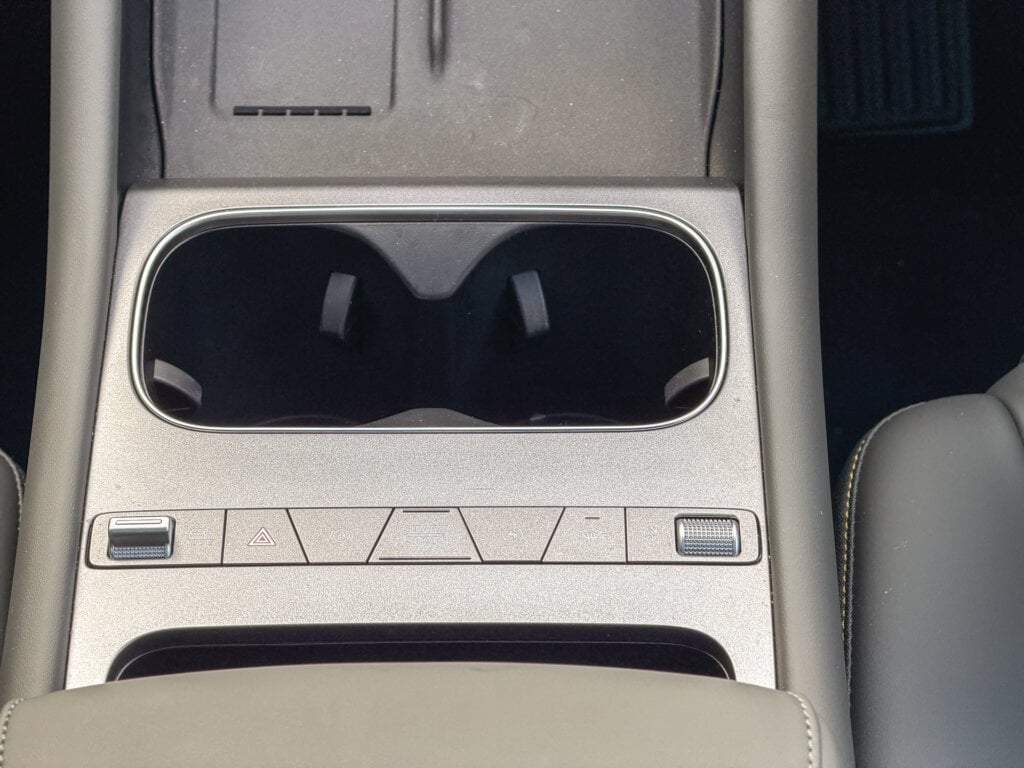
The steering wheel is new, with a squared-off centre and physical buttons in place of touch pads. The gear selector moves from the console to a column stalk, which frees up space below for two phone slots, one of them a 50W wireless charger. The old angled tray had a habit of collecting rubbish, so this is welcome. The row of physical switches for drive mode, regen, demist and parking brake survives. The front seats are now heated and ventilated. The NFC patch on the mirror now works with a phone as well as the card key, and the BYD app handles remote start, preconditioning and timers.
In the back, a six-footer has good leg and foot room, and headroom is adequate though the roof lining around the glass panel is close. The 60W-plus USB-C ports remain, the touch-dimming rear reading lights are still there, and the boot is as big as ever at 434 litres, which in practice swallows more than the number suggests.
Driving
The retuned chassis is the most pleasant surprise. The Dynamic feels a touch firmer than the old car and does not soak up small bumps quite as well, but the trade is more composure through corners, and on a twisty road it is more engaging than you would expect from a soft small SUV. There is a little axle tramp from the front if you are early on the throttle out of a hairpin, a reminder that this is still a front-driver. The brakes are responsive and meaty. The Continentals have plenty of grip, with a bit of road noise as the price.
Performance has not moved. Seven-and-a-bit seconds to 100km/h is adequate, not quick, and nobody ever complained the old car needed more.
The driver assistance package is largely carried over and, after years of software updates, is well sorted. The one addition is a driver monitoring camera. It gives a reasonable amount of grace before it chimes, and it can be switched off, though you have to do that every time you start the car. The Dynamic does miss out on the front cross traffic alert and braking that is new on the Premium and Performance; rear cross traffic alert and braking remain standard across the range.
Real-world consumption is a little over 15kWh/100km against a claim of 14.4. That is not class leading, and part of it looks to be BYD’s willingness to spend energy on battery conditioning.
Rivals
The outgoing Superior was listed at $55,990 and was selling for $49,990 at runout. The Dynamic is $59,990. In the same week it arrived, Tesla opened orders on a $54,900 Model 3 Rear-Wheel Drive with 572km of WLTP range and a 6.2-second 0-100km/h time. The GAC Aion V has been on special in the mid-to-high $40,000s with a bigger battery, faster charging and more space. Plenty of other options sit either side of $50,000. Within BYD’s own range, the Premium is $6000 more and gets all the headline upgrades, including the 800-volt system and 220kW charging. On the spec sheet it is the one to have.
Verdict
The Atto 3 has become the Corolla of the EV market. It is not exciting, at least until the Performance arrives, but it does everything well, it has a proven record, and it will not offend anyone. The EVO Dynamic is a better car than the one it replaces in the areas that matter day to day. The question is whether, at $10,000 more than the car was selling for a month ago, that is enough. For conservative private buyers and fleets who value the BYD name and the known quantity, it probably is. For anyone shopping on value alone, there are now better deals.
BYD Atto 3 EVO Dynamic
$59,990 / 14.4kWh/100km / 0g/km
0-100 km/h 7.3s
Motor output 150kW
Max torque 310Nm
Battery 60.5kWh
Range 420km
Drivetrain Single-speed auto / FWD
Front suspension Mac strut / swaybar
Rear suspension Multilink / swaybar
Turning circle 10.7m (2.7 turns)
Front brakes Ventilated discs
Rear brakes Ventilated discs
Stability systems ABS, ESP, TV
Safety AEB, ACC, BSM, LDW, RCTA, ALK, AHB
Tyre size f/r-235/50R18
Wheelbase 2720mm
L/W/H 4455 / 1875 / 1615mm
Trackf-1575mm r-1580mm
Luggage capacity 434-1340L
Tow rating 750kg
Service intervals 12 months / 20,000km
Warranty 6yrs / 150,000 km
ANCAP rating ★★★★★ (2022)
Weight (claimed) 1750kg