View all
11 more images
2026 Ford Mustang Dark Horse Herrod SC Review
Words: Kyle Cassidy | Photos: Alex Schultz
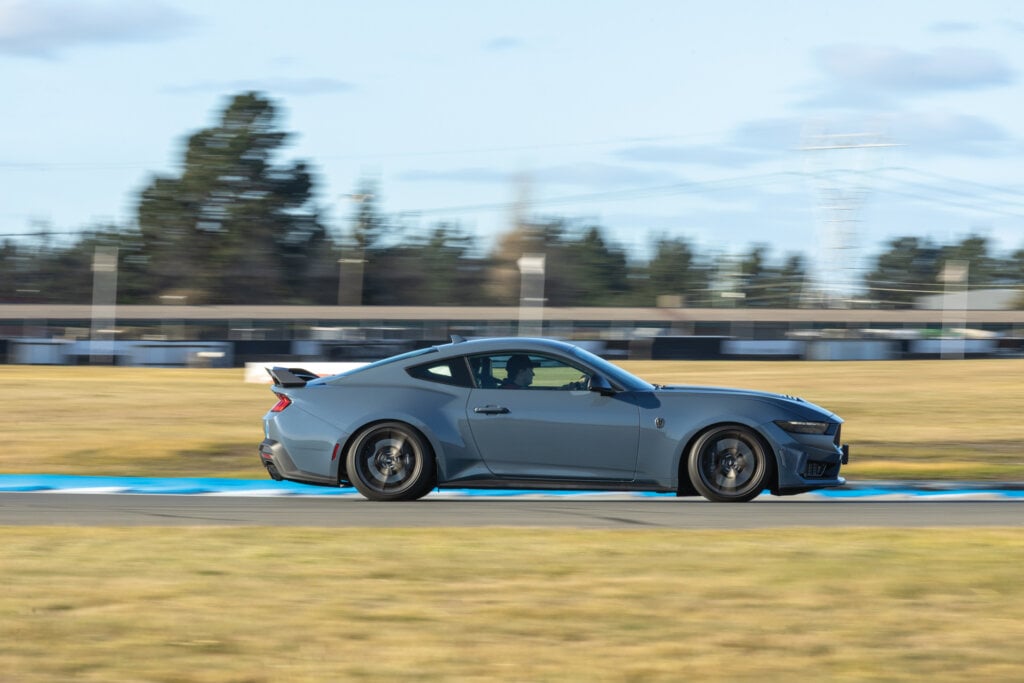
New Zealand isn’t in line for the Dark Horse SC, but not all is lost. For those who need more, the Herrod SC Package adds a supercharger and a serious excess of power.
Earlier this year, Ford revealed a special Dark Horse model in the US with the letters SC in the name. They stand for supercharged, with the Dark Horse SC effectively replacing the Shelby GT500 in the line-up. Its 5.2-litre V8 cranks out 795 horsepower (592kW) and 894Nm of torque, and it carries on with the GT500’s special seven-speed dual-clutch automatic.
It’s not cheap, though, starting at US$106,000, or around NZ$180,000. Like the Shelby before it, it’s not being offered in right-hand drive.
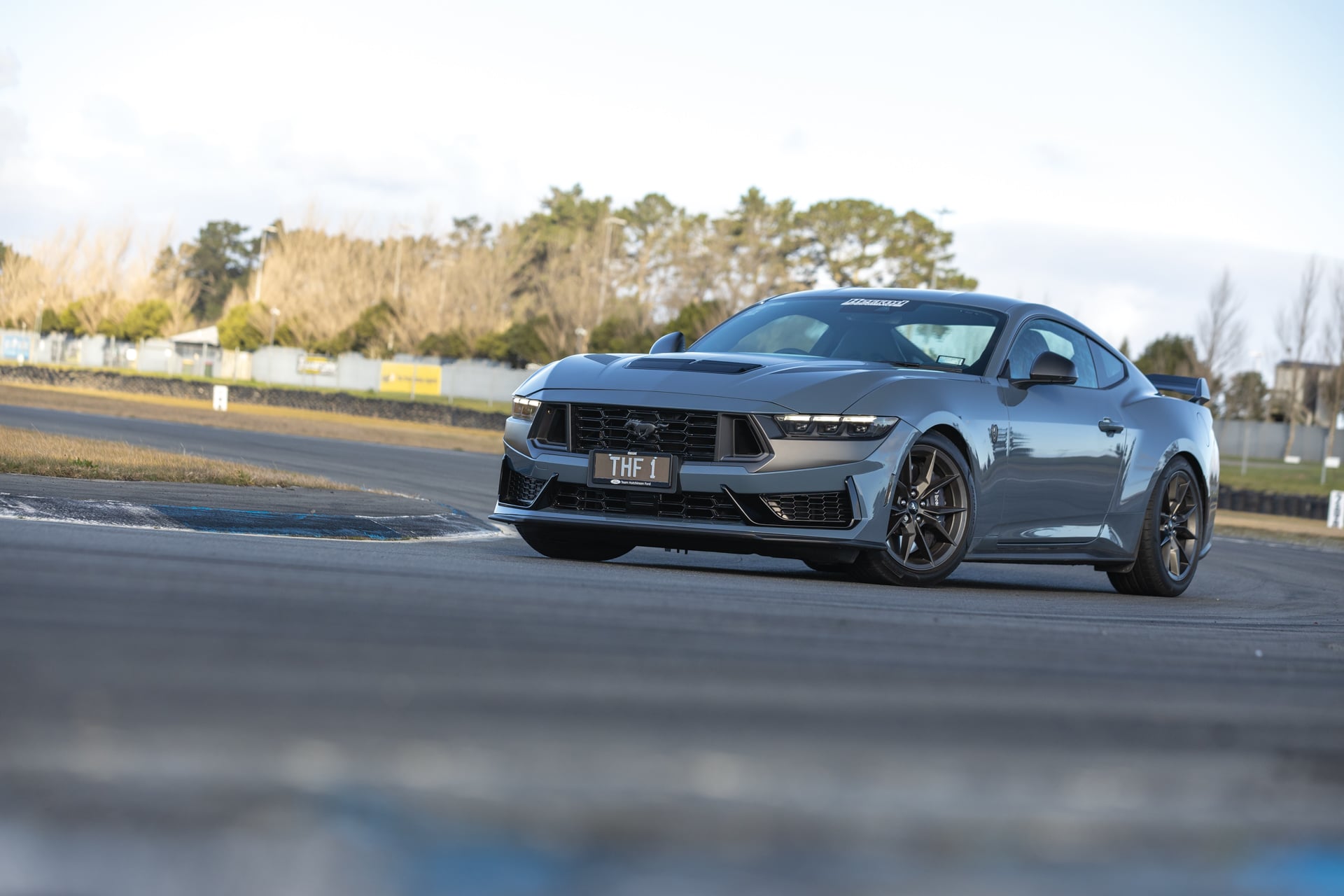
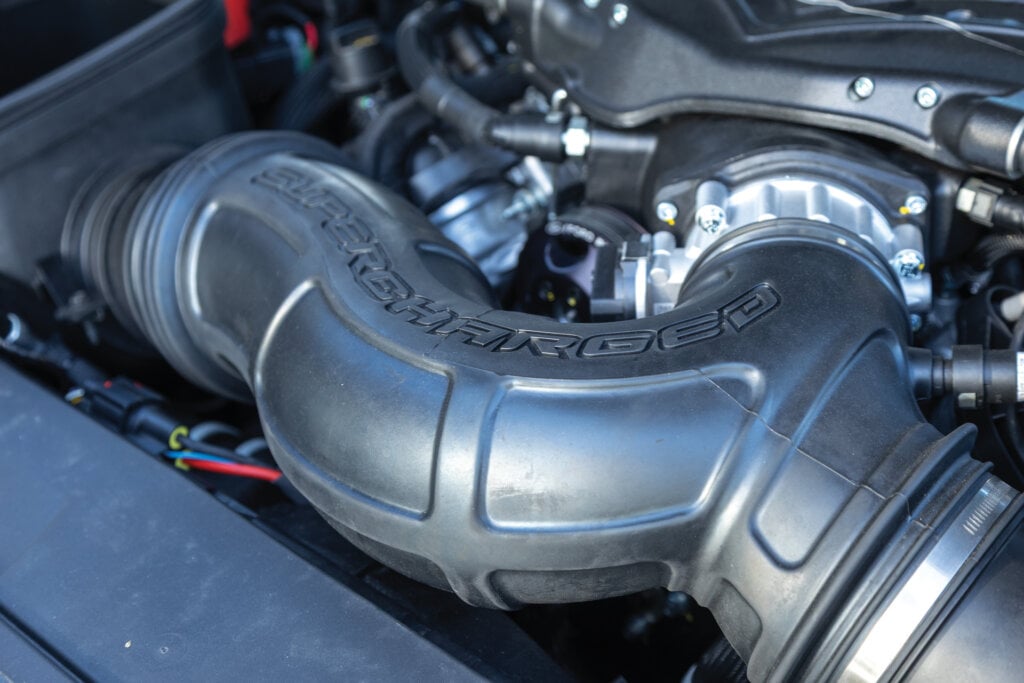
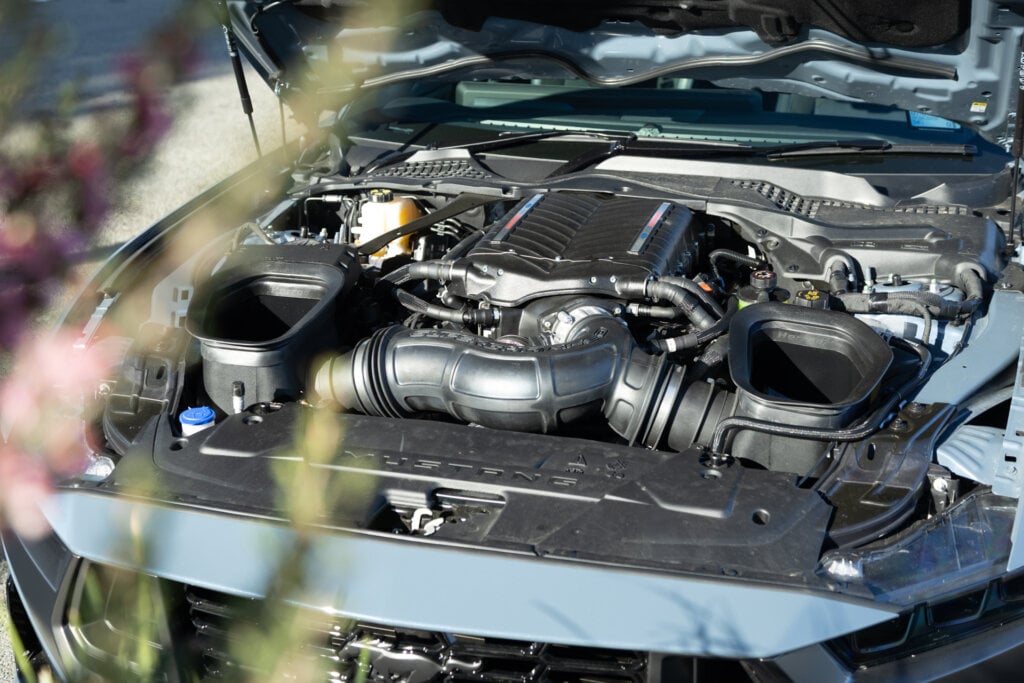
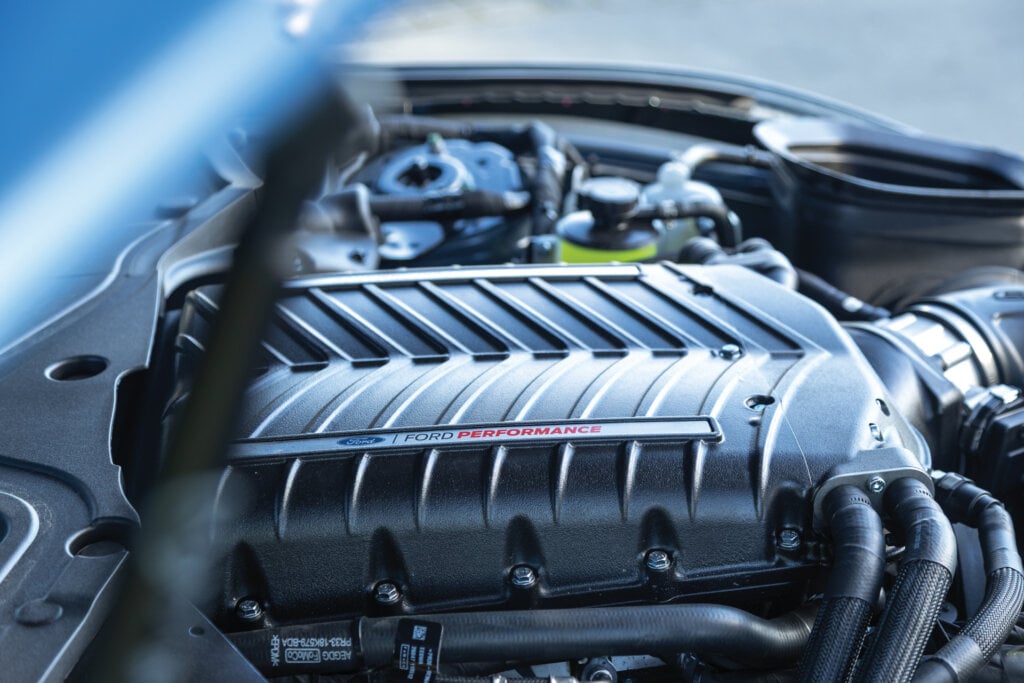
But there is an option to replicate that high-horsepower output locally by way of the full Herrod SC Package. Offered here by Team Hutchinson in Christchurch, the Herrod kit consists of a 3.0-litre Whipple supercharger that lifts power to 810hp (604kW) at 7500rpm, with torque swelling to 833Nm at 4800rpm. These are handy increases over the standard Dark Horse’s 373kW and 567Nm.
When we speak with Team Hutchinson’s Mustang specialist, Hamish Hamilton, he tells us this has a few extras to get the most from the blower.
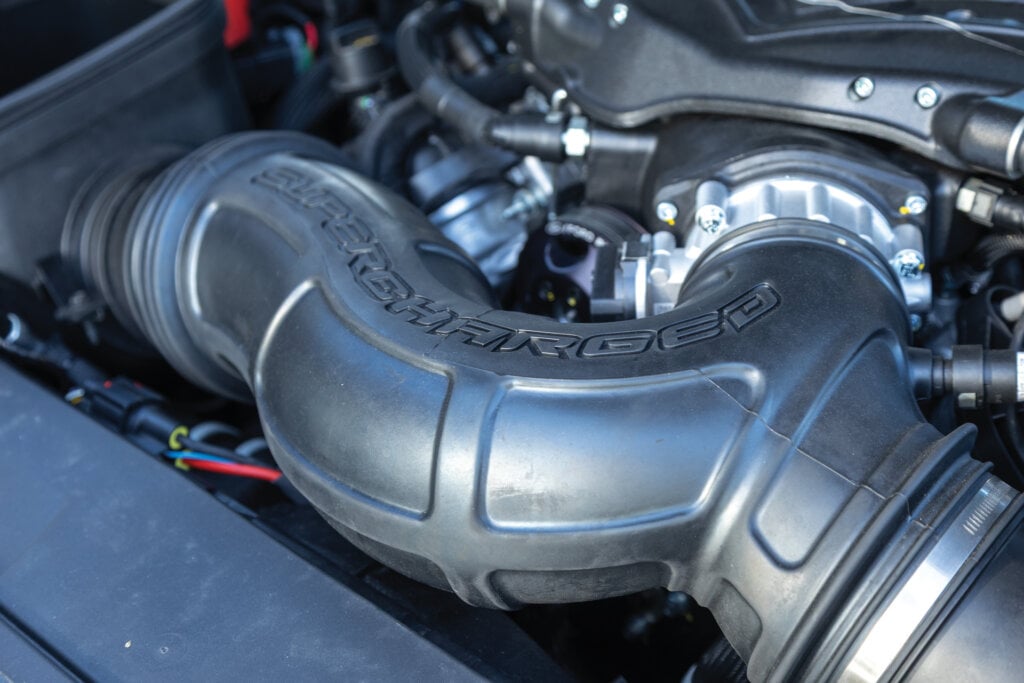
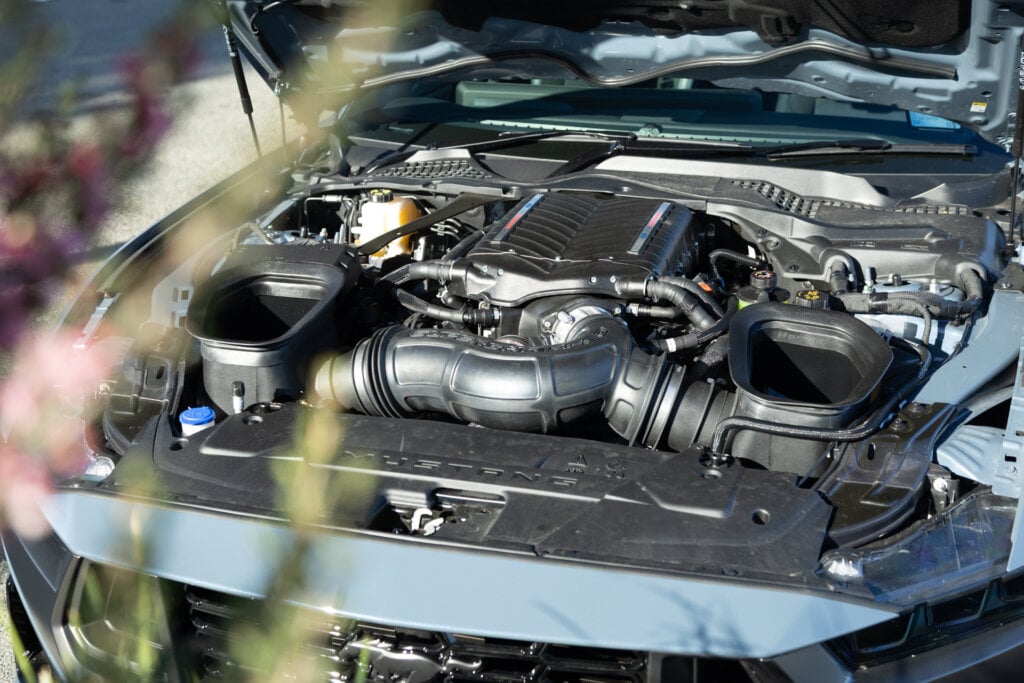
“This has a big intercooler up front. Most standard supercharger kits feature a cooler that’s about the same size as an OEM radiator; this one’s nice and thick, so the capabilities of this kit are just epic.”
It also features a larger throttle body. “For Mustang enthusiasts, especially those guys that have gone down the supercharger path before, they love to ask about the intercooler and the throttle body size. This has a 92mm throttle body, up from the Dark Horse’s standard 80mm inlets, and the blower is running 9psi of boost.”
He says the setup requires a minimum of 98-octane fuel. “That’s non-negotiable now to keep the warranty intact due to how hard the supercharger is working with the motor.” That’s one of the good things about the kit: you don’t fall foul of the warranty. This is technically a Stage One kit. There is no official Stage Two option, as its tune wouldn’t be covered by the warranty. But 810 horses really are enough.
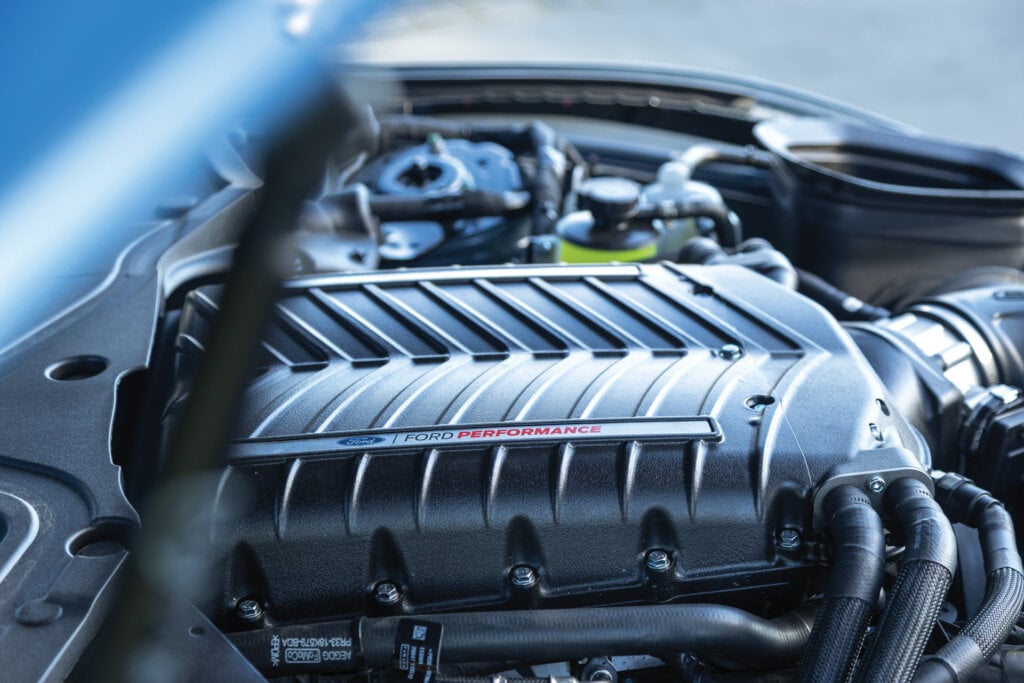
Three ways to make boost
Superchargers all do the same basic job: force more air into an engine so it can burn more fuel and produce more power. Unlike a turbocharger, a supercharger is driven mechanically by the engine, but the way it moves and compresses air varies considerably.
A Roots supercharger uses two meshing lobed rotors to carry fixed pockets of air from the inlet to the outlet. It is a positive-displacement design, so it delivers air with every revolution and produces boost almost immediately. This gives an engine strong low-speed torque and crisp throttle response.
Modern examples include Eaton’s TVS units, which use twisted rotors to improve airflow and extend the operating range. However, a Roots unit does not significantly compress the air inside its casing. Pressure builds in the intake manifold, creating heat and reducing efficiency at higher boost levels.
A centrifugal supercharger resembles the compressor side of a turbocharger. A rapidly spinning impeller accelerates the incoming air before a diffuser converts its speed into pressure. These units are compact, relatively light and highly efficient near their optimum operating point. They are also capable of supporting enormous power outputs, making them popular for racing and aftermarket applications. The trade-off is that boost rises with engine speed, so comparatively little assistance is available at low revs.
Whipple’s twin-screw supercharger combines two differently shaped, intermeshing rotors. As air travels along them, the space between the rotors becomes progressively smaller, compressing the charge internally before it reaches the outlet.
This is why the twin-screw is often considered the most efficient all-round supercharger, rather than necessarily the outright peak-efficiency champion. Like a Roots unit, it provides immediate boost and substantial low-speed torque, but its internal compression reduces turbulence, heat generation and parasitic losses at higher pressure ratios.
Whipple quotes adiabatic efficiency of up to 80 per cent and volumetric efficiency approaching 99.9 per cent. The result is cooler, denser air and a broad, relatively flat delivery stretching from low revs to the redline.
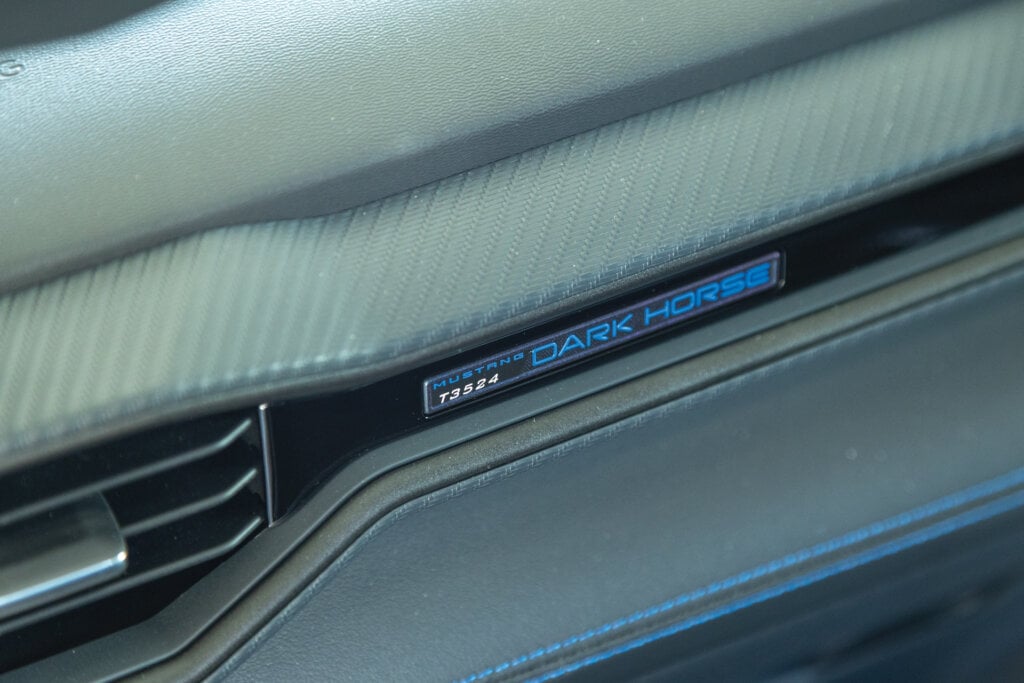
The final part of the equation is a custom Herrod tune. The package is fitted by Team Hutchinson, with dealership staff having been trained by Herrod Performance in Melbourne. As John Hutchinson told us: “New Zealand isn’t getting the Dark Horse SC. This is our equivalent. The Dark Horse is a factory-developed, track-inspired Mustang. With the extra power of the Herrod SC Package, we think it’s the perfect car for somebody who wants to do the odd track day or club event.”
While the first allocation of Dark Horses sold out quite quickly, a second batch was quietly introduced here this year, and John says there are still a few around up for grabs.
There is no big surge of thrust arriving in a rush; rather, this feels like Herrod has simply added a whole heap more cubic inches to the engine.
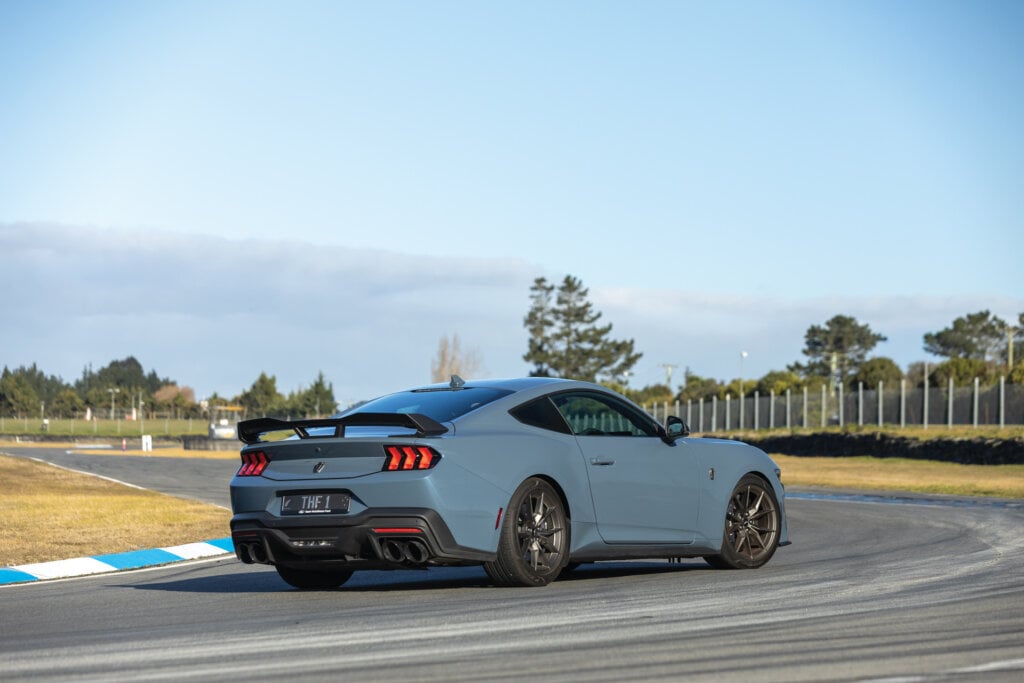
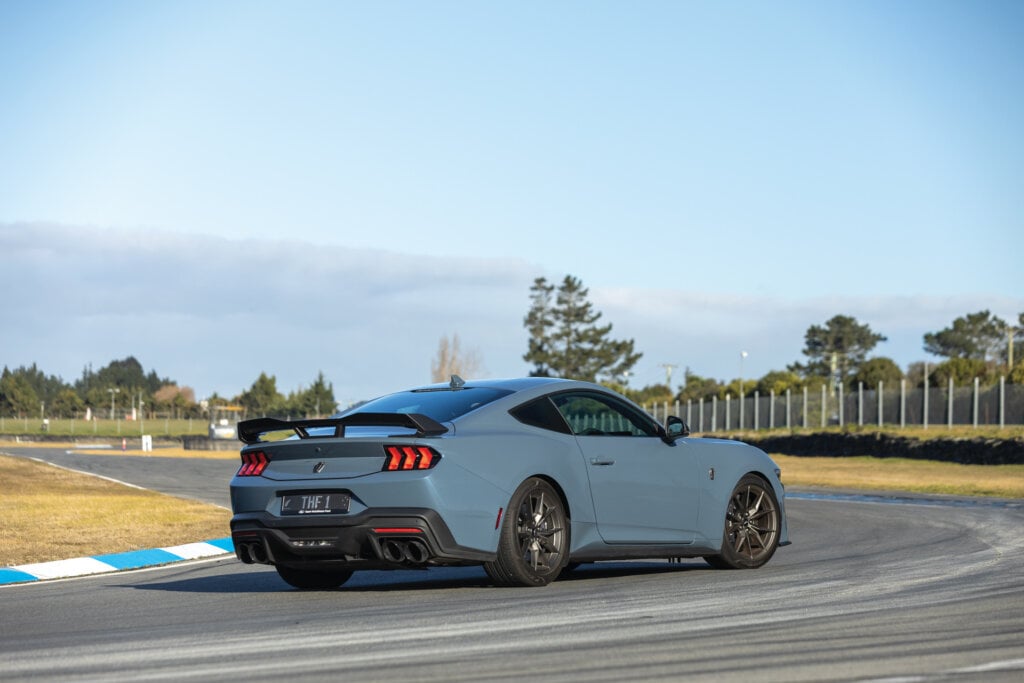
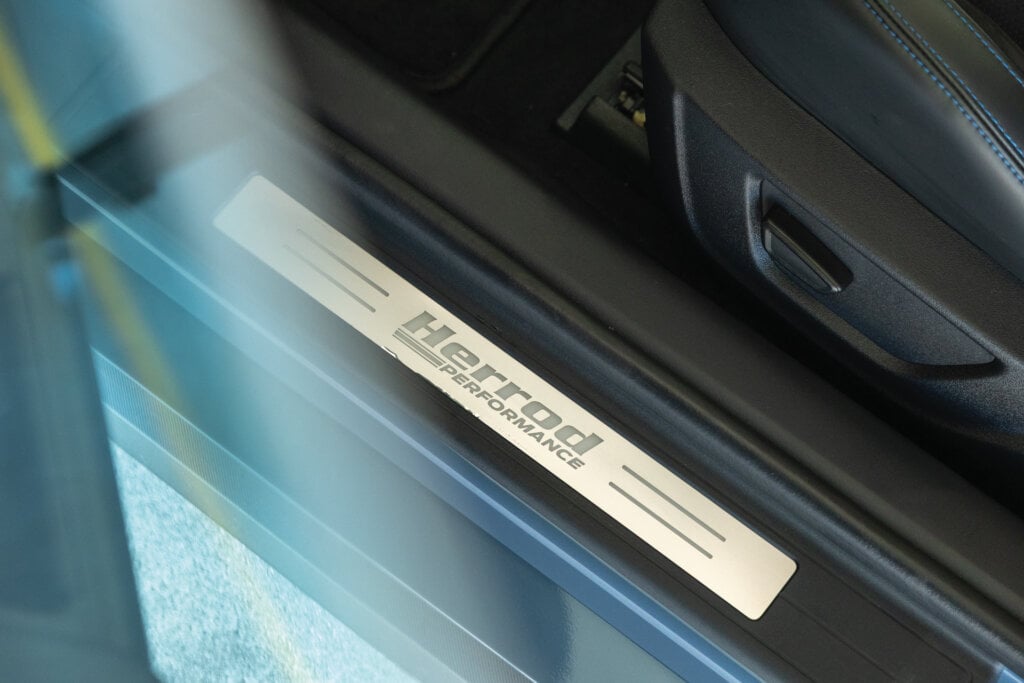
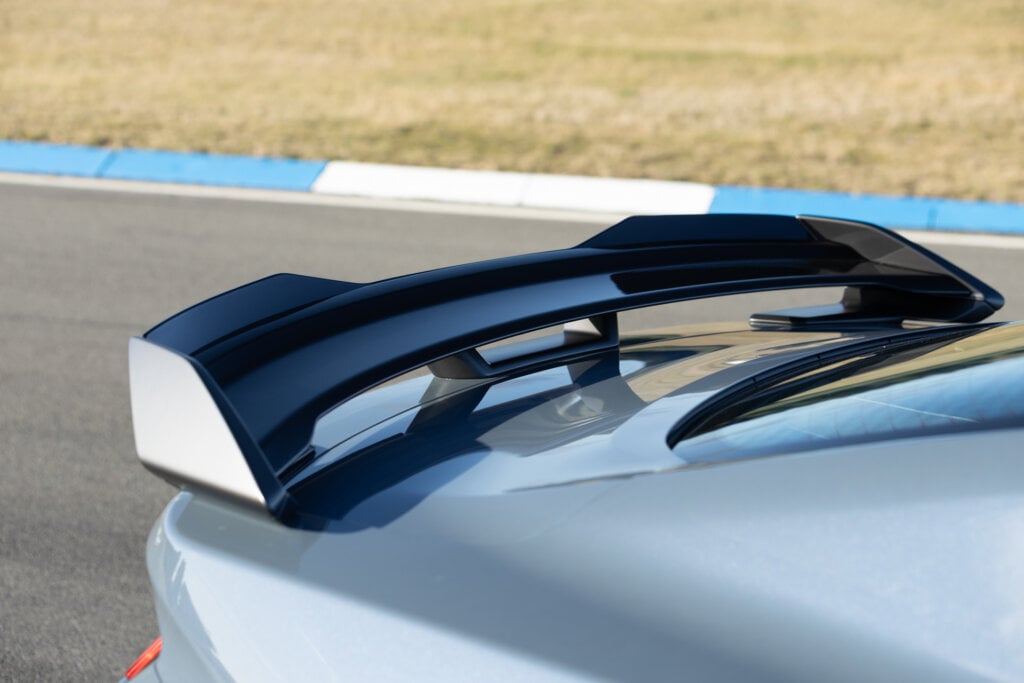
The supercharger kit will set you back just over $38,000. Rounding out the package for this Dark Horse is a Ford Performance wing with a Gurney flap, while it rides a little closer to the ground on a set of Herrod Performance lowering springs. It’s louder too, thanks to the fitment of a Herrod axle-back exhaust system. There are a few Herrod signifiers in the form of sill plates and badging.
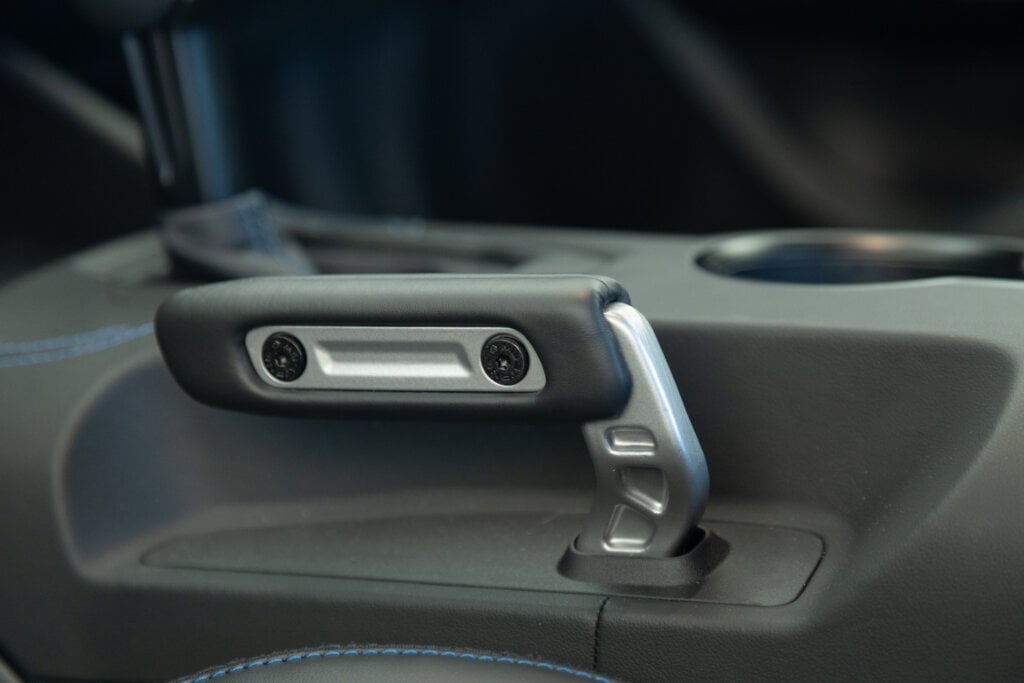
While the peak output figures are impressive, what is really remarkable is just how driveable the car is. It starts easily, with no hard cranking, and idles smoothly. There’s no big clunk as you pull the lever back into drive, and the take-up of power is smooth, just like the factory setup.
Around town, there’s little to give the 810 horsepower game away; it feels like a regular Dark Horse. Except, perhaps, that the in-gear pull is more authoritative, as it surges along on smaller throttle openings. And a bout of acceleration doesn’t require any shuffling of the gears; it just pulls.
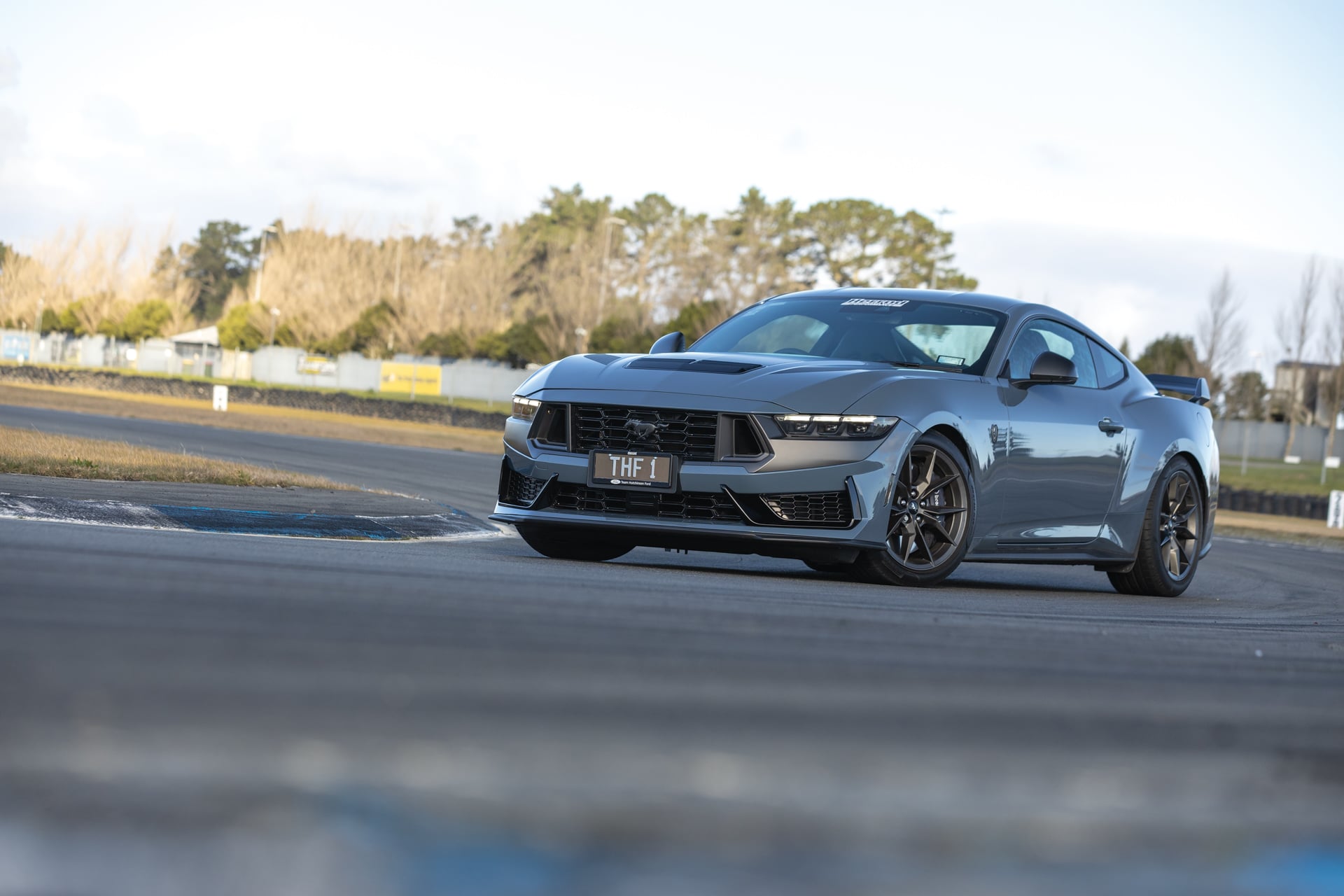
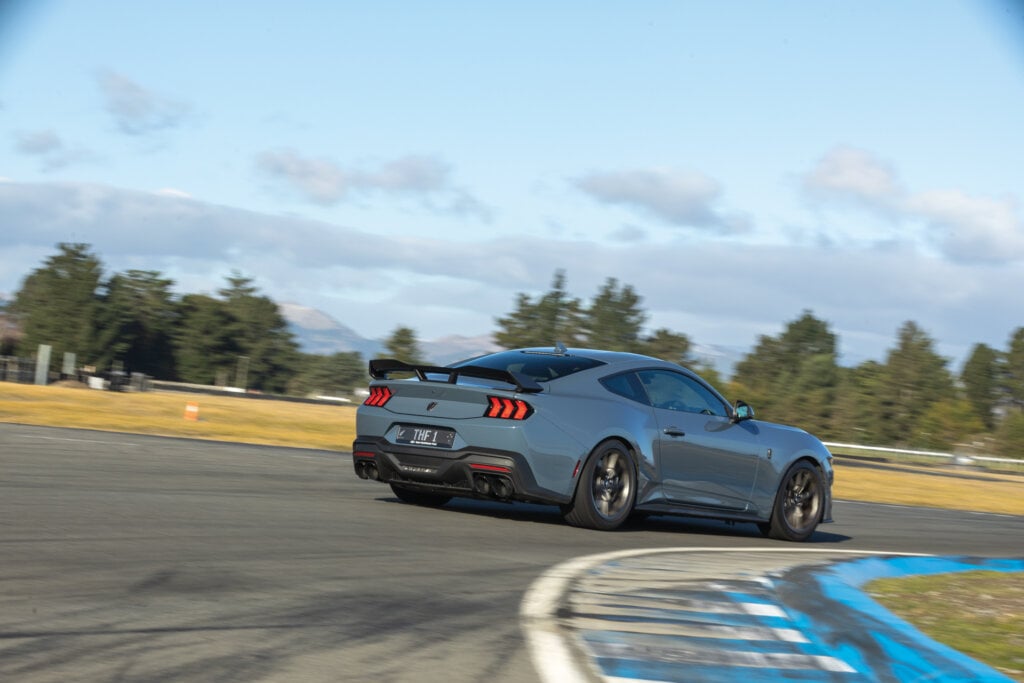
Pinning it onto the motorway reveals the potential. With an accompanying downshift, the engine revs harder, the blower spins and the Dark Horse bolts. And then you’re quickly over the limit. That is the problem with the added power: you don’t really get the full effect of it until speeds become illegal. Good for us, then, that Team Hutchinson booked some time at Ruapuna Motorsport Park so we could check out the benefits of using the full rev range.
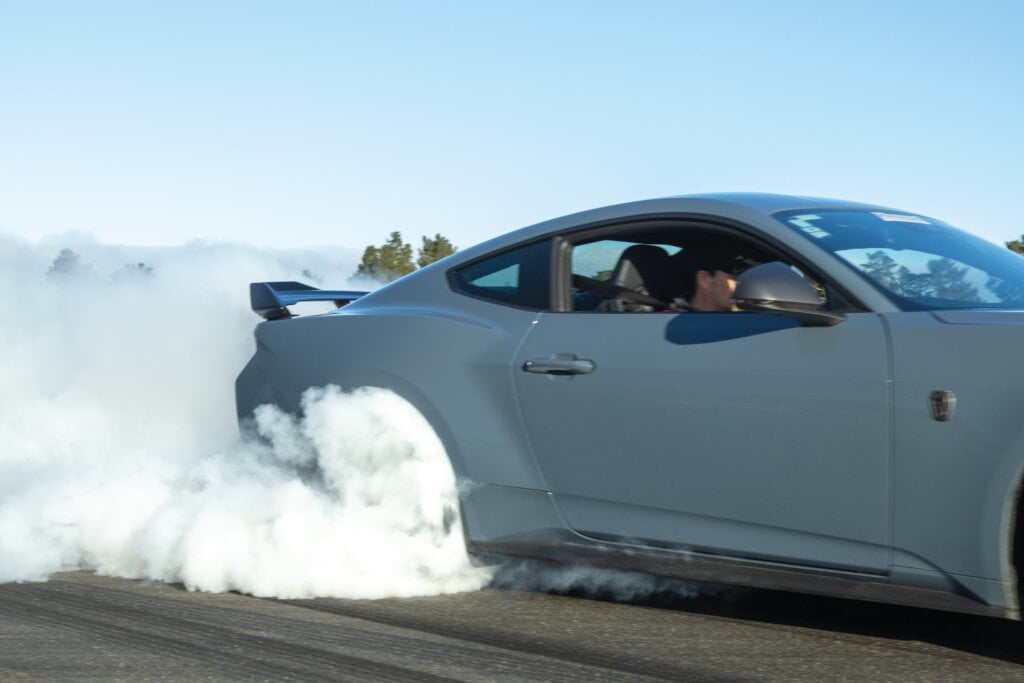
But before we took in a few laps, we had to warm the tyres. While a regular Mustang doesn’t need much encouragement to let loose, this thing broke traction in an instant. It took only a few seconds for the supercharged V8 to lay a smokescreen, with clouds big enough to be seen by Chloe in Business Class high above. Such antics would get the Greens wild.
Given the ease with which it overwhelms the standard 285-section rubber, we thought it would be a bit of a handful out of Ruapuna’s bends. It was surprisingly tractable, though. Erring on the side of caution, we kept the traction control armed and decided against the maximum-attack Track drive mode, preferring Sport and a manual approach to gear selection. We were a little shy on the gas through the first few bends (not knowing our way around didn’t help either) but quickly gained trust in the rear end.
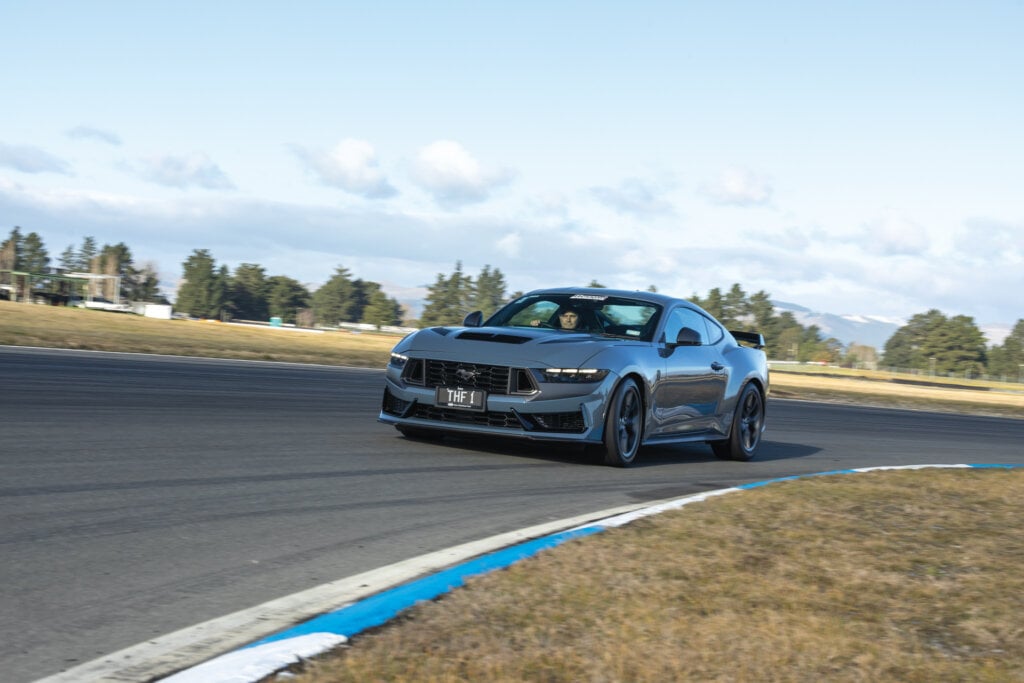
You can’t stamp on the throttle, as that rouses the traction control into action. But with a little patience on the corner exit, you can start easing your way into it and then find the firewall by the time the steering is straight. There you’ll find it has good traction, the Dark Horse grounding the power as the V8 really pulls. The throttle response is punchy and the torque curve is beautifully linear. There is no big surge of thrust arriving in a rush; rather, this feels like Herrod has simply added a whole heap more cubic inches to the engine.
Yet it still revs quickly, and the automatic handles the changes right up near 7500rpm without qualms. The engine keeps pulling too, with enough power to see 230km/h down the front straight while still leaving plenty of room to brake for the first kink. And the sound is grand. The added noise from the Herrod mufflers fills the cabin, though don’t expect a heap of supercharger whine; the twin-screw setup doesn’t really scream.
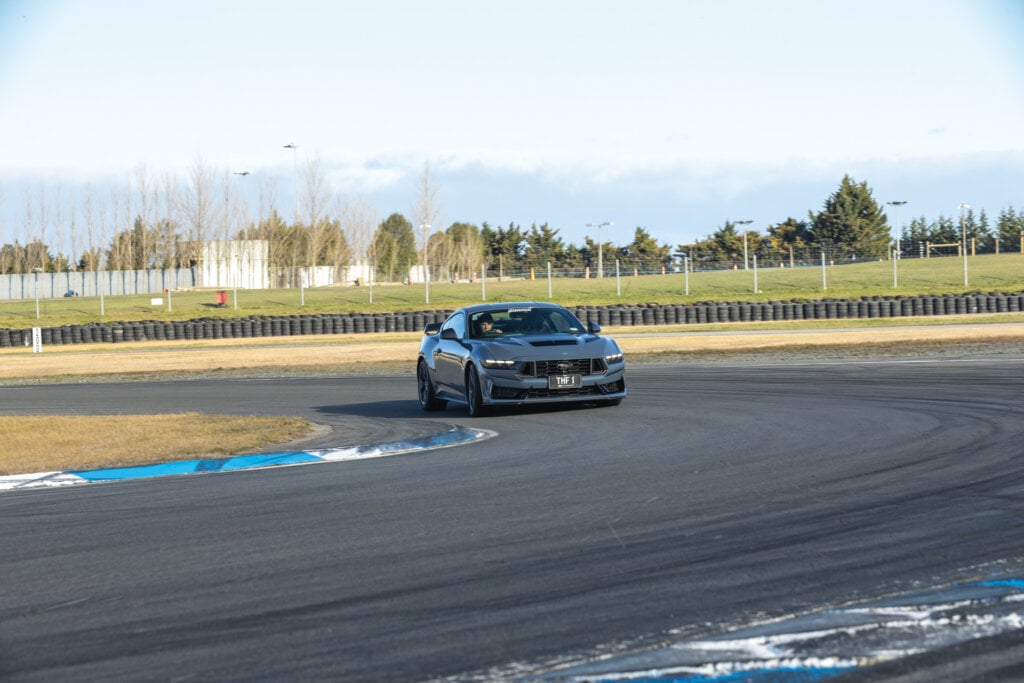
And can the Dark Horse handle the extra power? It sure can. It’s sharp on turn-in and, while there’s a bit of push up front, it’s easily managed. It generates good grip through the bends and the brakes are up to the task too, with great pedal feel.
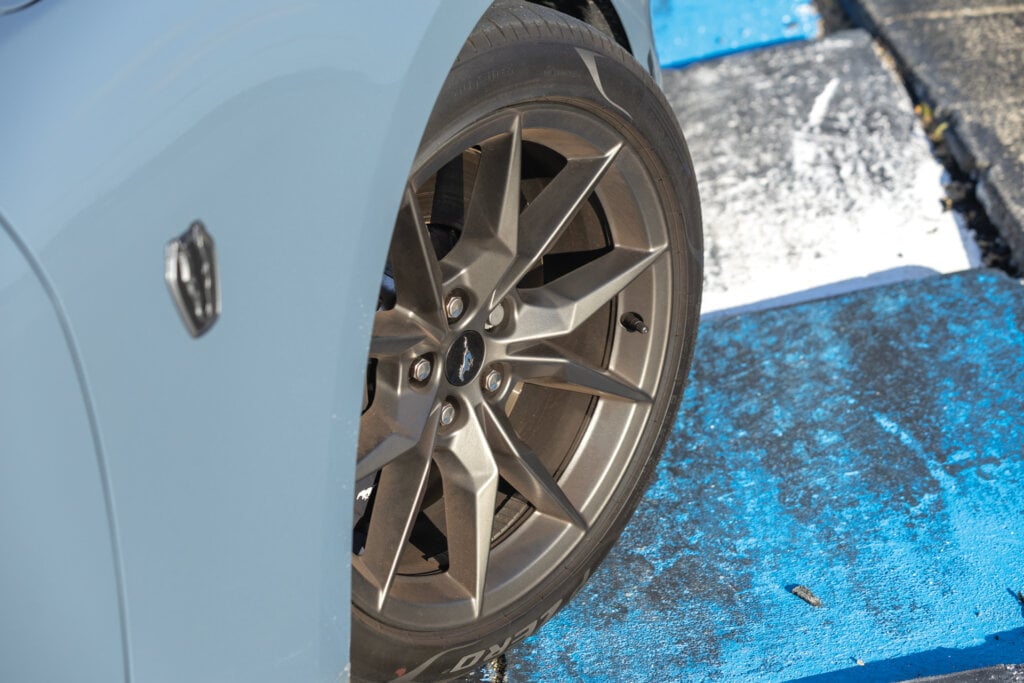
To give it more traction and help negate the mild understeer, a set of Herrod HP3 wheels wouldn’t go amiss. They’re a little wider and
wrapped in broader 285/30 R20 front and 305/30 R20 rear tyres. The only downside is that burnouts will be even more expensive with those in place.