View all
1 more image
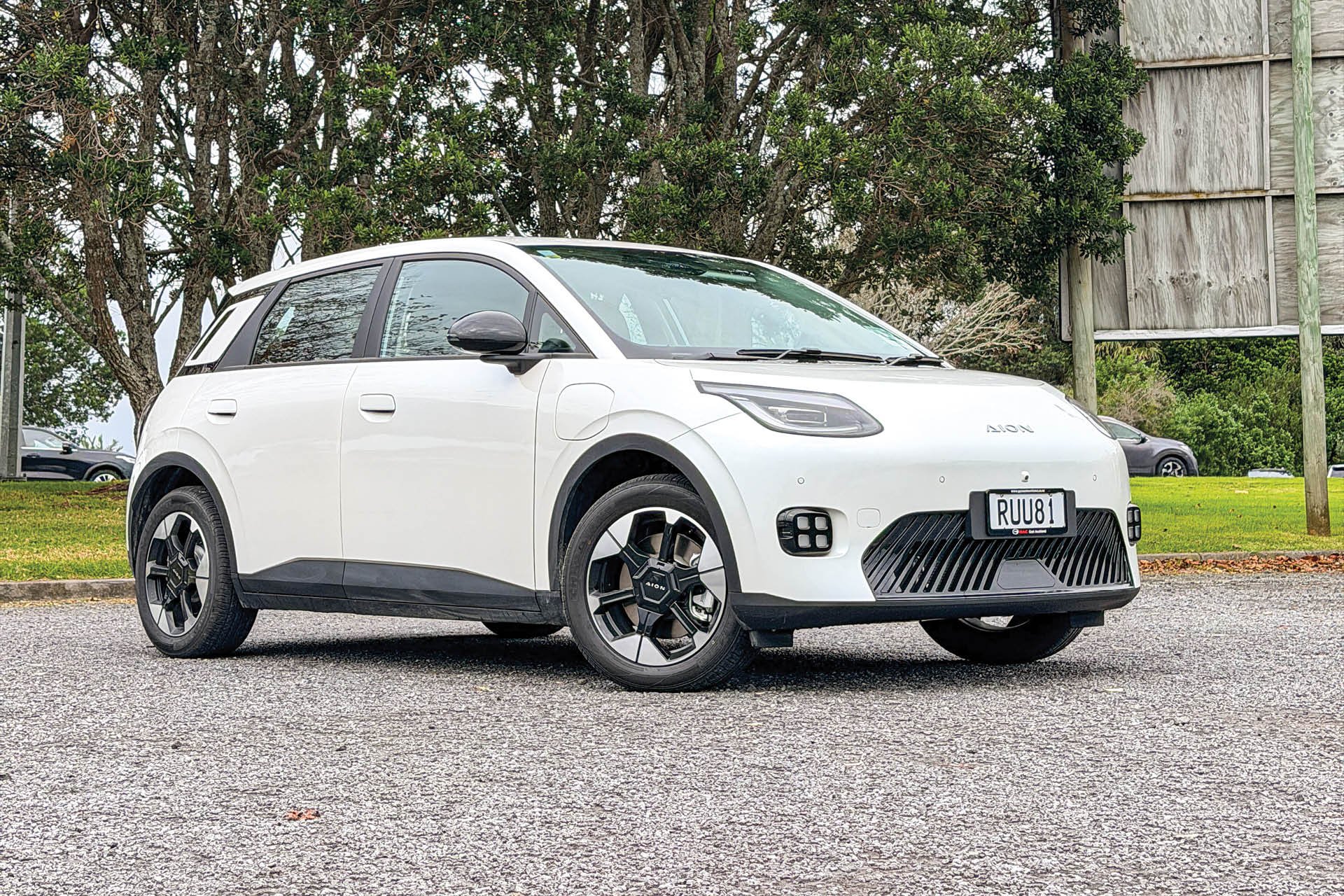
2026 GAC AION UT Review
Words: Richard Edwards | Photos: Richard Edwards
GAC has added to its burgeoning range with the electric UT. It’s a hatch with plenty of space and features. Is there a catch?
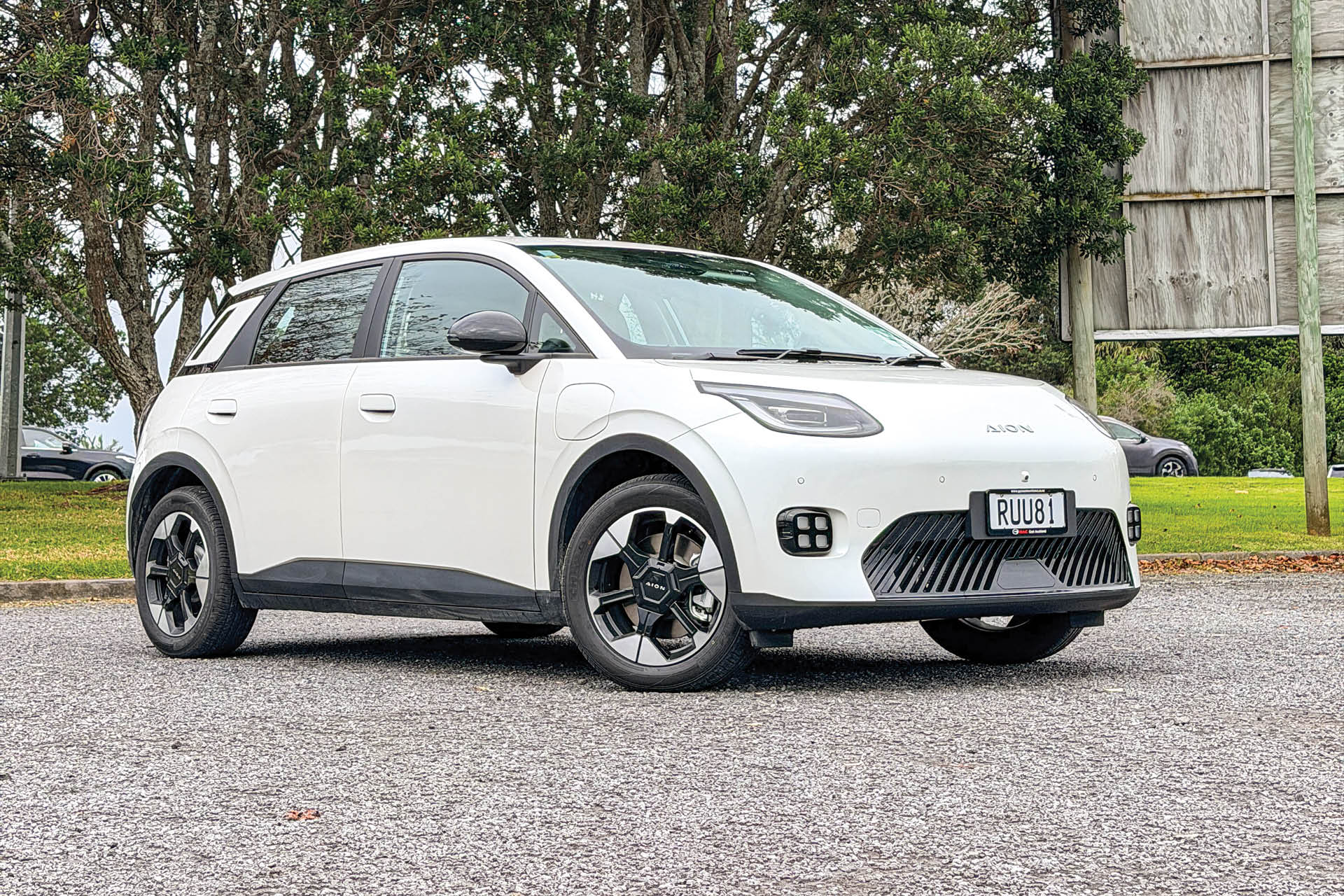
GAC has launched its fourth model line in New Zealand in under a year. The Aion UT is a compact electric hatch priced at $39,990 plus on-road costs for the entry car and $43,990 for the Lux, and early buyers get a free 7kW home wall charger while the launch offer lasts.
Both grades run the same hardware: a 60kWh LFP battery, a 150kW/210Nm motor on the front axle, a claimed 430km of WLTP range and a 7.3 second 0-100km/h time. DC charging peaks at 87kW, AC at 11kW. The $4000 walk to the Lux buys a panoramic roof, a powered tailgate, a wireless phone charger and power-folding mirrors. Nothing mechanical changes, so everything below applies to the cheapest car in the range. That is the one I would buy, and the one this review concentrates on.
A quality build
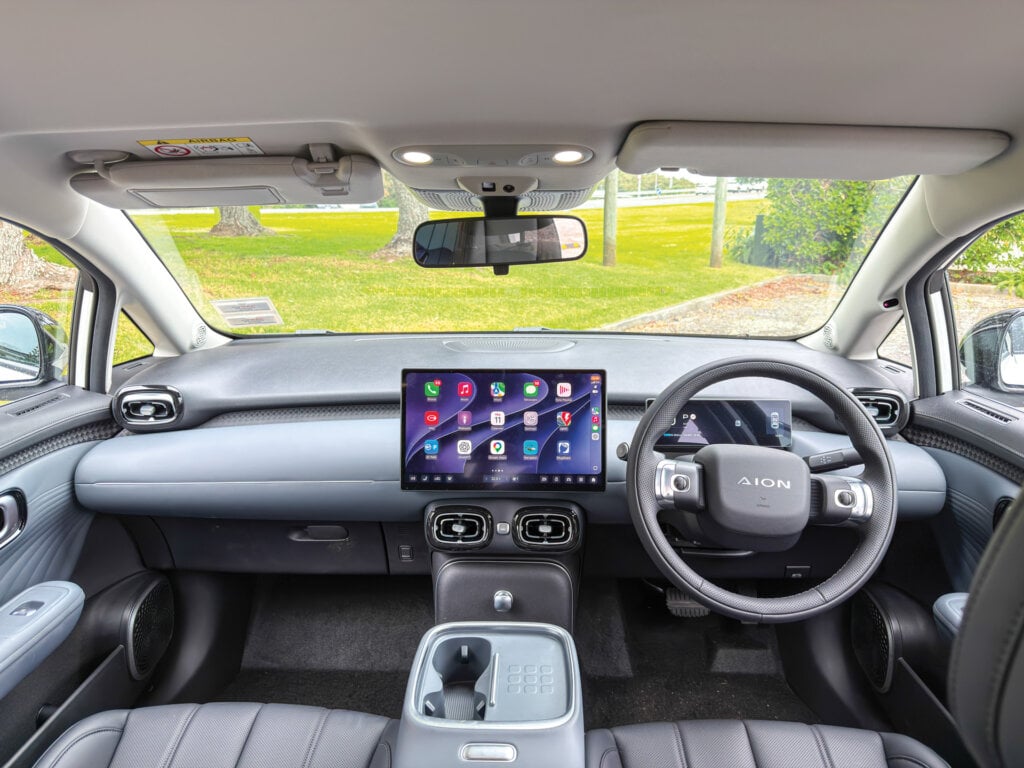
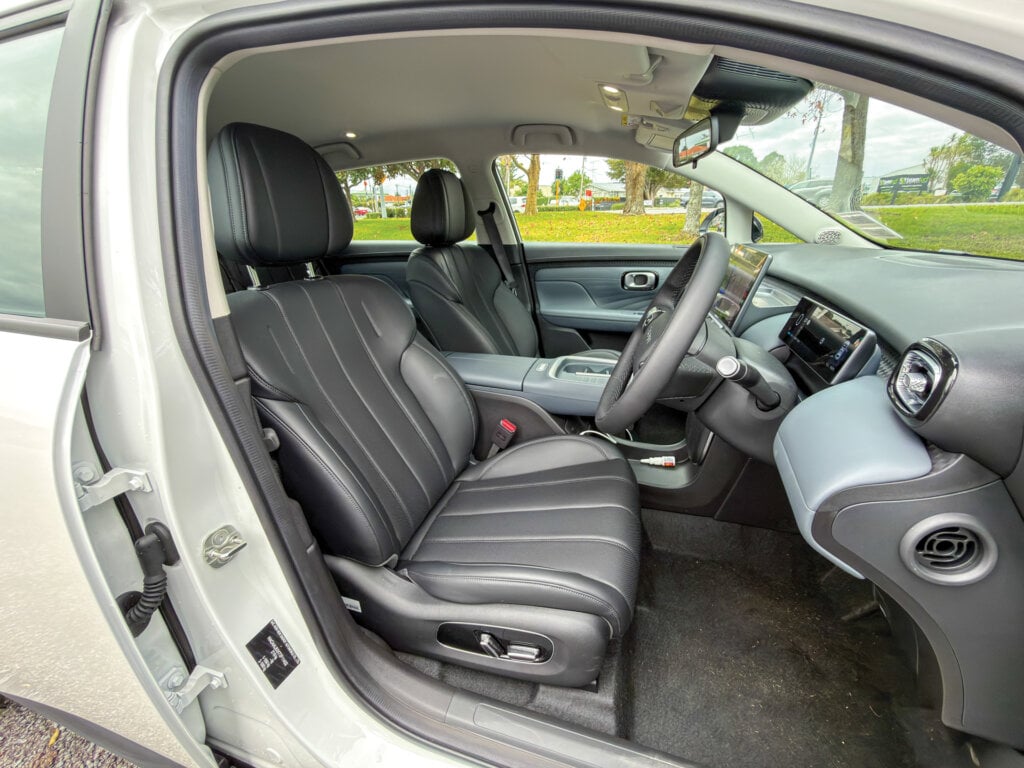
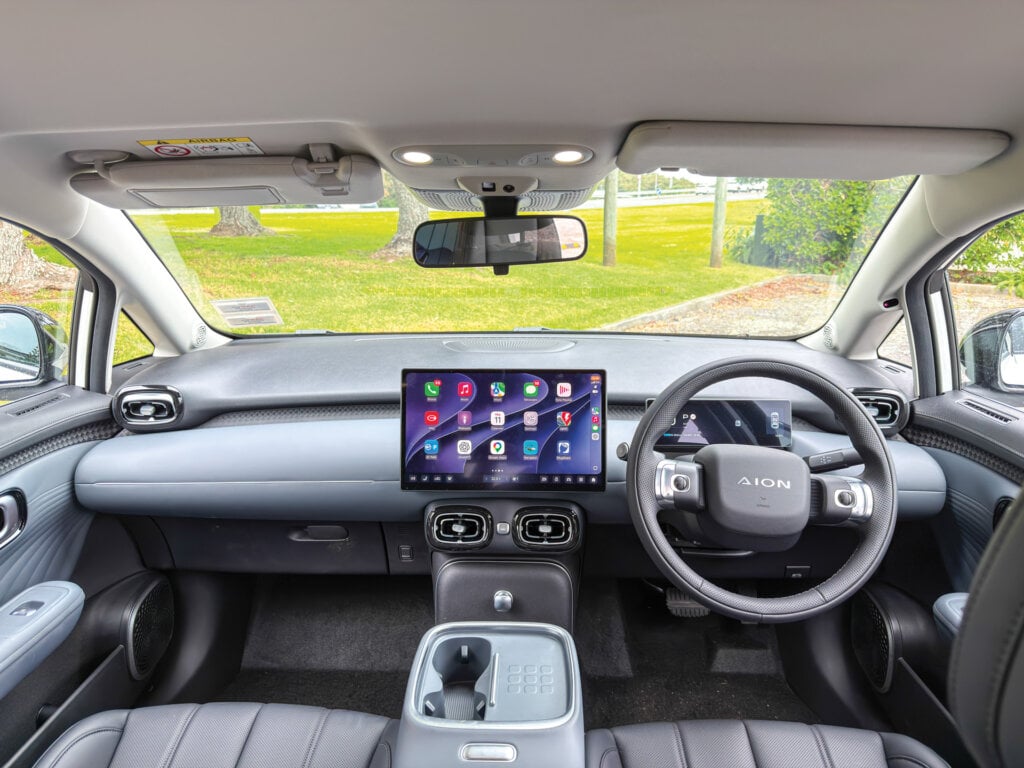
The entry car is better screwed together than it has any right to be at this money. Panel gaps are consistent, the doors close with a proper thunk, and the interior avoids the hard, hollow feel that usually marks out a base-grade budget EV. The synthetic leather seats are soft and well shaped. The dash top is padded, and the padding carries through to the rear doors instead of stopping at the B-pillar. There are misses. The gloss trim on the door tops will scratch, and the phone tray is hard plastic, so the phone slides around in it. But if you told your friend it was an entry-level Toyota, they could be convinced.
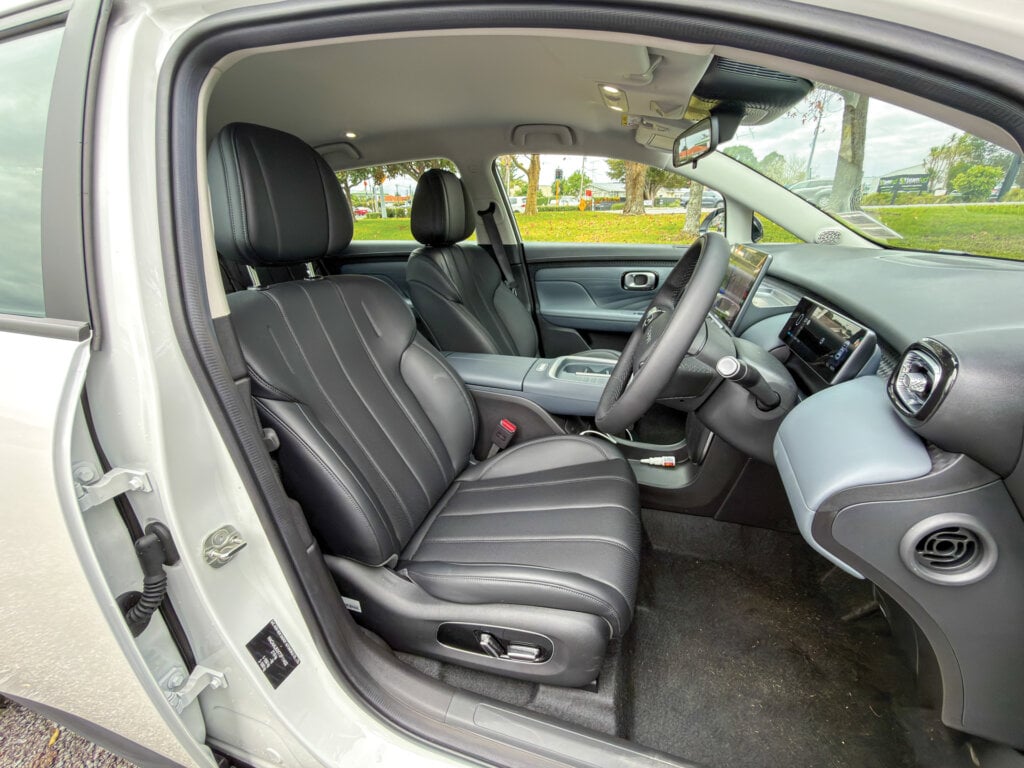
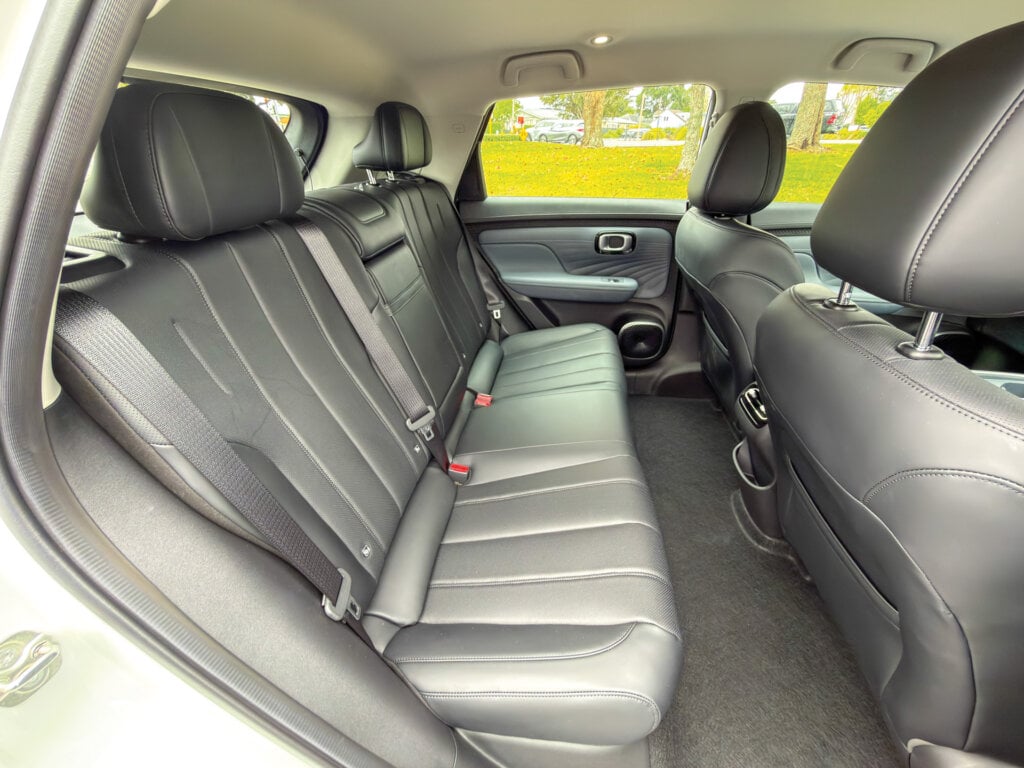
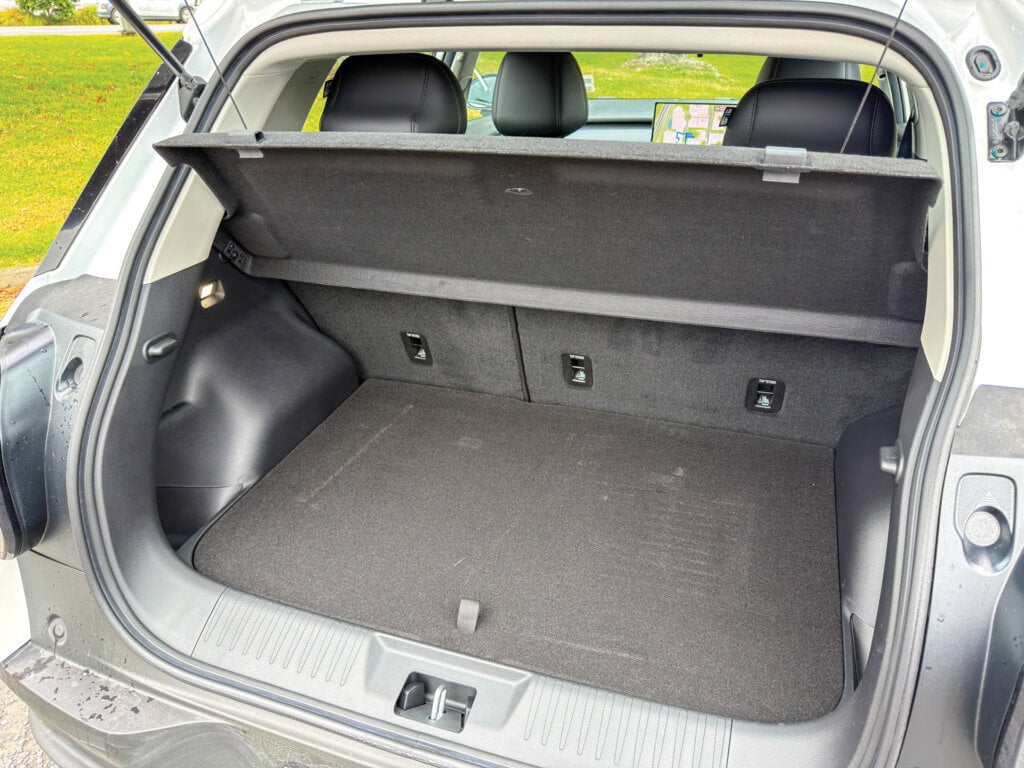
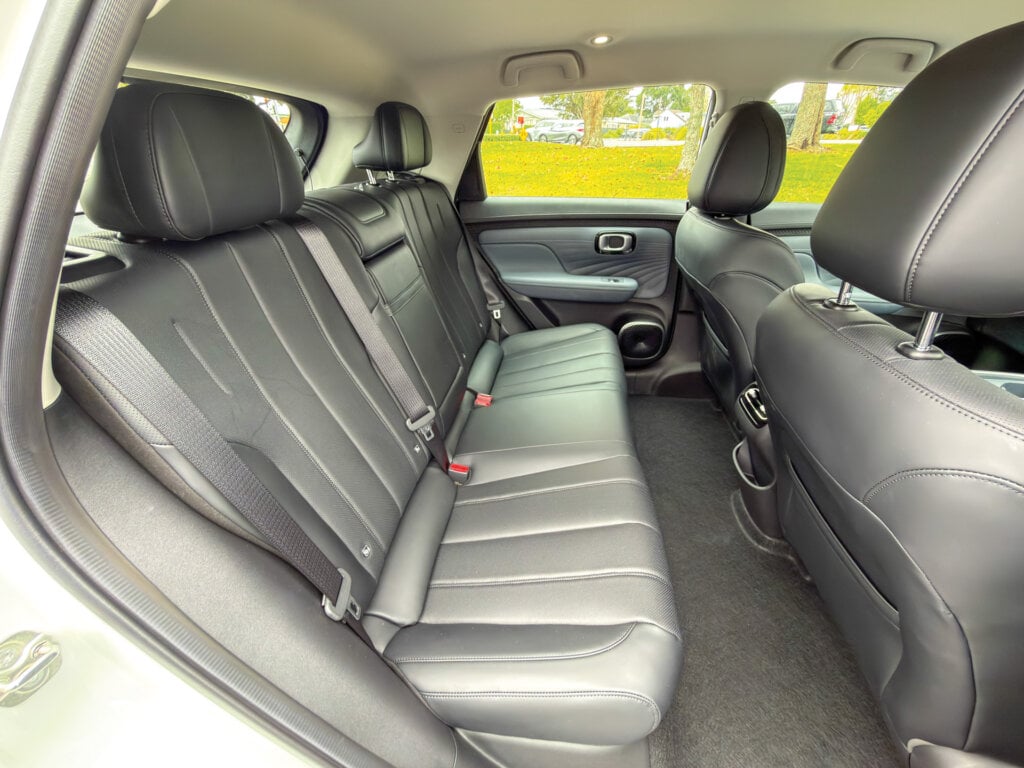
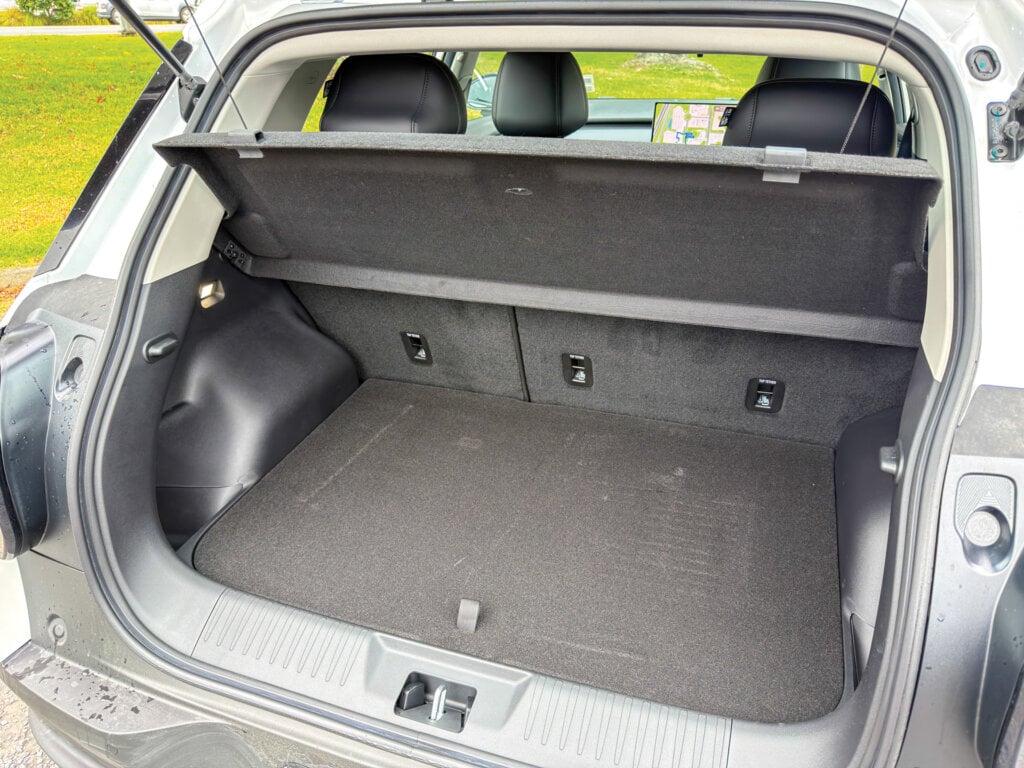
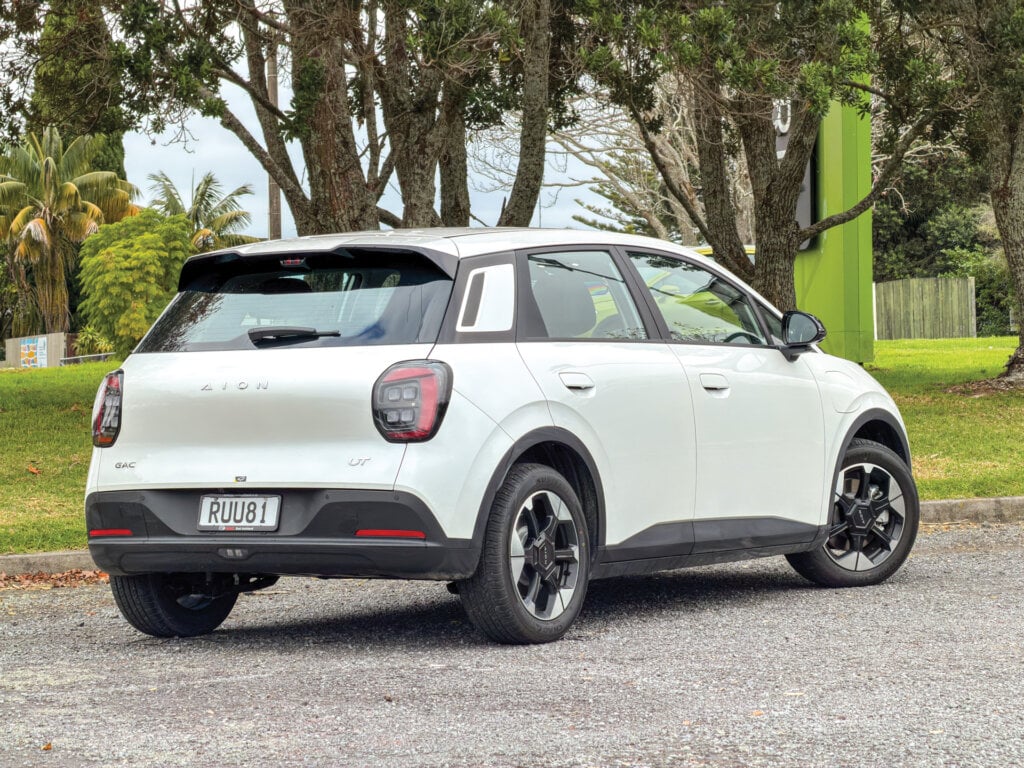
Packaging is the UT’s party trick. It is 4270mm long, about Corolla-sized, but the 2750mm wheelbase is what you would find under a mid-size SUV. The result is a rear seat with limousine legroom for the class. The floor is flat, the doors open wide, and back-seat passengers get air vents, USB charging and a fold-down armrest. The boot pays for it at 321 litres, and there is no spare wheel, just a repair kit under the floor.
Base spec is adequate rather than generous by the standards of the Chinese newcomers, though it covers what matters: a 14.6-inch touchscreen with wireless Apple CarPlay and Android Auto, an 8.8-inch driver display, LED headlights, a 360-degree camera, a heated steering wheel and heated front seats.
On the road
GAC has set this car up soft, and on New Zealand coarse chip that is the right call. The struts and torsion beam soak up patched seal and speed humps without fuss, rebound control is tidy, and road and wind noise are well suppressed at 100km/h. It is a quiet, comfortable cruiser, and that alone puts it ahead of several rivals.
Performance suits the brief. 150kW in a 1670kg hatch means brisk step-off, and around town the UT feels quicker than its 7.3 second 0-100km/h claim. The tight turning circle makes negotiating parking buildings easy. At open road speeds the motor runs out of enthusiasm, and a 100km/h overtake needs a longer gap than the spec sheet implies.
The dynamic shortcomings are cheap ones. The steering is light and vague around straight ahead even in its heavier setting, and the by-wire brake pedal is abrupt at the top of its travel. The Chaoyang tyres are the weakest link, giving up early in corners and scrabbling for traction on wet seal under anything more than gentle throttle. The chassis underneath is better than the rubber it sits on.
Regenerative braking needs a little work. In Comfort and Sport the regen is weak even on its strongest setting, and the Power Save mode that finally delivers real deceleration also softens throttle response. There are no paddles, and every adjustment sits in a touchscreen menu. It works, but the MG does this better.
The software problem
The driver assistance package is comprehensive on paper and includes reversing AEB, which is rare in this class. The calibration would benefit from a New Zealand pass, though. The overspeed chime is quick to sound when you creep past a limit, and the driver monitor occasionally objects to a glance at the map. Quietening things down means a trip through the touchscreen menus after each restart, because the settings do not persist.
None of this is a hardware fault. The adaptive cruise tracks smoothly, blind-spot monitoring works as intended, and the car supports over-the-air updates, so GAC can refine the calibration remotely. The company concedes it is still learning right-hand-drive market conditions, and an update tuned for local roads would lift the daily experience considerably.
Range and efficiency are par for the segment. GAC claims 16.4kWh/100km, which looks achievable, putting real-world range around 400km. The 87kW DC peak is the spec sheet’s soft spot. The Ora 5 charges at up to 120kW, and a 10 to 80 per cent stop in the GAC will take 30 to 40 minutes against roughly 20 for the GWM.
The price problem
In Australia the UT launched with sharp drive-away pricing that undercut most of its class. New Zealand does not get that deal. At $39,990 plus on-roads, the entry UT costs $3000 more than the GWM Ora 5 Lux, which offers similar range, faster charging and the SUV body style buyers keep asking for. It is $1000 above the MG4 Urban at $38,990, a more resolved car to drive. The Ora 5 Ultra matches the UT’s base price with a higher spec, and BYD’s Atto 2 also opens at $39,990.
The UT’s case rests on cabin space, equipment and build quality, and the launch charger offer carries real value for a household going electric for the first time. It is not a bad position. But GAC remains an unknown name here, its dealer count is still in single figures, and asking a premium over MG and GWM while the brand builds trust is optimistic. At $36,990 this car would sell itself. At $39,990 it needs a well-informed buyer.
Verdict
The Aion UT is an honest car. It does not chase a sporting brief it could never meet, and instead delivers comfort, refinement and space at a level that shames some dearer metal. The entry grade is the pick, because the extra $4000 of Lux equipment adds nothing to a package whose strengths are already standard.
What holds it back is fixable. The tyres cost a few hundred dollars to put right. The ADAS calibration and regen tuning are software, and GAC has the OTA pipeline to sort both. The price is a business decision. If the local distributor moves on even one of those three, the UT becomes easy to recommend. As it stands, it is a good car that asks slightly too much money while its rough edges remain, and Kiwi buyers have cheaper, more polished alternatives sitting in the next showroom along.
GAC Aion UT Lux
$43,990 / 16.4kWh/100km / 0g/km
0-100 km/h 7.3s
Motor output 150kW
Max torque 210Nm
Battery 60kWh
Range 430km
Drivetrain Single-speed auto / FWD
Front suspension Mac strut / swaybar
Rear suspension Torsion beam
Turning circle 11.2m (2.6 turns)
Front brakes Ventilated discs (375mm)
Rear brakes Discs
Stability systems ABS, ESP, TV
Safety AEB, ACC, BSM, LDW, RCTA, ALK, AHB
Tyre size 215/55R17
Wheelbase 2750mm
L/W/H 4270 / 1850 / 1575mm
Track f-1600mm r-1616mm
Luggage capacity 321 / 689L
Tow rating 750kg (1000kg braked)
Service intervals 12 months / 15,000km
Warranty 8yrs / 160,000 km
ANCAP rating Not yet rated
Weight (claimed) 1670kg