View all
17 more images
2026 GAC Emzoom vs Nissan Qashqai Ti-L Comparison
Words: Kyle Cassidy | Photos: Alex Schultz
Compact SUVs are popular vehicles, and you can pick some of them up for cheap. You can also spend quite a bit on others. Here we compare two similar SUVs, one costing half as much as the other. Are either worth it?
Change is afoot in the new car market here. As Japanese and Korean brands continue to push upmarket and become increasingly expensive, a gap has opened at the lower end. And it’s invited the Chinese manufacturers to fill it. It means local buyers have a wide range of choice available. Like in the competitive compact SUV sector for instance, you can spend around the $30k mark on a Chinese newcomer but if you want something from a more familiar, established brand, their new models are now asking much more than they previously did.
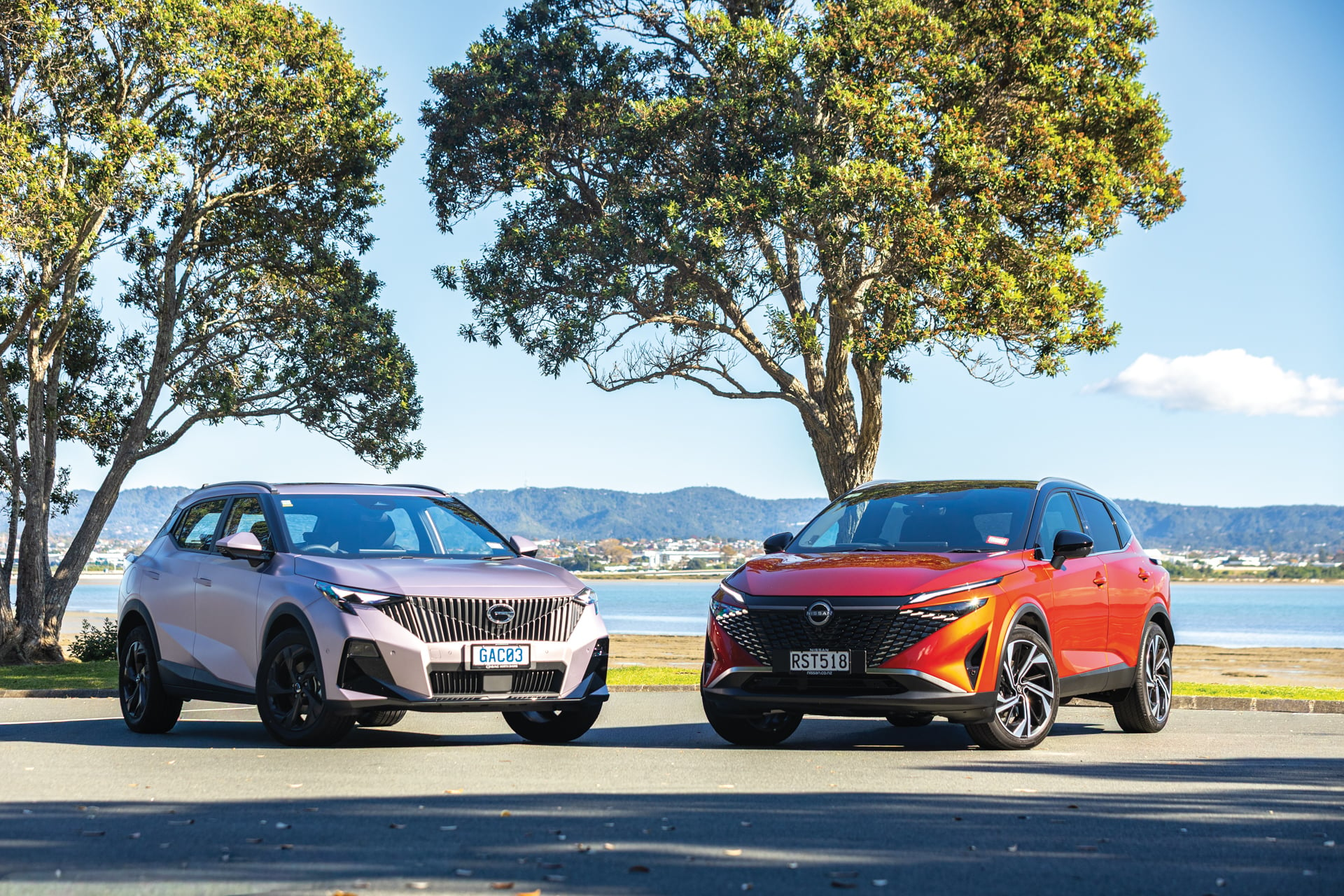
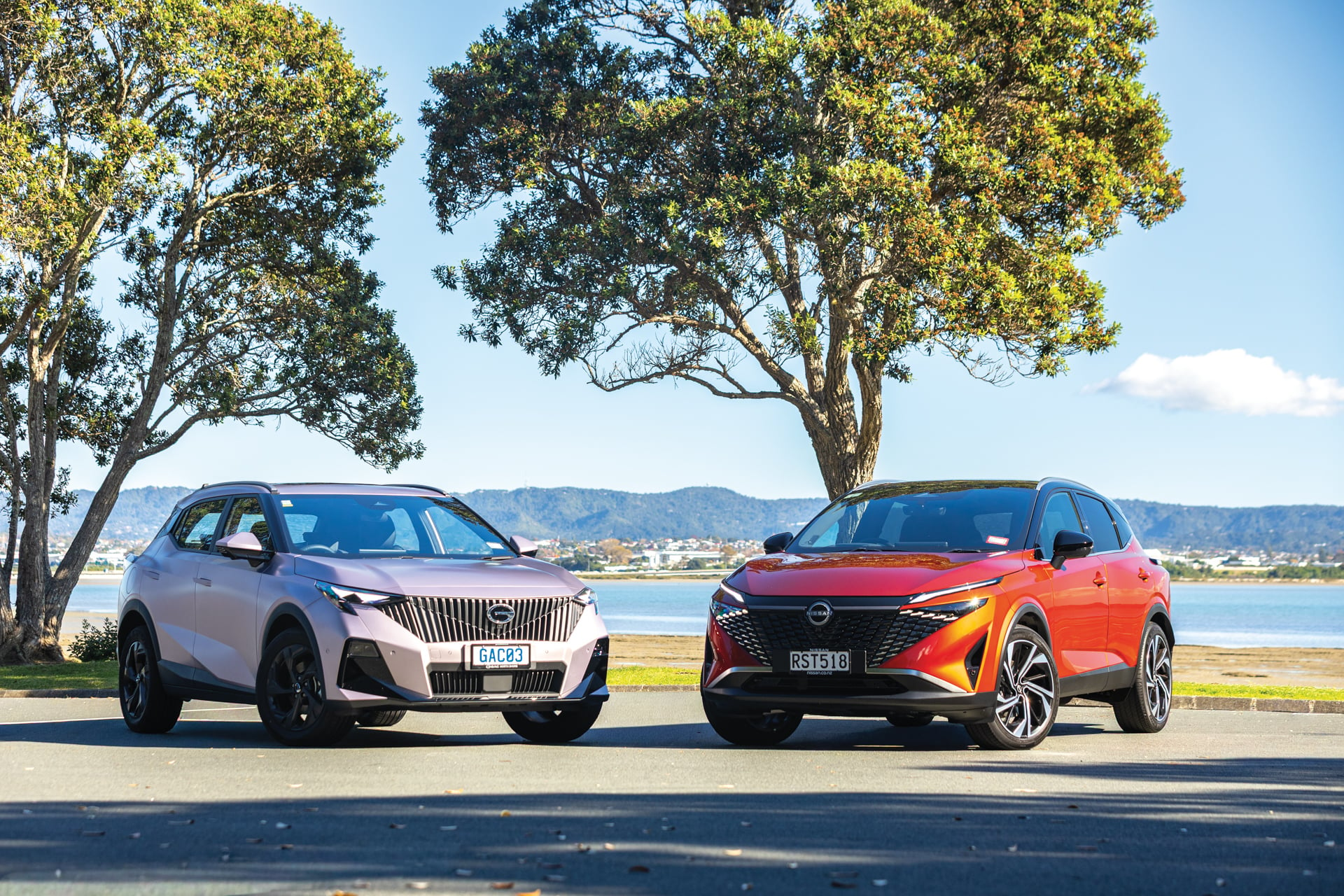
These two are similar in concept but there’s a big disparity in price. The GAC Emzoom is a $32k compact with the usually long and impressive sounding spec sheet of a Chinese offering. And then there’s the renewed Nissan Qashqai. The range now kicks off at $53,990, while this Ti-L model is $63,990. So twice the price.
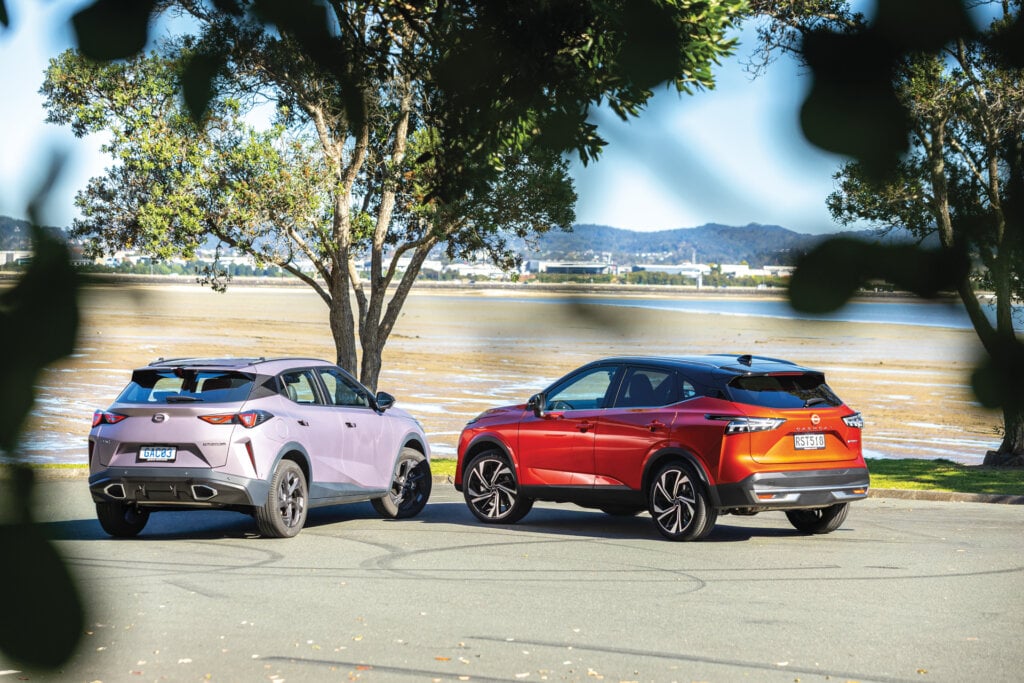
These are both compact SUVs at 4.4m long, and designed for urban life. Both have stylish exteriors, generous tech on board and enough practicality for everyday life. The GAC presents as grand value compared with the Qashqai, but there’s more to it than comparing items on each car’s spec list.
The Qashqai helped popularise the compact SUV segment back in the early 2000s, blending a hatchback-like character with an elevated ride height and associated styling. It wasn’t the first of its type, but it struck a chord globally, and every other manufacturer has been piling in ever since.
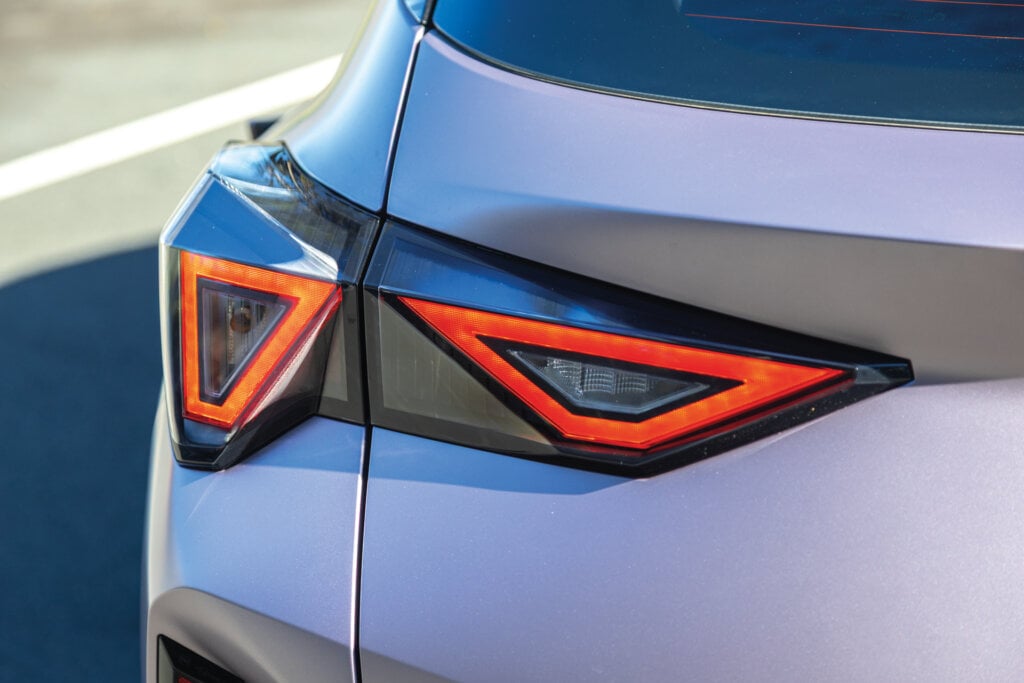
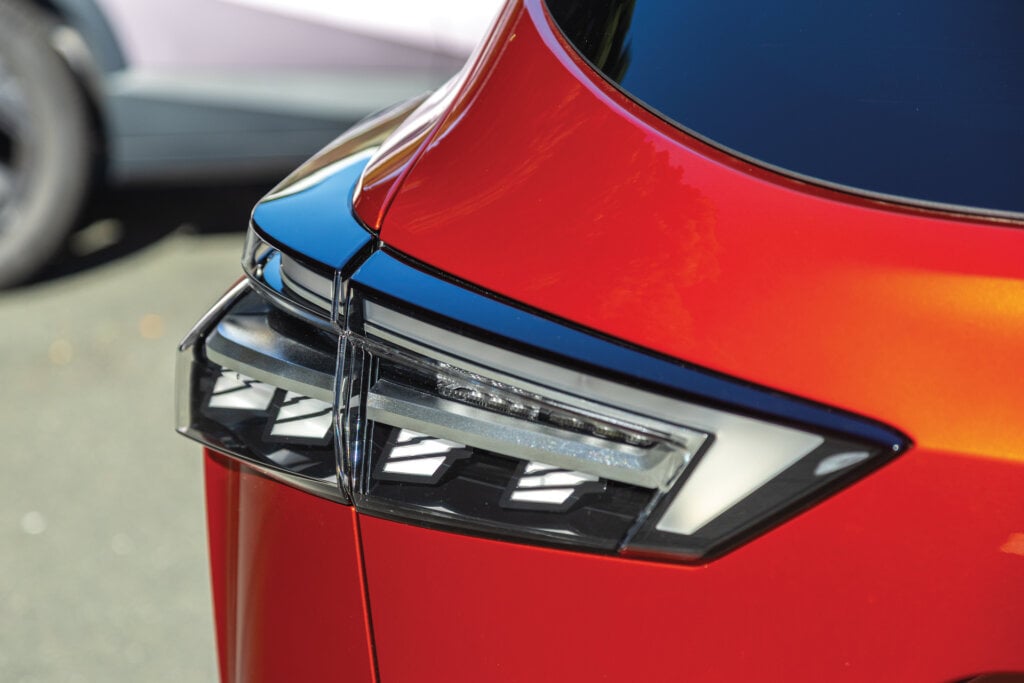
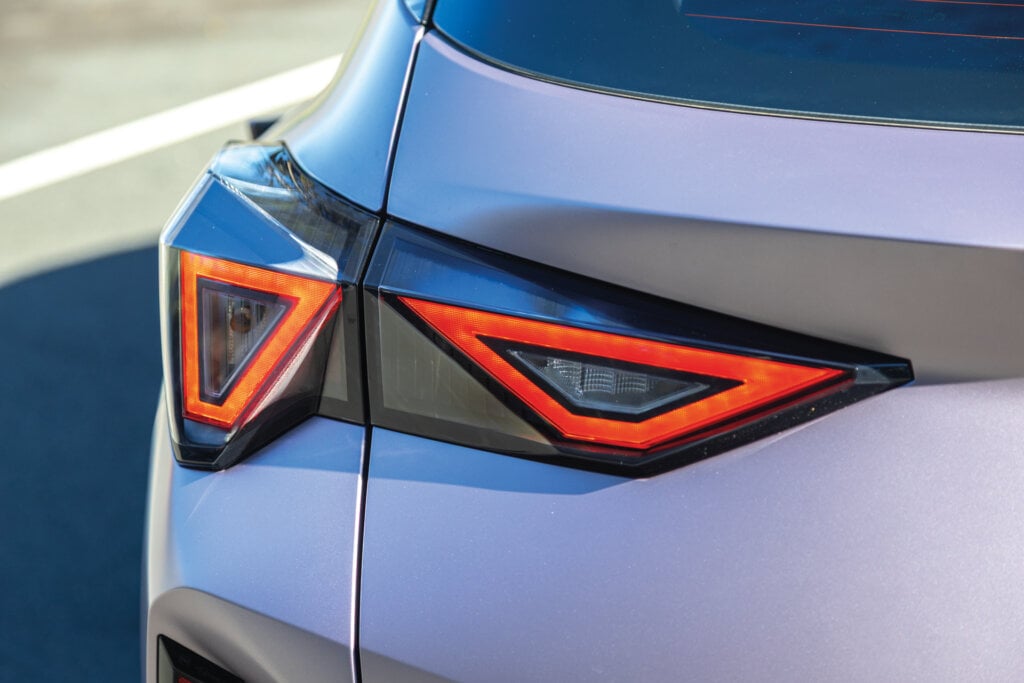
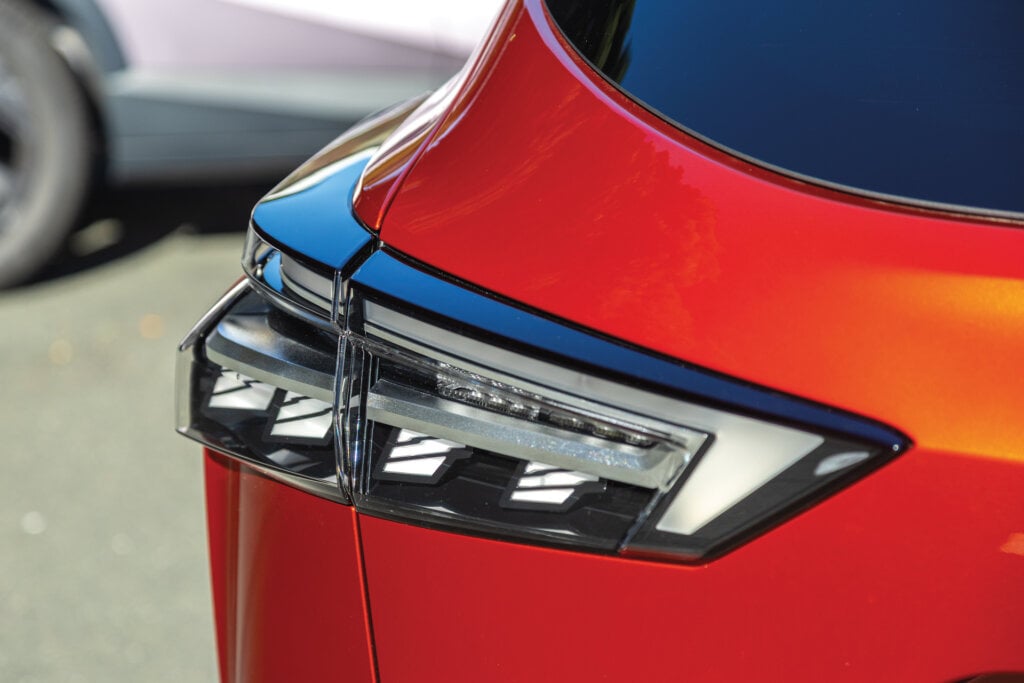
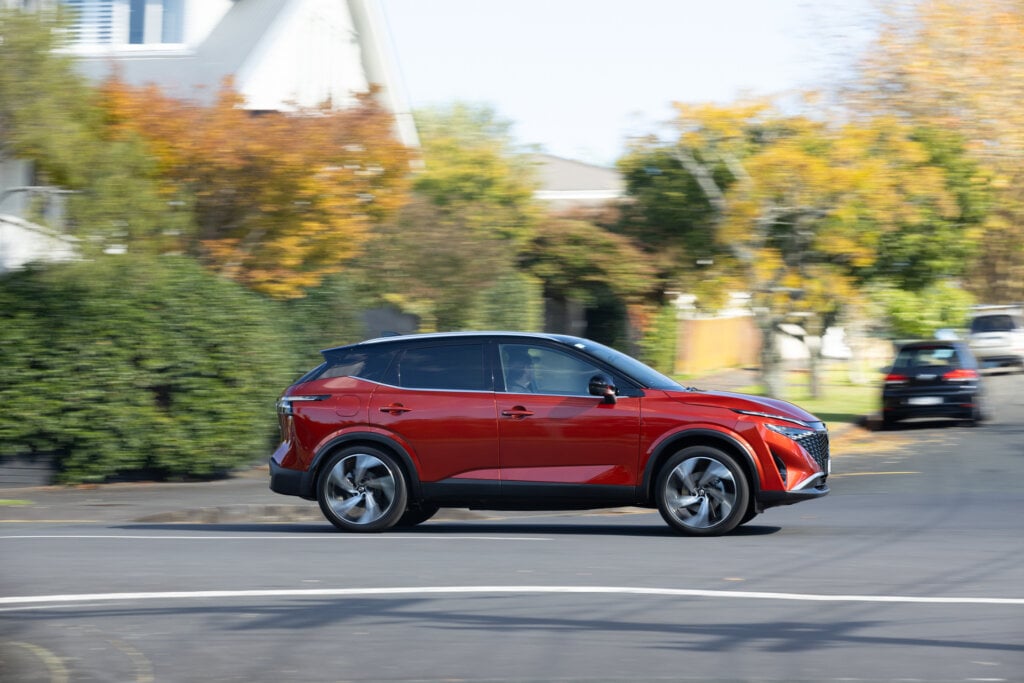
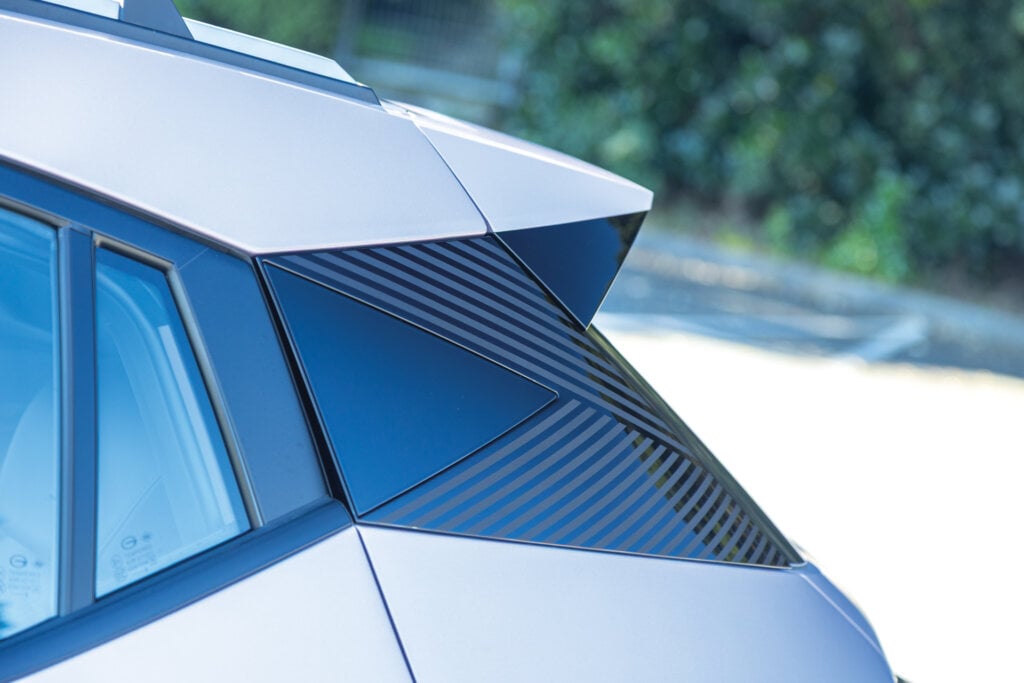
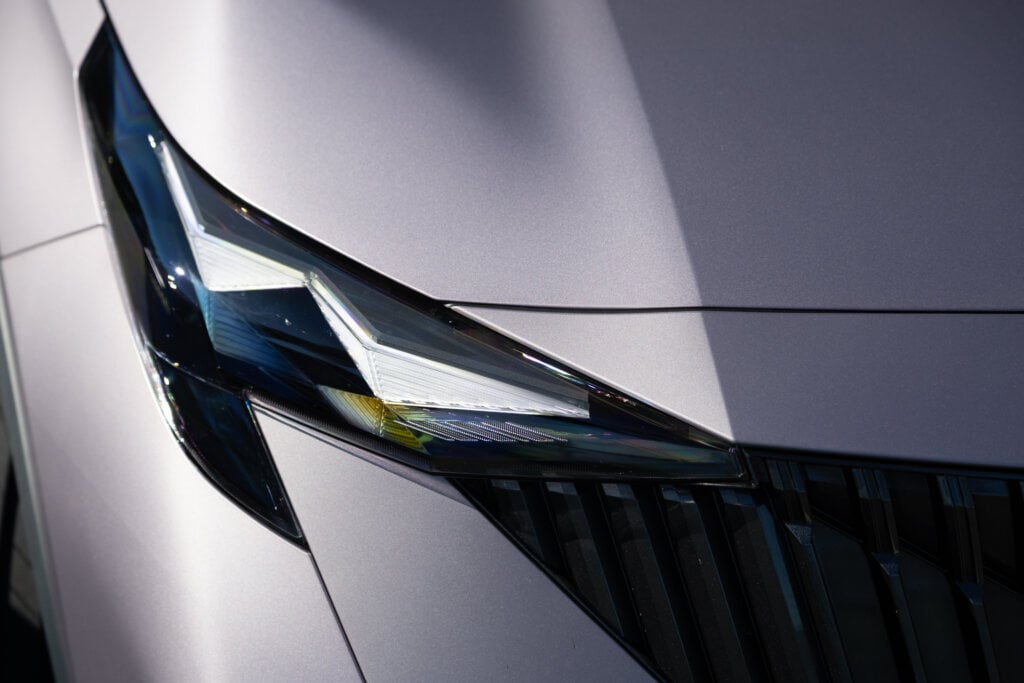
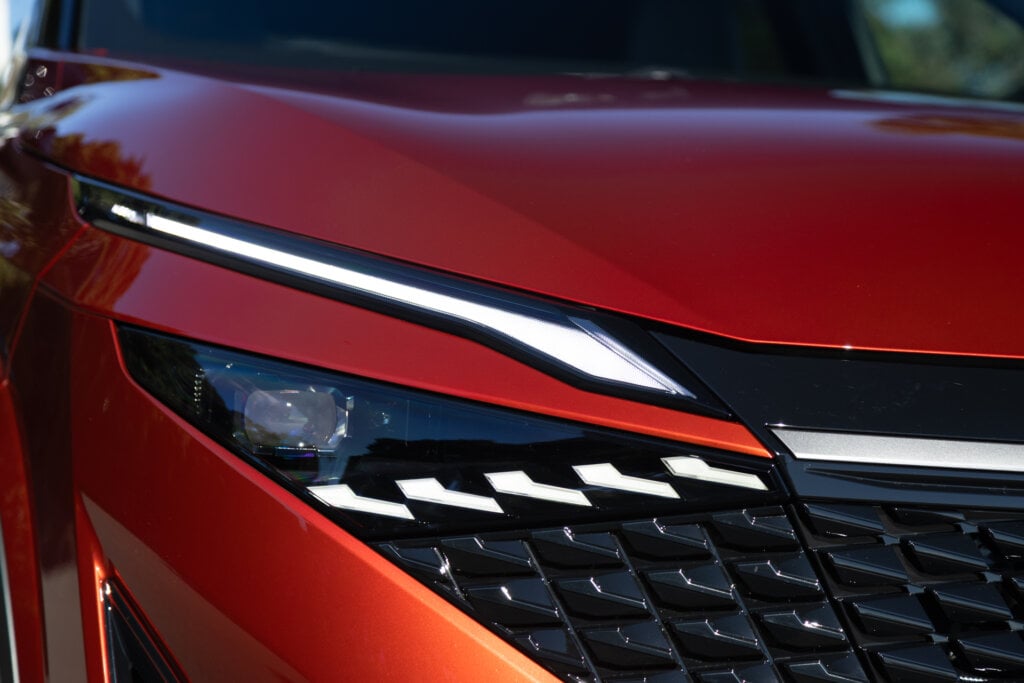
It’s clear GAC has taken a few pointers from the Qashqai for its Emzoom. Both wear oversized grilles and feature plastic body cladding around the wheelarches and lower bodywork. Both have adopted the fashionable floating roof treatment around the C-pillar. They’re remarkably similar visually. Things are a little different inside though.
Plenty of GAC for the money
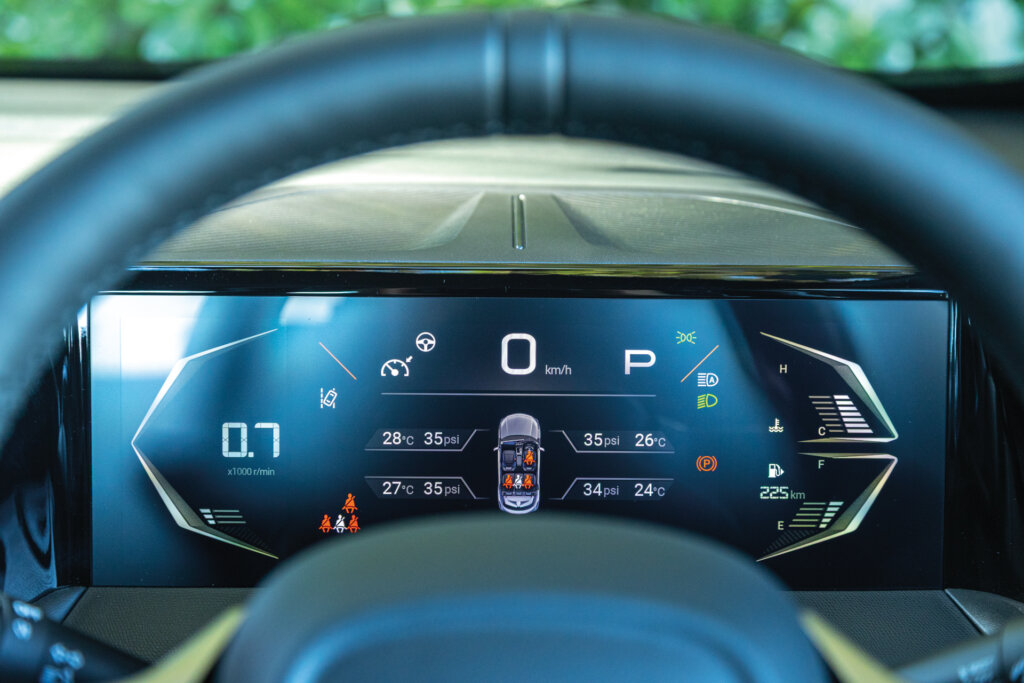
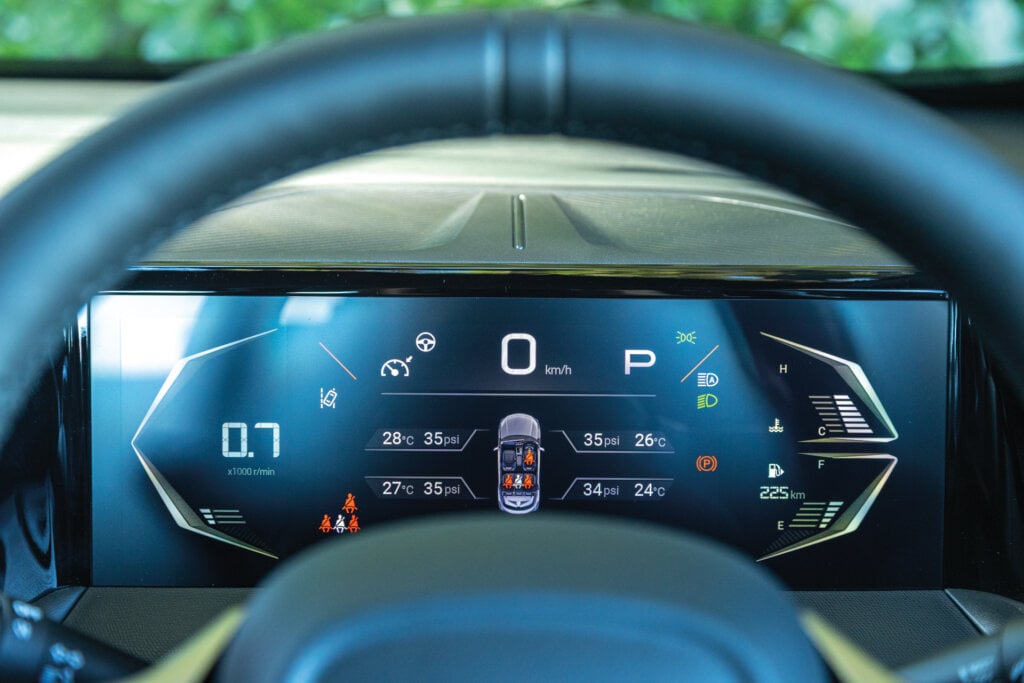
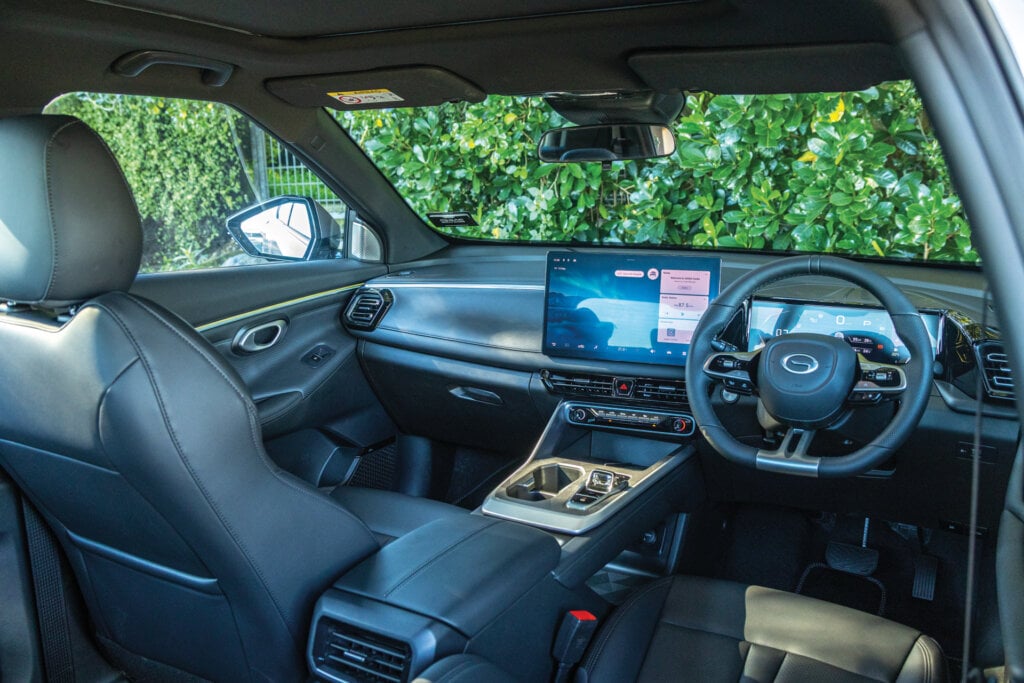
The Emzoom looks reasonably modern inside. There’s a large touchscreen, digital instrumentation, ambient lighting, wireless charging and a decent amount of storage space. There’s even an array of buttons to control the ventilation. The cabin is dominated by hard plastics and synthetic materials giving a budget-conscious feel, not helped by the distinct aroma of vinyl that lingers in the cabin.
The front seats are firm and lack lumbar adjustment, though there is enough seat and steering wheel movement to eventually find a reasonable driving position. The driver gets a seat ventilator but there’s no heating. The ambient lighting looks nice enough at first glance, but at night it reflects directly into the side-view mirror.
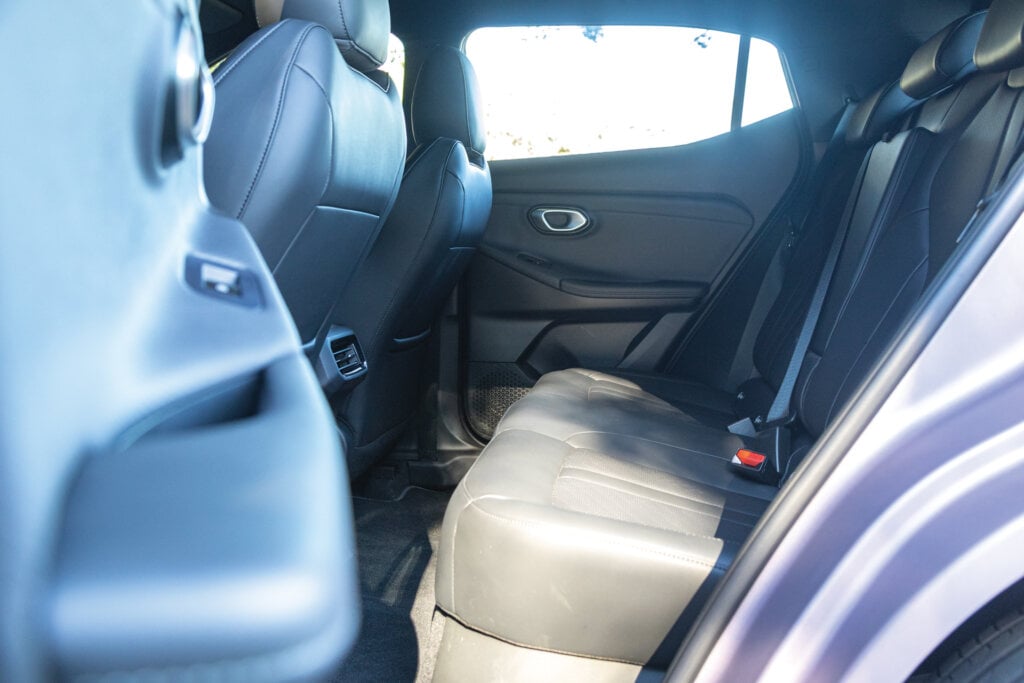
Rear-seat accommodation is actually quite impressive. There’s decent room for adults, a panoramic glass roof helps prevent things feeling claustrophobic and the flush-fitting rear door handles work surprisingly well.
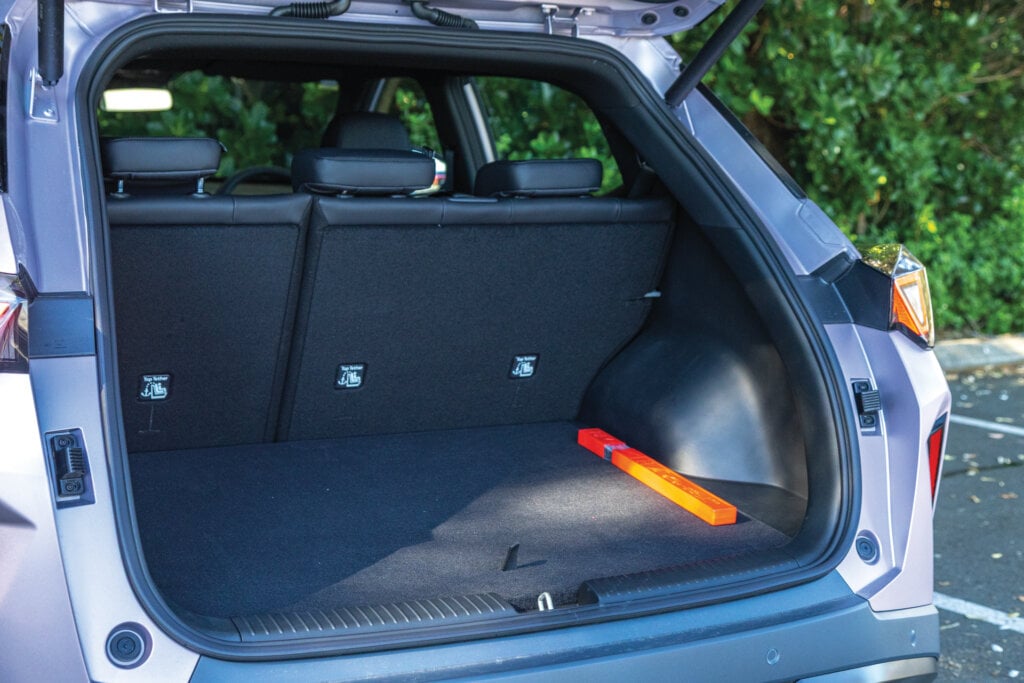
The boot is less impressive. The sloping (powered) tailgate design eats into cargo capacity, though there’s still enough room for a family grocery run and a spare wheel lives underneath the floor. The seats fold quite easily, with a 60/40 split, forming a flat load area.
Overall, it’s hard to complain too much given the asking price. The Emzoom delivers plenty of showroom appeal and a long equipment list for relatively little money.
Qashqai goes premium
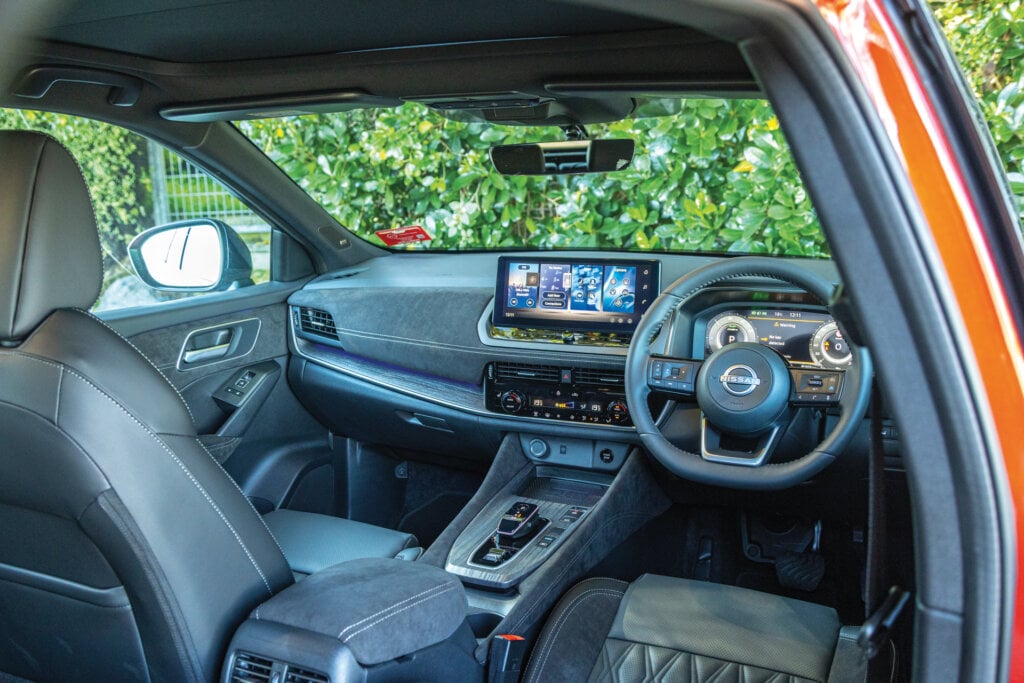
Along with a more sophisticated exterior design, the Nissan manages to impart a more immediate sense of quality everywhere you look and touch inside too. The seats are significantly more comfortable, trimmed in leather as opposed to vinyl, and just feel nicer. They are heated too, with a massager built in. Your driving position is easier to perfect too, with more range of adjustments, including lumbar support. All the materials used feel richer, including the liberal application of suede-like trim reminiscent of premium German brands.
There are a few more buttons to help execute tasks more efficiently, while the touchscreen is more for infotainment duties alone. Both cars offer wireless phone connectivity, each pairing and staying connected without issue.
Nissan adds a few extras to its top Qashqai, like a heated wheel and a head-up display. Though sat nav is not included. While the camera resolution isn’t quite as sharp as the GAC’s, it’s just as useful, particularly its wide angle front view.
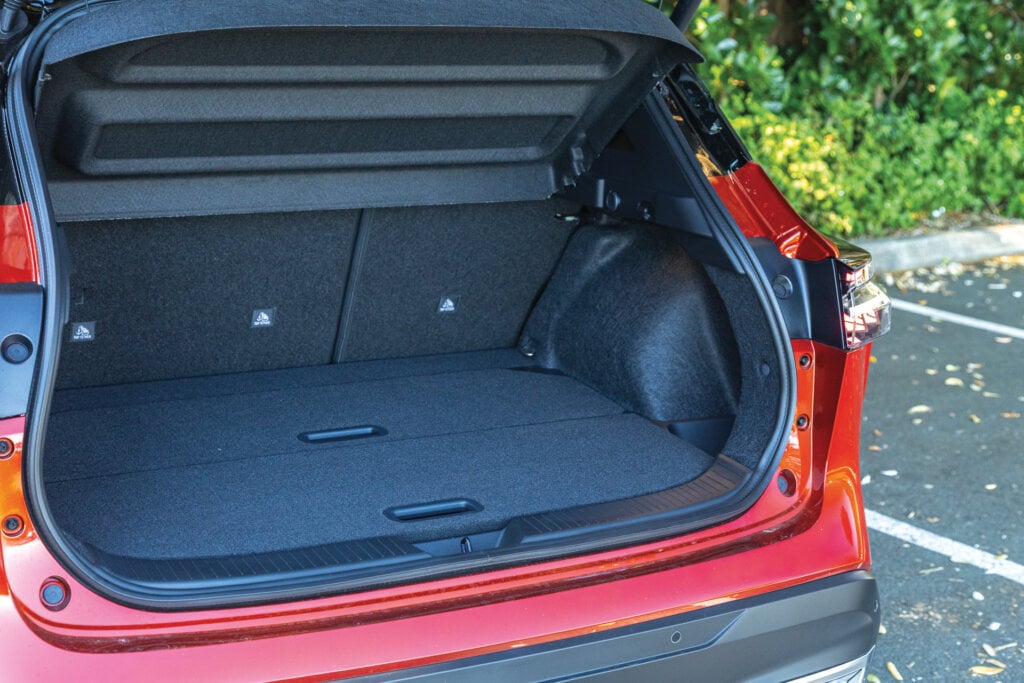
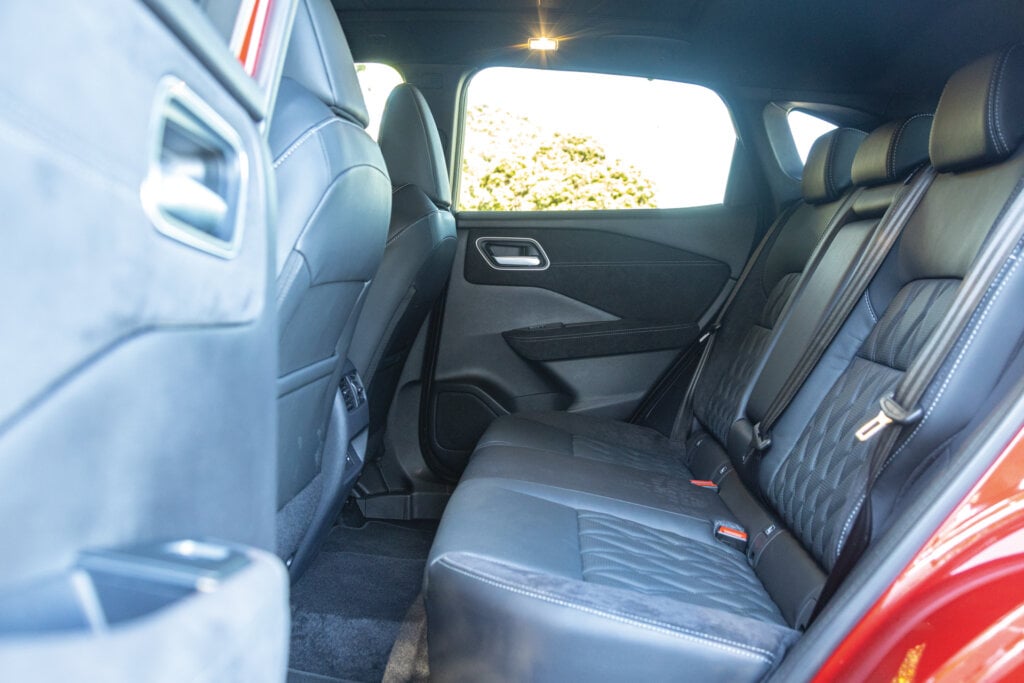
The Qashqai isn’t so flush with rear seat space, where the GAC wins for leg room. The Nissan feels noticeably tighter in the back so families with growing teenagers may actually prefer the Chinese alternative. The Nissan’s boot is marginally larger, however, with a little more length and width available for luggage. There’s some extra space underneath, but no spare wheel, while it too has easily folded rear seats.
Differences in the drive
The GAC Emzoom is conventionally powered, using a 125kW/270Nm 1.5-litre turbopetrol paired with a seven-speed dual-clutch. This sounds promising, but it may be one of the least refined powertrain combinations we’ve experienced recently. The gearbox is genuinely frustrating. Remember learning to drive a manual and all that excessive clutch slippage? That’s essentially the Emzoom experience. The transmission struggles to engage smoothly, hesitates when pulling away and often feels confused about which gear it should select. You learn to exercise patience at roundabouts. Gaps that initially appear safe quickly disappear while the transmission dithers. It’s not turbo lag causing the pause, it’s gearbox indecision. Even after the warm-up period, shifts remain inconsistent. We thought Sport mode might help, but it didn’t. Reverse engagement can be slow and so parking manoeuvres can become awkward.
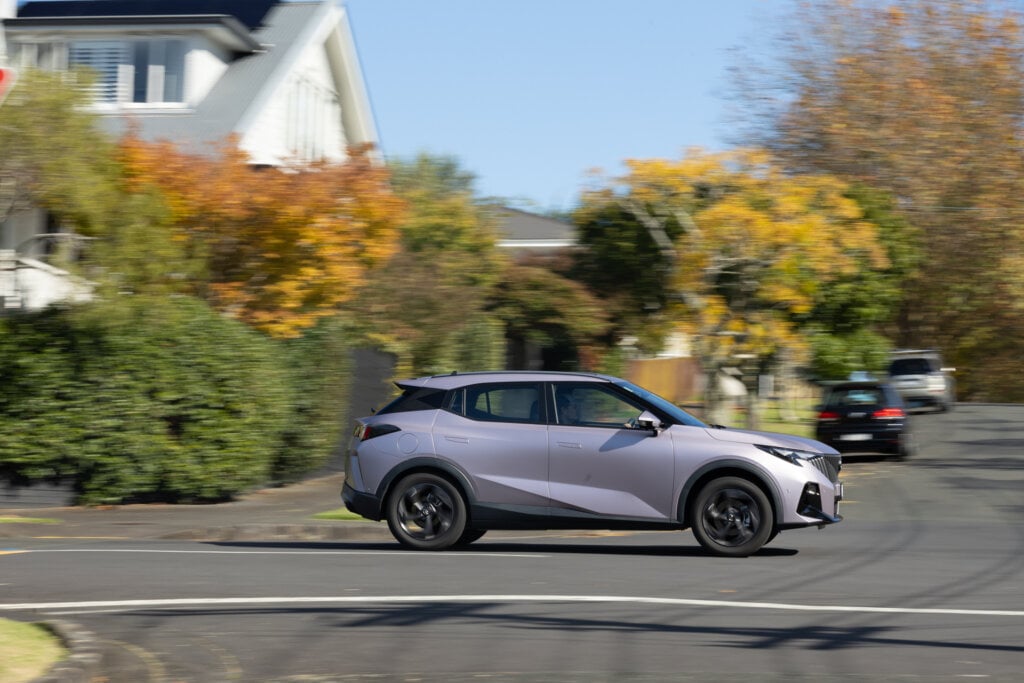
The engine itself isn’t terrible. Once everything is finally connected and moving, there’s respectable mid-range performance and enough grunt for urban duties.
The high-set dashboard, chunky mirrors and thick A-pillars make judging the vehicle’s extremities surprisingly difficult. Parking sensors and cameras help, but there’s no escaping the fact that outward visibility could be significantly better. The side-view camera system that activates when indicating is genuinely useful though, particularly in urban traffic where cyclists and scooters seem to appear from nowhere.
GAC states the Emzoom returns 6.6L/100km on the combined cycle, while around town running sees the usage climb into the nines. With some motorway mileage, the figure moved back towards the high sevens.
The ride tends towards firm, but is free of unwanted squish. Larger bumps are transmitted through the cabin, particularly at the rear.
The steering feel and assistance is okay around town, though is too light at highway speeds. Out there, the engine gets noisy above 3000rpm, and doesn’t rev with much vigour. Not helping is that transmission, which just isn’t interested in helping out. So it’s not the quickest machine in the segment.
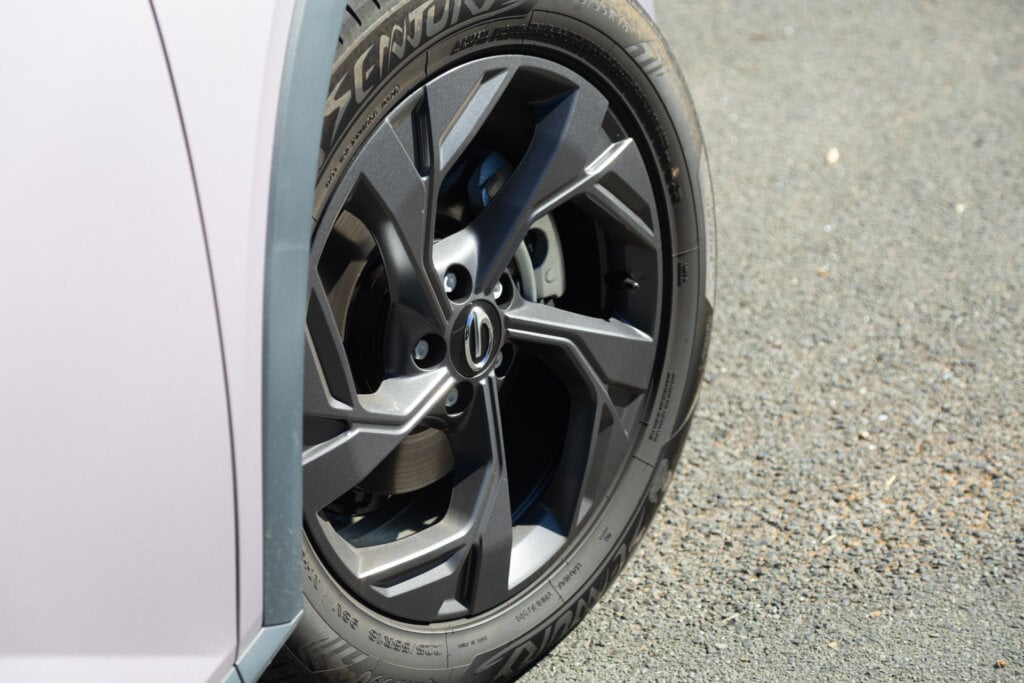
While the roll control is sorted, the grip offered by the rubber is so so, particularly on damp surfaces. We hit a few wet patches out on our drive, and the grip seemed to disappear surprisingly quickly.
This is fitted with intelligent cruise control, which performs well as long as there are well defined lane markings. There’s the odd beep from the lane departure warning, but there’s no steering intervention, which is good. There’s no driver monitor or speed sign recognition either, so the bongs are therefore minimal.
Polished performance
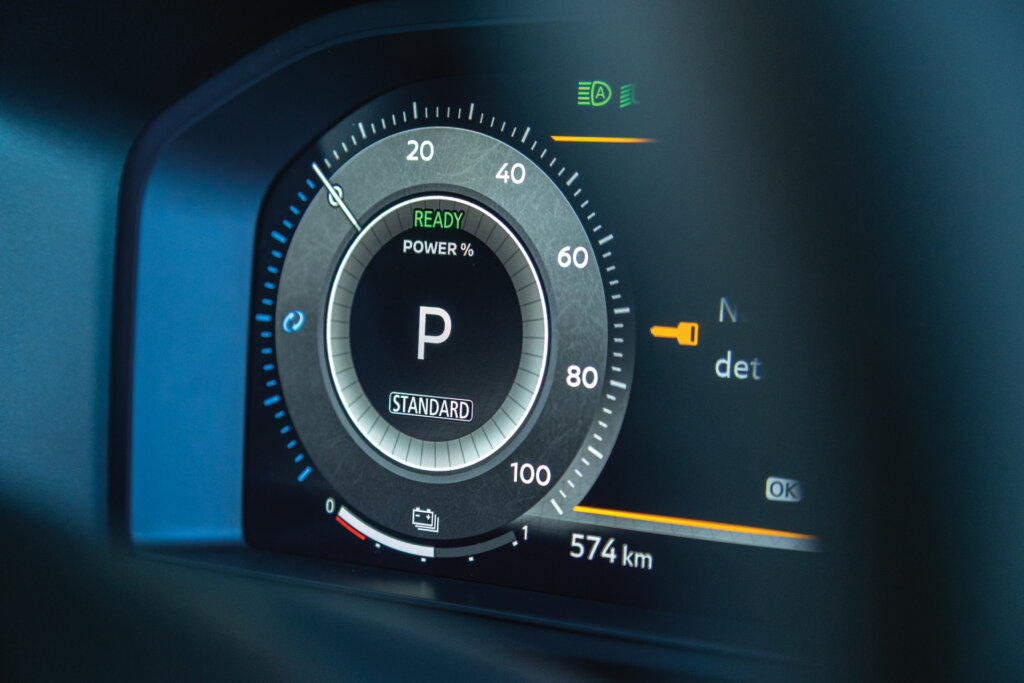
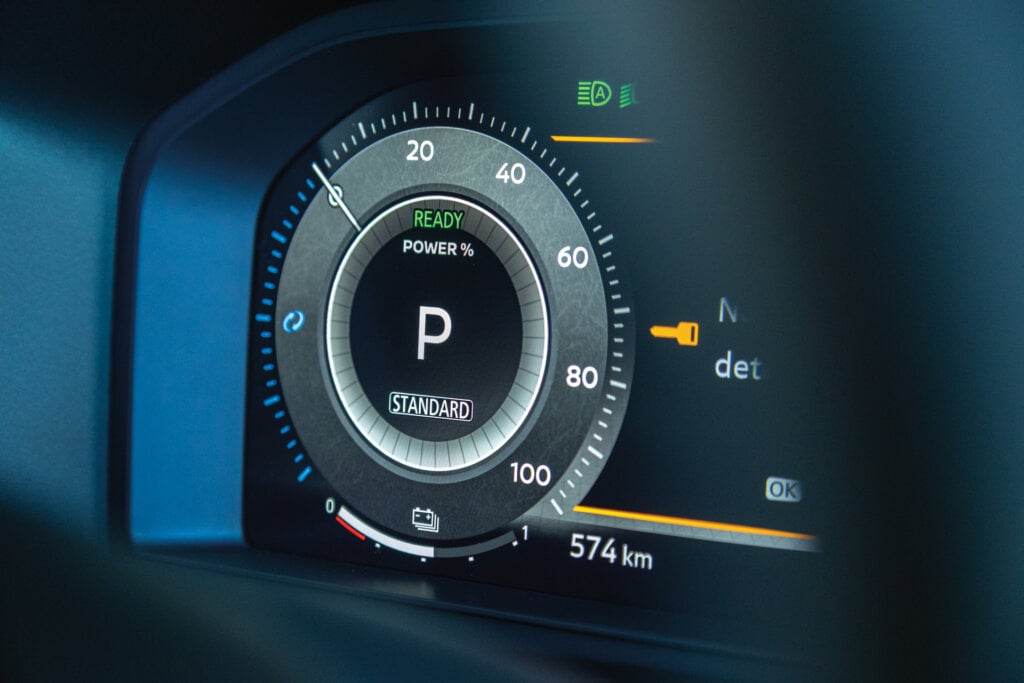
The latest update for the Qashqai focuses on the powertrain, the 2026 model bringing the new e-Power hybrid system. The re-designed system brings a 23 per cent improvement in consumption (down to 4.1L/100km) with enhanced refinement and added performance. It’s a more compact, efficient design, with the major components (electric motor, generator, inverter, increaser and reducer) now housed in one unit. The e-Power system uses a petrol engine to drive the generator (via the increaser) to make power for the battery. The electric motor uses this energy to drive the front axle (via the reduction gear or reducer). The result is an EV-like driving experience without the need to charge.
Power delivery is seamless, the 311Nm of torque ever present and there’s no transmission delay. Around town it’s smooth, responsive and remarkably refined, especially compared with the Emzoom. It’s economical too, registering 4.9L/100km for us over the week.
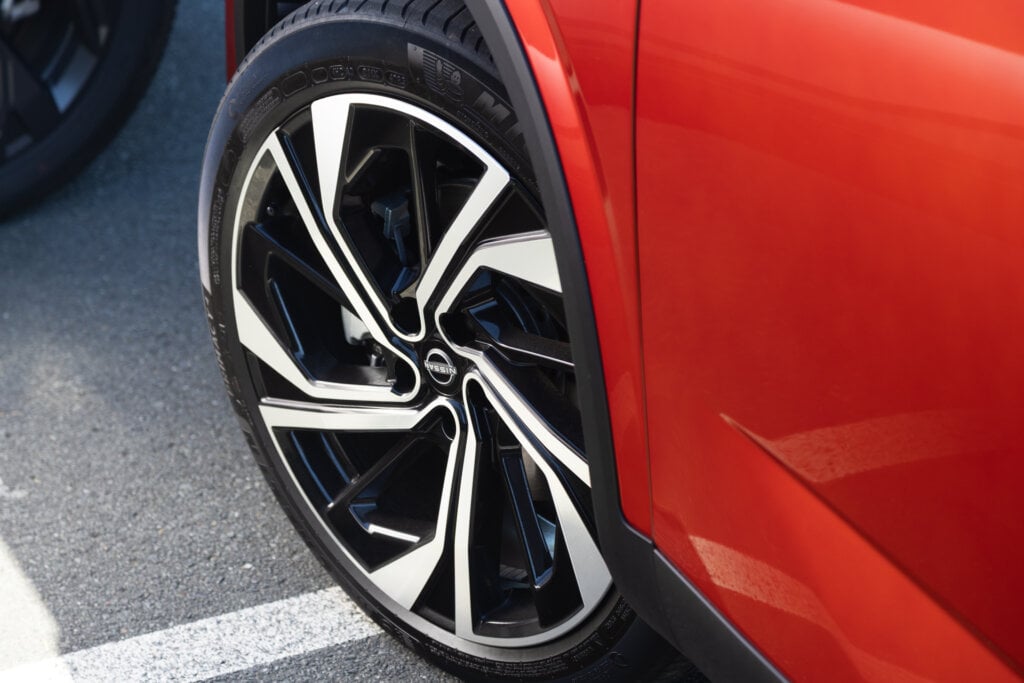
Ride quality is also noticeably superior. The Qashqai picks up the odd bump on its big wheels, but it manages to absorb shocks with greater sophistication than the GAC. The steering is well weighted at all speeds too, visibility is sorted and the brakes work without fault. There’s also the e-Pedal for enhanced brake regen when you’re off the gas.
On the open road, there’s a little tyre noise and a few of sharper impacts make their way into the cabin. But generally it’s a relaxed, comfortable long-distance cruiser. When overtaking opportunities arise, there’s enough performance in reserve to get them done confidently.
The chassis is a handy operator too. Push it through the corners and the stability control quietly tidies up any excess enthusiasm without feeling intrusive. Call Qashqai predictable, secure and just easy to drive.
The various driver assistance systems in Nissan’s Intelligent Mobility suite are well integrated. Some, like the speed sign recognition, occasionally get confused, but overall the technology is on the less intrusive side.
Are either worth it?
The Emzoom has some appeal. For $32k you get a stylish SUV with plenty of equipment, generous rear-seat space and a decent ownership proposition on paper, including a five-year warranty. But the powertrain and drive experience mean it’s not a vehicle we’d recommend considering.
The Nissan Qashqai e-Power costs significantly more, twice as much in Ti-L spec. But nearly every aspect of it is superior, and vastly so when talking powertrain and dynamics. However, whether it’s worth the $64k ask is another thing altogether. That’s seriously pricey for a mainstream compact SUV.
GAC Emzoom
$31,990 / 6.6L/100km / 153g/km
0-100 km/h 8.0s
Ambient cabin noise 71.7dB@100km/h
Engine 1497cc / IL4 / T / DI
Max power 125kW@5500rpm
Max torque 270Nm@1400-4500rpm
Drivetrain 7-speed twin-clutch / FWD
Front suspension Mac strut / swaybar
Rear suspension Torsion beam
Turning circle 11.2m (2.5 turns)
Front brakes Ventilated discs
Rear brakes Discs
Stability systems ABS, ESP, TV
Safety AEB, ACC, LDW, AHB
Tyre size f/r-225/55R18
Wheelbase 2650mm
L/W/H 4410 / 1850 / 1600mm
Track f-1580mm r-1585mm
Fuel capacity 47L
Luggage capacity 341-1272
Tow rating Not rated to tow
Service intervals 12 months / 15,000km
Warranty 5yrs / 150,000km
ANCAP rating Not yet rated
Weight (claimed) 1415kg
Nissan Qashqai Ti-L
$62,990 / 4.1L/100km / 93g/km
0-100 km/h 7.6s
Ambient cabin noise 71.0dB@100km/h
Engine 1498cc / IL3 / DI
Hybrid System Output 140kW / 311Nm
Drivetrain Single-speed auto / FWD
Front suspension Mac strut / swaybar
Rear suspension Multilink / swaybar
Turning circle 11.1m (2.5 turns)
Front brakes Ventilated discs
Rear brakes Discs
Stability systems ABS, ESP, TV
Safety AEB, ACC, BSM, LDW, RCTA, ALK, AHB
Tyre size f/r-235/45R20
Wheelbase 2665mm
L/W/H 4425 / 1835 / 1625mm
Track f-1590mm r-1596mm
Fuel capacity 55L
Luggage capacity 452-1376L
Tow rating 750kg
Service intervals 12 months / 15,000km
Warranty 10yrs / 300,000km
ANCAP rating ★★★★☆ (2025)
Weight (claimed) 1701kg