View all
2 more images
2026 Jaecoo J5 EV Review
Words: Richard Edwards | Photos: Alex Schultz
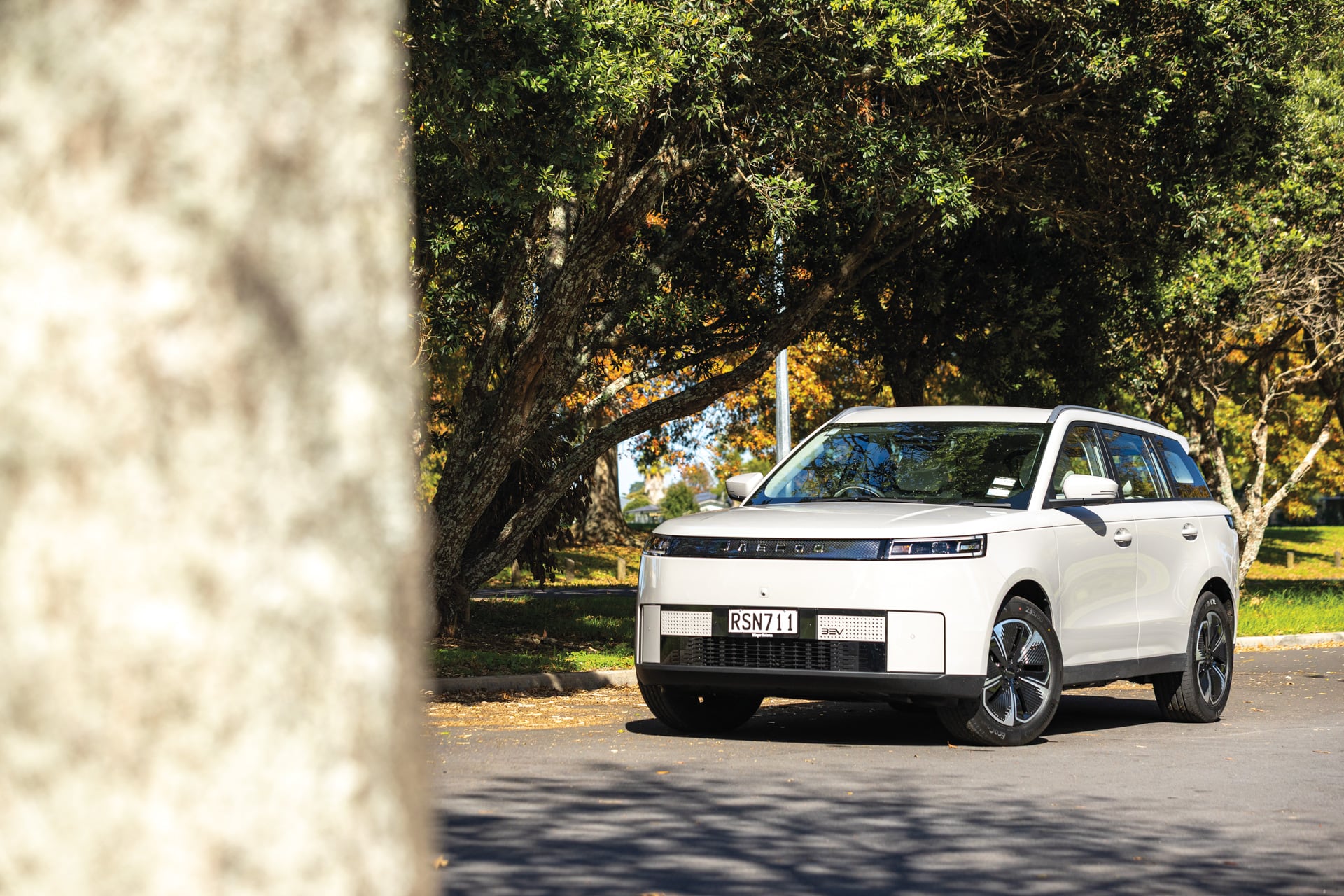
They say that in Chinese culture, imitation is flattery. And you might see hints of a certain luxury SUV brand in the styling of the Jaecoo J5. But unlike that brand, this packs genuine value.
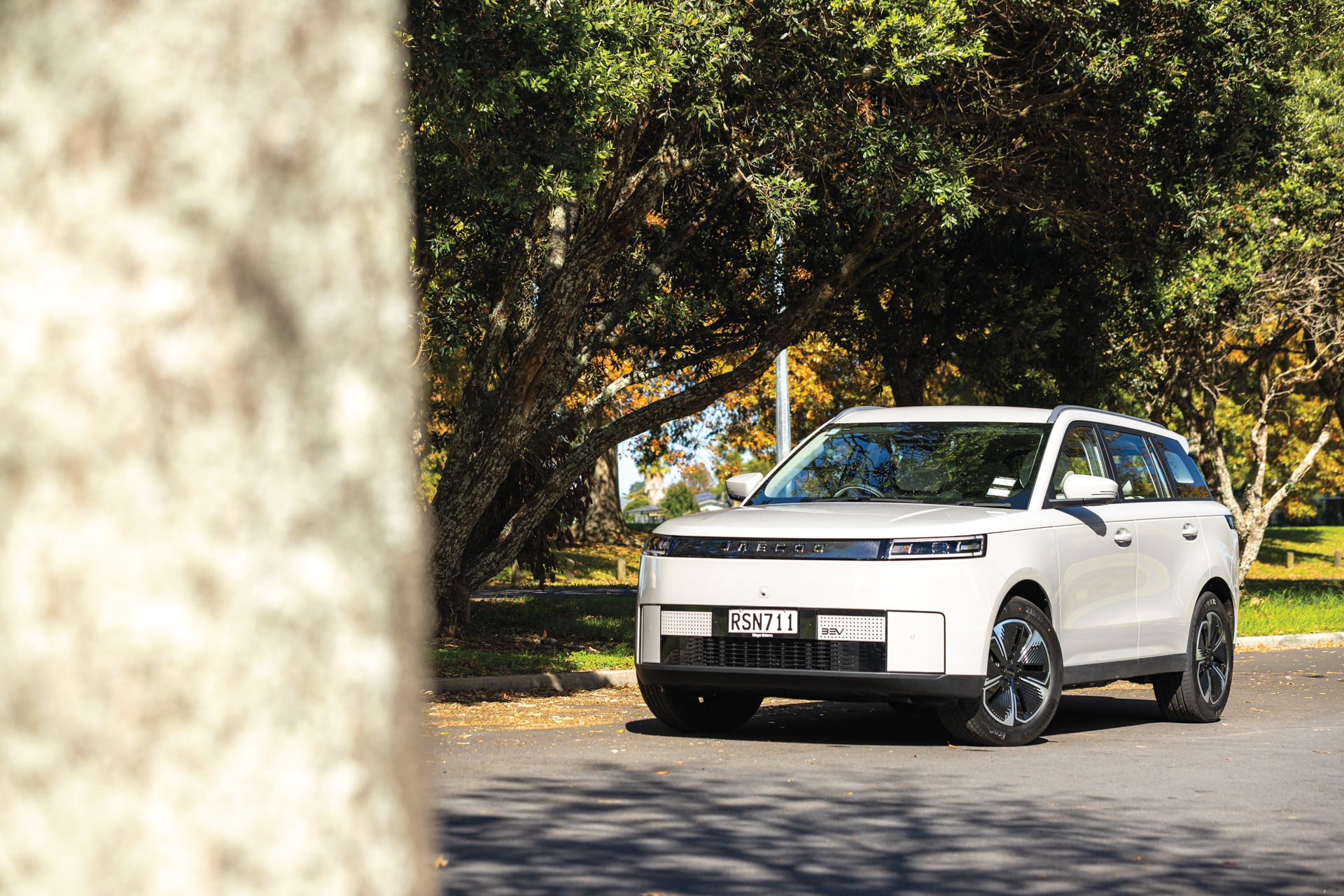
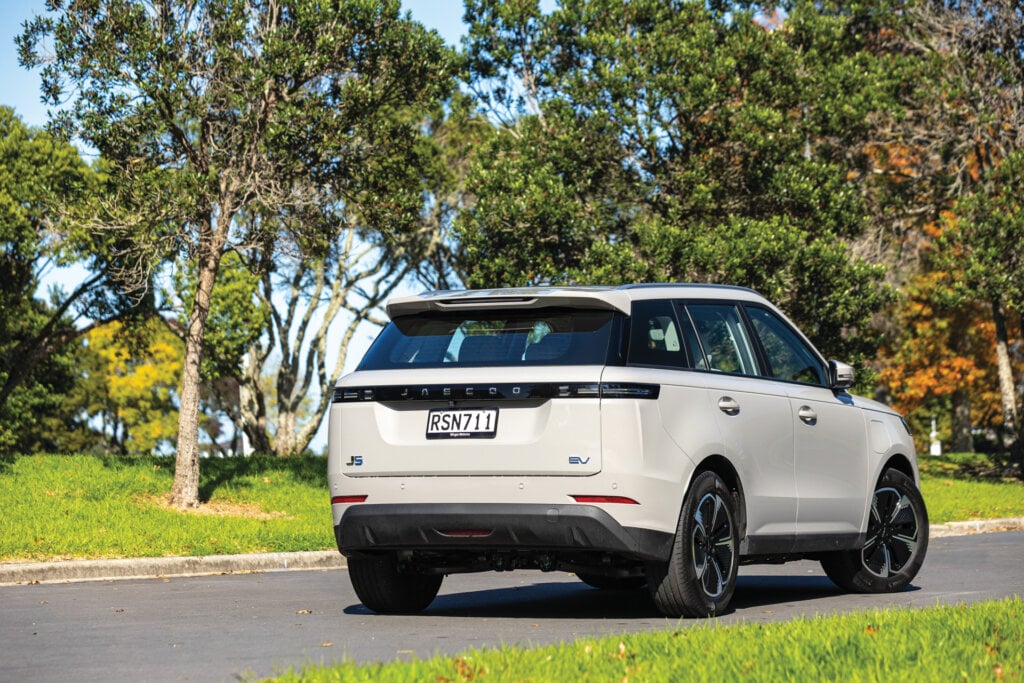
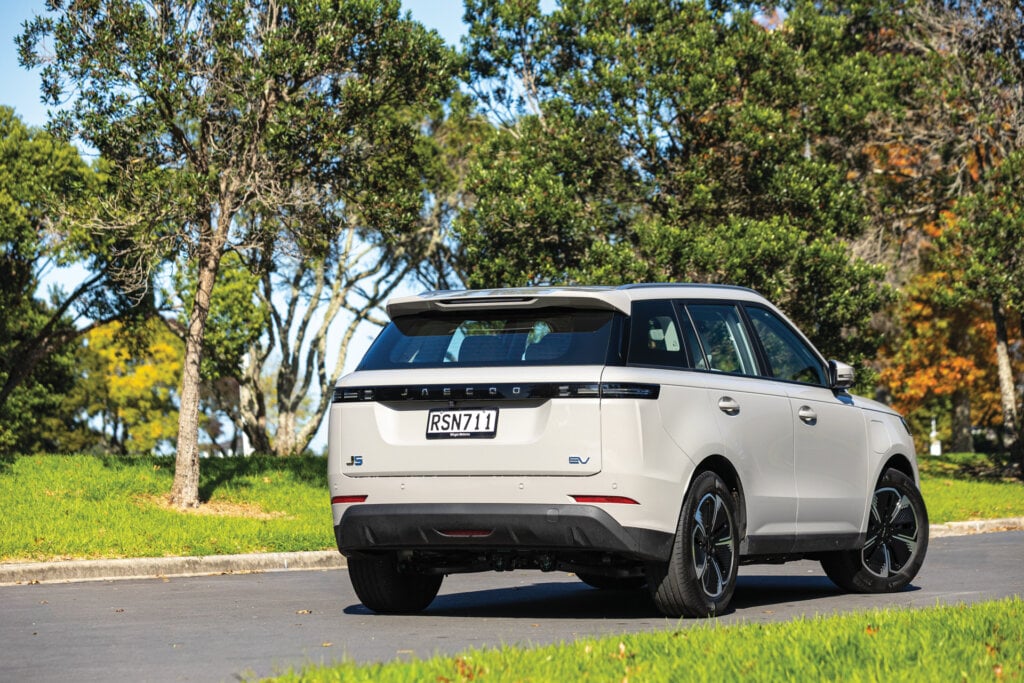
Jaecoo may want you to think of Range Rover when you look at its new J5. And from the back, with the floating roof and the slim rear lights, you might. But the more interesting thing about Chery’s sub-brand isn’t what it looks like, it’s what it costs.
At $42,990, the Jaecoo J5 BEV sits between the BYD Atto 2, the MG S5, and the GWM Ora 5. It’s a single, highly-specced variant. There is no base model, no penalty pack, no “from” price that turns into something else once you’ve ticked the boxes. What you see on the window sticker is what you drive away in. That alone is interesting. What you actually get for the money is more interesting still.
A baby Range Rover for the price of a Corolla Cross
The styling is the obvious conversation starter. The slim full-width tail lights, the upright C-pillar with its subtle floating-roof effect, the chunky proportions. It’s a look Land Rover would charge you a small mortgage for, and Jaecoo is selling it for less than half the price of the cheapest Evoque.
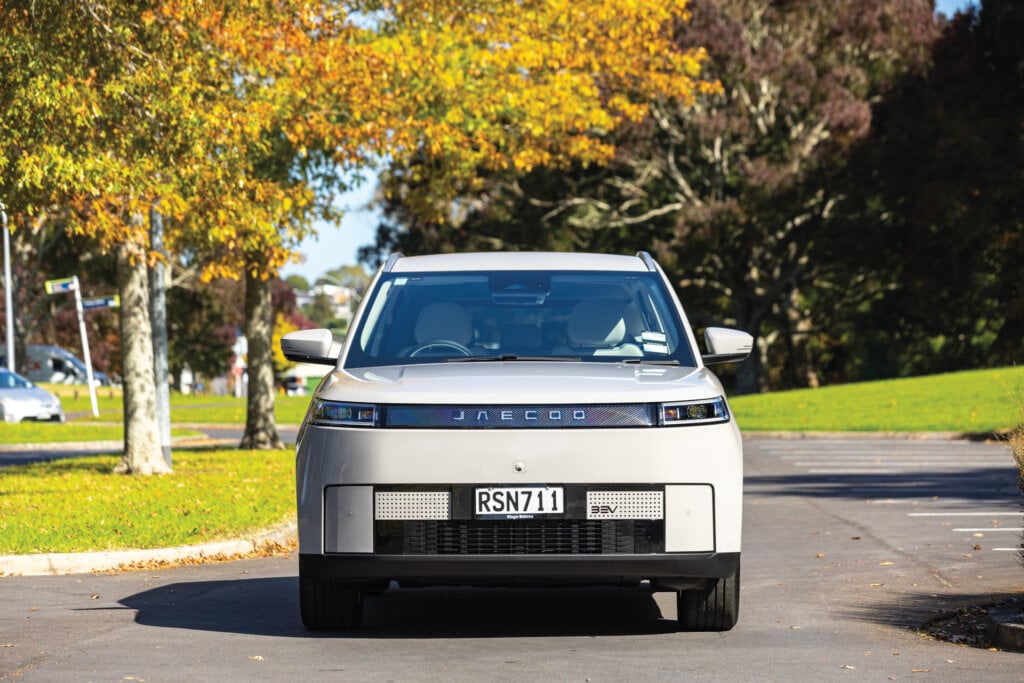
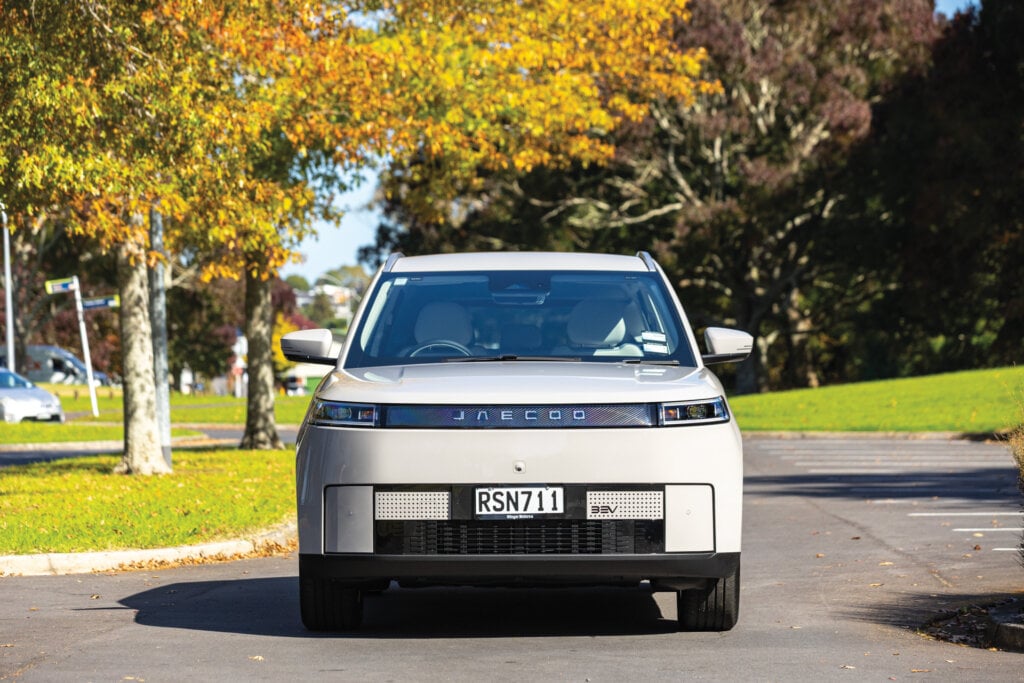
The front is more its own thing, with a closed-off panel where the grille would normally sit and a slim light bar across the nose. It’s clean, modern, and reads as expensive in the metal. There’s a useful chunk of ground clearance, big 18-inch alloys wrapped in Continental EcoContact 7 rubber, and a stance that gives it more presence than its 4380mm length suggests.
It’s not perfect. The relationship between the front and the rear isn’t always cohesive, and the closed-off “grille” panel will divide opinion. But for a car at this price point, the J5 looks like genuine money.
Haves and have-nots
Inside is where the value case really lands, but it’s also a tale of two cabins. The front feels like a bigger car. The back doesn’t.
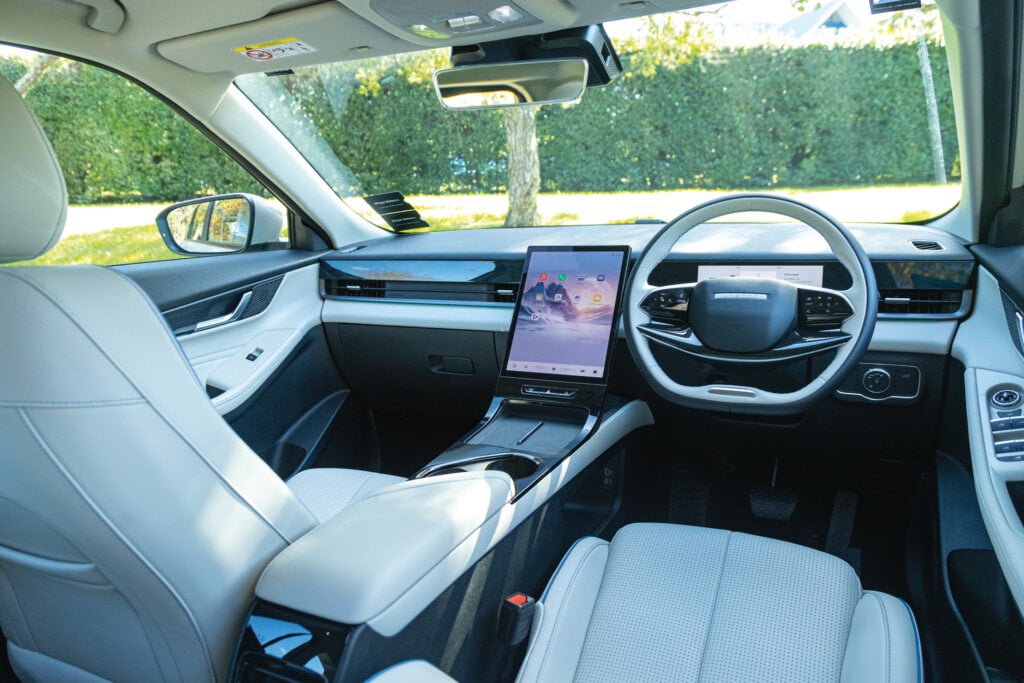
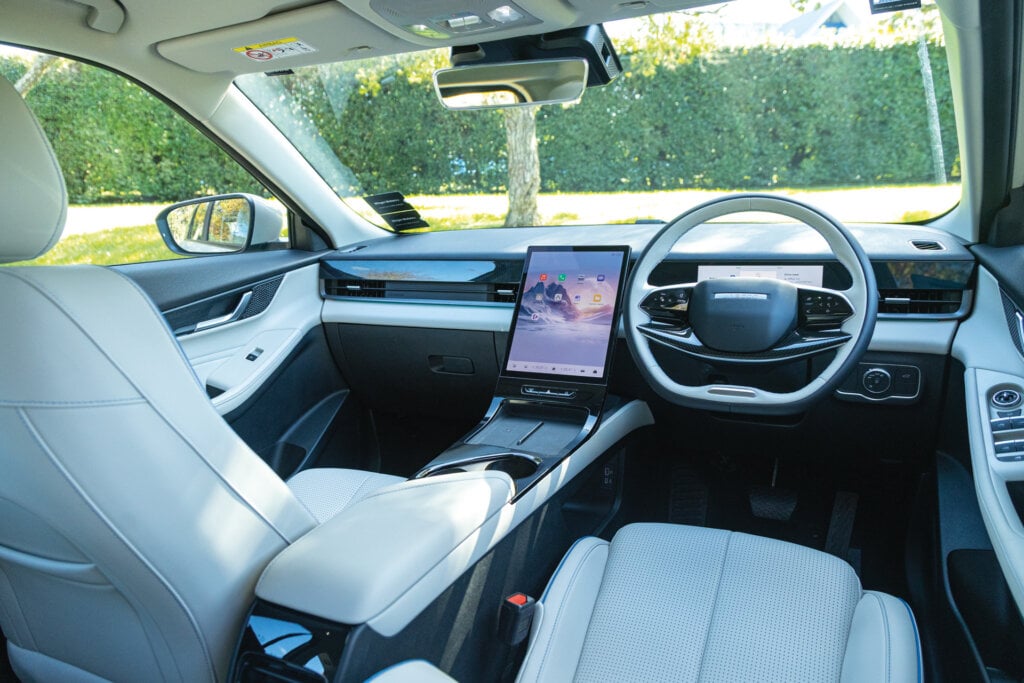
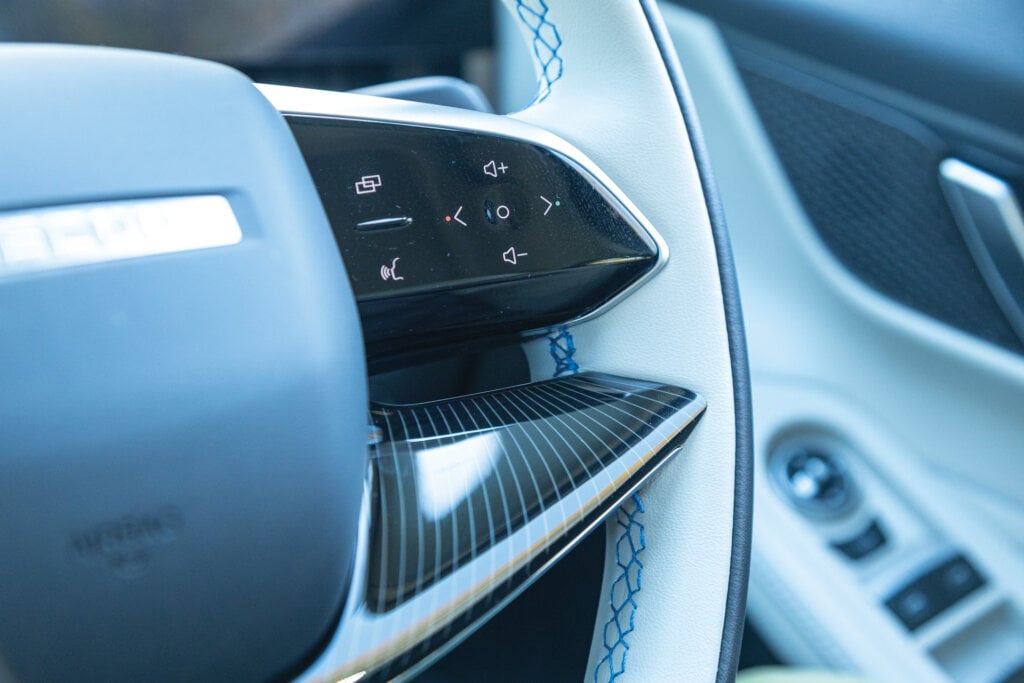
Up front, the J5 gets a 13.2-inch central touchscreen, an 8.88-inch driver display, wireless Apple CarPlay and Android Auto, a 50W ventilated wireless charger, dual-zone climate, heated and ventilated front seats, six-way power adjustment for both front pews, a powered tailgate, acoustic glass on the front doors, and a glass roof with a powered sunshade. Materials are mostly soft-touch where they should be, the synthetic leather is genuinely convincing, and there’s a TÜV SÜD certification specifically for pet-friendliness, with a silicone-based upholstery that’s claimed to be scratch-resistant and antibacterial. Whether that matters to you depends on your relationship with the family dog. It’s a clever marketing hook either way.
Front cabin space is exceptional. There’s room to spread out, the seats are properly comfortable, and the driving position is high enough to give you a good view down the road without making the car feel top-heavy. As a six-foot-something driver, I had no complaints up front.
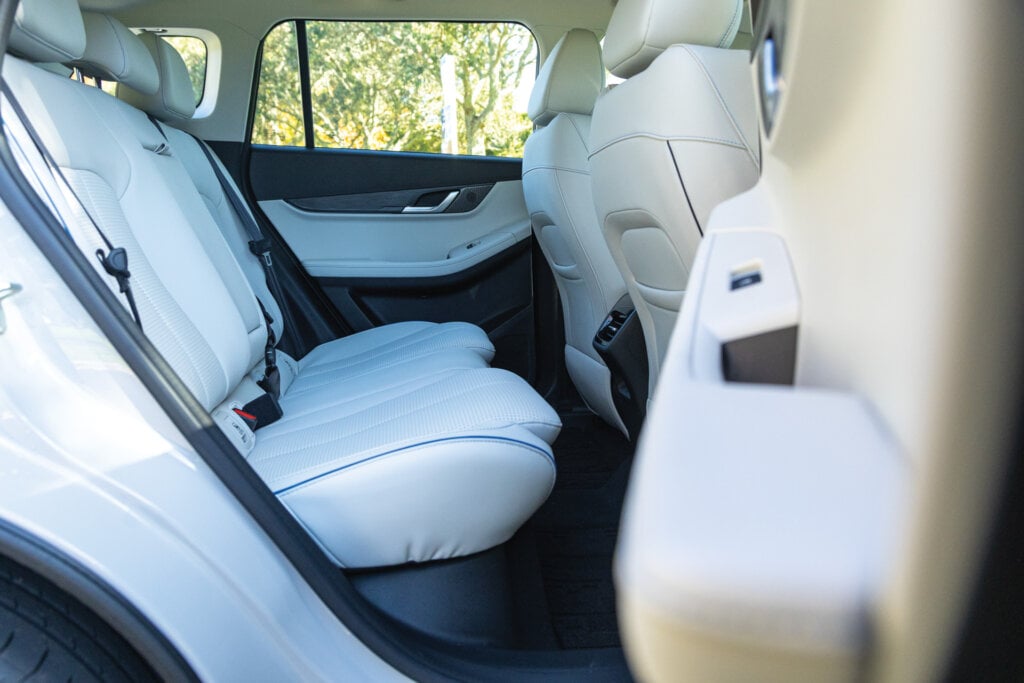
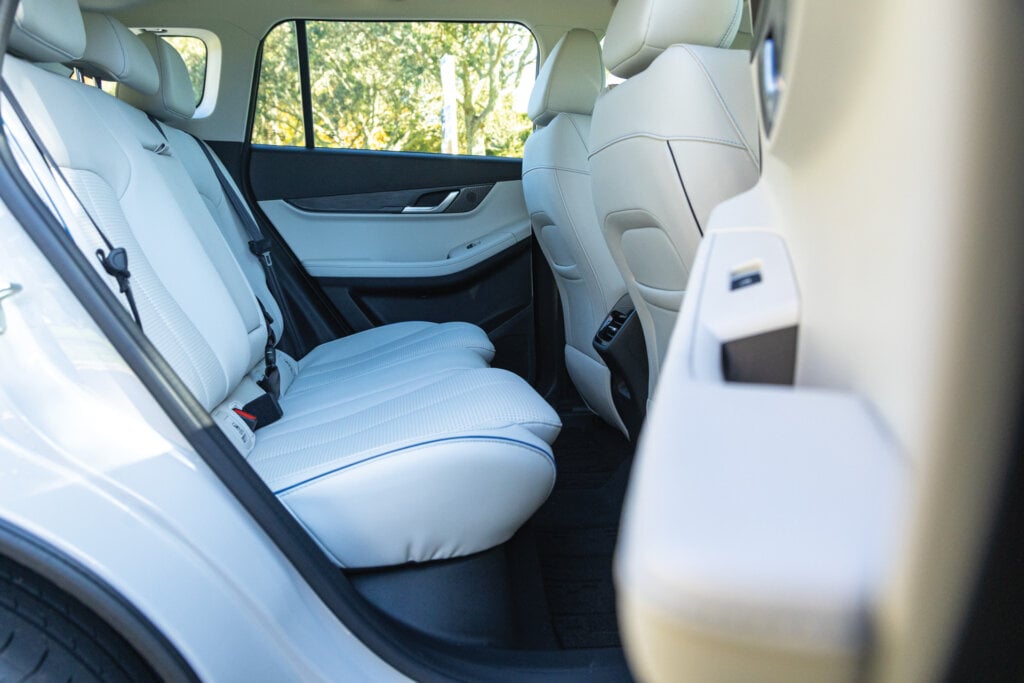
The back is where the dressing-up box runs out. Rear-seat room is decent, but it falls behind the Atto 2 for outright space, and the floor hump for the third middle passenger is unusually intrusive for an EV with a flat-floor platform. Put it down to there being petrol and plug-in hybrid options in the works. Three across the back is going to be a squeeze on anything longer than a school run.
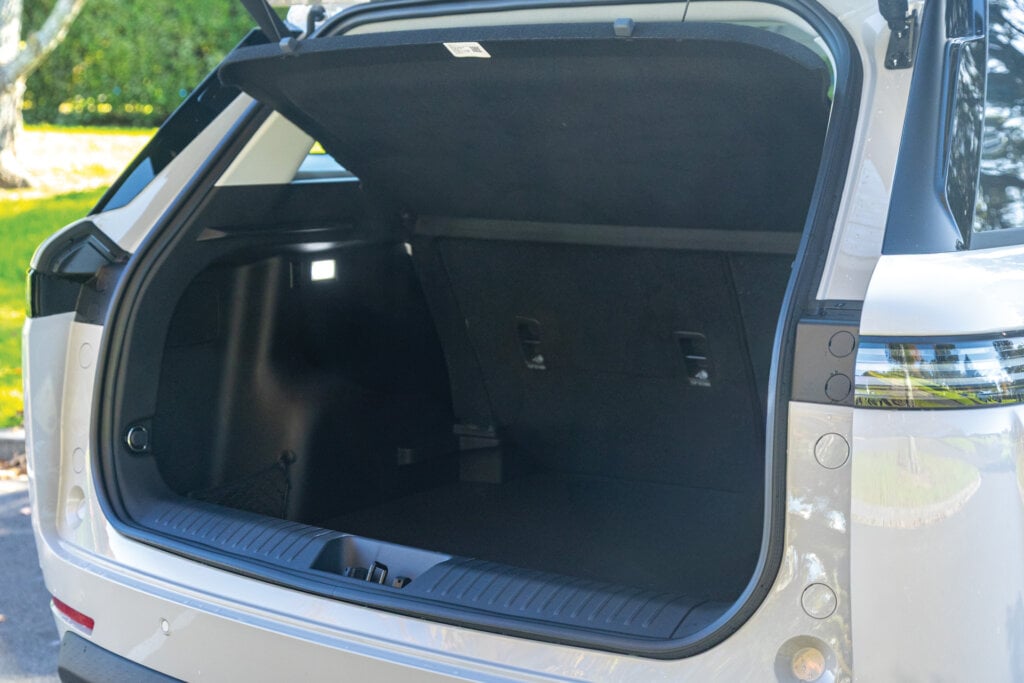
The boot is reasonable rather than generous at 384 litres to the cargo cover, 480 litres to the roof. There’s no spare wheel, just a tyre repair kit, but interestingly there’s a steel structure under the boot floor designed to mount one, which leaves the door open for a dealer-fit spare or an aftermarket solution. That’s a thoughtful touch. Towing is rated at 750kg unbraked, with no braked figure quoted, which is something to note if you tow.
On the road
The J5 runs a single permanent magnet synchronous motor driving the fronts only with 155kW and 288Nm, fed by a 58.9kWh LFP battery under the floor. Zero to 100km/h takes 7.7 seconds, which is brisk without being silly.
The chassis is the big surprise. This is one of the better efforts to come out of the wider Chery Group, with a tied-down feel through corners that suggests someone has spent real time on the suspension tune. Body control is good, the steering is accurate if a touch light, and it tracks straight on bumpy backroads without getting bothered.
Power delivery is mostly clean, but there’s a calibration issue in the wet. Apply the throttle with any enthusiasm on a damp road and the front wheels will scrabble for traction longer than they should. The Continental tyres aren’t the problem. The throttle map is. It’s the kind of thing a software update could fix, and it’s the kind of thing buyers are entitled to expect won’t be there at this price.
There are three regen levels, three drive modes (Eco, Normal, Sport), and a brake pedal that’s mostly natural in feel. While there’s no one-pedal mode in the truest sense, but the strongest regen setting is close enough.
The efficiency problem
Here’s where the J5 gives some of its value back. The WLTP range is 402km, which sounds competitive. In real-world open-road driving, I couldn’t get the car below 19kWh/100km. That’s about 300km of usable range between charges, which puts the J5 well behind a BYD Atto 2 (which will sit comfortably under 15kWh/100km in the same conditions) and miles behind what you can achieve in larger cars like the Tesla Model Y and Hyundai Ioniq 5.
We’ve seen other EVs become noticeably more efficient over time as manufacturers refine the drivetrain mapping through over-the-air updates. There’s no reason the J5 couldn’t do the same. For now, though, the bigger battery isn’t doing the work it should be.
DC fast charging is a redeeming feature. The J5 will accept up to 130kW, with a 30 to 80 percent top-up quoted at around 28 minutes. We saw closer to 100kW in cooler conditions on test, but that’s still strong for the segment. AC charging runs at 6.6kW single-phase or 10.3kW three-phase, which lets you make the most of three-phase AC chargers at the likes of IKEA or the free ones plenty of workplaces are rolling out. That’s a rare thing in this class, and a genuine point of difference.
Safety and tech
The ADAS suite is comprehensive. AEB, adaptive cruise, lane keep, lane departure prevention, traffic jam assist, blind spot, rear cross-traffic with autonomous braking, door open warning, driver monitoring, the lot. There’s a 360-degree camera, front and rear parking sensors, and seven airbags including a front centre bag.
ANCAP hasn’t tested the J5 yet, with a rating expected under the 2026 protocol. Jaecoo is targeting five stars.
Most of the driver assistance systems work well, though the lane keep can get fussy on tighter Kiwi backroads, and the speed limit warning beeps at you for being one kilometre over the posted limit. Both can be disabled, but you’ll need to do it every drive.
Verdict
The Jaecoo J5 BEV is the most interesting EV in its price bracket right now. It looks expensive, it feels expensive inside, the chassis is genuinely good, and the kit list is ridiculous for the money. The seven-year vehicle and eight-year battery warranties take a lot of the risk out of buying into a brand most Kiwis hadn’t heard of two years ago.
But it isn’t perfect. The real-world efficiency lags the segment, the wet-weather throttle calibration needs work, and the rear-seat floor hump is an oddity at this price. None of those is a deal-breaker, and the first two are software fixes that Jaecoo can absolutely deliver if it wants to.
If you’re cross-shopping the Atto 2, the S5 EV and the Ora 5, the J5 deserves a serious look. It might not be the most efficient EV at $43,000. But it’s almost certainly the most car for the money.
Jaecoo J5 EV
$42,990 / 16.5kWh/100km / 0g/km
0-100 km/h 7.7s
Motor output 155kW
Max torque 288Nm
Battery 58.9kWh
Range 402km
Drivetrain Single-speed auto / FWD
Front suspension Mac strut / swaybar
Rear suspension Multilink / swaybar
Turning circle 10.4m (2.5 turns)
Front brakes Ventilated discs
Rear brakes Discs
Stability systems ABS, ESP
Safety AEB, ACC, BSM, LDW, RCTA, ALK, AHB
Tyre size f/r-235/55R18
Wheelbase 2620mm
L/W/H 4380 / 1860 / 1650mm
Luggage capacity 384L
Tow rating 750kg
Warranty 7yrs / unlimited km
ANCAP rating Not yet rated
Weight (claimed) 1710kg