View all
5 more images
2026 Leapmotor B05 Design Review
Words: Richard Edwards | Photos: Alex Schultz
The Leapmotor range expands with the imminent arrival of the smart-looking B05. Is it enough to tempt buyers from their SUVs?
Legend says Marco Polo came home from China with noodles, and Italy turned them into pasta. Historians roll their eyes, since Sicilians were drying pasta before Polo left Venice, but the story survives because it says something about how ideas travel. Seven centuries on, the traffic between Italy and China is running the other way.
The Leapmotor B05 is what’s coming back up the Silk Road: a rear-drive five-door electric hatch with 50:50 weight distribution, multi-link rear suspension and a brief to out-Golf the Europeans at a price they can’t touch. The quality sporty hatchback has always been Europe’s game, and Chinese brands, for all the ground they’ve taken in SUVs and utes, haven’t seriously threatened it until now.
The Italian involvement is real, too. The chassis was tuned by Stellantis engineers at the Balocco proving ground, the same tarmac that shaped generations of Alfa Romeos. Are they traitors to the European cause? Not really. Stellantis owns 51 per cent of Leapmotor International, the joint venture that exports these cars, so nobody defected. The money moved first and the engineers went where they were sent. Whether the product planners at Peugeot and Volkswagen see it that way is another question, because their partner has learned fast.
Sharp, if softer than the show car
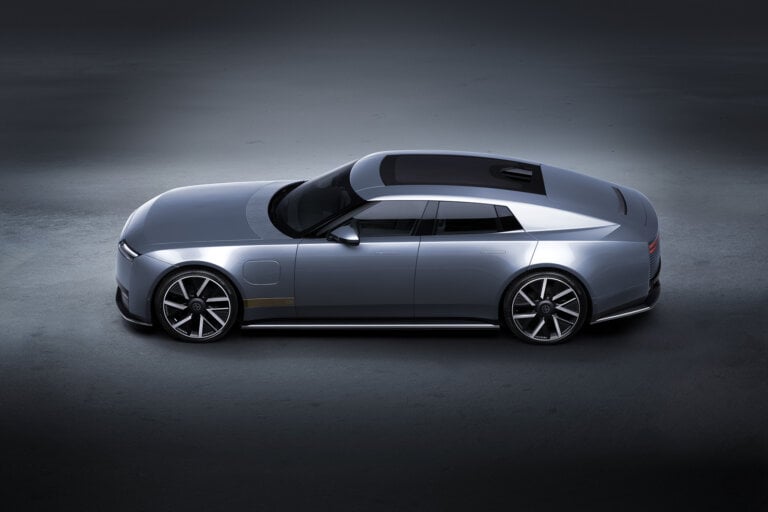
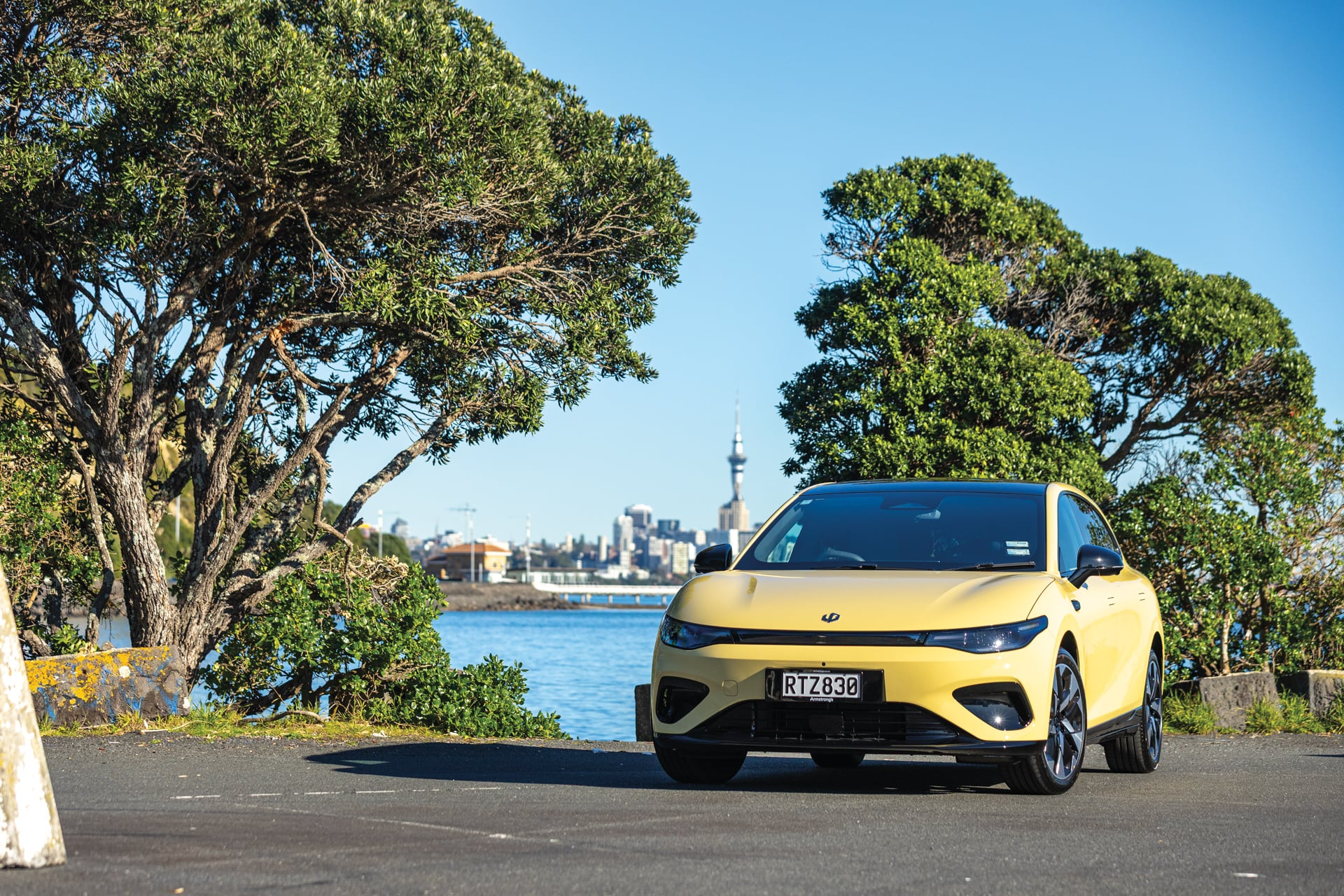
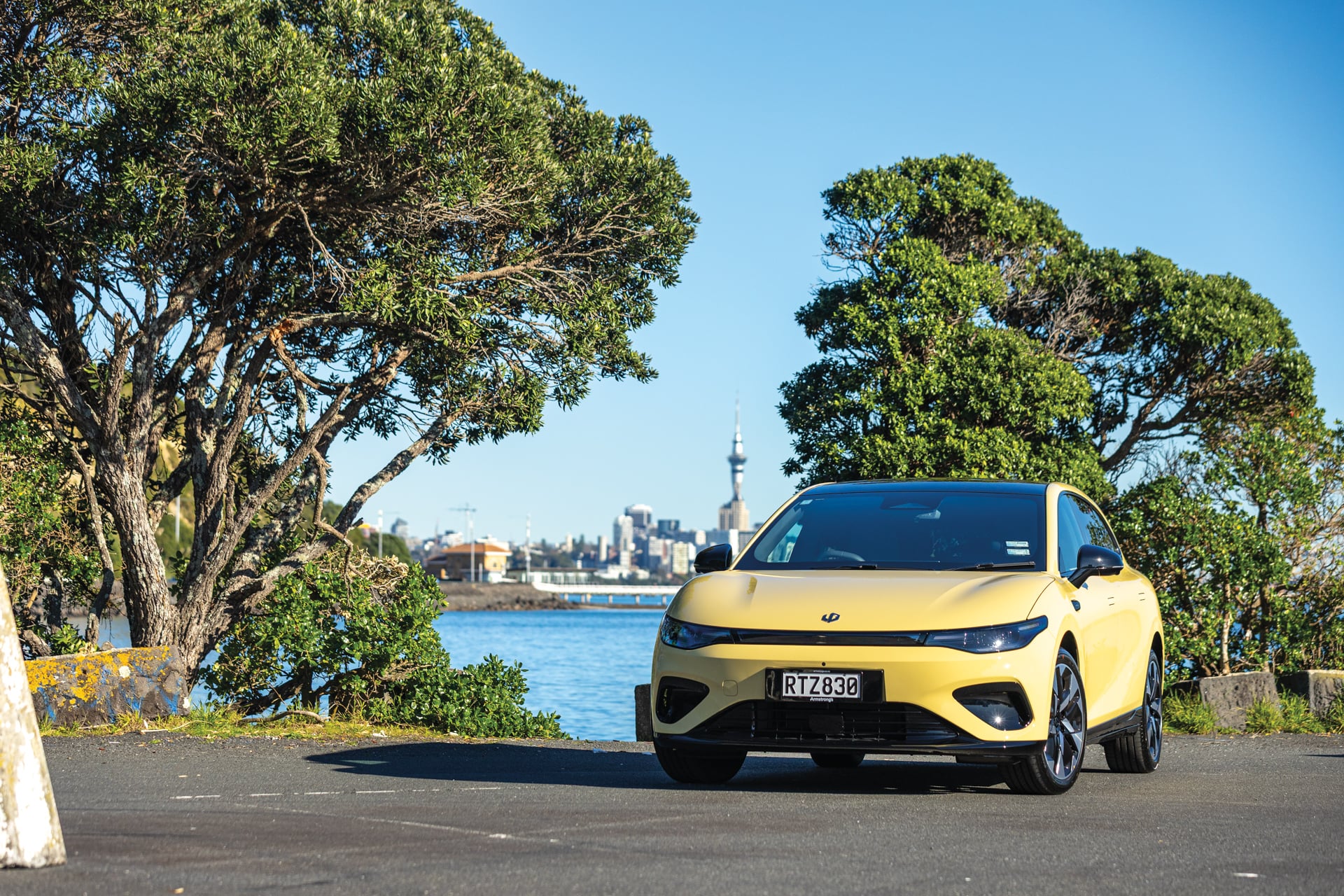
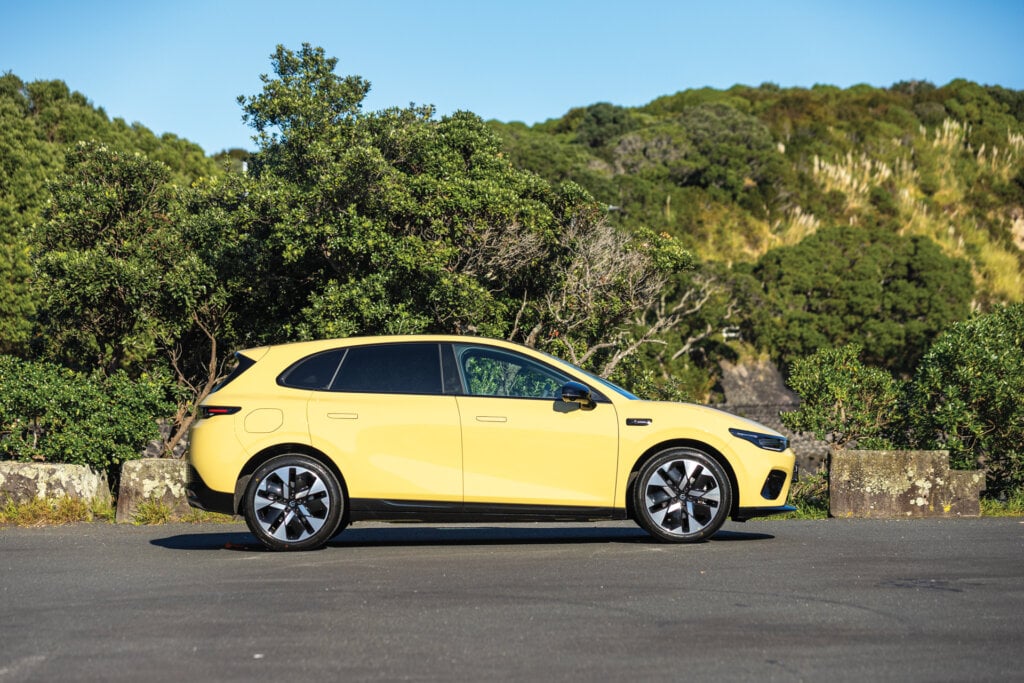
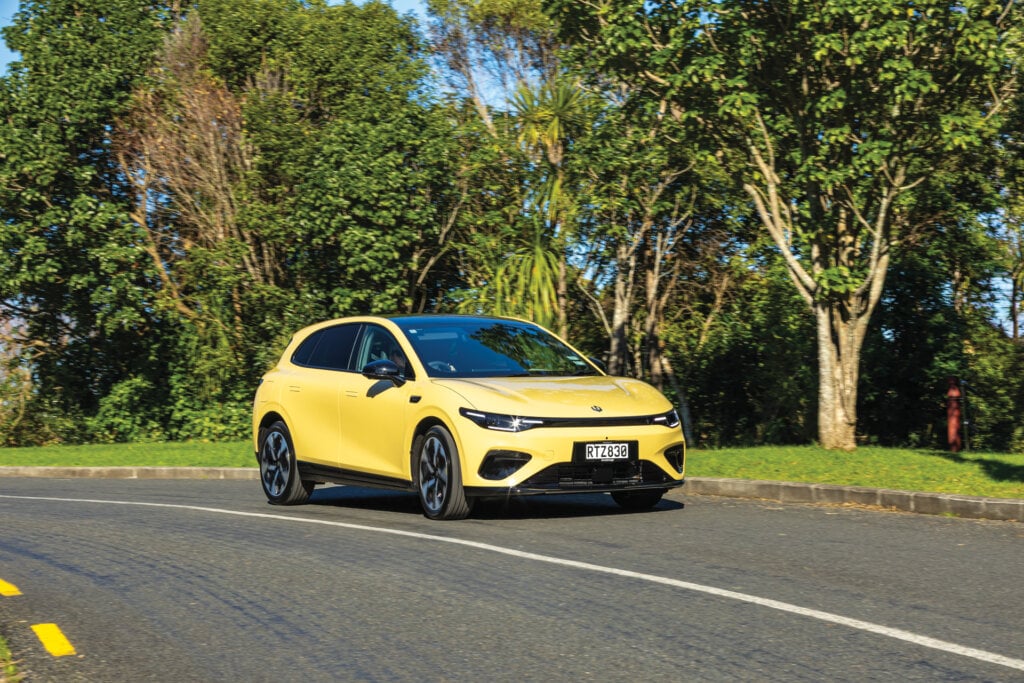
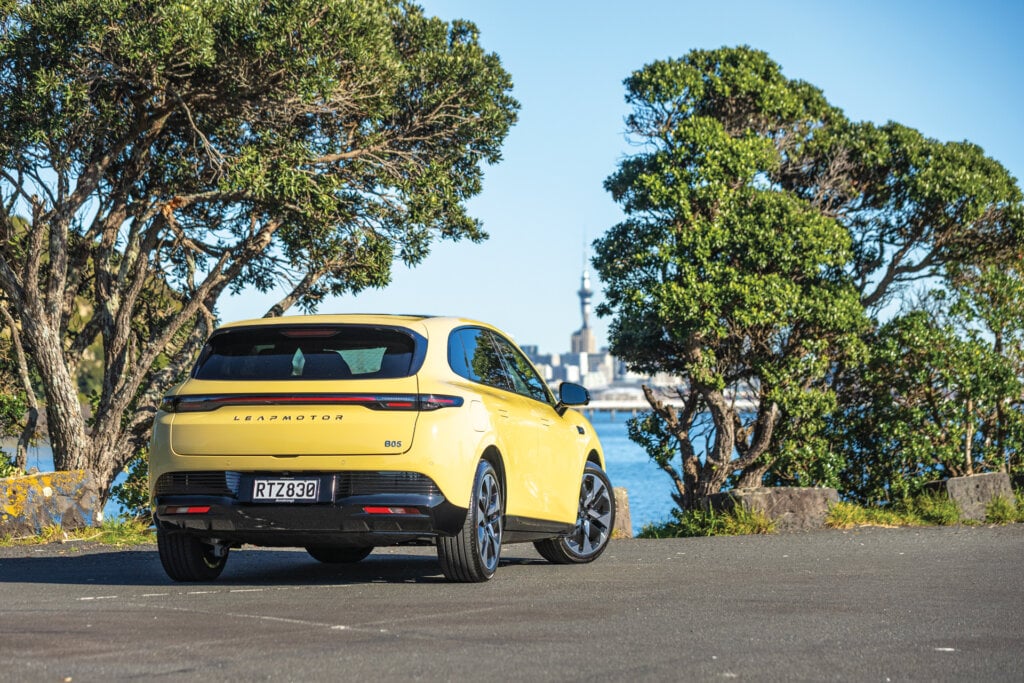
Anyone who saw the B05 in concept form, with its aggressive body kit and proper hot hatch attitude, should temper their expectations. Some of that magic has gone missing in the move to production. It’s still a sharp design, best viewed from the rear where the full-width light bar and clean tailgate treatment give it real presence, and the standard Lightning Yellow suits it.
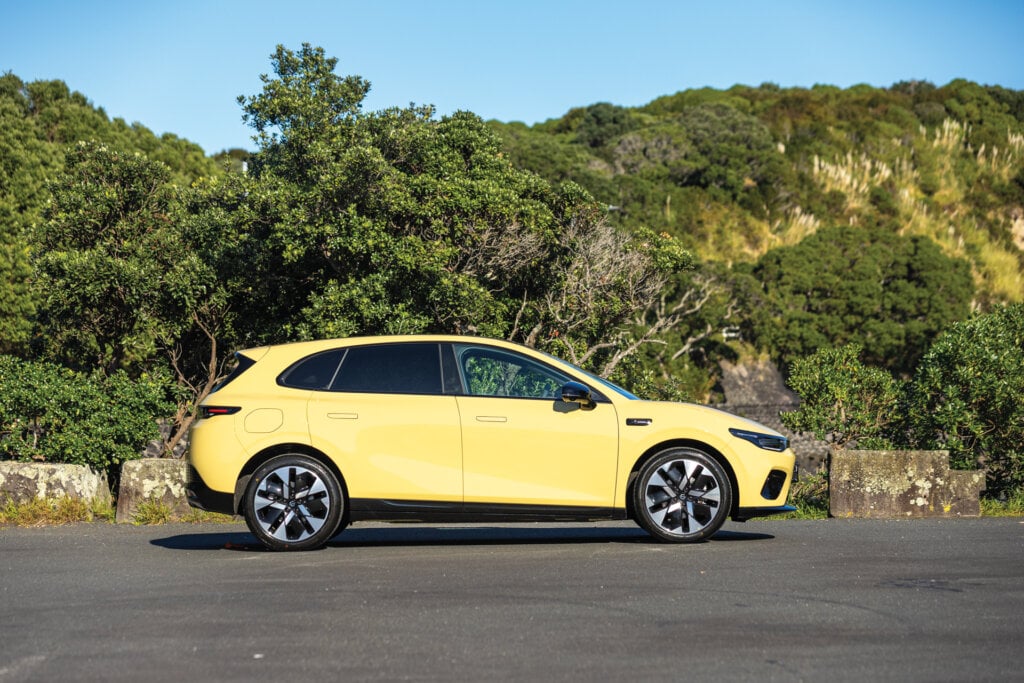
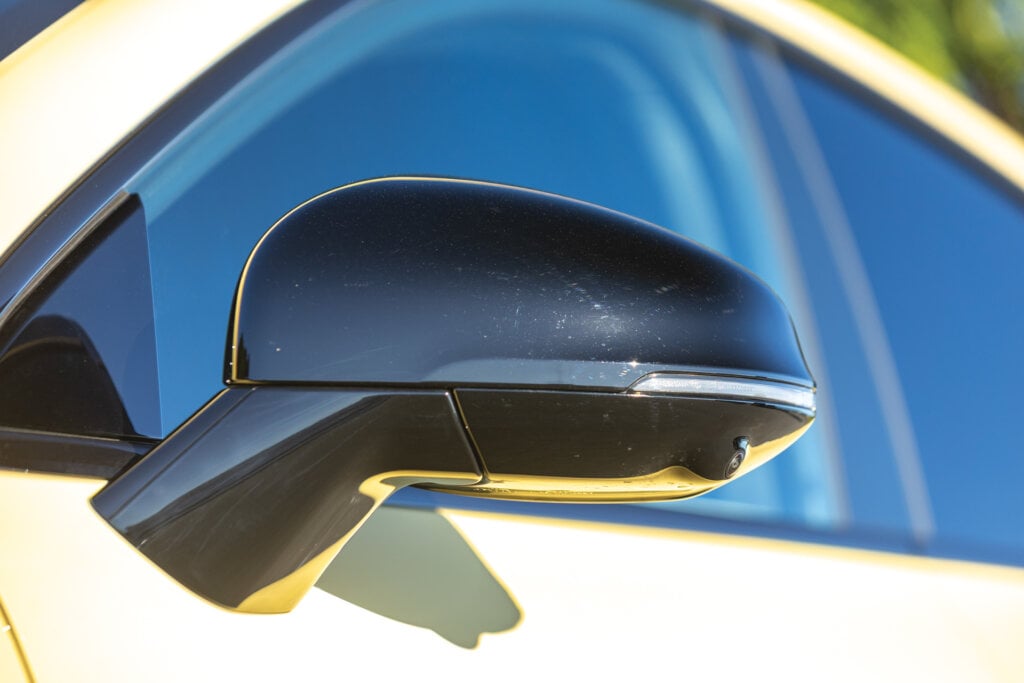
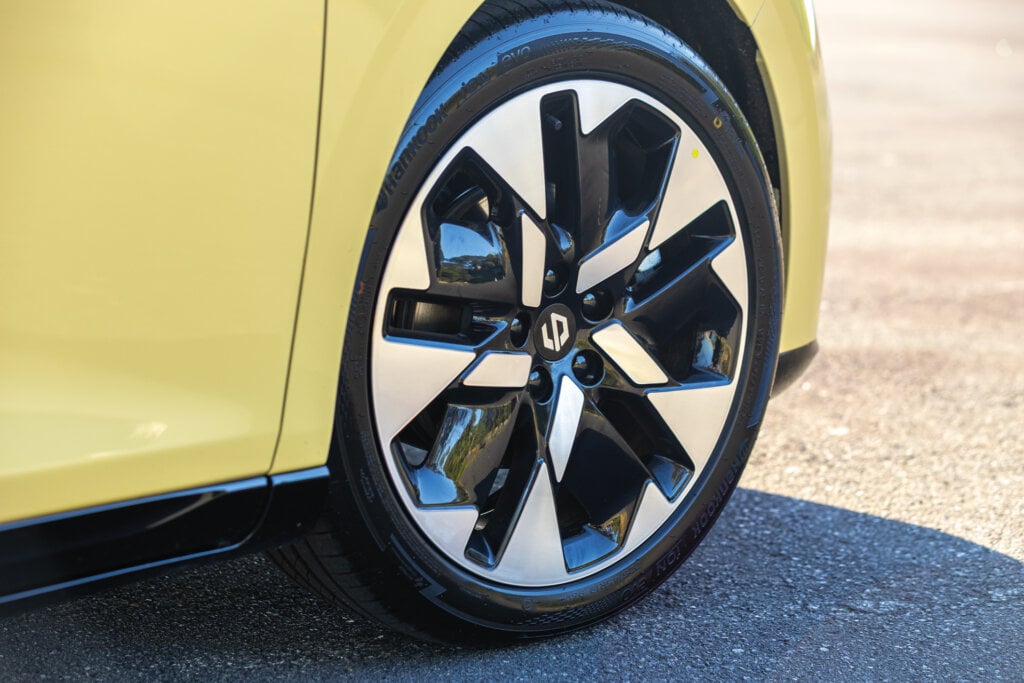
It sits taller than the photos suggest, too. In the metal there’s almost a whiff of SUV about the proportions, more than the low-slung silhouette the marketing implies. The frameless doors and 19-inch aero alloys help the stance, and a 0.26 drag coefficient says the shape is working harder than it looks, but if you’re expecting Golf-low, you may be surprised.
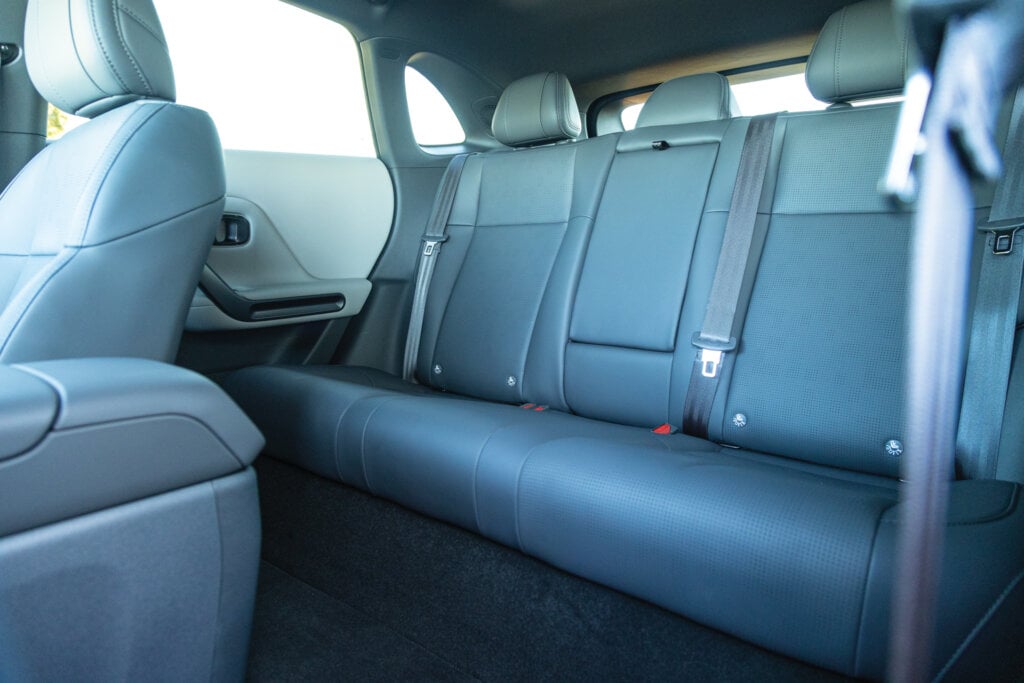
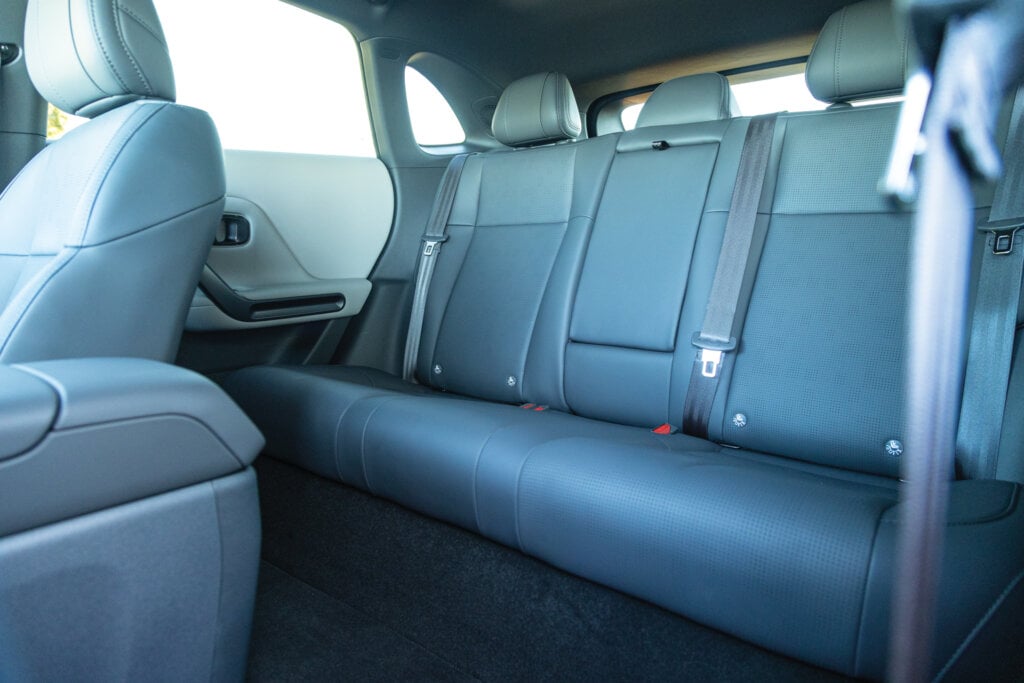
At 4430mm long on a 2735mm wheelbase, it’s a size up from the light hatch class. Rear legroom benefits accordingly, though taller passengers will find headroom tight under the sloping roofline.
The cabin
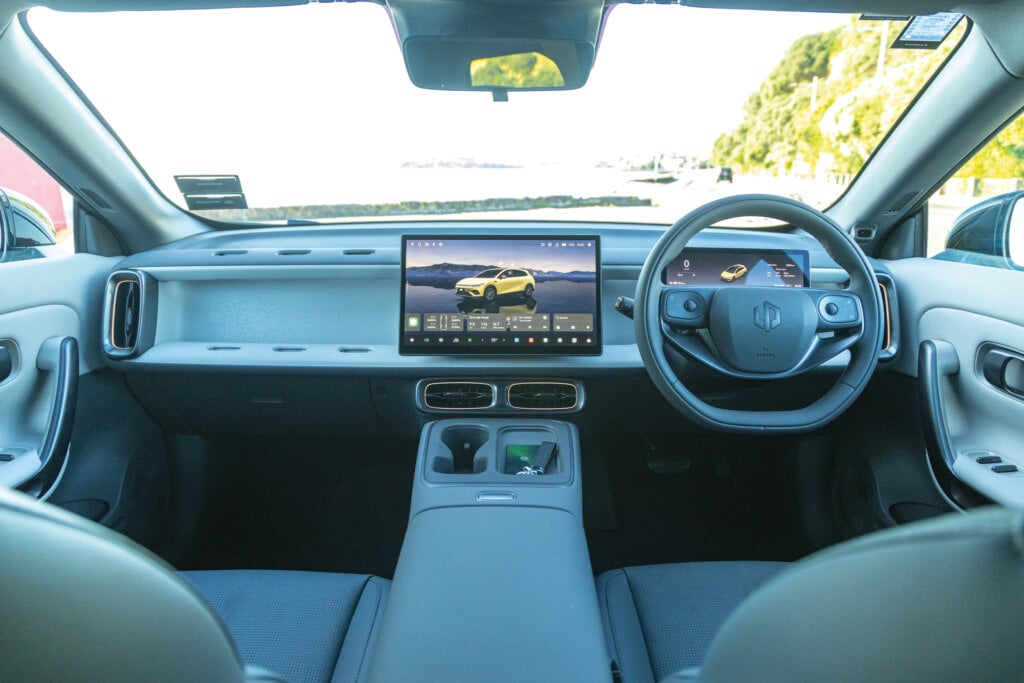
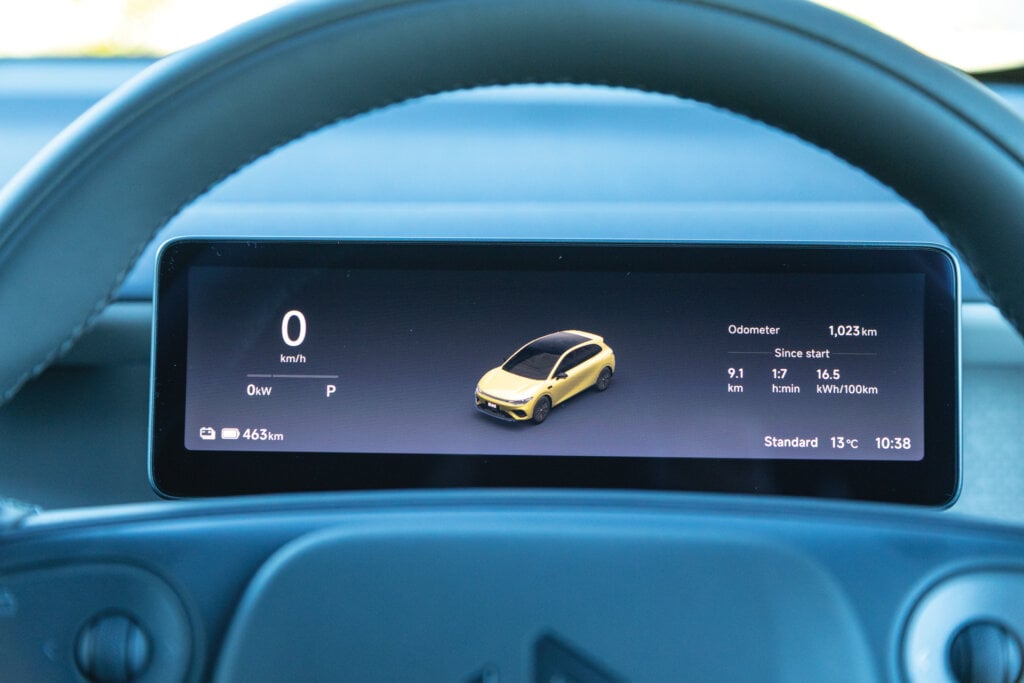
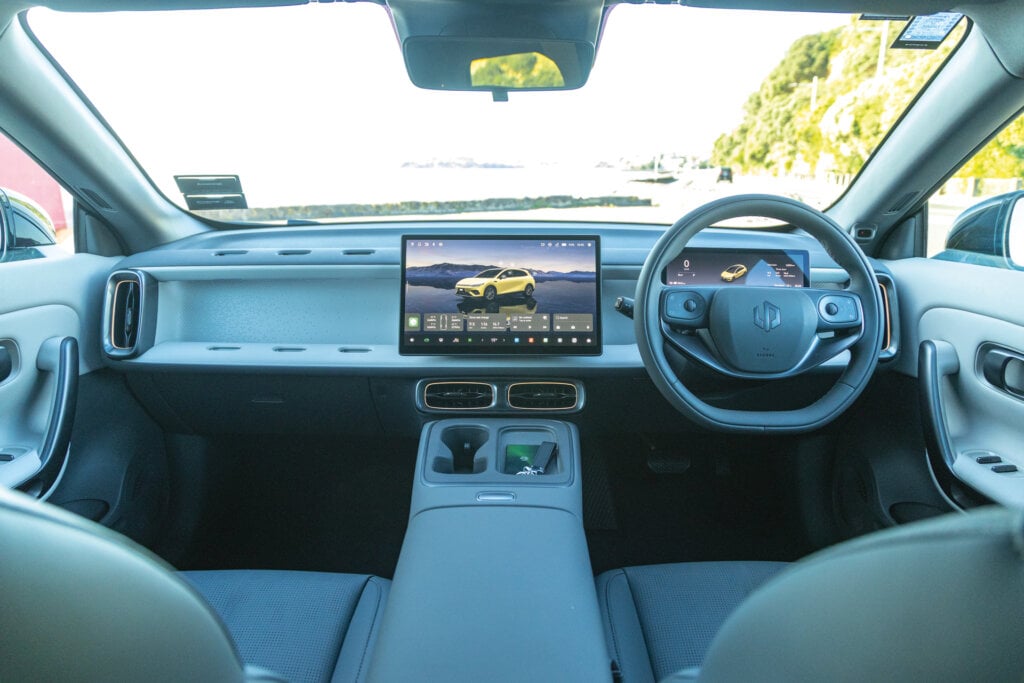
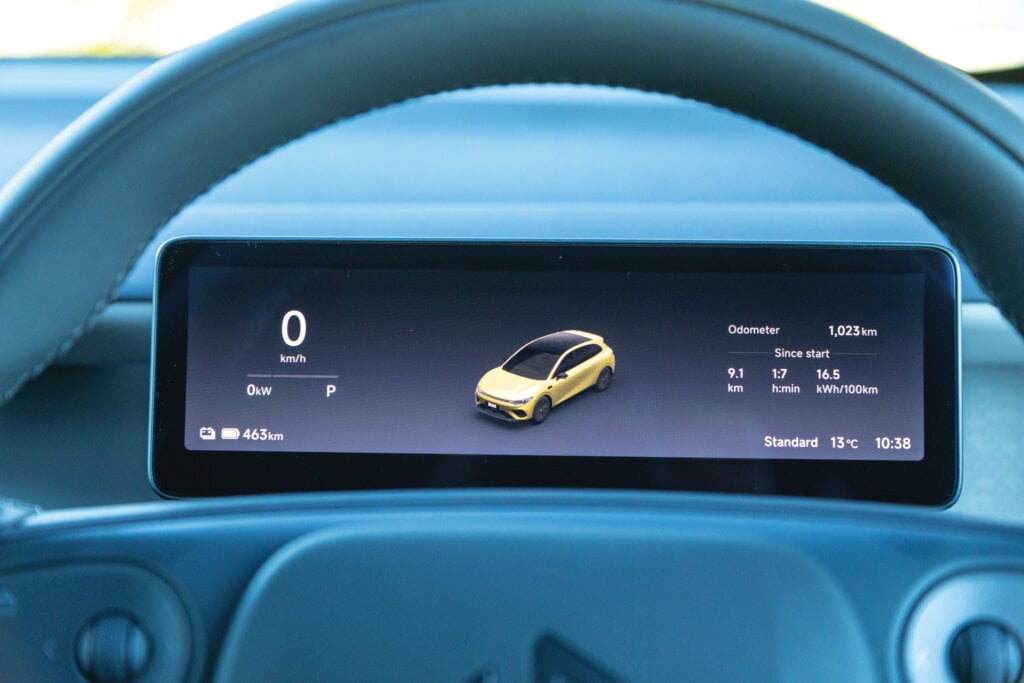
Build quality is a real strength. Panel fit, paint and general solidity inside and out are exceptional at this price, and better than some legacy brands manage for considerably more money. The cabin follows the B10’s template: a 14.6-inch central touchscreen on a Qualcomm Snapdragon-powered system, an 8.8-inch driver display and wireless smartphone mirroring for both platforms.
There are still some hard plastics about, most noticeably across the dashboard ahead of the front passenger, where a panel of holes serves as mounting points for accessories. Clever idea, borrowed from the modular thinking running through Chinese interior design at the moment, but the execution feels a grade below the rest of the cabin. Storage is a strength otherwise, with 25 compartments claimed and a bridge console that puts the wireless charger up top and a handy shelf below.
The Design specification adds a fixed panoramic glass roof with electric sunshade, synthetic leather trim, and heated and ventilated front seats with power adjustment on both sides. Generous kit for the money.
On the road
The Balocco investment shows on the road. The rear-drive balance is obvious from the first few corners, the car rotating in neatly and putting its power down cleanly on exit, without the torque steer that plagues powerful front-drivers. Body control is tidy, and the suspension tune deserves credit. It leans away from the marshmallow softness we’ve come to expect from Chinese cars yet never verges on firm, and it deals with coarse chip and broken surfaces without fidget. The discipline in the damping is what you’d hope for given who did the work.
The steering is the bit we’d send back for another pass. It’s accurate and builds weight acceptably in the sportier modes, but a little more directness off centre would finish the job. International testers have made the same complaint, so it appears to be baked into the calibration, not a quirk of our car.
Acceleration is adequate rather than exciting. The single motor makes 160kW and 240Nm, good for a claimed 6.7 seconds to 100km/h in the Design, delivered progressively. There’s launch control, which in a car of this output is mostly a talking point. The brakes are good, with a consistent pedal and a well managed handover between regeneration and friction.
Leapmotor B05 – Charging and efficiency
Charging performance is impressive for the class. The NZ distributor quotes DC fast charging at up to 168kW, with a 30 to 80 per cent top-up in around 20 minutes. Plenty of pricier European EVs can’t match that. An 11kW onboard AC charger and a heat pump are standard, and vehicle-to-load at up to 3.3kW is included.
Efficiency is decent as well. International testing has returned real-world figures between 13 and 15kWh/100km, and we saw the upper end of that range on our drive. Still respectable, and it suggests the WLTP claims of 401km for the Life’s 56.2kWh battery and 480km for the Design’s 67.1kWh pack are achievable with a light foot. Both packs are LFP.
The ADAS problem
A big downside remains, and it’s the electronics. The driver assistance suite is seriously overreactive. The lane warning system intervenes early, and the driver awareness monitoring is just as trigger-happy, telling you off for glancing at the very touchscreen the interface forces you to use.
International reviewers report identical frustrations, plus a menu structure that requires the distraction monitoring to be switched off before the lane systems can be disabled. Leapmotor says it is taking feedback on board and over-the-air updates are possible. We’d encourage the local distributor to push hard on that, because as it stands you’ll want to budget a minute at the start of every drive for settings adjustment.
Verdict
The B05 Life opens at $43,990 and the Design at $47,990, with deliveries from August. Against the remaining European hatches the value case is straightforward, and even against the MG4 Urban at $38,990 the Leapmotor answers with a bigger battery, more power, faster charging and better finish. Warranty cover runs six years and 150,000km on the vehicle and eight years and 160,000km on the battery, which matches the best in the segment.
The B05 isn’t the finished article. The steering wants more polish and the driver aids need recalibrating. But the fundamentals are sorted, and those are the hard part.
Leapmotor B05 Design
$47,990 / 15kWh/100km / 0g/km
0-100 km/h 6.7s
Motor output 160kW
Max torque 240Nm
Battery 67.1kWh
Range 480km
Drivetrain Single-speed auto / RWD
Front suspension Mac strut / swaybar
Rear suspension Multilink / swaybar
Turning circle 10.4m (2.5 turns)
Front brakes Ventilated discs
Rear brakes Discs
Stability systems ABS, ESP, TV
Safety AEB, ACC, BSM, LDW, RCTA, ALK, AHB
Tyre size f-225/45R19 r-235/45R19
Wheelbase 2735mm
L/W/H 4430 / 1880 / 1520mm
Track f-1606mm r-1608mm
Luggage capacity 345 / 1205L
Tow rating Not rated to tow
Warranty 6yrs / 150,000 km
ANCAP rating Not yet rated
Weight (claimed) 1910kg