View all
14 more images
2026 Ram 1500 Express Black Edition vs Ford Ranger Wolftrak Review
Words: Kyle Cassidy | Photos: Alex Schultz
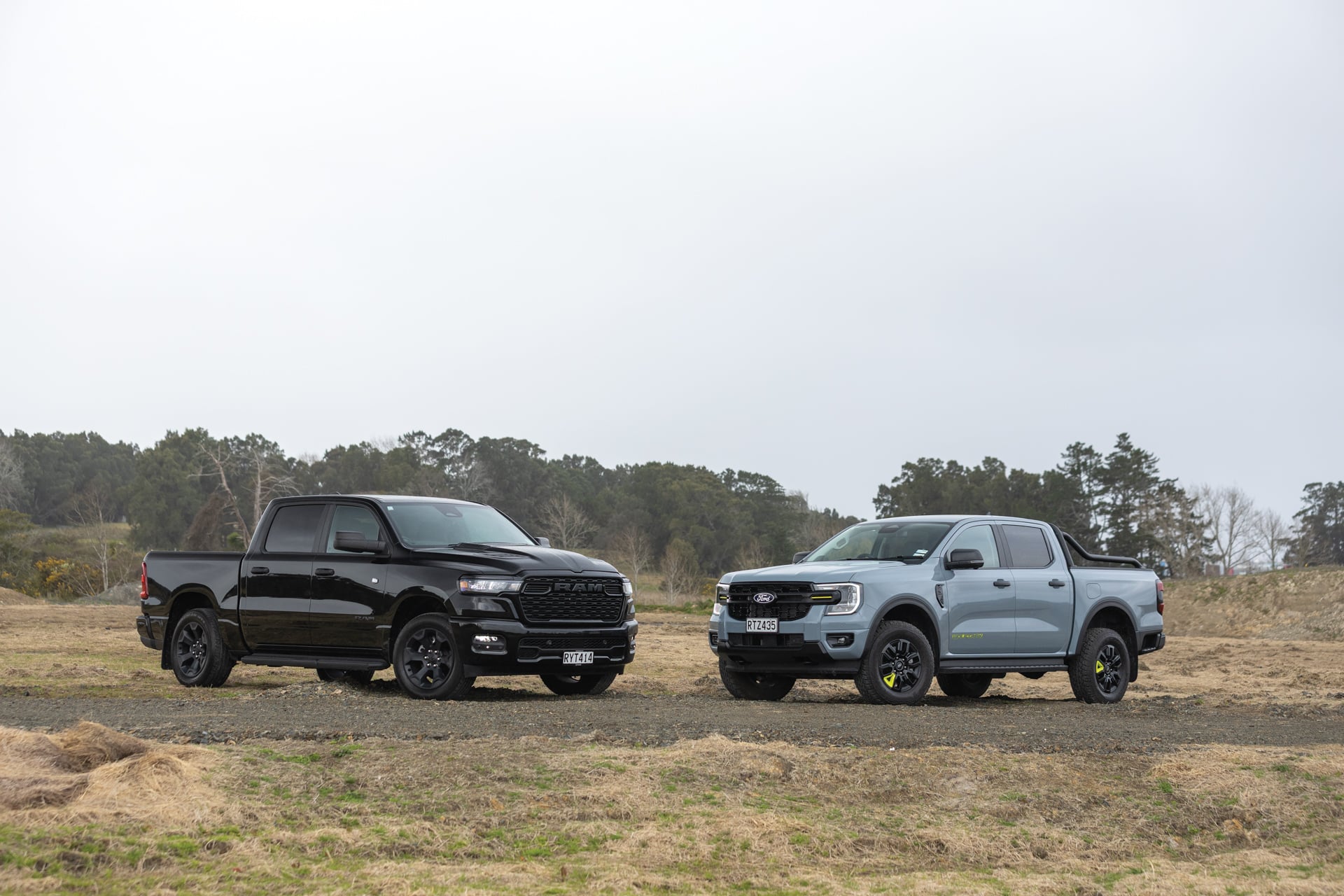
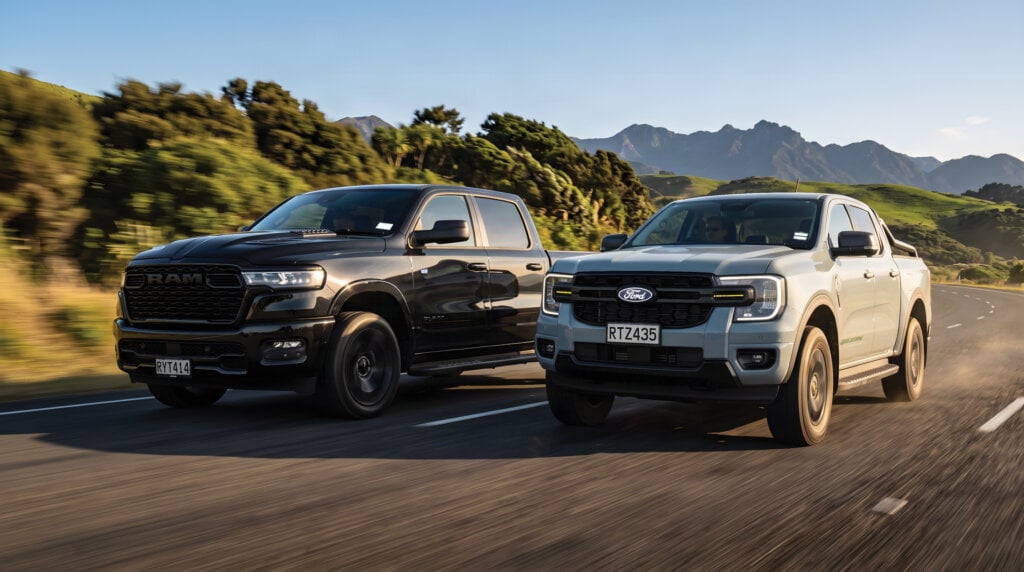
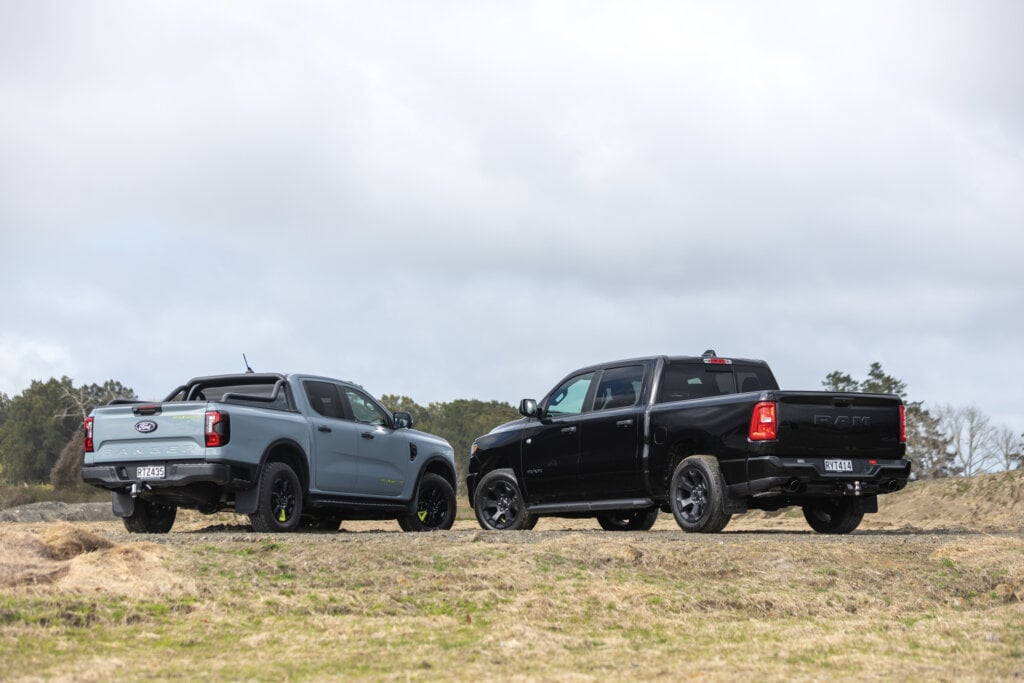
The double cab comes in many shapes and sizes. Ranger is not a small vehicle but it looks dinky next to a full-size pick-up like the Ram 1500. So what are the pros and cons of going XL?
As our gigantic ute guide shows, New Zealand buyers are hardly short of choice. The market covers trade-specific workhorses, well-specified lifestylers and dune-jumping performance specials. Then there are the American pick-ups, led by the Ram 1500 and Chevrolet Silverado. These sit a class above the familiar one-tonners in size, towing ability and price. Yet the gap isn’t always as vast as it seems. Ram’s new entry model, the 1500 Express Black Edition, costs $124,990. That is serious money, but a Ford Ranger Raptor is now $98,490, while the limited-edition Ranger Wolftrak tested here is $75,990.
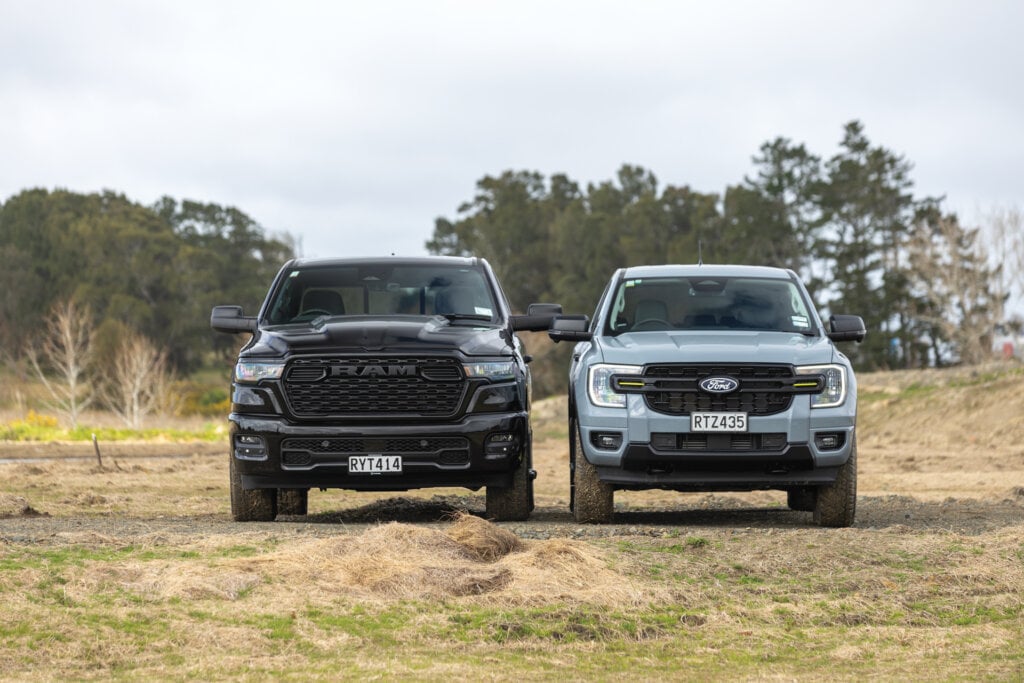
There is still a sizeable $49,000 between these two, so this isn’t a conventional comparison. Instead, we wanted to see what stepping from a Ranger-sized double cab into a full-size American pick-up gains you.
The most obvious advantage of going big is towing. The Ranger can pull a useful 3500kg braked, but the Ram’s headline figure is 4500kg. And apparently, that is the entire point for Ram buyers. But if you fancy moving up because bigger must be better, there are a few things worth knowing.
Black, big but a bit basic?
The Express Black Edition is the new entry point to the Ram 1500 range, replacing the Big Horn. To get to a more accessible price, Ram has retained the important hardware, but some of the fancier stuff has gone AWOL.
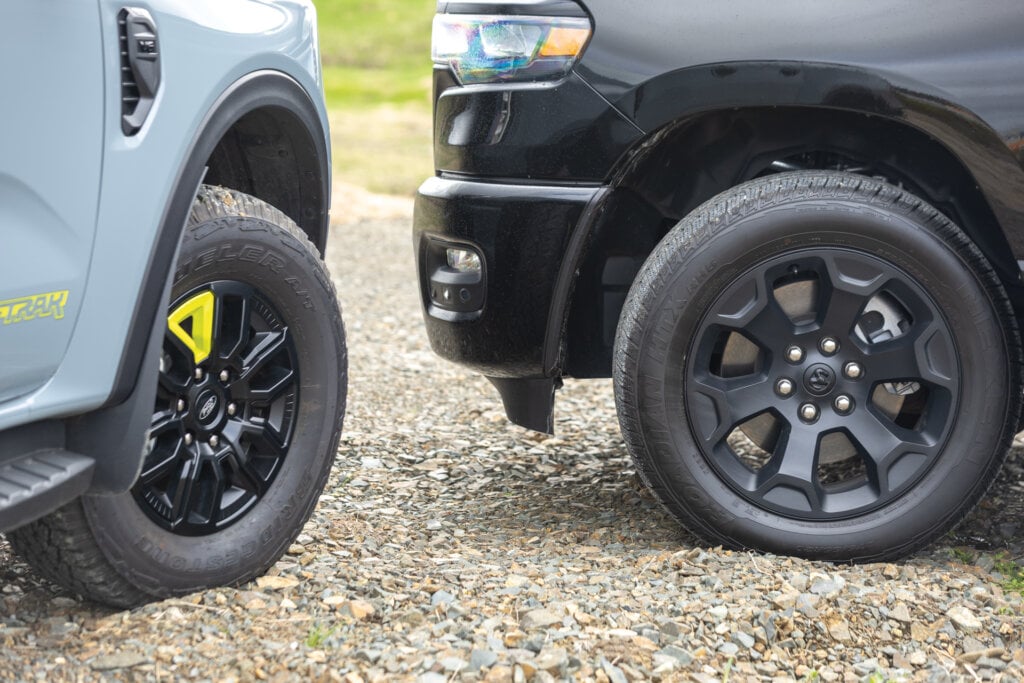
It doesn’t look like a stripper though. The Mopar sports bonnet, black grille, badges, side steps, exhaust tips and 20-inch wheels give it the necessary menace. Owners might say they bought one for the towing, but the immense presence must have some pull.
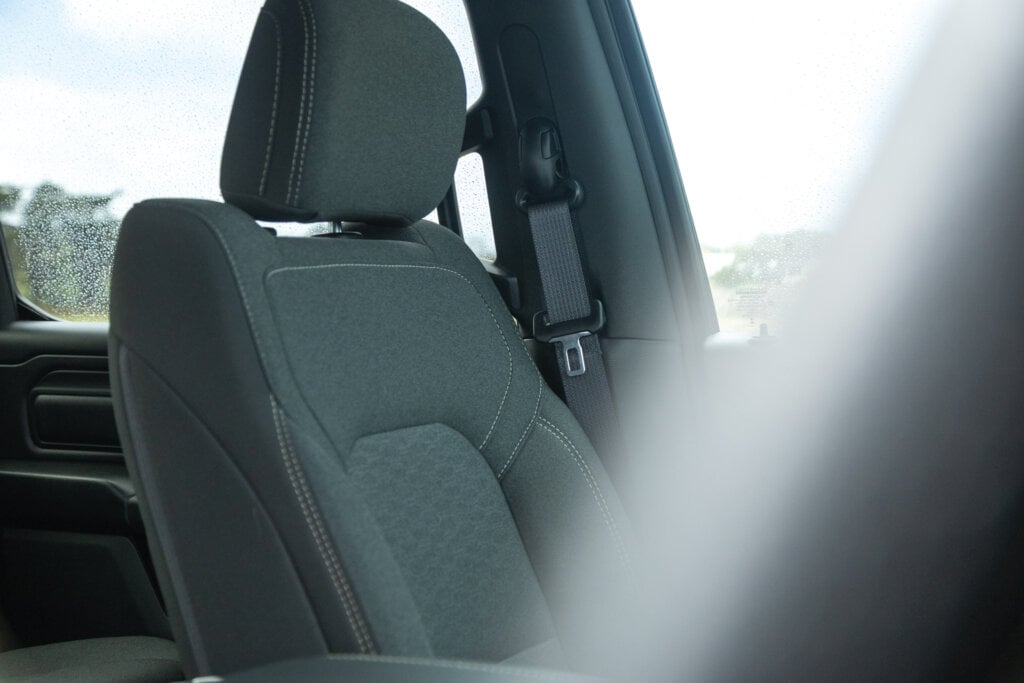
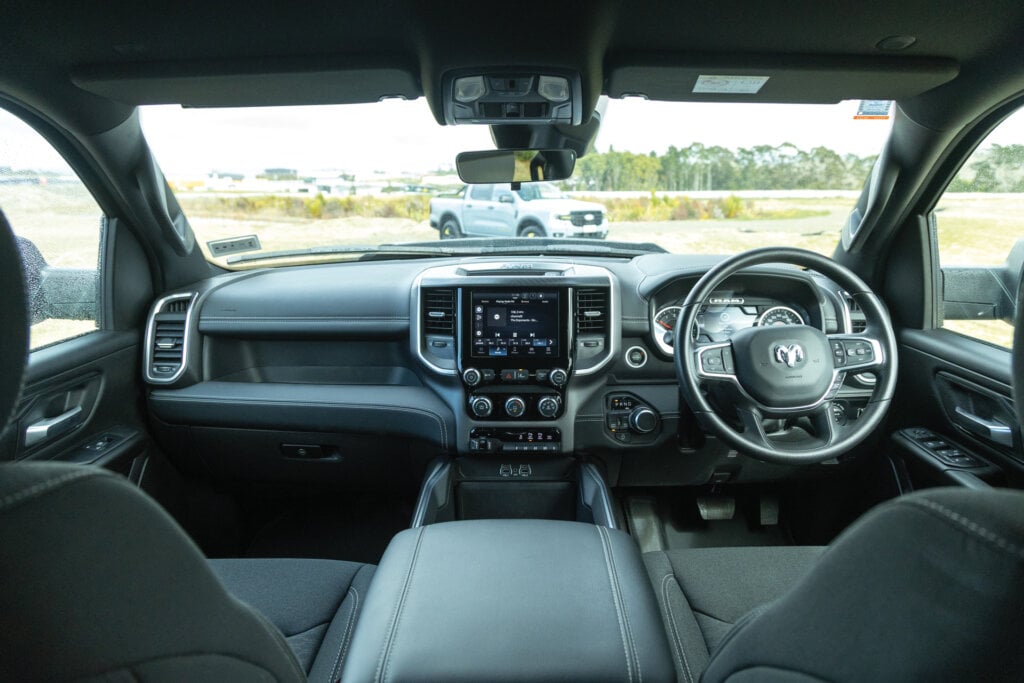
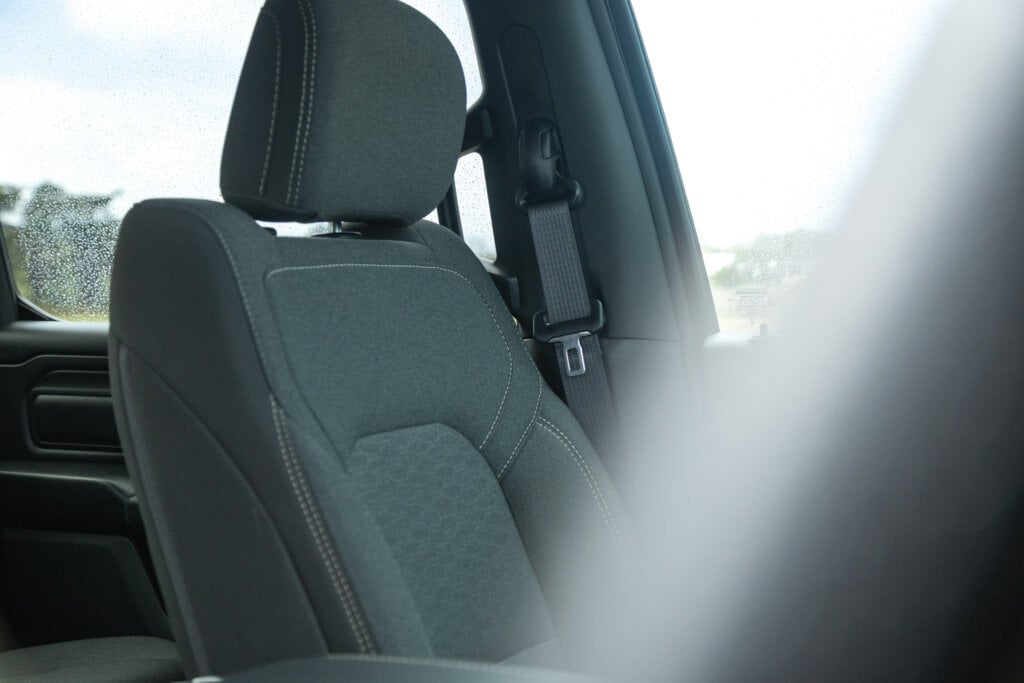
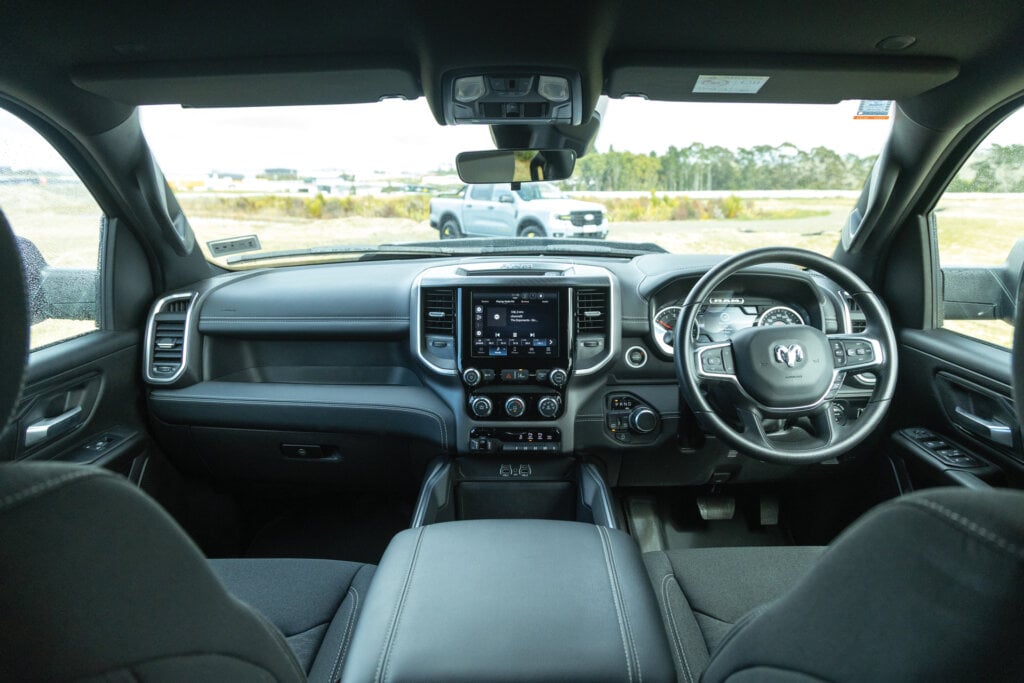
Inside, the savings are more obvious. You sit on manually adjusted cloth seats, the steering wheel has a coarse plastic rim and there’s hard trim on the door tops and handles. While it suits the utilitarian nature of a work truck, at the $125k price, you could expect a bit more. They have wrapped the dash in leather, but some hide on the rim and doors would have been preferable.
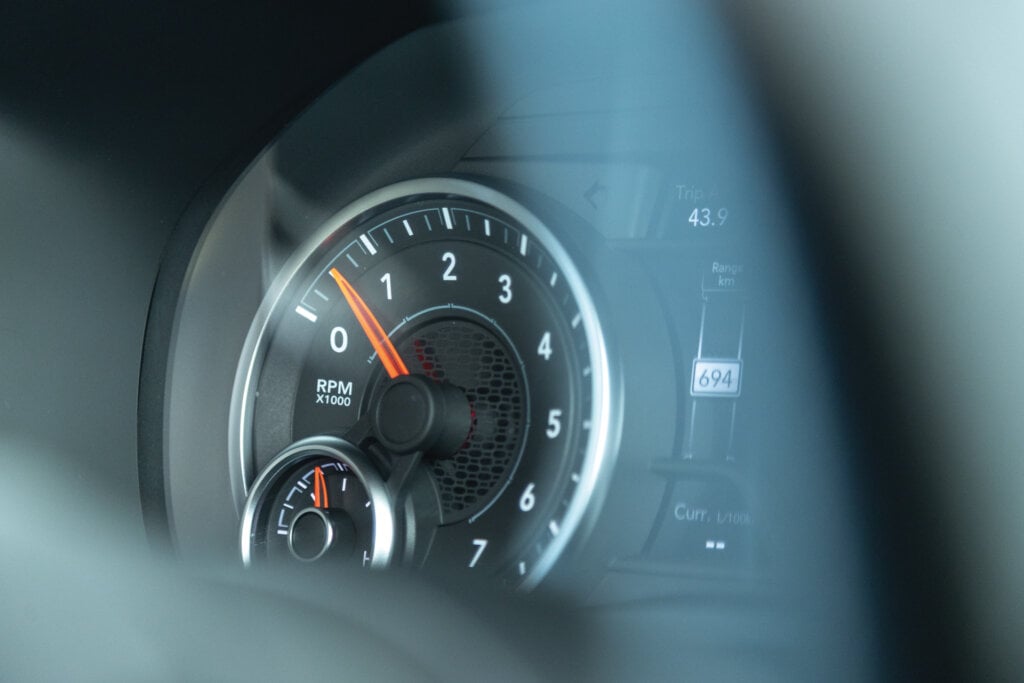
The 8.4-inch touchscreen looks a bit lost on such a broad dashboard, although physical controls make the ventilation and audio easy to adjust. You really miss the surround-view camera. With that big bonnet creating a sizeable blind area ahead, it’s a useful safety feature. Adaptive cruise, active emergency braking, blind-spot monitoring and trailer detection are standard.
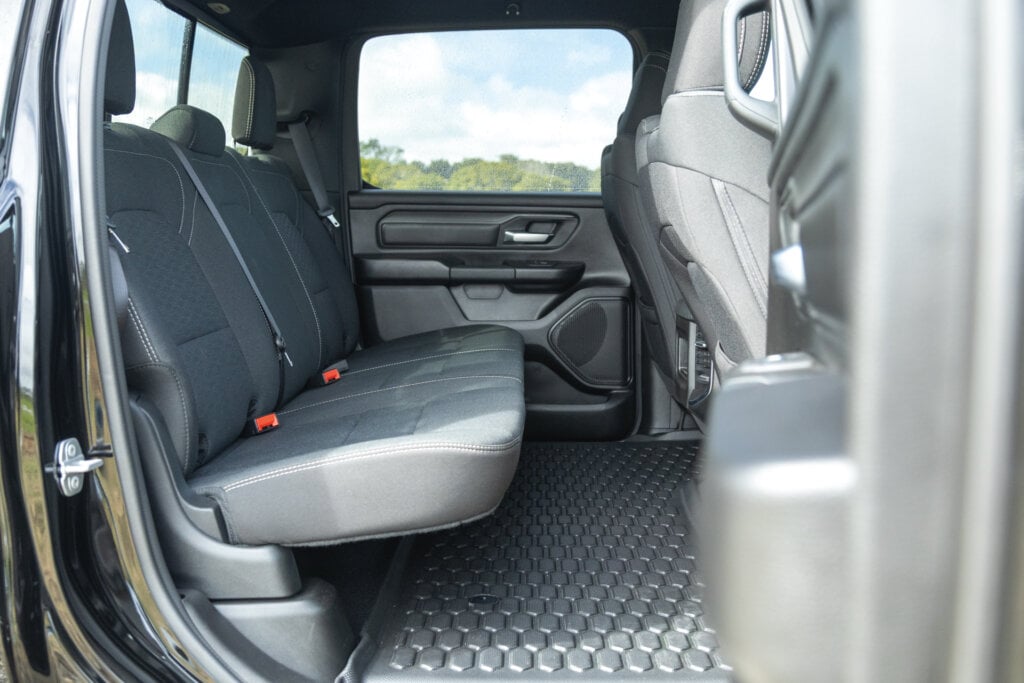
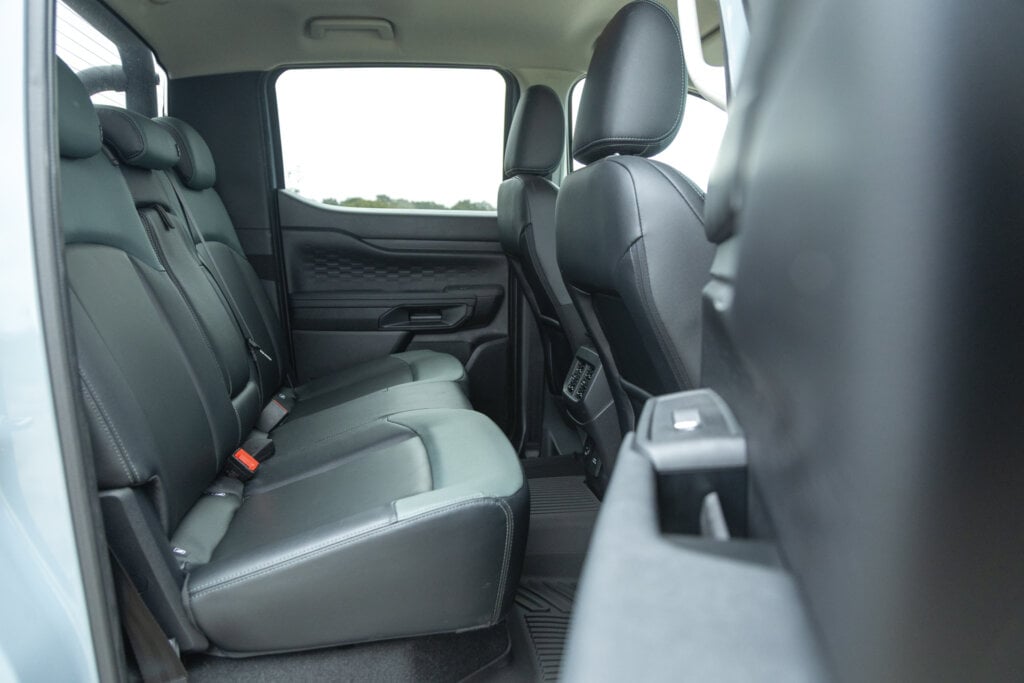
Much of the extra length of the Ram is devoted to cabin space. The rear quarters are gigantic with legroom that makes the Ranger seem mean. And there’s genuine room for three adults without too much rubbing of shoulders. There are Isofix points too for the grandkids.
The tray is sizeable too. Its floor is 1700mm long and there is 1295mm between the wheelarches, with a spray-in liner, tie-down points and a damped tailgate. Those that shift bulky gear will appreciate it. A fold-out rear step helps access, though having one on both sides would be better.
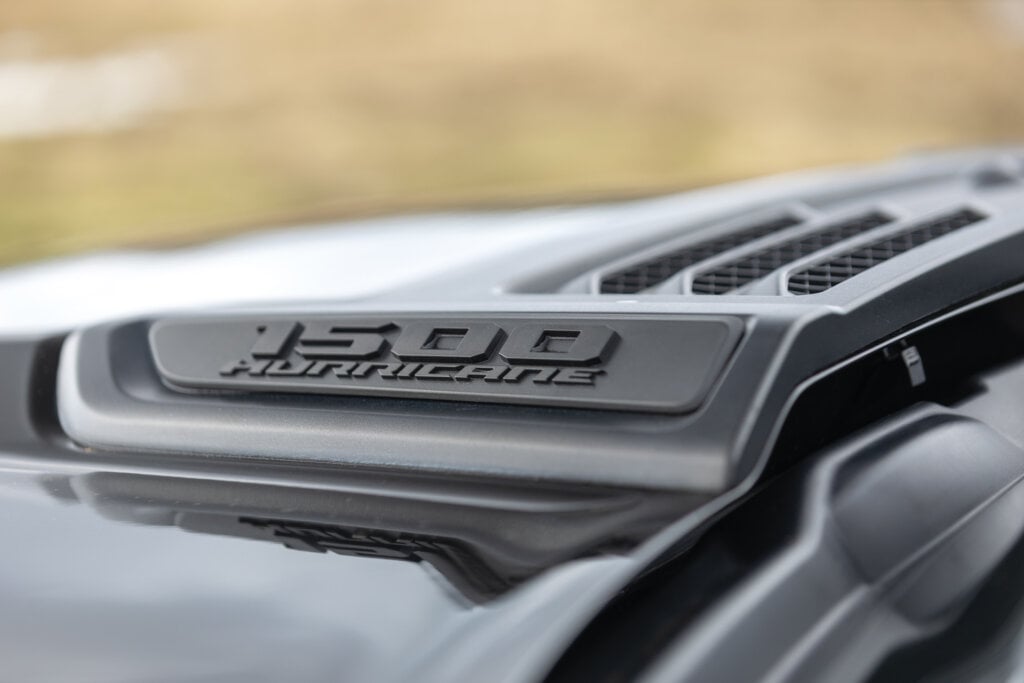
Hurricane force
In the Express, the old Hemi V8 has made way for Ram’s 3.0-litre Hurricane, a twin-turbo straight-six summoning 313kW and 635Nm. It drives through an eight-speed auto and a part-time four-wheel-drive system.
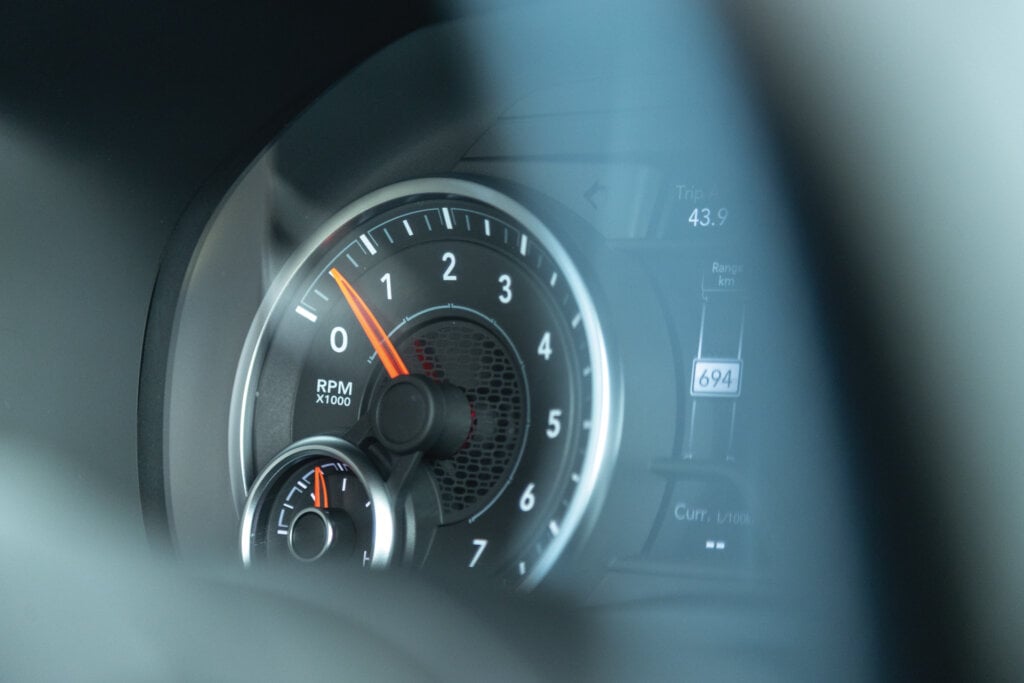
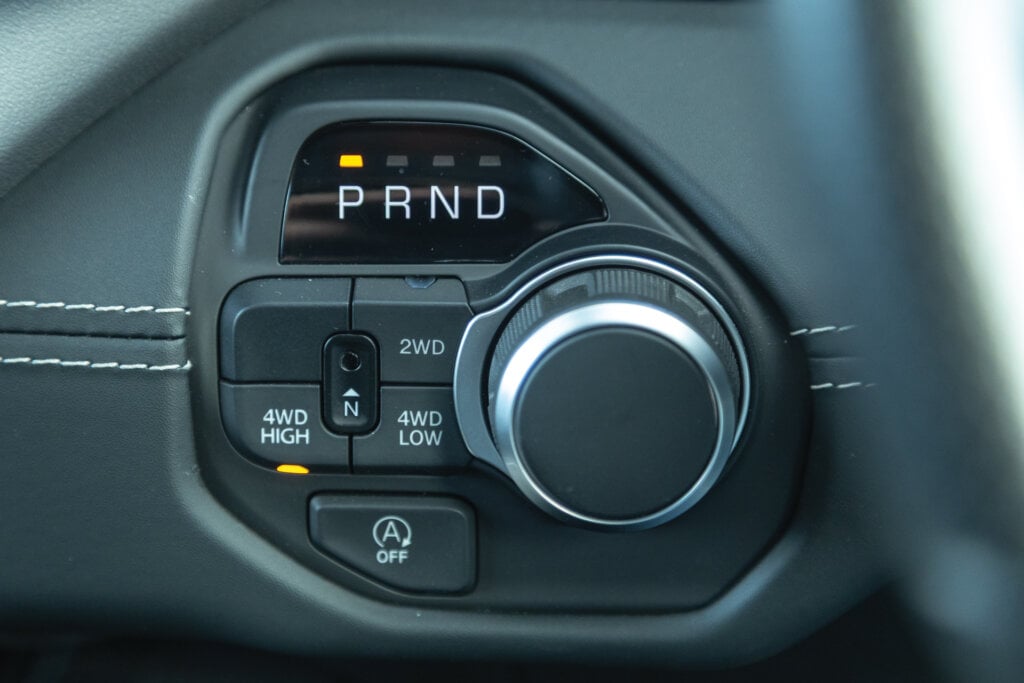
It is a beast of an engine, yet also quite cultured. The six pulls impressively from low revs, builds speed with indecent ease but is always smooth. So too is the auto. Our tester reached 100km/h in just over 5.5 seconds. That’s moving for something so large. The soundtrack is less memorable; it’s too quiet when you lean on it. The bigger issue can be traction however. The Express has 2H, locked 4H and low range, but misses the on-demand 4A setting of the more expensive models. And all that easy urge can trouble the rear grip, especially on slippery surfaces.
Ram quotes 10.7L/100km, which is around 12 per cent better than the old Hemi. We averaged closer to 14L/100km. That isn’t disastrous given the performance and frontal area, but you’ll require a generous fuel budget, especially when towing.
The ride of the Ram is fairly impressive too. A long 3672mm wheelbase and coil-sprung rear end give it a plush, composed gait. You don’t really miss the air springs of the Limited model. It manages to mop up broken surfaces and it avoids the choppy rear-axle behaviour of some one-tonners.
On highway trails, the steering remains light yet it turns keenly enough, especially considering that wheelbase. It doesn’t roll in untoward fashion either, though a bit more stopping power wouldn’t go astray.
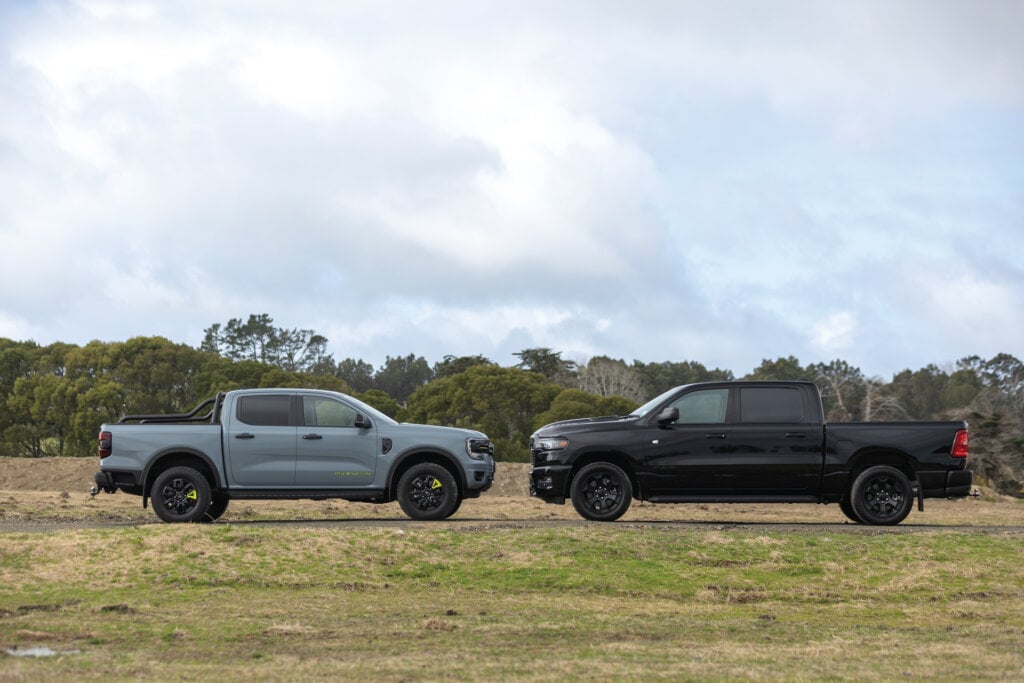
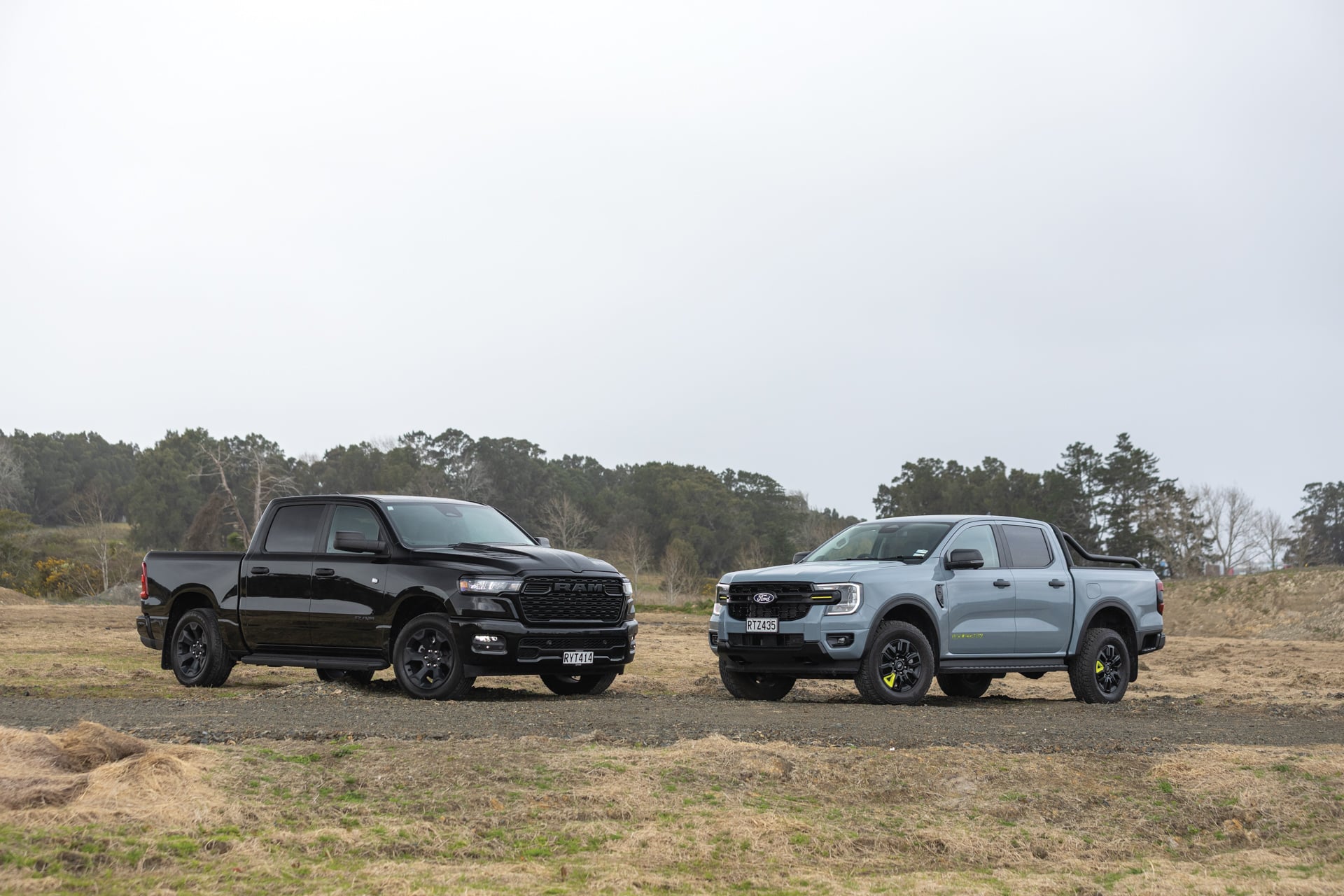
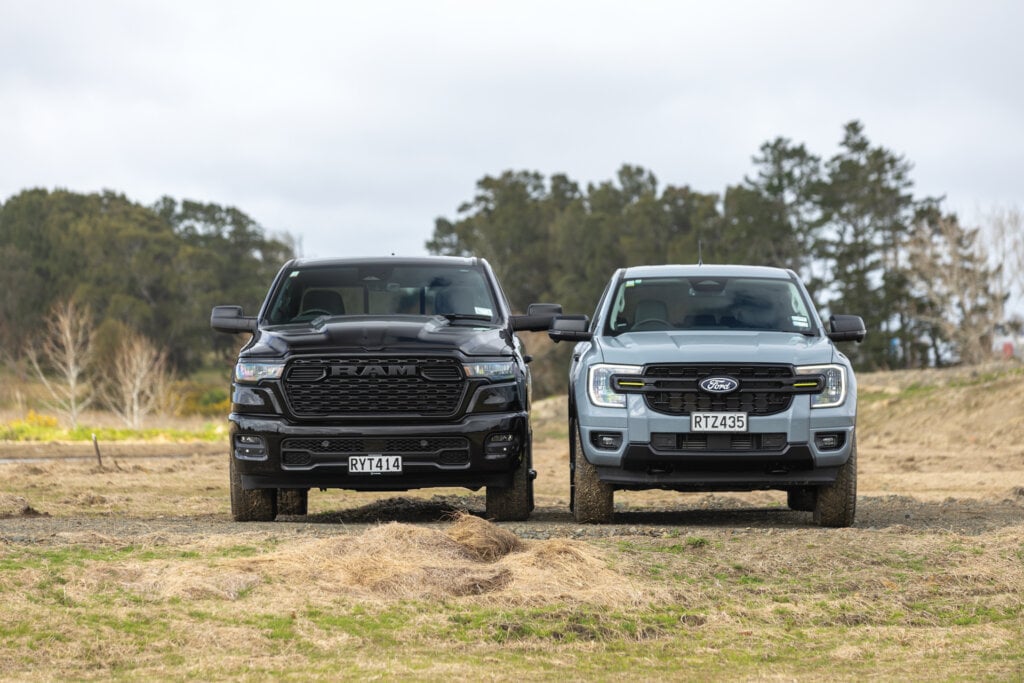
The unavoidable aspect of the Ram is that it is simply huge. At 5916mm long, 2474mm across (including the mirrors) and 1971mm tall, the Ram is 546mm longer, 266mm wider and 85mm taller than the Ranger. Its 14.4m turning circle adds another 1.5m, making every U-turn a three-pointed affair. Yes, you can drive it around town but parking is always a mission, and it wouldn’t fit down our driveway without everyone breathing in.
The obvious question is why not compare the Ram with the Ranger Super Duty? At the time of testing it had yet to reach local showrooms. Apparently a problem with the towbar certification is holding it up for NZ. Ford’s big Ranger is intended to match the Ram’s 4500kg tow rating, but until it arrives, the 1500 and Silverado retain their place atop New Zealand’s towing ladder.
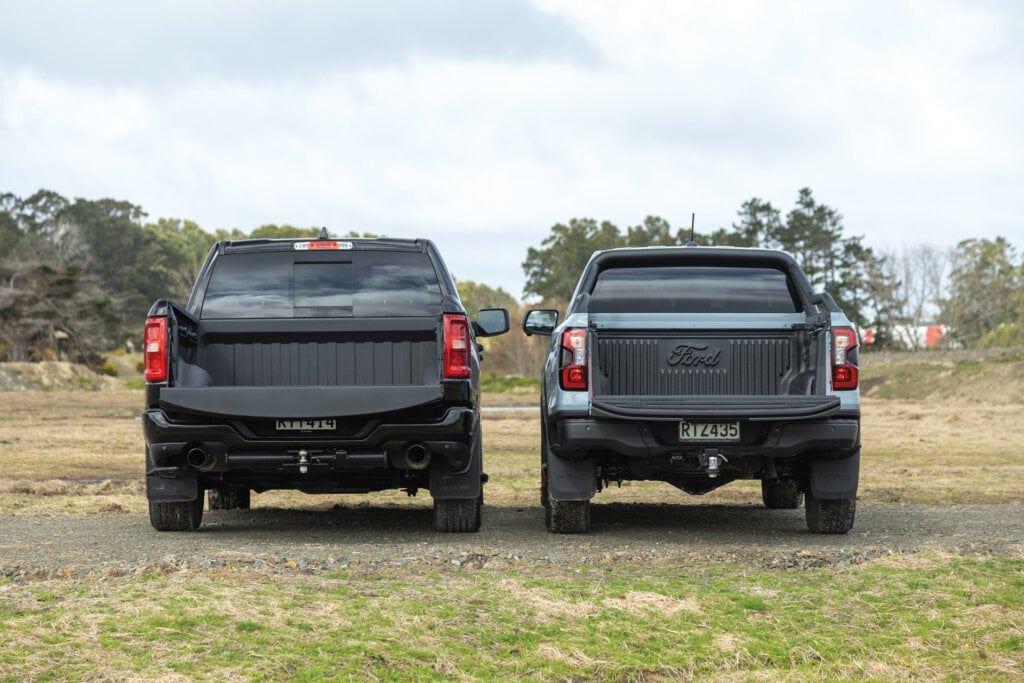
The 4500kg tow rating requires the appropriate heavy-duty towball, and maximum download is 450kg. The Express has a 729kg payload, a 3220kg GVM and a 7711kg GCM, but you can’t max out every number simultaneously. With a 4500kg trailer attached, the combined-mass limit reduces what can remain in the truck for people and cargo. Towball load counts as payload too.
Nor is this the 1500 for serious off-roading. Ground clearance is 217mm and its approach, breakover and departure angles are modest. The part-time 4WD will help on slippery ground, but size quickly becomes the enemy on narrow tracks. The Rebel makes greater sense for regular dirt work.
Ranger-sized reality
Climb into the Wolftrak and the Ranger suddenly feels compact. At 5370mm long and almost 2m across, it is still a substantial ute, but it fits New Zealand roads, driveways and parking spaces better.
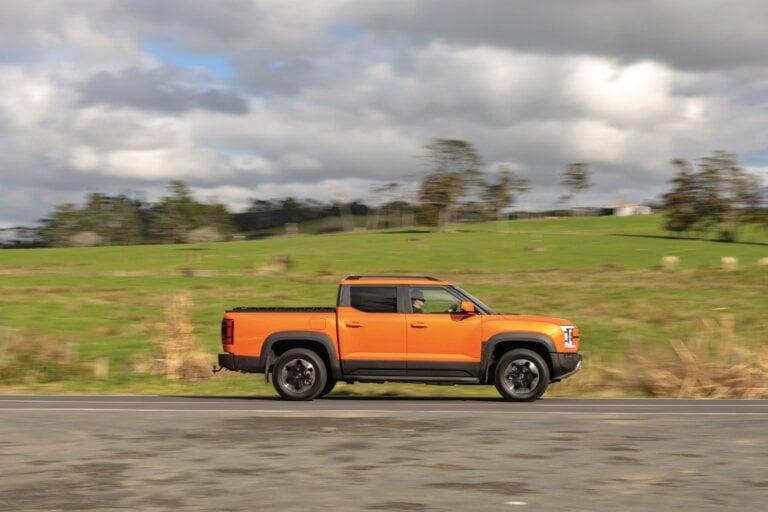
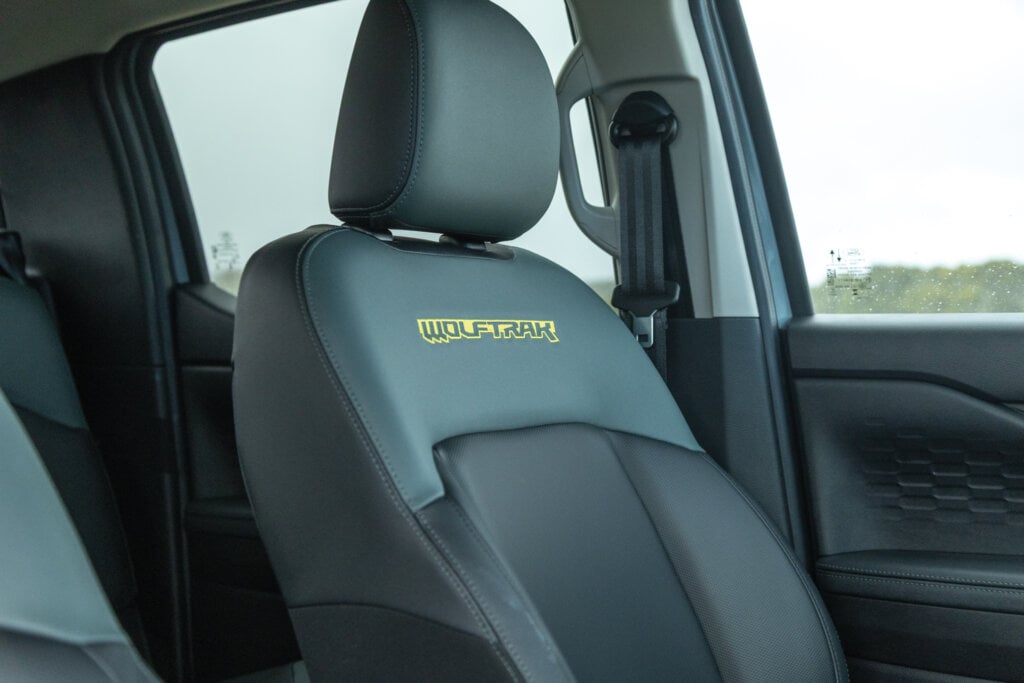
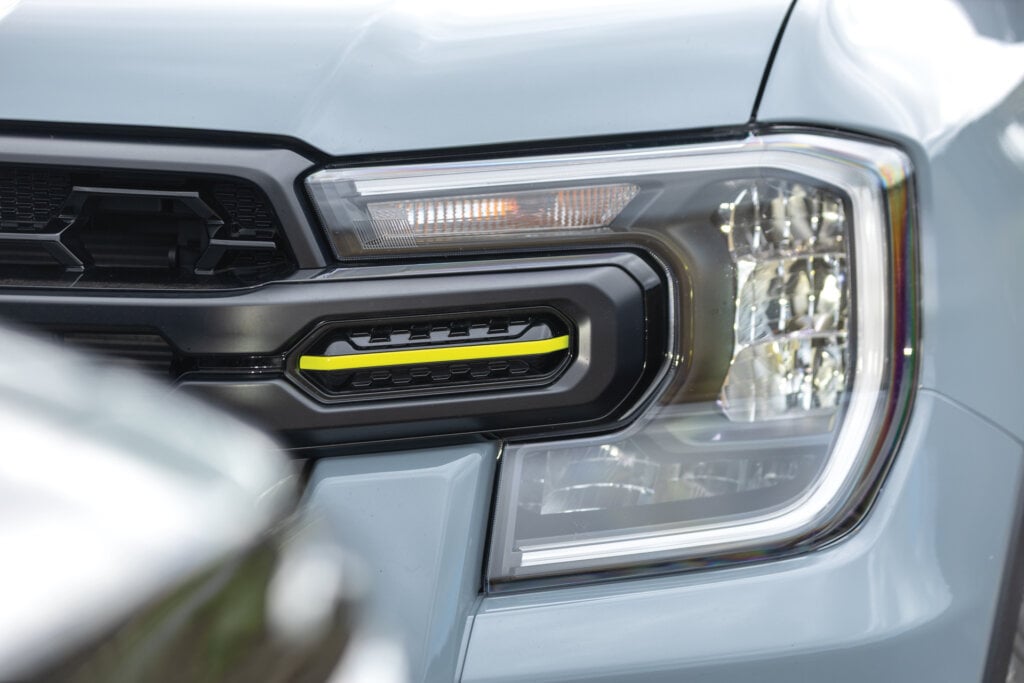
The Wolftrak is a limited-run model powered exclusively by Ford’s 3.0-litre V6 turbo-diesel. Its unique Traction Green paint and Zest-coloured details brighten the honeycomb grille, 17-inch Asphalt Black alloys, cabin trim and embroidered seats. A sports bar and all-terrain tyres complete the look.
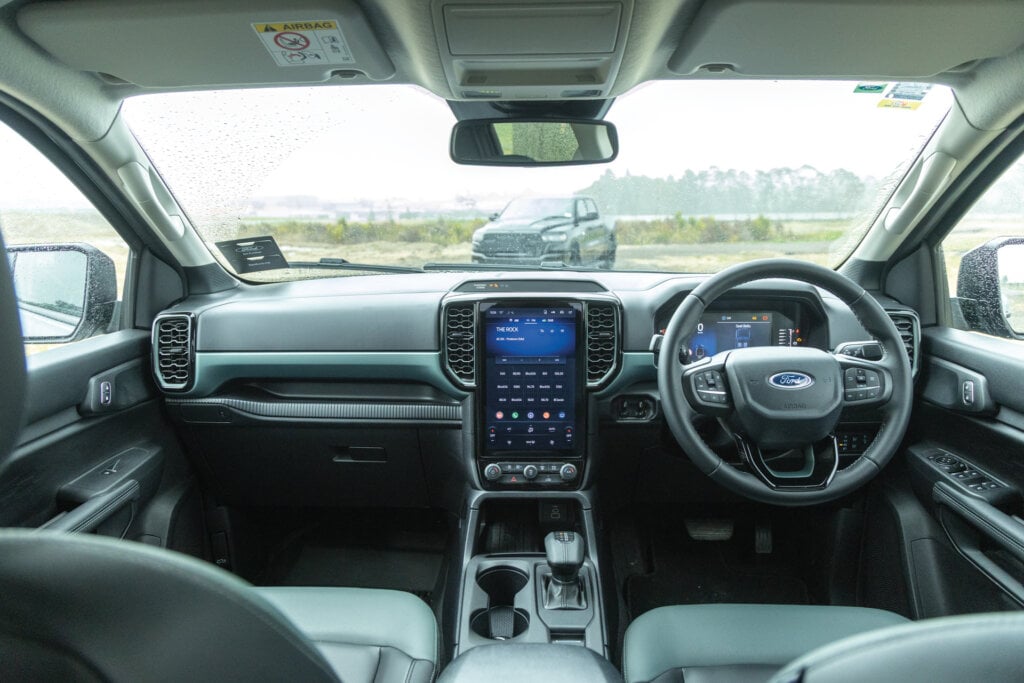
There is more gloss inside than in the Ram. It still feels like a working Ranger but the Wolftrak has vinyl upholstery, a leather-bound steering wheel, keyless entry and start, wireless charging, a 12-inch touchscreen and a 360-degree camera. The trailer guidance and six auxiliary switches are useful additions.
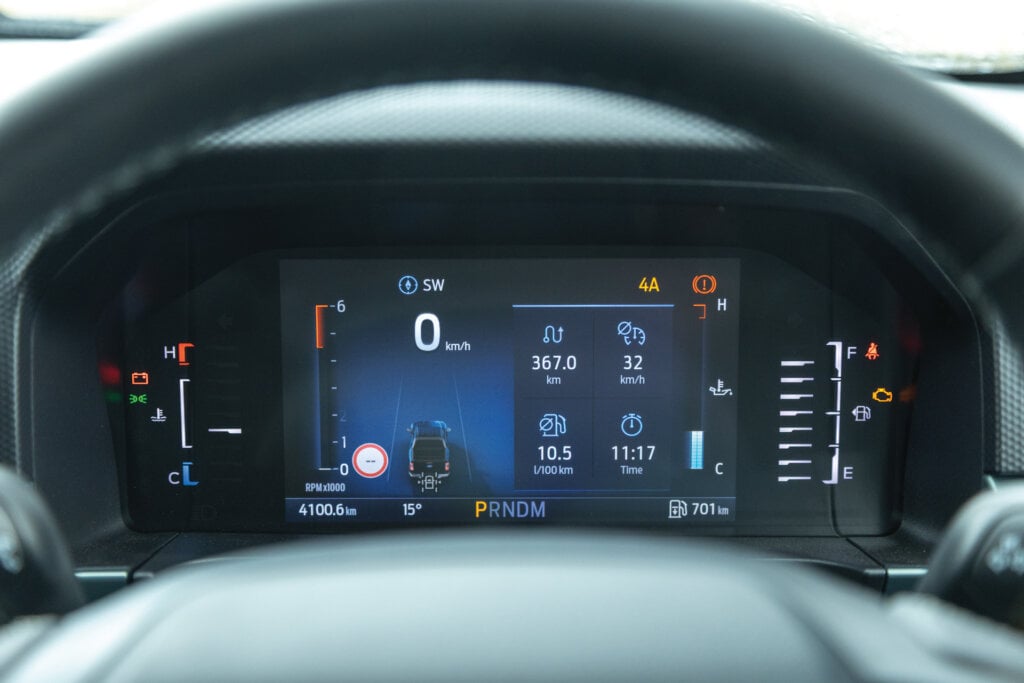
Its V6 makes 184kW and 600Nm, and runs through a 10-speed auto. Those outputs look modest next to the Ram’s, yet the Ranger never feels short of urge. The diesel has a bit of rumble too. It’s not much of a revver, but a chunky mid-range and adept auto make up for that.
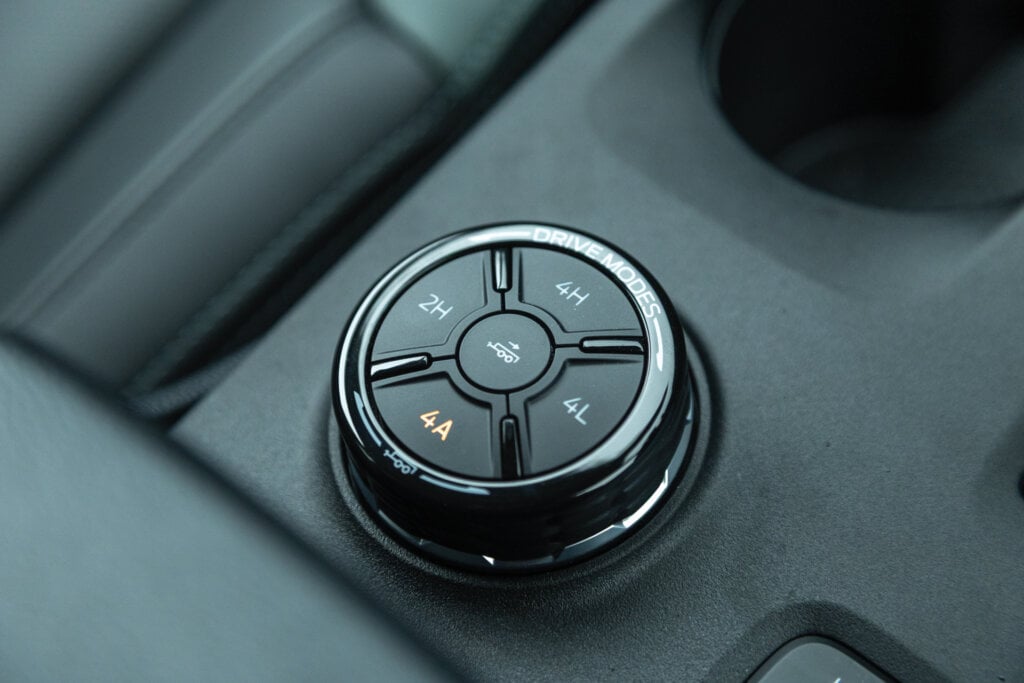
The Ford has the more versatile driveline. Along with 2H, locked 4H and low-range 4L, its 4A mode apportions drive automatically. You can leave it engaged on wet seal or while towing in variable conditions. Six drive modes and a rear differential lock add to its repertoire.
Ford quotes 8.3L/100km; we saw 9.7L/100km. The Ram’s 14L/100km test average is respectable for its size, but it still used roughly 45 per cent more fuel than the Ranger.
The Ranger is the more wieldy road vehicle. It changes direction with greater enthusiasm and is easier to place once the road tightens. The trade-off is a busier ride. Its shorter wheelbase and leaf-sprung rear end allow more movement through the cabin, whereas the Ram flattens the same surface. Even so, the Ranger’s general manners remain among the class benchmarks.
It is also the better off-roader. Ground clearance is 234mm, wading depth is 800mm and the approach angle is 30 degrees. It is just easier to thread down narrow trails.
The load box is smaller, measuring 1464mm long with 1217mm between the wheelarches. Rear-seat space is merely adequate; three adults will become acquainted quickly. The Ranger counters with a one-tonne payload, 3500kg towing and a 6400kg GCM. As with the Ram, maximum towing and payload cannot be used together.
So big or bigger?
There is no outright winner here because these trucks serve different purposes. The Ram has effortless performance, a better unladen ride, vastly more cabin room and another tonne of towing capacity. If you genuinely need that 4500kg tow rating, the case largely makes itself.
But you pay $49,000 more for the privilege, and a lot more at the pump. You also need a wide driveway and some patience in town. The Express Black Edition’s basic cabin makes that price harder to swallow, even if its mechanical package remains impressive. Most New Zealand Ram buyers opt for the Limited, or the even bigger HD models.
The Wolftrak would make more sense for most New Zealand ute buyers. It can tow 3500kg, carry around a tonne and tackle tougher tracks. It is more manoeuvrable, more economical and better equipped where it matters.
Ram owners will probably keep buying Rams, and some Ranger drivers will always aspire to one. Fair enough. But unless you need the extra towing capacity, crave the theatre of a full-size pick-up and have somewhere suitable to put it, the Ranger is all the truck most people will ever need.
Ford Ranger Wolftrak
$75,990 / 8.3L/100km / 250g/km
0-100 km/h 8.40s
80-120 km/h 6.15s (167m)
100-0 km/h 38.90m
Speedo error 97 at an indicated 100km/h
Ambient cabin noise 71.2dB@100km/h
Engine 2993cc / V6 / TDI
Max power 184kW@3250rpm
Max torque 600Nm@1750-2250rpm
Drivetrain 10-speed auto / switchable AWD
Front suspension Wishbones / swaybar
Rear suspension Solid axle
Turning circle 12.9m (3.0 turns)
Front brakes Ventilated discs
Rear brakes Ventilated discs
Stability systems ABS, ESP
Safety AEB, ACC, BSM, LDW, RCTA, ALK, AHB
Tyre size f/r-255/70R17
Wheelbase 3270mm
L/W/H 5370 / 1918 / 1886mm
Track f-1620mm r-1620mm
Fuel capacity 80L
Luggage capacity n.a
Tow rating 750kg (3500 braked)
Service intervals 12 months / 15,000km
Warranty 5yrs / 150,000km
ANCAP rating ★★★★★ (2022)
Weight (claimed) 2295kg
Ram 1500 Express Black Edition
$124,990 / 10.74L/100km / 283g/km
0-100 km/h 5.58s
80-120 km/h 3.65s (117m)
100-0 km/h 41.60m
Speedo error 98 at an indicated 100km/h
Ambient cabin noise 70.1dB@100km/h
Engine 2993cc / IL6 / T / DI
Max power 313kW@5200rpm
Max torque 635Nm@3500rpm
Drivetrain 8-speed auto / switchable AWD
Front suspension Wishbones / swaybar
Rear suspension Solid axle / swaybar
Turning circle 14.4m (3.1 turns)
Front brakes Ventilated discs (378mm)
Rear brakes Ventilated discs (376mm)
Stability systems ABS, ESP
Safety AEB, ACC, BSM, LDW, RCTA, ALK, AHB
Tyre size f/r-275/55R20
Wheelbase 3672mm
L/W/H 5916 / 2017 / 1971mm
Trackf-1741mm r-1729mm
Fuel capacity 98L
Luggage capacity n.a
Tow rating 750kg (4500 braked)
Service intervals 12 months / 12,000km
Warranty 3yrs / 100,000km
ANCAP rating Not rated
Weight (claimed) 2491kg