View all
7 more images
2026 Subaru Outback Wilderness Apex Review
Words: Andrew Sluys | Photos: Alex Schultz
The Outback now comes in two flavours, this being the more rugged Wilderness version. Does it justify the extra spend over the regular model?
It’s fair to say that few vehicles have taken as many different forms as the Subaru Outback.
A quick look at the model’s Wikipedia page details how it began life as a soft-roading version of the Legacy station wagon, complete with raised suspension. This proved popular enough to spawn a standalone model, which debuted in 1994. The second generation built on the formula, turning the Outback into a more off-road-focused wagon, and it was a similar story for the third.
By the time the fourth-generation Outback rolled out of Subaru’s factory in 2009, the lines around what it actually was had started to blur. Was it a station wagon? Was it an SUV? No one really knew, but that didn’t stop buyers around the world flocking to it.
Things became even more ambiguous with the fifth-generation Outback, which could be seen as the tipping point between wagon and SUV. By the time the sixth iteration arrived in 2019, it was more SUV than wagon, but Subaru was still hesitant to label it as such, instead calling it “Outback-shaped”.
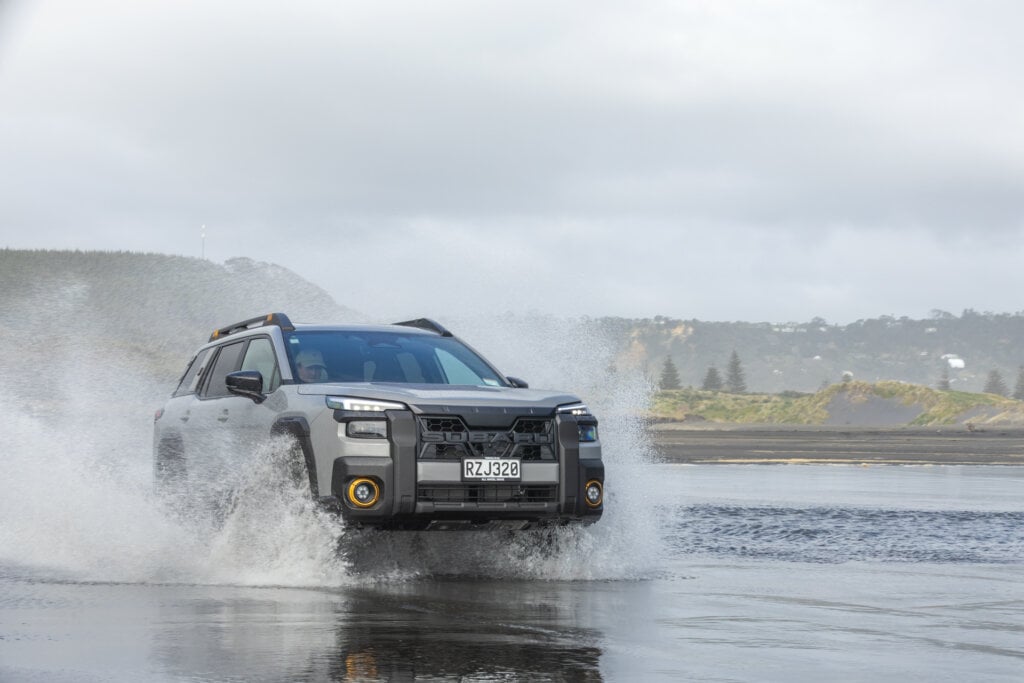
Last year saw the introduction of the seventh-generation Outback, completing its transition, with Subaru finally acknowledging its SUV status.
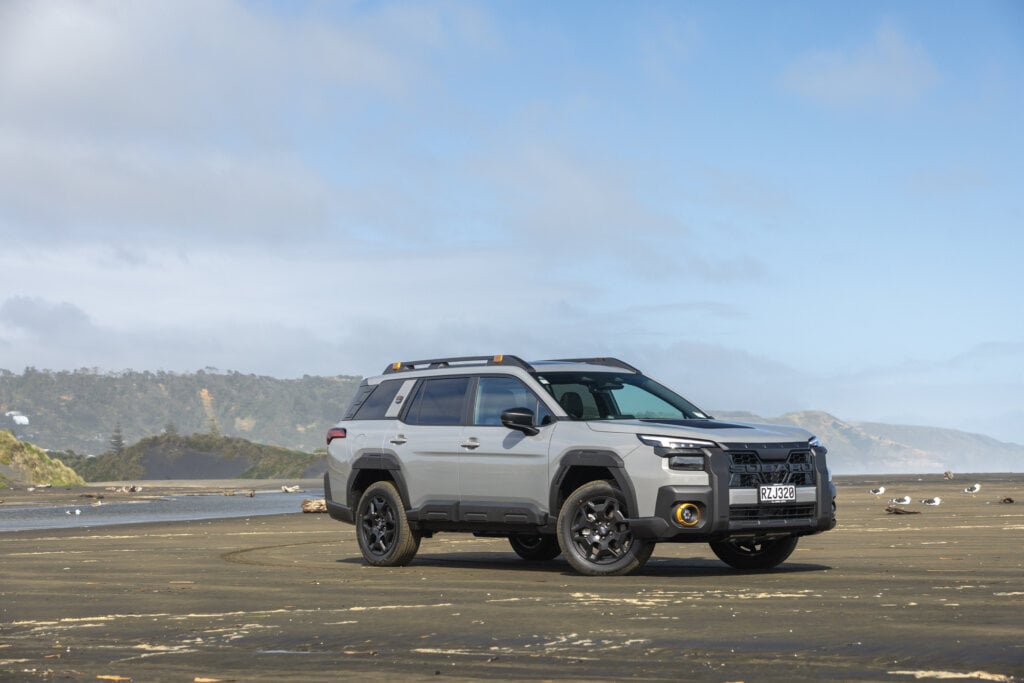
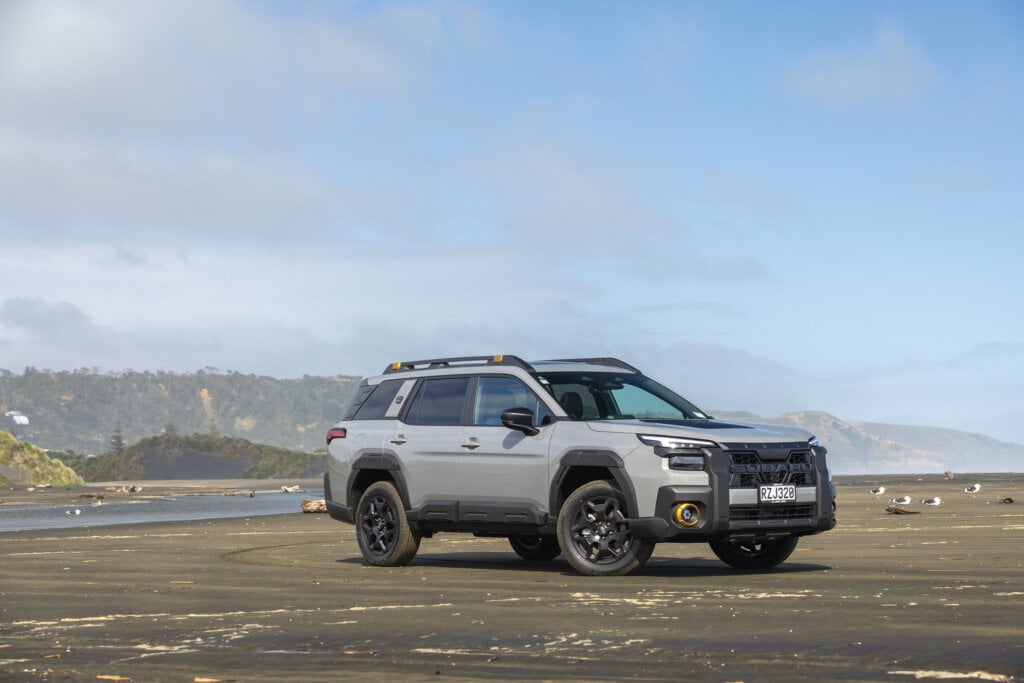
There’s no denying there’s still a whiff of wagon about it, as the roofline remains lower than those of others in the segment. Aside from that, however, it is convincingly an SUV. There’s plenty of black plastic cladding around the exterior, designed to take the brunt of contact with bushes, trees and whatever else you might encounter off the beaten track.
The apex Outback
In New Zealand, the Outback line-up is now five-strong, which seems substantial for what remains a relatively niche SUV. It starts at $54,990 for the entry-level model, but you’ll have to fork out considerably more for the full Wilderness experience.
There are two Wilderness variants, with the standard version starting at $69,990 and the Wilderness Apex at $74,990.
At a glance, these versions don’t seem to differ greatly from their more pedestrian counterparts, but closer inspection reveals significant changes.
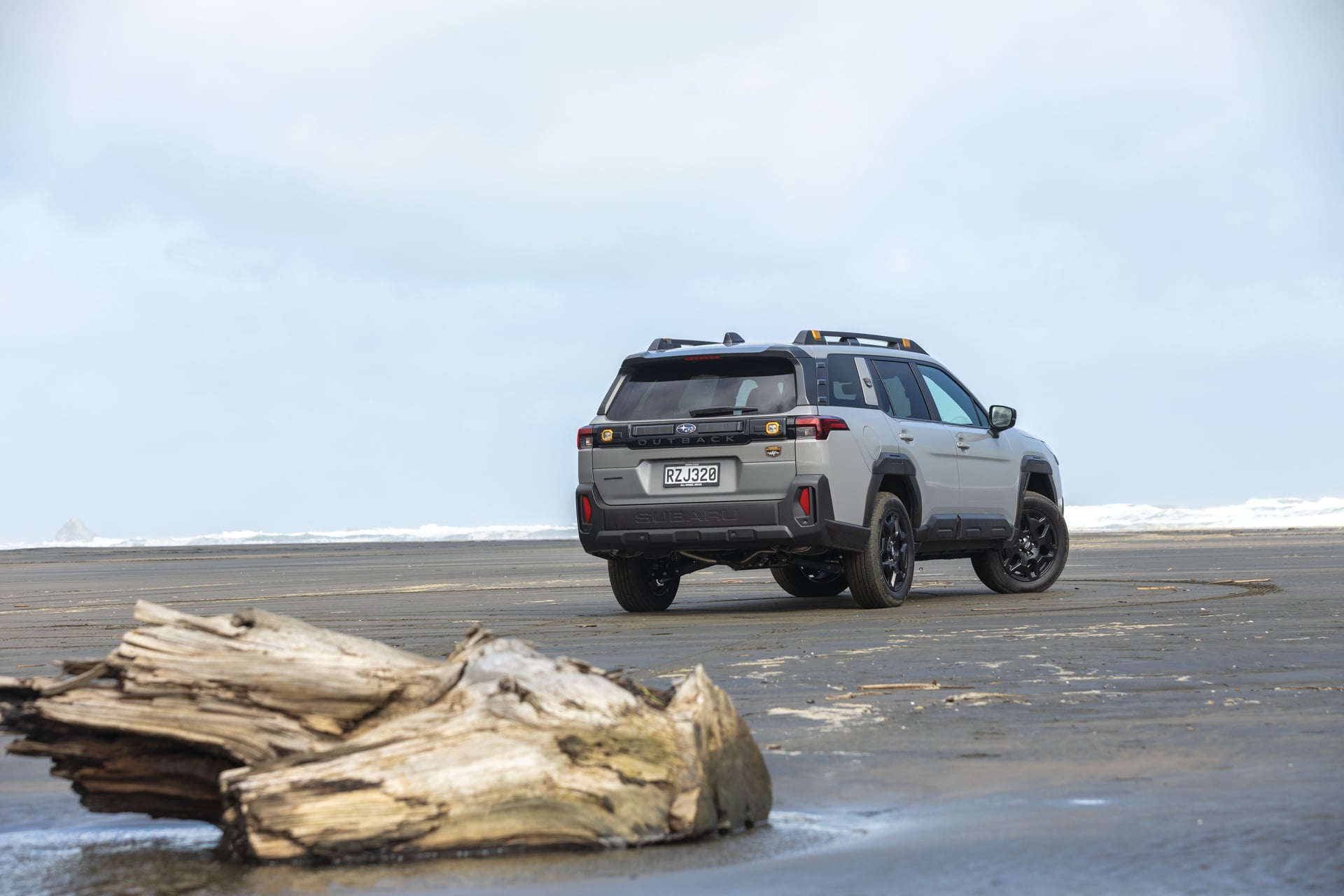
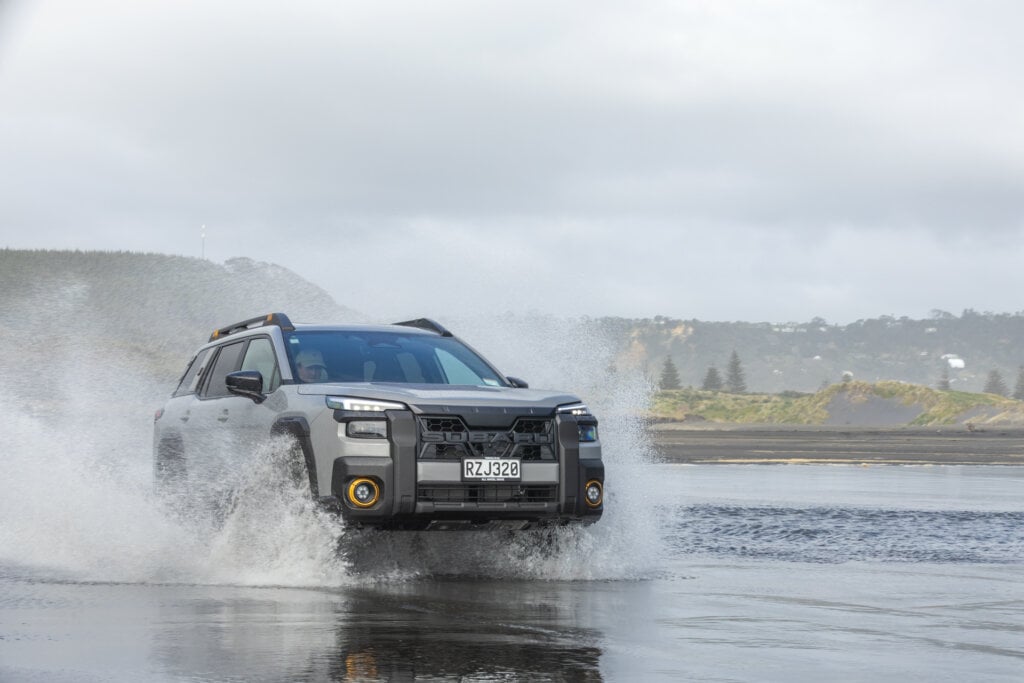
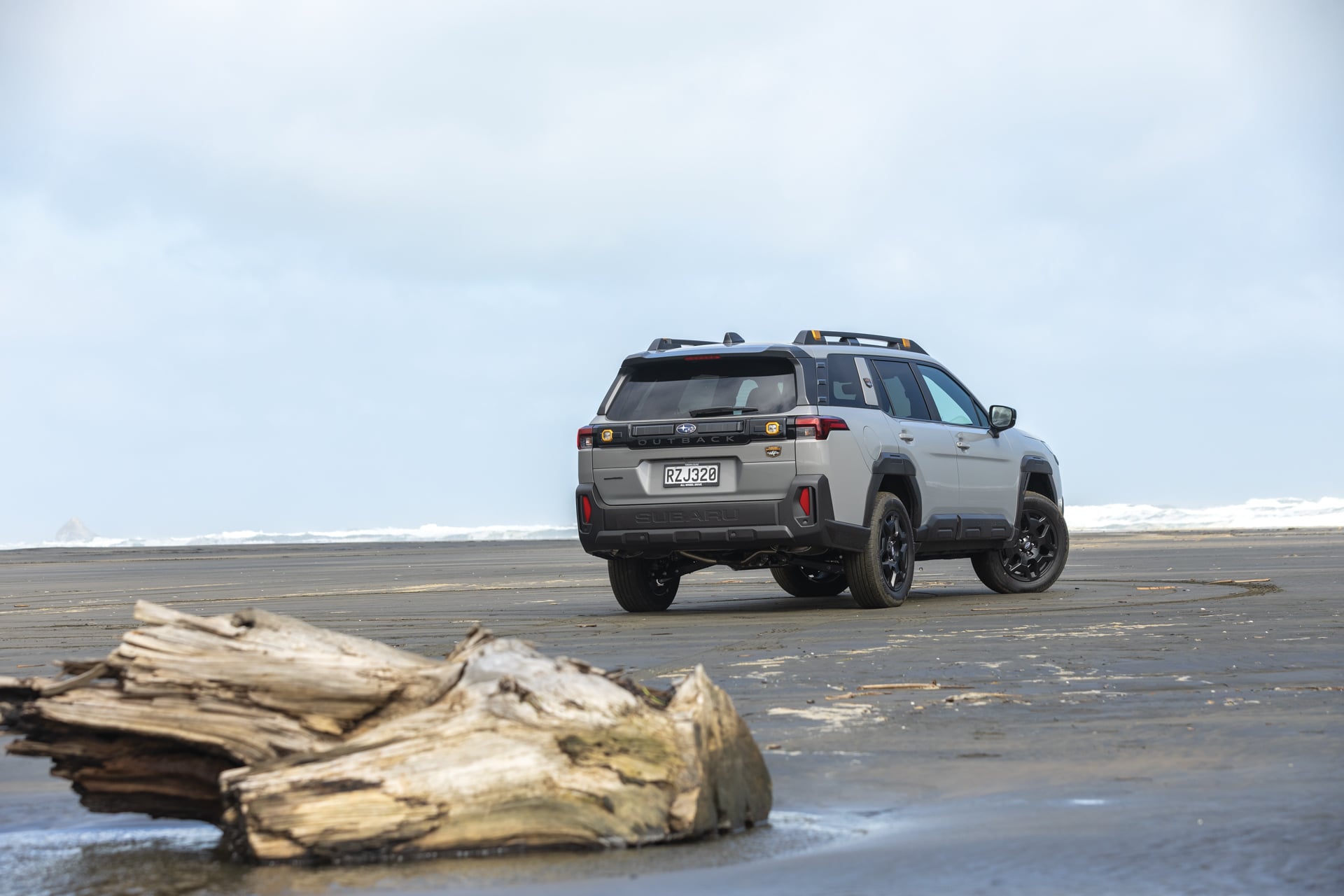
On the outside, Wilderness versions drop the blue Subaru badge at the front, instead wearing black “SUBARU” lettering across the fascia. They also feature two large nudge bar-like panels beneath the headlights.
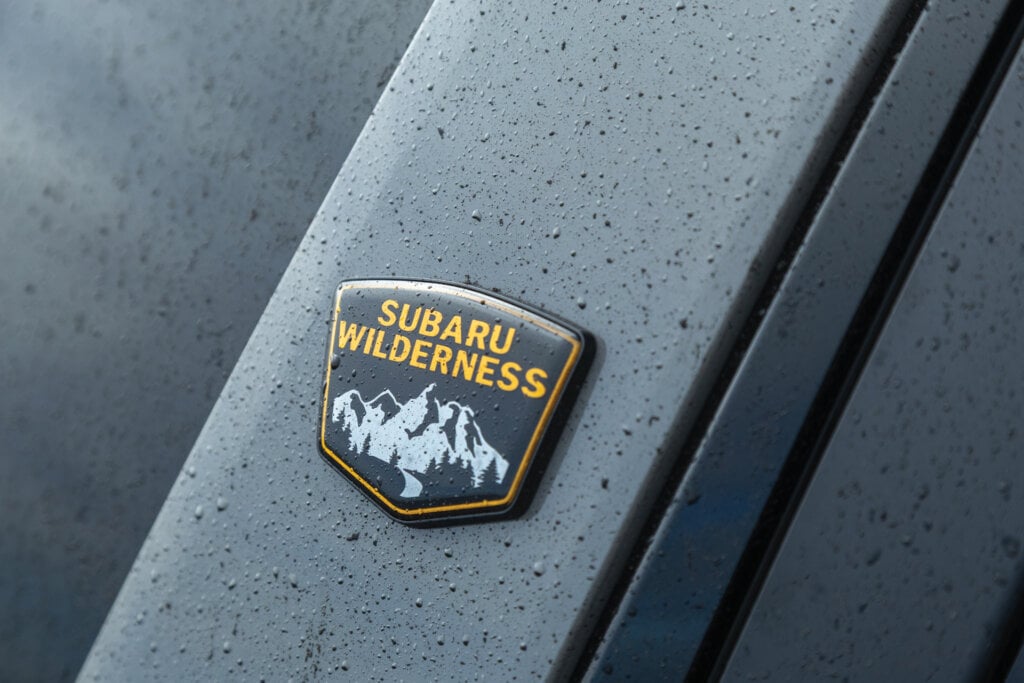
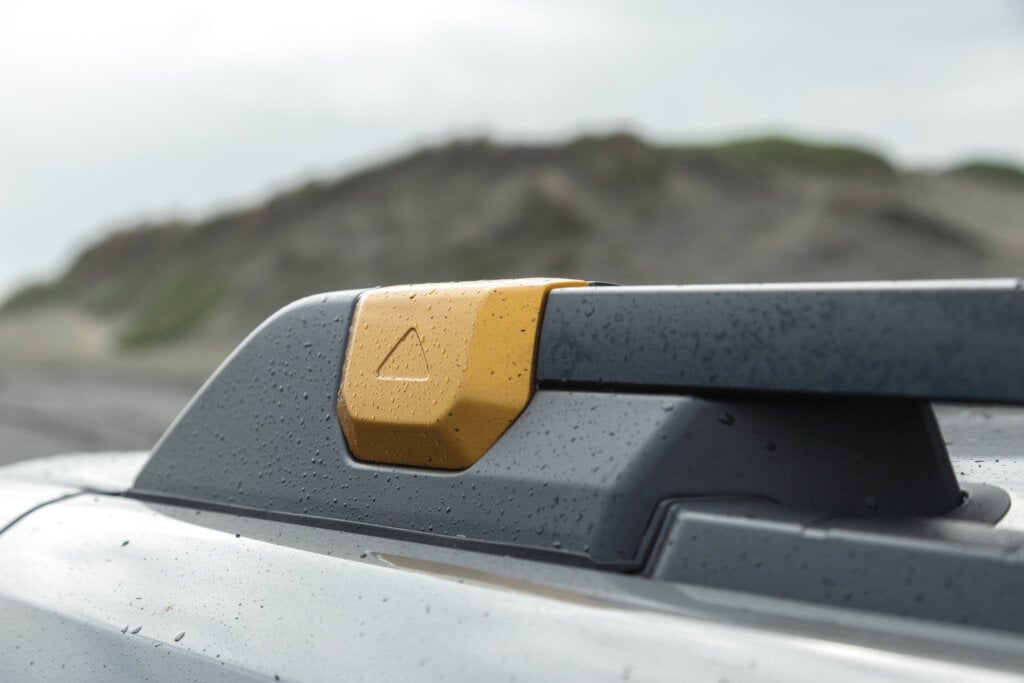
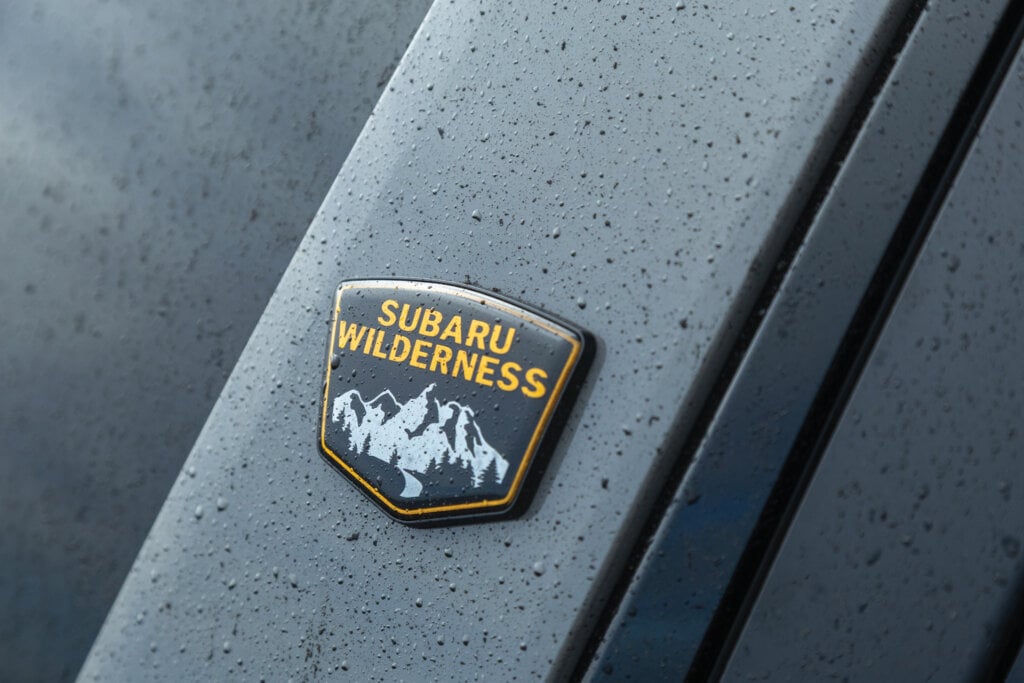
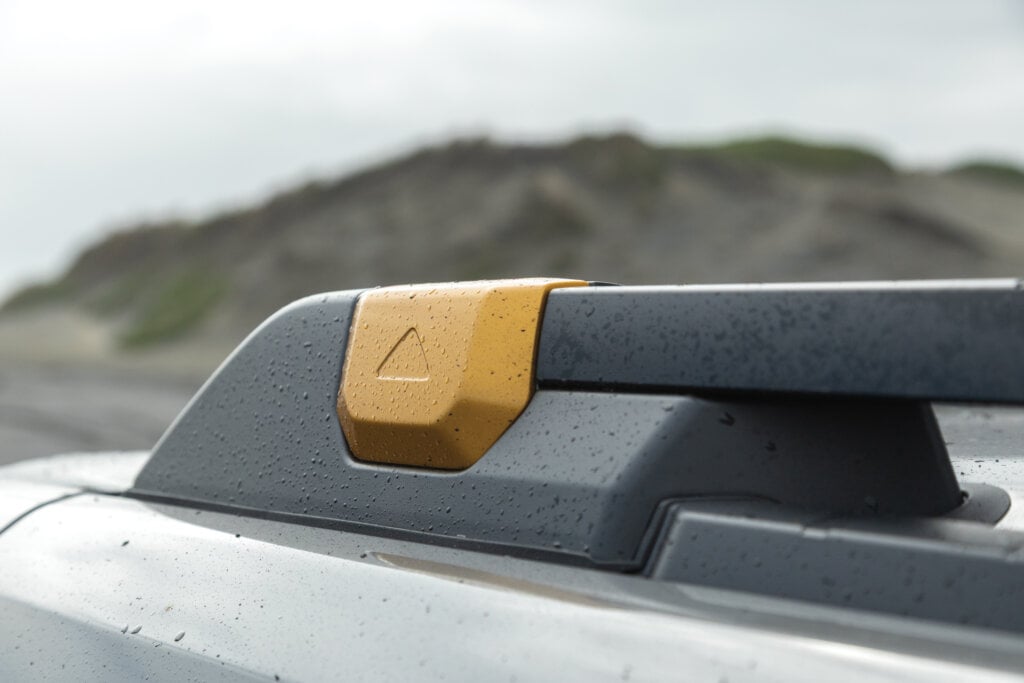
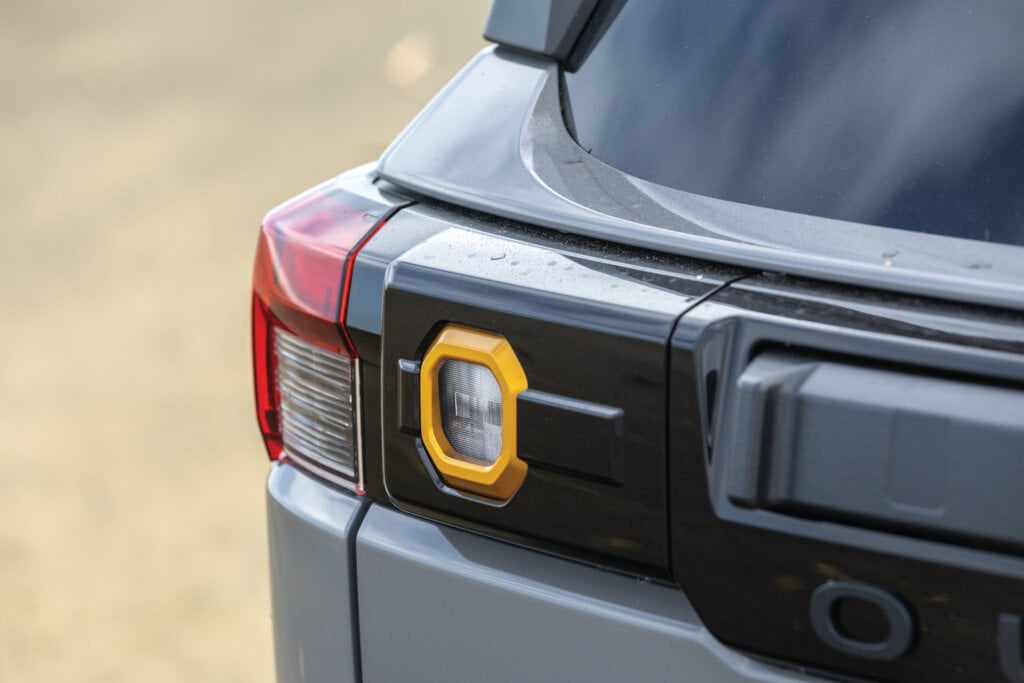
Wilderness badges are prominently placed on the C-pillars and tailgate, while orange accents surround the fog lights and reversing lights and also appear on the roof rails. A blue Subaru badge remains at the rear.
As you’d expect given the price premium, the aesthetic changes are only the beginning. There are more substantial differences beneath the surface.
Arguably the most important is the addition of a turbocharger. Where the standard Outback produces 137kW and 254Nm from its naturally aspirated 2.5-litre engine, the Wilderness makes 194kW and 382Nm from its boosted 2.4-litre mill.
These increased outputs improve performance, but come at the expense of fuel efficiency. Subaru claims a combined figure of 8.1L/100km for the standard model, while the Wilderness is rated at 9.7L/100km. This is where the lack of a hybrid system becomes obvious.
Across all Outback variants, the engine is paired with a continuously variable transmission and Subaru’s symmetrical all-wheel-drive system.
The Wilderness also gets an upgraded suspension system with electronic dampers and a ride height increased by 20mm, bringing total ground clearance to 240mm.
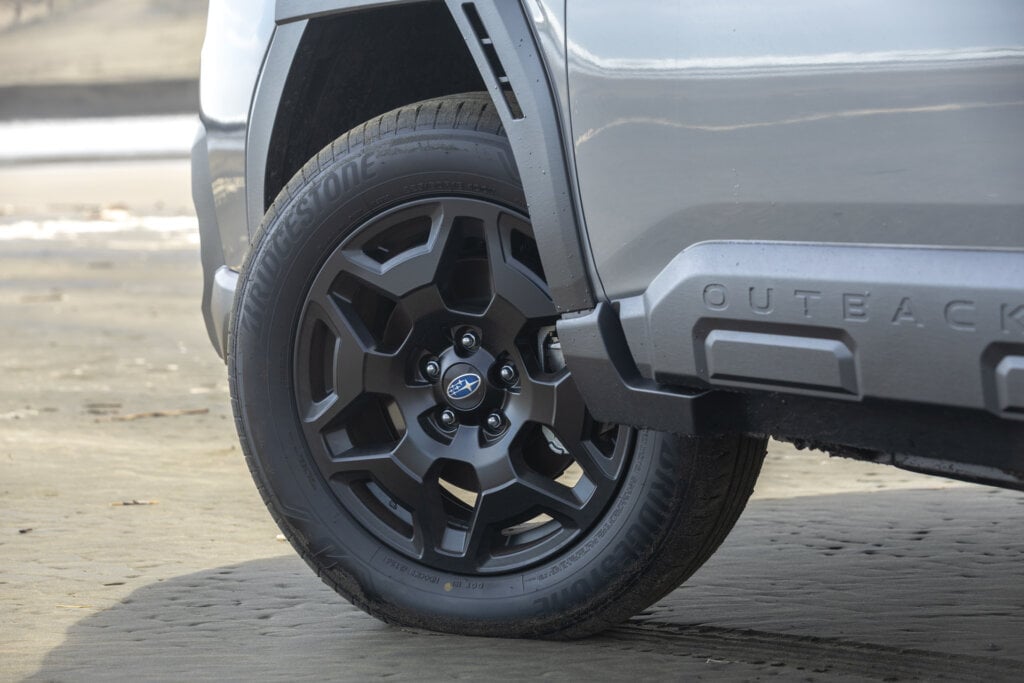
If you’re surprised to see that the tyres aren’t anything particularly special, blame the Aussies. All Outback models wear the same rubber in New Zealand, which is due to Australian compliance issues, and we take the same spec as they do.
A cabin fit for the Wilderness?
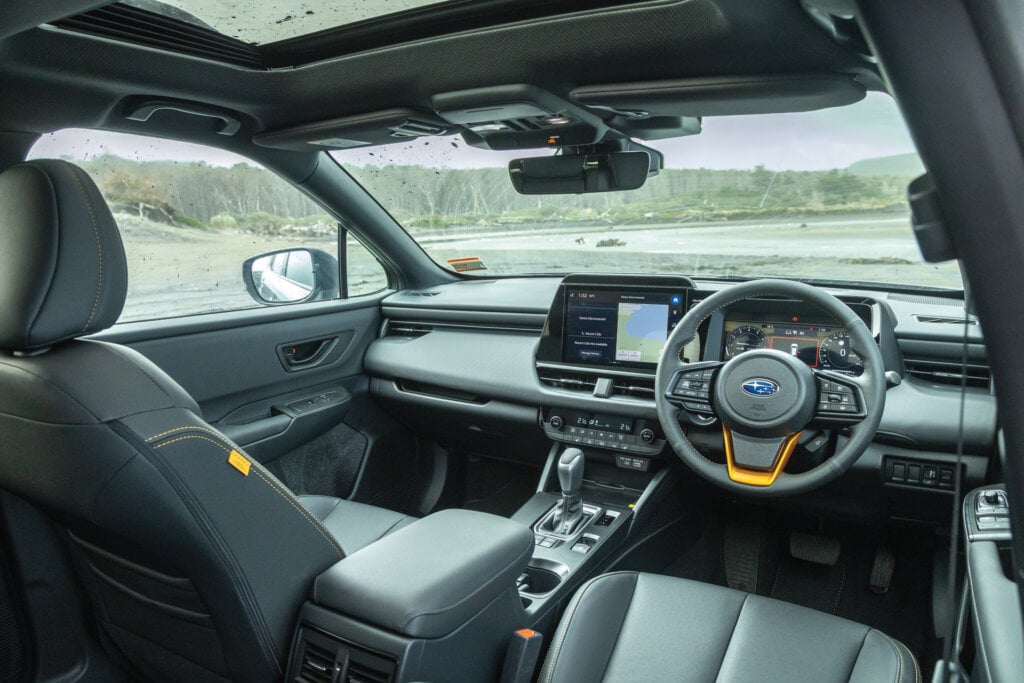
The cabin is one of the most impressive elements of the Outback Wilderness and feels like a big step in the right direction for Subaru.
The biggest change is the new 12.1-inch infotainment display in the centre of the dashboard. Gone is the awkward vertical display of the previous model, and its replacement is a considerable improvement. It features wireless Apple CarPlay and Android Auto, along with satellite navigation in the Apex.
Ahead of the driver is a 12.3-inch digital instrument cluster that can be configured to show the information you need. It also gains a fun off-road theme in the Wilderness models.
The new Outback Wilderness features water-resistant seats as standard, which is a helpful addition for soggy adventures. Interestingly, while this Wilderness Apex gets heated seats, it misses out on seat ventilation, which is included in the regular Outback.
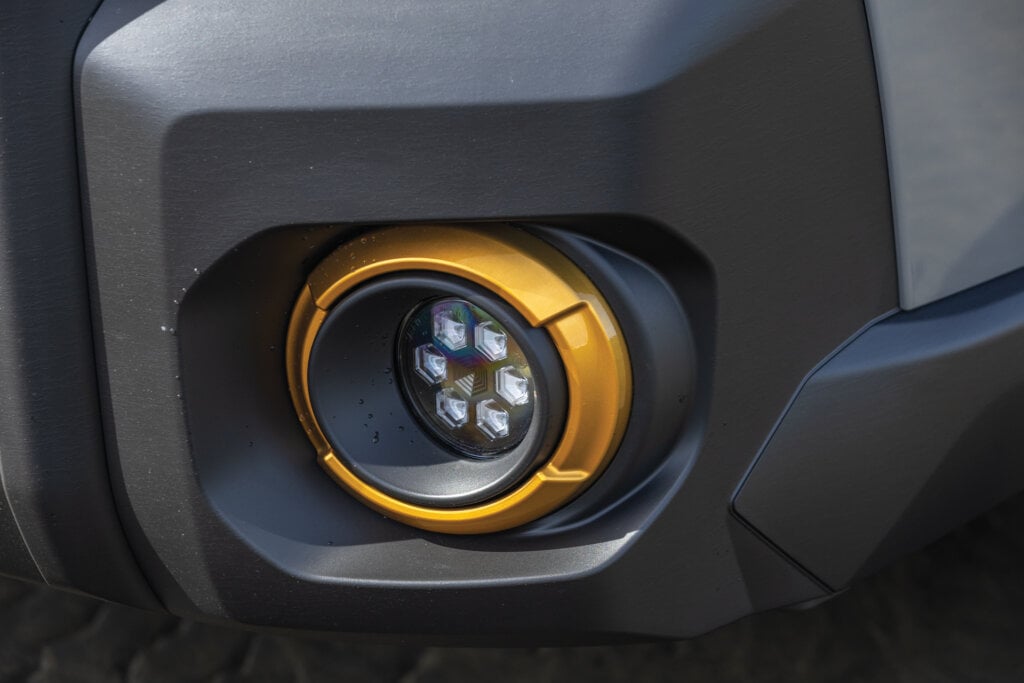
The front headrests are embossed with the Wilderness logo, while a heated steering wheel, wireless phone charger and heated rear seats are also standard.
There’s plenty of space in the cabin, which doesn’t come as much of a surprise given the Outback’s size. Despite its relatively low roofline, headroom isn’t an issue in either row, and second-row legroom is abundant. The middle-seat passenger has to contend with a sizeable transmission tunnel, but that’s not unusual in this segment.
Behind the back seat, the Wilderness focus is clear, with a suitably rugged boot setup. A rubber boot liner is standard, along with a folding luggage cover that uses magnets to secure itself against the side walls.
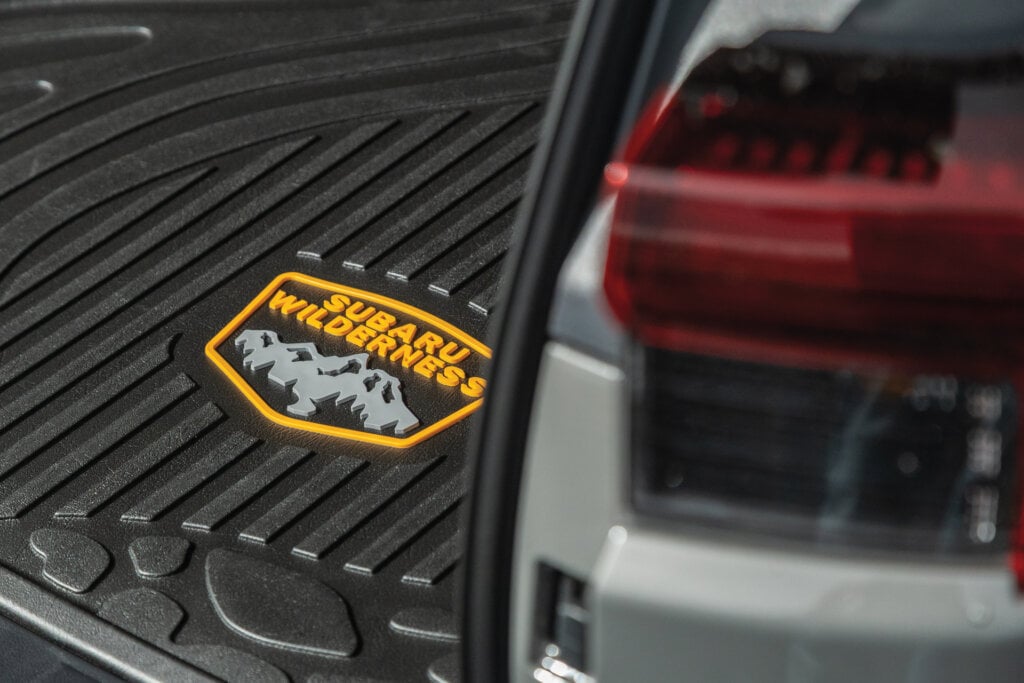
There are 530 litres of luggage space with the rear seats in place, expanding to 1211 litres when they’re folded.
Beneath the boot floor is a full-size spare wheel, which is a genuine rarity these days. It would have been easy for Subaru to overlook this, but it gives owners peace of mind when venturing properly off-road.
Finally, the Outback Wilderness is rated to tow a braked trailer weighing up to 2.1 tonnes.
Into the Outback
In some ways, the Outback feels a little old-fashioned on the road, but that isn’t necessarily a bad thing.
Its claimed 0–100km/h time of 6.3 seconds looks respectable, but the engine feels hampered by the CVT. Despite producing a decent amount of power and torque, it sounds as though it’s working hard under acceleration.
Subaru claims fuel consumption of 9.7L/100km, but we struggled to get it below 10L/100km during our time with the car. That result came from a mix of urban and motorway driving and was a little disappointing.
The ride is impressive over New Zealand tarmac, although it’s difficult to say how much of that is down to the electronic dampers. It carries itself well at normal speeds and corners with a reasonable degree of confidence, but leans into body roll when pushed harder.
Its cornering ability is also hampered by the tall tyre sidewalls, although these help isolate the cabin from rough surfaces.
Subaru has fitted the Outback with its full suite of active safety systems and, for the most part, they work well. We used the adaptive cruise control and lane-keeping assistance for much of our driving and didn’t find either overly intrusive. The driver-monitoring system, however, is quite persistent and may be something Kiwi drivers are quick to deactivate.
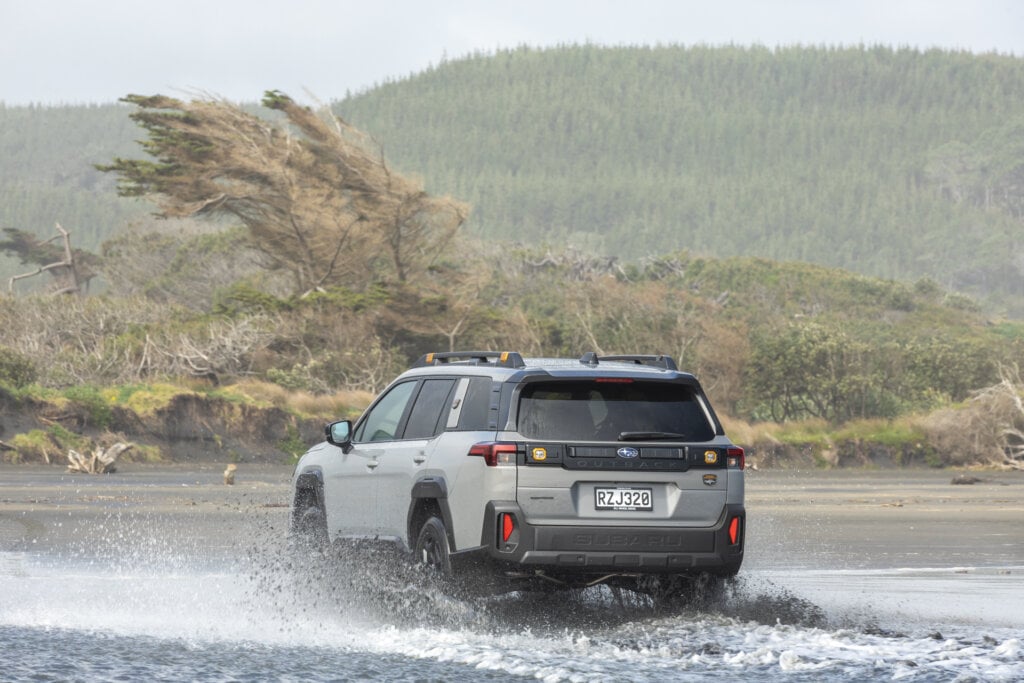
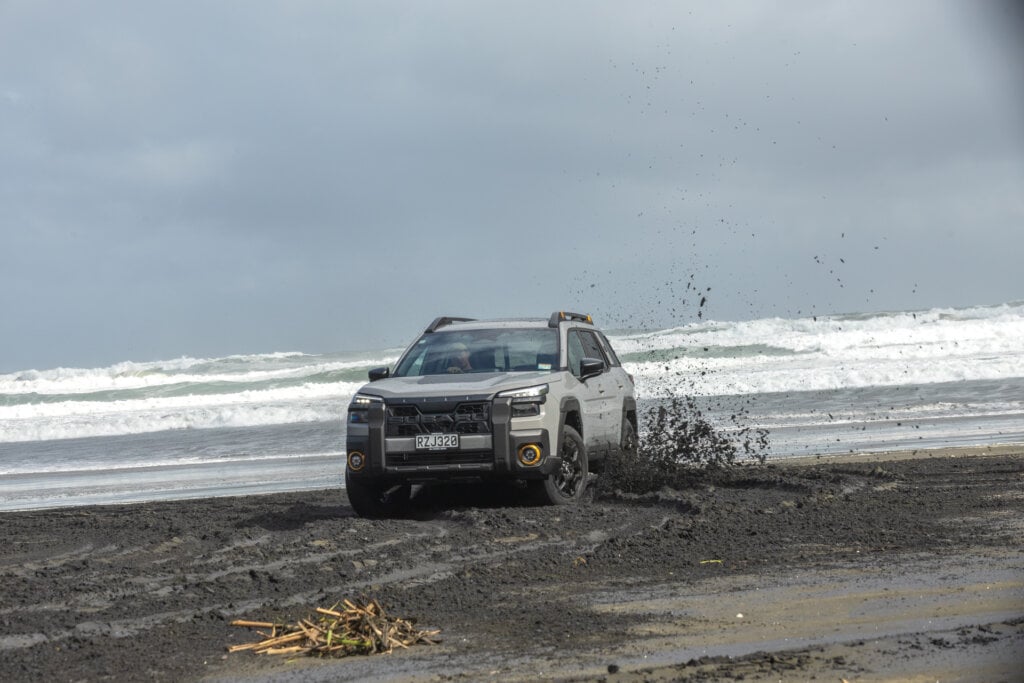
Given its positioning as a go-anywhere wagon, we also tested its ability away from the tarmac during a photo shoot on the sand. While we didn’t get stuck, the engine seemed to work harder than it should have to maintain momentum through the soft stuff.
I tried both X-Mode settings and, while the more extreme of the two allowed greater driver input, the Outback still didn’t seem entirely comfortable. Beefier all-terrain tyres would probably improve matters, but they would also push fuel consumption even higher.
The SUV apex?
As a whole, the Outback Wilderness Apex is a good option for buyers wanting something more rugged than a RAV4 without spending the big bucks on a proper off-roader such as a Land Cruiser Prado.
The Outback Wilderness doesn’t have any direct rivals in our part of the world. It’s a big seller in North America, where it competes with rugged SUVs such as the Toyota RAV4 TRD and Honda Passport, but neither is offered here in comparable form.
It’s a decent all-rounder with an impressive interior, but it isn’t without flaws. The CVT hampers its performance and fuel consumption falls short of the standard set by other medium SUVs.
Adding a hybrid system like the Forester’s would improve matters, but it remains unclear whether Subaru plans to do so.
Subaru Outback Wilderness Apex
$74,990 / 9.7L/100km / 228g/km
0-100 km/h 6.3s
Engine 2387cc / B4 / T / EFI
Max power 194kW@5600rpm
Max torque 382Nm@2000rpm
Drivetrain CVT / AWD
Front suspension Mac strut / swaybar
Rear suspension Wishbones / swaybar
Turning circle 11m
Front brakes Ventilated discs (315mm)
Rear brakes Discs (300mm)
Stability systems ABS, ESP
Safety AEB, ACC, BSM, LDW, RCTA, ALK, AHB
Tyre size f/r-225/60R18
Wheelbase 2745mm
L/W/H 4880 / 1880 / 1735mm
Trackf-1575mm r-1600mm
Fuel capacity 63L
Luggage capacity 530L
Tow rating 750kg (2100kg braked)
Service intervals 12 months / 15,000km
Warranty 3yrs / 100,000km
ANCAP rating Not rated
Weight (claimed) 1802kg