ANCAP – Beyond the Bang
Words: Richard Edwards | Photos: Supplied
We travel to Europe to witness a crash test first-hand and discover that the future of vehicle safety is about far more than surviving the impact
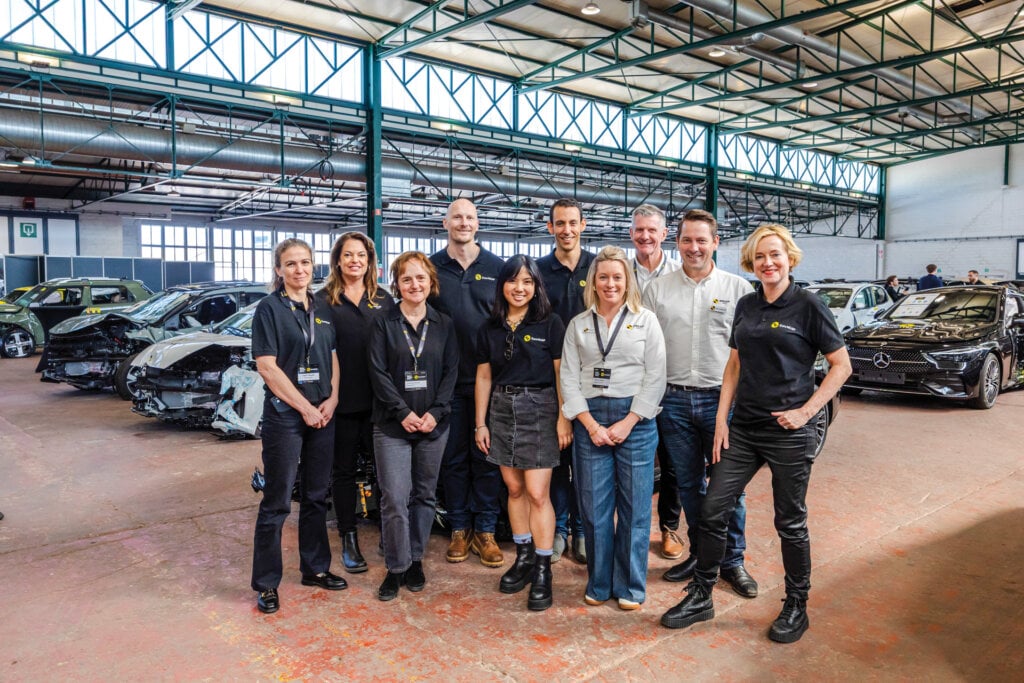
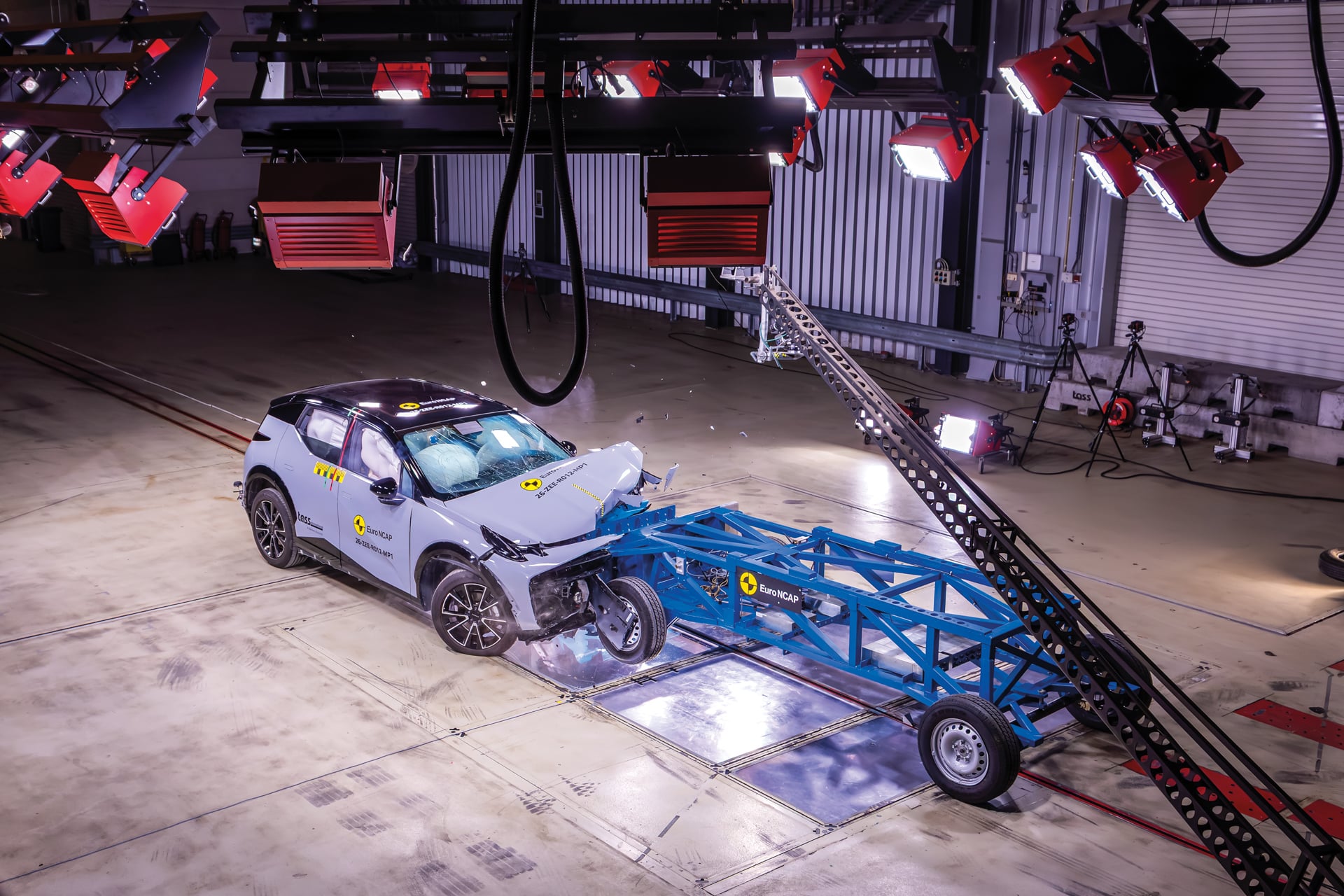
You think you know what a crash test looks like. You’ve watched the footage a hundred times, the slow-motion ballet of crumpling metal and inflating airbags set to clinical commentary. Standing in the test hall at Euro NCAP’s Netherlands facility, you realise very quickly that you knew nothing at all.
The bang is extraordinary. Two objects meet at a combined closing speed of 100km/h and the concussive force hits your chest before your brain catches up. The car, moments ago perfectly intact, is now something else entirely. The smell of deployed airbags fills the room.
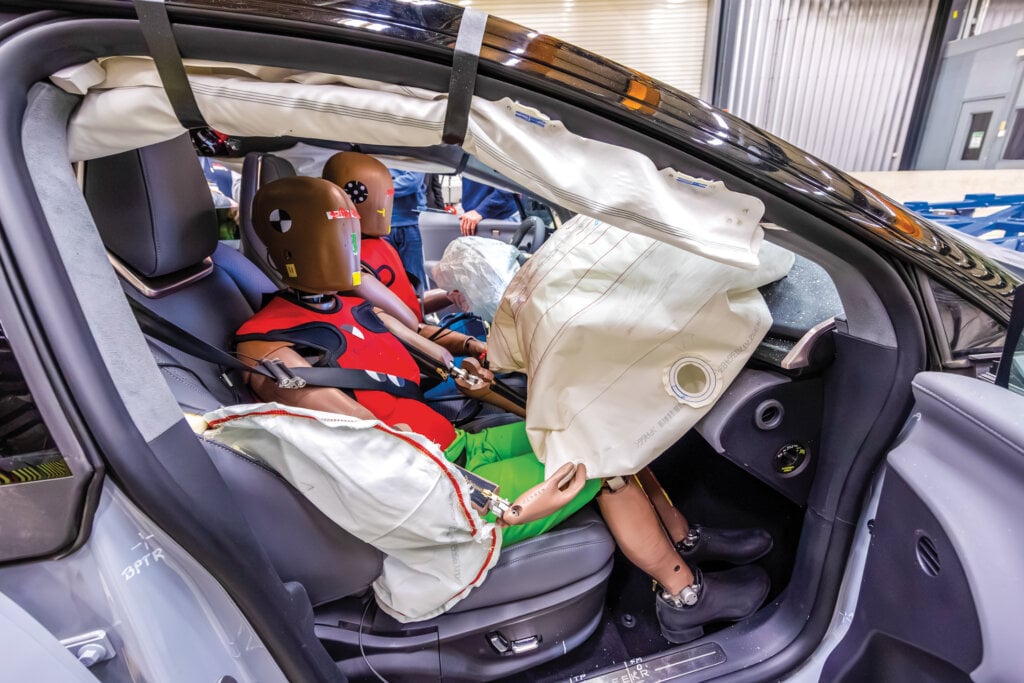
Then, as engineers move in, you notice things the footage never shows. The safety cell is intact. The doors still open. The steering column hasn’t punched into the driver’s space. And from somewhere inside the wreckage, the eerie beeping of warning systems and the steady click of hazard lights, still dutifully doing their job.
And then, as a dad, you notice something else. Below the curtain airbags, the small dangling legs of the child dummies in the rear seats. They’re test devices, instrumented mannequins. You know that. It doesn’t help. It’s an unsettling sight, and a reminder of exactly why this work matters.
Surviving the crash, though, is no longer the whole story. Euro NCAP and ANCAP have overhauled their testing regime from 2026 in the most significant change since the star rating system was introduced in 2009. The crash test is now just one part of an assessment that starts well before any impact and extends into the critical minutes after.
A new way of thinking about safety
The previous four pillars, adult occupant protection, child occupant protection, vulnerable road user protection, and safety assist, have been replaced by four Stages of Safety that follow the chronology of a crash: safe driving, crash avoidance, crash protection, and post-crash. Each is scored out of 100, with minimum thresholds in every stage required for five stars. From 2028, you’ll need at least 80 per cent across the board.

Euro NCAP technical director Richard Schram says the logic is simple. “If you solve everything perfectly in safe driving, you don’t need the rest,” he says. “But that’s never going to happen.”
ANCAP chief executive Carla Hoorweg says the stages make more sense to buyers. “The phases of the crash give people a better understanding of what the benefits of these technologies are and how they’re supposed to help them,” she says.

Safe driving
This is the stage that will resonate with anyone who has been beeped at, flashed at, or had their steering wheel tugged by an overzealous lane-keeping system on a perfectly safe piece of road.
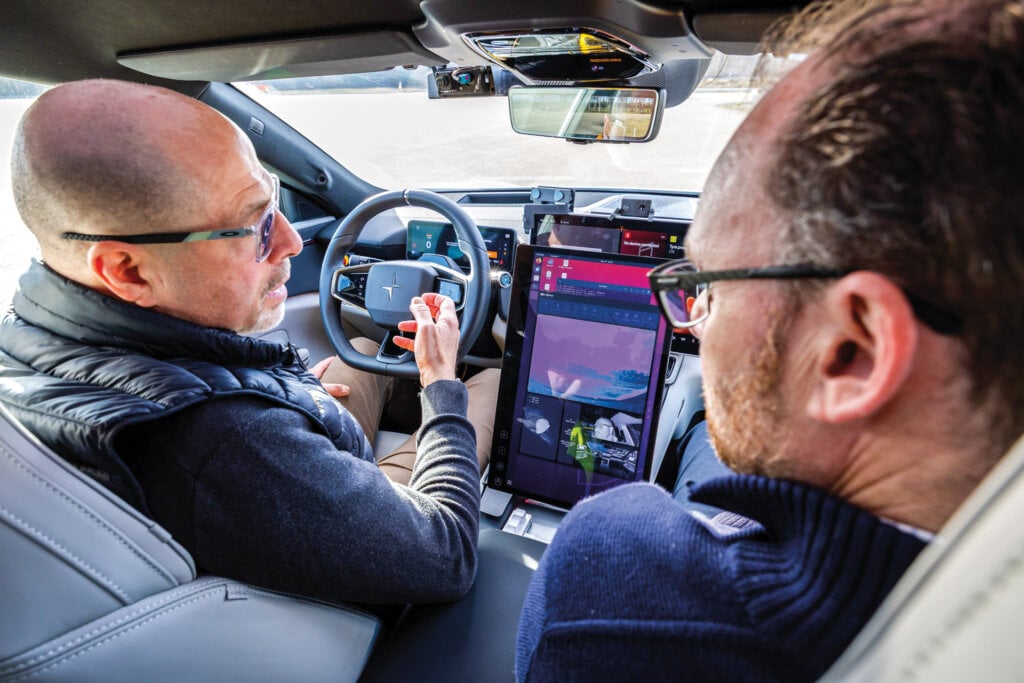
The safe driving stage is entirely new. It assesses how well the car supports you during normal driving, and whether its safety systems actually help or just get in the way. Driver monitoring is scored on how intelligently it links to the car’s assistance features: a car that knows you’re paying attention should stay quiet, while one that detects distraction should intervene earlier and more firmly.
“We’re not a fan of the bings and bongs,” Schram says. “If you know the driver’s paying attention, you don’t need to warn them. The false positive problem is gone because now you know the state of the driver rather than guessing.”
This is also where ANCAP takes a swing at touchscreen creep. Physical buttons for the horn, indicators, hazard lights, wipers, and headlights are rewarded. Euro NCAP secretary general Dr Michiel van Ratingen describes the problem as “distraction by design,” pointing to cases where drivers receive inattention warnings for looking at information the car’s own screen is showing them. “That doesn’t really make sense,” he says.
The stage also covers seatbelt misuse detection, child presence detection, speed limit recognition tested on real roads, and how smoothly lane-keeping operates. If your car jerks the wheel when it shouldn’t, the manufacturer loses points.

Crash avoidance
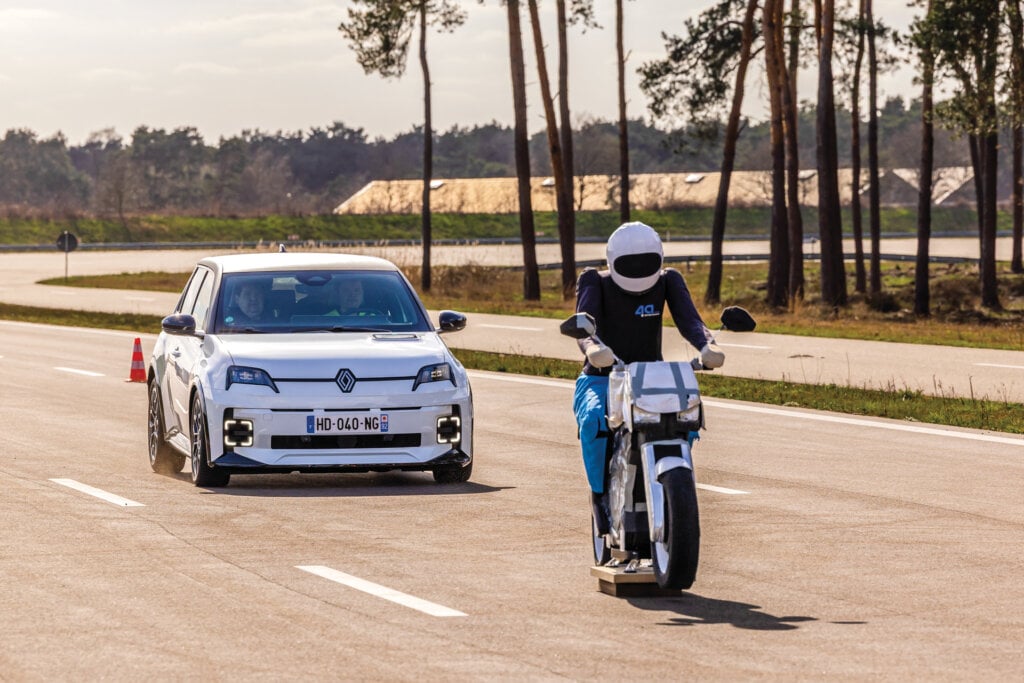
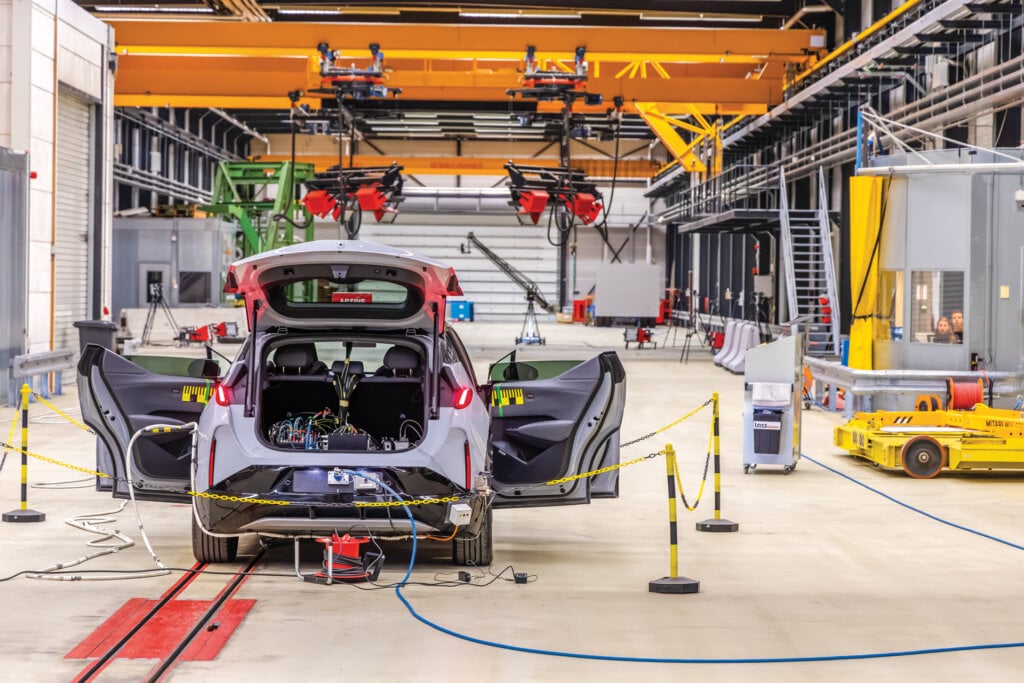
This stage covers AEB, lane support, and new scenarios involving pedestrians, cyclists, and motorcyclists in more complex situations, at night, and in poor weather. New low-speed tests reward vehicles that detect pedal misapplication, where a driver hits the accelerator instead of the brake, and cyclist dooring.
The bigger change is methodological. Previously, manufacturers knew the exact test scenarios, which meant they could engineer for those specific combinations. Now, Euro NCAP defines a domain and can test anything within it.
“The manufacturer can no longer hide behind optimising for this particular load case,” van Ratingen says.
Van Ratingen is also blunt about a fundamental problem with current systems. “ADAS works perfectly when it’s nice weather, when you don’t really need the support,” he says. “But when you have fog, snow, glare, occlusion, that’s actually the condition in which the driver needs ADAS to support. And that’s where the systems sometimes are just not delivering what they promise.”
ANCAP will conduct its own real-world driving assessments on New Zealand and Australian roads for the first time, with instrumented vehicles checking whether systems actually perform as claimed in local conditions.
Crash protection
The physical crash test remains the anchor. Schram is emphatic that it always will: they need to test the car you can actually buy, and they need physical data to validate the simulations that now supplement it.
Several technical changes apply. The full-width frontal crash test now uses a deformable barrier rather than a rigid wall, allowing better analysis of airbag performance across different body sizes. In rollover scenarios, curtain airbags must stay inflated throughout the event, not just the initial roll.
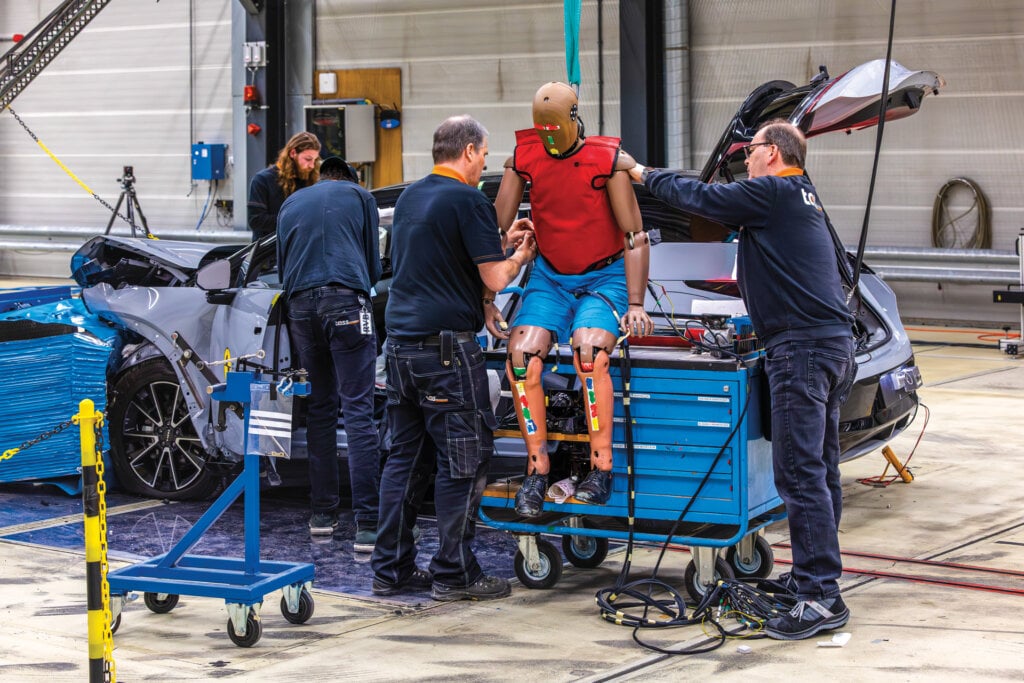
The fifth percentile female dummy now occupies the front passenger seat for the frontal offset test, replacing the mid-size male that previously sat in both front positions. Virtual simulation supplements the physical crash, with manufacturers submitting models for a range of body types. Euro NCAP randomly picks one to validate against the real result, and throws out the entire submission if it doesn’t match.
Van Ratingen says the long-term vision is human body models with actual organs and rib structures. “You can start to think about obese people, older people,” he says. “You can do everything you want once you’ve made that step.”
The MG3 seat rail failure last year, where the driver’s seat detached from the floor in a failure Euro NCAP says it had never seen, prompted a new rule: any seat or rail failure triggers an automatic 50 per cent loss of crash protection points. “This simply can never happen,” Schram says. “Full stop.”
Post-crash
The post-crash stage is entirely new. Electric door handles must work after a crash. EV batteries must isolate their high-voltage systems. Emergency call systems must accurately count occupants regardless of seatbelt status. Future systems will transmit crash severity and predicted injury data to emergency services before they arrive, and Euro NCAP is working with firefighter organisations on thermal runaway detection so vehicles can warn first responders if an EV battery is heading toward fire.
The viewing
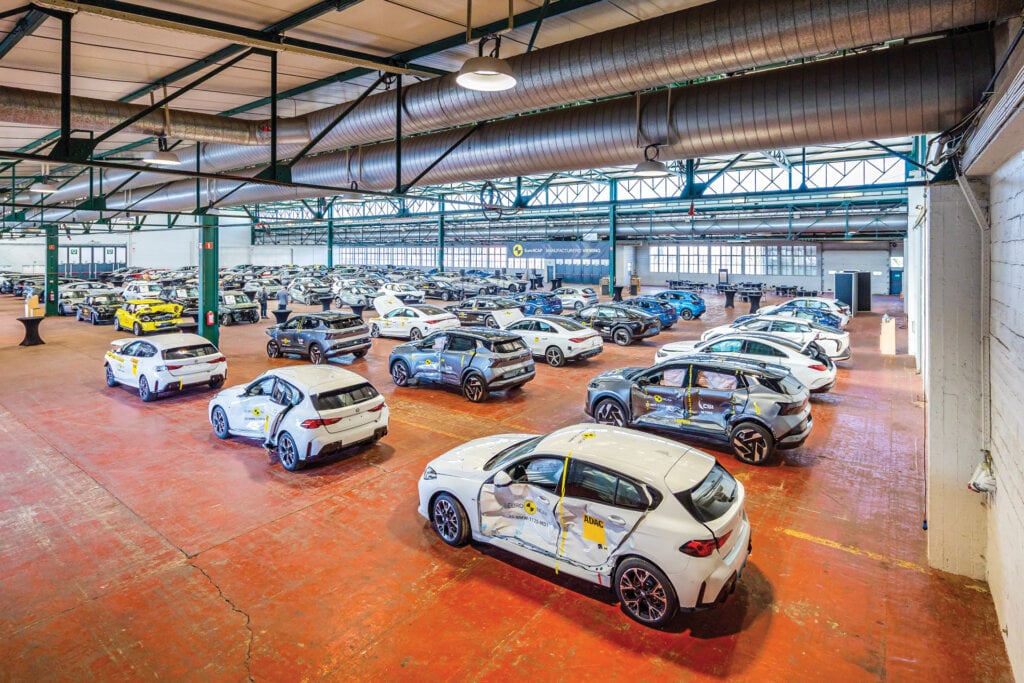
The day after the crash test, the scene shifts to Belgium for “the viewing,” where engineers from car manufacturers inspect the wreckage of every vehicle crash-tested over the past year.
It’s an impressive event. Row after row of destroyed cars, each displayed in threes: the frontal offset test vehicle and two side impacts. It’s harder than you’d expect to pick winners and losers just by looking. The Mini Cooper, a five-star car, looked heavily destroyed, while some three and four-star vehicles appeared relatively intact. Reading crash damage is a skill best left to the engineers.
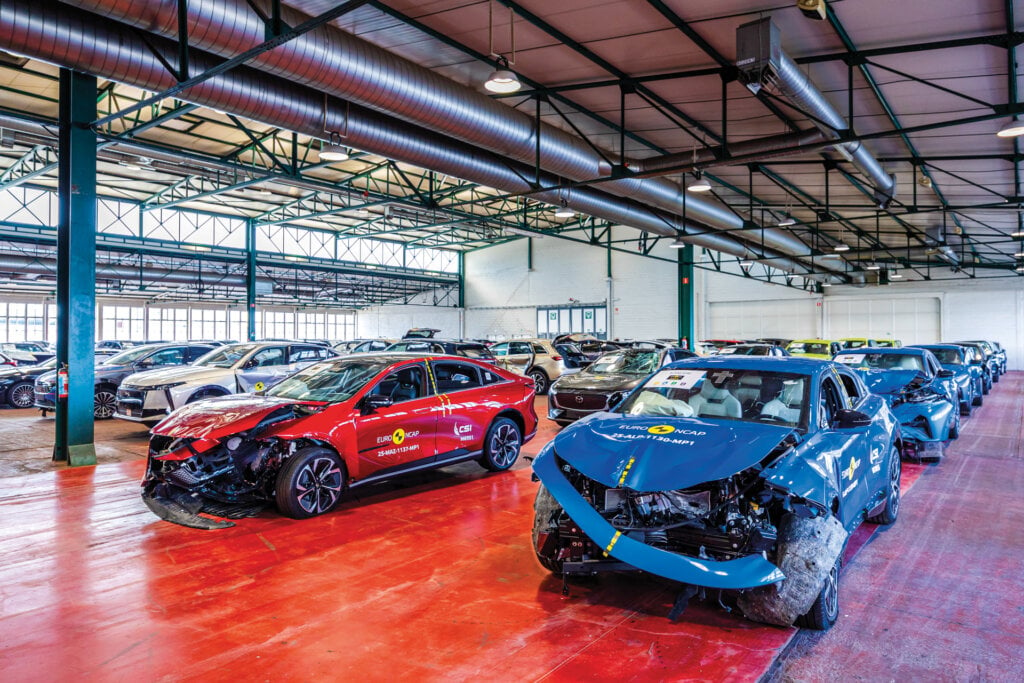
We got to see the MG3 with the deformed seat rails that prompted the new 50 per cent points penalty, a car that has since been fixed by the manufacturer. At the other end of the spectrum, cars like the Volvo EX90 visually held up to their brand’s safety reputation.
One observation worth noting: every car fitted with an edge-to-edge glass roof appeared to take more damage in the roof area than steel-roofed equivalents. In most cases the cars still met the five-star benchmark, but standing in that room looking at the evidence, you’d be forgiven for questioning whether full glass roofs are worth the trade-off.
After the media depart, engineers from the manufacturers walk the rows in unbranded clothing, measuring and photographing their competitors’ cars. Nobody wants to be seen showing too much interest in a rival’s crumple zones, though you suspect everyone knows exactly who is who.
What’s coming next
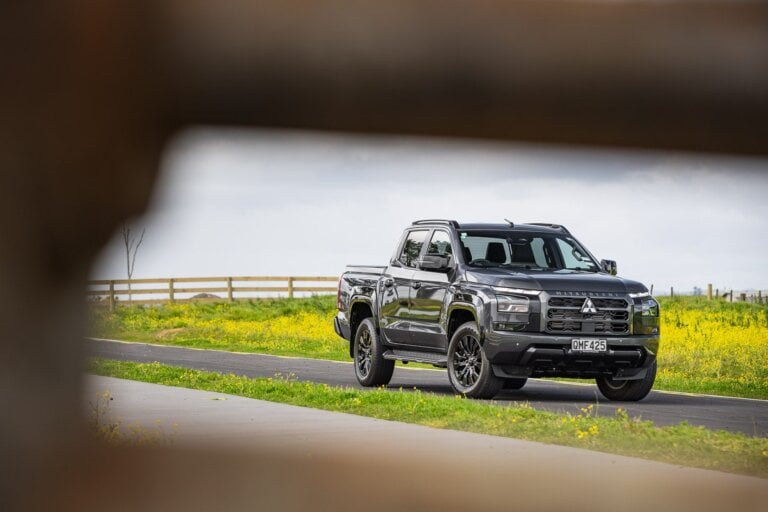
The 2026 protocols aren’t the end point. From 2029, Euro NCAP will introduce direct vision assessment, penalising vehicles where the driver can’t see what’s around them. Large SUVs and utes with high bonnets and thick A-pillars will be directly affected. “The really big pickups, you actually cannot see anything in front of you,” Schram says. “They will be penalised.”
A five-star car under the old protocols isn’t automatically five stars under the new ones. Schram says a vehicle tested under the previous system would typically drop one to two stars if recalculated. That doesn’t mean it’s less safe. It means the bar has moved.
Hoorweg says around 75 per cent of rated vehicles currently carry five stars, driven by fleet purchasing policies. But ANCAP can’t stop unrated vehicles entering the market, and the regulatory floor in both Australia and New Zealand sits well below Europe’s.
“The floor that we’re talking about in Europe is much higher than either Australia or New Zealand from a regulatory perspective,” she says. “We can set this high bar, but it means that the vehicles that are not in that programme, not getting tested, are not going to be meeting that.”
Existing ratings remain valid for six years. The first results under the 2026 protocols are expected by mid-year.
Check the date stamp. A 2026 five-star car will mean something materially different from a 2024 one.