Updated Mercedes-Benz C-Class revealed, NZ details still to come
Words: Kyle Cassidy
Mercedes-Benz has given its C-Class Saloon and Estate a substantial update, introducing refreshed styling, new mild-hybrid engines, a plug-in hybrid capable of travelling up to 100km on electric power and its latest AI-supported infotainment technology.
The revised range opens for ordering in Germany on 18 August 2026. However, final specifications, pricing and arrival timing for New Zealand are still to be announced.
That means it isn’t yet clear which engines, body styles or options will be offered locally. The international range spans petrol, diesel and plug-in hybrid power, along with rear- and all-wheel-drive configurations.
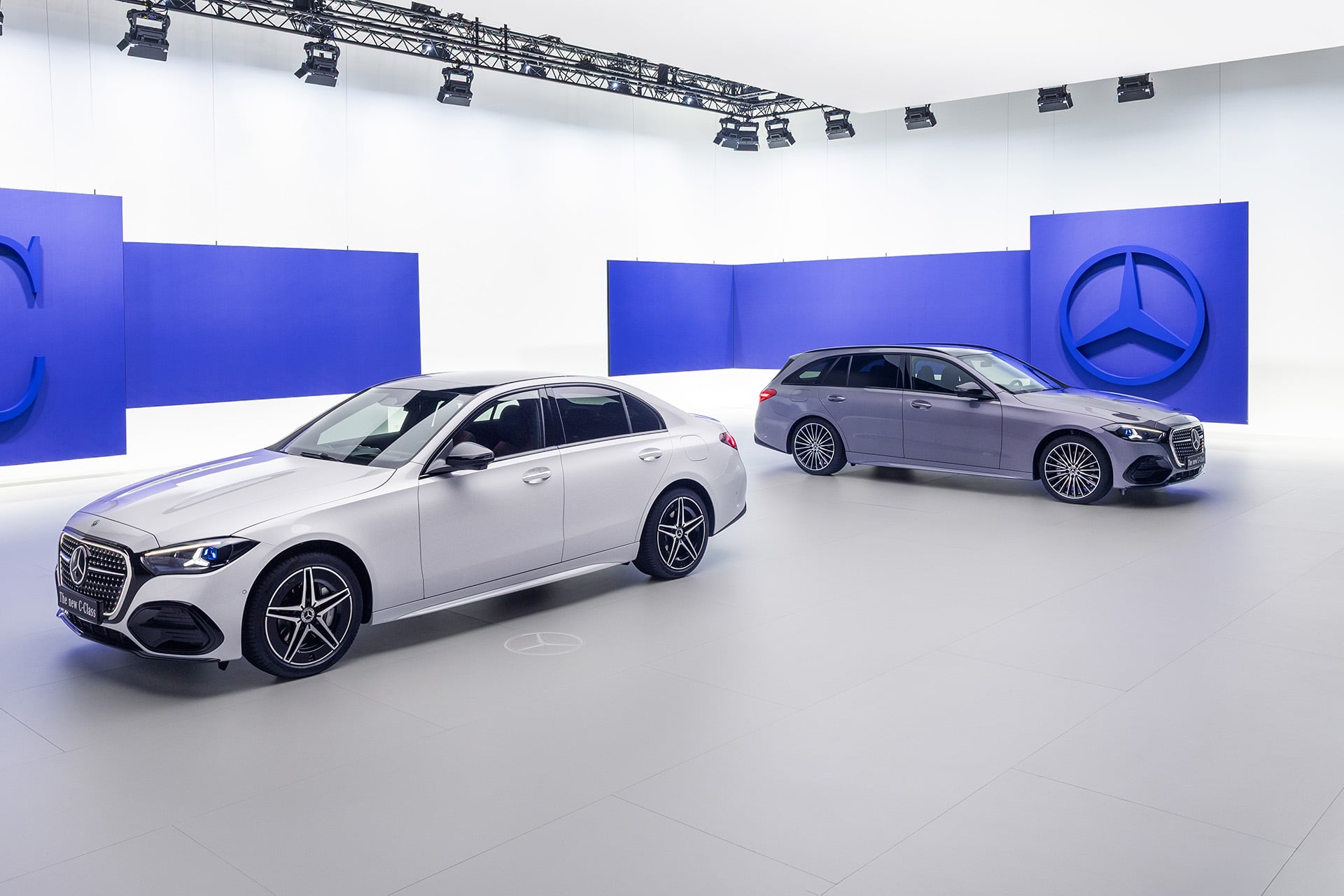
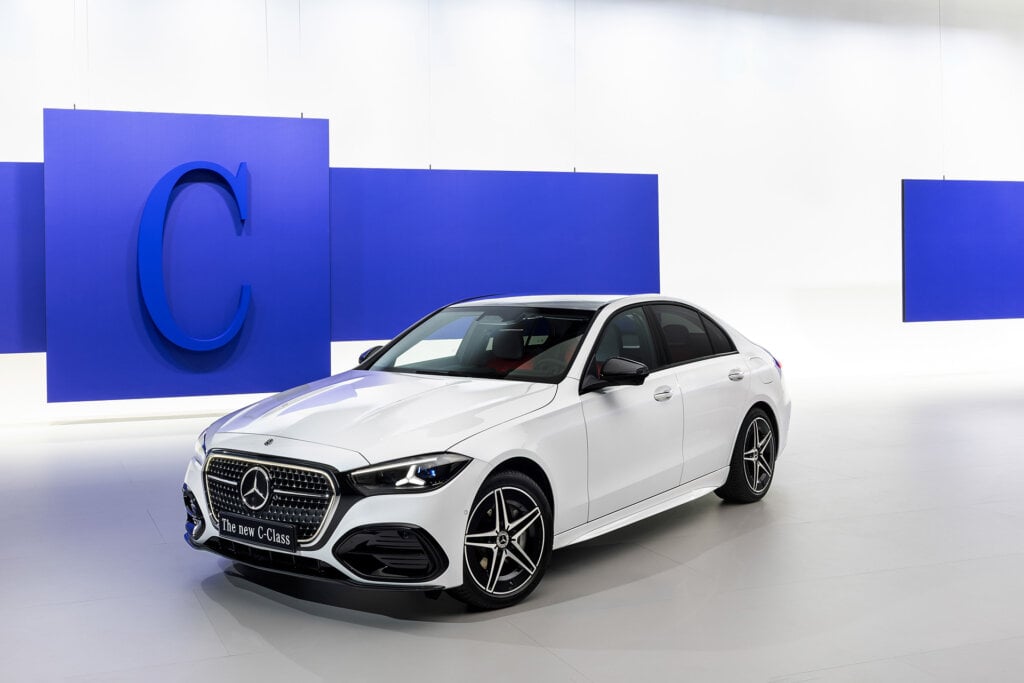
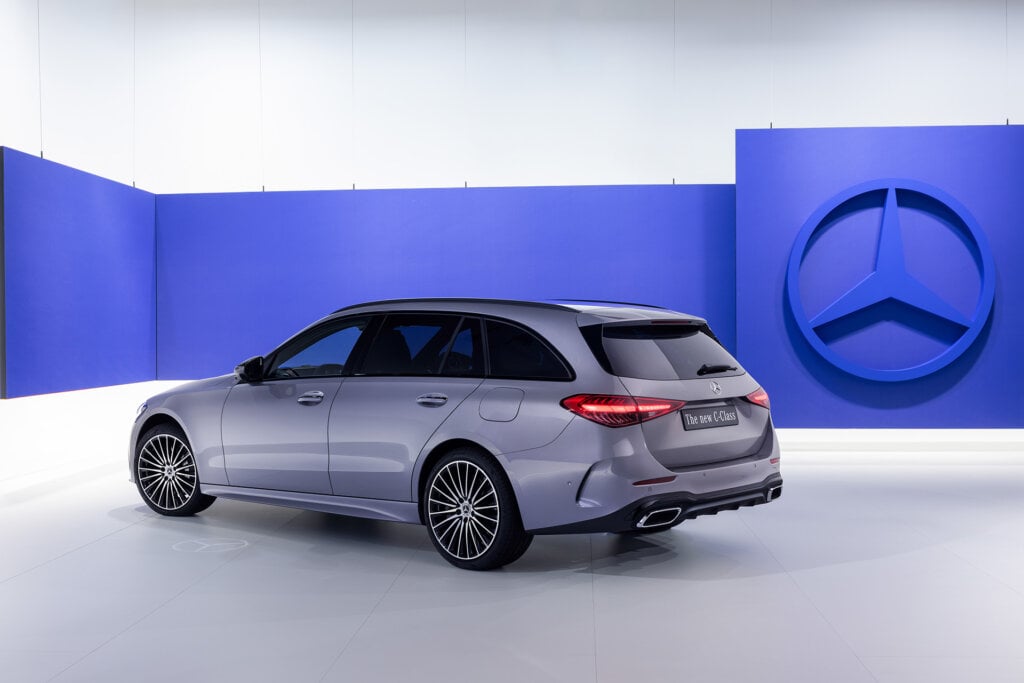
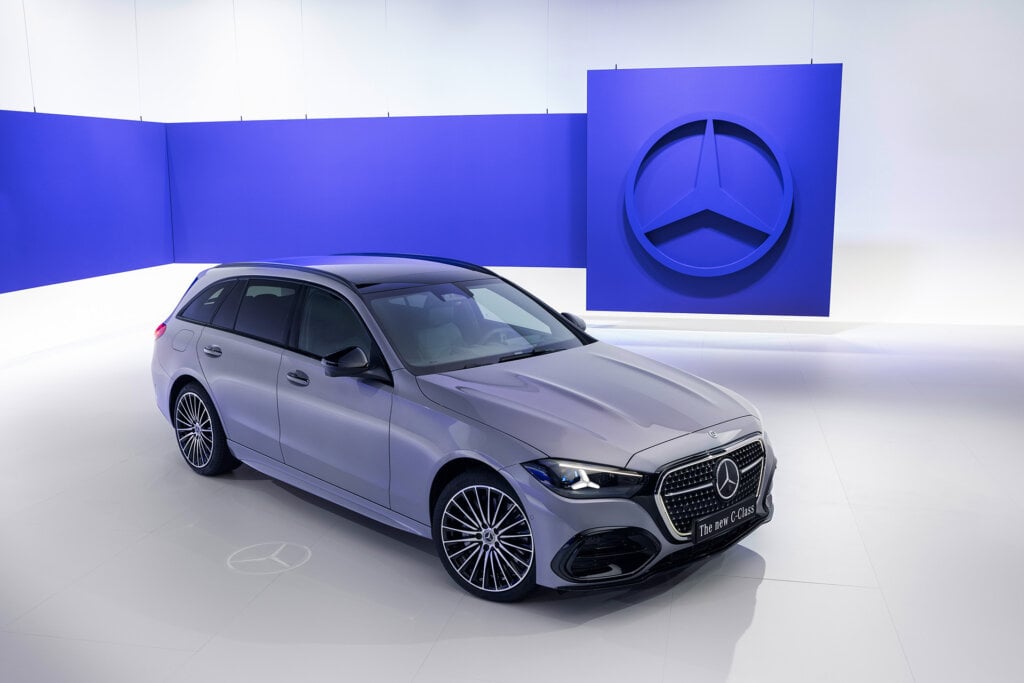
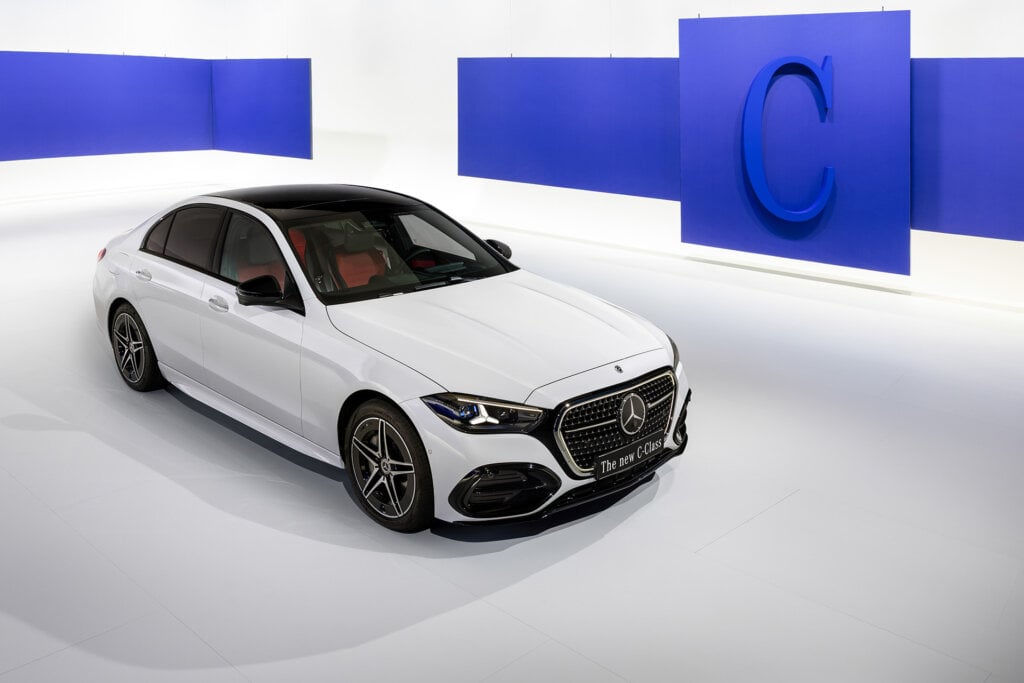
Rather than starting again, Mercedes has concentrated on updating the existing C-Class in areas likely to matter most to buyers. The exterior changes include a more upright grille with a chrome surround, revised bumpers and new headlights featuring star-shaped daytime running lights.
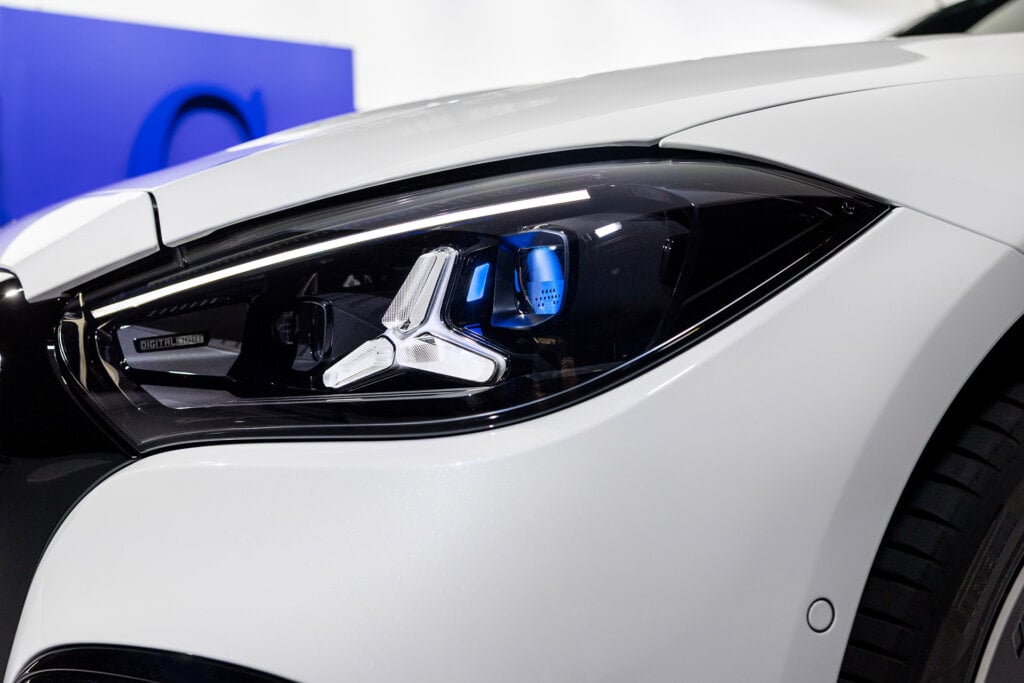
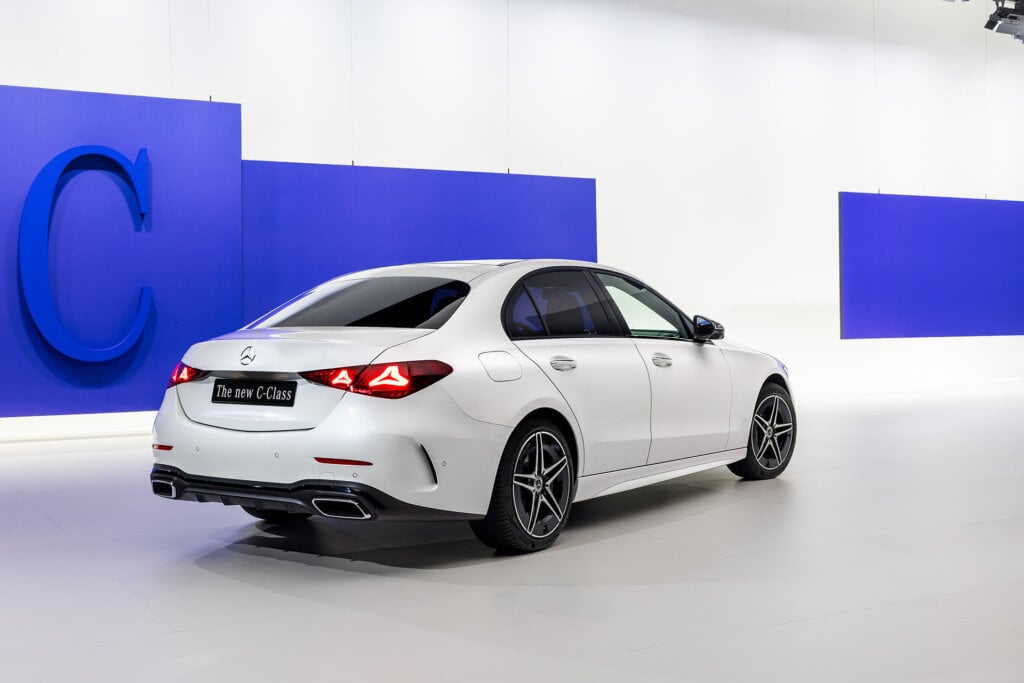
An LED strip illuminates the grille surround, while the central Mercedes star can also light up in selected markets. The Saloon receives matching star-pattern taillights, while new wheel designs range from 17 to 19 inches.
Two additional exterior colours are available internationally: Lavender Silver metallic and Moody Sky Grey metallic. An AMG Line Plus package also joins the range, bringing black exterior details, sports seats, red stitching and red seatbelts.
“The new C‑Class proves that continuity and innovation are not mutually exclusive. With its sporty elegance, electrified high-tech powertrains and intelligent support powered by MB.OS, it delivers what drivers truly need: proven reliability and innovative technology that creates real added value in everyday life. In this way, a familiar classic becomes a modern companion,” said Mercedes-Benz board member Mathias Geisen.
Petrol, diesel and plug-in hybrid power
The updated combustion-engine range consists of 2.0-litre four-cylinder petrol and diesel units, all supported by a second-generation integrated starter-generator.
The 48-volt mild-hybrid system can contribute up to 17kW and 205Nm at lower engine speeds. It also allows the engine to switch off while coasting and recovers energy during deceleration.
Three petrol outputs are offered overseas. The C 200 produces 130kW and 270Nm, the C 250 develops 160kW and 320Nm, and the C 300 raises those figures to 190kW and 400Nm.
The petrol engine also receives an electrically powered auxiliary compressor intended to fill the gap before the conventional turbocharger reaches full boost. In plain terms, that should deliver a sharper response when accelerating away from a standstill or out of a corner.
Two diesel variants develop 120kW and 147kW respectively. The revised engine is compatible with HVO100, B10 and B20 fuels, although Mercedes hasn’t confirmed whether either diesel will be included in the New Zealand range.
At the top of the regular plug-in hybrid line-up is the C 400 e 4MATIC, combining a petrol engine and electric motor to produce 290kW and 650Nm.
Its 19.53kWh usable battery provides up to 100km of electric range under the WLTP test cycle. Charging is possible at up to 11kW on AC power or 55kW at a DC fast charger.
That electric range should be sufficient to cover many daily commutes without using the petrol engine, although final local range figures could vary depending on the specification selected for New Zealand.
AI comes to the C-Class
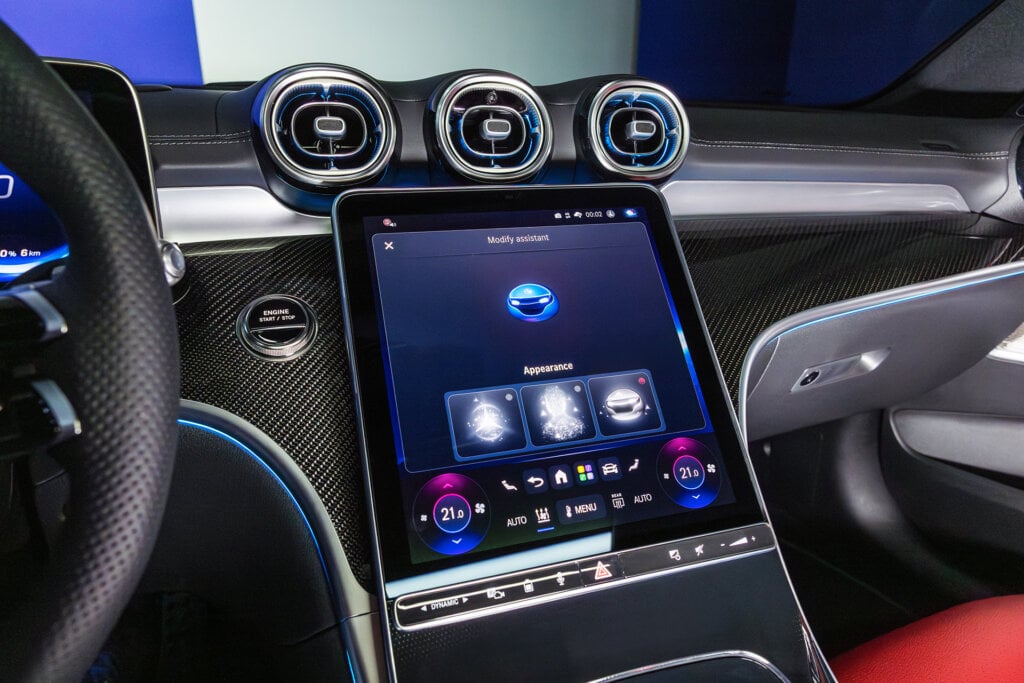
Inside, the C-Class adopts Mercedes-Benz’s MB.OS operating system and fourth-generation MBUX infotainment software.
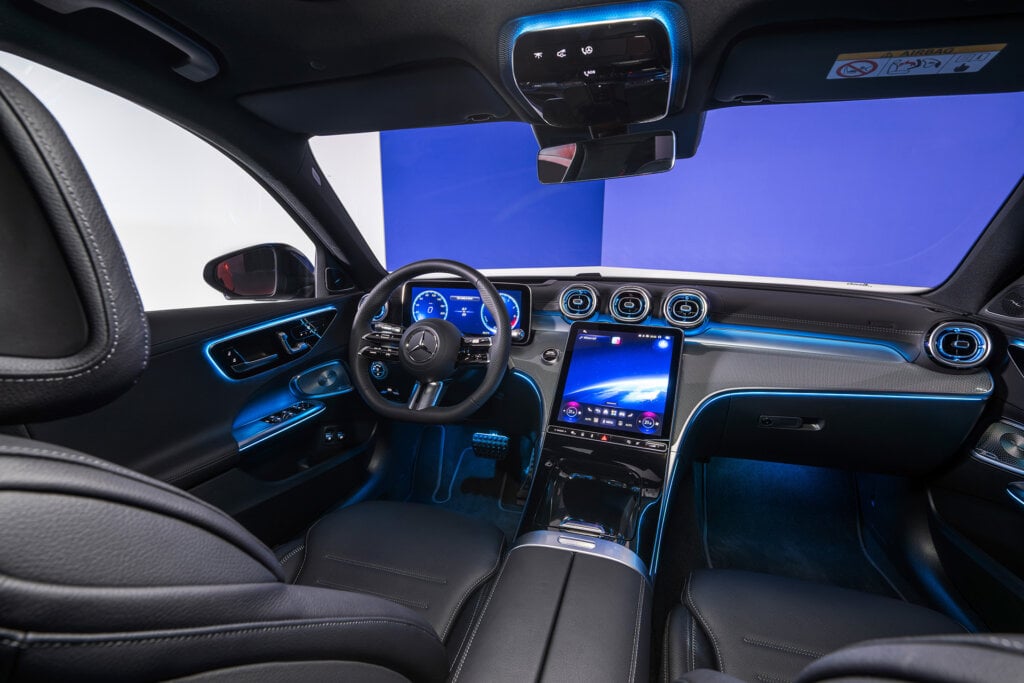
The AI-based MBUX Virtual Assistant draws on technology from ChatGPT, Microsoft Bing and Google Gemini. Mercedes says it can conduct multi-part conversations, remember recent context and answer questions about navigation, destinations, weather and other subjects.
Navigation is based on Google Maps, while the system can search conversationally for parking spaces and charging stations. Over-the-air updates allow vehicle software and selected functions to be upgraded after purchase.
The basic display layout remains familiar, with a 12.3-inch digital instrument cluster and an 11.9-inch portrait-format central touchscreen.
Mercedes has also revised the steering-wheel controls. Rocker switches operate the speed limiter and adaptive cruise control, while a physical roller handles volume adjustments. That should be easier to use on the move than relying entirely on touch-sensitive controls.
Further available technology includes augmented-reality navigation, automatic motorway lane changing, assisted parking and a reverse function that can retrace part of a previously driven route.
Rear-wheel steering improves manoeuvrability
The suspension has been retuned to reduce body movement and provide more precise responses without sacrificing long-distance comfort.
Optional rear-wheel steering turns the back wheels by up to 2.5 degrees. At lower speeds, they turn in the opposite direction to the front wheels, reducing the turning circle by 430mm to 10.64 metres.
Above 100km/h, the rear wheels turn in the same direction as the fronts to improve stability during lane changes and evasive manoeuvres.
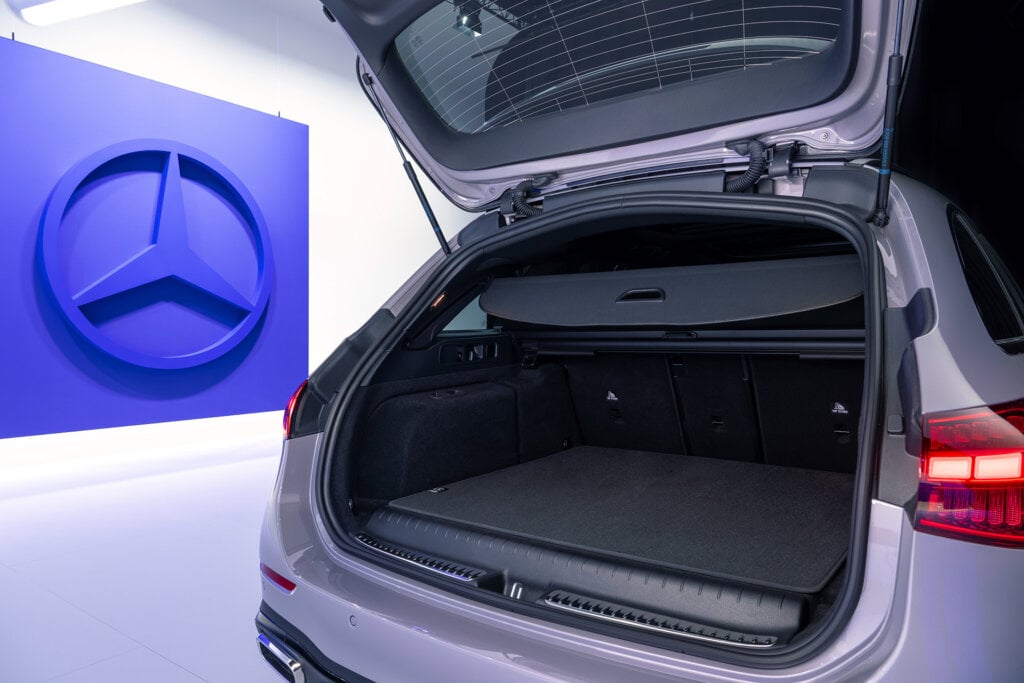
For buyers needing more load space, the Estate provides 490 litres behind its rear seats and 1510 litres with them folded. A 40:20:40 split rear seat and electrically operated tailgate are standard on the international model.
The full New Zealand line-up, standard equipment, powertrain selection and prices remain to be confirmed.