What happens when two CLAs meet in a crash?
Words: Kyle Cassidy
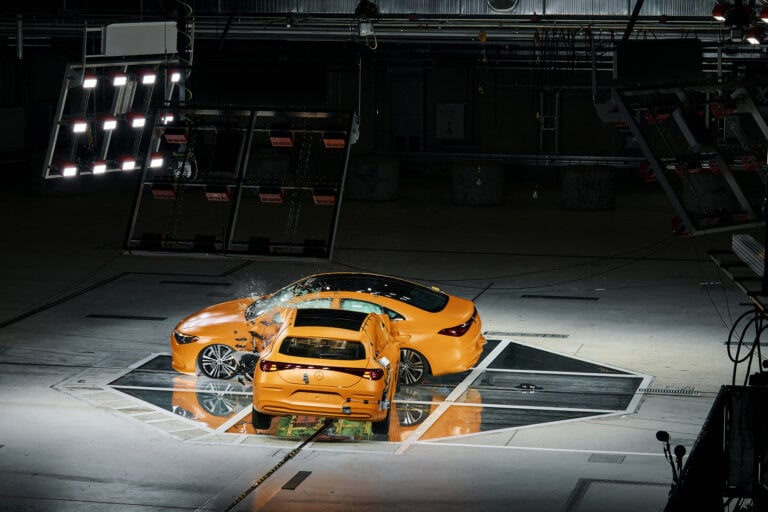
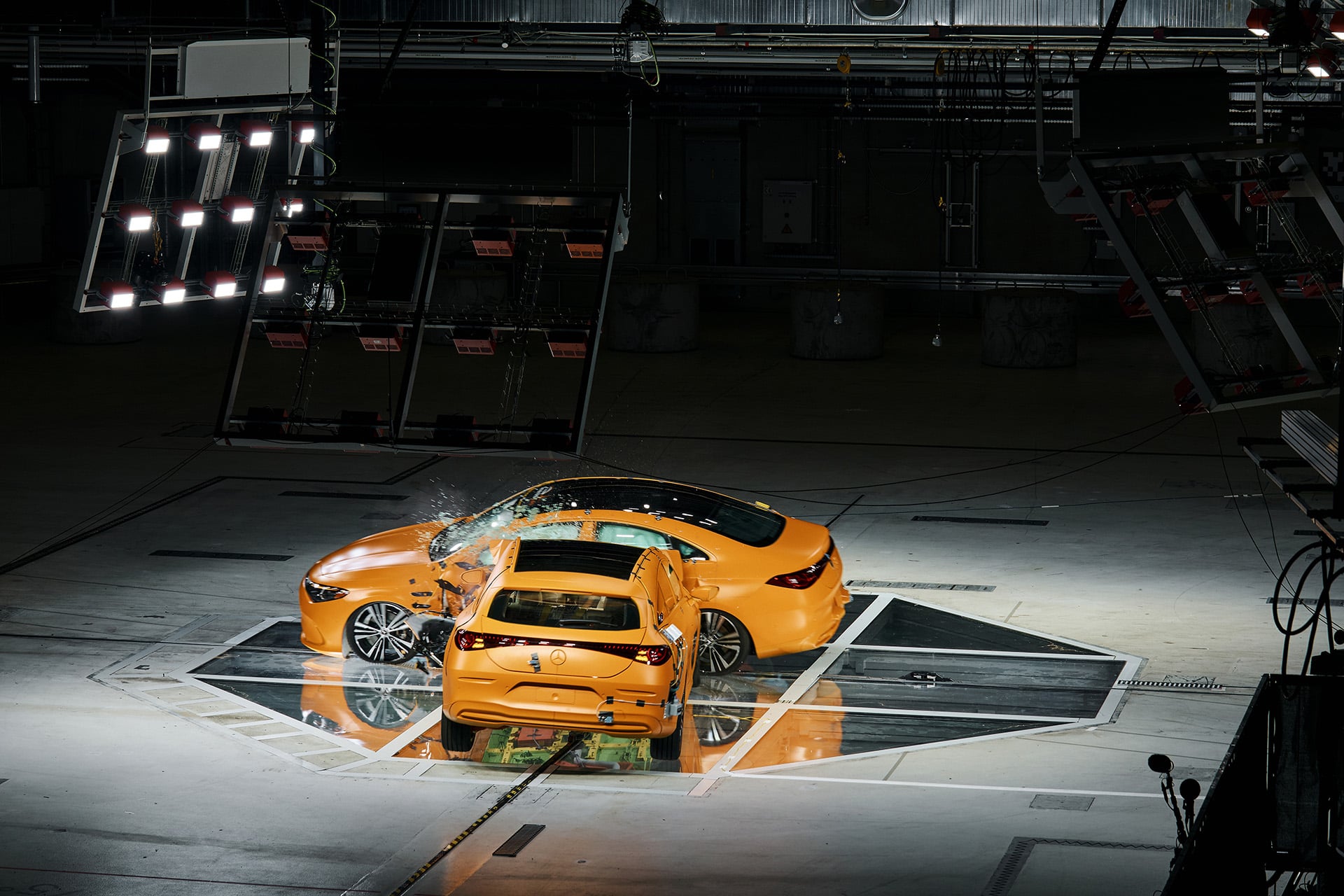
Mercedes-Benz has deliberately crashed two new CLA models into each other, with both travelling at 56km/h, to test occupant protection and the resilience of an electric vehicle’s battery.
The company says both passenger compartments remained intact and the electric CLA’s high-voltage battery was undamaged following the collision.
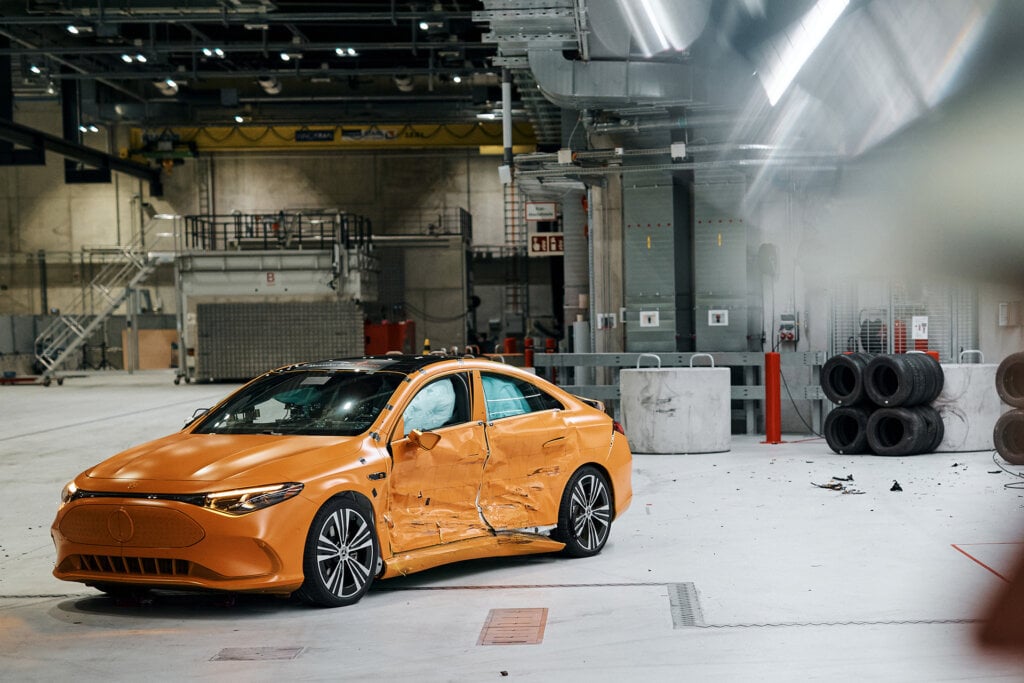
In what Mercedes describes as the world’s first public high-speed side-impact test involving two moving production vehicles, a CLA Shooting Brake with an electrified combustion engine struck the driver’s side of an all-electric CLA.
Both cars weighed more than two tonnes, and neither braked before impact. Mercedes says the speed sits at the upper end of serious junction collisions identified through its own accident research.
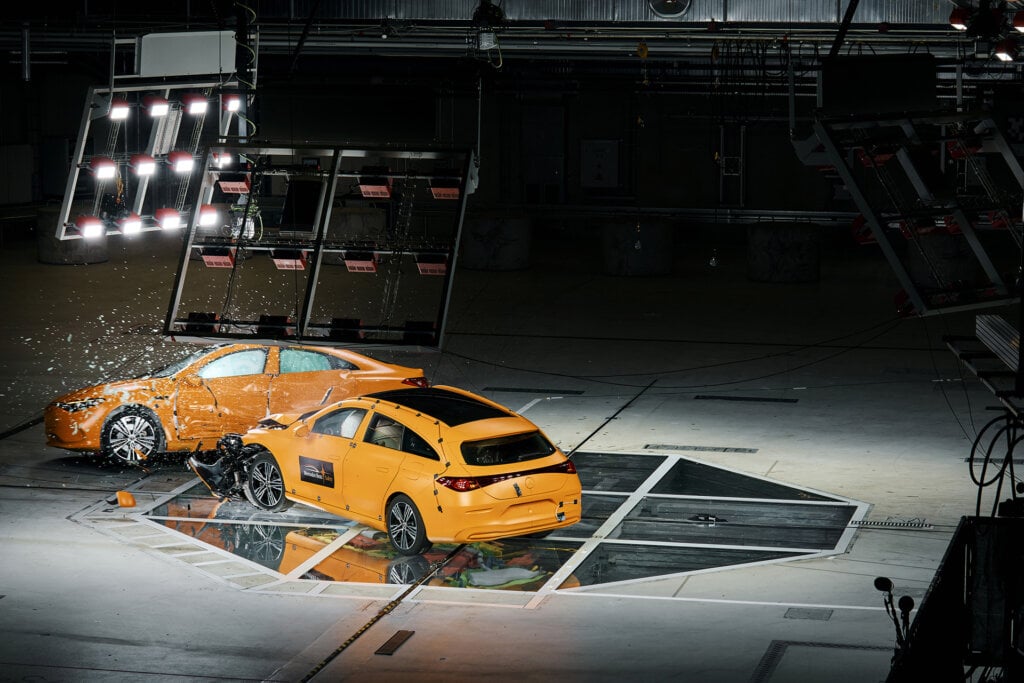
Side impacts present a particular challenge because there is less space to absorb crash energy than at the front of a car. In this case, the vehicle structure also had to protect the electric CLA’s underfloor battery from the direct impact.
Across the two vehicles were eight crash-test dummies representing four adults and four children. Mercedes says readings from all eight remained below the relevant biomechanical limits used to assess occupant protection.
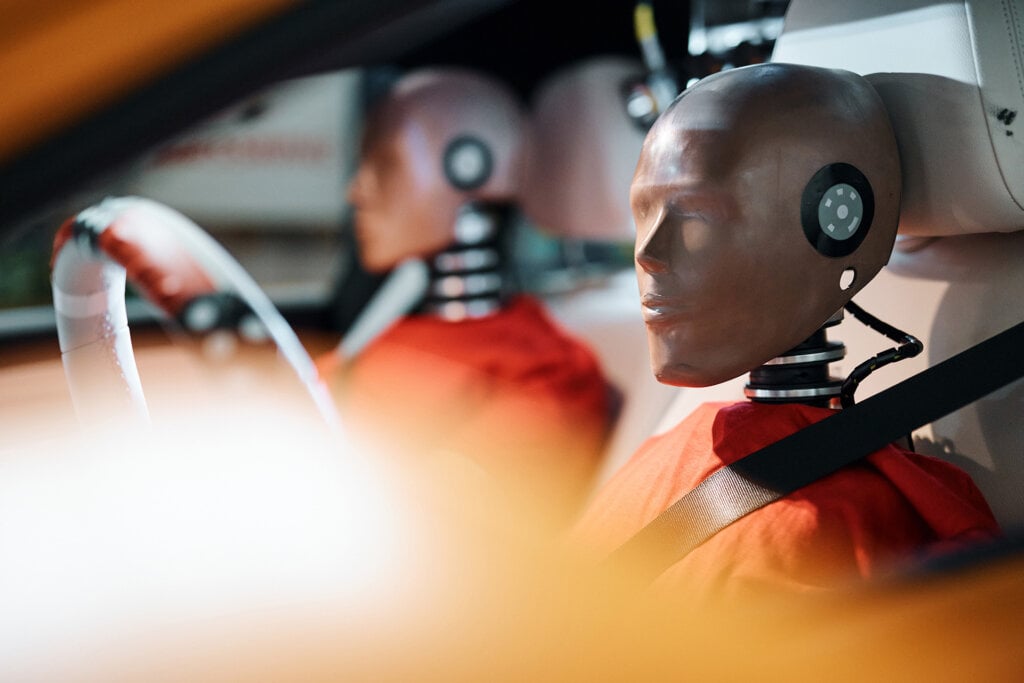
Each dummy provided data from up to 150 measurement points. According to the manufacturer, the results indicated a low risk of serious or life-threatening injuries in this particular crash.
Mercedes says the demonstration goes beyond regulatory and safety-rating requirements, which do not require this type of side-impact test between two moving production cars.
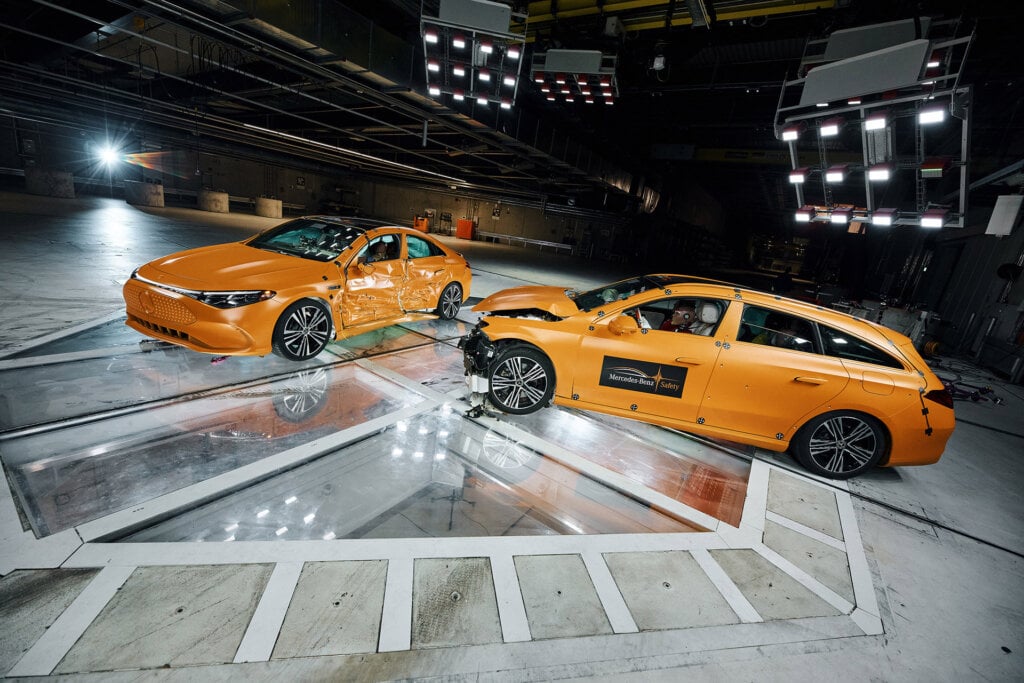
“If you want to build the safest vehicles, you need to incorporate insights from real-world accidents into your vehicle development requirements. We call this Real-Life Safety. This test involving two CLA models demonstrates how we successfully translate that approach into reality,” said Paul Dick, director of vehicle safety at Mercedes-Benz.
The company says the CLA’s driver assistance systems are designed to help prevent this sort of collision or reduce its severity in everyday traffic. The test deliberately examined what happens without braking beforehand.
Mercedes has investigated and reconstructed real-world accidents since 1969, analysing around 6000 crashes through teams in Germany, China and India. It says development of each new model involves approximately 15,000 crash simulations and around 150 physical crash tests.
Alongside the demonstration, Mercedes unveiled a new system intended to give emergency services more information before they reach a crash scene.
Called Mercedes-Benz Rescue Intelligence, it is scheduled for a gradual rollout from 2027 and will establish a direct link between accident-involved vehicles and emergency services.
Depending on technical availability and the circumstances, rescuers could receive information on occupant numbers, airbag and seat-belt status, open doors, battery temperature and the condition of the high-voltage system.
The aim is to help crews assess the situation while travelling to the scene and select suitable rescue equipment sooner.